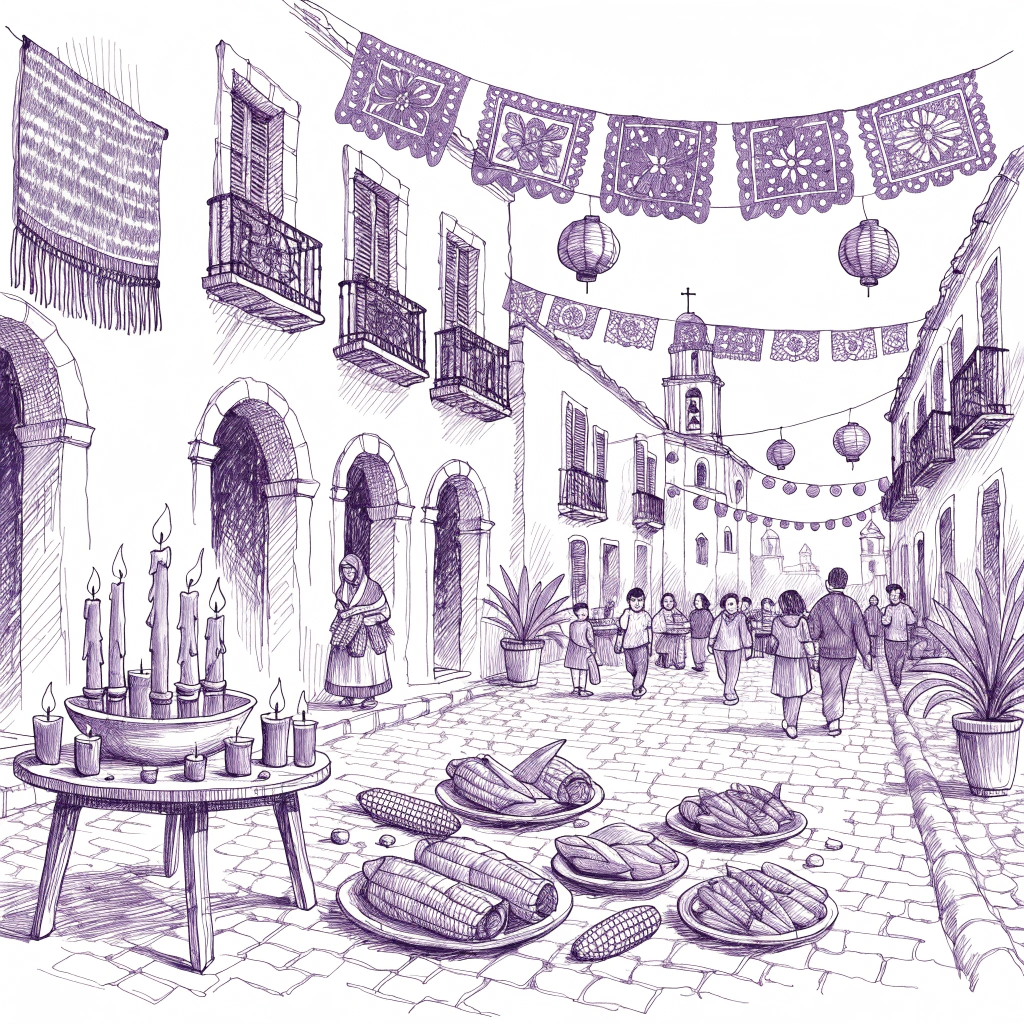
A Special Day in Mexico
February 2nd is a special day in Mexico. People call it "Día de la Candelaria". It is the end of the Christmas season.
Families and friends meet for a big party. They eat tamales together. Tamales are a traditional Mexican food made of corn. People drink hot chocolate.
This day is also about the baby Jesus. People dress a small baby Jesus doll in new clothes. They take the doll to the church. It is a happy time with family.
Gramática destacada
Patrón: Presente Simple (verbo to be)
"February 2nd is a special day in Mexico."
Usamos 'is' con sujetos en singular como las fechas. Aquí se usa para expresar un hecho sobre un día específico.
Patrón: Presente Simple (verbos de acción)
"They eat tamales together."
Para sujetos en plural como 'they', usamos la forma base del verbo. Describe una tradición o hábito regular.
Pon a prueba tu comprensión
10 preguntas · A1 Principiante · 1 vista previa gratis
Pon a prueba lo que aprendiste en este artículo. ¡Responde todas las preguntas para ganar XP!
¿Cuándo es el Día de la Candelaria?
¿Quieres terminar el quiz?
9 preguntas más te esperan. ¡Regístrate gratis para desbloquear el quiz completo y ganar XP!
Regístrate gratis¿Ya tienes cuenta? Acceder
Desglose de preguntas
¿Cuándo es el Día de la Candelaria?
Tu respuesta:
Respuesta correcta: 2 de febrero
La gente come pizza durante esta celebración.
Tu respuesta:
Respuesta correcta: Falso
¿Qué significa 'church'?
Tu respuesta:
Respuesta correcta: Un edificio religioso
La gente bebe _____ caliente.
Tu respuesta:
Respuesta correcta: chocolate
A Special Day in Mexico: Día de la Candelaria
In Mexico, February 2nd is a very special day called Día de la Candelaria. This day marks the official end of the Christmas season. It is a time for families to get together and eat delicious food.
The tradition started on January 6th, the Day of the Three Kings. On that day, families ate a special cake called 'Rosca de Reyes.' Inside the cake, there was a small plastic figure of baby Jesus. If you found the figure in your piece of cake, you were the 'godparent.' This means you must buy tamales for everyone on February 2nd. Because of this, tamales are the most important food on this day.
People also go to church. They bring small dolls of the baby Jesus. They dress the dolls in beautiful new clothes. This tradition is older than you might think. Long ago, the Aztecs also celebrated this time because it was the beginning of the planting season. Today, Día de la Candelaria is a mix of different cultures. Families eat together and enjoy flavors like atole, a warm drink. It is a happy celebration.
Gramática destacada
Patrón: Past Simple
"The tradition started on January 6th."
We use the past simple to talk about things that finished in the past. To form regular verbs, we usually add '-ed' to the end of the word.
Patrón: Comparatives
"This tradition is older than you might think."
We use comparatives to compare two things. For short adjectives like 'old', we add '-er' and use the word 'than'.
Pon a prueba tu comprensión
11 preguntas · A2 Básico · 1 vista previa gratis
Pon a prueba lo que aprendiste en este artículo. ¡Responde todas las preguntas para ganar XP!
What food is the most important on February 2nd?
¿Quieres terminar el quiz?
10 preguntas más te esperan. ¡Regístrate gratis para desbloquear el quiz completo y ganar XP!
Regístrate gratis¿Ya tienes cuenta? Acceder
Desglose de preguntas
What food is the most important on February 2nd?
Tu respuesta:
Respuesta correcta: Tamales
Día de la Candelaria marks the beginning of the Christmas season.
Tu respuesta:
Respuesta correcta: Falso
What does 'delicious' mean?
Tu respuesta:
Respuesta correcta: Having a very good taste
Families ate a special cake called 'Rosca de ____.'
Tu respuesta:
Respuesta correcta: Reyes
Who must buy the tamales?
Tu respuesta:
Respuesta correcta: The person who found the figure in the cake
Día de la Candelaria: Mexico’s Unique Winter Festival
February 2nd is a very special day in Mexico. It is called "Día de la Candelaria," or Candlemas. For many people, this date marks the official end of the Christmas season. While some countries finish their celebrations in early January, Mexicans have continued the festivities for forty days after Christmas.
This holiday has a long and fascinating history. It commemorates the presentation of Jesus at the Temple, but it also has deep roots in ancient Aztec rituals. In the past, this time of year was known as the beginning of the "Atlcahualo," or the sowing season. Today, the day is celebrated with a unique blend of religious faith and delicious food.
The most famous part of the tradition involves the "Rosca de Reyes," a sweet bread eaten on January 6th. Hidden inside the bread is a small plastic figurine that represents the baby Jesus. The person who finds the figurine in their slice is named the "godparent." This person is responsible for hosting a party and providing tamales for everyone on February 2nd.
Tamales are traditional corn-based dishes that are steamed in husks. They have been prepared in Mexico for thousands of years. On Día de la Candelaria, families and friends gather to share these meals together. It is a social event that brings people closer.
Furthermore, many people take their "Niño Dios" (Baby Jesus) figures to church to be blessed. These figures are often dressed in beautiful new clothes, which are carefully chosen by the family. Some outfits are very simple, while others are extremely elegant. In conclusion, Día de la Candelaria is a vibrant festival where ancient and modern cultures meet. It is a time when community bonds are strengthened through shared responsibilities and traditional flavors that have been passed down for generations.
Gramática destacada
Patrón: Present Perfect Tense
"Mexicans have continued the festivities for forty days after Christmas."
Formed with 'have' or 'has' and the past participle. It is used here to describe an action that started in the past and continues into the present.
Patrón: Passive Voice
"Tamales are traditional corn-based dishes that are steamed in husks."
Formed with the verb 'to be' and the past participle. We use this when the object (tamales) is more important than the person who cooks them.
Pon a prueba tu comprensión
11 preguntas · B1 Intermedio · 1 vista previa gratis
Pon a prueba lo que aprendiste en este artículo. ¡Responde todas las preguntas para ganar XP!
When is Día de la Candelaria celebrated in Mexico?
¿Quieres terminar el quiz?
10 preguntas más te esperan. ¡Regístrate gratis para desbloquear el quiz completo y ganar XP!
Regístrate gratis¿Ya tienes cuenta? Acceder
Desglose de preguntas
When is Día de la Candelaria celebrated in Mexico?
Tu respuesta:
Respuesta correcta: February 2nd
Día de la Candelaria marks the official beginning of the Christmas season.
Tu respuesta:
Respuesta correcta: Falso
What does the word 'vibrant' mean in the article?
Tu respuesta:
Respuesta correcta: Full of energy and life
The person who finds the plastic figurine is _____ for providing the food.
Tu respuesta:
Respuesta correcta: responsible
Which specific food is the main dish shared during this festival?
Tu respuesta:
Respuesta correcta: Tamales
Día de la Candelaria: A Synthesis of Faith and Ancient Tradition
Día de la Candelaria, celebrated annually on February 2nd, represents a fascinating synthesis of religious devotion and cultural heritage in Mexico. While its origins are rooted in the Catholic tradition of the Presentation of Jesus at the Temple, the holiday has evolved into a unique expression of Mexican identity. This date marks the official conclusion of the Christmas season, occurring exactly forty days after the birth of Christ. This transition from the festivities of the Nativity to the start of the agricultural cycle reflects the resilient spirit of a nation that has successfully blended diverse influences into a cohesive cultural fabric.
The celebration is perhaps most famous for its connection to the 'Rosca de Reyes' eaten on January 6th. According to custom, anyone who finds a small plastic figurine representing the baby Jesus in their slice of cake is designated as the 'godparent.' This individual is then responsible for hosting a feast featuring tamales on Candlemas. This social obligation, though lighthearted, reinforces communal bonds and ensures that hospitality remains a central pillar of the festivities. It is a time when friends and family gather to share a meal, fulfilling a promise made weeks earlier.
Beyond the culinary aspects, the day is characterized by intricate religious rituals. Families often dress figurines of the 'Niño Dios' (Child God) in elaborate costumes, ranging from traditional baptismal gowns to outfits representing various professions or saints. These figures are then taken to church to be blessed during special masses. This practice illustrates the deep personal connection many Mexicans maintain with their faith, treating the figurines with a level of care that reflects genuine parental devotion. In some regions, the tradition involves a year-long community effort to care for a shared figurine, highlighting the collective nature of this spiritual responsibility.
Historically, the timing of Día de la Candelaria is not coincidental. It aligns closely with the beginning of 'Atlcahualo,' the Aztec season for sowing crops. In pre-Hispanic times, corn—the literal and spiritual lifeblood of Mesoamerican civilizations—was offered to the gods to ensure a bountiful harvest. When the Spanish arrived, these indigenous agrarian rites merged with the Christian feast. Consequently, the consumption of tamales, which are made from corn dough, serves as a symbolic bridge between Mexico’s ancient past and its colonial history.
In contemporary Mexico, the holiday continues to thrive, even in urban centers where agricultural ties have weakened. It serves as a moment of reflection and collective joy. By participating in these traditions, younger generations inherit a legacy that values both religious observance and the preservation of ancestral roots. Ultimately, Día de la Candelaria is more than just a religious event; it is a vibrant testament to the enduring power of cultural fusion.
Gramática destacada
Patrón: Voz Pasiva
"anyone who finds a small plastic figurine representing the baby Jesus in their slice of cake is designated as the 'godparent.'"
La voz pasiva se usa aquí porque la acción (designar) es más importante que quién la realiza. Se forma con el verbo 'to be' (ser/estar) seguido del participio pasado (designated).
Patrón: Presente Perfecto
"the holiday has evolved into a unique expression of Mexican identity."
Este patrón describe una acción que comenzó en el pasado y continúa siendo relevante ahora. Enfatiza el resultado del proceso de evolución.
Patrón: Oraciones de Relativo Explicativas
"tamales, which are made from corn dough, serves as a symbolic bridge between Mexico’s ancient past and its colonial history."
Esta cláusula añade información extra sobre los tamales que no es esencial para el significado de la oración. Se separa de la oración principal por comas.
Pon a prueba tu comprensión
11 preguntas · B2 Intermedio alto · 1 vista previa gratis
Pon a prueba lo que aprendiste en este artículo. ¡Responde todas las preguntas para ganar XP!
¿Qué determina quién es responsable de organizar la fiesta de los tamales el 2 de febrero?
¿Quieres terminar el quiz?
10 preguntas más te esperan. ¡Regístrate gratis para desbloquear el quiz completo y ganar XP!
Regístrate gratis¿Ya tienes cuenta? Acceder
Desglose de preguntas
¿Qué determina quién es responsable de organizar la fiesta de los tamales el 2 de febrero?
Tu respuesta:
Respuesta correcta: Encontrar una pequeña figura en un pastel específico el 6 de enero.
El Día de la Candelaria marca el comienzo de la temporada navideña en México.
Tu respuesta:
Respuesta correcta: Falso
¿Qué significa 'legacy' en el contexto del artículo?
Tu respuesta:
Respuesta correcta: Patrimonio cultural o tradiciones transmitidas por los antepasados.
El artículo describe la festividad como una fascinante _____ de devoción religiosa y patrimonio cultural.
Tu respuesta:
Respuesta correcta: synthesis
¿Cómo se conecta la temporada prehispánica 'Atlcahualo' con la festividad moderna?
Tu respuesta:
Respuesta correcta: Marcaba el inicio de la temporada de siembra, coincidiendo con la fiesta cristiana.
Día de la Candelaria: Un Mosaico Cultural y Espiritual en México
Cada 2 de febrero, México se sumerge en una efervescencia cultural y espiritual que marca el cierre oficial de la temporada navideña: el Día de la Candelaria. Lejos de ser una mera festividad religiosa, esta fecha representa una de las más fascinantes muestras de sincretismo cultural que definen la identidad mexicana, fusionando tradiciones católicas europeas con arraigados rituales prehispánicos. Es en esta profunda imbricación histórica donde reside la riqueza y complejidad de su celebración.
La raíz católica de la Candelaria se ancla en dos eventos bíblicos: la Presentación de Jesús en el Templo y la Purificación de la Virgen María, cuarenta días después del nacimiento de su hijo. Según la ley mosaica, las madres debían presentarse en el Templo para su purificación tras el parto, y los primogénitos varones eran consagrados a Dios. La luz de las velas, de donde proviene el nombre de 'Candelaria', simboliza a Cristo como la luz del mundo, una tradición que se perpetúa en la bendición de velas en las iglesias, las cuales se guardan para invocar protección divina en momentos de adversidad.
Sin embargo, lo que confiere a la Candelaria su singular idiosincrasia en México es su confluencia con las cosmovisiones ancestrales. Coincidentemente, este periodo del año, según el calendario azteca, señalaba el inicio del Atlcahualo, la temporada de siembra, un ciclo vital dedicado al culto del agua y la petición de lluvias para asegurar las cosechas. El maíz, eje de la subsistencia y elemento sagrado en las culturas mesoamericanas, cobra un protagonismo especial. La conexión entre la luz de las velas y la esperanza de una buena cosecha, entre la purificación y la renovación de la tierra, no es casual; subyace una adaptación ingeniosa y profunda de creencias.
La tradición moderna dicta que quienes encontraron la figura del Niño Jesús en la Rosca de Reyes el 6 de enero son los 'padrinos' encargados de ofrecer tamales y atole el Día de la Candelaria. Esta costumbre, lejos de ser una simple obligación, es un gesto de comunidad y reciprocidad. Los tamales, elaborados a base de maíz, no solo son un deleite culinario, sino también un puente tangible hacia esas raíces prehispánicas, un alimento que ha nutrido a México desde tiempos inmemoriales y que hoy simboliza la abundancia y la continuidad de la vida. Acompañando esta ofrenda gastronómica, es común vestir a las figuras del Niño Dios, a menudo con elaborados trajes que van desde representaciones de santos hasta vestimentas tradicionales mexicanas, para llevarlos a bendecir a la iglesia. La proliferación de puestos que venden estas vestimentas y accesorios es una vista común en los días previos a la festividad.
Así pues, el Día de la Candelaria trasciende su origen religioso para convertirse en un crisol de identidades. La ceremonia de la luz, el rito de la siembra, la comensalidad compartida en torno a los tamales, todo se entrelaza para conformar una celebración vibrante que honra tanto la fe como la herencia cultural. Es una manifestación palpable de cómo las culturas pueden fusionarse y dar origen a nuevas y potentes expresiones, un testimonio vivo del arraigo de la historia en el presente cotidiano de los mexicanos. En última instancia, es la perpetuación de un ciclo, tanto espiritual como agrícola, que reafirma la vida y la comunidad.
Gramática destacada
Patrón: Nominalización de verbos y adjetivos
"La raíz católica de la Candelaria se ancla en dos eventos bíblicos: la Presentación de Jesús en el Templo y la Purificación de la Virgen María."
La nominalización consiste en transformar un verbo o un adjetivo en un sustantivo. Esto permite expresar ideas de forma más concisa y formal, elevando el nivel del discurso. Aquí, 'Presentación' y 'Purificación' derivan de los verbos 'presentar' y 'purificar', respectivamente.
Patrón: Oraciones hendidas (cleft sentences)
"Es en esta profunda imbricación histórica donde reside la riqueza y complejidad de su celebración."
Las oraciones hendidas (o 'cleft sentences') se utilizan para enfatizar una parte específica de la oración. Se construyen con 'Es/Fue + [elemento enfatizado] + lo que/quien/donde/cuando + [resto de la oración]'. En este caso, se enfatiza el lugar o la causa de la riqueza de la celebración.
Patrón: Inversión del sujeto y el verbo para énfasis
"Lejos de ser una mera festividad religiosa, esta fecha representa una de las más fascinantes muestras de sincretismo cultural que definen la identidad mexicana."
Aunque no es una inversión completa en el sentido de una pregunta, el adelanto de complementos circunstanciales o frases adverbiales al inicio de la oración, seguido del verbo y luego el sujeto, es una forma de inversión que añade énfasis y formalidad. Aquí, la frase 'Lejos de ser...' se coloca al principio para destacar el contraste antes de presentar la idea principal.
Pon a prueba tu comprensión
12 preguntas · C1 Avanzado · 1 vista previa gratis
Pon a prueba lo que aprendiste en este artículo. ¡Responde todas las preguntas para ganar XP!
¿Cuál es uno de los eventos bíblicos que la Candelaria conmemora?
¿Quieres terminar el quiz?
11 preguntas más te esperan. ¡Regístrate gratis para desbloquear el quiz completo y ganar XP!
Regístrate gratis¿Ya tienes cuenta? Acceder
Desglose de preguntas
¿Cuál es uno de los eventos bíblicos que la Candelaria conmemora?
Tu respuesta:
Respuesta correcta: La Presentación de Jesús en el Templo
El Día de la Candelaria en México tiene únicamente raíces católicas europeas.
Tu respuesta:
Respuesta correcta: Falso
¿Qué significa 'efervescencia' en el contexto del artículo?
Tu respuesta:
Respuesta correcta: Gran agitación o entusiasmo
Según el calendario azteca, el 2 de febrero marcaba el inicio del _____, la temporada de siembra.
Tu respuesta:
Respuesta correcta: Atlcahualo
¿Quiénes son tradicionalmente los encargados de ofrecer tamales el Día de la Candelaria?
Tu respuesta:
Respuesta correcta: Los que encontraron la figura del Niño Jesús en la Rosca
La luz de las velas en la Candelaria simboliza a Cristo como la luz del mundo.
Tu respuesta:
Respuesta correcta: Verdadero
Syncretic Sanctity: The Palimpsestic Evolution of Día de la Candelaria in Contemporary Mexico
The observance of Día de la Candelaria in Mexico represents a profound cultural confluence, where the rigid structures of the Catholic liturgical calendar mesh with the enduring vestiges of pre-Hispanic agrarian rites. Falling on the second of February, exactly forty days post-Nativity, the festival ostensibly commemorates the Presentation of Jesus at the Temple and the Purification of the Virgin Mary. Yet, to categorize it merely as a Christian rite is to overlook the palimpsestic nature of Mexican identity. Historically, this period aligned with the Aztec month of Atlcahualo, a time dedicated to the propitiation of Tlaloc for the coming rains. Consequently, the contemporary celebration is less a replacement of indigenous thought and more a sophisticated synthesis. Seldom does a tradition encapsulate such a wide spectrum of historical eras as Día de la Candelaria.
Central to the ritual is the veneration of the 'Niño Dios' (God Child). This practice involves a meticulous vestimentary tradition; the figure is arrayed in elaborate garments, ranging from traditional robes to contemporary outfits reflecting various professions or even sports teams. This act of dressing the doll is not merely pious; it reinforces the social fabric through the system of 'compadrazgo', or godparenting. It is imperative that the participant acknowledge the weight of the social obligation incurred during the preceding Epiphany. Should a participant discover the plastic figurine within the Rosca de Reyes, it becomes incumbent upon them to host the Candelaria feast. This social contract, predicated on the provision of tamales, serves as a mechanism of communal cohesion and commensality.
The choice of tamales is hardly arbitrary. Corn, the quintessential Mesoamerican staple, carries sacred connotations that predate the arrival of Europeans by millennia. In the Aztec worldview, humans were fashioned from corn; thus, offering tamales during the season of sowing is a symbolic return to origins and an insurance policy for the harvest. While modern observers might perceive the day as a mere culinary excuse, a more scholarly lens reveals a persistent dialogue between the colonial past and a resilient, indigenous present. Were one to analyze the ritual without its pre-Hispanic context, the logic of the corn offering would remain obscured. The corn serves as the bridge between the Catholic blessing of seeds and the ancient appeasement of the rain gods.
Furthermore, the celebration underscores a unique vernacular Catholicism. It is an arena where the sacred and the profane dance in a delicate equilibrium. The public processions and the private domestic rituals constitute a lived theology that transcends official dogma. This hybridization of belief systems allows for a flexible interpretation of faith, where the 'Niño Dios' becomes a member of the family, requiring care, clothing, and celebration. It is a testament to the Mexican capacity to absorb, adapt, and ultimately thrive through cultural hybridization.
Beyond the domestic sphere, the festival manifests in public spaces with vibrant markets dedicated solely to vestimentary accessories for the 'Niño Dios'. Here, the specialized vocabulary of the trade—referring to lace, satin, and miniature props—illustrates the depth of the tradition’s material culture. Scholars argue that such displays are not merely ornamental but represent a reclamation of agency by the laity over the rigid hierarchies of the Church. By taking the religious icons into their homes and dressing them according to local taste, the people transform the 'Niño Dios' into a symbol of local identity and personal devotion.
In conclusion, Día de la Candelaria serves as a compelling case study in cultural longevity. It is a living tapestry where every thread—from the liturgical chants to the steam rising from a pot of tamales—contributes to a larger narrative of syncretic sanctity. As Mexico continues to navigate the complexities of the 21st century, these rituals provide a necessary anchor, grounding the population in a shared history that is both ancient and ever-evolving. It remains an essential expression of the Mexican soul, proving that traditions are most vibrant when they allow for the palimpsestic layering of new meanings over old truths.
Gramática destacada
Patrón: Negative Inversion
"Seldom does a tradition encapsulate such a wide spectrum of historical eras as Día de la Candelaria."
When a sentence starts with a negative or restrictive adverb like 'seldom', the auxiliary verb comes before the subject. This is used in formal C2 prose to add rhetorical emphasis.
Patrón: The Subjunctive Mood
"It is imperative that the participant acknowledge the weight of the social obligation incurred during the preceding Epiphany."
In formal English, the subjunctive is used after verbs or adjectives of necessity. Note the use of the base form 'acknowledge' instead of the third-person 'acknowledges'.
Patrón: Inverted Conditionals (Were/Should)
"Were one to analyze the ritual without its pre-Hispanic context, the logic of the corn offering would remain obscured."
Replacing 'if' with an inverted word order (Were + subject) creates a more scholarly and hypothetical tone, typical of C2 academic writing.
Pon a prueba tu comprensión
12 preguntas · C2 Dominio · 1 vista previa gratis
Pon a prueba lo que aprendiste en este artículo. ¡Responde todas las preguntas para ganar XP!
According to the article, why is the celebration of Día de la Candelaria considered 'palimpsestic'?
¿Quieres terminar el quiz?
11 preguntas más te esperan. ¡Regístrate gratis para desbloquear el quiz completo y ganar XP!
Regístrate gratis¿Ya tienes cuenta? Acceder
Desglose de preguntas
According to the article, why is the celebration of Día de la Candelaria considered 'palimpsestic'?
Tu respuesta:
Respuesta correcta: Because it retains visible layers of both Christian and pre-Hispanic traditions.
The date of the festival was chosen to align with the Aztec month of Atlcahualo.
Tu respuesta:
Respuesta correcta: Verdadero
What does the word 'incumbent' mean in the context of the Candelaria feast?
Tu respuesta:
Respuesta correcta: A mandatory duty or responsibility.
The choice of _____ is hardly arbitrary because of its sacred Mesoamerican history.
Tu respuesta:
Respuesta correcta: tamales
What does 'commensality' contribute to the festival?
Tu respuesta:
Respuesta correcta: It acts as a mechanism for communal cohesion through shared meals.
The dressing of the 'Niño Dios' is a tradition strictly monitored and enforced by Church hierarchy.
Tu respuesta:
Respuesta correcta: Falso

