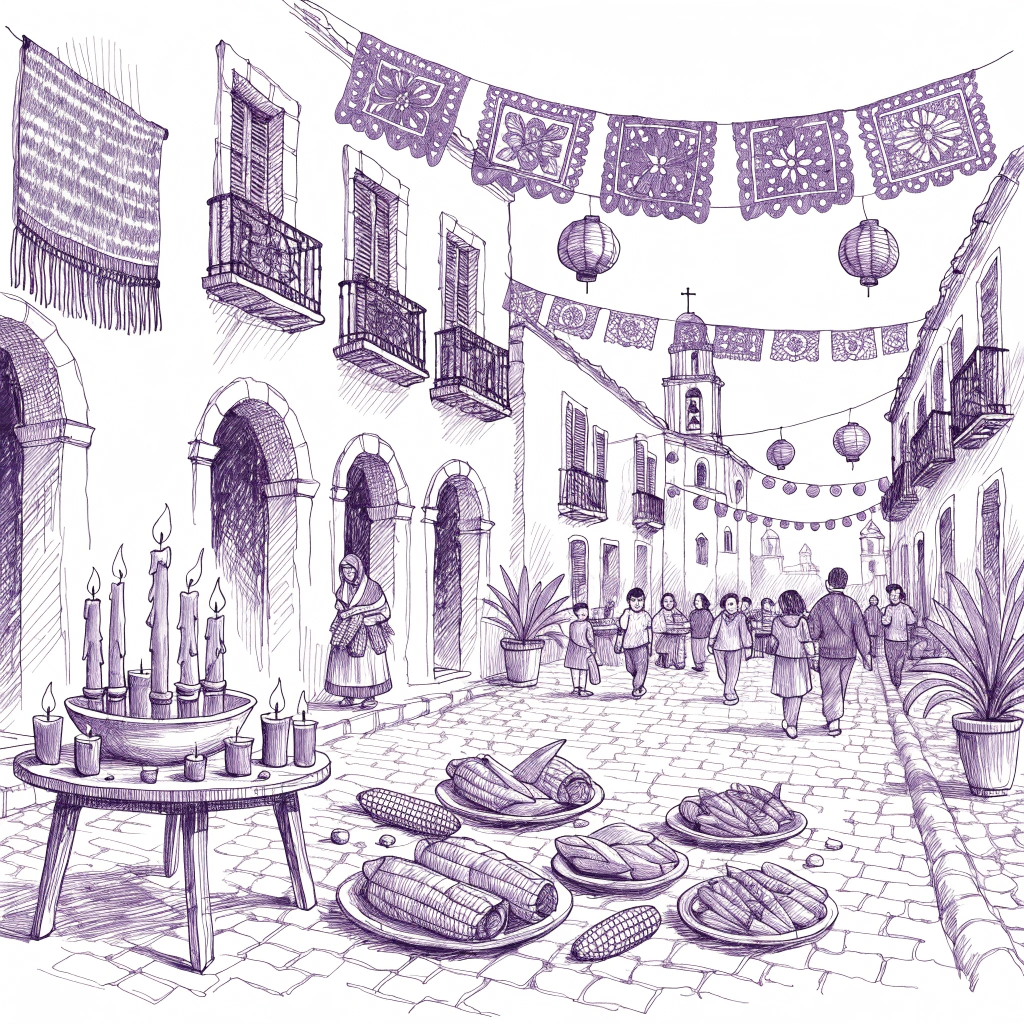
A Special Day in Mexico
February 2nd is a special day in Mexico. People call it "Día de la Candelaria". It is the end of the Christmas season.
Families and friends meet for a big party. They eat tamales together. Tamales are a traditional Mexican food made of corn. People drink hot chocolate.
This day is also about the baby Jesus. People dress a small baby Jesus doll in new clothes. They take the doll to the church. It is a happy time with family.
Point grammaire
Structure: Present Simple (to be)
"February 2nd is a special day in Mexico."
We use 'is' with singular subjects like dates. It is used here to state a fact about a specific day.
Structure: Present Simple (Action Verbs)
"They eat tamales together."
For plural subjects like 'they', we use the base form of the verb. It describes a regular tradition or habit.
Teste ta compréhension
10 questions · A1 Débutant · 1 aperçu gratuit
Teste ce que tu as appris dans cet article. Réponds à toutes les questions pour gagner des XP !
When is Día de la Candelaria?
Tu veux terminer le quiz ?
9 questions supplémentaires t'attendent. Inscris-toi gratuitement pour débloquer le quiz complet et gagner des XP !
S'inscrire gratuitementTu as dj un compte ? Connexion
Bien joué !
Continue à pratiquer !
Déjà terminé — pas de XP supplémentaire
Inscris-toi pour gagner des XPDétail des questions
When is Día de la Candelaria?
Ta réponse:
Bonne réponse: February 2nd
People eat pizza during this celebration.
Ta réponse:
Bonne réponse: Faux
What does 'church' mean?
Ta réponse:
Bonne réponse: A religious building
People drink hot _____.
Ta réponse:
Bonne réponse: chocolate
A Special Day in Mexico: Día de la Candelaria
In Mexico, February 2nd is a very special day called Día de la Candelaria. This day marks the official end of the Christmas season. It is a time for families to get together and eat delicious food.
The tradition started on January 6th, the Day of the Three Kings. On that day, families ate a special cake called 'Rosca de Reyes.' Inside the cake, there was a small plastic figure of baby Jesus. If you found the figure in your piece of cake, you were the 'godparent.' This means you must buy tamales for everyone on February 2nd. Because of this, tamales are the most important food on this day.
People also go to church. They bring small dolls of the baby Jesus. They dress the dolls in beautiful new clothes. This tradition is older than you might think. Long ago, the Aztecs also celebrated this time because it was the beginning of the planting season. Today, Día de la Candelaria is a mix of different cultures. Families eat together and enjoy flavors like atole, a warm drink. It is a happy celebration.
Point grammaire
Structure: Passé Simple (Prétérit)
"The tradition started on January 6th."
On utilise le passé simple pour parler de choses qui se sont terminées dans le passé. Pour former les verbes réguliers, on ajoute généralement '-ed' à la fin du mot.
Structure: Comparatifs
"This tradition is older than you might think."
On utilise les comparatifs pour comparer deux choses. Pour les adjectifs courts comme 'old', on ajoute '-er' et on utilise le mot 'than'.
Teste ta compréhension
11 questions · A2 mentaire · 1 aperçu gratuit
Teste ce que tu as appris dans cet article. Réponds à toutes les questions pour gagner des XP !
Quelle nourriture est la plus importante le 2 février ?
Tu veux terminer le quiz ?
10 questions supplémentaires t'attendent. Inscris-toi gratuitement pour débloquer le quiz complet et gagner des XP !
S'inscrire gratuitementTu as dj un compte ? Connexion
Bien joué !
Continue à pratiquer !
Déjà terminé — pas de XP supplémentaire
Inscris-toi pour gagner des XPDétail des questions
Quelle nourriture est la plus importante le 2 février ?
Ta réponse:
Bonne réponse: Tamales
Le Día de la Candelaria marque le début de la saison de Noël.
Ta réponse:
Bonne réponse: Faux
Que signifie 'delicious' ?
Ta réponse:
Bonne réponse: Qui a très bon goût
Les familles mangeaient un gâteau spécial appelé 'Rosca de ____'.
Ta réponse:
Bonne réponse: Reyes
Qui doit acheter les tamales ?
Ta réponse:
Bonne réponse: La personne qui a trouvé la figurine dans le gâteau
Día de la Candelaria: Mexico’s Unique Winter Festival
February 2nd is a very special day in Mexico. It is called "Día de la Candelaria," or Candlemas. For many people, this date marks the official end of the Christmas season. While some countries finish their celebrations in early January, Mexicans have continued the festivities for forty days after Christmas.
This holiday has a long and fascinating history. It commemorates the presentation of Jesus at the Temple, but it also has deep roots in ancient Aztec rituals. In the past, this time of year was known as the beginning of the "Atlcahualo," or the sowing season. Today, the day is celebrated with a unique blend of religious faith and delicious food.
The most famous part of the tradition involves the "Rosca de Reyes," a sweet bread eaten on January 6th. Hidden inside the bread is a small plastic figurine that represents the baby Jesus. The person who finds the figurine in their slice is named the "godparent." This person is responsible for hosting a party and providing tamales for everyone on February 2nd.
Tamales are traditional corn-based dishes that are steamed in husks. They have been prepared in Mexico for thousands of years. On Día de la Candelaria, families and friends gather to share these meals together. It is a social event that brings people closer.
Furthermore, many people take their "Niño Dios" (Baby Jesus) figures to church to be blessed. These figures are often dressed in beautiful new clothes, which are carefully chosen by the family. Some outfits are very simple, while others are extremely elegant. In conclusion, Día de la Candelaria is a vibrant festival where ancient and modern cultures meet. It is a time when community bonds are strengthened through shared responsibilities and traditional flavors that have been passed down for generations.
Point grammaire
Structure: Le Present Perfect
"Mexicans have continued the festivities for forty days after Christmas."
Formé avec 'have' ou 'has' et le participe passé. Tu l'utilises ici pour décrire une action qui a commencé dans le passé et qui continue dans le présent.
Structure: La Voix Passive
"Tamales are traditional corn-based dishes that are steamed in husks."
Formée avec le verbe 'to be' et le participe passé. Tu utilises cela quand l'objet (les tamales) est plus important que la personne qui les cuisine.
Teste ta compréhension
11 questions · B1 Intermédiaire · 1 aperçu gratuit
Teste ce que tu as appris dans cet article. Réponds à toutes les questions pour gagner des XP !
Quand est-ce que le Día de la Candelaria est célébré au Mexique ?
Tu veux terminer le quiz ?
10 questions supplémentaires t'attendent. Inscris-toi gratuitement pour débloquer le quiz complet et gagner des XP !
S'inscrire gratuitementTu as dj un compte ? Connexion
Bien joué !
Continue à pratiquer !
Déjà terminé — pas de XP supplémentaire
Inscris-toi pour gagner des XPDétail des questions
Quand est-ce que le Día de la Candelaria est célébré au Mexique ?
Ta réponse:
Bonne réponse: Le 2 février
Le Día de la Candelaria marque le début officiel de la saison de Noël.
Ta réponse:
Bonne réponse: Faux
Que signifie le mot 'vibrant' dans l'article ?
Ta réponse:
Bonne réponse: Plein d'énergie et de vie
La personne qui trouve la figurine en plastique est _____ d'apporter la nourriture.
Ta réponse:
Bonne réponse: responsible
Quel aliment spécifique est le plat principal partagé pendant ce festival ?
Ta réponse:
Bonne réponse: Des tamales
Día de la Candelaria: A Synthesis of Faith and Ancient Tradition
Día de la Candelaria, celebrated annually on February 2nd, represents a fascinating synthesis of religious devotion and cultural heritage in Mexico. While its origins are rooted in the Catholic tradition of the Presentation of Jesus at the Temple, the holiday has evolved into a unique expression of Mexican identity. This date marks the official conclusion of the Christmas season, occurring exactly forty days after the birth of Christ. This transition from the festivities of the Nativity to the start of the agricultural cycle reflects the resilient spirit of a nation that has successfully blended diverse influences into a cohesive cultural fabric.
The celebration is perhaps most famous for its connection to the 'Rosca de Reyes' eaten on January 6th. According to custom, anyone who finds a small plastic figurine representing the baby Jesus in their slice of cake is designated as the 'godparent.' This individual is then responsible for hosting a feast featuring tamales on Candlemas. This social obligation, though lighthearted, reinforces communal bonds and ensures that hospitality remains a central pillar of the festivities. It is a time when friends and family gather to share a meal, fulfilling a promise made weeks earlier.
Beyond the culinary aspects, the day is characterized by intricate religious rituals. Families often dress figurines of the 'Niño Dios' (Child God) in elaborate costumes, ranging from traditional baptismal gowns to outfits representing various professions or saints. These figures are then taken to church to be blessed during special masses. This practice illustrates the deep personal connection many Mexicans maintain with their faith, treating the figurines with a level of care that reflects genuine parental devotion. In some regions, the tradition involves a year-long community effort to care for a shared figurine, highlighting the collective nature of this spiritual responsibility.
Historically, the timing of Día de la Candelaria is not coincidental. It aligns closely with the beginning of 'Atlcahualo,' the Aztec season for sowing crops. In pre-Hispanic times, corn—the literal and spiritual lifeblood of Mesoamerican civilizations—was offered to the gods to ensure a bountiful harvest. When the Spanish arrived, these indigenous agrarian rites merged with the Christian feast. Consequently, the consumption of tamales, which are made from corn dough, serves as a symbolic bridge between Mexico’s ancient past and its colonial history.
In contemporary Mexico, the holiday continues to thrive, even in urban centers where agricultural ties have weakened. It serves as a moment of reflection and collective joy. By participating in these traditions, younger generations inherit a legacy that values both religious observance and the preservation of ancestral roots. Ultimately, Día de la Candelaria is more than just a religious event; it is a vibrant testament to the enduring power of cultural fusion.
Point grammaire
Structure: Passive Voice
"anyone who finds a small plastic figurine representing the baby Jesus in their slice of cake is designated as the 'godparent.'"
The passive voice is used here because the action (designating) is more important than who is doing it. It is formed with the verb 'to be' (is) followed by the past participle (designated).
Structure: Present Perfect
"the holiday has evolved into a unique expression of Mexican identity."
This pattern describes an action that started in the past and continues to be relevant now. It emphasizes the result of the evolution process.
Structure: Non-defining Relative Clauses
"tamales, which are made from corn dough, serves as a symbolic bridge between Mexico’s ancient past and its colonial history."
This clause adds extra information about tamales that is not essential to the sentence's meaning. It is separated from the main sentence by commas.
Teste ta compréhension
11 questions · B2 Intermédiaire supérieur · 1 aperçu gratuit
Teste ce que tu as appris dans cet article. Réponds à toutes les questions pour gagner des XP !
What determines who is responsible for hosting the tamale feast on February 2nd?
Tu veux terminer le quiz ?
10 questions supplémentaires t'attendent. Inscris-toi gratuitement pour débloquer le quiz complet et gagner des XP !
S'inscrire gratuitementTu as dj un compte ? Connexion
Bien joué !
Continue à pratiquer !
Déjà terminé — pas de XP supplémentaire
Inscris-toi pour gagner des XPDétail des questions
What determines who is responsible for hosting the tamale feast on February 2nd?
Ta réponse:
Bonne réponse: Finding a small figurine in a specific cake on January 6th.
Día de la Candelaria marks the beginning of the Christmas season in Mexico.
Ta réponse:
Bonne réponse: Faux
What does 'legacy' mean in the context of the article?
Ta réponse:
Bonne réponse: Cultural heritage or traditions passed down from ancestors.
The article describes the holiday as a fascinating _____ of religious devotion and cultural heritage.
Ta réponse:
Bonne réponse: synthesis
How is the pre-Hispanic 'Atlcahualo' season connected to the modern holiday?
Ta réponse:
Bonne réponse: It marked the start of the sowing season, coinciding with the Christian feast.
The Syncretic Tapestry of Candelaria: Mexico’s Cultural Coda
The culmination of Mexico’s festive winter cycle finds its most profound expression in 'Día de la Candelaria,' a celebration that defies simple categorization. While nominally a Christian feast commemorating the presentation of Jesus at the Temple, the reality of the event reveals a complex syncretism. Seldom does a tradition so effectively bridge the chasm between the pre-Hispanic past and the colonial era, creating a cultural tapestry that remains as vibrant today as it was centuries ago. This date, falling forty days after Christmas, marks the definitive conclusion of the holiday season, yet its significance is rooted as much in the soil as it is in the sanctuary.
Central to the day’s rituals is the 'Tamaliza,' a social obligation born from the 'Rosca de Reyes' shared on January 6th. Whosoever discovers the hidden figurine of the infant Jesus in their slice of bread is designated as the 'padrino' or godfather, assuming the responsibility of hosting a feast for friends and family. It is the communal sharing of tamales that serves as the cornerstone of this February celebration. This practice is not merely a culinary preference but a historical vestige of the sacred status of corn. In Mesoamerican mythology, humans were believed to be fashioned from corn, making the consumption of tamales a symbolic act of spiritual and physical sustenance.
Furthermore, the timing of Candelaria aligns perfectly with the ancient Aztec month of 'Atlcahualo,' which signaled the onset of the sowing season. The blessing of seeds and the petition for rain were historically paramount during this window. Consequently, the modern manifestation of the holiday represents a seamless layering of the Catholic liturgical calendar over indigenous agricultural cycles. The meticulous preparation of the 'Niño Dios' figurines reflects a deep-seated devotion that transcends mere religious formality. Families often dress these statues in elaborate costumes, ranging from traditional robes to contemporary outfits, before taking them to church for a formal blessing.
From a sociological perspective, the endurance of Candelaria highlights the resilience of community bonds in an increasingly atomized world. The holiday reinforces the 'compadrazgo' system—a network of ritual kinship that provides a social safety net and fosters collective identity. At the vanguard of cultural preservation, these traditions resist the homogenizing forces of globalization. The palpable excitement in the markets, filled with the aroma of steaming corn husks and artisanal textiles, serves as a reminder that culture is a living, breathing entity. Only by examining the agricultural roots of the Aztec calendar can one truly appreciate the depth of Candelaria’s connection to the Mexican landscape.
In conclusion, Día de la Candelaria is far more than a simple religious observance; it is a nuanced testament to the country’s history of adaptation and survival. The convergence of these distinct temporalities—the liturgical and the agricultural—creates a unique cultural synthesis. As Mexico continues to navigate the complexities of the 21st century, the continued relevance of such rituals ensures that the echoes of the past remain audible in the present, providing a sense of continuity and belonging for generations to come.
Point grammaire
Structure: Negative Inversion
"Seldom does a tradition so effectively bridge the chasm between the pre-Hispanic past and the colonial era."
This involves placing a negative or restrictive adverb at the beginning of the sentence followed by an auxiliary verb and the subject. It is used to add emphasis and create a more formal, literary tone.
Structure: It-Cleft Sentence
"It is the communal sharing of tamales that serves as the cornerstone of this February celebration."
Cleft sentences are used to focus on specific information by dividing a clause into two parts. Here, it emphasizes that the 'communal sharing' is the most important element of the celebration.
Structure: Nominalisation
"The meticulous preparation of the 'Niño Dios' figurines reflects a deep-seated devotion that transcends mere religious formality."
Nominalisation transforms verbs or adjectives into nouns (e.g., 'preparation' from 'prepare'). This allows for more abstract, dense, and sophisticated academic writing by focusing on concepts rather than actions.
Teste ta compréhension
12 questions · C1 Avancé · 1 aperçu gratuit
Teste ce que tu as appris dans cet article. Réponds à toutes les questions pour gagner des XP !
What is the primary theme explored in the article regarding Día de la Candelaria?
Tu veux terminer le quiz ?
11 questions supplémentaires t'attendent. Inscris-toi gratuitement pour débloquer le quiz complet et gagner des XP !
S'inscrire gratuitementTu as dj un compte ? Connexion
Bien joué !
Continue à pratiquer !
Déjà terminé — pas de XP supplémentaire
Inscris-toi pour gagner des XPDétail des questions
What is the primary theme explored in the article regarding Día de la Candelaria?
Ta réponse:
Bonne réponse: The syncretic merging of Catholic and indigenous traditions
Día de la Candelaria marks the official end of the holiday season in Mexico.
Ta réponse:
Bonne réponse: Vrai
What does the word 'syncretism' mean in this context?
Ta réponse:
Bonne réponse: The merging of different beliefs or cultures
In Mesoamerican mythology, humans were believed to have been created from _____.
Ta réponse:
Bonne réponse: corn
According to the article, what does the February 2nd date coincide with in the Aztec calendar?
Ta réponse:
Bonne réponse: The beginning of the sowing season
The person who finds the figurine in the 'Rosca de Reyes' on February 2nd must host the feast.
Ta réponse:
Bonne réponse: Faux
Syncretic Sanctity: The Palimpsestic Evolution of Día de la Candelaria in Contemporary Mexico
The observance of Día de la Candelaria in Mexico represents a profound cultural confluence, where the rigid structures of the Catholic liturgical calendar mesh with the enduring vestiges of pre-Hispanic agrarian rites. Falling on the second of February, exactly forty days post-Nativity, the festival ostensibly commemorates the Presentation of Jesus at the Temple and the Purification of the Virgin Mary. Yet, to categorize it merely as a Christian rite is to overlook the palimpsestic nature of Mexican identity. Historically, this period aligned with the Aztec month of Atlcahualo, a time dedicated to the propitiation of Tlaloc for the coming rains. Consequently, the contemporary celebration is less a replacement of indigenous thought and more a sophisticated synthesis. Seldom does a tradition encapsulate such a wide spectrum of historical eras as Día de la Candelaria.
Central to the ritual is the veneration of the 'Niño Dios' (God Child). This practice involves a meticulous vestimentary tradition; the figure is arrayed in elaborate garments, ranging from traditional robes to contemporary outfits reflecting various professions or even sports teams. This act of dressing the doll is not merely pious; it reinforces the social fabric through the system of 'compadrazgo', or godparenting. It is imperative that the participant acknowledge the weight of the social obligation incurred during the preceding Epiphany. Should a participant discover the plastic figurine within the Rosca de Reyes, it becomes incumbent upon them to host the Candelaria feast. This social contract, predicated on the provision of tamales, serves as a mechanism of communal cohesion and commensality.
The choice of tamales is hardly arbitrary. Corn, the quintessential Mesoamerican staple, carries sacred connotations that predate the arrival of Europeans by millennia. In the Aztec worldview, humans were fashioned from corn; thus, offering tamales during the season of sowing is a symbolic return to origins and an insurance policy for the harvest. While modern observers might perceive the day as a mere culinary excuse, a more scholarly lens reveals a persistent dialogue between the colonial past and a resilient, indigenous present. Were one to analyze the ritual without its pre-Hispanic context, the logic of the corn offering would remain obscured. The corn serves as the bridge between the Catholic blessing of seeds and the ancient appeasement of the rain gods.
Furthermore, the celebration underscores a unique vernacular Catholicism. It is an arena where the sacred and the profane dance in a delicate equilibrium. The public processions and the private domestic rituals constitute a lived theology that transcends official dogma. This hybridization of belief systems allows for a flexible interpretation of faith, where the 'Niño Dios' becomes a member of the family, requiring care, clothing, and celebration. It is a testament to the Mexican capacity to absorb, adapt, and ultimately thrive through cultural hybridization.
Beyond the domestic sphere, the festival manifests in public spaces with vibrant markets dedicated solely to vestimentary accessories for the 'Niño Dios'. Here, the specialized vocabulary of the trade—referring to lace, satin, and miniature props—illustrates the depth of the tradition’s material culture. Scholars argue that such displays are not merely ornamental but represent a reclamation of agency by the laity over the rigid hierarchies of the Church. By taking the religious icons into their homes and dressing them according to local taste, the people transform the 'Niño Dios' into a symbol of local identity and personal devotion.
In conclusion, Día de la Candelaria serves as a compelling case study in cultural longevity. It is a living tapestry where every thread—from the liturgical chants to the steam rising from a pot of tamales—contributes to a larger narrative of syncretic sanctity. As Mexico continues to navigate the complexities of the 21st century, these rituals provide a necessary anchor, grounding the population in a shared history that is both ancient and ever-evolving. It remains an essential expression of the Mexican soul, proving that traditions are most vibrant when they allow for the palimpsestic layering of new meanings over old truths.
Point grammaire
Structure: L'inversion négative
"Seldom does a tradition encapsulate such a wide spectrum of historical eras as Día de la Candelaria."
Quand une phrase commence par un adverbe négatif ou restrictif comme 'seldom', l'auxiliaire vient avant le sujet. Ceci est utilisé dans la prose formelle de niveau C2 pour ajouter une emphase rhétorique.
Structure: Le mode subjonctif
"It is imperative that the participant acknowledge the weight of the social obligation incurred during the preceding Epiphany."
En anglais formel, le subjonctif est utilisé après des verbes ou adjectifs de nécessité. Note l'utilisation de la forme de base 'acknowledge' au lieu de la troisième personne 'acknowledges'.
Structure: Les conditionnels inversés (Were/Should)
"Were one to analyze the ritual without its pre-Hispanic context, the logic of the corn offering would remain obscured."
Le remplacement de 'if' par un ordre des mots inversé (Were + sujet) crée un ton plus érudit et hypothétique, typique de l'écriture académique de niveau C2.
Teste ta compréhension
12 questions · C2 Maîtrise · 1 aperçu gratuit
Teste ce que tu as appris dans cet article. Réponds à toutes les questions pour gagner des XP !
D'après l'article, pourquoi la célébration de la Día de la Candelaria est-elle considérée comme 'palimpseste' ?
Tu veux terminer le quiz ?
11 questions supplémentaires t'attendent. Inscris-toi gratuitement pour débloquer le quiz complet et gagner des XP !
S'inscrire gratuitementTu as dj un compte ? Connexion
Bien joué !
Continue à pratiquer !
Déjà terminé — pas de XP supplémentaire
Inscris-toi pour gagner des XPDétail des questions
D'après l'article, pourquoi la célébration de la Día de la Candelaria est-elle considérée comme 'palimpseste' ?
Ta réponse:
Bonne réponse: Parce qu'elle conserve des couches visibles de traditions chrétiennes et préhispaniques.
La date du festival a été choisie pour s'aligner avec le mois aztèque d'Atlcahualo.
Ta réponse:
Bonne réponse: Vrai
Que signifie le mot 'incumbent' dans le contexte de la fête de la Candelaria ?
Ta réponse:
Bonne réponse: Un devoir ou une responsabilité obligatoire.
Le choix de _____ est loin d'être arbitraire en raison de son histoire mésoaméricaine sacrée.
Ta réponse:
Bonne réponse: tamales
Qu'est-ce que la 'commensalité' apporte au festival ?
Ta réponse:
Bonne réponse: Elle agit comme un mécanisme de cohésion communautaire grâce aux repas partagés.
L'habillage du 'Niño Dios' est une tradition strictement surveillée et appliquée par la hiérarchie de l'Église.
Ta réponse:
Bonne réponse: Faux

