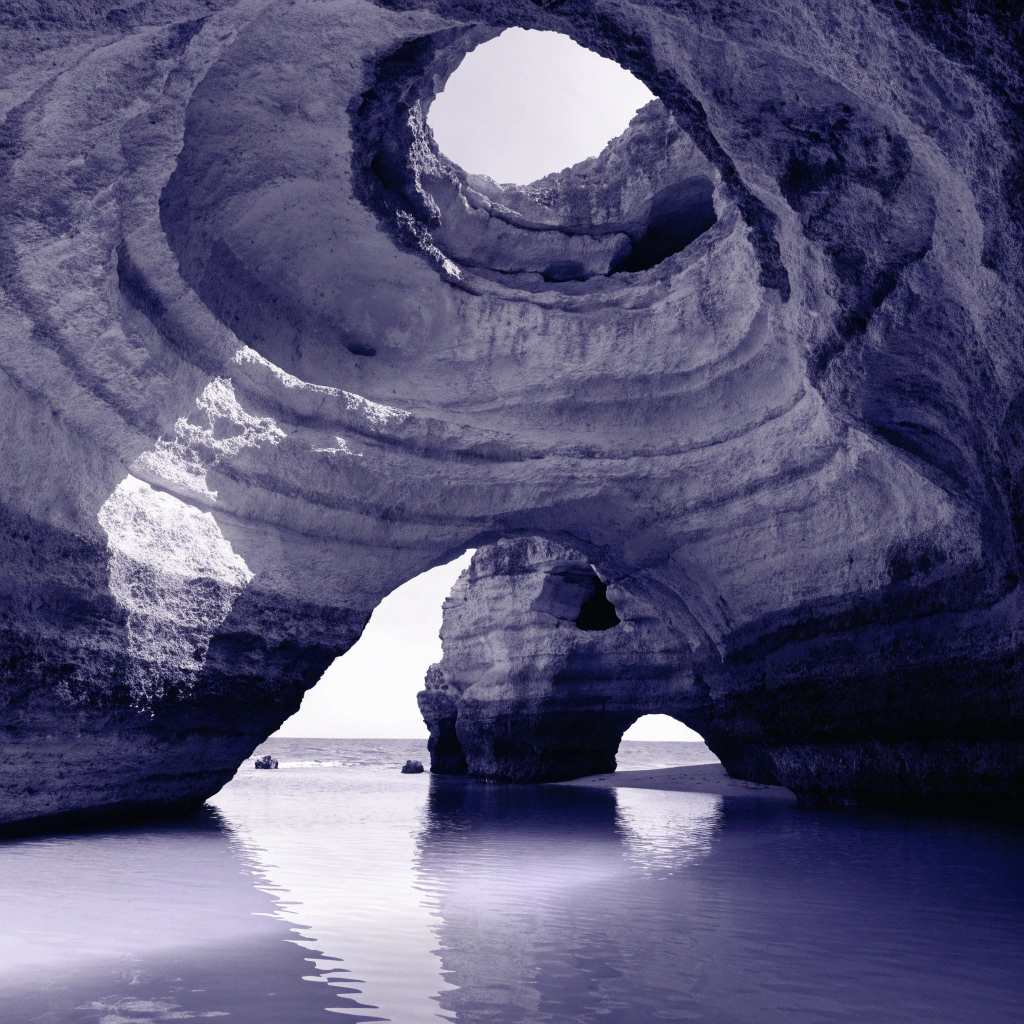
A Beautiful Cave in Portugal
Benagil Cave is a very big cave in Portugal. It is near the ocean. The cave is in the Algarve region. It is a beautiful place. The water is blue and the sand is yellow.
There is a big hole in the top of the cave. The sun shines through the hole. It is very bright and warm inside. Many people visit the cave every day.
You can see the cave by boat. You can also go there by kayak. The cave is very old. It is a famous natural wonder.
Gramática destacada
Patrón: Present Simple 'to be'
"It is a beautiful place."
We use 'is' with singular subjects like 'it' or 'the cave'. This pattern describes facts and states of being.
Patrón: Modal Verb 'can'
"You can see the cave by boat."
We use 'can' to talk about things that are possible. After 'can', we always use the base form of the verb without 'to'.
Pon a prueba tu comprensión
10 preguntas · A1 Principiante · 1 vista previa gratis
Pon a prueba lo que aprendiste en este artículo. ¡Responde todas las preguntas para ganar XP!
Where is Benagil Cave?
¿Quieres terminar el quiz?
9 preguntas más te esperan. ¡Regístrate gratis para desbloquear el quiz completo y ganar XP!
Regístrate gratis¿Ya tienes cuenta? Acceder
Desglose de preguntas
Where is Benagil Cave?
Tu respuesta:
Respuesta correcta: Portugal
The cave is very old.
Tu respuesta:
Respuesta correcta: Verdadero
What is a 'cave'?
Tu respuesta:
Respuesta correcta: A large hole in a rock
The water is _____.
Tu respuesta:
Respuesta correcta: blue
The Magic of Benagil Cave
The Benagil Cave is a very famous place in the south of Portugal. It is near a small fishing village called Benagil. This cave is special because it has a big hole in the roof. People call this hole 'the eye'.
The ocean created this natural wonder many years ago. The water was very strong, and it hit the rocks for a long time. Now, the cave is bigger and more beautiful than many other sea caves. When the sun shines through the hole, the sand inside looks like gold. It is a magical sight.
Many tourists visit the cave every year. You cannot walk to the cave because it is in the middle of the sea. Most people go there by boat, but some people use a kayak. Last summer, many visitors went there because the weather was hot and sunny. They took many photos of the blue water and the yellow cliffs. It is a perfect place for a holiday adventure.
Gramática destacada
Patrón: Past Simple
"The ocean created this natural wonder many years ago."
We use the past simple to talk about finished actions in the past. For regular verbs, we usually add '-ed' to the base verb.
Patrón: Comparatives
"the cave is bigger and more beautiful than many other sea caves."
We use comparatives to compare two things. For short words, we add '-er', and for long words, we use 'more' before the adjective.
Pon a prueba tu comprensión
11 preguntas · A2 Básico · 1 vista previa gratis
Pon a prueba lo que aprendiste en este artículo. ¡Responde todas las preguntas para ganar XP!
Where is the Benagil Cave located?
¿Quieres terminar el quiz?
10 preguntas más te esperan. ¡Regístrate gratis para desbloquear el quiz completo y ganar XP!
Regístrate gratis¿Ya tienes cuenta? Acceder
Desglose de preguntas
Where is the Benagil Cave located?
Tu respuesta:
Respuesta correcta: In the south of Portugal
You can easily walk from the village to the inside of the cave.
Tu respuesta:
Respuesta correcta: Falso
What does 'village' mean?
Tu respuesta:
Respuesta correcta: A very small town
Why is the Benagil Cave special?
Tu respuesta:
Respuesta correcta: It has a big hole in the roof
Most people go to the cave by _____ or kayak.
Tu respuesta:
Respuesta correcta: boat
The Magic of Benagil Cave: Portugal's Natural Wonder
The Benagil Cave is located in the Algarve, which is a famous coastal region in the south of Portugal. For many years, travelers have visited this area to enjoy its warm weather and beautiful beaches. The cave, which is known locally as 'Algar de Benagil', has been created by the constant movement of the Atlantic Ocean. Over millions of years, the soft limestone cliffs were slowly shaped by the powerful waves and wind.
What truly distinguishes this cave from others is the large circular hole in its roof. This natural skylight allows the bright sun to shine through, lighting up the golden sand and the turquoise water inside. It is often called the 'eye' of the cave by locals. When you stand on the small beach inside the cave, you can look up and see the clear blue sky. It is a magical and peaceful experience that has become very popular among photographers and tourists.
Because of its location, the cave cannot be reached by foot. The surrounding cliffs are very steep and dangerous to climb. Most visitors choose to take a boat tour from the nearby fishing village of Benagil. However, if you are feeling adventurous, you can rent a kayak or a stand-up paddleboard. This allows you to stay longer and explore the corners of the cave at your own pace.
The Algarve has been changed significantly by tourism over the last few decades, but the Benagil Cave remains a preserved natural wonder. It is important to protect this delicate environment so that future generations can continue to enjoy it. If you are planning a trip to Portugal, you should definitely include this amazing geological masterpiece in your travel itinerary.
Gramática destacada
Patrón: Passive Voice
"The cave... has been created by the constant movement of the Atlantic Ocean."
The passive voice is used when the action is more important than the person or thing doing it. It is formed using the verb 'to be' and the past participle.
Patrón: Relative Clauses
"The Benagil Cave is located in the Algarve, which is a famous coastal region in the south of Portugal."
A relative clause provides extra information about a noun. Non-defining relative clauses use 'which' or 'who' and are separated by commas.
Pon a prueba tu comprensión
11 preguntas · B1 Intermedio · 1 vista previa gratis
Pon a prueba lo que aprendiste en este artículo. ¡Responde todas las preguntas para ganar XP!
Where is the Benagil Cave located?
¿Quieres terminar el quiz?
10 preguntas más te esperan. ¡Regístrate gratis para desbloquear el quiz completo y ganar XP!
Regístrate gratis¿Ya tienes cuenta? Acceder
Desglose de preguntas
Where is the Benagil Cave located?
Tu respuesta:
Respuesta correcta: In the Algarve region
You can easily walk to the cave from the nearby cliffs.
Tu respuesta:
Respuesta correcta: Falso
What does 'masterpiece' mean?
Tu respuesta:
Respuesta correcta: A work of outstanding art or skill
The natural skylight allows the bright _____ to shine through the roof.
Tu respuesta:
Respuesta correcta: sun
How can visitors enter the cave?
Tu respuesta:
Respuesta correcta: By boat, kayak, or paddleboard
The Geological Splendour of Benagil Cave: Nature’s Coastal Masterpiece
Situated along the Algarve’s picturesque coastline in southern Portugal, Benagil Cave, known locally as ‘Algar de Benagil,’ stands as a testament to the transformative power of nature. While the region is globally renowned for its sun-drenched beaches and luxury resorts, this particular sea cave has gained international acclaim for its unique architectural qualities. It is not merely a hole in a cliff; it is a geological masterpiece sculpted over millions of years.
The formation of the cave is a fascinating narrative of endurance. Over millennia, the relentless force of the Atlantic Ocean has been battering the soft limestone cliffs that define the region. Consequently, this continuous erosion has hollowed out a massive chamber, creating a sanctuary of stone and sand. If one were to visit during low tide, the sheer scale of the interior would become immediately apparent, revealing a hidden beach tucked away from the external world.
What distinguishes Benagil from the hundreds of other coastal formations in Portugal is undoubtedly the ‘oculus’—a natural circular aperture in the ceiling. This opening allows vertical shafts of sunlight to filter through, illuminating the golden sands and turquoise waters within. It has been argued that the light play creates a cathedral-like atmosphere, which is why photographers and nature enthusiasts are consistently drawn to the site. The interaction between the sky, the rock, and the sea creates a visual spectacle that changes every hour as the sun moves across the horizon.
However, the surge in popularity has necessitated a serious discussion regarding environmental preservation. Although the cave is accessible by boat or kayak, swimming to the entrance is often discouraged due to unpredictable currents and heavy maritime traffic. Furthermore, local authorities have implemented increasingly stringent regulations to ensure that tourism does not compromise the structural integrity of the limestone. If more stringent measures hadn't been introduced, the delicate ecosystem might have already suffered irreparable damage.
In conclusion, Benagil Cave represents a delicate balance between natural beauty and human curiosity. It serves as a poignant reminder that while nature is incredibly resilient, it requires our collective respect and protection to endure for future generations. For the modern traveller, it offers a rare opportunity to witness the profound impact of time and tide on the physical landscape.
Gramática destacada
Patrón: Third Conditional (Hypothetical Past)
"If more stringent measures hadn't been introduced, the delicate ecosystem might have already suffered irreparable damage."
This is used to talk about a hypothetical situation in the past and its imaginary result. It is formed using 'If + past perfect' and 'might/would + have + past participle'.
Patrón: Passive Voice
"swimming to the entrance is often discouraged due to unpredictable currents"
The passive voice is used here to focus on the action (discouraging swimming) rather than who is doing it. It is formed with 'to be' + past participle.
Patrón: Relative Clauses for Adding Information
"the light play creates a cathedral-like atmosphere, which is why photographers are consistently drawn to the site."
The word 'which' is used here to refer back to the entire previous clause, providing a reason or a result in a formal, cohesive way.
Pon a prueba tu comprensión
11 preguntas · B2 Intermedio alto · 1 vista previa gratis
Pon a prueba lo que aprendiste en este artículo. ¡Responde todas las preguntas para ganar XP!
What is the primary reason Benagil Cave is considered unique compared to other caves?
¿Quieres terminar el quiz?
10 preguntas más te esperan. ¡Regístrate gratis para desbloquear el quiz completo y ganar XP!
Regístrate gratis¿Ya tienes cuenta? Acceder
Desglose de preguntas
What is the primary reason Benagil Cave is considered unique compared to other caves?
Tu respuesta:
Respuesta correcta: It has a natural circular opening in its ceiling.
Swimming to the cave is recommended as the safest way to enter.
Tu respuesta:
Respuesta correcta: Falso
What does the word 'stringent' mean in the context of the article?
Tu respuesta:
Respuesta correcta: Strict and precise.
The cave was formed over millions of years by the _____ of limestone cliffs.
Tu respuesta:
Respuesta correcta: erosion
What is the 'oculus' responsible for inside the cave?
Tu respuesta:
Respuesta correcta: Allowing sunlight to illuminate the interior.
The Ethereal Majesty of Benagil: A Geological Masterpiece Under Pressure
Seldom has a natural formation captured the global imagination so profoundly as the Benagil Cave, known locally as ‘Algar de Benagil.’ Nestled along the sun-drenched southern coastline of Portugal’s Algarve, this cavernous sanctuary stands as a testament to the relentless power of the Atlantic Ocean. Over millions of years, the persistent action of waves against the soft limestone cliffs has sculpted a geological masterpiece that transcends mere aesthetic beauty. It is the celestial ‘eye’ in the cavernous ceiling—a naturally occurring skylight—that truly distinguishes Benagil from the myriad of other sea caves dotting the shoreline, allowing shafts of luminous sunlight to dance upon the golden sands within.
The formation of such a structure is a study in the interplay between terrestrial fragility and maritime force. The limestone, primarily composed of compressed marine organisms from the Miocene epoch, is particularly susceptible to erosion. As the ocean pummels the base of the cliffs, hydraulic action and abrasion carve out hollows, eventually leading to the collapse of internal sections. What remains is a cathedral-like space where the acoustics of the crashing surf resonate with a sublime intensity. However, the very features that draw the inquisitive traveler to these shores—the intricate textures of the rock and the vibrant turquoise waters—are the result of an ongoing, and ultimately destructive, geological process.
In recent years, the discourse surrounding Benagil has shifted from pure admiration to a critical analysis of sustainability. The relentless commodification of this geological marvel poses a significant threat to its preservation. It is not merely the physical footprint of the thousands of visitors who flock to the cave via boat, kayak, or paddleboard that concerns environmentalists, but the broader impact of mass tourism on the local ecosystem. The village of Benagil, once a quiet fishing enclave, now finds itself at the heart of a logistical whirlwind. The surge in maritime traffic has led to concerns regarding water quality and the structural integrity of the cliffs themselves.
Furthermore, the accessibility of the cave presents a perilous challenge. Despite the serene appearance of the grotto, the Atlantic is notoriously unpredictable. Strong currents and sudden swells mean that the journey into the cave is never without risk. It is the delicate balance between human curiosity and environmental stewardship that must now be navigated. While the economic benefits of tourism are undeniable for the region, the potential for irreversible damage to this ephemeral wonder cannot be ignored. The preservation of Benagil requires a nuanced approach, one that prioritizes the sanctity of the site over short-term financial gain. Only through rigorous regulation and a collective shift in perspective can we ensure that future generations might still witness the interplay of light and stone in this Portuguese crown jewel.
Gramática destacada
Patrón: Negative Inversion
"Seldom has a natural formation captured the global imagination so profoundly as the Benagil Cave."
This pattern places a negative or restrictive adverb at the beginning of the sentence for emphasis. When this happens, the auxiliary verb moves before the subject, creating a formal and dramatic tone.
Patrón: Cleft Sentences
"It is the celestial ‘eye’ in the cavernous ceiling that truly distinguishes Benagil from the myriad of other sea caves."
Cleft sentences are used to focus on a specific piece of information. By using 'It is... that...', the writer emphasizes the 'eye' as the most important feature.
Patrón: Nominalisation
"The relentless commodification of this geological marvel poses a significant threat to its preservation."
Nominalisation involves turning verbs or adjectives into nouns (e.g., 'commodify' to 'commodification'). This makes the writing more abstract, formal, and concise, which is characteristic of C1 level academic or analytical texts.
Pon a prueba tu comprensión
12 preguntas · C1 Avanzado · 1 vista previa gratis
Pon a prueba lo que aprendiste en este artículo. ¡Responde todas las preguntas para ganar XP!
What is identified as the primary distinguishing feature of the Benagil Cave?
¿Quieres terminar el quiz?
11 preguntas más te esperan. ¡Regístrate gratis para desbloquear el quiz completo y ganar XP!
Regístrate gratis¿Ya tienes cuenta? Acceder
Desglose de preguntas
What is identified as the primary distinguishing feature of the Benagil Cave?
Tu respuesta:
Respuesta correcta: The natural skylight in the ceiling
The limestone forming the cave is composed of materials from the Miocene epoch.
Tu respuesta:
Respuesta correcta: Verdadero
What does 'ephemeral' mean in the context of the article?
Tu respuesta:
Respuesta correcta: Lasting a short time
The preservation of the cave requires a _____ approach that balances economics and ecology.
Tu respuesta:
Respuesta correcta: nuanced
What is the author's primary concern regarding the cave's future?
Tu respuesta:
Respuesta correcta: The environmental impact of mass tourism
The cave was formed through the collapse of internal rock sections over time.
Tu respuesta:
Respuesta correcta: Verdadero
El Algar de Benagil: Una Sinfonía Geológica y el Ineludible Desafío de su Preservación
En el corazón del Algarve, esa franja costera meridional de Portugal que antaño fue crisol de civilizaciones y hoy es epítome del turismo litoral, yace una maravilla natural de una singularidad casi inverosímil: el Algar de Benagil. Conocido popularmente como la Cueva de Benagil, este santuario geológico no es meramente una cavidad marina, sino el resultado de un incesante y paciente diálogo entre la fuerza telúrica del océano Atlántico y la maleabilidad de una litología predominantemente calcárea. Su génesis, que se remonta a millones de años, es un testimonio elocuente de los procesos de erosión diferencial y karstificación que han modelado este tramo costero, confiriéndole una morfología que desafía la imaginación.
Lo que confiere al Algar de Benagil su impronta distintiva y su ubicuidad en el imaginario turístico es, sin duda, su majestuoso 'óculo' o claraboya natural en la bóveda. Esta abertura cenital, esculpida por el colapso de una parte del techo de la cueva, permite que la luz solar se filtre en cascada, iluminando la prístina playa de arena dorada que alberga en su interior y creando un juego de luces y sombras cuya reverberación sobre las aguas turquesas es simplemente hipnótica. Es este fenómeno lumínico el que transforma un mero accidente geográfico en un espacio casi trascendente, donde la naturaleza se revela en su faceta más artística y sobrecogedora. La acústica del lugar, que amplifica el murmullo de las olas y el canto de las aves marinas, contribuye a una experiencia multisensorial que pocos parajes naturales pueden emular.
La notoriedad de Benagil ha propiciado una afluencia turística sin precedentes, convirtiéndola en un icono del Algarve. El acceso a la cueva, que solo es posible por mar, ha generado una floreciente industria de excursiones en barco, kayak y paddle surf. No obstante, esta popularidad entraña un dilema ineludible: ¿cómo conciliar la admiración de esta joya natural con su imperiosa necesidad de preservación? La fragilidad del ecosistema subyacente y la creciente presión antropogénica plantean serios interrogantes sobre la sostenibilidad a largo plazo de las visitas. Se ha observado un deterioro perceptible en algunas zonas, y la alteración del comportamiento de la fauna local es una preocupación legítima. Cabría, pues, reflexionar sobre la implementación de medidas más estrictas que garanticen que la cueva pueda seguir siendo un espectáculo para las futuras generaciones, sin que su esencia se vea menoscabada por el fervor del presente.
Es imperativo que la gestión turística de Benagil se articule en torno a principios de sostenibilidad y respeto ambiental. Esto podría implicar la regulación del número de visitantes, la restricción de ciertas actividades o incluso la creación de zonas de exclusión temporal para permitir la regeneración natural. El Algar de Benagil no es solo un destino; es un recordatorio palpable de la belleza efímera y la vulnerabilidad de nuestro patrimonio natural. Su devenir futuro dependerá, en última instancia, de la conciencia colectiva y de la voluntad política para salvaguardar su intrínseca magnificencia frente a los envites de la explotación desmedida. Así las cosas, su contemplación nos invita no solo a la admiración, sino también a una profunda introspección sobre nuestro papel como custodios de la Tierra. Una visita al Algar de Benagil debería ser, por ende, una lección de humildad y una reafirmación de nuestro compromiso con la conservación planetaria.
Gramática destacada
Patrón: Subjuntivo en cláusulas adverbiales de propósito
"Es imperativo que la gestión turística de Benagil se articule en torno a principios de sostenibilidad y respeto ambiental."
El subjuntivo se utiliza aquí en una cláusula subordinada introducida por 'que' después de una expresión impersonal de obligación o necesidad ('Es imperativo que'). Indica que la acción de 'articularse' es una condición deseada o necesaria para alcanzar un objetivo, no un hecho consumado. Se forma con el presente de subjuntivo del verbo principal.
Patrón: Uso de 'Cabría' para expresar posibilidad o sugerencia académica
"Cabría, pues, reflexionar sobre la implementación de medidas más estrictas que garanticen que la cueva pueda seguir siendo un espectáculo para las futuras generaciones."
El verbo 'caber' en condicional ('cabría') se usa frecuentemente en contextos formales o académicos para expresar una posibilidad, una conveniencia o una sugerencia de forma atenuada y cortés. Es una forma de 'hedging' o mitigación, indicando que 'sería posible' o 'sería conveniente' reflexionar.
Patrón: Construcción pasiva refleja con 'se'
"Lo que confiere al Algar de Benagil su impronta distintiva y su ubicuidad en el imaginario turístico es, sin duda, su majestuoso 'óculo' o claraboya natural en la bóveda."
Aunque este ejemplo no es una pasiva refleja típica con 'se', la frase 'se ha observado un deterioro perceptible' (del artículo) es un ejemplo. La pasiva refleja se construye con 'se' + el verbo en tercera persona del singular o plural, concordando con el sujeto paciente. Se usa para describir una acción sin especificar el agente que la realiza, enfatizando el hecho o resultado.
Pon a prueba tu comprensión
12 preguntas · C2 Dominio · 1 vista previa gratis
Pon a prueba lo que aprendiste en este artículo. ¡Responde todas las preguntas para ganar XP!
¿Cuál es la característica más distintiva del Algar de Benagil según el artículo?
¿Quieres terminar el quiz?
11 preguntas más te esperan. ¡Regístrate gratis para desbloquear el quiz completo y ganar XP!
Regístrate gratis¿Ya tienes cuenta? Acceder
Desglose de preguntas
¿Cuál es la característica más distintiva del Algar de Benagil según el artículo?
Tu respuesta:
Respuesta correcta: Su 'óculo' o claraboya natural en la bóveda.
El artículo sugiere que la popularidad del Algar de Benagil no ha generado ningún dilema ambiental.
Tu respuesta:
Respuesta correcta: Falso
¿Qué significa 'ineludible' en el contexto del artículo?
Tu respuesta:
Respuesta correcta: Que es imposible de eludir o evitar.
La ____________ del ecosistema subyacente y la creciente presión antropogénica plantean serios interrogantes sobre la sostenibilidad a largo plazo de las visitas.
Tu respuesta:
Respuesta correcta: fragilidad
Según el artículo, ¿qué tipo de procesos geológicos han modelado la cueva?
Tu respuesta:
Respuesta correcta: Erosión diferencial y karstificación.
El acceso al Algar de Benagil es posible tanto por tierra como por mar.
Tu respuesta:
Respuesta correcta: Falso

