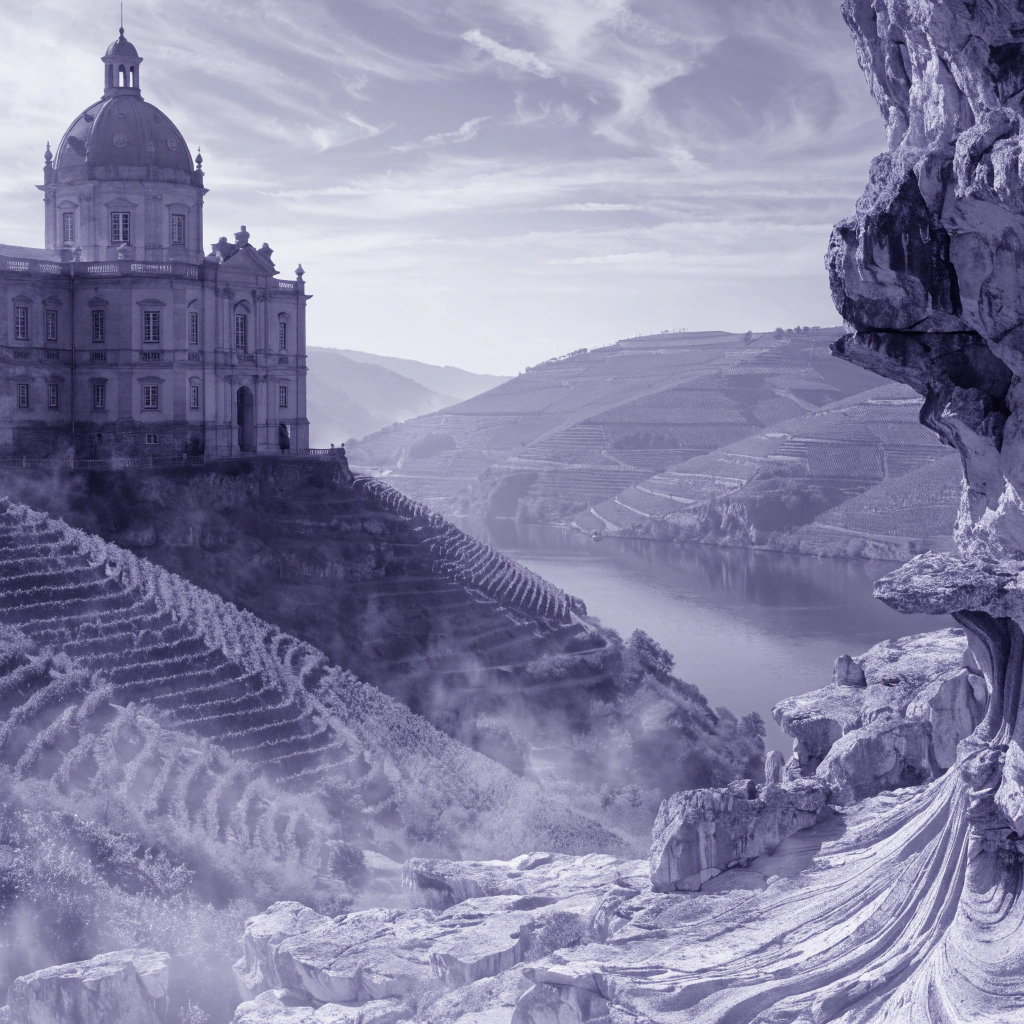
The Beautiful Douro Valley
The Douro Valley is a beautiful place in Portugal. It is in the north of the country. There is a big river here. The name of the river is the Douro.
The valley has many high mountains. On these mountains, farmers grow grapes. People use the grapes to make famous wine. This wine is very old and special.
Many people visit the Douro Valley every year. They see the green hills and the blue water. They take photos of the small villages. It is a quiet and lovely place for a holiday.
Gramática destacada
Patrón: Present Simple 'Be'
"The Douro Valley is a beautiful place in Portugal."
We use 'is' to describe a single place or thing. It helps us give facts or descriptions in the present.
Patrón: Present Simple (Regular Verbs)
"Farmers grow grapes."
We use the base form of the verb (grow) for plural subjects (farmers) to talk about facts or general actions.
Pon a prueba tu comprensión
10 preguntas · A1 Principiante · 1 vista previa gratis
Pon a prueba lo que aprendiste en este artículo. ¡Responde todas las preguntas para ganar XP!
Where is the Douro Valley?
¿Quieres terminar el quiz?
9 preguntas más te esperan. ¡Regístrate gratis para desbloquear el quiz completo y ganar XP!
Regístrate gratis¿Ya tienes cuenta? Acceder
Desglose de preguntas
Where is the Douro Valley?
Tu respuesta:
Respuesta correcta: Portugal
The Douro Valley is in the south of the country.
Tu respuesta:
Respuesta correcta: Falso
What is a 'valley'?
Tu respuesta:
Respuesta correcta: Land between mountains
The name of the _____ is the Douro.
Tu respuesta:
Respuesta correcta: river
El Valle del Duero: Un Tesoro de Portugal
El Valle del Duero es una región muy especial en el norte de Portugal. No es solo un lugar bonito; es un monumento a la historia y al trabajo de muchas personas. Es la región de vino más antigua del mundo. Fue declarada así por primera vez en 1756. Por eso, la UNESCO la nombró Patrimonio de la Humanidad.
El río Duero es muy importante aquí. Atraviesa montañas grandes y crea un paisaje único. Las personas construyeron terrazas en las laderas de las montañas para plantar viñedos. De estas uvas, se produce el famoso vino de Oporto. Es un vino muy conocido en todo el mundo.
Visitar el Valle del Duero es una experiencia maravillosa. Puedes viajar en barco por el río o en tren. Así, puedes ver los viñedos y las fincas. Es un lugar donde la naturaleza y la historia se unen de una forma muy bonita. Es un destino perfecto para conocer la cultura portuguesa y disfrutar de un paisaje impresionante.
Gramática destacada
Patrón: El Pretérito Indefinido (Past Simple)
"Fue declarada así por primera vez en 1756."
Usamos el pretérito indefinido para hablar de acciones pasadas que terminaron en un momento específico. Aquí, 'fue declarada' (del verbo 'ser') describe un evento que ocurrió en el año 1756.
Patrón: Ser y Estar (Verbos 'to be')
"El Valle del Duero es una región muy especial en el norte de Portugal."
Usamos 'ser' para hablar de características permanentes o la identidad de algo (como 'es una región'). Usamos 'estar' para la ubicación o estados temporales. Por ejemplo, 'está en el norte de Portugal' indica la posición.
Pon a prueba tu comprensión
11 preguntas · A2 Básico · 1 vista previa gratis
Pon a prueba lo que aprendiste en este artículo. ¡Responde todas las preguntas para ganar XP!
¿Dónde está el Valle del Duero?
¿Quieres terminar el quiz?
10 preguntas más te esperan. ¡Regístrate gratis para desbloquear el quiz completo y ganar XP!
Regístrate gratis¿Ya tienes cuenta? Acceder
Desglose de preguntas
¿Dónde está el Valle del Duero?
Tu respuesta:
Respuesta correcta: En el norte de Portugal
El Valle del Duero es famoso por su café.
Tu respuesta:
Respuesta correcta: Falso
¿Qué significa la palabra 'Paisaje'?
Tu respuesta:
Respuesta correcta: La vista de una zona de tierra
El río _______ es muy importante en esta región.
Tu respuesta:
Respuesta correcta: Duero
¿Qué institución nombró al Valle del Duero Patrimonio de la Humanidad?
Tu respuesta:
Respuesta correcta: La UNESCO
The Douro Valley: A Journey Through History and Nature
The Douro Valley, which is located in Northern Portugal, is often described as one of the most beautiful hidden gems in Europe. It has been famous for centuries because of its unique wine production and stunning landscapes. In 1756, the region was officially established by the Marquis of Pombal, making it the oldest regulated wine region in the entire world.
The landscape is dominated by the Douro River, which carves a winding path through high, rugged mountains. Because the land is so steep, farmers have had to adapt to the environment. Over many generations, these slopes have been transformed into thousands of stone terraces where grapes are grown. This incredible human achievement has been recognized by UNESCO, which named the valley a World Heritage site in 2001.
The region is world-famous for Port wine, a sweet and strong drink that is produced in the valley and then aged in the nearby city of Porto. Travelers who visit the valley usually take a boat trip or a train journey to see the views. They often stay in 'quintas,' which are traditional wine estates that offer a glimpse into the local culture. Many modern tourists have discovered the valley recently, but the atmosphere still feels peaceful and authentic.
In recent years, the Douro Valley has become a popular destination for those who enjoy slow travel. Visitors can walk through the vineyards, taste local food, and learn how the wine is made. It is a place where history and nature have joined together to create something truly spectacular. The Douro Valley is a living monument that has survived for hundreds of years, and it continues to impress everyone who visits.
Gramática destacada
Patrón: Passive Voice
"In 1756, the region was officially established by the Marquis of Pombal."
We use the passive voice (be + past participle) when the action or the object of the action is more important than the person doing it. It is common in formal or historical contexts.
Patrón: Present Perfect
"Many modern tourists have discovered the valley recently."
The present perfect (have/has + past participle) connects the past to the present. It is used here to describe an action that happened at an unspecified time in the past but has relevance now.
Pon a prueba tu comprensión
11 preguntas · B1 Intermedio · 1 vista previa gratis
Pon a prueba lo que aprendiste en este artículo. ¡Responde todas las preguntas para ganar XP!
What makes the Douro Valley wine region special historically?
¿Quieres terminar el quiz?
10 preguntas más te esperan. ¡Regístrate gratis para desbloquear el quiz completo y ganar XP!
Regístrate gratis¿Ya tienes cuenta? Acceder
Desglose de preguntas
What makes the Douro Valley wine region special historically?
Tu respuesta:
Respuesta correcta: It is the oldest regulated wine region in the world
The terraces in the Douro Valley were created naturally by the river.
Tu respuesta:
Respuesta correcta: Falso
What does 'authentic' mean in the context of the article?
Tu respuesta:
Respuesta correcta: Real and traditional
The landscape has been transformed into stone _____ where grapes are grown.
Tu respuesta:
Respuesta correcta: terraces
Where is Port wine usually aged after being produced in the valley?
Tu respuesta:
Respuesta correcta: In the city of Porto
The Douro Valley: A Legacy of Human Ingenuity and Viticulture
The Douro Valley, situated in Northern Portugal, is widely regarded as one of the most stunning landscapes in Europe. However, its beauty is not merely a product of nature; rather, it represents a remarkable synthesis of human ingenuity and environmental adaptation. Having been shaped over centuries by the tireless labor of local farmers, the region stands as the world’s oldest demarcated wine region, a status it has held since 1756 when it was formally regulated by the Marquis of Pombal.
The valley is characterized by its dramatic, winding river and the steep mountains that flank its banks. To make the land suitable for viticulture, generations of workers carved intricate terraces into the schist rock. These man-made structures are essential for preventing soil erosion on the precarious slopes. Consequently, the Douro has been recognized as a UNESCO World Heritage site, not only for its scenic appeal but also for its cultural and historical significance. The physical transformation of the landscape is a testament to the endurance of the Portuguese people who turned a hostile terrain into a productive agricultural marvel.
Furthermore, the region's climate plays a pivotal role in the production of its world-famous Port wine. Sheltered from the Atlantic winds by the Marão mountains, the valley experiences scorching summers and harsh winters. This unique microclimate, combined with the stony soil, forces the vines to delve deep into the earth for moisture, resulting in grapes of exceptional quality and concentration. Without this specific environmental combination, the distinct characteristics of Port wine would be impossible to replicate elsewhere.
Despite the challenges posed by the rugged terrain, the Douro Valley has successfully modernized while preserving its traditional heritage. Many of the historic quintas, or wine estates, now offer sophisticated tourism experiences, allowing visitors to appreciate the labor-intensive process behind every bottle. Nevertheless, the region faces contemporary threats such as climate change, which could potentially disrupt the delicate balance required for wine production. In conclusion, the Douro Valley is far more than a destination for connoisseurs. It is a living monument to the profound connection between the land and its people, requiring ongoing preservation for future generations to admire.
Gramática destacada
Patrón: Perfect Participle Clause
"Having been shaped over centuries by the tireless labor of local farmers, the region stands as the world’s oldest demarcated wine region."
This pattern is used to show that one action happened before another. It is formed using 'Having been' + past participle, often used in formal writing to provide background information.
Patrón: Passive Voice (Present Simple)
"The Douro Valley, situated in Northern Portugal, is widely regarded as one of the most stunning landscapes in Europe."
The passive voice is used here to focus on the valley rather than the people who regard it. It is formed using 'is/are' + past participle.
Patrón: Non-defining Relative Clause
"Nevertheless, the region faces contemporary threats such as climate change, which could potentially disrupt the delicate balance required for wine production."
This clause adds extra information about the noun 'climate change'. It is separated by commas and uses 'which' to introduce the additional detail.
Pon a prueba tu comprensión
11 preguntas · B2 Intermedio alto · 1 vista previa gratis
Pon a prueba lo que aprendiste en este artículo. ¡Responde todas las preguntas para ganar XP!
What historical event occurred in 1756 regarding the Douro Valley?
¿Quieres terminar el quiz?
10 preguntas más te esperan. ¡Regístrate gratis para desbloquear el quiz completo y ganar XP!
Regístrate gratis¿Ya tienes cuenta? Acceder
Desglose de preguntas
What historical event occurred in 1756 regarding the Douro Valley?
Tu respuesta:
Respuesta correcta: It was formally regulated as a wine region.
The Marão mountains protect the valley from Atlantic winds.
Tu respuesta:
Respuesta correcta: Verdadero
What does the word 'precarious' describe in the text?
Tu respuesta:
Respuesta correcta: The steepness and danger of the slopes.
The man-made terraces are essential for preventing soil _____ on the slopes.
Tu respuesta:
Respuesta correcta: erosion
Why do the vines in the Douro Valley produce high-quality grapes?
Tu respuesta:
Respuesta correcta: Because the stony soil forces them to delve deep for moisture.
El Valle del Duero: Cuna Eterna de la Viticultura y Patrimonio de la Humanidad
Más que un mero paisaje pintoresco, el Valle del Duero se erige como un monumento vivo, testimonio perenne de siglos de tenacidad humana y de una maestría agrícola sin parangón. No en vano, se trata de la región vitivinícola demarcada y regulada más antigua del mundo; fue el Marqués de Pombal quien, en 1756, sentó las bases de su formalización, consolidando así un legado que hoy trasciende fronteras. Este sitio, declarado Patrimonio de la Humanidad por la UNESCO, en el norte de Portugal, es la cuna ancestral del afamado vino de Oporto, cuya idiosincrasia está intrínsecamente ligada a la geografía y al espíritu de sus gentes.
El valle está cincelado por el río Duero, que traza una senda sinuosa a través de montañas escarpadas, las cuales, a lo largo de incontables generaciones, han sido meticulosamente transformadas. De esta labor titánica, que ha esculpido terrazas de piedra en las laderas más pronunciadas, se desprende la inconfundible belleza del lugar. Tal metamorfosis no es sino la cristalización de un esfuerzo colectivo, una simbiosis entre el hombre y la naturaleza, donde cada bancal de viñedo encarna la voluntad de domar un terreno hostil para extraer de él néctares divinos.
La viticultura en el Duero no es una actividad meramente económica; es el alma de la región, una tradición que se hereda y perfecciona con cada cosecha. Es la necesidad de adaptarse a un clima extremo, con veranos abrasadores e inviernos crudos, lo que ha forjado variedades de uva autóctonas de excepcional resistencia y carácter. La uva Tinta Roriz, Touriga Nacional y Touriga Franca son solo algunos ejemplos de las cepas que, arraigadas en el esquisto pizarroso, confieren a los vinos del Duero su complejidad y profundidad inigualables. De la calidad de estos caldos, y de su capacidad de envejecimiento, da fe su prestigio internacional.
La singularidad del Duero no solo reside en su vino, sino también en la infraestructura que ha sido necesaria para su producción y transporte. Los "rabelos", embarcaciones tradicionales, antaño surcaban las aguas del río transportando las barricas de Oporto desde las "quintas" (fincas) río abajo hasta las bodegas de Vila Nova de Gaia, frente a Oporto. Si bien hoy el transporte se realiza por carretera, la imagen de estos barcos evoca una época de arduo trabajo y aventura, un recordatorio vívido de las raíces históricas de la región. La persistencia de estas quintas, muchas de ellas centenarias, subraya el compromiso con métodos de cultivo y elaboración que, aun evolucionando, respetan la esencia del terruño.
La visita al Valle del Duero es, para el viajero, una inmersión en un paisaje cultural excepcional. Desde las alturas de sus miradores, la vista se pierde en un mar de viñedos que, según la estación, visten la ladera de verdes intensos o de dorados y cobrizos otoñales. Es la combinación de una historia rica, una naturaleza sobrecogedora y una cultura del vino profundamente arraigada lo que confiere al Duero su atractivo ineludible. Preservar este patrimonio, tanto natural como cultural, es un imperativo para las generaciones venideras, asegurando que esta maravilla portuguesa siga deleitando paladares y asombrando miradas por los siglos de los siglos.
Gramática destacada
Patrón: Oraciones hendidas (Cleft Sentences)
"Fue el Marqués de Pombal quien, en 1756, sentó las bases de su formalización."
Las oraciones hendidas se usan para enfatizar una parte específica de la oración (en este caso, 'el Marqués de Pombal'). Se construyen típicamente con 'ser' + elemento enfatizado + 'que/quien' + el resto de la oración. Permiten destacar información clave de manera natural en un nivel C1.
Patrón: Nominalización
"De esta labor titánica, que ha esculpido terrazas de piedra en las laderas más pronunciadas, se desprende la inconfundible belleza del lugar. Tal metamorfosis no es sino la cristalización de un esfuerzo colectivo..."
La nominalización consiste en transformar verbos o adjetivos en sustantivos para expresar ideas de forma más concisa y formal. Aquí, 'labor titánica' (de 'trabajar titánicamente') y 'cristalización' (de 'cristalizar') aportan densidad y elegancia al texto, características de un registro C1.
Patrón: Inversión del orden sintáctico
"De la calidad de estos caldos, y de su capacidad de envejecimiento, da fe su prestigio internacional."
La inversión del orden sintáctico, como colocar el complemento de régimen o el objeto indirecto al principio de la frase seguido del verbo, es un recurso estilístico que aporta énfasis y fluidez. En este caso, se destaca la causa ('la calidad... y capacidad') antes de la consecuencia ('su prestigio internacional').
Pon a prueba tu comprensión
12 preguntas · C1 Avanzado · 1 vista previa gratis
Pon a prueba lo que aprendiste en este artículo. ¡Responde todas las preguntas para ganar XP!
¿Cuál de las siguientes afirmaciones sobre el Valle del Duero es FALSA?
¿Quieres terminar el quiz?
11 preguntas más te esperan. ¡Regístrate gratis para desbloquear el quiz completo y ganar XP!
Regístrate gratis¿Ya tienes cuenta? Acceder
Desglose de preguntas
¿Cuál de las siguientes afirmaciones sobre el Valle del Duero es FALSA?
Tu respuesta:
Respuesta correcta: Fue formalizada por el Marqués de Pombal en el siglo XVII.
Los 'rabelos' son embarcaciones tradicionales que se usaban para transportar el vino de Oporto por carretera.
Tu respuesta:
Respuesta correcta: Falso
¿Qué significa la palabra 'escarpadas' en el contexto del artículo?
Tu respuesta:
Respuesta correcta: De pendiente muy pronunciada.
El Valle del Duero es un monumento vivo, testimonio perenne de siglos de __________ humana.
Tu respuesta:
Respuesta correcta: tenacidad
¿Qué característica principal de las montañas del Duero se menciona en el artículo?
Tu respuesta:
Respuesta correcta: Han sido transformadas en terrazas de piedra.
La viticultura en el Duero es una actividad exclusivamente económica, sin raíces culturales profundas.
Tu respuesta:
Respuesta correcta: Falso
The Douro Valley: A Palimpsest of Viticulture and Anthropic Ingenuity
The Douro Valley, a geological fissure of unparalleled grandeur in Northern Portugal, serves as more than a mere pastoral backdrop; it constitutes a living testament to the unrelenting perseverance of human labor against a recalcitrant topography. Were one to traverse the sinuous contours of the river’s path, the immediate impression would be one of profound artifice masquerading as nature. This is a landscape entirely rewritten by the hand of man, a palimpsest where centuries of viticultural tradition have been etched into the precipitous schistous slopes. Historically, the region’s significance was codified in 1756 by the Marquis of Pombal, who established the world’s first demarcated and regulated wine region. This act was not merely an exercise in bureaucratic oversight but a sophisticated manifestation of mercantilist sovereignty, designed to ensure the integrity of Port wine against the encroaching vagaries of international trade.
The defining characteristic of the Douro is the 'socalcos'—the man-made terraces that cling to the mountainsides with a tenacity that defies gravity. These structures, constructed from dry stone, represent a Herculean effort to render the steep inclines arable. Seldom has the hand of man so thoroughly transformed a wilderness into a productive oenological engine. The relationship between the vine and the soil here is symbiotic, yet fraught with challenge; the schist rock must often be fractured to allow the roots to penetrate deep into the earth in search of water. This struggle is precisely what imparts the wine with its characteristic depth and complexity. One might posit that the very harshness of the environment is the catalyst for the region’s viticultural excellence, forcing the flora to adapt in ways that yield unparalleled concentrations of flavor.
Furthermore, the valley’s status as a UNESCO World Heritage site acknowledges that its value transcends mere economic output. It is a cultural landscape that reflects a long-standing tradition of land use, where the interstices between the vineyards are filled with olive groves and almond trees, creating a mosaic of biodiversity. However, the region is not immune to the ephemeral nature of modern economic trends. While the production of Port remains the quintessential endeavor, there has been a notable shift toward the production of high-quality unfortified table wines. This diversification suggests a certain resilience, an ability to pivot in the face of changing global palates while maintaining a steadfast commitment to the terroir.
Critics might argue that the increasing influx of tourism threatens to dilute the authentic character of the Douro. Yet, it is precisely through this global engagement that the valley secures the capital necessary to maintain its labor-intensive infrastructure. The maintenance of the dry-stone walls is a perennial task, requiring a specific skill set that is increasingly rare in the modern age. Should these traditional methods be abandoned, the very structural integrity of the valley would be compromised. Thus, the Douro exists in a state of precarious equilibrium, balancing the weight of its historical legacy with the demands of contemporary sustainability. It remains a place where the past is not merely remembered but is actively performed through every harvest, ensuring that the legacy of the Marquis of Pombal continues to resonate through the sinuous valleys of the North.
Gramática destacada
Patrón: Inversion with Negative Adverbials
"Seldom has the hand of man so thoroughly transformed a wilderness into a productive oenological engine."
When a sentence begins with a negative adverbial like 'seldom', the auxiliary verb is placed before the subject to add rhetorical emphasis and formality.
Patrón: The Past Subjunctive for Hypotheses
"Were one to traverse the sinuous contours of the river’s path, the immediate impression would be one of profound artifice masquerading as nature."
This structure uses 'Were' + subject to create a formal hypothetical condition, typically used in academic or literary contexts instead of 'If one were to'.
Patrón: Academic Hedging with Modal Verbs
"One might posit that the very harshness of the environment is the catalyst for the region’s viticultural excellence."
Using 'might posit' allows the writer to suggest a theory or interpretation without stating it as an absolute fact, which is a hallmark of scholarly prose.
Pon a prueba tu comprensión
12 preguntas · C2 Dominio · 1 vista previa gratis
Pon a prueba lo que aprendiste en este artículo. ¡Responde todas las preguntas para ganar XP!
What does the author suggest by calling the Douro Valley a 'palimpsest'?
¿Quieres terminar el quiz?
11 preguntas más te esperan. ¡Regístrate gratis para desbloquear el quiz completo y ganar XP!
Regístrate gratis¿Ya tienes cuenta? Acceder
Desglose de preguntas
What does the author suggest by calling the Douro Valley a 'palimpsest'?
Tu respuesta:
Respuesta correcta: The current landscape bears the visible layers of historical human intervention.
The Marquis of Pombal established the demarcated region primarily to encourage tourism.
Tu respuesta:
Respuesta correcta: Falso
Which word describes a landscape or person that is stubbornly resistant to control?
Tu respuesta:
Respuesta correcta: Recalcitrant
The man-made terraces, known as _____, are essential for viticulture on the steep slopes.
Tu respuesta:
Respuesta correcta: socalcos
According to the text, what is the 'precarious equilibrium' the Douro faces?
Tu respuesta:
Respuesta correcta: The tension between preserving historical integrity and modern economic/sustainable needs.
The author argues that the harsh environment of the Douro actually improves the quality of the wine.
Tu respuesta:
Respuesta correcta: Verdadero

