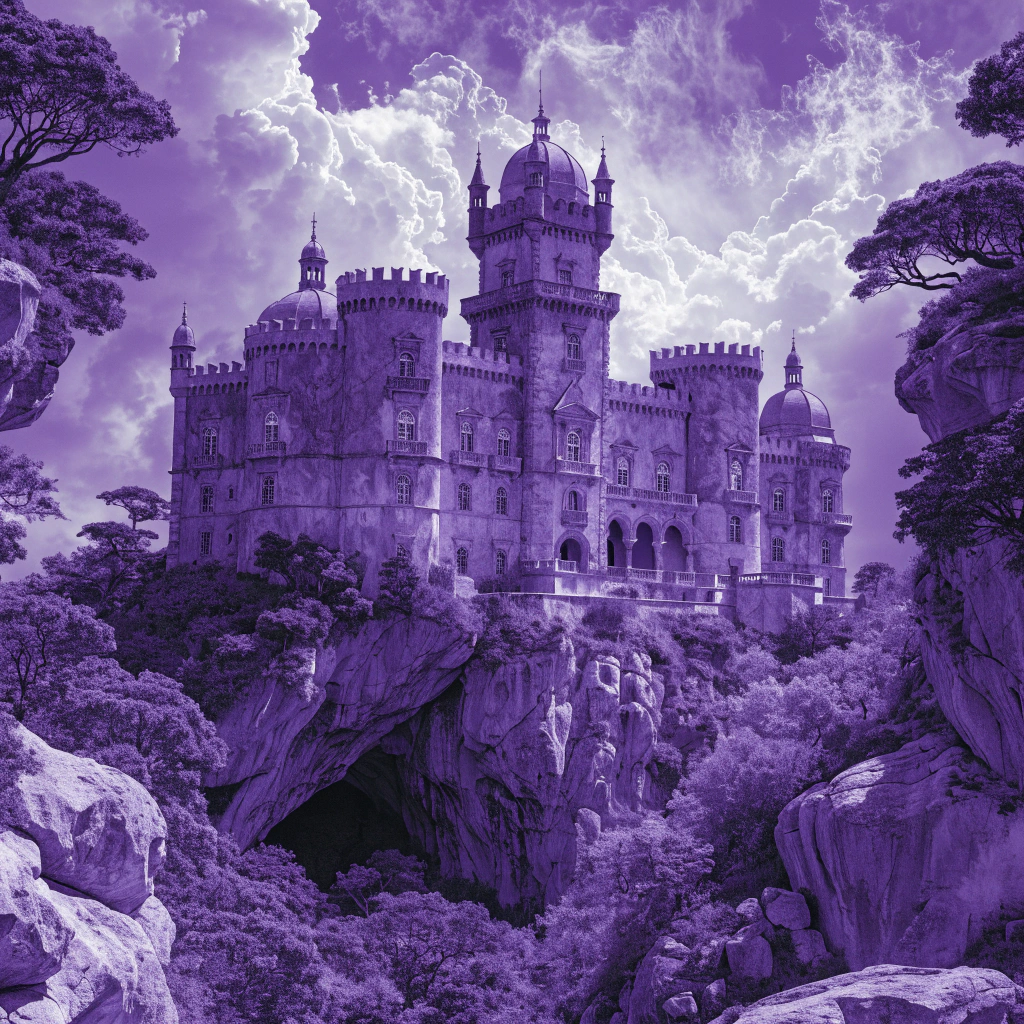
The Colorful Palace of Portugal
The Pena Palace is in Portugal. It is on a high mountain in Sintra. The palace is very beautiful and colorful. It has yellow, red, and blue walls. It looks like a big castle from a storybook.
King Ferdinand II built this palace a long time ago. He was an artist. Today, many people visit the palace every year. They walk in the big park and look at the green trees. You can see the ocean from the top. The palace is a famous symbol of Portugal. It is a very special place for tourists.
Gramática destacada
Patrón: Present Simple of 'To Be'
"The Pena Palace is in Portugal."
We use 'is' for singular subjects like 'the palace'. It describes a fact or a location that is true now.
Patrón: Adjective + Noun
"It has yellow, red, and blue walls."
In English, we put the describing word (adjective) before the thing (noun). We say 'blue walls' not 'walls blue'.
Pon a prueba tu comprensión
10 preguntas · A1 Principiante · 1 vista previa gratis
Pon a prueba lo que aprendiste en este artículo. ¡Responde todas las preguntas para ganar XP!
Where is the Pena Palace located?
¿Quieres terminar el quiz?
9 preguntas más te esperan. ¡Regístrate gratis para desbloquear el quiz completo y ganar XP!
Regístrate gratis¿Ya tienes cuenta? Acceder
Desglose de preguntas
Where is the Pena Palace located?
Tu respuesta:
Respuesta correcta: Portugal
The palace is at the bottom of a valley.
Tu respuesta:
Respuesta correcta: Falso
What does 'tourist' mean?
Tu respuesta:
Respuesta correcta: A person who visits a place for fun
King Ferdinand II was an _____.
Tu respuesta:
Respuesta correcta: artist
The Colorful Palace of Portugal
Pena Palace is a very famous building in Portugal. It sits on a high hill in the Sintra Mountains. The palace is special because it has many bright colors like yellow, red, and blue. It looks like a castle from a storybook. Many people think it is the most beautiful palace in the world.
In the past, the building was an old monastery. In the 19th century, King Ferdinand II decided to change it. He was an 'Artist-King' and he loved art. He wanted to build a beautiful summer home for his family. The palace is bigger and more colorful than many other old buildings in the country.
Today, many people visit Pena Palace every year. They walk through the large gardens and look at the amazing views from the top. It is now a very important symbol of Portugal. Visitors love the palace because the architecture is unique and the history is interesting. It is a great place to learn about the past.
Gramática destacada
Patrón: Past Simple
"King Ferdinand II decided to change it."
The Past Simple is used to talk about actions that finished in the past. To form it, we usually add '-ed' to the end of regular verbs. We use it to describe historical events.
Patrón: Comparatives
"The palace is bigger and more colorful than many other old buildings in the country."
Comparatives are used to compare two things. For short adjectives, we add '-er' to the end, and for long adjectives, we use 'more' before the word. We usually use 'than' after the adjective.
Pon a prueba tu comprensión
11 preguntas · A2 Básico · 1 vista previa gratis
Pon a prueba lo que aprendiste en este artículo. ¡Responde todas las preguntas para ganar XP!
Where is Pena Palace located?
¿Quieres terminar el quiz?
10 preguntas más te esperan. ¡Regístrate gratis para desbloquear el quiz completo y ganar XP!
Regístrate gratis¿Ya tienes cuenta? Acceder
Desglose de preguntas
Where is Pena Palace located?
Tu respuesta:
Respuesta correcta: In the Sintra Mountains
The building was a monastery before it became a palace.
Tu respuesta:
Respuesta correcta: Verdadero
What does 'unique' mean?
Tu respuesta:
Respuesta correcta: The only one of its kind
The palace is _____ and more colorful than many other old buildings.
Tu respuesta:
Respuesta correcta: bigger
Who wanted to change the old building into a home?
Tu respuesta:
Respuesta correcta: King Ferdinand II
The Colorful Magic of Pena Palace
Pena Palace is located on a high hill in the Sintra Mountains, which are very close to Lisbon. It is famous for its bright yellow and red walls that can be seen from many miles away. For many years, tourists have visited this spectacular place to see its unique beauty. The palace was built in the 19th century by King Ferdinand II, who was known as the 'Artist-King' because of his love for art and nature.
He had a vision to transform the ruins of a 16th-century monastery into a magnificent summer home for the royal family. The palace has been designed with many different styles, including Gothic and Islamic architecture. This mix of styles is a perfect example of Romanticism, a movement that focused on emotion and the beauty of the past.
The palace is surrounded by a large park that contains exotic trees from all over the world. Visitors often say that walking through the gardens feels like being in a fairy tale. Because of its historical importance, the palace has been named a UNESCO World Heritage site. It is considered one of the most beautiful buildings in Portugal, and it has become a symbol of the country’s history. If you have ever traveled to Portugal, you might have seen this colorful masterpiece. It remains one of the most popular places for people who want to experience the magic of Sintra.
Gramática destacada
Patrón: Passive Voice
"The palace was built in the 19th century by King Ferdinand II."
The passive voice is used when the action is more important than the person doing it. It is formed using 'to be' + the past participle.
Patrón: Present Perfect
"The palace has been named a UNESCO World Heritage site."
This tense connects the past to the present. It is used here to show an action that happened at an unspecified time and is still relevant today.
Pon a prueba tu comprensión
11 preguntas · B1 Intermedio · 1 vista previa gratis
Pon a prueba lo que aprendiste en este artículo. ¡Responde todas las preguntas para ganar XP!
Who was responsible for building the Pena Palace?
¿Quieres terminar el quiz?
10 preguntas más te esperan. ¡Regístrate gratis para desbloquear el quiz completo y ganar XP!
Regístrate gratis¿Ya tienes cuenta? Acceder
Desglose de preguntas
Who was responsible for building the Pena Palace?
Tu respuesta:
Respuesta correcta: King Ferdinand II
The palace is located in the middle of Lisbon.
Tu respuesta:
Respuesta correcta: Falso
What does 'ruins' mean?
Tu respuesta:
Respuesta correcta: The remains of an old, broken building
The palace is _____ by a large park with exotic trees.
Tu respuesta:
Respuesta correcta: surrounded
What artistic movement influenced the palace's design?
Tu respuesta:
Respuesta correcta: Romanticism
The Pena Palace: A Visionary Masterpiece of Portuguese Romanticism
Perched atop the second highest point in the Sintra Mountains, the Pena Palace serves as a testament to the creative genius of King Ferdinand II. Widely regarded as the pinnacle of 19th-century Romanticism in Portugal, this vibrant structure is not merely a residence but a bold architectural statement. Before its transformation, the site was occupied by the ruins of a 16th-century Manueline monastery, which had been severely damaged by the Great Lisbon Earthquake of 1755. It was King Ferdinand, often referred to as the 'Artist-King,' who envisioned a summer palace that would harmonize with the surrounding natural beauty while reflecting his eclectic tastes.
The palace's design is a striking amalgamation of various architectural styles, including Neo-Gothic, Neo-Manueline, Neo-Islamic, and Neo-Renaissance. This intentional blending of influences was a hallmark of the Romantic movement, which prioritized emotion and imagination over the rigid symmetry of previous eras. Visitors are often captivated by the palace's vivid color scheme; the red sections represent the original monastery, while the yellow portions signify the new additions commissioned by the King. Furthermore, the intricate carvings and decorative tiles that adorn the facade were meticulously crafted to evoke a sense of historical grandeur.
Beyond its external aesthetic, the interior of the palace offers a fascinating glimpse into the private lives of the Portuguese royal family. The rooms have been preserved in such a way that they appear as if the monarchs had only just stepped out. From the opulent ballroom to the relatively modest private chambers, each space tells a story of a bygone era. Surrounding the palace is the Pena Park, a vast forested area that was also meticulously planned by Ferdinand II. He ordered the planting of exotic species from all corners of the globe, creating a labyrinthine garden that complements the palace’s whimsical atmosphere.
In conclusion, the Pena Palace is more than just a tourist attraction; it is a cultural heritage site that embodies the spirit of an era. Had Ferdinand not intervened, the ruins of the monastery would likely have been lost to time. Today, the palace stands as a UNESCO World Heritage site, inviting scholars and travelers alike to analyze its complex history and evaluate its significance in the broader context of European architecture. It remains a symbol of Portugal's ability to blend tradition with visionary innovation.
Gramática destacada
Patrón: Passive Voice
"The site was occupied by the ruins of a 16th-century Manueline monastery."
The passive voice is used here to focus on the site rather than the person who occupied it. It is formed using the verb 'to be' plus the past participle.
Patrón: Third Conditional
"Had Ferdinand not intervened, the ruins of the monastery would likely have been lost to time."
This structure expresses a hypothetical situation in the past. It uses 'had' (inverted for formal style) and 'would have' plus the past participle.
Patrón: Non-defining Relative Clause
"The Pena Park, a vast forested area that was also meticulously planned by Ferdinand II."
This provides extra information about the park. In formal writing, these clauses are often set off by commas and add descriptive depth.
Pon a prueba tu comprensión
11 preguntas · B2 Intermedio alto · 1 vista previa gratis
Pon a prueba lo que aprendiste en este artículo. ¡Responde todas las preguntas para ganar XP!
What was the primary purpose of King Ferdinand II's project?
¿Quieres terminar el quiz?
10 preguntas más te esperan. ¡Regístrate gratis para desbloquear el quiz completo y ganar XP!
Regístrate gratis¿Ya tienes cuenta? Acceder
Desglose de preguntas
What was the primary purpose of King Ferdinand II's project?
Tu respuesta:
Respuesta correcta: To create a summer residence that harmonized with nature
The palace only features one specific architectural style to maintain symmetry.
Tu respuesta:
Respuesta correcta: Falso
What does 'eclectic' mean in the context of the article?
Tu respuesta:
Respuesta correcta: Combining various styles and sources
The palace is _____ atop a jagged peak in the Sintra Mountains.
Tu respuesta:
Respuesta correcta: perched
What do the red sections of the palace represent?
Tu respuesta:
Respuesta correcta: The original 16th-century monastery
A Kaleidoscope of Romanticism: Deconstructing the Architectural Enigma of Pena Palace
Perched atop the jagged peaks of the Sintra Mountains, the Pena Palace stands as a flamboyant testament to the 19th-century Romantic movement. Rarely does a structure so boldly defy the conventional constraints of architectural sobriety as this vibrant citadel. What initially appears to be a chaotic assemblage of colors and styles is, upon closer inspection, a deliberate synthesis of historical narratives and aesthetic rebellion. It was the visionary King Ferdinand II, often dubbed the 'Artist-King,' who orchestrated this metamorphosis. The transformation of the 16th-century Manueline monastery into a vibrant summer residence serves as a testament to his artistic sensibilities, effectively repurposing skeletal vestiges into a residence of unparalleled grandeur.
The palace is an architectural manifestation of the Romantic obsession with the sublime and the exotic. Throughout the 19th century, European nobility sought to escape the rigid rationalism of the Enlightenment, turning instead to a nostalgic and often idealized past. In Sintra, this manifested as an eclectic fusion of Neo-Gothic, Neo-Manueline, Neo-Islamic, and Neo-Renaissance elements. The interplay between these diverse styles creates an ethereal atmosphere, where the crenellated towers and domes seem to emerge organically from the surrounding mist. This stylistic diversity was not a mere whim; it was a calculated effort to evoke a sense of timelessness and universality, bridging the gap between the medieval past and the modern era.
One cannot overlook the idiosyncratic nature of the palace’s design. Ferdinand’s involvement was not merely that of a patron but that of a creative director, ensuring that the opulence of the interior matched the eccentricity of the facade. The transformation of the monastery’s ruins into a palace involved not just structural renovation but a conceptual reimagining of the landscape. The surrounding park, with its labyrinthine paths and exotic flora, was designed to evoke a sense of mystery and discovery, mirroring the winding corridors of the palace itself.
Critical analysis of the palace often highlights its role in the construction of Portuguese national identity during a period of political instability. By incorporating Manueline motifs—a style unique to Portugal's Age of Discovery—Ferdinand anchored his fantastical creation in the nation's historical glory. This deliberate nod to the era of maritime exploration served to bolster national pride and provide a sense of continuity. However, some critics argue that such a pastiche of styles risks descending into kitsch, suggesting that the palace’s aesthetic exuberance lacks genuine cohesion. Yet, it is precisely this tension between historical homage and whimsical artifice that defines the palace's enduring appeal.
Ultimately, the Pena Palace remains a profound symbol of the Romantic spirit. It challenges the viewer to look beyond the superficiality of its bright yellows and reds and to appreciate the complex intellectual currents that shaped its construction. Not only does it represent a pinnacle of Portuguese Romanticism, but it also serves as a reminder of the power of individual vision to reshape the physical world. In the quiet solitude of the Sintra hills, the palace continues to whisper stories of a king who dared to build a dream.
Gramática destacada
Patrón: Negative Inversion
"Rarely does a structure so boldly defy the conventional constraints of architectural sobriety as this vibrant citadel."
This pattern places a negative adverbial at the beginning of the sentence for emphasis, requiring the auxiliary verb to come before the subject. It is used in formal writing to create a more dramatic or rhetorical effect.
Patrón: Cleft Sentences
"It was the visionary King Ferdinand II, often dubbed the 'Artist-King,' who orchestrated this metamorphosis."
Cleft sentences use 'It + be + subject + relative clause' to focus on a specific piece of information. Here, it emphasizes that Ferdinand II, and no one else, was responsible for the project.
Patrón: Nominalisation
"The transformation of the 16th-century Manueline monastery into a vibrant summer residence serves as a testament to his artistic sensibilities."
Nominalisation involves turning verbs (transform) into nouns (transformation). This allows for more complex sentence structures and a higher level of abstraction, typical of academic and advanced English.
Pon a prueba tu comprensión
12 preguntas · C1 Avanzado · 1 vista previa gratis
Pon a prueba lo que aprendiste en este artículo. ¡Responde todas las preguntas para ganar XP!
What does the author suggest about the architectural style of Pena Palace?
¿Quieres terminar el quiz?
11 preguntas más te esperan. ¡Regístrate gratis para desbloquear el quiz completo y ganar XP!
Regístrate gratis¿Ya tienes cuenta? Acceder
Desglose de preguntas
What does the author suggest about the architectural style of Pena Palace?
Tu respuesta:
Respuesta correcta: It is a deliberate fusion of diverse historical and exotic styles.
The surrounding park was designed to be simple and straightforward to balance the palace's complexity.
Tu respuesta:
Respuesta correcta: Falso
Which word describes something that is extremely delicate and seems too perfect for this world?
Tu respuesta:
Respuesta correcta: Ethereal
The palace serves as an architectural _____ of the Romantic obsession with the sublime.
Tu respuesta:
Respuesta correcta: manifestation
How did Ferdinand II incorporate Portuguese identity into the palace?
Tu respuesta:
Respuesta correcta: By including Manueline motifs related to the Age of Discovery.
Some critics believe the palace's variety of styles might be considered kitsch.
Tu respuesta:
Respuesta correcta: Verdadero
The Pena Palace: A Chromatic Palimpsest of Romantic Syncretism
Perched upon the jagged precipice of the Sintra Mountains, the Pena Palace stands not merely as a monument, but as a vivid manifestation of nineteenth-century Romanticism. Were one to gaze upon its eclectic silhouette from the valley below, the initial impression might be one of architectural dissonance, yet upon closer inspection, this chromatic palimpsest reveals a profound syncretism of historical narratives. It was King Ferdinand II, the so-called 'Artist-King,' who envisioned this phantasmagoria, transforming the skeletal vestiges of a sixteenth-century Manueline monastery into a residence that defied the rigid neoclassicism of his era.
The palace’s aesthetic is characterized by an idiosyncratic fusion of Neo-Gothic, Neo-Manueline, Neo-Islamic, and Neo-Renaissance elements. This stylistic plurality is not accidental; rather, it reflects the Romantic preoccupation with the exotic and the sublime. The architecture functions as a bridge between the tangible world and a mythologized past. It is essential that the observer recognize the deliberate juxtaposition of the rugged, moss-covered granite and the ostentatious, polychromatic façades. This contrast underscores the Romantic belief that nature and artifice are inextricably linked, each heightening the intensity of the other.
Furthermore, the palace serves as a quintessential example of the 'Gesamtkunstwerk'—a total work of art. Ferdinand II did not merely commission a building; he orchestrated an entire sensory experience. The surrounding park, with its labyrinthine paths and imported arboreal species, was designed to evoke a sense of wandering through a living poem. It is as if the King demanded that the landscape itself should mirror the internal complexities of the human soul. Such a project required a departure from traditional architectural paradigms, favoring instead an emotional resonance that borders on the ethereal.
Scholars have often argued that the Pena Palace might be construed as a political statement as much as an artistic one. By integrating the ruins of the Hieronymite monastery, Ferdinand sought to legitimize his reign through a physical connection to Portugal’s Golden Age of Discovery. The Neo-Manueline motifs—the ropes, the corals, and the armillary spheres—are didactic symbols of maritime prowess, repurposed to bolster a nineteenth-century national identity. However, one must approach this interpretation with caution; while the nationalist undertones are undeniable, the palace remains fundamentally a product of individual genius and personal whimsy.
The interior of the palace is no less remarkable, featuring intricate stuccowork and trompe-l’œil paintings that challenge the viewer’s perception of space. It is imperative that we consider the technical prowess required to execute such a vision on such an inhospitable site. The logistical challenges of transporting materials to the summit were immense, yet the result is a structure that appears to have sprouted organically from the rock. This organic integration is a hallmark of the Romantic vanguard, which sought to dissolve the boundaries between the man-made and the natural world.
In conclusion, the Pena Palace is a testament to the enduring power of the Romantic imagination. It stands as a vanguard of architectural experimentation, inviting us to contemplate the interstices between history and fantasy. Whether viewed as an ostentatious folly or a sublime masterpiece, its significance in the cultural landscape of Portugal is indisputable. It remains a place where the past is not merely preserved but is actively reimagined for the delectation of the modern observer, ensuring that the legacy of the Artist-King continues to inspire awe and academic inquiry alike.
Gramática destacada
Patrón: Inverted Conditionals
"Were one to gaze upon its eclectic silhouette from the valley below, the initial impression might be one of architectural dissonance..."
This formal structure replaces 'If one were to gaze'. It is used in academic or literary English to express a hypothetical situation with a more sophisticated tone.
Patrón: Subjunctive Mood
"It is essential that the observer recognize the deliberate juxtaposition of the rugged, moss-covered granite and the ostentatious, polychromatic façades."
The subjunctive 'recognize' (instead of recognizes) follows adjectives of urgency or importance. It emphasizes the necessity of the action.
Patrón: Modal Verbs for Academic Hedging
"Scholars have often argued that the Pena Palace might be construed as a political statement as much as an artistic one."
The use of 'might be construed' allows the author to present a theory without stating it as an absolute fact, which is a hallmark of C2-level analytical writing.
Pon a prueba tu comprensión
12 preguntas · C2 Dominio · 1 vista previa gratis
Pon a prueba lo que aprendiste en este artículo. ¡Responde todas las preguntas para ganar XP!
What was the original state of the site before King Ferdinand II's intervention?
¿Quieres terminar el quiz?
11 preguntas más te esperan. ¡Regístrate gratis para desbloquear el quiz completo y ganar XP!
Regístrate gratis¿Ya tienes cuenta? Acceder
Desglose de preguntas
What was the original state of the site before King Ferdinand II's intervention?
Tu respuesta:
Respuesta correcta: A sixteenth-century Manueline monastery
The architectural style of the palace is strictly Neo-Gothic to maintain historical accuracy.
Tu respuesta:
Respuesta correcta: Falso
What does the word 'syncretism' refer to in the context of the article?
Tu respuesta:
Respuesta correcta: The blending of different historical and cultural influences
The palace is described as a _____ palimpsest, revealing historical narratives.
Tu respuesta:
Respuesta correcta: chromatic
Which term describes the 'total work of art' concept mentioned in the text?
Tu respuesta:
Respuesta correcta: Gesamtkunstwerk
The author suggests that the palace's design was intended to evoke emotional resonance.
Tu respuesta:
Respuesta correcta: Verdadero

