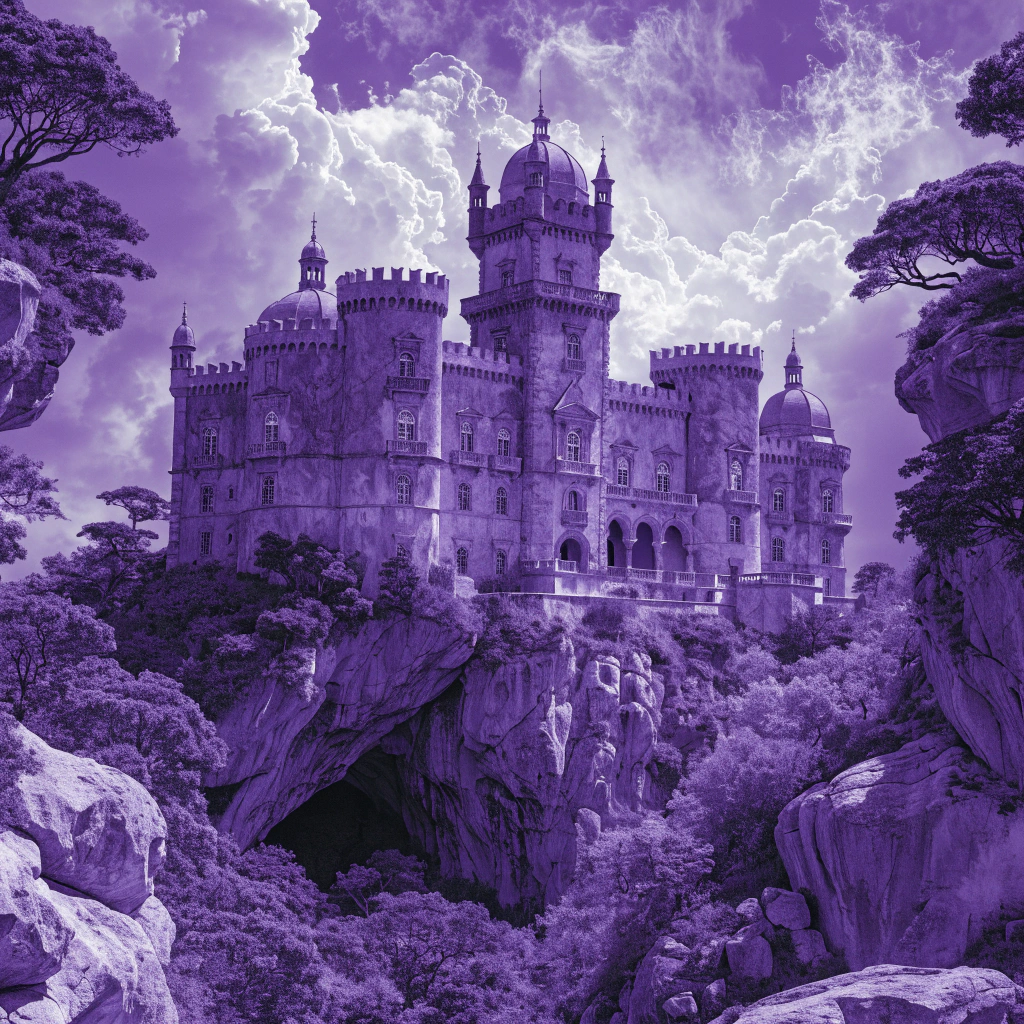
The Colorful Palace of Portugal
The Pena Palace is in Portugal. It is on a high mountain in Sintra. The palace is very beautiful and colorful. It has yellow, red, and blue walls. It looks like a big castle from a storybook.
King Ferdinand II built this palace a long time ago. He was an artist. Today, many people visit the palace every year. They walk in the big park and look at the green trees. You can see the ocean from the top. The palace is a famous symbol of Portugal. It is a very special place for tourists.
文法スポットライト
パターン: Present Simple of 'To Be'
"The Pena Palace is in Portugal."
We use 'is' for singular subjects like 'the palace'. It describes a fact or a location that is true now.
パターン: Adjective + Noun
"It has yellow, red, and blue walls."
In English, we put the describing word (adjective) before the thing (noun). We say 'blue walls' not 'walls blue'.
理解度をチェック
10 問 · A1 初級 · 無料プレビュー 1回
この記事で学んだことをテストしよう。全問正解してXPを獲得!
Where is the Pena Palace located?
問題の内訳
Where is the Pena Palace located?
あなたの回答:
正解: Portugal
The palace is at the bottom of a valley.
あなたの回答:
正解: 間違い
What does 'tourist' mean?
あなたの回答:
正解: A person who visits a place for fun
King Ferdinand II was an _____.
あなたの回答:
正解: artist
The Colorful Palace of Portugal
Pena Palace is a very famous building in Portugal. It sits on a high hill in the Sintra Mountains. The palace is special because it has many bright colors like yellow, red, and blue. It looks like a castle from a storybook. Many people think it is the most beautiful palace in the world.
In the past, the building was an old monastery. In the 19th century, King Ferdinand II decided to change it. He was an 'Artist-King' and he loved art. He wanted to build a beautiful summer home for his family. The palace is bigger and more colorful than many other old buildings in the country.
Today, many people visit Pena Palace every year. They walk through the large gardens and look at the amazing views from the top. It is now a very important symbol of Portugal. Visitors love the palace because the architecture is unique and the history is interesting. It is a great place to learn about the past.
文法スポットライト
パターン: Past Simple
"King Ferdinand II decided to change it."
The Past Simple is used to talk about actions that finished in the past. To form it, we usually add '-ed' to the end of regular verbs. We use it to describe historical events.
パターン: Comparatives
"The palace is bigger and more colorful than many other old buildings in the country."
Comparatives are used to compare two things. For short adjectives, we add '-er' to the end, and for long adjectives, we use 'more' before the word. We usually use 'than' after the adjective.
理解度をチェック
11 問 · A2 初級 · 無料プレビュー 1回
この記事で学んだことをテストしよう。全問正解してXPを獲得!
Where is Pena Palace located?
問題の内訳
Where is Pena Palace located?
あなたの回答:
正解: In the Sintra Mountains
The building was a monastery before it became a palace.
あなたの回答:
正解: 正しい
What does 'unique' mean?
あなたの回答:
正解: The only one of its kind
The palace is _____ and more colorful than many other old buildings.
あなたの回答:
正解: bigger
Who wanted to change the old building into a home?
あなたの回答:
正解: King Ferdinand II
The Colorful Magic of Pena Palace
Pena Palace is located on a high hill in the Sintra Mountains, which are very close to Lisbon. It is famous for its bright yellow and red walls that can be seen from many miles away. For many years, tourists have visited this spectacular place to see its unique beauty. The palace was built in the 19th century by King Ferdinand II, who was known as the 'Artist-King' because of his love for art and nature.
He had a vision to transform the ruins of a 16th-century monastery into a magnificent summer home for the royal family. The palace has been designed with many different styles, including Gothic and Islamic architecture. This mix of styles is a perfect example of Romanticism, a movement that focused on emotion and the beauty of the past.
The palace is surrounded by a large park that contains exotic trees from all over the world. Visitors often say that walking through the gardens feels like being in a fairy tale. Because of its historical importance, the palace has been named a UNESCO World Heritage site. It is considered one of the most beautiful buildings in Portugal, and it has become a symbol of the country’s history. If you have ever traveled to Portugal, you might have seen this colorful masterpiece. It remains one of the most popular places for people who want to experience the magic of Sintra.
文法スポットライト
パターン: Passive Voice
"The palace was built in the 19th century by King Ferdinand II."
The passive voice is used when the action is more important than the person doing it. It is formed using 'to be' + the past participle.
パターン: Present Perfect
"The palace has been named a UNESCO World Heritage site."
This tense connects the past to the present. It is used here to show an action that happened at an unspecified time and is still relevant today.
理解度をチェック
11 問 · B1 中級 · 無料プレビュー 1回
この記事で学んだことをテストしよう。全問正解してXPを獲得!
Who was responsible for building the Pena Palace?
問題の内訳
Who was responsible for building the Pena Palace?
あなたの回答:
正解: King Ferdinand II
The palace is located in the middle of Lisbon.
あなたの回答:
正解: 間違い
What does 'ruins' mean?
あなたの回答:
正解: The remains of an old, broken building
The palace is _____ by a large park with exotic trees.
あなたの回答:
正解: surrounded
What artistic movement influenced the palace's design?
あなたの回答:
正解: Romanticism
ポルトガルが誇る色彩の夢:ペーナ宮殿の魅力に迫る
ポルトガルの首都リスボン近郊に位置するシントラ山脈の頂に、まるで絵本から飛び出してきたかのような、鮮やかな色彩と幻想的な建築が織りなす宮殿がそびえ立っています。それが、19世紀のロマン主義建築の傑作とされ、ポルトガル国家の最も象徴的な建造物の一つとして広く認知されている「ペーナ宮殿」です。
この宮殿は、芸術王として知られるフェルディナンド2世の先見の明あるプロジェクトとして誕生しました。彼は、16世紀に建てられたマヌエル様式の修道院の廃墟を買い取り、自身の夏の離宮として再建することを決意しました。この修道院は、1755年のリスボン大地震によって甚大な被害を受けており、その遺構を背景に、全く新しい宮殿の創出が始まったのです。フェルディナンド2世は、多様な建築様式への深い造詣を持っており、ゴシック、ルネサンス、ムーア、そしてマヌエル様式といった要素を大胆に融合させることで、他に類を見ない独創的な宮殿を設計しました。
ペーナ宮殿の最大の特徴は、その目を奪うような色彩感覚にあります。赤、黄、青といった鮮やかな色が外壁に施され、周囲の緑豊かな自然と見事なコントラストを成しています。これは、当時のロマン主義運動における自然への回帰と、異国情緒への憧れを強く反映したものであり、訪れる人々に非日常的な体験を提供します。宮殿内部もまた、豪華絢爛な装飾と精巧な細工が随所に見られ、王室の豊かな生活を偲ばせます。
宮殿が立つシントラ山脈全体が、独特の微気候に恵まれていることも特筆すべき点です。霧が立ち込める日には、宮殿は神秘的な雰囲気をまとい、晴れた日には、その鮮やかな姿が遠くリスボンからも望めます。この地理的条件も相まって、ペーナ宮殿は単なる建築物としてのみならず、ポルトガルの歴史と文化、そして自然が一体となった象徴として、世界中の人々を魅了し続けています。
1995年には、シントラの文化的景観の一部としてユネスコ世界遺産に登録され、その価値は国際的にも認められています。ペーナ宮殿は、過去の栄光を現代に伝える貴重な遺産であり、訪れる者に感動とインスピレーションを与える、まさに「色彩の夢」と言えるでしょう。その壮麗な佇まいは、ポルトガルのロマン主義建築の頂点を極めるものです。
文法スポットライト
パターン: 〜とされている
"19世紀のロマン主義建築の傑作とされ、ポルトガル国家の最も象徴的な建造物の一つとして広く認知されている「ペーナ宮殿」です。"
「〜とされている」は、「〜と考えられている」「〜と一般的に言われている」という意味で、客観的な事実や広く受け入れられている見解を述べる際に使われます。受動態の形ですが、話者の意見ではなく一般的な認識を伝えるニュアンスがあります。
パターン: 〜を背景に
"この修道院は、1755年のリスボン大地震によって甚大な被害を受けており、その遺構を背景に、全く新しい宮殿の創出が始まったのです。"
「〜を背景に」は、「〜という状況や出来事を土台として、その影響を受けて」という意味で使われます。ある事柄が起こるに至った、歴史的・社会的・物理的な状況を示す際に用いられる表現です。
パターン: 〜のみならず〜も
"ペーナ宮殿は単なる建築物としてのみならず、ポルトガルの歴史と文化、そして自然が一体となった象徴として、世界中の人々を魅了し続けています。"
「〜のみならず〜も」は、「〜だけでなく〜も」という意味で、前の事柄に加えて、さらに別の事柄も当てはまることを強調する表現です。単に情報を追加するだけでなく、その重要性や範囲の広がりを示します。
理解度をチェック
11 問 · B2 中上級 · 無料プレビュー 1回
この記事で学んだことをテストしよう。全問正解してXPを獲得!
ペーナ宮殿は元々何だったと記事に書かれていますか?
問題の内訳
ペーナ宮殿は元々何だったと記事に書かれていますか?
あなたの回答:
正解: マヌエル様式の修道院
フェルディナンド2世は、ペーナ宮殿を自身の冬の離宮として再建しました。
あなたの回答:
正解: 間違い
「他に類を見ない」という言葉が表す意味に最も近いものはどれですか?
あなたの回答:
正解: 他に同じようなものがない
ペーナ宮殿は、19世紀のロマン主義建築の_____とされています。
あなたの回答:
正解: 傑作
ペーナ宮殿の外壁に使われている鮮やかな色彩は、当時のどのような動きを強く反映していると述べられていますか?
あなたの回答:
正解: 自然への回帰と異国情緒への憧れ
A Kaleidoscope of Romanticism: Deconstructing the Architectural Enigma of Pena Palace
Perched atop the jagged peaks of the Sintra Mountains, the Pena Palace stands as a flamboyant testament to the 19th-century Romantic movement. Rarely does a structure so boldly defy the conventional constraints of architectural sobriety as this vibrant citadel. What initially appears to be a chaotic assemblage of colors and styles is, upon closer inspection, a deliberate synthesis of historical narratives and aesthetic rebellion. It was the visionary King Ferdinand II, often dubbed the 'Artist-King,' who orchestrated this metamorphosis. The transformation of the 16th-century Manueline monastery into a vibrant summer residence serves as a testament to his artistic sensibilities, effectively repurposing skeletal vestiges into a residence of unparalleled grandeur.
The palace is an architectural manifestation of the Romantic obsession with the sublime and the exotic. Throughout the 19th century, European nobility sought to escape the rigid rationalism of the Enlightenment, turning instead to a nostalgic and often idealized past. In Sintra, this manifested as an eclectic fusion of Neo-Gothic, Neo-Manueline, Neo-Islamic, and Neo-Renaissance elements. The interplay between these diverse styles creates an ethereal atmosphere, where the crenellated towers and domes seem to emerge organically from the surrounding mist. This stylistic diversity was not a mere whim; it was a calculated effort to evoke a sense of timelessness and universality, bridging the gap between the medieval past and the modern era.
One cannot overlook the idiosyncratic nature of the palace’s design. Ferdinand’s involvement was not merely that of a patron but that of a creative director, ensuring that the opulence of the interior matched the eccentricity of the facade. The transformation of the monastery’s ruins into a palace involved not just structural renovation but a conceptual reimagining of the landscape. The surrounding park, with its labyrinthine paths and exotic flora, was designed to evoke a sense of mystery and discovery, mirroring the winding corridors of the palace itself.
Critical analysis of the palace often highlights its role in the construction of Portuguese national identity during a period of political instability. By incorporating Manueline motifs—a style unique to Portugal's Age of Discovery—Ferdinand anchored his fantastical creation in the nation's historical glory. This deliberate nod to the era of maritime exploration served to bolster national pride and provide a sense of continuity. However, some critics argue that such a pastiche of styles risks descending into kitsch, suggesting that the palace’s aesthetic exuberance lacks genuine cohesion. Yet, it is precisely this tension between historical homage and whimsical artifice that defines the palace's enduring appeal.
Ultimately, the Pena Palace remains a profound symbol of the Romantic spirit. It challenges the viewer to look beyond the superficiality of its bright yellows and reds and to appreciate the complex intellectual currents that shaped its construction. Not only does it represent a pinnacle of Portuguese Romanticism, but it also serves as a reminder of the power of individual vision to reshape the physical world. In the quiet solitude of the Sintra hills, the palace continues to whisper stories of a king who dared to build a dream.
文法スポットライト
パターン: Negative Inversion
"Rarely does a structure so boldly defy the conventional constraints of architectural sobriety as this vibrant citadel."
This pattern places a negative adverbial at the beginning of the sentence for emphasis, requiring the auxiliary verb to come before the subject. It is used in formal writing to create a more dramatic or rhetorical effect.
パターン: Cleft Sentences
"It was the visionary King Ferdinand II, often dubbed the 'Artist-King,' who orchestrated this metamorphosis."
Cleft sentences use 'It + be + subject + relative clause' to focus on a specific piece of information. Here, it emphasizes that Ferdinand II, and no one else, was responsible for the project.
パターン: Nominalisation
"The transformation of the 16th-century Manueline monastery into a vibrant summer residence serves as a testament to his artistic sensibilities."
Nominalisation involves turning verbs (transform) into nouns (transformation). This allows for more complex sentence structures and a higher level of abstraction, typical of academic and advanced English.
理解度をチェック
12 問 · C1 上級 · 無料プレビュー 1回
この記事で学んだことをテストしよう。全問正解してXPを獲得!
What does the author suggest about the architectural style of Pena Palace?
問題の内訳
What does the author suggest about the architectural style of Pena Palace?
あなたの回答:
正解: It is a deliberate fusion of diverse historical and exotic styles.
The surrounding park was designed to be simple and straightforward to balance the palace's complexity.
あなたの回答:
正解: 間違い
Which word describes something that is extremely delicate and seems too perfect for this world?
あなたの回答:
正解: Ethereal
The palace serves as an architectural _____ of the Romantic obsession with the sublime.
あなたの回答:
正解: manifestation
How did Ferdinand II incorporate Portuguese identity into the palace?
あなたの回答:
正解: By including Manueline motifs related to the Age of Discovery.
Some critics believe the palace's variety of styles might be considered kitsch.
あなたの回答:
正解: 正しい
The Pena Palace: A Chromatic Palimpsest of Romantic Syncretism
Perched upon the jagged precipice of the Sintra Mountains, the Pena Palace stands not merely as a monument, but as a vivid manifestation of nineteenth-century Romanticism. Were one to gaze upon its eclectic silhouette from the valley below, the initial impression might be one of architectural dissonance, yet upon closer inspection, this chromatic palimpsest reveals a profound syncretism of historical narratives. It was King Ferdinand II, the so-called 'Artist-King,' who envisioned this phantasmagoria, transforming the skeletal vestiges of a sixteenth-century Manueline monastery into a residence that defied the rigid neoclassicism of his era.
The palace’s aesthetic is characterized by an idiosyncratic fusion of Neo-Gothic, Neo-Manueline, Neo-Islamic, and Neo-Renaissance elements. This stylistic plurality is not accidental; rather, it reflects the Romantic preoccupation with the exotic and the sublime. The architecture functions as a bridge between the tangible world and a mythologized past. It is essential that the observer recognize the deliberate juxtaposition of the rugged, moss-covered granite and the ostentatious, polychromatic façades. This contrast underscores the Romantic belief that nature and artifice are inextricably linked, each heightening the intensity of the other.
Furthermore, the palace serves as a quintessential example of the 'Gesamtkunstwerk'—a total work of art. Ferdinand II did not merely commission a building; he orchestrated an entire sensory experience. The surrounding park, with its labyrinthine paths and imported arboreal species, was designed to evoke a sense of wandering through a living poem. It is as if the King demanded that the landscape itself should mirror the internal complexities of the human soul. Such a project required a departure from traditional architectural paradigms, favoring instead an emotional resonance that borders on the ethereal.
Scholars have often argued that the Pena Palace might be construed as a political statement as much as an artistic one. By integrating the ruins of the Hieronymite monastery, Ferdinand sought to legitimize his reign through a physical connection to Portugal’s Golden Age of Discovery. The Neo-Manueline motifs—the ropes, the corals, and the armillary spheres—are didactic symbols of maritime prowess, repurposed to bolster a nineteenth-century national identity. However, one must approach this interpretation with caution; while the nationalist undertones are undeniable, the palace remains fundamentally a product of individual genius and personal whimsy.
The interior of the palace is no less remarkable, featuring intricate stuccowork and trompe-l’œil paintings that challenge the viewer’s perception of space. It is imperative that we consider the technical prowess required to execute such a vision on such an inhospitable site. The logistical challenges of transporting materials to the summit were immense, yet the result is a structure that appears to have sprouted organically from the rock. This organic integration is a hallmark of the Romantic vanguard, which sought to dissolve the boundaries between the man-made and the natural world.
In conclusion, the Pena Palace is a testament to the enduring power of the Romantic imagination. It stands as a vanguard of architectural experimentation, inviting us to contemplate the interstices between history and fantasy. Whether viewed as an ostentatious folly or a sublime masterpiece, its significance in the cultural landscape of Portugal is indisputable. It remains a place where the past is not merely preserved but is actively reimagined for the delectation of the modern observer, ensuring that the legacy of the Artist-King continues to inspire awe and academic inquiry alike.
文法スポットライト
パターン: Inverted Conditionals
"Were one to gaze upon its eclectic silhouette from the valley below, the initial impression might be one of architectural dissonance..."
This formal structure replaces 'If one were to gaze'. It is used in academic or literary English to express a hypothetical situation with a more sophisticated tone.
パターン: Subjunctive Mood
"It is essential that the observer recognize the deliberate juxtaposition of the rugged, moss-covered granite and the ostentatious, polychromatic façades."
The subjunctive 'recognize' (instead of recognizes) follows adjectives of urgency or importance. It emphasizes the necessity of the action.
パターン: Modal Verbs for Academic Hedging
"Scholars have often argued that the Pena Palace might be construed as a political statement as much as an artistic one."
The use of 'might be construed' allows the author to present a theory without stating it as an absolute fact, which is a hallmark of C2-level analytical writing.
理解度をチェック
12 問 · C2 マスター · 無料プレビュー 1回
この記事で学んだことをテストしよう。全問正解してXPを獲得!
What was the original state of the site before King Ferdinand II's intervention?
問題の内訳
What was the original state of the site before King Ferdinand II's intervention?
あなたの回答:
正解: A sixteenth-century Manueline monastery
The architectural style of the palace is strictly Neo-Gothic to maintain historical accuracy.
あなたの回答:
正解: 間違い
What does the word 'syncretism' refer to in the context of the article?
あなたの回答:
正解: The blending of different historical and cultural influences
The palace is described as a _____ palimpsest, revealing historical narratives.
あなたの回答:
正解: chromatic
Which term describes the 'total work of art' concept mentioned in the text?
あなたの回答:
正解: Gesamtkunstwerk
The author suggests that the palace's design was intended to evoke emotional resonance.
あなたの回答:
正解: 正しい

