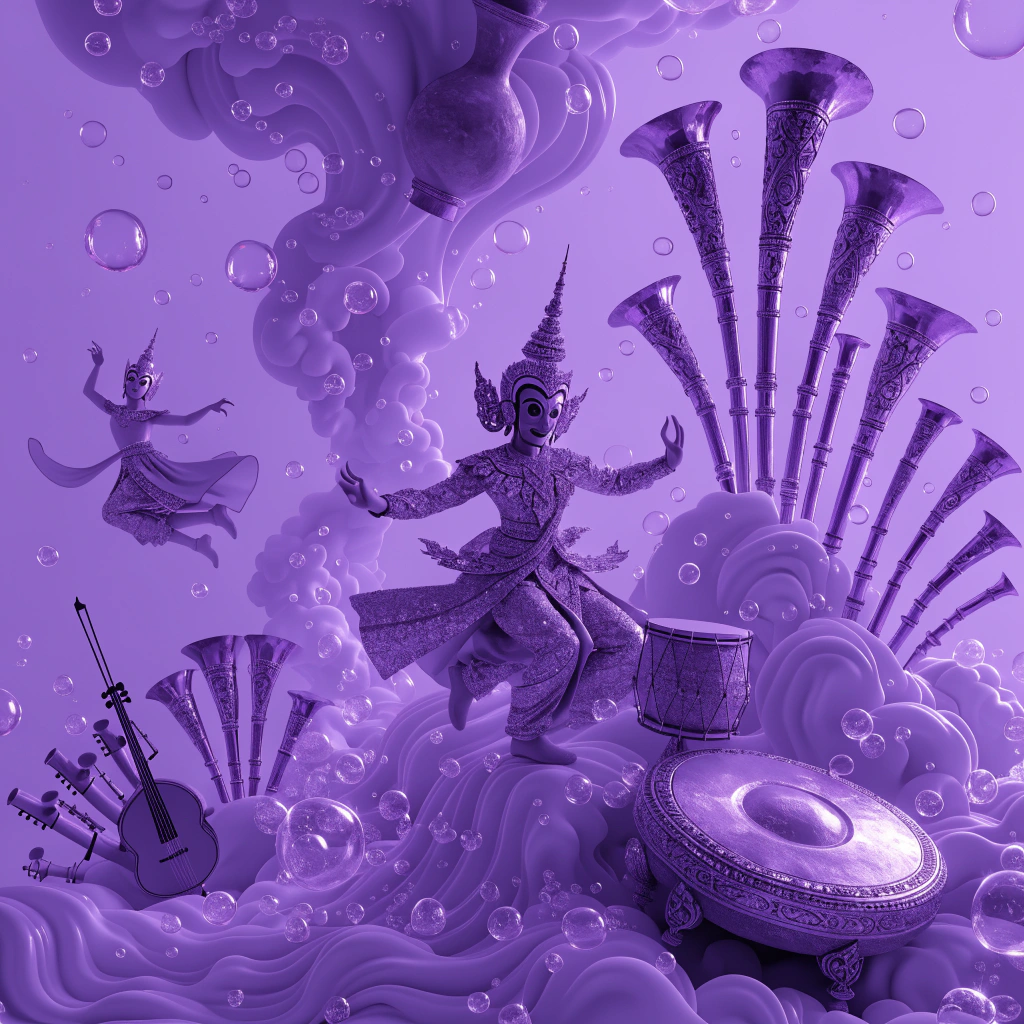
Khon: Un Baile Especial de Tailandia
Khon es un baile muy especial de Tailandia. Es un arte antiguo y bonito. Las personas que bailan Khon usan máscaras. Estas máscaras son muy coloridas y bonitas. Los bailarines también usan ropa especial. La historia de Khon es sobre un libro viejo de Tailandia, el Ramakien. Es una historia larga con héroes y villanos.
Antes, solo la familia del rey veía Khon. Ahora, muchas personas pueden ver este baile. Khon es importante para Tailandia. La UNESCO dice que es un tesoro cultural. Los estudiantes en Tailandia aprenden sobre Khon. Es un arte que vive y es muy admirado.
Gramática destacada
Patrón: El verbo SER (presente)
"Khon es un baile muy especial de Tailandia."
El verbo 'ser' se usa para identificar personas o cosas, describir características permanentes o indicar origen. En español, 'es' es la forma para 'él/ella/usted'.
Patrón: Artículos definidos (el/la)
"La historia de Khon es sobre un libro viejo de Tailandia."
Los artículos definidos 'el' (masculino singular) y 'la' (femenino singular) se usan para hablar de algo específico o ya conocido. Concuerdan en género y número con el sustantivo.
Pon a prueba tu comprensión
10 preguntas · A1 Principiante · 1 vista previa gratis
Pon a prueba lo que aprendiste en este artículo. ¡Responde todas las preguntas para ganar XP!
¿De dónde es Khon?
¿Quieres terminar el quiz?
9 preguntas más te esperan. ¡Regístrate gratis para desbloquear el quiz completo y ganar XP!
Regístrate gratis¿Ya tienes cuenta? Acceder
Desglose de preguntas
¿De dónde es Khon?
Tu respuesta:
Respuesta correcta: De Tailandia
Los bailarines de Khon no usan máscaras.
Tu respuesta:
Respuesta correcta: Falso
¿Qué significa 'bonito'?
Tu respuesta:
Respuesta correcta: Lindo
Antes, solo la familia del _____ veía Khon.
Tu respuesta:
Respuesta correcta: rey
Khon: The Beautiful Masked Dance of Thailand
Khon is a very famous and beautiful dance from Thailand. In the past, it was a royal dance. This means only the king and his family watched it in the big palace. Today, many people visit Thailand to see this special show.
The dancers wear amazing masks and bright costumes. The masks are very important because they show different characters. Some masks look like humans, but others look like monkeys or scary demons. The costumes are more colorful than normal clothes because they use gold and silk.
In the performance, the dancers do not speak. Instead, they move their bodies to tell a story. This story is from a famous book called the Ramakien. Singers and musicians sit near the stage and play traditional music. The dance is more difficult than it looks because the dancers must practice for many years.
In 2018, UNESCO said Khon is a special treasure for the world. It is an important part of Thai history. If you visit Bangkok, you should watch a Khon show.
Gramática destacada
Patrón: Past Simple (was)
"In the past, it was a royal dance."
We use 'was' to describe a state or situation that finished in the past. It is the past form of 'is' for singular subjects.
Patrón: Comparatives (more + adjective + than)
"The costumes are more colorful than normal clothes because they use gold and silk."
We use 'more' before long adjectives to compare two things. We always use 'than' after the adjective to show what we are comparing it to.
Pon a prueba tu comprensión
11 preguntas · A2 Básico · 1 vista previa gratis
Pon a prueba lo que aprendiste en este artículo. ¡Responde todas las preguntas para ganar XP!
Where did the king watch Khon in the past?
¿Quieres terminar el quiz?
10 preguntas más te esperan. ¡Regístrate gratis para desbloquear el quiz completo y ganar XP!
Regístrate gratis¿Ya tienes cuenta? Acceder
Desglose de preguntas
Where did the king watch Khon in the past?
Tu respuesta:
Respuesta correcta: In the palace
The dancers talk to the audience during the show.
Tu respuesta:
Respuesta correcta: Falso
What is a 'costume'?
Tu respuesta:
Respuesta correcta: Special clothes for actors
The dancers wear _____ to show different characters.
Tu respuesta:
Respuesta correcta: masks
Why are the costumes expensive?
Tu respuesta:
Respuesta correcta: They use gold and silk
Khon: El Tesoro Danzado de Tailandia
El Khon es una forma de arte escénico muy especial de Tailandia, conocida por su gran belleza y su significado cultural. Es una danza tradicional con máscaras que ha sido reconocida mundialmente por su esplendor y su profunda historia. En el año 2018, la UNESCO lo declaró Patrimonio Cultural Inmaterial de la Humanidad, un hecho que subraya su inmenso valor para el mundo entero.
Esta danza cuenta historias épicas y dramáticas, principalmente del Ramakien, que es la versión tailandesa del antiguo poema indio Ramayana. Los artistas usan máscaras elaboradas y trajes muy coloridos que representan a dioses, demonios y héroes. Sus movimientos son extremadamente elegantes y precisos, acompañados por una orquesta de música tradicional y una narración vocal que explica lo que sucede en el escenario. Cada gesto y cada postura tienen un significado especial.
Históricamente, el Khon fue interpretado principalmente en la corte real de Tailandia. Su producción requería muchos recursos y la participación de cientos de bailarines, músicos y artesanos que creaban los vestuarios y las máscaras. Era un espectáculo magnífico que solo la realeza podía disfrutar. Con el paso del tiempo, esta forma de arte se ha hecho más accesible al público en general, pero siempre ha mantenido su estatus de arte noble y sagrado.
Hoy en día, el Khon sigue siendo una parte fundamental de la identidad cultural tailandesa. Se enseña en prestigiosas escuelas de arte y se representa regularmente para el público, tanto local como internacional. Así, se mantiene viva una tradición que se ha transmitido de generación en generación. Para quienes tienen la oportunidad de visitar Tailandia, ver una representación de Khon es una experiencia inolvidable que ofrece una ventana única a la rica historia, el arte y las creencias de este fascinante país.
Gramática destacada
Patrón: Pretérito Perfecto Compuesto
"Es una danza tradicional con máscaras que ha sido reconocida mundialmente por su esplendor y su profunda historia."
El pretérito perfecto compuesto se usa para hablar de acciones pasadas que tienen conexión con el presente o que ocurrieron en un periodo de tiempo no terminado. Se forma con el verbo 'haber' en presente (he, has, ha, hemos, habéis, han) y el participio pasado del verbo principal (reconocido, hablado, comido, vivido).
Patrón: Oraciones de Relativo
"Los artistas usan máscaras elaboradas y trajes muy coloridos que representan a dioses, demonios y héroes."
Las oraciones de relativo (o subordinadas adjetivas) se usan para añadir información sobre un sustantivo. Introducen la información usando pronombres como 'que', 'quien/quienes', 'cuyo/a/os/as', 'donde', etc. El pronombre 'que' es el más común y se refiere a personas o cosas.
Pon a prueba tu comprensión
11 preguntas · B1 Intermedio · 1 vista previa gratis
Pon a prueba lo que aprendiste en este artículo. ¡Responde todas las preguntas para ganar XP!
Según el artículo, ¿qué es el Khon?
¿Quieres terminar el quiz?
10 preguntas más te esperan. ¡Regístrate gratis para desbloquear el quiz completo y ganar XP!
Regístrate gratis¿Ya tienes cuenta? Acceder
Desglose de preguntas
Según el artículo, ¿qué es el Khon?
Tu respuesta:
Respuesta correcta: Una danza tradicional con máscaras
La UNESCO reconoció el Khon como Patrimonio Cultural Inmaterial de la Humanidad en 2018.
Tu respuesta:
Respuesta correcta: Verdadero
¿Qué significa la palabra 'esplendor' en el contexto del artículo?
Tu respuesta:
Respuesta correcta: Gran belleza o magnificencia
Las historias que cuenta el Khon vienen principalmente del __________.
Tu respuesta:
Respuesta correcta: Ramakien
Históricamente, ¿quiénes disfrutaban principalmente de las representaciones de Khon?
Tu respuesta:
Respuesta correcta: La corte real
The Royal Splendor of Khon: Thailand’s Masked Masterpiece
Khon, a sophisticated genre of masked dance drama, stands as a testament to Thailand's rich cultural heritage and artistic excellence. Recognized by UNESCO in 2018 as part of the Intangible Cultural Heritage of Humanity, this performance art is not merely a visual spectacle; it is a profound narrative manifestation of the Ramakien, the Thai adaptation of the ancient Indian epic, the Ramayana. Historically, Khon was a prestigious privilege reserved exclusively for the royal court, where it was performed by hundreds of skilled artists and supported by immense resources from the monarchy.
Despite its ancient roots, the art form continues to captivate modern audiences with its intricate choreography and vibrant aesthetics. The essence of Khon lies in its elaborate masks, which represent various characters such as divine beings, heroes, and demons. These masks are meticulously crafted, serving both as functional costumes and as symbolic markers of status and personality. Since the performers' faces are entirely concealed by these heavy masks, they must rely on highly stylized gestures and body movements to convey complex emotions and plot developments. This physical discipline is incredibly demanding; dancers often undergo years of rigorous training to master the specific postures and rhythmic footwork required for their respective roles.
Furthermore, the performance is traditionally accompanied by a 'piphat' ensemble—a classical musical group—and a chorus of singers who narrate the story from the side of the stage. This separation of voice and movement allows the dancers to focus entirely on the physical manifestation of the narrative. Although the stories being told are centuries old, the themes of struggle between righteousness and malice remain universally relevant, allowing Khon to resonate with people across different cultures and eras.
In the contemporary era, Khon has successfully transitioned from the exclusive confines of the palace to the public stage. While some might argue that rapid modernization threatens traditional arts, Khon has proven remarkably resilient. Educational institutions and cultural organizations have implemented various initiatives to ensure that younger generations appreciate and preserve this intricate legacy. Consequently, Khon remains a vital part of Thailand's national identity, bridging the gap between historical grandeur and modern artistic expression. By analyzing its components, one can truly appreciate the immense dedication required to maintain such a complex and beautiful art form.
Gramática destacada
Patrón: Passive Voice (Present and Past)
"Historically, Khon was a prestigious privilege reserved exclusively for the royal court."
The passive voice is used here to focus on the art form (the object) rather than the people who performed it. It is formed using 'to be' + the past participle.
Patrón: Relative Clauses
"The essence of Khon lies in its elaborate masks, which represent various characters such as divine beings, heroes, and demons."
This non-defining relative clause provides extra information about the 'masks'. It uses 'which' to add descriptive detail without starting a new sentence.
Patrón: Contrastive Discourse Markers
"While some might argue that rapid modernization threatens traditional arts, Khon has proven remarkably resilient."
The word 'while' is used as a subordinator to show a contrast between two ideas within the same sentence, a common feature of academic B2 writing.
Pon a prueba tu comprensión
11 preguntas · B2 Intermedio alto · 1 vista previa gratis
Pon a prueba lo que aprendiste en este artículo. ¡Responde todas las preguntas para ganar XP!
What is the primary source of the stories performed in Khon?
¿Quieres terminar el quiz?
10 preguntas más te esperan. ¡Regístrate gratis para desbloquear el quiz completo y ganar XP!
Regístrate gratis¿Ya tienes cuenta? Acceder
Desglose de preguntas
What is the primary source of the stories performed in Khon?
Tu respuesta:
Respuesta correcta: The Ramakien
Dancers in Khon traditionally use their own voices to speak during the performance.
Tu respuesta:
Respuesta correcta: Falso
What does 'meticulously' mean in the context of the article?
Tu respuesta:
Respuesta correcta: With extreme attention to detail
Khon was recognized by UNESCO as part of the _____ Cultural Heritage of Humanity.
Tu respuesta:
Respuesta correcta: Intangible
Why must Khon dancers rely heavily on stylized gestures?
Tu respuesta:
Respuesta correcta: Because their faces are covered by masks
The Alchemical Fusion of Myth and Movement: The Enduring Legacy of Khon
Recognized by UNESCO in 2018 as part of the Intangible Cultural Heritage of Humanity, Khon stands as the pinnacle of Thai dramatic arts. Not only does Khon represent a sophisticated synthesis of dance and drama, but it also serves as a living vessel for Thailand’s historical and spiritual identity. Traditionally performed within the exclusive confines of the royal court, this masked dance drama draws its narrative exclusively from the Ramakien, the Thai iteration of the ancient Indian epic, the Ramayana.
It is through this meticulous fusion of movement and mask that the narrative transcends linguistic barriers, allowing the audience to witness the cosmic struggle between good and evil. The masks are not merely decorative; they are transformative artifacts that encapsulate the essence of deities, demons, and simians. Seldom does a performance demand such physical and mental fortitude from its practitioners, who often begin their arduous training in early childhood. The dancers must master a lexicon of gestures so precise that every tilt of the head conveys a specific emotional nuance.
The institutionalization of Khon within the royal court ensured the preservation of its most intricate techniques across centuries. Historically, the sheer scale of these productions—involving hundreds of performers and elaborate costumes embroidered with gold thread—rendered them a symbol of the monarch’s prestige and divine mandate. However, the transition from a court-bound spectacle to a public cultural treasure has invited critical analysis regarding its contemporary relevance. Some scholars argue that the rigid adherence to tradition risks making the art form a museum piece, while others maintain that its sanctity lies in its resistance to modernization.
At the heart of Khon lies a profound dualism. The narrative explores the tension between duty and desire, order and chaos. This thematic depth is mirrored in the choreography, where the graceful, fluid movements of the protagonists contrast sharply with the aggressive, staccato rhythms of the antagonists. Furthermore, the performance is traditionally accompanied by a Piphat ensemble and a chorus of singers who narrate the action, as the masked dancers remain silent. This separation of voice and body creates a unique aesthetic distance, emphasizing the archetypal nature of the characters.
Despite the ephemeral nature of live performance, the lineage of Khon is sustained through a deep-seated reverence for the master-student relationship. This bond ensures the transmission of tacit knowledge—those subtle, unwritten cues—that cannot be captured in scripts or recordings alone. In the modern era, Khon faces the dual challenge of maintaining its inherent grandeur while appealing to an increasingly globalized and distracted audience. While some contemporary adaptations have introduced cinematic lighting and streamlined durations to accommodate modern sensibilities, the core of the performance remains a testament to Thai resilience and artistic brilliance. Ultimately, Khon is more than just a visual spectacle; it is a philosophical inquiry into the human condition, elegantly masked in the guise of myth.
Gramática destacada
Patrón: Negative Inversion
"Seldom does a performance demand such physical and mental fortitude from its practitioners..."
When a sentence starts with a negative or restrictive adverbial like 'seldom', the auxiliary verb comes before the subject. This is used in formal writing to add emphasis or dramatic effect.
Patrón: Cleft Sentences
"It is through this meticulous fusion of movement and mask that the narrative transcends linguistic barriers..."
A cleft sentence is used to focus on a specific part of the sentence. It starts with 'It is/was' followed by the focused information and a relative clause starting with 'that'.
Patrón: Nominalization
"The institutionalization of Khon within the royal court ensured the preservation of its most intricate techniques across centuries."
Nominalization involves turning verbs or adjectives into nouns (e.g., 'institutionalize' to 'institutionalization'). It makes writing sound more academic, objective, and dense by focusing on concepts rather than actions.
Pon a prueba tu comprensión
12 preguntas · C1 Avanzado · 1 vista previa gratis
Pon a prueba lo que aprendiste en este artículo. ¡Responde todas las preguntas para ganar XP!
What is the primary narrative source for Khon performances?
¿Quieres terminar el quiz?
11 preguntas más te esperan. ¡Regístrate gratis para desbloquear el quiz completo y ganar XP!
Regístrate gratis¿Ya tienes cuenta? Acceder
Desglose de preguntas
What is the primary narrative source for Khon performances?
Tu respuesta:
Respuesta correcta: The Ramakien
Khon performers traditionally speak their own lines while wearing masks.
Tu respuesta:
Respuesta correcta: Falso
Which word describes something that lasts for a very short time?
Tu respuesta:
Respuesta correcta: Ephemeral
The _____ of Khon within the royal court helped preserve its complex techniques.
Tu respuesta:
Respuesta correcta: institutionalization
In what year was Khon recognized by UNESCO?
Tu respuesta:
Respuesta correcta: 2018
Some argue that strictly following tradition might turn Khon into a 'museum piece'.
Tu respuesta:
Respuesta correcta: Verdadero
The Transcendent Semiotics of Khon: A Synthesis of Cosmology and Corporeality
To behold a performance of Khon is to engage in a profound interrogation of the boundaries between the celestial and the terrestrial. This masked dance-drama, long considered the quintessential expression of Thai high culture, functions as far more than mere spectacle; it is a ritualistic reification of the Ramakien, the Thai iteration of the epic Ramayana. Historically, the staging of Khon was the exclusive prerogative of the royal court, requiring such vast resources and manpower that it served as a potent symbol of the monarch’s merit and majesty. Should one scrutinize the intricate tapestries of its historical development, it becomes manifest that Khon is not merely a static relic of the Ayutthaya period, but rather a dynamic repository of the nation's collective consciousness.
The aesthetic hallmark of Khon is undoubtedly the mask, or 'hua khon.' These artifacts are not merely decorative; they are ontological vessels that facilitate the total effacement of the performer’s individuality. It is the masks themselves—vibrant, formidable, and meticulously crafted—that serve to facilitate a metamorphosis into the archetypal, be it the heroic Phra Ram, the virtuous Nang Sida, or the formidable demon king Thotsakan. By donning these masks, dancers subsume their ego to embody primordial forces. It is imperative that the performer remain entirely silent, for the narrative burden is carried by the 'Chon,' a chorus of singers and reciters who articulate the poetic dialogue. This separation of voice and body creates a hauntingly stylized atmosphere, where the physical form becomes a medium for the divine.
The movements themselves are governed by the 'Mae Bot,' a rigorous choreographic syntax that demands an ascetic level of discipline. Every tilt of the head, every sinuous curve of the fingers, is laden with semiotic significance. To the uninitiated, these gestures might appear merely decorative; however, to the discerning observer, they constitute a sophisticated linguistic system. The interplay between the dancers and the 'Piphat' ensemble—an orchestra of percussion and wind instruments—further elevates the performance, creating a polyphonic texture that mirrors the complexity of the cosmos itself. The dancers do not merely move; they inhabit a space where every posture is a theological statement.
In 2018, the recognition of Khon by UNESCO as part of the Intangible Cultural Heritage of Humanity marked a pivotal moment in its contemporary history. While this designation has undoubtedly bolstered preservation efforts, it also invites scholarly debate regarding the potential ossification of the art form. There is a risk that by institutionalizing Khon, we may inadvertently stifle the organic evolution that once allowed it to adapt to the shifting sensibilities of the royal court. One might argue that for an art form to remain truly vital, it must possess the capacity to breathe and transform, rather than being preserved in amber as a museum piece.
Furthermore, the philosophical underpinnings of Khon deserve closer epistemological scrutiny. The eternal struggle between the forces of 'Dharma' and 'Adharma' is not merely a moralistic fable but a reflection of the Thai worldview regarding the nature of order and chaos. The resolution of the narrative, invariably favoring the restoration of cosmic balance, serves to reinforce the social and spiritual hierarchies of the traditional Thai state. This narrative structure suggests that the preservation of order is the ultimate moral imperative.
Ultimately, the enduring allure of Khon lies in its ability to evoke the sublime. It offers a bridge between the ephemeral nature of human existence and the timeless realm of myth. Whether performed in the hallowed halls of the National Theatre or under the auspices of royal patronage, Khon remains a testament to the enduring power of tradition. It is a palimpsest of history, religion, and artistry, inviting us to contemplate the profound mysteries of the human condition through the lens of a uniquely Thai aesthetic. The experience of Khon is, in essence, an encounter with the eternal.
Gramática destacada
Patrón: Inverted Conditional
"Should one scrutinize the intricate tapestries of its historical development, it becomes manifest that Khon is not merely a static relic."
This construction replaces 'If one should scrutinize' to create a more formal, academic tone. It is used in C2 writing to introduce hypothetical analysis or scrutiny.
Patrón: Subjunctive Mood
"It is imperative that the performer remain entirely silent, for the narrative burden is carried by the 'Chon'."
The base form 'remain' (instead of 'remains') is used after adjectives of urgency like 'imperative'. This expresses necessity or a requirement in formal English.
Patrón: Cleft Sentence
"It is the masks themselves—vibrant, formidable, and meticulously crafted—that serve to facilitate a metamorphosis into the archetypal."
This 'It is... that...' structure is used to focus on a specific subject (the masks). It provides rhetorical emphasis, highlighting the primary cause or agent in a complex sentence.
Pon a prueba tu comprensión
12 preguntas · C2 Dominio · 1 vista previa gratis
Pon a prueba lo que aprendiste en este artículo. ¡Responde todas las preguntas para ganar XP!
According to the article, what is the primary function of the 'hua khon' masks?
¿Quieres terminar el quiz?
11 preguntas más te esperan. ¡Regístrate gratis para desbloquear el quiz completo y ganar XP!
Regístrate gratis¿Ya tienes cuenta? Acceder
Desglose de preguntas
According to the article, what is the primary function of the 'hua khon' masks?
Tu respuesta:
Respuesta correcta: To obscure the performer's identity and allow them to embody an archetype
Historically, Khon was a performance art accessible to all social classes in Thailand.
Tu respuesta:
Respuesta correcta: Falso
What does 'ossification' refer to in the context of the article?
Tu respuesta:
Respuesta correcta: The process of an art form becoming rigid and unchanging
The rigorous choreographic syntax that governs the movements in Khon is known as the _____.
Tu respuesta:
Respuesta correcta: Mae Bot
Who is responsible for the narrative and dialogue during a Khon performance?
Tu respuesta:
Respuesta correcta: The Chon, a chorus of singers and reciters
The struggle between Dharma and Adharma in Khon reflects the Thai worldview on order and chaos.
Tu respuesta:
Respuesta correcta: Verdadero

