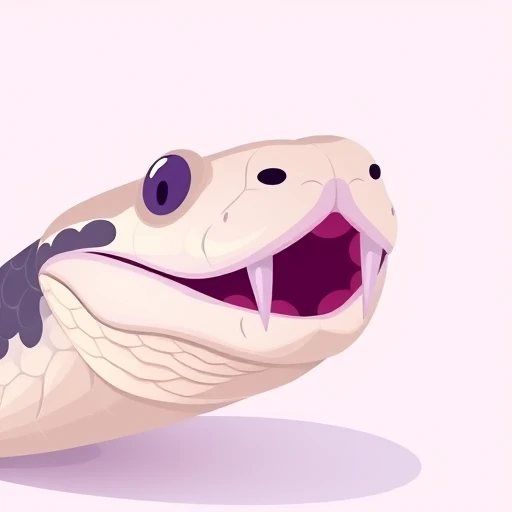
fang en 30 segundos
- A fang is a long, pointed tooth used by predators like wolves and snakes for piercing and holding prey.
- In venomous snakes, fangs act as biological needles to inject toxins into their targets during a strike.
- The word is frequently used in horror fiction to describe the teeth of supernatural creatures like vampires.
- Metaphorically, 'fangs' can represent the power of a law or the aggressive nature of a person's character.
The word fang refers to a specific anatomical feature found in various members of the animal kingdom, most notably within the groups of carnivorous mammals and venomous reptiles. At its core, a fang is a long, pointed tooth. However, its biological function extends far beyond mere mastication. Unlike the flat molars humans use for grinding vegetables or the sharp incisors used for cutting, fangs are specialized tools for predation. They are designed to pierce, hold, and in many cases, deliver chemical agents such as venom. When we discuss fangs, we are often entering the realm of zoology, evolutionary biology, or even the supernatural in literature and film.
- Biological Classification
- In mammals, fangs are typically modified canine teeth. In species like the Siberian tiger or the gray wolf, these teeth are elongated to ensure that once prey is captured, it cannot easily escape. The structural integrity of the fang is paramount, as it must withstand the immense pressure of a struggling animal.
The cobra reared back, exposing its deadly fangs as a final warning to the intruder.
In the world of reptiles, specifically snakes, fangs have evolved into highly sophisticated delivery systems. Some snakes possess 'fixed' fangs that remain upright at all times, while others, like vipers, have 'hinged' fangs that fold back against the roof of the mouth when not in use. These teeth are often hollow, acting like hypodermic needles to inject venom directly into the bloodstream of the target. This evolutionary marvel allows a relatively small creature to take down much larger prey or defend itself against formidable predators. The term is also used metaphorically in human contexts to describe something sharp, aggressive, or dangerous, such as the 'fangs of a harsh winter' or the 'fangs of a predatory corporation.'
- Evolutionary Purpose
- Fangs represent an evolutionary arms race. As prey animals developed thicker hides or faster escape reflexes, predators developed longer, sharper fangs to compensate. This specialization is a hallmark of the Carnivora order and the Squamata order in reptiles.
Archaeologists discovered a prehistoric skull with massive fangs, suggesting it belonged to a saber-toothed cat.
Furthermore, the cultural significance of fangs cannot be overstated. From the terrifying visage of Count Dracula to the modern depictions of werewolves, fangs serve as a visual shorthand for danger and the 'beast within.' When a character 'shows their fangs' in a story, it usually signifies a transition from a peaceful state to one of aggression or primal instinct. This dual nature—both a biological necessity for survival and a potent cultural symbol—makes the word 'fang' a rich subject for study in both science and the humanities. Whether we are looking at the microscopic grooves in a spider's chelicerae or the ivory tusks of a walrus (which are technically elongated fangs), the concept remains the same: a specialized tool for a specific, often lethal, purpose.
- Common Usage Contexts
- You will most frequently encounter this word in nature documentaries, dental anatomy discussions, horror fiction, and metaphorical descriptions of sharp objects or aggressive behaviors.
The mechanic pointed to the fang-like metal protrusions on the old gear that were causing the engine to jam.
Even though the puppy was small, its tiny fangs were surprisingly sharp during playtime.
The frost hung from the roof like icy fangs, threatening to fall on anyone below.
Using the word fang correctly requires an understanding of its specific anatomical and metaphorical boundaries. Most commonly, it functions as a noun, often in the plural form, to describe the teeth of animals. When constructing sentences, it is helpful to pair 'fang' with descriptive adjectives that emphasize its physical properties—such as 'sharp,' 'curved,' 'venomous,' 'ivory,' or 'menacing.' For example, 'The wolf bared its yellowed fangs' provides a vivid image of an aging predator. The verb 'bare' is a frequent companion to 'fangs,' indicating the act of pulling back the lips to reveal the teeth as a threat display.
- Subject-Verb Agreement
- Because fangs usually come in pairs or sets, the plural 'fangs' is more common. 'The snake's fangs are hollow' uses a plural subject and verb. If referring to a single tooth, use 'fang': 'The spider lost a single fang in the struggle.'
With a sudden hiss, the viper extended its fangs and struck the leather boot.
In metaphorical usage, 'fang' can describe inanimate objects that possess a sharp or piercing quality. You might write about the 'fangs of the mountain,' referring to its jagged peaks, or the 'fangs of a storm,' describing its destructive power. In these cases, the word adds a layer of personification, suggesting that the object has a predatory or hostile intent. When writing creatively, consider the texture and material of the fang. Is it 'translucent' like a spider's? 'Porous' like a diseased tooth? 'Gleaming' like a vampire's in a movie? These details help ground the word in the reader's imagination.
- Prepositional Phrases
- Common phrases include 'dripping with venom,' 'sunk into the flesh,' or 'bared in a snarl.' These help establish the action associated with the noun.
The old legend spoke of a beast with fangs as long as daggers.
Another important aspect of using 'fang' is understanding the difference between it and related terms like 'tusk' or 'canine.' While a tusk (like an elephant's) is also a tooth, it is used more for digging or fighting than for the specific 'piercing and holding' action of a fang. A 'canine' is the general anatomical term for the tooth type, whereas 'fang' carries a more aggressive, predatory connotation. In a technical paper, you might use 'canine,' but in a story or a descriptive essay, 'fang' is often the better choice for emotional impact. Furthermore, the word can be used as a verb in some dialects (though rare), meaning to seize or catch, but this is largely archaic and should be avoided in modern standard English unless you are writing historical fiction.
- Adjective Pairings
- Retractable fangs (vipers), needle-sharp fangs (spiders), blood-stained fangs (predators), prosthetic fangs (costumes).
She adjusted her plastic fangs before heading out to the Halloween party.
The lion's fangs were visible even when its mouth was partially closed.
The excavator's bucket had heavy steel fangs designed to rip through solid rock.
In daily life, the word fang is not something you would use to describe your morning coffee or a trip to the grocery store, but it appears frequently in specific niches of conversation and media. One of the most common places you will hear it is in educational settings, particularly during biology or science classes. Teachers use the word to explain the predatory habits of animals. For instance, a documentary narrator might say, 'The king cobra's fangs are relatively short, yet they can deliver a massive dose of neurotoxin.' In this context, the word is clinical and descriptive, focusing on the biological function of the tooth.
- Entertainment and Media
- The horror and fantasy genres are perhaps the biggest 'users' of the word. Whether it's a movie about vampires, a novel about a monstrous beast, or a video game featuring fanged enemies, the word is used to evoke fear and excitement. Fans of 'Twilight' or 'Dracula' are intimately familiar with the concept of fangs as a symbol of the supernatural.
'Look at the fangs on that thing!' the protagonist yelled as the monster emerged from the shadows.
You will also hear 'fang' during the Halloween season. It becomes a common household word as children and adults look for 'vampire fangs' to complete their costumes. Retailers use the word in product descriptions, and parents might warn their kids not to lose their 'plastic fangs' while trick-or-treating. In this setting, the word loses its biological menace and becomes associated with play and performance. Additionally, in certain technical fields like construction or heavy machinery, 'fang' might be used as slang for the sharp teeth on a backhoe or a drill bit, emphasizing their ability to bite into the earth.
- News and Journalism
- Journalists often use 'fang' metaphorically. A headline might read, 'The New Tax Law Shows Its Fangs,' suggesting that the law has sharp, painful consequences for certain citizens. This metaphorical use is a way to make abstract concepts feel more visceral and dangerous.
The documentary highlighted how the spider's fangs work in tandem with its silk-spinning organs.
In literature, especially in the 'Gothic' tradition, the word is used to create atmosphere. Authors use it to describe everything from the literal teeth of a wolf to the 'fanged shadows' of a dark forest. It is a word that carries a lot of weight; it doesn't just describe a shape, it describes a feeling of being hunted or at risk. Even in casual conversation among pet owners, you might hear someone jokingly refer to their cat's 'tiny fangs' when the cat yawns, acknowledging the predatory ancestry of our domestic companions. This wide range of usage—from scientific to supernatural to metaphorical—demonstrates how a simple anatomical term can become a versatile tool in the English language.
- Scientific Literature
- In herpetology (the study of reptiles), 'fang' is a precise term used to categorize snakes based on their dentition: aglyphous, opisthoglyphous, proteroglyphous, and solenoglyphous.
The critic's review had real fangs, tearing the director's new film to shreds.
I need to find a pair of fangs that actually fit over my real teeth for the play.
The fossilized fangs of the ancient shark were the size of a man's hand.
One of the most frequent errors when using the word fang is confusing it with other types of specialized teeth, most notably 'tusks.' While both are elongated teeth, they serve very different purposes and belong to different animals. A tusk, like those found on elephants, walruses, or narwhals, is primarily used for social signaling, digging, or defense, and it often grows throughout the animal's life. A fang, conversely, is specifically a tool for predation—biting and holding prey. You would never say an elephant has 'fangs,' just as you wouldn't say a rattlesnake has 'tusks.' Keeping this distinction clear is vital for accurate scientific and descriptive writing.
- Fang vs. Canine
- Another common mistake is using 'fang' to describe human teeth in a medical or everyday context. While humans do have canine teeth (the pointed ones next to the incisors), they are not called fangs unless you are being metaphorical or describing a costume. Calling a person's teeth 'fangs' can sound insulting or overly dramatic.
Incorrect: The elephant used its fangs to lift the heavy log. (Correct: tusks)
Spelling and pronunciation mistakes are less common but still occur. Some learners might confuse 'fang' with 'vamp' (as in vampire) or 'bang.' In terms of usage, a common error is failing to use the word in its plural form when the context implies multiple teeth. Most predators have at least two fangs, so 'The wolf showed its fang' sounds awkward unless the wolf literally only has one tooth left. Additionally, some writers use 'fang' to describe the teeth of herbivorous animals. This is biologically incorrect. A cow or a horse does not have fangs; they have molars and incisors for grinding plants. Using 'fang' in this context would confuse the reader about the animal's diet and nature.
- Metaphorical Overuse
- Writers sometimes overuse the 'fangs' metaphor for things that aren't actually sharp or dangerous. Saying 'The fangs of the sunset' doesn't make much sense unless the sunset is somehow harmful. Reserve the word for things that have a clear 'biting' or 'piercing' quality.
Incorrect: The dentist cleaned my fangs this morning. (Correct: teeth/canines)
Finally, be careful with the phrase 'to show one's fangs.' While it's a great idiom, using it too literally in a non-predatory context can be confusing. If you say 'The teacher showed her fangs when I was late,' it means she became very aggressive or strict. However, if you use it in a context where someone might actually have teeth showing (like a dentist's office), the idiom loses its power. Always ensure the tone of your sentence matches the intensity of the word 'fang.' It is a high-energy, high-impact word that should be used with precision to maintain its effectiveness in your writing and speech.
- Contextual Accuracy
- Ensure that when you use 'fang,' the biological or metaphorical context supports the idea of piercing or predatory action.
Incorrect: The shark's fangs were everywhere. (Note: While some people use 'fangs' for sharks, 'teeth' is more common because shark teeth are often triangular and serrated, not necessarily the 'long, pointed' shape of a classic fang.)
Incorrect: The walrus used its fangs to pull itself onto the ice. (Correct: tusks)
Incorrect: The beetle's fangs were moving quickly. (Correct: mandibles)
When you want to describe a sharp tooth or a piercing object but 'fang' doesn't quite fit, there are several alternatives you can use, each with its own nuance. The most direct anatomical synonym is canine. This is the scientific term for the four pointed teeth in the front of a mammal's mouth. While 'fang' sounds aggressive and predatory, 'canine' is neutral and clinical. You would use 'canine' in a dentist's office or a biology textbook. Another similar word is tusk, but as discussed previously, this refers to much larger teeth used for defense or digging, like those of an elephant or a boar.
- Fang vs. Canine
- 'Fang' implies a weapon; 'canine' implies a tooth type. You 'bare your fangs' to threaten, but you might have a 'chipped canine' that needs a filling.
The veterinarian examined the dog's canines for signs of decay.
If you are looking for more descriptive or metaphorical words, snag or spike might work. A 'snag' often refers to a sharp, protruding tooth that is out of alignment, while 'spike' emphasizes the long, thin, and dangerous nature of the object. In the context of insects or certain sea creatures, you might use mandible or barb. A 'mandible' is a jaw-like structure, and a 'barb' is a sharp projection that often points backward to prevent removal. For example, a bee has a stinger with barbs, not fangs. Choosing the right word depends entirely on the biological accuracy you wish to convey.
- Metaphorical Alternatives
- Instead of 'the fangs of the storm,' you could use 'the teeth of the gale' or 'the claws of the blizzard.' These alternatives maintain the predatory feel while offering a slightly different image.
The mountain's spikes of granite rose high into the clouds.
In literature, you might see the word incisor used, but this is technically a different tooth type (the flat ones at the front). However, in a pinch, 'tooth' is always a safe, albeit less descriptive, alternative. If you want to describe the action of a fang without using the noun, verbs like pierce, puncture, or lacerate are excellent choices. They describe exactly what a fang does. By understanding these synonyms and their specific contexts, you can make your writing more precise and engaging, ensuring that your readers can visualize exactly what you are describing, whether it's a biological specimen or a mythical monster.
- Register Comparison
- Fang (Informal/Literary/Zoological), Canine (Formal/Medical), Tusk (Specific/Zoological), Snag (Informal/Descriptive).
The hunter admired the boar's massive tusks, which curved out from its jaw.
The old fence had a snag of rusted wire that caught on his sleeve.
The rose bush was covered in sharp thorns that acted like tiny fangs.
How Formal Is It?
Dato curioso
The transition from 'the act of catching' to 'the tooth used for catching' happened as people began to describe the anatomical tools of predators. It's a great example of a word shifting from an action to an object.
Guía de pronunciación
- Pronouncing it like 'vamp' (confusing it with vampire).
- Adding a 'g' sound at the end (it should be a nasal 'ng', not 'fang-guh').
- Confusing the 'a' sound with 'e' (sounding like 'feng').
- Mispronouncing the 'ng' as a simple 'n' (sounding like 'fan').
- Stressing the word too softly in a sentence.
Nivel de dificultad
Easy to recognize in context, especially in fiction or nature writing.
Requires care to distinguish from 'tusk' or 'canine' for accuracy.
Simple pronunciation, but mostly used in specific topics.
Clear sound, but can be confused with 'bang' or 'sang' in noisy environments.
Qué aprender después
Requisitos previos
Aprende después
Avanzado
Gramática que debes saber
Irregular Plurals
While 'fang' is regular (fangs), many dental terms are irregular (tooth/teeth).
Possessive Nouns
The snake's fangs (singular possessive) vs. The snakes' fangs (plural possessive).
Compound Adjectives
A saber-fanged tiger (using a hyphen to join the noun and the participle).
Metaphorical Nouns
Using 'fangs' as a metaphor requires the reader to understand the 'piercing' quality being described.
Collective Nouns
A 'set of fangs' or a 'pair of fangs' are common ways to group the noun.
Ejemplos por nivel
The big dog has sharp fangs.
Le gros chien a des crocs acérés.
Simple subject-verb-object structure.
A snake uses its fangs to bite.
Un serpent utilise ses crocs pour mordre.
Uses the possessive 'its'.
The vampire has two long fangs.
Le vampire a deux longs crocs.
Adjective 'long' describes 'fangs'.
Do not touch the snake's fangs.
Ne touchez pas aux crocs du serpent.
Imperative sentence (a command).
I have plastic fangs for my costume.
J'ai des crocs en plastique pour mon déguisement.
Compound noun 'plastic fangs'.
The wolf's fangs are white.
Les crocs du loup sont blancs.
Possessive 'wolf's'.
The monster has scary fangs.
Le monstre a des crocs effrayants.
Adjective 'scary' before the noun.
Look at the fangs on that cat!
Regarde les crocs de ce chat !
Exclamatory sentence.
The spider has small fangs to catch bugs.
L'araignée a de petits crocs pour attraper des insectes.
Infinitive of purpose: 'to catch'.
The tiger bared its fangs at the hunter.
Le tigre a montré ses crocs au chasseur.
Past tense of 'bare'.
Snakes can hide their fangs inside their mouths.
Les serpents peuvent cacher leurs crocs à l'intérieur de leur bouche.
Modal verb 'can' for ability.
The puppy's fangs are very sharp when it plays.
Les crocs du chiot sont très pointus quand il joue.
Adverb 'very' modifying 'sharp'.
He wore fangs to look like a vampire.
Il portait des crocs pour ressembler à un vampire.
Past tense 'wore'.
The bat has tiny fangs for eating fruit or insects.
La chauve-souris a de minuscules crocs pour manger des fruits ou des insectes.
Prepositional phrase 'for eating'.
I saw the lion's fangs in the movie.
J'ai vu les crocs du lion dans le film.
Direct object 'lion's fangs'.
The fangs of a cobra are full of venom.
Les crocs d'un cobra sont pleins de venin.
Phrase 'full of' describing the noun.
The venom flows through the hollow fangs of the viper.
Le venin coule à travers les crocs creux de la vipère.
Prepositional phrase 'through the hollow fangs'.
Many predators use their fangs to grip their prey firmly.
De nombreux prédateurs utilisent leurs crocs pour saisir fermement leur proie.
Adverb 'firmly' modifying the verb 'grip'.
The archaeologist found a fossilized fang in the desert.
L'archéologue a trouvé un croc fossilisé dans le désert.
Adjective 'fossilized' modifying 'fang'.
She was terrified when the dog bared its fangs and growled.
Elle a été terrifiée quand le chien a montré ses crocs et a grogné.
Compound predicate 'bared... and growled'.
The movie special effects made the vampire's fangs look very realistic.
Les effets spéciaux du film ont rendu les crocs du vampire très réalistes.
Causative structure 'made... look'.
A walrus has long tusks, which are actually elongated fangs.
Un morse a de longues défenses, qui sont en fait des crocs allongés.
Relative clause 'which are actually...'.
The cat's fangs were visible as it let out a long yawn.
Les crocs du chat étaient visibles alors qu'il poussait un long bâillement.
Subordinating conjunction 'as'.
He described the winter wind as having icy fangs that bit through his coat.
Il a décrit le vent d'hiver comme ayant des crocs glacés qui mordaient à travers son manteau.
Metaphorical usage of 'fangs'.
The viper's fangs are retractable, folding back when the mouth is closed.
Les crocs de la vipère sont rétractables, se repliant lorsque la bouche est fermée.
Participial phrase 'folding back...'.
The new environmental regulations were criticized for having no real fangs.
Les nouvelles réglementations environnementales ont été critiquées pour n'avoir aucun véritable pouvoir de coercition.
Idiomatic use: 'having no fangs' (lacking power).
The saber-toothed tiger is famous for its exceptionally long, curved fangs.
Le tigre à dents de sabre est célèbre pour ses crocs exceptionnellement longs et courbés.
Adverb 'exceptionally' modifying adjectives.
The spider's fangs, or chelicerae, are used to inject digestive enzymes into its prey.
Les crocs de l'araignée, ou chélicères, sont utilisés pour injecter des enzymes digestives dans sa proie.
Appositive 'or chelicerae' providing a technical term.
The politician showed his fangs during the debate, attacking his opponent's record.
Le politicien a montré ses crocs pendant le débat, attaquant le bilan de son adversaire.
Idiomatic use: 'showed his fangs'.
The mechanism of the trap was designed with steel fangs to ensure it wouldn't slip.
Le mécanisme du piège a été conçu avec des crocs en acier pour s'assurer qu'il ne glisserait pas.
Passive voice 'was designed'.
Despite their fearsome appearance, the fangs of some fruit bats are used only for piercing tough rinds.
Malgré leur aspect redoutable, les crocs de certaines chauves-souris frugivores ne servent qu'à percer les écorces dures.
Concessive phrase 'Despite their fearsome appearance'.
The detective felt the fangs of suspicion sinking into his mind as he listened to the alibi.
Le détective sentit les crocs du soupçon s'enfoncer dans son esprit alors qu'il écoutait l'alibi.
Personification/Metaphor.
The evolutionary divergence of fangs in squamates is a testament to the efficiency of specialized dentition.
La divergence évolutive des crocs chez les squamates témoigne de l'efficacité d'une dentition spécialisée.
Complex noun phrase as subject.
Critics argued that the legislation was a 'paper tiger,' lacking the fangs necessary for effective enforcement.
Les critiques ont soutenu que la législation était un « tigre de papier », manquant des moyens de coercition nécessaires à une application efficace.
Metaphorical use in a formal/political context.
The macabre beauty of the vampire legend lies in the juxtaposition of elegance and the predatory nature of the fangs.
La beauté macabre de la légende du vampire réside dans la juxtaposition de l'élégance et de la nature prédatrice des crocs.
Abstract noun 'juxtaposition'.
In many cultures, wearing a necklace made of animal fangs is believed to imbue the wearer with the creature's strength.
Dans de nombreuses cultures, on pense que porter un collier fait de crocs d'animaux imprègne celui qui le porte de la force de la créature.
Passive construction 'is believed to imbue'.
The excavator's bucket was fitted with tungsten fangs to penetrate the permafrost.
Le godet de l'excavatrice était équipé de crocs en tungstène pour pénétrer le pergélisol.
Technical use of 'fangs'.
The prose was sharp and incisive, as if the author had dipped her pen in the fangs of a serpent.
La prose était vive et incisive, comme si l'autrice avait trempé sa plume dans les crocs d'un serpent.
Simile using 'as if'.
The solenoglyphous fangs of the rattlesnake are an incredible feat of biological engineering.
Les crocs solénoglyphes du serpent à sonnette sont une prouesse incroyable d'ingénierie biologique.
Technical adjective 'solenoglyphous'.
He finally showed his fangs when the board attempted to dismantle his department.
Il a enfin montré ses crocs lorsque le conseil d'administration a tenté de démanteler son service.
Idiom 'showed his fangs' used for professional conflict.
The morphological specialization of the maxillary fangs in the Elapidae family facilitates a rapid envenomation process.
La spécialisation morphologique des crocs maxillaires dans la famille des Elapidae facilite un processus d'envenimation rapide.
Highly technical vocabulary (morphological, maxillary, envenomation).
The treaty's lack of fangs rendered it a mere symbolic gesture in the face of blatant territorial aggression.
L'absence de moyens de coercition du traité en a fait un simple geste symbolique face à une agression territoriale flagrante.
Abstract metaphorical use in international relations.
Gothic literature often utilizes the 'fanged' antagonist to explore the permeable boundary between the human and the bestial.
La littérature gothique utilise souvent l'antagoniste « à crocs » pour explorer la frontière perméable entre l'humain et le bestial.
Literary analysis terminology.
The sheer force required to drive those fangs through the thick hide of a buffalo is a testament to the predator's muscular power.
La force pure requise pour enfoncer ces crocs dans la peau épaisse d'un buffle témoigne de la puissance musculaire du prédateur.
Gerund phrase 'to drive those fangs' as part of the subject.
The architect described the jagged, cantilevered balconies as the 'fangs' of the building, biting into the skyline.
L'architecte a décrit les balcons dentelés et en porte-à-faux comme les « crocs » du bâtiment, mordant dans la ligne d'horizon.
Architectural metaphor.
The fossil record reveals a fascinating array of saber-fanged organisms that occupied various ecological niches.
Les archives fossiles révèlent une gamme fascinante d'organismes à dents de sabre qui occupaient diverses niches écologiques.
Compound adjective 'saber-fanged'.
Her wit was so sharp it felt as though she were unsheathing fangs with every clever retort.
Son esprit était si vif qu'on aurait dit qu'elle dégainait des crocs à chaque répartie ingénieuse.
Subjunctive mood 'as though she were'.
The inherent danger of the task was underscored by the 'fangs' of the jagged reef lurking just beneath the surface.
Le danger inhérent de la tâche était souligné par les « crocs » du récif déchiqueté tapi juste sous la surface.
Passive voice 'was underscored' with a metaphorical noun.
Colocaciones comunes
Frases Comunes
— In a threatening or aggressive manner. It describes a posture of ready attack.
He entered the meeting with fangs bared, ready to argue.
— Toy teeth used for costumes. Very common during Halloween.
The child lost his plastic fangs while eating candy.
— A common literary description for a predatory monster. It emphasizes the danger of the creature.
The hero faced the fanged beast in the dark cave.
— The specific long teeth associated with vampires. Often used in pop culture.
She bought a pair of realistic vampire fangs for the party.
— To lose the ability to be aggressive or effective. Often used for laws or people.
The old dictator had lost his fangs and was no longer feared.
— Another way to describe the fangs of a venomous animal. Focuses on the danger.
The tribe used the poison fangs of snakes to tip their arrows.
— Extremely long, sword-like fangs. Usually refers to extinct cats.
The Smilodon is the most famous animal with saber fangs.
— The punitive or forceful power of the legal system. A metaphorical usage.
He finally felt the fangs of the law after years of crime.
— A simile used to describe something very pointed and dangerous. It creates a vivid image.
The broken glass was as sharp as a wolf's fang.
— A smile that reveals sharp teeth, often suggesting a hidden threat. Used in fiction.
The stranger gave a fanged smile that made her blood run cold.
Se confunde a menudo con
Tusks are for defense/digging (elephants); fangs are for biting/prey (wolves).
Canine is the technical term for the tooth; fang is the descriptive/aggressive term.
Mandibles are insect jaws; fangs are vertebrate teeth (except for spiders).
Modismos y expresiones
— To reveal one's aggressive or threatening intentions. It implies that the person was hiding their true nature.
The boss showed his fangs when the project missed the deadline.
Informal/Metaphorical— To be powerful, effective, or capable of causing harm. Often used for organizations or laws.
The new consumer protection agency actually has fangs.
Journalistic— To make someone harmless or to take away their power to hurt you. It is a way of neutralizing a threat.
The negotiator managed to draw the opponent's fangs by offering a compromise.
Formal/Literary— To become deeply and aggressively involved in something. Similar to 'sink one's teeth into.'
She really sank her fangs into the new research project.
Informal— Weak or unable to enforce rules. It describes something that should be powerful but isn't.
The warning was without fangs, so everyone ignored it.
General— The harsh, biting, and destructive power of cold weather. A poetic personification.
The fangs of winter gripped the small village in December.
Literary— A very sharp, harsh, and potentially damaging review or criticism. It suggests the critic intended to hurt.
The play received a fanged critique in the morning paper.
Academic/Journalistic— To openly threaten or show hostility toward someone. It mimics the behavior of a snarling animal.
The two countries are baring fangs at each other over the border dispute.
Political/Metaphorical— A shadow that looks sharp or menacing. Used to create a spooky atmosphere in writing.
The fanged shadows of the trees danced on the wall.
Literary— To be in a state of extreme aggression or readiness to fight. It describes someone who is very hostile.
Watch out for him today; he's all fangs and no talk.
InformalFácil de confundir
Both are long, protruding teeth.
Fangs are used for hunting and are often associated with venom or meat-eating. Tusks are used for social display, digging, or general defense and are found in both herbivores and omnivores.
The walrus has tusks, but the tiger has fangs.
They refer to the same anatomical tooth in mammals.
Canine is a medical and biological term used for all mammals, including humans. Fang is a more evocative word used for predators or monsters to emphasize their dangerous nature.
The dentist said my canine tooth is healthy, but in the movie, the werewolf's fangs were huge.
Both are types of teeth.
Incisors are the flat, sharp-edged teeth at the very front used for cutting. Fangs are the pointed teeth on the sides used for piercing.
Rabbits have large incisors for gnawing, while snakes have fangs for striking.
Both are teeth.
Molars are flat and used for grinding food. Fangs are pointed and used for seizing food. They are opposites in function.
The cow uses its molars to chew grass, but the lion uses its fangs to catch the cow.
Both can inject venom.
A stinger is a sharp organ at the tail end of an insect (like a bee or scorpion). A fang is a tooth in the mouth.
The wasp has a stinger, but the spider has fangs.
Patrones de oraciones
The [Animal] has [Adjective] fangs.
The dog has sharp fangs.
The [Animal] bared its fangs at [Target].
The cat bared its fangs at the bird.
Fangs are used for [Verb-ing] prey.
Fangs are used for holding prey.
The [Noun] was criticized for having no fangs.
The policy was criticized for having no fangs.
The [Technical Term] fangs facilitate [Process].
The canaliculated fangs facilitate venom injection.
The [Metaphor] bared its fangs, revealing [Abstract Noun].
The economy bared its fangs, revealing deep systemic flaws.
With fangs [Adjective/Participle], the [Subject] [Verb].
With fangs dripping, the beast lunged.
A pair of [Adjective] fangs.
A pair of gleaming fangs.
Familia de palabras
Sustantivos
Verbos
Adjetivos
Relacionado
Cómo usarlo
Common in specific domains (nature, horror, law) but rare in general daily conversation.
-
Calling an elephant's teeth 'fangs'.
→
Calling them 'tusks'.
Fangs are for biting prey; tusks are for defense and digging. They are different tools.
-
Using 'fang' for human teeth in a normal way.
→
Using 'canine' or 'tooth'.
Humans don't have fangs. Calling someone's teeth fangs is usually an insult or a reference to a costume.
-
Saying 'The snake has a fang'.
→
Saying 'The snake has fangs'.
Snakes (and most predators) have fangs in pairs. Using the singular sounds like the animal only has one tooth.
-
Confusing 'fang' with 'mandible'.
→
Using 'mandible' for insects.
Insects like ants and beetles have mandibles (jaws). Only spiders (and some other arachnids) are commonly said to have fangs.
-
Using 'fang' for a herbivore.
→
Using 'molar' or 'incisor'.
Herbivores like cows or horses do not have fangs because they don't hunt other animals.
Consejos
Use for Impact
When writing a story, use 'fangs' instead of 'teeth' to make a creature seem more dangerous. It immediately changes the tone from neutral to threatening.
Distinguish from Tusks
Always remember: Elephants have tusks, wolves have fangs. Using the wrong word can make a nature report seem unprofessional.
The 'No Fangs' Idiom
If you want to say a rule is weak, say it 'has no fangs.' It's a very common and effective way to describe a lack of enforcement power.
Snake Types
Remember that not all snakes have fangs. Constrictors like pythons have teeth but not fangs, as they don't use venom.
Halloween Context
If you're shopping in an English-speaking country, look for 'vampire fangs' in the costume aisle. It's the standard term for the product.
The Nasal 'NG'
Make sure the 'ng' sound is in the back of your throat. It should sound like the end of 'song' or 'long'.
Adjective Choice
Pair 'fangs' with words like 'gleaming,' 'yellowed,' 'razor-sharp,' or 'venom-filled' to create a stronger image.
Plurality
Most of the time, you'll use 'fangs' in the plural because animals have them in pairs. Use the singular 'fang' only when referring to one specific tooth.
Symbolism
In literature, fangs often represent the 'animal nature' of a character. Use this when analyzing books like 'Dracula' or 'White Fang'.
Root Meaning
Think of the word 'fang' as being related to 'catching.' It helps you remember that fangs are tools for catching prey.
Memorízalo
Mnemotecnia
Think of a 'Fang' as a 'Fast-Acting-Needle-Grip.' It's fast, it acts like a needle, and it grips the prey.
Asociación visual
Imagine the letter 'F' as a long, curved tooth hanging down from the top of a mouth.
Word Web
Desafío
Try to use the word 'fang' in a sentence that describes something that isn't an animal. For example: 'The fangs of the mountain peaks pierced the sky.'
Origen de la palabra
The word 'fang' comes from the Old English word 'fang,' which meant 'a catching, a grasp, or that which is taken.' It is related to the Old English verb 'fōn,' meaning 'to catch or seize.' This root is shared with the German word 'fangen' (to catch).
Significado original: The original meaning focused on the act of seizing or the thing that was caught, rather than the tooth itself.
GermanicContexto cultural
Be careful when using 'fangs' to describe a person's teeth, as it can be seen as dehumanizing or insulting unless it's clearly a joke about a costume.
Fangs are a central part of the Halloween tradition in the US and UK, where 'plastic fangs' are a top-selling costume accessory.
Practica en la vida real
Contextos reales
Nature Documentaries
- venomous fangs
- retractable fangs
- piercing the hide
- injecting toxins
Horror Movies
- vampire fangs
- dripping with blood
- bared in the moonlight
- fanged monster
Halloween/Costumes
- plastic fangs
- fake teeth
- glow-in-the-dark fangs
- vampire costume
Legal/Political Debate
- law with fangs
- lacks fangs
- enforcement power
- showing fangs
Pet Ownership
- puppy fangs
- sharp little teeth
- bared fangs
- cat's fangs
Inicios de conversación
"Have you ever seen a snake's fangs up close in a museum?"
"Do you think vampires are scarier with or without long fangs?"
"Why do you think some animals evolved to have such long fangs?"
"What's the best Halloween costume you've seen that used fake fangs?"
"If a law 'has no fangs,' do you think people will still follow it?"
Temas para diario
Describe a time when you felt like you had to 'show your fangs' to protect yourself.
Write a short story about a creature that discovers its fangs are actually made of something harmless, like chocolate.
Compare the biological purpose of fangs with the metaphorical 'fangs' of a difficult challenge in your life.
If you were an animal with fangs, how would your life be different from your human life?
Discuss why the image of fangs is so common in horror literature and what it represents to you.
Preguntas frecuentes
10 preguntasTechnically, no. Humans have canine teeth, which are in the same position as an animal's fangs. However, human canines are not long or sharp enough to be called fangs. We only use the word 'fangs' for humans when talking about costumes or using a metaphor for aggression.
The main difference is their use. Fangs are for biting and holding prey, often seen in carnivores. Tusks are for digging, fighting for mates, or defense, and are seen in animals like elephants and walruses. Tusks also tend to be much larger and grow outside the mouth.
No, not all of them. Most snakes have many small teeth used for swallowing food. Only the specialized, long teeth used for injecting venom or holding prey are called fangs. Some snakes don't have fangs at all.
In many animals, yes. Snakes, for example, regularly lose their fangs and have 'replacement' fangs waiting to grow into place. Mammals, however, usually only get one set of adult canine teeth (fangs), and if they lose them, they don't grow back.
Vampires are mythical predators that 'hunt' humans. Calling their teeth fangs emphasizes their animal-like, predatory nature and their need to pierce the skin to drink blood, similar to a venomous snake or a wolf.
Yes, spiders have structures called chelicerae that end in sharp fangs. They use these to inject venom and digestive juices into their prey. Even though spiders aren't mammals or reptiles, 'fang' is the standard term for these parts.
In business, it means to stop being polite and start being aggressive or tough. It might mean threatening a lawsuit, being very firm in a negotiation, or showing that you have the power to hurt a competitor's profits.
Some are, and some aren't. In many venomous snakes, the fangs are hollow like a needle. In other animals, like wolves or non-venomous snakes, the fangs are solid bone and enamel, designed for strength rather than injection.
Yes, especially the four long canine teeth. While 'canines' is more scientific, many people call them 'fangs' because they are sharp and used for hunting, reflecting the cat's predatory ancestors.
This refers to extinct animals, like the Smilodon, that had extremely long, sword-like fangs. The word 'saber' describes the shape of the fang, which was long, curved, and often serrated like a blade.
Ponte a prueba 200 preguntas
Write a sentence using 'fangs' to describe a scary animal.
Well written! Good try! Check the sample answer below.
Explain the difference between a fang and a tusk in two sentences.
Well written! Good try! Check the sample answer below.
Use the idiom 'show one's fangs' in a short paragraph about a business meeting.
Well written! Good try! Check the sample answer below.
Describe a vampire's appearance using the word 'fangs'.
Well written! Good try! Check the sample answer below.
Write a metaphorical sentence about the 'fangs' of a natural disaster.
Well written! Good try! Check the sample answer below.
Describe how a snake uses its fangs to hunt.
Well written! Good try! Check the sample answer below.
Write a dialogue between two children choosing Halloween costumes, using the word 'fangs'.
Well written! Good try! Check the sample answer below.
Explain why a law might be described as 'having no fangs'.
Well written! Good try! Check the sample answer below.
Write a short poem (4 lines) about a wolf and its fangs.
Well written! Good try! Check the sample answer below.
Describe the physical characteristics of a fang using at least three adjectives.
Well written! Good try! Check the sample answer below.
Write a sentence using the word 'fanged' as an adjective.
Well written! Good try! Check the sample answer below.
Imagine you are a scientist. Describe the fangs of a new species you discovered.
Well written! Good try! Check the sample answer below.
Use the phrase 'sink one's fangs into' to describe working on a hobby.
Well written! Good try! Check the sample answer below.
Write a sentence comparing a human's teeth to an animal's fangs.
Well written! Good try! Check the sample answer below.
Describe the 'fangs' of a piece of heavy machinery.
Well written! Good try! Check the sample answer below.
Write a warning sign for a zoo exhibit featuring venomous snakes.
Well written! Good try! Check the sample answer below.
Use the word 'fang' in a sentence about a prehistoric animal.
Well written! Good try! Check the sample answer below.
Write a sentence about a cat yawning and showing its fangs.
Well written! Good try! Check the sample answer below.
Explain the etymology of 'fang' in your own words.
Well written! Good try! Check the sample answer below.
Write a sentence about a 'fanged critique' of a new movie.
Well written! Good try! Check the sample answer below.
Describe an animal with fangs and how it uses them.
Read this aloud:
Dijiste:
Speech recognition is not supported in your browser. Try Chrome or Edge.
Talk about a movie you saw where a character had fangs.
Read this aloud:
Dijiste:
Speech recognition is not supported in your browser. Try Chrome or Edge.
Explain the idiom 'to show one's fangs' to a friend.
Read this aloud:
Dijiste:
Speech recognition is not supported in your browser. Try Chrome or Edge.
Discuss whether you think a law without 'fangs' is worth having.
Read this aloud:
Dijiste:
Speech recognition is not supported in your browser. Try Chrome or Edge.
Pronounce the word 'fang' and its plural 'fangs' clearly.
Read this aloud:
Dijiste:
Speech recognition is not supported in your browser. Try Chrome or Edge.
Describe your favorite Halloween costume that involves fangs.
Read this aloud:
Dijiste:
Speech recognition is not supported in your browser. Try Chrome or Edge.
Explain why a snake's fangs are an amazing evolutionary tool.
Read this aloud:
Dijiste:
Speech recognition is not supported in your browser. Try Chrome or Edge.
Talk about a time you were surprised by an animal's sharp teeth.
Read this aloud:
Dijiste:
Speech recognition is not supported in your browser. Try Chrome or Edge.
Compare the 'fangs' of a wolf to the 'tusks' of an elephant.
Read this aloud:
Dijiste:
Speech recognition is not supported in your browser. Try Chrome or Edge.
Describe a 'fanged' monster you would create for a story.
Read this aloud:
Dijiste:
Speech recognition is not supported in your browser. Try Chrome or Edge.
How would you describe a very harsh critic using the word 'fang'?
Read this aloud:
Dijiste:
Speech recognition is not supported in your browser. Try Chrome or Edge.
Discuss the symbolic meaning of fangs in vampire legends.
Read this aloud:
Dijiste:
Speech recognition is not supported in your browser. Try Chrome or Edge.
Tell a short story about a dragon with golden fangs.
Read this aloud:
Dijiste:
Speech recognition is not supported in your browser. Try Chrome or Edge.
What would you do if you saw a snake bare its fangs at you?
Read this aloud:
Dijiste:
Speech recognition is not supported in your browser. Try Chrome or Edge.
Explain the technical difference between human canines and animal fangs.
Read this aloud:
Dijiste:
Speech recognition is not supported in your browser. Try Chrome or Edge.
Talk about the 'fangs of winter' in your home country.
Read this aloud:
Dijiste:
Speech recognition is not supported in your browser. Try Chrome or Edge.
Describe the 'fangs' on a piece of construction equipment.
Read this aloud:
Dijiste:
Speech recognition is not supported in your browser. Try Chrome or Edge.
Why do people wear fake fangs for fun?
Read this aloud:
Dijiste:
Speech recognition is not supported in your browser. Try Chrome or Edge.
How do fangs help a predator survive?
Read this aloud:
Dijiste:
Speech recognition is not supported in your browser. Try Chrome or Edge.
Use the word 'fang' in a sentence about a prehistoric discovery.
Read this aloud:
Dijiste:
Speech recognition is not supported in your browser. Try Chrome or Edge.
Listen to the sentence: 'The cobra's fangs were dripping with venom.' What was on the fangs?
Listen: 'He bared his fangs at the camera.' What did the person do?
Listen: 'The law lacks fangs.' Is the law strong?
Listen: 'The vampire's fangs were long and sharp.' Describe the teeth.
Listen: 'She lost one of her plastic fangs.' What did she lose?
Listen: 'The wolf's fangs were yellowed with age.' What color were they?
Listen: 'The fangs of the storm ripped through the town.' What caused the damage?
Listen: 'The spider's fangs are its main weapon.' What is the spider's weapon?
Listen: 'He showed his fangs during the debate.' Was he being nice?
Listen: 'The saber-toothed tiger had massive fangs.' What kind of tiger was it?
Listen: 'The excavator's fangs were made of steel.' What material is mentioned?
Listen: 'The kitten's fangs were tiny.' How big were the teeth?
Listen: 'The critic's review had real fangs.' Was the review kind?
Listen: 'Retractable fangs are common in vipers.' What can the fangs do?
Listen: 'The detective felt the fangs of suspicion.' What did the detective feel?
/ 200 correct
Perfect score!
Summary
A fang is more than just a tooth; it is a specialized biological weapon evolved for predation and defense. Whether in a snake's mouth or a vampire story, it symbolizes sharp, lethal intent. Example: 'The cobra's fangs were ready to strike.'
- A fang is a long, pointed tooth used by predators like wolves and snakes for piercing and holding prey.
- In venomous snakes, fangs act as biological needles to inject toxins into their targets during a strike.
- The word is frequently used in horror fiction to describe the teeth of supernatural creatures like vampires.
- Metaphorically, 'fangs' can represent the power of a law or the aggressive nature of a person's character.
Use for Impact
When writing a story, use 'fangs' instead of 'teeth' to make a creature seem more dangerous. It immediately changes the tone from neutral to threatening.
Distinguish from Tusks
Always remember: Elephants have tusks, wolves have fangs. Using the wrong word can make a nature report seem unprofessional.
The 'No Fangs' Idiom
If you want to say a rule is weak, say it 'has no fangs.' It's a very common and effective way to describe a lack of enforcement power.
Snake Types
Remember that not all snakes have fangs. Constrictors like pythons have teeth but not fangs, as they don't use venom.