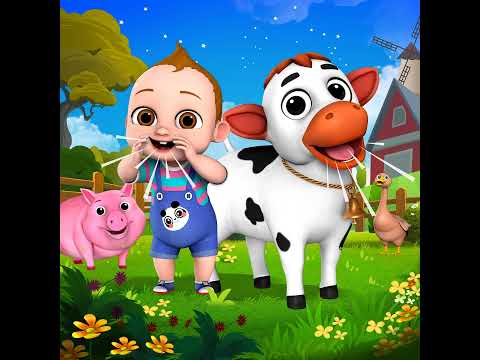
oink en 30 segundos
- Oink is the standard English word for the sound a pig makes, used as both a noun and a verb.
- It is a classic example of onomatopoeia, appearing frequently in children's books, songs, and farm-related contexts.
- While usually neutral or playful, it can be used informally to mock noisy eating or as a derogatory term.
- Common synonyms include grunt, squeal, and snort, each describing a slightly different type of pig vocalization.
The word oink is a quintessential example of onomatopoeia in the English language. At its most fundamental level, it is the phonetic representation of the sound a domestic pig makes. However, its utility extends far beyond simple farmyard imitation. In linguistics, onomatopoeia like 'oink' serves as a bridge between the physical world of sound and the structured world of human speech. When we say a pig 'oinks', we are not just mimicking a noise; we are categorizing a specific biological behavior within a linguistic framework. This word is primarily used in contexts involving animals, agriculture, and children's literature, but it also finds its way into metaphorical speech and cultural references. The sound itself is characterized by a deep, guttural quality, often produced by the pig's snout as it roots for food or communicates with its herd. In human speech, the 'oi' sound creates a diphthong that transitions into a nasal 'ng' and ends with a sharp 'k' sound, capturing the complex texture of the animal's vocalization.
- Primary Definition
- The characteristic grunting sound made by a pig, used as both a noun (the sound itself) and a verb (the action of making the sound).
The little piglet let out a tiny oink when it saw the bucket of apples.
Historically, 'oink' is a relatively modern addition to the English lexicon, gaining widespread popularity in the 20th century. Before 'oink' became the standard, pigs were often described as 'grunting' or 'squealing'. The specific spelling 'oink' likely arose from the need for a more distinct and recognizable sound for children's books and cartoons. It is a word that carries a sense of playfulness and simplicity. When an adult uses the word, it is often in a descriptive sense or perhaps humorously. For instance, describing a messy eater as 'oinking' over their food is a common, albeit slightly rude, metaphor. In the realm of pop culture, characters like Peppa Pig or Porky Pig have solidified 'oink' as a globally recognized sound, even if the actual phonetic representation varies across different languages. Understanding 'oink' is essential for B1 learners because it appears frequently in casual conversation, storytelling, and cultural idioms related to greed or gluttony.
- Verb Usage
- To make the sound of a pig. Example: 'The pigs began to oink loudly as soon as the farmer entered the barn.'
Stop oinking and eat your dinner properly!
The word is also used in technical and semi-technical descriptions of animal behavior. Ethologists might study the frequency of 'oinks' to determine the stress levels or social dynamics within a group of swine. In this context, 'oink' serves as a shorthand for a specific type of low-frequency vocalization. Furthermore, the word has a certain rhythmic quality that makes it popular in nursery rhymes and songs. 'Old MacDonald Had a Farm' is perhaps the most famous example, where the 'oink oink here' and 'oink oink there' creates a repetitive, engaging structure for young learners. This repetition helps in phonological awareness, teaching the 'oi' sound which is otherwise somewhat rare in English. For a B1 learner, mastering 'oink' isn't just about knowing a farm sound; it's about understanding how English speakers use sound-words to animate their language and add color to their descriptions.
I could hear the distant oinks of the hogs coming from the valley.
- Noun Usage
- The sound itself. Example: 'A sudden oink startled the hikers as they passed the farm fence.'
The comedian did a perfect oink that made the whole audience laugh.
In summary, 'oink' is a versatile word that functions as a bridge between literal animal sounds and human linguistic expression. It is deeply embedded in the English-speaking cultural consciousness, appearing in everything from children's songs to literature and everyday metaphors. For the intermediate learner, it provides a window into the world of English onomatopoeia and the creative ways the language captures the sounds of the natural world. Whether you are describing a scene on a farm, reading a story to a child, or understanding a subtle joke about gluttony, 'oink' is a small but significant word to have in your vocabulary arsenal. It represents the playfulness of English and the way we humanize the animals around us through the sounds we attribute to them.
Using 'oink' correctly involves understanding its dual role as both a noun and a verb. As a noun, 'oink' follows the standard rules for countable nouns. You can have one oink, several oinks, or a loud oink. It often appears after verbs of perception like 'hear', 'listen to', or 'make'. For example, 'We heard a loud oink from the pigpen.' Here, 'oink' is the direct object of the verb 'heard'. It can also be modified by adjectives to describe the quality of the sound: 'a soft oink', 'a persistent oink', or 'a rhythmic oink'. When used in the plural, 'oinks', it suggests a series of sounds, often indicating excitement or hunger in the animals. The noun form is particularly common in descriptive writing where the author wants to evoke the sensory experience of a farm or a rural setting.
- Noun Examples
- 1. The silence of the night was broken by a solitary oink. 2. Her imitation of an oink was so realistic the pigs actually responded.
The child gave a happy oink while playing with his toy pig.
As a verb, 'oink' is regular, meaning its past tense is 'oinked' and its present participle is 'oinking'. It is typically an intransitive verb, meaning it does not require a direct object. You would say 'The pig oinked,' not 'The pig oinked a sound.' However, it can be used with adverbs to describe how the sound is made: 'The pig oinked hungrily,' or 'The sow oinked softly to her piglets.' The verb form is very active and brings a sense of life to a sentence. In creative writing, using 'oink' as a verb can help avoid the more generic 'made a sound'. It provides a specific, vivid image of the animal in action. For B1 learners, practicing the conjugation of 'oink' is a good way to reinforce regular verb patterns while learning a fun, descriptive word.
- Verb Examples
- 1. Every time I walk past the gate, the pigs oink at me. 2. The piglets were oinking and running around their mother.
He oinked in derision when he heard the ridiculous suggestion.
Beyond literal animals, 'oink' can be used figuratively to describe human behavior. This is often seen in informal or slightly mocking contexts. If someone is eating noisily or greedily, a witness might say they are 'oinking over their food'. While this is informal and can be offensive, it is a common way the word is used in colloquial English. Similarly, 'oink' can be used to mock someone who is being stubborn or 'pig-headed'. In these cases, the word acts as a metonym for the perceived negative traits of pigs. Understanding these nuances helps a learner navigate different social registers. It's important to know when 'oink' is a cute animal sound and when it's a pointed social commentary. The context—whether a farm, a nursery, or a dinner table—is the key to interpreting its meaning correctly.
The cartoon character would oink whenever he got excited.
- Common Patterns
- 'To oink with delight', 'A chorus of oinks', 'To let out an oink', 'The sound of oinking'.
The old sow oinked a warning to her straying young.
Finally, 'oink' is frequently used in the context of children's games and education. Teachers might ask, 'What sound does a pig make?' and the expected answer is 'Oink'. This makes it one of the first sound-words many English speakers learn. In this pedagogical setting, 'oink' is a tool for engagement and phonetic practice. For an adult learner, while the word might seem simple, its correct application in various tenses and its placement within a sentence are markers of a developing fluency. Whether you are describing a literal pig on a farm or using the word to add a touch of humor to a story, 'oink' is a reliable and expressive word that fits into many different sentence structures. Its simplicity is its strength, allowing it to be easily integrated into both basic and more complex narratives.
The word 'oink' is most commonly heard in environments where pigs are present or discussed. This includes farms, petting zoos, and agricultural fairs. In these settings, 'oink' is the literal description of the noise filling the air. Farmers use the word to describe the vocalizations of their livestock, and visitors use it to identify the animals they see. However, for most people, 'oink' is heard more frequently in media than in real life. Children's television shows are a primary source. Shows like 'Peppa Pig' have made the 'oink' sound a central part of their brand, with characters frequently oinking as a sign of laughter or agreement. In this context, the sound is stylized and often exaggerated for comedic effect. If you watch cartoons or read children's books in English, you will encounter 'oink' almost immediately.
- Media Contexts
- Cartoons, children's storybooks, farm documentaries, and animated movies featuring animal characters.
In the movie 'Babe', the title character doesn't just oink; he talks, but the other pigs provide plenty of realistic sounds.
Another common place to hear 'oink' is in nursery rhymes and educational songs. 'Old MacDonald Had a Farm' is the most ubiquitous, but there are many others. These songs are designed to teach children about animals and the sounds they make, and 'oink' is a staple of this curriculum. In classrooms and playgroups, you will hear teachers and children alike oinking as part of interactive storytelling. This usage is purely imitative and educational. It helps learners associate a specific word with a specific animal and a specific sound. For an English learner, these songs are a great way to hear the word used in a rhythmic, easy-to-remember context. The repetition in these songs ensures that the word 'oink' becomes deeply ingrained in the learner's vocabulary.
- Educational Contexts
- Kindergarten classrooms, language learning apps, and early childhood development videos.
The teacher asked the class, 'Can everyone oink like a little piglet?'
In more adult contexts, 'oink' might be heard in political or social commentary. Historically, the word has been used as a derogatory term for police officers (calling them 'pigs' and making 'oink' sounds). While this is less common in polite conversation today, it remains a part of the cultural history of the word, particularly in the United States during the 1960s and 70s. You might encounter this usage in historical documentaries, movies about social movements, or older literature. It's important for a B1 learner to be aware of this connotation, even if they never intend to use the word in that way. Understanding the 'darker' side of a word's history provides a more complete picture of its place in the language. However, in 99% of modern contexts, 'oink' remains a harmless, animal-related sound.
The protesters began to oink as the police line moved forward.
- Social Contexts
- Protests (historically), jokes about eating, and casual conversations about farm life.
The kitchen timer let out a sharp oink, signaling that the cookies were ready.
Finally, 'oink' is heard in the world of toys and games. Many electronic toys designed for toddlers feature an 'oink' sound effect. From plush pigs that oink when squeezed to interactive farm sets, the sound is a staple of the toy industry. Even in video games, pigs (like those in Minecraft) are programmed with 'oink' sound effects. This means that for many people, their primary interaction with the word 'oink' is through technology and entertainment. Whether it's a digital pig in a game or a plastic pig on a playmat, the 'oink' is the universal signal that a pig is present. For learners, this provides many opportunities to hear and recognize the word in various digital and physical environments, reinforcing its meaning through multiple sensory channels.
One of the most common mistakes learners make with 'oink' is confusing it with other animal sounds. In English, each animal has a very specific onomatopoeic word. For example, cows 'moo', sheep 'baa', and horses 'neigh'. Learners might accidentally say a pig 'moos' or a cow 'oinks' if they haven't fully internalized these associations. Another common confusion is between 'oink', 'grunt', and 'squeal'. While all three can describe sounds made by a pig, they are not interchangeable. An 'oink' is the general, neutral sound. A 'grunt' is a deeper, shorter sound, often made when the pig is rooting or moving. A 'squeal' is a high-pitched, loud sound, usually indicating pain, fear, or extreme excitement. Using 'oink' when a 'squeal' is more appropriate can make a description feel less accurate or vivid.
- Sound Confusion
- Mistaking 'oink' for 'grunt' (deeper) or 'squeal' (higher) or even 'snort' (nasal).
Incorrect: The pig mooed at the farmer. Correct: The pig oinked at the farmer.
Spelling and pronunciation also present challenges. The 'oi' diphthong followed by 'nk' is a unique combination. Some learners might struggle with the nasal transition, pronouncing it more like 'oink-a' or 'oy-ink'. It's important to keep the sound tight and contained. Spelling-wise, learners might forget the 'i' or the 'k', writing 'onk' or 'oin'. Because it's an onomatopoeic word, there is some flexibility in creative writing (e.g., 'oooink' to show a long sound), but in standard usage, 'oink' is the only accepted spelling. Additionally, learners sometimes forget that 'oink' can be a verb. They might say 'The pig made an oink' (which is correct but wordy) instead of the more natural 'The pig oinked'. Embracing the verb form is a sign of more advanced language use.
- Grammatical Errors
- Treating 'oink' as an uncountable noun or failing to conjugate it correctly as a verb (e.g., 'The pig oink yesterday').
Incorrect: I heard many oink in the barn. Correct: I heard many oinks in the barn.
A more subtle mistake involves the social context of the word. As mentioned, 'oink' can be used as a derogatory term for police or to mock someone's eating habits. A learner might use the word jokingly without realizing it could be taken as an insult. For example, oinking at a friend who is eating a large meal might be seen as playful in some cultures but very offensive in others. It's crucial to understand the relationship you have with the person before using 'oink' in a metaphorical or humorous way. In professional or formal settings, it's best to avoid using 'oink' altogether unless you are literally talking about pigs. Misreading the social register is a common pitfall for B1 learners who are starting to experiment with more informal language.
Be careful not to oink at someone unless you are very close friends!
- Contextual Misuse
- Using the word in a formal setting or using it to mock someone without realizing the potential for offense.
The comedian's oinking was funny to some but offensive to others.
Finally, learners often over-rely on 'oink' when other verbs would be more descriptive. While 'oink' is the standard, English has a rich vocabulary for animal sounds. Instead of always saying 'the pig oinked', a more advanced learner might use 'the pig snuffled through the mud', 'the pig grunted in satisfaction', or 'the pig squealed with joy'. Overusing 'oink' can make your writing or speaking feel repetitive and simplistic. The goal for a B1 learner is to move beyond the most basic terms and start incorporating more nuanced synonyms. By understanding the limitations of 'oink' and knowing when to reach for a more specific word, you can significantly improve the quality and accuracy of your English communication.
When looking for alternatives to 'oink', it's important to consider the specific sound or action you are trying to describe. The most common synonym is grunt. A grunt is a low, short, guttural sound. While pigs grunt, humans can also grunt when they are lifting something heavy or when they are being uncommunicative. 'Grunt' is more versatile than 'oink' and is often used in more serious or descriptive contexts. Another alternative is squeal. As mentioned before, a squeal is high-pitched and loud. It's the sound a pig makes when it's excited or scared. In human terms, children often squeal with delight. Using 'squeal' instead of 'oink' immediately changes the tone of the sentence from neutral to intense or emotional.
- Grunt vs. Oink
- 'Grunt' is deeper and more versatile; 'oink' is the standard onomatopoeia for a pig's general sound.
Instead of a cheerful oink, the old boar gave a low, menacing grunt.
Snort is another related word. A snort is a sound made by forcing air out through the nose. Pigs snort frequently as they root in the ground for food. Humans might snort when they find something funny or when they are being dismissive. 'Snort' captures the nasal quality of the pig's vocalization that 'oink' sometimes misses. Then there is snuffle, which describes the sound of breathing noisily through the nose, often while searching for something. A pig 'snuffling' through the leaves is a very evocative image. These words allow a writer to be much more specific about what the animal is doing and how it is feeling, moving beyond the simple 'oink'.
- Snort vs. Snuffle
- A 'snort' is a single, sharp burst of air; a 'snuffle' is a continuous, noisy breathing sound.
The pig didn't oink; it just snuffled around my boots looking for treats.
In more literary or formal contexts, you might see the word vocalization used. This is a scientific term for any sound made by an animal. While you wouldn't use it in a children's book, you might see it in a biology textbook: 'The pig's vocalizations were recorded for analysis.' This is a useful word for B1 learners to know as they transition into more academic English. Another interesting alternative is squeak, though this is usually reserved for very small piglets or other animals like mice. A 'squeak' is even higher and thinner than a 'squeal'. By choosing between 'oink', 'grunt', 'squeal', 'snort', 'snuffle', and 'vocalization', you can tailor your language to the exact situation you are describing.
The tiny piglet's oink was more of a high-pitched squeak.
- Register Comparison
- Oink (Neutral/Informal), Grunt (Neutral), Squeal (Informal/Descriptive), Vocalization (Formal/Scientific).
The farmer could distinguish every oink and grunt of his prize-winning hogs.
Finally, it's worth noting that in some dialects or creative contexts, 'oink' might be replaced by more obscure words like whuff or honk (though honk is usually for geese). However, for the vast majority of English speakers, 'oink' and its primary synonyms (grunt, squeal, snort) are the most important words to know. By mastering these, you will be able to describe any pig-related sound with confidence and precision. Whether you are writing a story, talking about a trip to a farm, or just expanding your vocabulary, understanding the subtle differences between these alternatives is a key step in your language learning journey.
How Formal Is It?
Dato curioso
Before 'oink' became popular, the sound of a pig was often written as 'umph' or 'griff' in older English literature.
Guía de pronunciación
- Pronouncing it as two syllables (oy-ink).
- Dropping the 'i' sound (onk).
- Failing to make the 'ng' nasal sound before the 'k'.
- Over-emphasizing the 'k' at the end.
- Pronouncing the 'oi' like 'oh-ee'.
Nivel de dificultad
Very easy to recognize in text due to its unique spelling.
Simple spelling, but remembering the 'i' is key.
The 'oi' diphthong and 'nk' cluster can be tricky for some learners.
Very distinctive sound that is easy to identify.
Qué aprender después
Requisitos previos
Aprende después
Avanzado
Gramática que debes saber
Onomatopoeia as Verbs
The pig oinked (sound-word used as a regular verb).
Countable Nouns for Sounds
I heard three oinks (sounds can be counted).
Gerunds as Nouns
The oinking was very loud (verb+ing used as a noun).
Adjectives modifying sounds
A sharp oink (adjective describing the quality of the sound).
Interjections in Dialogue
'Oink!' said the pig (sound-word used as direct speech).
Ejemplos por nivel
The pig says oink.
Le cochon fait oink.
Simple present tense.
Oink, oink, goes the pig!
Oink, oink, fait le cochon !
Repetition for emphasis.
I see a pig. It says oink.
Je vois un cochon. Il fait oink.
Two simple sentences.
Can you oink like a pig?
Peux-tu faire oink comme un cochon ?
Interrogative with 'can'.
The little pig gave a small oink.
Le petit cochon a fait un petit oink.
Adjective 'small' modifying the noun 'oink'.
Oink is a funny sound.
Oink est un son amusant.
'Oink' used as a subject noun.
The pig in the book says oink.
Le cochon dans le livre fait oink.
Prepositional phrase 'in the book'.
Listen to the pig: oink!
Écoute le cochon : oink !
Imperative verb 'listen'.
The pigs oinked when they saw the food.
Les cochons ont oinké quand ils ont vu la nourriture.
Past tense 'oinked'.
I heard a loud oink from the barn.
J'ai entendu un oink fort venant de la grange.
Noun 'oink' with adjective 'loud'.
The pig is oinking right now.
Le cochon est en train d'oinker en ce moment.
Present continuous 'is oinking'.
There were many oinks in the pigpen.
Il y avait beaucoup d'oinks dans la porcherie.
Plural noun 'oinks'.
The farmer smiled when the pig oinked.
Le fermier a souri quand le cochon a oinké.
Complex sentence with 'when'.
Do pigs oink all day?
Est-ce que les cochons oinkent toute la journée ?
Question with 'do'.
He can make a very good oink sound.
Il peut faire un très bon son d'oink.
Noun phrase 'oink sound'.
The pig didn't oink; it was quiet.
Le cochon n'a pas oinké ; il était silencieux.
Negative past tense 'didn't oink'.
The pig let out a satisfied oink after eating.
Le cochon a poussé un oink satisfait après avoir mangé.
Phrasal verb 'let out'.
If you pull its tail, the toy will oink.
Si tu tires sa queue, le jouet va oinker.
First conditional sentence.
The sound of oinking filled the morning air.
Le son des oinkings remplissait l'air du matin.
Gerund 'oinking' used as a noun.
She laughed and made a little oink sound.
Elle a ri et a fait un petit son d'oink.
Compound sentence with 'and'.
The pigs were oinking loudly at the gate.
Les cochons oinkaient bruyamment à la barrière.
Past continuous with adverb 'loudly'.
I can't sleep because the pigs are oinking.
Je ne peux pas dormir parce que les cochons oinkent.
Subordinating conjunction 'because'.
The pig oinked as if it were talking to me.
Le cochon a oinké comme s'il me parlait.
Subjunctive 'as if it were'.
Every oink from the barn made the dog bark.
Chaque oink venant de la grange faisait aboyer le chien.
Subject-verb agreement with 'every'.
The documentary captured the various oinks and grunts of the wild boars.
Le documentaire a capturé les divers oinks et grognements des sangliers.
Use of synonyms 'oinks' and 'grunts'.
The pig oinked persistently until the farmer brought the slop.
Le cochon a oinké de manière persistante jusqu'à ce que le fermier apporte la pâtée.
Adverb 'persistently' and conjunction 'until'.
Despite the noise, the oink of the prize pig was distinctive.
Malgré le bruit, l'oink du cochon primé était distinctif.
Prepositional phrase 'despite the noise'.
The comedian's ability to oink realistically was the highlight of the show.
La capacité de l'humoriste à oinker de manière réaliste était le clou du spectacle.
Infinitive 'to oink' as part of a noun phrase.
Whenever the gate creaked, the pigs would start oinking in anticipation.
Chaque fois que la barrière grinçait, les cochons se mettaient à oinker par anticipation.
Habitual 'would' in the past.
The author used the word 'oink' to create a rustic atmosphere.
L'auteur a utilisé le mot 'oink' pour créer une atmosphère rustique.
Purpose clause with 'to create'.
He oinked in derision, making his disapproval very clear.
Il a oinké par dérision, rendant son désapprobation très claire.
Participle phrase 'making his disapproval...'.
The piglets' high-pitched oinks were barely audible over the wind.
Les oinks aigus des porcelets étaient à peine audibles par-dessus le vent.
Compound adjective 'high-pitched'.
The subtle variation in each oink suggested a complex social hierarchy within the herd.
La variation subtile de chaque oink suggérait une hiérarchie sociale complexe au sein du troupeau.
Complex subject with 'subtle variation'.
By oinking at the precisely right moment, the trained pig delighted the audience.
En oinkant au moment précis, le cochon dressé a ravi le public.
Gerund phrase 'By oinking...'.
The linguistic study focused on the phonetic representation of 'oink' across different cultures.
L'étude linguistique s'est concentrée sur la représentation phonétique de 'oink' à travers différentes cultures.
Academic register.
Rarely did the old sow oink without a specific reason, such as a threat to her young.
Rarement la vieille truie oinkait sans une raison spécifique, comme une menace pour ses petits.
Negative inversion 'Rarely did...'.
The sound was a curious mixture of a snort and a rhythmic oink.
Le son était un curieux mélange d'un ébrouement et d'un oink rythmique.
Parallel structure 'a snort and a... oink'.
He dismissed the suggestion with a contemptuous oink-like sound.
Il a rejeté la suggestion avec un son méprisant semblable à un oink.
Adjective 'contemptuous'.
The sheer volume of the collective oinking was enough to startle the horses.
Le volume pur de l'oinking collectif était suffisant pour effrayer les chevaux.
Abstract noun phrase 'sheer volume'.
In the satire, the characters began to oink as they lost their humanity.
Dans la satire, les personnages ont commencé à oinker alors qu'ils perdaient leur humanité.
Metaphorical usage in literature.
The evocative power of a single oink in the narrative served to ground the surrealist elements in a gritty, farmyard reality.
Le pouvoir évocateur d'un seul oink dans le récit a servi à ancrer les éléments surréalistes dans une réalité de ferme brute.
Advanced literary analysis.
One might argue that the 'oink' is the most culturally codified onomatopoeia in the English language.
On pourrait soutenir que l'oink est l'onomatopée la plus codifiée culturellement dans la langue anglaise.
Hypothetical 'one might argue'.
The pig's oink, though seemingly simple, encompasses a wide range of frequencies that convey diverse emotional states.
L'oink du cochon, bien que paraissant simple, englobe une large gamme de fréquences qui transmettent divers états émotionnels.
Concessive clause 'though seemingly simple'.
To oink in such a setting was a profound breach of etiquette, signaling the character's complete social disintegration.
Oinker dans un tel cadre était une violation profonde de l'étiquette, signalant la désintégration sociale complète du personnage.
Infinitive phrase as subject.
The recording was so clear that you could hear the wet, guttural quality of the pig's oink.
L'enregistrement était si clair que l'on pouvait entendre la qualité humide et gutturale de l'oink du cochon.
Result clause 'so clear that...'.
The poet utilized the harsh 'k' at the end of 'oink' to punctuate the rhythm of the verse.
Le poète a utilisé le 'k' dur à la fin de 'oink' pour ponctuer le rythme du vers.
Specific phonetic focus.
Amidst the cacophony of the market, the distinct oink of a hidden piglet caught her attention.
Au milieu de la cacophonie du marché, l'oink distinct d'un porcelet caché a attiré son attention.
Prepositional phrase 'Amidst the cacophony'.
The transition from a grunt to a full-throated oink was seamless and indicative of the animal's growing excitement.
La transition d'un grognement à un oink à pleine gorge était fluide et révélatrice de l'excitation croissante de l'animal.
Compound predicate.
Colocaciones comunes
Frases Comunes
— The standard way to mimic a pig's sound in English.
The toddler pointed at the pig and said, 'Oink oink!'
— To make the sound of a pig, often used in games or as a criticism.
Stop oinking like a pig and eat properly.
— Many pigs making the sound at the same time.
A chorus of oinks rose from the barn at feeding time.
— A single pig sound in a quiet environment.
A solitary oink was the only sound in the night.
— To make a sudden, noisy pig sound.
The pig let out a loud oink when it was stepped on.
— Pigs making noise because they are hungry.
The pigs were oinking for food all morning.
— A pig making a sound after being spoken to or hearing a noise.
I called the pig's name, and it oinked in response.
— A sound made at regular intervals, often while sleeping.
The rhythmic oink of the pig was quite soothing.
Se confunde a menudo con
A grunt is deeper and shorter; an oink is the standard pig sound.
A squeal is high-pitched and loud, usually for excitement or pain.
A snort is air forced through the nose, often while rooting.
Modismos y expresiones
— To mock someone's eating habits or appearance (informal and rude).
The bullies would oink at her in the cafeteria.
informal— To sweat profusely (related to pigs, though pigs don't actually sweat much).
After the run, I was sweating like a pig.
informal— To eat a large amount of food greedily.
We decided to pig out on pizza after the game.
slang— To buy something without seeing it first.
Buying a car online can be like buying a pig in a poke.
informal— To offer something valuable to someone who does not appreciate it.
Explaining art to him is like casting pearls before swine.
literary— Very happy and content.
He was happy as a pig in mud in his new workshop.
informal— To do something very badly.
I made a pig's ear of the repairs.
informal— Stubborn and refusing to change one's mind.
He is too pig-headed to admit he is wrong.
informalFácil de confundir
Both are farm animal sounds.
Moo is for cows; oink is for pigs. They sound completely different.
The cow moos, but the pig oinks.
Both are farm animal sounds.
Baa is for sheep; oink is for pigs. Baa is a 'b' sound, oink is an 'oi' sound.
The sheep says baa, and the pig says oink.
Both are farm animal sounds.
Cluck is for chickens; oink is for pigs. Cluck is a sharp, repetitive sound.
Chickens cluck, while pigs oink.
Both are farm animal sounds.
Neigh is for horses; oink is for pigs. Neigh is a long, whinnying sound.
The horse gave a loud neigh, and the pig responded with an oink.
Both are farm animal sounds.
Quack is for ducks; oink is for pigs. Quack is a nasal, flat sound.
The duck quacked in the pond, and the pig oinked in the mud.
Patrones de oraciones
The [animal] says [sound].
The pig says oink.
I heard a [adjective] [sound].
I heard a loud oink.
The [animal] [verb]ed because [reason].
The pig oinked because it was hungry.
Despite the [noise], the [sound] was [adjective].
Despite the noise, the oink was clear.
The [noun] of [gerund] [verb]ed the [object].
The sound of oinking startled the hikers.
To [verb] in [context] was [adjective].
To oink in the library was inappropriate.
[Sound], [sound]! goes the [animal].
Oink, oink! goes the pig.
Stop [gerund]!
Stop oinking!
Familia de palabras
Sustantivos
Verbos
Adjetivos
Relacionado
Cómo usarlo
Common in specific contexts (children's media, farming).
-
The pig moos.
→
The pig oinks.
Confusing animal sounds is common. Remember: Cows moo, pigs oink.
-
I heard many oink.
→
I heard many oinks.
'Oink' is a countable noun and needs an 's' in the plural.
-
The pig oink yesterday.
→
The pig oinked yesterday.
You must use the past tense 'oinked' for actions that happened in the past.
-
He is oink over his food.
→
He is oinking over his food.
Use the present participle 'oinking' with the verb 'to be' for continuous actions.
-
The sound was an onk.
→
The sound was an oink.
Always include the 'i' when spelling 'oink' to represent the correct diphthong.
Consejos
Master the Diphthong
Focus on the 'oi' sound. It should be a smooth transition from an 'o' to an 'i' sound, like in the word 'choice'.
Use as a Verb
Don't just say 'the pig made an oink'. Use the verb form 'the pig oinked' to make your writing more active and natural.
Learn the Family
Pair 'oink' with 'piglet', 'sow', and 'boar' to build a complete set of farm-related vocabulary.
Know the Slang
Be aware of the derogatory uses of 'oink' so you can avoid them and understand them when you hear them in movies or history.
Don't Forget the 'I'
It's O-I-N-K. Many learners accidentally write 'onk', but the 'i' is essential for the correct sound.
Farm Context
Use 'oink' when describing rural scenes to add a sense of realism and atmosphere to your English.
Listen to Cartoons
Watch shows like Peppa Pig to hear 'oink' used in many different emotional contexts (laughter, surprise, etc.).
Creative Repetition
In stories, you can repeat the word ('oink, oink, oink') to show that a pig is very excited or persistent.
Regular Verb Rules
Remember that 'oink' follows all the standard rules for regular verbs, making it easy to use in different tenses.
Practice the Sound
Actually making the sound can help you remember the word! It's a fun way to engage with the language.
Memorízalo
Mnemotecnia
Think of an 'Oil' spill in a 'Sink'—OI + NK = OINK. Imagine a pig cleaning up the oil!
Asociación visual
Visualize a bright pink pig with a giant speech bubble that says 'OINK' in bold, bubbly letters.
Word Web
Desafío
Try to say 'The pink pig oinked in the pen' five times fast without stumbling over the 'p' and 'oink' sounds.
Origen de la palabra
The word 'oink' is an onomatopoeic creation, meaning it was formed to imitate the sound it describes. It first appeared in written English in the early 20th century, specifically around the 1930s and 40s.
Significado original: The sound made by a pig.
English (Onomatopoeic)Contexto cultural
Be aware that 'oink' can be used as an insult related to weight or as a derogatory term for police.
Commonly used in nursery rhymes and children's games to teach animal sounds.
Practica en la vida real
Contextos reales
On a Farm
- The pigs are oinking.
- Hear that oink?
- A loud oink from the pen.
- Feeding the oinking pigs.
Reading to Children
- The pig says oink.
- Oink, oink, went the pig.
- Can you make an oink?
- A little oink for you.
Describing Noisy Eating
- Stop oinking over your food.
- He oinked with every bite.
- A loud, hungry oink.
- Oinking like a pig at dinner.
In a Petting Zoo
- The piglet oinked at me.
- Listen to the tiny oinks.
- It gave a happy oink.
- Don't be scared of the oink.
Watching Cartoons
- The character oinks when he laughs.
- A funny oink sound effect.
- The pig oinked and ran away.
- Did the pig just oink?
Inicios de conversación
"Have you ever heard a real pig oink in person?"
"What sound do pigs make in your native language? Is it similar to 'oink'?"
"Why do you think 'oink' is the word we use for pigs in English?"
"Do you find the sound of a pig oinking to be funny or annoying?"
"Can you name any famous cartoon characters that oink?"
Temas para diario
Describe a visit to a farm. What sounds did you hear? Did the pigs oink loudly?
Write a short story for a child about a pig that lost its oink and had to find it.
Reflect on how animal sounds like 'oink' differ across cultures. Why do you think this is?
Think of a time you heard someone 'oink' metaphorically. What was the situation?
Imagine you are a pig for a day. What would make you oink with happiness?
Preguntas frecuentes
10 preguntasYes, 'oink' is a real English word. It is an onomatopoeia, which means it is a word that sounds like the noise it describes. It is listed in all major English dictionaries as both a noun and a verb. You can use it in writing and speaking just like any other word.
You can, but be very careful. Using 'oink' to describe a person is usually informal and often rude. It might imply that the person is eating greedily or noisily, or it could be a derogatory comment about their appearance. It is best to only use it this way with close friends who won't be offended.
The past tense of 'oink' is 'oinked'. It is a regular verb. For example: 'The pig oinked loudly when it saw the farmer.' You can also use the present participle 'oinking' for continuous actions: 'The pigs are oinking right now.'
The plural of 'oink' is 'oinks'. For example: 'I heard several oinks coming from the barn.' It follows the standard rule of adding an 's' to the end of the noun.
Yes, 'oink' is the standard representation of a pig's sound in the US, UK, Canada, Australia, and other English-speaking regions. While accents might vary the pronunciation slightly, the spelling and meaning remain the same.
Pigs oink to communicate with each other. They might oink to show they are hungry, to warn others of danger, or simply to stay in contact with their herd. In a linguistic sense, we use the word 'oink' to capture these various vocalizations in one simple term.
Generally, no. 'Oink' is a very informal or descriptive word. In formal or academic writing, you would likely use more technical terms like 'vocalization' or 'grunting sound'. However, it is perfectly acceptable in fiction, journalism, and casual correspondence.
Yes, 'oink' can be used as an interjection, especially in dialogue. For example: "'Oink!' said the pig as it rolled in the mud." In this case, it stands alone to represent the sound being made.
While both describe pig sounds, 'oink' is the standard, more playful word often used in stories. 'Grunt' is a more general term for a deep, short sound and can be used for humans as well as animals. 'Oink' is specific to pigs.
Yes, 'oink' is a classic example of onomatopoeia. The word itself is designed to sound like the actual noise a pig makes. Other examples include 'moo', 'hiss', and 'bang'.
Ponte a prueba 200 preguntas
Write a sentence using 'oink' as a noun.
Well written! Good try! Check the sample answer below.
Write a sentence using 'oinked' in the past tense.
Well written! Good try! Check the sample answer below.
Write a short paragraph about a farm using the word 'oink' at least twice.
Well written! Good try! Check the sample answer below.
Describe a pig using three different sound-words, including 'oink'.
Well written! Good try! Check the sample answer below.
Write a dialogue between a child and a parent about a pig's sound.
Well written! Good try! Check the sample answer below.
Use 'oink' in a sentence about a toy.
Well written! Good try! Check the sample answer below.
Write a sentence using 'oinking' as a gerund.
Well written! Good try! Check the sample answer below.
Create a sentence using 'oink' to describe a person's behavior (informally).
Well written! Good try! Check the sample answer below.
Write a sentence using 'oink' and 'satisfied'.
Well written! Good try! Check the sample answer below.
Write a sentence using 'oink' and 'startle'.
Well written! Good try! Check the sample answer below.
Write a sentence using 'oink' and 'chorus'.
Well written! Good try! Check the sample answer below.
Write a sentence using 'oink' and 'imitate'.
Well written! Good try! Check the sample answer below.
Write a sentence using 'oink' and 'rhythmic'.
Well written! Good try! Check the sample answer below.
Write a sentence using 'oink' and 'distance'.
Well written! Good try! Check the sample answer below.
Write a sentence using 'oink' and 'hungry'.
Well written! Good try! Check the sample answer below.
Write a sentence using 'oink' and 'tiny'.
Well written! Good try! Check the sample answer below.
Write a sentence using 'oink' and 'loudly'.
Well written! Good try! Check the sample answer below.
Write a sentence using 'oink' and 'mud'.
Well written! Good try! Check the sample answer below.
Write a sentence using 'oink' and 'gate'.
Well written! Good try! Check the sample answer below.
Write a sentence using 'oink' and 'warning'.
Well written! Good try! Check the sample answer below.
Pronounce the word 'oink' clearly, focusing on the 'oi' sound.
Read this aloud:
Dijiste:
Speech recognition is not supported in your browser. Try Chrome or Edge.
Say 'The pig oinks' three times quickly.
Read this aloud:
Dijiste:
Speech recognition is not supported in your browser. Try Chrome or Edge.
Imitate a pig's oink and then say the word 'oink'.
Read this aloud:
Dijiste:
Speech recognition is not supported in your browser. Try Chrome or Edge.
Read this sentence aloud: 'The hungry pigs oinked loudly at the gate.'
Read this aloud:
Dijiste:
Speech recognition is not supported in your browser. Try Chrome or Edge.
Explain in your own words what an 'oink' is.
Read this aloud:
Dijiste:
Speech recognition is not supported in your browser. Try Chrome or Edge.
Use 'oink' in a sentence about a farm visit.
Read this aloud:
Dijiste:
Speech recognition is not supported in your browser. Try Chrome or Edge.
Describe the difference between an 'oink' and a 'squeal'.
Read this aloud:
Dijiste:
Speech recognition is not supported in your browser. Try Chrome or Edge.
Read this dialogue: 'What sound does a pig make?' 'It says oink!'
Read this aloud:
Dijiste:
Speech recognition is not supported in your browser. Try Chrome or Edge.
Say the following: 'A chorus of oinks rose from the barn.'
Read this aloud:
Dijiste:
Speech recognition is not supported in your browser. Try Chrome or Edge.
Tell a 3-sentence story about a pig using the word 'oink'.
Read this aloud:
Dijiste:
Speech recognition is not supported in your browser. Try Chrome or Edge.
Practice the nasal 'ng' sound in 'oink'.
Read this aloud:
Dijiste:
Speech recognition is not supported in your browser. Try Chrome or Edge.
Say 'oinked' and 'oinking' clearly.
Read this aloud:
Dijiste:
Speech recognition is not supported in your browser. Try Chrome or Edge.
Read: 'The piglet gave a tiny oink.'
Read this aloud:
Dijiste:
Speech recognition is not supported in your browser. Try Chrome or Edge.
Explain why 'oink' is an onomatopoeia.
Read this aloud:
Dijiste:
Speech recognition is not supported in your browser. Try Chrome or Edge.
Say 'Oink, oink!' with different emotions: happy, sad, angry.
Read this aloud:
Dijiste:
Speech recognition is not supported in your browser. Try Chrome or Edge.
Read: 'The rhythmic oink of the pig was soothing.'
Read this aloud:
Dijiste:
Speech recognition is not supported in your browser. Try Chrome or Edge.
Use 'oink' in a question.
Read this aloud:
Dijiste:
Speech recognition is not supported in your browser. Try Chrome or Edge.
Say: 'Stop oinking over your food!'
Read this aloud:
Dijiste:
Speech recognition is not supported in your browser. Try Chrome or Edge.
Describe a cartoon pig you know and the sound it makes.
Read this aloud:
Dijiste:
Speech recognition is not supported in your browser. Try Chrome or Edge.
Pronounce 'oinks' and 'oinked' back to back.
Read this aloud:
Dijiste:
Speech recognition is not supported in your browser. Try Chrome or Edge.
Listen to the description: 'A deep, guttural sound made by a pink farm animal.' What is the word?
Listen to the sentence: 'The pigs were oinking loudly.' How many pigs are mentioned?
Identify the sound: 'A high-pitched, sharp noise from a pig.' Is this an oink or a squeal?
Listen to the phrase: 'A satisfied oink.' Is the pig happy or sad?
Listen to the sound: [Teacher makes an oink sound]. What animal is this?
Listen: 'The pig oinked twice.' How many times did it make a sound?
Listen: 'I heard an oink from the barn.' Where did the sound come from?
Listen: 'The tiny oink was barely audible.' Was the sound easy to hear?
Listen: 'The pigs oinked at the gate.' What were they doing?
Listen: 'A rhythmic oink.' What does 'rhythmic' mean here?
Listen: 'Stop oinking!' Is this a command or a question?
Listen: 'The oink was followed by a grunt.' Which sound came first?
Listen: 'The toy pig oinks when you squeeze it.' How do you make the toy oink?
Listen: 'A chorus of oinks.' Does this sound like one pig or many?
Listen: 'The pig oinked a warning.' Why did it oink?
/ 200 correct
Perfect score!
Summary
The word 'oink' is the primary way English speakers represent a pig's sound. It is essential for basic animal descriptions and appears widely in media. Example: 'The hungry pig gave a loud oink.'
- Oink is the standard English word for the sound a pig makes, used as both a noun and a verb.
- It is a classic example of onomatopoeia, appearing frequently in children's books, songs, and farm-related contexts.
- While usually neutral or playful, it can be used informally to mock noisy eating or as a derogatory term.
- Common synonyms include grunt, squeal, and snort, each describing a slightly different type of pig vocalization.
Master the Diphthong
Focus on the 'oi' sound. It should be a smooth transition from an 'o' to an 'i' sound, like in the word 'choice'.
Use as a Verb
Don't just say 'the pig made an oink'. Use the verb form 'the pig oinked' to make your writing more active and natural.
Learn the Family
Pair 'oink' with 'piglet', 'sow', and 'boar' to build a complete set of farm-related vocabulary.
Know the Slang
Be aware of the derogatory uses of 'oink' so you can avoid them and understand them when you hear them in movies or history.