statues en 30 segundos
- Statues are 3D artistic figures of people or animals, usually made from stone or metal, used for decoration or to honor historical figures.
- They are found in public spaces like parks and museums and are meant to last for a very long time as permanent monuments.
- The word is a plural countable noun, often used with verbs like 'erect', 'unveil', and 'restore' in both formal and informal contexts.
- It is important to distinguish 'statues' from 'statutes' (laws) and 'stature' (height or reputation) to ensure clear and professional communication.
The word statues refers to three-dimensional artistic representations, typically of humans, deities, or animals. These objects are characterized by their physical presence and are usually intended to be viewed from all sides, though some are designed for specific niches. Throughout human history, statues have served as more than just decoration; they are vessels of memory, power, and spiritual devotion. When we speak of statues, we are often referring to works carved from durable materials like marble or granite, or cast in resilient metals like bronze. The primary purpose of a statue is often to commemorate a specific individual—such as a war hero, a political leader, or a revolutionary thinker—or to embody an abstract concept like justice, liberty, or peace. In contemporary usage, the term is applied in contexts ranging from high-art gallery discussions to casual tourist observations in public squares.
- Materiality
- Statues are defined by their substance. Whether it is the cold, smooth surface of Carrara marble or the oxidized green patina of an old bronze monument, the material chosen often reflects the intended longevity and status of the subject being depicted.
The ancient Greeks were masters of creating lifelike statues that captured the ideal human form in perfect mathematical proportion.
In a sociological sense, statues function as 'silent residents' of our cities. They occupy public space to remind the living of the values or history that a society deems important. When a new statue is erected, it is a sign of collective honor; conversely, when statues are removed or toppled, it often signals a profound shift in cultural values or a rejection of the history that the statue represents. People use the word in academic settings when discussing art history, in political settings when debating the preservation of heritage, and in everyday travel when navigating cities by landmarks. The scale of statues can vary from 'colossal' (like the Statue of Liberty) to 'life-sized' or even 'miniature,' though the latter are more frequently called figurines or statuettes.
During the festival, the town square was filled with living statues—performers who stood perfectly still for hours.
Technically, the creation of statues involves various methods: carving (subtractive), modeling (additive), or casting (replacement). Carving involves taking a block of stone and removing pieces until the figure emerges. Modeling involves building up a figure using clay or wax. Casting, often using the 'lost-wax' method, allows for multiple copies of a statue to be made from a single mold. This technical aspect is why we often hear about 'bronze statues' being 'cast' rather than 'carved'. The durability of these objects is why they are such a significant part of the archaeological record; while paintings and textiles rot away, statues of stone and metal remain to tell us about civilizations that vanished thousands of years ago.
- Commemoration
- The act of building statues is almost always an act of commemoration. It is a way for a culture to say, 'This person or this idea mattered enough to be cast in stone forever.'
Many city parks are decorated with statues of famous poets and scientists from the 19th century.
Furthermore, statues play a vital role in religious and spiritual practices. In many traditions, statues are not merely representations but are believed to house the spirit of the deity they depict. In these contexts, the statues are treated with immense reverence, often being washed, dressed, and offered food. This highlights the 'presence' that a statue commands—it is a physical object that occupies the same three-dimensional space as the viewer, creating a unique psychological interaction that a two-dimensional painting cannot replicate. Whether it is a giant Buddha in Thailand or a small saint in a European cathedral, these statues bridge the gap between the physical and the metaphysical worlds.
The museum's collection includes several headless statues recovered from ancient Roman ruins.
- Iconoclasm
- This term refers to the deliberate destruction of statues, usually for political or religious reasons. It shows how much power we attribute to these inanimate objects.
Archaeologists often find broken statues that were destroyed during periods of political upheaval.
Using the word statues correctly requires an understanding of its role as a plural countable noun. It frequently appears with verbs that describe their creation, placement, or state of being. For instance, we 'erect', 'unveil', or 'commission' statues. When a statue is being displayed for the first time, the 'unveiling' is often a major public event. Conversely, if a statue is being removed, we might say it is being 'toppled', 'dismantled', or 'relocated'. Because statues are physical objects, they are often described by their physical condition: they can be 'weathered' by the rain, 'eroded' by the wind, or 'vandalized' by graffiti. The adjectives used with statues often highlight their size or impact, such as 'monumental', 'imposing', 'lifelike', or 'grotesque'.
- Action Verbs
- Common verbs include: erect (to build), unveil (to show for the first time), restore (to fix), and commission (to order the creation of).
The committee voted to commission three new statues to honor local civil rights leaders.
When describing the location of statues, prepositions like 'in', 'on', and 'at' are essential. We find statues 'in' a park, 'on' a pedestal, or 'at' the entrance of a building. The word 'pedestal' is a frequent companion to 'statues', as it refers to the base upon which a statue stands. Metaphorically, we say someone is 'on a pedestal' if we admire them too much, treating them like a statue rather than a human. In sentences, 'statues' can also function as the subject of verbs that describe their appearance or effect: 'The statues loomed over the courtyard,' or 'The statues represent the city's ancient heritage.' This personification helps convey the imposing nature of large sculptures.
Walking through the garden, we saw several marble statues that had become covered in moss over the years.
In more complex sentence structures, 'statues' often appears in the context of historical or political analysis. For example: 'The debate over whether to remove colonial-era statues has intensified in recent years.' Here, 'statues' is part of a compound noun phrase ('colonial-era statues') that specifies the type and origin of the objects. You might also use it in the passive voice to emphasize the object: 'The statues were carved from a single block of limestone.' This focus on the process of creation is common in art criticism and historical documentation. Additionally, when discussing the preservation of art, you might hear about 'restoring statues' or 'protecting statues from environmental damage.'
- Descriptive Adjectives
- Adjectives like 'equestrian' (showing a person on a horse), 'colossal' (very large), and 'commemorative' (serving as a memorial) are frequently paired with 'statues'.
The city is famous for its many equestrian statues located at every major intersection.
Finally, 'statues' can be used in a figurative sense to describe people who are unmoving or unresponsive. 'The guards stood like statues outside the palace,' uses a simile to compare human stillness to the inanimate nature of a sculpture. This usage is common in literature and descriptive writing to create a vivid image of immobility. Whether used literally or figuratively, the word carries a weight of permanence and stillness. In academic writing, you might encounter the term in the context of 'statuary,' which is a collective noun for statues or the art of making them, but in general English, 'statues' remains the most common and versatile term for these physical monuments.
In the silent house, the children sat as still as statues, waiting for their father to return.
- Collective Nouns
- While 'statues' is the plural, you might also hear 'a collection of statues' or 'a gallery of statues' to describe a group of them in one place.
The museum houses an impressive collection of ancient Egyptian statues.
The word statues is a staple of the tourism and travel industry. If you are on a guided bus tour in London, Rome, or Washington D.C., the guide will inevitably point out various statues of historical figures. You will hear it in museum audio guides, where narrators explain the significance of 'classical statues' or 'modernist statues'. In these contexts, the word is used to anchor the listener in the physical environment, turning a block of stone into a story about a person or an era. It is also a word you will frequently encounter in educational settings, particularly in history and art classes. Teachers use it to discuss how different cultures represented themselves—for example, comparing the rigid, formal statues of ancient Egypt with the dynamic, flowing statues of the Hellenistic period.
- Tourism Context
- 'To your left, you will see the statues of the founding fathers, which were erected in the late 19th century to commemorate the city's bicentennial.'
The tour guide pointed out the statues lining the bridge, each representing a different saint.
In recent years, the word 'statues' has moved from the quiet halls of museums into the loud arena of news and social media. This is due to global debates about public monuments and their relationship to systemic issues like colonialism and racism. You will hear news anchors reporting on 'the removal of controversial statues' or 'protesters gathering around statues'. In this context, the word is often charged with political emotion. It is no longer just about art; it is about identity and how we choose to represent our past in the present. This has made 'statues' a keyword in contemporary social discourse, often appearing in headlines and opinion pieces discussing 'statue-toppling' or 'statue-preservation'.
The news report discussed the city's plan to relocate several historical statues to a local museum.
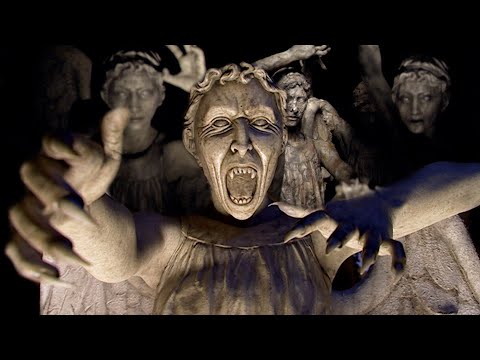
You will also hear the word in the world of entertainment and street performance. 'Living statues' are a common sight in major tourist hubs like Covent Garden in London or Las Ramblas in Barcelona. These are performers who paint themselves in metallic colors and stand perfectly still, surprising passersby when they finally move. In movies and literature, statues are often used as symbols of the past or as eerie, lifelike figures that might come to life (a trope known as 'agalmatophilia' or simply 'the living statue' trope). Whether it is the weeping angels in 'Doctor Who' or the moving statues in 'Harry Potter', the word is used to evoke a sense of wonder, mystery, or even horror.
- Pop Culture
- 'In the fantasy movie, the ancient statues suddenly came to life to defend the hidden temple from the invaders.'
The street performer was so still that people thought he was one of the bronze statues.
Finally, the word appears in religious and spiritual contexts. During religious processions or in places of worship, people speak of 'venerating statues' or 'offering prayers before statues'. In many cultures, these objects are central to the communal experience of faith. You might hear a priest or a monk talk about the 'blessing of the statues' or the history of a particular icon. In these settings, the word 'statues' is spoken with a tone of reverence and sacredness. Whether in a high-tech museum, a heated political debate, a bustling street corner, or a quiet temple, the word 'statues' consistently refers to our human desire to make the intangible tangible and the temporary permanent.
During the religious festival, the devotees carried heavy wooden statues through the narrow streets.
- Spiritual Usage
- 'The temple is famous for its thousand golden statues, each representing a different aspect of the divine.'
The cathedral is adorned with intricate stone statues of various biblical figures.
The most frequent mistake people make with the word statues is confusing it with the word statutes. While they look and sound very similar, their meanings are entirely different. 'Statues' are physical sculptures, whereas 'statutes' are written laws passed by a legislative body. This confusion often occurs in legal or formal writing. For example, saying 'the statue of limitations' is a common error; the correct term is 'the statute of limitations'. To avoid this, remember that 'statue' has an 'e' at the end and refers to an 'entity' (a physical thing), while 'statute' has a 't' near the end and refers to 'text' (a law). Another similar word is 'stature', which refers to a person's height or their level of respect and reputation. You might say a person has 'great stature' in their field, but you wouldn't call them a 'statue' unless they were standing very still.
- Statue vs. Statute
- Statue = Sculpture (e.g., The Statue of Liberty). Statute = Law (e.g., A federal statute). Don't mix them up in professional writing!
Incorrect: The lawyer argued that the statue was unconstitutional. Correct: The lawyer argued that the statute was unconstitutional.
Another common mistake involves the pluralization and collective use of the word. Some learners mistakenly use 'statues' as an uncountable noun, saying things like 'there is much statues in the park.' Since 'statues' is a countable noun, you must use 'many' or 'a lot of' and ensure the verb agrees: 'There are many statues in the park.' Additionally, people sometimes confuse 'statue' with 'sculpture'. While all statues are sculptures, not all sculptures are statues. A 'statue' specifically represents a person, animal, or living being. An abstract piece of art made of metal pipes is a 'sculpture', but it is not a 'statue'. Using 'statue' to describe abstract art can sound uneducated to art enthusiasts. Use 'sculpture' as the broader, more inclusive term if you are unsure.
Incorrect: That abstract metal piece is one of my favorite statues. Correct: That abstract metal piece is one of my favorite sculptures.
Pronunciation can also be a stumbling block. The word is pronounced /ˈstætʃuːz/. A common error is to pronounce the 't' too sharply or to forget the 'u' sound, making it sound like 'stats' or 'status'. 'Status' (/ˈsteɪtəs/) refers to someone's social or professional standing and is another word frequently confused with 'statues'. If you say, 'What is the statues of the project?' instead of 'What is the status of the project?', it can lead to significant confusion. To master the pronunciation, focus on the 'ch' sound in the middle (like in 'choose') and the long 'oo' sound at the end. Practicing the transition from the 't' to the 'u' will help you sound more natural and avoid being misunderstood.
- Statue vs. Status
- Statue = A physical figure. Status = A state or rank. Example: 'The statue's status as a landmark is well-known.'
Incorrect: I need to check the statues of my application. Correct: I need to check the status of my application.
Lastly, be careful with the spelling of 'statues' versus 'statuesque'. While 'statues' is the plural noun, 'statuesque' is an adjective meaning 'like a statue', usually describing someone who is tall, graceful, and dignified. Some people try to use 'statue-like' instead, which is grammatically acceptable but less sophisticated. However, calling someone 'statuesque' is a compliment, while calling them 'a statue' might imply they are cold or unmoving. Understanding these subtle differences in connotation will help you use the word and its derivatives more effectively in both spoken and written English. Always double-check your spelling in formal documents to ensure you haven't accidentally turned a beautiful monument into a boring legal regulation.
The actress was described as statuesque because of her tall and elegant bearing.
- Spelling Check
- Statues (plural noun), Statue's (singular possessive), Statues' (plural possessive). Make sure the apostrophe is in the right place!
The statues' bases were all carved from the same type of dark granite.
While statues is the most common term for three-dimensional representations of people or animals, there are several alternatives that can provide more precision depending on the context. The most frequent alternative is sculptures. As mentioned previously, 'sculpture' is a broader category that includes abstract art, installations, and even works made from non-traditional materials. If you are in an art gallery looking at a piece that doesn't clearly represent a living being, 'sculptures' is the more appropriate term. Another specific term is monuments. A monument is a statue or structure specifically created to commemorate a person or event. While many statues are monuments, a monument could also be an obelisk, a building, or a plaque. Use 'monuments' when you want to emphasize the commemorative or historical importance of the object.
- Statues vs. Sculptures
- Statues: Always represent a person or animal. Sculptures: Can be anything 3D, including abstract shapes.
The park features both figurative statues and abstract modern sculptures.
For smaller objects, the terms figurines or statuettes are used. A 'figurine' is typically a small, mass-produced decorative object, often made of porcelain or plastic, found in homes. A 'statuette' is a small statue, often given as an award—the most famous example being the Oscar statuette given at the Academy Awards. If the statue only represents the head, neck, and shoulders of a person, it is called a bust. You will often see 'busts' of famous philosophers or composers in libraries and music halls. Using 'bust' instead of 'statue' shows a higher level of vocabulary and specific knowledge of art forms. Similarly, an effigy is a representation of a person, often used in a funeral context or, more commonly today, a crude representation of someone meant to be damaged or destroyed as a form of protest.
The library's entrance is flanked by marble busts of Shakespeare and Milton.
In a religious context, you might use the word icons or idols. While 'icon' often refers to a two-dimensional painting in the Eastern Orthodox tradition, it can sometimes be used for statues. 'Idol' is a more controversial term, often used by outsiders to describe a statue that is worshipped as a god. Within the faith itself, they are more likely to be called 'sacred images' or 'devotional statues'. If you are talking about a very large statue, the word colossus (plural: colossi) is appropriate. The Colossus of Rhodes was one of the Seven Wonders of the Ancient World. Using 'colossus' evokes a sense of awe and massive scale that 'statue' alone might not convey. Another related term is memorial, which, like 'monument', emphasizes the act of remembering.
- Comparison Table
-
- Bust: Head and shoulders only.
- Figurine: Small, decorative.
- Equestrian Statue: Person on a horse.
- Effigy: Often used for protest or funerals.
The protesters burned an effigy of the unpopular leader in the town square.
Finally, consider the word totem if you are referring to the carved poles of Indigenous cultures in the Pacific Northwest. While they are a form of statue, calling them 'totem poles' is much more accurate and respectful of the specific cultural tradition. Similarly, gargoyles are statues of mythical creatures found on Gothic buildings, often serving as water sprouts. By choosing the most specific word—whether it is bust, figurine, monument, or gargoyle—you can make your descriptions more vivid and precise. However, 'statues' remains the reliable, 'catch-all' term for any three-dimensional figure of a living being, making it an essential part of any English learner's vocabulary.
The cathedral's roof is decorated with stone gargoyles designed to ward off evil spirits.
- Summary of Alternatives
- Use 'statues' for general figures, 'sculptures' for art, 'busts' for heads, and 'monuments' for memorials. This variety will enrich your writing and speaking.
The museum's courtyard is a peaceful place filled with various monuments to the city's past.
How Formal Is It?
Dato curioso
The ancient Greeks often painted their marble statues in bright, vivid colors. Over time, the paint wore off, leading people in the Renaissance to believe that 'classical' statues were always pure white.
Guía de pronunciación
- Pronouncing it like 'stats' (forgetting the second syllable).
- Confusing it with 'status' (STAY-tus).
- Confusing it with 'statutes' (STAT-yootz).
- Making the 't' too hard, like 'stat-yoos' instead of the 'ch' sound.
- Forgetting the 'z' sound at the end for the plural.
Nivel de dificultad
The word is easy to recognize, but the context can be complex in historical or political texts.
Spelling is generally easy, but distinguishing it from 'statutes' requires care.
Pronunciation of the 'ch' sound in the middle can be tricky for some learners.
Easily confused with 'status' or 'statutes' in fast speech.
Qué aprender después
Requisitos previos
Aprende después
Avanzado
Gramática que debes saber
Plural Countable Nouns
We use 'many' with statues: 'There are many statues.'
Subject-Verb Agreement
The statues 'are' (not 'is') located in the park.
Passive Voice
The statues 'were carved' by a famous artist.
Possessive Plural
The 'statues' bases' were made of granite.
Articles with Specific Nouns
Use 'the' when referring to specific statues: 'The statues we saw yesterday...'
Ejemplos por nivel
The park has many statues of animals.
Le parc a beaucoup de statues d'animaux.
Plural noun 'statues' follows 'many'.
I like the big statues in the museum.
J'aime les grandes statues dans le musée.
Adjective 'big' describes 'statues'.
Are those statues made of stone?
Ces statues sont-elles en pierre ?
Question form using 'are' for plural 'statues'.
Look at the statues of the kings.
Regardez les statues des rois.
Prepositional phrase 'of the kings' specifies the statues.
There are three statues near the fountain.
Il y a trois statues près de la fontaine.
'There are' is used for plural 'statues'.
The statues do not move.
Les statues ne bougent pas.
Negative form 'do not' for plural subjects.
My city has old statues.
Ma ville a de vieilles statues.
Simple subject-verb-object structure.
We saw statues of famous people.
Nous avons vu des statues de personnes célèbres.
Past tense 'saw' with plural object.
The museum has a collection of ancient Greek statues.
Le musée possède une collection de statues grecques anciennes.
Compound noun phrase 'ancient Greek statues'.
Many statues in the garden are made of bronze.
De nombreuses statues dans le jardin sont en bronze.
Subject-verb agreement: 'statues... are'.
You can see the statues from the street.
Vous pouvez voir les statues depuis la rue.
Modal verb 'can' followed by 'see'.
The statues represent the four seasons.
Les statues représentent les quatre saisons.
Verb 'represent' used with a plural subject.
They are cleaning the statues in the square today.
Ils nettoient les statues sur la place aujourd'hui.
Present continuous tense 'are cleaning'.
The statues were built a long time ago.
Les statues ont été construites il y a longtemps.
Passive voice 'were built'.
I took a photo of the beautiful statues.
J'ai pris une photo des belles statues.
Definite article 'the' with plural 'statues'.
Are there any statues in your hometown?
Y a-t-il des statues dans votre ville natale ?
Interrogative 'Are there any...'.
The city decided to erect statues to honor local heroes.
La ville a décidé d'ériger des statues pour honorer les héros locaux.
Infinitive 'to erect' followed by 'statues'.
These statues are famous for their realistic details.
Ces statues sont célèbres pour leurs détails réalistes.
Adjective phrase 'famous for'.
Archaeologists discovered several broken statues in the ruins.
Les archéologues ont découvert plusieurs statues brisées dans les ruines.
Determiner 'several' with plural noun.
The statues were carefully restored by experts.
Les statues ont été soigneusement restaurées par des experts.
Passive voice with adverb 'carefully'.
I prefer classical statues to modern ones.
Je préfère les statues classiques aux statues modernes.
Comparative structure 'prefer X to Y'.
The park is full of statues that tell the history of the country.
Le parc est plein de statues qui racontent l'histoire du pays.
Relative clause 'that tell...'.
They unveiled the new statues during the festival.
Ils ont dévoilé les nouvelles statues pendant le festival.
Verb 'unveiled' used for first public display.
Some statues are so lifelike that they almost look real.
Certaines statues sont si réalistes qu'elles semblent presque réelles.
Adjective 'lifelike' describing 'statues'.
The removal of colonial-era statues sparked a national debate.
Le retrait des statues de l'époque coloniale a déclenché un débat national.
Complex subject 'The removal of colonial-era statues'.
Many public statues serve as reminders of past injustices.
De nombreuses statues publiques servent de rappels des injustices passées.
Verb 'serve as' indicating purpose.
The statues have been weathered by centuries of exposure to the elements.
Les statues ont été érodées par des siècles d'exposition aux éléments.
Present perfect passive 'have been weathered'.
Artists often use statues to explore themes of identity and power.
Les artistes utilisent souvent des statues pour explorer les thèmes de l'identité et du pouvoir.
Infinitive of purpose 'to explore'.
The museum's courtyard is adorned with monumental bronze statues.
La cour du musée est ornée de statues monumentales en bronze.
Adjective 'monumental' emphasizing scale.
Critics argue that some statues glorify controversial historical figures.
Les critiques soutiennent que certaines statues glorifient des personnages historiques controversés.
Noun clause 'that some statues glorify...'.
The statues were commissioned by the wealthy merchant families of the Renaissance.
Les statues ont été commandées par les riches familles de marchands de la Renaissance.
Verb 'commissioned' meaning ordered to be made.
Despite their weight, the statues appear graceful and light.
Malgré leur poids, les statues paraissent gracieuses et légères.
Concession 'Despite' followed by a noun phrase.
The iconoclasm of the period led to the destruction of countless religious statues.
L'iconoclasme de l'époque a conduit à la destruction d'innombrables statues religieuses.
Use of the specialized term 'iconoclasm'.
These statues are quintessential examples of Hellenistic realism.
Ces statues sont des exemples quintessentiels du réalisme hellénistique.
Adjective 'quintessential' for high-level description.
The statues' placement within the cathedral was carefully calculated for dramatic effect.
L'emplacement des statues à l'intérieur de la cathédrale a été soigneusement calculé pour un effet dramatique.
Possessive plural 'statues''.
The preservation of outdoor statues requires constant vigilance against acid rain.
La préservation des statues d'extérieur nécessite une vigilance constante contre les pluies acides.
Gerund 'preservation' as the subject.
Public statues often function as focal points for civic rituals and gatherings.
Les statues publiques servent souvent de points de mire pour les rituels et les rassemblements civiques.
Verb 'function as' in a sociological context.
The statues were cast using the intricate lost-wax process.
Les statues ont été coulées selon le processus complexe de la cire perdue.
Technical term 'lost-wax process'.
The statues stand as silent witnesses to the city's turbulent history.
Les statues se dressent comme des témoins silencieux de l'histoire turbulente de la ville.
Metaphorical use of 'silent witnesses'.
There is an inherent tension between the permanence of statues and the shifting values of society.
Il existe une tension inhérente entre la permanence des statues et les valeurs changeantes de la société.
Abstract noun 'tension' with 'between'.
The statues articulate a complex narrative of imperial power and divine right.
Les statues articulent un récit complexe de pouvoir impérial et de droit divin.
Sophisticated verb 'articulate'.
One must consider the ontological status of these statues as both objects and symbols.
Il faut considérer le statut ontologique de ces statues à la fois comme objets et comme symboles.
Academic term 'ontological status'.
The statues' stoic expressions contrast sharply with the chaotic environment surrounding them.
Les expressions stoïques des statues contrastent vivement avec l'environnement chaotique qui les entoure.
Adjective 'stoic' and adverb 'sharply'.
The curation of the statues aims to subvert traditional expectations of monumental art.
La conservation des statues vise à subvertir les attentes traditionnelles de l'art monumental.
Verb 'subvert' in an artistic context.
The statues are imbued with a sense of gravitas that commands immediate respect.
Les statues sont imprégnées d'un sentiment de gravitas qui impose un respect immédiat.
Phrase 'imbued with a sense of gravitas'.
The sheer scale of the statues evokes a feeling of sublime awe in the spectator.
L'ampleur même des statues évoque un sentiment d'effroi sublime chez le spectateur.
Aesthetic term 'sublime awe'.
The statues serve as a locus for the negotiation of national identity.
Les statues servent de lieu de négociation de l'identité nationale.
Latinate term 'locus' used in social science.
The degradation of the statues' surfaces reveals the underlying fragility of historical memory.
La dégradation de la surface des statues révèle la fragilité sous-jacente de la mémoire historique.
Metaphorical link between physical and mental states.
Colocaciones comunes
Frases Comunes
— To stand perfectly still without moving at all.
The children stood like statues while the teacher spoke.
— Several statues placed in a straight line.
A row of statues lined the entrance to the palace.
— A group of statues kept together, usually in a museum.
The museum has an impressive collection of statues.
— Statues that have lost their heads due to age or damage.
Many ancient Roman statues are now headless statues.
— Street performers who pretend to be statues.
We saw several living statues in the town square.
— Having a large number of statues on a surface or building.
The cathedral's facade is covered in statues of saints.
— To clean and fix old statues to make them look new.
The city spent millions to restore the statues in the park.
— To take statues away from their public location.
The council voted to remove the statues from the square.
— Statues that were made thousands of years ago.
Ancient statues provide clues about how people used to dress.
— Statues used in worship or to represent holy figures.
The church is decorated with many religious statues.
Se confunde a menudo con
Statutes are written laws; statues are physical sculptures. This is the most common confusion.
Stature refers to a person's height or their reputation, not a physical object.
Status refers to social rank or the current state of a situation.
Modismos y expresiones
— Completely motionless.
She sat still as a statue, waiting for the bird to land.
informal— To admire someone so much that you forget they have flaws (like a statue on a base).
He puts his older brother on a pedestal and won't hear any criticism of him.
neutral— Permanent and unchangeable (like a stone statue).
The plans aren't cast in stone yet, so we can still make changes.
neutral— A permanent reminder of a specific quality or event.
The library is a monument to his love of learning.
formal— Remaining exactly as it was in the past, like a statue.
The old village felt like it was frozen in time.
neutral— A hidden weakness in a person who is otherwise greatly admired (referring to a statue with weak feet).
The hero was found to have feet of clay when his secrets were revealed.
literary— Trying to talk to someone who is as unresponsive as a statue.
Trying to explain the problem to him was like talking to a brick wall.
informal— Unwilling to change, like a rigid statue.
My grandfather is very set in his ways and won't try new food.
informal— Lacking emotion or warmth, like a marble statue.
Her response was as cold as marble, showing no sympathy.
literary— Completely silent or unresponsive (archaic/rare).
He stood there, dumb as a statue, unable to answer the question.
informalFácil de confundir
Similar spelling and sound.
A statute is a law passed by a legislative body. A statue is a 3D figure.
The new statute prohibits the removal of historical statues.
Similar root and sound.
Stature is an abstract quality (reputation) or physical height. A statue is a concrete object.
Despite his small stature, he was honored with several large statues.
Similar sound in fast speech.
Status is the condition or rank of something. A statue is a physical artwork.
What is the status of the project to clean the statues?
Related meaning.
Sculpture is the broad category of 3D art. A statue is a specific type of sculpture representing a person or animal.
Not all sculptures in the gallery are statues; some are abstract shapes.
Related meaning.
A figurine is a very small, often decorative statue. Statues are usually life-sized or larger.
The shelf was covered in small figurines, but the garden had large statues.
Patrones de oraciones
I see [Adjective] statues.
I see big statues.
The statues are made of [Material].
The statues are made of stone.
They built statues to [Verb] [Person].
They built statues to honor the king.
There is a debate about [Gerund] the statues.
There is a debate about removing the statues.
The statues serve as a [Noun] for [Concept].
The statues serve as a reminder of our history.
The [Noun] of the statues reflects [Abstract Concept].
The scale of the statues reflects the power of the empire.
The statues were [Past Participle] by [Agent].
The statues were restored by the city.
There are statues in the [Location].
There are statues in the museum.
Familia de palabras
Sustantivos
Verbos
Adjetivos
Relacionado
Cómo usarlo
Common in travel, history, art, and news contexts.
-
The statue of limitations.
→
The statute of limitations.
A 'statute' is a law; a 'statue' is a sculpture. Legal time limits are laws.
-
There is many statues in the park.
→
There are many statues in the park.
Statues is plural, so it requires the plural verb 'are'.
-
I saw an abstract statue of metal pipes.
→
I saw an abstract sculpture of metal pipes.
Statues must represent people or animals. Abstract pieces are called sculptures.
-
The statues stature was very tall.
→
The statue's height was very tall.
'Stature' usually refers to a person's reputation or height, not an object's size.
-
He stood still like a statues.
→
He stood still like a statue.
When comparing a person to one object, use the singular 'statue'.
Consejos
Use Specific Terms
Instead of just saying 'statues', try using 'busts' for heads or 'monuments' for memorials to sound more precise.
Check Your Plurals
Remember that 'statues' is plural. Always use 'are' and 'many' with it. The singular is 'statue'.
Statue vs Statute
Never use 'statue' when you mean a law. A statue is a stone person; a statute is a written law.
The 'CH' Sound
Focus on the 'ch' sound in the middle of 'statues'. It should sound like 'statch-ooz'.
Describe the Material
Adding the material (e.g., 'bronze statues') makes your writing more descriptive and professional.
Public Space
Statues are often landmarks. Use them when giving directions or describing a city's atmosphere.
Statue vs Sculpture
If the art is abstract (just shapes), call it a 'sculpture'. If it looks like a person, call it a 'statue'.
Still as a Statue
Use this simile to describe someone who is very quiet or not moving. It's very common in English.
Commemoration
Remember that most statues were built to honor someone. Use the verb 'honor' or 'commemorate' with them.
Context Clues
If you hear 'statues' in a legal context, the speaker might actually be saying 'statutes'. Use context to be sure.
Memorízalo
Mnemotecnia
Think of a 'STATue' as something that 'STAYs' in one place. Both start with 'STA-'. Statues stay still!
Asociación visual
Imagine the Statue of Liberty. It is a giant green woman holding a torch. Now imagine many of them standing in a row—those are statues.
Word Web
Desafío
Try to describe three different statues you have seen in your life. Use at least three different materials (e.g., marble, bronze, wood) in your description.
Origen de la palabra
The word 'statue' comes from the Old French 'statue', which in turn derives from the Latin 'statua'. The Latin root 'statuere' means 'to set up' or 'to cause to stand'. This reflects the physical nature of a statue as something that is 'set up' in a standing position.
Significado original: A thing set up; a representation in the round.
Indo-European -> Italic -> Latin -> Romance -> English.Contexto cultural
Be aware that some statues represent historical figures associated with slavery or colonialism, which can be a sensitive topic in many countries.
In the UK and US, statues of military leaders and politicians are common in city centers, though their presence is increasingly debated.
Practica en la vida real
Contextos reales
Tourism
- Where are the famous statues?
- Who are these statues of?
- Can we take photos of the statues?
- The statues are a major landmark.
Art History
- The statues date back to the 5th century.
- Notice the detail on these marble statues.
- The statues were carved from a single block.
- This style of statues is very rare.
Politics/News
- The debate over removing the statues.
- Protesters gathered around the statues.
- The statues were vandalized overnight.
- A new law regarding public statues.
Religion
- Devotees offered flowers to the statues.
- The statues are considered sacred.
- Processions featuring religious statues.
- The temple is filled with golden statues.
Everyday Description
- They stood as still as statues.
- The garden is decorated with statues.
- I saw some interesting statues today.
- The statues look very realistic.
Inicios de conversación
"What is the most impressive statue you have ever seen in person?"
"Do you think cities should keep statues of controversial historical figures?"
"If you could have a statue made of yourself, what would you be doing in it?"
"Why do you think humans have been making statues for thousands of years?"
"Do you prefer modern, abstract statues or traditional, realistic ones?"
Temas para diario
Describe a statue in your hometown. Who does it represent, and how do people feel about it?
Imagine a statue comes to life for one hour. What would it say about the changes it has seen in the city?
Write about a time you visited a museum. Which statues caught your eye and why?
Reflect on the idea of permanence. Why do we build statues out of stone and metal instead of wood or ice?
Discuss the role of statues in public spaces. Should they only represent the past, or should they represent the future too?
Preguntas frecuentes
10 preguntasA sculpture is any three-dimensional work of art, which can be abstract or representational. A statue is a specific type of sculpture that represents a human, deity, or animal. All statues are sculptures, but not all sculptures are statues.
It is 'statute of limitations'. A 'statute' is a law. A 'statue' is a physical figure. Since this refers to a legal time limit, 'statute' is the correct word.
Statues are most commonly made of durable materials like stone (marble, granite, limestone) or metal (bronze, copper). They can also be made of wood, clay, or modern materials like plastic and resin.
Many ancient statues are found without heads because the neck is the thinnest and weakest part of the sculpture. Over centuries, heads often break off due to falls, earthquakes, or deliberate vandalism.
An equestrian statue is a statue that depicts a person riding a horse. These are very common in cities to honor military leaders or kings.
No, a statue is an inanimate object. However, the term 'living statue' is used for performers who paint themselves and stand perfectly still to look like a statue.
'Statuesque' is an adjective used to describe a person, usually a woman, who is tall, graceful, and beautiful, resembling a well-proportioned statue.
Cleaning statues requires professional restorers. They often use gentle water sprays, soft brushes, and sometimes specialized chemicals to remove dirt and pollution without damaging the underlying material.
Statues provide a physical record of who a society valued at a certain time. They also show us historical clothing styles, artistic techniques, and cultural ideals of beauty.
Iconoclasm is the deliberate destruction of statues and other religious or political images. It usually happens during times of major social or religious change.
Ponte a prueba 180 preguntas
Describe a statue you have seen in your city or in a museum.
Well written! Good try! Check the sample answer below.
Why do you think people build statues of famous leaders?
Well written! Good try! Check the sample answer below.
Compare and contrast statues and paintings as forms of art.
Well written! Good try! Check the sample answer below.
Discuss the controversy surrounding the removal of certain historical statues.
Well written! Good try! Check the sample answer below.
Write a short story about a statue that comes to life at night.
Well written! Good try! Check the sample answer below.
Explain the difference between a statue, a statute, and stature.
Well written! Good try! Check the sample answer below.
Describe the process of making a bronze statue (casting).
Well written! Good try! Check the sample answer below.
What kind of statue would you like to see in your neighborhood?
Well written! Good try! Check the sample answer below.
How do statues contribute to a city's identity?
Well written! Good try! Check the sample answer below.
Write a dialogue between two people looking at an abstract sculpture they don't understand.
Well written! Good try! Check the sample answer below.
If you were a 'living statue' for a day, where would you stand and what would you wear?
Well written! Good try! Check the sample answer below.
Discuss the importance of preserving ancient statues for future generations.
Well written! Good try! Check the sample answer below.
Analyze the symbolic meaning of the Statue of Liberty.
Well written! Good try! Check the sample answer below.
Describe the feeling of standing next to a colossal statue.
Well written! Good try! Check the sample answer below.
Write a formal letter to the city council requesting a new statue for a local hero.
Well written! Good try! Check the sample answer below.
How has the purpose of statues changed from ancient times to today?
Well written! Good try! Check the sample answer below.
Describe the materials used in statues and why they are chosen.
Well written! Good try! Check the sample answer below.
What are the pros and cons of public monuments?
Well written! Good try! Check the sample answer below.
Write a poem about a weathered statue in an abandoned garden.
Well written! Good try! Check the sample answer below.
Explain the term 'iconoclasm' and provide a historical example.
Well written! Good try! Check the sample answer below.
Talk about a statue you like and why you like it.
Read this aloud:
Dijiste:
Speech recognition is not supported in your browser. Try Chrome or Edge.
Explain the difference between a statue and a figurine to a friend.
Read this aloud:
Dijiste:
Speech recognition is not supported in your browser. Try Chrome or Edge.
Debate with a partner: Should old statues be removed if they are controversial?
Read this aloud:
Dijiste:
Speech recognition is not supported in your browser. Try Chrome or Edge.
Describe the Statue of Liberty to someone who has never seen it.
Read this aloud:
Dijiste:
Speech recognition is not supported in your browser. Try Chrome or Edge.
Give a short presentation on a famous sculptor.
Read this aloud:
Dijiste:
Speech recognition is not supported in your browser. Try Chrome or Edge.
Tell a story about a time you saw a 'living statue' in a city.
Read this aloud:
Dijiste:
Speech recognition is not supported in your browser. Try Chrome or Edge.
Discuss the materials used for statues and their pros and cons.
Read this aloud:
Dijiste:
Speech recognition is not supported in your browser. Try Chrome or Edge.
Role-play: You are a tour guide showing tourists the statues in a park.
Read this aloud:
Dijiste:
Speech recognition is not supported in your browser. Try Chrome or Edge.
Explain the idiom 'still as a statue' and give an example.
Read this aloud:
Dijiste:
Speech recognition is not supported in your browser. Try Chrome or Edge.
Discuss the role of statues in religious worship.
Read this aloud:
Dijiste:
Speech recognition is not supported in your browser. Try Chrome or Edge.
What would you do if you saw a statue move?
Read this aloud:
Dijiste:
Speech recognition is not supported in your browser. Try Chrome or Edge.
How do you feel about modern, abstract statues in public places?
Read this aloud:
Dijiste:
Speech recognition is not supported in your browser. Try Chrome or Edge.
Describe the process of carving a statue from stone.
Read this aloud:
Dijiste:
Speech recognition is not supported in your browser. Try Chrome or Edge.
Talk about the most famous statue in your country.
Read this aloud:
Dijiste:
Speech recognition is not supported in your browser. Try Chrome or Edge.
Discuss the impact of weather and pollution on outdoor statues.
Read this aloud:
Dijiste:
Speech recognition is not supported in your browser. Try Chrome or Edge.
Explain the term 'equestrian statue' and why they are common.
Read this aloud:
Dijiste:
Speech recognition is not supported in your browser. Try Chrome or Edge.
How can statues help us learn about the past?
Read this aloud:
Dijiste:
Speech recognition is not supported in your browser. Try Chrome or Edge.
Discuss the ethical implications of 3D scanning and printing ancient statues.
Read this aloud:
Dijiste:
Speech recognition is not supported in your browser. Try Chrome or Edge.
Describe a 'bust' and where you might see one.
Read this aloud:
Dijiste:
Speech recognition is not supported in your browser. Try Chrome or Edge.
What makes a statue 'monumental'?
Read this aloud:
Dijiste:
Speech recognition is not supported in your browser. Try Chrome or Edge.
Listen to a description of three statues and identify which one is made of bronze.
Listen to a news report about a statue unveiling and note the date and location.
Listen to a lecture on Greek art and identify the main characteristics of their statues.
Listen to a conversation between two tourists and find out which statue they want to see next.
Listen to an interview with a sculptor and list the tools they use.
Listen to a podcast about 'statue-toppling' and summarize the speaker's main argument.
Listen to a guided tour of a museum and identify the age of the Egyptian statues.
Listen to a short story and identify the moment a statue is mentioned.
Listen to a debate about public art and note the two different opinions on statues.
Listen to a technical explanation of 'patina' and how it forms on statues.
Listen to a poem being read and identify the words that rhyme with 'statues'.
Listen to a weather report and identify if statues are mentioned as being at risk.
Listen to a description of a 'living statue' and identify what they are wearing.
Listen to a historical account of the Statue of Liberty's construction.
Listen to a discussion on 'statue vs statute' and identify the speaker's tip for remembering the difference.
/ 180 correct
Perfect score!
Summary
Statues are enduring physical representations of living beings that bridge art and history. For example, 'The city unveiled several bronze statues of famous scientists to inspire the next generation of students.'
- Statues are 3D artistic figures of people or animals, usually made from stone or metal, used for decoration or to honor historical figures.
- They are found in public spaces like parks and museums and are meant to last for a very long time as permanent monuments.
- The word is a plural countable noun, often used with verbs like 'erect', 'unveil', and 'restore' in both formal and informal contexts.
- It is important to distinguish 'statues' from 'statutes' (laws) and 'stature' (height or reputation) to ensure clear and professional communication.
Use Specific Terms
Instead of just saying 'statues', try using 'busts' for heads or 'monuments' for memorials to sound more precise.
Check Your Plurals
Remember that 'statues' is plural. Always use 'are' and 'many' with it. The singular is 'statue'.
Statue vs Statute
Never use 'statue' when you mean a law. A statue is a stone person; a statute is a written law.
The 'CH' Sound
Focus on the 'ch' sound in the middle of 'statues'. It should sound like 'statch-ooz'.