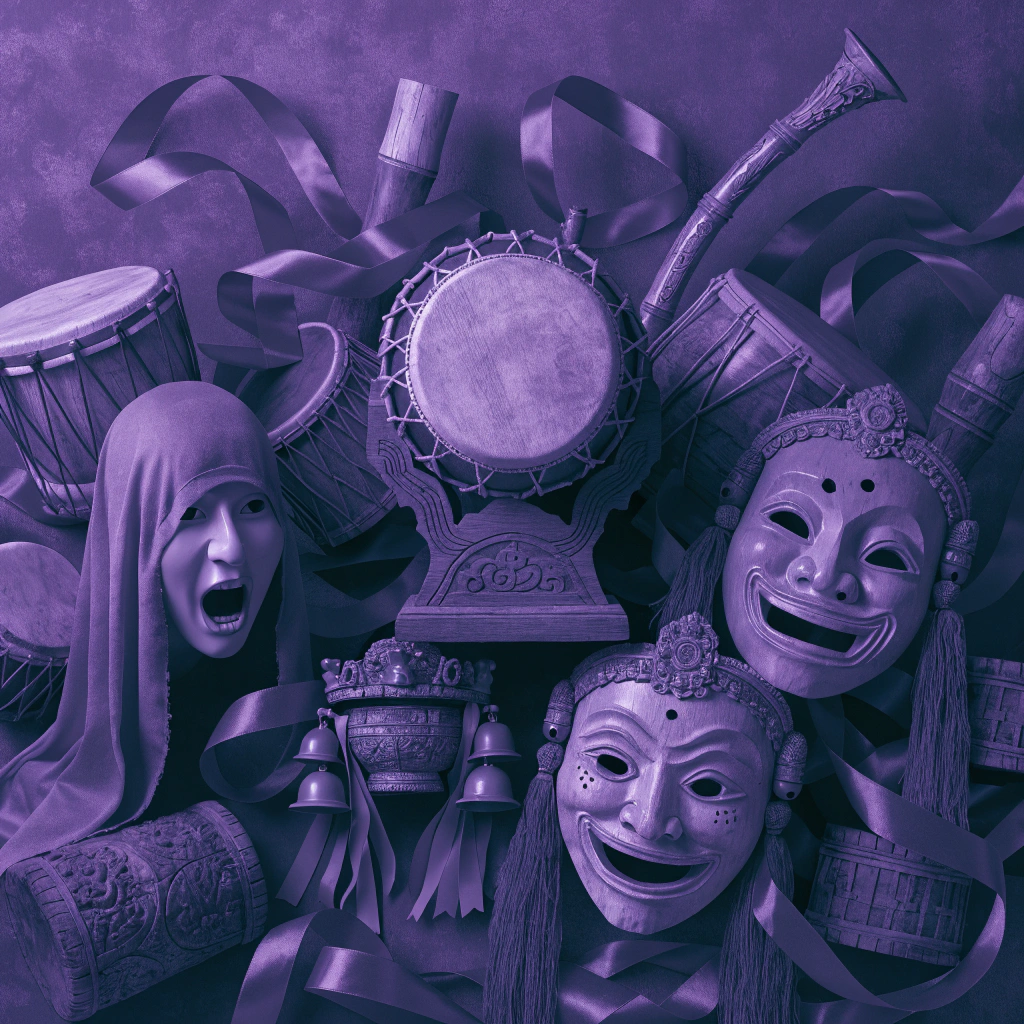
Music and History in Seoul
Jongmyo Jeryeak is a special tradition in South Korea. It is very old. People perform this music and dance at the Jongmyo Shrine in Seoul.
The music honors the kings and queens of the Joseon Dynasty. It is more than 600 years old. Musicians play drums and flutes. Dancers move slowly and beautifully.
This ceremony is important for Korean history. It shows respect for the past. Many people watch the performance every year. It is a beautiful part of Korean culture.
نکته دستوری
الگو: Present Simple (Be)
"Jongmyo Jeryeak is a special tradition in South Korea."
We use 'is' with singular subjects to talk about facts. It connects the subject to a description.
الگو: Present Simple (Action Verbs)
"Musicians play drums and flutes."
We use the base form of the verb (play) for plural subjects like 'musicians'. This shows a regular action or a fact.
درک خود را بسنجید
10 سوال · A1 مبتدی · 1 پیشنمایش رایگان
آنچه از این مقاله آموختید را بسنجید. به همه سؤالات پاسخ دهید و XP کسب کنید!
Where do people perform this music and dance?
آیا میخواهید آزمون را تمام کنید؟
9 سؤال دیگر منتظر شماست. ثبتنام رایگان کنید تا آزمون کامل را باز کنید و XP کسب کنید!
ثبتنام رایگانقبلاً ثبتنام کردی؟ ورود
جزئیات سؤالات
Where do people perform this music and dance?
پاسخ شما:
پاسخ درست: At the Jongmyo Shrine
The tradition is only 10 years old.
پاسخ شما:
پاسخ درست: نادرست
What is the definition of 'history'?
پاسخ شما:
پاسخ درست: The study of past events
Dancers move _____ and beautifully.
پاسخ شما:
پاسخ درست: slowly
Jongmyo Jeryeak: A Royal Tradition
Jongmyo Jeryeak is a very special tradition from South Korea. It is a mix of music, dance, and ritual. People started this tradition more than 600 years ago. It happened at the Jongmyo Shrine in Seoul. The people of the Joseon Dynasty performed it to honor their old kings and queens.
This music is older than many other traditions in the world. In the past, people believed that music and ritual were important for a peaceful life. During the ceremony, musicians play traditional instruments like large bells and drums. Dancers move slowly and carefully to the music.
Today, people still perform Jongmyo Jeryeak. It is more famous than before because visitors from many countries come to see it. It is a beautiful part of Korean history. Because it is so old and special, it is now a world treasure. People want to protect it for the future.
نکته دستوری
الگو: Past Simple
"The people of the Joseon Dynasty performed it to honor their old kings and queens."
We use the past simple to talk about finished actions in the past. To form it, we usually add '-ed' to regular verbs like 'perform'.
الگو: Comparatives
"It is more famous than before because visitors from many countries come to see it."
We use 'more + adjective + than' to compare two things or times. This is used for longer adjectives like 'famous'.
درک خود را بسنجید
11 سوال · A2 مقدماتی · 1 پیشنمایش رایگان
آنچه از این مقاله آموختید را بسنجید. به همه سؤالات پاسخ دهید و XP کسب کنید!
Where does the Jongmyo Jeryeak ceremony happen?
آیا میخواهید آزمون را تمام کنید؟
10 سؤال دیگر منتظر شماست. ثبتنام رایگان کنید تا آزمون کامل را باز کنید و XP کسب کنید!
ثبتنام رایگانقبلاً ثبتنام کردی؟ ورود
جزئیات سؤالات
Where does the Jongmyo Jeryeak ceremony happen?
پاسخ شما:
پاسخ درست: At the Jongmyo Shrine
Jongmyo Jeryeak is a new tradition started ten years ago.
پاسخ شما:
پاسخ درست: نادرست
What does 'shrine' mean?
پاسخ شما:
پاسخ درست: A holy place
Dancers move _____ and carefully to the music.
پاسخ شما:
پاسخ درست: slowly
Who did the people of the Joseon Dynasty honor with this music?
پاسخ شما:
پاسخ درست: Kings and queens
Jongmyo Jeryeak: South Korea's Ancient Royal Music
Jongmyo Jeryeak is a beautiful tradition from South Korea that combines music, dance, and ancient rituals. For over 600 years, this ceremony has been performed to honor the kings and queens of the Joseon Dynasty. It is held at the Jongmyo Shrine in Seoul, which is a very peaceful and historic place.
The music is played using traditional instruments like stone chimes and bronze bells. These sounds are meant to create a feeling of harmony between the earth and the sky. The dancers move slowly and gracefully, following the rhythm of the music. This special performance is known as the pinnacle of 'Yeak,' a philosophy where ritual and music work together to maintain peace in society.
Because it is so unique, Jongmyo Jeryeak has been preserved as a national treasure. It has also been recognized by UNESCO as a masterpiece of human heritage. People from all over the world travel to Seoul to watch the ceremony, which usually takes place on the first Sunday of May.
Even though modern life has changed much of Korea, this ritual remains an important part of the country’s identity. It shows how the past and present can exist together. If you visit Seoul, you should not miss the chance to see this incredible display of Korean history.
نکته دستوری
الگو: Present Perfect Passive
"For over 600 years, this ceremony has been performed to honor the kings and queens of the Joseon Dynasty."
This pattern shows an action that started in the past and continues until now. We use 'has been' + past participle to focus on the ceremony rather than who performs it.
الگو: Relative Clauses with 'Which'
"It is held at the Jongmyo Shrine in Seoul, which is a very peaceful and historic place."
A relative clause provides extra information about a noun. Here, 'which' adds more details about the Jongmyo Shrine.
درک خود را بسنجید
11 سوال · B1 متوسط · 1 پیشنمایش رایگان
آنچه از این مقاله آموختید را بسنجید. به همه سؤالات پاسخ دهید و XP کسب کنید!
Where is the Jongmyo Jeryeak ceremony held?
آیا میخواهید آزمون را تمام کنید؟
10 سؤال دیگر منتظر شماست. ثبتنام رایگان کنید تا آزمون کامل را باز کنید و XP کسب کنید!
ثبتنام رایگانقبلاً ثبتنام کردی؟ ورود
جزئیات سؤالات
Where is the Jongmyo Jeryeak ceremony held?
پاسخ شما:
پاسخ درست: The Jongmyo Shrine in Seoul
The ceremony has been performed for over 600 years.
پاسخ شما:
پاسخ درست: درست
What does 'heritage' mean?
پاسخ شما:
پاسخ درست: Traditions and history of a country
Jongmyo Jeryeak has been preserved as a national _____.
پاسخ شما:
پاسخ درست: treasure
When does the ceremony usually take place?
پاسخ شما:
پاسخ درست: The first Sunday of May
The Echoes of the Past: Understanding Jongmyo Jeryeak
For over six centuries, the solemn sounds of Jongmyo Jeryeak have echoed through the halls of the Jongmyo Shrine in Seoul. This magnificent tradition has been preserved for over six centuries by dedicated practitioners, making it one of the oldest continuous ritual traditions in the world. As a synthesis of vocal and instrumental music, dance, and ritual ceremony, it serves as a profound cultural bridge to the Joseon Dynasty. The ceremony, which takes place at the Jongmyo Shrine in Seoul, honors the deceased monarchs who shaped the nation's history.
At the heart of this performance lies the philosophy of 'Yeak.' This Confucian concept suggests that 'Ye' (ritual) and 'Ak' (music) are not merely forms of entertainment but are essential tools for the maintenance of cosmic and social harmony. By performing these rites, the living communicate with the spirits of the ancestors, ensuring peace for the kingdom. The music is characterized by its slow, deliberate tempo and the use of unique traditional instruments, such as stone chimes and bronze bells, which produce a sound that is both haunting and ethereal.
Furthermore, the significance of Jongmyo Jeryeak extends beyond its musical value. It is a highly structured event where every movement and note is calculated to reflect the hierarchical order of the universe. The dance, known as 'Ilmu,' involves rows of dancers moving in synchronized patterns that symbolize the civil and military achievements of the kings. This level of precision requires years of training, as the performers must embody the dignity and restraint expected of such a sacred occasion.
In the modern era, the preservation of this intangible heritage has become a priority for the South Korean government and international organizations. In 2001, it was recognized by UNESCO as a Masterpiece of the Oral and Intangible Heritage of Humanity. While the world around it has changed rapidly, Jongmyo Jeryeak remains a vital symbol of Korean identity. It provides a rare opportunity for contemporary audiences to witness a living tradition that has remained virtually unchanged since the 15th century. Through the continued performance of these ancestral rites, the values of respect, harmony, and continuity are passed down to future generations.
نکته دستوری
الگو: Present Perfect Passive
"This magnificent tradition has been preserved for over six centuries by dedicated practitioners."
This pattern is used to describe an action that began in the past and continues to the present, focusing on the object being preserved rather than the person doing it. It is formed using 'has/have + been + past participle'.
الگو: Non-defining Relative Clause
"The ceremony, which takes place at the Jongmyo Shrine in Seoul, honors the deceased monarchs."
This clause provides extra information about the subject (the ceremony) that is not essential for the sentence's meaning. It is separated by commas and uses the relative pronoun 'which'.
الگو: Gerund as Subject
"By performing these rites, the living communicate with the spirits of the ancestors."
Here, the gerund 'performing' follows a preposition to describe the method or means of an action. It functions as a noun within the prepositional phrase.
درک خود را بسنجید
11 سوال · B2 بالاتر از متوسط · 1 پیشنمایش رایگان
آنچه از این مقاله آموختید را بسنجید. به همه سؤالات پاسخ دهید و XP کسب کنید!
What is the primary purpose of the 'Yeak' philosophy mentioned in the text?
آیا میخواهید آزمون را تمام کنید؟
10 سؤال دیگر منتظر شماست. ثبتنام رایگان کنید تا آزمون کامل را باز کنید و XP کسب کنید!
ثبتنام رایگانقبلاً ثبتنام کردی؟ ورود
جزئیات سؤالات
What is the primary purpose of the 'Yeak' philosophy mentioned in the text?
پاسخ شما:
پاسخ درست: To maintain cosmic and social harmony
Jongmyo Jeryeak has changed significantly since it was first performed in the 15th century.
پاسخ شما:
پاسخ درست: نادرست
What does 'intangible' mean in the context of cultural heritage?
پاسخ شما:
پاسخ درست: Something that lacks physical form but has cultural value
The ceremony takes place at the Jongmyo _____ in Seoul.
پاسخ شما:
پاسخ درست: Shrine
What does the dance 'Ilmu' symbolize?
پاسخ شما:
پاسخ درست: The civil and military achievements of the kings
Resonance of the Ancestors: The Philosophical Grandeur of Jongmyo Jeryeak
The cultural landscape of contemporary South Korea is frequently characterized by its dizzying pace of modernization; however, nestled within the architectural sobriety of Seoul’s Jongmyo Shrine lies a tradition that resolutely defies the transient nature of time. Jongmyo Jeryeak, a magnificent synthesis of music, dance, and ritual, constitutes a cultural continuity spanning over six centuries, making it one of the most venerable ritual traditions globally. Performed during the 'Jongmyo Jerye,' these ancestral rites honor the kings and queens of the Joseon Dynasty, serving as a quintessential manifestation of 'Yeak'—the sophisticated Confucian philosophy asserting that 'Ye' (ritual) and 'Ak' (music) are indispensable for maintaining cosmic and social equilibrium.
Not only does the music provide a rhythmic foundation, but it also facilitates a spiritual communion with the royal ancestors. The orchestration involves a complex array of traditional instruments, including stone chimes and bronze bells, which produce a haunting, ethereal resonance. The accompanying dance, known as 'Ilmu,' is characterized by its deliberate, measured movements, reflecting the solemnity required of such a sacred occasion. The Ilmu is further subdivided into 'Munmu,' praising civil achievements, and 'Mumu,' honoring military exploits. This duality underscores the Confucian ideal of balanced leadership. The dancers’ orientation toward the cardinal directions is not arbitrary; it signifies the alignment of the earthly realm with the celestial order. Such symbolic density ensures that every gesture, no matter how subtle, carries the weight of centuries.
The meticulous preservation of these elements is not merely an act of historical curiosity but a profound commitment to maintaining the spiritual lineage of the nation. It is this unwavering commitment to historical accuracy that has secured its place on the UNESCO Representative List of the Intangible Cultural Heritage of Humanity. The preservation of such an intricate ritual necessitates a profound understanding of both musical theory and Confucian ethics. Critics often debate the relevance of such archaic traditions in a digital age; however, the enduring appeal of Jongmyo Jeryeak lies in its ability to offer a moment of transcendence. It provides a rare opportunity for contemporary observers to witness the pinnacle of aristocratic refinement and philosophical depth.
Furthermore, the ritual serves as a critical analytical lens through which we can view the Joseon Dynasty’s governance. The integration of music and ritual was perceived as a pedagogical tool, intended to cultivate virtue among the populace. By observing the strict hierarchy and structured movements of the performers, the audience is reminded of the importance of order and respect. Consequently, the ritual transcends its religious origins to become a masterclass in socio-political theory. Ultimately, Jongmyo Jeryeak stands as a testament to the resilience of Korean heritage. Despite the upheavals of the 20th century, the ritual has remained remarkably intact. The continued performance of these rites ensures that the philosophical underpinnings of Korean identity are not lost to the annals of history. It remains a living monument, bridging the gap between the terrestrial and the divine, the past and the present.
نکته دستوری
الگو: Inversion with negative adverbials
"Not only does the music provide a rhythmic foundation, but it also facilitates a spiritual communion with the royal ancestors."
When starting a sentence with 'Not only', the auxiliary verb comes before the subject. This is used in formal writing to add emphasis and rhetorical flair.
الگو: Cleft Sentences for Emphasis
"It is this unwavering commitment to historical accuracy that has secured its place on the UNESCO Representative List."
A cleft sentence splits a single message into two clauses to focus on a specific piece of information (the commitment). It typically follows the structure 'It is + [focused element] + that/who...'
الگو: Nominalization
"The meticulous preservation of these elements is not merely an act of historical curiosity but a profound commitment."
Nominalization involves turning verbs or adjectives into nouns (e.g., 'preserve' to 'preservation'). This creates a more formal, academic tone and allows for denser information packaging.
درک خود را بسنجید
12 سوال · C1 پیشرفته · 1 پیشنمایش رایگان
آنچه از این مقاله آموختید را بسنجید. به همه سؤالات پاسخ دهید و XP کسب کنید!
What does the Confucian philosophy of 'Yeak' primarily emphasize?
آیا میخواهید آزمون را تمام کنید؟
11 سؤال دیگر منتظر شماست. ثبتنام رایگان کنید تا آزمون کامل را باز کنید و XP کسب کنید!
ثبتنام رایگانقبلاً ثبتنام کردی؟ ورود
جزئیات سؤالات
What does the Confucian philosophy of 'Yeak' primarily emphasize?
پاسخ شما:
پاسخ درست: The necessity of ritual and music for cosmic balance
The 'Ilmu' dance is performed in a random manner to symbolize chaotic nature.
پاسخ شما:
پاسخ درست: نادرست
Which word describes the most perfect or typical example of something?
پاسخ شما:
پاسخ درست: Quintessential
The _____ preservation of the ritual elements ensures historical accuracy.
پاسخ شما:
پاسخ درست: meticulous
What distinction is made between 'Munmu' and 'Mumu' in the Ilmu dance?
پاسخ شما:
پاسخ درست: One praises civil achievements and the other honors military exploits
Jongmyo Jeryeak is recognized by UNESCO as Intangible Cultural Heritage.
پاسخ شما:
پاسخ درست: درست
The Ontological Resonance of Jongmyo Jeryeak: A Synthesis of Confucian Cosmology and Ritual Performance
The Jongmyo Jeryeak stands not merely as a relic of a bygone era but as a living, breathing ontological testament to the Joseon Dynasty’s philosophical sophistication. For over six centuries, this magnificent synthesis of music, dance, and ritual has been preserved with such fastidious attention to detail that it remains one of the oldest continuous ritual traditions globally. Performed during the 'Jongmyo Jerye'—the ancestral rites held at the Jongmyo Shrine in Seoul—it serves to honor the departed kings and queens of the Joseon line. Yet, to categorize it simply as a commemorative act would be to overlook its deeper metaphysical underpinnings. This tradition represents the pinnacle of 'Yeak,' a profound Confucian philosophy suggesting that 'Ye' (ritual) and 'Ak' (music) are inextricably linked, serving as the essential conduits for maintaining both cosmic and social harmony.
At the heart of this performance lies the axiomatic belief that the governance of a state must mirror the equilibrium of the heavens. Were the rhythmic cadence to falter or the ritual gestures to lose their precision, the symbolic harmony between the terrestrial and celestial realms would be jeopardized. The music itself is divided into two primary suites: Botaepyong, which extols the civil achievements of the monarchs, and Jeongdaeeop, which commemorates their military prowess. The orchestration, characterized by the resonant timbre of the pyeonjong (bronze bells) and pyeongyeong (stone chimes), transcends mere auditory experience. These instruments, crafted from materials representing the earth and the heavens, are intended to facilitate a spiritual communion between the living and the ancestral spirits. It is of paramount importance that the practitioner adhere to the strictly codified movements of the 'Ilmu' dance, where the configuration of dancers reflects the hierarchical structure of the universe.
Scholars have long debated whether the preservation of Jongmyo Jeryeak is a result of cultural isolation or a conscious effort at national self-definition. Regardless of its origin, the ritual’s survival through periods of colonial upheaval and rapid modernization is nothing short of miraculous. Seldom has a tradition maintained such structural integrity while navigating the turbulent waters of the 20th century. The performance is not a static museum piece; rather, it is a dynamic manifestation of Korean identity that continues to evoke a sense of profound veneration. The slow, deliberate tempo of the music—often described as having an ethereal quality—invites the spectator into a state of contemplative stillness, a sharp contrast to the frenetic pace of contemporary life in Seoul.
Furthermore, the Jongmyo Jeryeak serves as a conduit for the transmission of traditional values, emphasizing filial piety and the continuity of the lineage. The meticulousness of the ceremony suggests a society that values historical permanence over ephemeral trends. It is imperative that the modern observer recognize the subtle nuances of the performance: the way the breath of the flute players mimics the ebb and flow of nature, or how the dancers' feet barely graze the ground, as if moving between worlds. This level of subtlety requires a discerning eye and a mind attuned to the complexities of East Asian aesthetics.
In conclusion, the Jongmyo Jeryeak is far more than a historical curiosity; it is a sophisticated apparatus for social and spiritual cohesion. By bridging the gap between the mundane and the divine, it ensures that the sovereignty of the past remains a guiding light for the future. As a UNESCO Masterpiece of the Oral and Intangible Heritage of Humanity, it demands our respect not only for its longevity but for its unwavering commitment to the pursuit of universal harmony. To witness the Jongmyo Jeryeak is to observe the temporal boundaries between the ancestral past and the ephemeral present dissolve, leaving only the pure resonance of the eternal.
نکته دستوری
الگو: Inversion with Negative Adverbials
"Seldom has a tradition maintained such structural integrity while navigating the turbulent waters of the 20th century."
When negative or restrictive adverbs like 'seldom' or 'never' are placed at the beginning of a sentence for emphasis, the subject and auxiliary verb are inverted. This creates a formal and rhetorical effect common in C2 level academic writing.
الگو: Inverted Conditional (Subjunctive)
"Were the rhythmic cadence to falter or the ritual gestures to lose their precision, the symbolic harmony between the terrestrial and celestial realms would be jeopardized."
In formal English, 'if' can be omitted in conditional sentences by using inversion. 'Were' is used here to express a hypothetical or unlikely situation in the present or future, maintaining a scholarly tone.
الگو: Subjunctive Mood with Impersonal Expressions
"It is of paramount importance that the practitioner adhere to the strictly codified movements of the 'Ilmu' dance."
After expressions of importance, necessity, or urgency (e.g., 'It is imperative that...', 'It is of paramount importance that...'), the base form of the verb (the subjunctive) is used, regardless of the subject's person or number.
درک خود را بسنجید
12 سوال · C2 تسلط · 1 پیشنمایش رایگان
آنچه از این مقاله آموختید را بسنجید. به همه سؤالات پاسخ دهید و XP کسب کنید!
What is the primary philosophical concept underlying Jongmyo Jeryeak?
آیا میخواهید آزمون را تمام کنید؟
11 سؤال دیگر منتظر شماست. ثبتنام رایگان کنید تا آزمون کامل را باز کنید و XP کسب کنید!
ثبتنام رایگانقبلاً ثبتنام کردی؟ ورود
جزئیات سؤالات
What is the primary philosophical concept underlying Jongmyo Jeryeak?
پاسخ شما:
پاسخ درست: The Confucian doctrine of 'Yeak', linking ritual and music
The Botaepyong suite is specifically designed to celebrate the military victories of the Joseon kings.
پاسخ شما:
پاسخ درست: نادرست
Which word describes something that is self-evident and requires no proof?
پاسخ شما:
پاسخ درست: Axiomatic
The ritual’s survival is described as almost _____ given the colonial upheaval it faced.
پاسخ شما:
پاسخ درست: miraculous
According to the text, what does the configuration of 'Ilmu' dancers represent?
پاسخ شما:
پاسخ درست: The hierarchical structure of the universe
The author suggests that the slow tempo of the music provides a contrast to modern life in Seoul.
پاسخ شما:
پاسخ درست: درست

