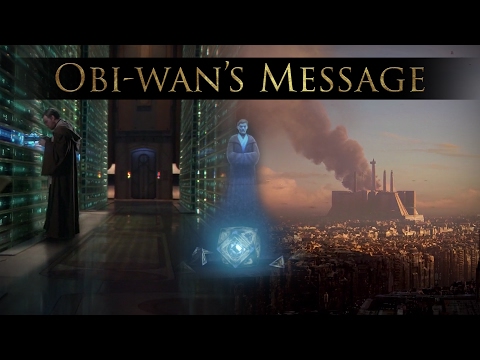
kenobi در ۳۰ ثانیه
- A 'Kenobi' is a wise, experienced mentor who guides others through challenges with a calm and philosophical approach, originating from the Star Wars character Obi-Wan Kenobi.
- The term is used metaphorically in professional and creative fields to describe a master-apprentice relationship where deep wisdom is shared selflessly.
- It implies more than just teaching; it suggests a spiritual or foundational guidance that prepares the student for their own 'hero's journey' or career growth.
- While informal, it is a high-level compliment that recognizes a person's long-term expertise and their dedication to nurturing the next generation of talent.
The term kenobi has transcended its origins as a specific character's surname in the Star Wars universe to become a symbolic noun in modern English. When someone refers to another person as a 'Kenobi,' they are not merely making a pop-culture reference; they are identifying a specific archetype of mentorship. This archetype is characterized by a blend of profound wisdom, extensive experience, and a calm, almost detached philosophical outlook. Unlike a standard 'teacher' or 'boss,' a Kenobi is someone who guides you through a transformative journey, often appearing at a critical juncture in your life or career to provide the 'force' or inspiration needed to overcome monumental challenges. The word is used most frequently in professional environments where technical mastery is paired with ethical guidance, or in creative circles where a seasoned veteran takes a novice under their wing. It implies a relationship built on respect, where the mentor doesn't just give answers but helps the student find their own path. This usage aligns with the 'Hero's Journey' framework described by Joseph Campbell, where the mentor figure provides the protagonist with the tools and confidence to leave their ordinary world. In a modern context, you might hear a software engineer describe a senior architect as their Kenobi, or a young politician refer to a retired statesman in the same way. The term carries a weight of reverence, suggesting that the mentor possesses secrets or skills that are almost mystical in their complexity. It is a word of high praise, indicating that the person being described is not just competent, but enlightened and selfless in their willingness to share knowledge.
- The Mentor Archetype
- A Kenobi represents the 'Wise Old Man' or 'Wise Old Woman' who provides the spiritual and technical foundation for the hero's growth.
"Whenever I hit a wall with my research, I go to Professor Miller; he is the kenobi of the physics department, always offering a perspective that changes everything."
Furthermore, the use of 'kenobi' often implies a certain level of mystery or a 'hidden' quality. Just as the original character lived as a hermit before being found, a real-life Kenobi might be someone who isn't seeking the spotlight but is found by those who are truly ready to learn. This adds a layer of exclusivity and depth to the term. It is not a word for a loud, boastful leader; it is for the quiet, steady hand that guides the ship through the storm. In digital culture, specifically within tech startups and gaming communities, the word has become a shorthand for 'ultimate master.' It is common to see it used in LinkedIn testimonials or internal company shout-outs to recognize someone who has gone above and beyond in their role as a guide. The linguistic evolution of this proper noun into a common noun (or at least a common metaphorical reference) demonstrates the power of cinema in shaping modern language. It allows speakers to convey a complex set of personality traits—patience, mastery, wisdom, and altruism—with a single, evocative word. When you call someone a Kenobi, you are acknowledging that they have mastered their 'craft' to such an extent that they can now teach others the 'ways' of that craft, whether that craft is coding, management, or life itself.
- Linguistic Register
- While informal and rooted in pop culture, it is increasingly accepted in creative and tech-focused professional settings as a high-level compliment.
"Every startup needs a kenobi—an experienced advisor who has seen every possible failure and knows the way out."
The term also carries a sense of legacy. A Kenobi is often an older individual who is passing the torch to a younger generation. This intergenerational transfer of knowledge is central to the word's meaning. It suggests a cycle of learning where the student eventually becomes the master, perhaps becoming a Kenobi for someone else in the future. This cyclical nature makes the word particularly poignant in graduation speeches, retirement parties, or when honoring a long-time mentor. It captures the essence of a life dedicated to the pursuit of excellence and the subsequent dedication to ensuring that excellence survives in others. In a world that often prizes quick results and superficial knowledge, the Kenobi figure stands for deep, slow-cooked wisdom that can only be acquired through decades of experience. Therefore, calling someone a Kenobi is an acknowledgment of their long journey and their willingness to help others start theirs.
- Cultural Resonance
- The term resonates because it taps into the universal human need for guidance and the timeless story of the master and the apprentice.
"She acted as my kenobi during the merger, keeping me calm when the stakes were at their highest."
"I'm looking for a kenobi to help me navigate the complexities of international law."
"He has that kenobi vibe—always speaking in riddles that eventually make perfect sense."
Using the word kenobi effectively requires an understanding of its metaphorical weight. It is rarely used as a literal name in these contexts, but rather as a descriptive noun or a comparative title. When you use it, you are usually placing it in a position that emphasizes the subject's role as a guide. For example, you might say someone is 'the Kenobi of the group' or that they are 'playing the Kenobi role.' Because it is a proper noun being used as a common noun, you have some flexibility with capitalization, though keeping it capitalized often honors its specific cultural origin. In sentences, it often follows a possessive or a definite article, such as 'my Kenobi' or 'the Kenobi.' This indicates a specific, unique relationship between the mentor and the mentee. It can also be used as an adjective-like noun to describe a certain 'vibe' or 'energy'—for instance, 'He has a very Kenobi-like approach to problem-solving.' This suggests a method that is patient, thoughtful, and perhaps slightly cryptic but ultimately effective.
- Syntactic Function
- It primarily functions as a predicate nominative or an appositive, identifying the role of a person within a specific context.
"In the world of venture capital, she is considered the kenobi for first-time founders."
When constructing sentences, consider the tone. Since 'kenobi' is an informal, culturally-rich term, it works best in environments where there is a shared understanding of its meaning. In a strictly formal academic paper, you might stick to 'mentor' or 'sage,' but in a speech, a blog post, or a professional recommendation, 'kenobi' adds a touch of personality and warmth. It also works well in contrastive sentences. For example, 'I didn't need a manager; I needed a Kenobi.' This highlights the difference between someone who simply oversees tasks and someone who provides deep, life-changing guidance. You can also use it to describe the transition of a character or person: 'After thirty years in the industry, he has finally settled into his Kenobi phase.' This implies that the person has moved from being the active 'hero' to being the one who prepares others for their own adventures. The word is particularly effective when paired with verbs of guidance, such as 'guide,' 'mentor,' 'advise,' or 'enlighten.'
- Comparative Usage
- Often used in 'X is the Kenobi of Y' structures to establish a person's authority in a specific niche.
"If you want to learn the nuances of jazz piano, Marcus is your kenobi."
Another way to use the word is to describe a specific style of communication. A 'Kenobi' often speaks in a way that requires the listener to think for themselves. Therefore, you might say, 'Stop being such a Kenobi and just tell me the answer!' This uses the word in a slightly more playful or frustrated way, acknowledging the mentor's tendency to be philosophical rather than direct. It can also be used to describe someone's physical presence—someone who is calm, composed, and seemingly unshakeable. 'He walked into the room with a Kenobi-like stillness that immediately silenced the crowd.' This usage expands the word's utility from just a role to a set of character traits. Whether you are using it to describe a person's function, their wisdom, or their demeanor, 'kenobi' provides a rich, multi-layered way to talk about the impact of a master on their student. It is a word that bridges the gap between fiction and reality, bringing the magic of a legendary character into everyday human interactions.
- Contextual Nuance
- The word implies that the mentor has 'seen it all' and possesses a level of mastery that is both technical and spiritual.
"The senior partner acted as a kenobi to the junior associates, teaching them not just the law, but the ethics of practice."
"Finding a true kenobi in the fast-paced world of fashion is rare, but I was lucky enough to work with Anna."
"He doesn't just give advice; he mentors with a kenobi spirit that inspires everyone around him."
The word kenobi is most frequently heard in environments where pop culture and professional expertise intersect. One of the primary locations is the technology sector, particularly in Silicon Valley and other global tech hubs. In these spaces, the 'hacker' or 'engineer' culture deeply values the concept of the master-apprentice relationship. You will hear it in stand-up meetings, during code reviews, or at tech conferences. A developer might say, 'I need to consult with the Kenobi of our database architecture before we make this change.' This usage acknowledges that certain individuals have a depth of knowledge that goes beyond documentation. Another common setting is the creative industries, such as film, music, and design. Directors often speak of their 'Kenobis'—the veteran cinematographers or editors who taught them the ropes. In these contexts, the word carries a sense of artistic lineage and the passing down of craft secrets that cannot be learned in a classroom.
- Tech and Engineering
- Used to identify senior architects or developers who provide foundational guidance on complex systems.
"During the hackathon, we had a 'Kenobi Corner' where experienced mentors helped teams solve their toughest bugs."
You will also encounter the term in modern educational discourse, particularly in alternative or progressive learning environments. Mentorship programs sometimes use 'Kenobi' as a playful but meaningful title for their lead mentors. It helps to break down the formal barriers between teacher and student, creating a more collaborative and inspirational atmosphere. Furthermore, the word has a strong presence in the world of sports coaching. A veteran coach who has retired but still advises the team might be referred to as the 'Kenobi' of the franchise. This highlights their role as a keeper of the team's culture and history. In the realm of personal development and life coaching, 'kenobi' is often used metaphorically to describe the 'inner guide' or the voice of wisdom that one develops through experience and reflection. You might hear a motivational speaker ask, 'Who is the Kenobi in your life?' as a way to prompt the audience to seek out meaningful mentorship.
- Creative Industries
- Used by artists and creators to honor the veterans who shaped their early careers and aesthetic choices.
"The legendary editor was a kenobi to a whole generation of young filmmakers in London."
Beyond professional circles, 'kenobi' is a staple of online communities, forums, and social media. On platforms like Reddit or Stack Overflow, users who consistently provide high-quality, wise, and patient answers are often dubbed 'Kenobis' by the community. This digital usage reinforces the idea of the Kenobi as a selfless sharer of knowledge. In casual conversation among friends, it might be used to describe the one person in the group who always has the best advice or who remains calm during a crisis. 'Let's ask Sarah; she's the Kenobi of our friend group.' This usage is more lighthearted but still carries the core meaning of wisdom and reliability. Finally, you will hear it in the context of film and literary criticism. Critics use the 'Kenobi archetype' to analyze characters in other stories who fulfill the role of the mentor, even if they have no connection to Star Wars. This academic usage has helped to solidify the word's place in the broader English lexicon as a legitimate descriptor for a specific type of character and person.
- Online Communities
- A term of endearment and respect for users who provide expert guidance and support to newcomers.
"The forum's kenobi just posted a 5,000-word guide on how to master the new software update."
"He's not just a coach; he's a kenobi who teaches his players about life through the game of basketball."
"I've been looking for a kenobi to help me understand the intricacies of the stock market."
While using the word kenobi can add flavor to your speech, there are several common pitfalls to avoid. The most frequent mistake is using the term too loosely. A 'Kenobi' is not just anyone who helps you; it is someone with a significant depth of experience and a philosophical approach to teaching. Calling a peer who just showed you how to use a printer a 'Kenobi' is an overstatement and can come across as sarcastic or diluting the word's meaning. It should be reserved for those who provide foundational, life-altering, or high-level technical guidance. Another mistake is forgetting the cultural context. While the word has become more general, it still carries a strong association with Star Wars. If you use it with someone who has no knowledge of the films, the metaphor will fail, and they might be confused. It is important to gauge your audience's cultural literacy before using such a specific pop-culture reference.
- Overuse and Dilution
- Avoid using the term for minor assistance; keep it for mentors who provide deep, transformative wisdom.
"Don't call every senior developer a kenobi; reserve it for the ones who truly change how you think about code."
Another common error is confusing 'Kenobi' with other Star Wars-related terms like 'Padawan' or 'Jedi.' A 'Padawan' is the student, while a 'Kenobi' is the master. Using them interchangeably will confuse your meaning. Similarly, calling someone a 'Jedi' implies they are a skilled practitioner, but calling them a 'Kenobi' specifically emphasizes their role as a *mentor* to others. You can be a Jedi without being a Kenobi, but you cannot be a Kenobi without being a master. There is also the issue of tone. Because the word is rooted in fiction, using it in an extremely formal or somber setting—like a legal document or a formal eulogy (unless the person was a huge fan)—might be seen as inappropriate or lacking gravitas. It is a word that thrives in the 'semi-formal' space: professional but personal, respectful but creative.
- Tone Mismatch
- Be careful using pop-culture metaphors in high-stakes formal environments where clarity and traditional professionalism are expected.
"In my formal performance review, I referred to my manager as a 'mentor' rather than a kenobi to maintain a professional tone."
Spelling and capitalization can also be tricky. While 'kenobi' is increasingly used as a common noun, it is still a proper name. Writing it as 'kenobe' or 'kanobi' is a common misspelling that can undermine your credibility, especially among those who are fans of the source material. As for capitalization, if you are using it as a direct title ('He is my Kenobi'), capitalization is preferred. If you are using it more generically ('We need more kenobi-like figures'), lowercase is becoming more acceptable, but capitalization remains the safer bet. Finally, avoid using the term in a way that feels exclusionary. If you are in a diverse group where many people might not know the reference, take a moment to explain what you mean or use a more universal term like 'mentor' alongside it. This ensures that your message of respect and appreciation is understood by everyone, not just the 'in-crowd.'
- Exclusionary Language
- Be mindful that not everyone is familiar with Star Wars; use the term in contexts where the meaning is clear or the audience is likely to understand.
"I had to explain to my grandmother that calling my teacher a kenobi was actually a very high compliment."
"The intern mistakenly called the CEO a kenobi during a very serious board meeting, which felt a bit out of place."
"You can't just be a kenobi overnight; it takes years of failing and learning to reach that level of wisdom."
If you find that kenobi isn't quite the right fit for your context, there are several alternatives that carry similar meanings but different 'flavors.' The most direct synonym is **mentor**. A mentor is someone who provides guidance and support, but it lacks the specific 'wise old master' connotation of 'kenobi.' It is a safer, more professional choice for formal environments. Another strong alternative is **sage**. A sage is someone who is wise through reflection and experience. This word is more traditional and carries a sense of ancient wisdom, making it perfect for academic or philosophical contexts. If you are looking for something with a more spiritual or Eastern flavor, **guru** or **sensei** are often used. 'Guru' implies a deep, often spiritual expertise, while 'sensei' (from Japanese) specifically refers to a teacher, often in the context of martial arts or a highly disciplined craft.
- Mentor vs. Kenobi
- 'Mentor' is professional and broad; 'Kenobi' is informal, archetypal, and implies a deeper, more philosophical guidance.
"While he was officially my manager, he acted more like a kenobi, teaching me the philosophy behind our design choices."
For those who want to stay within the realm of pop-culture metaphors but find 'kenobi' too specific, **Gandalf** is a popular alternative. Referring to someone as a 'Gandalf' implies they are a wise, powerful guide who often appears to help the group when they are in dire straits. While 'Kenobi' focuses on the master-apprentice relationship, 'Gandalf' often implies a broader leadership role within a group. Another option is **elder**. This is a more respectful, traditional term that emphasizes age and the wisdom that comes with it. It is often used in community or tribal contexts. In a corporate setting, you might use **veteran** or **doyen**. A 'veteran' is someone with long experience in a field, while a 'doyen' is the most respected or prominent person in a particular field. These terms are more formal and focus on professional status rather than the personal, guiding relationship implied by 'kenobi.'
- Gandalf vs. Kenobi
- Both are wise mentors, but 'Gandalf' often suggests a more magical or mysterious power, while 'Kenobi' suggests a disciplined mastery of a 'force' or skill.
"In the department of ancient history, Dr. Aris is the undisputed kenobi of the faculty."
Finally, if you want to describe the *role* without using a noun, you can use phrases like **guiding light**, **beacon of wisdom**, or **fount of knowledge**. These are more poetic and can be used in a variety of settings. The choice of word depends entirely on the relationship you are describing and the atmosphere of the conversation. 'Kenobi' is unique because it combines respect with a sense of shared cultural identity. It says, 'I respect you as a master, and I also share your cultural language.' This dual function is what makes it so popular in modern English. However, knowing when to switch to 'mentor' or 'sage' is a key part of linguistic mastery. By understanding the nuances of these similar words, you can choose the one that perfectly captures the essence of the person you are describing, whether they are a technical expert, a spiritual guide, or a seasoned professional.
- Formal Alternatives
- In formal writing, use 'mentor,' 'advisor,' or 'preceptor' to convey the same meaning without the pop-culture baggage.
"The professor's kenobi-like patience made even the most difficult concepts seem manageable."
"She has been the kenobi of this project since its inception, guiding us through every technical hurdle."
"Every great artist has a kenobi—someone who saw their potential before they saw it themselves."
چقدر رسمی است؟
نکته جالب
Sir Alec Guinness, who played the original Kenobi, was initially skeptical of the film but his performance defined the 'mentor' archetype for a generation. The name is now so well-known that it appears in dictionaries as a proper noun with metaphorical usage.
راهنمای تلفظ
- Pronouncing the first syllable like 'ken' (as in the name).
- Putting the stress on the first syllable: KE-no-bi.
- Making the 'o' sound too short, like 'knob'.
- Dropping the final 'i' sound.
- Pronouncing it as 'ka-no-bai'.
سطح دشواری
Easy to read but requires cultural context to fully understand the metaphor.
Requires careful use to avoid sounding too informal or cliché.
Very common in casual and semi-professional conversation.
Easily recognizable due to its distinct sound and cultural fame.
بعداً چه یاد بگیریم؟
پیشنیازها
بعداً یاد بگیرید
پیشرفته
گرامر لازم
Proper Nouns as Common Nouns
He is a real Kenobi. (Using 'a' with a proper name to mean 'a person like...')
The '-esque' Suffix
His Kenobi-esque advice was very helpful. (Adding '-esque' to a name to mean 'in the style of')
The '-like' Suffix
She has a Kenobi-like presence. (Adding '-like' to create a descriptive adjective)
Possessive Mentorship
My Kenobi told me to be patient. (Using possessives to show a personal mentor relationship)
Definite Article for Unique Roles
He is *the* Kenobi of the group. (Using 'the' to emphasize a unique status)
مثالها بر اساس سطح
My teacher is like a Kenobi.
Mon professeur est comme un Kenobi.
Using 'like a' to make a simple comparison.
He is a wise Kenobi.
C'est un Kenobi sage.
Adjective 'wise' before the noun 'Kenobi'.
I want to find a Kenobi.
Je veux trouver un Kenobi.
Simple verb 'want' with an infinitive.
Is he your Kenobi?
Est-il ton Kenobi ?
Question form with 'is'.
She is the Kenobi of the class.
Elle est le Kenobi de la classe.
Definite article 'the' used for a specific person.
A Kenobi helps people.
Un Kenobi aide les gens.
Present simple for a general truth.
Thank you, my Kenobi.
Merci, mon Kenobi.
Possessive adjective 'my'.
He has a Kenobi friend.
Il a un ami Kenobi.
Using 'Kenobi' as a descriptive noun.
My grandfather was the Kenobi of our family.
Mon grand-père était le Kenobi de notre famille.
Past tense 'was' to describe a past role.
You need a Kenobi to learn this skill.
Tu as besoin d'un Kenobi pour apprendre cette compétence.
Using 'need' to express a requirement.
She acts like a Kenobi for the new students.
Elle agit comme un Kenobi pour les nouveaux étudiants.
Verb 'acts like' to describe behavior.
He is very wise, just like a Kenobi.
Il est très sage, tout comme un Kenobi.
Using 'just like' for a strong comparison.
Who is the Kenobi in your life?
Qui est le Kenobi dans ta vie ?
Wh-question for personal information.
I am looking for a Kenobi to guide me.
Je cherche un Kenobi pour me guider.
Present continuous 'am looking for'.
He gave me Kenobi-style advice.
Il m'a donné des conseils de style Kenobi.
Compound adjective 'Kenobi-style'.
Every hero needs a Kenobi.
Chaque héros a besoin d'un Kenobi.
Using 'every' with a singular noun.
In my first job, my manager was a real Kenobi.
Dans mon premier emploi, mon manager était un vrai Kenobi.
Using 'real' to emphasize the noun.
She has that Kenobi vibe that makes everyone feel calm.
Elle a cette ambiance Kenobi qui fait que tout le monde se sent calme.
Using 'that... vibe' to describe a personality trait.
He doesn't just teach; he's a Kenobi to his players.
Il ne se contente pas d'enseigner ; il est un Kenobi pour ses joueurs.
Contrastive structure 'doesn't just... he's...'
Finding a Kenobi in this industry is very difficult.
Trouver un Kenobi dans cette industrie est très difficile.
Gerund 'finding' as the subject of the sentence.
I'm trying to be a Kenobi for the younger interns.
J'essaie d'être un Kenobi pour les plus jeunes stagiaires.
Present continuous 'am trying' with an infinitive.
His Kenobi-like wisdom helped us solve the problem.
Sa sagesse à la Kenobi nous a aidés à résoudre le problème.
Adjective form 'Kenobi-like'.
We often call the senior architect 'the Kenobi'.
Nous appelons souvent l'architecte senior 'le Kenobi'.
Using a nickname with a definite article.
You should seek out a Kenobi if you want to grow.
Tu devrais chercher un Kenobi si tu veux grandir.
Modal verb 'should' for advice.
He settled into his Kenobi role after retiring from active duty.
Il s'est installé dans son rôle de Kenobi après avoir pris sa retraite du service actif.
Phrasal verb 'settled into' describing a transition.
The startup's success was largely due to their 'Kenobi' advisor.
Le succès de la startup était largement dû à leur conseiller 'Kenobi'.
Using quotes to indicate a metaphorical title.
She provided the Kenobi-esque guidance that the team desperately needed.
Elle a fourni les conseils de type Kenobi dont l'équipe avait désespérément besoin.
Suffix '-esque' to create a descriptive adjective.
It's rare to find someone who embodies the Kenobi archetype so perfectly.
Il est rare de trouver quelqu'un qui incarne si parfaitement l'archétype de Kenobi.
Using 'embodies' to describe a perfect representation.
While others were panicking, he remained the Kenobi of the group.
Pendant que les autres paniquaient, il est resté le Kenobi du groupe.
Contrastive conjunction 'while' to set the scene.
He speaks in riddles, much like a Kenobi would.
Il parle par énigmes, un peu comme le ferait un Kenobi.
Using 'would' to describe characteristic behavior.
Every great leader has had a Kenobi at some point in their journey.
Chaque grand leader a eu un Kenobi à un moment donné de son parcours.
Present perfect 'has had' for an indefinite past experience.
The mentorship program is designed to create 'Kenobis' for the next generation.
Le programme de mentorat est conçu pour créer des 'Kenobis' pour la prochaine génération.
Passive voice 'is designed to' for purpose.
His transition from a fierce competitor to a serene Kenobi was remarkable.
Sa transition d'un compétiteur féroce à un Kenobi serein était remarquable.
Using 'from... to...' to describe a profound change.
The novel's protagonist eventually finds his Kenobi in an unlikely place.
Le protagoniste du roman finit par trouver son Kenobi dans un endroit improbable.
Adverb 'eventually' to show a long-awaited outcome.
She mentored with a Kenobi-like detachment that allowed her students to fail and learn.
Elle a mentoré avec un détachement à la Kenobi qui permettait à ses étudiants d'échouer et d'apprendre.
Using 'detachment' as a positive quality of mentorship.
The term 'Kenobi' has become a shorthand for the selfless transfer of expertise.
Le terme 'Kenobi' est devenu un raccourci pour le transfert désintéressé d'expertise.
Using 'shorthand for' to explain a metaphorical meaning.
In the tech world, the 'Kenobi' is the one who remembers the old systems.
Dans le monde de la technologie, le 'Kenobi' est celui qui se souvient des anciens systèmes.
Relative clause 'who remembers...' to define the role.
He wielded his influence not as a boss, but as a Kenobi.
Il exerçait son influence non pas comme un patron, mais comme un Kenobi.
Contrastive structure 'not as... but as...'.
The professor's Kenobi-esque aura commanded respect without him ever raising his voice.
L'aura de type Kenobi du professeur imposait le respect sans qu'il n'ait jamais à élever la voix.
Using 'aura' and '-esque' for a sophisticated description.
To be a Kenobi, one must first have survived their own hero's journey.
Pour être un Kenobi, il faut d'abord avoir survécu à son propre voyage du héros.
Using 'one must' for a formal, general requirement.
The institutional memory of the firm resides in a few 'Kenobis' who have seen every crisis.
La mémoire institutionnelle de l'entreprise réside dans quelques 'Kenobis' qui ont vu toutes les crises.
Using 'resides in' to show where something abstract is located.
She navigated the political minefield with a Kenobi-like stoicism that baffled her enemies.
Elle a navigué dans le champ de mines politique avec un stoïcisme à la Kenobi qui a déconcerté ses ennemis.
Using 'stoicism' to describe a specific philosophical approach.
The director's use of the Kenobi archetype was a subtle nod to the films of Kurosawa.
L'utilisation par le réalisateur de l'archétype de Kenobi était un clin d'œil subtil aux films de Kurosawa.
Using 'subtle nod to' to describe an artistic reference.
He was the Kenobi to her Skywalker, the catalyst for her eventual transcendence.
Il était le Kenobi de son Skywalker, le catalyseur de sa transcendance finale.
Using 'catalyst for' to describe a transformative role.
The term 'Kenobi' encapsulates the paradox of the mentor: being essential yet ultimately disposable.
Le terme 'Kenobi' résume le paradoxe du mentor : être essentiel mais finalement jetable.
Using 'encapsulates' and 'paradox' for a deep analysis.
In the twilight of his career, he found solace in playing the Kenobi to a new generation of poets.
Au crépuscule de sa carrière, il a trouvé du réconfort en jouant le Kenobi pour une nouvelle génération de poètes.
Metaphorical use of 'twilight' and 'solace'.
The Kenobi-like figure in the narrative serves as the moral compass for the lost protagonist.
La figure à la Kenobi dans le récit sert de boussole morale au protagoniste égaré.
Using 'moral compass' to describe a guiding influence.
Her mentorship was characterized by a Kenobi-esque blend of cryptic advice and unwavering support.
Son mentorat était caractérisé par un mélange à la Kenobi de conseils cryptiques et de soutien indéfectible.
Using 'characterized by' and 'unwavering' for a detailed description.
ترکیبهای رایج
عبارات رایج
— A playful way to ask a mentor for help when you are stuck.
Help me, Kenobi; I can't get this code to run!
— The position of being a wise advisor rather than the main actor.
He's happy in the Kenobi role, letting the younger staff take the lead.
— A way to say that every talented beginner needs a wise guide.
You have great potential, but remember, every Skywalker needs a Kenobi.
— Having the highest possible level of knowledge in a field.
She has Kenobi-level expertise in quantum mechanics.
— A mentor who provides guidance quietly without seeking credit.
He's a Kenobi in the shadows, making sure everything runs smoothly.
— Trying to act with wisdom and patience in a difficult situation.
I'm trying to channel my inner Kenobi during these stressful negotiations.
— The person everyone looks to for advice and stability.
Sarah is definitely the Kenobi of our group of friends.
— Getting the approval or support of a respected senior figure.
We can't move forward without the Kenobi's blessing.
— Being in a state where you need guidance before you can proceed.
I feel like I'm just waiting for a Kenobi to show me the way.
— A teaching style that involves guiding the student to their own answers.
He uses the Kenobi method—lots of questions, very few direct answers.
اغلب اشتباه گرفته میشود با
A Padawan is the student; a Kenobi is the master. Don't mix them up!
A Jedi is a general term for a skilled practitioner; a Kenobi specifically implies a mentor.
Yoda is also a mentor, but usually implies someone even older, more eccentric, and perhaps more powerful.
اصطلاحات و عبارات
— To be the essential mentor who guides someone to their full potential.
He was the Kenobi to her Skywalker during her first year in politics.
informal— Disappearing or stepping back to let the student take over.
He's pulling a Kenobi—he left the meeting so we could decide for ourselves.
slang— The lasting influence of a mentor even after they have left or passed away.
His advice still rings in my ears like Kenobi's ghost.
informal— Seeking wisdom or guidance from the wrong sources.
You're looking for Kenobi in all the wrong places; try asking someone with real experience.
informal— A senior executive who provides calm, wise counsel during corporate battles.
He is the Kenobi of the boardroom, always keeping the peace.
professional— Emphasizing the guiding, nurturing side of a leader over their authority.
She's more Kenobi than master, always focusing on our personal growth.
informal— A mentor whose wisdom is applicable in any situation.
He's a Kenobi for all seasons; he can help with work, family, or anything else.
informal— The responsibility of being a mentor to others.
She has finally taken up Kenobi's mantle and started teaching the juniors.
literary— The presence of a wise advisor that makes a project or team successful.
We have the talent, but we're missing the Kenobi factor.
professional— To talk in a calm, wise, and perhaps slightly mysterious or philosophical way.
Stop speaking like a Kenobi and just tell me if the project is on time!
informalبهراحتی اشتباه گرفته میشود
Both mean a guide.
Mentor is formal and broad; Kenobi is informal and implies a specific wise, calm archetype.
He is my mentor (professional) vs. He is my Kenobi (personal/archetypal).
Both imply great wisdom.
Sage is traditional and often solitary; Kenobi is modern and implies an active teaching relationship.
The mountain sage lived alone vs. The Kenobi of the office helped everyone.
Both imply expertise and teaching.
Guru often has spiritual or marketing connotations; Kenobi is rooted in fictional heroism and guidance.
A fitness guru vs. A technical Kenobi.
Both mean teacher.
Sensei is Japanese and often linked to martial arts; Kenobi is English/fictional and linked to the hero's journey.
My karate sensei vs. My coding Kenobi.
Both are wise old mentors from famous movies.
Gandalf often implies a leader of a group; Kenobi implies a one-on-one master-apprentice bond.
He's the Gandalf of the expedition vs. He's the Kenobi to my Skywalker.
الگوهای جملهسازی
My [Person] is a Kenobi.
My teacher is a Kenobi.
He is like a Kenobi.
He is like a Kenobi to me.
She is the Kenobi of [Group/Field].
She is the Kenobi of the marketing team.
He played the Kenobi to my [Role].
He played the Kenobi to my young entrepreneur.
Wielding a Kenobi-like [Noun]...
Wielding a Kenobi-like patience, he guided us.
The [Noun] of the [Noun] resides in the Kenobis.
The wisdom of the firm resides in the Kenobis.
Encapsulating the Kenobi archetype...
Encapsulating the Kenobi archetype, she mentored us.
A catalyst for transcendence, much like a Kenobi.
He was a catalyst for transcendence, much like a Kenobi.
خانواده کلمه
اسمها
فعلها
صفتها
مرتبط
نحوه استفاده
Common in tech, creative, and pop-culture-literate circles.
-
Calling a peer a Kenobi.
→
Calling a senior veteran a Kenobi.
A Kenobi must have significantly more experience than the person they are guiding.
-
Spelling it 'Kenobe'.
→
Spelling it 'Kenobi'.
It's a specific proper name; incorrect spelling looks unprofessional.
-
Using it for a boss who is just a manager.
→
Using it for a boss who provides life wisdom.
A Kenobi is more than just a supervisor; they are a teacher of 'the ways' of a craft.
-
Mixing up Kenobi and Padawan.
→
Kenobi = Master, Padawan = Student.
Using them interchangeably ruins the metaphor and confuses the listener.
-
Using it in a formal legal document.
→
Using 'mentor' or 'advisor' in formal documents.
Pop-culture metaphors are usually too informal for high-stakes legal or academic writing.
نکات
When to use it
Use 'Kenobi' when you want to honor someone who has given you deep, foundational guidance that changed your life or career.
When to avoid it
Avoid using it for someone who just gave you a quick tip or minor help; it dilutes the power of the word.
Capitalization
Always capitalize 'Kenobi' in professional writing to show you are making a deliberate cultural reference.
Know your audience
Ensure your audience is likely to know the Star Wars reference, or the metaphor might fall flat.
The 'Vibe'
Remember that a Kenobi is calm. Don't use it for a mentor who is loud, aggressive, or high-energy.
The Bond
The word implies a strong, respectful bond between the master and the student. Use it to highlight that connection.
Creative Writing
In stories, use 'Kenobi' to quickly signal to the reader that a character is going to be the wise guide.
Workplace Use
It's a great word for a 'shout-out' or a thank-you note to a senior colleague who helped you grow.
Learning the word
Watch a few scenes of Obi-Wan Kenobi in Star Wars to truly understand the 'energy' the word describes.
Kenobi vs. Mentor
Think of 'mentor' as the job title and 'Kenobi' as the highest possible grade of that job.
حفظ کنید
روش یادسپاری
Think of 'Ken' who is 'Old' and 'Wise' (K-E-N-O-B-I). He's the man who knows the way.
تداعی تصویری
Imagine an old man in a brown robe holding a lantern, lighting the path for a young traveler in a dark forest.
شبکه واژگان
چالش
Try to identify one person in your life who has acted as a Kenobi for you. Write a short paragraph explaining why they deserve that title using at least three collocations from the list.
ریشه کلمه
The word originated as a fictional surname created by George Lucas for the 1977 film 'Star Wars.' It was the name of the character Obi-Wan Kenobi, played by Alec Guinness. Over decades, the character's role as a wise mentor became so iconic that the name itself began to be used as a noun to describe real-life mentors.
معنای اصلی: A fictional name with no direct meaning in English, though possibly inspired by Japanese 'obi' (sash) and 'wan' (honorific).
Modern English (Fictional Neologism).بافت فرهنگی
The term is generally positive and safe, but avoid using it in very formal religious contexts where 'mentor' or 'guide' is more appropriate.
The term is widely understood across all English-speaking countries due to the global reach of the Star Wars franchise.
تمرین در زندگی واقعی
موقعیتهای واقعی
Professional Mentorship
- The Kenobi of the firm
- Act as a Kenobi
- Seek a Kenobi
- Kenobi-like guidance
Creative Arts
- My artistic Kenobi
- The Kenobi role
- Channeling Kenobi
- Kenobi-esque style
Personal Development
- Finding your Kenobi
- Your inner Kenobi
- A Kenobi for life
- Kenobi's wisdom
Tech/Gaming Culture
- The Kenobi of code
- Kenobi-level skills
- Help me, Kenobi
- A true Kenobi
Film/Literary Analysis
- The Kenobi archetype
- Playing the Kenobi
- A Kenobi figure
- The Kenobi function
شروعکنندههای مکالمه
"Who would you say is the 'Kenobi' of your professional field and why?"
"If you could have any historical figure as your personal Kenobi, who would it be?"
"Do you think it's possible to be a Kenobi to someone without realizing it?"
"What are the most important qualities a person needs to reach 'Kenobi status'?"
"Have you ever had to play the Kenobi role for someone younger than you?"
موضوعات نگارش
Reflect on a time when you desperately needed a Kenobi. What kind of guidance were you looking for?
Describe the 'Kenobi' in your life. How have they shaped your perspective or career?
If you were to become a Kenobi for someone else, what is the one piece of wisdom you would share?
Write about the difference between a boss and a Kenobi based on your own experiences.
How does the idea of a 'Kenobi' influence your goals for the future?
سوالات متداول
10 سوالUsually, yes, because it is a proper name. However, in very informal writing, you might see it lowercase when used as a general noun. It is safer to capitalize it to maintain the reference's clarity.
Absolutely. In modern English, the term is used gender-neutrally to describe any wise mentor who fits the archetype. It's about the role and personality, not the gender of the original character.
No, it is almost always a very high compliment. It suggests the person is wise, patient, and a master of their craft. Only in very specific, sarcastic contexts could it be seen as mocking someone for being 'too' philosophical.
A Kenobi is often seen as a more 'human' mentor who guides you through the world, while a Yoda is a more 'mystical' or eccentric mentor who focuses on internal or spiritual power. Both are positive.
It depends on the company culture. In a tech startup or a creative agency, it could show personality and cultural fit. In a traditional bank or law firm, it might be better to use the word 'mentor'.
It comes from the character Obi-Wan Kenobi in the Star Wars films. His role as a wise guide for the hero, Luke Skywalker, made the name synonymous with mentorship.
It is very common in pop culture, tech, and creative circles. It is not a 'standard' dictionary word like 'teacher,' but most English speakers under 60 will understand it.
You can add '-like' or '-esque' to the end. For example: 'He has a Kenobi-like patience' or 'That was a very Kenobi-esque answer.'
The most common opposite in the same metaphor is a 'Padawan,' which means a student or apprentice. Outside of the metaphor, words like 'novice' or 'beginner' work.
Yes, as long as you understand the meaning (a wise mentor). However, knowing the character's traits—patience, wisdom, and calmness—will help you use it more accurately.
خودت رو بسنج 200 سوال
Describe a person you know who could be considered a 'Kenobi.' What qualities do they have?
خوب نوشتید! تلاش خوبی بود! پاسخ نمونه را ببینید.
Write a short dialogue between a 'Kenobi' and their 'Padawan' in a modern office setting.
خوب نوشتید! تلاش خوبی بود! پاسخ نمونه را ببینید.
Explain the importance of having a 'Kenobi' in the early stages of a career.
خوب نوشتید! تلاش خوبی بود! پاسخ نمونه را ببینید.
Compare the terms 'Mentor' and 'Kenobi.' Which one do you prefer and why?
خوب نوشتید! تلاش خوبی بود! پاسخ نمونه را ببینید.
Write a thank-you note to a 'Kenobi' who helped you with a difficult project.
خوب نوشتید! تلاش خوبی بود! پاسخ نمونه را ببینید.
Discuss how pop culture characters like Kenobi influence the English language.
خوب نوشتید! تلاش خوبی بود! پاسخ نمونه را ببینید.
Describe the 'Kenobi archetype' in a book or movie you have seen recently.
خوب نوشتید! تلاش خوبی بود! پاسخ نمونه را ببینید.
What are the risks of calling someone a 'Kenobi' in a very formal setting?
خوب نوشتید! تلاش خوبی بود! پاسخ نمونه را ببینید.
How can one transition from being a 'Padawan' to being a 'Kenobi'?
خوب نوشتید! تلاش خوبی بود! پاسخ نمونه را ببینید.
Write a job description for a 'Kenobi' in a tech company.
خوب نوشتید! تلاش خوبی بود! پاسخ نمونه را ببینید.
Reflect on the 'Kenobi-like' qualities you hope to develop in yourself.
خوب نوشتید! تلاش خوبی بود! پاسخ نمونه را ببینید.
Describe a 'Kenobi' figure in your local community.
خوب نوشتید! تلاش خوبی بود! پاسخ نمونه را ببینید.
How does a 'Kenobi' help a protagonist grow? Use examples.
خوب نوشتید! تلاش خوبی بود! پاسخ نمونه را ببینید.
Write a blog post titled 'Finding Your Kenobi.'
خوب نوشتید! تلاش خوبی بود! پاسخ نمونه را ببینید.
Analyze the linguistic process of a name like 'Kenobi' becoming a common noun.
خوب نوشتید! تلاش خوبی بود! پاسخ نمونه را ببینید.
Describe a situation where you had to 'channel your inner Kenobi.'
خوب نوشتید! تلاش خوبی بود! پاسخ نمونه را ببینید.
What is the difference between a 'Kenobi' and a 'Boss'?
خوب نوشتید! تلاش خوبی بود! پاسخ نمونه را ببینید.
Write a short story about a 'Kenobi' living in a modern city.
خوب نوشتید! تلاش خوبی بود! پاسخ نمونه را ببینید.
Discuss the 'Kenobi factor' in successful team dynamics.
خوب نوشتید! تلاش خوبی بود! پاسخ نمونه را ببینید.
How has the meaning of 'Kenobi' evolved since 1977?
خوب نوشتید! تلاش خوبی بود! پاسخ نمونه را ببینید.
Tell a story about a time someone gave you 'Kenobi-like' advice.
این را بلند بخوانید:
تو گفتی:
تشخیص گفتار در مرورگر شما پشتیبانی نمیشود. از کروم یا اج استفاده کنید.
Explain the 'Kenobi' metaphor to someone who has never seen Star Wars.
این را بلند بخوانید:
تو گفتی:
تشخیص گفتار در مرورگر شما پشتیبانی نمیشود. از کروم یا اج استفاده کنید.
Role-play a conversation where you ask a senior colleague to be your 'Kenobi.'
این را بلند بخوانید:
تو گفتی:
تشخیص گفتار در مرورگر شما پشتیبانی نمیشود. از کروم یا اج استفاده کنید.
Discuss the qualities of a good mentor using the word 'Kenobi.'
این را بلند بخوانید:
تو گفتی:
تشخیص گفتار در مرورگر شما پشتیبانی نمیشود. از کروم یا اج استفاده کنید.
Give a short speech honoring a 'Kenobi' in your life.
این را بلند بخوانید:
تو گفتی:
تشخیص گفتار در مرورگر شما پشتیبانی نمیشود. از کروم یا اج استفاده کنید.
Debate whether 'Kenobi' is a better word than 'Mentor' for a professional guide.
این را بلند بخوانید:
تو گفتی:
تشخیص گفتار در مرورگر شما پشتیبانی نمیشود. از کروم یا اج استفاده کنید.
Describe the 'vibe' of a Kenobi-like person you have met.
این را بلند بخوانید:
تو گفتی:
تشخیص گفتار در مرورگر شما پشتیبانی نمیشود. از کروم یا اج استفاده کنید.
How would you 'channel your inner Kenobi' in a stressful situation?
این را بلند بخوانید:
تو گفتی:
تشخیص گفتار در مرورگر شما پشتیبانی نمیشود. از کروم یا اج استفاده کنید.
Talk about the importance of 'legacy' in your career, using the word 'Kenobi.'
این را بلند بخوانید:
تو گفتی:
تشخیص گفتار در مرورگر شما پشتیبانی نمیشود. از کروم یا اج استفاده کنید.
Explain why 'Kenobi' is a high-level compliment.
این را بلند بخوانید:
تو گفتی:
تشخیص گفتار در مرورگر شما پشتیبانی نمیشود. از کروم یا اج استفاده کنید.
Describe the 'Kenobi archetype' in modern cinema.
این را بلند بخوانید:
تو گفتی:
تشخیص گفتار در مرورگر شما پشتیبانی نمیشود. از کروم یا اج استفاده کنید.
What are the three most important traits of a Kenobi? Explain why.
این را بلند بخوانید:
تو گفتی:
تشخیص گفتار در مرورگر شما پشتیبانی نمیشود. از کروم یا اج استفاده کنید.
Tell a joke or a lighthearted story involving a 'Kenobi' figure.
این را بلند بخوانید:
تو گفتی:
تشخیص گفتار در مرورگر شما پشتیبانی نمیشود. از کروم یا اج استفاده کنید.
How does a Kenobi handle a crisis differently than a regular leader?
این را بلند بخوانید:
تو گفتی:
تشخیص گفتار در مرورگر شما پشتیبانی نمیشود. از کروم یا اج استفاده کنید.
Discuss the evolution of the word 'Kenobi' from a name to a noun.
این را بلند بخوانید:
تو گفتی:
تشخیص گفتار در مرورگر شما پشتیبانی نمیشود. از کروم یا اج استفاده کنید.
If you were a Kenobi, what would be your first lesson to a Padawan?
این را بلند بخوانید:
تو گفتی:
تشخیص گفتار در مرورگر شما پشتیبانی نمیشود. از کروم یا اج استفاده کنید.
Describe a 'Kenobi' you have seen in a movie other than Star Wars.
این را بلند بخوانید:
تو گفتی:
تشخیص گفتار در مرورگر شما پشتیبانی نمیشود. از کروم یا اج استفاده کنید.
Why is the 'Kenobi' figure essential for a hero's growth?
این را بلند بخوانید:
تو گفتی:
تشخیص گفتار در مرورگر شما پشتیبانی نمیشود. از کروم یا اج استفاده کنید.
How can a company encourage more 'Kenobis' among its staff?
این را بلند بخوانید:
تو گفتی:
تشخیص گفتار در مرورگر شما پشتیبانی نمیشود. از کروم یا اج استفاده کنید.
Summarize the 'Key Takeaway' of this word in your own words.
این را بلند بخوانید:
تو گفتی:
تشخیص گفتار در مرورگر شما پشتیبانی نمیشود. از کروم یا اج استفاده کنید.
Listen for the word 'Kenobi' in a professional podcast. What was the context?
How does the speaker's tone change when they use the word 'Kenobi'?
Identify the stressed syllable in 'Kenobi' when heard in a sentence.
Does the speaker use 'Kenobi' as a compliment or a joke?
What other Star Wars terms are mentioned alongside 'Kenobi' in the audio?
How does the speaker describe their 'Kenobi's' voice or manner?
Listen for the '-esque' or '-like' suffix. What noun is it attached to?
What is the 'Kenobi' figure helping the protagonist with in the story?
Is the word 'Kenobi' used for a man or a woman in this context?
What is the main piece of advice the 'Kenobi' gives in the recording?
How many times is the word 'Kenobi' repeated in the conversation?
Does the listener seem to understand the 'Kenobi' reference?
What is the emotional tone of the speaker when discussing their Kenobi?
Identify the 'Kenobi role' being described in the business meeting.
What does the speaker mean by 'Kenobi's ghost' in this specific audio?
/ 200 درست
نمره کامل!
Summary
Calling someone a 'Kenobi' is the ultimate acknowledgment of their role as a wise mentor. It suggests they possess a rare blend of technical mastery and philosophical depth, using their experience to guide others selflessly. Example: 'He's the Kenobi of our firm, the one we all turn to when things get complicated.'
- A 'Kenobi' is a wise, experienced mentor who guides others through challenges with a calm and philosophical approach, originating from the Star Wars character Obi-Wan Kenobi.
- The term is used metaphorically in professional and creative fields to describe a master-apprentice relationship where deep wisdom is shared selflessly.
- It implies more than just teaching; it suggests a spiritual or foundational guidance that prepares the student for their own 'hero's journey' or career growth.
- While informal, it is a high-level compliment that recognizes a person's long-term expertise and their dedication to nurturing the next generation of talent.
When to use it
Use 'Kenobi' when you want to honor someone who has given you deep, foundational guidance that changed your life or career.
When to avoid it
Avoid using it for someone who just gave you a quick tip or minor help; it dilutes the power of the word.
Capitalization
Always capitalize 'Kenobi' in professional writing to show you are making a deliberate cultural reference.
Know your audience
Ensure your audience is likely to know the Star Wars reference, or the metaphor might fall flat.