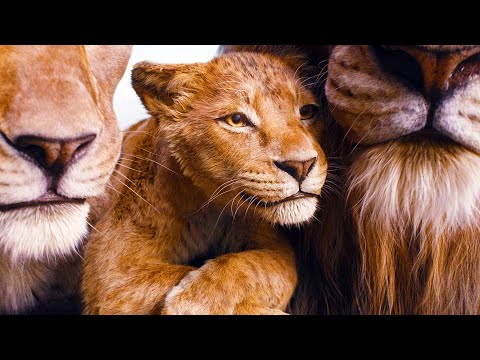
mufasa در ۳۰ ثانیه
- Mufasa is the iconic lion king from Disney's 'The Lion King', known for his wisdom and strength.
- He serves as a powerful mentor and father figure to his son, Simba, teaching him about responsibility.
- The name is a symbol of noble leadership and the philosophical concept of the 'Circle of Life'.
- Mufasa is famously voiced by James Earl Jones, giving the character a deep, commanding presence.
The name Mufasa refers to one of the most iconic characters in modern cinematic history, specifically the king of the Pride Lands in Disney's 'The Lion King'. While it is a proper noun, the name has transcended its fictional origins to become a symbol of paternal wisdom, regal authority, and the heavy burden of leadership. When people use the name Mufasa in conversation, they are often invoking the image of a 'Great King'—someone who is not only powerful and physically imposing but also deeply compassionate and philosophically grounded. Mufasa represents the archetype of the 'Wise Father' who guides his children through the complexities of life, teaching them about responsibility and the delicate balance of nature. In a broader cultural context, Mufasa is synonymous with the 'Circle of Life,' a philosophy that emphasizes the interconnectedness of all living things. His character serves as a benchmark for integrity; he is a leader who understands that true power comes from service and protection rather than tyranny or fear. People might use the name as a metaphor for a mentor or a boss who possesses a commanding presence yet remains approachable and kind. The name itself, which means 'King' in the Manazoto language, carries a weight of dignity. When you hear someone described as a 'Mufasa figure,' it implies they are the bedrock of their community or family, providing stability and wisdom in times of crisis. This character's legacy is defined by his transition from a physical ruler to a spiritual guide, appearing in the stars to remind his son of his true identity. Thus, the name encapsulates themes of legacy, memory, and the eternal nature of influence. In modern discourse, Mufasa is also frequently associated with the resonant, deep voice of James Earl Jones, which has become the definitive auditory representation of the character's gravitas. Whether discussed in film studies, parenting blogs, or leadership seminars, Mufasa remains a potent symbol of the ideal sovereign.
- Archetype
- The Wise King and Protective Father who balances strength with mercy.
The CEO was often compared to Mufasa because of his ability to lead with both authority and kindness.
- Cultural Impact
- A global icon for the 'Circle of Life' philosophy and the standard for animated father figures.
In the stars, Simba saw the spirit of Mufasa reminding him of his royal heritage.
- Philosophical Core
- The belief that every living thing is connected in a delicate, ecological balance.
Every young lion in the Pride Lands looked up to Mufasa as the ultimate protector.
The tragic death of Mufasa is a pivotal moment that defines the hero's journey in the film.
To be like Mufasa is to understand that a king's time rises and sets like the sun.
Using the name Mufasa in a sentence requires an understanding of its weight as a proper noun and a cultural reference. Most commonly, it is used directly to refer to the character in 'The Lion King'. For example, 'Mufasa taught Simba about the Circle of Life.' In this literal sense, the name functions as the subject of the sentence, performing actions associated with leadership and mentorship. However, Mufasa is also frequently used as a comparative noun or an adjective-like proper noun to describe real-world people or situations. You might say, 'He has a Mufasa-like presence,' which immediately communicates that the person is tall, strong, has a deep voice, and commands respect. This type of usage relies on the listener's shared cultural knowledge of the film. Another common way to use the name is in the context of legacy and memory. A sentence like 'The spirit of Mufasa lives on in his son' uses the name to represent the enduring influence of a parent's teachings. Grammatically, Mufasa is a singular proper noun, so it takes singular verbs ('Mufasa is,' 'Mufasa leads'). Because it is a well-known name, it rarely requires an introductory phrase like 'the character Mufasa' unless the audience is completely unfamiliar with Disney movies. In creative writing, you might use Mufasa as a benchmark for nobility: 'His courage was that of Mufasa facing the stampede.' Here, the name serves as a shorthand for ultimate bravery and self-sacrifice. It is also important to note the tone; using Mufasa usually implies a high level of respect. It would be unusual to use the name in a derogatory way, as the character is almost universally admired. In casual conversation, the name might be used jokingly to refer to someone with a very large mane of hair or a particularly booming voice. For instance, 'Morning, Mufasa!' might be said to a friend with messy, voluminous hair. Regardless of the context, the name always carries a sense of 'bigness'—big heart, big voice, big responsibility. When discussing themes of succession or monarchy, Mufasa is the go-to reference for a 'rightful king,' contrasting sharply with the 'usurper' archetype represented by his brother, Scar. Therefore, using Mufasa in a sentence often sets up a binary between legitimate, benevolent power and illegitimate, selfish power.
- Literal Usage
- Referring to the Disney character in the context of the movie plot.
The animators worked hard to ensure Mufasa looked both powerful and gentle.
- Metaphorical Usage
- Using the name to describe someone with similar leadership qualities.
The coach gave a Mufasa-style speech that inspired the whole team.
Even after he retired, his influence remained, much like Mufasa watching over the pride.
The young actor dreamed of playing a role as iconic as Mufasa.
You will encounter the name Mufasa in a variety of settings, ranging from entertainment and pop culture to academic discussions on mythology and leadership. The most obvious place is within the 'The Lion King' franchise, including the original 1994 animated film, the 2019 photorealistic remake, the Broadway musical, and various spin-offs like 'The Lion Guard'. In these contexts, Mufasa is a central figure whose name is spoken with reverence by other characters. Beyond the screen, Mufasa is a staple in the world of voice acting discussions. The performance by James Earl Jones is so legendary that the name is often used as a shorthand for 'the perfect voice-over'. You might hear it in interviews with actors who aspire to that level of vocal presence. In the realm of parenting and psychology, Mufasa is frequently cited as a model for 'authoritative parenting'—a style that combines high expectations with high warmth. Bloggers and psychologists might use Mufasa to illustrate how to set boundaries for children while still being a source of comfort. In leadership and business seminars, Mufasa's 'Circle of Life' speech is often used as a metaphor for sustainable business practices and corporate social responsibility. Speakers might ask, 'Are you a Mufasa or a Scar?' to prompt leaders to reflect on whether they are building a legacy or just seeking personal power. You will also hear the name in memes and social media, where Mufasa's 'Remember who you are' quote is frequently shared as a motivational mantra. In sports, commentators might refer to a veteran player as the 'Mufasa of the team,' indicating they are the wise elder who mentors the younger 'Simba' players. Additionally, the name appears in wildlife documentaries, sometimes used by narrators to personify a particularly majestic or dominant male lion in a real-life pride. Finally, in the context of African linguistics, the name is discussed for its roots in Manazoto and its similarity to Swahili words for 'king' or 'leader,' making it a point of interest for those studying the cultural inspirations behind Disney's storytelling. From the playground to the boardroom, Mufasa is a name that resonates across generations.
- Pop Culture
- Movies, musicals, and memes related to Disney's The Lion King.
The audience cheered when the silhouette of Mufasa appeared on the Broadway stage.
- Leadership Training
- Used as a case study for ethical leadership and mentorship.
The documentary narrator called the old lion the Mufasa of the Serengeti.
Social media is full of Mufasa quotes about finding one's place in the world.
One of the most frequent mistakes people make regarding Mufasa is confusing his role with that of his son, Simba. While Simba is the protagonist who undergoes the hero's journey, Mufasa is the catalyst and the mentor. Some learners might mistakenly say 'Simba was the king who died in the stampede,' when they mean Mufasa. Another common error is misspelling the name; because it is an unfamiliar African name to many Westerners, it is often written as 'Mufaza' or 'Moofasa'. It is important to remember the 's' in the middle. In terms of character interpretation, a common mistake is viewing Mufasa as an infallible or perfect being. While he is noble, the film shows him admitting to Simba that even kings get scared, which is a crucial part of his humanity (or 'lion-ity'). Overlooking this vulnerability misses the depth of his character. Another mistake is failing to recognize the distinction between Mufasa and Scar's leadership styles. Some might simplify the conflict to just 'good vs. evil,' but it is more accurately a conflict between 'responsibility vs. entitlement.' Mufasa leads because he must protect the pride; Scar wants to lead because he feels he deserves the power. In linguistic terms, some people mistakenly assume 'Mufasa' is a common Swahili name. While it has roots in African languages, it was specifically chosen and popularized by Disney, so it is not as common in real-world African cultures as one might think. Additionally, when using the name as a metaphor, people sometimes use it to describe any large lion, but the name specifically carries connotations of *wisdom* and *paternal love*. Calling a fierce, aggressive lion 'Mufasa' might be a mischaracterization if the lion lacks those nurturing qualities. Finally, a common cultural mistake is ignoring the influence of 'Hamlet' on Mufasa's character. Mufasa is the 'King Hamlet' figure—the murdered father whose ghost returns to spur his son to action. Understanding this connection adds a layer of literary significance that is often missed in casual viewing.
- Spelling Error
- Writing 'Mufaza' instead of the correct 'Mufasa'.
Incorrect: Mufaza was Simba's father. Correct: Mufasa was Simba's father.
- Character Confusion
- Confusing Mufasa's death with Simba's exile.
Many people forget that Mufasa admitted his own fears to his son.
When looking for words similar to Mufasa, we must look at both the literal meaning of 'king' and the archetypal roles he plays. A direct synonym for his role is **Sovereign**, which emphasizes his supreme authority over the Pride Lands. Another is **Patriarch**, which highlights his position as the head of the family and the pride. If you are focusing on his role as a teacher, **Mentor** or **Guide** are excellent alternatives. In a more spiritual or mythological context, he could be described as a **Guardian** or a **Protector**. When comparing Mufasa to other characters in literature, he is often equated with **King Arthur** or **Odin**, both of whom are wise, powerful rulers who deal with themes of legacy and betrayal. If you want to describe someone with his physical presence, you might use words like **Regal**, **Majestic**, or **Stately**. For his vocal quality, **Resonant** or **Sonorous** are fitting adjectives. In contrast to Mufasa, his brother **Scar** represents the **Usurper** or the **Tyrant**. While Mufasa embodies **Integrity**, Scar embodies **Machiavellian** ambition. Another interesting comparison is with **Sarabi**, Mufasa's queen, who represents a similar level of dignity and strength but from a maternal perspective. In modern slang, someone might use the term **G.O.A.T.** (Greatest of All Time) to describe Mufasa's status among movie characters. However, none of these words fully capture the specific blend of power and gentleness that 'Mufasa' conveys. Using the name itself remains the most potent way to evoke that specific set of qualities. In academic writing about 'The Lion King', you might see him referred to as the **Progenitor** of the royal line. In environmental discussions, he is the personification of **Ecological Stewardship**. Choosing the right alternative depends on which aspect of his character you wish to emphasize: his power, his wisdom, or his role as a father.
- Sovereign vs. Mufasa
- Sovereign is a formal title for a ruler; Mufasa is a specific character who embodies the ideal version of that title.
- Patriarch vs. Mufasa
- Patriarch focuses on family leadership; Mufasa combines family leadership with national (pride) leadership.
- Mentor vs. Mufasa
- A mentor can be anyone; Mufasa is a mentor who also carries the weight of a crown.
While he was a great Mufasa to his children, he was a strict sovereign to his subjects.
چقدر رسمی است؟
نکته جالب
Mufasa was originally going to be a much more aggressive character, but the animators changed him to be more 'regal' after hearing James Earl Jones's voice.
راهنمای تلفظ
- Pronouncing it as Moo-FAY-suh
- Putting the stress on the first syllable
- Ending with a hard 'z' sound like Moo-FAH-zah
- Shortening the 'u' sound too much
- Adding an 'r' at the end
سطح دشواری
Easy to recognize in text due to capitalization and movie fame.
Spelling can be tricky for some (the 's' vs 'z').
Requires correct syllable stress on the second syllable.
Very distinct sound, especially if voiced by James Earl Jones.
بعداً چه یاد بگیریم؟
پیشنیازها
بعداً یاد بگیرید
پیشرفته
گرامر لازم
Proper Nouns
Mufasa must always be capitalized.
Possessive Case
Mufasa's mane is golden.
Singular Verbs
Mufasa leads the pride.
Appositives
Mufasa, the king, is brave.
Articles with Proper Nouns
We don't say 'The Mufasa' unless comparing.
مثالها بر اساس سطح
Mufasa is a big lion.
Mufasa est un grand lion.
Proper noun as subject.
Mufasa is the king.
Mufasa est le roi.
Simple 'is' verb usage.
Simba is the son of Mufasa.
Simba est le fils de Mufasa.
Possessive relationship.
Mufasa has a loud voice.
Mufasa a une voix forte.
Describing a physical trait.
Mufasa lives in Africa.
Mufasa vit en Afrique.
Present simple tense.
We like Mufasa.
Nous aimons Mufasa.
Expressing a preference.
Mufasa is very brave.
Mufasa est très courageux.
Adjective usage.
Look at Mufasa!
Regardez Mufasa !
Imperative sentence.
Mufasa teaches his son about the kingdom.
Mufasa enseigne son royaume à son fils.
Verb 'teaches' with two objects.
Mufasa is stronger than Scar.
Mufasa est plus fort que Scar.
Comparative adjective.
Every animal respects Mufasa.
Chaque animal respecte Mufasa.
Subject-verb agreement with 'every'.
Mufasa died to save Simba.
Mufasa est mort pour sauver Simba.
Past tense and infinitive of purpose.
Mufasa's mane is very large.
La crinière de Mufasa est très grande.
Possessive 's.
He was a wise king named Mufasa.
C'était un roi sage nommé Mufasa.
Passive participle 'named'.
Mufasa told Simba to remember him.
Mufasa a dit à Simba de se souvenir de lui.
Reported speech structure.
I want to watch Mufasa in the movie.
Je veux regarder Mufasa dans le film.
Verb 'want' + infinitive.
Mufasa represents the ideal father figure for many children.
Mufasa représente la figure paternelle idéale pour beaucoup d'enfants.
Abstract noun 'figure'.
The character of Mufasa is known for his integrity.
Le personnage de Mufasa est connu pour son intégrité.
Passive voice 'is known for'.
Mufasa explained that a king's time is limited.
Mufasa a expliqué que le temps d'un roi est limité.
Noun clause as object.
If Mufasa were alive, the kingdom would be safe.
Si Mufasa était vivant, le royaume serait en sécurité.
Second conditional.
Mufasa's leadership style was based on respect.
Le style de leadership de Mufasa était basé sur le respect.
Compound noun 'leadership style'.
Simba often thinks about the lessons Mufasa taught him.
Simba pense souvent aux leçons que Mufasa lui a enseignées.
Relative clause with omitted 'that'.
Mufasa is a central figure in the Pride Lands.
Mufasa est une figure centrale dans la Terre des Lions.
Adjective 'central'.
The voice of Mufasa is deep and commanding.
La voix de Mufasa est profonde et imposante.
Coordinated adjectives.
Mufasa's philosophy of the Circle of Life is famous worldwide.
La philosophie de Mufasa sur le cycle de la vie est célèbre dans le monde entier.
Prepositional phrase 'of the Circle of Life'.
The rivalry between Mufasa and Scar drives the plot forward.
La rivalité entre Mufasa et Scar fait avancer l'intrigue.
Noun 'rivalry' with 'between'.
Mufasa embodies the qualities of a noble sovereign.
Mufasa incarne les qualités d'un noble souverain.
Verb 'embodies' for abstract traits.
Despite his power, Mufasa showed great humility.
Malgré son pouvoir, Mufasa a fait preuve d'une grande humilité.
Concession with 'despite'.
Mufasa's presence is felt even after his departure.
La présence de Mufasa se fait sentir même après son départ.
Passive construction 'is felt'.
The animators captured Mufasa's majesty in every frame.
Les animateurs ont capturé la majesté de Mufasa dans chaque image.
Collective noun 'animators'.
Mufasa warned Simba about the dangers of the elephant graveyard.
Mufasa a averti Simba des dangers du cimetière d'éléphants.
Verb 'warned' with 'about'.
The legacy of Mufasa is a recurring theme in the sequels.
L'héritage de Mufasa est un thème récurrent dans les suites.
Noun 'legacy'.
Mufasa's tragic end is a classic example of the hero's father's sacrifice.
La fin tragique de Mufasa est un exemple classique du sacrifice du père du héros.
Double possessive.
The vocal gravitas of Mufasa was provided by James Earl Jones.
Le poids vocal de Mufasa a été fourni par James Earl Jones.
Subject 'gravitas'.
Mufasa serves as a spiritual anchor for the protagonist.
Mufasa sert d'ancre spirituelle pour le protagoniste.
Metaphorical usage of 'anchor'.
The contrast between Mufasa's order and Scar's chaos is stark.
Le contraste entre l'ordre de Mufasa et le chaos de Scar est frappant.
Parallel structure.
Mufasa's dialogue is often quoted in leadership seminars.
Le dialogue de Mufasa est souvent cité dans les séminaires de leadership.
Frequency adverb with passive voice.
The mythic proportions of Mufasa's character resonate with audiences.
Les proportions mythiques du personnage de Mufasa résonnent auprès du public.
Verb 'resonate with'.
Mufasa's ghost acts as a catalyst for Simba's return.
Le fantôme de Mufasa agit comme un catalyseur pour le retour de Simba.
Noun 'catalyst'.
To many, Mufasa is the definitive cinematic portrayal of a king.
Pour beaucoup, Mufasa est le portrait cinématographique définitif d'un roi.
Adjective 'definitive'.
Mufasa's ontological perspective on the 'Circle of Life' suggests a deep ecological awareness.
La perspective ontologique de Mufasa sur le « cycle de la vie » suggère une profonde conscience écologique.
Academic adjective 'ontological'.
The character of Mufasa is an archetypal manifestation of the 'Sacred King'.
Le personnage de Mufasa est une manifestation archétypale du « Roi Sacré ».
Noun phrase 'archetypal manifestation'.
Mufasa's stewardship of the Pride Lands ensures the prosperity of all species.
La gestion par Mufasa de la Terre des Lions assure la prospérité de toutes les espèces.
Noun 'stewardship'.
The spectral visitation of Mufasa serves to realign Simba with his destiny.
La visite spectrale de Mufasa sert à réaligner Simba avec son destin.
Verb 'realign'.
Mufasa's demise precipitates a period of profound ecological and social decay.
Le décès de Mufasa précipite une période de profond déclin écologique et social.
Verb 'precipitates'.
The juxtaposition of Mufasa's benevolence and Scar's malevolence is a central motif.
La juxtaposition de la bienveillance de Mufasa et de la malveillance de Scar est un motif central.
Noun 'juxtaposition'.
Mufasa's voice remains an indelible part of the film's auditory identity.
La voix de Mufasa reste une partie indélébile de l'identité sonore du film.
Adjective 'indelible'.
In the annals of animation, Mufasa stands as a paragon of paternal nobility.
Dans les annales de l'animation, Mufasa s'impose comme un modèle de noblesse paternelle.
Noun 'paragon'.
ترکیبهای رایج
عبارات رایج
— The enduring influence or memory of a great leader.
The spirit of Mufasa guided the new king.
— Someone who acts as a wise and protective leader.
The community looked to him as a Mufasa figure.
— The moral teachings or advice given by a mentor.
I still live by Mufasa's lessons today.
— Referring to Simba or someone with a great heritage.
He is the son of Mufasa, born to lead.
— The act of giving up one's life for another.
We will never forget Mufasa's sacrifice.
— The legitimate power held by a respected leader.
No one questioned Mufasa's authority.
— Referring to his appearance as a spirit.
Mufasa's return in the stars was a turning point.
اغلب اشتباه گرفته میشود با
Simba is the son; Mufasa is the father.
A common Arabic name that sounds similar but is different.
The brother and villain, often mentioned alongside Mufasa.
اصطلاحات و عبارات
— A call to stay true to one's values and heritage.
When you feel lost, remember who you are.
Inspirational— The idea that all living things are connected in a cycle.
Birth and death are part of the Circle of Life.
Philosophical— A vast area of responsibility or ownership.
This company is everything the light touches.
Informal— The idea that power and life are temporary.
He knew his time as CEO was setting.
Poetic— Encouragement to reach one's full potential.
You are more than what you have become; go back and lead.
Inspirational— True courage is calculated and purposeful.
Don't take risks for no reason; being brave doesn't mean looking for trouble.
Wise— Seeking guidance from ancestors or the past.
When I'm confused, I look at the stars for answers.
Metaphorical— The belief that ancestors watch over us.
He told his children that the stars are the great kings of the past.
Mythological— A place of danger or a dark memory.
That memory is like a shadow in the gorge.
Literary— A powerful and influential statement.
His speech was the roar of a king.
Metaphoricalبهراحتی اشتباه گرفته میشود
Both are lions and kings.
Mufasa is the established king at the start; Simba is the prince who must learn to lead.
Mufasa died, but Simba lived.
Phonetic similarity.
Mustafa is a real human name; Mufasa is a fictional lion's name.
My friend's name is Mustafa, not Mufasa.
Both are famous fictional lions.
Aslan is from Narnia and is a Christ-figure; Mufasa is from The Lion King and is a King-figure.
Aslan and Mufasa are both wise lions.
Both are the heads of the pride.
Sarabi is the queen and Mufasa's wife.
Mufasa and Sarabi ruled together.
Both are wise characters.
Rafiki is a mandrill/shaman; Mufasa is the king.
Rafiki was Mufasa's friend.
الگوهای جملهسازی
Mufasa is [adjective].
Mufasa is big.
Mufasa [verb] Simba.
Mufasa loves Simba.
Mufasa is the king who [verb].
Mufasa is the king who protects the pride.
Mufasa's [noun] is [adjective].
Mufasa's wisdom is legendary.
The character of Mufasa represents [abstract noun].
The character of Mufasa represents integrity.
Mufasa serves as a [noun] for [noun].
Mufasa serves as a spiritual anchor for Simba.
Long live [Name]!
Long live Mufasa!
Remember [Name].
Remember Mufasa.
خانواده کلمه
اسمها
صفتها
مرتبط
نحوه استفاده
High in pop culture, low in daily technical speech.
-
Mufaza
→
Mufasa
The name is spelled with an 's', not a 'z'.
-
Simba's brother
→
Simba's father
Mufasa is the father of Simba, not his brother.
-
The king of the jungle
→
The king of the Pride Lands
Lions live in the savanna/grasslands, not the jungle.
-
Scar's son
→
Scar's brother
Mufasa and Scar are brothers.
-
Mufasa is a tiger
→
Mufasa is a lion
The movie is 'The Lion King', not 'The Tiger King'.
نکات
Use for Authority
Use Mufasa when you want to describe someone with natural, respected authority.
The 'S' is Key
Always use an 's' in the middle, never a 'z'.
Voice Reference
Mentioning Mufasa often invites a discussion about James Earl Jones's voice.
Proper Noun
Always capitalize Mufasa as it is a specific name.
Father Figure
It's a perfect metaphor for a protective and wise father.
Mufasa vs Scar
Use the contrast between them to discuss leadership ethics.
Circle of Life
Link Mufasa to discussions about nature and ecology.
Regal Adjectives
Pair Mufasa with words like 'majestic', 'noble', and 'wise'.
Deep Tone
When quoting Mufasa, try to use a deeper, more resonant voice.
Archetypes
Study Mufasa to understand the 'Wise King' archetype in literature.
حفظ کنید
روش یادسپاری
Think of a 'Moo' (like a cow, but deeper) and 'Fasa' (sounds like 'Faster'). Mufasa is the king who runs faster to save his son.
تداعی تصویری
Imagine a huge golden lion sitting on top of a high rock, looking at the sun.
شبکه واژگان
چالش
Try to use 'Mufasa' in a sentence describing your favorite teacher or mentor.
ریشه کلمه
The name Mufasa is derived from the Manazoto language, where it literally means 'King'. It was selected by the creators of Disney's 'The Lion King' to reflect the character's status and African setting.
معنای اصلی: King or Leader.
Bantu-influenced / African languages.بافت فرهنگی
The name is a fictional creation but inspired by real African languages; use with respect to its cultural roots.
Mufasa is a household name in English-speaking countries, synonymous with Disney's 90s renaissance.
تمرین در زندگی واقعی
موقعیتهای واقعی
Movie Discussion
- Did you see Mufasa?
- Mufasa's scene was sad.
- I love Mufasa's voice.
- Mufasa is the best character.
Leadership Talk
- Be a Mufasa.
- Lead like Mufasa.
- Mufasa's Circle of Life.
- The wisdom of Mufasa.
Parenting
- He's a Mufasa dad.
- Teaching like Mufasa.
- Protecting the pride.
- Simba and Mufasa moments.
Nature Documentaries
- The real Mufasa.
- King of the pride.
- A majestic lion.
- Ruling the savanna.
Memes/Social Media
- Remember who you are.
- Mufasa in the clouds.
- Mufasa vibes.
- Long live the king.
شروعکنندههای مکالمه
"Who do you think is a better leader, Mufasa or Simba?"
"How did you feel when you first saw the scene with Mufasa in the gorge?"
"If Mufasa were a human leader today, what kind of country would he rule?"
"Do you think Mufasa's 'Circle of Life' philosophy is applicable to real business?"
"What is your favorite quote from Mufasa in The Lion King?"
موضوعات نگارش
Write about a 'Mufasa' figure in your own life and the lessons they taught you.
Describe what 'The Circle of Life' means to you in your daily routine.
If you were Mufasa, how would you have handled the situation with Scar?
Reflect on a time you had to 'remember who you are' during a difficult period.
Write a letter from Mufasa to a young Simba about the meaning of courage.
سوالات متداول
10 سوالYes, it is derived from the Manazoto language meaning 'king', though it became famous through Disney.
The legendary James Earl Jones provided the voice for Mufasa in both the 1994 and 2019 films.
He was thrown into a wildebeest stampede by his brother, Scar, while trying to save Simba.
His main message is the 'Circle of Life' and the importance of responsibility and balance.
He is partially based on King Hamlet from Shakespeare's play 'Hamlet'.
It means 'King' in the Manazoto language.
Yes, he is portrayed as the ideal, wise, and just leader who cares for his subjects.
Because he represents the perfect father figure and a powerful symbol of moral integrity.
He appears as a spirit or in flashbacks in 'The Lion King II' and 'The Lion Guard'.
Many people do! It is a very popular name for large or majestic-looking cats.
خودت رو بسنج 200 سوال
Describe Mufasa's appearance in two sentences.
خوب نوشتید! تلاش خوبی بود! پاسخ نمونه را ببینید.
What does Mufasa teach Simba about leadership?
خوب نوشتید! تلاش خوبی بود! پاسخ نمونه را ببینید.
Compare Mufasa and Scar's leadership styles.
خوب نوشتید! تلاش خوبی بود! پاسخ نمونه را ببینید.
Why is Mufasa considered a 'wise king'?
خوب نوشتید! تلاش خوبی بود! پاسخ نمونه را ببینید.
Explain the 'Circle of Life' as Mufasa would.
خوب نوشتید! تلاش خوبی بود! پاسخ نمونه را ببینید.
Write a short dialogue between Mufasa and Simba.
خوب نوشتید! تلاش خوبی بود! پاسخ نمونه را ببینید.
How does Mufasa's death affect the Pride Lands?
خوب نوشتید! تلاش خوبی بود! پاسخ نمونه را ببینید.
What qualities make Mufasa a good father?
خوب نوشتید! تلاش خوبی بود! پاسخ نمونه را ببینید.
Describe the scene where Mufasa appears in the stars.
خوب نوشتید! تلاش خوبی بود! پاسخ نمونه را ببینید.
How is Mufasa similar to King Hamlet?
خوب نوشتید! تلاش خوبی بود! پاسخ نمونه را ببینید.
What does the name Mufasa symbolize in pop culture?
خوب نوشتید! تلاش خوبی بود! پاسخ نمونه را ببینید.
Write a review of James Earl Jones's performance as Mufasa.
خوب نوشتید! تلاش خوبی بود! پاسخ نمونه را ببینید.
How does Mufasa's philosophy relate to ecology?
خوب نوشتید! تلاش خوبی بود! پاسخ نمونه را ببینید.
Describe Mufasa's relationship with Sarabi.
خوب نوشتید! تلاش خوبی بود! پاسخ نمونه را ببینید.
What is the significance of Pride Rock for Mufasa?
خوب نوشتید! تلاش خوبی بود! پاسخ نمونه را ببینید.
Write a poem about King Mufasa.
خوب نوشتید! تلاش خوبی بود! پاسخ نمونه را ببینید.
How would the story change if Mufasa hadn't died?
خوب نوشتید! تلاش خوبی بود! پاسخ نمونه را ببینید.
What does Mufasa mean when he says 'Remember who you are'?
خوب نوشتید! تلاش خوبی بود! پاسخ نمونه را ببینید.
Describe Mufasa's roar and what it represents.
خوب نوشتید! تلاش خوبی بود! پاسخ نمونه را ببینید.
Is Mufasa a perfect character? Why or why not?
خوب نوشتید! تلاش خوبی بود! پاسخ نمونه را ببینید.
Pronounce 'Mufasa' correctly three times.
این را بلند بخوانید:
تو گفتی:
تشخیص گفتار در مرورگر شما پشتیبانی نمیشود. از کروم یا اج استفاده کنید.
Describe Mufasa to a partner.
این را بلند بخوانید:
تو گفتی:
تشخیص گفتار در مرورگر شما پشتیبانی نمیشود. از کروم یا اج استفاده کنید.
Explain the 'Circle of Life' in your own words.
این را بلند بخوانید:
تو گفتی:
تشخیص گفتار در مرورگر شما پشتیبانی نمیشود. از کروم یا اج استفاده کنید.
Who is your favorite movie father figure and why?
این را بلند بخوانید:
تو گفتی:
تشخیص گفتار در مرورگر شما پشتیبانی نمیشود. از کروم یا اج استفاده کنید.
Discuss the importance of Mufasa's sacrifice.
این را بلند بخوانید:
تو گفتی:
تشخیص گفتار در مرورگر شما پشتیبانی نمیشود. از کروم یا اج استفاده کنید.
How would you lead a kingdom like Mufasa?
این را بلند بخوانید:
تو گفتی:
تشخیص گفتار در مرورگر شما پشتیبانی نمیشود. از کروم یا اج استفاده کنید.
Debate: Was Mufasa too hard on Simba?
این را بلند بخوانید:
تو گفتی:
تشخیص گفتار در مرورگر شما پشتیبانی نمیشود. از کروم یا اج استفاده کنید.
Present a short speech as King Mufasa.
این را بلند بخوانید:
تو گفتی:
تشخیص گفتار در مرورگر شما پشتیبانی نمیشود. از کروم یا اج استفاده کنید.
Explain the Shakespearean influences on Mufasa.
این را بلند بخوانید:
تو گفتی:
تشخیص گفتار در مرورگر شما پشتیبانی نمیشود. از کروم یا اج استفاده کنید.
Discuss the impact of James Earl Jones's voice on the character.
این را بلند بخوانید:
تو گفتی:
تشخیص گفتار در مرورگر شما پشتیبانی نمیشود. از کروم یا اج استفاده کنید.
What does 'Remember who you are' mean to you?
این را بلند بخوانید:
تو گفتی:
تشخیص گفتار در مرورگر شما پشتیبانی نمیشود. از کروم یا اج استفاده کنید.
How does Mufasa represent integrity?
این را بلند بخوانید:
تو گفتی:
تشخیص گفتار در مرورگر شما پشتیبانی نمیشود. از کروم یا اج استفاده کنید.
Talk about a time you had to be brave like Mufasa.
این را بلند بخوانید:
تو گفتی:
تشخیص گفتار در مرورگر شما پشتیبانی نمیشود. از کروم یا اج استفاده کنید.
Describe Pride Rock and its significance.
این را بلند بخوانید:
تو گفتی:
تشخیص گفتار در مرورگر شما پشتیبانی نمیشود. از کروم یا اج استفاده کنید.
Why is Mufasa's death so famous?
این را بلند بخوانید:
تو گفتی:
تشخیص گفتار در مرورگر شما پشتیبانی نمیشود. از کروم یا اج استفاده کنید.
What are the qualities of a good king?
این را بلند بخوانید:
تو گفتی:
تشخیص گفتار در مرورگر شما پشتیبانی نمیشود. از کروم یا اج استفاده کنید.
How does Mufasa's ghost help Simba?
این را بلند بخوانید:
تو گفتی:
تشخیص گفتار در مرورگر شما پشتیبانی نمیشود. از کروم یا اج استفاده کنید.
Is Mufasa a hero? Explain.
این را بلند بخوانید:
تو گفتی:
تشخیص گفتار در مرورگر شما پشتیبانی نمیشود. از کروم یا اج استفاده کنید.
Compare Mufasa to a real-life leader.
این را بلند بخوانید:
تو گفتی:
تشخیص گفتار در مرورگر شما پشتیبانی نمیشود. از کروم یا اج استفاده کنید.
What would Mufasa say about the world today?
این را بلند بخوانید:
تو گفتی:
تشخیص گفتار در مرورگر شما پشتیبانی نمیشود. از کروم یا اج استفاده کنید.
Listen to a clip of Mufasa and identify his tone.
Listen for the word 'Mufasa' in a movie review.
Identify Mufasa's famous quote: 'Remember who you are'.
Listen to a description of a lion and decide if it's Mufasa.
Listen to the pronunciation of Mufasa and repeat it.
Listen to a podcast about leadership and note the Mufasa reference.
Listen to the 'Circle of Life' speech and summarize it.
Listen for the difference between 'Mufasa' and 'Mustafa'.
Listen to a voice actor mimicking Mufasa.
Listen to the sound of a lion's roar and associate it with Mufasa.
Listen to a summary of The Lion King and count the Mufasa mentions.
Listen to an interview with James Earl Jones about Mufasa.
Listen to a lecture on archetypes and identify Mufasa's role.
Listen to a child describing Mufasa and correct any mistakes.
Listen to the song 'Circle of Life' and find Mufasa's name.
Mufaza is the king of the lions.
Spelling of Mufasa.
Mufasa are a very brave lion.
Subject-verb agreement.
Simba is Mufasa brother.
Correct relationship and possessive.
Mufasa live in the jungle.
Correct habitat and verb form.
James Earl Jones voice Mufasa.
Past tense verb.
The Circle of Life are a lesson.
Singular subject.
Mufasa died to saved Simba.
Infinitive of purpose.
Mufasa is a common noun.
Grammar classification.
Mufasa's mane are golden.
Singular subject 'mane'.
Scar is Mufasa's son.
Correct relationship.
/ 200 درست
نمره کامل!
Summary
Mufasa is the ultimate archetype of the wise and protective leader. For example, 'His Mufasa-like wisdom helped the company navigate the crisis with grace and authority.'
- Mufasa is the iconic lion king from Disney's 'The Lion King', known for his wisdom and strength.
- He serves as a powerful mentor and father figure to his son, Simba, teaching him about responsibility.
- The name is a symbol of noble leadership and the philosophical concept of the 'Circle of Life'.
- Mufasa is famously voiced by James Earl Jones, giving the character a deep, commanding presence.
Use for Authority
Use Mufasa when you want to describe someone with natural, respected authority.
The 'S' is Key
Always use an 's' in the middle, never a 'z'.
Voice Reference
Mentioning Mufasa often invites a discussion about James Earl Jones's voice.
Proper Noun
Always capitalize Mufasa as it is a specific name.