tis در ۳۰ ثانیه
- 'Tis is an archaic contraction of 'it is,' primarily found in older literature, poetry, and traditional songs like 'Deck the Halls.'
- It functions as a stylistic marker for historical or formal settings and is rarely used in modern everyday conversation.
- The apostrophe at the start indicates the missing 'i' from 'it,' making it a unique 'front-loading' contraction in English.
- While mostly replaced by 'it's,' 'tis remains a cultural staple during the holiday season through the phrase ''Tis the season.'
The word 'tis is a linguistic relic, a beautiful contraction that merges the pronoun 'it' with the copular verb 'is.' While modern English speakers almost exclusively use 'it's' for this purpose, 'tis carries a weight of history, literature, and rhythmic intentionality. In contemporary settings, you will rarely hear someone say 'tis during a casual conversation at a coffee shop or in a business meeting. Instead, it is reserved for specific atmospheric contexts: the lines of a Shakespearean play, the lyrics of a centuries-old Christmas carol, or the stylized prose of a fantasy novel. It functions as an archaic contraction, where the initial vowel of 'it' is elided and replaced by an apostrophe to facilitate a smoother flow of speech, particularly in verse where syllable count is paramount.
- Grammatical Category
- Archaic Contraction (Pronoun + Verb)
- Modern Equivalent
- It is / It's
- Stylistic Tone
- Poetic, Formal, Historical, or Festive
To understand 'tis, one must look at the evolution of English phonology. In Early Modern English, contractions were often formed by dropping the first letter of the second word or the first letter of the first word. While 'it's' eventually won the popularity contest in standard speech, 'tis remained a favorite for poets because it starts with a soft dental consonant rather than the vowel 'i,' allowing for a different kind of phonetic connection with the preceding word. It creates a sense of 'enclitic' or 'proclitic' attachment, where the contraction leans on the words around it to create a melodic cadence.
"'Tis the season to be jolly, Fa-la-la-la-la, la-la-la-la."
In literature, 'tis is often used to establish a specific setting. If a character says, "'Tis a fine morning," the reader immediately understands that the story is likely set in the past or in a high-fantasy world like Middle-earth. It acts as a linguistic shorthand for 'old-fashioned.' Furthermore, in the works of William Shakespeare, 'tis is used frequently to maintain the iambic pentameter—the ten-syllable rhythm of his lines. By using 'tis instead of 'it is,' the playwright can save a syllable, ensuring the rhythm remains perfect.
"'Tis but a scratch," cried Mercutio, even though his wound was fatal.
Culturally, the word has survived into the 21st century primarily through the phrase "'Tis the season." This phrase is ubiquitous during the December holiday period. It has become a fixed expression, or a 'fossilized' term, that people use without necessarily using 'tis in any other part of their lives. This phenomenon occurs when a word dies out in general usage but remains preserved in specific songs, idioms, or cultural rituals.
- Etymological Root
- Middle English 'it is' → Early Modern English 'tis
- Phonetic Appeal
- Provides a sharp, crisp start to a sentence compared to the softer 'it's'
Ultimately, 'tis is a bridge to the past. It represents a time when the English language was more fluid in its contractions and when the musicality of speech was often prioritized over the efficiency of communication. While it is no longer a 'working' word in the sense of daily utility, it remains a vital 'artistic' word, providing flavor, rhythm, and a sense of timelessness to the English lexicon.
Using 'tis correctly requires an understanding of its syntactic role as a complete replacement for 'it is.' Because it is a contraction, it must always function as a subject and a verb combined. You cannot use it as just 'it' or just 'is.' It is a self-contained unit of meaning. When writing it, the apostrophe should technically precede the 't' ('tis) to indicate that the 'i' from 'it' has been removed, although in very old texts, you might see it written without the mark.
"'Tis true, my lord, that the messenger has arrived with the scrolls."
In the sentence above, 'tis serves as the opening, establishing a formal and historical tone. It is followed by an adjective ('true'), which is the most common pattern for this contraction. Other common followers include nouns ('tis a pity) and prepositional phrases ('tis in the cabinet). It is rarely used in questions in modern mimicry of the old style, though in the past, one might have said "Is't?" or "'Tis it?" but those are even more obscure.
- Pattern 1: 'Tis + Adjective
- 'Tis strange that he hasn't called yet.
- Pattern 2: 'Tis + Noun Phrase
- 'Tis a wonder we survived the storm.
- Pattern 3: 'Tis + Prepositional Phrase
- 'Tis for the best that we part ways now.
One of the most famous uses of 'tis is in the context of comparison or negation. In archaic English, the negation would often follow the verb directly: "'Tis not." This sounds much more dramatic than the modern "It isn't" or "It's not." Writers use this to create a sense of gravity or philosophical depth.
"'Tis better to have loved and lost than never to have loved at all."
In creative writing, 'tis can be used to characterize a speaker. A character who uses 'tis might be perceived as educated, elderly, eccentric, or perhaps someone who spends too much time reading old books. It is a tool for 'voice' in fiction. However, overusing it can make prose feel 'purple' or overly flowery, so it should be used sparingly like a strong spice.
"'Tis no small matter to challenge the King's decree in public."
Finally, consider the rhythm. If you are writing a poem in iambic meter (da-DUM da-DUM), 'tis is a single unstressed or stressed syllable depending on the context, whereas 'it is' is two syllables. This makes 'tis an essential tool for poets trying to fit a complex thought into a tight rhythmic structure. Even in modern song lyrics, songwriters might use 'tis to avoid a clunky 'it is' that breaks the beat.
- Common Pairing
- 'Tis pity (meaning: It is a shame)
- Common Pairing
- 'Tis well (meaning: It is good/satisfactory)
While 'tis has largely retreated from the daily vernacular of the average English speaker, it remains surprisingly present in the cultural atmosphere. If you were to step into a time machine and go back to the 1600s, you would hear 'tis as frequently as we hear 'it's' today. However, in the 21st century, its 'natural habitat' has shifted to specific domains of entertainment, tradition, and regional dialect.
The most prominent place you will encounter 'tis today is in holiday music. Every December, millions of people sing "'Tis the season to be jolly" without a second thought. In this context, the word isn't seen as archaic; it's seen as 'festive.' It evokes a sense of Victorian Christmas tradition, reminiscent of Charles Dickens' A Christmas Carol. The word contributes to the 'Old World' charm that many people associate with winter holidays.
"'Tis the night before Christmas, when all through the house..."
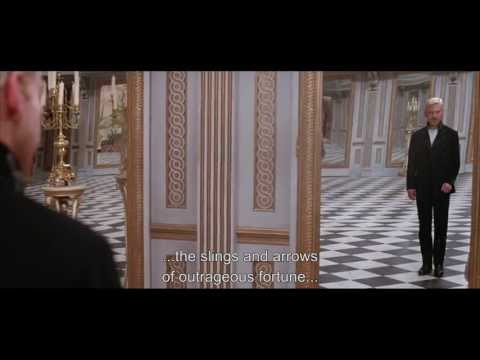
Another major venue for 'tis is the theater and period cinema. If you are watching a movie set in the Elizabethan era, the Regency period, or even the American Civil War, screenwriters will often sprinkle in 'tis to provide 'period flavor.' It is a linguistic costume. Actors in Shakespearean plays must master the pronunciation of 'tis to ensure the meter of the verse is maintained. For example, in Hamlet, the word appears frequently, grounding the dialogue in its specific historical moment.
- Media Context
- Fantasy Literature (e.g., J.R.R. Tolkien, George R.R. Martin)
- Media Context
- Historical Dramas (e.g., Bridgerton, The Crown, Outlander)
- Media Context
- Classical Music and Opera Librettos
Beyond the arts, 'tis survives in certain regional dialects. In parts of Ireland and Newfoundland (Canada), older forms of English have been preserved in the local speech. You might hear an elderly farmer in County Cork say, "'Tis a grand day for the hay," or a fisherman in St. John's say, "'Tis a bit nippy out there." In these communities, 'tis isn't a poetic choice; it's a natural part of the inherited dialect, passed down through generations.
"'Tis yourself that's in it!"
In the world of advertising and branding, 'tis is used to evoke a sense of heritage or luxury. A high-end watch company or a traditional perfumery might use the word in their slogans to suggest that their brand is timeless. It appeals to a sense of nostalgia for a 'simpler' or 'more elegant' time. Thus, even though the word is technically dead in common parlance, it is very much alive as a tool for emotional and atmospheric communication.
- Modern Slogan Example
- "'Tis the gift of time." (Luxury Watch Ad)
- Modern Slogan Example
- "'Tis a flavor like no other." (Artisanal Tea Brand)
Because 'tis is an archaic term, modern learners and even native speakers often stumble when trying to use it. The most frequent error is the misplacement or omission of the apostrophe. Since 'tis is a contraction of 'it is,' the apostrophe represents the missing 'i' in 'it.' Therefore, the apostrophe must come before the 't'. Writing it as tis' or ti's is grammatically incorrect.
Incorrect: Tis' the season to be jolly.
Correct: 'Tis the season to be jolly.
Another common mistake is contextual inappropriateness. Using 'tis in a modern, informal, or professional setting can lead to confusion or make the speaker seem pretentious. For example, writing "'Tis attached to the email" in a business correspondence would be seen as bizarre. It is vital to recognize that 'tis is a stylistic choice, not a functional one in modern English. It should only be used when the goal is to sound historical, poetic, or festive.
- Mistake: Confusing with 'This'
- Learners sometimes hear 'tis and think the speaker is saying 'this' because they sound similar. Remember: 'Tis = It is. This = This.
- Mistake: Redundancy
- Saying "'Tis it is true" is redundant because 'tis already includes 'is.' Correct: "'Tis true."
A more subtle mistake involves tense confusion. 'Tis is strictly present tense. If you are talking about the past, you must use 'twas (it was). If you are talking about a conditional situation, you might use 'twere (it were). Using 'tis to describe a past event is a common slip-up for those trying to mimic old-fashioned speech without fully understanding the grammar.
Incorrect: Yesterday, 'tis a very rainy day.
Correct: Yesterday, 'twas a very rainy day.
Finally, avoid using 'tis in negative constructions that feel modern. While "'Tis not" is acceptable in a poetic sense, "'Tisn't" is a double contraction that is rarely used and can sound quite clunky. If you are going for an archaic feel, stick to the most common and recognized forms like "'Tis true" or "'Tis a pity." Over-engineering archaic speech often leads to 'mock-archaic' or 'Ye Olde' English, which can sound comical rather than authentic.
- Rule of Thumb
- If you can't replace it with 'It is' and have the sentence make sense, don't use 'tis.
- Punctuation Check
- The apostrophe is a 'front-loader.' It goes at the very beginning: 'tis.
Understanding 'tis is easier when you compare it to its linguistic siblings and its modern descendants. The most obvious alternative is it's. While both are contractions of 'it is,' they carry vastly different social and stylistic 'markers.' It's is the workhorse of modern English—neutral, efficient, and universal. 'Tis is the ornate, decorative version, used for special occasions or artistic expression.
There are also other archaic contractions that belong to the same family as 'tis. Understanding these can help you navigate historical texts more effectively. These include 'twas, 'twere, and 'twill. Each follows the same logic: the 'i' or 'wi' is dropped, and the remaining verb is attached to the 't' from 'it.'
- 'Twas
- Contraction of 'it was.' Used for past tense. "'Twas a dark and stormy night."
- 'Twere
- Contraction of 'it were.' Used in the subjunctive mood. "'Twere better if we had never met."
- 'Twill
- Contraction of 'it will.' Used for future tense. "'Twill be a long journey to the coast."
When deciding whether to use 'tis or an alternative, consider the 'Register' of your writing. Register refers to the level of formality and the specific social context of your language. If you are writing a fantasy novel, 'tis adds flavor. If you are writing a news report, 'tis is completely out of place. Below is a comparison of how different alternatives change the tone of a simple statement.
1. "It is true." (Formal, emphatic)
2. "It's true." (Neutral, standard)
3. "'Tis true." (Archaic, poetic)
In some poetic contexts, writers might also use it is but elide the 'i' in 'is' to form it's, or they might use is't (is it) for questions. These are all part of the same family of 'elision,' where sounds are removed to help the language flow. However, 'tis remains the most iconic and recognizable of these archaic contractions. If you want to sound like a character from a classic novel without being completely incomprehensible, 'tis is your best choice.
- Comparison: 'Tis vs. It's
- 'Tis starts with a consonant; It's starts with a vowel. This changes how the word 'links' to the word before it in a sentence.
- Comparison: 'Tis vs. This
- 'Tis is a statement (It is); 'This' is a pointer (demonstrative pronoun). They are not interchangeable.
چقدر رسمی است؟
نکته جالب
In the 17th century, 'tis was actually more common in writing than 'it's.' The shift to 'it's' didn't fully take over until the 19th century.
راهنمای تلفظ
- Pronouncing it as 'tice' (rhyming with 'mice').
- Adding an extra syllable like 'it-is.'
- Pronouncing the 's' as a sharp 's' instead of a 'z' sound.
- Confusing the sound with the word 'this.'
- Over-emphasizing the 'T' so it sounds like two separate words.
سطح دشواری
Easy to recognize in context but requires knowledge of archaic forms.
Difficult to use appropriately without sounding strange or pretentious.
Very rare in speech; usually sounds out of place unless in a play or carol.
Can be confused with 'this' or 'it's' by non-native speakers.
بعداً چه یاد بگیریم؟
پیشنیازها
بعداً یاد بگیرید
پیشرفته
گرامر لازم
Contractions of 'It'
It's (Modern), 'Tis (Archaic), 'Twas (Past).
Apostrophe for Elision
Using ' to show a missing letter, like the 'i' in 'tis.
Subject-Verb Agreement in Contractions
'Tis is always singular because 'it' is singular.
Register and Style
Choosing between 'it is', 'it's', and 'tis' based on the audience.
Poetic License
Changing word forms to fit a specific rhythm or rhyme scheme.
مثالها بر اساس سطح
'Tis the season to be happy.
It is the time of year to be happy.
'Tis means 'it is'.
'Tis a very cold day.
It is a very cold day.
The apostrophe goes before the 't'.
'Tis time for bed.
It is time to go to sleep.
This is an old way to say 'it is'.
'Tis true, I like apples.
It is true, I like apples.
Used here for a simple fact.
'Tis a big dog.
It is a big dog.
Subject + Verb contraction.
'Tis my favorite book.
It is my favorite book.
Shows possession.
'Tis a gift for you.
It is a gift for you.
Simple identification.
'Tis a long way to go.
It is a long distance.
Describes distance.
'Tis a pity you cannot come to the party.
It is a shame you can't come.
'Tis a pity' is a common old phrase.
'Tis a beautiful morning in the garden.
It is a lovely morning.
Used to describe the weather or atmosphere.
'Tis the truth, I promise.
It is the truth.
Used for emphasis.
'Tis a secret between us.
It is a secret.
Identifies a situation.
'Tis not as easy as it looks.
It is not as easy.
Negative form: 'Tis + not.
'Tis a wonder how birds fly.
It is amazing how birds fly.
Expressing amazement.
'Tis a long story, my friend.
It is a long story.
Common conversational opener in stories.
'Tis better to be safe.
It is better to be safe.
Comparative structure.
'Tis the season of giving and kindness.
It is the time of year for generosity.
Standard festive usage.
'Tis strange that the lights are still on.
It is odd that the lights are on.
Used with an adjective to express surprise.
'Tis a well-known fact in this village.
It is a fact everyone knows here.
Establishing a local or traditional tone.
'Tis often said that time heals all wounds.
It is frequently said.
Used with a passive verb form.
'Tis no use crying over spilled milk.
It is useless to be sad about it.
Archaic version of a common idiom.
'Tis my belief that we will succeed.
It is my opinion/belief.
Formal way to state an opinion.
'Tis a fine line between love and hate.
It is a small difference.
Metaphorical usage.
'Tis only a matter of time now.
It is just a question of time.
Expressing inevitability.
'Tis a pity that such talent goes to waste.
It is unfortunate that talent is unused.
Elevated register for social commentary.
'Tis true that the economy is changing rapidly.
It is certainly true.
Used for rhetorical emphasis.
'Tis but a small price to pay for freedom.
It is only a small cost.
'Tis but' is a common archaic construction meaning 'It is only'.
'Tis widely believed that the ruins are haunted.
It is a common belief.
Passive construction in a formal tone.
'Tis a joy to see the children playing together.
It is a great pleasure.
Expressing high emotion or sentiment.
'Tis not for me to judge his actions.
It is not my place to judge.
Formal disclaimer of responsibility.
'Tis a miracle that no one was injured in the crash.
It is amazing/miraculous.
Used for dramatic effect.
'Tis the very essence of our culture.
It is the core part.
Defining a core concept.
'Tis an undeniable truth that power corrupts.
It is a truth that cannot be denied.
Philosophical register.
'Tis a curious phenomenon, this sudden change in weather.
It is a strange occurrence.
Intellectual or scientific observation.
'Tis but a scratch, yet it stings like fire.
It is only a small wound.
Literary allusion to Shakespeare.
'Tis the mark of a great leader to listen to others.
It is the sign of a leader.
Aphoristic or proverbial style.
'Tis a testament to her hard work that she won.
It is proof of her effort.
Formal commendation.
'Tis seldom that we see such brilliance in a debut novel.
It is rare that we see.
Used with an adverb of frequency.
'Tis a burden I must carry alone.
It is a weight/responsibility.
Melodramatic or tragic tone.
'Tis through adversity that we find our true strength.
It is by facing problems.
Inspirational or motivational register.
'Tis a melancholy thought that all things must pass.
It is a sad realization.
Evoking the 'Sublime' in Romantic literature.
'Tis the prerogative of the youth to be rebellious.
It is the right/privilege.
High-level vocabulary in an archaic frame.
'Tis an intricate web of lies he has woven.
It is a complex set of lies.
Metaphorical and sophisticated.
'Tis a daunting task to rewrite the entire constitution.
It is an intimidating job.
Formal academic or political context.
'Tis by no means certain that the treaty will be signed.
It is not at all sure.
Complex negative construction.
'Tis the quintessential example of Gothic architecture.
It is the perfect example.
Artistic or architectural critique.
'Tis a paradox that the more we know, the less we understand.
It is a contradiction.
Philosophical or epistemological inquiry.
'Tis with a heavy heart that I announce my resignation.
It is with great sadness.
Formal, somber announcement style.
ترکیبهای رایج
عبارات رایج
— A famous line from 'Deck the Halls' used to describe the Christmas period.
The decorations are up, so 'tis the season to be jolly!
— A phrase used to downplay a serious injury, famously used in Monty Python.
He fell off his bike and said, ''Tis but a scratch!'
— The start of a famous quote by Tennyson about the value of love.
Even though she's sad, she knows 'tis better to have loved and lost.
— A famous line from Hamlet's 'To be or not to be' soliloquy.
Peace in our time—'tis a consummation devoutly to be wished.
— The opening of the famous closing lines of Dickens' 'A Tale of Two Cities.'
'Tis a far, far better thing that I do, than I have ever done.
— The title of a famous 17th-century play by John Ford.
We studied the play ''Tis Pity She's a Whore' in university.
— A famous wordplay from Shakespeare's Hamlet about a sad truth.
The library is closing forever; 'tis true, 'tis pity.
— A line from a poem by Isaac Watts about laziness.
'Tis the voice of the sluggard; I heard him complain.
— A quote by Alexander Pope about the importance of schooling.
As Pope said, ''Tis education forms the common mind.'
— An old way of saying 'It makes no difference to me.'
Whether we go now or later, 'tis all one to me.
اغلب اشتباه گرفته میشود با
They sound similar but 'this' is a demonstrative pronoun while 'tis' is a contraction of 'it is.'
The modern version. 'It's' is standard; 'tis' is archaic.
A modern word meaning a state of nervous excitement, unrelated to the contraction.
اصطلاحات و عبارات
— It is the appropriate time for something, usually Christmas.
The stores are crowded, but 'tis the season!
Informal/Festive— Even a bad situation usually benefits someone.
The storm broke the windows, but the glassmaker is happy; 'tis an ill wind...
Archaic/Proverbial— It is irrelevant or unimportant.
His opinion on the matter 'tis neither here nor there.
Archaic/Formal— Success comes to those who prepare and act early.
I woke up at 5 AM because 'tis the early bird...
Proverbial— Love is the most important force in life.
They have nothing but each other, but 'tis love that makes the world go round.
Poetic— Bad luck will eventually change for the better.
Don't give up hope; 'tis a long lane that has no turning.
Archaic/Proverbial— It is easy to talk about doing something, but hard to actually do it.
Losing weight? 'Tis easier said than done.
Standard/Archaic flavor— The final problem in a series of problems that makes a situation intolerable.
When the car broke down, I knew 'tis the last straw.
Archaic flavor— Used when you meet someone unexpectedly or find a surprising connection.
You know my cousin? 'Tis a small world!
Archaic flavor— Things often seem at their worst right before they improve.
Keep fighting; 'tis always darkest before the dawn.
Inspirationalبهراحتی اشتباه گرفته میشود
Phonetic similarity.
'This' points to something near you. 'Tis' states that something is true.
This is my book. 'Tis a good book.
Same meaning.
'It's' is the modern standard. 'Tis' is the archaic/poetic version.
It's raining. 'Tis raining (poetic).
Same family of contractions.
'Tis' is present tense (it is). 'Twas' is past tense (it was).
'Tis now. 'Twas then.
Learners might forget the 'it' part.
'Is' is just the verb. 'Tis' is the subject AND the verb.
He is happy. 'Tis happy (Incorrect - needs a subject or 'tis is the subject).
Homophone of 'it's'.
'Its' shows possession. 'Tis' means 'it is.'
The dog wagged its tail. 'Tis a happy dog.
الگوهای جملهسازی
'Tis + [Adjective]
'Tis cold.
'Tis + a + [Noun]
'Tis a dog.
'Tis + [Adjective] + that...
'Tis strange that he left.
'Tis + [Noun Phrase] + to...
'Tis a pity to lose.
'Tis + [Adverb] + [Adjective]
'Tis truly magnificent.
'Tis + [Prepositional Phrase]
'Tis of the utmost importance.
'Tis + not + [Adjective]
'Tis not fair.
'Tis + but + a + [Noun]
'Tis but a scratch.
خانواده کلمه
مرتبط
نحوه استفاده
Very low in modern speech; high in classical literature and holiday music.
-
Writing 'tis as tis' or ti's.
→
'tis
The apostrophe must be at the beginning because it replaces the 'i' in 'it.'
-
Using 'tis in a modern business report.
→
it is / it's
'Tis is archaic and inappropriate for professional modern contexts.
-
Using 'tis to mean 'this.'
→
this
'Tis means 'it is.' It cannot be used to point at an object.
-
Using 'tis for the past tense.
→
'twas
'Tis is present tense only. Use 'twas for 'it was.'
-
Saying ''tis it is.'
→
'tis
This is redundant because 'tis already includes the word 'is.'
نکات
Use for Atmosphere
Only use 'tis when you want to create a specific 'old-world' or 'magical' feeling in your writing, such as in a fantasy story.
Apostrophe Placement
Always place the apostrophe before the 't'. It stands for the 'i' in 'it' that has been removed.
Holiday Writing
It is perfectly acceptable to use 'tis in Christmas cards or holiday social media posts to sound festive.
Reading Shakespeare
When reading Shakespeare, treat 'tis as a normal 'it is' to help you understand the meaning of the sentence quickly.
Don't Overuse
If you use 'tis in a normal conversation, people might think you are joking or being sarcastic. Use it very rarely.
Poetic Meter
If you are writing a song or a poem and need to remove one syllable, 'tis is a great tool to fix the rhythm.
Irish English
If you visit Ireland, don't be surprised to hear 'tis used naturally. It is a charming part of the local way of speaking.
Tis vs Twas
Always check your timeline. 'Tis = Is. 'Twas = Was. Mixing them up will break the historical 'illusion' of your writing.
Fossil Words
Learn 'tis as a 'fossil word.' It's a great way to understand how languages change and keep pieces of the past.
Roleplay
Use 'tis when playing tabletop games like Dungeons & Dragons to help stay in character as a medieval knight or wizard.
حفظ کنید
روش یادسپاری
Think of the 'T' as a tiny 'it' that is hugging the 'is.' 'T + is = 'tis.
تداعی تصویری
Imagine a Christmas tree with the word 'Tis hanging as an ornament. This links it to the most common modern usage: ''Tis the season.'
شبکه واژگان
چالش
Try to write a four-line poem about the weather using the word 'tis at least twice. Make it sound like it was written 200 years ago.
ریشه کلمه
The word 'tis originated in Middle English as a natural contraction of 'it is.' During the transition to Early Modern English, contractions were extremely common in both spoken and written forms. It follows a pattern of 'proclitic' elision, where the first word of a pair is shortened and attached to the second.
معنای اصلی: It is.
Germanic (English)بافت فرهنگی
No specific sensitivities, but using it mockingly can sometimes be seen as making fun of rural or older dialects.
Primarily associated with the UK and Ireland's literary history, but universally recognized in the US due to holiday traditions.
تمرین در زندگی واقعی
موقعیتهای واقعی
Christmas and Holidays
- 'Tis the season
- 'Tis the time for giving
- 'Tis a merry Christmas
- 'Tis the spirit of the holidays
Poetry and Songwriting
- 'Tis true
- 'Tis but a dream
- 'Tis well
- 'Tis the heart's desire
Historical Fiction
- 'Tis a fine morning, sir
- 'Tis my duty
- 'Tis the King's command
- 'Tis a long journey
Proverbs and Sayings
- 'Tis better to...
- 'Tis a long road...
- 'Tis the early bird...
- 'Tis no use...
Irish Dialect
- 'Tis yourself!
- 'Tis a grand day
- 'Tis true for you
- 'Tis no bother
شروعکنندههای مکالمه
"Have you ever noticed how many Christmas songs use the word 'tis?"
"Do you think using archaic words like 'tis makes a story sound more authentic?"
"In your language, is there an old-fashioned way to say 'it is' that people don't use anymore?"
"If you were writing a fantasy novel, which characters would you have say 'tis?"
"Why do you think 'it's' became more popular than 'tis' over time?"
موضوعات نگارش
Write a short poem about a rainy day using 'tis and 'twas. Focus on the mood and rhythm.
Imagine you are a time traveler from the year 1650. Describe a modern smartphone using archaic language.
Reflect on the phrase ''Tis the season.' Why does this specific contraction survive while others have died out?
Write a dialogue between two characters in a historical drama. Use 'tis to show their social status.
Discuss the importance of 'meter' in poetry and how contractions like 'tis help poets achieve it.
سوالات متداول
10 سوالYes, but only in very specific contexts. You will hear it in Christmas carols like 'Deck the Halls' and see it in literature or historical movies. It is not used in normal daily conversation unless someone is trying to sound funny or old-fashioned.
The apostrophe always goes at the beginning: 'tis. This is because it represents the missing letter 'i' from the word 'it.' Writing it as 'tis' without the apostrophe is common in casual settings, but 'tis is the grammatically correct form.
No, you should avoid using 'tis in professional or business writing. It is an archaic term and will make your email look unprofessional or confusing. Use 'it is' or 'it's' instead.
Both mean 'it is.' However, 'it's' is the modern contraction used by everyone today. 'Tis' is an old-fashioned contraction that was popular hundreds of years ago and is now only used for special poetic or festive effects.
While 'tis is an English word, it has remained much more common in Irish dialects (Hiberno-English) than in other types of English. You might still hear people in Ireland use it in their daily speech.
It is pronounced exactly like the word 'is' but with a 't' sound at the beginning. It rhymes with 'fizz' or 'quiz.' It is a single, quick syllable.
It means 'It is the season.' It is a famous phrase used during the Christmas holidays to say that it is the right time for celebration and holiday activities.
It is considered 'literary' or 'poetic' rather than strictly formal. In modern times, it is so old-fashioned that it doesn't fit into the standard formal/informal categories; it is its own 'archaic' category.
No, 'tis is only for 'it is.' If you want to say 'it was' in this old style, you must use the word ''twas.' Using 'tis for the past tense is a grammatical error.
Poets used 'tis because it is only one syllable, while 'it is' is two syllables. This helped them keep the rhythm of their poems perfect, especially in a style called iambic pentameter.
خودت رو بسنج 200 سوال
Write a sentence using ''tis' to describe the weather.
خوب نوشتید! تلاش خوبی بود! پاسخ نمونه را ببینید.
Write a short holiday greeting using the phrase ''Tis the season'.
خوب نوشتید! تلاش خوبی بود! پاسخ نمونه را ببینید.
Rewrite the sentence 'It is a shame that you lost' using ''tis'.
خوب نوشتید! تلاش خوبی بود! پاسخ نمونه را ببینید.
Create a line of poetry using ''tis' and 'true'.
خوب نوشتید! تلاش خوبی بود! پاسخ نمونه را ببینید.
Explain why a writer might choose ''tis' instead of 'it is'.
خوب نوشتید! تلاش خوبی بود! پاسخ نمونه را ببینید.
Write a dialogue between two medieval characters using ''tis'.
خوب نوشتید! تلاش خوبی بود! پاسخ نمونه را ببینید.
Write a sentence using ''tis' and 'pity'.
خوب نوشتید! تلاش خوبی بود! پاسخ نمونه را ببینید.
Rewrite 'It is not easy' using ''tis'.
خوب نوشتید! تلاش خوبی بود! پاسخ نمونه را ببینید.
Use ''tis' in a sentence about a secret.
خوب نوشتید! تلاش خوبی بود! پاسخ نمونه را ببینید.
Write a proverb starting with ''Tis better to...'.
خوب نوشتید! تلاش خوبی بود! پاسخ نمونه را ببینید.
Write a sentence using ''tis' to describe a miracle.
خوب نوشتید! تلاش خوبی بود! پاسخ نمونه را ببینید.
Rewrite 'It is time for us to go' using ''tis'.
خوب نوشتید! تلاش خوبی بود! پاسخ نمونه را ببینید.
Use ''tis' in a sentence about a king.
خوب نوشتید! تلاش خوبی بود! پاسخ نمونه را ببینید.
Write a sentence using ''tis' and 'wonder'.
خوب نوشتید! تلاش خوبی بود! پاسخ نمونه را ببینید.
Write a sentence using ''tis' and 'certain'.
خوب نوشتید! تلاش خوبی بود! پاسخ نمونه را ببینید.
Rewrite 'It is a joy to meet you' using ''tis'.
خوب نوشتید! تلاش خوبی بود! پاسخ نمونه را ببینید.
Use ''tis' in a sentence about a long story.
خوب نوشتید! تلاش خوبی بود! پاسخ نمونه را ببینید.
Write a sentence using ''tis' and 'no small matter'.
خوب نوشتید! تلاش خوبی بود! پاسخ نمونه را ببینید.
Write a sentence using ''tis' and 'seldom'.
خوب نوشتید! تلاش خوبی بود! پاسخ نمونه را ببینید.
Write a sentence using ''tis' and 'melancholy'.
خوب نوشتید! تلاش خوبی بود! پاسخ نمونه را ببینید.
Say the phrase ''Tis the season' with a festive tone.
این را بلند بخوانید:
تو گفتی:
تشخیص گفتار در مرورگر شما پشتیبانی نمیشود. از کروم یا اج استفاده کنید.
Practice saying ''Tis true' quickly as one syllable.
این را بلند بخوانید:
تو گفتی:
تشخیص گفتار در مرورگر شما پشتیبانی نمیشود. از کروم یا اج استفاده کنید.
Read this line aloud: ''Tis a pity you cannot join us.'
این را بلند بخوانید:
تو گفتی:
تشخیص گفتار در مرورگر شما پشتیبانی نمیشود. از کروم یا اج استفاده کنید.
Explain the meaning of ''tis' to a friend in your own words.
این را بلند بخوانید:
تو گفتی:
تشخیص گفتار در مرورگر شما پشتیبانی نمیشود. از کروم یا اج استفاده کنید.
Recite the first line of 'Deck the Halls' using ''tis'.
این را بلند بخوانید:
تو گفتی:
تشخیص گفتار در مرورگر شما پشتیبانی نمیشود. از کروم یا اج استفاده کنید.
How would a character in a fantasy movie say 'It is time'?
این را بلند بخوانید:
تو گفتی:
تشخیص گفتار در مرورگر شما پشتیبانی نمیشود. از کروم یا اج استفاده کنید.
Practice the 'z' sound at the end of ''tis'.
این را بلند بخوانید:
تو گفتی:
تشخیص گفتار در مرورگر شما پشتیبانی نمیشود. از کروم یا اج استفاده کنید.
Say ''Tis but a scratch' with an English accent.
این را بلند بخوانید:
تو گفتی:
تشخیص گفتار در مرورگر شما پشتیبانی نمیشود. از کروم یا اج استفاده کنید.
Describe a beautiful sunset using ''tis'.
این را بلند بخوانید:
تو گفتی:
تشخیص گفتار در مرورگر شما پشتیبانی نمیشود. از کروم یا اج استفاده کنید.
Use ''tis' in a sentence about a secret you are keeping.
این را بلند بخوانید:
تو گفتی:
تشخیص گفتار در مرورگر شما پشتیبانی نمیشود. از کروم یا اج استفاده کنید.
Explain the difference between ''tis' and 'it's' while speaking.
این را بلند بخوانید:
تو گفتی:
تشخیص گفتار در مرورگر شما پشتیبانی نمیشود. از کروم یا اج استفاده کنید.
Say ''Tis well' as if you are a king approving a plan.
این را بلند بخوانید:
تو گفتی:
تشخیص گفتار در مرورگر شما پشتیبانی نمیشود. از کروم یا اج استفاده کنید.
Read this Shakespearean line: ''Tis true, 'tis pity; and pity 'tis 'tis true.'
این را بلند بخوانید:
تو گفتی:
تشخیص گفتار در مرورگر شما پشتیبانی نمیشود. از کروم یا اج استفاده کنید.
Say ''Tis a wonder' with a look of surprise.
این را بلند بخوانید:
تو گفتی:
تشخیص گفتار در مرورگر شما پشتیبانی نمیشود. از کروم یا اج استفاده کنید.
Use ''tis' to agree with someone.
این را بلند بخوانید:
تو گفتی:
تشخیص گفتار در مرورگر شما پشتیبانی نمیشود. از کروم یا اج استفاده کنید.
Practice saying ''tis' followed by 'not'.
این را بلند بخوانید:
تو گفتی:
تشخیص گفتار در مرورگر شما پشتیبانی نمیشود. از کروم یا اج استفاده کنید.
Tell a short 3-sentence story using ''tis' once.
این را بلند بخوانید:
تو گفتی:
تشخیص گفتار در مرورگر شما پشتیبانی نمیشود. از کروم یا اج استفاده کنید.
Pronounce ''tis' and 'this' to show the difference.
این را بلند بخوانید:
تو گفتی:
تشخیص گفتار در مرورگر شما پشتیبانی نمیشود. از کروم یا اج استفاده کنید.
Say ''Tis a long road' with a tired voice.
این را بلند بخوانید:
تو گفتی:
تشخیص گفتار در مرورگر شما پشتیبانی نمیشود. از کروم یا اج استفاده کنید.
Explain why ''tis' is used in carols.
این را بلند بخوانید:
تو گفتی:
تشخیص گفتار در مرورگر شما پشتیبانی نمیشود. از کروم یا اج استفاده کنید.
Listen to the song 'Deck the Halls.' Which contraction do you hear?
In a movie, a knight says ''Tis done.' What did he mean?
Does the speaker say ''tis' or 'this' in this sentence: ''Tis a fine day'?
Identify the contraction: ''Tis better to have loved...'
Is the speaker using a modern or archaic register?
Listen for the 'z' sound. Is it 'tis' or 'tiss'?
What follows ''tis' in this audio: ''Tis a pity'?
How many syllables do you hear in ''tis'?
In the phrase ''Tis the truth,' which word is stressed?
Does the speaker sound like they are from the 21st century?
Identify the meaning: ''Tis no matter.'
What is the speaker's emotion in ''Tis a miracle!'?
Listen for ''twas' vs ''tis'. Which one is present tense?
In Hiberno-English, what does ''Tis yourself!' mean?
Is the apostrophe sound audible in speech?
/ 200 درست
نمره کامل!
Summary
The word 'tis is a poetic, old-fashioned way to say 'it is.' It is best used when you want to sound historical or festive, but it should be avoided in modern professional or casual writing to prevent sounding out of place. Example: ''Tis a fine day for a walk in the woods.'
- 'Tis is an archaic contraction of 'it is,' primarily found in older literature, poetry, and traditional songs like 'Deck the Halls.'
- It functions as a stylistic marker for historical or formal settings and is rarely used in modern everyday conversation.
- The apostrophe at the start indicates the missing 'i' from 'it,' making it a unique 'front-loading' contraction in English.
- While mostly replaced by 'it's,' 'tis remains a cultural staple during the holiday season through the phrase ''Tis the season.'
Use for Atmosphere
Only use 'tis when you want to create a specific 'old-world' or 'magical' feeling in your writing, such as in a fantasy story.
Apostrophe Placement
Always place the apostrophe before the 't'. It stands for the 'i' in 'it' that has been removed.
Holiday Writing
It is perfectly acceptable to use 'tis in Christmas cards or holiday social media posts to sound festive.
Reading Shakespeare
When reading Shakespeare, treat 'tis as a normal 'it is' to help you understand the meaning of the sentence quickly.