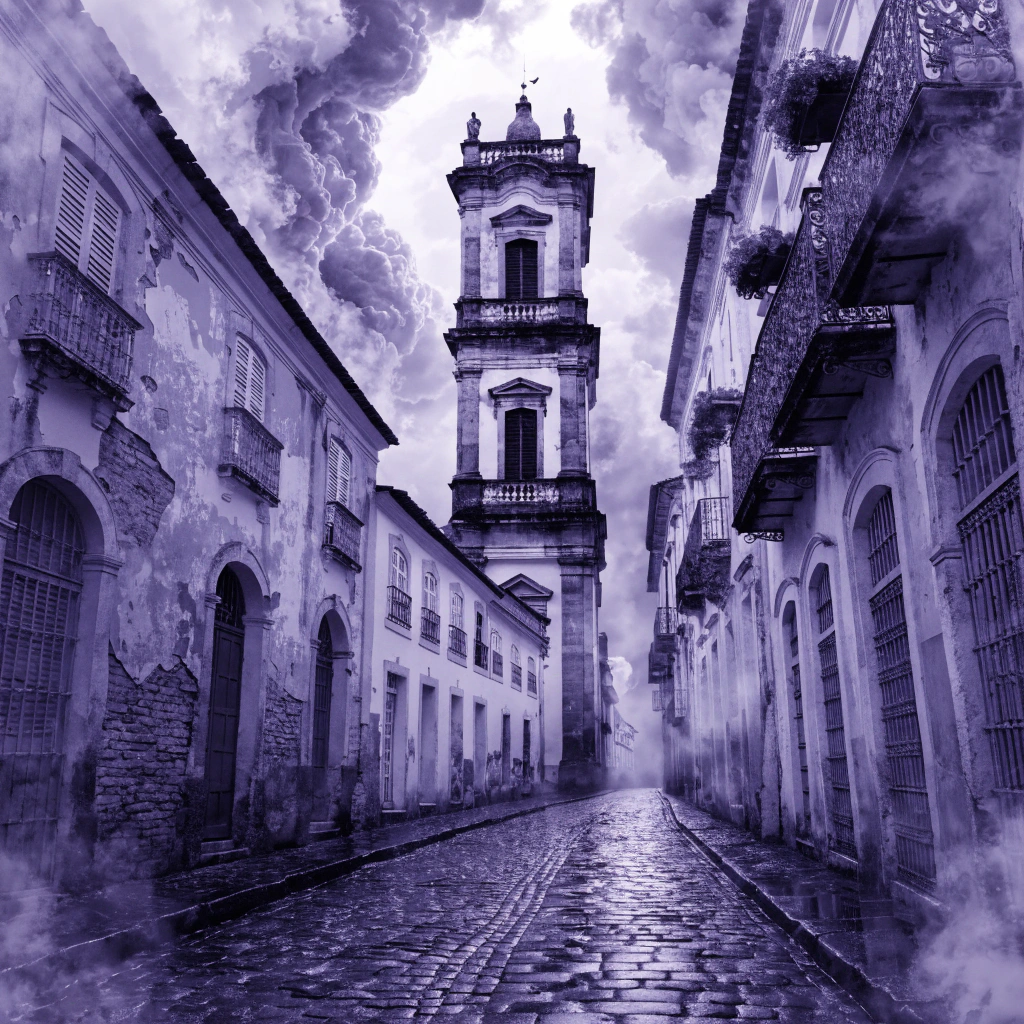
A Visit to Pelourinho
Pelourinho is a famous place in Brazil. It is in the city of Salvador. The streets are very old and beautiful. There are many bright colors on the buildings. It is a historic place with a big history.
Today, Pelourinho is the heart of Afro-Brazilian culture. You can hear music in the streets every day. People dance and sing together. It is very loud and happy.
Many tourists visit this place. There are many small shops and restaurants. You can eat delicious food and buy gifts. Pelourinho is a very special part of the world.
Point grammaire
Structure: Present Simple 'To Be'
"It is in the city of Salvador."
We use 'am', 'is', or 'are' to describe facts or locations. 'Is' is used for singular subjects like 'it', 'he', or 'she'.
Structure: Modal Verb 'Can'
"You can hear music in the streets."
We use 'can' to talk about what is possible. It is followed by the base form of the verb without 'to'.
Teste ta compréhension
10 questions · A1 Débutant · 1 aperçu gratuit
Teste ce que tu as appris dans cet article. Réponds à toutes les questions pour gagner des XP !
Where is Pelourinho located?
Tu veux terminer le quiz ?
9 questions supplémentaires t'attendent. Inscris-toi gratuitement pour débloquer le quiz complet et gagner des XP !
S'inscrire gratuitementTu as dj un compte ? Connexion
Bien joué !
Continue à pratiquer !
Déjà terminé — pas de XP supplémentaire
Inscris-toi pour gagner des XPDétail des questions
Where is Pelourinho located?
Ta réponse:
Bonne réponse: Brazil
The buildings in Pelourinho have many bright colors.
Ta réponse:
Bonne réponse: Vrai
What does 'delicious' mean?
Ta réponse:
Bonne réponse: Very good taste
People _____ and sing together.
Ta réponse:
Bonne réponse: dance
Pelourinho: The Heart of Salvador
Pelourinho is a famous neighborhood in Salvador, Brazil. It is in the old part of the city. People often call it "Pelo." It is a very important place for Afro-Brazilian culture.
In the past, the history of Pelourinho was difficult and sad. Its name means "pillory" because bad things happened to enslaved people there. However, the neighborhood changed over time. Today, it is a place of celebration and art.
The streets in Pelourinho are narrow and have old cobblestones. The buildings are beautiful and colorful. They are brighter than the buildings in the modern part of Salvador. You can find many old churches and interesting museums there.
Music is very important in Pelourinho. You can hear the sound of drums in the squares every day. Many people visit the neighborhood because they want to see the dancing and eat traditional food. It became a UNESCO World Heritage site in 1985. It is a lively place that everyone should visit.
Point grammaire
Structure: Past Simple
"In the past, the history of Pelourinho was difficult and sad."
We use the Past Simple to talk about finished states or actions in the past. For the verb 'to be', we use 'was' for singular subjects.
Structure: Comparatives
"They are brighter than the buildings in the modern part of Salvador."
We use comparatives to compare two things. For short adjectives like 'bright', we add '-er' and use the word 'than'.
Teste ta compréhension
11 questions · A2 mentaire · 1 aperçu gratuit
Teste ce que tu as appris dans cet article. Réponds à toutes les questions pour gagner des XP !
Where is the neighborhood of Pelourinho located?
Tu veux terminer le quiz ?
10 questions supplémentaires t'attendent. Inscris-toi gratuitement pour débloquer le quiz complet et gagner des XP !
S'inscrire gratuitementTu as dj un compte ? Connexion
Bien joué !
Continue à pratiquer !
Déjà terminé — pas de XP supplémentaire
Inscris-toi pour gagner des XPDétail des questions
Where is the neighborhood of Pelourinho located?
Ta réponse:
Bonne réponse: Salvador
Pelourinho is a new neighborhood built in 1985.
Ta réponse:
Bonne réponse: Faux
What does 'colorful' mean?
Ta réponse:
Bonne réponse: Having many bright colors
The streets in Pelourinho are narrow and have old _____.
Ta réponse:
Bonne réponse: cobblestones
When did Pelourinho become a UNESCO World Heritage site?
Ta réponse:
Bonne réponse: 1985
Pelourinho: The Colorful Heart of Bahia
Pelourinho is the historic heart of Salvador, which is a beautiful city in northeastern Brazil. This colorful neighborhood has become famous for its incredible Afro-Brazilian culture and lively atmosphere. Since 1985, Pelourinho has been recognized as a UNESCO World Heritage site because of its unique architecture and deep history.
The name 'Pelourinho' means 'pillory' in Portuguese. In the past, this central square was used as a place where enslaved people were punished. However, this dark history has been transformed by the local community over many decades. Today, the area is celebrated as a powerful symbol of resistance and African roots. It is no longer a place of pain, but a center for art and music.
When you walk through the steep, winding streets, you will see bright colonial buildings painted in pastel colors. Many visitors are amazed by the energy of the neighborhood. The sound of drums often fills the air, especially when the famous group Olodum is practicing. This music, which combines African rhythms with Brazilian styles, has been heard all over the world.
In recent years, many old buildings have been renovated to host museums, art galleries, and restaurants. Local chefs prepare traditional dishes like 'acarajé,' which is made from black-eyed peas and fried in palm oil. If you visit Pelourinho, you will experience a place where history and modern life live together. It is a destination that has captured the hearts of millions of travelers.
Point grammaire
Structure: Passive Voice (Past Simple)
"In the past, this central square was used as a place where enslaved people were punished."
The passive voice is used to focus on the person or thing receiving the action. It is formed using the verb 'to be' (was/were) followed by the past participle of the main verb.
Structure: Present Perfect
"This colorful neighborhood has become famous for its incredible Afro-Brazilian culture."
The present perfect connects the past to the present. We use 'has/have' plus the past participle to talk about experiences or changes that happened at an unspecified time.
Teste ta compréhension
11 questions · B1 Intermédiaire · 1 aperçu gratuit
Teste ce que tu as appris dans cet article. Réponds à toutes les questions pour gagner des XP !
Why is Pelourinho a UNESCO World Heritage site?
Tu veux terminer le quiz ?
10 questions supplémentaires t'attendent. Inscris-toi gratuitement pour débloquer le quiz complet et gagner des XP !
S'inscrire gratuitementTu as dj un compte ? Connexion
Bien joué !
Continue à pratiquer !
Déjà terminé — pas de XP supplémentaire
Inscris-toi pour gagner des XPDétail des questions
Why is Pelourinho a UNESCO World Heritage site?
Ta réponse:
Bonne réponse: Because of its unique architecture and history
The name 'Pelourinho' refers to a musical instrument from Africa.
Ta réponse:
Bonne réponse: Faux
What does the word 'transformed' mean in the context of the article?
Ta réponse:
Bonne réponse: Completely changed for the better
The sound of _____ often fills the air in Pelourinho.
Ta réponse:
Bonne réponse: drums
What is 'acarajé'?
Ta réponse:
Bonne réponse: A traditional dish made from peas
The Resilient Heart of Salvador: Reclaiming Pelourinho
Situated in the heart of Salvador, Pelourinho stands as a profound testament to Brazil's complex colonial history. As a UNESCO World Heritage site, its pastel-colored buildings and steep cobblestone streets attract thousands of visitors annually. However, beneath the aesthetic charm lies a darker history that must be acknowledged. The name 'Pelourinho' refers to the pillory where enslaved people were once publicly punished. Despite this painful legacy, the neighborhood has been transformed into a vibrant center for Afro-Brazilian culture.
Walking through the streets, one cannot help but notice the rhythmic influence of Olodum. This percussion group has become synonymous with the area’s identity, blending traditional African rhythms with modern sounds to create a unique musical fusion. Furthermore, the local cuisine and religious practices, such as Candomblé, highlight the deep-rooted connections to West African heritage. It is this cultural reclamation that defines the modern spirit of Bahia, turning a site of suffering into one of celebration.
In recent decades, significant efforts have been made to preserve the architectural integrity of the district. While modernization often poses a threat to historic sites, local authorities have prioritized the restoration of colonial mansions. Consequently, Pelourinho remains a living museum, where history is not just observed but experienced through dance, art, and community gatherings. Visitors are often struck by the resilience of the local population, who have successfully reclaimed their ancestral space from the shadows of the past.
Ultimately, Pelourinho serves as a powerful symbol of cultural survival, representing the triumph of identity over oppression. It proves that even the most tragic sites can be repurposed into beacons of pride and education. For anyone seeking to understand the soul of Brazil, a journey through these winding alleys is indispensable. The area provides a crucial lens through which we can analyze the intersection of history, race, and art in South America.
Point grammaire
Structure: Present Perfect Passive
"In recent decades, significant efforts have been made to preserve the architectural integrity of the district."
This pattern is used to talk about actions that happened at an unspecified time in the past where the focus is on the result or the object. It is formed using 'have/has + been + past participle'.
Structure: Participle Phrases for Sentence Variety
"Walking through the streets, one cannot help but notice the rhythmic influence of Olodum."
The present participle phrase 'Walking through the streets' acts as an adverbial clause describing the circumstances of the main action. It makes writing more fluid and sophisticated.
Structure: Modal Idiom: Cannot help but
"Walking through the streets, one cannot help but notice the rhythmic influence of Olodum."
This structure is used to express that someone feels compelled to do something or that an action is unavoidable. It is followed by the base form of the verb.
Teste ta compréhension
11 questions · B2 Intermédiaire supérieur · 1 aperçu gratuit
Teste ce que tu as appris dans cet article. Réponds à toutes les questions pour gagner des XP !
What is the historical origin of the name 'Pelourinho'?
Tu veux terminer le quiz ?
10 questions supplémentaires t'attendent. Inscris-toi gratuitement pour débloquer le quiz complet et gagner des XP !
S'inscrire gratuitementTu as dj un compte ? Connexion
Bien joué !
Continue à pratiquer !
Déjà terminé — pas de XP supplémentaire
Inscris-toi pour gagner des XPDétail des questions
What is the historical origin of the name 'Pelourinho'?
Ta réponse:
Bonne réponse: A place where enslaved people were punished
Pelourinho is currently recognized as a UNESCO World Heritage site.
Ta réponse:
Bonne réponse: Vrai
What does 'resilience' mean in the context of the article?
Ta réponse:
Bonne réponse: The strength to recover from a difficult past
The neighborhood has been transformed into a _____ center for Afro-Brazilian culture.
Ta réponse:
Bonne réponse: vibrant
What does the author suggest about modernization in Pelourinho?
Ta réponse:
Bonne réponse: It represents a potential threat to the district's history.
Pelourinho: The Palimpsest of Salvador’s Afro-Brazilian Soul
Perched atop the rugged escarpment of Salvador, Bahia, lies Pelourinho—a neighborhood that functions as a living palimpsest of Brazilian history. Seldom has an urban landscape managed to synthesize such profound historical trauma with such exuberant cultural vitality. As one traverses the steep, winding cobblestone streets, the air is thick with the scent of acarajé and the resonant, syncopated rhythms of local drum corps. Yet, beneath this vibrant facade lies a somber etymological origin; the word 'Pelourinho' refers to the pillory, the central post where enslaved Africans were once subjected to public punishment and humiliation. It is this historical gravity that makes the neighborhood’s current state of celebration so profoundly moving.
The transformation of this central square from a site of systemic subjugation to one of artistic reclamation serves as a testament to the community's indomitable resilience. It is through the collective memory of the Afro-Brazilian population that the neighborhood has been redefined. Where once there was the crack of a whip, there is now the thunderous, rhythmic pulse of Olodum, the world-renowned percussion group that has become synonymous with the area’s identity. This juxtaposition of a painful past and a defiant, joyful present creates a potent atmosphere that is unique to Salvador. The reclamation of this space is not merely about aesthetic beauty but about reasserting agency over a narrative that was once dictated by colonial masters.
Architecturally, Pelourinho is a marvel of colonial vestige. Recognized as a UNESCO World Heritage site since 1985, its intricate Baroque churches, most notably the Church of São Francisco with its opulent gold-leaf interior, stand as silent witnesses to the wealth generated by the sugar trade—a wealth built on the backs of the very people whose descendants now occupy these streets. The preservation of these facades is not merely an aesthetic choice; it is a political act of maintaining a physical narrative of the African diaspora. The winding alleys, lined with pastel-colored houses, offer a visual feast, yet they also demand a critical engagement with the labor and suffering that enabled such architectural splendor.
However, the preservation of such a site is not without its nuances. Critics argue that the 'museumification' of Pelourinho has led to a precarious balance between tourism and the lived reality of its residents. While international recognition has brought much-needed investment and infrastructure, it has also sparked heated debates regarding gentrification and the potential dilution of authentic culture into an ephemeral spectacle for visitors. The displacement of long-term residents in favor of boutique hotels and souvenir shops is a concern that weighs heavily on the local discourse. The challenge remains: how to honor the historical weight of the site while fostering a sustainable and equitable future for the local community.
Ultimately, Pelourinho remains the beating heart of Bahia. It is a space where the sacred and the profane intersect, where Candomblé traditions blend seamlessly with Catholic iconography, and where every corner reveals a new layer of Salvador’s soul. To visit Pelourinho is to engage with a history that is neither forgotten nor static, but rather continuously rewritten by those who call it home. The enduring legacy of this neighborhood is its ability to transform a symbol of oppression into a beacon of cultural pride, ensuring that the voices of the past are never truly silenced.
Point grammaire
Structure: Inversion with Negative Adverbials
"Seldom has an urban landscape managed to synthesize such profound historical trauma with such exuberant cultural vitality."
When using negative or restrictive adverbs like 'seldom' at the start of a sentence for emphasis, the auxiliary verb comes before the subject. This is a common feature of formal, advanced English.
Structure: Cleft Sentences
"It is through the collective memory of the Afro-Brazilian population that the neighborhood has been redefined."
Cleft sentences use 'It is/was... that' to focus on a specific part of the information. Here, it emphasizes the 'collective memory' as the primary cause of the redefinition.
Structure: Nominalisation
"The transformation of this central square from a site of systemic subjugation to one of artistic reclamation serves as a testament to the community's indomitable resilience."
Nominalisation involves turning verbs or adjectives into nouns (e.g., 'transform' to 'transformation'). It allows for more complex, abstract, and formal sentence structures typical of C1 academic writing.
Teste ta compréhension
12 questions · C1 Avancé · 1 aperçu gratuit
Teste ce que tu as appris dans cet article. Réponds à toutes les questions pour gagner des XP !
What is the etymological origin of the name 'Pelourinho'?
Tu veux terminer le quiz ?
11 questions supplémentaires t'attendent. Inscris-toi gratuitement pour débloquer le quiz complet et gagner des XP !
S'inscrire gratuitementTu as dj un compte ? Connexion
Bien joué !
Continue à pratiquer !
Déjà terminé — pas de XP supplémentaire
Inscris-toi pour gagner des XPDétail des questions
What is the etymological origin of the name 'Pelourinho'?
Ta réponse:
Bonne réponse: A public pillory for punishment
The article suggests that the UNESCO World Heritage status has been purely beneficial without any social drawbacks.
Ta réponse:
Bonne réponse: Faux
Which word describes something that is very detailed and complex?
Ta réponse:
Bonne réponse: Intricate
The transformation of the square serves as a testament to the community's indomitable _____.
Ta réponse:
Bonne réponse: resilience
According to the text, what is a major concern regarding the 'museumification' of the area?
Ta réponse:
Bonne réponse: The displacement of long-term residents
The Church of São Francisco is noted for its opulent gold-leaf interior.
Ta réponse:
Bonne réponse: Vrai
Pelourinho : Palimpseste de la mémoire afro-brésilienne et théâtre d'une résilience culturelle
Niché au cœur de la ville haute de Salvador de Bahia, le quartier du Pelourinho ne saurait être appréhendé comme une simple enclave pittoresque destinée à l'œil avide du touriste. Il constitue, en réalité, un palimpseste urbain où se superposent les strates douloureuses de l'histoire coloniale et l'effervescence jubilatoire d'une culture afro-brésilienne réinventée. Son nom même, dérivé du portugais signifiant « pilori », agit comme un stigmate mémoriel : il rappelle l'emplacement exact où, durant des siècles, les corps des esclavisés étaient suppliciés en place publique, sous le regard d'une aristocratie sucrière dont l'opulence se mesurait à l'aune de la déshumanisation d'autrui. Bien que ce passé soit indélébile, le Pelourinho a opéré une métamorphose sémantique et sociale sans précédent, transformant le lieu du supplice en un bastion de la résistance identitaire.
L'architecture du quartier, classée au patrimoine mondial de l'UNESCO depuis 1985, offre un contraste saisissant. Les façades baroques, peintes de couleurs pastel — ocres, azurs et vert amande —, masquent à peine la rudesse des rues pavées de « pierres de tête de nègre », ainsi nommées en raison de la forme des galets que les esclaves devaient disposer avec une précision chirurgicale. En déambulant dans ces artères sinueuses, le visiteur est frappé par la densité du syncrétisme religieux. Ici, le catholicisme ostentatoire des églises couvertes d'or, telle l'église São Francisco, coexiste dans une tension créatrice avec les rites du Candomblé. Il n'est pas rare que le parfum de l'encens se mêle aux effluves de l'huile de palme (dendê) émanant des étals des Baianas, ces gardiennes du temple culinaire et spirituel qui, par leur simple présence, réaffirment la souveraineté de l'héritage yoruba sur cette terre américaine.
Au-delà de la pierre, c'est le souffle humain qui anime le Pelourinho. La musique y joue un rôle prépondérant, non comme un simple divertissement, mais comme un vecteur de revendication politique. Le groupe Olodum, mondialement célèbre, a su transformer les percussions traditionnelles en une arme de conscientisation sociale. Les rythmes du samba-reggae, qui résonnent contre les murs centenaires, ne sont pas de simples échos du passé ; ils constituent une praxis de la liberté. Cette effervescence culturelle n'est cependant pas exempte de paradoxes. Le processus de patrimonialisation, s'il a permis la sauvegarde structurelle du quartier, a également entraîné une gentrification larvée. Nombre d'habitants historiques ont été repoussés vers les périphéries déshéritées, laissant place à des galeries d'art et des boutiques de souvenirs.
Peut-être faut-il voir dans cette dynamique la perpétuation d'une lutte dialectique entre l'institutionnel et le vernaculaire. Le Pelourinho demeure un espace de négociation permanente où l'identité n'est jamais figée. Quoi qu'il en soit, nier la force vitale qui émane de ces places serait méconnaître l'âme même du Brésil. Le quartier s'enorgueillit de sa capacité à avoir transmué la souffrance en une esthétique de la joie, prouvant que la mémoire, lorsqu'elle est investie par le corps et le rythme, peut briser les chaînes les plus immuables. C'est dans ce clair-obscur historique, entre la tragédie du pilori et la splendeur des carnavals, que se joue l'essence d'une nation qui cherche encore à réconcilier ses multiples visages.
Point grammaire
Structure: Le subjonctif après les conjonctions de concession
"Bien que ce passé soit indélébile, le Pelourinho a opéré une métamorphose sémantique."
La conjonction 'bien que' introduit une proposition subordonnée de concession et exige toujours l'emploi du subjonctif pour souligner l'aspect hypothétique ou subjectif de l'opposition.
Structure: L'inversion du sujet après certains adverbes
"Peut-être faut-il voir dans cette dynamique la perpétuation d'une lutte dialectique."
En français soutenu, l'utilisation d'adverbes comme 'Peut-être', 'Sans doute' ou 'À peine' en début de phrase entraîne souvent l'inversion du sujet et du verbe.
Structure: Le ne littéraire (ne explétif ou restrictif)
"Le quartier du Pelourinho ne saurait être appréhendé comme une simple enclave pittoresque."
Avec certains verbes comme 'savoir', 'pouvoir' ou 'oser' employés au conditionnel, on utilise souvent le 'ne' seul pour exprimer une négation élégante sans le 'pas'.
Teste ta compréhension
12 questions · C2 Maîtrise · 1 aperçu gratuit
Teste ce que tu as appris dans cet article. Réponds à toutes les questions pour gagner des XP !
Quelle est l'origine étymologique du nom « Pelourinho » ?
Tu veux terminer le quiz ?
11 questions supplémentaires t'attendent. Inscris-toi gratuitement pour débloquer le quiz complet et gagner des XP !
S'inscrire gratuitementTu as dj un compte ? Connexion
Bien joué !
Continue à pratiquer !
Déjà terminé — pas de XP supplémentaire
Inscris-toi pour gagner des XPDétail des questions
Quelle est l'origine étymologique du nom « Pelourinho » ?
Ta réponse:
Bonne réponse: Un instrument de torture public
Le quartier du Pelourinho est resté inchangé depuis l'époque coloniale sans aucune influence moderne.
Ta réponse:
Bonne réponse: Faux
Que signifie le terme 'syncrétisme' dans le contexte de l'article ?
Ta réponse:
Bonne réponse: Le mélange de traditions religieuses
Le groupe Olodum utilise la musique comme un vecteur de _____ sociale.
Ta réponse:
Bonne réponse: conscientisation
Quel effet négatif de la patrimonialisation l'auteur mentionne-t-il ?
Ta réponse:
Bonne réponse: La gentrification et l'expulsion des habitants
L'auteur considère le Pelourinho comme un espace où la mémoire est figée et morte.
Ta réponse:
Bonne réponse: Faux

