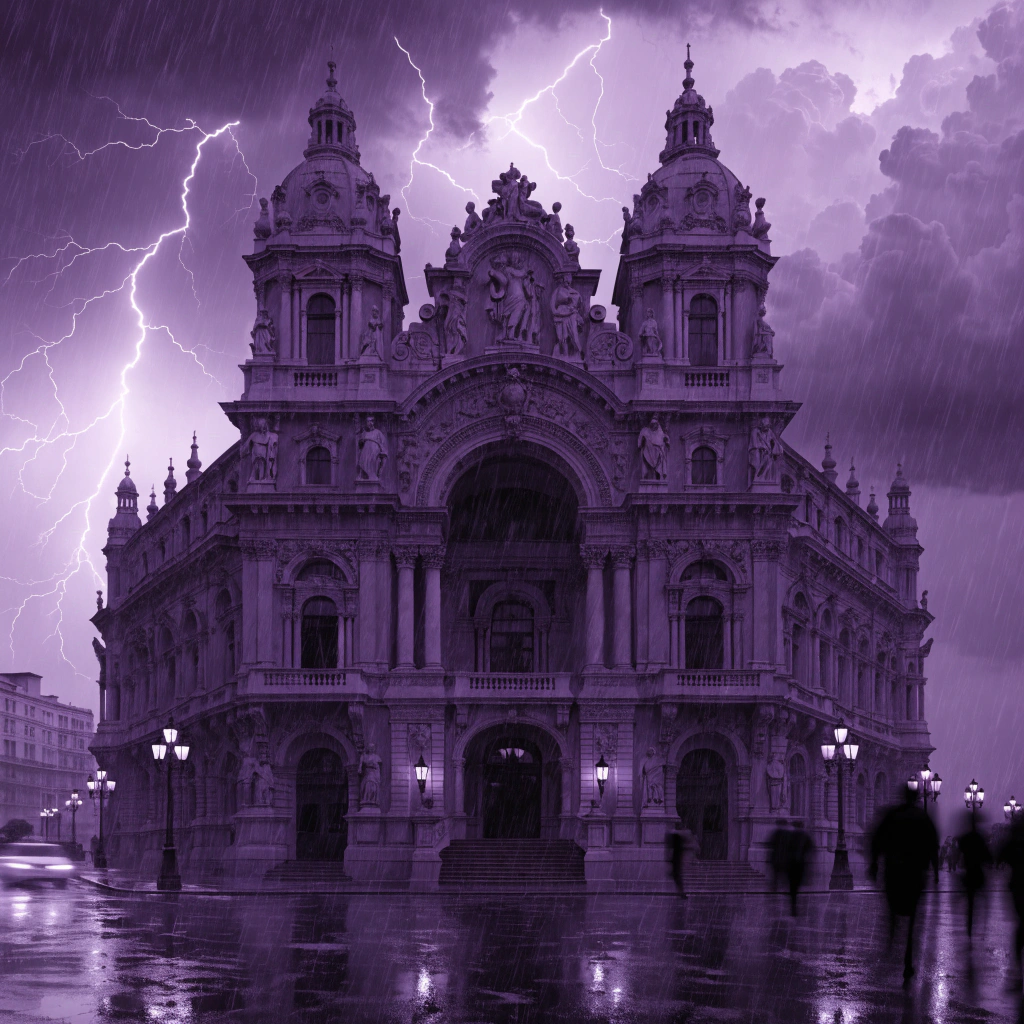
The Beautiful Amazon Theatre
The Amazon Theatre is a big building. It is in Manaus, Brazil. This city is in the middle of a large forest. The theater is very old and very beautiful.
The building has a pink color. It has a big roof with many colors. Long ago, people in the city were very rich. They wanted a special place for music and art.
Today, people go there to see shows. They listen to music and see dancers. It is a famous place in Brazil. Many tourists visit the theater every year.
Point grammaire
Structure: Present Simple (to be)
"The Amazon Theatre is a big building."
We use 'is' with singular subjects to describe what something is. It is used for facts and general descriptions.
Structure: Present Simple (plural verbs)
"Many tourists visit the theater every year."
For plural subjects like 'tourists', we use the base form of the verb without an 's'. This describes regular actions.
Teste ta compréhension
10 questions · A1 Débutant · 1 aperçu gratuit
Teste ce que tu as appris dans cet article. Réponds à toutes les questions pour gagner des XP !
Where is the Amazon Theatre?
Tu veux terminer le quiz ?
9 questions supplémentaires t'attendent. Inscris-toi gratuitement pour débloquer le quiz complet et gagner des XP !
S'inscrire gratuitementTu as dj un compte ? Connexion
Bien joué !
Continue à pratiquer !
Déjà terminé — pas de XP supplémentaire
Inscris-toi pour gagner des XPDétail des questions
Where is the Amazon Theatre?
Ta réponse:
Bonne réponse: Manaus, Brazil
The building is in the middle of a forest.
Ta réponse:
Bonne réponse: Vrai
What does 'rich' mean?
Ta réponse:
Bonne réponse: Having a lot of money
The building has a _____ color.
Ta réponse:
Bonne réponse: pink
Le Théâtre Amazonas : Un Trésor au Cœur de la Forêt
Le Théâtre Amazonas se trouve dans une grande ville du Brésil, Manaus. Cette ville est au milieu de la forêt amazonienne. Le théâtre est très beau et très ancien. Il raconte une histoire importante de la région et de son passé riche.
À la fin du 19ème siècle, Manaus était une ville très riche. Pourquoi ? À cause du caoutchouc. C'était une période où beaucoup de pays en Europe et aux États-Unis voulaient du caoutchouc pour faire des pneus et d'autres choses. Les personnes de Manaus, qui vendaient le caoutchouc, sont devenues très riches. Elles voulaient que Manaus soit comme Paris, la capitale de la France. Elles ont construit le Théâtre Amazonas pour cela. C'était un grand et ambitieux projet.
Le théâtre a ouvert ses portes en 1896. Il est magnifique, avec des couleurs vives et de belles décorations, comme un palais. Le toit est très spécial. Aujourd'hui, il est toujours un symbole de cette époque de richesse. Les visiteurs peuvent le voir et imaginer la vie d'autrefois. C'est un lieu culturel important pour le Brésil et pour le monde.
Point grammaire
Structure: Le Passé Composé
"Elles ont construit le Théâtre Amazonas pour cela."
Le passé composé est utilisé pour parler d'une action finie et précise dans le passé. Il se forme avec l'auxiliaire "avoir" ou "être" au présent, suivi du participe passé du verbe.
Structure: L'Imparfait
"Manaus était une ville très riche."
L'imparfait décrit une situation, une habitude ou une action qui durait dans le passé. Il sert à donner le contexte ou la description d'une période passée.
Teste ta compréhension
11 questions · A2 mentaire · 1 aperçu gratuit
Teste ce que tu as appris dans cet article. Réponds à toutes les questions pour gagner des XP !
Où se trouve le Théâtre Amazonas ?
Tu veux terminer le quiz ?
10 questions supplémentaires t'attendent. Inscris-toi gratuitement pour débloquer le quiz complet et gagner des XP !
S'inscrire gratuitementTu as dj un compte ? Connexion
Bien joué !
Continue à pratiquer !
Déjà terminé — pas de XP supplémentaire
Inscris-toi pour gagner des XPDétail des questions
Où se trouve le Théâtre Amazonas ?
Ta réponse:
Bonne réponse: Au Brésil
Manaus est devenue riche grâce au café.
Ta réponse:
Bonne réponse: Faux
Que signifie le mot "époque" ?
Ta réponse:
Bonne réponse: Une période de temps
Le Théâtre Amazonas se trouve dans la ville de _____.
Ta réponse:
Bonne réponse: Manaus
À quelle ville Manaus voulait-elle ressembler ?
Ta réponse:
Bonne réponse: Paris
The Amazon Theatre: A Jungle Masterpiece
Deep in the heart of the Amazon rainforest, there is a building that looks like it belongs in Europe. This is the Teatro Amazonas, also known as the Amazon Theatre. It is located in Manaus, Brazil, and it has become a symbol of the city's rich history.
The theatre was built during the late 19th century, a time known as the 'rubber boom.' During this period, Manaus was one of the wealthiest cities in the world because of the high demand for rubber. The local 'rubber barons' wanted to create a city that was as beautiful as Paris. They decided to build a magnificent opera house that would show their great wealth to the world.
Materials for the building were brought from all over Europe. For example, the roof tiles came from Alsace in France, the stairs were made of Italian marble, and the steel walls were imported from Glasgow. The most famous part of the theatre is the colorful dome, which is covered with 36,000 decorated ceramic tiles. These tiles show the colors of the Brazilian flag.
Since it was inaugurated in 1896, the theatre has hosted many famous performers. Inside the theatre, the decoration is just as impressive as the outside. The main performance hall can hold more than 700 people, and the ceiling features beautiful paintings that represent the arts and Amazonian nature. However, when the rubber industry declined, the theatre was closed for many years. Fortunately, it has been restored several times and is now a popular tourist attraction. Today, people can enjoy the Amazonas Opera Festival, which is held there every year.
The Amazon Theatre is a unique monument that connects the wild jungle with European art. It reminds us of a time when Manaus was the 'Paris of the Tropics.'
Point grammaire
Structure: Passive Voice (Past Simple)
"Materials for the building were brought from all over Europe."
We use the passive voice when the action is more important than who did it. It is formed with 'was/were' + the past participle of the verb.
Structure: Relative Clauses
"The most famous part of the theatre is the colorful dome, which is covered with 36,000 decorated ceramic tiles."
Relative clauses give extra information about a noun. Using 'which' allows us to add details about an object or place without starting a new sentence.
Teste ta compréhension
11 questions · B1 Intermédiaire · 1 aperçu gratuit
Teste ce que tu as appris dans cet article. Réponds à toutes les questions pour gagner des XP !
In which country is the Amazon Theatre located?
Tu veux terminer le quiz ?
10 questions supplémentaires t'attendent. Inscris-toi gratuitement pour débloquer le quiz complet et gagner des XP !
S'inscrire gratuitementTu as dj un compte ? Connexion
Bien joué !
Continue à pratiquer !
Déjà terminé — pas de XP supplémentaire
Inscris-toi pour gagner des XPDétail des questions
In which country is the Amazon Theatre located?
Ta réponse:
Bonne réponse: Brazil
All the materials used to build the theatre were found locally in the jungle.
Ta réponse:
Bonne réponse: Faux
What does 'magnificent' mean?
Ta réponse:
Bonne réponse: Very beautiful and impressive
The Amazon Theatre was formally _____ in 1896.
Ta réponse:
Bonne réponse: inaugurated
What industry made Manaus one of the wealthiest cities in the world?
Ta réponse:
Bonne réponse: Rubber production
Le Teatro Amazonas : Un Joyau de la Belle Époque au Cœur de la Forêt Amazonienne
Niché au cœur de la forêt amazonienne, dans la vibrante ville de Manaus, se dresse un monument architectural d'une splendeur inouïe : le Teatro Amazonas. Ce chef-d'œuvre est un témoignage éloquent de l'ère fastueuse de la Belle Époque brésilienne, façonnée par l'explosion de la demande mondiale en caoutchouc à la fin du XIXe siècle.
Durant cette période faste, Manaus fut, paradoxalement, l'une des villes les plus opulentes du monde. Les « barons du caoutchouc », dont les fortunes colossales s'étaient bâties sur l'exploitation intensive de l'hévéa, nourrissaient l'ambition démesurée de transformer cette lointaine cité jungle en un véritable « Paris des Tropiques ». Leur vision était celle d'un centre culturel et artistique rivalisant avec les capitales européennes, et le Teatro Amazonas en devint la pierre angulaire, incarnant leur richesse ostentatoire et leur goût pour le luxe.
Inauguré en 1896, après quinze années de construction et d'efforts monumentaux, le théâtre est une prouesse d'ingénierie et d'esthétique. Des matériaux nobles furent importés des quatre coins du globe : le marbre de Carrare pour les escaliers et les colonnes, des tuiles d'Alsace pour le dôme emblématique aux couleurs du drapeau brésilien, et des lustres en verre de Murano. L'intérieur, somptueusement décoré, abrite des fresques murales et des ornements dorés qui captivent le regard, tandis que la salle de spectacle, d'une acoustique remarquable, peut accueillir près de 700 spectateurs.
Cependant, la prospérité du caoutchouc fut éphémère. Dès les premières décennies du XXe siècle, le déclin de cette industrie, dû à la concurrence asiatique, plongea Manaus dans une période de stagnation économique. Le Teatro Amazonas connut alors une longue éclipse, ses scènes restant silencieuses pendant des décennies, symbole d'une gloire passée. Il a fallu attendre la fin du XXe siècle pour qu'une volonté politique de renouveau culturel permette sa restauration et sa réouverture complète, lui redonnant sa vocation première.
Aujourd'hui, le Teatro Amazonas n'est plus seulement un vestige d'une époque révolue ; il est un centre culturel vibrant, accueillant opéras, concerts et pièces de théâtre. Il représente non seulement l'apogée d'une richesse éphémère, mais aussi la persévérance et la capacité d'une communauté à préserver et à revitaliser son patrimoine. Il demeure un emblème puissant de Manaus et un point de repère incontournable pour quiconque souhaite comprendre l'histoire complexe et fascinante de l'Amazonie brésilienne.
Point grammaire
Structure: Le Plus-que-Parfait
"Les « barons du caoutchouc », dont les fortunes colossales s'étaient bâties sur l'exploitation intensive de l'hévéa, nourrissaient l'ambition démesurée de transformer cette lointaine cité jungle en un véritable « Paris des Tropiques »."
Le plus-que-parfait est utilisé pour exprimer une action passée qui a eu lieu avant une autre action passée. Il se forme avec l'imparfait de l'auxiliaire (avoir ou être) et le participe passé du verbe principal. Ici, les fortunes s'étaient bâties avant que les barons ne nourrissent leur ambition.
Structure: Le Pronom Relatif Composé 'dont'
"Les « barons du caoutchouc », dont les fortunes colossales s'étaient bâties sur l'exploitation intensive de l'hévéa, nourrissaient l'ambition démesurée de transformer cette lointaine cité jungle en un véritable « Paris des Tropiques »."
Le pronom relatif 'dont' remplace un complément introduit par 'de' (de qui, de quoi). Il est souvent utilisé pour exprimer la possession ou l'origine. Dans cet exemple, 'dont les fortunes' signifie 'les fortunes de ces barons'.
Structure: L'Usage du Subjonctif après 'Il a fallu que'
"Il a fallu attendre la fin du XXe siècle pour qu'une volonté politique de renouveau culturel permette sa restauration et sa réouverture complète..."
L'expression 'il a fallu que' (ou 'il faut que') exprime une obligation, une nécessité. Elle est toujours suivie du subjonctif. Ici, le verbe 'permettre' est conjugué au subjonctif présent ('permette') car il s'agit d'une action nécessaire qui a permis la restauration.
Teste ta compréhension
11 questions · B2 Intermédiaire supérieur · 1 aperçu gratuit
Teste ce que tu as appris dans cet article. Réponds à toutes les questions pour gagner des XP !
Quelle était la principale ressource économique qui a permis la construction du Teatro Amazonas ?
Tu veux terminer le quiz ?
10 questions supplémentaires t'attendent. Inscris-toi gratuitement pour débloquer le quiz complet et gagner des XP !
S'inscrire gratuitementTu as dj un compte ? Connexion
Bien joué !
Continue à pratiquer !
Déjà terminé — pas de XP supplémentaire
Inscris-toi pour gagner des XPDétail des questions
Quelle était la principale ressource économique qui a permis la construction du Teatro Amazonas ?
Ta réponse:
Bonne réponse: Le caoutchouc
Le Teatro Amazonas a été construit entièrement avec des matériaux locaux de la forêt amazonienne.
Ta réponse:
Bonne réponse: Faux
Quel mot décrit le mieux une période de grande richesse et de luxe, comme celle du caoutchouc à Manaus ?
Ta réponse:
Bonne réponse: Fastueuse
Après le déclin de l'industrie du caoutchouc, le Teatro Amazonas a connu une longue _____.
Ta réponse:
Bonne réponse: éclipse
Quel était le surnom donné à Manaus pendant la période de la Belle Époque du caoutchouc ?
Ta réponse:
Bonne réponse: Le Paris des Tropiques
The Gilded Jungle: The Paradox of the Amazon Theatre
Seldom has an architectural endeavor embodied such audacious extravagance as the Teatro Amazonas. Nestled within the verdant heart of Manaus, Brazil, this operatic bastion stands as a monumental reminder of the 'Belle Époque'—a period when the global hunger for rubber transformed a remote jungle outpost into one of the world's most affluent cities. At the zenith of the rubber boom in the late 19th century, Manaus was frequently dubbed the 'Paris of the Tropics,' a moniker that reflected the Eurocentric aspirations of the local rubber barons. It was their insatiable desire for cultural prestige that led to the inception of this lavish theatre, intended to rival the grandest houses of Europe.
The juxtaposition of the neoclassical facade against the untamed Amazon basin is nothing short of a paradox. To achieve this architectural feat, no expense was spared; the construction of the theatre required the importation of materials from across the Atlantic. Italian marble formed the staircases, English steel framed the structure, and French glass adorned the chandeliers. Even the roofing tiles were brought from Alsace, meticulously arranged to depict the Brazilian national flag. What the rubber barons sought was more than mere entertainment; it was a cultural validation of their newfound wealth, an attempt to impose European order upon the perceived chaos of the rainforest.
However, the theatre's golden age proved to be somewhat ephemeral. As the rubber monopoly crumbled due to the emergence of plantations in Southeast Asia, the once-thriving economy of Manaus plummeted into a state of stagnation. For decades, the theatre fell into a state of relative desuetude, its grand halls echoing with the silence of a bypassed era. Yet, the enduring legacy of the Teatro Amazonas is not merely one of decay. Subsequent restoration efforts have revitalized the venue, ensuring that it remains a vibrant center for the performing arts today.
Critically analyzing the theatre's existence requires a nuanced understanding of its colonial underpinnings. While it represents a precursor to modern Brazilian cultural identity, it also serves as a stark illustration of environmental and social exploitation. The wealth that funded this opulence was built upon the labor of indigenous populations and migrants who endured harrowing conditions in the rubber forests. Thus, the Teatro Amazonas remains a complex symbol: it is both a triumph of human ingenuity and a haunting monument to the excesses of a bygone era. Today, the annual Amazonas Opera Festival serves as a testament to the theatre's continued relevance, bridging the gap between its elitist origins and its role as a public cultural treasure.
Point grammaire
Structure: Negative Inversion
"Seldom has an architectural endeavor embodied such audacious extravagance as the Teatro Amazonas."
Inversion occurs when the auxiliary verb comes before the subject after certain negative or restrictive adverbs (like 'seldom'). This is used for emphasis and is common in formal C1 writing.
Structure: Cleft Sentences
"What the rubber barons sought was more than mere entertainment; it was a cultural validation of their newfound wealth."
A pseudo-cleft sentence using 'What' focuses on specific information by moving it to the end of the clause. It highlights the motivation of the subjects.
Structure: Nominalisation
"The construction of the theatre required the importation of materials from across the Atlantic."
Nominalisation turns verbs (construct, import) into nouns (construction, importation). This creates a more formal, objective tone typical of academic or advanced descriptive English.
Teste ta compréhension
12 questions · C1 Avancé · 1 aperçu gratuit
Teste ce que tu as appris dans cet article. Réponds à toutes les questions pour gagner des XP !
What was the primary economic driver behind the construction of the Teatro Amazonas?
Tu veux terminer le quiz ?
11 questions supplémentaires t'attendent. Inscris-toi gratuitement pour débloquer le quiz complet et gagner des XP !
S'inscrire gratuitementTu as dj un compte ? Connexion
Bien joué !
Continue à pratiquer !
Déjà terminé — pas de XP supplémentaire
Inscris-toi pour gagner des XPDétail des questions
What was the primary economic driver behind the construction of the Teatro Amazonas?
Ta réponse:
Bonne réponse: The rubber boom
The materials used to build the theatre were mostly sourced locally from the Amazon rainforest.
Ta réponse:
Bonne réponse: Faux
What does 'ephemeral' mean in the context of the article?
Ta réponse:
Bonne réponse: Lasting for a very short time
The theatre fell into a state of relative _____ after the rubber monopoly crumbled.
Ta réponse:
Bonne réponse: desuetude
The author describes the theatre as a 'paradox' because:
Ta réponse:
Bonne réponse: It is a European-style opera house located in the middle of a rainforest.
The author argues that the theatre is a symbol of both human ingenuity and social exploitation.
Ta réponse:
Bonne réponse: Vrai
Anachronistic Grandeur: The Teatro Amazonas and the Ephemeral Opulence of the Rubber Boom
The Teatro Amazonas, situated in the heart of Manaus, serves as a profound testament to the ephemeral nature of human ambition and the ostentatious profligacy of the late 19th-century rubber boom. At a time when the global demand for rubber, fueled by the burgeoning automotive and industrial sectors, reached a fever pitch, the 'rubber barons' of the Amazon found themselves in possession of wealth so vast it bordered on the surreal. Seeking to assert their cultural hegemony and recreate a European aesthetic within the humid confines of the jungle, they embarked upon a project of unparalleled grandeur: the construction of a world-class opera house. This Renaissance Revival edifice was intended to be the crown jewel of the 'Paris of the Tropics,' a city that, despite its geographic isolation, enjoyed the luxuries of electricity and trams long before many European capitals.
Were it not for the insatiable global appetite for vulcanized rubber, such an edifice would never have been conceived, let alone realized. The materials utilized in its construction read like a catalogue of European luxury: Carrara marble from Italy, steel from Scotland, and Murano glass chandeliers from Venice. The dome, perhaps the most striking feature, is adorned with 36,000 decorated ceramic tiles in the colors of the Brazilian flag, creating a vibrant synthesis of European form and national identity. Inaugurated in 1896, the theatre hosted the luminaries of the era, including Enrico Caruso, who allegedly graced its stage, though historical accounts remain somewhat contested by modern scholars. The analytical observer might note that the theatre was not merely a venue for art, but a sociological instrument used to distance the elite from the perceived 'wilderness' surrounding them.
However, the prosperity that birthed this anachronism was precarious. The botanical heist perpetrated by Henry Wickham, who smuggled Hevea brasiliensis seeds to Kew Gardens, led to the establishment of rubber plantations in Southeast Asia. This effectively shattered the Brazilian monopoly, precipitating a precipitous economic decline. Manaus, once the global epicenter of rubber production, lapsed into a period of stagnation, and the Teatro Amazonas stood as a silent vestige of a vanished era. For decades, the structure was neglected, its opulence tarnished by the encroaching humidity and the indifference of a city no longer able to sustain such extravagance. The decay was not merely physical but symbolic, representing the collapse of a socio-economic structure built upon a volatile commodity.
Rarely does one encounter such a stark juxtaposition between the artifice of high culture and the raw, untamed power of the natural world. The theatre’s presence in Manaus remains somewhat incongruous, a relic of a time when man believed he could impose his will upon the most formidable wilderness on Earth. Yet, its subsequent restoration in the late 20th century has transformed it into a symbol of resilience. It is no longer merely a monument to profligacy but a functioning cultural hub that hosts the Amazonas Opera Festival, proving that even the most improbable dreams can leave a lasting legacy. The restoration efforts were meticulous, ensuring that the original aesthetic was preserved while integrating modern acoustic technology.
Lest the structure be reclaimed by the encroaching canopy or forgotten by history, it continues to undergo rigorous preservation. To visit the Teatro Amazonas today is to engage with a complex narrative of exploitation, innovation, and artistic yearning. It serves as a reminder that the pursuit of beauty, however misaligned with its surroundings, possesses an intrinsic value that transcends the economic cycles of boom and bust. It is a synthesis of historical irony and aesthetic triumph, standing defiantly against the verdant tide of the rainforest. The enduring legacy of the theatre suggests that while the wealth of the rubber boom was fleeting, the cultural imprint it left behind remains indelible, challenging our perceptions of civilization and its boundaries.
Point grammaire
Structure: Inverted Conditionals
"Were it not for the insatiable global appetite for vulcanized rubber, such an edifice would never have been conceived, let alone realized."
The 'if' is omitted and 'were' is moved to the beginning of the clause for formal, rhetorical effect. This structure is common in academic writing to express hypothetical conditions in the past or present.
Structure: Negative Inversion
"Rarely does one encounter such a stark juxtaposition between the artifice of high culture and the raw, untamed power of the natural world."
When a negative or restrictive adverbial (like 'rarely') starts a sentence, the auxiliary verb and subject are inverted. This emphasizes the rarity or intensity of the statement.
Structure: Subjunctive with 'Lest'
"Lest the structure be reclaimed by the encroaching canopy or forgotten by history, it continues to undergo rigorous preservation."
The word 'lest' is followed by the base form of the verb (subjunctive mood) to express a negative purpose or fear. It means 'to avoid the risk of' something happening.
Teste ta compréhension
12 questions · C2 Maîtrise · 1 aperçu gratuit
Teste ce que tu as appris dans cet article. Réponds à toutes les questions pour gagner des XP !
What was the primary catalyst for the construction of the Teatro Amazonas?
Tu veux terminer le quiz ?
11 questions supplémentaires t'attendent. Inscris-toi gratuitement pour débloquer le quiz complet et gagner des XP !
S'inscrire gratuitementTu as dj un compte ? Connexion
Bien joué !
Continue à pratiquer !
Déjà terminé — pas de XP supplémentaire
Inscris-toi pour gagner des XPDétail des questions
What was the primary catalyst for the construction of the Teatro Amazonas?
Ta réponse:
Bonne réponse: The wealth generated by the global demand for rubber.
The materials used to build the theatre were primarily sourced from the local Amazonian environment.
Ta réponse:
Bonne réponse: Faux
Which word best describes the 'reckless extravagance' mentioned in the text?
Ta réponse:
Bonne réponse: Profligacy
The botanical heist by Henry Wickham effectively shattered the Brazilian _____.
Ta réponse:
Bonne réponse: monopoly
According to the article, what does the dome of the theatre symbolize?
Ta réponse:
Bonne réponse: A synthesis of European architectural form and Brazilian national identity.
The theatre was immediately restored following the economic decline of the rubber boom.
Ta réponse:
Bonne réponse: Faux

