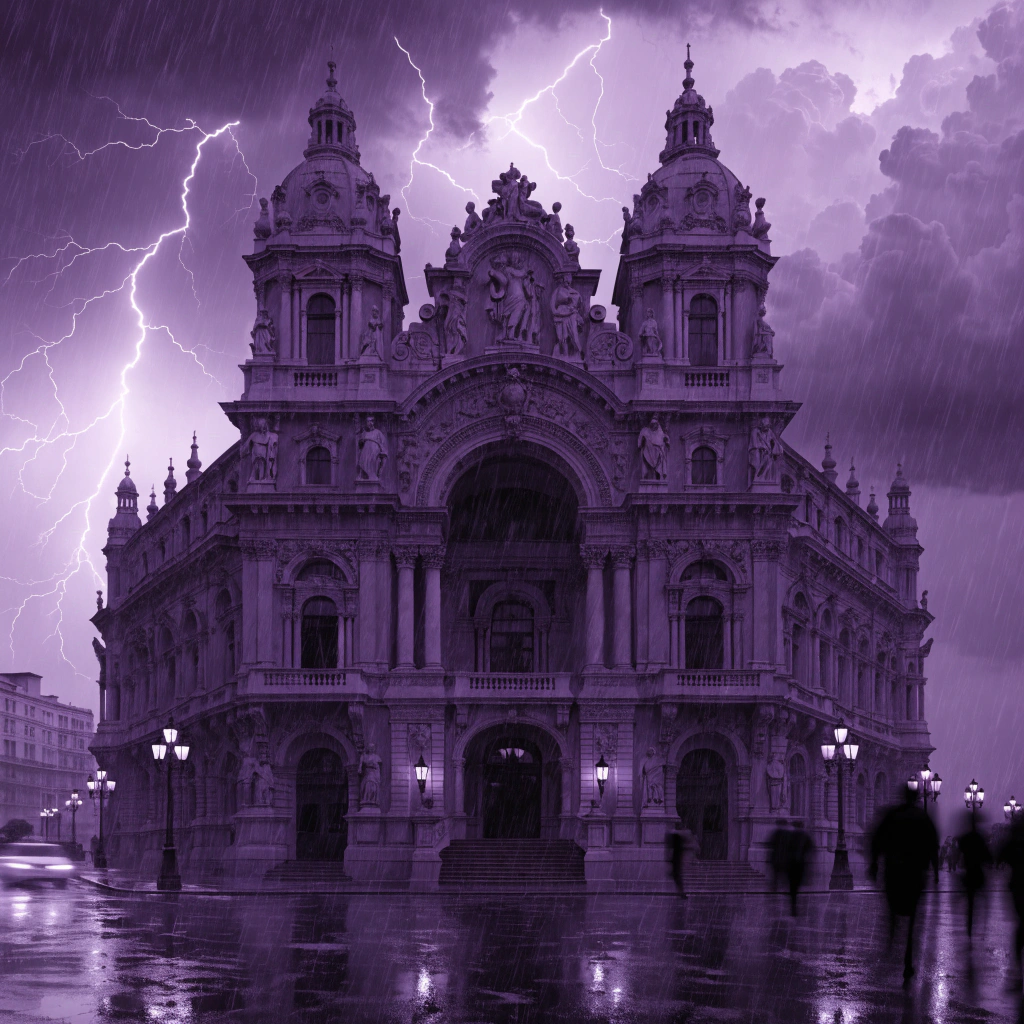
O Teatro Amazonas: Um Lugar Especial no Brasil
O Teatro Amazonas é um lugar muito bonito. Ele fica na cidade de Manaus, no Brasil. Manaus é uma cidade grande e está na Amazônia.
O teatro é um edifício velho, mas é muito famoso. Ele tem uma história importante. Muitas pessoas visitam o Teatro Amazonas. Elas gostam de ver a sua arquitetura. O teatro tem cores bonitas e muitos detalhes. Ele é um símbolo da cultura e da história de Manaus. É um lugar especial para todos.
Gramática em destaque
Padrão: Verbo 'Ser' (Presente)
"O Teatro Amazonas é um lugar muito bonito."
Usamos o verbo 'ser' para descrever algo ou alguém. Ele mostra características permanentes. Para 'ele/ela/você', a forma do verbo 'ser' é 'é'.
Padrão: Artigos Definidos (O, A)
"O Teatro Amazonas é um lugar muito bonito. Ele fica na cidade de Manaus."
Usamos 'o' para substantivos masculinos singulares e 'a' para substantivos femininos singulares. Eles indicam algo específico que já conhecemos.
Teste sua compreensão
10 perguntas · A1 Iniciante · 1 pré-visualização grátis
Teste o que aprendeu neste artigo. Responda todas as perguntas para ganhar XP!
Onde fica o Teatro Amazonas?
Quer finalizar o quiz?
9 perguntas a mais estão esperando por você. Cadastre-se grátis para desbloquear o quiz completo e ganhar XP!
Cadastrar grátisJá tem conta? Entrar
Detalhamento das perguntas
Onde fica o Teatro Amazonas?
Sua resposta:
Resposta correta: Em Manaus
Manaus é uma cidade pequena.
Sua resposta:
Resposta correta: Falso
Qual é o significado da palavra 'bonito'?
Sua resposta:
Resposta correta: Agradável de ver
O teatro é um edifício _____, mas é muito famoso.
Sua resposta:
Resposta correta: velho
A Beautiful Opera House in the Jungle
The Amazon Theatre is a beautiful building in the city of Manaus, Brazil. It is in the middle of the large Amazon rainforest. People call it the "Teatro Amazonas." It opened in 1896 during a very rich time.
Many years ago, Manaus was one of the wealthiest cities in the world because of rubber. The rich "rubber barons" wanted to make the city look like Paris. They decided to build a grand opera house. They brought many materials from Europe. For example, the stairs were from Italy and the furniture was from France.
Today, the theater is more famous than other buildings in the region. It is pink and has a colorful roof. Every year, many people visit the theater to listen to music and watch operas. It is a special place because it is a piece of Europe in the green jungle.
Gramática em destaque
Padrão: Past Simple
"They decided to build a grand opera house."
We use the past simple to talk about completed actions in the past. To form regular verbs, we usually add -ed to the verb.
Padrão: Comparatives
"Today, the theater is more famous than other buildings in the region."
We use 'more' + long adjective + 'than' to compare two things. Here, it compares the theater to other buildings.
Teste sua compreensão
11 perguntas · A2 Elementar · 1 pré-visualização grátis
Teste o que aprendeu neste artigo. Responda todas as perguntas para ganhar XP!
Where is the Amazon Theatre located?
Quer finalizar o quiz?
10 perguntas a mais estão esperando por você. Cadastre-se grátis para desbloquear o quiz completo e ganhar XP!
Cadastrar grátisJá tem conta? Entrar
Detalhamento das perguntas
Where is the Amazon Theatre located?
Sua resposta:
Resposta correta: In Manaus, Brazil
The theater is located in the middle of a desert.
Sua resposta:
Resposta correta: Falso
What does the word 'grand' mean?
Sua resposta:
Resposta correta: Large and impressive
It opened in 1896 during a very _____ time.
Sua resposta:
Resposta correta: rich
Where did the furniture for the theater come from?
Sua resposta:
Resposta correta: France
The Amazon Theatre: A Jungle Masterpiece
Deep in the heart of the Amazon rainforest, there is a building that looks like it belongs in Europe. This is the Teatro Amazonas, also known as the Amazon Theatre. It is located in Manaus, Brazil, and it has become a symbol of the city's rich history.
The theatre was built during the late 19th century, a time known as the 'rubber boom.' During this period, Manaus was one of the wealthiest cities in the world because of the high demand for rubber. The local 'rubber barons' wanted to create a city that was as beautiful as Paris. They decided to build a magnificent opera house that would show their great wealth to the world.
Materials for the building were brought from all over Europe. For example, the roof tiles came from Alsace in France, the stairs were made of Italian marble, and the steel walls were imported from Glasgow. The most famous part of the theatre is the colorful dome, which is covered with 36,000 decorated ceramic tiles. These tiles show the colors of the Brazilian flag.
Since it was inaugurated in 1896, the theatre has hosted many famous performers. Inside the theatre, the decoration is just as impressive as the outside. The main performance hall can hold more than 700 people, and the ceiling features beautiful paintings that represent the arts and Amazonian nature. However, when the rubber industry declined, the theatre was closed for many years. Fortunately, it has been restored several times and is now a popular tourist attraction. Today, people can enjoy the Amazonas Opera Festival, which is held there every year.
The Amazon Theatre is a unique monument that connects the wild jungle with European art. It reminds us of a time when Manaus was the 'Paris of the Tropics.'
Gramática em destaque
Padrão: Passive Voice (Past Simple)
"Materials for the building were brought from all over Europe."
We use the passive voice when the action is more important than who did it. It is formed with 'was/were' + the past participle of the verb.
Padrão: Relative Clauses
"The most famous part of the theatre is the colorful dome, which is covered with 36,000 decorated ceramic tiles."
Relative clauses give extra information about a noun. Using 'which' allows us to add details about an object or place without starting a new sentence.
Teste sua compreensão
11 perguntas · B1 Intermediário · 1 pré-visualização grátis
Teste o que aprendeu neste artigo. Responda todas as perguntas para ganhar XP!
In which country is the Amazon Theatre located?
Quer finalizar o quiz?
10 perguntas a mais estão esperando por você. Cadastre-se grátis para desbloquear o quiz completo e ganhar XP!
Cadastrar grátisJá tem conta? Entrar
Detalhamento das perguntas
In which country is the Amazon Theatre located?
Sua resposta:
Resposta correta: Brazil
All the materials used to build the theatre were found locally in the jungle.
Sua resposta:
Resposta correta: Falso
What does 'magnificent' mean?
Sua resposta:
Resposta correta: Very beautiful and impressive
The Amazon Theatre was formally _____ in 1896.
Sua resposta:
Resposta correta: inaugurated
What industry made Manaus one of the wealthiest cities in the world?
Sua resposta:
Resposta correta: Rubber production
The Jewel of the Jungle: The Legacy of the Amazon Theatre
Situated in the heart of the Amazon rainforest in the city of Manaus, the Teatro Amazonas stands as a dazzling monument to the 'Belle Époque' of the rubber boom. During the late 19th century, Manaus was one of the wealthiest cities in the world, as the global demand for rubber fueled a period of extreme opulence. Local 'rubber barons' sought to transform this jungle outpost into the 'Paris of the Tropics,' and their crowning achievement was this magnificent opera house, which was inaugurated in 1896.
The architecture of the theater reflects the immense prosperity of the era. No expense was spared in its construction; materials had been imported from all over Europe to ensure the highest quality. The roofing tiles were brought from Alsace, the furniture was designed in Paris, and the elegant marble was sourced from Italy. Perhaps the most striking feature is the theater's dome, which is covered with 36,000 decorated ceramic tiles painted in the colors of the Brazilian flag. This ornate exterior serves as a reminder of the city's former status as a global economic powerhouse.
Inside, the grandeur continues with a lavish auditorium that can seat over 700 people. The walls are adorned with paintings that depict the meeting of the Amazon and Solimões rivers, highlighting the connection between European culture and the local environment. Furthermore, the theater features 198 chandeliers, many of which are made of fine Murano glass. However, the theater's glory days were relatively short-lived. Following the decline of the rubber trade in the early 20th century, the city's wealth evaporated, and the theater fell into a state of neglect for several decades. It was as if the jungle was slowly reclaiming the site that had once hosted the world's finest opera singers.
Fortunately, a major restoration project in the late 20th century returned the landmark to its former splendor. Today, the Amazon Theatre is not merely a museum of a bygone era; it is a vibrant cultural hub that hosts an annual opera festival and various musical performances. It serves as a testament to the ambitious vision of those who built it and remains a symbol of Manaus's unique history. Despite the fact that the rubber boom ended abruptly, the theater survived as a cultural beacon. It continues to inspire visitors from across the globe, proving that the legacy of the rubber boom is still very much alive in the heart of the jungle. This architectural masterpiece remains an essential destination for those wishing to understand the complex history of the Amazon region.
Gramática em destaque
Padrão: Past Perfect Passive
"materials had been imported from all over Europe"
This structure describes an action that was completed before another point in the past. It focuses on the object rather than the person performing the action.
Padrão: Non-defining Relative Clauses
"this magnificent opera house, which was inaugurated in 1896"
These clauses add extra information about a noun that is already clearly defined. They are always separated by commas and use 'which' for things.
Padrão: Concessive Clauses (Despite the fact that)
"Despite the fact that the rubber boom ended abruptly, the theater survived"
This formal structure is used to introduce a contrast. It is followed by a full clause (subject and verb) to show that something happened unexpectedly.
Teste sua compreensão
11 perguntas · B2 Intermediário superior · 1 pré-visualização grátis
Teste o que aprendeu neste artigo. Responda todas as perguntas para ganhar XP!
What was the primary reason the Teatro Amazonas was built?
Quer finalizar o quiz?
10 perguntas a mais estão esperando por você. Cadastre-se grátis para desbloquear o quiz completo e ganhar XP!
Cadastrar grátisJá tem conta? Entrar
Detalhamento das perguntas
What was the primary reason the Teatro Amazonas was built?
Sua resposta:
Resposta correta: To showcase the wealth of the rubber boom
The materials used to build the theater were entirely sourced from the Amazon region.
Sua resposta:
Resposta correta: Falso
What does 'ornate' mean in the context of the article?
Sua resposta:
Resposta correta: Highly decorated and complex
The Amazon Theatre was formally _____ in the year 1896.
Sua resposta:
Resposta correta: inaugurated
What does the theater's dome represent through its colors?
Sua resposta:
Resposta correta: The Brazilian flag
The Gilded Jungle: The Paradox of the Amazon Theatre
Seldom has an architectural endeavor embodied such audacious extravagance as the Teatro Amazonas. Nestled within the verdant heart of Manaus, Brazil, this operatic bastion stands as a monumental reminder of the 'Belle Époque'—a period when the global hunger for rubber transformed a remote jungle outpost into one of the world's most affluent cities. At the zenith of the rubber boom in the late 19th century, Manaus was frequently dubbed the 'Paris of the Tropics,' a moniker that reflected the Eurocentric aspirations of the local rubber barons. It was their insatiable desire for cultural prestige that led to the inception of this lavish theatre, intended to rival the grandest houses of Europe.
The juxtaposition of the neoclassical facade against the untamed Amazon basin is nothing short of a paradox. To achieve this architectural feat, no expense was spared; the construction of the theatre required the importation of materials from across the Atlantic. Italian marble formed the staircases, English steel framed the structure, and French glass adorned the chandeliers. Even the roofing tiles were brought from Alsace, meticulously arranged to depict the Brazilian national flag. What the rubber barons sought was more than mere entertainment; it was a cultural validation of their newfound wealth, an attempt to impose European order upon the perceived chaos of the rainforest.
However, the theatre's golden age proved to be somewhat ephemeral. As the rubber monopoly crumbled due to the emergence of plantations in Southeast Asia, the once-thriving economy of Manaus plummeted into a state of stagnation. For decades, the theatre fell into a state of relative desuetude, its grand halls echoing with the silence of a bypassed era. Yet, the enduring legacy of the Teatro Amazonas is not merely one of decay. Subsequent restoration efforts have revitalized the venue, ensuring that it remains a vibrant center for the performing arts today.
Critically analyzing the theatre's existence requires a nuanced understanding of its colonial underpinnings. While it represents a precursor to modern Brazilian cultural identity, it also serves as a stark illustration of environmental and social exploitation. The wealth that funded this opulence was built upon the labor of indigenous populations and migrants who endured harrowing conditions in the rubber forests. Thus, the Teatro Amazonas remains a complex symbol: it is both a triumph of human ingenuity and a haunting monument to the excesses of a bygone era. Today, the annual Amazonas Opera Festival serves as a testament to the theatre's continued relevance, bridging the gap between its elitist origins and its role as a public cultural treasure.
Gramática em destaque
Padrão: Negative Inversion
"Seldom has an architectural endeavor embodied such audacious extravagance as the Teatro Amazonas."
Inversion occurs when the auxiliary verb comes before the subject after certain negative or restrictive adverbs (like 'seldom'). This is used for emphasis and is common in formal C1 writing.
Padrão: Cleft Sentences
"What the rubber barons sought was more than mere entertainment; it was a cultural validation of their newfound wealth."
A pseudo-cleft sentence using 'What' focuses on specific information by moving it to the end of the clause. It highlights the motivation of the subjects.
Padrão: Nominalisation
"The construction of the theatre required the importation of materials from across the Atlantic."
Nominalisation turns verbs (construct, import) into nouns (construction, importation). This creates a more formal, objective tone typical of academic or advanced descriptive English.
Teste sua compreensão
12 perguntas · C1 Avançado · 1 pré-visualização grátis
Teste o que aprendeu neste artigo. Responda todas as perguntas para ganhar XP!
What was the primary economic driver behind the construction of the Teatro Amazonas?
Quer finalizar o quiz?
11 perguntas a mais estão esperando por você. Cadastre-se grátis para desbloquear o quiz completo e ganhar XP!
Cadastrar grátisJá tem conta? Entrar
Detalhamento das perguntas
What was the primary economic driver behind the construction of the Teatro Amazonas?
Sua resposta:
Resposta correta: The rubber boom
The materials used to build the theatre were mostly sourced locally from the Amazon rainforest.
Sua resposta:
Resposta correta: Falso
What does 'ephemeral' mean in the context of the article?
Sua resposta:
Resposta correta: Lasting for a very short time
The theatre fell into a state of relative _____ after the rubber monopoly crumbled.
Sua resposta:
Resposta correta: desuetude
The author describes the theatre as a 'paradox' because:
Sua resposta:
Resposta correta: It is a European-style opera house located in the middle of a rainforest.
The author argues that the theatre is a symbol of both human ingenuity and social exploitation.
Sua resposta:
Resposta correta: Verdadeiro
Teatro Amazonas: O Epítome da Opulência Amazônica na Belle Époque
No coração pulsante da Amazônia brasileira, na efervescente cidade de Manaus, ergue-se majestoso o Teatro Amazonas, um monumento indelével da 'Belle Époque' e do fausto sem precedentes que a borracha conferiu à região. Durante o final do século XIX, Manaus não era meramente uma cidade; era um epicentro de riqueza e ambição, catapultada à proeminência global pela insaciável demanda mundial por látex. Este período, imbuído de uma opulência quase irreal, transformou a capital amazonense num verdadeiro oásis de luxo e sofisticação, alcunhada de 'Paris dos Trópicos' pelos seus habitantes e visitantes.
A construção do Teatro Amazonas, iniciada em 1884 e inaugurada em 1896, é o testemunho mais eloquente dessa era dourada. Concebido para ser um templo da cultura e da arte lírica, ele não deveria apenas rivalizar com os grandes teatros europeus, mas superá-los em grandiosidade e exotismo. Os materiais empregados em sua edificação foram, em sua vasta maioria, importados da Europa: mármores de Carrara, da Itália; telhas de Alsácia, na França; cristais de Murano para os lustres; e madeiras nobres, como a teca, para os assoalhos e acabamentos internos. O domo, distintivo e emblemático, é coberto por 36 mil telhas cerâmicas nas cores da bandeira brasileira, um detalhe que, por si só, já anunciava a singularidade da obra.
Contudo, a magnificência arquitetônica é apenas uma faceta de sua complexidade. O teatro, para além de sua função estética, simboliza a audácia e, por vezes, a quimera de uma elite que, enriquecida pela extração do "ouro negro", almejava transpor para a selva amazônica os padrões civilizacionais e culturais europeus. Não se tratava apenas de ostentação; havia um genuíno desejo de elevação cultural, ainda que permeado por um certo exotismo e pela inevitável distância geográfica e cultural que separava Manaus dos centros europeus. A acústica da sala de espetáculos, projetada com esmero, permite que a voz de um cantor, mesmo sem microfone, ressoe com clareza cristalina por todo o recinto, evidenciando o primor técnico da época.
O declínio do ciclo da borracha, precipitado pela concorrência asiática e pela diminuição da demanda, lançou a região em uma prolongada estagnação econômica. Por conseguinte, o Teatro Amazonas, outrora palco de óperas grandiosas e bailes suntuosos, viu-se relegado a um período de semi-abandono e silêncio. Não obstante, sua resiliência é notável. Ao longo do século XX e adentrando o XXI, ele foi objeto de sucessivas restaurações, que visaram não apenas preservar sua estrutura física, mas também revitalizar seu papel como polo cultural e turístico.
Hoje, o Teatro Amazonas não é apenas um museu ou um relicário de um passado glorioso; ele é um espaço vivo, que continua a receber espetáculos de ópera, concertos sinfônicos, peças de teatro e eventos culturais de projeção nacional e internacional. Sua presença imponente no coração da Amazônia serve como um lembrete vívido da capacidade humana de sonhar grande e de materializar visões ambiciosas, mesmo nos cenários mais improváveis. Mais do que um mero edifício, ele é um símbolo da identidade manauara e brasileira, um patrimônio que transcende gerações, convidando à reflexão sobre a efemeridade da riqueza e a perenidade da arte.
Gramática em destaque
Padrão: Subjuntivo Imperfeito em Contextos Hipotéticos ou Contrafactuais
"Não deveria apenas rivalizar com os grandes teatros europeus, mas superá-los em grandiosidade e exotismo."
O pretérito imperfeito do subjuntivo é frequentemente usado para expressar desejos, hipóteses ou situações que não se concretizaram ou que são contrárias à realidade. Neste caso, 'superá-los' (superasse) está implícito, indicando uma intenção ou expectativa que se esperava para o teatro, mesmo que a realidade pudesse ser diferente.
Padrão: Conjunções Adversativas de Alto Nível (Não obstante, Contudo)
"Não obstante, sua resiliência é notável."
Conjunções como 'não obstante' e 'contudo' são marcadores discursivos formais que introduzem uma ideia de oposição ou ressalva em relação ao que foi dito anteriormente. Elas são cruciais para a construção de argumentos complexos e para demonstrar um domínio avançado da coesão textual, conectando frases e parágrafos de forma sofisticada.
Padrão: Nominalização de Verbos para Expressar Abstração
"O declínio do ciclo da borracha, precipitado pela concorrência asiática e pela diminuição da demanda, lançou a região em uma prolongada estagnação econômica."
A nominalização consiste em transformar verbos ou adjetivos em substantivos (ex: 'declinar' -> 'declínio', 'estagnar' -> 'estagnação'). Esta estratégia é comum em textos acadêmicos e formais, permitindo expressar ideias complexas de forma mais concisa e abstrata, focando no conceito em vez da ação.
Teste sua compreensão
12 perguntas · C2 Domínio · 1 pré-visualização grátis
Teste o que aprendeu neste artigo. Responda todas as perguntas para ganhar XP!
Qual era o principal objetivo da construção do Teatro Amazonas para a elite da época?
Quer finalizar o quiz?
11 perguntas a mais estão esperando por você. Cadastre-se grátis para desbloquear o quiz completo e ganhar XP!
Cadastrar grátisJá tem conta? Entrar
Detalhamento das perguntas
Qual era o principal objetivo da construção do Teatro Amazonas para a elite da época?
Sua resposta:
Resposta correta: Superar os teatros europeus em grandiosidade e exotismo, simbolizando a elevação cultural.
Todos os materiais usados na construção do Teatro Amazonas eram de origem brasileira.
Sua resposta:
Resposta correta: Falso
O que significa 'efervescente' no contexto do artigo?
Sua resposta:
Resposta correta: Agitado, vibrante e cheio de vida.
A cidade de Manaus foi apelidada de '_____ dos Trópicos' durante a Belle Époque.
Sua resposta:
Resposta correta: Paris
Qual foi a principal causa do declínio do ciclo da borracha, conforme mencionado no texto?
Sua resposta:
Resposta correta: Concorrência asiática e diminuição da demanda global.
A acústica da sala de espetáculos do Teatro Amazonas é notável por permitir que a voz de um cantor ressoe com clareza _____ por todo o recinto.
Sua resposta:
Resposta correta: cristalina

