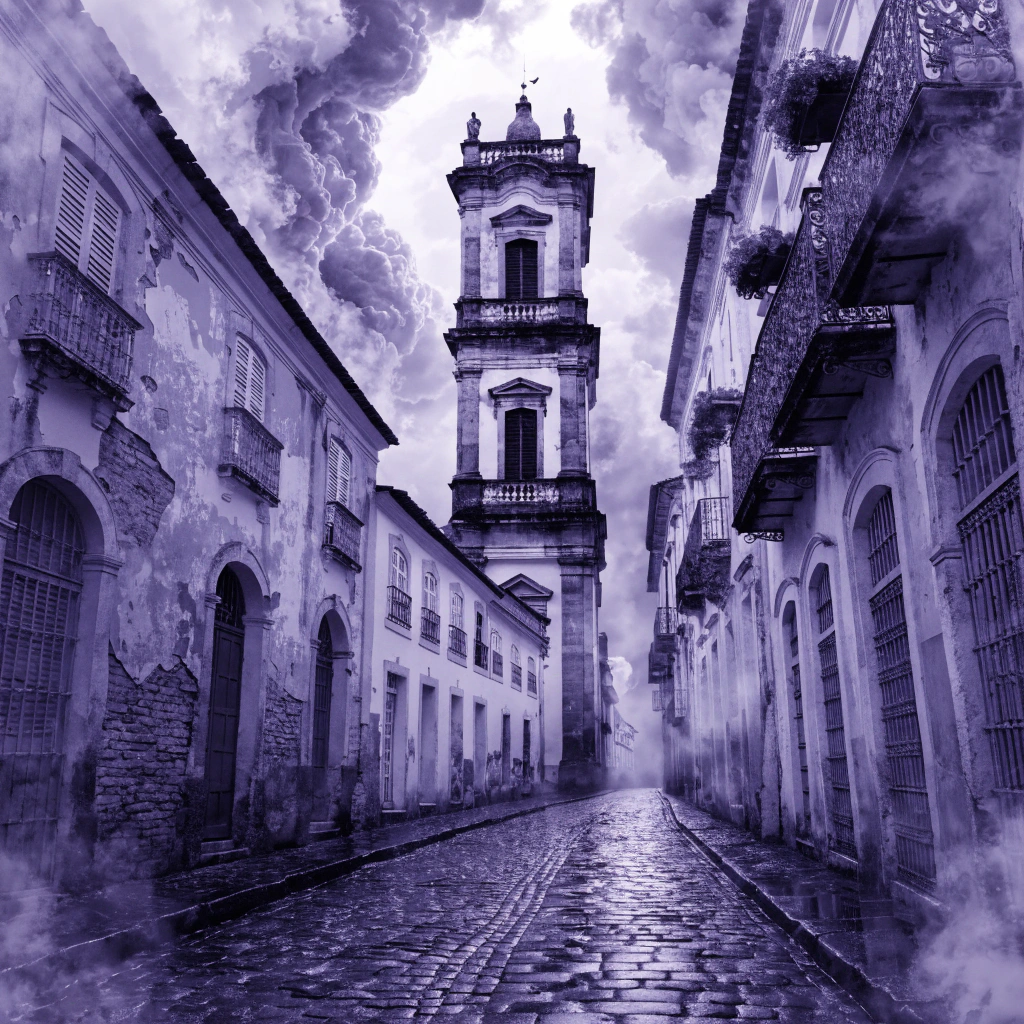
Pelourinho: Das Herz von Salvador
Pelourinho ist ein Stadtteil in Salvador, Brasilien. Das Viertel ist sehr alt und berühmt. Es ist das Herz von der afro-brasilianischen Kultur. Hier gibt es viele bunte Häuser und Kirchen. Die Straßen sind klein und aus Stein.
Überall gibt es Musik und Tanz. Die Menschen spielen Trommeln auf dem Platz. Das ist sehr laut und schön. Touristen aus der ganzen Welt besuchen Pelourinho.
Pelourinho ist heute ein Weltkulturerbe. Die Geschichte ist wichtig für Brasilien. Das Viertel ist ein Symbol für Freiheit und Kunst. Es ist ein magischer Ort.
Grammatik-Spotlight
Muster: Präsens von sein
"Pelourinho ist ein Stadtteil in Salvador."
Das Verb 'sein' ist unregelmäßig. Wir benutzen 'ist' für die dritte Person Singular (er, sie, es).
Muster: Adjektive vor Nomen
"viele bunte Häuser"
Adjektive beschreiben Nomen. Wenn sie vor dem Nomen stehen, brauchen sie oft eine Endung wie -e.
Teste dein Verständnis
10 Fragen · A1 Anfänger · 1 kostenlose Vorschau
Teste, was du aus diesem Artikel gelernt hast. Beantworte alle Fragen und sammle XP!
Wo liegt Pelourinho?
Möchtest du das Quiz beenden?
9 weitere Fragen warten auf dich. Registriere dich kostenlos, um das vollständige Quiz freizuschalten und XP zu sammeln!
Kostenlos registrierenHast du schon ein Konto? Anmelden
Gut gemacht!
Weiter üben!
Bereits abgeschlossen — keine zusätzlichen XP
Registriere dich, um XP zu verdienenFragenübersicht
Wo liegt Pelourinho?
Deine Antwort:
Richtige Antwort: In Salvador, Brasilien
Die Häuser in Pelourinho sind grau und langweilig.
Deine Antwort:
Richtige Antwort: Falsch
Was bedeutet 'besuchen'?
Deine Antwort:
Richtige Antwort: An einen Ort gehen
Die Straßen sind klein und aus _____.
Deine Antwort:
Richtige Antwort: Stein
Pelourinho: Ein buntes Herz in Brasilien
Pelourinho ist ein sehr alter und schöner Stadtteil in Salvador, einer großen Stadt in Brasilien. Er liegt oben auf einem Hügel. Viele Menschen sagen, Pelourinho ist das Herz der afro-brasilianischen Kultur. Seit 1985 ist dieser Ort ein UNESCO-Weltkulturerbe. Das ist sehr wichtig.
Der Name „Pelourinho“ bedeutet auf Portugiesisch „Pranger“. Früher, vor langer Zeit, war das ein trauriger Ort. Sklaven wurden hier öffentlich bestraft. Aber heute ist Pelourinho ganz anders. Es ist ein Ort voller Freude, Musik und Farbe. Die Menschen feiern hier ihre afrikanischen Wurzeln mit viel Energie.
Die Straßen sind eng und haben viele alte, runde Steine. Sie gehen oft steil bergauf oder bergab. Überall siehst du bunte Häuser mit schönen Balkonen. Es gibt kleine Geschäfte und Cafés. Man hört oft Trommeln und sieht Tänzer. Pelourinho ist ein lebendiger Ort, wo man die Geschichte fühlen und die reiche Kultur erleben kann. Viele Touristen besuchen diesen besonderen Stadtteil, weil er so einzigartig und farbenfroh ist.
Grammatik-Spotlight
Muster: Präteritum (Vergangenheit)
"Früher, vor langer Zeit, war das ein trauriger Ort. Sklaven wurden hier öffentlich bestraft."
Das Präteritum benutzen wir oft, um über die Vergangenheit zu sprechen, besonders in Geschichten oder Berichten. "War" ist die Präteritum-Form von "sein" (to be). "Wurden" ist die Präteritum-Form von "werden" (to become/to be + passive).
Muster: Konjunktion "weil" (Grund)
"Viele Touristen besuchen diesen besonderen Stadtteil, weil er so einzigartig und farbenfroh ist."
Die Konjunktion "weil" verbindet zwei Sätze. Sie erklärt den Grund für etwas. Nach "weil" steht das Verb am Ende des Satzes.
Teste dein Verständnis
11 Fragen · A2 Grundkenntnisse · 1 kostenlose Vorschau
Teste, was du aus diesem Artikel gelernt hast. Beantworte alle Fragen und sammle XP!
Was bedeutet "Pelourinho" auf Portugiesisch?
Möchtest du das Quiz beenden?
10 weitere Fragen warten auf dich. Registriere dich kostenlos, um das vollständige Quiz freizuschalten und XP zu sammeln!
Kostenlos registrierenHast du schon ein Konto? Anmelden
Gut gemacht!
Weiter üben!
Bereits abgeschlossen — keine zusätzlichen XP
Registriere dich, um XP zu verdienenFragenübersicht
Was bedeutet "Pelourinho" auf Portugiesisch?
Deine Antwort:
Richtige Antwort: Pranger
Pelourinho ist ein UNESCO-Weltkulturerbe.
Deine Antwort:
Richtige Antwort: Richtig
Was bedeutet "Stadtteil"?
Deine Antwort:
Richtige Antwort: Ein Teil einer Stadt
Die Menschen feiern hier ihre afrikanischen _____
Deine Antwort:
Richtige Antwort: Wurzeln
Wie sind die Straßen in Pelourinho?
Deine Antwort:
Richtige Antwort: Eng und haben alte Steine
Pelourinho: The Colorful Heart of Bahia
Pelourinho is the historic heart of Salvador, which is a beautiful city in northeastern Brazil. This colorful neighborhood has become famous for its incredible Afro-Brazilian culture and lively atmosphere. Since 1985, Pelourinho has been recognized as a UNESCO World Heritage site because of its unique architecture and deep history.
The name 'Pelourinho' means 'pillory' in Portuguese. In the past, this central square was used as a place where enslaved people were punished. However, this dark history has been transformed by the local community over many decades. Today, the area is celebrated as a powerful symbol of resistance and African roots. It is no longer a place of pain, but a center for art and music.
When you walk through the steep, winding streets, you will see bright colonial buildings painted in pastel colors. Many visitors are amazed by the energy of the neighborhood. The sound of drums often fills the air, especially when the famous group Olodum is practicing. This music, which combines African rhythms with Brazilian styles, has been heard all over the world.
In recent years, many old buildings have been renovated to host museums, art galleries, and restaurants. Local chefs prepare traditional dishes like 'acarajé,' which is made from black-eyed peas and fried in palm oil. If you visit Pelourinho, you will experience a place where history and modern life live together. It is a destination that has captured the hearts of millions of travelers.
Grammatik-Spotlight
Muster: Passive Voice (Past Simple)
"In the past, this central square was used as a place where enslaved people were punished."
The passive voice is used to focus on the person or thing receiving the action. It is formed using the verb 'to be' (was/were) followed by the past participle of the main verb.
Muster: Present Perfect
"This colorful neighborhood has become famous for its incredible Afro-Brazilian culture."
The present perfect connects the past to the present. We use 'has/have' plus the past participle to talk about experiences or changes that happened at an unspecified time.
Teste dein Verständnis
11 Fragen · B1 Mittelstufe · 1 kostenlose Vorschau
Teste, was du aus diesem Artikel gelernt hast. Beantworte alle Fragen und sammle XP!
Why is Pelourinho a UNESCO World Heritage site?
Möchtest du das Quiz beenden?
10 weitere Fragen warten auf dich. Registriere dich kostenlos, um das vollständige Quiz freizuschalten und XP zu sammeln!
Kostenlos registrierenHast du schon ein Konto? Anmelden
Gut gemacht!
Weiter üben!
Bereits abgeschlossen — keine zusätzlichen XP
Registriere dich, um XP zu verdienenFragenübersicht
Why is Pelourinho a UNESCO World Heritage site?
Deine Antwort:
Richtige Antwort: Because of its unique architecture and history
The name 'Pelourinho' refers to a musical instrument from Africa.
Deine Antwort:
Richtige Antwort: Falsch
What does the word 'transformed' mean in the context of the article?
Deine Antwort:
Richtige Antwort: Completely changed for the better
The sound of _____ often fills the air in Pelourinho.
Deine Antwort:
Richtige Antwort: drums
What is 'acarajé'?
Deine Antwort:
Richtige Antwort: A traditional dish made from peas
The Resilient Heart of Salvador: Reclaiming Pelourinho
Situated in the heart of Salvador, Pelourinho stands as a profound testament to Brazil's complex colonial history. As a UNESCO World Heritage site, its pastel-colored buildings and steep cobblestone streets attract thousands of visitors annually. However, beneath the aesthetic charm lies a darker history that must be acknowledged. The name 'Pelourinho' refers to the pillory where enslaved people were once publicly punished. Despite this painful legacy, the neighborhood has been transformed into a vibrant center for Afro-Brazilian culture.
Walking through the streets, one cannot help but notice the rhythmic influence of Olodum. This percussion group has become synonymous with the area’s identity, blending traditional African rhythms with modern sounds to create a unique musical fusion. Furthermore, the local cuisine and religious practices, such as Candomblé, highlight the deep-rooted connections to West African heritage. It is this cultural reclamation that defines the modern spirit of Bahia, turning a site of suffering into one of celebration.
In recent decades, significant efforts have been made to preserve the architectural integrity of the district. While modernization often poses a threat to historic sites, local authorities have prioritized the restoration of colonial mansions. Consequently, Pelourinho remains a living museum, where history is not just observed but experienced through dance, art, and community gatherings. Visitors are often struck by the resilience of the local population, who have successfully reclaimed their ancestral space from the shadows of the past.
Ultimately, Pelourinho serves as a powerful symbol of cultural survival, representing the triumph of identity over oppression. It proves that even the most tragic sites can be repurposed into beacons of pride and education. For anyone seeking to understand the soul of Brazil, a journey through these winding alleys is indispensable. The area provides a crucial lens through which we can analyze the intersection of history, race, and art in South America.
Grammatik-Spotlight
Muster: Present Perfect Passive
"In recent decades, significant efforts have been made to preserve the architectural integrity of the district."
This pattern is used to talk about actions that happened at an unspecified time in the past where the focus is on the result or the object. It is formed using 'have/has + been + past participle'.
Muster: Participle Phrases for Sentence Variety
"Walking through the streets, one cannot help but notice the rhythmic influence of Olodum."
The present participle phrase 'Walking through the streets' acts as an adverbial clause describing the circumstances of the main action. It makes writing more fluid and sophisticated.
Muster: Modal Idiom: Cannot help but
"Walking through the streets, one cannot help but notice the rhythmic influence of Olodum."
This structure is used to express that someone feels compelled to do something or that an action is unavoidable. It is followed by the base form of the verb.
Teste dein Verständnis
11 Fragen · B2 Obere Mittelstufe · 1 kostenlose Vorschau
Teste, was du aus diesem Artikel gelernt hast. Beantworte alle Fragen und sammle XP!
What is the historical origin of the name 'Pelourinho'?
Möchtest du das Quiz beenden?
10 weitere Fragen warten auf dich. Registriere dich kostenlos, um das vollständige Quiz freizuschalten und XP zu sammeln!
Kostenlos registrierenHast du schon ein Konto? Anmelden
Gut gemacht!
Weiter üben!
Bereits abgeschlossen — keine zusätzlichen XP
Registriere dich, um XP zu verdienenFragenübersicht
What is the historical origin of the name 'Pelourinho'?
Deine Antwort:
Richtige Antwort: A place where enslaved people were punished
Pelourinho is currently recognized as a UNESCO World Heritage site.
Deine Antwort:
Richtige Antwort: Richtig
What does 'resilience' mean in the context of the article?
Deine Antwort:
Richtige Antwort: The strength to recover from a difficult past
The neighborhood has been transformed into a _____ center for Afro-Brazilian culture.
Deine Antwort:
Richtige Antwort: vibrant
What does the author suggest about modernization in Pelourinho?
Deine Antwort:
Richtige Antwort: It represents a potential threat to the district's history.
Pelourinho: The Palimpsest of Salvador’s Afro-Brazilian Soul
Perched atop the rugged escarpment of Salvador, Bahia, lies Pelourinho—a neighborhood that functions as a living palimpsest of Brazilian history. Seldom has an urban landscape managed to synthesize such profound historical trauma with such exuberant cultural vitality. As one traverses the steep, winding cobblestone streets, the air is thick with the scent of acarajé and the resonant, syncopated rhythms of local drum corps. Yet, beneath this vibrant facade lies a somber etymological origin; the word 'Pelourinho' refers to the pillory, the central post where enslaved Africans were once subjected to public punishment and humiliation. It is this historical gravity that makes the neighborhood’s current state of celebration so profoundly moving.
The transformation of this central square from a site of systemic subjugation to one of artistic reclamation serves as a testament to the community's indomitable resilience. It is through the collective memory of the Afro-Brazilian population that the neighborhood has been redefined. Where once there was the crack of a whip, there is now the thunderous, rhythmic pulse of Olodum, the world-renowned percussion group that has become synonymous with the area’s identity. This juxtaposition of a painful past and a defiant, joyful present creates a potent atmosphere that is unique to Salvador. The reclamation of this space is not merely about aesthetic beauty but about reasserting agency over a narrative that was once dictated by colonial masters.
Architecturally, Pelourinho is a marvel of colonial vestige. Recognized as a UNESCO World Heritage site since 1985, its intricate Baroque churches, most notably the Church of São Francisco with its opulent gold-leaf interior, stand as silent witnesses to the wealth generated by the sugar trade—a wealth built on the backs of the very people whose descendants now occupy these streets. The preservation of these facades is not merely an aesthetic choice; it is a political act of maintaining a physical narrative of the African diaspora. The winding alleys, lined with pastel-colored houses, offer a visual feast, yet they also demand a critical engagement with the labor and suffering that enabled such architectural splendor.
However, the preservation of such a site is not without its nuances. Critics argue that the 'museumification' of Pelourinho has led to a precarious balance between tourism and the lived reality of its residents. While international recognition has brought much-needed investment and infrastructure, it has also sparked heated debates regarding gentrification and the potential dilution of authentic culture into an ephemeral spectacle for visitors. The displacement of long-term residents in favor of boutique hotels and souvenir shops is a concern that weighs heavily on the local discourse. The challenge remains: how to honor the historical weight of the site while fostering a sustainable and equitable future for the local community.
Ultimately, Pelourinho remains the beating heart of Bahia. It is a space where the sacred and the profane intersect, where Candomblé traditions blend seamlessly with Catholic iconography, and where every corner reveals a new layer of Salvador’s soul. To visit Pelourinho is to engage with a history that is neither forgotten nor static, but rather continuously rewritten by those who call it home. The enduring legacy of this neighborhood is its ability to transform a symbol of oppression into a beacon of cultural pride, ensuring that the voices of the past are never truly silenced.
Grammatik-Spotlight
Muster: Inversion with Negative Adverbials
"Seldom has an urban landscape managed to synthesize such profound historical trauma with such exuberant cultural vitality."
When using negative or restrictive adverbs like 'seldom' at the start of a sentence for emphasis, the auxiliary verb comes before the subject. This is a common feature of formal, advanced English.
Muster: Cleft Sentences
"It is through the collective memory of the Afro-Brazilian population that the neighborhood has been redefined."
Cleft sentences use 'It is/was... that' to focus on a specific part of the information. Here, it emphasizes the 'collective memory' as the primary cause of the redefinition.
Muster: Nominalisation
"The transformation of this central square from a site of systemic subjugation to one of artistic reclamation serves as a testament to the community's indomitable resilience."
Nominalisation involves turning verbs or adjectives into nouns (e.g., 'transform' to 'transformation'). It allows for more complex, abstract, and formal sentence structures typical of C1 academic writing.
Teste dein Verständnis
12 Fragen · C1 Fortgeschritten · 1 kostenlose Vorschau
Teste, was du aus diesem Artikel gelernt hast. Beantworte alle Fragen und sammle XP!
What is the etymological origin of the name 'Pelourinho'?
Möchtest du das Quiz beenden?
11 weitere Fragen warten auf dich. Registriere dich kostenlos, um das vollständige Quiz freizuschalten und XP zu sammeln!
Kostenlos registrierenHast du schon ein Konto? Anmelden
Gut gemacht!
Weiter üben!
Bereits abgeschlossen — keine zusätzlichen XP
Registriere dich, um XP zu verdienenFragenübersicht
What is the etymological origin of the name 'Pelourinho'?
Deine Antwort:
Richtige Antwort: A public pillory for punishment
The article suggests that the UNESCO World Heritage status has been purely beneficial without any social drawbacks.
Deine Antwort:
Richtige Antwort: Falsch
Which word describes something that is very detailed and complex?
Deine Antwort:
Richtige Antwort: Intricate
The transformation of the square serves as a testament to the community's indomitable _____.
Deine Antwort:
Richtige Antwort: resilience
According to the text, what is a major concern regarding the 'museumification' of the area?
Deine Antwort:
Richtige Antwort: The displacement of long-term residents
The Church of São Francisco is noted for its opulent gold-leaf interior.
Deine Antwort:
Richtige Antwort: Richtig
The Palimpsest of Pelourinho: Reclaiming the Narrative of the Pillory
To traverse the winding, cobblestone arteries of Pelourinho is to engage in a visceral dialogue with a past that is at once agonizing and celebratory. Located in the upper city of Salvador, Bahia, this historic neighborhood—designated a UNESCO World Heritage site in 1985—stands as a palimpsest of Brazilian history, where layers of colonial trauma and contemporary resistance are inextricably intertwined. The very nomenclature 'Pelourinho' serves as a somber memento mori; the term denotes the pillory, the central scaffold where enslaved individuals were subjected to public castigation and subjugation. Yet, were one to stand in the Praça da Sé today, the auditory landscape would be dominated not by the echoes of trauma, but by the ebullience of the samba-reggae rhythms that define the contemporary Afro-Brazilian identity.
The architectural landscape of Pelourinho offers a stark dichotomy. The pastel-hued facades of colonial mansions, adorned with intricate Portuguese azulejos, reflect a European aesthetic that was, for centuries, the hegemonic standard. These structures represent an era of opulence built upon the exploitation of human labor. It is imperative that the casual observer look beyond the chromatic brilliance of these buildings to acknowledge the vestigial scars of the transatlantic slave trade. However, the residents of Salvador have not allowed this history to remain static. Through a process of cultural syncretism, the African diaspora has reclaimed these spaces, infusing the rigid Baroque geometry with the fluid, kinetic energy of Candomblé and Capoeira. This transformation is not merely aesthetic but profoundly political, asserting the presence of a culture that the colonial powers sought to efface.
One cannot discuss Pelourinho without acknowledging the role of the 'blocos-afros,' most notably Olodum. This cultural group has been instrumental in the semiotic transformation of the neighborhood. By utilizing the drum as a tool for social mobilization, they have effectively subverted the historical narrative of the pillory. No longer is the square a site of disenfranchisement; it has become a theater of resistance and pride. Seldom has a geographic locale undergone such a profound semiotic shift, where a site of state-sanctioned violence is repurposed as a beacon of pan-African solidarity. The drums of Olodum do not merely provide a soundtrack for tourism; they are the heartbeat of a community asserting its right to the city.
Nevertheless, the preservation of Pelourinho is not without its controversies. Academic hedging is necessary when discussing the 'revitalization' projects of the late 20th century. While these initiatives succeeded in salvaging the physical infrastructure, they arguably resulted in the displacement of the local populace, leading to a form of 'museumification.' This creates an anachronistic tension where the neighborhood exists as a sanitized spectacle for global tourism, potentially at the expense of its organic, lived reality. It is a delicate equilibrium: to maintain the aesthetic integrity of the site while ensuring it remains a functional, vibrant community for those who embody its spirit. The designation of Pelourinho as a UNESCO World Heritage site served as a double-edged sword. On one hand, it provided the necessary fiscal impetus to halt the physical decay of the colonial edifices. On the other, it catalyzed a process of gentrification that threatened to divorce the physical space from its socio-cultural context.
Ultimately, Pelourinho remains a testament to the resilience of the human spirit. It is a space where the past is not merely remembered but is actively negotiated. The syncretic nature of Bahian culture—where Catholic saints are often synonymous with Orixás—demonstrates an atavistic connection to ancestral roots that no amount of colonial imposition could efface. To visit Pelourinho is to witness the ongoing synthesis of a nation's soul, a place where history is etched into every stone, yet the future is sung with an unwavering voice. The neighborhood challenges us to confront the darkness of our collective history while celebrating the light of cultural reclamation.
Grammatik-Spotlight
Muster: The Present Subjunctive
"It is imperative that the casual observer look beyond the chromatic brilliance..."
The subjunctive mood is used after adjectives of necessity. The base form 'look' is used instead of 'looks' to express an essential requirement.
Muster: Negative Inversion
"Seldom has a geographic locale undergone such a profound semiotic shift..."
When starting a sentence with a restrictive adverb like 'seldom', the auxiliary verb 'has' precedes the subject 'geographic locale' for rhetorical emphasis.
Muster: Inverted Conditional (Second)
"Were one to stand in the Praça da Sé today..."
The word 'were' is moved to the front to replace 'if'. This creates a highly formal and literary tone suitable for scholarly analysis.
Teste dein Verständnis
12 Fragen · C2 Meisterschaft · 1 kostenlose Vorschau
Teste, was du aus diesem Artikel gelernt hast. Beantworte alle Fragen und sammle XP!
What does the etymology of the name 'Pelourinho' signify regarding its history?
Möchtest du das Quiz beenden?
11 weitere Fragen warten auf dich. Registriere dich kostenlos, um das vollständige Quiz freizuschalten und XP zu sammeln!
Kostenlos registrierenHast du schon ein Konto? Anmelden
Gut gemacht!
Weiter üben!
Bereits abgeschlossen — keine zusätzlichen XP
Registriere dich, um XP zu verdienenFragenübersicht
What does the etymology of the name 'Pelourinho' signify regarding its history?
Deine Antwort:
Richtige Antwort: A site of public punishment and slavery
The author argues that the UNESCO designation had exclusively positive effects on the local community.
Deine Antwort:
Richtige Antwort: Falsch
Which word describes the blending of different cultural or religious beliefs?
Deine Antwort:
Richtige Antwort: Syncretism
The neighborhood is described as a _____ of Brazilian history, containing layers of different eras.
Deine Antwort:
Richtige Antwort: palimpsest
What is the 'anachronistic tension' mentioned in the text?
Deine Antwort:
Richtige Antwort: The neighborhood existing as a sanitized museum piece rather than a lived reality
Olodum used the drum as a tool for social mobilization and narrative subversion.
Deine Antwort:
Richtige Antwort: Richtig

