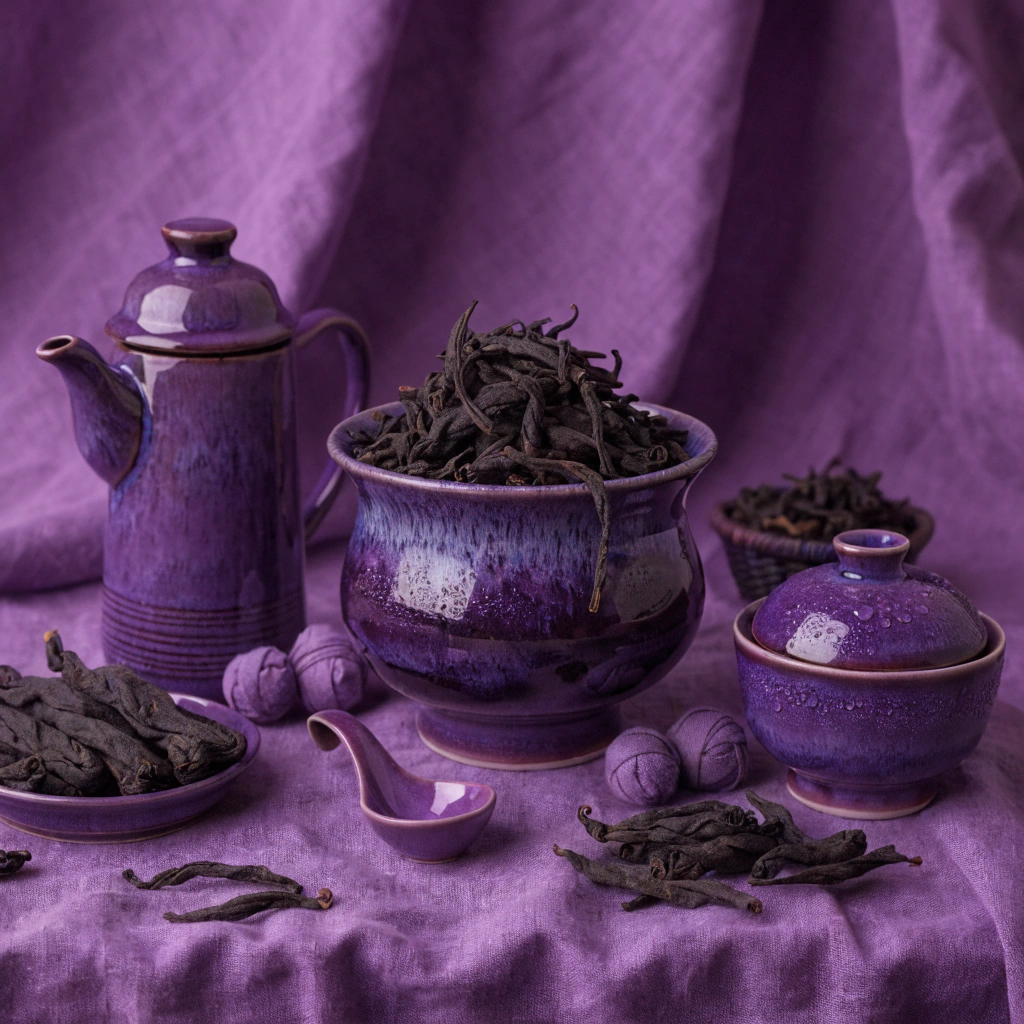
La culture du thé en Chine
Le thé est très important en Chine. C'est la boisson nationale du pays. Les Chinois boivent du thé tous les jours. C'est une tradition très ancienne et célèbre.
Le thé est un moment de partage. On boit du thé avec les amis et la famille. Offrir du thé est une forme de politesse et de respect. C'est un symbole d'harmonie sociale.
Il existe beaucoup de thés différents : le thé vert, le thé noir et le thé blanc. Préparer le thé est un art véritable. C'est un moment calme et très beau.
Point grammaire
Structure: Le présent de l'indicatif
"Les Chinois boivent du thé tous les jours."
On utilise le présent pour parler d'une habitude ou d'une vérité générale. C'est le temps le plus commun pour les débutants.
Structure: Les articles définis
"Le thé est très important."
On utilise 'le', 'la', 'l'' ou 'les' pour désigner une chose spécifique ou une catégorie générale. Ici, on parle du thé en général.
Teste ta compréhension
10 questions · A1 Débutant · 1 aperçu gratuit
Teste ce que tu as appris dans cet article. Réponds à toutes les questions pour gagner des XP !
Quelle est la boisson nationale en Chine ?
Tu veux terminer le quiz ?
9 questions supplémentaires t'attendent. Inscris-toi gratuitement pour débloquer le quiz complet et gagner des XP !
S'inscrire gratuitementTu as dj un compte ? Connexion
Bien joué !
Continue à pratiquer !
Déjà terminé — pas de XP supplémentaire
Inscris-toi pour gagner des XPDétail des questions
Quelle est la boisson nationale en Chine ?
Ta réponse:
Bonne réponse: Le thé
Le thé est une tradition nouvelle en Chine.
Ta réponse:
Bonne réponse: Faux
Que signifie le mot 'boisson' ?
Ta réponse:
Bonne réponse: Un liquide pour boire
Les Chinois boivent du thé _____ les jours.
Ta réponse:
Bonne réponse: tous
Tea: The Famous Drink of China
Tea is very important in China. People call it the 'national drink.' Its history started more than 4,000 years ago. Long ago, people used tea as medicine, but later it became a famous drink for everyone. A man named Lu Yu wrote a special book about tea during the Tang Dynasty.
Today, drinking tea is more than just thirsty work. It is a way to show respect to guests. When you visit a Chinese home, the host usually gives you a cup of hot tea. You should say 'thank you' or tap the table with your fingers to show your thanks.
Chinese tea culture is older than many other traditions. Green tea is more popular than black tea in many parts of China. People believe that drinking tea is good for the body because it helps you relax. It is a beautiful part of social life and it brings people together.
Point grammaire
Structure: Past Simple
"Its history started more than 4,000 years ago."
We use the past simple to talk about actions that finished in the past. For regular verbs, we usually add '-ed' to the end of the verb.
Structure: Comparatives with 'more'
"Green tea is more popular than black tea in many parts of China."
We use 'more' + adjective + 'than' to compare two things when the adjective is long. It shows that one thing has more of a quality than another.
Teste ta compréhension
11 questions · A2 mentaire · 1 aperçu gratuit
Teste ce que tu as appris dans cet article. Réponds à toutes les questions pour gagner des XP !
Who wrote a special book about tea?
Tu veux terminer le quiz ?
10 questions supplémentaires t'attendent. Inscris-toi gratuitement pour débloquer le quiz complet et gagner des XP !
S'inscrire gratuitementTu as dj un compte ? Connexion
Bien joué !
Continue à pratiquer !
Déjà terminé — pas de XP supplémentaire
Inscris-toi pour gagner des XPDétail des questions
Who wrote a special book about tea?
Ta réponse:
Bonne réponse: Lu Yu
People only use tea as a medicine today.
Ta réponse:
Bonne réponse: Faux
What does 'guest' mean?
Ta réponse:
Bonne réponse: A person who visits a home
People believe that drinking tea helps you _____.
Ta réponse:
Bonne réponse: relax
How long is the history of tea in China?
Ta réponse:
Bonne réponse: More than 4,000 years
Le Thé en Chine : Un Art, une Tradition et une Harmonie Sociale
En Chine, le thé est bien plus qu'une simple boisson; il est un pilier fondamental de l'harmonie sociale et un moyen essentiel d'hospitalité. On le considère même comme la "boisson nationale" et il a une histoire qui a commencé il y a plus de 4 000 ans. Sa découverte est souvent attribuée à l'empereur mythique Shennong, une figure très importante dans la culture chinoise.
Pendant la dynastie Tang (618-907 après J.-C.), le thé est passé d'un simple tonique médicinal à une forme d'art raffinée. C'est à cette époque que Lu Yu a écrit "Le Classique du Thé", le premier ouvrage important sur la culture et la préparation du thé. Ce livre a été crucial car il a popularisé le thé et a établi des règles précises pour son appréciation. Grâce à lui, le thé est devenu un symbole de raffinement et de sagesse.
Aujourd'hui encore, la cérémonie du thé est une pratique très respectée qui montre le respect et la gentillesse envers les autres. L'étiquette du thé est très importante: par exemple, quand on offre du thé à quelqu'un, surtout à des aînés ou des invités importants, c'est un geste de grande considération. Les gestes lents et précis de la préparation permettent aux participants de se détendre et de communiquer tranquillement.
Le thé chinois, avec ses nombreuses variétés comme le thé vert, le thé noir ou le Oolong, et ses rituels spécifiques, reflète une philosophie de vie où la patience, le respect et la connexion humaine sont très valorisés. C'est une tradition vivante qui continue de jouer un rôle central dans la vie quotidienne et les relations sociales en Chine, offrant un moment de paix et de partage qui unit les gens.
Point grammaire
Structure: La Voix Passive
"Sa découverte est souvent attribuée à l'empereur mythique Shennong."
La voix passive est utilisée quand l'action est plus importante que la personne ou la chose qui fait l'action. On la forme avec l'auxiliaire 'être' conjugué et le participe passé du verbe principal.
Structure: Les Pronoms Relatifs : Qui et Que
"C'est une tradition vivante qui continue de jouer un rôle central... / C'est à cette époque que Lu Yu a écrit "Le Classique du Thé"."
Le pronom relatif 'qui' est utilisé pour le sujet d'une phrase subordonnée. Le pronom relatif 'que' est utilisé pour l'objet direct d'une phrase subordonnée.
Teste ta compréhension
11 questions · B1 Intermédiaire · 1 aperçu gratuit
Teste ce que tu as appris dans cet article. Réponds à toutes les questions pour gagner des XP !
Quel est le rôle principal du thé en Chine, en plus d'être une boisson?
Tu veux terminer le quiz ?
10 questions supplémentaires t'attendent. Inscris-toi gratuitement pour débloquer le quiz complet et gagner des XP !
S'inscrire gratuitementTu as dj un compte ? Connexion
Bien joué !
Continue à pratiquer !
Déjà terminé — pas de XP supplémentaire
Inscris-toi pour gagner des XPDétail des questions
Quel est le rôle principal du thé en Chine, en plus d'être une boisson?
Ta réponse:
Bonne réponse: Un pilier de l'harmonie sociale et de l'hospitalité
La découverte du thé est attribuée à l'empereur mythique Shennong.
Ta réponse:
Bonne réponse: Vrai
Que signifie 'hospitalité' dans le contexte de l'article?
Ta réponse:
Bonne réponse: L'action de recevoir généreusement des invités
Pendant la dynastie Tang, le thé est passé d'un tonique médicinal à une forme d'art ______.
Ta réponse:
Bonne réponse: raffinée
Quel ouvrage a popularisé le thé et établi ses règles d'appréciation?
Ta réponse:
Bonne réponse: Le Classique du Thé
Beyond the Brew: The Sophisticated Etiquette of Chinese Tea Culture
In China, tea is far more than a simple beverage; it serves as a foundational pillar of social harmony and a primary vehicle for hospitality. Often referred to as 'the national drink,' tea possesses a history spanning over 4,000 years. The discovery of tea is frequently attributed to the mythical Emperor Shennong, who supposedly discovered the leaf's properties by accident. By the Tang Dynasty, tea had undergone a significant transformation. Having evolved from a medicinal tonic into a sophisticated art form, it was further popularized by Lu Yu’s 'The Classic of Tea,' which remains the first definitive work on tea cultivation and preparation.
Today, the preparation of tea is regarded as a ritual that requires patience and precision. This practice is not merely about the liquid itself but about the atmosphere it creates. In a formal setting, the host must acknowledge the status of each guest, ensuring that the tea is served in a specific order, typically starting with the eldest or most senior person. This hierarchy is a crucial aspect of Chinese social etiquette, reflecting deep-seated values of respect and communal order. Furthermore, the way a guest receives the tea is equally important. Should a guest wish to express gratitude silently, they may perform a specific finger-tapping gesture on the table, a tradition that dates back to the Qing Dynasty.
Moreover, the choice of tea leaves and the temperature of the water are meticulously selected to suit the occasion. Whether it is a light Green tea for a casual gathering or a complex Pu-erh for a formal negotiation, the selection demonstrates the host's level of sophistication and care. The practice of 'Gongfu Tea,' which translates to 'making tea with skill,' exemplifies this dedication to excellence. Through this process, participants are encouraged to slow down and appreciate the subtle nuances of flavor and aroma.
In conclusion, tea culture in China functions as a vital bridge between the past and the present. It is an intricate dance of social norms and sensory experiences that promotes peace and understanding. By mastering the nuances of tea etiquette, one gains a deeper insight into the values that have shaped Chinese society for millennia. Consequently, tea remains an essential element of modern life, proving that some traditions are timeless.
Point grammaire
Structure: Perfect Participle Clause
"Having evolved from a medicinal tonic into a sophisticated art form, it was further popularized by Lu Yu’s 'The Classic of Tea.'"
Perfect participles (having + past participle) are used to indicate that one action was completed before another. It helps to show a sequence of events in a more formal, concise way.
Structure: Passive Voice
"The discovery of tea is frequently attributed to the mythical Emperor Shennong."
The passive voice is used here to focus on the object (the discovery) rather than the subject. It is common in academic and formal writing to sound more objective.
Structure: Inverted Conditionals
"Should a guest wish to express gratitude silently, they may perform a specific finger-tapping gesture."
Using 'should' instead of 'if' at the beginning of a sentence creates a formal conditional structure. It is equivalent to saying 'If a guest should wish...'.
Teste ta compréhension
11 questions · B2 Intermédiaire supérieur · 1 aperçu gratuit
Teste ce que tu as appris dans cet article. Réponds à toutes les questions pour gagner des XP !
According to the article, what was the primary use of tea before it became an art form?
Tu veux terminer le quiz ?
10 questions supplémentaires t'attendent. Inscris-toi gratuitement pour débloquer le quiz complet et gagner des XP !
S'inscrire gratuitementTu as dj un compte ? Connexion
Bien joué !
Continue à pratiquer !
Déjà terminé — pas de XP supplémentaire
Inscris-toi pour gagner des XPDétail des questions
According to the article, what was the primary use of tea before it became an art form?
Ta réponse:
Bonne réponse: A medicinal tonic
In a formal Chinese tea ceremony, the youngest person is usually served first to show hospitality.
Ta réponse:
Bonne réponse: Faux
What does 'etiquette' mean in the context of the article?
Ta réponse:
Bonne réponse: Polite behavior and social rules
Tea is considered a primary vehicle for _____, representing the way guests are welcomed in China.
Ta réponse:
Bonne réponse: hospitality
What does the finger-tapping gesture signify?
Ta réponse:
Bonne réponse: A silent expression of gratitude
The Fluidity of Tradition: Deconstructing Chinese Tea Culture and Social Etiquette
Seldom has a mere beverage commanded such profound reverence or exerted such a lasting influence on the social fabric of a nation as tea has in China. Far from being a simple infusion of leaves, tea represents a sophisticated intersection of philosophy, hospitality, and historical continuity. Its origins, shrouded in the mists of antiquity, are often traced back to Emperor Shennong, yet it was during the Tang Dynasty that tea transitioned from a medicinal tonic into a sublime art form. This evolution was solidified by Lu Yu’s seminal work, 'The Classic of Tea,' which established the aesthetic and technical parameters that still define the practice today.
It is through the lens of the Gongfu tea ceremony that one truly grasps the essence of Chinese hospitality. This ritual is not merely about the consumption of liquid; rather, it is a meticulous performance where every gesture is imbued with meaning. The interplay between the host’s precision and the guest’s appreciation creates a harmonious atmosphere designed to foster social cohesion. The host’s focus on the temperature of the water, the quality of the clay pots, and the duration of the steep is matched only by the guest’s adherence to unspoken codes of conduct. Such nuanced interactions serve as a testament to the enduring importance of 'face' and mutual respect in Chinese society.
Central to this etiquette is the concept of hierarchy and the subtle communication of gratitude. For instance, the practice of finger tapping—a rhythmic percussion on the table—serves as a silent expression of thanks when a host refills a cup. This tradition, allegedly born from an emperor’s desire to remain incognito while serving his subordinates, highlights the intricate ways in which historical narratives are woven into contemporary social norms. Furthermore, the arrangement of seating and the order in which tea is served are never accidental; they are deliberate reflections of status and seniority, reinforcing the Confucian values that underpin the community.
However, the contemporary landscape of tea culture is not without its tensions. The rapid commodification of high-end teas has introduced a layer of performative consumption that some critics argue dilutes the spiritual core of the practice. While the aesthetic appeal remains, the commercialization of rare harvests can sometimes overshadow the egalitarian roots of sharing a pot of tea. Nevertheless, the resilience of these customs suggests that they are more than mere relics of the past. The preservation of these ancestral practices serves as a bulwark against the erosion of cultural identity in an increasingly globalized world.
In conclusion, the art of tea in China remains a vibrant, evolving entity. It is a vehicle through which social harmony is negotiated and historical legacy is honored. By examining the meticulous nature of the ceremony and the nuanced etiquette surrounding it, we gain a deeper understanding of a culture that finds the profound within the mundane. As long as the water boils and the leaves unfurl, the dialogue between history and modernity will continue to be poured into every cup.
Point grammaire
Structure: Inversion after negative adverbials
"Seldom has a mere beverage commanded such profound reverence or exerted such a lasting influence on the social fabric of a nation as tea has in China."
When using negative or restrictive adverbials like 'seldom' or 'never' at the start of a sentence, the auxiliary verb is placed before the subject to add formal emphasis.
Structure: Cleft Sentences
"It is through the lens of the Gongfu tea ceremony that one truly grasps the essence of Chinese hospitality."
Cleft sentences use 'It is/was... that...' to focus on a specific part of the sentence (in this case, the method of understanding) to provide clarity and weight.
Structure: Nominalisation
"The preservation of these ancestral practices serves as a bulwark against the erosion of cultural identity."
Nominalisation involves turning verbs (preserve, erode) into nouns (preservation, erosion). This is a hallmark of C1/C2 writing, making the text more formal and concise.
Teste ta compréhension
12 questions · C1 Avancé · 1 aperçu gratuit
Teste ce que tu as appris dans cet article. Réponds à toutes les questions pour gagner des XP !
What primary shift occurred regarding tea during the Tang Dynasty?
Tu veux terminer le quiz ?
11 questions supplémentaires t'attendent. Inscris-toi gratuitement pour débloquer le quiz complet et gagner des XP !
S'inscrire gratuitementTu as dj un compte ? Connexion
Bien joué !
Continue à pratiquer !
Déjà terminé — pas de XP supplémentaire
Inscris-toi pour gagner des XPDétail des questions
What primary shift occurred regarding tea during the Tang Dynasty?
Ta réponse:
Bonne réponse: It transitioned from a medicine into an aesthetic art form.
The finger-tapping gesture is used to signal that the guest is finished drinking.
Ta réponse:
Bonne réponse: Faux
What does 'meticulous' mean in the context of the tea ceremony?
Ta réponse:
Bonne réponse: Extremely careful and precise
The arrangement of seating during the ceremony is a reflection of status and _____.
Ta réponse:
Bonne réponse: seniority
What is the author's concern regarding the 'commodification' of tea?
Ta réponse:
Bonne réponse: That the spiritual core of the practice might be diluted.
The author suggests that tea culture helps prevent the loss of cultural identity.
Ta réponse:
Bonne réponse: Vrai
The Semiotics of the Steeping: Navigating the Ontological and Social Dimensions of Chinese Tea Culture
To perceive tea in China as a mere beverage is to commit a profound category error; rather, it constitutes a quintessential pillar of the nation’s socio-cultural fabric and an epistemological gateway into its historical consciousness. For over four millennia, tea has functioned as a primary vehicle for hospitality and a foundational instrument of social harmony. Were it not for the seminal contributions of Lu Yu during the Tang Dynasty, whose treatise 'The Classic of Tea' codified the practice, tea might have remained a localized medicinal tonic rather than evolving into the sophisticated art form it is today. Lu Yu’s work did not merely describe cultivation; it established an aesthetic framework that persists in the meticulous preparation methods observed by contemporary connoisseurs.
In the performance of the Gongfu tea ceremony, every movement is laden with intentionality. The practitioner must demonstrate exceptional dexterity, ensuring that the water temperature, steeping duration, and pouring technique coalesce to extract the most refined flavors. It is imperative that the host observe the subtle shifts in the guests' demeanor, adapting the pace of the service to maintain a state of 'chayi' or tea-mindfulness. This ritualistic precision serves a dual purpose: it honors the tea itself while simultaneously fostering an environment where silence and speech are balanced with academic rigor. Such is the complexity of the ritual that it transcends mere refreshment, becoming a meditative exercise in transcendence and presence.
Social etiquette at the tea table is governed by a series of tacit agreements and nuanced gestures that reflect broader Confucian values of hierarchy and reciprocity. For instance, the practice of finger tapping—a rhythmic percussion on the table surface—serves as a non-verbal expression of gratitude when tea is poured by another. This gesture, rooted in imperial legend, allows the guest to acknowledge the host's generosity without interrupting the flow of conversation. Furthermore, the order in which tea is served is never arbitrary; it strictly adheres to age and social standing, reinforcing the communal bonds that underpin Chinese society. This interplay of gesture and status ensures that the tea table remains a site of mutual respect and social cohesion.
Philosophically, the tea culture of China is deeply intertwined with Taoist and Buddhist thought, emphasizing the ephemeral nature of the moment. The appreciation of a tea’s fragrance and the subsequent 'huigan'—the sweet aftertaste that lingers in the throat—serves as a metaphor for the transient beauty of life. By engaging in this sensory experience, participants are encouraged to contemplate the interconnectedness of nature and humanity. In a rapidly modernizing world, the tea ceremony provides a sanctuary of stillness, a counter-narrative to the frenetic pace of urban existence. It remains an enduring testament to the power of ritual in preserving cultural identity and fostering genuine human connection across generations.
Point grammaire
Structure: Inverted Conditional (Third Conditional without 'If')
"Were it not for the seminal contributions of Lu Yu during the Tang Dynasty... tea might have remained a localized medicinal tonic."
This structure uses inversion to express a hypothetical condition in the past. It is more formal and academic than using 'If it had not been for'.
Structure: Subjunctive Mood with Mandative Adjectives
"It is imperative that the host observe the subtle shifts in the guests' demeanor."
The subjunctive 'observe' (base form) is used after adjectives of necessity like 'imperative', 'essential', or 'crucial' followed by 'that'.
Structure: Result Clause with 'Such'
"Such is the complexity of the ritual that it transcends mere refreshment."
This structure emphasizes the degree of a quality (complexity) by placing 'Such' at the beginning of the sentence, followed by a 'that' clause to show the result.
Teste ta compréhension
12 questions · C2 Maîtrise · 1 aperçu gratuit
Teste ce que tu as appris dans cet article. Réponds à toutes les questions pour gagner des XP !
What was the primary transformation of tea during the Tang Dynasty according to the text?
Tu veux terminer le quiz ?
11 questions supplémentaires t'attendent. Inscris-toi gratuitement pour débloquer le quiz complet et gagner des XP !
S'inscrire gratuitementTu as dj un compte ? Connexion
Bien joué !
Continue à pratiquer !
Déjà terminé — pas de XP supplémentaire
Inscris-toi pour gagner des XPDétail des questions
What was the primary transformation of tea during the Tang Dynasty according to the text?
Ta réponse:
Bonne réponse: It evolved from a medicinal tonic into a sophisticated art form.
The practice of finger tapping is a verbal way to interrupt a conversation and ask for more tea.
Ta réponse:
Bonne réponse: Faux
What does 'ephemeral' mean in the context of the article?
Ta réponse:
Bonne réponse: Short-lived and transient
The practitioner must demonstrate exceptional _____, ensuring that the water temperature and pouring technique are perfect.
Ta réponse:
Bonne réponse: dexterity
What does the 'huigan' (aftertaste) symbolize in the philosophical context of tea?
Ta réponse:
Bonne réponse: The transient beauty of life
The order of tea service is determined by age and social standing to reinforce communal bonds.
Ta réponse:
Bonne réponse: Vrai

