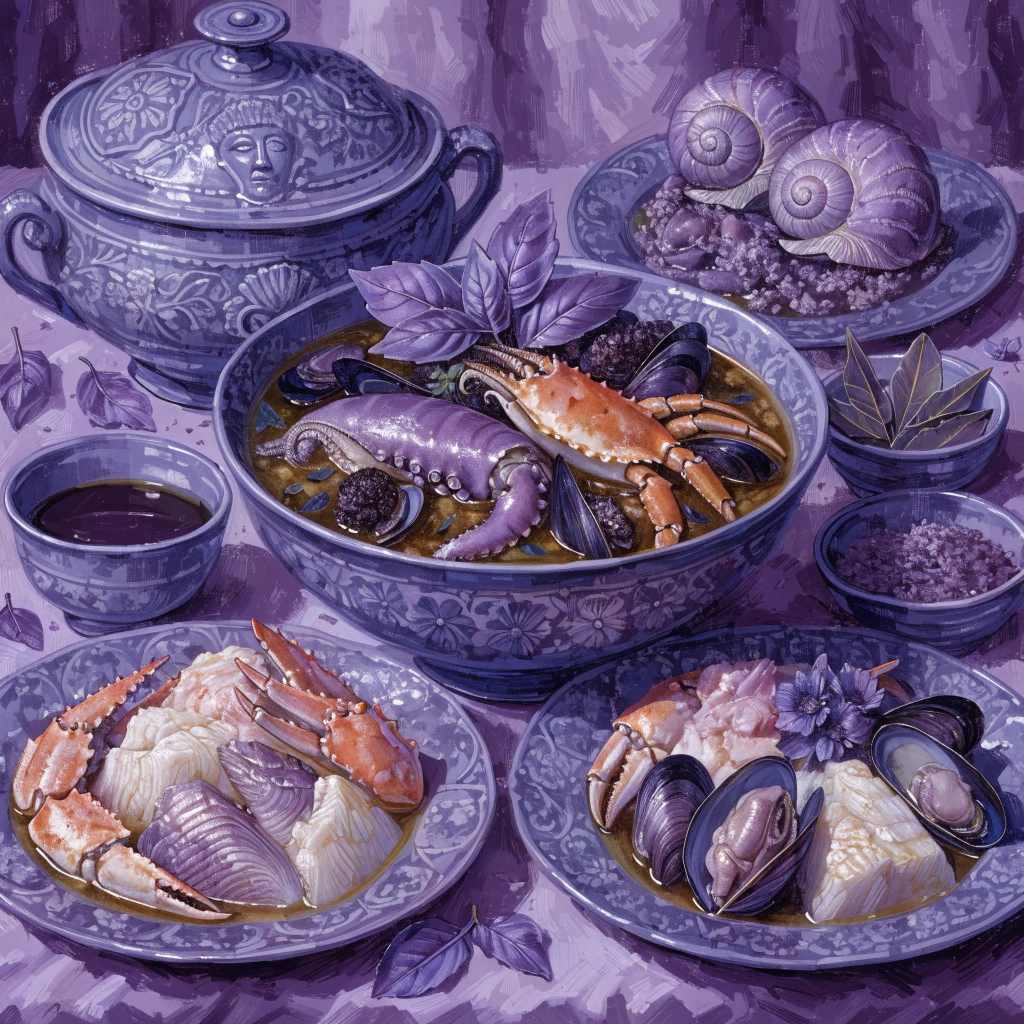
La Bouillabaisse : Un Plat de Marseille
La Bouillabaisse est un plat très célèbre en France. Elle vient de la belle ville de Marseille, dans le sud du pays. C'est une soupe de poisson.
Autrefois, les pêcheurs préparaient cette soupe. Ils utilisaient les poissons qu'ils ne vendaient pas au marché. C'est un plat simple mais très bon.
Dans la Bouillabaisse, il y a plusieurs sortes de poissons. Il y a aussi des légumes comme des pommes de terre et des tomates. On mange la soupe chaude. C'est un repas important pour les habitants de Marseille. C'est délicieux !
Point grammaire
Structure: Le verbe "être" au présent
"La Bouillabaisse est un plat très célèbre."
Le verbe "être" signifie 'to be'. Il est très important pour décrire des choses ou des personnes. Au présent, on dit : je suis, tu es, il/elle/on est, nous sommes, vous êtes, ils/elles sont.
Structure: Les articles définis (le, la, les)
"Elle vient de la belle ville de Marseille, dans le sud du pays."
Les articles "le", "la" et "les" sont des mots qui précèdent les noms. Ils indiquent que l'on parle d'une chose spécifique. "Le" est pour les noms masculins singuliers, "la" pour les noms féminins singuliers, et "les" pour les noms au pluriel.
Teste ta compréhension
10 questions · A1 Débutant · 1 aperçu gratuit
Teste ce que tu as appris dans cet article. Réponds à toutes les questions pour gagner des XP !
D'où vient la Bouillabaisse ?
Tu veux terminer le quiz ?
9 questions supplémentaires t'attendent. Inscris-toi gratuitement pour débloquer le quiz complet et gagner des XP !
S'inscrire gratuitementTu as dj un compte ? Connexion
Bien joué !
Continue à pratiquer !
Déjà terminé — pas de XP supplémentaire
Inscris-toi pour gagner des XPDétail des questions
D'où vient la Bouillabaisse ?
Ta réponse:
Bonne réponse: De Marseille
La Bouillabaisse est une salade de fruits.
Ta réponse:
Bonne réponse: Faux
Que signifie "pêcheurs" ?
Ta réponse:
Bonne réponse: Des personnes qui attrapent des poissons
La Bouillabaisse est une _____ de poisson.
Ta réponse:
Bonne réponse: soupe
Bouillabaisse: The Famous Soup of Marseille
Marseille is a beautiful city in the south of France. It is famous for its sea and its food. The most important dish in Marseille is called Bouillabaisse. This is a special fish soup, but it is more than just a meal. For the people of Marseille, it is a part of their history.
A long time ago, Bouillabaisse was a simple soup for poor fishermen. After they sold their best fish at the market, they had some small or bony fish left. They did not want to waste them, so they cooked them in a large pot with sea water and herbs. It was a cheap and healthy dinner for their families.
Today, Bouillabaisse is different. It is more expensive and prestigious than in the past. In 1980, some chefs even wrote a Charter to protect the recipe. Now, the soup must have at least four types of local fish. People usually eat the soup with bread and a special garlic sauce called rouille. It is a slow and delicious meal to share with friends.
Point grammaire
Structure: Past Simple (Regular and Irregular)
"They did not want to waste them, so they cooked them in a large pot."
We use the past simple to talk about finished actions in the past. Regular verbs end in -ed (cooked), while irregular verbs and negatives use 'did' or 'did not' (did not want).
Structure: Comparatives with 'more'
"It is more expensive and prestigious than in the past."
For long adjectives like 'expensive' or 'prestigious', we use 'more + adjective + than' to compare two things or times.
Teste ta compréhension
11 questions · A2 mentaire · 1 aperçu gratuit
Teste ce que tu as appris dans cet article. Réponds à toutes les questions pour gagner des XP !
Where is the city of Marseille located?
Tu veux terminer le quiz ?
10 questions supplémentaires t'attendent. Inscris-toi gratuitement pour débloquer le quiz complet et gagner des XP !
S'inscrire gratuitementTu as dj un compte ? Connexion
Bien joué !
Continue à pratiquer !
Déjà terminé — pas de XP supplémentaire
Inscris-toi pour gagner des XPDétail des questions
Where is the city of Marseille located?
Ta réponse:
Bonne réponse: In the south of France
Bouillabaisse was always an expensive dish for rich people.
Ta réponse:
Bonne réponse: Faux
What does the word 'waste' mean?
Ta réponse:
Bonne réponse: To use something badly or throw it away
Now, the soup must have at least _____ types of local fish.
Ta réponse:
Bonne réponse: four
What is 'rouille'?
Ta réponse:
Bonne réponse: A special garlic sauce
La Bouillabaisse : Plus Qu'un Plat, Une Histoire Marseillaise
La bouillabaisse est bien plus qu'une simple soupe de poisson ; c'est un symbole fort de la ville de Marseille et de sa culture. Pour beaucoup, c'est une fierté culinaire qui raconte l'histoire de la Méditerranée. Ce plat emblématique est aujourd'hui célèbre dans le monde entier, mais ses origines sont plus modestes.
Initialement, la bouillabaisse était le repas des pêcheurs marseillais. Après une journée de travail en mer, ils utilisaient les poissons invendus ou ceux qui n'étaient pas assez beaux pour le marché. Ces restes de poissons, souvent des espèces rocheuses avec beaucoup d'arêtes, étaient cuits ensemble dans une marmite avec de l'eau de mer et des herbes de Provence. C'était une manière simple et efficace de ne rien gaspiller, et le goût était déjà délicieux.
Au fil des siècles, cette humble soupe a considérablement évolué. Elle est devenue un plat raffiné, préparé avec des poissons spécifiques et des ingrédients de qualité. Pour protéger l'authenticité de la bouillabaisse, les restaurateurs de Marseille ont même créé une "Charte de la Bouillabaisse" en 1980. Cette charte définit précisément les types de poissons à utiliser (au moins quatre différents, comme la rascasse, le saint-pierre, le congre) et la manière traditionnelle de la servir, souvent en deux temps : d'abord le bouillon, puis les poissons.
Aujourd'hui, déguster une bouillabaisse à Marseille est une expérience unique. C'est un rituel qui unit les gens autour de la table et célèbre le patrimoine local. Si vous visitez le sud de la France, vous devez absolument essayer ce plat historique. Il vous racontera l'histoire de Marseille et de ses habitants.
Point grammaire
Structure: Le Passé Composé
"Cette humble soupe a considérablement évolué."
Le passé composé est utilisé pour parler d'actions passées qui sont terminées. Il se forme avec l'auxiliaire "avoir" ou "être" au présent, suivi du participe passé du verbe.
Structure: La Voix Passive
"Ce plat emblématique est aujourd'hui célèbre dans le monde entier."
La voix passive est utilisée quand le sujet subit l'action, et non quand il la fait. Elle se forme avec l'auxiliaire "être" conjugué, suivi du participe passé du verbe principal.
Teste ta compréhension
11 questions · B1 Intermédiaire · 1 aperçu gratuit
Teste ce que tu as appris dans cet article. Réponds à toutes les questions pour gagner des XP !
Quelle est l'une des caractéristiques principales de la bouillabaisse au-delà d'être une simple soupe ?
Tu veux terminer le quiz ?
10 questions supplémentaires t'attendent. Inscris-toi gratuitement pour débloquer le quiz complet et gagner des XP !
S'inscrire gratuitementTu as dj un compte ? Connexion
Bien joué !
Continue à pratiquer !
Déjà terminé — pas de XP supplémentaire
Inscris-toi pour gagner des XPDétail des questions
Quelle est l'une des caractéristiques principales de la bouillabaisse au-delà d'être une simple soupe ?
Ta réponse:
Bonne réponse: C'est un symbole fort de Marseille et de sa culture.
À l'origine, la bouillabaisse était un plat luxueux pour les riches.
Ta réponse:
Bonne réponse: Faux
Que signifie le mot "pêcheurs" dans le contexte de l'article ?
Ta réponse:
Bonne réponse: Des personnes qui prennent du poisson pour vivre.
La _______ de la Bouillabaisse a été créée pour protéger l'authenticité du plat.
Ta réponse:
Bonne réponse: Charte
Qu'est-ce que la Charte de la Bouillabaisse définit ?
Ta réponse:
Bonne réponse: Les types de poissons à utiliser et la manière de servir.
The Gastronomic Soul of Marseille: Decoding the Bouillabaisse Tradition
Situated on the sun-drenched coast of southern France, Marseille is home to a culinary tradition that transcends mere nourishment. Bouillabaisse, a complex and aromatic fish stew, represents the very essence of the city's cultural identity. While many outsiders might perceive it as a simple seafood soup, for the local population, it is a prestigious ritual that demands both respect and technical precision. Historically, this legendary soup was originally conceived by local fishermen who utilized the bony rockfish they were unable to sell at the market. Over the centuries, however, this humble beginning evolved into a highly codified gastronomic experience that attracts food enthusiasts from across the globe.
The transformation of Bouillabaisse from a 'leftover' meal into a symbol of French excellence reached a significant milestone in 1980. Concerned by the proliferation of inferior imitations served to tourists, a group of dedicated restaurateurs established the 'Bouillabaisse Charter.' This document provides a set of rules which ensures the preservation of culinary heritage, specifying exactly which species of fish must be included and how the service should be conducted. For instance, the broth and the fish are traditionally served separately, accompanied by 'rouille'—a distinctive garlic and saffron mayonnaise that adds a spicy depth to the meal.
Furthermore, the preparation of an authentic Bouillabaisse is a laborious process that requires exceptionally fresh, local ingredients. It is essential that the fish are caught in the Mediterranean to maintain the dish's authenticity. Some critics argue that the strictness of the Charter limits culinary creativity; nevertheless, most enthusiasts believe that these standards are necessary to protect the integrity of the tradition. The consumption of the dish is not merely about eating; it is an analytical experience where the diner evaluates the depth of flavor and the texture of the seafood.
Ultimately, Bouillabaisse serves as a bridge between Marseille's ancient Greek origins and its modern status as a vibrant cultural hub. It reflects a society that values its history while demanding high standards in its contemporary lifestyle. Whether enjoyed in a small port-side bistro or an upscale restaurant, the dish remains a testament to the enduring power of local tradition in an increasingly globalized world. Understanding Bouillabaisse is, in many ways, understanding the heart of Marseille itself.
Point grammaire
Structure: Passive Voice
"This legendary soup was originally conceived by local fishermen..."
The passive voice is used here to focus on the dish (the object) rather than the specific fishermen. It is formed using the verb 'to be' plus the past participle.
Structure: Relative Clauses with 'Which'
"This document provides a set of rules which ensures the preservation of culinary heritage..."
A relative clause provides more information about a noun. In this case, 'which' introduces a defining relative clause that explains the purpose of the 'rules'.
Structure: It is + Adjective + That Clause
"It is essential that the fish are caught in the Mediterranean..."
This structure is used to express importance or necessity. It often triggers a formal tone and, in some variations of English, can be followed by the subjunctive mood.
Teste ta compréhension
11 questions · B2 Intermédiaire supérieur · 1 aperçu gratuit
Teste ce que tu as appris dans cet article. Réponds à toutes les questions pour gagner des XP !
What was the primary reason for creating the 'Bouillabaisse Charter' in 1980?
Tu veux terminer le quiz ?
10 questions supplémentaires t'attendent. Inscris-toi gratuitement pour débloquer le quiz complet et gagner des XP !
S'inscrire gratuitementTu as dj un compte ? Connexion
Bien joué !
Continue à pratiquer !
Déjà terminé — pas de XP supplémentaire
Inscris-toi pour gagner des XPDétail des questions
What was the primary reason for creating the 'Bouillabaisse Charter' in 1980?
Ta réponse:
Bonne réponse: To protect the dish from low-quality imitations
Traditionally, the fish and the broth are served in the same bowl at the same time.
Ta réponse:
Bonne réponse: Faux
What does 'laborious' mean in the context of the article?
Ta réponse:
Bonne réponse: Requiring significant effort and time
The soup was originally made from bony _____ that fishermen could not sell.
Ta réponse:
Bonne réponse: rockfish
According to the text, what does the dish represent for the people of Marseille?
Ta réponse:
Bonne réponse: The city's ancient Greek heritage and modern identity
The Gastronomic Soul of Marseille: A Critical Analysis of the Bouillabaisse Charter
Seldom has a culinary creation been so inextricably linked to the soul of a city as Bouillabaisse is to Marseille. What the casual diner might perceive as a mere seafood soup is, in reality, a meticulously codified ritual that demands both reverence and precision. The elevation of a humble fisherman’s stew to a symbol of regional identity illustrates the complex interplay between economic necessity and gastronomic prestige. Originating from the Greek founding of Massalia, the dish was initially a pragmatic solution for local fishermen. Faced with a catch of bony rockfish that possessed little market value, these mariners would simmer the remaining bounty in seawater to create a sustaining meal.
Over the centuries, however, this utilitarian concoction underwent a profound transformation, becoming the eponymous centerpiece of Provençal cuisine. The etymology of the word itself—derived from the Occitan 'bolhir' (to boil) and 'abaissar' (to lower the heat)—underscores the technical precision required for its preparation. This evolution was not without its controversies. By the mid-20th century, the proliferation of imitation recipes in tourist-heavy areas sparked concerns regarding the dilution of cultural heritage. It was the perceived erosion of authenticity that prompted a group of Marseille restaurateurs to take action.
In 1980, they established the 'Bouillabaisse Charter', a document designed to define the sacrosanct ingredients and service methods required for a dish to bear the name. This move was not merely about flavor; it was a socio-political statement aimed at reclaiming a narrative. According to the charter, at least four specific species of local fish must be included, and the serving process must be bifurcated: the broth is presented first with 'rouille' and croutons, followed by the carved fish. Critics of the charter argue that such rigid formalization stifles culinary creativity. They suggest that the inception of such rules creates an air of pretentious exclusivity that contradicts the dish's egalitarian roots.
Yet, for the people of Marseille, the charter represents a necessary defense against the homogenizing forces of global tourism. The nuanced debate surrounding Bouillabaisse reflects a broader cultural struggle to balance the preservation of tradition with the inevitability of change. Whether viewed as an elite gastronomic experience or a historical artifact, Bouillabaisse remains a prestigious testament to Marseille's maritime history. The divergence between its modest beginnings and its current status as a high-priced delicacy serves as a fascinating study in how societies construct value and identity through food. Ultimately, the dish is more than a meal; it is a narrative of survival, adaptation, and pride, simmering in a pot of Mediterranean history.
Point grammaire
Structure: Negative Inversion
"Seldom has a culinary creation been so inextricably linked to the soul of a city as Bouillabaisse is to Marseille."
Used for emphasis, the auxiliary verb 'has' is placed before the subject 'culinary creation' after the negative adverb 'seldom'.
Structure: Pseudo-Cleft Sentence
"What the casual diner might perceive as a mere seafood soup is, in reality, a meticulously codified ritual."
This structure uses a 'what' clause as the subject to focus on the definition or specific nature of the object being discussed.
Structure: Nominalization
"The elevation of a humble fisherman’s stew to a symbol of regional identity illustrates the complex interplay between economic necessity and gastronomic prestige."
Verbs like 'elevate' and 'interact' are turned into nouns ('elevation', 'interplay') to create a more formal, academic, and dense C1-level prose style.
Teste ta compréhension
12 questions · C1 Avancé · 1 aperçu gratuit
Teste ce que tu as appris dans cet article. Réponds à toutes les questions pour gagner des XP !
What was the primary motivation for creating the 'Bouillabaisse Charter' in 1980?
Tu veux terminer le quiz ?
11 questions supplémentaires t'attendent. Inscris-toi gratuitement pour débloquer le quiz complet et gagner des XP !
S'inscrire gratuitementTu as dj un compte ? Connexion
Bien joué !
Continue à pratiquer !
Déjà terminé — pas de XP supplémentaire
Inscris-toi pour gagner des XPDétail des questions
What was the primary motivation for creating the 'Bouillabaisse Charter' in 1980?
Ta réponse:
Bonne réponse: To protect the dish's authenticity from imitation recipes
Bouillabaisse was originally created as a luxury meal for the Greek founders of Marseille.
Ta réponse:
Bonne réponse: Faux
What does the word 'codified' imply in the context of the article?
Ta réponse:
Bonne réponse: The preparation and ingredients are strictly regulated by rules
The dish originated as a pragmatic solution for fishermen using _____ rockfish that were hard to sell.
Ta réponse:
Bonne réponse: bony
How is Bouillabaisse traditionally served according to the charter?
Ta réponse:
Bonne réponse: The broth is served first, followed by the carved fish
The word 'Bouillabaisse' is derived from terms meaning 'to boil' and 'to lower the heat'.
Ta réponse:
Bonne réponse: Vrai
The Semiotics of the Cauldron: Bouillabaisse and the Preservation of Marseillais Identity
To approach the subject of Bouillabaisse is to venture into a realm where gastronomy and sociology converge in a profound, almost atavistic display of regional identity. For the inhabitants of Marseille, this dish is far from a mere maritime stew; rather, it constitutes a liturgical performance, a culinary testament to the city’s complex provenance. Founded by Phocaean Greeks in 600 BC, Marseille has long served as a liminal space where the Mediterranean’s diverse cultures coalesce. It is within this historical crucible that Bouillabaisse emerged, evolving from the plebeian necessity of impoverished fishermen into an apotheosis of French haute cuisine. Historically, the dish was characterized by a paucity of resources. Fishermen, having sold their most marketable catch, would utilize the bony, unsightly rockfish—most notably the rascasse—to create a communal meal. This humble origin, however, belies the rigorous codification that defines the dish today. Should one attempt to substitute the essential scorpion fish with a more pedestrian variety, the resulting concoction would, in the eyes of a purist, be deemed an ontological failure. The 1980 'Bouillabaisse Charter' was established precisely to forestall such pernicious dilutions. This document serves as a bastion of gastronomic orthodoxy, stipulating not only the requisite piscine species but also the ceremonial method of service. The preparation itself demands a level of precision that borderlines on the epistemological. It is imperative that the broth be prepared with a saffron-infused intensity, achieving a delicate emulsification with olive oil. The service is equally sacrosanct: the golden broth is presented first, accompanied by croûtons rubbed with garlic and adorned with rouille—a piquant mayonnaise that mirrors the sun-drenched landscape of Provence. Only subsequently is the array of poached fish presented, carved with a dexterity that acknowledges the creature’s sacrifice to the cauldron. Yet, one might posit that the obsession with the Charter reflects a deeper anxiety regarding the homogenization of culture. In an era of globalized palates, the insistence on local specificity becomes a revolutionary act. Seldom has a culinary preparation elicited such fervent regionalism, where the choice of a specific crustacean becomes a declaration of cultural sovereignty. Were it not for this strict adherence to tradition, the nuances of the Marseille harbor might have been lost to the tides of generic Mediterranean fare. Ultimately, Bouillabaisse serves as a sensory bridge to the past. It is a dish that requires the diner to engage in a slow, deliberate appreciation of texture and aroma, far removed from the ephemeral nature of modern fast-food culture. As the steam rises from the bowl, it carries with it the salt-spray of the Vieux-Port and the echoes of centuries of maritime toil. To consume Bouillabaisse is not merely to eat; it is to participate in the ongoing narrative of Marseille itself—a narrative that remains as robust and complex as the broth from which it is born.
Point grammaire
Structure: Inverted Conditional (Should)
"Should one attempt to substitute the essential scorpion fish with a more pedestrian variety, the resulting concoction would be deemed an ontological failure."
This inversion replaces 'If' to create a more formal, academic tone. It is formed by placing the modal 'should' before the subject.
Structure: Subjunctive Mood with Mandative Verbs
"It is imperative that the broth be prepared with a saffron-infused intensity."
Used after adjectives or verbs of necessity, the subjunctive 'be' (base form) is used regardless of the subject. This emphasizes the essential nature of the action.
Structure: Negative Inversion
"Seldom has a culinary preparation elicited such fervent regionalism."
When a sentence begins with a negative or restrictive adverb like 'seldom', the auxiliary verb and subject are inverted. This is a common rhetorical device in high-level analytical prose.
Teste ta compréhension
12 questions · C2 Maîtrise · 1 aperçu gratuit
Teste ce que tu as appris dans cet article. Réponds à toutes les questions pour gagner des XP !
What was the primary driver for the creation of the 1980 'Bouillabaisse Charter'?
Tu veux terminer le quiz ?
11 questions supplémentaires t'attendent. Inscris-toi gratuitement pour débloquer le quiz complet et gagner des XP !
S'inscrire gratuitementTu as dj un compte ? Connexion
Bien joué !
Continue à pratiquer !
Déjà terminé — pas de XP supplémentaire
Inscris-toi pour gagner des XPDétail des questions
What was the primary driver for the creation of the 1980 'Bouillabaisse Charter'?
Ta réponse:
Bonne réponse: To prevent the dilution of the dish's authenticity and tradition
The article suggests that Bouillabaisse was originally a dish enjoyed by the wealthy elite of ancient Marseille.
Ta réponse:
Bonne réponse: Faux
What does 'paucity' mean in the context of the fishermen's resources?
Ta réponse:
Bonne réponse: A scarcity or lack of something
The 1980 Charter serves as a bastion of gastronomic _____, ensuring rules are followed.
Ta réponse:
Bonne réponse: orthodoxy
How is the service of Bouillabaisse described in the text?
Ta réponse:
Bonne réponse: The broth is served first, followed by the array of poached fish
The author posits that the strict adherence to the Charter is a reaction against cultural homogenization.
Ta réponse:
Bonne réponse: Vrai

