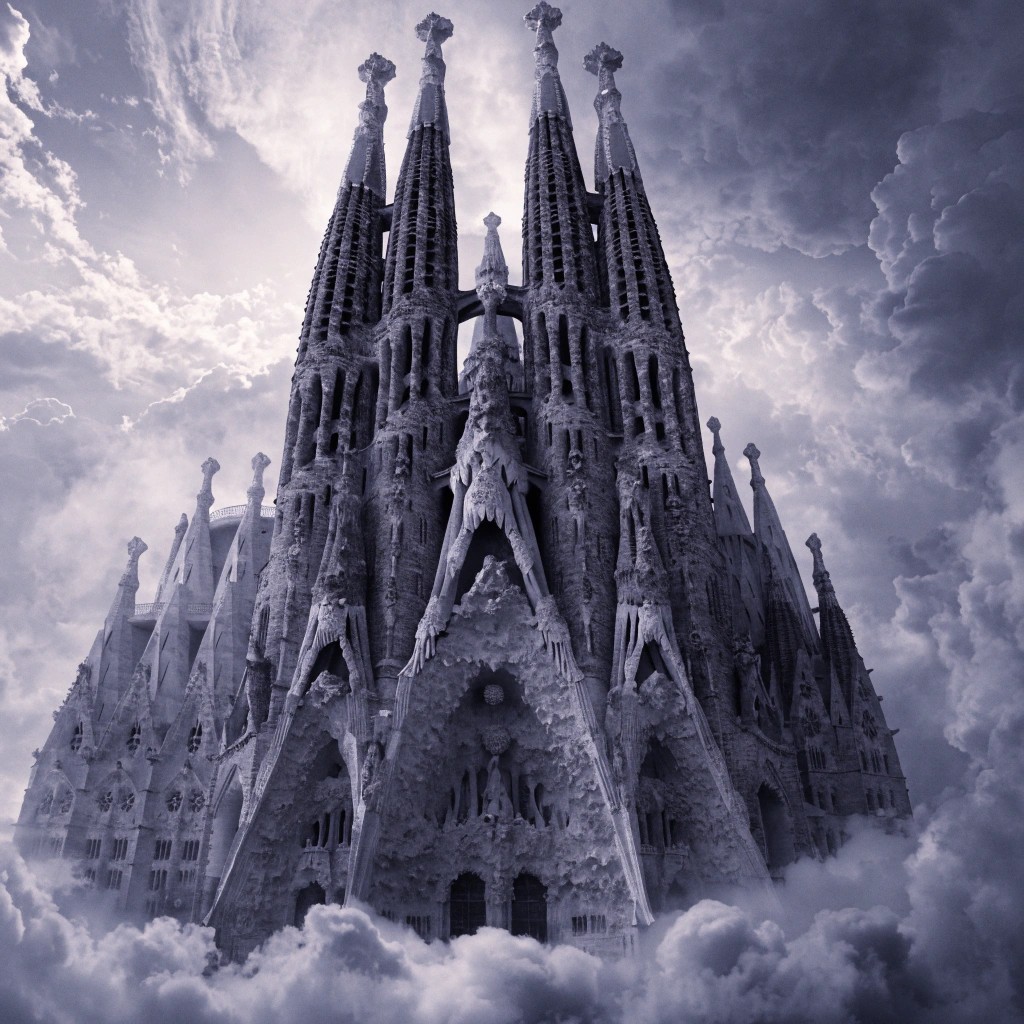
A Famous Church in Spain
La Sagrada Família is a very famous church. It is in Barcelona, Spain. It is very big and beautiful. Many people visit this place every year.
Antoni Gaudí is the architect. He starts the work a long time ago. He loves nature. You can see trees and flowers in the stone.
The church is not finished. People work on it today. It has many tall towers. The windows have many colors. It is a special place in Spain.
Point grammaire
Structure: Present Simple 'Be'
"La Sagrada Família is a very famous church."
We use 'is' for singular subjects to describe facts. It connects the subject to a noun or adjective.
Structure: Present Simple (Regular Verbs)
"Many people visit this place every year."
We use the base verb for plural subjects like 'people'. This describes a regular action or a general truth.
Teste ta compréhension
10 questions · A1 Débutant · 1 aperçu gratuit
Teste ce que tu as appris dans cet article. Réponds à toutes les questions pour gagner des XP !
Where is La Sagrada Família?
Tu veux terminer le quiz ?
9 questions supplémentaires t'attendent. Inscris-toi gratuitement pour débloquer le quiz complet et gagner des XP !
S'inscrire gratuitementTu as dj un compte ? Connexion
Bien joué !
Continue à pratiquer !
Déjà terminé — pas de XP supplémentaire
Inscris-toi pour gagner des XPDétail des questions
Where is La Sagrada Família?
Ta réponse:
Bonne réponse: Barcelona
The church is finished.
Ta réponse:
Bonne réponse: Faux
What does 'famous' mean?
Ta réponse:
Bonne réponse: Known by many people
The windows have many _____.
Ta réponse:
Bonne réponse: colors
La Sagrada Família : Un chef-d'œuvre inachevé
La Sagrada Família est une basilique magnifique située à Barcelone, en Espagne. C'est l'un des monuments les plus célèbres du monde. Ce bâtiment est très haut et possède un style unique.
L'histoire a commencé en 1882 avec l'architecte Francisco de Paula del Villar. Un an plus tard, le célèbre Antoni Gaudí a pris la direction du projet. Il a travaillé sur la basilique pendant quarante-trois ans. Gaudí aimait beaucoup la nature, donc les colonnes ressemblent à des arbres.
Aujourd'hui, la Sagrada Família n'est pas encore terminée, mais elle est déjà très belle. Des millions de touristes visitent ce lieu chaque année. C'est plus grand que les autres églises de la ville. Les couleurs des vitraux sont incroyables quand le soleil brille. C'est un chef-d'œuvre de l'architecture moderne.
Point grammaire
Structure: Le comparatif de supériorité
"C'est plus grand que les autres églises de la ville."
On utilise 'plus + adjectif + que' pour comparer deux choses. Ici, on compare la taille de la Sagrada Família avec les autres églises.
Structure: Le passé composé
"L'histoire a commencé en 1882."
On utilise le passé composé pour une action précise terminée dans le passé. Il se forme avec l'auxiliaire avoir ou être et le participe passé.
Teste ta compréhension
11 questions · A2 mentaire · 1 aperçu gratuit
Teste ce que tu as appris dans cet article. Réponds à toutes les questions pour gagner des XP !
Dans quelle ville se trouve la Sagrada Família ?
Tu veux terminer le quiz ?
10 questions supplémentaires t'attendent. Inscris-toi gratuitement pour débloquer le quiz complet et gagner des XP !
S'inscrire gratuitementTu as dj un compte ? Connexion
Bien joué !
Continue à pratiquer !
Déjà terminé — pas de XP supplémentaire
Inscris-toi pour gagner des XPDétail des questions
Dans quelle ville se trouve la Sagrada Família ?
Ta réponse:
Bonne réponse: Barcelone
Antoni Gaudí a commencé le projet dès la première année en 1882.
Ta réponse:
Bonne réponse: Faux
Que signifie le mot 'célèbre' ?
Ta réponse:
Bonne réponse: Quelque chose de très connu
Les colonnes de la basilique ressemblent à des _____.
Ta réponse:
Bonne réponse: arbres
Pendant combien d'années Gaudí a-t-il travaillé sur la basilique ?
Ta réponse:
Bonne réponse: 43 ans
The Unfinished Masterpiece: La Sagrada Família
The Sagrada Família is a famous basilica that stands majestically in the heart of Barcelona, Spain. It is known worldwide because it is an unfinished masterpiece. Construction started in 1882 under Francisco de Paula del Villar, but he left the project after one year. Then, the visionary architect Antoni Gaudí took over the work. He changed the design completely, turning it into a unique mix of Gothic and Art Nouveau styles that features natural shapes and tall towers.
Gaudí was a man who dedicated his whole life to this project. He spent 43 years working on the church and even lived on the construction site during his final years. He wanted the building to look like a 'forest of stone' where light could play through the windows. Since his death in 1926, many other architects have continued his work using his original drawings and models. However, the building has been under construction for over 140 years, and it is still not finished today.
Today, the basilica is visited by millions of tourists every year. It has been named a UNESCO World Heritage site because of its incredible art and symbolism. The project is funded by private donations and ticket sales from visitors. These funds are used to pay for the modern materials and technology needed to finish the towers. Many people wonder when it will finally be completed, but the slow progress is part of its charm. The Sagrada Família is not just a religious building; it is a symbol of faith and creativity that has inspired the world for generations.
Point grammaire
Structure: Present Perfect
"the building has been under construction for over 140 years."
We use the present perfect (has/have + past participle) to talk about an action that started in the past and continues in the present.
Structure: Passive Voice
"the basilica is visited by millions of tourists every year."
The passive voice (be + past participle) is used when the action is more important than the person doing it. Here, the focus is on the basilica itself.
Teste ta compréhension
11 questions · B1 Intermédiaire · 1 aperçu gratuit
Teste ce que tu as appris dans cet article. Réponds à toutes les questions pour gagner des XP !
Who was the main architect responsible for the unique design of the Sagrada Família?
Tu veux terminer le quiz ?
10 questions supplémentaires t'attendent. Inscris-toi gratuitement pour débloquer le quiz complet et gagner des XP !
S'inscrire gratuitementTu as dj un compte ? Connexion
Bien joué !
Continue à pratiquer !
Déjà terminé — pas de XP supplémentaire
Inscris-toi pour gagner des XPDétail des questions
Who was the main architect responsible for the unique design of the Sagrada Família?
Ta réponse:
Bonne réponse: Antoni Gaudí
The construction of the Sagrada Família began in 1883.
Ta réponse:
Bonne réponse: Faux
What does 'donation' mean in the context of the article?
Ta réponse:
Bonne réponse: Money given to help the project
The Sagrada Família is famous because it is an _____ masterpiece.
Ta réponse:
Bonne réponse: unfinished
How is the construction of the basilica currently funded?
Ta réponse:
Bonne réponse: By private donations and ticket sales
La Sagrada Família : Le chef-d’œuvre inachevé d'Antoni Gaudí
S'élevant majestueusement dans le ciel de Barcelone, la Basilique et Temple Expiatoire de la Sagrada Família représente sans doute l'édifice inachevé le plus emblématique au monde. Bien que les travaux aient débuté en 1882 sous la direction de Francisco de Paula del Villar, c'est l'architecte visionnaire Antoni Gaudí qui, en reprenant le projet un an plus tard, lui a insufflé une dimension spirituelle et esthétique sans précédent. En fusionnant les traditions gothiques avec les formes organiques de l'Art nouveau, Gaudí a créé une structure qui défie les conventions architecturales de son époque.
Gaudí a consacré les quarante-trois dernières années de sa vie à cette œuvre colossale, allant jusqu'à s'installer sur le chantier même pour suivre de près chaque détail. Son approche était singulière : il s'inspirait de la nature, concevant des colonnes qui ressemblent à des arbres et des voûtes évoquant une forêt dense. Pour lui, l'architecture devait être en harmonie avec la création divine. Malheureusement, sa mort soudaine en 1926 a laissé le projet orphelin, bien que ses plans et modèles détaillés aient permis à ses successeurs de poursuivre son rêve.
La construction de la basilique repose historiquement sur le concept d'expiation, ce qui signifie qu'elle est financée exclusivement par des dons privés et, aujourd'hui, par les revenus issus du tourisme. Cette dépendance financière explique en partie la lenteur des travaux, qui s'étendent sur plus d'un siècle. Cependant, l'utilisation de technologies modernes telles que l'impression 3D et la conception assistée par ordinateur a considérablement accéléré le rythme ces dernières décennies.
Visiter la Sagrada Família est une expérience sensorielle unique. La lumière traverse les vitraux colorés, inondant la nef de teintes changeantes selon l'heure de la journée. Les façades, quant à elles, racontent l'histoire biblique avec un luxe de détails époustouflant. Qu'il s'agisse de la façade de la Nativité, riche et exubérante, ou de celle de la Passion, plus austère et angulaire, chaque pierre semble porter un message. Malgré les débats sur l'interprétation moderne de l'œuvre de Gaudí, la Sagrada Família demeure un symbole de persévérance et un témoignage de la capacité humaine à viser l'éternité à travers l'art.
Point grammaire
Structure: Le subjonctif après 'bien que'
"Bien que les travaux aient débuté en 1882..."
La conjonction 'bien que' introduit une concession et nécessite toujours l'utilisation du subjonctif. Ici, 'aient débuté' est au subjonctif passé pour indiquer une action antérieure.
Structure: La voix passive
"...elle est financée exclusivement par des dons privés..."
Le passif est utilisé pour mettre l'accent sur l'objet de l'action (la basilique) plutôt que sur l'agent. On utilise l'auxiliaire 'être' suivi du participe passé accordé avec le sujet.
Structure: La mise en relief avec 'C'est... qui'
"C'est l'architecte visionnaire Antoni Gaudí qui... lui a insufflé une dimension spirituelle."
Cette structure permet d'insister sur un élément particulier de la phrase, ici le sujet 'Antoni Gaudí', en l'encadrant par 'C'est' et le pronom relatif 'qui'.
Teste ta compréhension
11 questions · B2 Intermédiaire supérieur · 1 aperçu gratuit
Teste ce que tu as appris dans cet article. Réponds à toutes les questions pour gagner des XP !
Qui a commencé la direction des travaux en 1882 ?
Tu veux terminer le quiz ?
10 questions supplémentaires t'attendent. Inscris-toi gratuitement pour débloquer le quiz complet et gagner des XP !
S'inscrire gratuitementTu as dj un compte ? Connexion
Bien joué !
Continue à pratiquer !
Déjà terminé — pas de XP supplémentaire
Inscris-toi pour gagner des XPDétail des questions
Qui a commencé la direction des travaux en 1882 ?
Ta réponse:
Bonne réponse: Francisco de Paula del Villar
Gaudí a vécu sur le chantier de la basilique pendant une partie de sa vie.
Ta réponse:
Bonne réponse: Vrai
Que signifie le mot 'inachevé' dans le texte ?
Ta réponse:
Bonne réponse: Qui n'est pas terminé
La construction est financée exclusivement par des _____ privés et le tourisme.
Ta réponse:
Bonne réponse: dons
Quelle a été la source d'inspiration principale de Gaudí pour l'intérieur de la basilique ?
Ta réponse:
Bonne réponse: La nature et les forêts
A Testament to Transcendence: The Architectural Enigma of La Sagrada Família
Rising majestically above the Catalan skyline, the Basilica i Temple Expiatori de la Sagrada Família stands as a testament to the intersection of divine inspiration and human persistence. While its inception dates back to 1882 under the direction of Francisco de Paula del Villar, it was the subsequent stewardship of Antoni Gaudí that propelled the project into the realms of architectural legend. Gaudí’s vision was not merely to construct a place of worship, but to manifest a 'Bible in stone,' where every column, spire, and facade would resonate with profound theological significance. Rarely has a building so profoundly challenged the traditional boundaries of ecclesiastical architecture, moving away from rigid geometric constraints toward a fluid, organic aesthetic.
Seldom does one encounter a structure that so successfully bridges the chasm between the terrestrial and the ethereal. Gaudí’s preoccupation with the natural world—what he termed 'God’s architecture'—led to the implementation of hyperbolic paraboloids and catenary arches, bypassing the need for traditional flying buttresses. This organic aesthetic, however, was predicated on more than just visual appeal; it was a structural necessity for a building of such unprecedented scale. The interior of the basilica, designed to resemble a forest of stone, features columns that branch out like trees, creating a sense of verticality that draws the eye and the spirit toward the heavens.
What remains a point of contention among contemporary critics is the fidelity of the current construction to Gaudí’s original intent. Following the destruction of his detailed models and plans during the Spanish Civil War, architects have had to extrapolate his vision from surviving fragments and historical sketches. It is this reliance on modern interpretation, coupled with the use of contemporary materials like reinforced concrete, that has sparked intellectual debate. Proponents argue that the spirit of the project demands its completion, whereas detractors maintain that any modern addition is a mere pastiche of the master’s work, lacking the artisanal soul of the original hand-carved stone.
Furthermore, the sheer longevity of the construction process has transformed the basilica into a symbol of Barcelona’s enduring identity. The transition from a slow, artisanal craft to a technologically driven enterprise reflects the broader evolution of architectural practice over the last century. Yet, despite the inclusion of 3D modeling and CNC milling to accelerate the process, the essence of the Sagrada Família remains rooted in its expiatory purpose—funded entirely by private donations and entrance fees rather than state or church coffers. This financial independence ensures that the building remains a project of the people, for the people.
Ultimately, the Sagrada Família transcends its status as an unfinished monument. It serves as a living laboratory of architectural innovation and a profound meditation on the nature of time and faith. Whether viewed as a grotesque eccentricity or a sublime achievement, its impact on the global cultural consciousness is undeniable. As the final spires approach completion, the world watches with bated breath to see if the culmination of Gaudí’s dream will truly reach the celestial heights he envisioned, finally uniting the material world with the divine.
Point grammaire
Structure: Negative Inversion
"Rarely has a building so profoundly challenged the traditional boundaries of ecclesiastical architecture."
This pattern involves placing a negative or restrictive adverb at the beginning of the sentence for emphasis, followed by an auxiliary verb and then the subject.
Structure: Cleft Sentence
"It was the subsequent stewardship of Antoni Gaudí that propelled the project into the realms of architectural legend."
Cleft sentences are used to focus on specific information by splitting a single clause into two, typically starting with 'It is/was'.
Structure: Nominalisation
"The transition from a slow, artisanal craft to a technologically driven enterprise reflects the broader evolution of architectural practice."
Nominalisation turns verbs or adjectives into nouns to create a more formal, academic tone, focusing on the process rather than the actor.
Teste ta compréhension
12 questions · C1 Avancé · 1 aperçu gratuit
Teste ce que tu as appris dans cet article. Réponds à toutes les questions pour gagner des XP !
What is a primary reason for the debate surrounding the current construction of the basilica?
Tu veux terminer le quiz ?
11 questions supplémentaires t'attendent. Inscris-toi gratuitement pour débloquer le quiz complet et gagner des XP !
S'inscrire gratuitementTu as dj un compte ? Connexion
Bien joué !
Continue à pratiquer !
Déjà terminé — pas de XP supplémentaire
Inscris-toi pour gagner des XPDétail des questions
What is a primary reason for the debate surrounding the current construction of the basilica?
Ta réponse:
Bonne réponse: The use of modern materials and the loss of original models.
The construction of the Sagrada Família is funded by the Catholic Church's official treasury.
Ta réponse:
Bonne réponse: Faux
What does 'fidelity' mean in the context of the article?
Ta réponse:
Bonne réponse: The accuracy of adhering to the original design.
The basilica serves as a living _____ of architectural innovation.
Ta réponse:
Bonne réponse: laboratory
Which architectural feature allowed Gaudí to avoid using traditional flying buttresses?
Ta réponse:
Bonne réponse: Catenary arches and hyperbolic paraboloids.
Gaudí was the original architect who started the project in 1882.
Ta réponse:
Bonne réponse: Faux
The Ontological Synthesis of Gaudí’s Sagrada Família: A Testament to Architectural Transcendence
Were one to survey the Barcelona skyline, the silhouette of the Basilica i Temple Expiatori de la Sagrada Família would undoubtedly emerge as the quintessential emblem of the city’s identity. Yet, to categorize this edifice merely as a tourist landmark is to overlook the profound ontological synthesis it represents. Initiated in 1882 under Francisco de Paula del Villar, the project underwent a radical metamorphosis when Antoni Gaudí assumed control. Gaudí, eschewing the rigid orthodoxy of traditional Gothic revivalism, pivoted toward a biomorphic paradigm that sought to harmonize the divine with the natural world. It is imperative that the viewer perceive the structure not as a static monument, but as a living, breathing liturgy in stone. Gaudí’s devotion was such that he spent his final forty-three years as a virtual recluse on-site, a period during which his designs evolved into a complex interplay of hyperbolic paraboloids and curvilinear Art Nouveau forms. The architectural language employed here transcends mere aestheticism; it serves as a vehicle for spiritual expiation. Notwithstanding the inevitable interruptions caused by the Spanish Civil War and the subsequent loss of Gaudí’s original blueprints, the construction has persisted as a collective endeavor. Modern architects must navigate the precarious balance between historical fidelity and contemporary technological imperatives. There is a certain poetic irony in the building’s unfinished state; it suggests that the pursuit of perfection is an iterative, perhaps even ephemeral, process. Some critics argue that the continued construction, facilitated by computer-aided design, risks diluting the idiosyncratic genius of the original creator. However, proponents assert that the basilica’s evolution is a necessary manifestation of its organic nature. As the towers reach toward the heavens, they symbolize a bridge between the terrestrial and the transcendent, ensuring that Gaudí’s legacy remains an active dialogue rather than a silent relic. Ultimately, the Sagrada Família stands as a testament to the fact that profound art often requires a temporal horizon that extends far beyond the lifespan of its progenitor.
Point grammaire
Structure: Inverted Conditionals
"Were one to survey the Barcelona skyline, the silhouette... would undoubtedly emerge."
This is a formal alternative to 'If one were to...'. It uses inversion to create a more academic and hypothetical tone, typical of C2 writing.
Structure: The Mandative Subjunctive
"It is imperative that the viewer perceive the structure not as a static monument..."
After adjectives of necessity or importance, the base form of the verb (perceive) is used regardless of the subject, omitting the 's' in the third person.
Structure: Negative Participle Phrases
"Notwithstanding the inevitable interruptions caused by the Spanish Civil War..."
The use of 'Notwithstanding' acts as a formal preposition meaning 'in spite of', allowing for complex sentence transitions in scholarly prose.
Teste ta compréhension
12 questions · C2 Maîtrise · 1 aperçu gratuit
Teste ce que tu as appris dans cet article. Réponds à toutes les questions pour gagner des XP !
What does the author suggest about the 'unfinished state' of the Sagrada Família?
Tu veux terminer le quiz ?
11 questions supplémentaires t'attendent. Inscris-toi gratuitement pour débloquer le quiz complet et gagner des XP !
S'inscrire gratuitementTu as dj un compte ? Connexion
Bien joué !
Continue à pratiquer !
Déjà terminé — pas de XP supplémentaire
Inscris-toi pour gagner des XPDétail des questions
What does the author suggest about the 'unfinished state' of the Sagrada Família?
Ta réponse:
Bonne réponse: It reflects the iterative and perhaps temporary nature of perfection.
The article states that Gaudí followed the rigid rules of traditional Gothic architecture throughout his work.
Ta réponse:
Bonne réponse: Faux
What does the word 'eschewing' mean in the context of the article?
Ta réponse:
Bonne réponse: Deliberately avoiding
Gaudí’s design shift toward a _____ paradigm sought to harmonize the divine with the natural world.
Ta réponse:
Bonne réponse: biomorphic
According to the text, what is a potential risk of using modern technology to complete the basilica?
Ta réponse:
Bonne réponse: It may diminish the unique genius of Gaudí’s original intent.
Gaudí lived as a recluse on the site of the basilica for over four decades.
Ta réponse:
Bonne réponse: Vrai

