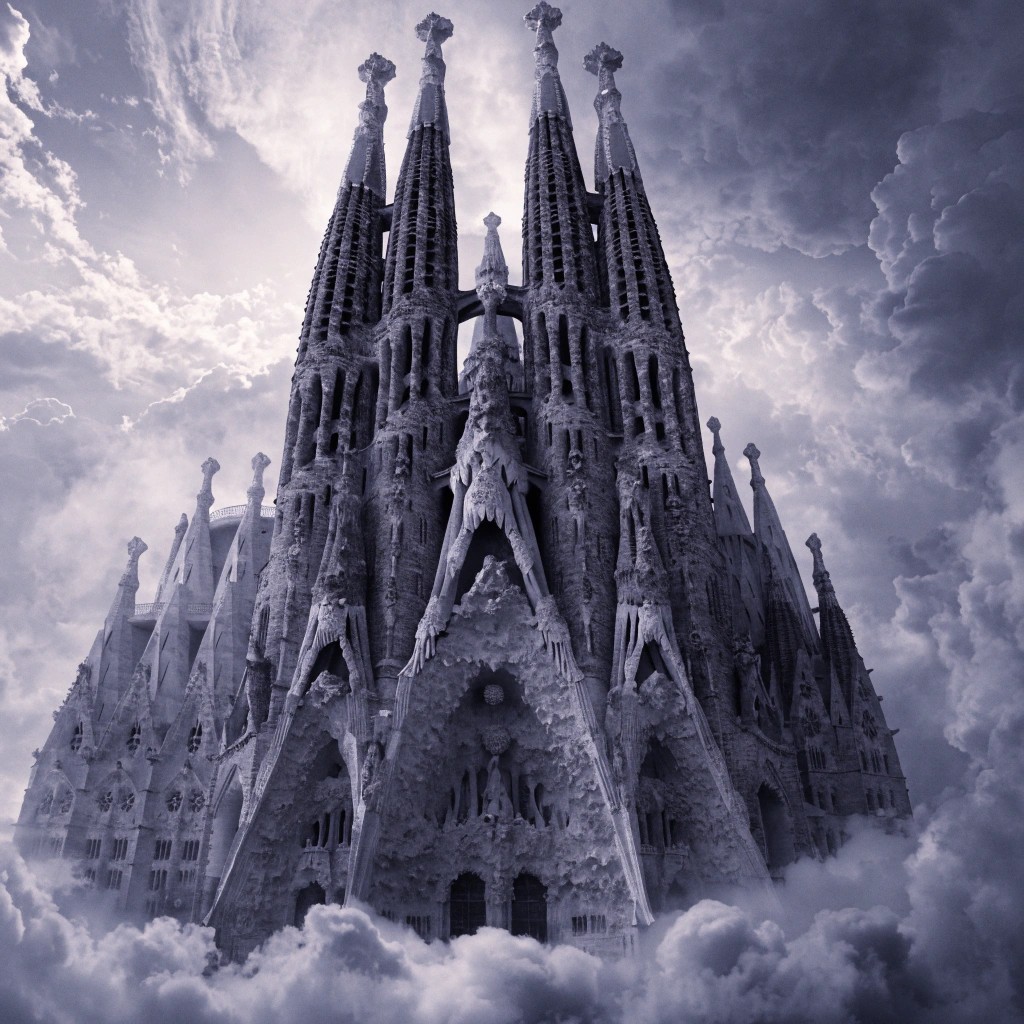
スペインの有名な建物:「サグラダ・ファミリア」
「サグラダ・ファミリア」は、スペインのバルセロナという町にあります。とても大きくて、有名な建物です。アントニ・ガウディさんがこの建物をデザインしました。ガウディさんは有名な建築家です。この建物は、まだ完成していません。でも、毎年、多くの人が世界中からサグラダ・ファミリアを見に来ます。とても美しい建物です。
文法スポットライト
パターン: N は N です / N は Adj です
"「サグラダ・ファミリア」は、有名な建物です。"
「は」は文のトピック(主題)を示します。「です」は文を丁寧な形にします。これを使って、物や人の名前、特徴を説明できます。
パターン: N を V します
"アントニ・ガウディさんがこの建物をデザインしました。"
「を」は動詞の目的語を示します。つまり、何にアクションが起こるかを示します。「します」は行動を表す動詞です。
理解度をチェック
10 問 · A1 初級 · 無料プレビュー 1回
この記事で学んだことをテストしよう。全問正解してXPを獲得!
サグラダ・ファミリアはどこにありますか?
問題の内訳
サグラダ・ファミリアはどこにありますか?
あなたの回答:
正解: スペイン
サグラダ・ファミリアは小さい建物です。
あなたの回答:
正解: 間違い
「建築家」の意味は何ですか?
あなたの回答:
正解: 建物をデザインする人
アントニ・ガウディさんがこの建物を__しました。
あなたの回答:
正解: デザイン
スペインの有名な建物:サグラダ・ファミリア
「サグラダ・ファミリア」は、スペインのバルセロナにある、とても有名な建物です。正式な名前は「バシリカ・イ・テンプレ・エクスピアトリ・デ・ラ・サグラダ・ファミリア」と言います。この建物を建てる仕事は1882年に始まりました。最初はフランシスコ・デ・パウラ・デル・ビジャールという建築家が設計しました。
でも、その一年後、アントニ・ガウディという有名な建築家が設計を引き継ぎました。ガウディは、この建物をとてもユニークなデザインにしました。古いゴシック様式と新しいアール・ヌーヴォーというスタイルを混ぜた、美しい建物です。ガウディは、この建物のために、彼の人生の最後の43年間を過ごしました。彼は亡くなるまで、ずっとこの建物の中で住んでいました。
このサグラダ・ファミリアは、まだ完成していません。世界で一番有名な「まだ完成していない建物」かもしれません。たくさんの人が、毎年この美しい建物を見に来ます。完成する日が楽しみですね。
文法スポットライト
パターン: 「~は~です」と「~ました」
"サグラダ・ファミリアは、スペインのバルセロナにある、とても有名な建物です。/この建物を建てる仕事は1882年に始まりました。"
「~は~です」は、物や人の名前、状態などを説明する時に使います。「~ました」は、過去の出来事や行動を伝えるときに使います。動詞の「ます」形から「ました」に変えます。
パターン: 「~のために」
"ガウディは、この建物のために、彼の人生の最後の43年間を過ごしました。"
「~のために」は、何かをする目的や理由を言うときに使います。この文では、「この建物」が目的で、ガウディが時間を過ごした理由です。
理解度をチェック
11 問 · A2 初級 · 無料プレビュー 1回
この記事で学んだことをテストしよう。全問正解してXPを獲得!
サグラダ・ファミリアはどこの国にありますか?
問題の内訳
サグラダ・ファミリアはどこの国にありますか?
あなたの回答:
正解: スペイン
ガウディはサグラダ・ファミリアの最初の建築家でした。
あなたの回答:
正解: 間違い
「有名」の意味は何ですか?
あなたの回答:
正解: とても知られている
ガウディは、この建物のために、彼の人生の最後の___年間を過ごしました。
あなたの回答:
正解: 43
サグラダ・ファミリアは今、どうですか?
あなたの回答:
正解: まだ完成していません
バルセロナの宝石:サグラダ・ファミリア
バルセロナの空にそびえる「サグラダ・ファミリア」は、世界で最も有名な未完成の建物かもしれません。スペインにあるこの教会は、多くの人々を魅了してきました。
この教会の建設は1882年にフランシスコ・デ・パウラ・デル・ビジャールという建築家によって始められました。しかし、その一年後、アントニ・ガウディという別の建築家がプロジェクトを引き継ぎました。彼はゴシック様式とアール・ヌーヴォー様式を融合させ、独創的なデザインを生み出しました。ガウディは、彼の人生の最後の43年間をこの建設に捧げました。彼は現場に住み込み、ほとんど隠者のように生活していたと言われています。彼の死後も建設は続けられていますが、まだ完成していません。
サグラダ・ファミリアは、自然の形や光を大切にするガウディの哲学が反映されています。例えば、教会の柱は森の木々のように見え、ステンドグラスから差し込む光は時間とともに色を変えます。この建物は、キリスト教の物語を表現する多くの彫刻や装飾で飾られています。
現在、サグラダ・ファミリアはユネスコの世界遺産にも登録されており、毎年何百万人もの観光客が訪れます。ガウディの夢が完全に実現するまでには、まだ時間がかかると言われていますが、その未完成の美しさもまた、多くの人々にとって魅力の一つとなっています。完成予定は2026年とされていますが、これはあくまで目標です。
文法スポットライト
パターン: 受身形(〜によって〜られる)
"この教会の建設は1882年にフランシスコ・デ・パウラ・デル・ビジャールという建築家によって始められました。"
この形は、動作の受け身を表すときに使います。「〜によって」は、その動作をした人や物を指します。例えば、「〜が〜をしました」の反対の意味になります。
パターン: 〜という名詞
"フランシスコ・デ・パウラ・デル・ビジャールという建築家"
このパターンは、名詞を説明するときに使います。「〜という」の後ろに名詞が来て、その名詞がどのようなものか、何と呼ばれているかを説明します。例えば、名前や種類を明確にしたいときに便利です。
理解度をチェック
11 問 · B1 中級 · 無料プレビュー 1回
この記事で学んだことをテストしよう。全問正解してXPを獲得!
サグラダ・ファミリアの建設を最初に始めたのは誰ですか?
問題の内訳
サグラダ・ファミリアの建設を最初に始めたのは誰ですか?
あなたの回答:
正解: フランシスコ・デ・パウラ・デル・ビジャール
アントニ・ガウディはサグラダ・ファミリアの完成を見届けました。
あなたの回答:
正解: 間違い
「未完成」とはどういう意味ですか?
あなたの回答:
正解: まだ全部できていない
ガウディは、彼の人生の最後の43年間をこの建設に____ました。
あなたの回答:
正解: 捧げ
サグラダ・ファミリアは現在、何に登録されていますか?
あなたの回答:
正解: 世界遺産
A Symphony in Stone: The Endless Evolution of La Sagrada Família
Standing as a majestic testament to both architectural genius and spiritual devotion, the Basilica i Temple Expiatori de la Sagrada Família dominates the Barcelona skyline like no other structure. While construction originally began in 1882 under the direction of Francisco de Paula del Villar, it was the visionary architect Antoni Gaudí who redefined the project just one year later. Gaudí, whose aesthetic was deeply rooted in the observation of nature, abandoned the conventional neo-Gothic plans in favor of a pioneering design that would eventually become his life's work. He famously combined geometric precision with organic forms, creating a radical fusion that remains unique in the world of art and architecture.
The structure is renowned for its intricate facades and eighteen towering spires, which incorporate organic shapes rather than strict geometric symmetry. Inside, the massive columns resemble a stone forest, branching out toward the ceiling to support the immense weight of the roof. This structural innovation allowed Gaudí to create a space filled with natural light and verticality, qualities he believed were essential for a place of worship. Despite the lack of modern technology during his lifetime, Gaudí’s vision was so advanced that contemporary architects still rely on sophisticated computer modeling to interpret his original intentions. Consequently, the building serves as a bridge between nineteenth-century craftsmanship and twenty-first-century engineering.
The Sagrada Família is unique because it is an expiatory church, meaning it has been funded entirely by private donations since its inception. This financial model, combined with the extreme complexities of the design and the interruption caused by the Spanish Civil War, has led to an unprecedented construction period of over 140 years. Furthermore, the building has witnessed the dramatic evolution of Barcelona from a provincial city into a global cultural hub. It is not merely a religious site; it is a living organism that grows alongside the city.
In 1926, the project suffered a tragic setback when Gaudí was killed in a tram accident. At the time of his death, less than a quarter of the basilica had been completed. Nevertheless, his legacy remained preserved through detailed models and sketches. Although many of these documents were destroyed during the civil war, the project continued as a collaborative effort between generations of dedicated architects. Today, the basilica is a UNESCO World Heritage site and was consecrated by Pope Benedict XVI in 2010. As the final towers are currently being erected, the world watches with anticipation for its scheduled completion.
文法スポットライト
パターン: Passive Voice (Present Perfect)
"The Sagrada Família is unique because it is an expiatory church, meaning it has been funded entirely by private donations since its inception."
This pattern is used to emphasize the action (funding) and the duration since the past, rather than the specific donors. It is formed using 'has/have been' + past participle.
パターン: Relative Clauses with 'Whose'
"Gaudí, whose aesthetic was deeply rooted in the observation of nature, abandoned the conventional neo-Gothic plans..."
The relative pronoun 'whose' is used to show possession or a close relationship between the subject (Gaudí) and the following noun (aesthetic). It adds essential descriptive information without starting a new sentence.
パターン: Present Perfect Simple for Life Experience/Continuing States
"Furthermore, the building has witnessed the dramatic evolution of Barcelona from a provincial city into a global cultural hub."
The present perfect 'has witnessed' connects a past sequence of events to the present time. It suggests that the observation of this evolution started in the past and continues to be relevant now.
理解度をチェック
11 問 · B2 中上級 · 無料プレビュー 1回
この記事で学んだことをテストしよう。全問正解してXPを獲得!
What does the term 'expiatory church' imply regarding the building's construction?
問題の内訳
What does the term 'expiatory church' imply regarding the building's construction?
あなたの回答:
正解: It relies solely on private donations.
Antoni Gaudí was the original architect who started the construction in 1882.
あなたの回答:
正解: 間違い
What is the best definition for 'unprecedented'?
あなたの回答:
正解: Never having happened or existed in the past.
Gaudí's _____ was deeply rooted in the observation of nature.
あなたの回答:
正解: aesthetic
Why do modern architects use computer modeling for the project today?
あなたの回答:
正解: To interpret Gaudí's advanced and complex vision.
A Testament to Transcendence: The Architectural Enigma of La Sagrada Família
Rising majestically above the Catalan skyline, the Basilica i Temple Expiatori de la Sagrada Família stands as a testament to the intersection of divine inspiration and human persistence. While its inception dates back to 1882 under the direction of Francisco de Paula del Villar, it was the subsequent stewardship of Antoni Gaudí that propelled the project into the realms of architectural legend. Gaudí’s vision was not merely to construct a place of worship, but to manifest a 'Bible in stone,' where every column, spire, and facade would resonate with profound theological significance. Rarely has a building so profoundly challenged the traditional boundaries of ecclesiastical architecture, moving away from rigid geometric constraints toward a fluid, organic aesthetic.
Seldom does one encounter a structure that so successfully bridges the chasm between the terrestrial and the ethereal. Gaudí’s preoccupation with the natural world—what he termed 'God’s architecture'—led to the implementation of hyperbolic paraboloids and catenary arches, bypassing the need for traditional flying buttresses. This organic aesthetic, however, was predicated on more than just visual appeal; it was a structural necessity for a building of such unprecedented scale. The interior of the basilica, designed to resemble a forest of stone, features columns that branch out like trees, creating a sense of verticality that draws the eye and the spirit toward the heavens.
What remains a point of contention among contemporary critics is the fidelity of the current construction to Gaudí’s original intent. Following the destruction of his detailed models and plans during the Spanish Civil War, architects have had to extrapolate his vision from surviving fragments and historical sketches. It is this reliance on modern interpretation, coupled with the use of contemporary materials like reinforced concrete, that has sparked intellectual debate. Proponents argue that the spirit of the project demands its completion, whereas detractors maintain that any modern addition is a mere pastiche of the master’s work, lacking the artisanal soul of the original hand-carved stone.
Furthermore, the sheer longevity of the construction process has transformed the basilica into a symbol of Barcelona’s enduring identity. The transition from a slow, artisanal craft to a technologically driven enterprise reflects the broader evolution of architectural practice over the last century. Yet, despite the inclusion of 3D modeling and CNC milling to accelerate the process, the essence of the Sagrada Família remains rooted in its expiatory purpose—funded entirely by private donations and entrance fees rather than state or church coffers. This financial independence ensures that the building remains a project of the people, for the people.
Ultimately, the Sagrada Família transcends its status as an unfinished monument. It serves as a living laboratory of architectural innovation and a profound meditation on the nature of time and faith. Whether viewed as a grotesque eccentricity or a sublime achievement, its impact on the global cultural consciousness is undeniable. As the final spires approach completion, the world watches with bated breath to see if the culmination of Gaudí’s dream will truly reach the celestial heights he envisioned, finally uniting the material world with the divine.
文法スポットライト
パターン: Negative Inversion
"Rarely has a building so profoundly challenged the traditional boundaries of ecclesiastical architecture."
This pattern involves placing a negative or restrictive adverb at the beginning of the sentence for emphasis, followed by an auxiliary verb and then the subject.
パターン: Cleft Sentence
"It was the subsequent stewardship of Antoni Gaudí that propelled the project into the realms of architectural legend."
Cleft sentences are used to focus on specific information by splitting a single clause into two, typically starting with 'It is/was'.
パターン: Nominalisation
"The transition from a slow, artisanal craft to a technologically driven enterprise reflects the broader evolution of architectural practice."
Nominalisation turns verbs or adjectives into nouns to create a more formal, academic tone, focusing on the process rather than the actor.
理解度をチェック
12 問 · C1 上級 · 無料プレビュー 1回
この記事で学んだことをテストしよう。全問正解してXPを獲得!
What is a primary reason for the debate surrounding the current construction of the basilica?
問題の内訳
What is a primary reason for the debate surrounding the current construction of the basilica?
あなたの回答:
正解: The use of modern materials and the loss of original models.
The construction of the Sagrada Família is funded by the Catholic Church's official treasury.
あなたの回答:
正解: 間違い
What does 'fidelity' mean in the context of the article?
あなたの回答:
正解: The accuracy of adhering to the original design.
The basilica serves as a living _____ of architectural innovation.
あなたの回答:
正解: laboratory
Which architectural feature allowed Gaudí to avoid using traditional flying buttresses?
あなたの回答:
正解: Catenary arches and hyperbolic paraboloids.
Gaudí was the original architect who started the project in 1882.
あなたの回答:
正解: 間違い
The Ontological Synthesis of Gaudí’s Sagrada Família: A Testament to Architectural Transcendence
Were one to survey the Barcelona skyline, the silhouette of the Basilica i Temple Expiatori de la Sagrada Família would undoubtedly emerge as the quintessential emblem of the city’s identity. Yet, to categorize this edifice merely as a tourist landmark is to overlook the profound ontological synthesis it represents. Initiated in 1882 under Francisco de Paula del Villar, the project underwent a radical metamorphosis when Antoni Gaudí assumed control. Gaudí, eschewing the rigid orthodoxy of traditional Gothic revivalism, pivoted toward a biomorphic paradigm that sought to harmonize the divine with the natural world. It is imperative that the viewer perceive the structure not as a static monument, but as a living, breathing liturgy in stone. Gaudí’s devotion was such that he spent his final forty-three years as a virtual recluse on-site, a period during which his designs evolved into a complex interplay of hyperbolic paraboloids and curvilinear Art Nouveau forms. The architectural language employed here transcends mere aestheticism; it serves as a vehicle for spiritual expiation. Notwithstanding the inevitable interruptions caused by the Spanish Civil War and the subsequent loss of Gaudí’s original blueprints, the construction has persisted as a collective endeavor. Modern architects must navigate the precarious balance between historical fidelity and contemporary technological imperatives. There is a certain poetic irony in the building’s unfinished state; it suggests that the pursuit of perfection is an iterative, perhaps even ephemeral, process. Some critics argue that the continued construction, facilitated by computer-aided design, risks diluting the idiosyncratic genius of the original creator. However, proponents assert that the basilica’s evolution is a necessary manifestation of its organic nature. As the towers reach toward the heavens, they symbolize a bridge between the terrestrial and the transcendent, ensuring that Gaudí’s legacy remains an active dialogue rather than a silent relic. Ultimately, the Sagrada Família stands as a testament to the fact that profound art often requires a temporal horizon that extends far beyond the lifespan of its progenitor.
文法スポットライト
パターン: Inverted Conditionals
"Were one to survey the Barcelona skyline, the silhouette... would undoubtedly emerge."
This is a formal alternative to 'If one were to...'. It uses inversion to create a more academic and hypothetical tone, typical of C2 writing.
パターン: The Mandative Subjunctive
"It is imperative that the viewer perceive the structure not as a static monument..."
After adjectives of necessity or importance, the base form of the verb (perceive) is used regardless of the subject, omitting the 's' in the third person.
パターン: Negative Participle Phrases
"Notwithstanding the inevitable interruptions caused by the Spanish Civil War..."
The use of 'Notwithstanding' acts as a formal preposition meaning 'in spite of', allowing for complex sentence transitions in scholarly prose.
理解度をチェック
12 問 · C2 マスター · 無料プレビュー 1回
この記事で学んだことをテストしよう。全問正解してXPを獲得!
What does the author suggest about the 'unfinished state' of the Sagrada Família?
問題の内訳
What does the author suggest about the 'unfinished state' of the Sagrada Família?
あなたの回答:
正解: It reflects the iterative and perhaps temporary nature of perfection.
The article states that Gaudí followed the rigid rules of traditional Gothic architecture throughout his work.
あなたの回答:
正解: 間違い
What does the word 'eschewing' mean in the context of the article?
あなたの回答:
正解: Deliberately avoiding
Gaudí’s design shift toward a _____ paradigm sought to harmonize the divine with the natural world.
あなたの回答:
正解: biomorphic
According to the text, what is a potential risk of using modern technology to complete the basilica?
あなたの回答:
正解: It may diminish the unique genius of Gaudí’s original intent.
Gaudí lived as a recluse on the site of the basilica for over four decades.
あなたの回答:
正解: 正しい

