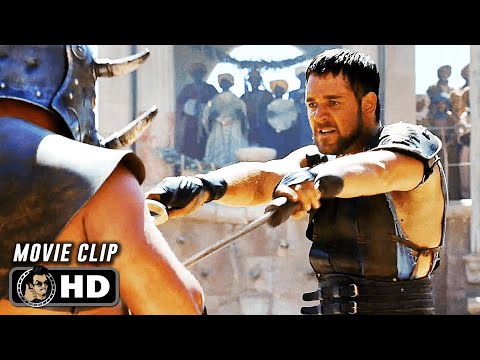
commander en 30 secondes
- A commander is a formal leader in charge of a group, typically in military, police, or emergency contexts, responsible for giving orders and making decisions.
- The term implies a high level of authority and accountability, where the individual is legally or organizationally empowered to direct the actions of others.
- Commonly used as a title (e.g., Commander Smith), it signifies both a specific rank in some forces and a general role of leadership in others.
- Key attributes of a commander include strategic thinking, the ability to remain calm under pressure, and the responsibility for the safety and success of their unit.
The word commander is a powerful noun that describes a person who holds a position of significant authority. At its core, a commander is someone who gives orders and expects them to be followed. While most commonly associated with the military—where a commander might lead a company, a ship, or an entire base—the term extends into various organizational structures. In a broader sense, it represents the pinnacle of decision-making within a specific hierarchy. When you hear this word, you should visualize someone standing at the front, analyzing a situation, and providing the strategic direction necessary for a group to achieve a complex objective. It is not just about having a title; it is about the responsibility of leadership and the weight of the consequences that follow every decision made. In modern English, we use this term to denote respect for someone's expertise and their legal or organizational right to lead. Whether it is a police commander managing a precinct or a mission commander at NASA overseeing a space flight, the essence remains the same: they are the ultimate point of accountability.
- Military Context
- In the armed forces, a commander is a specific rank or a role assigned to an officer who has total authority over a unit. This includes the legal power to discipline subordinates and the tactical responsibility for the unit's success or failure in combat.
The naval commander stood on the bridge of the ship, calmly surveying the horizon as the fleet prepared for the upcoming maneuvers.
- Emergency Services
- In police and fire departments, a commander often oversees a specific geographic area or a specialized task force, ensuring that resources are deployed effectively during crises.
Furthermore, the term carries a historical weight. Throughout history, great commanders like Alexander the Great or Napoleon Bonaparte have been studied not just for their victories, but for their ability to inspire loyalty and manage the logistics of vast armies. In a contemporary setting, calling someone a 'commander' in a non-official capacity can sometimes be metaphorical, suggesting they have a commanding presence or naturally take charge of situations. This versatility makes the word essential for discussing power dynamics in both formal and informal settings. When using the word, consider the level of formality; it is rarely used in casual office environments unless referring to a specific job title. Instead, it thrives in environments where life-and-death decisions or high-stakes operations are the norm. The word evokes a sense of discipline, order, and the structured hierarchy that keeps complex systems functioning smoothly.
As the incident commander, she was responsible for coordinating the efforts of five different emergency response agencies during the flood.
- Space Exploration
- On the International Space Station, the commander is the individual responsible for the safety of the crew and the success of the mission, acting as the primary link to ground control.
The mission commander gave the final 'go' for the rocket launch after verifying all systems were operational.
The battalion commander reviewed the troops before the morning parade began.
Even in the kitchen, the head chef acted as a commander, directing his staff with military precision.
Using the word commander correctly requires an understanding of its grammatical role as a countable noun and its typical placement within a sentence. Most often, it functions as the subject of a sentence, performing an action of leadership or decision-making. For example, 'The commander ordered a retreat.' Here, the word is the primary actor. It can also serve as a direct object, as in 'The soldiers followed their commander.' In this instance, the commander is the recipient of the soldiers' loyalty and obedience. When using the word, it is common to specify what kind of commander they are by using a preceding adjective or a following prepositional phrase. Phrases like 'military commander,' 'wing commander,' or 'commander of the local police' provide necessary context. Without these qualifiers, the listener might assume a military context by default, as that is the word's most frequent association. You can also use it as a title before a name, such as 'Commander Smith,' which is capitalized. In this usage, it functions similarly to 'Captain' or 'General'.
- Subject Position
- The commander decided to change the strategy at the last minute to ensure the safety of his team.
Every commander knows that communication is the key to a successful operation.
- Object Position
- The president met with the regional commander to discuss the ongoing security situation.
In more complex sentence structures, 'commander' can be part of a compound subject or object. For instance, 'The commander and his staff spent hours planning the logistics.' It can also be modified by relative clauses to add more detail: 'The commander, who had served for twenty years, was highly respected by everyone in the regiment.' This allows for a richer description of the individual's character or history. Additionally, the word can be used in the possessive form to describe things belonging to or associated with the leader, such as 'the commander's quarters' or 'the commander's intent.' Understanding 'commander's intent' is particularly important in leadership studies, as it refers to the desired end state of an operation, allowing subordinates to exercise initiative if the original plan fails. By mastering these different ways to integrate the word into your speech and writing, you can more accurately describe authority figures and the structures they inhabit.
The deputy commander assumed control of the base while the senior officer was away on leave.
- Possessive Usage
- We must strictly adhere to the commander's orders if we want this mission to succeed.
A great commander leads by example, not just by giving instructions from a distance.
The search and rescue commander coordinated the helicopters and ground teams from the mobile command center.
The supreme commander of the allied forces held a press conference to announce the end of the conflict.
You will encounter the word commander in a variety of real-world settings, ranging from formal news broadcasts to popular entertainment. In the realm of journalism, the word is frequently used when reporting on international conflicts, military exercises, or domestic security issues. News anchors might say, 'The regional commander has issued a statement regarding the border situation.' This usage highlights the official and authoritative nature of the person being discussed. In the world of cinema and television, particularly in the science fiction and action genres, 'commander' is a staple title. Think of iconic characters like Commander Shepard from the 'Mass Effect' video games or Commander William Riker from 'Star Trek: The Next Generation.' In these fictional contexts, the word serves to immediately establish the character's competence, rank, and leadership role within their respective universes. It gives the audience a clear understanding of where that character stands in the hierarchy of the story.
- News Media
- Journalists use 'commander' to identify high-ranking officials in the military or police when reporting on operations, policy changes, or official statements.
According to the police commander, the new safety measures have already led to a decrease in local crime rates.
- Entertainment & Fiction
- In movies and games, 'commander' is often used as a title for the protagonist or a key supporting character to denote their status as a leader of a team or vessel.
Beyond media, you might hear the word in professional environments that use a paramilitary structure. This includes organizations like the Coast Guard, certain branches of the civil service, or large-scale humanitarian aid groups. During a major disaster, such as a hurricane or earthquake, the 'incident commander' is the person who manages the entire response on the ground. You might hear this term used in briefings or during emergency broadcasts. In a more historical or academic setting, you will find 'commander' used in history books and documentaries to describe the leaders of past wars. Phrases like 'the commander of the continental army' or 'tank commanders in World War II' are common. Even in sports, though less common, a coach might be described as a 'commander on the field' if they have a particularly forceful and authoritative style. This shows how the word's meaning of 'one who is in charge' can be applied to many different areas of life where leadership is required.
The Apollo 11 commander, Neil Armstrong, was the first human to set foot on the moon.
- Historical Documents
- History textbooks use the term to describe the strategic leaders of various military campaigns throughout human history.
The ship's commander was forced to make a difficult choice during the storm to save the crew.
The fire commander directed the teams to focus on the north side of the building to prevent the fire from spreading.
In the movie, the rebel commander gave a stirring speech before the final battle.
One of the most frequent mistakes learners make with the word commander is confusing it with other leadership titles like 'leader,' 'boss,' or 'manager.' While all these words refer to people in charge, 'commander' has a much more formal and often military connotation. You wouldn't typically call your manager at a retail store a 'commander' unless you were being sarcastic or humorous. Using it in a casual business setting can sound misplaced or overly dramatic. Another common error involves the capitalization of the word. Like many titles, 'commander' should only be capitalized when it is used as a specific title before a person's name (e.g., Commander Jackson) or when referring to a specific, unique office (e.g., the Commander-in-Chief). When used generally, such as 'he is a good commander,' it should remain in lowercase. Learners also sometimes struggle with the preposition that follows the word. While 'commander of' is the most common and standard form (e.g., commander of the fleet), some mistakenly use 'commander for' or 'commander over,' which are less natural in English.
- Confusing with 'Leader'
- 'Leader' is a broad term for anyone who guides others. 'Commander' is a specific title within a structured hierarchy, usually with legal authority.
Incorrect: My office commander told me to finish the report. (Better: My manager/boss told me...)
- Capitalization Errors
- Capitalize 'Commander' only when it's a title before a name. Use lowercase when it's a general noun.
Additionally, some learners confuse 'commander' with 'commandant.' While related, a 'commandant' is usually the head of a particular school, training center, or a specific military branch (like the Commandant of the Marine Corps), whereas 'commander' is a more general term for someone in charge of a unit or operation. Another nuance is the difference between 'commander' and 'commanding officer' (CO). In military parlance, the CO is the person currently in charge of a specific unit, while 'commander' can refer to the rank itself. Forgetting the 'er' at the end and just saying 'command' is another mistake; 'command' is the verb or the noun for the authority itself, while 'commander' is the person who holds that authority. Finally, ensure you don't use 'commander' to describe someone who is just bossy or controlling in a social situation; the word 'commanding' (adjective) is better for describing a personality trait, while 'commander' is a formal role.
Incorrect: He is the command of the ship. (Correct: He is the commander of the ship.)
- Preposition Usage
- Always use 'commander of [something]' rather than 'commander for [something]'.
Correct: She was appointed as the commander of the task force.
The commander's decision was final, and no one dared to question it.
Is Commander Lee available for the meeting this afternoon?
Understanding the synonyms and alternatives for commander helps you choose the most precise word for your context. While 'leader' is the most general alternative, it lacks the formal authority implied by 'commander.' A leader can be anyone people choose to follow, whereas a commander is usually appointed. 'Chief' is another close synonym, often used in titles like 'Chief of Police' or 'Chief Executive Officer.' It implies being at the very top of a hierarchy. 'Captain' is frequently used interchangeably with 'commander' in naval or aviation contexts, but in many military structures, 'Captain' is a specific rank that is lower than 'Commander.' In a business or administrative setting, words like 'director,' 'manager,' or 'supervisor' are much more appropriate. These words focus on the management of tasks and people rather than the exercise of tactical or legal authority. For someone who leads a very large group, 'general' or 'admiral' might be the correct specific military rank, whereas 'commander' is more flexible.
- Commander vs. Leader
- A commander has formal, often legal authority. A leader may have influence based on personality or expertise without a formal title.
While he was the official commander, it was his sergeant who was the true leader of the men.
- Commander vs. Chief
- 'Chief' often refers to the single highest person in an organization, while there can be many commanders at different levels of a hierarchy.
Other words to consider include 'superior,' which emphasizes the rank difference between two people, and 'head,' which is a simple, informal way to say someone is in charge (e.g., 'head of the department'). In historical contexts, you might see 'chieftain' or 'warlord,' though these carry very different cultural and often negative connotations compared to the professional 'commander.' 'Commandant' is a specific type of commander, usually of a military academy or a specific corps. If you are looking for a word that describes someone who takes control in a more forceful or perhaps even dictatorial way, 'boss' or 'ruler' might be used, though they lack the professional nuance of 'commander.' By comparing these terms, you can see that 'commander' occupies a specific niche: it is formal, authoritative, usually professional, and deeply tied to structured organizations where clear lines of authority are necessary for success.
The commander of the garrison was replaced by a more experienced director of operations.
- Commander vs. Captain
- In the Navy, a Commander (O-5) is one rank below a Captain (O-6). In general usage, both can refer to the person in charge of a ship.
He acted as the commander of the expedition, making all the final calls on which path to take.
The police commander and the city's chief of staff worked together on the new security protocol.
The air force commander authorized the mission after receiving clearance from the government.
How Formal Is It?
Le savais-tu ?
The word 'command' and 'commend' (to praise) share the same Latin root 'mandare,' showing how giving an order was originally seen as 'entrusting' a task to someone.
Guide de prononciation
- Stressing the first syllable (COM-mander).
- Pronouncing the 'o' too clearly (it should be a soft 'uh' sound).
- Confusing the vowel sound in the second syllable between UK and US versions.
- Dropping the 'n' sound in the middle.
- Adding an extra syllable (com-man-de-er).
Niveau de difficulté
Common in news and fiction, easy to recognize.
Requires correct spelling and understanding of formal titles.
Clear pronunciation but requires correct stress.
Easily distinguishable in most accents.
Quoi apprendre ensuite
Prérequis
Apprends ensuite
Avancé
Grammaire à connaître
Capitalization of Titles
We met Commander Smith, but he is a commander in the Navy.
Possessive Nouns
The commander's office is at the end of the hall.
Countable Nouns
There were three commanders present at the meeting.
Prepositional Phrases
She is the commander of the local unit.
Agent Nouns (-er suffix)
A commander is one who commands.
Exemples par niveau
The commander is a brave man.
Le commandant est un homme courageux.
Subject + Verb + Complement
He is the commander of the ship.
Il est le commandant du navire.
Use 'of' to show what they lead.
The commander says 'Stop!'
Le commandant dit 'Arrêtez !'
Present simple for a general action.
I want to be a commander one day.
Je veux être un commandant un jour.
Use 'a' before 'commander' as it's a job.
The commander has a big map.
Le commandant a une grande carte.
Possession with 'has'.
Where is the commander?
Où est le commandant ?
Question form with 'Where'.
The commander wears a green uniform.
Le commandant porte un uniforme vert.
Adjective 'green' before the noun 'uniform'.
Listen to the commander.
Écoutez le commandant.
Imperative sentence.
The police commander arrived at the scene.
Le commandant de police est arrivé sur les lieux.
Past simple for a completed action.
She is the first female commander in our unit.
Elle est la première femme commandant de notre unité.
Ordinal number 'first' before the noun.
The commander gave a speech to the soldiers.
Le commandant a prononcé un discours devant les soldats.
Indirect object 'to the soldiers'.
We must follow the commander's orders.
Nous devons suivre les ordres du commandant.
Possessive 's' to show ownership of the orders.
The commander looked at the soldiers.
Le commandant a regardé les soldats.
Preposition 'at' after the verb 'look'.
The new commander is very young.
Le nouveau commandant est très jeune.
Adjective 'new' modifying the noun.
The commander lives in a large house.
Le commandant habite dans une grande maison.
Present simple for a state.
Did you see the commander today?
As-tu vu le commandant aujourd'hui ?
Question with 'Did' for past tense.
The mission commander decided to abort the flight.
Le commandant de mission a décidé d'interrompre le vol.
Infinitive 'to abort' after the verb 'decided'.
The battalion commander was responsible for the training.
Le commandant de bataillon était responsable de l'entraînement.
Adjective 'responsible' followed by 'for'.
He was promoted to the rank of commander last year.
Il a été promu au grade de commandant l'année dernière.
Passive voice 'was promoted'.
The commander's strategy was successful in the end.
La stratégie du commandant a finalement réussi.
Possessive 's' with the noun 'strategy'.
The regional commander oversees all local operations.
Le commandant régional supervise toutes les opérations locales.
Present simple for a regular duty.
The commander thanked the team for their hard work.
Le commandant a remercié l'équipe pour son travail acharné.
Verb 'thanked' followed by 'for'.
The commander remained calm during the crisis.
Le commandant est resté calme pendant la crise.
Linking verb 'remained' with adjective 'calm'.
The commander and his staff met in the morning.
Le commandant et son état-major se sont réunis le matin.
Compound subject 'The commander and his staff'.
The incident commander coordinated the emergency response.
Le commandant d'intervention a coordonné la réponse d'urgence.
Specific compound noun 'incident commander'.
The commander exercised his authority to settle the dispute.
Le commandant a exercé son autorité pour régler le différend.
Infinitive of purpose 'to settle'.
The supreme commander issued a formal statement to the press.
Le commandant suprême a fait une déclaration officielle à la presse.
Adjective 'supreme' used as a formal title.
The commander's intent was clearly understood by all officers.
L'intention du commandant a été clairement comprise par tous les officiers.
Passive voice with 'by' to show the agent.
The commander was forced to make a split-second decision.
Le commandant a été contraint de prendre une décision en une fraction de seconde.
Compound adjective 'split-second'.
The naval commander ordered the fleet to change course.
Le commandant naval a ordonné à la flotte de changer de cap.
Verb 'ordered' + object + infinitive.
The commander's leadership was tested during the long siege.
Le leadership du commandant a été mis à l'épreuve pendant le long siège.
Abstract noun 'leadership' in the possessive.
The deputy commander assumed control while the chief was away.
Le commandant adjoint a pris le contrôle pendant l'absence du chef.
Subordinate clause starting with 'while'.
The commander's strategic brilliance was evident in the campaign's success.
Le brio stratégique du commandant était évident dans le succès de la campagne.
Possessive used with an abstract noun phrase.
The commander maintained a stoic demeanor despite the mounting pressure.
Le commandant a gardé un comportement stoïque malgré la pression croissante.
Advanced vocabulary: 'stoic demeanor'.
The commander's authority is derived from the constitutional mandate.
L'autorité du commandant découle du mandat constitutionnel.
Passive voice with 'derived from'.
The commander sought to minimize casualties through careful planning.
Le commandant a cherché à minimiser les pertes grâce à une planification minutieuse.
Verb 'sought' followed by infinitive.
The commander's rapport with his troops was unparalleled.
Le rapport du commandant avec ses troupes était sans égal.
Advanced adjective 'unparalleled'.
The commander was tasked with stabilizing the volatile region.
Le commandant a été chargé de stabiliser la région instable.
Verb 'tasked with' + gerund.
The commander's decision-making process was scrutinized by the committee.
Le processus de prise de décision du commandant a été examiné par le comité.
Complex noun phrase as subject.
The commander acted as a liaison between the military and the local government.
Le commandant a servi de liaison entre l'armée et le gouvernement local.
Advanced noun 'liaison'.
The commander's actions were evaluated under the doctrine of command responsibility.
Les actions du commandant ont été évaluées selon la doctrine de la responsabilité du commandement.
Legal/technical terminology.
The commander's legacy is often debated by contemporary historians.
L'héritage du commandant est souvent débattu par les historiens contemporains.
Passive voice for ongoing debate.
The commander's tenure was marked by significant institutional reform.
Le mandat du commandant a été marqué par une réforme institutionnelle importante.
Advanced noun 'tenure'.
The commander's intuitive grasp of the battlefield was legendary.
La compréhension intuitive du champ de bataille par le commandant était légendaire.
Advanced noun phrase 'intuitive grasp'.
The commander navigated the complex geopolitical landscape with finesse.
Le commandant a navigué dans le paysage géopolitique complexe avec finesse.
Metaphorical use of 'navigated'.
The commander's autobiography offers a profound insight into the burden of leadership.
L'autobiographie du commandant offre un aperçu profond du fardeau du leadership.
Gerund phrase 'burden of leadership'.
The commander's strategic calculus shifted following the intelligence report.
Le calcul stratégique du commandant a changé suite au rapport de renseignement.
Advanced noun 'calculus'.
The commander's resolve remained unshaken despite the overwhelming odds.
La détermination du commandant est restée inébranlable malgré les probabilités écrasantes.
Advanced adjective 'unshaken'.
Collocations courantes
Phrases Courantes
— The person who is next in authority after the commander.
As second in command, she takes over if the leader is absent.
— The hierarchy of authority in an organization.
You must follow the chain of command when reporting an issue.
— Being led or controlled by a specific person.
The troops were under the command of a seasoned veteran.
— To take control of a situation or group.
He had to take command when the situation became chaotic.
— To give up or hand over control to someone else.
The general will relinquish command at the end of the month.
— To officially take over a position of authority.
She will assume command of the precinct on Monday.
— The person who has supreme authority over the armed forces.
The President is the commander-in-chief of the military.
— A personality that naturally draws attention and respect.
She has a commanding presence that fills the room.
— Official instructions given by the person in charge.
We are waiting for orders from the commander before we move.
— The ultimate goal or purpose of an operation as defined by the leader.
Understanding the commander's intent allows for flexibility.
Souvent confondu avec
A commandant is usually the head of a specific school or a whole branch, while a commander is more general.
A commender is someone who praises, but this word is almost never used today.
Command is the power or the order itself; the commander is the person.
Expressions idiomatiques
— Ready to do whatever someone asks.
He had a fleet of cars at his command.
formal— To behave in a way that makes people respect you.
Her deep knowledge of the subject commands respect.
neutral— To be in a position where you can see a large area.
The hotel room commands a view of the entire bay.
neutral— To be expensive because of high quality or demand.
Rare vintage cars command a high price at auction.
neutral— To have a complete and thorough understanding of information.
The lawyer was fully in command of the facts of the case.
formal— A performance given at the request of a monarch or high official.
The band gave a command performance for the visiting queen.
formal— To be so interesting or important that people must notice.
The bright colors of the painting command attention.
neutral— A short, clear order given to soldiers or animals.
At the word of command, the soldiers turned left.
formal— A large advantage in a competition that is hard to overcome.
The runner had a commanding lead by the final lap.
neutral— To start acting as the leader of a group.
She was asked to take the command of the new task force.
neutralFacile à confondre
Both mean someone in charge.
Commander is a formal, often military title with legal authority; leader is general and can be informal.
He is the leader of our hiking group, but she is the commander of the army unit.
Both are ranks and roles on ships.
In the Navy, Captain is a higher rank than Commander. In general use, both can mean the person in charge of a ship.
The Commander reported to the Captain on the aircraft carrier.
Both manage groups of people.
Manager is used in business; commander is used in military/paramilitary contexts.
The office manager handles the schedule, while the police commander handles the crime scene.
Both are high-level titles.
Chief usually refers to the single top person (Chief of Police); commander can refer to leaders at various levels.
The Chief of Staff spoke with the regional commander.
Both oversee operations.
Director is administrative/creative; commander is operational/tactical.
The movie director gave instructions to the actors, while the mission commander gave instructions to the astronauts.
Structures de phrases
The commander is [adjective].
The commander is tall.
He is the commander of [group].
He is the commander of the team.
The commander ordered [someone] to [verb].
The commander ordered the soldiers to wait.
As the [type] commander, she [action].
As the incident commander, she managed the fire.
The commander's [noun] was [adjective].
The commander's leadership was exceptional.
Under the doctrine of [noun], the commander [action].
Under the doctrine of command responsibility, the commander was held liable.
The commander was promoted to [rank].
The commander was promoted to captain.
It was the commander who [action].
It was the commander who made the final call.
Famille de mots
Noms
Verbes
Adjectifs
Apparenté
Comment l'utiliser
Common in specific domains (Military, News, Fiction).
-
Using 'commander' for a regular office boss.
→
Using 'manager' or 'supervisor'.
Commander is too formal and military for a standard office environment.
-
Spelling it as 'comander'.
→
Commander.
The word requires two 'm's.
-
Saying 'He is commander of the ship' without an article.
→
He is THE commander of the ship.
Commander is a countable noun and usually needs an article.
-
Confusing 'commander' with 'command'.
→
He is in command (noun) / He is the commander (person).
'Command' is the authority; 'commander' is the person who has it.
-
Capitalizing 'commander' in the middle of a sentence when it's not a title.
→
The commander gave an order.
Only capitalize when used as a title before a name.
Astuces
Context Matters
Always consider the setting. Use 'commander' for military, police, or high-stakes emergency scenarios to sound more natural.
Capitalization
Remember to capitalize 'Commander' when it's used as a title before a name, like 'Commander Shepard'.
Synonym Choice
If you want to sound less military, use 'director' or 'head' instead of 'commander'.
Stress the Middle
Make sure to put the emphasis on the 'man' part of the word: com-MAN-der.
Precision
Specify the type of commander (e.g., 'naval commander') to give your reader a clearer picture.
Respect
Using the title 'Commander' shows respect for the person's rank and authority.
Double M
Don't forget the second 'm'. It's 'commander', not 'comander'.
News Clues
When you see 'commander' in a headline, look for words like 'forces', 'precinct', or 'mission' to find the context.
Command Respect
Use the phrase 'command respect' to describe someone who is naturally impressive and authoritative.
Word Family
Learn 'command' (verb) and 'commanding' (adjective) alongside 'commander' to expand your vocabulary quickly.
Mémorise-le
Moyen mnémotechnique
Think of a 'Common Man' who becomes a 'Commander' to lead his people. The 'COM' is for Common, and 'MAN' is for the person leading.
Association visuelle
Imagine a person standing on the bridge of a large ship, wearing a hat with gold trim, pointing forward into the storm.
Word Web
Défi
Try to use the word 'commander' in three different sentences today: one about the military, one about the police, and one about a space mission.
Origine du mot
Derived from the Old French word 'comander,' which comes from the Late Latin 'commandare.' This Latin root is a combination of 'com-' (an intensive prefix) and 'mandare' (to entrust or to order).
Sens originel : To entrust something to someone or to give a formal order.
Indo-European (Latin branch)Contexte culturel
Be aware that in some countries with a history of military dictatorships, the term 'commander' might have negative or sensitive political connotations.
In the US, 'Commander' is a common rank in the Navy and Coast Guard. In the UK, it is also a rank in the Royal Navy and a high rank in the Metropolitan Police.
Pratique dans la vie réelle
Contextes réels
Military
- Chain of command
- Commanding officer
- Field commander
- Relieve of command
Police
- Precinct commander
- Incident commander
- Command center
- Order of command
Space/Aviation
- Mission commander
- Payload commander
- Flight commander
- Command module
Emergency Services
- Fire commander
- Search and rescue commander
- On-scene commander
- Command post
Historical/Literature
- Supreme commander
- Commander of the forces
- Great commander
- Fallen commander
Amorces de conversation
"What qualities do you think a great military commander should have?"
"If you were a mission commander on a trip to Mars, what would be your first order?"
"Have you ever seen a movie where the commander was the main character?"
"Do you think it's harder to be a police commander or a military commander?"
"How does the role of a commander differ from a regular manager in an office?"
Sujets d'écriture
Write about a time you had to take command of a situation. What happened?
Describe the ideal commander. What do they look like and how do they act?
If you were the commander of a ship, where would you sail and why?
Reflect on the responsibility a commander has for their team's safety.
How would you feel if you were promoted to be the commander of a large group?
Questions fréquentes
10 questionsIn the US Navy and Royal Navy, a Commander is one rank below a Captain. However, in the Army, a Captain is a lower rank than a Lieutenant Colonel (who might be a battalion commander). It depends on the specific service.
Yes, 'commander' is a gender-neutral term and is used for both men and women in all professional contexts.
The Commander-in-Chief is the person with supreme authority over a nation's entire military forces. In the US, this is the President.
In a formal setting, you address them as 'Commander' followed by their last name, or simply as 'Commander' or 'Sir/Ma'am' if you are a subordinate.
No, it is also used in the police, fire departments, NASA, and in emergency management roles like 'incident commander'.
It means to take control of a situation, especially when things are disorganized or when the previous leader is no longer available.
A commander has a formal, official title and legal authority. A leader is anyone who has followers, regardless of their official title.
It is not a very common last name, but it does exist as a surname in some English-speaking regions.
It would sound very strange or sarcastic. It's better to use 'manager' or 'boss' for retail or service jobs.
A Wing Commander is a senior rank in many air forces, typically in charge of a 'wing,' which consists of several squadrons of aircraft.
Teste-toi 200 questions
Write a sentence using 'commander' to describe a leader on a ship.
Well written! Good try! Check the sample answer below.
Explain the role of a commander in your own words.
Well written! Good try! Check the sample answer below.
Write a short story (3 sentences) about a mission commander.
Well written! Good try! Check the sample answer below.
Compare a 'commander' to a 'manager'.
Well written! Good try! Check the sample answer below.
Write a formal sentence using 'Commander' as a title.
Well written! Good try! Check the sample answer below.
Describe a situation where someone might need to 'take command'.
Well written! Good try! Check the sample answer below.
What qualities make a good commander? List three.
Well written! Good try! Check the sample answer below.
Write a sentence using the phrase 'chain of command'.
Well written! Good try! Check the sample answer below.
Use 'commander' in a sentence about the police.
Well written! Good try! Check the sample answer below.
Write a sentence about a historical commander.
Well written! Good try! Check the sample answer below.
Describe the 'commander's intent' for a school project.
Well written! Good try! Check the sample answer below.
Write a sentence using 'commander' in the possessive form.
Well written! Good try! Check the sample answer below.
Use 'commander' in a sentence about a space mission.
Well written! Good try! Check the sample answer below.
Write a sentence about a 'deputy commander'.
Well written! Good try! Check the sample answer below.
Explain why a commander needs to be calm.
Well written! Good try! Check the sample answer below.
Write a sentence using 'commander' and 'authority'.
Well written! Good try! Check the sample answer below.
Describe a 'commanding presence'.
Well written! Good try! Check the sample answer below.
Write a sentence about an 'incident commander'.
Well written! Good try! Check the sample answer below.
Use 'commander' in a sentence about a sports team (metaphorically).
Well written! Good try! Check the sample answer below.
Write a sentence about 'relinquishing command'.
Well written! Good try! Check the sample answer below.
Say the word 'commander' three times, focusing on the stress on the second syllable.
Read this aloud:
Tu as dit :
Speech recognition is not supported in your browser. Try Chrome or Edge.
Introduce yourself as 'Commander [Your Name]'.
Read this aloud:
Tu as dit :
Speech recognition is not supported in your browser. Try Chrome or Edge.
Give a short order as if you were a commander.
Read this aloud:
Tu as dit :
Speech recognition is not supported in your browser. Try Chrome or Edge.
Explain why a commander is important in a group.
Read this aloud:
Tu as dit :
Speech recognition is not supported in your browser. Try Chrome or Edge.
Describe a famous commander you know about.
Read this aloud:
Tu as dit :
Speech recognition is not supported in your browser. Try Chrome or Edge.
Talk about a time you had to lead a team.
Read this aloud:
Tu as dit :
Speech recognition is not supported in your browser. Try Chrome or Edge.
Discuss the difference between a commander and a boss.
Read this aloud:
Tu as dit :
Speech recognition is not supported in your browser. Try Chrome or Edge.
How would you feel if you were the commander of a space mission?
Read this aloud:
Tu as dit :
Speech recognition is not supported in your browser. Try Chrome or Edge.
Pronounce the phrase 'chain of command' clearly.
Read this aloud:
Tu as dit :
Speech recognition is not supported in your browser. Try Chrome or Edge.
What is the most difficult part of being a commander?
Read this aloud:
Tu as dit :
Speech recognition is not supported in your browser. Try Chrome or Edge.
Describe the uniform of a commander.
Read this aloud:
Tu as dit :
Speech recognition is not supported in your browser. Try Chrome or Edge.
Use 'commander' in a sentence about a police officer.
Read this aloud:
Tu as dit :
Speech recognition is not supported in your browser. Try Chrome or Edge.
Explain the phrase 'command respect'.
Read this aloud:
Tu as dit :
Speech recognition is not supported in your browser. Try Chrome or Edge.
What would you do if you were the commander of a ship in a storm?
Read this aloud:
Tu as dit :
Speech recognition is not supported in your browser. Try Chrome or Edge.
Describe a 'commanding lead' in a race.
Read this aloud:
Tu as dit :
Speech recognition is not supported in your browser. Try Chrome or Edge.
Why do commanders need to have a 'commanding presence'?
Read this aloud:
Tu as dit :
Speech recognition is not supported in your browser. Try Chrome or Edge.
Talk about a commander from a movie or video game.
Read this aloud:
Tu as dit :
Speech recognition is not supported in your browser. Try Chrome or Edge.
Pronounce 'incident commander' correctly.
Read this aloud:
Tu as dit :
Speech recognition is not supported in your browser. Try Chrome or Edge.
How does a commander show they are in charge?
Read this aloud:
Tu as dit :
Speech recognition is not supported in your browser. Try Chrome or Edge.
What is the role of a 'deputy commander'?
Read this aloud:
Tu as dit :
Speech recognition is not supported in your browser. Try Chrome or Edge.
Listen and identify the word: 'The commander gave the order.'
Listen and identify the rank: 'He was promoted to Commander.'
Listen and identify the context: 'The mission commander checked the oxygen levels.'
Listen and identify the phrase: 'You must follow the chain of command.'
Listen and identify the adjective: 'She has a commanding voice.'
Listen and identify the person: 'The incident commander is on the radio.'
Listen and identify the possessive: 'That is the commander's office.'
Listen and identify the plural: 'The commanders met at the base.'
Listen and identify the title: 'Commander Smith, please come forward.'
Listen and identify the action: 'The commander took command of the unit.'
Listen and identify the service: 'The naval commander was at sea.'
Listen and identify the goal: 'The commander's intent was clear.'
Listen and identify the role: 'He is the second in command.'
Listen and identify the state: 'The commander remained calm.'
Listen and identify the rank: 'The wing commander led the flight.'
/ 200 correct
Perfect score!
Summary
A commander is more than just a leader; they are an official authority figure in a structured hierarchy who bears the ultimate responsibility for their group's actions and outcomes. Example: 'The incident commander managed the complex rescue operation with precision.'
- A commander is a formal leader in charge of a group, typically in military, police, or emergency contexts, responsible for giving orders and making decisions.
- The term implies a high level of authority and accountability, where the individual is legally or organizationally empowered to direct the actions of others.
- Commonly used as a title (e.g., Commander Smith), it signifies both a specific rank in some forces and a general role of leadership in others.
- Key attributes of a commander include strategic thinking, the ability to remain calm under pressure, and the responsibility for the safety and success of their unit.
Context Matters
Always consider the setting. Use 'commander' for military, police, or high-stakes emergency scenarios to sound more natural.
Capitalization
Remember to capitalize 'Commander' when it's used as a title before a name, like 'Commander Shepard'.
Synonym Choice
If you want to sound less military, use 'director' or 'head' instead of 'commander'.
Stress the Middle
Make sure to put the emphasis on the 'man' part of the word: com-MAN-der.