









dermis en 30 secondes
- The dermis is the middle layer of the skin, located beneath the epidermis and above the hypodermis, providing essential structural support and elasticity.
- It contains vital components such as blood vessels, nerves, hair follicles, and glands, making it the 'living' and functional part of the skin.
- Commonly referred to as the 'true skin,' the dermis is primarily composed of collagen and elastin, which are critical for maintaining a youthful appearance.
- In medical and skincare contexts, the dermis is the target for deep-level treatments, including tattoo ink placement and anti-aging procedures like microneedling.
The word dermis refers to the substantial, living layer of tissue located immediately beneath the epidermis. While the epidermis acts as the waterproof shield of the body, the dermis is the engine room where the real biological work of the skin happens. It is often called the 'true skin' because it contains the complex structures that keep the skin alive, responsive, and elastic. In everyday conversation, you might not hear 'dermis' as often as 'skin,' but in medical, scientific, and skincare contexts, it is a fundamental term. When a dermatologist discusses deep-seated issues like scarring, wrinkles, or severe burns, they are almost always referring to the state of the dermis. Understanding this term requires a shift from looking at the skin as a simple surface to viewing it as a multi-layered organ system. The dermis is primarily composed of dense irregular connective tissue, which provides the tensile strength and elasticity that allows our skin to stretch and return to its original shape. Without a healthy dermis, our bodies would lack the necessary cushioning and structural integrity to protect internal organs from mechanical stress.
- Biological Classification
- The dermis is the middle layer of the integumentary system, situated between the epidermis (outer layer) and the hypodermis (subcutaneous fat layer).
The surgeon carefully sutured the deep incision, ensuring that the edges of the dermis were perfectly aligned to minimize scarring.
In the realm of aesthetics and skincare, the dermis is the 'holy grail' for anti-aging treatments. Most topical creams only affect the epidermis, but procedures like microneedling or laser therapy aim to reach the dermis to stimulate collagen production. Collagen and elastin are the two primary proteins found in this layer; collagen provides strength, while elastin provides the 'snap-back' quality. As we age, the dermis thins and these proteins break down, leading to the visible signs of aging. Therefore, when people talk about 'deep hydration' or 'cellular repair,' they are linguistically and biologically targeting the dermis. It is also the site where hair follicles originate and where sweat and oil glands reside. When you feel a sharp pain from a needle or a hot surface, it is the nerve endings within your dermis sending signals to your brain. It is a highly vascularized area, meaning it is full of blood vessels that help regulate body temperature by dilating or constricting.
- Clinical Context
- Second-degree burns are specifically defined by damage that extends through the epidermis and into the dermis, causing blistering and intense pain.
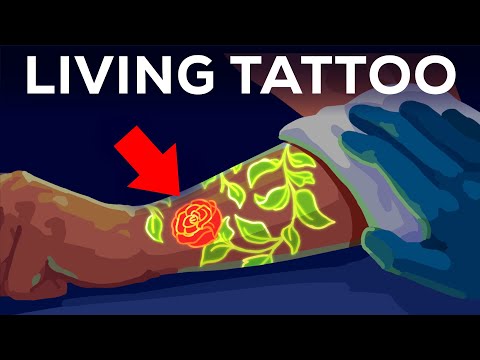
Tattoo ink must be deposited into the dermis to be permanent; if it only reached the epidermis, it would flake off within weeks.
Furthermore, the dermis plays a crucial role in the body's immune response. It contains specialized cells like macrophages and mast cells that fight off pathogens that manage to penetrate the outer layer. When you get a deep cut that bleeds, you have officially breached the dermis. This layer is also responsible for the unique patterns of our fingerprints, which are formed by the dermal papillae—tiny, finger-like projections that push up into the epidermis. In literature or metaphorical usage, one might refer to something being 'deep within the dermis' to imply it is intrinsic, permanent, or deeply felt, though this is less common than the literal biological usage. The word itself carries a weight of scientific precision, distinguishing a professional medical discussion from a casual observation about skin appearance.
The biopsy revealed that the melanoma had not yet invaded the dermis, which was a positive sign for the patient's prognosis.
- Etymological Note
- Derived from the Greek 'derma' (skin), the term highlights the layer's role as the primary structural component of the skin organ.
Leather is essentially the processed dermis of an animal, stripped of its hair and outer epidermis.
Chronic sun exposure causes solar elastosis, where the elastic fibers in the dermis become thick and disorganized.
Using the word dermis correctly requires an understanding of its position as a technical noun. It is rarely used in the plural unless referring to different types of skin or comparative anatomy. Most often, it appears in prepositional phrases like 'in the dermis,' 'through the dermis,' or 'of the dermis.' Because it is a specific anatomical term, it is frequently paired with adjectives that describe its condition, depth, or health. For instance, a 'thick dermis' might refer to the skin on the back, while a 'thin dermis' might describe the delicate skin around the eyes. When writing about biology or medicine, the word provides a level of precision that 'skin' lacks. If you say 'the needle entered the skin,' it is vague; if you say 'the needle reached the dermis,' you are providing a specific depth of penetration. This distinction is vital in fields like pharmacology, where the rate of drug absorption depends on which layer of the skin the medication is applied to or injected into.
- Common Verb Pairings
- The dermis is often the object of verbs like 'penetrate,' 'damage,' 'repair,' 'stimulate,' 'nourish,' and 'vascularize.'
Effective anti-aging serums are formulated with molecules small enough to pass through the epidermis and reach the dermis.
In academic writing, 'dermis' is often used in the possessive form or as a modifier. You might read about 'dermal thickness' or 'dermal-epidermal junctions.' When describing the physical properties of the skin, the dermis is the subject of sentences regarding elasticity and strength. For example, 'The dermis provides the structural framework for the skin through its network of collagen fibers.' In a more descriptive or narrative context, you might use 'dermis' to emphasize the severity of an injury or the depth of a sensation. If a character in a story feels a 'chill that reached the dermis,' it suggests a coldness that is more than just surface-level; it is a coldness that has penetrated deep into their being. However, be careful not to overuse it in casual storytelling, as it can sound overly clinical. Reserve it for moments where the biological reality of the skin is the focus of the scene.
- Adjective Collocations
- Commonly modified by: papillary, reticular, deep, superficial, healthy, damaged, vascular.
Because the dermis contains the nerve endings, any injury to this layer is significantly more painful than a surface scratch.
When comparing the dermis to other layers, use contrastive conjunctions. 'While the epidermis is constantly shedding cells, the dermis remains relatively stable, acting as a permanent reservoir for blood vessels and nerves.' This structure helps the reader understand the relationship between the different parts of the skin. In veterinary science, the term is used similarly. 'The dermis of a rhinoceros is incredibly thick, providing a natural armor against predators.' Here, the word helps convey the physical scale and function of the animal's skin. In summary, use 'dermis' when you want to be specific about the depth of an action, the location of a biological structure, or the medical status of the skin's internal layer. It elevates the register of your speech or writing from general to professional.
The inflammatory response in the dermis led to localized swelling and redness around the site of the insect bite.
- Scientific Precision
- Using 'dermis' instead of 'skin' in a lab report ensures that the reader knows exactly which tissue layer was analyzed or affected.
Advanced wound dressings are designed to maintain a moist environment that promotes the healing of the dermis.
The study measured the rate of collagen degradation within the dermis after prolonged UV exposure.
The word dermis is a staple in specific professional environments. If you walk into a dermatology clinic, you will hear it constantly. Doctors use it to explain the depth of a skin condition to their patients. For example, a dermatologist might say, 'This cyst is located deep in the dermis, so we will need to perform a minor excision to remove it.' In this setting, the word is used to manage patient expectations regarding the complexity and healing time of a procedure. Similarly, in the beauty and cosmetics industry, 'dermis' is a buzzword used to sell high-end products. Marketing materials for anti-aging creams often claim to 'penetrate the dermis' or 'rebuild dermal structures.' While the scientific accuracy of these claims varies, the use of the word itself is intended to sound authoritative and medically backed, appealing to consumers who want more than just surface-level results.
- Professional Settings
- Hospitals, skincare labs, tattoo studios, biology classrooms, and forensic science laboratories.
'The laser targets the pigment in the dermis without damaging the surrounding tissue,' the technician explained during the tattoo removal session.
Another place you will frequently encounter 'dermis' is in the tattoo industry. Tattoo artists are essentially experts in the anatomy of the dermis. They must know exactly how deep to push the needle; too shallow (epidermis) and the tattoo fades; too deep (hypodermis) and the ink 'blows out' or spreads uncontrollably. An artist might tell an apprentice, 'You need to feel the resistance of the dermis to know you're at the right depth.' This practical, hands-on application of the word shows its importance outside of purely academic circles. In forensic science, the dermis is also critical. Because the dermis does not shed like the epidermis, it can sometimes retain evidence of trauma or even fingerprints (dermal ridges) even if the outer layer of skin has been damaged or removed. Forensic pathologists use the state of the dermis to determine the age of wounds or the cause of death in certain cases.
- Educational Context
- In high school biology or college anatomy courses, the dermis is taught as a primary component of the integumentary system.
The textbook diagram showed the dermis as a complex web of fibers, vessels, and glands, distinct from the simpler epidermis above.
In the leather industry, though the word 'dermis' is less common than 'hide' or 'skin,' it is the technical term for what leather actually is. High-quality 'top-grain' leather is essentially the upper part of the dermis. When leather workers discuss the 'corium' (another name for the dermis), they are talking about the strength and durability of the material. Finally, in the world of fitness and health, you might hear about 'dermal health' in relation to nutrition. Health influencers might talk about how vitamin C and collagen supplements support the dermis from the inside out. While 'skin' is the general term used in these videos, 'dermis' is often brought in to add a layer of scientific credibility to the advice being given. Whether in a lab, a studio, or a classroom, 'dermis' is the word of choice when the conversation gets serious about what lies beneath the surface.
During the lecture on wound healing, the professor emphasized that the dermis must regenerate its vascular network before the epidermis can fully close.
- Consumer Marketing
- 'Our new formula reaches the deep dermis to stimulate natural elastin production for firmer skin.'
The esthetician explained that the chemical peel would remove the dead cells of the epidermis to reveal the healthier dermis underneath.
The athlete's 'road rash' was so severe that it had scraped away the epidermis, exposing the sensitive, bleeding dermis.
The most frequent mistake people make with the word dermis is confusing it with the 'epidermis.' While they sound similar and are part of the same organ, they are functionally and structurally very different. The epidermis is the thin, outer, non-vascularized layer, while the dermis is the thick, inner, vascularized layer. Using 'dermis' to describe a superficial paper cut is technically incorrect because a paper cut usually only affects the epidermis (which is why it doesn't always bleed). Another common error is using 'dermis' as a synonym for 'skin' in every situation. While the dermis is a part of the skin, it is not the *whole* skin. If you say, 'I have dry dermis,' it sounds strange and medically inaccurate, as dryness is typically a condition of the stratum corneum, the outermost part of the epidermis. You would instead say, 'I have dry skin' or 'my epidermis is dehydrated.'
- Confusing the Layers
- Mistake: 'The sun burned my dermis.' (Unless it's a severe 2nd-degree burn, the sun mostly burns the epidermis.)
Incorrect: 'I scratched my dermis on a bush.' Correct: 'I scratched my skin' or 'The scratch reached the dermis' (if it's deep and bleeding).
Another mistake involves the pronunciation and spelling of related words. Many learners confuse 'dermis' with 'dermal' or 'dermatology.' While 'dermis' is the noun (the thing), 'dermal' is the adjective (describing the thing). You wouldn't say 'dermis tissue'; you would say 'dermal tissue.' Similarly, 'dermatology' is the study of the skin, not just the dermis. Some people also mistakenly believe that the dermis is the bottom-most layer of the skin. In reality, there is a third layer called the hypodermis (or subcutaneous layer) beneath the dermis. Confusing the dermis with the hypodermis can lead to misunderstandings in medical contexts, especially regarding injections. Intradermal injections go into the dermis, while subcutaneous injections go into the fat layer below it.
- Misuse of Register
- Using 'dermis' in a very casual setting, like 'Pass me the lotion for my dermis,' can sound pretentious or unintentionally funny.
Mistake: 'The tattoo artist put the ink on the dermis.' Correct: 'The tattoo artist injected the ink *into* the dermis.'
Finally, there is a conceptual mistake where people think the dermis is just 'padding.' It is actually a very active organ layer. It regulates temperature, senses pain, and produces oil. Treating it as a passive layer of 'meat' under the skin ignores its vital physiological roles. In writing, avoid using 'dermis' as a vague filler word. If you aren't talking about the specific biological layer or its properties (like collagen, nerves, or blood vessels), 'skin' is usually the better, more natural choice. Only use 'dermis' when the depth or the specific biological components of that layer are relevant to your point. This will ensure your writing remains clear and professional without sounding like you're trying too hard to use 'big words.'
Incorrect: 'She has a very soft dermis.' Correct: 'She has very soft skin.' (Softness is a surface quality of the epidermis.)
- Preposition Errors
- People often say 'on the dermis' when they mean 'in the dermis.' Since it's a layer with thickness, things happen *within* or *in* it.
Correct: 'The infection spread within the dermis, requiring systemic antibiotics.'
Mistake: 'The dermis is the outer layer of skin.' Correct: 'The dermis is the layer beneath the epidermis.'
While dermis is a very specific term, there are several words that are related or can act as alternatives depending on the context. The most common general alternative is 'skin,' but as we've discussed, this is much less precise. In a medical or anatomical context, you might encounter the word 'corium.' This is an older term for the dermis, derived from the Latin word for 'leather.' While it is still used in some textbooks, 'dermis' has largely replaced it in modern clinical practice. Another related term is 'cutis,' which refers to the skin as a whole (epidermis and dermis combined). You might see this in the term 'subcutaneous,' meaning 'under the cutis.' Understanding these variations helps you navigate different types of scientific literature.
- Dermis vs. Epidermis
- The epidermis is the thin, protective outer layer; the dermis is the thick, functional inner layer containing blood vessels and nerves.
Unlike the epidermis, which sheds and replaces itself every few weeks, the dermis is a stable structure that provides long-term support.
In the context of animal biology, the word 'hide' is often used instead of 'dermis' or 'skin,' especially when referring to large mammals like cows or elephants. 'Hide' usually refers to the entire skin of the animal, but the part that is actually turned into leather is the dermis. In botany, there is a similar term called the 'endodermis' or 'exodermis,' which refers to layers of cells in roots. While these are not the same as the human dermis, the shared root 'dermis' (skin/layer) helps you understand that they serve as protective or structural barriers. Another word you might hear in a skincare context is 'matrix.' Skincare professionals often talk about the 'dermal matrix,' which refers to the network of collagen and elastin fibers within the dermis. Using 'matrix' emphasizes the structural, web-like nature of the tissue.
- Dermis vs. Hypodermis
- The dermis is the middle layer of tissue; the hypodermis is the deepest layer, consisting mostly of fat and connective tissue.
While the dermis houses the sweat glands, the hypodermis acts as an insulator and energy store for the body.
If you are looking for more poetic or literary alternatives, you might use words like 'flesh' or 'quick.' 'The quick' refers to the living, sensitive part of the skin or under the nails. Saying something 'cut to the quick' means it reached the sensitive, living tissue—essentially the dermis. However, these are metaphorical and should not be used in scientific writing. In summary, 'dermis' is the gold standard for anatomical accuracy. If you need to describe the skin's thickness, elasticity, or internal health, 'dermis' is the most appropriate term. If you are talking about the skin's appearance or general touch, 'skin' is usually sufficient. If you are reading older medical texts, be prepared to see 'corium' used in its place.
The researcher compared the dermis of various species to understand how different environments affect skin evolution.
- Dermis vs. Integument
- 'Integument' is a broad biological term for any natural outer covering (like skin, shell, or husk), whereas 'dermis' is a specific layer of vertebrate skin.
The doctor explained that the 'true skin' or dermis is what provides the necessary blood supply to the outer epidermis.
By stimulating the dermis with micro-currents, the facial treatment aims to lift and tone the underlying facial muscles.
How Formal Is It?
Le savais-tu ?
The word 'taxidermy' (the art of stuffing animal skins) shares the same root as 'dermis.' It literally means 'arrangement of skin.'
Guide de prononciation
- Pronouncing it as 'der-MEES'.
- Confusing it with 'dormice' (the plural of dormouse).
- Swapping the 'i' for an 'e' sound in the second syllable.
- Muttering the 'r' too much in non-rhotic accents.
- Adding an extra 's' at the end.
Niveau de difficulté
Requires some biological knowledge to fully understand the context.
Easy to spell but requires precision to use correctly in sentences.
Pronunciation is straightforward once learned.
Can be confused with 'epidermis' if the speaker is fast.
Quoi apprendre ensuite
Prérequis
Apprends ensuite
Avancé
Grammaire à connaître
Scientific Nouns
Technical terms like 'dermis' often take the definite article 'the' when referring to the human body.
Adjective Formation
The suffix '-al' is added to 'derm' to create the adjective 'dermal'.
Prefixes in Anatomy
The prefixes 'epi-' (above), 'hypo-' (below), and 'intra-' (within) are commonly used with 'dermis'.
Possessive of Nouns ending in S
The possessive form can be 'dermis's' or just 'dermis'' depending on the style guide.
Countable vs Uncountable
'Dermis' is countable, but we rarely use the plural because we usually talk about the layer as a single entity.
Exemples par niveau
The dermis is under the top layer of skin.
La dermis está debajo de la capa superior de la piel.
Use 'the' before 'dermis' because it is a specific part of the body.
The dermis has blood inside it.
La dermis tiene sangre por dentro.
The verb 'has' is used for singular third-person subjects.
A deep cut goes into the dermis.
Un corte profundo llega a la dermis.
'Into' shows movement towards the inside of something.
The dermis helps you feel pain.
La dermis te ayuda a sentir dolor.
'Help' is followed by the base form of the verb 'feel'.
Your dermis is thick and strong.
Tu dermis es gruesa y fuerte.
'Is' connects the subject to its descriptions.
The dermis is the middle part of the skin.
La dermis es la parte media de la piel.
'Middle' is an adjective describing 'part'.
Tattoos stay in the dermis.
Los tatuajes se quedan en la dermis.
'In' indicates the location of the ink.
The dermis is very important for your health.
La dermis es muy importante para tu salud.
'Very' is an adverb used to emphasize the adjective 'important'.
The dermis contains hair follicles and sweat glands.
La dermis contiene folículos pilosos y glándulas sudoríparas.
'Contains' is a formal way to say 'has inside'.
Collagen in the dermis makes your skin look young.
El colágeno en la dermis hace que tu piel se vea joven.
'Makes' is used here as a causative verb.
If you burn your dermis, it will blister.
Si te quemas la dermis, te saldrán ampollas.
This is a first conditional sentence (if + present, will + verb).
The dermis is much thicker than the epidermis.
La dermis es mucho más gruesa que la epidermis.
'Thicker than' is the comparative form of 'thick'.
Blood vessels in the dermis keep the skin warm.
Los vasos sanguíneos de la dermis mantienen la piel caliente.
'Keep' is used to describe a continuing state.
Doctors look at the dermis to find skin problems.
Los médicos examinan la dermis para encontrar problemas en la piel.
'To find' is an infinitive of purpose.
The dermis gives the skin its strength.
La dermis le da a la piel su fuerza.
'Its' is a possessive adjective referring to 'the skin'.
Nerves in the dermis send signals to the brain.
Los nervios de la dermis envían señales al cerebro.
'Send' is the action performed by the plural subject 'nerves'.
The dermis provides the structural support needed for the skin's elasticity.
La dermis proporciona el soporte estructural necesario para la elasticidad de la piel.
'Needed' is a past participle used as an adjective.
When you age, the dermis begins to lose its natural collagen.
Al envejecer, la dermis empieza a perder su colágeno natural.
'Begins to lose' describes a process starting over time.
A tattoo must reach the dermis to be permanent.
Un tatuaje debe llegar a la dermis para ser permanente.
'Must' expresses a necessity or requirement.
The dermis is highly vascularized, meaning it contains many blood vessels.
La dermis está muy vascularizada, lo que significa que contiene muchos vasos sanguíneos.
'Meaning' is used here to introduce an explanation.
Severe acne can cause inflammation deep within the dermis.
El acné severo puede causar inflamación en lo profundo de la dermis.
'Deep within' is a prepositional phrase showing location.
The dermis is responsible for regulating body temperature through sweating.
La dermis es responsable de regular la temperatura corporal a través del sudor.
'Responsible for' is followed by a gerund (-ing form).
Most skincare treatments aim to nourish the dermis directly.
La mayoría de los tratamientos para la piel pretenden nutrir la dermis directamente.
'Aim to' expresses a goal or intention.
The dermis is composed of two distinct layers: the papillary and reticular.
La dermis está compuesta por dos capas distintas: la papilar y la reticular.
'Is composed of' is a passive construction.
The dermis acts as a reservoir for water and electrolytes.
La dermis actúa como un reservorio de agua y electrolitos.
'Acts as' describes the function of the subject.
Damage to the dermis often results in the formation of scar tissue.
El daño a la dermis a menudo resulta en la formación de tejido cicatricial.
'Results in' is a phrasal verb indicating a consequence.
Elastin fibers in the dermis allow the skin to return to its original shape after stretching.
Las fibras de elastina en la dermis permiten que la piel vuelva a su forma original después de estirarse.
'Allow... to return' is a common verb pattern.
The dermis contains sensory receptors that detect pressure, pain, and temperature.
La dermis contiene receptores sensoriales que detectan presión, dolor y temperatura.
'That' is a relative pronoun introducing a defining clause.
Ultraviolet radiation can penetrate the epidermis and cause structural damage to the dermis.
La radiación ultravioleta puede penetrar la epidermis y causar daños estructurales en la dermis.
'Can' expresses the potential for an action to occur.
The thickness of the dermis varies significantly across different parts of the body.
El grosor de la dermis varía significativamente en las diferentes partes del cuerpo.
'Significantly' is an adverb of degree.
Dermal papillae are small projections that provide nutrients to the epidermis.
Las papilas dérmicas son pequeñas proyecciones que proporcionan nutrientes a la epidermis.
'Are' connects the plural subject to its definition.
Topical medications must be specifically formulated to penetrate into the dermis.
Los medicamentos tópicos deben estar formulados específicamente para penetrar en la dermis.
'Must be... formulated' is a modal passive construction.
The dermis is primarily composed of dense irregular connective tissue, providing tensile strength.
La dermis se compone principalmente de tejido conectivo denso irregular, lo que proporciona resistencia a la tracción.
'Providing' is a present participle phrase showing a result.
In cases of full-thickness burns, the entire dermis is destroyed, necessitating skin grafts.
En casos de quemaduras de espesor total, se destruye toda la dermis, lo que requiere injertos de piel.
'Necessitating' is a formal participle used to show consequence.
The vascular network within the dermis plays a critical role in systemic thermoregulation.
La red vascular dentro de la dermis desempeña un papel fundamental en la termorregulación sistémica.
'Plays a critical role in' is a sophisticated collocation.
Dermal fibroblasts are the primary cells responsible for synthesizing the extracellular matrix.
Los fibroblastos dérmicos son las principales células responsables de la síntesis de la matriz extracelular.
'Responsible for synthesizing' uses a gerund after a preposition.
The aging process is characterized by a reduction in the density of collagen fibers in the dermis.
El proceso de envejecimiento se caracteriza por una reducción de la densidad de las fibras de colágeno en la dermis.
'Is characterized by' is a formal way to describe features.
Chronic inflammation in the dermis can lead to the development of various dermatological disorders.
La inflamación crónica en la dermis puede conducir al desarrollo de diversos trastornos dermatológicos.
'Can lead to' indicates a potential outcome.
The dermis houses the lymphatic vessels that assist in the body's immune surveillance.
La dermis alberga los vasos linfáticos que ayudan en la vigilancia inmunológica del cuerpo.
'That assist in' is a relative clause.
Histological examination of the dermis is essential for diagnosing deep-seated skin cancers.
El examen histológico de la dermis es esencial para diagnosticar cánceres de piel profundos.
'Diagnosing' is a gerund used as the object of the preposition 'for'.
The dermis functions as a sophisticated mechanosensory organ, integrating various environmental stimuli.
La dermis funciona como un sofisticado órgano mecanosensorial, integrando diversos estímulos ambientales.
'Integrating' is a participle phrase describing the function.
Pathological changes in the dermis, such as excessive fibrosis, are hallmarks of systemic sclerosis.
Los cambios patológicos en la dermis, como la fibrosis excesiva, son sellos distintivos de la esclerosis sistémica.
'Such as' introduces specific examples of pathological changes.
The dermis serves as a crucial niche for skin stem cells, facilitating tissue regeneration and repair.
La dermis sirve como un nicho crucial para las células madre de la piel, facilitando la regeneración y reparación de tejidos.
'Facilitating' is a present participle showing the purpose of the niche.
Interaction between the dermis and epidermis is mediated by a complex basement membrane zone.
La interacción entre la dermis y la epidermis está mediada por una compleja zona de membrana basal.
'Is mediated by' is a formal passive construction used in science.
The dermis's ability to retain moisture is largely dependent on its concentration of glycosaminoglycans.
La capacidad de la dermis para retener la humedad depende en gran medida de su concentración de glucosaminoglicanos.
The possessive 'dermis's' is used for a noun ending in 's'.
In forensic anthropology, the degradation of the dermis can provide clues regarding the post-mortem interval.
En antropología forense, la degradación de la dermis puede proporcionar pistas sobre el intervalo post-mortem.
'Regarding' is a formal preposition meaning 'about'.
The dermis represents a significant immunological barrier, housing a diverse population of resident immune cells.
La dermis representa una barrera inmunológica significativa, que alberga una población diversa de células inmunitarias residentes.
'Housing' is a participle phrase providing additional information.
Dermal remodeling is a continuous process that maintains the skin's structural integrity throughout life.
La remodelación dérmica es un proceso continuo que mantiene la integridad estructural de la piel a lo largo de la vida.
'That maintains' is a relative clause describing the process.
Collocations courantes
Phrases Courantes
— Moving from the outside to the middle layer of the skin.
The tattoo artist pushed the ink into the dermis.
— Injury that affects the living tissue below the surface.
Severe burns cause permanent damage to the dermis.
— When the middle layer of skin becomes denser or larger.
Certain skin conditions cause a noticeable thickening of the dermis.
— Providing nutrients to the living part of the skin.
Eating a balanced diet helps nourish the dermis from within.
— The overall condition and function of the skin's middle layer.
Hydration is essential for maintaining optimal dermal health.
— To pass through the outer layer and enter the middle layer.
Very few skincare products can actually penetrate the dermis.
— The specific protein found in the dermis that provides structure.
Sunlight breaks down dermal collagen over time.
— The degree to which the dermis reacts to stimuli.
High dermal sensitivity can lead to chronic pain.
— The patterns in the dermis that create fingerprints.
Dermal ridges are unique to every individual.
— The movement of blood through the vessels in the dermis.
Exercise increases dermal blood flow, giving you a 'glow'.
Souvent confondu avec
The epidermis is the outer layer; the dermis is the layer beneath it.
The hypodermis is the fatty layer below the dermis.
Dermatitis is an inflammation of the skin, not a layer of the skin.
Expressions idiomatiques
— To make a very deep incision; metaphorically, to get to the core of a matter.
The reporter's questions really cut to the dermis of the political scandal.
rare/metaphorical— Something that is intrinsic or very deeply felt.
His love for the mountains was deep in the dermis.
literary— Insensitive to criticism (a variation of 'thick-skinned').
You need to be thick-dermal to survive in this industry.
informal/playful— Not just on the surface; having real substance (opposite of 'skin-deep').
Their friendship was more than skin-deep; it was dermis-deep.
literary— Something that is permanent and cannot be forgotten.
That memory is tattooed on my dermis.
metaphorical— Hidden from view but very much present.
There was a lot of anger bubbling just under the dermis.
metaphorical— A very close, physical or emotional connection.
The twins shared a dermal bond that was hard to explain.
poetic— To finally understand the true meaning of something complex.
After hours of study, I finally reached the dermis of the theory.
metaphorical— A strong emotional defense mechanism.
She put up a dermal shield to protect herself from his words.
metaphorical— To experience something so intense it changes you fundamentally.
The grief burned through her dermis.
poeticFacile à confondre
They both end in '-dermis' and refer to skin layers.
The epidermis is the thin, protective outer layer. The dermis is the thick, living inner layer with blood and nerves.
Sunburn affects the epidermis, but a deep cut reaches the dermis.
They are adjacent layers of the skin.
The dermis is made of connective tissue and contains glands. The hypodermis is mostly fat and provides insulation.
An intradermal shot goes into the dermis, but a subcutaneous shot goes into the hypodermis.
It is the adjective form of the same root.
Dermis is the noun (the layer). Dermal is the adjective (describing things related to that layer).
The dermis is healthy, so the dermal blood flow is good.
Shared root word 'derma'.
Dermis is a specific layer. Dermatology is the entire medical field of skin study.
I went to the dermatology clinic to check a mole in my dermis.
It is a synonym for dermis.
Corium is an older, more technical term often used in animal hide processing. Dermis is the standard modern term for human anatomy.
The textbook used the term corium to describe the dermis of the whale.
Structures de phrases
The dermis is [adjective].
The dermis is thick.
The dermis has [noun].
The dermis has blood vessels.
The dermis is located [prepositional phrase].
The dermis is located under the epidermis.
The dermis provides [noun] for [noun].
The dermis provides support for the skin.
The dermis is characterized by [noun phrase].
The dermis is characterized by a dense network of fibers.
The dermis mediates [noun] through [noun phrase].
The dermis mediates sensory input through various receptors.
Damage to the dermis results in [noun].
Damage to the dermis results in scarring.
The dermis plays a role in [gerund phrase].
The dermis plays a role in regulating body temperature.
Famille de mots
Noms
Verbes
Adjectifs
Apparenté
Comment l'utiliser
Common in medical, scientific, and beauty contexts; rare in general daily life.
-
Using 'dermis' to describe a light scratch.
→
Using 'skin' or 'epidermis'.
A light scratch that doesn't bleed only affects the epidermis. The dermis is deeper.
-
Saying 'my dermis is dry'.
→
Saying 'my skin is dry'.
Dryness is usually a surface issue of the epidermis. The dermis is naturally moist due to blood vessels.
-
Confusing 'dermis' with 'dermatitis'.
→
Dermis is a layer; dermatitis is a condition.
Dermatitis means 'skin inflammation'. Dermis is the name of the tissue layer itself.
-
Thinking the dermis is the bottom-most layer.
→
The hypodermis is the bottom-most layer.
The dermis is the middle layer. The hypodermis (fat layer) is underneath it.
-
Spelling it 'dermas'.
→
Dermis.
While the root is 'derma', the anatomical name for the layer is 'dermis'.
Astuces
Be Precise
Use 'dermis' when discussing medical conditions like deep burns or scars. It shows you know exactly where the problem is located.
Visualize the Layers
Imagine the skin as a three-story building. The epidermis is the roof, the dermis is the living area where everything happens, and the hypodermis is the basement.
Avoid Overuse
Don't use 'dermis' for every mention of skin. In creative writing, 'skin' is usually better unless the biological depth is important to the story.
Learn the Root
The root 'derm' is in many words. If you see 'derm', you know it relates to skin (e.g., dermatologist, hypodermic, pachyderm).
Protect Your Dermis
Sunscreen protects the epidermis from burning, but it also protects the dermis from long-term damage like collagen loss and wrinkles.
Ink Depth
If you're interested in tattoos, remember that the dermis is the target. Too shallow means it fades; too deep means it blurs.
Nerve Center
Remember that the dermis is why you feel things. If you touch something hot, the message starts in the nerves of your dermis.
Dermis vs. Epidermis
The epidermis is like a shield; the dermis is like a factory. One protects, the other produces and maintains.
Greek Roots
Knowing that 'derma' is Greek for skin helps you connect it to other scientific terms in biology and medicine.
Stress the First
Always stress the first syllable: DER-mis. This is the standard way to say it in both British and American English.
Mémorise-le
Moyen mnémotechnique
Think of 'D' for 'Dermis' and 'D' for 'Deep.' The dermis is the deep layer of the skin.
Association visuelle
Imagine a mattress. The sheet on top is the epidermis, but the thick, springy mattress underneath is the dermis.
Word Web
Défi
Try to explain the difference between a first-degree burn and a second-degree burn using the word 'dermis' in three sentences.
Origine du mot
The word 'dermis' comes from the Greek word 'derma,' which means 'skin' or 'hide.' It entered the English language in the early 19th century as a technical anatomical term.
Sens originel : In Greek, 'derma' referred to the skin of a human or the flayed skin of an animal.
Indo-European (Greek root).Contexte culturel
There are no major sensitivities, but when discussing skin layers in a medical context, be aware of the pain associated with dermal injuries.
In English-speaking countries, 'dermis' is mostly used in medical or high-end beauty contexts. Using it in a grocery store would be very unusual.
Pratique dans la vie réelle
Contextes réels
Medical Diagnosis
- inflammation of the dermis
- dermal biopsy
- deep in the dermis
- dermal infection
Skincare/Beauty
- penetrate the dermis
- dermal fillers
- stimulate dermal collagen
- dermal rejuvenation
Tattooing
- ink in the dermis
- dermal depth
- dermal resistance
- dermal scarring
Biology Class
- layers of the dermis
- dermal structures
- dermal function
- dermal-epidermal junction
Wound Care
- dermal healing
- damage to the dermis
- dermal regeneration
- exposed dermis
Amorces de conversation
"Did you know that tattoos are permanent because the ink is trapped in the dermis?"
"I read that collagen in the dermis is what keeps our skin from wrinkling."
"The doctor said my scratch was deep enough to reach the dermis."
"Why is the dermis called the 'true skin' in biology books?"
"How do skincare products actually reach the dermis if the epidermis is a barrier?"
Sujets d'écriture
Describe a time you had a deep injury. Did it reach the dermis? How did it heal?
Research how the dermis changes as we age and summarize your findings.
Imagine you are a tiny robot traveling through the skin. Describe what you see in the dermis.
Why is it important for medical professionals to understand the different layers of the skin?
Discuss the ethics of 'dermal fillers' and the pressure to maintain a youthful dermis.
Questions fréquentes
10 questionsThe main function of the dermis is to provide structural support, elasticity, and nourishment to the skin. It contains collagen and elastin for strength, blood vessels for nutrients, and nerves for sensation. Without the dermis, the skin would be fragile and unable to sense the environment.
Yes, the dermis is highly vascularized, meaning it is full of blood vessels. These vessels supply oxygen and nutrients to both the dermis and the epidermis above it. They also play a key role in regulating body temperature by expanding or contracting.
Tattoos stay in the dermis because the cells in this layer are much more stable than those in the epidermis. The epidermis constantly sheds and replaces itself, but the dermis does not. When ink is injected into the dermis, it is trapped by immune cells and remains there permanently.
Yes, the dermis is significantly thicker than the epidermis. While the epidermis is usually only about 0.1 mm thick, the dermis can range from 1 mm to 4 mm depending on the part of the body. For example, the dermis on your back is much thicker than the dermis on your eyelid.
If you damage your dermis, it usually results in bleeding and pain because of the blood vessels and nerves located there. Deep damage to the dermis often leads to the formation of scar tissue, as the body rushes to repair the structural gap with dense collagen.
The dermis is divided into the papillary dermis and the reticular dermis. The papillary dermis is the thin, upper layer that connects to the epidermis. The reticular dermis is the much thicker, deeper layer that contains most of the skin's glands and hair follicles.
Most standard skincare products only affect the epidermis. However, some advanced formulas with very small molecules or specific delivery systems are designed to penetrate into the dermis. Procedures like microneedling are also used to create channels that allow products to reach the dermal layer.
The sweat glands themselves are located within the dermis. When your body gets too hot, these glands produce sweat, which then travels through a duct to the surface of the skin. So, while the sweat appears on the epidermis, it is generated in the dermis.
Skin is the general term for the entire organ that covers your body. The dermis is just one specific layer of that organ. Think of 'skin' as the whole book and 'dermis' as one of the thickest chapters inside it.
The dermis loses elasticity primarily due to the breakdown of collagen and elastin fibers. This can be caused by the natural aging process, but it is significantly accelerated by factors like UV radiation (sun exposure), smoking, and poor nutrition.
Teste-toi 187 questions
Explain the difference between the epidermis and the dermis in two sentences.
Well written! Good try! Check the sample answer below.
Why is the dermis important for regulating body temperature?
Well written! Good try! Check the sample answer below.
Describe how a tattoo is made permanent using the word 'dermis'.
Well written! Good try! Check the sample answer below.
What role does collagen play in the dermis?
Well written! Good try! Check the sample answer below.
Write a sentence using the term 'intradermal'.
Well written! Good try! Check the sample answer below.
How does the dermis change as a person ages?
Well written! Good try! Check the sample answer below.
What are dermal papillae and why are they important?
Well written! Good try! Check the sample answer below.
Explain why a deep cut hurts more than a surface scratch.
Well written! Good try! Check the sample answer below.
Discuss the function of sebaceous glands in the dermis.
Well written! Good try! Check the sample answer below.
What is the 'reticular dermis'?
Well written! Good try! Check the sample answer below.
How do blood vessels in the dermis support the epidermis?
Well written! Good try! Check the sample answer below.
Write a short paragraph about the importance of the dermis in wound healing.
Well written! Good try! Check the sample answer below.
Compare the dermis of a human to that of a large mammal like an elephant.
Well written! Good try! Check the sample answer below.
What is the relationship between the dermis and hair growth?
Well written! Good try! Check the sample answer below.
Define 'dermal remodeling' in your own words.
Well written! Good try! Check the sample answer below.
Why is the dermis considered a 'living' layer?
Well written! Good try! Check the sample answer below.
Describe the sensations felt when the dermis is stimulated.
Well written! Good try! Check the sample answer below.
How does sun exposure affect the dermis over time?
Well written! Good try! Check the sample answer below.
Explain the term 'dermal matrix'.
Well written! Good try! Check the sample answer below.
Why is the dermis essential for the skin's immune response?
Well written! Good try! Check the sample answer below.
Describe the location of the dermis in relation to other skin layers.
Read this aloud:
Tu as dit :
Speech recognition is not supported in your browser. Try Chrome or Edge.
What are three things you can find inside the dermis?
Read this aloud:
Tu as dit :
Speech recognition is not supported in your browser. Try Chrome or Edge.
Explain why the dermis is important for our sense of touch.
Read this aloud:
Tu as dit :
Speech recognition is not supported in your browser. Try Chrome or Edge.
Why do people get wrinkles as they get older, according to dermal biology?
Read this aloud:
Tu as dit :
Speech recognition is not supported in your browser. Try Chrome or Edge.
How does the dermis help keep us cool on a hot day?
Read this aloud:
Tu as dit :
Speech recognition is not supported in your browser. Try Chrome or Edge.
What is the difference between the papillary and reticular dermis?
Read this aloud:
Tu as dit :
Speech recognition is not supported in your browser. Try Chrome or Edge.
Why is tattoo ink injected into the dermis rather than the epidermis?
Read this aloud:
Tu as dit :
Speech recognition is not supported in your browser. Try Chrome or Edge.
Describe the feeling of a dermal injury compared to an epidermal one.
Read this aloud:
Tu as dit :
Speech recognition is not supported in your browser. Try Chrome or Edge.
What role do fibroblasts play in the health of the dermis?
Read this aloud:
Tu as dit :
Speech recognition is not supported in your browser. Try Chrome or Edge.
How does the dermis contribute to the overall strength of the skin?
Read this aloud:
Tu as dit :
Speech recognition is not supported in your browser. Try Chrome or Edge.
Explain the concept of 'intradermal' medication.
Read this aloud:
Tu as dit :
Speech recognition is not supported in your browser. Try Chrome or Edge.
Why is the dermis often called the 'true skin'?
Read this aloud:
Tu as dit :
Speech recognition is not supported in your browser. Try Chrome or Edge.
What are dermal ridges and how do they relate to fingerprints?
Read this aloud:
Tu as dit :
Speech recognition is not supported in your browser. Try Chrome or Edge.
How does the dermis act as a barrier to infection?
Read this aloud:
Tu as dit :
Speech recognition is not supported in your browser. Try Chrome or Edge.
Discuss the importance of hydration for the dermis.
Read this aloud:
Tu as dit :
Speech recognition is not supported in your browser. Try Chrome or Edge.
What happens to the dermis during a second-degree burn?
Read this aloud:
Tu as dit :
Speech recognition is not supported in your browser. Try Chrome or Edge.
How does the dermis vary in thickness across the body?
Read this aloud:
Tu as dit :
Speech recognition is not supported in your browser. Try Chrome or Edge.
What is the function of the vascular system within the dermis?
Read this aloud:
Tu as dit :
Speech recognition is not supported in your browser. Try Chrome or Edge.
Why is the dermis important in forensic science?
Read this aloud:
Tu as dit :
Speech recognition is not supported in your browser. Try Chrome or Edge.
Describe the relationship between the dermis and the epidermis.
Read this aloud:
Tu as dit :
Speech recognition is not supported in your browser. Try Chrome or Edge.
Listen to the description of skin layers. Which layer is being described: 'This layer is thick, contains blood vessels, and is found under the epidermis'?
Listen for the word 'dermis' in this sentence: 'The doctor said the infection is deep in the dermis.' Where is the infection?
Listen to the lecture: 'The dermis is composed of collagen and elastin.' What are the two main proteins mentioned?
Listen to the skincare ad: 'Our cream penetrates the dermis to reduce wrinkles.' What is the target of the cream?
Listen to the medical report: 'The patient suffered a dermal tear on their forearm.' What kind of injury did they have?
Listen to the biology teacher: 'The papillary dermis contains the touch receptors.' Which part of the dermis is she talking about?
Listen to the tattoo artist: 'I'm going to hit the dermis with this needle.' What is he doing?
Listen to the scientist: 'Dermal fibroblasts are essential for wound repair.' What cells are being discussed?
Listen to the health tip: 'Drink water to keep your dermis hydrated.' Why should you drink water?
Listen to the anatomy lesson: 'The dermis is highly vascularized.' What does 'vascularized' mean in this context?
Listen to the forensic expert: 'The dermal ridges were still visible.' What was he looking at?
Listen to the burn specialist: 'This is a full-thickness burn affecting the entire dermis.' How serious is the burn?
Listen to the athlete: 'I've got a deep scrape that reached the dermis.' How deep is the scrape?
Listen to the researcher: 'The study measured dermal collagen density.' What was the study measuring?
Listen to the veterinarian: 'The rhinoceros has a very thick dermis.' What is special about the rhinoceros skin?
/ 187 correct
Perfect score!
Summary
The dermis is the functional 'engine room' of the skin, providing strength, sensation, and nourishment. For example, when you bleed from a cut, it is because the injury has reached the vascularized dermis layer.
- The dermis is the middle layer of the skin, located beneath the epidermis and above the hypodermis, providing essential structural support and elasticity.
- It contains vital components such as blood vessels, nerves, hair follicles, and glands, making it the 'living' and functional part of the skin.
- Commonly referred to as the 'true skin,' the dermis is primarily composed of collagen and elastin, which are critical for maintaining a youthful appearance.
- In medical and skincare contexts, the dermis is the target for deep-level treatments, including tattoo ink placement and anti-aging procedures like microneedling.
Be Precise
Use 'dermis' when discussing medical conditions like deep burns or scars. It shows you know exactly where the problem is located.
Visualize the Layers
Imagine the skin as a three-story building. The epidermis is the roof, the dermis is the living area where everything happens, and the hypodermis is the basement.
Avoid Overuse
Don't use 'dermis' for every mention of skin. In creative writing, 'skin' is usually better unless the biological depth is important to the story.
Learn the Root
The root 'derm' is in many words. If you see 'derm', you know it relates to skin (e.g., dermatologist, hypodermic, pachyderm).
Exemple
The dermis contains the collagen that keeps our skin looking young and healthy.
Contenu associé
Voir dans les vidéos
Plus de mots sur Science
abbioly
C1L'abbioly est la reconnaissance intuitive de motifs semblables à la vie dans des systèmes inanimés. Ce terme est souvent utilisé dans les tests de linguistique pour évaluer le vocabulaire.
abcapal
C1Un abcapal est une membrane ou un produit d'étanchéité protecteur spécialisé utilisé dans les laboratoires pour isoler des échantillons chimiques ou biologiques sensibles, empêchant la contamination atmosphérique et l'oxydation.
abheredcy
C1S'écarter subtilement d'une norme tout en essayant d'y rester fidèle.
abhydrible
C1Le revêtement abhydrible empêche toute pénétration d'eau.
ablabive
C1Relatif à l'ablation, c'est-à-dire l'enlèvement ou la destruction d'une partie du corps ou d'un matériau.
abphobency
C1L'abphobence est la capacité d'une surface à repousser les liquides.
abphotoion
C1Abphotoionner : Retirer un ion d'une structure moléculaire à l'aide d'une énergie lumineuse concentrée ou de radiations. C'est un terme scientifique spécialisé pour décrire le détachement précis de particules par interaction photonique.<br>Les chercheurs utilisent des lasers pour abphotoionner des fragments spécifiques de molécules complexes afin de les analyser.
abpulssion
C1L'abpulssion de la soupape de sécurité a été causée par une pression excessive.
absorption
B2L'absorption est le processus par lequel une substance en prend une autre, comme une éponge qui absorbe l'eau, ou l'état d'être complètement absorbé par une activité. (L'absorption est le processus par lequel une substance en prend une autre, comme une éponge qui absorbe l'eau, ou l'état d'être complètement absorbé par une activité.)
abvincfy
C1Isoler systématiquement un composant d'un système complexe pour l'étudier indépendamment.

