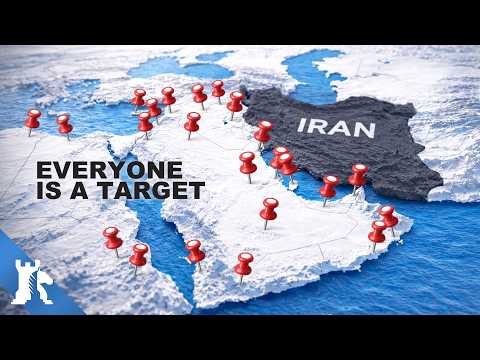
escalation en 30 secondes
- Escalation means a situation is getting more intense or serious.
- It is usually used for negative things like fights, costs, or problems.
- In business, it means moving a problem to a higher level of management.
- The word comes from 'escalator,' implying a movement to a higher level.
The word escalation is a powerful noun that describes the process of something becoming more intense, serious, or widespread. Imagine an escalator in a shopping mall; its sole purpose is to move people from a lower level to a higher level. In language, escalation functions similarly, but instead of physical height, it refers to the 'height' of a situation's severity. When a small disagreement between two coworkers turns into a loud argument involving the entire office, that is a clear example of escalation. It is most commonly used in contexts involving conflict, economics, and technical management. In the realm of international relations, diplomats often talk about the escalation of a border dispute into a full-scale war. In economics, we might see an escalation of prices, where costs rise rapidly over a short period. The core idea is always a transition from a manageable state to a more extreme or critical one. People use this word when they want to highlight the dynamic nature of a problem that is getting out of hand. It implies a trajectory—a path that is moving upward in a way that often requires intervention to stop. For instance, in customer service, an 'escalation' occurs when a standard representative cannot solve a problem and must pass it to a manager. This is a formal use of the term, indicating that the level of authority required to handle the situation has increased. Understanding escalation is crucial for identifying when a situation is shifting from a minor inconvenience to a major crisis. It allows speakers to describe the speed and scale of change with precision. Whether discussing the escalation of a fever in a medical context or the escalation of commitment in a failing business project, the word conveys a sense of growing urgency and the need for careful monitoring.
- Core Concept
- The rapid increase in the magnitude or intensity of a situation, typically one that is negative or problematic.
The sudden escalation of the conflict caught many international observers by surprise, as peaceful protests turned into violent clashes overnight.
- Business Context
- In corporate environments, an escalation policy defines the steps taken when a project hits a roadblock or a customer complaint remains unresolved.
We need to follow the proper escalation procedure if the client does not approve the budget by Friday.
- Military Usage
- Refers to the expansion of a war, such as using more powerful weapons or involving more countries in the fighting.
The deployment of additional troops was seen as a dangerous escalation of the border dispute.
The escalation of housing prices in the city has made it impossible for young families to buy a home.
Without immediate mediation, we fear a further escalation of the trade war between the two nations.
Using the word escalation correctly requires an understanding of its grammatical role as a noun and the typical verbs that accompany it. It is frequently the object of verbs like 'prevent,' 'avoid,' 'cause,' or 'lead to.' For example, 'The government is trying to prevent an escalation of the violence.' Here, escalation is the thing being stopped. Conversely, it can be the subject of a sentence, as in 'The escalation of costs has forced us to reconsider the project.' In this case, the escalation itself is the cause of the change. When writing, it is helpful to specify what is escalating by using the preposition 'of.' You will almost always see 'escalation of [something negative].' Common pairings include 'escalation of hostilities,' 'escalation of tension,' 'escalation of commitment,' and 'escalation of prices.' In a professional setting, you might use it to describe a workflow process. If a technician cannot fix a server, they might say, 'This requires an escalation to the senior engineering team.' This usage is slightly more neutral, referring to a step-up in expertise rather than a worsening crisis. However, the underlying theme of moving to a higher level remains consistent. When describing a sequence of events, you can use escalation to show a progression. 'First there were minor protests, then a general strike, and finally a full escalation into revolution.' This helps the reader visualize a timeline where things are getting progressively more serious. It is also important to note the difference between 'escalation' and 'increase.' While an increase can be gradual and positive (like an increase in salary), an escalation is usually rapid, dramatic, and problematic. Using 'escalation' instead of 'increase' adds a layer of intensity and concern to your writing. It signals to the reader that the situation is not just changing, but potentially spiraling out of control. Therefore, choose this word when you want to emphasize the gravity or the dangerous speed of a developing situation.
- Common Verb Collocations
- Prevent, avoid, trigger, fuel, manage, halt, witness, report.
The lack of communication between the two departments fueled the escalation of the misunderstanding into a major corporate dispute.
- Prepositional Use
- Usually followed by 'of' (escalation of tension) or 'to' (escalation to a manager).
There has been a steady escalation of rhetoric on both sides of the political debate.
- Describing Trends
- Use 'escalation' to describe a trend that is moving upward in a worrying way.
Analysts are concerned about the escalation of cyberattacks targeting small businesses.
The manager called for an immediate escalation of the issue to the legal department.
We must act now to prevent a further escalation of the climate crisis.
In the real world, escalation is a staple of news broadcasts, corporate meetings, and psychological studies. If you turn on a news channel like the BBC or CNN, you will frequently hear reporters discussing the 'escalation of violence' in conflict zones. In this context, the word serves as a serious marker of a deteriorating situation. It tells the audience that things are not just bad, but they are getting worse quickly. In the business world, 'escalation' is part of the professional jargon used in project management and customer support. If you've ever called a help desk and been told, 'I need to escalate this ticket to our technical lead,' you've experienced an escalation in action. It means your problem is complex enough that it needs a higher level of authority or skill. This is a very common 'corporate' way of using the word. Furthermore, in psychology and behavioral economics, researchers talk about the 'escalation of commitment.' This is a fascinating concept where people continue to invest time, money, or effort into a failing project just because they have already invested so much. You might hear this in a documentary about business failures or in a university lecture on human behavior. It describes the irrational 'doubling down' on a bad decision. You will also encounter the word in legal and police reports. Officers might describe the 'escalation of force' used during an arrest, referring to how they had to use more significant measures to control a suspect who was becoming more aggressive. In every one of these scenarios, the word 'escalation' carries a weight of seriousness. It is not a casual word; it is a word used to describe significant shifts in the state of affairs. Whether it is a rising fever in a medical drama or a rising tension in a political thriller, 'escalation' is the term that signals the stakes are being raised. Listening for this word in podcasts about history or politics will give you a sense of how it marks the turning points in human events. It is a word of movement, but specifically movement toward a more intense or dangerous climax.
- News Media
- Reporters use it to describe worsening wars, rising inflation, or growing social unrest.
The evening news featured a report on the escalation of tensions along the demilitarized zone.
- Customer Support
- Refers to moving a customer's issue to a higher level of management or technical support.
I'm sorry I couldn't resolve your billing issue; I've initiated an escalation to our finance supervisor.
- Psychology
- Used in the phrase 'escalation of commitment' to describe staying with a losing strategy.
The gambler's escalation of commitment led him to lose his entire savings in one night.
There has been a worrying escalation in the number of flu cases reported this month.
The documentary explored the escalation of the Cold War during the 1960s.
One of the most common mistakes learners make with escalation is confusing it with simple 'increase' or 'growth.' While they are related, escalation specifically implies a change in intensity or seriousness, often in a negative direction. You wouldn't say there was an 'escalation in my garden's flowers' unless the flowers were somehow becoming aggressive or problematic. Another frequent error is confusing 'escalation' with 'elevation.' Elevation refers to physical height or the act of raising something up, like the elevation of a building or the elevation of a person to a higher rank in a positive sense. Escalation is almost always about the intensity of a situation. For example, you 'elevate' your feet to reduce swelling, but you 'escalate' a complaint to a manager. A third mistake involves the word 'escalator.' While 'escalation' comes from the same root, an 'escalator' is a physical machine. You cannot 'ride an escalation' to the second floor of a mall. Conversely, you don't 'escalate' the stairs; you 'climb' them. Furthermore, learners sometimes use 'escalation' for positive things, which can sound strange to native speakers. Saying 'there was an escalation in our friendship' sounds like the friendship became a conflict. Instead, use 'deepening' or 'strengthening.' In terms of grammar, avoid using 'escalation' as a verb. The verb form is 'escalate.' You don't 'escalation the problem'; you 'escalate the problem.' Also, be careful with the preposition. It is almost always 'escalation of' a situation or 'escalation to' a person/authority. Using 'escalation in' is sometimes acceptable (e.g., 'escalation in prices'), but 'of' is more common for abstract concepts like tension or violence. Finally, don't over-use the word for minor things. If you and a friend have a small disagreement about where to eat, calling it an 'escalation' might sound overly dramatic. Reserve the word for times when the stakes are truly rising and the situation is becoming significantly more difficult to manage.
- Escalation vs. Elevation
- Elevation = physical height or positive promotion. Escalation = intensity of a situation (usually negative).
Incorrect: The escalation of the mountain was difficult. (Use 'ascent' or 'climb' instead).
- Positive vs. Negative
- Avoid using 'escalation' for positive growth. It carries a connotation of trouble or rising pressure.
Incorrect: We saw an escalation in the company's profits. (Use 'surge' or 'increase' instead).
- Verb vs. Noun
- Remember that 'escalation' is the noun (the thing) and 'escalate' is the verb (the action).
Correct: The escalation of the argument was fast. Incorrect: Don't escalation the argument.
The escalation of the situation could have been avoided with better diplomacy.
There is no need for an escalation of this minor disagreement.
To truly master the word escalation, it is helpful to compare it with its synonyms and alternatives. The most direct synonym is intensification. Both words describe something becoming stronger or more extreme. However, 'intensification' is more neutral; you can have the intensification of a flavor or a light, whereas 'escalation' almost always implies a situation or conflict. Another similar word is aggravation. This specifically refers to making a bad situation even worse, often by adding a new problem or annoyance. While an escalation is a move 'up' in intensity, an aggravation is a move 'down' in quality. Exacerbation is a more formal, often medical or technical term for making something worse, like the exacerbation of a disease. If you are talking about numbers or prices, surge or spike are excellent alternatives. A 'surge in prices' sounds more sudden and physical than an 'escalation of prices,' which sounds more like a process. In a military or political context, you might hear flare-up. This describes a sudden, brief escalation of violence or tension, like a fire suddenly getting bigger before dying down. On the opposite side, the antonym of escalation is de-escalation. This is a very common term in modern policing and conflict resolution, referring to the process of making a situation less tense or dangerous. Other antonyms include reduction, diminution, or abatement. When choosing between these words, consider the 'shape' of the change. If it feels like a steady climb up a ladder of seriousness, 'escalation' is your best bet. If it feels like a sudden explosion, 'flare-up' or 'outbreak' might be better. If it feels like a gradual worsening of a condition, 'deterioration' is a strong choice. By understanding these nuances, you can choose the word that perfectly captures the specific type of 'getting worse' you are trying to describe. This precision is what separates a good speaker from a great one.
- Escalation vs. Intensification
- Escalation is usually for conflicts/problems. Intensification is for any quality (light, heat, focus).
While the escalation of the war continued, there was an intensification of the search for a peaceful solution.
- Escalation vs. Surge
- Surge implies a sudden, powerful wave. Escalation implies a step-by-step increase in severity.
The escalation of the protest led to a sudden surge of people entering the square.
- Antonyms
- De-escalation, reduction, decline, easing, stabilization.
The diplomat's goal was the de-escalation of the border crisis, not its further escalation.
The escalation of the virus spread required more stringent lockdown measures.
There was a noticeable escalation in the complexity of the exam questions as we progressed.
How Formal Is It?
Le savais-tu ?
The word 'escalator' was actually a trademarked name by the Otis Elevator Company until 1950, when it became a generic term.
Guide de prononciation
- Pronouncing it as 'es-ca-la-tion' (missing the 'y' sound in 'lay').
- Stressing the first syllable: 'ES-ka-lay-shun'.
- Confusing it with 'elevation' (el-e-VAY-shun).
Niveau de difficulté
Common in news and business, but the concept is abstract.
Requires knowledge of specific collocations like 'escalation of'.
Useful for professional contexts.
Clear pronunciation, but often used in fast-paced news.
Quoi apprendre ensuite
Prérequis
Apprends ensuite
Avancé
Grammaire à connaître
Noun Formation
The verb 'escalate' becomes the noun 'escalation' by adding the suffix '-ion'.
Prepositional Phrases
Always use 'of' to describe what is increasing (escalation of tension).
Articles with Abstract Nouns
Use 'the' when referring to a specific instance (The escalation of the war).
Verb-Noun Collocation
Certain verbs like 'prevent' or 'trigger' are naturally followed by 'escalation'.
Compound Nouns
In business, 'escalation' often acts as an adjective in compound nouns like 'escalation policy'.
Exemples par niveau
The escalation of the fight was scary.
The fight getting bigger was scary.
Escalation is a noun here.
We saw an escalation of prices at the shop.
Prices went up a lot.
Used with 'of prices'.
The escalation of the noise made me cover my ears.
The noise getting louder.
Noun following 'the'.
There was an escalation of the problem.
The problem became bigger.
Simple subject-verb-object structure.
The escalation of the game was exciting.
The game became more intense.
Can be used for intensity in sports.
I don't like the escalation of the argument.
I don't like the fight getting worse.
Direct object of 'like'.
The escalation of the fire was very fast.
The fire grew quickly.
Describes speed of change.
Is there an escalation of the situation?
Is the situation getting worse?
Question form.
The manager handled the escalation of the complaint.
The manager dealt with the growing problem.
Professional context.
We need to stop the escalation of the conflict.
We must stop the fight from getting bigger.
Infinitive 'to stop' followed by the noun.
The escalation of costs led to the project's failure.
Rising costs caused the project to fail.
Cause and effect structure.
There was a sudden escalation of tension in the room.
The room suddenly felt very tense.
Adjective 'sudden' modifies the noun.
The escalation of the storm caused a lot of damage.
The storm getting stronger caused damage.
Subject of the sentence.
He reported the escalation of the issue to his boss.
He told his boss the problem was getting worse.
Verb 'reported' with noun object.
The escalation of the disease was a major concern.
The disease spreading was a big worry.
Health context.
They are worried about the escalation of the trade war.
They fear the trade fight will get worse.
Preposition 'about' followed by the noun phrase.
The escalation of hostilities between the two nations is alarming.
The increase in fighting is worrying.
Formal term 'hostilities'.
Effective communication can prevent the escalation of a simple misunderstanding.
Talking can stop a small mistake from becoming a big fight.
Abstract concept 'misunderstanding'.
The company has a clear escalation policy for technical support.
The company has rules for moving problems to higher levels.
Compound noun 'escalation policy'.
We witnessed a rapid escalation of the crisis over the weekend.
The crisis got much worse very quickly.
Verb 'witnessed' with noun object.
The escalation of rent prices is forcing people to move out of the city.
Higher rents are making people leave.
Economic context.
The diplomat worked hard to avoid an escalation of the border dispute.
The diplomat tried to stop the border fight from growing.
Verb 'avoid' with noun object.
There has been an escalation of cyberattacks on government websites.
More hackers are attacking government sites.
Modern technology context.
The escalation of his symptoms required immediate hospitalization.
His illness got so bad he had to go to the hospital.
Medical context.
The escalation of commitment to the failing project was a costly mistake.
Continuing to invest in a bad project was a mistake.
Psychological term 'escalation of commitment'.
The government's response led to an escalation of public protests.
What the government did made more people protest.
Social dynamics context.
The escalation of rhetoric in the media is deepening the political divide.
Stronger words in the news are making people more divided.
Abstract noun 'rhetoric'.
Analysts fear that any further escalation could lead to a regional war.
Experts worry more fighting could start a big war.
Conditional 'could lead to'.
The escalation of the strike has shut down the entire transport network.
The growing strike stopped all buses and trains.
Labor relations context.
We must analyze the factors that contributed to the escalation of the riot.
We need to see why the riot got so big.
Analytical context.
The escalation of environmental concerns has led to new legislation.
More worry about the environment caused new laws.
Policy context.
The escalation of the software bug caused the entire system to crash.
The bug getting worse broke the computer system.
Technical context.
The escalation of the conflict was characterized by a shift from conventional to asymmetrical warfare.
The war changed from normal fighting to different types of fighting.
Advanced military terminology.
The rapid escalation of the debt crisis threatened the stability of the entire eurozone.
The growing debt problem put the euro at risk.
Macroeconomic context.
The escalation of surveillance in urban areas has sparked a debate about privacy.
More cameras in cities have made people talk about privacy.
Sociopolitical context.
The escalation of the legal battle has resulted in millions of dollars in legal fees.
The growing court case cost a lot of money.
Legal context.
The escalation of the rhetoric was a calculated move to mobilize the base.
Using stronger words was a plan to get supporters ready.
Political strategy context.
The escalation of the arms race during the Cold War led to the development of ICBMs.
The fight for more weapons led to long-range missiles.
Historical context.
The escalation of the pathogen's virulence caught the health authorities off guard.
The virus becoming more dangerous surprised the doctors.
Scientific/Medical context.
The escalation of the controversy led to the resignation of the CEO.
The growing scandal made the boss quit.
Corporate governance context.
The escalation of the conflict represents a failure of the international diplomatic architecture.
The war shows that world diplomacy didn't work.
High-level political analysis.
The escalation of the narrative's complexity mirrors the protagonist's psychological unraveling.
The story getting harder to follow shows the character going crazy.
Literary criticism.
The escalation of the central bank's intervention was necessary to prevent a systemic collapse.
The bank had to do more to stop the whole system from failing.
Complex economic theory.
The escalation of the discourse around identity politics has reshaped the cultural landscape.
Talk about identity has changed culture.
Sociological theory.
The escalation of the conflict was inevitable given the underlying structural imbalances.
The war was going to happen because of deep problems.
Deterministic analysis.
The escalation of the project's scope led to significant 'feature creep' and delays.
Adding too many things to the project made it late.
Project management jargon.
The escalation of the situation was a classic example of the security dilemma in action.
The situation showed how countries trying to be safe make others feel unsafe.
International relations theory.
The escalation of the rhetoric was met with a measured and stoic response from the opposition.
The strong words were answered with a calm and brave reaction.
Sophisticated character description.
Synonymes
Antonymes
Collocations courantes
Phrases Courantes
— An increase in fighting or war-like actions.
The escalation of hostilities led to a full-scale invasion.
— Using more powerful weapons or methods in a conflict.
The police were criticized for their escalation of force.
— Using more aggressive or extreme language.
The escalation of rhetoric between the candidates is worrying.
— A rapid increase in the cost of goods.
The escalation of prices has made life difficult for many.
— An increase in the feeling of anger or worry between groups.
The escalation of tension was felt by everyone in the room.
— Continuing a failing plan because you have already invested in it.
His escalation of commitment to the business was a mistake.
— When signs of an illness become more severe.
The escalation of symptoms required a trip to the ER.
— Asking for more and more things in a negotiation.
The escalation of demands made the deal impossible.
— When a difficult situation becomes much worse.
The escalation of the crisis required international help.
— When a disagreement grows into a major fight.
Mediation is needed to stop the escalation of conflict.
Souvent confondu avec
Elevation is physical height; escalation is intensity of a situation.
An escalator is the machine; escalation is the process.
Increase is general; escalation is usually rapid and negative.
Expressions idiomatiques
— To do something that makes a bad situation worse (an escalation).
His angry words just added fuel to the fire.
informal— A situation where something small gets bigger and bigger (like an escalation).
The small mistake had a snowball effect on the whole project.
informal— To escalate so quickly that it cannot be stopped.
The protests quickly spiraled out of control.
neutral— To increase the risks or the importance of a situation (to cause an escalation).
The new law raises the stakes for the protesters.
neutral— To make a conflict or emotion more intense.
The media's reporting fanned the flames of the controversy.
neutral— To increase the intensity or effort (a positive or neutral escalation).
We need to step it up if we want to finish on time.
informal— To experience a negative escalation.
The situation went from bad to worse after the power cut.
informal— The small part of a much larger (and potentially escalating) problem.
This small theft is just the tip of the iceberg.
neutral— To start a process that leads to many more complicated problems (an escalation).
Investigating the budget opened a can of worms.
informal— To make a small problem seem much bigger than it is (a false escalation).
Don't blow things out of proportion; it was just a small mistake.
informalFacile à confondre
Both involve going up.
Ascent is a physical climb (e.g., up a mountain). Escalation is a metaphorical climb in intensity.
The ascent of Everest took weeks, but the escalation of the storm took minutes.
Both involve moving to a higher level.
Promotion is a positive move in a job. Escalation is a move to a higher level of a problem.
He got a promotion, but his first task was to handle an escalation of a client issue.
Both mean things are getting worse.
Aggravation is an annoyance or making a bad thing worse. Escalation is the increase in intensity.
The noise was an aggravation, but the escalation of the argument was scary.
Both mean getting bigger.
Expansion is about size or area. Escalation is about intensity or seriousness.
The expansion of the business was good, but the escalation of debt was bad.
Both involve prices going up.
Inflation is a general economic trend. Escalation is a specific, often rapid, increase.
Inflation is 2%, but there was a sudden escalation in the price of gas.
Structures de phrases
The escalation of [bad thing] was [adjective].
The escalation of the fight was bad.
We must stop the escalation of [noun].
We must stop the escalation of the problem.
The [adjective] escalation of [noun] led to [result].
The rapid escalation of costs led to a budget cut.
There is a concern about the escalation of [abstract noun].
There is a concern about the escalation of tension.
The escalation of [noun] was exacerbated by [noun].
The escalation of the crisis was exacerbated by poor leadership.
The [noun] represents a significant escalation in [noun].
The new law represents a significant escalation in government control.
The company has an escalation policy for [noun].
The company has an escalation policy for customer complaints.
Avoid the escalation of [noun] through [method].
Avoid the escalation of conflict through clear communication.
Famille de mots
Noms
Verbes
Adjectifs
Apparenté
Comment l'utiliser
Common in news, business, and formal writing.
-
The escalation of the mountain was hard.
→
The ascent of the mountain was hard.
Escalation is for intensity of situations, not physical climbing.
-
We had an escalation in our sales profits!
→
We had a surge in our sales profits!
Escalation usually implies a negative or problematic increase.
-
Don't escalation the situation.
→
Don't escalate the situation.
Escalation is a noun; escalate is the verb.
-
I rode the escalation to the third floor.
→
I rode the escalator to the third floor.
The machine is an escalator; the process is an escalation.
-
There was an escalation for the manager.
→
There was an escalation to the manager.
Use 'to' when referring to the person receiving the escalated issue.
Astuces
Use with 'of'
Always follow 'escalation' with 'of' and the thing that is increasing (e.g., escalation of tension).
Avoid for positive growth
Don't use 'escalation' for things like profits or happiness; it sounds like they are becoming a problem.
Know your policy
In a job, learn the 'escalation path' so you know who to talk to when a problem gets too big.
Stress the 'LAY'
The word sounds much more natural when you emphasize the third syllable.
Strong Adjectives
Use words like 'rapid,' 'dangerous,' or 'unprecedented' to describe an escalation.
De-escalate
Remember the antonym 'de-escalate' when talking about solving problems or calming down.
The Ladder Metaphor
Think of a ladder. Each step up is an escalation. It helps visualize the process.
Listen for it
You will hear this word almost every day on international news channels like the BBC.
Noun vs Verb
Use 'escalation' as the noun and 'escalate' as the verb. Don't mix them up!
Commitment
Learn the phrase 'escalation of commitment' to describe bad decision-making.
Mémorise-le
Moyen mnémotechnique
Think of an ESCALATOR. Just as an escalator takes you UP to a higher floor, an ESCALATION takes a situation UP to a higher level of trouble.
Association visuelle
Imagine a small fire at the bottom of a ladder. As the fire climbs each step of the ladder, it gets bigger and more dangerous. This is an escalation.
Word Web
Défi
Try to use the word 'escalation' in a sentence about a movie you watched recently. How did the tension in the movie grow?
Origine du mot
The word 'escalation' is relatively modern, coming into common use in the mid-20th century. It is derived from the verb 'escalate,' which was back-formed from the noun 'escalator.'
Sens originel : Originally, it referred to the physical act of moving up on an escalator. In the 1950s and 60s, it began to be used figuratively to describe the intensification of the Cold War.
Latin root 'scala' (ladder), through the trade name 'Escalator' (a combination of 'scala' and 'elevator').Contexte culturel
Be careful using 'escalation' when talking about sensitive personal issues, as it can sound very clinical or cold.
In the US and UK, 'escalation' is very common in corporate 'speak' (jargon).
Pratique dans la vie réelle
Contextes réels
Business/Corporate
- escalation policy
- escalate to management
- technical escalation
- escalation path
Politics/News
- escalation of violence
- escalation of tension
- avoid further escalation
- prevent escalation
Economics
- escalation of costs
- price escalation
- escalation of debt
- inflationary escalation
Medicine/Health
- escalation of symptoms
- escalation of care
- escalation of treatment
- rapid escalation of the virus
Psychology
- escalation of commitment
- escalation of anger
- conflict escalation
- emotional escalation
Amorces de conversation
"Have you noticed the escalation of prices at the grocery store lately?"
"What do you think is the best way to prevent the escalation of an argument?"
"Has a small problem at your work ever turned into a major escalation?"
"Do you think the escalation of technology is making our lives easier or harder?"
"How do you handle an escalation of stress during busy times?"
Sujets d'écriture
Describe a time when a small misunderstanding led to an escalation of a conflict. How did you feel?
Write about a situation where you witnessed an escalation of commitment. Why did the person keep going?
How can we as a society work toward the de-escalation of political tensions?
Reflect on the escalation of your own skills in a hobby or job. How did you move to the next level?
What are the dangers of an escalation of rhetoric in the media today?
Questions fréquentes
10 questionsUsually, no. In English, 'escalation' almost always refers to something negative like conflict, costs, or tension. For positive things, we use words like 'growth,' 'improvement,' or 'strengthening.' For example, you wouldn't say 'an escalation of love,' but you would say 'a deepening of love.'
De-escalation is the opposite of escalation. It is the process of making a situation less intense, less serious, or less dangerous. It is often used in the context of police work or conflict resolution to describe calming people down.
Yes, it is a neutral to formal word. You will hear it in news reports, business meetings, and academic papers. In very casual conversation, people might just say 'things got worse' or 'the fight got bigger.'
In business, it refers to moving a task, problem, or customer complaint to a higher level of authority. For example, 'If you can't solve the problem, it requires an escalation to the manager.' This is a standard professional procedure.
This is a psychological term. It describes when a person or group continues to invest time or money into a project that is clearly failing, simply because they have already spent so much on it. It's also called the 'sunk cost fallacy.'
Yes, this is a very common and correct phrase. It means that prices are rising rapidly and causing concern.
Yes! Both words come from the same root. An escalator physically moves you up, and an escalation metaphorically moves a situation up to a more intense level.
An escalation policy is a set of rules in a company that explains when and how a problem should be passed to a supervisor or a different department.
They are very similar. 'Intensification' is more neutral and can be used for things like light or heat. 'Escalation' is more specific to situations, conflicts, and problems.
Yes, it can be. You can say 'The escalation of the war' (uncountable/general) or 'There have been several escalations of the conflict' (countable/specific instances).
Teste-toi 200 questions
Write a sentence using 'escalation' and 'prices'.
Well written! Good try! Check the sample answer below.
Describe a situation where you might need to 'escalate' a problem at work.
Well written! Good try! Check the sample answer below.
Use 'escalation of violence' in a sentence about the news.
Well written! Good try! Check the sample answer below.
Write a sentence about 'de-escalation'.
Well written! Good try! Check the sample answer below.
Explain 'escalation of commitment' in your own words.
Well written! Good try! Check the sample answer below.
Write a formal sentence about 'escalation of tension'.
Well written! Good try! Check the sample answer below.
Use 'escalation policy' in a sentence about a company.
Well written! Good try! Check the sample answer below.
Describe a movie scene that shows an 'escalation of conflict'.
Well written! Good try! Check the sample answer below.
Write a sentence using 'rapid escalation'.
Well written! Good try! Check the sample answer below.
Use 'escalation of rhetoric' in a sentence about politics.
Well written! Good try! Check the sample answer below.
Write a sentence about an 'escalation of symptoms'.
Well written! Good try! Check the sample answer below.
Use 'avoid escalation' in a sentence about a disagreement.
Well written! Good try! Check the sample answer below.
Write a sentence about 'escalation of costs'.
Well written! Good try! Check the sample answer below.
Describe an 'escalation of force' in a military context.
Well written! Good try! Check the sample answer below.
Write a sentence using 'escalation' as a subject.
Well written! Good try! Check the sample answer below.
Use 'witnessed an escalation' in a sentence.
Well written! Good try! Check the sample answer below.
Write a sentence about 'escalation of demands'.
Well written! Good try! Check the sample answer below.
Use 'escalation' to describe a storm.
Well written! Good try! Check the sample answer below.
Write a sentence about 'escalation of debt'.
Well written! Good try! Check the sample answer below.
Use 'prevent escalation' in a sentence about a fight.
Well written! Good try! Check the sample answer below.
Explain the word 'escalation' to a friend.
Read this aloud:
Tu as dit :
Speech recognition is not supported in your browser. Try Chrome or Edge.
How would you use 'escalation' in a business meeting?
Read this aloud:
Tu as dit :
Speech recognition is not supported in your browser. Try Chrome or Edge.
Discuss the 'escalation of prices' in your country.
Read this aloud:
Tu as dit :
Speech recognition is not supported in your browser. Try Chrome or Edge.
Describe a time you had to 'de-escalate' a situation.
Read this aloud:
Tu as dit :
Speech recognition is not supported in your browser. Try Chrome or Edge.
What are the signs of an 'escalation of tension'?
Read this aloud:
Tu as dit :
Speech recognition is not supported in your browser. Try Chrome or Edge.
Talk about the 'escalation of commitment' in a project.
Read this aloud:
Tu as dit :
Speech recognition is not supported in your browser. Try Chrome or Edge.
How does the news use the word 'escalation'?
Read this aloud:
Tu as dit :
Speech recognition is not supported in your browser. Try Chrome or Edge.
Why is 'de-escalation' important in policing?
Read this aloud:
Tu as dit :
Speech recognition is not supported in your browser. Try Chrome or Edge.
What causes an 'escalation of conflict'?
Read this aloud:
Tu as dit :
Speech recognition is not supported in your browser. Try Chrome or Edge.
How can companies prevent 'escalation of costs'?
Read this aloud:
Tu as dit :
Speech recognition is not supported in your browser. Try Chrome or Edge.
Describe an 'escalation of rhetoric' you've heard recently.
Read this aloud:
Tu as dit :
Speech recognition is not supported in your browser. Try Chrome or Edge.
What is an 'escalation matrix'?
Read this aloud:
Tu as dit :
Speech recognition is not supported in your browser. Try Chrome or Edge.
Talk about an 'escalation of symptoms' in a health context.
Read this aloud:
Tu as dit :
Speech recognition is not supported in your browser. Try Chrome or Edge.
How do you 'escalate' a ticket in customer support?
Read this aloud:
Tu as dit :
Speech recognition is not supported in your browser. Try Chrome or Edge.
What are the risks of an 'escalation of force'?
Read this aloud:
Tu as dit :
Speech recognition is not supported in your browser. Try Chrome or Edge.
Discuss the 'escalation of the Cold War'.
Read this aloud:
Tu as dit :
Speech recognition is not supported in your browser. Try Chrome or Edge.
How do you feel when you see an 'escalation of violence' on the news?
Read this aloud:
Tu as dit :
Speech recognition is not supported in your browser. Try Chrome or Edge.
What is the best way to stop an 'escalation of an argument'?
Read this aloud:
Tu as dit :
Speech recognition is not supported in your browser. Try Chrome or Edge.
Why do people use 'escalation' instead of 'increase'?
Read this aloud:
Tu as dit :
Speech recognition is not supported in your browser. Try Chrome or Edge.
Describe an 'escalation of environmental concerns'.
Read this aloud:
Tu as dit :
Speech recognition is not supported in your browser. Try Chrome or Edge.
Listen for the word 'escalation' in a news clip about a war. What is the reporter describing?
In a business meeting, someone says 'We need an escalation.' What do they want?
A doctor mentions an 'escalation of symptoms.' What does this mean for the patient?
Listen to a podcast about the Cold War. How do they use the word 'escalation'?
If you hear 'escalation of costs' in a financial report, what is happening?
A customer service agent says, 'I'll initiate an escalation.' What is the next step?
Listen for 'de-escalation' in a talk about conflict resolution. What is the speaker's advice?
If someone says 'the escalation was sudden,' what do they mean about the timing?
Listen for 'escalation of rhetoric' in a political speech. What is the tone of the speaker?
A scientist talks about the 'escalation of the virus.' What is the concern?
If you hear 'escalation of commitment,' what kind of behavior is being described?
A reporter mentions 'escalation of force.' What is the context?
Listen for 'escalation of tension' in a drama. What is happening between the characters?
If a manager says 'we want to avoid an escalation,' what are they trying to do?
Listen for 'escalation of the crisis' in a documentary. What is the overall theme?
/ 200 correct
Perfect score!
Summary
Escalation is the process of a situation becoming more severe or intense. For example, 'The escalation of the argument led to a physical fight.' Use it to describe problems that are growing out of control.
- Escalation means a situation is getting more intense or serious.
- It is usually used for negative things like fights, costs, or problems.
- In business, it means moving a problem to a higher level of management.
- The word comes from 'escalator,' implying a movement to a higher level.
Use with 'of'
Always follow 'escalation' with 'of' and the thing that is increasing (e.g., escalation of tension).
Avoid for positive growth
Don't use 'escalation' for things like profits or happiness; it sounds like they are becoming a problem.
Know your policy
In a job, learn the 'escalation path' so you know who to talk to when a problem gets too big.
Stress the 'LAY'
The word sounds much more natural when you emphasize the third syllable.