A1 noun #1,131 le plus courant 9 min de lecture

moon

The moon is a big, round thing you see in the sky at night. It goes around our Earth. The moon looks bright because it gets light from the sun. Sometimes it looks like a full circle, and other times it looks like a crescent. It changes its shape during the month.

The moon is a celestial body that orbits our planet, Earth.

It's easily visible in the night sky and is known for its changing appearance, which we call phases.

These phases, like the new moon, crescent, and full moon, occur as the moon reflects sunlight from different angles.

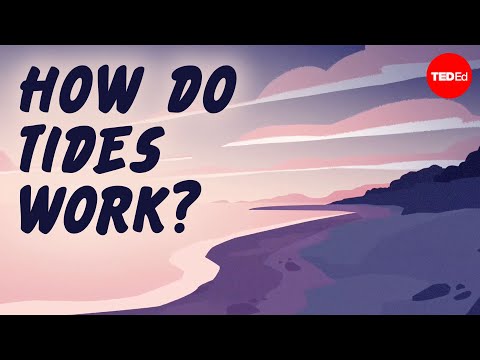
It's also responsible for phenomena such as tides on Earth.

The moon, Earth's solitary natural satellite, plays a pivotal role in various celestial phenomena we observe. Its gravitational pull is the primary driver of ocean tides on Earth, influencing marine ecosystems and coastal environments. Moreover, the moon's consistent orbit and phases have historically served as a fundamental basis for timekeeping and calendar systems across diverse cultures. Scientists continue to study the moon to understand its geological history and its potential for future space exploration, including the possibility of establishing lunar bases. It remains a fascinating object of scientific inquiry and a source of inspiration.

The moon, Earth's solitary natural satellite, embarks on a predictable elliptical orbit, its gravitational embrace influencing our planet's tides. Its luminosity is not intrinsic but rather a magnificent reflection of solar radiation, a celestial dance that renders it visible in our nocturnal sky. As it traverses its monthly cycle, the varying angles of illumination from the sun create the mesmerizing phases we observe, from the slender crescent to the resplendent full orb. This celestial body has profoundly shaped human culture, inspiring mythology, art, and scientific inquiry for millennia.

The moon, Earth's solitary natural satellite, is a celestial body exhibiting synchronous rotation with our planet, always presenting the same face towards us. Its illuminated phases, ranging from the slender crescent to the resplendent full orb, are a consequence of the varying angles at which sunlight impinges upon its surface as it traverses its orbit. This cyclical phenomenon has profoundly influenced human culture, mythology, and scientific endeavors across millennia. Despite its apparent luminosity, the moon itself is not a light source, but rather a reflective surface, its brilliance derived entirely from the sun's re-emitted photons.

moon en 30 secondes

  • Earth's natural satellite
  • Shines at night by reflecting sunlight
  • Appears in different shapes (phases)

§ What does it mean?

The word moon is a noun. It refers to the large, round celestial body that orbits the Earth. We see the moon in the sky, especially at night. It doesn't create its own light; instead, it reflects light from the sun, which is why it shines so brightly.

DEFINITION
The large round object that circles the Earth and shines at night. It reflects light from the sun and appears in different shapes throughout the month.

One of the most fascinating things about the moon is that it changes its appearance throughout the month. These changes are called phases of the moon. Sometimes it looks like a full circle (a full moon), and other times it looks like a thin curve (a crescent moon). These different shapes depend on how much of the sun's light is reflecting off the moon and facing Earth.

The full moon was bright in the night sky.

We watched the crescent moon disappear behind the clouds.

§ When do people use it?

People use the word moon in many different situations. Most commonly, it's used to talk about the actual celestial body we see in the sky. For example, when you look up at night and see it, you would say, "Look at the moon!"

It's also used in science and astronomy when discussing space, planets, and our solar system. Scientists study the moon to learn more about its geology, its history, and how it affects Earth. Astronauts have even traveled to the moon!

Astronauts landed on the moon in 1969.

Beyond its literal meaning, the moon often appears in literature, songs, and poetry as a symbol of beauty, mystery, or romance. For example, you might hear someone say, "I love you to the moon and back," which is an expression of deep affection.

Here are some common ways people use the word moon:

  • Talking about the night sky: "The moon is beautiful tonight."
  • Describing the phases of the moon: "It's a new moon tonight, so it's very dark."
  • In idioms and expressions:
    • "Once in a blue moon" (meaning something happens very rarely).
    • "Over the moon" (meaning extremely happy).
  • In songs or poems: "Shine bright like the moon."

The word moon is an essential part of our vocabulary, helping us to describe our celestial neighbor and express various ideas and emotions.

§ Definition

Word
moon (noun)
CEFR Level
A1
Definition
The large round object that circles the Earth and shines at night. It reflects light from the sun and appears in different shapes throughout the month.

§ How to use it in a sentence

The word "moon" is a noun. When we talk about the Earth's moon, we often use the definite article "the" before it. For example, "The moon is bright tonight." This is because there is only one moon that orbits Earth, so we are referring to a specific one.

You can also use "moon" to talk about the moons of other planets, or even in a more general sense about a celestial body that orbits a planet. In these cases, you might not always use "the" if you're not talking about a specific, known moon. However, at an A1 level, you will mostly encounter "the moon" when referring to Earth's moon.

§ Common Prepositions with "Moon"

  • on the moon: This preposition is used when talking about being physically present on the surface of the moon.
  • at the moon: This can be used when looking or pointing towards the moon.
  • under the moon: This describes something happening outdoors when the moon is visible.

§ Examples

The moon is very bright tonight.

This sentence uses "the moon" to refer to our Earth's moon, emphasizing its brightness.

I saw the full moon last night.

Here, "full moon" describes a specific phase of the moon, indicating it's completely visible.

Astronauts walked on the moon.

This sentence uses the preposition "on" because it describes an action taking place on the surface of the moon.

Look up at the moon!

This example uses "at" to indicate the direction of looking.

We sat under the moon and stars.

"Under the moon" sets the scene for an evening activity, with the moon overhead.

§ Where you actually hear this word – work, school, news

The word "moon" is quite common and can be heard in many different contexts. As it's a fundamental celestial body, it often appears in conversations, educational settings, and even in news reports, especially when discussing space or astronomy. Understanding where you might encounter this word can help you grasp its usage better.

§ In Everyday Conversations

You'll frequently hear "moon" in casual conversations. People often talk about the moon when it's visible in the sky, especially if it's a full moon or a new moon, as these phases are very noticeable. It's a natural part of observing the world around us.

Look at the beautiful full moon tonight!

The moon looks like a crescent tonight.

§ In School

In school, especially in science classes, the word "moon" is used regularly. Children learn about the solar system, including the Earth's moon, its phases, and its role in tides. It's a core topic in early science education.

Science Class
Students learn about the Earth's orbit and how the moon revolves around the Earth.

We learned about the phases of the moon in science class today.

The teacher explained how the moon causes tides.

§ In the News

News outlets often report on events related to the moon, especially regarding space exploration, astronomical phenomena, or discoveries. These reports can range from scientific breakthroughs to cultural observations of lunar events.

  • Space Missions: When there are new missions to the moon, or discussions about future lunar bases, the word "moon" will be prominent in headlines and articles.

  • Eclipses: News channels will cover lunar eclipses, which are events where the Earth passes directly between the sun and the moon, casting a shadow on the moon.

  • Astronomical Discoveries: Any new findings about the moon, like the discovery of water ice, will be reported in the news.

Scientists are planning a new mission to the moon to study its surface.

Tonight, there will be a rare super blue moon visible in the sky.

§ In Literature and Culture

Beyond factual contexts, the moon also features heavily in stories, songs, and poetry. It's often used as a symbol for beauty, mystery, dreams, or even change, due to its changing phases. This makes it a very common word in artistic and cultural expressions.

Songs and Poems
The moon is a popular subject for artists and writers because of its beauty and symbolic meanings.

In summary, the word "moon" is heard in a variety of settings from daily conversations to educational materials and news reports. Its familiarity makes it a fundamental word to understand for anyone learning English.

§ Mistakes People Make with the Word "Moon"

The word "moon" is a relatively common and seemingly simple word for English learners at the A1 CEFR level. However, even with such basic vocabulary, there are several common pitfalls and nuances that learners often stumble over. Understanding these can significantly improve accuracy and fluency.

§ 1. Using "the" vs. not using "the"

DEFINITION
The definitive article "the" is used before nouns that are specific or that have already been mentioned or are understood by both the speaker and listener. For unique celestial bodies like Earth's moon, it's almost always used.

One of the most frequent errors is the incorrect use or omission of the definite article "the" with "moon." Because there's only one natural satellite for Earth that we commonly refer to as "the moon," it almost always requires "the."

Incorrect: I saw moon last night.

Correct: I saw the moon last night.

§ 2. Confusing "moon" with "sun" or "star"

At the A1 level, learners are just beginning to categorize celestial objects. Sometimes, due to their shared presence in the sky, "moon" can be confused with "sun" or "star." While all are heavenly bodies, their definitions and functions are distinct.

DEFINITION
The sun is the star at the center of our solar system, providing light and heat. Stars are distant, self-luminous celestial bodies. The moon is a satellite that orbits a planet and reflects light.

Incorrect: The moon gives us light during the day.

Correct: The sun gives us light during the day. The moon shines at night.

§ 3. Misunderstanding its function (shining vs. reflecting)

The definition clearly states that the moon "reflects light from the sun." A common misconception, especially for beginners, is that the moon produces its own light, similar to the sun or a lamp.

Incorrect: The moon is very bright because it makes its own light.

Correct: The moon is bright because it reflects light from the sun.

§ 4. Pluralization when referring to other moons

While we usually refer to 'the moon' (Earth's moon), it's important to note that other planets have their own moons. At the A1 level, this distinction might not be critical, but it's a good point for future learning.

  • When talking about Earth's moon, use "the moon."
  • When talking about moons of other planets, you can use "moons" (plural) or specify, e.g., "Mars has two moons."
DEFINITION
A "moon" is a natural satellite orbiting a planet. While Earth has one well-known moon, other planets can have multiple moons.

Correct: Jupiter has many moons.

Correct: Our moon is beautiful.

§ Conclusion

While "moon" is an early vocabulary word, mastering its usage, particularly concerning articles, its true nature as a reflector of light, and its distinction from other celestial bodies, can significantly strengthen an A1 learner's foundational English. Paying attention to these common mistakes will help learners communicate more clearly and accurately about the night sky.

How Formal Is It?

Formel

"Astronomers observed the celestial orb as it transitioned through its various phases."

Neutre

"The moon was full and bright tonight, casting long shadows."

Informel

"We stayed up late, just gazing at the moon."

Child friendly

"Look up! The moon is like a big night light in the sky."

Argot

"That globe in the sky sure is something else tonight, huh?"

Exemples par niveau

1

The moon is bright tonight.

La luna está brillante esta noche.

Simple present tense, 'is' (ser/estar)

2

I see the moon in the sky.

Veo la luna en el cielo.

Simple present tense, 'see' (ver)

3

The moon is white.

La luna es blanca.

Simple present tense, 'is' (ser/estar)

4

Look at the big moon!

¡Mira la luna grande!

Imperative verb, 'look' (mirar)

5

The moon shines at night.

La luna brilla por la noche.

Simple present tense, 'shines' (brillar)

6

The moon is round.

La luna es redonda.

Simple present tense, 'is' (ser/estar)

7

We can see the moon.

Podemos ver la luna.

Modal verb 'can' (poder)

8

The moon is far away.

La luna está lejos.

Simple present tense, 'is' (ser/estar)

1

Astronauts have explored the moon, leaving footprints and scientific equipment on its surface.

Astronauts have explored the moon.

Past perfect tense for an action completed in the past with relevance to the present.

2

The gravitational pull of the moon is responsible for the ocean's tides, a fascinating natural phenomenon.

Moon's gravity causes ocean tides.

Possessive form ('moon's') and present simple for a general truth.

3

Many cultures have ancient myths and legends that explain the origin and significance of the moon.

Cultures have myths about the moon.

Present simple for general facts and plural nouns.

4

Looking through a telescope, you can observe the moon's craters and plains in remarkable detail.

You can see moon's craters with a telescope.

Modal verb 'can' for ability and present simple.

5

The phases of the moon, from new moon to full moon, have long been used to mark time and agricultural cycles.

Moon phases mark time.

Present perfect passive for an action that started in the past and continues.

6

Some scientists believe that there may be water ice hidden in permanently shadowed craters on the moon.

Scientists think there's water ice on the moon.

Modal verb 'may' for possibility and passive voice.

7

During a lunar eclipse, the Earth passes directly between the sun and the moon, casting a shadow on its surface.

Earth blocks sun from moon during eclipse.

Present simple for a scientific phenomenon and present participle ('casting').

8

Future space missions aim to establish permanent human bases on the moon, paving the way for further exploration.

Future missions want moon bases.

Present simple with 'aim to' for future plans and present participle ('paving').

1

The astronomical phenomenon of a supermoon, when the moon is at its closest point to Earth, often captivates observers with its amplified size and luminosity.

Supermoon, closest point, amplified size, luminosity.

Complex sentence structure with a dependent clause and descriptive adjectives.

2

Ancient civilizations meticulously charted the phases of the moon, discerning its profound influence on tides, agricultural cycles, and even their mythological narratives.

Meticulously charted, phases, profound influence, tides, agricultural cycles, mythological narratives.

Use of adverbs for emphasis and a list of related concepts.

3

Despite countless missions, the moon still harbors myriad scientific enigmas, prompting ongoing research into its origins and potential for extraterrestrial life.

Harbors myriad scientific enigmas, prompting ongoing research, origins, potential for extraterrestrial life.

Sophisticated vocabulary and a clause indicating consequence.

4

The ethereal glow of the harvest moon cast an otherworldly luminescence across the landscape, imbuing the autumn night with a sense of mystical grandeur.

Ethereal glow, otherworldly luminescence, imbuing, mystical grandeur.

Figurative language and rich descriptive adjectives.

5

In literary discourse, the moon frequently serves as a potent symbol, often embodying themes of melancholic reflection, ephemeral beauty, or unattainable desires.

Literary discourse, potent symbol, embodying themes, melancholic reflection, ephemeral beauty, unattainable desires.

Academic vocabulary and a list of abstract concepts.

6

Propelled by an unwavering aspiration, humanity endeavors to establish a permanent lunar outpost, a testament to our insatiable drive for cosmic exploration and expansion.

Unwavering aspiration, permanent lunar outpost, testament, insatiable drive, cosmic exploration, expansion.

Formal vocabulary and a noun phrase acting as an appositive.

7

The gravitational pull of the moon exerts a discernible, albeit subtle, effect on the Earth's tectonic plates, contributing to seismic activity over vast geological timescales.

Gravitational pull, discernible, albeit subtle, tectonic plates, seismic activity, vast geological timescales.

Use of conjunction 'albeit' for nuance and scientific terminology.

8

Through advanced telescopic observation, astronomers meticulously scrutinize the moon's variegated topography, seeking to unravel the cataclysmic events that shaped its primordial surface.

Telescopic observation, meticulously scrutinize, variegated topography, unravel, cataclysmic events, primordial surface.

Specialized vocabulary and a verb indicating discovery.

Synonymes

satellite orb crescent lunar body natural satellite

Antonymes

Collocations courantes

full moon जब चंद्रमा पूरा गोल दिखाई देता है
new moon जब चंद्रमा बिल्कुल नहीं दिखाई देता है
half moon जब चंद्रमा आधा दिखाई देता है
crescent moon जब चंद्रमा पतला और घुमावदार दिखाई देता है
moon light चंद्रमा से आने वाली रोशनी
moon rock चंद्रमा से लाया गया पत्थर
moon dust चंद्रमा की सतह पर धूल
moon landing जब अंतरिक्ष यान चंद्रमा पर उतरता है
dark side of the moon चंद्रमा का वह हिस्सा जो पृथ्वी से कभी नहीं दिखता
man on the moon चंद्रमा पर इंसान

Modèles grammaticaux

Nouns Adjectives Verbs (present simple) Articles (the) Prepositions of place and time Simple questions

Structures de phrases

A1

The moon is [adjective].

The moon is bright.

A1

We can see the moon [adverb of time].

We can see the moon at night.

A1

The moon shines [adverb of manner].

The moon shines brightly.

A1

Look at the moon!

Look at the moon!

A1

Is the moon [adjective]?

Is the moon full?

A1

The moon is a [adjective] object.

The moon is a round object.

A1

I like to watch the moon.

I like to watch the moon.

A1

The moon goes around the Earth.

The moon goes around the Earth.

Comment l'utiliser

The word "moon" is commonly used to refer to Earth's natural satellite. It is almost always preceded by the definite article "the" when referring to our moon, e.g., "The moon is full tonight." When talking about moons of other planets, you can use "a moon" or refer to them by their specific names, e.g., "Jupiter has many moons." It can also be used metaphorically, such as "over the moon" to express extreme happiness.

Erreurs courantes

1. **Omitting 'the'**: A common mistake is to say "Moon is beautiful tonight" instead of "**The** moon is beautiful tonight."
2. **Confusing 'moon' with 'month'**: While the moon's cycle influences the calendar month, they are distinct concepts. For example, saying "I will visit you next moon" instead of "I will visit you next **month**" is incorrect.
3. **Using 'moon' as a verb for wishing**: Incorrectly using 'moon' in phrases like "I moon for a new car" instead of "I **wish** for a new car" or "I **long** for a new car." The verb 'moon' usually means to behave in a listless, dreamy way, or to expose one's buttocks.

Astuces

Look up definitions

Always start by looking up the definition of a new word. This gives you a clear understanding of its meaning.

Use it in a sentence

Try to use the word 'moon' in a simple sentence of your own. For example, 'The moon is bright tonight.'

Draw a picture

For words like 'moon', drawing a small picture can help you remember its meaning visually.

Find a synonym

Are there other words that mean something similar to 'moon'? (Not really for 'moon' itself, but good practice for other words).

Say it out loud

Practice saying 'moon' out loud several times to get comfortable with its pronunciation.

Label objects

If you see a picture of the moon, try to label it with the word to reinforce your learning.

Review regularly

Come back to the word 'moon' and its definition after a few hours or days to help it stick in your memory.

Use flashcards

Create a simple flashcard with 'moon' on one side and its definition on the other.

Listen for it

When you watch English videos or listen to songs, try to hear if the word 'moon' is used.

Connect to prior knowledge

Think about what you already know about the moon in your own language. This can help create a connection.

Pratique dans la vie réelle

Contextes réels

Looking up at the night sky

  • The moon is so bright tonight.
  • I love watching the moon.
  • Is that a full moon?

Talking about space or astronomy

  • Astronauts have walked on the moon.
  • The moon is Earth's only natural satellite.
  • There are different phases of the moon.

Describing a scene or mood

  • The moon cast long shadows.
  • It was a romantic night under the moon.
  • The moonlight illuminated the path.

Discussing time or calendars

  • The moon changes shape throughout the month.
  • Some calendars are based on the moon.
  • A full moon happens about once a month.

Referring to something far away or out of reach

  • He asked for the moon and stars.
  • It felt like I was reaching for the moon.
  • That's a moonshot idea!

Amorces de conversation

"Do you ever look up at the moon at night?"

"What's your favorite phase of the moon?"

"Have you ever seen a supermoon or a blood moon?"

"If you could go to the moon, what would you do first?"

"What do you think about the idea of living on the moon one day?"

Sujets d'écriture

Describe a time you saw the moon and it made a strong impression on you.

Imagine you are an astronaut on the moon. What do you see, hear, and feel?

Write a short story or poem inspired by the moon.

How does the moon influence your daily life or your feelings?

If the moon could talk, what do you think it would say about Earth?

Questions fréquentes

10 questions

The moon is a large, round object that circles the Earth. We see it in the sky at night.

No, the moon doesn't make its own light. It reflects light from the sun, so it looks like it's shining.

The moon appears in different shapes throughout the month because of how much of its sunlit side we can see from Earth.

No, the moon is not a planet. It's called a natural satellite because it orbits a planet (Earth).

The moon is pretty big, but it's much smaller than the Earth. It's about one-fourth the size of our planet.

Yes, people have been to the moon! Astronauts have landed there several times in the past, starting in 1969.

The moon is made of rocks and dust, similar to Earth's surface but without oceans or a thick atmosphere.

We only ever see one side of the moon because it rotates at the same speed that it orbits the Earth. This is called 'tidal locking'.

Yes, many other planets in our solar system have their own moons! For example, Jupiter and Saturn have many.

CEFR A1 means that 'moon' is a very basic and common word in English, usually taught to beginners in English language learning.

Teste-toi 144 questions

fill blank A1

The ___ shines brightly at night.

Correct ! Pas tout à fait. Rponse correcte : moon

The moon is the large round object that shines at night.

fill blank A1

We can see the ___ in the sky at night.

Correct ! Pas tout à fait. Rponse correcte : moon

The moon is visible in the sky at night.

fill blank A1

The ___ changes its shape during the month.

Correct ! Pas tout à fait. Rponse correcte : moon

The moon appears in different shapes throughout the month.

fill blank A1

The ___ reflects light from the sun.

Correct ! Pas tout à fait. Rponse correcte : moon

The moon reflects light from the sun.

fill blank A1

The Earth has one ___.

Correct ! Pas tout à fait. Rponse correcte : moon

The Earth has one natural satellite, which is the moon.

fill blank A1

Look at the big ___ in the night sky!

Correct ! Pas tout à fait. Rponse correcte : moon

The moon is a large object in the night sky.

listening A1

Listen for the word 'moon'.

Correct ! Pas tout à fait. Rponse correcte : The moon is bright tonight.
Correct ! Pas tout à fait. Rponse correcte :
listening A1

Listen for the object in the sky.

Correct ! Pas tout à fait. Rponse correcte : I see the moon in the sky.
Correct ! Pas tout à fait. Rponse correcte :
listening A1

Listen for when the moon shines.

Correct ! Pas tout à fait. Rponse correcte : The moon shines at night.
Correct ! Pas tout à fait. Rponse correcte :
speaking A1

Read this aloud:

The moon is beautiful.

Focus: moon

Correct ! Pas tout à fait. Rponse correcte :
speaking A1

Read this aloud:

Can you see the moon?

Focus: moon

Correct ! Pas tout à fait. Rponse correcte :
speaking A1

Read this aloud:

Look at the moon.

Focus: moon

Correct ! Pas tout à fait. Rponse correcte :
sentence order A1

Touche les mots ci-dessous pour construire la phrase
Correct ! Pas tout à fait. Rponse correcte : The moon is bright.

This sentence describes the moon as bright.

sentence order A1

Touche les mots ci-dessous pour construire la phrase
Correct ! Pas tout à fait. Rponse correcte : I see the moon.

This sentence says that the speaker sees the moon.

sentence order A1

Touche les mots ci-dessous pour construire la phrase
Correct ! Pas tout à fait. Rponse correcte : The moon is round.

This sentence describes the shape of the moon.

multiple choice A2

Which of these objects circles the Earth and shines at night?

Correct ! Pas tout à fait. Rponse correcte : The moon

The moon is the large round object that orbits the Earth and is visible at night.

multiple choice A2

What does the moon reflect to shine?

Correct ! Pas tout à fait. Rponse correcte : Light from the sun

The moon does not produce its own light; it reflects light from the sun.

multiple choice A2

How does the moon's appearance change throughout the month?

Correct ! Pas tout à fait. Rponse correcte : It appears in different shapes

The moon goes through phases, appearing in different shapes like a crescent, half, or full moon.

true false A2

The moon is a small, square object.

Correct ! Pas tout à fait. Rponse correcte : Faux

The definition states that the moon is a large, round object.

true false A2

The moon shines at night.

Correct ! Pas tout à fait. Rponse correcte : Vrai

According to the definition, the moon shines at night.

true false A2

The moon produces its own light.

Correct ! Pas tout à fait. Rponse correcte : Faux

The moon reflects light from the sun; it does not produce its own light.

writing A2

Imagine you are looking at the night sky. Describe what you see, focusing on the moon and any other objects.

Well written! Good try! Check the sample answer below.

Sample answer

Tonight, the moon is full and bright in the dark sky. I can also see many small, sparkling stars around it. It's a beautiful night.

Correct ! Pas tout à fait. Rponse correcte :
writing A2

Write three sentences about how the moon changes throughout the month. Use simple words.

Well written! Good try! Check the sample answer below.

Sample answer

The moon changes its shape every month. Sometimes it is a full circle, and sometimes it is a thin curve. We can see different parts of it.

Correct ! Pas tout à fait. Rponse correcte :
writing A2

You are telling a friend about a night when the moon was very special. What happened? How did it look?

Well written! Good try! Check the sample answer below.

Sample answer

Last night, the moon was so big and yellow. It looked amazing in the sky! My friend and I watched it for a long time.

Correct ! Pas tout à fait. Rponse correcte :
reading A2

What makes the moon visible to us?

Read this passage:

The moon is Earth's only natural satellite. It is a large, round object that circles our planet. We see the moon because it reflects light from the sun. The moon has different phases, which means it appears in different shapes throughout the month, from a tiny sliver to a full circle.

What makes the moon visible to us?

Correct ! Pas tout à fait. Rponse correcte : It reflects light from the sun.

The passage states, 'We see the moon because it reflects light from the sun.'

Correct ! Pas tout à fait. Rponse correcte : It reflects light from the sun.

The passage states, 'We see the moon because it reflects light from the sun.'

reading A2

According to the passage, what is scientifically proven about the moon?

Read this passage:

Some people believe that the moon can affect our emotions or even the tides in the ocean. While it's true that the moon's gravity pulls on the Earth's oceans, causing tides, the idea that it influences our feelings is not scientifically proven. Still, many find comfort and inspiration when looking at the moon.

According to the passage, what is scientifically proven about the moon?

Correct ! Pas tout à fait. Rponse correcte : It causes tides in the ocean.

The passage mentions, 'it's true that the moon's gravity pulls on the Earth's oceans, causing tides.'

Correct ! Pas tout à fait. Rponse correcte : It causes tides in the ocean.

The passage mentions, 'it's true that the moon's gravity pulls on the Earth's oceans, causing tides.'

reading A2

How did people in the past use the moon?

Read this passage:

Long ago, people used the moon to tell time and seasons. Farmers would plant and harvest their crops based on the moon's cycles. Sailors used the moon and stars to navigate their ships across the sea. Even today, the moon is important for understanding our planet and the wider universe.

How did people in the past use the moon?

Correct ! Pas tout à fait. Rponse correcte : To tell time and seasons.

The passage states, 'Long ago, people used the moon to tell time and seasons.'

Correct ! Pas tout à fait. Rponse correcte : To tell time and seasons.

The passage states, 'Long ago, people used the moon to tell time and seasons.'

fill blank B1

The astronauts landed on the ___ and collected some rocks.

Correct ! Pas tout à fait. Rponse correcte : moon

The moon is a celestial body that astronauts have visited. The other options are incorrect based on the context.

fill blank B1

Tonight, the ___ is full and shines brightly in the sky.

Correct ! Pas tout à fait. Rponse correcte : moon

The moon is described as shining brightly and appearing full, which aligns with its characteristics.

fill blank B1

Many cultures have stories and legends about the ___ and its influence on tides.

Correct ! Pas tout à fait. Rponse correcte : moon

The moon is known to influence the Earth's tides, making it the correct answer in this context.

fill blank B1

When the sun sets, the ___ becomes visible and illuminates the night sky.

Correct ! Pas tout à fait. Rponse correcte : moon

The moon is a celestial body that becomes visible after sunset and illuminates the night sky.

fill blank B1

The ___ goes through different phases, from a new ___ to a full ___.

Correct ! Pas tout à fait. Rponse correcte : moon

The moon is known for its distinct phases throughout the month.

fill blank B1

A lunar eclipse occurs when the Earth passes between the sun and the ___.

Correct ! Pas tout à fait. Rponse correcte : moon

A lunar eclipse specifically involves the Earth, sun, and moon.

multiple choice B1

Which of these celestial bodies orbits the Earth and is visible at night?

Correct ! Pas tout à fait. Rponse correcte : The Moon

The Moon is the large round object that circles the Earth and is visible at night.

multiple choice B1

What is responsible for the Moon's different appearances throughout the month?

Correct ! Pas tout à fait. Rponse correcte : Its reflection of the sun's light

The Moon reflects light from the sun, and as its position relative to the sun and Earth changes, we see different phases.

multiple choice B1

Which of these activities is often associated with looking at the Moon?

Correct ! Pas tout à fait. Rponse correcte : Stargazing

Stargazing involves looking at celestial objects, including the Moon, in the night sky.

true false B1

The Moon produces its own light.

Correct ! Pas tout à fait. Rponse correcte : Faux

The Moon does not produce its own light; it reflects light from the sun.

true false B1

The Moon is always visible in the same shape.

Correct ! Pas tout à fait. Rponse correcte : Faux

The Moon appears in different shapes throughout the month, known as phases, due to its orbit around the Earth and the way it reflects sunlight.

true false B1

The Moon is smaller than the Earth.

Correct ! Pas tout à fait. Rponse correcte : Vrai

The Moon is indeed smaller than the Earth; it's Earth's only natural satellite.

listening B1

Think about what the moon does in relation to Earth.

Correct ! Pas tout à fait. Rponse correcte : The moon is a natural satellite that orbits the Earth.
Correct ! Pas tout à fait. Rponse correcte :
listening B1

Consider the cultural significance of the moon.

Correct ! Pas tout à fait. Rponse correcte : Many cultures have stories and myths about the moon.
Correct ! Pas tout à fait. Rponse correcte :
listening B1

Recall a significant achievement related to the moon.

Correct ! Pas tout à fait. Rponse correcte : Astronauts have walked on the surface of the moon.
Correct ! Pas tout à fait. Rponse correcte :
speaking B1

Read this aloud:

The full moon often appears very bright in the night sky.

Focus: full moon, bright

Correct ! Pas tout à fait. Rponse correcte :
speaking B1

Read this aloud:

Some people believe that the moon can affect human behavior.

Focus: believe, affect, behavior

Correct ! Pas tout à fait. Rponse correcte :
speaking B1

Read this aloud:

Have you ever looked at the moon through a telescope?

Focus: looked at, through a telescope

Correct ! Pas tout à fait. Rponse correcte :
writing B1

Imagine you are an astronaut on the moon. Describe what you see and how you feel. Use at least 50 words.

Well written! Good try! Check the sample answer below.

Sample answer

As I step onto the moon's surface, the vast, silent expanse takes my breath away. The sky is a deep, inky black, filled with countless stars that don't twinkle. Earth hangs in the distance, a beautiful blue and white marble. The low gravity makes walking feel like a graceful bounce. I feel a profound sense of awe and solitude, a small human in the grandeur of space. The craters and dust stretch endlessly, a stark and desolate beauty.

Correct ! Pas tout à fait. Rponse correcte :
writing B1

Write a short paragraph explaining the phases of the moon. Include terms like 'new moon', 'full moon', and 'crescent'.

Well written! Good try! Check the sample answer below.

Sample answer

The moon appears to change shape throughout the month due to its different phases. When the moon is between the Earth and the sun, we see a 'new moon,' which is barely visible. As it orbits, we see a 'crescent' shape, then a 'half moon,' and eventually a 'full moon,' when the entire illuminated side faces us. After the full moon, it wanes back to a crescent and then a new moon, completing its cycle.

Correct ! Pas tout à fait. Rponse correcte :
writing B1

You are writing a story where the moon plays an important role. Describe a scene where the moon significantly influences the mood or events. Use descriptive language.

Well written! Good try! Check the sample answer below.

Sample answer

The silver light of the full moon spilled through the ancient oak branches, casting long, dancing shadows across the forest floor. A hush fell over the woods, the usual nocturnal chirps and rustles silenced by the moon's powerful presence. It felt as if the world was holding its breath, a thick, mysterious calm settling in. Under this ethereal glow, Sarah felt a strange pull towards the hidden cave, a sense of destiny guiding her steps.

Correct ! Pas tout à fait. Rponse correcte :
reading B1

What is one reason ancient civilizations were interested in the moon?

Read this passage:

For centuries, humans have looked up at the moon with wonder and curiosity. Ancient civilizations tracked its cycles to predict tides and organize their calendars. Modern science has allowed us to send spacecraft to the moon, collect samples, and even have astronauts walk on its surface. Despite these advancements, the moon continues to inspire poets, artists, and dreamers, reminding us of the mysteries that lie beyond our world.

What is one reason ancient civilizations were interested in the moon?

Correct ! Pas tout à fait. Rponse correcte : To predict tides and organize calendars

The passage states that ancient civilizations tracked the moon's cycles to predict tides and organize their calendars.

Correct ! Pas tout à fait. Rponse correcte : To predict tides and organize calendars

The passage states that ancient civilizations tracked the moon's cycles to predict tides and organize their calendars.

reading B1

What causes the moon to appear bright in the night sky?

Read this passage:

The moon is Earth's only natural satellite. It's a rocky body with a heavily cratered surface, and it has no atmosphere or liquid water. The gravitational pull of the moon is what causes tides in our oceans. While it appears bright in the night sky, it doesn't produce its own light; instead, it reflects sunlight. This reflection, combined with the moon's orbit around Earth, creates the various phases we observe.

What causes the moon to appear bright in the night sky?

Correct ! Pas tout à fait. Rponse correcte : It reflects sunlight.

The passage clearly states that the moon 'reflects sunlight' which makes it appear bright.

Correct ! Pas tout à fait. Rponse correcte : It reflects sunlight.

The passage clearly states that the moon 'reflects sunlight' which makes it appear bright.

reading B1

According to the passage, what is one way cultures have viewed the moon in myths and legends?

Read this passage:

Many cultures have myths and legends about the moon. Some believe it is a goddess, others a watchful eye in the sky. These stories often explain phenomena like eclipses or the moon's changing appearance. While we now understand the scientific reasons behind these events, the rich tapestry of lunar folklore reminds us of humanity's long-standing connection to this celestial body and its powerful influence on our imagination.

According to the passage, what is one way cultures have viewed the moon in myths and legends?

Correct ! Pas tout à fait. Rponse correcte : As a goddess or a watchful eye

The passage mentions that 'Some believe it is a goddess, others a watchful eye in the sky.'

Correct ! Pas tout à fait. Rponse correcte : As a goddess or a watchful eye

The passage mentions that 'Some believe it is a goddess, others a watchful eye in the sky.'

sentence order B1

Touche les mots ci-dessous pour construire la phrase
Correct ! Pas tout à fait. Rponse correcte : The moon shone brightly in the night sky.

This sentence describes the moon's appearance at night, fitting the definition.

sentence order B1

Touche les mots ci-dessous pour construire la phrase
Correct ! Pas tout à fait. Rponse correcte : We watched the moon as it rose above the horizon.

This sentence describes observing the moon, a common activity associated with it.

sentence order B1

Touche les mots ci-dessous pour construire la phrase
Correct ! Pas tout à fait. Rponse correcte : Some people believe that the moon can affect our moods.

This sentence refers to a common cultural belief about the moon.

fill blank B2

The astronauts planted a flag on the surface of the ___.

Correct ! Pas tout à fait. Rponse correcte : moon

The 'moon' is the celestial body astronauts have visited and planted flags on. The other options are not correct in this context.

fill blank B2

We watched the full ___ rise slowly above the horizon, casting a soft glow over the landscape.

Correct ! Pas tout à fait. Rponse correcte : moon

The 'moon' is what rises and casts a glow at night. The other options do not fit the context.

fill blank B2

Many cultures have myths and legends associated with the various phases of the ___.

Correct ! Pas tout à fait. Rponse correcte : moon

The 'moon' is known for its distinct phases, which are often central to myths and legends. The other options are unrelated to phases.

fill blank B2

The gravitational pull of the ___ is responsible for the tides in our oceans.

Correct ! Pas tout à fait. Rponse correcte : moon

The 'moon's' gravitational pull is the primary cause of ocean tides. While the sun also has an effect, the moon's is more significant for tides.

fill blank B2

Scientists are planning new missions to explore the far side of the ___ to learn more about its composition.

Correct ! Pas tout à fait. Rponse correcte : moon

The 'moon' has a far side that scientists are eager to explore for research purposes. The other options are not correct in this context.

fill blank B2

On a clear night, you can see craters and other features on the surface of the ___ with a good telescope.

Correct ! Pas tout à fait. Rponse correcte : moon

The 'moon' is the celestial body whose surface features, like craters, are visible with a telescope. The other options are incorrect.

multiple choice B2

Which of the following phrases best describes the 'moon' as it appears in the night sky?

Correct ! Pas tout à fait. Rponse correcte : A celestial body orbiting Earth, illuminated by the sun

The moon is a celestial body that orbits Earth. It does not produce its own light but reflects light from the sun, making it appear luminous in the night sky.

multiple choice B2

In various cultures, the moon has often been associated with:

Correct ! Pas tout à fait. Rponse correcte : Mystery, cycles, and emotional tides

The moon's cyclical phases and its influence on tides have led to its association with mystery, natural cycles, and emotional fluctuations in many cultural traditions.

multiple choice B2

If you observe the 'moon' for several consecutive nights, what phenomenon would you most likely notice?

Correct ! Pas tout à fait. Rponse correcte : Its apparent shape gradually transforming

The moon goes through phases, meaning its apparent shape (from Earth) gradually changes over the course of a month as different portions of its sunlit surface become visible.

true false B2

The moon generates its own light, which is why we can see it at night.

Correct ! Pas tout à fait. Rponse correcte : Faux

The moon does not generate its own light; it reflects light from the sun, making it visible to us on Earth.

true false B2

The term 'moon' exclusively refers to Earth's natural satellite and cannot be used for satellites of other planets.

Correct ! Pas tout à fait. Rponse correcte : Faux

While 'the Moon' (with a capital M) often refers to Earth's satellite, the word 'moon' (lowercase) is also used generally to refer to any natural satellite orbiting a planet.

true false B2

A 'lunar eclipse' occurs when the Earth passes directly between the sun and the moon, casting a shadow on the moon.

Correct ! Pas tout à fait. Rponse correcte : Vrai

A lunar eclipse happens when the Earth comes between the sun and the moon, blocking the sun's light from reaching the moon and casting a shadow on it.

listening B2

Listen for when the full moon is expected.

Correct ! Pas tout à fait. Rponse correcte : The next full moon is expected to occur early next month, making it a perfect night for stargazing.
Correct ! Pas tout à fait. Rponse correcte :
listening B2

What did ancient civilizations use the moon for?

Correct ! Pas tout à fait. Rponse correcte : Ancient civilizations often used the phases of the moon to track time and agricultural cycles.
Correct ! Pas tout à fait. Rponse correcte :
listening B2

How do astronauts describe the moon?

Correct ! Pas tout à fait. Rponse correcte : Astronauts who have walked on the moon describe the experience as surreal, with vast, silent landscapes under a dark sky.
Correct ! Pas tout à fait. Rponse correcte :
speaking B2

Read this aloud:

The gravitational pull of the moon is responsible for the ocean's tides, a phenomenon critical to marine ecosystems.

Focus: gravitational pull

Correct ! Pas tout à fait. Rponse correcte :
speaking B2

Read this aloud:

Many cultures have myths and legends associated with the moon, often portraying it as a powerful deity or a symbol of change.

Focus: myths and legends

Correct ! Pas tout à fait. Rponse correcte :
speaking B2

Read this aloud:

Looking through a powerful telescope, one can observe craters, mountains, and vast plains on the moon's surface.

Focus: powerful telescope

Correct ! Pas tout à fait. Rponse correcte :
writing B2

Imagine you are an astronaut on the moon. Describe what you see, hear, and feel. What is your mission, and what challenges do you face?

Well written! Good try! Check the sample answer below.

Sample answer

As I step onto the lunar surface, the stark beauty of the moon surrounds me. Craters stretch out in every direction, casting long, dramatic shadows under the distant Earth. The silence is profound, broken only by the hum of my life support system. My mission is to collect rock samples and set up a new research outpost. The low gravity makes every movement feel effortless yet strange, and I have to constantly be mindful of my footing to avoid floating away. The greatest challenge is the isolation, knowing how far I am from home.

Correct ! Pas tout à fait. Rponse correcte :
writing B2

Write a short story (150-200 words) about a civilization that lives on the moon. What is their society like, what are their daily lives, and how do they interact with Earth?

Well written! Good try! Check the sample answer below.

Sample answer

In the vast, subterranean cities of Luna Prime, a thriving civilization flourishes. Their daily lives revolve around sophisticated hydroponic farms and advanced recycling systems, ensuring self-sufficiency. Children learn about Earth through holographic projections, a distant blue marble they call 'the Mother World.' Their society values collaboration and scientific advancement, constantly pushing the boundaries of lunar technology. Every lunar cycle, massive spacecraft ferry vital resources from Earth, creating an intricate web of trade and cultural exchange. While independent, Luna Prime maintains a delicate alliance with Earth, their shared destiny intertwined amongst the stars. The lunar inhabitants, with their pale skin and heightened senses, are guardians of their unique world.

Correct ! Pas tout à fait. Rponse correcte :
writing B2

Discuss the potential benefits and challenges of establishing a permanent human base on the moon. Consider aspects such as scientific research, resource extraction, and psychological impact.

Well written! Good try! Check the sample answer below.

Sample answer

Establishing a permanent human base on the moon presents both exhilarating opportunities and formidable challenges. Scientifically, it would offer an unparalleled observatory for deep-space research, free from Earth's atmospheric interference. Resource extraction, particularly of helium-3, could revolutionize energy production. However, the challenges are immense. The harsh lunar environment demands innovative solutions for radiation shielding, temperature control, and life support. Psychologically, the isolation and confinement could profoundly impact astronauts' mental well-being, necessitating robust support systems. Furthermore, the financial investment and international cooperation required would be substantial. Ultimately, a lunar settlement would represent a monumental leap in human endeavor, pushing the boundaries of technology and our understanding of what is possible.

Correct ! Pas tout à fait. Rponse correcte :
reading B2

According to the passage, what is the primary reason for the moon's phases?

Read this passage:

The moon has captivated humanity for millennia, inspiring myths, poems, and scientific inquiry. Its phases, from new moon to full moon, are a result of its orbit around Earth and the changing angles at which the sun illuminates its surface. Despite its apparent brightness, the moon does not produce its own light; it merely reflects the sun's rays. This celestial body plays a crucial role in stabilizing Earth's axial tilt, which in turn contributes to our planet's relatively stable climate. Without the moon, Earth's wobble would be far more pronounced, leading to extreme and unpredictable seasonal changes.

According to the passage, what is the primary reason for the moon's phases?

Correct ! Pas tout à fait. Rponse correcte : The angle at which the sun illuminates the moon's surface changes as it orbits Earth.

The passage explicitly states: 'Its phases, from new moon to full moon, are a result of its orbit around Earth and the changing angles at which the sun illuminates its surface.'

Correct ! Pas tout à fait. Rponse correcte : The angle at which the sun illuminates the moon's surface changes as it orbits Earth.

The passage explicitly states: 'Its phases, from new moon to full moon, are a result of its orbit around Earth and the changing angles at which the sun illuminates its surface.'

reading B2

What causes the moon to appear reddish during a total lunar eclipse?

Read this passage:

Lunar eclipses are dramatic celestial events that occur when the Earth passes directly between the sun and the moon, casting a shadow on the lunar surface. Unlike solar eclipses, which are visible only from a narrow path on Earth, lunar eclipses can be seen from anywhere on the night side of the planet. The moon often appears reddish during a total lunar eclipse, a phenomenon caused by sunlight filtering through Earth's atmosphere and scattering blue light, allowing red light to pass through and illuminate the moon.

What causes the moon to appear reddish during a total lunar eclipse?

Correct ! Pas tout à fait. Rponse correcte : Sunlight filters through Earth's atmosphere, scattering blue light and allowing red light to illuminate the moon.

The passage states: 'The moon often appears reddish during a total lunar eclipse, a phenomenon caused by sunlight filtering through Earth's atmosphere and scattering blue light, allowing red light to pass through and illuminate the moon.'

Correct ! Pas tout à fait. Rponse correcte : Sunlight filters through Earth's atmosphere, scattering blue light and allowing red light to illuminate the moon.

The passage states: 'The moon often appears reddish during a total lunar eclipse, a phenomenon caused by sunlight filtering through Earth's atmosphere and scattering blue light, allowing red light to pass through and illuminate the moon.'

reading B2

What is the correct understanding of the 'Dark Side of the Moon' according to the passage?

Read this passage:

The 'Dark Side of the Moon' is a common misconception; in reality, both sides of the moon receive sunlight. The term refers to the lunar hemisphere that is perpetually facing away from Earth due to tidal locking. This means the moon rotates on its axis at the same rate it orbits Earth, presenting only one face to our planet. Scientific missions have explored this 'far side' of the moon, revealing a terrain heavily cratered and distinctly different from the near side, which is dominated by vast, dark volcanic plains known as maria.

What is the correct understanding of the 'Dark Side of the Moon' according to the passage?

Correct ! Pas tout à fait. Rponse correcte : It is the side of the moon that is always facing away from Earth.

The passage clarifies: 'The term refers to the lunar hemisphere that is perpetually facing away from Earth due to tidal locking.' It also explicitly states that 'both sides of the moon receive sunlight.'

Correct ! Pas tout à fait. Rponse correcte : It is the side of the moon that is always facing away from Earth.

The passage clarifies: 'The term refers to the lunar hemisphere that is perpetually facing away from Earth due to tidal locking.' It also explicitly states that 'both sides of the moon receive sunlight.'

sentence order B2

Touche les mots ci-dessous pour construire la phrase
Correct ! Pas tout à fait. Rponse correcte : The moon's reflected light danced on the calm lake's surface.

This order creates a grammatically correct and coherent sentence describing the moon's light on a lake.

sentence order B2

Touche les mots ci-dessous pour construire la phrase
Correct ! Pas tout à fait. Rponse correcte : Ancient civilizations often worshipped the moon as a powerful deity.

This arrangement forms a logical sentence explaining the historical reverence for the moon.

sentence order B2

Touche les mots ci-dessous pour construire la phrase
Correct ! Pas tout à fait. Rponse correcte : Astronauts have brought back numerous rock samples from the moon's surface.

This order correctly describes the actions of astronauts related to the moon.

fill blank C1

The lunar module successfully achieved orbit around the ___ before descending to the surface.

Correct ! Pas tout à fait. Rponse correcte : moon

The context refers to a lunar module and descending to a surface, indicating the moon as the celestial body.

fill blank C1

During the solar eclipse, the ___ cast a perfect shadow, momentarily turning day into twilight.

Correct ! Pas tout à fait. Rponse correcte : moon

A solar eclipse occurs when the moon passes between the sun and Earth, casting a shadow.

fill blank C1

The tides are primarily influenced by the gravitational pull of the ___ and, to a lesser extent, the sun.

Correct ! Pas tout à fait. Rponse correcte : moon

The moon's gravity is the dominant factor in causing oceanic tides on Earth.

fill blank C1

Ancient civilizations often revered the ___ as a deity, attributing various myths and legends to its cycles.

Correct ! Pas tout à fait. Rponse correcte : moon

Historically, many cultures have worshipped the moon, associating it with fertility, time, and nocturnal activities.

fill blank C1

A total lunar eclipse occurs when the Earth passes directly between the sun and the ___, casting a reddish hue on its surface.

Correct ! Pas tout à fait. Rponse correcte : moon

In a total lunar eclipse, the Earth blocks sunlight from reaching the moon directly, causing the moon to appear reddish due to scattered light.

fill blank C1

The astronauts collected samples of regolith from the surface of the ___ to study its geological composition.

Correct ! Pas tout à fait. Rponse correcte : moon

Regolith refers to the loose dust and rock covering solid rock on celestial bodies without significant atmospheres, such as the moon.

multiple choice C1

The recent lunar exploration mission aimed to gather more data on the moon's geological composition. Which of the following best describes the moon's geological composition?

Correct ! Pas tout à fait. Rponse correcte : Primarily composed of various silicate rocks, including anorthosite, norite, and basalt.

The Moon's geology is largely dominated by silicate rocks, a result of its formation and volcanic activity. Its composition is distinctly different from gas giants or bodies rich in ice.

multiple choice C1

Despite its barren appearance, the moon plays a critical role in Earth's ecosystem. Which of these is a significant effect of the moon on Earth?

Correct ! Pas tout à fait. Rponse correcte : Its gravitational pull is the primary driver of ocean tides.

The Moon's gravitational force is the dominant factor influencing ocean tides on Earth, causing daily fluctuations in sea levels.

multiple choice C1

The phenomenon of a 'blue moon' refers to a specific astronomical event. What does 'blue moon' traditionally signify?

Correct ! Pas tout à fait. Rponse correcte : The third full moon in an astronomical season with four full moons, or the second full moon in a calendar month.

A 'blue moon' is not about color, but about frequency: either the third full moon in a season with four full moons or the second full moon in a calendar month.

true false C1

The 'Dark Side of the Moon' is a misnomer, as all parts of the moon receive sunlight at some point during its orbit around Earth.

Correct ! Pas tout à fait. Rponse correcte : Vrai

The 'Dark Side of the Moon' refers to the side perpetually facing away from Earth, but it still receives sunlight as the moon rotates on its axis.

true false C1

The moon's surface is entirely devoid of water, existing only as frozen ice in permanently shadowed craters at its poles.

Correct ! Pas tout à fait. Rponse correcte : Faux

While significant amounts of water ice are found in permanently shadowed craters, recent discoveries indicate the presence of water molecules dispersed across the lunar surface, not just as ice.

true false C1

Lunar eclipses occur when the Earth passes between the sun and the moon, casting a shadow on the moon, causing it to darken.

Correct ! Pas tout à fait. Rponse correcte : Vrai

A lunar eclipse is precisely defined by the Earth's position between the sun and moon, which results in the Earth's shadow falling on the moon.

writing C1

Discuss the symbolic representation of the moon in different cultures and its influence on literature and mythology. Provide specific examples from at least two different cultural contexts.

Well written! Good try! Check the sample answer below.

Sample answer

The moon holds profound symbolic significance across diverse cultures, often representing cycles, femininity, mystery, and change. In Greek mythology, Artemis, the goddess of the hunt, was closely associated with the moon, embodying independence and wildness. Conversely, in Chinese culture, the moon is central to the Mid-Autumn Festival, symbolizing family reunion and prosperity, often linked with the legend of Chang'e. This duality of interpretation highlights the moon's versatile role in shaping human narratives and beliefs, enriching both ancient myths and contemporary literature with its ethereal presence.

Correct ! Pas tout à fait. Rponse correcte :
writing C1

Elaborate on the scientific theories surrounding the moon's formation and its gravitational impact on Earth. Include a discussion of the 'Giant-impact Hypothesis' and the phenomenon of tides.

Well written! Good try! Check the sample answer below.

Sample answer

The prevailing scientific theory for the moon's formation is the Giant-impact Hypothesis, suggesting a Mars-sized protoplanet collided with early Earth, ejecting debris that coalesced into the moon. This cataclysmic event not only explains the moon's composition, similar to Earth's mantle, but also its orbital characteristics. Furthermore, the moon's gravitational pull is a primary driver of Earth's ocean tides. The differential gravitational force across Earth, known as the tidal force, creates bulges of water on both the near and far sides, leading to the ebb and flow of tides, a fundamental aspect of marine ecosystems and coastal geography.

Correct ! Pas tout à fait. Rponse correcte :
writing C1

Compose an analytical essay exploring the philosophical implications of humanity's continuous fascination with the moon, from ancient observations to modern space exploration. Consider how this fascination reflects human curiosity and ambition.

Well written! Good try! Check the sample answer below.

Sample answer

Humanity's enduring fascination with the moon, spanning millennia from ancient stargazers to contemporary space agencies, reveals profound philosophical underpinnings concerning our place in the cosmos. Initially, the moon served as a celestial clock and a source of wonder, inspiring myths and early astronomical observations that shaped foundational cosmologies. With the advent of space exploration, particularly the Apollo missions, the moon transformed from a distant, mystical object into a tangible frontier, embodying human ambition and technological prowess. This relentless pursuit of lunar knowledge, whether through poetic musings or scientific expeditions, underscores an innate human drive for discovery and a persistent inquiry into the nature of existence beyond our terrestrial confines.

Correct ! Pas tout à fait. Rponse correcte :
reading C1

Which of the following best describes the moon's role in artistic and poetic expression, according to the passage?

Read this passage:

Throughout history, the moon has been a muse for countless artists, poets, and musicians, inspiring works that delve into themes of love, longing, and mystery. Its ethereal glow and cyclical phases have often been used as metaphors for life's transient nature and the ebb and flow of human emotions. From Shakespeare's sonnets to Beethoven's 'Moonlight Sonata,' the moon's influence on creative expression is undeniable, offering a universal symbol for the sublime and the unknown.

Which of the following best describes the moon's role in artistic and poetic expression, according to the passage?

Correct ! Pas tout à fait. Rponse correcte : A source of inspiration for themes related to human emotions and the passage of time.

The passage explicitly states that the moon has been a 'muse for countless artists, poets, and musicians, inspiring works that delve into themes of love, longing, and mystery,' and that its 'cyclical phases have often been used as metaphors for life's transient nature and the ebb and flow of human emotions.'

Correct ! Pas tout à fait. Rponse correcte : A source of inspiration for themes related to human emotions and the passage of time.

The passage explicitly states that the moon has been a 'muse for countless artists, poets, and musicians, inspiring works that delve into themes of love, longing, and mystery,' and that its 'cyclical phases have often been used as metaphors for life's transient nature and the ebb and flow of human emotions.'

reading C1

What is the primary implication of the moon's tidal forces, as described in the passage?

Read this passage:

The moon's tidal forces play a crucial role in stabilizing Earth's axial tilt, which in turn contributes to the planet's relatively stable climate. Without the moon's gravitational influence, Earth's tilt would fluctuate far more dramatically, leading to extreme and unpredictable seasonal variations that could profoundly impact the development and sustenance of life as we know it. This intricate celestial dance highlights the moon's indispensable contribution to Earth's habitability.

What is the primary implication of the moon's tidal forces, as described in the passage?

Correct ! Pas tout à fait. Rponse correcte : They help stabilize Earth's axial tilt, promoting a more consistent climate.

The passage clearly states, 'The moon's tidal forces play a crucial role in stabilizing Earth's axial tilt, which in turn contributes to the planet's relatively stable climate.'

Correct ! Pas tout à fait. Rponse correcte : They help stabilize Earth's axial tilt, promoting a more consistent climate.

The passage clearly states, 'The moon's tidal forces play a crucial role in stabilizing Earth's axial tilt, which in turn contributes to the planet's relatively stable climate.'

reading C1

According to the passage, what has sparked renewed interest in the moon's potential for human habitation?

Read this passage:

While often perceived as a barren and lifeless celestial body, recent scientific discoveries have ignited renewed interest in the moon's potential for future human habitation. Evidence of water ice in permanently shadowed craters, coupled with the possibility of extracting valuable resources from lunar regolith, suggests that the moon could serve as a strategic outpost for deep-space missions and a sustainable platform for scientific research. These findings are transforming our understanding of the moon's utility beyond a mere astronomical object.

According to the passage, what has sparked renewed interest in the moon's potential for human habitation?

Correct ! Pas tout à fait. Rponse correcte : Evidence of water ice and the potential for resource extraction.

The passage explicitly states, 'Evidence of water ice in permanently shadowed craters, coupled with the possibility of extracting valuable resources from lunar regolith, suggests that the moon could serve as a strategic outpost for deep-space missions and a sustainable platform for scientific research.'

Correct ! Pas tout à fait. Rponse correcte : Evidence of water ice and the potential for resource extraction.

The passage explicitly states, 'Evidence of water ice in permanently shadowed craters, coupled with the possibility of extracting valuable resources from lunar regolith, suggests that the moon could serve as a strategic outpost for deep-space missions and a sustainable platform for scientific research.'

sentence order C1

Touche les mots ci-dessous pour construire la phrase
Correct ! Pas tout à fait. Rponse correcte : The celestial orb cast a pale glow across the landscape.

This sentence describes the moon's light, with 'celestial orb' as a more sophisticated way to refer to it.

sentence order C1

Touche les mots ci-dessous pour construire la phrase
Correct ! Pas tout à fait. Rponse correcte : The phases of the luminary dictate the rhythms of the tides.

This sentence uses 'luminary' as a synonym for the moon and explains its influence on tides, requiring C1 vocabulary.

sentence order C1

Touche les mots ci-dessous pour construire la phrase
Correct ! Pas tout à fait. Rponse correcte : The nocturnal satellite's mystique has inspired poets and dreamers for millennia.

This sentence employs 'nocturnal satellite' and 'mystique' to discuss the moon's long-standing cultural impact, fitting a C1 level.

fill blank C2

The enigmatic glow of the distant ___ cast long, ethereal shadows across the ancient ruins, imbuing the scene with a sense of profound mystery.

Correct ! Pas tout à fait. Rponse correcte : moon

The word 'moon' fits the context of an enigmatic glow, distant light, and shadows, evoking a mysterious atmosphere.

fill blank C2

Despite the prevailing cynicism, her unwavering optimism seemed to act as a lodestar, guiding them through the tempestuous economic downturn, much like the steadfast ___ in a storm-tossed sea.

Correct ! Pas tout à fait. Rponse correcte : moon

Here, 'moon' is used metaphorically to represent a constant and guiding presence, similar to how a lodestar (often associated with the North Star or moon in navigation) provides direction.

fill blank C2

The architect's daring vision for the urban landscape, with its undulating facades and gravity-defying structures, seemed to defy the very laws of physics, as if reaching for the ___ itself.

Correct ! Pas tout à fait. Rponse correcte : moon

The phrase 'reaching for the moon' is an idiom meaning to aim for something extremely ambitious or seemingly impossible, which aligns with the description of a daring architectural vision.

fill blank C2

Her melancholic poetry, replete with evocative imagery of twilight and solitude, often invoked the desolate beauty of a waxing or waning ___.

Correct ! Pas tout à fait. Rponse correcte : moon

The term 'moon' is directly related to the imagery of waxing and waning, which describes its phases, fitting the poetic and melancholic context.

fill blank C2

The clandestine meeting took place under the watchful eye of a full ___, its luminescence piercing the veil of night and illuminating their furtive negotiations.

Correct ! Pas tout à fait. Rponse correcte : moon

A 'full moon' is a specific phase known for its brightness, making it suitable for describing a scene where its light illuminates a clandestine meeting.

fill blank C2

He often gazed at the celestial body, contemplating the vastness of the cosmos and the myriad possibilities that lay beyond our earthly confines, as if seeking solace from the silent, observing ___.

Correct ! Pas tout à fait. Rponse correcte : moon

The 'moon' is a prominent celestial body often associated with contemplation, solitude, and the vastness of the cosmos, making it a fitting word in this philosophical context.

multiple choice C2

The ambitious space agency announced its audacious plan to establish a permanent lunar colony, a testament to humanity's unyielding drive to conquer the cosmos. What is another word for 'lunar' in this context?

Correct ! Pas tout à fait. Rponse correcte : moon-related

The word 'lunar' is an adjective derived from 'Luna', the Latin name for the Moon. Therefore, 'moon-related' is the most direct and accurate synonym.

multiple choice C2

Despite the relentless advancements in artificial illumination, there are still moments when one feels a profound connection to the ethereal glow of the moon, a primordial beacon in the vast expanse of the night sky. Which of the following best describes the moon's role here?

Correct ! Pas tout à fait. Rponse correcte : A symbol of ancient wonder

The phrasing 'primordial beacon' and 'profound connection to the ethereal glow' suggests a deeper, more symbolic meaning beyond its physical properties or practical uses. It evokes a sense of ancient wonder and intrinsic connection to human experience.

multiple choice C2

The novel's protagonist often found solace in gazing at the moon, its serene luminescence a stark contrast to the tumultuous emotional landscape within her, offering a brief respite from her internal turmoil. What does 'luminescence' refer to in this sentence?

Correct ! Pas tout à fait. Rponse correcte : Its tranquil light

The term 'luminescence' refers to the emission of light. In the context of the moon offering 'solace' and being a 'stark contrast to the tumultuous emotional landscape', 'tranquil light' best captures the intended meaning of a calming, peaceful glow.

true false C2

The term 'lunatic' historically originates from the belief that changes in the moon's phases could induce periods of mental instability.

Correct ! Pas tout à fait. Rponse correcte : Vrai

Historically, the word 'lunatic' is indeed derived from the Latin 'luna' (moon), reflecting ancient beliefs that the moon's phases influenced mental health and behavior, leading to periods of irrationality or 'madness'.

true false C2

A 'honeymoon' is so named because ancient cultures believed the moon was made of honey.

Correct ! Pas tout à fait. Rponse correcte : Faux

While 'honeymoon' does incorporate the word 'moon', its origin is not related to the moon being made of honey. It refers to the first month after marriage, traditionally considered the 'sweetest' period, likened to honey, and the 'moon' representing a full cycle of time.

true false C2

To 'moon over' someone implies expressing intense anger or frustration towards them.

Correct ! Pas tout à fait. Rponse correcte : Faux

To 'moon over' someone means to behave in a silly, sentimental, or dreamy way because one is in love with them, often characterized by wistful gazing or preoccupation. It does not imply anger or frustration.

listening C2

Focus on the technical vocabulary related to space exploration and the precise timing of events.

Correct ! Pas tout à fait. Rponse correcte : The lunar module successfully docked with the command module, a pivotal moment in the Apollo mission.
Correct ! Pas tout à fait. Rponse correcte :
listening C2

Pay attention to the nuanced emotional tone and abstract concepts conveyed through descriptive language.

Correct ! Pas tout à fait. Rponse correcte : Despite meticulous planning, the astronaut's contemplation of the 'pale orb' in the vacuum of space evoked a profound sense of existential isolation.
Correct ! Pas tout à fait. Rponse correcte :
listening C2

Identify the scientific term and the concept it describes, as well as the ongoing debate surrounding it.

Correct ! Pas tout à fait. Rponse correcte : The phenomenon of 'moon illusion' continues to baffle scientists, prompting various hypotheses regarding its perceptual origins.
Correct ! Pas tout à fait. Rponse correcte :
speaking C2

Read this aloud:

Elucidate the multifarious implications of lunar colonization on geopolitical landscapes and resource allocation.

Focus: Elucidate, multifarious, implications, geopolitical, resource allocation

Correct ! Pas tout à fait. Rponse correcte :
speaking C2

Read this aloud:

Expound upon the philosophical underpinnings of humanity's enduring fascination with the celestial body we call the moon, drawing parallels with ancient mythologies and modern scientific endeavors.

Focus: Expound, philosophical, underpinnings, enduring, fascination, celestial, mythologies, endeavors

Correct ! Pas tout à fait. Rponse correcte :
speaking C2

Read this aloud:

Critique the efficacy of current international space treaties in addressing potential conflicts arising from future lunar mining operations.

Focus: Critique, efficacy, international, treaties, conflicts, lunar, operations

Correct ! Pas tout à fait. Rponse correcte :
writing C2

Compose a short analytical essay (200-250 words) discussing the metaphorical significance of the 'moon' in literature across different cultures and eras. Consider its evolution from a symbol of divinity or mystery to a more scientific or romanticized representation. Support your arguments with specific examples.

Well written! Good try! Check the sample answer below.

Sample answer

The moon, a celestial body that has captivated humanity for millennia, transcends its astronomical reality to embody profound metaphorical significance across diverse literary traditions. In ancient mythologies, the moon often served as a deity, a divine feminine presence, or a harbinger of cycles and fertility, reflecting a pre-scientific awe and reverence. For instance, the Greek goddess Artemis or the Hindu Chandra personify the moon's mystical allure. As scientific understanding advanced, the moon's portrayal shifted, though not entirely abandoning its mystical undertones. The Romantic poets, for example, imbued the moon with sentiments of longing, melancholy, and sublime beauty, transforming it into a mirror for human emotion and a symbol of nocturnal introspection. Later, in the era of space exploration, the moon's literary presence acquired a new dimension, becoming a frontier for human ambition and technological prowess, as seen in science fiction. Yet, even in contemporary narratives, the moon retains its ancient power to evoke mystery, solitude, and the cyclical nature of existence, demonstrating its enduring versatility as a literary metaphor that adapts to evolving human perspectives while retaining its fundamental symbolic resonance.

Correct ! Pas tout à fait. Rponse correcte :
writing C2

You are a lunar diplomat tasked with drafting a diplomatic communique to an extraterrestrial civilization, explaining humanity's historical and cultural relationship with the 'moon'. Emphasize both its scientific importance and its profound impact on human arts, philosophy, and collective imagination. The communique should be formal and persuasive.

Well written! Good try! Check the sample answer below.

Sample answer

To the esteemed representatives of the [Extraterrestrial Civilization Name], we, the collective consciousness of humanity, extend greetings from Earth. This communique seeks to elucidate our profound and multifaceted relationship with our celestial companion, the 'moon.' Scientifically, the moon is an indispensable component of our planetary system, governing tidal forces, stabilizing Earth's axial tilt, and providing a crucial stepping stone for nascent space exploration. Its geological composition offers invaluable insights into the early solar system. However, the moon's significance transcends mere scientific utility; it is interwoven into the very fabric of our culture, art, and philosophy. From ancient mythologies where it symbolized divinity, fertility, and the cyclical nature of life, to its pervasive presence in poetry, music, and painting as a muse for contemplation, romance, and mystery, the moon has consistently ignited our collective imagination. Philosophers have pondered its silent witness to history, while artists have rendered its ethereal glow in countless masterpieces. It represents both the unattainable ideal and the tangible frontier. We believe that understanding our deep connection to the moon is paramount to comprehending the human spirit and our aspirations beyond our terrestrial home. We hope this explanation fosters mutual understanding and opens avenues for future collaboration.

Correct ! Pas tout à fait. Rponse correcte :
writing C2

Analyze the linguistic evolution and etymological roots of the word 'moon' (and its cognates in other Indo-European languages), tracing its semantic development from its Proto-Indo-European origins to its contemporary usage. Discuss how cultural shifts and scientific discoveries have influenced its meaning and connotations.

Well written! Good try! Check the sample answer below.

Sample answer

The word 'moon' boasts a rich linguistic lineage, tracing its origins back to the Proto-Indo-European (PIE) root '*meh₁ns-', signifying both 'moon' and 'month,' a clear indication of early humanity's observation of the moon's role in marking time. This fundamental connection between the lunar cycle and temporal measurement is preserved across numerous Indo-European cognates, such as Latin 'mensis' (month), Greek 'mene' (moon), Old High German 'māno' (moon), and Sanskrit 'mas' (moon/month). The semantic development of 'moon' has been profoundly shaped by both cultural shifts and scientific advancements. Initially, its connotations were often deeply intertwined with divinity, mystery, and fertility, reflecting pre-scientific beliefs where celestial bodies were seen as powerful, enigmatic forces. As astronomical understanding progressed, particularly during the Enlightenment and subsequent scientific revolutions, the word's meaning began to incorporate more empirical associations, moving from a purely mystical entity to a quantifiable astronomical object. However, even with scientific precision, the poetic and romantic connotations of 'moon' persisted, demonstrating the human capacity to hold both empirical knowledge and symbolic interpretation simultaneously. Contemporary usage often blends these layers, allowing 'moon' to refer to a scientific satellite while also evoking imagery of romance, solitude, or cyclical renewal, showcasing a remarkable resilience in its semantic breadth.

Correct ! Pas tout à fait. Rponse correcte :
reading C2

According to the passage, what is a key aspect of the moon's multifaceted role as a literary trope?

Read this passage:

In literary discourse, the moon frequently serves as a multifaceted trope, oscillating between a symbol of serene contemplation and an emblem of unsettling madness. Its phases, waxing and waning, often mirror the ebb and flow of human emotion and fortune, rendering it a powerful device for foreshadowing or character development. Furthermore, its ethereal luminescence, often associated with night, creates an atmospheric backdrop conducive to narratives exploring themes of mystery, introspection, and the subconscious. Critically, understanding the moon's symbolic weight requires delving into both its astrophysical reality and its anthropological interpretations across disparate cultural contexts.

According to the passage, what is a key aspect of the moon's multifaceted role as a literary trope?

Correct ! Pas tout à fait. Rponse correcte : Its changing phases reflect human emotions and can be used for foreshadowing.

The passage explicitly states, 'Its phases, waxing and waning, often mirror the ebb and flow of human emotion and fortune, rendering it a powerful device for foreshadowing or character development.'

Correct ! Pas tout à fait. Rponse correcte : Its changing phases reflect human emotions and can be used for foreshadowing.

The passage explicitly states, 'Its phases, waxing and waning, often mirror the ebb and flow of human emotion and fortune, rendering it a powerful device for foreshadowing or character development.'

reading C2

What is the primary consequence of the moon's gravitational interaction with Earth, according to the passage?

Read this passage:

The gravitational interaction between the Earth and its moon is a prime example of a two-body problem in astrophysics, yet its implications extend far beyond theoretical mechanics. This perpetual dance not only dictates our planet's tides but also plays a crucial role in stabilizing Earth's axial tilt, thereby contributing significantly to the relative climatic stability that has fostered the evolution of complex life. Without the moon's steadying influence, Earth's rotational axis would likely undergo chaotic oscillations, leading to extreme and unpredictable climate shifts.

What is the primary consequence of the moon's gravitational interaction with Earth, according to the passage?

Correct ! Pas tout à fait. Rponse correcte : It dictates tides and stabilizes Earth's axial tilt, fostering climatic stability.

The passage clearly states, 'This perpetual dance not only dictates our planet's tides but also plays a crucial role in stabilizing Earth's axial tilt, thereby contributing significantly to the relative climatic stability that has fostered the evolution of complex life.'

Correct ! Pas tout à fait. Rponse correcte : It dictates tides and stabilizes Earth's axial tilt, fostering climatic stability.

The passage clearly states, 'This perpetual dance not only dictates our planet's tides but also plays a crucial role in stabilizing Earth's axial tilt, thereby contributing significantly to the relative climatic stability that has fostered the evolution of complex life.'

reading C2

Based on the passage, what factor primarily influenced the diverse cultural interpretations of the moon?

Read this passage:

Anthropological studies reveal a fascinating divergence in cultural interpretations of the moon. While some societies revered it as a benevolent maternal figure, presiding over fertility and harvest, others viewed it with apprehension, associating its nocturnal presence with spirits, ill omens, or the darker aspects of the human psyche. This polarity often depended on the prevailing environmental conditions, agricultural practices, and religious frameworks of the respective cultures, highlighting the adaptive nature of human myth-making in response to empirical observations and existential anxieties.

Based on the passage, what factor primarily influenced the diverse cultural interpretations of the moon?

Correct ! Pas tout à fait. Rponse correcte : Prevailing environmental conditions, agricultural practices, and religious frameworks.

The passage states, 'This polarity often depended on the prevailing environmental conditions, agricultural practices, and religious frameworks of the respective cultures.'

Correct ! Pas tout à fait. Rponse correcte : Prevailing environmental conditions, agricultural practices, and religious frameworks.

The passage states, 'This polarity often depended on the prevailing environmental conditions, agricultural practices, and religious frameworks of the respective cultures.'

sentence order C2

Touche les mots ci-dessous pour construire la phrase
Correct ! Pas tout à fait. Rponse correcte : The celestial orb cast a luminescent glow upon the tranquil landscape.

This exercise tests your ability to construct a grammatically correct and coherent sentence from a jumbled set of words, focusing on advanced vocabulary and sentence structure.

sentence order C2

Touche les mots ci-dessous pour construire la phrase
Correct ! Pas tout à fait. Rponse correcte : The moon's ephemeral phases have long inspired poets and philosophers alike.

This exercise challenges you to arrange words into a meaningful sentence, emphasizing higher-level vocabulary like 'ephemeral' and the correct placement of adverbs and prepositions.

sentence order C2

Touche les mots ci-dessous pour construire la phrase
Correct ! Pas tout à fait. Rponse correcte : It is often a symbol of transience and the passage of time.

This exercise requires you to sequence words into a logical sentence, highlighting sophisticated vocabulary such as 'transience' and demonstrating an understanding of abstract concepts.

/ 144 correct

Perfect score!

Contenu associé

Plus de mots sur Weather

atmospheric

B2

Describes a place or a piece of art that creates a distinctive and often pleasant or interesting mood or feeling. It can also relate to the layer of gases surrounding the Earth or another planet in a scientific context.

flood

B2

Describing something relating to a large amount of water covering an area that is usually dry, or metaphorically, being overwhelmed by an excessive quantity of something. In common usage, the form 'flooded' is typically used as the adjective to describe this state.

balmy

C1

Un temps 'balmy' est agréablement chaud et doux. L'air est alors doux et rafraîchissant, ni trop chaud, ni trop froid.

breezy

B2

Temps agréablement venteux ou une attitude détendue et confiante.

blizzard

B2

A severe snowstorm characterized by very strong winds and low visibility over an extended period. In a metaphorical sense, it refers to an overwhelming or confusing mass of something that arrives suddenly, such as data or paperwork.

chill

A1

A mild but unpleasant feeling of coldness in the air or in the body. It often describes the temperature when it is cool enough to make you shiver but not freezing.

snowy

A1

Describes a place or time that is covered with snow or has a lot of snow falling. It is often used to talk about winter weather and the white appearance of the ground.

warming

B1

The process of becoming warmer or the act of making something warm. It is frequently used to describe the steady increase in the Earth's average atmospheric temperature, known as global warming.

evaporate

A1

To evaporate is when a liquid, like water, turns into a gas or steam. This usually happens when the liquid becomes warm, such as when the sun dries a puddle on the street.

alert

A1

A warning message or signal that tells people about a dangerous situation. In weather, it is used to tell people that bad weather like a storm or flood is coming soon.

C'tait utile ?
Pas encore de commentaires. Soyez le premier à partager vos idées !