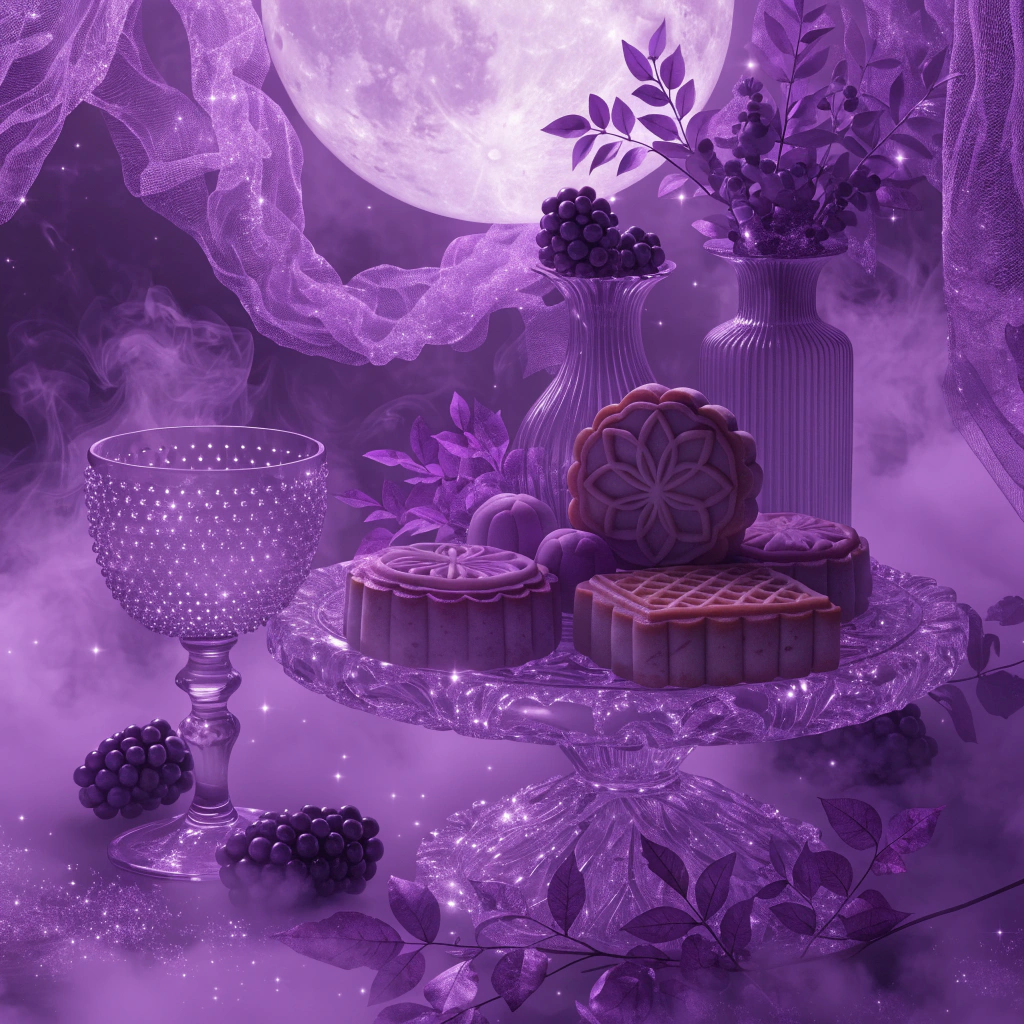
The Moon Festival in China
The Mid-Autumn Festival is a big holiday in China. It is in September or October. People call it the Moon Festival.
The moon is very big and bright on this day. Families come together. They sit outside and look at the moon. The round moon means the family is together.
People eat special food. They eat mooncakes. Mooncakes are sweet and round. Children like them very much. There is a story about a woman on the moon. Her name is Chang'e. People are happy and thankful.
Grammar Spotlight
Pattern: Present Simple (Be)
"The Mid-Autumn Festival is a big holiday in China."
Use 'is' for one thing and 'are' for many things. It describes a fact or a state.
Pattern: Present Simple (Regular Verbs)
"Families come together."
Use the base verb for plural subjects like 'families'. This shows a habit or regular action.
Test Your Understanding
10 questions · A1 Beginner · 1 free preview
Test what you learned from this article. Answer all questions to earn XP!
Where is this festival famous?
Want to finish the quiz?
9 more questions are waiting for you. Sign up free to unlock the full quiz and earn XP!
Sign Up FreeAlready have an account? Sign In
Question Breakdown
Where is this festival famous?
Your answer:
Correct answer: China
People eat mooncakes during this festival.
Your answer:
Correct answer: True
What does 'sweet' mean?
Your answer:
Correct answer: Tastes like sugar
The moon is very big and _____ on this day.
Your answer:
Correct answer: bright
The Beautiful Moon Festival in China
The Mid-Autumn Festival is a very important holiday in China. It happens every year in September or October. During this time, the moon is bigger and brighter than usual. For Chinese families, the round moon is a symbol of being together. Because the moon is round, families try to meet and have a special meal.
There is a famous story about the festival. Long ago, a woman named Chang'e drank a magic medicine. She flew to the moon and stayed there. Today, people still look at the moon and think about her. They also see a small rabbit living with her on the moon.
During the festival, people eat mooncakes. These are round cakes with sweet things inside. Some mooncakes are more delicious than others, but they are all popular. Children carry bright lanterns and walk outside at night. The Mid-Autumn Festival is more exciting than a normal day because families feel very happy together.
Grammar Spotlight
Pattern: Comparatives
"During this time, the moon is bigger and brighter than usual."
We use comparatives to compare two things. For short adjectives, we add '-er' and the word 'than'.
Pattern: Past Simple
"She flew to the moon and stayed there."
We use the past simple to talk about finished actions in the past. 'Flew' is an irregular verb (from fly), and 'stayed' is a regular verb.
Test Your Understanding
11 questions · A2 Elementary · 1 free preview
Test what you learned from this article. Answer all questions to earn XP!
When does the festival happen?
Want to finish the quiz?
10 more questions are waiting for you. Sign up free to unlock the full quiz and earn XP!
Sign Up FreeAlready have an account? Sign In
Question Breakdown
When does the festival happen?
Your answer:
Correct answer: In September or October
The round moon is a symbol of being alone.
Your answer:
Correct answer: False
What are lanterns?
Your answer:
Correct answer: Lights you can carry
During the festival, people eat _____.
Your answer:
Correct answer: mooncakes
Who lives on the moon according to the story?
Your answer:
Correct answer: Chang'e and a rabbit
Celebrating the Moon: The Mid-Autumn Festival
The Mid-Autumn Festival, which is also known as the Moon Festival, is one of the most important holidays in Chinese culture. It has been celebrated for thousands of years to mark the end of the autumn harvest. The festival falls on the 15th day of the eighth month of the lunar calendar, when the moon is believed to be at its brightest and fullest.
To many families, the round shape of the moon symbolizes completeness and unity. For this reason, family members often travel long distances to be together. A special meal is usually prepared, and mooncakes are shared among relatives. Mooncakes are round pastries that are filled with sweet ingredients like bean paste or lotus seeds. In some regions, a salty egg yolk is placed in the center to represent the moon.
The festival is also connected to the famous legend of Chang'e, the Moon Goddess. It is said that she drank a magical elixir and floated up to the moon, where she has lived ever since. During the festival, people often look at the moon and think about her story of love and sacrifice. Families sit outside to appreciate the night sky while drinking tea and enjoying the cool autumn air.
In recent years, the holiday has become a time for relaxation and reflection. Many public parks have been decorated with colorful lanterns, and traditional performances are held throughout the country. Even though modern life is busy, the tradition of gathering under the moonlight remains a significant part of Chinese identity. It is a moment to appreciate family and the beauty of nature.
Grammar Spotlight
Pattern: Present Perfect Tense
"It has been celebrated for thousands of years to mark the end of the autumn harvest."
The present perfect (has + been + past participle) is used here to describe an action that started in the past and continues to be relevant today.
Pattern: Relative Clauses
"The Mid-Autumn Festival, which is also known as the Moon Festival, is one of the most important holidays in Chinese culture."
A relative clause starting with 'which' provides extra information about the subject. It is separated by commas when the information is non-essential.
Test Your Understanding
11 questions · B1 Intermediate · 1 free preview
Test what you learned from this article. Answer all questions to earn XP!
When does the Mid-Autumn Festival take place?
Want to finish the quiz?
10 more questions are waiting for you. Sign up free to unlock the full quiz and earn XP!
Sign Up FreeAlready have an account? Sign In
Question Breakdown
When does the Mid-Autumn Festival take place?
Your answer:
Correct answer: On the 15th day of the eighth lunar month
The round shape of the moon represents family unity.
Your answer:
Correct answer: True
What does 'unity' mean?
Your answer:
Correct answer: The state of being joined together
Mooncakes are round _____ that are filled with sweet ingredients.
Your answer:
Correct answer: pastries
Who is Chang'e in Chinese mythology?
Your answer:
Correct answer: The Moon Goddess
The Celestial Harmony: Understanding the Mid-Autumn Festival
The Mid-Autumn Festival, known locally as Zhongqiu Jie, represents one of the most significant pillars of Chinese cultural heritage. Occurring on the 15th day of the eighth lunar month, it coincides with the moon reaching its peak luminosity and perfect spherical form. For centuries, this celestial event has served as a profound metaphor for family unity and prosperity. In the Chinese worldview, the roundness of the moon is inextricably linked to the concept of 'completeness' or yuanman, a state of harmony that families strive to achieve through annual gatherings.
Central to the festival's identity is the poignant legend of Chang’e, the Moon Goddess. Although various versions of the myth exist, the most prevalent narrative involves a heroic archer, Hou Yi, and his wife’s consumption of an elixir of immortality. This mythological framework provides a layer of ethereal beauty to the celebrations, as observers gaze at the lunar surface, imagining Chang’e in her celestial palace. Such stories are not merely ancient folklore; they continue to shape the collective imagination of millions, reinforcing themes of sacrifice and eternal longing.
From a culinary perspective, the festival is synonymous with the consumption of mooncakes. These dense, circular pastries, often filled with lotus seed paste or salted egg yolks, are traditionally gifted among relatives and business associates. While the classic recipes remain popular, contemporary iterations featuring chocolate, ice cream, or exotic fruits have emerged to cater to modern palates. The act of sharing these delicacies signifies the strengthening of social bonds and the expression of gratitude among friends and peers.
Moreover, the festival is characterized by vibrant lantern displays and the practice of 'moon gazing.' In urban centers like Hong Kong or Shanghai, public parks become illuminated with intricate installations, blending traditional craftsmanship with modern technology. Families gather in open spaces, momentarily stepping away from the frantic pace of modern life to appreciate the natural world. This transition from agricultural roots to urban celebration demonstrates the festival’s remarkable adaptability.
In conclusion, the Mid-Autumn Festival is far more than a simple harvest celebration. It is a sophisticated synthesis of mythology, gastronomy, and social philosophy. By prioritizing family cohesion and reflecting on the cyclical nature of time, the festival remains an essential component of the Chinese identity, bridging the gap between ancient traditions and the complexities of the twenty-first century.
Grammar Spotlight
Pattern: Passive Voice
"These dense, circular pastries... are traditionally gifted among relatives and business associates."
The passive voice is used here to focus on the action (gifting) and the object (pastries) rather than the person performing the action. It is formed using 'to be' + past participle.
Pattern: Relative Clauses
"In the Chinese worldview, the roundness of the moon is inextricably linked to the concept of 'completeness' or yuanman, a state of harmony that families strive to achieve through annual gatherings."
A relative clause provides extra information about a noun. Here, 'that families strive to achieve' defines the 'state of harmony'.
Pattern: Participle Phrases
"Occurring on the 15th day of the eighth lunar month, it coincides with the moon reaching its peak luminosity."
The present participle phrase 'Occurring on...' acts as an adjective describing the festival, allowing for more concise and sophisticated sentence structure.
Test Your Understanding
11 questions · B2 Upper Intermediate · 1 free preview
Test what you learned from this article. Answer all questions to earn XP!
What is the primary symbolic meaning of the moon's roundness in the article?
Want to finish the quiz?
10 more questions are waiting for you. Sign up free to unlock the full quiz and earn XP!
Sign Up FreeAlready have an account? Sign In
Question Breakdown
What is the primary symbolic meaning of the moon's roundness in the article?
Your answer:
Correct answer: Family completeness and harmony
Mooncakes are now only available in their traditional lotus seed paste form.
Your answer:
Correct answer: False
What does 'inextricably' mean?
Your answer:
Correct answer: Impossible to separate or untangle
The festival is _____ with the consumption of mooncakes.
Your answer:
Correct answer: synonymous
According to the text, how have urban centers changed the festival?
Your answer:
Correct answer: They blend traditional craftsmanship with modern technology.
Celestial Symmetry: Unpacking the Socio-Cultural Tapestry of the Mid-Autumn Festival
Seldom does a tradition transcend mere celebration to become a cornerstone of national identity as effectively as the Mid-Autumn Festival, or Zhongqiu Jie. Observed on the fifteenth day of the eighth lunar month, this festival marks the pinnacle of the lunar cycle, where the moon is perceived to be at its most luminous and geometrically perfect. While many cultures celebrate the harvest, the Chinese interpretation is uniquely steeped in philosophical symmetry and the poignant yearning for familial completeness. It is the intrinsic link between the celestial and the domestic that defines the festival's core. Central to this is the legend of Chang’e and Hou Yi, a narrative that oscillates between heroism and tragic separation. According to myth, the archer Hou Yi was rewarded with an elixir of immortality after shooting down nine of ten suns to alleviate the world's suffering. However, his wife, Chang’e, eventually consumed the elixir to protect it from a villainous apprentice. Her subsequent ascent to the moon created an inextricable bond between the lunar orb and the concept of a distant, yet ever-present, loved one. This mythological foundation serves as the quintessential metaphor for the 'reunion'—a term that refers not merely to a physical gathering but to the spiritual alignment of a fragmented family. The symbolism of the circle dominates the festival’s aesthetic and culinary landscape. The roundness of the moon represents 'yuanman' (completeness), a concept that stands in stark contrast to the ephemeral nature of daily life. This is most visibly manifested in the mooncake, a dense pastry that has undergone significant transformation over the centuries. Historically a simple offering, the contemporary mooncake has faced increasing commodification. Critics argue that the shift towards extravagant packaging and luxury ingredients has diluted the festival's humble origins. However, proponents of this evolution suggest that the mooncake remains a vital social currency, facilitating the maintenance of 'guanxi' (social networks) in a modern, fast-paced society. Furthermore, the festival serves as a vehicle for the preservation of cultural heritage amidst rapid urbanization. As the Chinese diaspora expands globally, the Mid-Autumn Festival acts as a cultural anchor, providing a sense of continuity for those living far from their ancestral homes. The act of 'gazing at the moon' allows for a shared experience that transcends geographical boundaries, reinforcing the idea that despite being worlds apart, we all look up at the same moon. In conclusion, the Mid-Autumn Festival is far more than a mere harvest celebration. It is a sophisticated interplay of mythology, social obligation, and philosophical reflection. Whether through the lens of ancient folklore or the reality of modern consumerism, the festival remains a testament to the enduring human desire for wholeness. Only by understanding the nuanced layers of this celebration can one truly appreciate its significance in the broader tapestry of Chinese civilization.
Grammar Spotlight
Pattern: Negative Inversion
"Seldom does a tradition transcend mere celebration to become a cornerstone of national identity as effectively as the Mid-Autumn Festival."
Inversion is used here by placing a negative adverb ('Seldom') at the start, followed by the auxiliary verb 'does' before the subject. This structure is used for emphasis and is common in formal C1-level writing.
Pattern: It-Cleft Sentence
"It is the intrinsic link between the celestial and the domestic that defines the festival's core."
A cleft sentence focuses on a specific part of the information by starting with 'It is/was'. This highlights the 'intrinsic link' as the primary defining factor of the festival.
Pattern: Nominalisation
"The commodification of the mooncake has led to a shift in perception."
Nominalisation involves turning verbs or adjectives into nouns (e.g., 'commodify' to 'commodification'). This creates a more abstract, academic tone characteristic of advanced English.
Test Your Understanding
12 questions · C1 Advanced · 1 free preview
Test what you learned from this article. Answer all questions to earn XP!
What is the primary reason given for the moon's significance during the festival?
Want to finish the quiz?
11 more questions are waiting for you. Sign up free to unlock the full quiz and earn XP!
Sign Up FreeAlready have an account? Sign In
Question Breakdown
What is the primary reason given for the moon's significance during the festival?
Your answer:
Correct answer: Its roundness symbolizes completeness and family unity.
The article suggests that mooncakes have remained unchanged in their social role since ancient times.
Your answer:
Correct answer: False
Which word describes something that lasts for only a very short time?
Your answer:
Correct answer: Ephemeral
The festival marks the _____ of the lunar cycle, occurring when the moon is brightest.
Your answer:
Correct answer: pinnacle
According to the text, how does the festival benefit the Chinese diaspora?
Your answer:
Correct answer: By offering a cultural anchor and a sense of continuity.
Chang’e is said to have consumed the elixir of immortality to prevent a villain from taking it.
Your answer:
Correct answer: True
Lunar Synchronicity and the Ontological Resonance of the Mid-Autumn Festival
The Mid-Autumn Festival, or Zhongqiu Jie, represents perhaps the most quintessential manifestation of the Chinese cultural preoccupation with celestial cycles and familial cohesion. Occurring on the fifteenth day of the eighth lunar month, the festival coincides with the moon’s most luminous and geometrically perfect phase. This celestial alignment is far from a mere astronomical curiosity; rather, it serves as an ontological anchor for the concept of 'yuanman'—a state of completeness and wholeness that permeates the Chinese psyche. Were the moon not to reach its zenith of luminosity, the festival’s symbolic potency would arguably be diminished, as the physical orb serves as a mirror to the ideal of the undivided family unit.
At the heart of the festival’s mythos lies the tragic narrative of Chang’e and Hou Yi, a story that transcends simple folklore to explore themes of sacrifice, apotheosis, and eternal isolation. The legend posits that Chang’e, having consumed the elixir of immortality to safeguard it from a malevolent apprentice, ascended to the lunar realm, leaving her husband, the heroic archer Hou Yi, in a state of perpetual earthly longing. It is perhaps through the lens of Chang’e’s tragic isolation that we might best understand the Chinese preoccupation with familial proximity. The moon becomes a site of both divine presence and melancholic distance, a paradox that informs the festival's reflective and somewhat somber undertones.
In contemporary discourse, the festival’s primary culinary artifact, the mooncake, has undergone a radical transformation. Once a modest offering of lotus seed paste and salted egg yolk—the latter representing the lunar disc—the mooncake is now a vehicle for socio-cultural stratification and corporate gift-giving. Despite this commercialization, the act of commensality remains central. The shared consumption of these dense, intricate pastries functions as a ritualistic reaffirmation of social bonds. Seldom has a seasonal observance managed to maintain such profound cultural hegemony amidst the encroaching tide of globalized modernity. The mooncake, in its myriad modern iterations, continues to imbue the festival with a sense of continuity, bridging the gap between vestigial traditions and the exigencies of the twenty-first century.
Furthermore, the festival provides a unique vantage point from which to analyze the tension between the ephemeral nature of human life and the perceived permanence of the cosmos. As participants engage in 'moon gazing,' they are not merely observing a satellite; they are participating in a historical lineage that stretches back millennia. This practice is often accompanied by the recitation of classical poetry, most notably the works of Su Shi, whose verses reflect a philosophical resignation to the inevitable cycles of union and separation. By acknowledging the moon’s phases, the observer internalizes the paradoxical truth that change is the only constant, yet within that change, a recurring sense of belonging can be found.
Ultimately, the Mid-Autumn Festival is less about the celebration of a harvest and more about the cultivation of the internal landscape. It is an invitation to pause and reflect on the interconnectedness of the individual, the family, and the universe. In an era characterized by digital fragmentation, the festival’s insistence on physical presence and collective observation offers a necessary corrective. It serves as a reminder that, despite the vast distances—both literal and metaphorical—that may separate individuals, the shared gaze toward the lunar zenith provides a singular, unifying moment of cultural and spiritual synchronicity.
Grammar Spotlight
Pattern: Inverted Sentence Structure for Emphasis
"Seldom has a seasonal observance managed to maintain such profound cultural hegemony amidst the encroaching tide of globalized modernity."
Inversion is used here by placing the negative adverb 'Seldom' at the beginning, followed by the auxiliary verb 'has' before the subject. This formal structure emphasizes the rarity and significance of the event.
Pattern: Mixed Conditionals and Subjunctive Mood
"Were the moon not to reach its zenith of luminosity, the festival’s symbolic potency would arguably be diminished."
The use of 'Were... not to' is a formal subjunctive construction used to discuss hypothetical situations. It adds a scholarly tone to the causal link between the moon's appearance and the festival's meaning.
Pattern: Academic Hedging
"It is perhaps through the lens of Chang’e’s tragic isolation that we might best understand the Chinese preoccupation with familial proximity."
Words like 'perhaps' and 'might' are used to soften the claim, signaling that this is an analytical interpretation rather than an absolute fact, which is common in C2-level academic prose.
Test Your Understanding
12 questions · C2 Mastery · 1 free preview
Test what you learned from this article. Answer all questions to earn XP!
According to the text, what does the concept of 'yuanman' primarily represent?
Want to finish the quiz?
11 more questions are waiting for you. Sign up free to unlock the full quiz and earn XP!
Sign Up FreeAlready have an account? Sign In
Question Breakdown
According to the text, what does the concept of 'yuanman' primarily represent?
Your answer:
Correct answer: A state of completeness and wholeness
The author suggests that modern mooncakes have remained largely unchanged in their social function.
Your answer:
Correct answer: False
What does the word 'commensality' refer to in the context of the article?
Your answer:
Correct answer: The ritual of eating together
The author describes the legend of Chang’e as a story that transcends folklore to explore themes like _____, sacrifice, and isolation.
Your answer:
Correct answer: apotheosis
What is the 'paradox' mentioned in relation to the moon gaze?
Your answer:
Correct answer: That change is constant yet a sense of belonging remains
The text argues that the Mid-Autumn Festival is more about internal reflection than just a harvest celebration.
Your answer:
Correct answer: True
