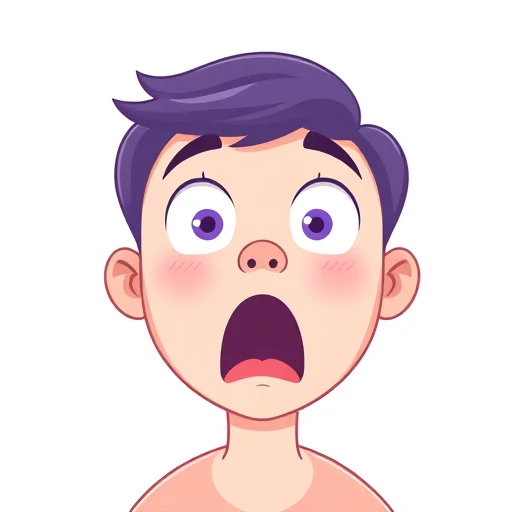
stun en 30 secondes
- To stun is to cause a temporary state of paralysis or daze, either through a physical blow or an overwhelming emotional shock or surprise.
- It is frequently used in the passive voice ('I was stunned') and as an adjective ('stunning') to describe exceptional beauty or impressive feats.
- The word implies a high level of intensity, suggesting that the person affected is momentarily unable to react, speak, or think clearly.
- Common contexts include sports upsets, breaking news, aesthetic appreciation, and biological descriptions of predators capturing their prey using specialized methods.
The verb stun is a powerful term that bridges the gap between physical sensation and psychological impact. At its core, to stun someone means to deliver a blow—either literal or metaphorical—that leaves them momentarily paralyzed, speechless, or unable to process information. In a physical sense, it refers to a blow to the head or a shock that causes a loss of consciousness or a state of dazed confusion. However, in modern English, you are far more likely to encounter it in an emotional or social context. When we say someone is 'stunned,' we are describing a level of surprise that goes far beyond a simple 'oh!' It is the kind of shock that makes the jaw drop, the heart skip a beat, and the mind go blank. It is often used when news is so unexpected that the recipient needs several seconds, or even minutes, to formulate a response. This word is a staple in journalism, storytelling, and daily conversation because it captures the dramatic essence of a sudden shift in reality.
- Physical Application
- In biology or sports, to stun is to render an organism or opponent incapable of movement. A predator might stun its prey with a venomous sting or a heavy blow. In contact sports like boxing, a punch might stun a fighter, leaving them standing but unable to defend themselves effectively for a few crucial seconds.
- Emotional Application
- This is the most common usage. It describes the reaction to incredible news, whether positive (winning the lottery) or negative (a sudden breakup). The key is the temporary 'freezing' of the person's cognitive faculties.
- Aesthetic Application
- While 'stun' is a verb, its participial form 'stunning' is frequently used to describe extreme beauty. When something is stunning, it is so beautiful that it effectively 'stuns' the viewer into silence and admiration.
The unexpected announcement of the CEO's resignation managed to stun the entire board of directors into a heavy, uncomfortable silence.
The word carries a weight of intensity. You wouldn't use 'stun' for a small surprise, like finding a five-dollar bill in your pocket. You use it for life-altering events or events that defy logic. It implies a total, albeit temporary, loss of control over one's reactions. When you are stunned, your body’s 'fight or flight' response is momentarily bypassed by a 'freeze' response. This makes it a favorite for novelists who want to emphasize the gravity of a plot twist. It is also used frequently in headlines to grab attention: 'Underdog Team Stuns Defending Champions.' Here, the word conveys not just a win, but a win so improbable that it left the sporting world in disbelief.
The hunter used a specialized device to stun the fish before moving them to the new aquarium tank.
Furthermore, the word 'stun' is often associated with light and sound. A 'stun grenade' (also known as a flashbang) is designed to produce a blinding flash and a deafening noise to temporarily disable an individual's senses. This highlights the sensory overload aspect of the word. Whether it is a bright light or a shocking piece of gossip, the mechanism is the same: the senses are overwhelmed, leading to a state of dazed inaction. In a social context, a person might be 'stunned into silence' by a rude comment or an incredibly generous offer. In both cases, the normal flow of social interaction is halted by the sheer force of the event.
She was so stunned by the beauty of the Grand Canyon that she forgot to take any photographs for the first hour.
- Context: News & Media
- Journalists use 'stun' to describe political upsets, scientific breakthroughs, or tragic accidents. It signals to the reader that the event is of high significance.
- Context: Personal Relationships
- Used to describe the impact of secrets being revealed or unexpected gestures of love or betrayal.
The boxer's powerful left hook was enough to stun his opponent, though it didn't quite result in a knockout.
In summary, 'stun' is a versatile and evocative word. It captures the moment when the world stops for an individual, whether due to a physical impact, a visual spectacle, or a cognitive shock. It is a word of high intensity, reserved for those moments that leave us breathless and momentarily lost for words. Understanding 'stun' allows you to express deep levels of disbelief and to describe the profound impact that certain events can have on the human psyche and body.
Using the word stun correctly requires an understanding of its grammatical flexibility and its emotional weight. As a transitive verb, it always requires an object—you must stun *someone* or *something*. However, it is most frequently encountered in the passive form ('to be stunned') or as a participle acting as an adjective ('stunning' or 'stunned'). When you use it, you are making a claim about the intensity of an experience. It is not just about being surprised; it is about being overwhelmed. To use 'stun' effectively, you should pair it with contexts that justify such a strong reaction. For example, 'The news stunned me' is much more impactful than 'The news surprised me.'
- Active Voice Usage
- In the active voice, the subject is the cause of the shock. 'The magician's final trick stunned the audience.' Here, the trick is doing the action of stunning. This structure is great for emphasizing the power of the cause.
- Passive Voice Usage
- This is the most common form. 'I was stunned by her brilliance.' The focus is on the person experiencing the emotion. It often follows the pattern: [Person] + [be verb] + stunned + [by/at] + [Cause].
- As an Adjective (Stunning)
- When used as 'stunning,' it usually refers to beauty or excellence. 'The view from the mountain top was stunning.' It implies the view was so good it left you speechless.
The sudden drop in stock prices stunned investors who had expected a profitable quarter.
When constructing sentences with 'stun,' consider the adverbs you use to modify it. Because 'stun' is already a strong word, adverbs like 'completely,' 'absolutely,' 'utterly,' or 'totally' are often used to reinforce that intensity. For instance, 'He was utterly stunned by the revelation.' This creates a vivid picture of someone who is completely incapacitated by shock. Conversely, you would rarely see 'slightly stunned,' as the word itself implies a high degree of impact. If the surprise is minor, words like 'startled' or 'taken aback' are more appropriate choices.
The loud explosion stunned the birds, causing them to fly erratically from the trees.
In professional writing, 'stun' is used to describe market shifts or unexpected research findings. In creative writing, it is used to describe the internal state of a character. A character might be 'stunned into silence' or 'stunned into submission.' These phrases describe a state where the shock is so great that it dictates the person's subsequent behavior. The preposition 'into' is very useful here, as it shows the result of being stunned. For example, 'The news stunned the nation into a period of mourning.' This shows how the collective shock led to a specific state of being.
It stuns me that we are still having this debate in the twenty-first century.
- Common Pattern: It + stuns + [object] + that...
- 'It stuns me that he lied.' This is a common way to express personal disbelief about a fact or situation.
- Common Pattern: [Object] + was + stunned + to find/hear/see...
- 'They were stunned to find the house empty.' This links the emotion directly to the discovery.
The beauty of the aurora borealis can stun even the most seasoned travelers.
Finally, remember the physical roots of the word. While we mostly use it for emotions today, it still carries that sense of a 'hit.' When you say you are stunned, you are saying the news hit you like a physical blow. This metaphorical connection is what gives the word its strength. Whether you are writing a news report, a novel, or an email to a friend, using 'stun' correctly will help you convey a sense of profound, paralyzing surprise that other words simply cannot match.
The word stun and its derivatives are ubiquitous in modern English, appearing in various domains from high-stakes journalism to casual social media posts. Understanding where you are likely to encounter it will help you grasp its nuances and register. In the world of Breaking News, 'stun' is a favorite for headline writers. It is used to describe events that disrupt the status quo—political elections where the underdog wins, sudden corporate collapses, or unexpected scientific discoveries. You might see a headline like 'Scientific Discovery Stuns Researchers,' which immediately tells you that the findings were not just interesting, but revolutionary and unexpected.
- Sports Commentary
- You will hear this constantly during live broadcasts. 'The late goal has stunned the home crowd!' It describes the sudden silence and disbelief of thousands of people when their team unexpectedly loses or concedes a point.
- Entertainment & Fashion
- In red carpet coverage or fashion reviews, the adjective 'stunning' is the go-to word. 'She looked stunning in that silk gown.' It is used so frequently here that it has become a standard superlative for exceptional beauty.
- Police & Military Reports
- In more literal contexts, you'll hear about 'stun guns' (Tasers) or 'stun grenades.' These are tools designed to physically incapacitate a person without causing permanent injury.
The documentary featured a predator using high-frequency sound to stun its prey before the final strike.
In Casual Conversation, people use 'stunned' to express their reaction to gossip or surprising personal news. If a friend tells you they are moving to another country tomorrow, you might reply, 'I'm stunned! Why didn't you tell me sooner?' It conveys a level of shock that 'surprised' doesn't quite reach. On Social Media, particularly platforms like Instagram or Pinterest, 'stunning' is one of the most common comments on photos of landscapes, architecture, or portraits. It serves as a quick, high-impact compliment. In Literature and Film, the word is used to describe the effect of a plot twist. A 'stunning revelation' is one that changes everything the audience thought they knew about the story.
The audience was stunned into silence as the pianist played the final, haunting notes of the concerto.
You will also encounter 'stun' in Legal and Political Discourse. A court's decision might 'stun' legal experts if it goes against established precedents. A politician's scandal might 'stun' their supporters. In these cases, the word highlights the gap between expectation and reality. It suggests that the event was so outside the norm that people are struggling to integrate it into their understanding of the world. In Nature Documentaries, the word is often used to describe the hunting techniques of various animals, such as the pistol shrimp, which uses a bubble to 'stun' small fish, or the electric eel.
The jury's 'not guilty' verdict stunned the prosecutors, who had presented what they thought was an airtight case.
- Usage in Business
- 'The startup's rapid growth stunned the industry.' This implies that competitors and analysts were caught off guard by the company's success.
- Usage in Travel
- 'Prepare to be stunned by the architectural wonders of Rome.' Travel guides use this to build anticipation for impressive sights.
The chef's innovative use of liquid nitrogen stunned the diners, who had never seen food prepared that way.
In conclusion, 'stun' is a word that moves across many different layers of society. Whether it's describing a physical weapon, a beautiful dress, a shocking news story, or a predator's strike, it always carries the core meaning of an overwhelming impact that causes a temporary halt in normal function. By paying attention to these different contexts, you can begin to use 'stun' with the same precision and power as a native speaker.
While stun is a relatively straightforward verb, learners often make subtle errors in its application, intensity, and grammatical form. One of the most frequent mistakes is overusing the word for minor surprises. Because 'stun' implies a paralyzing level of shock, using it for something small—like a friend being five minutes late—can sound dramatic or even sarcastic. It is important to match the word to the magnitude of the event. If you are only a little bit surprised, 'stunned' is too strong; 'surprised' or 'amazed' would be better. Another common error involves the spelling of its derivatives. Learners often forget to double the 'n' when adding suffixes, writing 'stuning' instead of 'stunning' or 'stuned' instead of 'stunned.' This is a rule for many short verbs ending in a consonant-vowel-consonant pattern.
- Mistake: Confusing 'Stunned' with 'Shocked'
- While similar, 'shocked' often has a negative connotation (disgust or horror), whereas 'stunned' can be neutral or even positive (amazement at beauty). You can be 'stunned by a sunset,' but you are rarely 'shocked by a sunset' unless the sun is the wrong color.
- Mistake: Using 'Stunning' for People's Personalities
- 'Stunning' almost exclusively refers to physical appearance or a visual performance. If you want to describe someone's great personality, use 'wonderful,' 'amazing,' or 'charming.' Calling a personality 'stunning' is rare and sounds slightly off.
- Mistake: Incorrect Prepositions
- Learners sometimes use 'stunned with' when they should use 'stunned by' or 'stunned at.' While 'stunned with' can occasionally be used (e.g., 'stunned with a blow'), the emotional reaction is almost always 'stunned by [the news]' or 'stunned at [his behavior].'
Incorrect: I was stuning by the news.
Correct: I was stunned by the news.
Another nuance to watch out for is the difference between 'stunned' and 'astonished.' 'Astonished' is purely mental and often carries a sense of wonder. 'Stunned' has that physical undertone of being 'hit' or 'dazed.' You might be astonished by a clever math proof, but you are stunned by a sudden, loud thunderclap or a shocking betrayal. Furthermore, avoid using 'stun' as an intransitive verb. You cannot say 'The news stuns.' You must say 'The news stuns *me*' or 'The news is stunning.' The verb needs a target to act upon. This is a common slip for speakers of languages where the equivalent verb might not require a direct object.
Incorrect: The view was stunned.
Correct: The view was stunning.
In writing, be careful with clichés. Phrases like 'stunned into silence' are very common, which can make your writing feel unoriginal if used too often. Try to describe *how* the person was stunned. Did they drop their glass? Did their eyes widen? This adds more flavor than just using the word 'stunned' on its own. Also, be aware of the register. While 'stunning' is common in casual speech, 'stun' as a verb can feel slightly formal or dramatic. In very casual settings, people might use 'shocked' or 'blown away' instead. For example, 'I was blown away by the movie' is more common in a pub than 'I was stunned by the movie.'
Incorrect: He stuns easily.
Correct: He is easily stunned.
- Mistake: Passive vs. Active Confusion
- Don't say 'The news was stunning me.' While grammatically possible, it's very rare. Use 'The news stunned me' (active) or 'I was stunned by the news' (passive).
- Mistake: Misusing 'Stun' for 'Stunt'
- 'Stunt' means to prevent growth (e.g., 'smoking stunts your growth'). These are completely different words, though they look similar. Don't say 'The news stunted me.'
The athlete's performance was stunningly consistent throughout the entire season.
By avoiding these common pitfalls—matching the intensity, getting the spelling right, using the correct prepositions, and choosing the right register—you will be able to use 'stun' and its related words with confidence and accuracy. It is a word that, when used correctly, adds a significant layer of emotion and impact to your English communication.
To truly master the word stun, it is helpful to compare it with its synonyms and alternatives. English is rich with words for 'surprise,' and each one carries a slightly different flavor. 'Stun' is near the top of the intensity scale, but there are other words you might choose depending on whether the shock is positive, negative, intellectual, or physical. For instance, astound and amaze are very close to 'stun' when the surprise is positive. However, 'astound' often implies a level of intellectual disbelief (e.g., 'His knowledge astounded me'), while 'stun' is more visceral and immediate. 'Amaze' is slightly less intense and is used more frequently in everyday life.
- Stun vs. Shock
- 'Shock' is the most common alternative. While 'stun' implies a temporary paralysis or daze, 'shock' often implies a lasting emotional impact, frequently negative. You are 'shocked' by a crime, but 'stunned' by a sudden plot twist. 'Shock' also has a medical meaning (a drop in blood pressure) that 'stun' does not share.
- Stun vs. Flabbergast
- 'Flabbergast' is a more informal and slightly old-fashioned word. It is almost always used in the passive: 'I was flabbergasted.' It carries a sense of humorous or extreme disbelief. It's less serious than 'stunned.'
- Stun vs. Daze
- 'Daze' is more focused on the physical or mental confusion following a shock. If you are 'dazed,' you are walking around in a fog. If you are 'stunned,' you are likely standing still, unable to move at all.
While the news of the lottery win stunned the family, the actual arrival of the check astounded them even more.
Another set of alternatives includes bewilder and confound. These words focus more on the confusion caused by the surprise. If something 'bewilders' you, you don't understand it. If it 'stuns' you, you might understand it, but you are just overwhelmed by the fact of it. For example, a complex math problem might bewilder you, but a sudden loud noise stuns you. Paralyze is another strong alternative, often used metaphorically: 'She was paralyzed with fear.' This is very similar to 'stunned into silence,' but 'paralyze' emphasizes the inability to act, while 'stun' emphasizes the impact that caused the inability.
The magician's ability to disappear from a locked box dumbfounded the skeptics in the front row.
In more formal or academic writing, you might use startle or surprise for lower-intensity events. If you want to describe a shock that causes a change in direction or thought, arrest can be used (e.g., 'The striking image arrested his attention'). This is a more sophisticated way of saying it 'stunned' him into looking. Dumbfound is another excellent synonym, specifically meaning to make someone speechless with amazement. It is very similar to 'stunned into silence' but feels a bit more descriptive of the mental state.
The sheer scale of the project overwhelmed the small team, effectively stunning them into inaction for several days.
- Register Check: Slang Alternatives
- In informal English, you might hear 'floored' (e.g., 'That news absolutely floored me') or 'blown away.' These are very common in spoken English and carry the same weight as 'stunned.'
- Register Check: Literary Alternatives
- Words like 'stupefy' or 'petrify' (meaning to turn to stone with fear or shock) are used in literature to provide a more dramatic or archaic feel.
The unexpected kindness of a stranger can disarm and stun even the most cynical person.
By expanding your vocabulary to include these alternatives, you can choose the exact word that fits your context. While 'stun' is a fantastic, high-impact word, knowing when to use 'astound,' 'shock,' or 'dumbfound' will make your English sound more natural and nuanced. Whether you are describing a beautiful sunset, a shocking news story, or a confusing math problem, you now have the tools to express exactly how surprised you are.
How Formal Is It?
Le savais-tu ?
The words 'stun' and 'astonish' actually share the same ancestor! Both come from the idea of being 'thunderstruck' or hit by a bolt of lightning.
Guide de prononciation
- Pronouncing it like 'stoon' (long 'oo' sound).
- Pronouncing it like 'stan' (with an 'a' sound).
- Adding an extra syllable at the end (e.g., 'stunn-uh').
- Not clearly articulating the 'n' sound.
- Confusing it with 'stone' in fast speech.
Niveau de difficulté
Common in news and fiction, easy to recognize from context.
Requires care with spelling (double 'n') and choosing the right intensity.
Very useful for expressing strong reactions naturally.
Clear pronunciation and usually emphasized in speech.
Quoi apprendre ensuite
Prérequis
Apprends ensuite
Avancé
Grammaire à connaître
Doubling the final consonant
Stun -> Stunned, Stunning (because it is a 1-syllable word ending in CVC).
Passive Voice for Emotions
I was stunned (Subject + be + past participle).
Participle Adjectives
A stunning view (present participle) vs. A stunned silence (past participle).
Transitive Verb Object
The news stunned *me* (requires an object).
Adverbial Modification
Stunningly beautiful (Adverb + Adjective).
Exemples par niveau
The big dog stunned the little cat.
The big dog made the little cat very surprised and scared.
Subject + Verb + Object
I was stunned by the beautiful flowers.
I was very surprised because the flowers were so pretty.
Passive voice: be + stunned
The magic trick stunned the children.
The kids were very surprised by the magic.
Past tense of stun (double the n)
She has a stunning dress.
Her dress is very, very beautiful.
Stunning as an adjective
The news stunned my family.
My family was very shocked by what they heard.
Simple past tense
He was stunned to see his friend.
He was very surprised to see his friend.
be + stunned + to-infinitive
The loud noise stunned the bird.
The bird was shocked by the loud sound.
Physical use of stun
It was a stunning day at the beach.
The day at the beach was very beautiful.
Adjective modifying a noun
The beauty of the mountains stunned the hikers.
The hikers were amazed by the mountain view.
Noun phrase + verb + object
I was stunned to hear that she won the race.
I was very surprised when I heard she won.
Passive voice + to-infinitive
The player was stunned after the fall.
The player was dazed and confused after falling down.
Physical state of being stunned
They saw a stunning sunset last night.
They saw a very beautiful sunset.
Adjective usage
The surprise party completely stunned him.
He was totally shocked by the party.
Adverb 'completely' modifying 'stunned'
The movie has some stunning special effects.
The movie has very impressive visual effects.
Adjective usage
We were stunned by the high prices in the shop.
We were shocked at how expensive everything was.
be + stunned + by
The news of the accident stunned the town.
Everyone in the town was shocked by the accident.
Subject + verb + object
The scientist's discovery stunned the academic world.
The discovery was so unexpected it shocked all the experts.
Formal context usage
I was stunned into silence by his rude comment.
His mean words made me so shocked I couldn't speak.
stunned + into + noun
The team's victory stunned their opponents.
The other team was completely shocked that they lost.
Sports context
She gave a stunning performance in the new play.
Her acting was incredibly good and impressive.
Adjective for performance
The blow to his head stunned him for a few seconds.
Hitting his head made him dazed and unable to move briefly.
Literal physical usage
It stunned me that nobody had noticed the mistake before.
I was shocked that the error was missed for so long.
It + stuns + object + that-clause
The city has a stunning mix of old and new buildings.
The architecture is very impressive and beautiful.
Adjective usage
The audience sat stunned as the credits rolled.
The people were too shocked to move after the movie ended.
Participle used as a complement
The sudden resignation of the prime minister stunned the nation.
The whole country was in shock when the leader quit suddenly.
Political context
The jellyfish uses its tentacles to stun small fish.
The jellyfish paralyzes its prey with a sting.
Biological/literal usage
I was absolutely stunned by the level of detail in the painting.
The painting was so detailed it completely amazed me.
Adverb 'absolutely' for emphasis
The company's profits were stunningly high this year.
The profits were so high they were almost unbelievable.
Adverb usage 'stunningly'
He was stunned to find that his house had been sold without his knowledge.
He was in total disbelief about the sale of his home.
Passive voice + to-infinitive
The stunning revelation changed the course of the trial.
The shocking new information changed everything in court.
Adjective modifying a noun
The cold water stunned my system when I jumped in.
The freezing water gave my body a huge shock.
Physical/sensory shock
The crowd was stunned into a deathly silence by the accident.
The accident made everyone so shocked they couldn't make a sound.
Passive voice + into + noun phrase
The sheer audacity of the plan stunned even his most loyal supporters.
The plan was so bold and risky it shocked his friends.
Abstract subject 'audacity'
The blow was intended to stun, not to kill.
The hit was meant to knock the person out, not end their life.
Infinitive of purpose
The economy was stunned by the sudden imposition of trade tariffs.
The financial system was paralyzed by the new taxes.
Metaphorical usage in economics
She was stunningly beautiful, in a way that made people stop and stare.
Her beauty was so extreme it physically stopped people.
Adverbial phrase
The researchers were stunned to discover a new species in such a well-explored area.
The experts were in disbelief at finding something new in a familiar place.
Academic context
The play's ending was designed to stun the audience and provoke debate.
The end was meant to shock people and make them talk.
Infinitive of purpose
I stood there, stunned by the realization that I had been wrong all along.
The sudden understanding of my mistake left me paralyzed.
Participle phrase as an appositive
The rapid advancement of AI has stunned many industry experts.
How fast AI is improving has shocked the people who work with it.
Present perfect tense
The sheer scale of the humanitarian crisis stunned the international community into a belated response.
The size of the disaster was so great it initially paralyzed world leaders.
Complex sentence structure
The aesthetic of the cathedral was so profound it seemed to stun the very soul.
The building was so beautiful it shocked the person's deepest self.
Metaphorical/philosophical usage
The fighter was stunned by a flurry of punches but managed to stay on his feet.
The boxer was dazed by many hits but didn't fall down.
Technical sports usage
It is stunningly naive to assume that the transition will be seamless.
It is incredibly foolish and shocking to think it will be easy.
Adverb modifying an adjective in a critical tone
The court's decision stunned legal scholars, who had anticipated a very different outcome based on precedent.
The ruling shocked experts who expected the law to be followed differently.
Formal/Legal context
The predator uses a specialized organ to emit an electrical pulse that stuns its prey instantly.
The animal uses electricity to paralyze its food immediately.
Precise biological description
The silence that followed his confession was stunning in its intensity.
The quiet after he told the truth was so strong it was shocking.
Adjective describing an abstract noun
The project's failure stunned the board, as all previous reports had been overwhelmingly positive.
The board was in shock because they thought everything was going well.
Causal relationship
Synonymes
Antonymes
Collocations courantes
Phrases Courantes
— To be so shocked or overwhelmed that you stop resisting or arguing.
The small company was stunned into submission by the larger corporation's legal threats.
— A physical hit that dazes someone, or a metaphorical event that causes great shock.
The loss of his job was a stunning blow to his confidence.
— To be shocked in the deepest part of your being.
She was stunned to the core by her best friend's betrayal.
— A very impressive and wide variety of things.
The museum has a stunning array of ancient artifacts.
— A period of quiet that happens because everyone is too shocked to speak.
A stunned silence fell over the room after he made the rude remark.
— The facial expression of someone who is very surprised.
I'll never forget the stunned look on her face when she won.
— Something that works surprisingly well.
The new marketing campaign was stunningly effective at increasing sales.
— The way someone responds when they are shocked.
The stunned reaction of the crowd showed how unexpected the result was.
— A very impressive and surprising success.
Climbing Everest without oxygen is a stunning achievement.
— To be so shocked that you are unable to do anything.
The team was stunned into inaction by the sudden change in plans.
Souvent confondu avec
Stunt means to stop growth or a dangerous trick. Stun means to shock.
A sting is a sharp pain (like a bee). To stun is to daze or shock.
Stem refers to the part of a plant or to stop a flow. Unrelated to stun.
Expressions idiomatiques
— To surprise or shock someone very much (similar to stunning them).
The news of his illness really knocked me for six.
Informal (British)— To make someone stop suddenly because they are surprised or stunned.
The beautiful music stopped him in his tracks.
Neutral— To stun or amaze someone completely.
The special effects in that movie will blow your mind.
Informal— To be so stunningly beautiful or impressive that it's hard to breathe.
The view from the cliff took my breath away.
Neutral— Something that happens very suddenly and stuns everyone.
His resignation came like a bolt from the blue.
Neutral— So stunning or surprising that your mouth opens in shock.
It was a jaw-dropping performance by the young gymnast.
Informal— Visually stunning or extremely surprising.
The company reported eye-popping profits this quarter.
Informal— Extremely surprised or stunned (related to the etymology of stun).
He stood there thunderstruck, unable to believe his eyes.
Literary— To hit someone very hard (physically stunning them).
The boxer really cleaned his opponent's clock in the third round.
Slang (US)— To stun someone with charm or love.
He completely swept her off her feet on their first date.
NeutralFacile à confondre
Both mean a sudden surprise.
Shock is often negative or medical. Stun implies a physical or mental 'freeze' and can be positive.
I was shocked by the crime, but stunned by the beauty of the art.
Both describe being impressed.
Amaze is more common and less intense. Stun is for when you are so amazed you can't move.
His magic will amaze you, but his final act will stun you.
Both involve being confused.
Daze is the *state* of confusion. Stun is the *action* that causes it.
The blow stunned him, leaving him in a daze.
Both mean extreme surprise.
Astound is more intellectual. Stun is more physical/visceral.
The complexity of the universe astounds me; the sudden flash of a meteor stuns me.
Both involve suddenness.
Startle is a quick jump or fright. Stun is a deeper, longer-lasting shock.
The cat startled me when it jumped, but the loud crash stunned me.
Structures de phrases
I was stunned by [Noun].
I was stunned by the price.
It stunned me that [Clause].
It stunned me that he left.
[Noun] was stunning.
The sunset was stunning.
Stunned into [Noun].
She was stunned into silence.
A stunningly [Adjective] [Noun].
A stunningly beautiful house.
[Subject] stunned [Object] with [Noun].
The player stunned the crowd with a goal.
Stunned to [Verb].
He was stunned to find the door open.
The [Noun] was stunning in its [Noun].
The silence was stunning in its intensity.
Famille de mots
Noms
Verbes
Adjectifs
Apparenté
Comment l'utiliser
High, especially in journalism and aesthetic descriptions.
-
Using 'stuning' with one 'n'.
→
stunning
Short verbs with a CVC pattern must double the final consonant.
-
Saying 'I was stunned with the view.'
→
I was stunned by the view.
The preposition 'by' is used to show the cause of the emotion.
-
Using 'stunned' for a minor surprise.
→
I was surprised.
'Stunned' is for high-intensity shocks, not small ones.
-
Confusing 'stun' with 'stunt'.
→
The news stunned me.
'Stunt' means to stop growth; 'stun' means to shock.
-
Using 'stunning' for personality.
→
She has a wonderful personality.
'Stunning' is usually for physical appearance or visual things.
Astuces
Match the Intensity
Only use 'stun' for big surprises. If you use it for small things, it sounds like you are exaggerating.
Double the N
Always remember: stun -> stunned, stunning. The double 'n' is essential for correct spelling.
Stunning vs. Beautiful
Use 'stunning' when 'beautiful' isn't strong enough. It implies the beauty is overwhelming.
Passive Voice
Practice using 'I was stunned by...' as it is the most common way to use the word for emotions.
Expressive Tone
When you say 'I was stunned,' use a tone of voice that sounds surprised to help convey the meaning.
Avoid Clichés
Try to avoid 'stunned into silence' unless it really fits. Describe the physical reaction instead.
News Reading
Look for the word 'stun' in news headlines. It will help you see how it's used for major events.
Literal Meaning
Remember that animals 'stun' their prey. This helps you remember the physical root of the word.
Use with Utterly
Pairing 'stunned' with 'utterly' or 'completely' makes your statement even more powerful.
Dumbfounded
If you want to say someone was so stunned they couldn't speak, 'dumbfounded' is a great alternative.
Mémorise-le
Moyen mnémotechnique
Think of a 'STUN' gun. It doesn't kill, it just makes you 'STUNned' so you can't move. Or think: 'S'udden 'T'hunder 'U'nsettles 'N'obody (except when it's so loud it stuns them!).
Association visuelle
Imagine a cartoon character with little birds or stars circling their head after being hit. That is the classic visual of being 'stunned'.
Word Web
Défi
Try to use 'stunned' and 'stunning' in the same paragraph about a trip you took. For example: 'The stunning view of the ocean left me completely stunned.'
Origine du mot
Derived from the Old French word 'estoner', which meant to stun, daze, or deafen. This French word itself came from the Vulgar Latin 'extonare'.
Sens originel : The Latin root 'extonare' literally means 'to strike with thunder' (ex- 'out' + tonare 'to thunder').
Indo-European (Latin -> French -> English).Contexte culturel
Be careful when using 'stunned' to describe reactions to tragedies; while accurate, ensure the tone remains respectful.
Commonly used in tabloid headlines to create drama and excitement.
Pratique dans la vie réelle
Contextes réels
Sports
- Stunned the crowd
- A stunning upset
- Stunned the defending champions
- Left the fans stunned
Nature/Science
- Stun the prey
- A stunning discovery
- Stunned by the results
- Stunning biodiversity
Fashion/Beauty
- Look stunning
- A stunning dress
- Stunningly beautiful
- A stunning makeover
Crime/Safety
- Use a stun gun
- Stunned the attacker
- A stun grenade
- Stunned by the blow
Personal Life
- Stunned by the news
- Stunned into silence
- Absolutely stunned
- It stuns me that...
Amorces de conversation
"Have you ever been so stunned by news that you couldn't speak?"
"What is the most stunning place you have ever visited in your life?"
"Has a movie ending ever stunned you? Which one was it?"
"What is a stunning achievement you are proud of?"
"Does it stun you how much technology has changed in the last decade?"
Sujets d'écriture
Describe a time you were stunned into silence. What happened and how did you feel?
Write about a stunning view you once saw. Use as much descriptive language as possible.
If you could stun the world with one discovery, what would you want it to be?
Think of a 'stunning' person in your life. What makes them so impressive or beautiful?
Write a short story that ends with a stunning revelation for the main character.
Questions fréquentes
10 questionsYes, absolutely! While it can mean to knock someone out, it is very frequently used for positive things that are incredibly beautiful or impressive. For example, 'The stunning view' or 'I was stunned by her kindness.' It just means the surprise was very large.
'Stunned' is how a person feels (the past participle). For example, 'I am stunned.' 'Stunning' is a quality of the thing that causes the feeling (the present participle). For example, 'The movie is stunning.' You are stunned because the movie is stunning.
It can be. 'Stunned' is often used in journalism and literature to provide more drama. 'Shocked' is very common in everyday speech. Both are acceptable in most situations, but 'stunned' carries a bit more weight.
In English, when a one-syllable verb ends in a consonant-vowel-consonant (CVC) pattern, we double the final consonant before adding -ed or -ing. S-T-U-N follows this rule: S (consonant), T (consonant), U (vowel), N (consonant). So it becomes stunned and stunning.
It is much more common and natural to say 'I was stunned BY the news' or 'I was stunned AT the news.' 'With' is usually used when a physical object is involved, like 'He was stunned with a heavy club.'
It means that something was so shocking or surprising that the people who saw or heard it were unable to speak. It describes a very quiet, heavy atmosphere after a big event.
Yes, a stun gun (often called a Taser) is a device used by police and for self-defense. It uses electricity to temporarily stun a person so they cannot move, allowing them to be caught without being killed.
Yes, you can. While 'stunning' is often used for women or landscapes, it can certainly be used for a man who is exceptionally handsome or who has done something very impressive.
Depending on the context, the opposite could be 'ugly,' 'ordinary,' 'boring,' or 'predictable.' If something is stunning, it is extraordinary; if it is the opposite, it is forgettable.
It rhymes with 'fun' and 'run.' It has a short 'u' sound /ʌ/. Make sure not to make it sound like 'stone' or 'stan.'
Teste-toi 200 questions
Write a sentence using 'stunned' to describe a reaction to a surprise party.
Well written! Good try! Check the sample answer below.
Use 'stunning' to describe a view from a high building.
Well written! Good try! Check the sample answer below.
Write a short paragraph (3 sentences) about a news story that stunned you.
Well written! Good try! Check the sample answer below.
Explain the difference between 'stunned' and 'surprised' in your own words.
Well written! Good try! Check the sample answer below.
Use the phrase 'stunned into silence' in a creative sentence.
Well written! Good try! Check the sample answer below.
Describe a 'stunning achievement' you have heard about recently.
Well written! Good try! Check the sample answer below.
Write a sentence using 'stunningly' as an adverb.
Well written! Good try! Check the sample answer below.
Imagine you are a sports commentator. Write a headline about an underdog winning using 'stun'.
Well written! Good try! Check the sample answer below.
Use 'stunned' in a sentence about a physical injury (literal sense).
Well written! Good try! Check the sample answer below.
Write a sentence about a 'stunning revelation' in a movie.
Well written! Good try! Check the sample answer below.
Describe a 'stunning' person you know without using the word 'beautiful'.
Well written! Good try! Check the sample answer below.
Write a sentence using 'it stuns me that...'
Well written! Good try! Check the sample answer below.
Use 'stunned disbelief' in a sentence about a historical event.
Well written! Good try! Check the sample answer below.
Write a dialogue (4 lines) between two people where one is stunned by a secret.
Well written! Good try! Check the sample answer below.
Describe the effect of a 'stun grenade' in a short sentence.
Well written! Good try! Check the sample answer below.
Use 'stunning array' in a sentence about a museum or garden.
Well written! Good try! Check the sample answer below.
Write a sentence about how a predator stuns its prey.
Well written! Good try! Check the sample answer below.
Explain why 'stunning' is used in fashion reviews.
Well written! Good try! Check the sample answer below.
Write a sentence using 'stunned' to describe a reaction to a rude comment.
Well written! Good try! Check the sample answer below.
Use 'stunningly naive' in a sentence about a business decision.
Well written! Good try! Check the sample answer below.
Describe a time you were stunned by a piece of news.
Read this aloud:
Tu as dit :
Speech recognition is not supported in your browser. Try Chrome or Edge.
What is the most stunning place you have ever seen? Describe it.
Read this aloud:
Tu as dit :
Speech recognition is not supported in your browser. Try Chrome or Edge.
Talk about a movie that had a stunning ending.
Read this aloud:
Tu as dit :
Speech recognition is not supported in your browser. Try Chrome or Edge.
Have you ever been stunned into silence? What happened?
Read this aloud:
Tu as dit :
Speech recognition is not supported in your browser. Try Chrome or Edge.
What kind of achievements do you find stunning?
Read this aloud:
Tu as dit :
Speech recognition is not supported in your browser. Try Chrome or Edge.
How would you react if you were stunned by a surprise party?
Read this aloud:
Tu as dit :
Speech recognition is not supported in your browser. Try Chrome or Edge.
Do you think 'stunning' is a good word for a compliment? Why?
Read this aloud:
Tu as dit :
Speech recognition is not supported in your browser. Try Chrome or Edge.
Discuss a stunning scientific discovery you've heard about.
Read this aloud:
Tu as dit :
Speech recognition is not supported in your browser. Try Chrome or Edge.
Talk about a stunning performance you saw on TV or live.
Read this aloud:
Tu as dit :
Speech recognition is not supported in your browser. Try Chrome or Edge.
How does it feel to be 'stunned' compared to just 'surprised'?
Read this aloud:
Tu as dit :
Speech recognition is not supported in your browser. Try Chrome or Edge.
What is a stunningly beautiful thing in your home town?
Read this aloud:
Tu as dit :
Speech recognition is not supported in your browser. Try Chrome or Edge.
Describe a situation where someone might be 'stunned into submission'.
Read this aloud:
Tu as dit :
Speech recognition is not supported in your browser. Try Chrome or Edge.
If you saw a stunning view, would you take a photo or just look?
Read this aloud:
Tu as dit :
Speech recognition is not supported in your browser. Try Chrome or Edge.
What is the most stunningly expensive thing you've ever seen?
Read this aloud:
Tu as dit :
Speech recognition is not supported in your browser. Try Chrome or Edge.
Have you ever been stunned by a friend's secret?
Read this aloud:
Tu as dit :
Speech recognition is not supported in your browser. Try Chrome or Edge.
Discuss the use of 'stun guns' in society.
Read this aloud:
Tu as dit :
Speech recognition is not supported in your browser. Try Chrome or Edge.
What makes a person 'stunning' in your opinion?
Read this aloud:
Tu as dit :
Speech recognition is not supported in your browser. Try Chrome or Edge.
Describe a stunningly successful business you know.
Read this aloud:
Tu as dit :
Speech recognition is not supported in your browser. Try Chrome or Edge.
How would you use 'stunned' in a sports report?
Read this aloud:
Tu as dit :
Speech recognition is not supported in your browser. Try Chrome or Edge.
Does it stun you how fast time goes by?
Read this aloud:
Tu as dit :
Speech recognition is not supported in your browser. Try Chrome or Edge.
Listen for the word 'stunned' in a news clip. What was the context?
In a movie, a character says 'I'm stunned.' What just happened?
Listen to a fashion review. How many times do they use 'stunning'?
Identify the 'n' sound in 'stunned'. Is it long or short?
Listen to a sports broadcast. Does the commentator sound 'stunned'?
Listen to a description of a landscape. Is 'stunning' used as an adjective?
Can you hear the difference between 'stun' and 'stone'?
Listen for 'stunningly' in a sentence. What word does it modify?
In a nature documentary, listen for how the predator stuns its prey.
Listen to a person telling a story. When do they use the word 'stunned'?
Identify the stress in the word 'stunning'.
Listen for the phrase 'stunned into silence'. What was the cause?
Listen to a science report. Why were the researchers 'stunned'?
Can you hear the double 'n' sound in 'stunning' compared to 'stuning'?
Listen to a travel guide. What 'stunning' sights do they mention?
/ 200 correct
Perfect score!
Summary
The word 'stun' describes a profound impact that halts normal function. Whether it's a boxer's punch or a 'stunning' sunset, the core idea is that the subject is overwhelmed and momentarily frozen by the experience.
- To stun is to cause a temporary state of paralysis or daze, either through a physical blow or an overwhelming emotional shock or surprise.
- It is frequently used in the passive voice ('I was stunned') and as an adjective ('stunning') to describe exceptional beauty or impressive feats.
- The word implies a high level of intensity, suggesting that the person affected is momentarily unable to react, speak, or think clearly.
- Common contexts include sports upsets, breaking news, aesthetic appreciation, and biological descriptions of predators capturing their prey using specialized methods.
Match the Intensity
Only use 'stun' for big surprises. If you use it for small things, it sounds like you are exaggerating.
Double the N
Always remember: stun -> stunned, stunning. The double 'n' is essential for correct spelling.
Stunning vs. Beautiful
Use 'stunning' when 'beautiful' isn't strong enough. It implies the beauty is overwhelming.
Passive Voice
Practice using 'I was stunned by...' as it is the most common way to use the word for emotions.