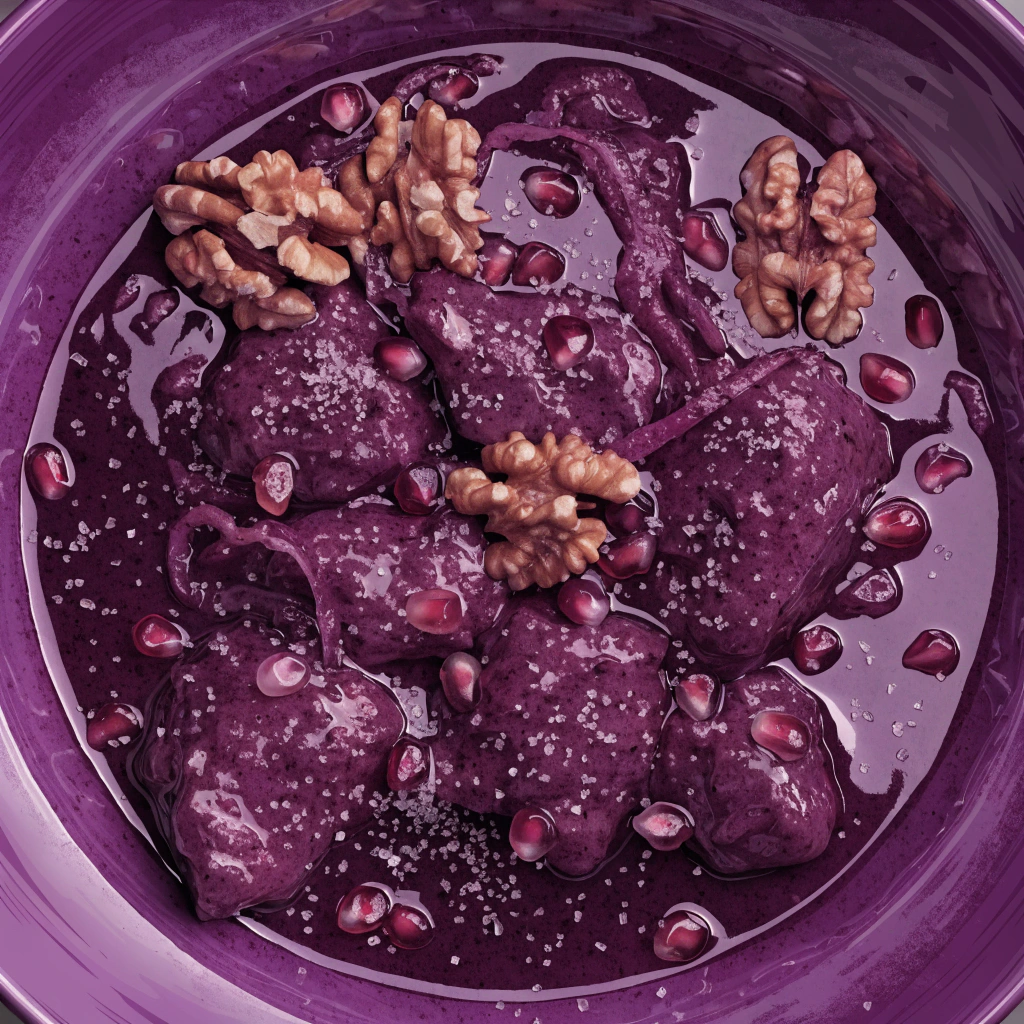
फ़ेसेंजन: ईरान का स्वादिष्ट व्यंजन
फ़ेसेंजन ईरान का एक प्रसिद्ध व्यंजन है। यह बहुत स्वादिष्ट होता है। लोग इसे अखरोट और अनार से बनाते हैं। यह मीठा और थोड़ा खट्टा होता है। ईरान के गिलान प्रांत में यह बहुत मशहूर है। वहाँ अखरोट और अनार के पेड़ बहुत होते हैं। फ़ेसेंजन बनाने में थोड़ा समय लगता है। यह व्यंजन गहरा और गाढ़ा होता है। लोग इसे अक्सर चावल के साथ खाते हैं। यह ईरान का एक खास खाना है। बच्चे और बड़े इसे बहुत पसंद करते हैं। यह ईरान की संस्कृति का हिस्सा है।
व्याकरण स्पॉटलाइट
पैटर्न: यह + संज्ञा + है/होता है (This is/becomes + Noun)
"यह बहुत स्वादिष्ट होता है।"
इस पैटर्न का उपयोग किसी चीज़ या व्यक्ति का वर्णन करने के लिए किया जाता है। 'यह' का अर्थ 'यह' (this) है। 'संज्ञा' (noun) के बाद 'है' या 'होता है' आता है। 'है' वर्तमान स्थिति बताता है और 'होता है' सामान्य प्रकृति या आदत बताता है।
पैटर्न: कर्ता + कर्म + पसंद करना (Subject + Object + To like)
"लोग इसे बहुत पसंद करते हैं।"
यह पैटर्न बताता है कि कौन क्या पसंद करता है। 'कर्ता' (subject) वह व्यक्ति या चीज़ है जो पसंद करता है। 'कर्म' (object) वह चीज़ है जिसे पसंद किया जाता है। 'पसंद करना' क्रिया का उपयोग 'पसंद करते हैं' के रूप में होता है।
अपनी समझ जाँचें
10 सवाल · A1 शुरुआती · 1 मुफ्त प्रीव्यू
इस लेख से आपने जो सीखा उसकी जाँच करें। सभी सवालों के जवाब दें और XP कमाएँ!
फ़ेसेंजन कहाँ का व्यंजन है?
क्या आप क्विज़ समाप्त करना चाहते हैं?
9 और सवाल आपका इंतज़ार कर रहे हैं। पूरा क्विज़ अनलॉक करने और XP कमाने के लिए मुफ्त साइन अप करें!
मुफ़्त साइन अप करोपहले से अकाउंट है? साइन इन करो
बहुत बढ़िया!
अभ्यास जारी रखें!
पहले से पूर्ण — कोई अतिरिक्त XP नहीं
XP कमाने के लिए साइन अप करोसवालों का विवरण
फ़ेसेंजन कहाँ का व्यंजन है?
आपका जवाब:
सही जवाब: ईरान
फ़ेसेंजन सिर्फ़ खट्टा होता है।
आपका जवाब:
सही जवाब: गलत
'अखरोट' का क्या मतलब है?
आपका जवाब:
सही जवाब: एक सूखा मेवा
फ़ेसेंजन बनाने में थोड़ा _____ लगता है।
आपका जवाब:
सही जवाब: समय
ईरान का स्वादिष्ट व्यंजन: फेसनजान
ईरान में एक बहुत ही खास और स्वादिष्ट खाना है, जिसका नाम फेसनजान है। यह ईरान के उत्तरी इलाके, गिलान से आया है। गिलान में अनार के पेड़ और अखरोट के बाग बहुत होते हैं। इसलिए, इस खाने में अनार और अखरोट का स्वाद बहुत महत्वपूर्ण है।
लोग फेसनजान को 'स्टू का राजा' कहते हैं क्योंकि यह बहुत शानदार होता है। इसका स्वाद मीठा और खट्टा दोनों होता है, जो इसे बहुत अलग बनाता है। दूसरे स्टू अक्सर हल्के होते हैं, लेकिन फेसनजान गहरा रंग का और बहुत गाढ़ा होता है।
इसको बनाने के लिए, सबसे पहले अखरोट को बारीक पीसते हैं। फिर इसे धीमी आँच पर बहुत देर तक पकाते हैं। इसमें अनार का गाढ़ा रस भी मिलाते हैं। कुछ लोग इसमें चिकन या बत्तख का मांस भी डालते हैं। इसे बनाने में थोड़ा ज़्यादा समय लगता है, लेकिन इसका स्वाद बहुत ही लाजवाब होता है।
ईरानी लोग इसे अक्सर खास मौकों पर खाते हैं, जैसे शादी या नए साल के त्योहार पर। यह ईरान का एक बहुत पुराना और पारंपरिक पकवान है। अगर आप कभी ईरान जाएँ, तो आपको यह स्वादिष्ट व्यंजन ज़रूर चखना चाहिए। यह आपको ईरान की संस्कृति और खाने के बारे में बताएगा।
व्याकरण स्पॉटलाइट
पैटर्न: संबंध कारक: का/के/की
"ईरान का स्वादिष्ट व्यंजन"
यह 'का', 'के', 'की' संबंध कारक है। यह बताता है कि एक चीज़ का संबंध दूसरी चीज़ से कैसे है। यह संज्ञा के लिंग और वचन के अनुसार बदलता है (जैसे 'का' पुल्लिंग एकवचन के लिए, 'के' पुल्लिंग बहुवचन के लिए या आदर के लिए, 'की' स्त्रीलिंग एकवचन/बहुवचन के लिए)।
पैटर्न: संयोजक शब्द: इसलिए
"इसलिए, इस खाने में अनार और अखरोट का स्वाद बहुत महत्वपूर्ण है।"
'इसलिए' एक संयोजक शब्द है। यह दो वाक्यों को जोड़ता है और पहले वाक्य के कारण से दूसरे वाक्य का परिणाम बताता है। इसका मतलब है 'इस कारण से' या 'इसी वजह से'।
अपनी समझ जाँचें
11 सवाल · A2 बिगिनर · 1 मुफ्त प्रीव्यू
इस लेख से आपने जो सीखा उसकी जाँच करें। सभी सवालों के जवाब दें और XP कमाएँ!
फेसनजान कहाँ से आया है?
क्या आप क्विज़ समाप्त करना चाहते हैं?
10 और सवाल आपका इंतज़ार कर रहे हैं। पूरा क्विज़ अनलॉक करने और XP कमाने के लिए मुफ्त साइन अप करें!
मुफ़्त साइन अप करोपहले से अकाउंट है? साइन इन करो
बहुत बढ़िया!
अभ्यास जारी रखें!
पहले से पूर्ण — कोई अतिरिक्त XP नहीं
XP कमाने के लिए साइन अप करोसवालों का विवरण
फेसनजान कहाँ से आया है?
आपका जवाब:
सही जवाब: गिलान
फेसनजान का स्वाद सिर्फ मीठा होता है।
आपका जवाब:
सही जवाब: गलत
'अखरोट' का क्या मतलब है?
आपका जवाब:
सही जवाब: एक सूखा फल जो पेड़ पर लगता है
फेसनजान को 'स्टू का _____' भी कहते हैं।
आपका जवाब:
सही जवाब: राजा
ईरानी लोग फेसनजान कब खाते हैं?
आपका जवाब:
सही जवाब: खास मौकों पर
ईरान का स्वादिष्ट फेसनजान: अखरोट और अनार का अद्भुत मेल
ईरान के उत्तरी प्रांत गिलान से आया 'फेसनजान' एक ऐसा पकवान है जिसे अक्सर 'स्ट्यू का राजा' कहा जाता है। यह व्यंजन ईरानी व्यंजनों में पाक कला की परिष्कृतता और विलासिता को दर्शाता है। गिलान प्रांत, जहाँ अनार के पेड़ और अखरोट के बागान खूब पनपते हैं, वहीं से इस खास डिश की शुरुआत हुई है।
फेसनजान अपने मीठे और खट्टे स्वादों के अनूठे संतुलन के लिए जाना जाता है, जिसे फारसी में 'मलास' कहा जाता है। अन्य स्ट्यूज़ की तरह यह हल्का या हर्बल नहीं होता, बल्कि यह गाढ़ा, गहरा और बहुत समृद्ध होता है। इसका मुख्य आधार बारीक पिसे हुए अखरोट होते हैं जिन्हें धीमी आंच पर पकाया जाता है। इसके साथ इसमें अनार का गाढ़ा रस मिलाया जाता है, जो इसे इसका खास खट्टा-मीठा स्वाद देता है।
यह पकवान अक्सर मुर्गे या बत्तख के मांस के साथ बनाया जाता है, लेकिन इसके शाकाहारी संस्करण भी लोकप्रिय हैं। फेसनजान को तैयार करने में कई घंटे लगते हैं क्योंकि अखरोट को बहुत धीरे-धीरे पकाया जाता है ताकि उनका तेल निकल सके और ग्रेवी गाढ़ी हो जाए। यह धैर्य और प्यार से बनाया जाने वाला व्यंजन है।
ईरान में, फेसनजान को विशेष अवसरों और समारोहों पर परोसा जाता है। इसे अक्सर सफेद चावल के साथ खाया जाता है। इस पारंपरिक व्यंजन ने दुनिया भर में अपने अनोखे स्वाद के कारण बहुत लोकप्रियता हासिल की है। जिसने भी इसे चखा है, वह इसके जटिल और संतोषजनक स्वाद को कभी नहीं भूल पाया है।
व्याकरण स्पॉटलाइट
पैटर्न: कर्मवाच्य (Passive Voice)
"यह पकवान अक्सर मुर्गे या बत्तख के मांस के साथ बनाया जाता है।"
कर्मवाच्य का उपयोग तब किया जाता है जब क्रिया का जोर कर्ता पर न होकर कर्म पर होता है। इसमें क्रिया का रूप 'जाना' सहायक क्रिया के साथ बदल जाता है। यह अक्सर तब प्रयोग होता है जब कर्ता महत्वपूर्ण नहीं होता या अज्ञात होता है।
पैटर्न: संबंधवाचक उपवाक्य (Relative Clause)
"गिलान प्रांत, जहाँ अनार के पेड़ और अखरोट के बागान खूब पनपते हैं, वहीं से इस खास डिश की शुरुआत हुई है।"
संबंधवाचक उपवाक्य मुख्य वाक्य में किसी संज्ञा या सर्वनाम के बारे में अतिरिक्त जानकारी देता है। यह 'जो', 'जिसने', 'जहाँ', 'जब' जैसे शब्दों से शुरू होता है और मुख्य वाक्य के साथ संबंध स्थापित करता है।
अपनी समझ जाँचें
11 सवाल · B1 मध्यम · 1 मुफ्त प्रीव्यू
इस लेख से आपने जो सीखा उसकी जाँच करें। सभी सवालों के जवाब दें और XP कमाएँ!
फेसनजान को ईरानी व्यंजनों में क्या कहा जाता है?
क्या आप क्विज़ समाप्त करना चाहते हैं?
10 और सवाल आपका इंतज़ार कर रहे हैं। पूरा क्विज़ अनलॉक करने और XP कमाने के लिए मुफ्त साइन अप करें!
मुफ़्त साइन अप करोपहले से अकाउंट है? साइन इन करो
बहुत बढ़िया!
अभ्यास जारी रखें!
पहले से पूर्ण — कोई अतिरिक्त XP नहीं
XP कमाने के लिए साइन अप करोसवालों का विवरण
फेसनजान को ईरानी व्यंजनों में क्या कहा जाता है?
आपका जवाब:
सही जवाब: स्ट्यू का राजा
फेसनजान मीठे और खट्टे स्वादों के संतुलन के लिए प्रसिद्ध है।
आपका जवाब:
सही जवाब: सही
'समृद्ध' शब्द का अर्थ क्या है?
आपका जवाब:
सही जवाब: स्वाद में गहरा और भरपूर
फेसनजान का मुख्य आधार बारीक पिसे हुए _____ होते हैं।
आपका जवाब:
सही जवाब: अखरोट
फेसनजान को अक्सर किसके साथ परोसा जाता है?
आपका जवाब:
सही जवाब: सफेद चावल
Fesenjan: The Gastronomic Jewel of the Persian Plateau
Fesenjan is often hailed as the crown jewel of Persian gastronomy, representing a level of culinary sophistication that few other dishes can match. Originating from the Gilan province in northern Iran—a region blessed with fertile soil and abundant rainfall—this stew is a profound reflection of its landscape. It is here that walnut groves and pomegranate orchards flourish, providing the two essential ingredients that define the dish’s unique character.
Unlike many other Persian stews that rely on fresh herbs for their flavor, Fesenjan is characterized by its deep, dark appearance and a complex taste profile known as 'malas.' This term describes the delicate equilibrium between sweet and sour, achieved through the careful reduction of pomegranate molasses. The preparation of Fesenjan is a meticulous process that requires patience and precision. The walnuts must be ground into a fine paste and slow-cooked for several hours. This extended cooking time is crucial, as it allows the natural oils to be released from the walnuts, resulting in a thick, velvety consistency that coats the palate.
Historically, Fesenjan has been a dish reserved for prestigious occasions. Whether it is a wedding feast or the celebration of Yalda Night—the Persian winter solstice—its presence on the table signifies hospitality and abundance. While poultry is the most common protein used today, traditional recipes from Gilan often featured wild duck. In modern kitchens, chicken is frequently substituted, though the essence of the dish remains unchanged. Variations also exist across different regions; some prefer a sweeter version by adding sugar, while others maintain a sharper acidity.
The cultural significance of Fesenjan extends beyond its ingredients. It serves as a testament to the Iranian philosophy of food, where the harmony of contrasting elements is highly valued. To master Fesenjan is to understand the soul of Persian cooking. It is a dish that has been refined over generations, surviving through centuries of history while maintaining its status as a symbol of luxury. Consequently, for anyone seeking to explore the depths of Middle Eastern cuisine, Fesenjan provides an indispensable starting point. It is not merely a meal, but an experience that engages all the senses, leaving a lasting impression on anyone fortunate enough to taste it.
व्याकरण स्पॉटलाइट
पैटर्न: Passive Voice for General Beliefs
"Fesenjan is often hailed as the crown jewel of Persian gastronomy."
This structure (is + past participle) is used to express a widely held opinion or reputation without identifying a specific person. It creates a formal and objective tone suitable for B2 level writing.
पैटर्न: Relative Clauses with Participles
"Originating from the Gilan province in northern Iran—a region blessed with fertile soil..."
The past participle 'blessed' acts as a reduced relative clause (which is blessed). This allows for more concise and sophisticated sentence structures.
पैटर्न: Modal Verbs of Necessity in the Passive
"The walnuts must be ground into a fine paste and slow-cooked for several hours."
This combination of 'must be' and a past participle emphasizes an essential requirement or rule in a process. It focuses on the action rather than the person performing it.
अपनी समझ जाँचें
11 सवाल · B2 अपर इंटरमीडिएट · 1 मुफ्त प्रीव्यू
इस लेख से आपने जो सीखा उसकी जाँच करें। सभी सवालों के जवाब दें और XP कमाएँ!
What is the primary geographic origin of Fesenjan mentioned in the text?
क्या आप क्विज़ समाप्त करना चाहते हैं?
10 और सवाल आपका इंतज़ार कर रहे हैं। पूरा क्विज़ अनलॉक करने और XP कमाने के लिए मुफ्त साइन अप करें!
मुफ़्त साइन अप करोपहले से अकाउंट है? साइन इन करो
बहुत बढ़िया!
अभ्यास जारी रखें!
पहले से पूर्ण — कोई अतिरिक्त XP नहीं
XP कमाने के लिए साइन अप करोसवालों का विवरण
What is the primary geographic origin of Fesenjan mentioned in the text?
आपका जवाब:
सही जवाब: The Gilan province
Fesenjan is traditionally a fast-cooked dish designed for daily convenience.
आपका जवाब:
सही जवाब: गलत
What does 'meticulous' mean in the context of the article?
आपका जवाब:
सही जवाब: Extremely careful and precise
The walnuts release natural oils that create a thick, velvety _____.
आपका जवाब:
सही जवाब: consistency
What does the term 'malas' represent in the context of Persian flavor?
आपका जवाब:
सही जवाब: The balance of sweet and sour
The King of Stews: Deconstructing the Culinary Alchemy of Fesenjan
Rarely has a dish so elegantly captured the dichotomy of Persian geography as Fesenjan. Emerging from the verdant, mist-shrouded province of Gilan, this stew is far more than a mere culinary staple; it is a profound testament to the region's agricultural abundance. The provenance of Fesenjan is inextricably linked to the walnut groves and pomegranate orchards that define the northern Iranian landscape. While other Persian stews might rely on the brightness of fresh herbs, Fesenjan delves into a darker, more visceral territory of flavor.
The preparation of Fesenjan is a masterclass in culinary alchemy. At its core lies the slow-simmered emulsification of ground walnuts, which, over hours of gentle heat, release their rich oils to create a thick, velvet-textured sauce. It is the meticulous reduction of pomegranate molasses that provides the necessary acidity to cut through this inherent fattiness. This interplay creates a profile known in Persian as 'Malas'—a nuanced equilibrium where neither the tartness of the fruit nor the earthiness of the nut overwhelms the palate.
To the uninitiated, the appearance of Fesenjan may seem somewhat understated, yet its dark, obsidian hue belies an extraordinary complexity. Historically, the dish was considered an ostentatious display of wealth, reserved for weddings and high-status gatherings. The sheer quantity of walnuts required—often ground to a fine paste—represented a significant investment of both resources and labor. Even today, despite its ubiquitous presence in Persian restaurants worldwide, it retains an air of sophistication that few other dishes can claim.
Furthermore, the protein choice in Fesenjan often reflects regional variations and historical shifts. While duck or goose remains the traditional preference in Gilan, chicken has become the modern standard in urban centers like Tehran. Some interpretations even incorporate meatballs (kufteh ghelgheli) or, in rarer instances, fish. Regardless of the meat used, the focus remains steadfastly on the sauce. The nominalization of the cooking process—the 'thickening' and 'darkening'—is what aficionados watch for with bated breath.
Critically analyzing Fesenjan requires an understanding of the Persian concept of 'Garm' (hot) and 'Sard' (cold) foods. Walnuts are traditionally viewed as 'hot,' while pomegranates are 'cold.' Thus, Fesenjan is not merely a gastronomic delight but a balanced medicinal preparation intended to maintain bodily harmony. This holistic approach to nutrition is a hallmark of ancient Iranian thought, where the kitchen and the pharmacy were often one and the same.
In conclusion, Fesenjan stands as the 'king of stews' not because of its ingredients alone, but because of the cultural weight it carries. It is a dish that demands patience, precision, and an appreciation for the subtle shifts in flavor that only time can produce. Whether enjoyed in a humble home in Rasht or a luxury hotel in Isfahan, Fesenjan remains an enduring symbol of Iran's rich, multifaceted heritage.
व्याकरण स्पॉटलाइट
पैटर्न: Inversion for Emphasis
"Rarely has a dish so elegantly captured the dichotomy of Persian geography as Fesenjan."
Inversion occurs when the auxiliary verb is placed before the subject, often after negative or restrictive adverbs like 'rarely'. This is used in formal writing to add dramatic emphasis and rhetorical weight.
पैटर्न: Cleft Sentences
"It is the meticulous reduction of pomegranate molasses that provides the necessary acidity to cut through this inherent fattiness."
Cleft sentences use the structure 'It is/was + [focused part] + that/who' to emphasize a specific piece of information. Here, it highlights the 'meticulous reduction' as the crucial factor in the dish's balance.
पैटर्न: Nominalisation
"The nominalization of the cooking process—the 'thickening' and 'darkening'—is what aficionados watch for with bated breath."
Nominalisation involves turning verbs or adjectives into nouns (e.g., 'thickening' from 'thicken'). This allows for a more abstract, formal, and concise description of complex processes or concepts.
अपनी समझ जाँचें
12 सवाल · C1 उन्नत · 1 मुफ्त प्रीव्यू
इस लेख से आपने जो सीखा उसकी जाँच करें। सभी सवालों के जवाब दें और XP कमाएँ!
What is the primary geographical origin of Fesenjan mentioned in the text?
क्या आप क्विज़ समाप्त करना चाहते हैं?
11 और सवाल आपका इंतज़ार कर रहे हैं। पूरा क्विज़ अनलॉक करने और XP कमाने के लिए मुफ्त साइन अप करें!
मुफ़्त साइन अप करोपहले से अकाउंट है? साइन इन करो
बहुत बढ़िया!
अभ्यास जारी रखें!
पहले से पूर्ण — कोई अतिरिक्त XP नहीं
XP कमाने के लिए साइन अप करोसवालों का विवरण
What is the primary geographical origin of Fesenjan mentioned in the text?
आपका जवाब:
सही जवाब: The lush province of Gilan
Fesenjan was traditionally viewed as a simple, low-cost meal for common laborers.
आपका जवाब:
सही जवाब: गलत
What does 'ostentatious' mean in the context of the article?
आपका जवाब:
सही जवाब: A showy display of wealth
The balance of sweet and sour flavors in the stew is known in Persian as _____.
आपका जवाब:
सही जवाब: Malas
According to the text, what role do walnuts play in the dish's texture?
आपका जवाब:
सही जवाब: They release oils through emulsification to create a thick sauce
The dish is considered to have medicinal properties based on ancient Iranian nutritional philosophy.
आपका जवाब:
सही जवाब: सही
The Gastronomic Hegemony of Fesenjan: A Dialectic of Sweet, Sour, and Sociocultural Prestige
Were one to traverse the verdant landscapes of Gilan, situated in the northern reaches of Iran, one would encounter a culinary tradition that is as much an exercise in patience as it is a testament to epicurean refinement. At the apex of this tradition sits Fesenjan, a dish that transcends the mundane categorization of 'stew' to occupy a space of profound cultural significance. This quintessential Persian delicacy, characterized by its obsidian hue and formidable viscosity, serves as a culinary manifestation of the concept of 'Malas'—a sophisticated dialectic between the saccharine and the acerbic that defines the Iranian palate.
Central to the ontological identity of Fesenjan is the slow transmutation of its constituent parts. The process begins with walnuts, ground to a fine powder, which are then subjected to a prolonged period of simmering. It is through this temporal investment that the walnuts yield their intrinsic oils, creating a rich, velvety texture that is ostensibly heavy yet surprisingly nuanced. This slow-cooking methodology is not merely a technical requirement but a philosophical commitment to the extraction of essence. To rush the preparation of Fesenjan would be to commit a gastronomic sacrilege, undermining the very opulence that defines the dish.
The acidity that provides the counterpoint to the walnut’s richness is derived from pomegranate molasses. This ingredient acts as a catalyst, transforming the earthy base into a complex tapestry of flavor. In the scholarly discourse surrounding Persian cuisine, Fesenjan is often viewed as a palimpsest of historical influences, reflecting the biodiversity of the Caspian region where pomegranate trees and walnut groves exist in a natural symbiosis. The resulting flavor profile is one of profound depth, where the initial sharpness of the fruit is tempered by the mellowing influence of the nuts, eventually culminating in a harmonious, if somewhat enigmatic, finish.
Beyond its sensory attributes, Fesenjan functions as a marker of social prestige and hospitality. Historically, its appearance on a table signaled a high degree of connoisseurship and wealth, given the labor-intensive nature of its preparation and the relative cost of its ingredients. It is frequently contended that Fesenjan is the 'king of stews,' a title that reflects its dominance in the hierarchy of Persian festive meals. Whether it is served with duck, as per the traditional Gilani preference, or with chicken, the dish remains a cornerstone of formal gatherings, embodying the Iranian ethos of generosity and the meticulous pursuit of aesthetic perfection.
Furthermore, the dish invites a theoretical analysis of the relationship between geography and gastronomy. The lush, humid climate of the north provides the raw materials, yet the dish has migrated across the plateau, adapting to local sensibilities while maintaining its core identity. This migration suggests a cultural resilience, where the fundamental structure of the dish—the walnut-pomegranate nexus—remains inviolable despite regional variations in sweetness or acidity. In conclusion, Fesenjan is not merely a sustenance; it is a sophisticated cultural artifact. It requires of the diner not just an appetite, but an appreciation for the intricate balance of flavors and the historical weight of a tradition that has been refined over centuries. To consume Fesenjan is to engage with the very soul of Persian culinary art, a journey through a landscape of taste that is as challenging as it is rewarding.
व्याकरण स्पॉटलाइट
पैटर्न: The Subjunctive Mood in Conditional Clauses
"Were one to traverse the verdant landscapes of Gilan, situated in the northern reaches of Iran, one would encounter a culinary tradition..."
The 'were + subject + to-infinitive' structure is used for highly formal or hypothetical conditions in the present or future. It replaces 'If one were to traverse' to add a scholarly or literary tone.
पैटर्न: Inversion for Rhetorical Emphasis
"To rush the preparation of Fesenjan would be to commit a gastronomic sacrilege..."
While not a standard negative inversion, the use of the infinitive phrase as the subject ('To rush...') places the action at the forefront of the sentence, emphasizing the consequence before the description.
पैटर्न: The Passive with Verbs of Perception/Assertion
"It is frequently contended that Fesenjan is the 'king of stews'..."
This structure is used for academic hedging, attributing a claim to a general consensus without specifying a single source, thereby maintaining an objective, scholarly distance.
अपनी समझ जाँचें
12 सवाल · C2 महारत · 1 मुफ्त प्रीव्यू
इस लेख से आपने जो सीखा उसकी जाँच करें। सभी सवालों के जवाब दें और XP कमाएँ!
What does the term 'Malas' refer to in the context of the article?
क्या आप क्विज़ समाप्त करना चाहते हैं?
11 और सवाल आपका इंतज़ार कर रहे हैं। पूरा क्विज़ अनलॉक करने और XP कमाने के लिए मुफ्त साइन अप करें!
मुफ़्त साइन अप करोपहले से अकाउंट है? साइन इन करो
बहुत बढ़िया!
अभ्यास जारी रखें!
पहले से पूर्ण — कोई अतिरिक्त XP नहीं
XP कमाने के लिए साइन अप करोसवालों का विवरण
What does the term 'Malas' refer to in the context of the article?
आपका जवाब:
सही जवाब: The balance between sweet and sour flavors
Fesenjan's thick texture is primarily achieved by adding heavy cream during the simmering process.
आपका जवाब:
सही जवाब: गलत
What does 'Ostensible' mean in the context of the text?
आपका जवाब:
सही जवाब: Appearing to be true, but perhaps not entirely so
The article describes Fesenjan as an obsidian-hued dish with formidable _____, referring to its thickness.
आपका जवाब:
सही जवाब: viscosity
According to the text, why is rushing the preparation of Fesenjan considered a 'sacrilege'?
आपका जवाब:
सही जवाब: It prevents the proper extraction of essential oils from the walnuts
The dish has remained geographically isolated to the Gilan province and has not adapted to other regions.
आपका जवाब:
सही जवाब: गलत

