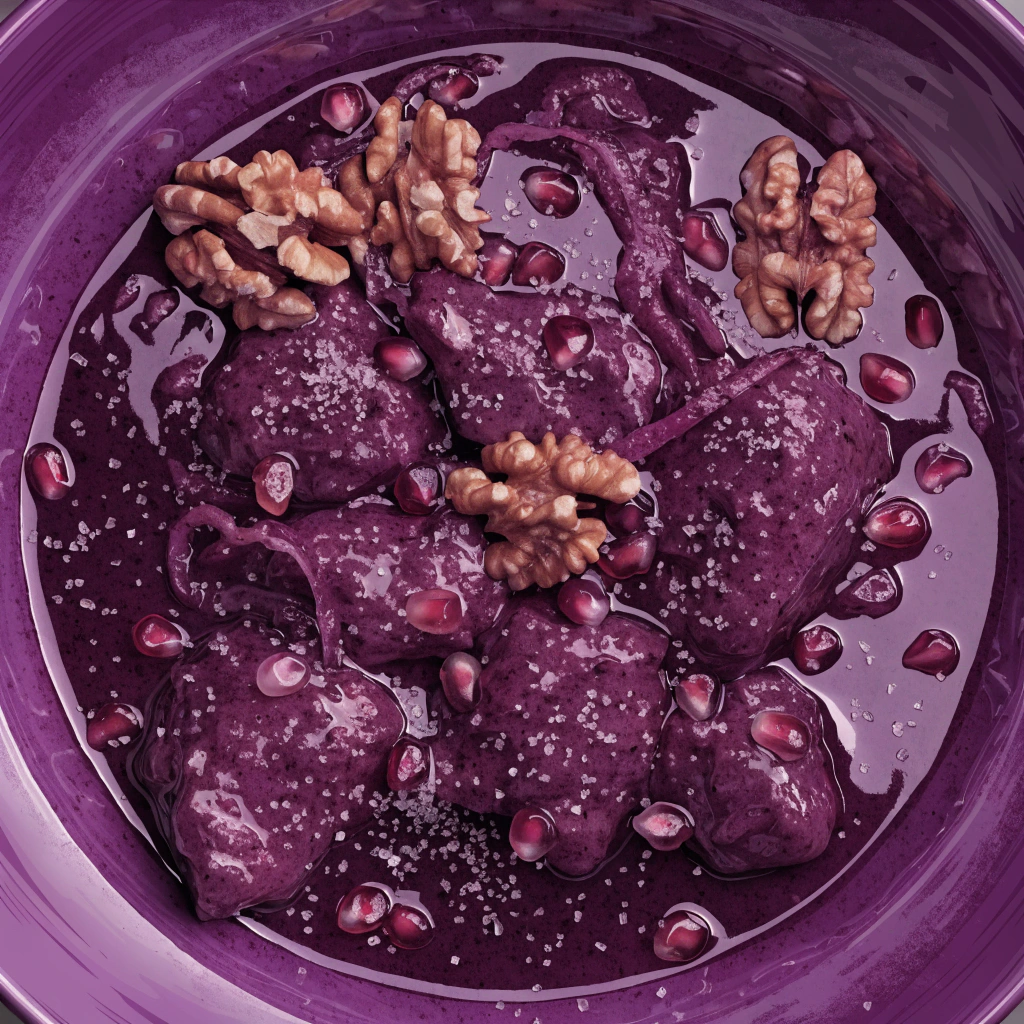
Fesenjan: A Special Stew from Iran
Fesenjan is a very famous food from Iran. It is a special stew. This dish comes from the north of Iran. People call it the king of stews.
The main ingredients are walnuts and pomegranates. Cooks grind the walnuts into small pieces. The sauce is dark and thick. It has a sweet and sour taste.
People usually eat Fesenjan with white rice. It is popular at big family parties. Many people in Iran love this dish because it is very delicious. It is a healthy and rich meal for everyone.
语法聚焦
句型: Present Simple 'Be'
"Fesenjan is a very famous food from Iran."
We use 'is' for singular subjects to describe things. In this sentence, it describes the subject 'Fesenjan'.
句型: Present Simple (Regular Verbs)
"People usually eat Fesenjan with white rice."
We use the base form of the verb (eat) for plural subjects (people). This describes a general habit or fact.
测试你的理解
10 个问题 · A1 初学 · 1 次免费预览
测试你从这篇文章中学到的知识。回答所有问题即可获得经验值!
题目详情
Where does Fesenjan come from?
你的回答:
正确答案: The north of Iran
Fesenjan is a light, clear soup.
你的回答:
正确答案: 错误
What are walnuts?
你的回答:
正确答案: A type of nut
The sauce is dark and _____.
你的回答:
正确答案: thick
Fesenjan: The King of Persian Stews
Fesenjan is a very famous stew from Iran. Many people call it the 'king of stews' because it is very delicious and special. It first came from the north of Iran, in a place called Gilan. In this beautiful area, there are many walnut trees and pomegranate trees.
The stew looks dark and thick. To make it, cooks grind walnuts into a small paste. Then, they cook the walnuts slowly with pomegranate syrup for many hours. This creates a unique and wonderful taste. The stew is sweet and sour at the same time. In Iran, people call this special flavor 'Malas'.
Usually, people eat Fesenjan with chicken or duck. They always serve it with warm white rice. Because it takes a long time to cook, families usually eat it on special days, like weddings or parties. It is richer and heavier than other Persian stews, but it is the most famous dish in the country.
语法聚焦
句型: Past Simple
"It first came from the north of Iran, in a place called Gilan."
We use the past simple to talk about finished actions or origins in the past. To form the past simple of 'come', we use the irregular form 'came'.
句型: Comparatives
"It is richer and heavier than other Persian stews..."
We use comparatives to compare two things. For short adjectives like 'rich', we add '-er' and the word 'than'.
测试你的理解
11 个问题 · A2 基础 · 1 次免费预览
测试你从这篇文章中学到的知识。回答所有问题即可获得经验值!
Where did Fesenjan first come from?
题目详情
Where did Fesenjan first come from?
你的回答:
正确答案: The north of Iran
Fesenjan is a dish that people cook very quickly.
你的回答:
正确答案: 错误
What does 'unique' mean?
你的回答:
正确答案: Very special and different
People always serve Fesenjan with warm white _____.
你的回答:
正确答案: rice
What is the meaning of the word 'Malas'?
你的回答:
正确答案: Sweet and sour
探索伊朗的美味:费森詹炖菜
伊朗是一个有着悠久历史和丰富文化的国家,它的美食也同样令人着迷。今天,我们要介绍一道非常特别的伊朗炖菜——费森詹 (Fesenjan)。这道菜被很多人认为是“炖菜之王”,因为它不仅味道独特,而且制作过程也很有讲究。
费森詹的起源可以追溯到伊朗北部的吉兰省。那里盛产核桃和石榴,这两种食材正是费森詹的核心。这道菜的特点是甜酸平衡,这种平衡在波斯语中被称为“Malas”。虽然很多炖菜都有清新的香草味,但费森詹却不同。它的颜色深,质地浓稠,味道非常浓郁。
制作费森詹需要耐心。首先,需要把核桃磨成细粉,然后用小火慢慢炖煮很长时间。在这个过程中,核桃的油脂会慢慢释放出来,使炖菜变得更加香浓。接着,加入石榴汁,它给菜肴带来了独特的酸甜味。肉类,通常是鸡肉或鸭肉,也会被加入其中。
费森詹不仅仅是一道菜,它也代表着奢华和庆祝。在伊朗,人们通常会在特殊的节日或重要的聚会上享用它。如果你有机会去伊朗旅行,一定要尝尝这道美味的费森詹,它一定会给你留下深刻的印象。这道菜已经成为了伊朗美食文化的重要组成部分,深受当地人和游客的喜爱。
语法聚焦
句型: 被 (bèi) + 动词 (verb) - 被动语态
"这道菜被很多人认为是“炖菜之王”。"
“被”字句表示动作的承受者。当句子的主语是动作的承受者时,我们就可以用“被”来构成被动语态。这种句型在表达客观事实或不幸事件时很常用。
句型: 不仅...而且... - 递进关系
"因为它不仅味道独特,而且制作过程也很有讲究。"
“不仅...而且...”用于连接两个有递进关系的句子或短语,表示不止一个方面。它强调了第二个方面比第一个方面更进一步或更重要。
测试你的理解
11 个问题 · B1 中级 · 1 次免费预览
测试你从这篇文章中学到的知识。回答所有问题即可获得经验值!
题目详情
费森詹炖菜的起源地在哪里?
你的回答:
正确答案: 伊朗北部
费森詹是一种有清新香草味的炖菜。
你的回答:
正确答案: 错误
哪一个词的意思是“abound in; be rich in”?
你的回答:
正确答案: 盛产
制作费森詹需要____。
你的回答:
正确答案: 耐心
费森詹的主要特点是什么?
你的回答:
正确答案: 甜酸平衡
波斯炖菜之王:费森詹——甜酸平衡的奢华盛宴
Fesenjan (费森詹), 这道被誉为波斯烹饪艺术“炖菜之王”的佳肴,无疑是伊朗美食文化中奢华与精致的象征。其独特的风味和复杂的制作工艺,使其在众多波斯菜肴中脱颖而出,成为宴席上的璀璨明星。
这道菜肴的起源可追溯到伊朗北部富饶的吉兰省。那里气候宜人,盛产石榴树和核桃林,这两种核心食材正是费森詹风味的基础。吉兰省的地理环境为这道菜的诞生提供了得天独厚的条件。
费森詹最显著的特色在于其对甜酸风味的完美平衡,这在波斯语中被称为“Malas”。与许多以清新香草味为主的炖菜不同,费森詹呈现出深邃的棕色,质地浓稠,口感醇厚而丰富。它的基础是经过长时间慢炖的细磨核桃,核桃的油脂与风味在烹煮过程中被充分释放,与石榴浓缩汁的酸甜交织,形成一种无与伦比的味觉体验。
制作费森詹是一项需要耐心和匠心的过程。核桃需先细磨成酱,然后与洋葱、鸡肉或鸭肉(有时也会使用肉丸)一同在小火上慢炖数小时。在此期间,厨师会分批加入石榴浓缩汁,并根据个人喜好或地区传统调整甜酸度,有时还会加入少许糖或枣糖浆以增添风味。正是这种精细的调味和漫长的炖煮,赋予了费森詹其标志性的深色和醇厚口感。
鉴于其复杂的制作过程和对食材品质的高要求,费森詹通常被视为节庆或重要场合的专属菜肴。它不仅仅是一道菜,更是波斯文化中热情好客、精湛厨艺的体现。品尝费森詹,不仅能享受到独特的味蕾刺激,更能深入体验伊朗人民对美食的尊重与热爱。由此可见,费森詹之所以能够被冠以“炖菜之王”的美誉,绝非偶然,而是其深厚文化底蕴和卓越烹饪技艺的必然结果。
语法聚焦
句型: 被誉为...
"Fesenjan (费森詹), 这道被誉为波斯烹饪艺术“炖菜之王”的佳肴,无疑是伊朗美食文化中奢华与精致的象征。"
“被誉为”用于表示某物或某人因其卓越的品质或特点而被广泛称赞或认可。它通常用于正式语境,结构为“主语 + 被誉为 + 称谓/称号”。
句型: 之所以...是因为...
"由此可见,费森詹之所以能够被冠以“炖菜之王”的美誉,绝非偶然,而是其深厚文化底蕴和卓越烹饪技艺的必然结果。"
这个句式用于强调某个结果或现象的原因。“之所以”引导结果,而“是因为”则引出造成该结果的具体原因。两者共同构成一个因果关系句,比简单的“因为...所以...”更强调原因的重要性。
句型: 鉴于此/鉴于其...
"鉴于其复杂的制作过程和对食材品质的高要求,费森詹通常被视为节庆或重要场合的专属菜肴。"
“鉴于此”或“鉴于其”是一个正式的连词,表示“考虑到这种情况”或“由于这个原因”。它常用于句首,引出对前述事实的总结或基于前述事实的判断。
测试你的理解
11 个问题 · B2 中高级 · 1 次免费预览
测试你从这篇文章中学到的知识。回答所有问题即可获得经验值!
题目详情
费森詹在波斯烹饪中主要以什么特点而闻名?
你的回答:
正确答案: 甜酸风味的完美平衡
费森詹起源于伊朗南部的沙漠地区。
你的回答:
正确答案: 错误
“醇厚”在文中指的是什么?
你的回答:
正确答案: 口感浓郁丰富
制作费森詹是一项需要____和匠心的过程。
你的回答:
正确答案: 耐心
费森詹的核心食材是石榴和____。
你的回答:
正确答案: 核桃
波斯炖菜之王:费森詹——甜酸间的奢华平衡
在波斯美食的璀璨星河中,若要评选一道足以代表其烹饪艺术精髓的菜肴,费森詹(Fesenjan)无疑是那颗最耀眼的星辰,素有“炖菜之王”的美誉。此菜,其独特之处在于对甜酸风味的极致把握,完美诠释了波斯烹饪哲学中的“Malas”概念,即酸甜平衡之道。与波斯其他炖菜那种清新草本的风格迥异,费森詹以其深邃的色泽、浓稠的质地和无与伦比的醇厚口感,独树一帜。
追溯其渊源,费森詹诞生于伊朗北部吉兰省的富饶之地。该地区因盛产石榴和核桃而闻名遐迩,这两种核心食材也正是费森詹风味构成的基石。一道地道的费森詹,其制作过程可谓匠心独运。首先,精选的核桃仁需被细致研磨成粉,经过长时间的慢炖,核桃油逐渐析出,赋予酱汁以丝滑的口感和坚果的芬芳。随后,浓郁的石榴糖浆被缓缓加入,与核桃的醇厚交织融合,正是这种酸甜的碰撞与融合,使得费森詹的味道层次丰富,引人入胜。
烹制费森詹是一门艺术,更是一种耐心的体现。通常,这道菜需要数小时的文火慢炖,以确保核桃的油脂充分释放,石榴糖浆的酸甜与核桃的坚果香气得以完美渗透。在此过程中,厨师们或加入鸡肉、鸭肉,甚至肉丸,使其风味更加多元。值得一提的是,费森詹的甜酸度并非一成不变,它会根据地域偏好和家族秘方而有所调整,有的偏甜,有的则更显酸爽,但无论如何,其核心的平衡感始终如一。
正是这种独特的烹饪哲学,使得费森詹不仅仅是一道菜肴,更是一种文化的载体。在伊朗,它常作为节日庆典、婚礼等重要场合的压轴菜品,象征着丰盛、团圆与奢华。每一勺费森詹,都蕴含着波斯人对生活的热爱,对美食的敬意,以及对传统文化的坚守。此菜所体现的,是波斯文明数千年饮食文化的沉淀与传承。
时至今日,费森詹依然是全球美食爱好者心中一道充满异域风情的传奇。它以其独特的风味、复杂的层次和深厚的文化底蕴,征服了无数味蕾。品尝费森詹,不仅仅是享受一顿大餐,更是一次穿越时空的文化之旅,让人们在甜酸交织的味觉盛宴中,领略波斯古老而神秘的魅力。
语法聚焦
句型: “是……的”强调句
"正是这种独特的烹饪哲学,使得费森詹不仅仅是一道菜肴,更是一种文化的载体。"
“是……的”结构常用于强调句中,用来突出时间、地点、方式、目的或原因等。在这个例子中,“正是这种独特的烹饪哲学”是被强调的部分,表示强调了“这种烹饪哲学”是导致后面结果的原因。
句型: 名词化结构(“之”字结构)
"此菜,其独特之处在于对甜酸风味的极致把握。"
这里的“独特之处”是将形容词“独特”名词化,后面接“之”字形成一个名词性短语,表示“独特的地方”。这种结构常用于书面语,使表达更加简洁和正式,常用于总结或指出某个特点。
句型: “所”字结构(V所O)
"此菜所体现的,是波斯文明数千年饮食文化的沉淀与传承。"
“所”字结构通常用来将动词或动词短语名词化,表示“被做的事情”或“所做的事情”。“所体现的”在这里表示“被体现出来的东西/内容”,使句子结构更加紧凑,常用于书面语中。
测试你的理解
12 个问题 · C1 高级 · 1 次免费预览
测试你从这篇文章中学到的知识。回答所有问题即可获得经验值!
题目详情
费森詹在波斯美食中被称作什么?
你的回答:
正确答案: 炖菜之王
费森詹的特色是清新草本风味。
你的回答:
正确答案: 错误
“匠心独运”是什么意思?
你的回答:
正确答案: 在艺术或技术方面有独特的创造力,构思巧妙
费森詹起源于伊朗北部的_______省。
你的回答:
正确答案: 吉兰
费森詹的核心风味概念是什么?
你的回答:
正确答案: 甜酸平衡
制作费森詹需要数小时的慢炖。
你的回答:
正确答案: 正确
The Gastronomic Hegemony of Fesenjan: A Dialectic of Sweet, Sour, and Sociocultural Prestige
Were one to traverse the verdant landscapes of Gilan, situated in the northern reaches of Iran, one would encounter a culinary tradition that is as much an exercise in patience as it is a testament to epicurean refinement. At the apex of this tradition sits Fesenjan, a dish that transcends the mundane categorization of 'stew' to occupy a space of profound cultural significance. This quintessential Persian delicacy, characterized by its obsidian hue and formidable viscosity, serves as a culinary manifestation of the concept of 'Malas'—a sophisticated dialectic between the saccharine and the acerbic that defines the Iranian palate.
Central to the ontological identity of Fesenjan is the slow transmutation of its constituent parts. The process begins with walnuts, ground to a fine powder, which are then subjected to a prolonged period of simmering. It is through this temporal investment that the walnuts yield their intrinsic oils, creating a rich, velvety texture that is ostensibly heavy yet surprisingly nuanced. This slow-cooking methodology is not merely a technical requirement but a philosophical commitment to the extraction of essence. To rush the preparation of Fesenjan would be to commit a gastronomic sacrilege, undermining the very opulence that defines the dish.
The acidity that provides the counterpoint to the walnut’s richness is derived from pomegranate molasses. This ingredient acts as a catalyst, transforming the earthy base into a complex tapestry of flavor. In the scholarly discourse surrounding Persian cuisine, Fesenjan is often viewed as a palimpsest of historical influences, reflecting the biodiversity of the Caspian region where pomegranate trees and walnut groves exist in a natural symbiosis. The resulting flavor profile is one of profound depth, where the initial sharpness of the fruit is tempered by the mellowing influence of the nuts, eventually culminating in a harmonious, if somewhat enigmatic, finish.
Beyond its sensory attributes, Fesenjan functions as a marker of social prestige and hospitality. Historically, its appearance on a table signaled a high degree of connoisseurship and wealth, given the labor-intensive nature of its preparation and the relative cost of its ingredients. It is frequently contended that Fesenjan is the 'king of stews,' a title that reflects its dominance in the hierarchy of Persian festive meals. Whether it is served with duck, as per the traditional Gilani preference, or with chicken, the dish remains a cornerstone of formal gatherings, embodying the Iranian ethos of generosity and the meticulous pursuit of aesthetic perfection.
Furthermore, the dish invites a theoretical analysis of the relationship between geography and gastronomy. The lush, humid climate of the north provides the raw materials, yet the dish has migrated across the plateau, adapting to local sensibilities while maintaining its core identity. This migration suggests a cultural resilience, where the fundamental structure of the dish—the walnut-pomegranate nexus—remains inviolable despite regional variations in sweetness or acidity. In conclusion, Fesenjan is not merely a sustenance; it is a sophisticated cultural artifact. It requires of the diner not just an appetite, but an appreciation for the intricate balance of flavors and the historical weight of a tradition that has been refined over centuries. To consume Fesenjan is to engage with the very soul of Persian culinary art, a journey through a landscape of taste that is as challenging as it is rewarding.
语法聚焦
句型: The Subjunctive Mood in Conditional Clauses
"Were one to traverse the verdant landscapes of Gilan, situated in the northern reaches of Iran, one would encounter a culinary tradition..."
The 'were + subject + to-infinitive' structure is used for highly formal or hypothetical conditions in the present or future. It replaces 'If one were to traverse' to add a scholarly or literary tone.
句型: Inversion for Rhetorical Emphasis
"To rush the preparation of Fesenjan would be to commit a gastronomic sacrilege..."
While not a standard negative inversion, the use of the infinitive phrase as the subject ('To rush...') places the action at the forefront of the sentence, emphasizing the consequence before the description.
句型: The Passive with Verbs of Perception/Assertion
"It is frequently contended that Fesenjan is the 'king of stews'..."
This structure is used for academic hedging, attributing a claim to a general consensus without specifying a single source, thereby maintaining an objective, scholarly distance.
测试你的理解
12 个问题 · C2 精通 · 1 次免费预览
测试你从这篇文章中学到的知识。回答所有问题即可获得经验值!
What does the term 'Malas' refer to in the context of the article?
题目详情
What does the term 'Malas' refer to in the context of the article?
你的回答:
正确答案: The balance between sweet and sour flavors
Fesenjan's thick texture is primarily achieved by adding heavy cream during the simmering process.
你的回答:
正确答案: 错误
What does 'Ostensible' mean in the context of the text?
你的回答:
正确答案: Appearing to be true, but perhaps not entirely so
The article describes Fesenjan as an obsidian-hued dish with formidable _____, referring to its thickness.
你的回答:
正确答案: viscosity
According to the text, why is rushing the preparation of Fesenjan considered a 'sacrilege'?
你的回答:
正确答案: It prevents the proper extraction of essential oils from the walnuts
The dish has remained geographically isolated to the Gilan province and has not adapted to other regions.
你的回答:
正确答案: 错误

