









hrothgar 30秒で
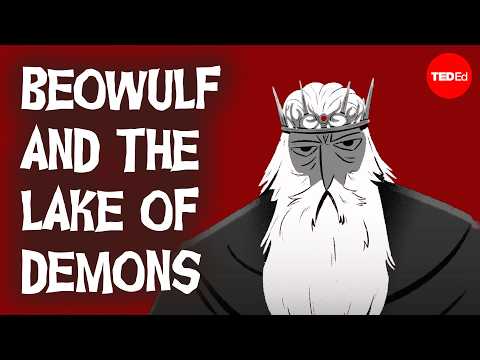
- Hrothgar is the legendary Danish king from the epic poem Beowulf, known for his wisdom, generosity, and the construction of the mead-hall Heorot.
- He represents the 'Wise Old King' archetype, providing moral guidance and treasure to his warriors while facing threats he can no longer fight alone.
- The name is a proper noun of Old English origin, meaning 'Glory Spear,' and it is central to studies of early medieval literature and history.
- In modern culture, Hrothgar is often referenced in fantasy settings, such as Skyrim, to evoke an ancient, noble, and Northern atmosphere.
The name Hrothgar is a proper noun that carries significant weight in the realms of English literature, Germanic history, and epic storytelling. Primarily, it refers to a legendary Danish king of the Scylding line who lived during the early 6th century. While historical records regarding the exact details of his life are sparse and often blended with myth, his presence is immortalized in the Old English epic poem Beowulf. In this literary masterpiece, Hrothgar is depicted as the aging, wise, and generous ruler of the Danes. He is the architect of Heorot, a magnificent mead-hall intended to serve as a center for culture, law, and community. However, his reign is plagued by the monstrous Grendel, a conflict that necessitates the arrival of the hero Beowulf. When people use the name Hrothgar today, they are usually referring to this specific character or using him as an archetype for the 'Wise Old King' who has seen much glory but now faces a threat he cannot overcome alone.
- Historical Context
- Hrothgar is believed to have been a real historical figure, a member of the Scylding (Sking) dynasty in Denmark. Scholars often link him to the 6th-century period of the Migration Era, where tribal loyalties and the 'comitatus' (the bond between a lord and his thanes) were the bedrock of society.
- Literary Symbolism
- In literature, Hrothgar represents the limitations of human power. Despite his wisdom and previous military success, he cannot defeat Grendel, symbolizing how even the greatest civilizations face existential threats that require external intervention or a new generation of heroism.
- The Archetype of the Ring-Giver
- Hrothgar is the quintessential 'beah-gifa' or ring-giver. This term describes a king who distributes wealth and treasures to his loyal warriors, ensuring their continued service and the stability of the kingdom through radical generosity.
"Then Hrothgar, the protector of the Scyldings, spoke: 'I have known this man since he was a boy; his father was called Ecgtheow.'"
Beyond the literal king, the name is used in academic discussions regarding Old English philology and the structure of heroic societies. It is a name that evokes the atmosphere of smoky mead-halls, the clashing of shields, and the solemnity of ancient oaths. In modern fantasy, authors often use names similar to Hrothgar to evoke a sense of 'Northernness' or 'Old World' authority. For instance, J.R.R. Tolkien, a scholar of Beowulf, drew heavy inspiration from the character of Hrothgar when creating King Théoden of Rohan. Therefore, when you encounter this word, you are engaging with a foundational pillar of Western literary tradition.
The hall of Hrothgar stood as a beacon of light in a world of encroaching darkness and monsters.
In contemporary usage, the name might appear in video games (like The Elder Scrolls V: Skyrim, which features 'High Hrothgar'), films, and historical novels. In these contexts, it almost always signals a connection to Norse or Anglo-Saxon aesthetics. It is not a name you would use for a modern child unless you were making a very specific cultural statement, but it is a vital term for anyone studying the roots of the English language. The name itself is a compound of 'Hroth' (glory) and 'gar' (spear), suggesting a 'Spear of Glory.' This etymology reflects the warrior-king culture where a man's name was often a reflection of his desired attributes or his lineage's achievements.
To understand the grief of Hrothgar is to understand the vulnerability of civilization itself.
Using the name Hrothgar in a sentence requires an understanding of its status as a proper noun and its specific historical/literary context. Because it refers to a unique individual, it follows the standard rules for names of kings and historical figures. You will most often see it used as the subject of a sentence describing his actions in the poem Beowulf, or as a possessive noun describing his possessions, such as his hall or his people. Below are several ways to integrate this word into your writing, ranging from literal descriptions to metaphorical comparisons.
- As a Direct Subject
- When Hrothgar is the main actor. Example: 'Hrothgar welcomed the Geatish warriors with a grand feast in Heorot.'
- In the Possessive Form
- Used to denote ownership or relationship. Example: 'Hrothgar's kingdom was plagued by Grendel for twelve long winters.'
- As an Appositive
- Providing extra information about a title. Example: 'The Danish king, Hrothgar, sought the help of a hero from across the sea.'
Many scholars argue that Hrothgar serves as a foil to the younger, more impulsive Beowulf.
When writing about Hrothgar, it is important to maintain the appropriate tone. Since he is a figure of epic poetry, the language surrounding him is often formal, elevated, or academic. You wouldn't typically use his name in a casual, slang-filled sentence unless you were making a joke or a very specific pop-culture reference. In literary analysis, you might use his name to discuss themes of leadership, aging, or the social structures of the early Middle Ages. For example, you might write: 'The generosity of Hrothgar is not merely a personal trait but a political necessity in the world of the poem.'
The lament of Hrothgar over his fallen thanes is one of the most poignant moments in Old English literature.
Furthermore, you can use Hrothgar as a comparative tool. If you are describing a modern leader who is wise but physically unable to solve a crisis, you might say they are 'a modern-day Hrothgar.' This adds a layer of depth to your writing by invoking a thousand-year-old literary tradition. However, ensure your audience is familiar with the reference, as it is a specialized term. In creative writing, if you are building a fantasy world, you might name a character Hrothgar to immediately signal to the reader that this character is likely a noble, perhaps elderly, figure with roots in a warrior culture.
By studying the speeches of Hrothgar, we gain insight into the ethical framework of the Anglo-Saxons.
Finally, consider the context of the mead-hall, Heorot. Hrothgar and Heorot are inextricably linked. You will often see them mentioned in the same sentence to establish the setting. For example: 'Within the gold-adorned walls of Heorot, Hrothgar presided over his people with justice and bounty.' This helps create a vivid picture for the reader, grounding the character in his environment. Whether you are writing a history essay, a literary critique, or a fantasy novel, Hrothgar remains a powerful name to conjure the spirit of the ancient North.
While you won't hear the name Hrothgar in a typical grocery store conversation, it is surprisingly prevalent in specific intellectual and cultural niches. If you are a student of English literature, you will encounter this word almost immediately when studying the origins of the language. It is a staple of university lecture halls, where professors dissect the nuances of Germanic kingship. Beyond the classroom, the name has found a second life in the world of high fantasy and gaming, where it serves as a shorthand for ancient, rugged, and noble traditions.
- Academic Settings
- In courses on Old English, Medieval History, or Comparative Literature, Hrothgar is a frequent subject of discussion regarding the 'Heroic Code' and the transition from paganism to Christianity.
- Fantasy Gaming
- In 'The Elder Scrolls V: Skyrim,' players must climb the '7,000 Steps' to reach 'High Hrothgar,' a monastery where the Greybeards live. This usage leverages the name's ancient, lofty connotations.
- Film and Media
- In movie adaptations of Beowulf (such as the 2007 Robert Zemeckis film or the 1999 film 'The 13th Warrior'), Hrothgar is a central character, often played by veteran actors like Anthony Hopkins.
The professor's lecture on Hrothgar opened my eyes to the complexity of early medieval politics.
You might also hear the name in documentaries about Viking history or Anglo-Saxon archaeology. When archaeologists discover a large feast hall in Denmark or England, they often reference Hrothgar's Heorot as the literary archetype for such structures. In these contexts, Hrothgar is treated as a semi-historical figure who represents the peak of a certain type of social organization. Furthermore, if you participate in tabletop role-playing games like Dungeons & Dragons, players often choose names like Hrothgar for their dwarf or human fighter characters to evoke a sense of strength and heritage.
In the world of Skyrim, High Hrothgar is the ultimate destination for those seeking ancient wisdom.
In the literary world, the name is frequently mentioned in reviews or discussions of works inspired by Beowulf. For instance, John Gardner's novel Grendel retells the story from the monster's perspective, offering a much more cynical view of Hrothgar as a manipulative politician rather than a wise king. Hearing the name in this context invites a debate about the nature of history and storytelling. Even in modern poetry, writers sometimes invoke Hrothgar to lament the passing of time or the decay of great empires, using him as a symbol of the 'Ubi Sunt' motif (the 'Where are they now?' theme common in Old English verse).
The name Hrothgar carries the echo of ancient horns and the crackle of a great hearth fire.
Ultimately, Hrothgar is a word that signals a specific interest in the 'Northern' tradition. Whether it's through a heavy metal band's lyrics (many Viking metal bands reference Beowulf), a museum exhibit on the Sutton Hoo ship burial, or a deep-dive into the etymology of English names, Hrothgar remains a vibrant part of our cultural vocabulary. It is a name that bridges the gap between the historical reality of the 6th century and the enduring power of myth in the 21st century.
Because Hrothgar is an Old English name with a non-standard phonetic structure for modern speakers, it is a frequent source of errors. These mistakes range from simple spelling blunders to deeper misunderstandings of his role in literature and history. Recognizing these common pitfalls will help you use the term more accurately and avoid sounding like a novice when discussing epic poetry or medieval history.
- Spelling Errors
- The most common mistake is omitting the 'H' at the beginning, resulting in 'Rothgar.' Others might swap the 'th' for a 't' ('Hrotgar') or forget the 'h' after the 't'. Always remember: H-R-O-T-H-G-A-R.
- Confusing Him with Beowulf
- Many people mistakenly think Hrothgar is the hero who kills Grendel. In reality, Hrothgar is the king who *hires* Beowulf to do the job. Hrothgar is the employer; Beowulf is the hero.
- Misidentifying His Nationality
- Since the poem is in Old English, people often assume Hrothgar is English. However, he is a King of the Danes (modern-day Denmark). Beowulf himself is a Geat (from modern-day Sweden).
Incorrect: "Rothgar was the hero of the story." Correct: "Hrothgar was the king who sought Beowulf's help."
Another common conceptual mistake is viewing Hrothgar as a 'weak' king because he cannot defeat Grendel. In the context of the poem, Hrothgar is not weak; he is simply old and facing a supernatural foe that transcends normal warfare. Calling him weak misses the point of the 'Wise Old King' archetype. Furthermore, students often forget that Hrothgar has a wife, Wealhtheow, who plays a crucial role in the mead-hall rituals. Ignoring the social structure around Hrothgar leads to a shallow understanding of the text.
Don't confuse Hrothgar with Grendel's mother; one is a noble ruler, the other a vengeful monster.
In terms of pronunciation, many speakers struggle with the initial 'Hr' sound. While 'Roth-gar' is generally accepted in casual conversation, failing to acknowledge the 'H' in a formal academic setting might be seen as a lack of attention to Old English phonology. Additionally, avoid using 'Hrothgar' as a generic term for any Viking. He is a specific legendary figure with a specific lineage. Using his name too broadly dilutes its historical and literary significance.
Misspelling Hrothgar in an essay on Beowulf is a quick way to lose credibility with your instructor.
Finally, be careful not to conflate the historical Hrothgar with the literary one. While they are likely based on the same person, the Hrothgar in Beowulf is a character shaped by poetic needs and Christian-era reflections on a pagan past. Treating the poem as a literal, 100% accurate historical document is a mistake often made by those new to medieval studies. Always distinguish between 'the historical Hrothgar' and 'Hrothgar as depicted in Beowulf.'
Since Hrothgar is a specific proper noun, there aren't 'synonyms' in the traditional sense. However, there are several alternative terms and related figures that you can use depending on whether you are speaking historically, literarily, or archetypally. Understanding these alternatives allows you to vary your language and provide clearer comparisons in your writing and speech.
- The Scylding King
- This refers to Hrothgar's dynasty. Using 'the Scylding' or 'the Lord of the Scyldings' is a common way the Beowulf poet refers to him, emphasizing his lineage and legitimacy.
- Roas / Roe
- In Latin and Scandinavian chronicles (like the Gesta Danorum), Hrothgar is often referred to as Roe or Roas. Use these names if you are discussing the character's appearance in non-English historical sources.
- The Ring-Giver (Beah-gifa)
- This is a functional alternative. If you want to focus on his role as a generous leader, you can call him 'the ring-giver' or 'the gold-friend of men.'
While Hrothgar is the name we know from Beowulf, Danish sources call him Ro.
If you are looking for archetypal alternatives—characters who fill a similar role in other stories—you might consider King Théoden from The Lord of the Rings or King Arthur in his later years. Both are 'Hrothgar-like' figures: noble, aging kings who require a hero to save their kingdom from a corruption or monster they cannot defeat alone. In a more general sense, you could use terms like 'sovereign,' 'monarch,' or 'patriarch,' though these lack the specific cultural flavor of the original name.
In many ways, the character of Théoden is a direct homage to Hrothgar.
When comparing Hrothgar to other characters within the same poem, you might look at his brother Halga or his nephew Hrothulf. These names are often mentioned alongside Hrothgar and provide a broader view of the Danish royal family. In academic writing, you might contrast Hrothgar with 'Heremod,' a legendary bad king mentioned in the poem as a warning. By using these related names, you demonstrate a comprehensive knowledge of the literary landscape.
Unlike the cruel Heremod, Hrothgar was a protector and a provider for his people.
In modern creative contexts, if you find 'Hrothgar' too difficult for your audience, you might choose a name with similar roots, like 'Roger' (which actually evolves from Hrothgar!) or 'Roderick.' However, these modern names lose the epic, ancient feel. If you want to keep the vibe but change the name, look for other Old English compounds like 'Aethelred' (noble counsel) or 'Eadric' (rich ruler). These provide a similar linguistic texture without being tied to the specific story of Beowulf.
How Formal Is It?
豆知識
The modern name 'Roger' is actually a descendant of Hrothgar. It came through the Old French 'Rogier', which was derived from the Old High German 'Hrodger'.
発音ガイド
- Pronouncing it as 'HROTH-ger' (rhyming with 'tiger').
- Completely omitting the 'th' sound, saying 'Rogar'.
- Over-emphasizing the 'H' like a 'K' sound.
- Pronouncing the 'g' as a 'j' sound.
- Stress on the second syllable: roth-GAR.
難易度
Easy to read as a name, but the context requires some literary knowledge.
The spelling 'Hrothgar' is tricky for many learners.
The initial 'Hr' and 'thg' cluster can be difficult to pronounce smoothly.
Easily recognized once you know the story of Beowulf.
次に学ぶべきこと
前提知識
次に学ぶ
上級
知っておくべき文法
Proper Nouns
Hrothgar is always capitalized.
Possessive Proper Nouns
Hrothgar's hall (add 's).
Appositives
Hrothgar, the Danish king, was wise.
Zero Article with Names
We don't say 'The Hrothgar' unless specific.
Vocative Case (Old English style)
O Hrothgar, hear my words!
レベル別の例文
Hrothgar is a king.
Hrothgar est un roi.
Proper noun as subject.
Hrothgar is old.
Hrothgar est vieux.
Subject + is + adjective.
Hrothgar lives in a hall.
Hrothgar vit dans une salle.
Present simple tense.
Hrothgar gives gold.
Hrothgar donne de l'or.
Subject + verb + object.
Hrothgar is sad.
Hrothgar est triste.
Expressing emotion.
Hrothgar is a Dane.
Hrothgar est un Danois.
Noun of nationality.
Hrothgar has a wife.
Hrothgar a une femme.
Possession with 'has'.
Hrothgar says thank you.
Hrothgar dit merci.
Simple dialogue.
Hrothgar built a big hall called Heorot.
Hrothgar a construit une grande salle appelée Heorot.
Past tense of 'build'.
Hrothgar was a very generous king.
Hrothgar était un roi très généreux.
Adjective 'generous' describing a noun.
Hrothgar's people were afraid of Grendel.
Le peuple de Hrothgar avait peur de Grendel.
Possessive 's.
Hrothgar asked Beowulf for help.
Hrothgar a demandé de l'aide à Beowulf.
Verb + object + for + noun.
Hrothgar sat on his throne every day.
Hrothgar s'asseyait sur son trône chaque jour.
Prepositional phrase 'on his throne'.
Hrothgar was the leader of the Danes.
Hrothgar était le chef des Danois.
Definite article 'the'.
Hrothgar gave Beowulf many gifts.
Hrothgar a donné de nombreux cadeaux à Beowulf.
Indirect object usage.
Hrothgar was happy when Grendel died.
Hrothgar était heureux quand Grendel est mort.
Subordinate clause with 'when'.
Hrothgar is depicted as a wise and aging ruler.
Hrothgar est dépeint comme un souverain sage et vieillissant.
Passive voice 'is depicted'.
The kingdom of Hrothgar suffered for twelve years.
Le royaume de Hrothgar a souffert pendant douze ans.
Duration with 'for'.
Hrothgar rewarded Beowulf with horses and armor.
Hrothgar a récompensé Beowulf avec des chevaux et une armure.
Verb 'reward' + with.
Hrothgar's wisdom was respected by all the tribes.
La sagesse de Hrothgar était respectée par toutes les tribus.
Abstract noun 'wisdom'.
Hrothgar warned Beowulf about the dangers of pride.
Hrothgar a mis en garde Beowulf contre les dangers de l'orgueil.
Warn + about.
The mead-hall of Hrothgar was a place of joy.
La salle de l'hydromel de Hrothgar était un lieu de joie.
Prepositional phrase 'of joy'.
Hrothgar could not stop the monster himself.
Hrothgar ne pouvait pas arrêter le monstre lui-même.
Modal 'could not' + reflexive pronoun.
Hrothgar's legacy lived on in the stories of the Danes.
L'héritage de Hrothgar a perduré dans les histoires des Danois.
Phrasal verb 'lived on'.
Hrothgar exemplifies the ideal Germanic king through his generosity.
Hrothgar illustre le roi germanique idéal par sa générosité.
Verb 'exemplifies' for analysis.
The relationship between Hrothgar and his thanes was based on loyalty.
La relation entre Hrothgar et ses thanes était basée sur la loyauté.
Compound subject.
Hrothgar's grief over his lost warriors was profound.
Le chagrin de Hrothgar pour ses guerriers perdus était profond.
Noun 'grief' + preposition 'over'.
Historians debate whether Hrothgar was a purely fictional character.
Les historiens débattent si Hrothgar était un personnage purement fictif.
Noun clause with 'whether'.
Hrothgar's reign represents a golden age for the Danish people.
Le règne de Hrothgar représente un âge d'or pour le peuple danois.
Metaphorical 'golden age'.
Despite his age, Hrothgar maintained his dignity and authority.
Malgré son âge, Hrothgar a maintenu sa dignité et son autorité.
Concession with 'despite'.
Hrothgar's speeches are filled with cultural and moral lessons.
Les discours de Hrothgar sont remplis de leçons culturelles et morales.
Adjective phrase 'filled with'.
The arrival of Beowulf provided Hrothgar with a glimmer of hope.
L'arrivée de Beowulf a apporté à Hrothgar une lueur d'espoir.
Provide + object + with.
Hrothgar’s inability to defend Heorot underscores the vulnerability of the heroic society.
L'incapacité de Hrothgar à défendre Heorot souligne la vulnérabilité de la société héroïque.
Complex subject with gerund.
The poet uses Hrothgar to explore the nuances of the 'ring-giver' archetype.
Le poète utilise Hrothgar pour explorer les nuances de l'archétype du 'donneur d'anneaux'.
Infinitive of purpose.
Hrothgar’s lineage is meticulously traced back to the mythical Scyld Scefing.
La lignée de Hrothgar est méticuleusement retracée jusqu'au mythique Scyld Scefing.
Adverbial modification of passive verb.
The tension between Hrothgar and Hrothulf hints at future dynastic strife.
La tension entre Hrothgar et Hrothulf laisse présager de futurs conflits dynastiques.
Hint + at.
Hrothgar’s sermon serves as a pivotal moment of didacticism in the epic.
Le sermon de Hrothgar sert de moment pivot de didacticisme dans l'épopée.
Serve + as.
The archaeological finds at Lejre are often associated with the historical Hrothgar.
Les découvertes archéologiques à Lejre sont souvent associées au Hrothgar historique.
Passive voice with 'associated with'.
Hrothgar’s hospitality is a cornerstone of the Germanic social contract.
L'hospitalité de Hrothgar est une pierre angulaire du contrat social germanique.
Metaphorical 'cornerstone'.
In the face of Grendel’s terror, Hrothgar remains a figure of stoic endurance.
Face à la terreur de Grendel, Hrothgar reste une figure d'endurance stoïque.
Prepositional phrase 'In the face of'.
Hrothgar’s rhetorical prowess is evident in his sophisticated welcoming of the Geats.
Les prouesses rhétoriques de Hrothgar sont évidentes dans son accueil sophistiqué des Geats.
Advanced vocabulary 'prowess'.
The dichotomy between Hrothgar’s past military glory and his present impotence is central to the poem’s pathos.
La dichotomie entre la gloire militaire passée de Hrothgar et son impuissance actuelle est centrale au pathos du poème.
Complex noun phrase as subject.
Hrothgar’s characterization reflects the poet’s attempt to reconcile pagan heroism with Christian morality.
La caractérisation de Hrothgar reflète la tentative du poète de concilier l'héroïsme païen avec la morale chrétienne.
Verb 'reconcile' with 'with'.
The structural symmetry of the poem is reinforced by Hrothgar’s two major interactions with Beowulf.
La symétrie structurelle du poème est renforcée par les deux interactions majeures de Hrothgar avec Beowulf.
Passive voice with 'reinforced by'.
Hrothgar’s mead-hall, Heorot, serves as a microcosm of the fragile Anglo-Saxon social order.
La salle de l'hydromel de Hrothgar, Heorot, sert de microcosme de l'ordre social anglo-saxon fragile.
Appositive 'Heorot'.
Scholars scrutinize Hrothgar’s lament to understand the 'Ubi Sunt' motif in Old English verse.
Les chercheurs scrutent la plainte de Hrothgar pour comprendre le motif 'Ubi Sunt' dans les vers en vieil anglais.
Infinitive of purpose.
Hrothgar’s role as a 'beah-gifa' is a prerequisite for maintaining the loyalty of his comitatus.
Le rôle de Hrothgar en tant que 'beah-gifa' est une condition préalable au maintien de la loyauté de son comitatus.
Prerequisite + for.
The tragic irony of Hrothgar’s situation is that his greatest achievement, Heorot, attracts his greatest enemy.
L'ironie tragique de la situation de Hrothgar est que sa plus grande réussite, Heorot, attire son plus grand ennemi.
Noun clause as complement.
類義語
反対語
よく使う組み合わせ
よく使うフレーズ
— Referring to a legendary or ancient time of prosperity.
In the days of Hrothgar, the mead flowed freely.
— A reference to the deep, experience-based knowledge of an elder.
He spoke with the wisdom of Hrothgar.
— A generous reward for service or bravery.
The promotion felt like Hrothgar's gift to the loyal employee.
— To create something magnificent for a great leader.
The architect wanted to build a Heorot for Hrothgar.
— Describing someone who is a gracious host.
He sat there, like Hrothgar in his hall, welcoming everyone.
— A deep expression of sorrow for lost friends or times.
The old man's story sounded like Hrothgar's lament.
— The dignity and honor of Hrothgar's royal line.
He carried himself with the Scylding's pride.
— Being treated with the highest level of hospitality.
We were treated as a guest of Hrothgar during our stay.
— Advice given to a younger person about the dangers of power.
I should have listened to Hrothgar's warning about ego.
— A period of stability maintained by a good ruler.
The treaty brought the peace of Hrothgar to the region.
よく混同される語
Hrothulf is Hrothgar's nephew who eventually betrays the family.
Healfdene is Hrothgar's father.
Hygelac is the King of the Geats and Beowulf's uncle.
慣用句と表現
— To be exceptionally generous with one's wealth.
The CEO was a true ring-giver to his staff.
Literary— A place of beauty and culture that is being attacked.
The library felt like a Heorot under siege by budget cuts.
Metaphorical— Having the wisdom to see a problem but lacking the physical power to solve it.
The retired general faced Hrothgar's dilemma.
Academic— To look for a hero to solve a problem you cannot handle.
The struggling company is seeking a Beowulf to save them.
Informal— Occupying a position of great honor that is also a target for trouble.
Being principal is like sitting on Hrothgar's throne.
Metaphorical— A persistent, terrifying problem that haunts a successful person.
Even in success, he lived under the shadow of Grendel.
Literary— Proper etiquette in a formal, communal setting.
He needs to learn some mead-hall manners.
Humorous— A very warm and festive greeting.
They gave us a Scylding's welcome at the party.
Poetic— To lecture someone on the dangers of pride and success.
My dad gave me the Hrothgar sermon after I won the race.
Informal— A long, sustained period of suffering.
The town endured twelve winters of grief after the factory closed.
Literary間違えやすい
Missing the initial H.
Rothgar is a common misspelling; Hrothgar is the correct Old English name.
The student wrote Rothgar instead of Hrothgar.
Both are main characters in the same poem.
Beowulf is the young hero; Hrothgar is the old king.
Beowulf came to help Hrothgar.
Both are central to the plot.
Grendel is the monster; Hrothgar is the human king.
Grendel attacked Hrothgar's hall.
Both start with H and are linked.
Heorot is the building; Hrothgar is the person.
Hrothgar built Heorot.
Etymological link.
Roger is a modern name; Hrothgar is the ancient original.
Roger is the modern version of Hrothgar.
文型パターン
Hrothgar is [adjective].
Hrothgar is good.
Hrothgar has a [noun].
Hrothgar has a hall.
Hrothgar is known for [gerund].
Hrothgar is known for building Heorot.
It was Hrothgar who [verb past].
It was Hrothgar who welcomed Beowulf.
Hrothgar, whose [noun] was [adjective], [verb].
Hrothgar, whose kingdom was troubled, sought help.
The character of Hrothgar serves to [verb].
The character of Hrothgar serves to illustrate the heroic code.
Hrothgar asked [person] to [verb].
Hrothgar asked Beowulf to kill Grendel.
Despite [noun], Hrothgar [verb].
Despite his grief, Hrothgar remained a king.
語族
名詞
形容詞
関連
使い方
Low in daily life, High in literary studies.
-
Rothgar
→
Hrothgar
Missing the initial 'H' which is essential for the Old English spelling.
-
Hrothgar killed Grendel.
→
Beowulf killed Grendel.
Hrothgar is the king who asked for help, not the hero who fought.
-
Hrothgar was an English king.
→
Hrothgar was a Danish king.
The poem is English, but the setting and characters are Scandinavian.
-
Hrothgar's hall was called Beowulf.
→
Hrothgar's hall was called Heorot.
Beowulf is the hero; Heorot is the hall.
-
Hrothgar is a common noun.
→
Hrothgar is a proper noun.
It is a specific name of a person, so it must be capitalized.
ヒント
The Spear of Glory
Remember 'Hroth' = Glory and 'Gar' = Spear. He is the Spear of Glory!
Capitalization
Always capitalize Hrothgar as it is a unique proper noun.
Danish Roots
Associate Hrothgar with Denmark, not England, even though the poem is English.
The Foil
Think of Hrothgar as the 'before' and Beowulf as the 'after' of a hero's life.
The Silent H
Don't forget the first H, even if you don't hear it clearly.
Context Clues
If you see 'mead-hall' or 'Danes,' Hrothgar is likely nearby.
The 'th' Sound
Make sure to pronounce the 'th' clearly so it doesn't sound like 'Hrot-gar'.
Migration Era
Place Hrothgar in the 500s AD for historical accuracy.
Skyrim Connection
Use the 'High Hrothgar' reference to help you remember the name's noble feel.
Possessive Form
Use 'Hrothgar's' to talk about his hall, his wife, or his people.
暗記しよう
記憶術
Think of a 'ROTH' (like a Roth IRA, which is for old people) and a 'GAR' (like a guard). Hrothgar is an OLD king who needs a GUARD (Beowulf).
視覚的連想
Imagine an old king with a long white beard holding a golden spear ('gar') standing in a glowing hall.
Word Web
チャレンジ
Try to use 'Hrothgar' in a sentence that also uses the word 'generosity' and 'monster'.
語源
The name comes from Old English 'Hrōðgār'. It is a compound name common in Germanic languages. The first element 'Hrōð' means 'glory' or 'fame'. The second element 'gār' means 'spear'.
元の意味: Glory-spear or Famous-spear.
Indo-European > Germanic > West Germanic > Old English.文化的な背景
No specific sensitivities, but be aware that he is a figure from a warrior culture that valued martial prowess.
Most English speakers know him only if they studied Beowulf in high school or college.
実生活で練習する
実際の使用場面
Literature Class
- Analyze Hrothgar's character
- The role of Hrothgar
- Hrothgar's sermon
- Compare Hrothgar and Beowulf
History Discussion
- The historical Hrothgar
- Migration period kings
- Danish legends
- Archaeology of Lejre
Fantasy Gaming
- Climb to High Hrothgar
- The Greybeards of Hrothgar
- Ancient Nordic names
- Epic quest for the king
Etymology Study
- The meaning of Hrothgar
- Old English name roots
- Evolution to Roger
- Germanic naming conventions
Creative Writing
- A Hrothgar-type figure
- The aging monarch
- Building a legendary hall
- The king's lament
会話のきっかけ
"Have you ever read Beowulf and what did you think of King Hrothgar?"
"Do you think Hrothgar was a weak king for not fighting Grendel himself?"
"Did you know that the name Roger actually comes from the name Hrothgar?"
"If you were Hrothgar, would you have built such a loud and fancy hall as Heorot?"
"How does Hrothgar compare to other famous kings like King Arthur?"
日記のテーマ
Imagine you are Hrothgar. Write a diary entry about the first night Grendel attacked your hall.
Describe the qualities of a good leader using Hrothgar as an example.
If Hrothgar lived in the modern world, what kind of building would his 'Heorot' be?
Write about a time you felt like Hrothgar—wise but unable to solve a problem on your own.
Analyze why Hrothgar's generosity was so important for keeping his kingdom together.
よくある質問
10 問Most historians believe Hrothgar was based on a real 6th-century Danish king, though his life in Beowulf is legendary. Archaeological evidence at Lejre suggests a powerful dynasty existed there during that time.
The name is derived from Old English words: 'hroth' meaning glory and 'gar' meaning spear. So, it literally means 'Glory-Spear'.
In the poem, Hrothgar is depicted as being very old and past his prime as a warrior. Additionally, Grendel is a supernatural monster that requires extraordinary strength to defeat.
Technically, he is pre-Viking. He belongs to the Migration Period (roughly 400-600 AD), while the Viking Age began in the late 8th century. However, he is part of the same Germanic cultural tradition.
High Hrothgar is a fictional monastery in the game 'The Elder Scrolls V: Skyrim.' It is named after the legendary king to evoke a sense of ancient Nordic history and wisdom.
His wife was Wealhtheow, a noble woman who played an important role as the 'peace-weaver' and hostess in the mead-hall.
The poem suggests that Hrothgar died of old age, but his kingdom later faced internal strife and war with other tribes like the Heathobards.
In Old English, it is spelled 'Hrōðgār', using the letter 'eth' (ð) for the 'th' sound.
It is a long speech Hrothgar gives to Beowulf, warning him about the dangers of pride and reminding him that all strength eventually fades with age.
In Germanic culture, a king's primary duty was to distribute wealth (often in the form of gold rings) to his loyal followers to ensure their support.
自分をテスト 180 問
Write a sentence using the word 'Hrothgar' and 'king'.
Well written! Good try! Check the sample answer below.
Describe Hrothgar's hall using at least two adjectives.
Well written! Good try! Check the sample answer below.
Explain why Hrothgar is called a 'ring-giver'.
Well written! Good try! Check the sample answer below.
Compare Hrothgar and Beowulf in one sentence.
Well written! Good try! Check the sample answer below.
Discuss the significance of the name 'Hrothgar'.
Well written! Good try! Check the sample answer below.
Write a short dialogue between Hrothgar and a messenger.
Well written! Good try! Check the sample answer below.
Summarize Hrothgar's problem in Beowulf.
Well written! Good try! Check the sample answer below.
Use 'Hrothgar' in a possessive form in a sentence.
Well written! Good try! Check the sample answer below.
Write a sentence about Hrothgar's reaction to Beowulf's arrival.
Well written! Good try! Check the sample answer below.
Analyze Hrothgar's 'sermon' to Beowulf.
Well written! Good try! Check the sample answer below.
Describe the setting of Hrothgar's kingdom.
Well written! Good try! Check the sample answer below.
Write a sentence using 'Hrothgar' and 'generosity'.
Well written! Good try! Check the sample answer below.
How does Hrothgar represent the 'comitatus'?
Well written! Good try! Check the sample answer below.
Write a sentence about Hrothgar's lineage.
Well written! Good try! Check the sample answer below.
Describe the monster's impact on Hrothgar's hall.
Well written! Good try! Check the sample answer below.
Write a sentence using 'Hrothgar' and 'wisdom'.
Well written! Good try! Check the sample answer below.
Explain the etymology of Hrothgar.
Well written! Good try! Check the sample answer below.
Write a sentence about Hrothgar's wife.
Well written! Good try! Check the sample answer below.
Use 'Hrothgar' as an appositive.
Well written! Good try! Check the sample answer below.
Summarize Hrothgar's legacy.
Well written! Good try! Check the sample answer below.
Pronounce the name 'Hrothgar' correctly.
Read this aloud:
あなたの回答:
Speech recognition is not supported in your browser. Try Chrome or Edge.
Tell a 30-second story about King Hrothgar.
Read this aloud:
あなたの回答:
Speech recognition is not supported in your browser. Try Chrome or Edge.
Explain the importance of Hrothgar's hall, Heorot.
Read this aloud:
あなたの回答:
Speech recognition is not supported in your browser. Try Chrome or Edge.
Describe Hrothgar's personality based on the poem.
Read this aloud:
あなたの回答:
Speech recognition is not supported in your browser. Try Chrome or Edge.
Discuss why Hrothgar is a 'ring-giver'.
Read this aloud:
あなたの回答:
Speech recognition is not supported in your browser. Try Chrome or Edge.
Compare Hrothgar to a modern leader.
Read this aloud:
あなたの回答:
Speech recognition is not supported in your browser. Try Chrome or Edge.
Summarize Hrothgar's warning to Beowulf.
Read this aloud:
あなたの回答:
Speech recognition is not supported in your browser. Try Chrome or Edge.
How do you think Hrothgar felt when Beowulf killed Grendel?
Read this aloud:
あなたの回答:
Speech recognition is not supported in your browser. Try Chrome or Edge.
Explain the etymology of the name Hrothgar.
Read this aloud:
あなたの回答:
Speech recognition is not supported in your browser. Try Chrome or Edge.
Discuss the historical vs. literary Hrothgar.
Read this aloud:
あなたの回答:
Speech recognition is not supported in your browser. Try Chrome or Edge.
What would you say to Hrothgar if you met him?
Read this aloud:
あなたの回答:
Speech recognition is not supported in your browser. Try Chrome or Edge.
Describe the atmosphere of Hrothgar's mead-hall.
Read this aloud:
あなたの回答:
Speech recognition is not supported in your browser. Try Chrome or Edge.
Why is Hrothgar still famous today?
Read this aloud:
あなたの回答:
Speech recognition is not supported in your browser. Try Chrome or Edge.
What are the common mistakes people make with Hrothgar's name?
Read this aloud:
あなたの回答:
Speech recognition is not supported in your browser. Try Chrome or Edge.
How does Hrothgar's age affect the story?
Read this aloud:
あなたの回答:
Speech recognition is not supported in your browser. Try Chrome or Edge.
Is Hrothgar a good king? Why or why not?
Read this aloud:
あなたの回答:
Speech recognition is not supported in your browser. Try Chrome or Edge.
Explain the term 'comitatus' in relation to Hrothgar.
Read this aloud:
あなたの回答:
Speech recognition is not supported in your browser. Try Chrome or Edge.
What is the significance of Hrothgar's throne?
Read this aloud:
あなたの回答:
Speech recognition is not supported in your browser. Try Chrome or Edge.
How does Hrothgar's wife help him rule?
Read this aloud:
あなたの回答:
Speech recognition is not supported in your browser. Try Chrome or Edge.
Pronounce 'Hrōðgār' using Old English phonetics.
Read this aloud:
あなたの回答:
Speech recognition is not supported in your browser. Try Chrome or Edge.
Listen to the name: 'Hrothgar'. Which syllable is stressed?
Listen to the sentence: 'Hrothgar was a Dane.' What was his nationality?
Listen: 'Hrothgar built Heorot.' What did he build?
Listen: 'The king gave gold to Beowulf.' Who gave the gold?
Listen: 'Hrothgar's reign lasted many years.' What lasted many years?
Listen: 'Grendel terrorized Hrothgar's people.' Who was the victim?
Listen: 'Hrothgar is a proper noun.' What part of speech is it?
Listen: 'The name Hrothgar means Glory-Spear.' What is the meaning?
Listen: 'Hrothgar's sermon is a key part of the poem.' What is a key part?
Listen: 'High Hrothgar is a place in Skyrim.' Where is High Hrothgar?
Listen: 'Hrothgar was the son of Healfdene.' Who was his father?
Listen: 'Hrothgar's hall was gold-adorned.' What was the hall decorated with?
Listen: 'Hrothgar mourned for twelve winters.' How long did he mourn?
Listen: 'Hrothgar is an archetypal wise king.' What kind of king is he?
Listen: 'The 'gar' in Hrothgar means spear.' What does 'gar' mean?
/ 180 correct
Perfect score!
Summary
Hrothgar is the quintessential wise but physically declining monarch of Germanic legend. For example, in Beowulf, he welcomes the hero not as a rival, but as a necessary protector for his people, demonstrating that true leadership involves knowing when to seek help.
- Hrothgar is the legendary Danish king from the epic poem Beowulf, known for his wisdom, generosity, and the construction of the mead-hall Heorot.
- He represents the 'Wise Old King' archetype, providing moral guidance and treasure to his warriors while facing threats he can no longer fight alone.
- The name is a proper noun of Old English origin, meaning 'Glory Spear,' and it is central to studies of early medieval literature and history.
- In modern culture, Hrothgar is often referenced in fantasy settings, such as Skyrim, to evoke an ancient, noble, and Northern atmosphere.
The Spear of Glory
Remember 'Hroth' = Glory and 'Gar' = Spear. He is the Spear of Glory!
Capitalization
Always capitalize Hrothgar as it is a unique proper noun.
Danish Roots
Associate Hrothgar with Denmark, not England, even though the poem is English.
The Foil
Think of Hrothgar as the 'before' and Beowulf as the 'after' of a hero's life.
関連コンテンツ
Peopleの関連語
annyce
B1Annyce(アニース)は、アグネスの変体とされる英語圏の女性の固有名詞です。例:アニースは新しいプロジェクトのリーダーです。
representation
B2代表(だいひょう)とは、誰かの代わりに話したり行動したりすることです。
davis
B1デイビスはウェールズ起源の非常に一般的な英語の姓で、「デビッドの息子」を意味します。
catherine’s
B1「Catherine's」はキャサリンという名前の所有格で、何かが彼女のものであることを示します。
derek
B1デレクは、ゲルマン起源の一般的な男性の名前です。
zaina
A1ザイナはアラビア語起源の女性の固有名詞で、「美しさ」や「優雅さ」を意味します。
pastoralists
C1牧畜民は、牛や羊などの家畜を育てることで生計を立てている人々です。
stranger
B1見知らぬ人(stranger)とは、自分が知らない人、あるいは親しくない人のことです。また、ある場所や状況に不慣れな人を指すこともあります。
louis
A1ルイ(Louis)はフランス語圏の男性名で、「名高い戦士」を意味します。
experts
B1専門家とは、特定の分野において高度な知識や技能を習得した人々のことです。

