witchcraft 30秒で
- Witchcraft is the practice of magic, spells, and supernatural rituals, historically viewed with suspicion but now a popular theme in fiction and modern spirituality.
- It is an uncountable noun used to describe a broad range of magical activities across different cultures and historical periods, from folk medicine to dark rituals.
- The word is central to historical studies of the 16th-17th century trials and is also used as a metaphor for unfair persecution or extraordinary skill.
- In modern contexts, witchcraft can refer to the religion of Wicca or a general interest in nature-based magic, crystals, and personal empowerment.
The term witchcraft is a multifaceted noun that carries a heavy weight of historical, cultural, and spiritual significance. At its most fundamental level, it refers to the practice of magic, particularly the use of spells, incantations, and the invocation of supernatural entities or spirits to influence the physical or spiritual world. However, the application of the word varies wildly depending on the context—ranging from the dark, persecuted history of the early modern period to the modern, reclaimed spiritual practices of Wicca and other neo-pagan traditions. In historical contexts, witchcraft was often viewed through a lens of fear and suspicion, frequently associated with the 'maleficium' or the intent to cause harm through supernatural means. In contemporary literature and media, it often serves as a metaphor for empowerment, hidden knowledge, or the subversion of traditional power structures.
- Historical Context
- Historically, witchcraft was a legal and theological category used to prosecute individuals, mostly women, who were believed to have made a pact with the devil. This period, known as the 'Burning Times,' saw thousands of trials across Europe and the American colonies, most notably in Salem, Massachusetts. The word during this era was synonymous with heresy and ultimate evil.
The village elders were gripped by a collective paranoia, convinced that the recent crop failure was the direct result of dark witchcraft performed in the woods at midnight.
- Modern Anthropological View
- In anthropology, witchcraft is studied as a social mechanism for explaining misfortune. Many cultures across Africa, Asia, and the Americas have distinct concepts of witchcraft that function as a way to maintain social order or explain why 'bad things happen to good people' when no other cause is apparent.
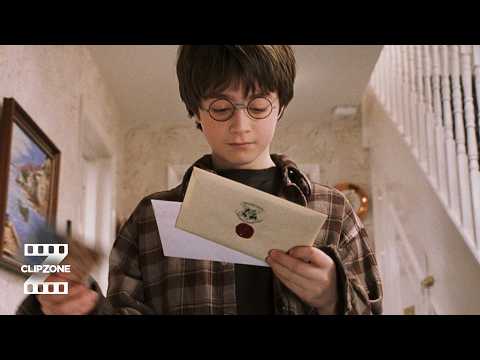
Furthermore, the word has seen a massive resurgence in popular culture. From the whimsical depictions in 'Harry Potter' to the more grounded and historical portrayals in 'The Witch' (2015), the term has been reclaimed by various subcultures. For many today, witchcraft is not about 'evil' but about a connection to nature, herbalism, and personal autonomy. It is important to distinguish between the 'folkloric' witch, the 'historical' victim of trials, and the 'modern' practitioner. Each uses the term witchcraft to describe a very different set of actions and beliefs. In academic writing, you might encounter the term in discussions of gender studies, as the persecution of witchcraft is often analyzed as a systematic crackdown on female independence and non-conformity during the transition to modern capitalism.
Modern practitioners of witchcraft often emphasize the use of crystals, lunar cycles, and herbal remedies to manifest positive change in their lives.
- Literary Usage
- In literature, witchcraft often serves as a plot device to introduce the 'uncanny' or the 'supernatural.' It represents a break from the rational world, allowing authors to explore themes of fate, destiny, and the human psyche's darker corners.
The scholar argued that the 17th-century obsession with witchcraft was actually a manifestation of deep-seated economic anxieties and religious shifts.
She was fascinated by the history of witchcraft, spending hours in the library researching ancient grimoires and spellbooks.
Using the word witchcraft correctly requires an understanding of its grammatical role as an uncountable noun. It typically functions as the subject or object of a sentence, often preceded by adjectives that specify its nature, such as 'dark,' 'benevolent,' 'ancient,' or 'modern.' Because it describes a broad practice or a category of actions, it is rarely pluralized (you would not say 'many witchcrafts,' but rather 'many forms of witchcraft').
- As a Subject
- When witchcraft is the subject, it often governs verbs related to existence, influence, or historical occurrence. Example: 'Witchcraft remains a topic of intense scholarly debate.'
In many fairy tales, witchcraft is the primary catalyst for the protagonist's transformation or journey.
- As an Object
- As an object, it follows verbs like 'practice,' 'study,' 'accuse of,' or 'believe in.' Example: 'He was accused of practicing witchcraft after the strange events in the cellar.'
The museum features an extensive collection of artifacts related to 18th-century witchcraft and folklore.
In metaphorical usage, witchcraft can describe any skill or influence that seems almost supernatural or difficult to explain through logic. For instance, one might say a chef's ability to balance flavors is 'pure witchcraft.' This usage is informal and usually complimentary, suggesting a level of mastery that borders on the magical. Conversely, in political or social discourse, 'witch-hunt' (a related term) is used to describe the unfair targeting of a group, which stems directly from the historical context of witchcraft trials.
The way she managed to fix the broken engine with nothing but a paperclip and a bit of oil seemed like witchcraft to the rest of us.
- Common Collocations
- Commonly paired with: 'practice,' 'accused of,' 'history of,' 'belief in,' 'dark,' 'ancient,' 'ceremonial.'
The documentary explored the deep-rooted cultural beliefs in witchcraft that still exist in certain rural communities today.
She wrote her thesis on the intersection of witchcraft and early modern medicine.
You will encounter the word witchcraft in several distinct domains, each providing a different nuance to its meaning. Understanding these contexts will help you interpret the speaker's or writer's intent more accurately.
- 1. Academic and Historical Discourse
- Historians use the word to describe the social and legal phenomena of the 15th through 18th centuries. In this context, witchcraft is a serious subject of study involving legal records, religious texts, and sociological analysis of mass hysteria and gender roles.
The professor's lecture focused on the Malleus Maleficarum, a notorious treatise on the prosecution of witchcraft.
- 2. Fantasy and Fiction
- This is perhaps the most common place to hear the word today. In movies, books, and video games, witchcraft is often a neutral or even positive skill set used by protagonists to fight evil or solve problems. It is synonymous with magic systems and world-building.
In the world of the novel, witchcraft is a hereditary trait passed down through the female line.
- 3. Modern Spirituality (Wicca/Paganism)
- Among practitioners of modern pagan religions, witchcraft is a term of identity and spiritual practice. It involves rituals, herbalism, and a reverence for nature. Here, the word is used with pride and carries no negative or 'evil' connotations.
The local community center hosted a workshop on the history and practice of modern witchcraft.
- 4. News and Anthropology
- In some parts of the world, witchcraft is still a contemporary issue involving human rights and legal systems. News reports might discuss the tragic consequences of witchcraft accusations in certain regions, highlighting the need for education and legal protection.
Human rights organizations are working to end the persecution of individuals accused of witchcraft in rural provinces.
The podcast episode delved into the psychological reasons why societies often turn to witchcraft as an explanation for tragedy.
Because witchcraft is a word steeped in myth and history, it is easy to misuse it or confuse it with related terms. Here are the most common pitfalls to avoid.
- 1. Confusing Witchcraft with Wicca
- While many Wiccans practice witchcraft, the two are not identical. Wicca is a specific religion (like Christianity or Islam), whereas witchcraft is a practice or craft (like prayer or ritual). One can practice witchcraft without being Wiccan, and vice versa.
- 2. Assuming it is Always 'Evil'
- In modern English, assuming witchcraft is inherently 'dark' or 'evil' can be a mistake, especially in social or religious contexts. Many people view it as a positive, healing, or nature-based practice. Context is key: in a horror movie, it's likely scary; in a nature documentary about modern pagans, it's a lifestyle.
Incorrect: He saw many witchcrafts in the forest.
Correct: He saw many acts of witchcraft in the forest.
- 3. Confusing Witchcraft with Sorcery or Wizardry
- While they are often used interchangeably in casual conversation, 'sorcery' often implies the use of power derived from spirits or demons, while 'wizardry' often implies a learned, academic study of magic (think Merlin or Gandalf). Witchcraft is historically more tied to folk traditions and the natural world.
The author carefully distinguished between the innate witchcraft of the villagers and the high sorcery of the royal court.
- 4. Misusing the term 'Witch-hunt'
- A 'witch-hunt' is a metaphorical term for an investigation that is usually conducted with much publicity, supposedly to uncover subversive activities but actually to harass and weaken political opposition. Don't use it to describe a fair or evidence-based investigation.
The politician claimed the audit was a witch-hunt, though the investigators provided clear evidence of financial misconduct.
It is a mistake to think that witchcraft only existed in the past; it is a vibrant part of many modern cultures.
While witchcraft is a very specific term, several other words share its semantic space. Choosing the right one depends on the 'flavor' of magic you are describing.
- Sorcery
- Often implies the use of power gained from assistance or control of evil spirits. It feels more 'active' and often more 'dangerous' than witchcraft.
- Comparison
- Witchcraft is often seen as innate or folk-based; Sorcery is often seen as learned or spirit-contracted.
- Wizardry
- Suggests great skill or cleverness, often through long study. In fantasy, wizards are often male and academic, while witches are often female and intuitive.
- Comparison
- Witchcraft = Intuition/Nature; Wizardry = Study/Intellect.
- The Occult
- A broader term referring to supernatural, mystical, or magical beliefs, practices, or phenomena that are kept secret or hidden from the public.
- Comparison
- Witchcraft is a specific practice within the broader category of the occult.
While the villagers practiced simple witchcraft for healing, the dark lord delved into forbidden sorcery to conquer the kingdom.
The line between folk medicine and witchcraft was often blurred in medieval society.
He preferred the term 'natural magic' to witchcraft, as it sounded more scientific to his peers.
How Formal Is It?
豆知識
The masculine form in Old English was 'wicca', which is where the modern religion 'Wicca' gets its name. Over time, the feminine 'wicce' became the dominant root for the word 'witch'.
発音ガイド
- Pronouncing the 't' in 'witch' too softly; it should be a clear 'ch' sound.
- Using a long 'o' sound in 'craft' (incorrectly sounding like 'croft').
- Stressing the second syllable (witch-CRAFT), which sounds unnatural.
- Confusing the pronunciation with 'which' (though they are homophones, the context must be clear).
- Adding an 'es' at the end (witchcrafts), which is a grammatical rather than purely phonetic error but affects flow.
難易度
Easy to recognize in fiction, but academic texts can be dense.
Requires care with countability and avoiding pluralization.
Commonly used and understood in casual conversation.
Distinctive sound makes it easy to identify.
次に学ぶべきこと
前提知識
次に学ぶ
上級
知っておくべき文法
Uncountable Nouns
We say 'much witchcraft' not 'many witchcrafts'.
Compound Noun Formation
Witchcraft + trial = Witchcraft trial.
Prepositional Phrases
Accused 'of' witchcraft, not 'for' or 'with'.
Gerund as Object
He admitted to 'practicing' witchcraft.
Adjective Placement
'Ancient witchcraft' follows the standard Adj + Noun order.
レベル別の例文
The old woman in the story used witchcraft.
La vieille femme dans l'histoire utilisait la sorcellerie.
Subject + Verb + Object.
Is witchcraft real?
Est-ce que la sorcellerie est réelle ?
Question form with 'Is'.
I like movies about witchcraft.
J'aime les films sur la sorcellerie.
Preposition 'about' followed by the noun.
The cat was part of the witchcraft.
Le chat faisait partie de la sorcellerie.
Uncountable noun usage.
She does witchcraft in the forest.
Elle fait de la sorcellerie dans la forêt.
Present simple tense.
Witchcraft is in many fairy tales.
La sorcellerie est dans beaucoup de contes de fées.
Singular verb 'is' with uncountable noun.
He read a book of witchcraft.
Il a lu un livre de sorcellerie.
Noun as part of a prepositional phrase.
The witchcraft made the frog jump.
La sorcellerie a fait sauter la grenouille.
Determiner 'the' used with the noun.
Many people believe that witchcraft is just a story.
Beaucoup de gens croient que la sorcellerie n'est qu'une histoire.
Noun clause as the object of 'believe'.
The movie shows the dark side of witchcraft.
Le film montre le côté sombre de la sorcellerie.
Adjective 'dark' modifying the concept.
She studied witchcraft to help her friends.
Elle a étudié la sorcellerie pour aider ses amis.
Infinitive of purpose 'to help'.
Witchcraft was very important in the old village.
La sorcellerie était très importante dans le vieux village.
Adjective 'important' describing the noun.
They used witchcraft to find the lost treasure.
Ils ont utilisé la sorcellerie pour trouver le trésor perdu.
Past simple tense.
The king was afraid of witchcraft.
Le roi avait peur de la sorcellerie.
Adjective 'afraid' + preposition 'of'.
Witchcraft can be found in many cultures.
On peut trouver la sorcellerie dans de nombreuses cultures.
Passive voice 'can be found'.
The teacher explained the history of witchcraft.
Le professeur a expliqué l'histoire de la sorcellerie.
Possessive 'of' linking history and witchcraft.
The Salem witchcraft trials are a famous part of American history.
Les procès de sorcellerie de Salem sont une partie célèbre de l'histoire américaine.
Noun used as a modifier for 'trials'.
Some modern religions involve the practice of witchcraft.
Certaines religions modernes impliquent la pratique de la sorcellerie.
Gerund 'practice' followed by 'of witchcraft'.
He was accused of witchcraft after the mysterious fire.
Il a été accusé de sorcellerie après l'incendie mystérieux.
Passive voice 'was accused of'.
Witchcraft is often associated with the use of herbs and potions.
La sorcellerie est souvent associée à l'utilisation d'herbes et de potions.
Phrase 'associated with'.
The novel explores the themes of witchcraft and betrayal.
Le roman explore les thèmes de la sorcellerie et de la trahison.
Coordinating conjunction 'and' linking two nouns.
There is no scientific evidence to support the existence of witchcraft.
Il n'y a aucune preuve scientifique pour soutenir l'existence de la sorcellerie.
Noun phrase 'existence of witchcraft'.
The documentary provided a balanced view of modern witchcraft.
Le documentaire a fourni une vue équilibrée de la sorcellerie moderne.
Adjective 'modern' modifying the noun.
Witchcraft has been a popular subject for horror movies for decades.
La sorcellerie est un sujet populaire pour les films d'horreur depuis des décennies.
Present perfect tense 'has been'.
The anthropological study of witchcraft reveals much about social tensions.
L'étude anthropologique de la sorcellerie en dit long sur les tensions sociales.
Complex noun phrase as subject.
During the 17th century, the fear of witchcraft reached a fever pitch.
Au XVIIe siècle, la peur de la sorcellerie a atteint son paroxysme.
Idiomatic expression 'reached a fever pitch'.
The laws against witchcraft were eventually repealed in the 18th century.
Les lois contre la sorcellerie ont finalement été abrogées au XVIIIe siècle.
Prepositional phrase 'against witchcraft'.
She doesn't believe in witchcraft, but she finds the folklore fascinating.
Elle ne croit pas à la sorcellerie, mais elle trouve le folklore fascinant.
Contrast using 'but'.
The suspect was charged with practicing witchcraft and inciting a riot.
Le suspect a été accusé de pratiquer la sorcellerie et d'inciter à l'émeute.
Parallel structure with gerunds.
Witchcraft is frequently used as a metaphor for female empowerment in literature.
La sorcellerie est fréquemment utilisée comme métaphore de l'autonomisation des femmes dans la littérature.
Adverb 'frequently' modifying the verb.
The museum's exhibit on witchcraft includes several authentic 16th-century charms.
L'exposition du musée sur la sorcellerie comprend plusieurs charmes authentiques du XVIe siècle.
Subject-verb agreement with 'exhibit'.
Many scholars argue that witchcraft accusations were a way to control deviant behavior.
De nombreux chercheurs soutiennent que les accusations de sorcellerie étaient un moyen de contrôler les comportements déviants.
Noun clause 'that witchcraft accusations...'.
The persecution of witchcraft was inextricably linked to the religious upheavals of the Reformation.
La persécution de la sorcellerie était inextricablement liée aux bouleversements religieux de la Réforme.
Adverb 'inextricably' modifying 'linked'.
Witchcraft, in this context, serves as a scapegoat for inexplicable natural disasters.
La sorcellerie, dans ce contexte, sert de bouc émissaire pour des catastrophes naturelles inexplicables.
Appositive phrase 'in this context'.
The intricate rituals of ceremonial witchcraft require years of dedicated study.
Les rituels complexes de la sorcellerie cérémonielle exigent des années d'études dévouées.
Adjective 'ceremonial' specifying the type.
The film deconstructs the traditional tropes associated with witchcraft and the occult.
Le film déconstruit les tropes traditionnels associés à la sorcellerie et à l'occulte.
Verb 'deconstructs' implying critical analysis.
Accusations of witchcraft often targeted those on the fringes of society.
Les accusations de sorcellerie visaient souvent ceux qui se trouvaient en marge de la société.
Metaphorical use of 'fringes'.
The shift from a belief in witchcraft to scientific rationalism was a slow process.
Le passage d'une croyance en la sorcellerie au rationalisme scientifique a été un processus lent.
Noun phrase 'shift from... to...'.
The author explores the psychological underpinnings of the collective delusion regarding witchcraft.
L'auteur explore les fondements psychologiques de l'illusion collective concernant la sorcellerie.
Complex noun 'underpinnings'.
Witchcraft remains a potent symbol of subversion against patriarchal structures.
La sorcellerie reste un symbole puissant de subversion contre les structures patriarcales.
Stative verb 'remains'.
The historiography of witchcraft has undergone a radical transformation in the last fifty years.
L'historiographie de la sorcellerie a subi une transformation radicale au cours des cinquante dernières années.
Technical term 'historiography'.
One must distinguish between the maleficium of folk belief and the diabolism of theological discourse on witchcraft.
Il faut distinguer le maleficium de la croyance populaire du diabolisme du discours théologique sur la sorcellerie.
Formal 'One must' construction.
The pervasive influence of witchcraft in the cultural imaginary cannot be overstated.
L'influence omniprésente de la sorcellerie dans l'imaginaire culturel ne saurait être surestimée.
Double negative 'cannot be overstated' for emphasis.
The legal frameworks of the period were ill-equipped to handle the nebulous evidence presented in witchcraft trials.
Les cadres juridiques de l'époque étaient mal équipés pour traiter les preuves nébuleuses présentées dans les procès en sorcellerie.
Adjective 'nebulous' describing evidence.
Witchcraft acts as a mirror, reflecting the deepest anxieties and prejudices of the society that prosecutes it.
La sorcellerie agit comme un miroir, reflétant les angoisses et les préjugés les plus profonds de la société qui la poursuit.
Metaphorical 'acts as a mirror'.
The synthesis of indigenous traditions and colonial fears created a unique brand of witchcraft in the New World.
La synthèse des traditions indigènes et des peurs coloniales a créé une forme unique de sorcellerie dans le Nouveau Monde.
Noun 'synthesis'.
The spectral evidence allowed in court was the ultimate undoing of the justice system during the witchcraft hysteria.
La preuve spectrale autorisée au tribunal a été la ruine ultime du système judiciaire pendant l'hystérie de la sorcellerie.
Specific historical legal term 'spectral evidence'.
To study witchcraft is to delve into the very heart of human irrationality and the quest for power.
Étudier la sorcellerie, c'est plonger au cœur même de l'irrationalité humaine et de la quête de pouvoir.
Infinitive phrase as subject 'To study...'.
よく使う組み合わせ
よく使うフレーズ
— To be executed by fire due to a conviction of practicing magic. It is a historical reference.
In the 1600s, many were burned for witchcraft in Europe.
— A small amount of magic or something that seems magical. Often used figuratively.
The garden had a touch of witchcraft about it in the moonlight.
— Something that is so amazing or inexplicable that it seems like magic. Usually a compliment.
The way he plays the violin is pure witchcraft.
— A common pairing in fantasy literature to describe all forms of magic. Popularized by Harry Potter.
He was accepted into the school of witchcraft and wizardry.
— When people believe someone might be using magic without proof. Often leads to social exclusion.
The lonely woman was often suspected of witchcraft by her neighbors.
— Magic that is believed to come from a very old time or tradition.
The ruins were said to be protected by ancient witchcraft.
— Legal rules that make the practice of magic a crime. Mostly historical.
The laws against witchcraft were very strict in the 17th century.
— Viewing magic as a skill or craft that can be learned and perfected.
She dedicated her life to mastering the art of witchcraft.
— Specific actions or ceremonies performed as part of magical practice.
The group gathered at midnight for their witchcraft rituals.
— Formal or informal claims that someone has used magic, often with negative intent.
Accusations of witchcraft were often used to settle personal grudges.
よく混同される語
Witchery is a more poetic or old-fashioned synonym, often used to describe a charming or fascinating quality rather than the actual practice of magic.
Wicca is a specific religion; witchcraft is the practice. Not all witches are Wiccans.
Sorcery often implies a more 'learned' or 'dark' magic involving spirits, whereas witchcraft is often more 'innate' or 'folk-based'.
慣用句と表現
— A campaign directed against a person or group holding unorthodox or unpopular views. It is purely metaphorical today.
The investigation into the company's finances turned into a political witch-hunt.
Formal/Political— To be incredibly effective or to work in a way that seems impossible to explain.
This new software works like witchcraft; it fixed all my errors instantly.
Informal— A famous line from Shakespeare's Macbeth, often used to evoke the atmosphere of witchcraft or impending problems.
As the deadline approached, it was all double, double toil and trouble in the office.
Literary/Humorous— A harsh, often metaphorical expression meaning to punish someone severely for being different or for a perceived mistake.
The social media mob was ready to burn the witch after his controversial comment.
Informal/Slang— The time of night (usually midnight) when supernatural events are said to be most likely to happen.
I always find my best ideas come to me during the witching hour.
Neutral— To be so interested or amazed by something that you cannot move or look away, as if under a spell.
The audience was spellbound by the magician's performance.
Neutral— To fascinate or attract someone so strongly that they cannot think clearly.
The charismatic speaker cast a spell over the entire room.
Neutral/Metaphorical— A reference to strange ingredients used in magic potions; used to describe a messy or weird mixture.
What's in this soup? It looks like eye of newt!
Humorous— A derogatory term for an old woman, often associated with the stereotypical image of a witch.
He rudely referred to his neighbor as an old hag.
Informal/Offensive— To cause or start a problem, similar to how a witch brews a potion.
Those two are always brewing up trouble when they are together.
Informal間違えやすい
Both involve magic.
Wizardry is often associated with male practitioners and academic study, while witchcraft is historically associated with women and folk traditions.
The school taught both witchcraft and wizardry.
Witchcraft is a type of magic.
Magic is the broad category; witchcraft is a specific subset often involving spells and historical/cultural baggage.
He performed a magic trick, but she practiced witchcraft.
Many witches identify as pagans.
Paganism is an umbrella term for many nature-based religions; witchcraft is a practice that can exist within or outside of paganism.
Her path in paganism led her to study witchcraft.
Both are often misunderstood as 'dark magic'.
Voodoo (Vodou) is a specific Afro-Haitian religion with its own spirits and structure, distinct from the European-rooted concept of witchcraft.
The film incorrectly confused local Voodoo traditions with European witchcraft.
Both were 'proto-sciences' or mystical practices.
Alchemy focused on transforming matter (like lead into gold), while witchcraft focuses on spells and spiritual influence.
The scholar studied both the history of alchemy and the trials of witchcraft.
文型パターン
I like [noun].
I like witchcraft stories.
[Noun] is [adjective].
Witchcraft is interesting.
People used to believe in [noun].
People used to believe in witchcraft.
He was accused of [verb-ing] [noun].
He was accused of practicing witchcraft.
The [noun] of [noun] is a [adjective] topic.
The history of witchcraft is a fascinating topic.
To [verb] [noun] is to [verb] the [noun].
To study witchcraft is to explore the human psyche.
There is no [noun] for [noun].
There is no evidence for witchcraft.
Despite the [noun], they [verb].
Despite the fear of witchcraft, they remained calm.
語族
名詞
動詞
形容詞
関連
使い方
Common in fiction and history; rare in daily technical or business life.
-
Using 'witchcrafts' as a plural.
→
Types of witchcraft / Acts of witchcraft.
Witchcraft is an uncountable noun, similar to 'water' or 'advice'.
-
Confusing 'witchcraft' with 'witch-hunt'.
→
Use 'witchcraft' for the practice and 'witch-hunt' for the persecution.
A witch-hunt is the action of looking for and punishing witches (or political enemies).
-
Capitalizing 'witchcraft' in the middle of a sentence.
→
witchcraft (lowercase).
Unless you are referring to the specific religion 'Wicca', the word 'witchcraft' is a common noun and should not be capitalized.
-
Saying 'accused with witchcraft'.
→
accused of witchcraft.
The verb 'accuse' always takes the preposition 'of'.
-
Thinking 'witchcraft' only refers to women.
→
Witchcraft (practiced by anyone).
While historically gendered, the term can apply to the practices of any individual regardless of gender.
ヒント
Uncountable Noun
Remember that witchcraft is uncountable. You should say 'He practiced witchcraft' rather than 'He practiced a witchcraft.'
Cultural Sensitivity
Be aware that in some parts of the world, witchcraft is a very serious and dangerous accusation. Use the word carefully in international contexts.
Related Terms
Learning 'coven' (a group of witches) and 'grimoire' (a book of spells) will help you understand texts about witchcraft better.
Metaphorical Use
Don't be afraid to use 'witchcraft' metaphorically to describe something incredibly skillful, like 'her witchcraft in the kitchen'.
The Salem Trials
If you are studying American history, 'witchcraft' is a key term for understanding the social dynamics of the early colonies.
Double 'C'
Note that 'witchcraft' is one word, and it contains 'tch' and 'cr'. It is often misspelled as two words.
Stress Pattern
Always stress the first syllable. WITCH-craft. This makes your speech sound more natural and clear.
Archetypes
In literature, witchcraft often represents the 'shadow self' or the parts of society that are hidden away.
Collocations
Memorize the phrase 'accused of witchcraft' as a single unit; it is the most common way the word appears in historical texts.
Social Media
On platforms like TikTok, you might see '#WitchTok'. This refers to the modern, aesthetic-focused community of witchcraft practitioners.
暗記しよう
記憶術
Think of a 'Witch' making a 'Craft' (like a project). Witch + Craft = Witchcraft. It is the 'work' or 'craft' that a witch does.
視覚的連想
Imagine a woman (witch) carefully knitting (crafting) a spiderweb out of glowing purple light. This combines the person and the skill.
Word Web
チャレンジ
Try to write a three-sentence story using 'witchcraft' as a positive thing, then rewrite it using 'witchcraft' as a scary thing.
語源
The word 'witchcraft' comes from the Old English word 'wiccecræft'. It is a combination of 'wicce' (meaning a female magician or sorceress) and 'cræft' (meaning skill, art, or power).
元の意味: Originally, it referred to the skill or craft of a 'witch' or wise person, without the necessarily negative or 'evil' connotations it gained during the Middle Ages.
Germanic (Old English)文化的な背景
Be careful when using the word in some African or South Asian contexts, where accusations of witchcraft can still lead to real-world violence and legal issues.
In the UK and US, witchcraft is often associated with the Salem trials and the Pendle Hill trials. It is a popular theme for Halloween.
実生活で練習する
実際の使用場面
History Class
- The Salem trials
- Religious persecution
- Mass hysteria
- Legal evidence
Fantasy Literature
- Casting spells
- Magic potions
- Hidden powers
- Ancient scrolls
Modern Spirituality
- Natural healing
- Lunar cycles
- Energy work
- Sacred space
Anthropology
- Social control
- Cultural belief
- Explaining misfortune
- Ritual practice
Casual Conversation
- Like magic
- Spooky stuff
- Into the occult
- Witchy vibes
会話のきっかけ
"Do you enjoy watching movies or reading books that involve witchcraft?"
"What is the most famous story about witchcraft in your home country?"
"Why do you think people were so afraid of witchcraft in the past?"
"Do you think the word 'witchcraft' has a positive or negative meaning today?"
"If you could use witchcraft for one thing, what would it be?"
日記のテーマ
Write about a time you saw something so amazing it felt like witchcraft.
Imagine you are a historian in the year 2500. How would you describe the 'witchcraft' of the 21st century?
Compare and contrast the depiction of witchcraft in two different movies or books.
Discuss why women have historically been the primary targets of witchcraft accusations.
Reflect on the difference between 'science' and 'witchcraft' in how we explain the world.
よくある質問
10 問Witchcraft itself is a practice, not a religion. However, it is a central part of religions like Wicca. You can be a practitioner of witchcraft without belonging to any specific religion.
Historically and in fiction, 'witch' usually refers to a female and 'wizard' to a male. Wizards are often seen as academic or scholarly, while witches are seen as more intuitive or connected to nature.
Yes, historically, thousands of people were executed for witchcraft, though hanging was more common in England and the American colonies, while burning was more frequent in Continental Europe.
Modern witchcraft is generally a peaceful spiritual practice focused on nature, self-improvement, and healing. It is not associated with the 'evil' depicted in horror movies.
Yes, men can and do practice witchcraft. While the term 'witch' was historically female, many modern male practitioners also use the title 'witch'.
A modern 'witch-hunt' is a metaphorical term for the unfair targeting and persecution of a person or group, often for political reasons, where the 'evidence' is weak or non-existent.
The association comes from folklore and historical trial records, where it was claimed witches used brooms (an everyday domestic tool) to fly to their meetings, or 'Sabbats'.
No, they are entirely different. Most practitioners of witchcraft do not believe in or worship the Christian Devil, which is a requirement for Satanism.
Common tools include herbs, crystals, candles, tarot cards, and sometimes wands or chalices, used to focus intent during rituals.
It started as a word for 'wise craft' or 'skill of a witch,' became a term for a capital crime and devil-worship, and has now evolved into a term for both fantasy magic and a reclaimed spiritual identity.
自分をテスト 180 問
Describe a fictional character who uses witchcraft.
Well written! Good try! Check the sample answer below.
Write a short paragraph about the history of witchcraft trials.
Well written! Good try! Check the sample answer below.
Explain the difference between historical and modern witchcraft.
Well written! Good try! Check the sample answer below.
Argue whether 'witch-hunt' is an appropriate term for modern political investigations.
Well written! Good try! Check the sample answer below.
Discuss the role of witchcraft in a specific book or movie you have seen.
Well written! Good try! Check the sample answer below.
Write a poem about the 'witching hour'.
Well written! Good try! Check the sample answer below.
Analyze the gendered nature of witchcraft accusations in the 17th century.
Well written! Good try! Check the sample answer below.
Describe a modern witchcraft ritual using words like 'crystals' and 'intent'.
Well written! Good try! Check the sample answer below.
Write a dialogue between a person who believes in witchcraft and a skeptic.
Well written! Good try! Check the sample answer below.
Summarize the anthropological view of witchcraft as a social mechanism.
Well written! Good try! Check the sample answer below.
Create a story about a village that discovers witchcraft is being used for good.
Well written! Good try! Check the sample answer below.
Explain the etymology of the word 'witchcraft'.
Well written! Good try! Check the sample answer below.
Write a review of a documentary about witchcraft.
Well written! Good try! Check the sample answer below.
Discuss how witchcraft is used as a metaphor for power in literature.
Well written! Good try! Check the sample answer below.
Describe the atmosphere of a scene involving witchcraft.
Well written! Good try! Check the sample answer below.
Write a letter from a person accused of witchcraft in 1692.
Well written! Good try! Check the sample answer below.
Explain why 'witchcraft' is an uncountable noun with examples.
Well written! Good try! Check the sample answer below.
Discuss the impact of social media on modern witchcraft practices.
Well written! Good try! Check the sample answer below.
Compare 'witchcraft' with 'sorcery' and 'wizardry'.
Well written! Good try! Check the sample answer below.
Reflect on why witchcraft remains a popular subject in the 21st century.
Well written! Good try! Check the sample answer below.
Tell a short story about a person who discovers they have the power of witchcraft.
Read this aloud:
あなたの回答:
Speech recognition is not supported in your browser. Try Chrome or Edge.
Discuss your favorite movie or book that features witchcraft.
Read this aloud:
あなたの回答:
Speech recognition is not supported in your browser. Try Chrome or Edge.
Explain why people in the past were so afraid of witchcraft.
Read this aloud:
あなたの回答:
Speech recognition is not supported in your browser. Try Chrome or Edge.
Debate whether witchcraft should be considered a religion or a hobby.
Read this aloud:
あなたの回答:
Speech recognition is not supported in your browser. Try Chrome or Edge.
Describe the stereotypical image of a witch and how it has changed.
Read this aloud:
あなたの回答:
Speech recognition is not supported in your browser. Try Chrome or Edge.
Give a short presentation on the Salem witchcraft trials.
Read this aloud:
あなたの回答:
Speech recognition is not supported in your browser. Try Chrome or Edge.
Talk about the use of the word 'witchcraft' as a metaphor for skill.
Read this aloud:
あなたの回答:
Speech recognition is not supported in your browser. Try Chrome or Edge.
Explain the difference between 'witchcraft' and 'sorcery' to a friend.
Read this aloud:
あなたの回答:
Speech recognition is not supported in your browser. Try Chrome or Edge.
Discuss the impact of witchcraft on modern pop culture.
Read this aloud:
あなたの回答:
Speech recognition is not supported in your browser. Try Chrome or Edge.
Reflect on the ethics of 'witch-hunts' in the age of social media.
Read this aloud:
あなたの回答:
Speech recognition is not supported in your browser. Try Chrome or Edge.
Describe a ritual you might see in a movie about witchcraft.
Read this aloud:
あなたの回答:
Speech recognition is not supported in your browser. Try Chrome or Edge.
Talk about the role of herbs in historical witchcraft.
Read this aloud:
あなたの回答:
Speech recognition is not supported in your browser. Try Chrome or Edge.
Explain why witchcraft is often associated with women.
Read this aloud:
あなたの回答:
Speech recognition is not supported in your browser. Try Chrome or Edge.
Discuss the concept of 'the witching hour'.
Read this aloud:
あなたの回答:
Speech recognition is not supported in your browser. Try Chrome or Edge.
Give your opinion on the commercialization of witchcraft (e.g., selling crystals).
Read this aloud:
あなたの回答:
Speech recognition is not supported in your browser. Try Chrome or Edge.
Describe the feeling of a 'spooky' place using witchcraft-related words.
Read this aloud:
あなたの回答:
Speech recognition is not supported in your browser. Try Chrome or Edge.
Discuss how witchcraft trials reflect the social anxieties of their time.
Read this aloud:
あなたの回答:
Speech recognition is not supported in your browser. Try Chrome or Edge.
Talk about a famous 'witch' from history or mythology.
Read this aloud:
あなたの回答:
Speech recognition is not supported in your browser. Try Chrome or Edge.
Explain the meaning of the idiom 'to work like witchcraft'.
Read this aloud:
あなたの回答:
Speech recognition is not supported in your browser. Try Chrome or Edge.
Summarize a documentary you watched about the occult.
Read this aloud:
あなたの回答:
Speech recognition is not supported in your browser. Try Chrome or Edge.
Listen to a podcast about the Salem trials and list three pieces of evidence used.
Listen to a description of a magic spell and identify the ingredients.
Listen to a lecture on the etymology of 'witchcraft' and note the Old English roots.
Listen to an interview with a modern witch and summarize her beliefs.
Listen to a scene from 'Macbeth' and identify the witches' predictions.
Listen to a news report on witchcraft accusations in modern times and identify the location.
Listen to a discussion on 'witch-hunts' and identify the metaphorical meaning used.
Listen to a story about a 'witch' and decide if she is a hero or a villain.
Listen to a talk on the history of the word 'craft' in 'witchcraft'.
Listen to a guide on how to pronounce 'witchcraft' in different accents.
Listen to a summary of 'The Crucible' and identify the main characters.
Listen to a description of a 'coven' and explain what it is.
Listen to a debate on magic vs. science and summarize the arguments.
Listen to a list of common collocations for 'witchcraft' and repeat them.
Listen to a historical account of the Pendle witches and note the date.
/ 180 correct
Perfect score!
Summary
Witchcraft is a versatile term describing the practice of magic; it is essential to distinguish between its historical context of persecution and its modern use in fantasy and spirituality. Example: 'The historian lectured on the 17th-century obsession with witchcraft.'
- Witchcraft is the practice of magic, spells, and supernatural rituals, historically viewed with suspicion but now a popular theme in fiction and modern spirituality.
- It is an uncountable noun used to describe a broad range of magical activities across different cultures and historical periods, from folk medicine to dark rituals.
- The word is central to historical studies of the 16th-17th century trials and is also used as a metaphor for unfair persecution or extraordinary skill.
- In modern contexts, witchcraft can refer to the religion of Wicca or a general interest in nature-based magic, crystals, and personal empowerment.
Uncountable Noun
Remember that witchcraft is uncountable. You should say 'He practiced witchcraft' rather than 'He practiced a witchcraft.'
Cultural Sensitivity
Be aware that in some parts of the world, witchcraft is a very serious and dangerous accusation. Use the word carefully in international contexts.
Related Terms
Learning 'coven' (a group of witches) and 'grimoire' (a book of spells) will help you understand texts about witchcraft better.
Metaphorical Use
Don't be afraid to use 'witchcraft' metaphorically to describe something incredibly skillful, like 'her witchcraft in the kitchen'.