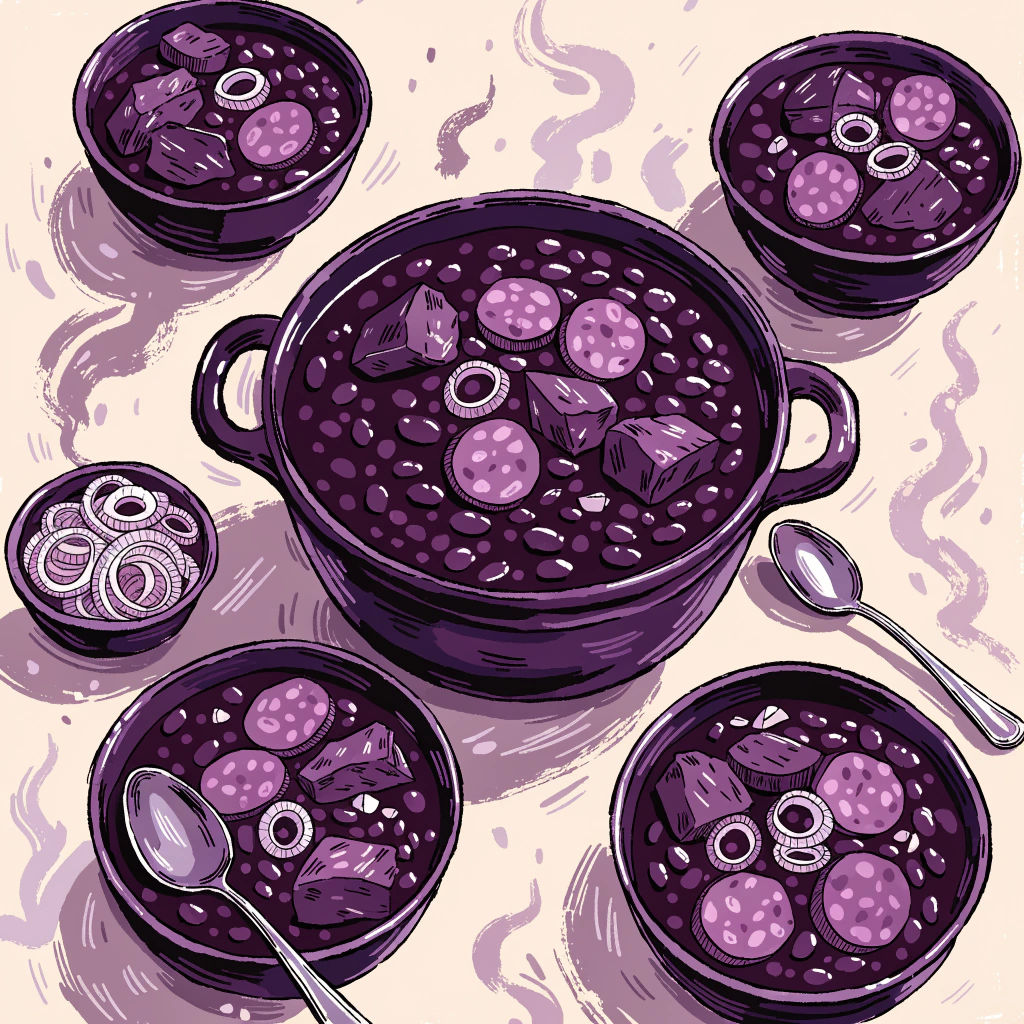
A Special Meal in Brazil
Brazil has a very famous food. It is called feijoada. Feijoada is a delicious stew. It has black beans and meat. People use pork and beef to make it.
Brazilians often eat this meal on Saturdays. They eat it together with their families and friends. It is a special time. They also eat rice, oranges, and vegetables with the stew.
Feijoada is very old. Some people say it comes from Portugal. Today, everyone in Brazil loves this dish. It is the national food of Brazil.
문법 스포트라이트
패턴: Present Simple (to be)
"Feijoada is a delicious stew."
We use 'is' with singular nouns to describe what something is. It shows a fact or a state.
패턴: Present Simple (Action Verbs)
"Brazilians often eat this meal on Saturdays."
We use the base form of the verb for habits and routines. We add an 's' only for he, she, or it.
이해도를 테스트하세요
10 질문 · A1 초급 · 무료 미리보기 1회
이 기사에서 배운 내용을 테스트하세요. 모든 질문에 답하여 XP를 획득하세요!
What color are the beans in feijoada?
문제별 결과
What color are the beans in feijoada?
내 답변:
정답: Black
Brazilians usually eat feijoada on Saturdays.
내 답변:
정답: 참
What does 'meal' mean?
내 답변:
정답: Food eaten at a certain time
Brazil has a very _____ food.
내 답변:
정답: famous
A Special Saturday Meal in Brazil
Feijoada is the most famous dish in Brazil. It is a delicious stew made with black beans and different types of meat, like pork and beef. People usually eat it on Saturday afternoons because it is a very big meal. Families and friends sit together to enjoy this food for many hours.
The dish has a long history. Some people say it started with workers many years ago. However, it is also similar to traditional food from Portugal. Today, every person in Brazil loves it. Chefs cook the meat and beans slowly in a large pot. This makes the food very soft and tasty.
Brazilians serve feijoada with white rice, green vegetables, and slices of orange. The orange is important because it helps you feel better after the heavy meal. Feijoada is more than just a lunch; it is a weekly ritual that brings people together in a happy way.
문법 스포트라이트
패턴: Superlative Adjectives
"Feijoada is the most famous dish in Brazil."
We use 'the most' with long adjectives to compare one thing to a whole group. It shows that feijoada is number one in popularity.
패턴: Connectors (Because)
"People usually eat it on Saturday afternoons because it is a very big meal."
We use 'because' to give a reason for an action. In this sentence, it explains why people choose Saturday for this specific food.
이해도를 테스트하세요
11 질문 · A2 초등급 · 무료 미리보기 1회
이 기사에서 배운 내용을 테스트하세요. 모든 질문에 답하여 XP를 획득하세요!
When do Brazilians usually eat feijoada?
문제별 결과
When do Brazilians usually eat feijoada?
내 답변:
정답: On Saturday afternoons
Feijoada is a small and light meal.
내 답변:
정답: 거짓
What is a 'stew'?
내 답변:
정답: Meat and vegetables cooked slowly
Brazilians serve the meal with white _____.
내 답변:
정답: rice
What kind of beans are used in this dish?
내 답변:
정답: Black beans
Feijoada: The Heart of Brazilian Culture
Feijoada is known as the national dish of Brazil. It is a rich, smoky stew that has been enjoyed by Brazilians for centuries. If you visit Brazil on a Saturday, you will likely see families gathered around a large table to share this meal. It is more than just food; it is a weekly ritual that brings people together.
The stew is primarily made from black beans, which are cooked slowly with different types of pork and beef. Traditional recipes often include ribs, sausage, and jerked beef. In the past, some people believed that feijoada was created by enslaved people who used scraps of meat left over by plantation owners. However, culinary historians have discovered that the dish actually has deeper roots in European cooking styles, specifically from Portugal.
This hearty meal is usually served with white rice, kale, and orange slices. The orange is important because it helps with digestion after such a heavy meal. Toasted manioc flour, called farofa, is also sprinkled on top to add a crunchy texture.
Over the years, the recipe has evolved to suit modern tastes. While the traditional version uses many parts of the pig, lighter versions have become popular in big cities like São Paulo and Rio de Janeiro. Even though it takes a long time to prepare, most Brazilians agree that the wait is worth it. If you have never tried feijoada, you should definitely experience this delicious part of Brazilian culture.
문법 스포트라이트
패턴: Passive Voice
"Feijoada is known as the national dish of Brazil."
The passive voice is used when the focus is on the action or the object rather than the person doing it. It is formed using 'to be' + past participle.
패턴: Present Perfect
"Lighter versions have become popular in big cities."
The present perfect connects the past to the present. It is formed with 'have/has' + past participle and shows a change or state that continues now.
이해도를 테스트하세요
11 질문 · B1 중급 · 무료 미리보기 1회
이 기사에서 배운 내용을 테스트하세요. 모든 질문에 답하여 XP를 획득하세요!
When is Feijoada typically eaten in Brazil?
문제별 결과
When is Feijoada typically eaten in Brazil?
내 답변:
정답: Saturday afternoon
Feijoada is made using only white beans and chicken.
내 답변:
정답: 거짓
What does 'ritual' mean in the context of the article?
내 답변:
정답: A regular social activity
Orange slices are served to help with _____
내 답변:
정답: digestion
What do culinary historians believe about the origin of Feijoada?
내 답변:
정답: It has roots in European cooking
브라질의 영혼이 담긴 요리: 페이조아다의 깊은 맛과 역사
브라질의 국경을 넘어 전 세계 미식가들의 마음을 사로잡은 페이조아다는 단순한 음식을 넘어 브라질 문화의 심장과도 같습니다. 이 풍성한 검은콩 스튜는 일반적으로 토요일 오후에 가족과 친구들이 모여 함께 즐기는 주간 의례로 자리 잡고 있습니다. 돼지고기와 소고기의 다양한 부위가 검은콩과 어우러져 깊고 스모키한 맛을 내며, 쌀밥, 콜라드 그린, 파로파(카사바 가루)와 함께 제공되어 완벽한 한 끼 식사를 완성합니다.
페이조아다의 기원에 대해서는 흥미로운 논쟁이 존재합니다. 대중적인 전설에 따르면, 이 요리는 노예들이 농장주들이 버린 고기 조각들을 활용하여 만들어낸 생존의 음식이었다고 합니다. 그러나 많은 요리사학자들은 이러한 로맨틱한 이야기에 대해 회의적인 시각을 표합니다. 그들은 페이조아다가 유럽, 특히 포르투갈의 '포토푀(pot-au-feu)'와 같은 스튜 요리에서 유래했을 가능성이 높다고 주장합니다. 포르투갈에서도 콩과 돼지고기를 이용한 유사한 요리들이 존재했으며, 브라질로 이주한 포르투갈인들이 현지의 재료와 조리법을 결합하여 현재의 페이조아다를 탄생시켰다는 것입니다.
이러한 역사적 배경에도 불구하고, 페이조아다가 브라질의 정체성과 밀접하게 연결되어 있다는 사실은 변함이 없습니다. 이 요리는 브라질 사회의 다양한 문화적 요소들이 융합된 결과물이며, 아프리카, 유럽, 원주민 문화의 영향을 동시에 보여줍니다. 특히, 노예 제도의 아픈 역사를 상징하는 음식으로서, 어려운 환경 속에서도 삶의 기쁨과 공동체 의식을 잃지 않았던 사람들의 강인함을 대변하기도 합니다.
오늘날 페이조아다는 브라질 전역의 레스토랑과 가정에서 사랑받는 대표적인 음식입니다. 지역마다 약간의 조리법 차이가 있을 수 있지만, 그 핵심적인 맛과 정서는 언제나 동일합니다. 페이조아다 한 그릇에는 브라질의 복잡한 역사, 뜨거운 열정, 그리고 따뜻한 공동체 정신이 고스란히 담겨 있습니다. 이 음식을 맛보는 것은 단순한 미식 경험을 넘어 브라질이라는 나라의 영혼을 이해하는 깊이 있는 여정이 될 것입니다.
문법 스포트라이트
패턴: ~을/를 넘어
"브라질의 국경을 넘어 전 세계 미식가들의 마음을 사로잡은 페이조아다는 단순한 음식을 넘어 브라질 문화의 심장과도 같습니다."
이 표현은 '어떤 범위를 초과하여' 또는 '단순히 ~뿐만 아니라 그 이상으로'라는 의미를 나타냅니다. 주로 공간적, 물리적 경계를 넘거나, 추상적인 개념의 한계를 뛰어넘는 상황에서 사용됩니다. 명사 뒤에 붙어 사용됩니다.
패턴: ~다는 것입니다
"브라질로 이주한 포르투갈인들이 현지의 재료와 조리법을 결합하여 현재의 페이조아다를 탄생시켰다는 것입니다."
이는 간접 인용의 한 형태로, 앞서 언급된 내용이나 어떤 사실을 다시 한번 강조하거나 확정적으로 말할 때 사용됩니다. 동사나 형용사 어간 뒤에 '~다고 하다' 또는 '~(이)라고 하다'가 줄어든 형태로 쓰입니다.
패턴: ~에도 불구하고
"이러한 역사적 배경에도 불구하고, 페이조아다가 브라질의 정체성과 밀접하게 연결되어 있다는 사실은 변함이 없습니다."
이 문법 패턴은 앞 문장의 내용이 뒤 문장의 내용에 영향을 미 주지 않음을 나타낼 때 사용됩니다. 즉, 앞의 상황이나 조건에도 불구하고 뒤의 결과나 사실이 발생했음을 표현합니다. 명사 뒤에 '에도 불구하고'를 붙여 사용합니다.
이해도를 테스트하세요
11 질문 · B2 중상급 · 무료 미리보기 1회
이 기사에서 배운 내용을 테스트하세요. 모든 질문에 답하여 XP를 획득하세요!
페이조아다는 일반적으로 언제 가족과 친구들이 모여 즐기는 주간 의례로 자리 잡고 있습니까?
문제별 결과
페이조아다는 일반적으로 언제 가족과 친구들이 모여 즐기는 주간 의례로 자리 잡고 있습니까?
내 답변:
정답: 토요일 오후
페이조아다의 대중적인 전설은 노예들이 농장주들이 버린 고기 조각들을 활용하여 만들었다고 합니다.
내 답변:
정답: 참
'미식가'의 의미는 무엇입니까?
내 답변:
정답: 맛있는 음식을 즐겨 먹고 그 맛을 잘 아는 사람
많은 요리사학자들은 페이조아다가 유럽, 특히 포르투갈의 '포토푀'와 같은 스튜 요리에서 ____ 가능성이 높다고 주장합니다.
내 답변:
정답: 유래했을
페이조아다에 담겨 있지 않은 브라질의 정서는 무엇입니까?
내 답변:
정답: 고요한 침묵
브라질의 영혼을 담은 한 그릇: 페이조아다 심층 탐구
브라질의 심장부, 그 깊은 미식의 세계를 탐험하다 보면 필연적으로 마주하게 되는 요리가 있습니다. 바로 ‘페이조아다(Feijoada)’입니다. 이 검은콩 스튜는 단순한 음식을 넘어 브라질 사람들의 삶과 문화, 그리고 역사적 정체성을 고스란히 담아낸 상징적인 존재로 자리매김하고 있습니다. 매주 토요일 오후, 온 가족과 친구들이 한데 모여 페이조아다를 나누는 모습은 브라질 일상에서 흔히 볼 수 있는 정겹고도 중요한 의식입니다. 이는 페이조아다가 단순히 한 끼 식사가 아니라 브라질 문화의 중요한 한 부분임을 보여주는바, 그 공동체적 특성은 아무리 강조해도 지나치지 않습니다.
페이조아다의 핵심은 이름에서도 짐작할 수 있듯이 ‘페이장(Feijão)’, 즉 검은콩입니다. 이 콩을 돼지고기와 소고기의 다양한 부위—갈비, 소시지, 말린 고기(세르타오 고기) 등—와 함께 오랜 시간 뭉근하게 끓여내어 깊고 풍부한 맛을 냅니다. 여기에 밥, 콜라드 그린(Coure Flor), 파로파(Farofa, 구운 카사바 가루), 오렌지 슬라이스 등이 곁들여져 완벽한 향연을 이룹니다. 이 요리는 단순히 재료들을 섞어 끓이는 것을 넘어, 각 재료가 지닌 특유의 풍미가 조화를 이루며 복합적인 맛의 층위를 만들어내는 정교한 과정의 결과물이라 할 수 있습니다.
페이조아다의 기원에 대해서는 흥미로운 담론이 존재하며, 그중 가장 널리 알려진 것은 노예들이 농장주들이 먹다 남긴 고기 부위와 검은콩을 이용해 만들었다는 설입니다. 이 이야기는 억압받던 이들의 지혜와 생존력을 상징하며 강렬한 서사적 매력을 지니고 있으므로, 대중에게 널리 회자되어 왔습니다. 그러나 현대 요리 역사가들의 고증을 거치면서 이러한 고정관념에는 의문이 제기되고 있습니다. 대부분의 역사학자들은 페이조아다가 유럽의 ‘팟오퓨(Pot-au-feu)’ 스타일, 특히 포르투갈의 ‘코지두(Cozido)’나 ‘페이조아다 포르투게사’와 같은 스튜 요리에서 유래했다고 보고 있습니다.
실제로 포르투갈에서는 이미 중세 시대부터 콩과 고기를 함께 끓여 먹는 문화가 있었으며, 이것이 대항해 시대를 거쳐 브라질로 건너와 현지의 식재료와 조리법에 접목되면서 독자적인 형태로 발전했다는 것이 지배적인 견해입니다. 브라질의 열대 기후와 풍부한 육류 및 콩 생산 환경이 이러한 유럽식 스튜를 브라질화하는 데 결정적인 역할을 했습니다. 따라서 페이조아다는 노예들의 창조물이라기보다는, 유럽의 요리 전통이 브라질의 독특한 환경과 만나 진화한 결과물로 이해하는 것이 더 타당합니다.
오늘날 페이조아다는 브라질의 다양한 지역에서 각기 다른 방식으로 변주되며 그 깊이를 더하고 있습니다. 리우데자네이루에서는 검은콩과 풍성한 육류를 기본으로 하지만, 북동부 지역에서는 붉은콩을 사용하기도 하는 등 지역별 특색이 뚜렷합니다. 이러한 다양성에도 불구하고 페이조아다가 브라질 국민의 식탁에서 차지하는 위상과 문화적 중요성은 변함이 없습니다. 페이조아다는 단순한 음식일 뿐만 아니라 브라질 사람들의 삶과 애환이 담긴, 살아 숨 쉬는 문화유산이라 해도 과언이 아닐 것입니다. 브라질을 방문한다면 이 깊고 진한 맛의 향연을 놓치지 않기를 강력히 권합니다. 이는 그들의 문화와 역사를 가장 생생하게 경험하는 방법 중 하나이기 때문입니다.
문법 스포트라이트
패턴: -(으)ㄴ/는바
"이는 페이조아다가 단순히 한 끼 식사가 아니라 브라질 문화의 중요한 한 부분임을 보여주는바, 그 공동체적 특성은 아무리 강조해도 지나치지 않습니다."
이 문법은 앞선 내용이 뒤따르는 내용의 근거나 이유, 또는 전제가 될 때 사용되는 연결 어미입니다. 주로 격식적인 글쓰기나 연설에서 쓰이며, '그러므로', '그렇기 때문에'와 비슷한 의미로 쓰일 수 있습니다. 앞 문장의 사실을 바탕으로 뒷 문장의 결론을 이끌어낼 때 유용합니다.
패턴: -(으)므로
"이 이야기는 억압받던 이들의 지혜와 생존력을 상징하며 강렬한 서사적 매력을 지니고 있으므로, 대중에게 널리 회자되어 왔습니다."
이 문법은 앞 문장이 뒤 문장의 원인이나 이유가 됨을 나타내는 연결 어미입니다. '-(으)니'나 '-(으)니까'와 비슷하지만, 주로 격식적인 문어체에서 사용되며 논리적이고 객관적인 이유를 제시할 때 적합합니다. 앞선 내용이 원인이 되어 뒤의 결과가 발생함을 명확히 밝힙니다.
패턴: -(으)ㄹ 뿐만 아니라 ~기까지 하다
"페이조아다는 단순한 음식일 뿐만 아니라 브라질 사람들의 삶과 애환이 담긴, 살아 숨 쉬는 문화유산이라 해도 과언이 아닐 것입니다."
이 문법은 앞 내용도 그러하지만, 그에 더하여 뒤의 내용까지도 그러함을 강조할 때 사용됩니다. 'A뿐만 아니라 B도'와 유사한 의미를 가지나, '-(으)기까지 하다'는 B의 내용이 A보다 더 심화되거나 예상 밖의 사실일 때 쓰여 강조의 의미를 더합니다.
이해도를 테스트하세요
12 질문 · C1 고급 · 무료 미리보기 1회
이 기사에서 배운 내용을 테스트하세요. 모든 질문에 답하여 XP를 획득하세요!
다음 중 페이조아다의 문화적 중요성을 가장 잘 설명하는 것은 무엇입니까?
문제별 결과
다음 중 페이조아다의 문화적 중요성을 가장 잘 설명하는 것은 무엇입니까?
내 답변:
정답: 매주 토요일 가족과 친구들이 모여 나누는 공동체적 의식
페이조아다는 노예들이 농장주가 남긴 재료로 만들었다는 설이 역사적으로 완전히 고증된 사실이다.
내 답변:
정답: 거짓
'고정관념'은 무엇을 의미합니까?
내 답변:
정답: 오랫동안 굳어져 변하지 않는 생각이나 견해
페이조아다의 핵심 재료는 ____이며, 돼지고기와 소고기의 다양한 부위가 함께 사용된다.
내 답변:
정답: 검은콩
현대 요리 역사가들이 페이조아다의 기원에 대해 가장 유력하게 제시하는 학설은 무엇입니까?
내 답변:
정답: 유럽의 스튜 요리에서 유래하여 브라질화되었다는 설
페이조아다는 브라질의 모든 지역에서 검은콩만을 사용하여 동일한 방식으로 조리된다.
내 답변:
정답: 거짓
The Apotheosis of the Black Bean: Deconstructing the Sociopolitical Fabric of Brazilian Feijoada
In the pantheon of global gastronomy, few preparations evoke such a visceral sense of place and ritual as the Brazilian feijoada. To the uninitiated, it may appear as a mere stew of black beans and porcine offal; however, to the Brazilian, it represents a sacred Saturday liturgy, a communal gathering that suspends the frantic pace of modern life in favor of a languid, multi-hour symposium. This culinary phenomenon is not merely about sustenance; it is an exercise in conviviality, a manifestation of what sociologists might term the 'Brazilian soul.' Rarely has a dish transcended its culinary boundaries to become a literal manifestation of national identity as feijoada has in Brazil.
Central to the discourse surrounding feijoada is the pervasive myth of its provenance. For decades, a romanticized narrative suggested that the dish was born of necessity in the slave quarters, or senzalas, of colonial plantations. The story goes that enslaved people, provided only with the 'scraps' discarded by the master’s house—the ears, tails, and trotters—ingeniously combined these remnants with beans to create a nutrient-dense masterpiece. While this narrative serves as a powerful symbol of resilience and the subversion of colonial hegemony, modern culinary historians suggest a more nuanced evolution. They argue that feijoada is a vestigial cousin of European 'pot-au-feu' traditions, specifically the Portuguese cozido. The inclusion of pig extremities, far from being an index of penury, was a long-standing tradition in European agrarian societies, predating the transatlantic exchange.
Nevertheless, the 'senzala myth' remains a vital component of the dish's cultural semiotics. It highlights the multifaceted nature of Brazilian identity—a synthesis of African, European, and indigenous influences. Were one to strip the dish of its historical baggage, one would still be left with a formidable sensory experience. The alchemy of the long-simmered black beans, infused with the smoky essence of jerked beef and paio sausage, creates a velvet-textured broth that is both earthy and decadent. It is imperative that the diner approach the feijoada completa with respect for its traditional accompaniments: the toasted manioc flour known as farofa, the finely shredded and sautéed kale (couve), and the essential slices of orange. The latter is no mere ornamental flourish; rather, it serves as a critical digestive catalyst, its acidity effectively emulsifying the heavy lipids inherent in the pork.
In the mid-20th century, feijoada underwent a process of 'nationalization,' championed by modernist intellectuals who sought to define a cohesive Brazilian culture. By elevating a rustic, communal meal to the status of a national symbol, they created a paradigm of unity in a country marked by profound social stratification. Today, the ubiquity of feijoada in both humble botecos and opulent hotels serves as a testament to its enduring power. It is an idiosyncrasy of the Brazilian palate that a meal so heavy should be consumed in a tropical climate, yet the ritual persists, undiminished by time or globalization. In conclusion, feijoada transcends the boundaries of simple nutrition. It is a complex cultural text, written in smoke, salt, and beans. Whether one views it through the lens of historical myth-making or as the apotheosis of Luso-African culinary fusion, it remains an indispensable part of the Brazilian experience. So long as the Saturday ritual persists, the smoky aroma of simmering beans will continue to signal a moment of respite, a time for the nation to pause and savor the rich, multifaceted history contained within a single clay pot.
문법 스포트라이트
패턴: Negative Inversion
"Rarely has a dish transcended its culinary boundaries to become a literal manifestation of national identity as feijoada has in Brazil."
When a sentence begins with a negative or restrictive adverb like 'rarely', the subject and auxiliary verb are inverted. This is used for rhetorical emphasis in formal or academic writing.
패턴: Subjunctive Mood with 'Imperative'
"It is imperative that the diner approach the feijoada completa with respect for its traditional accompaniments."
The base form of the verb (approach) is used after adjectives of necessity like 'imperative'. This mood expresses a requirement or strong recommendation.
패턴: Inverted Conditional (Second Conditional)
"Were one to strip the dish of its historical baggage, one would still be left with a formidable sensory experience."
The word 'were' is placed at the beginning of the sentence to replace 'if' and 'was/were'. This structure is highly formal and used to discuss hypothetical situations.
이해도를 테스트하세요
12 질문 · C2 마스터 · 무료 미리보기 1회
이 기사에서 배운 내용을 테스트하세요. 모든 질문에 답하여 XP를 획득하세요!
What is the primary tension discussed regarding the origins of feijoada?
문제별 결과
What is the primary tension discussed regarding the origins of feijoada?
내 답변:
정답: The conflict between the 'senzala' myth and European culinary roots.
Modern culinary historians fully support the legend that feijoada was created solely from plantation scraps.
내 답변:
정답: 거짓
Which word describes the 'seemingly magical transformation' of ingredients into a complex stew?
내 답변:
정답: Alchemy
The dish serves as a _____ of unity in a socially stratified country.
내 답변:
정답: paradigm
What function does the orange serve in a traditional feijoada meal according to the text?
내 답변:
정답: It serves as a digestive catalyst for the heavy fats.
Modernist intellectuals in the 20th century helped establish feijoada as a national symbol.
내 답변:
정답: 참

