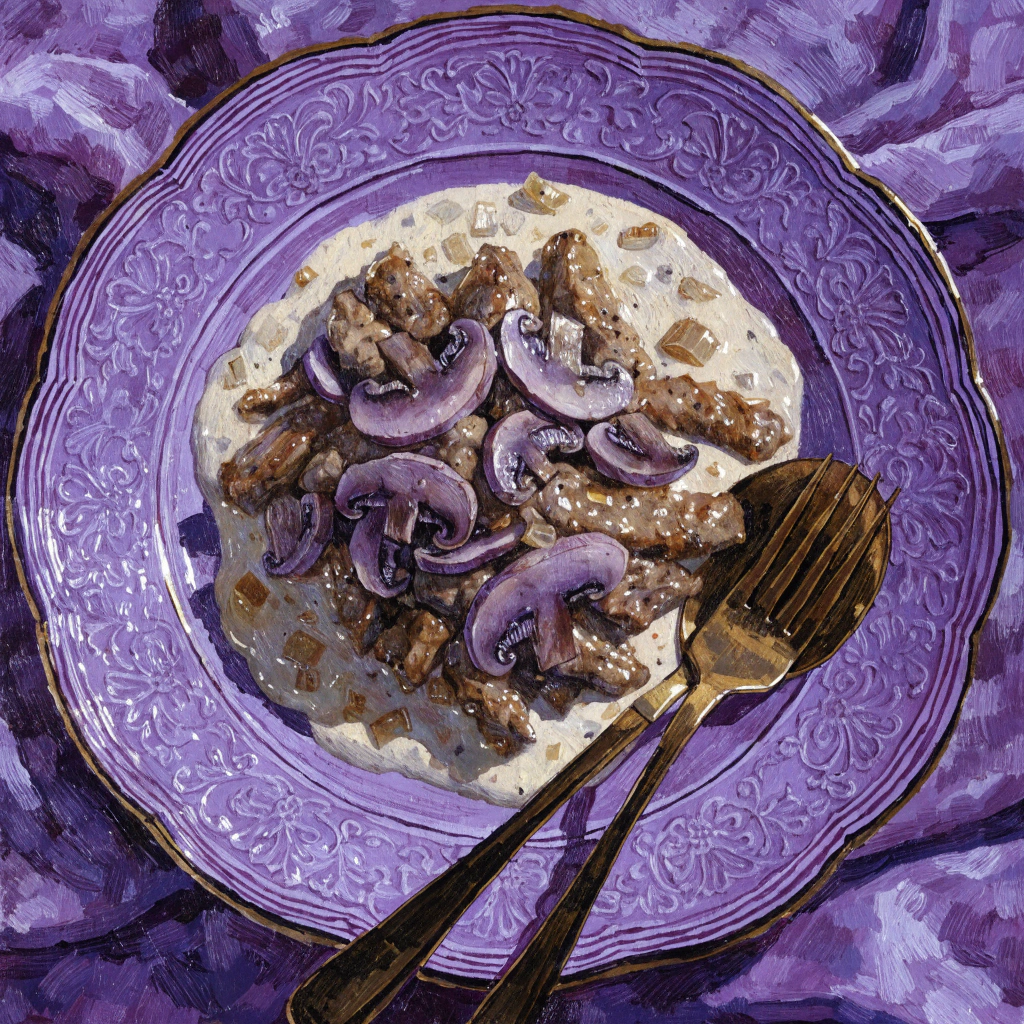
A Famous Russian Dish: Beef Stroganoff
Beef Stroganoff is a very famous food from Russia. It is a dish with beef, onions, and mushrooms. People eat it with a special white sauce. This sauce is sour cream.
Long ago, a rich family in Russia liked this food. Their name was Stroganov. A French chef made the recipe for them in the city of St. Petersburg.
Today, many people around the world love Beef Stroganoff. You can eat it with pasta, rice, or potatoes. It is delicious and warm. It is perfect for dinner with your friends.
문법 스포트라이트
패턴: Present Simple (Be)
"Beef Stroganoff is a very famous food from Russia."
We use 'is' with singular subjects like 'Beef Stroganoff'. It helps describe facts or states in the present.
패턴: Can for Possibility
"You can eat it with pasta, rice, or potatoes."
We use 'can' followed by a base verb to show what is possible. It does not change for different subjects.
이해도를 테스트하세요
10 질문 · A1 초급 · 무료 미리보기 1회
이 기사에서 배운 내용을 테스트하세요. 모든 질문에 답하여 XP를 획득하세요!
Where is Beef Stroganoff from?
문제별 결과
Where is Beef Stroganoff from?
내 답변:
정답: Russia
The dish has onions and mushrooms.
내 답변:
정답: 참
What does 'delicious' mean?
내 답변:
정답: Very good taste
People eat it with a special white _____.
내 답변:
정답: sauce
러시아의 특별한 요리: 비프 스트로가노프 이야기
비프 스트로가노프는 러시아의 아주 유명한 요리입니다. 이 요리는 전 세계에서 많은 사람들이 좋아합니다. 옛날, 19세기 러시아에서 이 음식이 처음 시작되었어요.
스트로가노프 가족은 러시아의 부유한 귀족이었습니다. 그들은 아주 큰 가족이었고, 특별한 음식을 원했어요. 한 프랑스 요리사가 스트로가노프 가족을 위해 맛있는 요리를 만들었습니다. 이 요리가 바로 비프 스트로가노프예요. 이 요리에는 부드러운 소고기, 신선한 크림, 그리고 향긋한 버섯이 들어갑니다. 보통 밥이나 파스타와 함께 먹으면 더 맛있어요.
비프 스트로가노프는 맛이 좋아서 빨리 유명해졌습니다. 러시아 사람들은 물론, 다른 나라 사람들도 이 음식을 좋아하게 되었습니다. 그래서 지금은 세계 여러 나라 식당에서 이 요리를 볼 수 있어요. 집에서도 쉽게 만들 수 있는 인기 있는 요리입니다. 여러분도 이 특별한 러시아 요리를 한번 먹어보고 싶어요?
문법 스포트라이트
패턴: -았/었/했습니다
"옛날, 19세기 러시아에서 이 음식이 처음 시작되었어요."
이 문법은 과거에 일어난 일이나 끝난 행동을 말할 때 사용해요. 동사나 형용사의 마지막 모음에 따라 '았', '었', '했'을 붙여 만들어요. 예를 들어, '먹다'는 '먹었어요', '가다'는 '갔어요'가 돼요.
패턴: -고 싶다
"여러분도 이 특별한 러시아 요리를 한번 먹어보고 싶어요?"
이 문법은 어떤 행동을 하고 싶은 마음을 나타낼 때 사용합니다. 동사 뒤에 붙여서 사용하며, '먹다'는 '먹고 싶다', '가다'는 '가고 싶다'처럼 만들 수 있어요.
이해도를 테스트하세요
11 질문 · A2 초등급 · 무료 미리보기 1회
이 기사에서 배운 내용을 테스트하세요. 모든 질문에 답하여 XP를 획득하세요!
비프 스트로가노프는 어느 나라 요리입니까?
문제별 결과
비프 스트로가노프는 어느 나라 요리입니까?
내 답변:
정답: 러시아
비프 스트로가노프는 20세기에 처음 만들어졌습니다.
내 답변:
정답: 거짓
'귀족'은 무엇을 뜻합니까?
내 답변:
정답: 높은 신분의 사람
이 요리에는 부드러운 소고기, 신선한 _____, 그리고 향긋한 버섯이 들어갑니다.
내 답변:
정답: 크림
이 요리는 주로 무엇과 함께 먹습니까?
내 답변:
정답: 밥이나 파스타
The History and Taste of Beef Stroganoff
Beef Stroganoff is a famous dish that has become popular all over the world. It is often served in restaurants from New York to Tokyo, but its history began in 19th-century Russia. This delicious meal was named after the Stroganovs, who were one of the richest noble families in the Russian Empire.
It is believed that the recipe was created by a French chef called André Dupont. He worked for Count Pavel Stroganov in the beautiful city of St. Petersburg. The dish was specially designed for the Count because he had lost his teeth in his old age and needed something soft to eat. In 1891, the recipe won a prize in a famous cooking competition, and soon everyone in Russia wanted to try it.
The traditional recipe consists of thin pieces of beef which are fried with onions and mushrooms. The most important part is the sauce, which is made from mustard and sour cream. In Russia, it is usually served with mashed potatoes, although many people in other countries prefer to eat it with pasta or rice.
Since the Russian Revolution, the dish has traveled across many borders. Russian refugees took the recipe to China and later to the United States, where it became extremely popular during the 1950s. Today, Beef Stroganoff has been adapted by many different cultures; for example, in Brazil, people often use tomato sauce and chicken instead of beef. However, it remains a symbol of Russian culinary history. It is a perfect example of how a simple meal can connect people across different centuries and countries, proving that good food has no limits.
문법 스포트라이트
패턴: Passive Voice
"This delicious meal was named after the Stroganovs."
The passive voice is used when the action is more important than the person doing it. It is formed using 'be' + the past participle.
패턴: Relative Clauses
"The traditional recipe consists of thin pieces of beef which are fried with onions."
Relative clauses give more information about a noun. We use 'which' for things and 'who' for people.
이해도를 테스트하세요
11 질문 · B1 중급 · 무료 미리보기 1회
이 기사에서 배운 내용을 테스트하세요. 모든 질문에 답하여 XP를 획득하세요!
Who was the dish named after?
문제별 결과
Who was the dish named after?
내 답변:
정답: A wealthy Russian family
André Dupont was a Russian chef.
내 답변:
정답: 거짓
What does 'culinary' mean?
내 답변:
정답: Related to cooking
The dish was soft because the Count had lost his _____.
내 답변:
정답: teeth
When did the recipe win a prize?
내 답변:
정답: 1891
From Imperial Tables to Global Plates: The Legacy of Beef Stroganoff
Beef Stroganoff stands as perhaps Russia's most successful culinary export, a dish that once graced the tables of nineteenth-century aristocrats before eventually becoming a global household name. This creamy, savory creation is not merely a meal but a reflection of a specific era in Russian history. Its origins are deeply tied to the legendary Stroganov family, who were among the wealthiest and most influential noble houses in the Russian Empire. Their legacy, which spanned centuries, was built on vast landholdings and a commitment to the arts, yet it is this eponymous dish that remains their most famous contribution to the world.
Historians generally agree that the dish was created by a French chef, André Dupont, who was employed by Count Pavel Alexandrovich Stroganov in St. Petersburg. During this period, the Russian aristocracy held French culture in high regard, often hiring French chefs to bring a sense of European refinement to their kitchens. The recipe reportedly won a prize in a prestigious 1891 cooking contest, though it had likely been served in the Stroganov household for years prior. By combining the French technique of sautéing meat with the traditional Russian use of sour cream, Dupont created a sophisticated fusion that appealed to the refined palates of the time.
The evolution of Beef Stroganoff from an elite delicacy to a common staple is a fascinating study in cultural adaptation. Following the Russian Revolution in 1917, many members of the nobility fled the country, taking their culinary traditions with them. As these exiles settled in China, Europe, and eventually the United States, the recipe began to change. In China, it was served without the sour cream, while in America, it was often accompanied by egg noodles rather than the traditional fried potatoes. Furthermore, the high-quality beef used in the original version was frequently replaced by more affordable cuts, allowing the dish to be enjoyed by a wider audience.
Despite these variations, the core essence of the dish remains intact. It represents a moment in history when Russia was looking toward the West for inspiration while maintaining its own unique cultural identity. Today, Beef Stroganoff is celebrated as a symbol of Russian culinary diplomacy. Whether served in a Michelin-starred restaurant or a modest family kitchen, the dish continues to evoke a sense of history and sophistication. Ultimately, the story of Beef Stroganoff demonstrates how food can transcend borders and classes, turning a private aristocratic luxury into a shared global heritage.
문법 스포트라이트
패턴: Passive Voice
"The dish was reportedly created by a French chef."
The passive voice is used to focus on the object (the dish) rather than the person who performed the action. It is formed using the verb 'to be' and the past participle.
패턴: Relative Clauses
"André Dupont, who was employed by Count Pavel Alexandrovich Stroganov, is credited with the invention."
Relative clauses provide extra information about a noun. In this case, 'who was employed...' gives background on the subject André Dupont.
패턴: Past Perfect Tense
"though it had likely been served in the Stroganov household for years prior."
The past perfect (had + past participle) is used to describe an action that happened before another point in the past.
이해도를 테스트하세요
11 질문 · B2 중상급 · 무료 미리보기 1회
이 기사에서 배운 내용을 테스트하세요. 모든 질문에 답하여 XP를 획득하세요!
What was the primary reason the Russian aristocracy hired French chefs?
문제별 결과
What was the primary reason the Russian aristocracy hired French chefs?
내 답변:
정답: To bring European refinement to their kitchens
The original recipe for Beef Stroganoff was created after the Russian Revolution.
내 답변:
정답: 거짓
What is the meaning of the word 'prestigious'?
내 답변:
정답: Inspiring respect and high status
The recipe reportedly won a _____ in a prestigious 1891 cooking contest.
내 답변:
정답: prize
Which ingredient was a traditional Russian addition to the French sautéing technique?
내 답변:
정답: Sour cream
Culinary Diplomacy: The Aristocratic Pedigree and Global Proliferation of Beef Stroganoff
Rarely does a single recipe encapsulate the multifaceted history of a nation’s culinary evolution as effectively as Beef Stroganoff. Far from being a mere staple of mid-century Western dinner parties, the dish represents a sophisticated synthesis of French technique and Russian ingredients, reflecting the cosmopolitan nature of the 19th-century Russian elite. It was the legendary Stroganov family, a dynasty of immense wealth and political influence residing in the heart of St. Petersburg, that catalyzed the creation of this gastronomic icon. Through their patronage, the dish emerged not merely as sustenance, but as a deliberate statement of cultural refinement.
Traditionally attributed to André Dupont, a French chef in the employ of Count Pavel Alexandrovich Stroganov, the recipe’s formal recognition occurred in 1891 during a prestigious culinary competition. What Dupont achieved was the culmination of the French 'sauté' method applied to the high-quality beef available in Russia, enriched by the local penchant for smetana, or sour cream. This marriage of disparate culinary traditions created a texture and flavor profile that was both exotic to the European palate and deeply rooted in Russian soil. The dish's subsequent democratization serves as a fascinating case study in how aristocratic fare can be repurposed for the masses without losing its symbolic prestige.
However, the transition from the gilded halls of the Russian Empire to the ubiquitous presence of the dish in Soviet canteens and global kitchens was not without its nuances. Following the Russian Revolution, the diaspora of the Russian nobility ensured that the recipe traveled to China and eventually to the United States. In these new contexts, the dish underwent significant transformations. While the original iteration demanded high-quality tenderloin and a delicate balance of mustard and sour cream, later versions often succumbed to the convenience of canned soups and inferior cuts of meat. This dilution of quality raises critical questions regarding the preservation of culinary heritage in an era of mass production.
Furthermore, the proliferation of Beef Stroganoff highlights a tension between authenticity and adaptation. To some purists, the inclusion of mushrooms or onions—now considered standard in many Western variations—is an unnecessary deviation from the minimalist elegance of Dupont’s prize-winning formula. Yet, it is perhaps this very adaptability that has secured the dish’s longevity. By adjusting to local tastes and available ingredients, Beef Stroganoff has managed to transcend its specific historical moment. It now exists as a globalized hybrid, a testament to the enduring legacy of the Stroganov name and the fluid nature of cultural identity. Ultimately, the dish serves as a reminder that culinary history is never static; it is a continuous dialogue between the past and the present, the elite and the common, and the local and the universal.
문법 스포트라이트
패턴: Negative Inversion
"Rarely does a single recipe encapsulate the multifaceted history of a nation’s culinary evolution as effectively as Beef Stroganoff."
Inversion is used after negative or restrictive adverbs (rarely, seldom) to create emphasis. The auxiliary verb (does) comes before the subject (a single recipe).
패턴: Cleft Sentence
"It was the legendary Stroganov family... that catalyzed the creation of this gastronomic icon."
Cleft sentences are used to focus on a specific part of the information. Using 'It was [Subject] that [Action]' highlights the Stroganov family as the primary agents.
패턴: Nominalization
"The subsequent democratization serves as a fascinating case study..."
Nominalization turns verbs (democratize) into nouns (democratization). This is a hallmark of C1 academic writing, allowing for more complex and concise abstract arguments.
이해도를 테스트하세요
12 질문 · C1 고급 · 무료 미리보기 1회
이 기사에서 배운 내용을 테스트하세요. 모든 질문에 답하여 XP를 획득하세요!
What does the author suggest about the relationship between French and Russian cultures in the 19th century?
문제별 결과
What does the author suggest about the relationship between French and Russian cultures in the 19th century?
내 답변:
정답: The Russian elite were cosmopolitan and integrated foreign techniques.
The original 1891 recipe for Beef Stroganoff included mushrooms as a primary ingredient.
내 답변:
정답: 거짓
Which word is a synonym for 'omnipresent' as used in the text?
내 답변:
정답: Ubiquitous
The author argues that the dish's _____ was aided by its ability to adapt to local tastes.
내 답변:
정답: longevity
According to the article, how did the recipe reach the United States?
내 답변:
정답: Via the migration of Russian nobility to China and then the West.
The author believes that the use of canned soups in modern versions is a positive advancement for the dish.
내 답변:
정답: 거짓
The Gastronomic Hegemony of the Stroganovs: A Culinary Synthesis of Imperial Russia
Seldom has a single dish so succinctly encapsulated the multifaceted tensions between aristocratic opulence and the burgeoning democratization of the palate as Beef Stroganoff. To examine its lineage is to navigate the labyrinthine social strata of 19th-century Russia, a period characterized by a fervent, albeit selective, embrace of Western European aesthetic and culinary sensibilities. The dish, now a staple of global domesticity, was originally the quintessential expression of the Stroganov family’s idiosyncratic wealth. As one of the preeminent noble houses of the Russian Empire, the Stroganovs were not merely landowners but patrons of a cultural confluence that sought to marry Slavic robustness with the fastidious finesse of French technique.
Were one to scrutinize the genesis of this dish, the figure of André Dupont, a French chef in the employ of Count Pavel Alexandrovich Stroganov, would inevitably emerge. It is posited that Dupont, cognizant of the Count’s failing dentition or perhaps merely seeking to innovate within the confines of the St. Petersburg winter, devised a method of sautéing thin strips of beef in a refined smetana (sour cream) sauce. This was no mere happenstance of the kitchen; it was a calculated pastiche. The inclusion of mustard—a nod to the French palate—intertwined with the quintessentially Russian sour cream, created a profile that was both familiar and exotic to the contemporary elite. The recipe’s formal canonization occurred in 1891, when it secured a prize in a prestigious culinary competition, thereby cementing its status within the Russian gastronomic pantheon.
However, the narrative of Beef Stroganoff is not solely one of imperial indulgence. Its subsequent proliferation across the globe serves as a compelling case study in cultural diffusion. Following the cataclysmic shifts of the 19th century and the eventual dissolution of the Tsarist autocracy, the dish followed the Russian diaspora into the salons of Paris, the clubs of Shanghai, and eventually, the suburban kitchens of mid-century America. In this transition, the dish underwent a series of pragmatic, if not sacrilegious, permutations. The addition of mushrooms and onions, now considered indispensable by many, was a later accretion, likely an attempt to extend the meat during times of scarcity or to cater to local vegetable-heavy palates.
Lest we view this evolution as a dilution of quality, it is more prudent to interpret it as a testament to the dish’s inherent versatility. The ostentatious displays of the Stroganov tables may have vanished, yet the vestigial remains of their influence persist in every dollop of sour cream stirred into a skillet. Critics might argue that the contemporary, often lackluster, iterations of Stroganoff found in school cafeterias represent a tragic fall from grace. Nevertheless, the core architecture of the dish—the searing of high-quality protein and the deglazing of the pan to create a velvety emulsion—remains a masterclass in culinary balance. It is this very equilibrium between the ephemeral trends of fashion and the enduring requirements of sustenance that has ensured its survival.
Ultimately, Beef Stroganoff stands as a monument to a vanished world, yet it continues to exert a quiet hegemony over the global menu. It is an artifact of a time when the Russian elite looked toward Versailles for inspiration while keeping their boots firmly planted in the rich black soil of the steppes. Whether served on fine porcelain in a St. Petersburg manor or atop a bed of egg noodles in a modern apartment, the dish remains an evocative reminder of the power of culinary synthesis to transcend borders, ideologies, and time itself.
문법 스포트라이트
패턴: Negative Inversion
"Seldom has a single dish so succinctly encapsulated the multifaceted tensions between aristocratic opulence and the burgeoning democratization of the palate as Beef Stroganoff."
When a sentence starts with a negative or restrictive adverb like 'seldom', 'never', or 'hardly', the auxiliary verb is placed before the subject. This structure is used for rhetorical emphasis in formal or academic English.
패턴: Inverted Conditional (Subjunctive)
"Were one to scrutinize the genesis of this dish, the figure of André Dupont... would inevitably emerge."
This is a formal alternative to 'If one were to...'. By omitting 'if' and inverting the subject and 'were', the writer achieves a more scholarly and hypothetical tone, common in C2 level literature.
패턴: Negative Purpose Clause (Lest)
"Lest we view this evolution as a dilution of quality, it is more prudent to interpret it as a testament to the dish’s inherent versatility."
The word 'lest' is used to express a negative purpose, meaning 'in order to prevent' or 'for fear that'. It is followed by the base form of the verb or 'should', creating a sophisticated, cautionary tone.
이해도를 테스트하세요
12 질문 · C2 마스터 · 무료 미리보기 1회
이 기사에서 배운 내용을 테스트하세요. 모든 질문에 답하여 XP를 획득하세요!
What does the author suggest about the relationship between French and Russian influences in the dish?
문제별 결과
What does the author suggest about the relationship between French and Russian influences in the dish?
내 답변:
정답: The dish represented a synthesis of French technique and Russian ingredients.
The inclusion of mushrooms and onions was part of the original prize-winning recipe of 1891.
내 답변:
정답: 거짓
Which word is synonymous with 'the gradual accumulation of additional layers' in the text?
내 답변:
정답: Accretion
The author describes the wealth of the Stroganov family as _____, meaning it was peculiar to them.
내 답변:
정답: idiosyncratic
According to the text, why might André Dupont have sliced the beef so thinly?
내 답변:
정답: To accommodate Count Stroganov's dental issues.
The author views the modern, cafeteria-style versions of the dish as a complete failure of its culinary principles.
내 답변:
정답: 거짓

