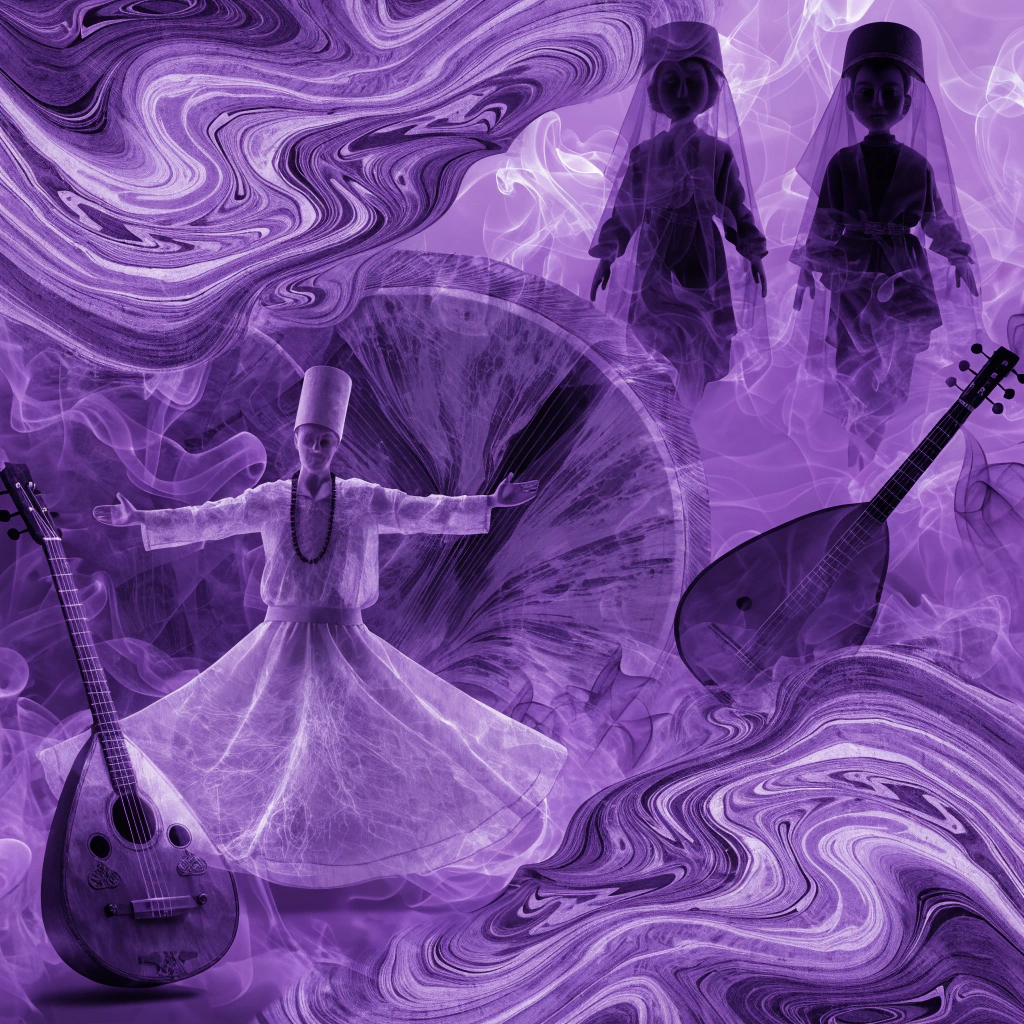
A Special Dance in Turkey
Turkey has a special dance. It is the Mevlevi Sema Ceremony. People call the dancers Whirling Dervishes. The dancers wear long white clothes and tall hats. They turn in circles. This dance is very old. It started with a man named Rumi. He lived in Konya many years ago. The ceremony is not just a dance. It is a prayer. The music is soft and beautiful. The dancers move their hands to the sky. They want to show love and peace. Many people visit Turkey to see this ceremony. It is very quiet and peaceful.
문법 스포트라이트
패턴: Present Simple (to be)
"It is the Mevlevi Sema Ceremony."
We use 'is' with singular subjects like 'it', 'he', or 'she' to describe facts. In this sentence, it identifies the ceremony.
패턴: Present Simple (plural verbs)
"The dancers wear long white clothes."
When the subject is plural (the dancers), we use the base form of the verb without adding an 's'. This shows a regular action.
이해도를 테스트하세요
10 질문 · A1 초급 · 무료 미리보기 1회
이 기사에서 배운 내용을 테스트하세요. 모든 질문에 답하여 XP를 획득하세요!
Where did the ceremony start?
문제별 결과
Where did the ceremony start?
내 답변:
정답: Konya
The dancers wear black clothes.
내 답변:
정답: 거짓
What does 'peace' mean?
내 답변:
정답: A quiet time with no fighting
They want to show love and _____.
내 답변:
정답: peace
The Whirling Dervishes of Turkey
The Mevlevi Sema Ceremony is a very old tradition in Turkey. It started in the 13th century because of a famous poet named Rumi. He lived in Konya and taught people about love and peace. Today, many people call the dancers "Whirling Dervishes."
The ceremony is more beautiful than a normal dance. The dervishes wear tall brown hats and long white dresses. The hats represent tombstones and the dresses represent a shroud. During the ceremony, they turn around and around. They move their arms in a special way. One hand points to the sky and the other hand points to the earth.
This ceremony is important because it shows a spiritual journey. The dervishes want to find truth and love. They believe that everything in the universe turns, like the planets and the stars. Visitors come from many countries to watch this ceremony. It is a peaceful experience for everyone.
문법 스포트라이트
패턴: Past Simple
"He lived in Konya and taught people about love and peace."
We use the past simple to talk about finished actions in the past. For regular verbs, we add -ed, but 'taught' is the irregular past of 'teach'.
패턴: Comparatives
"The ceremony is more beautiful than a normal dance."
To compare two things with long adjectives, we use 'more' + adjective + 'than'. It shows that one thing has more of a quality than another.
이해도를 테스트하세요
11 질문 · A2 초등급 · 무료 미리보기 1회
이 기사에서 배운 내용을 테스트하세요. 모든 질문에 답하여 XP를 획득하세요!
Who was the famous poet that started the tradition?
문제별 결과
Who was the famous poet that started the tradition?
내 답변:
정답: Rumi
The dervishes wear long white dresses.
내 답변:
정답: 참
What does 'famous' mean?
내 답변:
정답: Known by many people
One hand points to the _____, and the other points to the earth.
내 답변:
정답: sky
Where did Rumi live?
내 답변:
정답: Konya
The Whirling Dervishes: A Journey of the Soul
The Mevlevi Sema Ceremony is a famous spiritual tradition that has been performed in Turkey for many centuries. It is based on the teachings of Jalaluddin Rumi, who was a 13th-century poet and mystic. The ceremony is often called the 'Whirling Dervishes' by international visitors because of the unique way the participants move in circles.
The ceremony represents a mystical journey where the person aims to reach spiritual perfection through love and deserting the ego. During the ritual, the dervishes wear tall brown hats, which represent the tombstone of the ego, and wide white skirts, which symbolize the ego's shroud. As they start to spin, their skirts open like white flowers, creating a beautiful and peaceful scene for the audience.
Traditional music is played on instruments like the ney, which is a famous reed flute. This music has been preserved by the Mevlevi Order for generations. The ceremony is not just a performance; it is a sacred form of meditation and prayer. The dervishes turn in circles while keeping their right hand pointing to the sky and their left hand pointing to the earth. This movement shows that they receive blessings from God and share them with all people on earth.
In 2008, the ceremony was recognized by UNESCO as a masterpiece of human heritage. Since then, many tourists have visited Konya and Istanbul to watch this incredible event. It has become an important symbol of Turkish culture and spiritual peace. People who watch the ceremony often feel a deep sense of calm because of the rhythmic movements and the soft music. It is truly a unique experience that has survived for hundreds of years.
문법 스포트라이트
패턴: Present Perfect Passive
"The Mevlevi Sema Ceremony is a famous spiritual tradition that has been performed in Turkey for many centuries."
This pattern is used to describe an action that started in the past and continues to the present, focusing on the action rather than the person doing it. It is formed with 'has/have been' + past participle.
패턴: Relative Clauses
"It is based on the teachings of Jalaluddin Rumi, who was a 13th-century poet and mystic."
Relative clauses give more information about a person or thing. Here, 'who' is used to provide extra details about Rumi without starting a new sentence.
이해도를 테스트하세요
11 질문 · B1 중급 · 무료 미리보기 1회
이 기사에서 배운 내용을 테스트하세요. 모든 질문에 답하여 XP를 획득하세요!
Who was Jalaluddin Rumi?
문제별 결과
Who was Jalaluddin Rumi?
내 답변:
정답: A 13th-century poet and mystic
The tall brown hats worn by the dervishes represent a tombstone.
내 답변:
정답: 참
What does 'meditation' mean?
내 답변:
정답: Focusing the mind for spiritual purposes
In 2008, the ceremony was recognized by _____ as a masterpiece of human heritage.
내 답변:
정답: UNESCO
What does the dervish's right hand pointing to the sky represent?
내 답변:
정답: Receiving blessings from God
영혼의 춤: 터키 메블라나 세마 의식의 신비
터키의 풍부한 문화유산 속에서, 메블라나 세마 의식은 단순한 공연을 넘어선 깊은 영적 의미를 지닌 독특한 전통으로 자리매김하고 있습니다. 이 의식은 13세기 이슬람 신비주의 사상가 잘랄루딘 루미(Mevlana)의 가르침에 뿌리를 두고 있으며, 그의 추종자들에 의해 튀르키예 코니아에서 체계화되었습니다. 흔히 'whirling dervishes'로 알려진 메블레비 교단의 수행자들이 펼치는 이 세마 의식은 인간이 신과의 합일을 추구하며 영적인 완성을 향해 나아가는 여정을 상징합니다. 루미는 사랑과 관용을 통해 신과 하나가 될 수 있다고 믿었으며, 그의 철학은 세마 의식의 근간을 이룹니다.
세마 의식은 네 부분으로 구성된 엄격한 절차를 따릅니다. 각 부분은 우주의 순환과 인간의 영적 성장을 은유적으로 표현합니다. 수행자들은 흰색 긴 치마와 검은 망토, 그리고 원통형 모자를 착용하는데, 이는 각각 죽음, 무덤, 그리고 자아의 비석을 상징합니다. 세마 의식이 시작될 때 수행자들은 검은 망토를 두르고 있다가, 춤을 추기 시작하면서 이를 벗습니다. 이 행위는 세속적인 욕망과 자아를 버리고 영적인 세계로 들어서는 것을 의미합니다. 그들은 고요하고 경건한 분위기 속에서 네이(갈대 피리)와 쿠둠(작은 북) 등의 악기 연주에 맞춰 춤을 시작합니다.
천천히 음악에 맞춰 춤을 시작하는 '세마젠'들은 오른손을 하늘로 향하고 왼손은 땅으로 향한 채 끊임없이 회전합니다. 이는 신으로부터 오는 은혜를 받아들여 세상에 나누어 준다는 의미를 담고 있습니다. 그들의 회전은 행성들이 태양 주위를 도는 것처럼 우주 만물이 끊임없이 움직이는 질서를 반영하며, 동시에 내면의 평화와 조화를 찾아가는 과정을 나타냅니다. 반복적인 회전은 수행자들을 일종의 명상 상태로 이끌어, 육체적 한계를 초월하여 신성한 존재와 교감하는 경험을 선사합니다. 이러한 춤을 통해 세마젠들은 자아를 망각하고 신과의 합일에 도달하고자 합니다.
이 의식은 단순한 종교적 행위를 넘어, 평화와 사랑, 관용의 메시지를 전 세계에 전파합니다. 메블라나의 가르침과 세마 의식은 종교적 경계를 넘어 인류 보편의 가치를 강조하며, 오늘날에도 여전히 많은 이들에게 깊은 감동과 영감을 주고 있습니다. 유네스코 인류무형문화유산으로 등재된 세마 의식은 현대 사회의 번잡함 속에서 잠시 멈춰 서서 삶의 본질적인 의미를 성찰하고, 내면의 고요함을 되찾고자 하는 사람들에게 소중한 영적 안식처가 될 것입니다. 이처럼 메블라나 세마 의식은 튀르키예의 역사와 문화를 이해하는 데 필수적인 요소일 뿐만 아니라, 전 세계인의 정신세계에 긍정적인 영향을 미치는 중요한 문화유산으로 평가받고 있습니다.
문법 스포트라이트
패턴: ~에 뿌리를 두다
"이 의식은 13세기 이슬람 신비주의 사상가 잘랄루딘 루미(Mevlana)의 가르침에 뿌리를 두고 있으며..."
어떤 사상, 전통, 현상 등이 시작되거나 영향을 받은 근원을 나타낼 때 사용됩니다. '어디에 뿌리를 두다' 형태로 쓰이며, 그 근본이 무엇인지 설명합니다.
패턴: ~을/를 통해
"루미는 사랑과 관용을 통해 신과 하나가 될 수 있다고 믿었으며..."
어떤 목적을 달성하거나 어떤 상태에 이르는 수단이나 매개체를 나타낼 때 사용됩니다. '무엇을 통해' 형태로 쓰여 그 수단이나 방법을 명확히 합니다.
패턴: ~뿐만 아니라 ~도
"이처럼 메블라나 세마 의식은 튀르키예의 역사와 문화를 이해하는 데 필수적인 요소일 뿐만 아니라, 전 세계인의 정신세계에 긍정적인 영향을 미치는 중요한 문화유산으로 평가받고 있습니다."
두 가지 이상의 사실이나 대상을 나열하며, 앞의 내용뿐만 아니라 뒤의 내용까지 포함한다는 의미를 강조할 때 사용됩니다. 'A뿐만 아니라 B도' 형태로 쓰여 A와 B 모두 해당됨을 나타냅니다.
이해도를 테스트하세요
11 질문 · B2 중상급 · 무료 미리보기 1회
이 기사에서 배운 내용을 테스트하세요. 모든 질문에 답하여 XP를 획득하세요!
메블라나 세마 의식의 주된 목적은 무엇입니까?
문제별 결과
메블라나 세마 의식의 주된 목적은 무엇입니까?
내 답변:
정답: 신과의 합일을 추구하며 영적 완성을 향하는 것
세마젠들이 입는 검은 망토는 세속적인 욕망과 자아를 버리는 것을 상징한다.
내 답변:
정답: 참
다음 중 '초월하다'의 의미로 가장 적절한 것은 무엇입니까?
내 답변:
정답: 어떤 한계나 범위를 뛰어넘거나 벗어나다
메블라나 세마 의식은 13세기 이슬람 ____ 사상가 잘랄루딘 루미의 가르침에 뿌리를 두고 있습니다.
내 답변:
정답: 신비주의
세마젠들이 회전할 때 오른손과 왼손이 상징하는 바는 무엇입니까?
내 답변:
정답: 신으로부터 오는 은혜를 받아 세상에 나누어 주는 것
Celestial Rotations: The Metaphysical Architecture of the Mevlevi Sema
The enduring legacy of Jalaluddin Rumi, the 13th-century Sufi mystic, finds its most profound manifestation in the Mevlevi Sema ceremony. More than a mere cultural display, the Sema is a sophisticated liturgy designed to facilitate the soul's journey toward divine transcendence. This spiritual ascent is characterized by a departure from the ego and an embrace of universal love, a process meticulously mirrored in the physical movements of the Whirling Dervishes. The cultivation of inner silence remains the ultimate objective of the Sema, allowing the practitioner to strip away the ephemeral distractions of the material world.
Central to the ceremony is the concept of symbolic transformation. Each element of the dervish’s attire serves as a vestige of the worldly self being cast aside. The 'sikke', a tall camel-hair hat, represents the tombstone of the ego, while the white 'tennure' skirt symbolizes the ego's shroud. It is the shedding of the black cloak that signifies the initiate's rebirth into spiritual truth. This dramatic transition underscores the esoteric nature of the ritual, where every gesture is imbued with deep theological significance. Never has a ritual so elegantly balanced the physical rigors of movement with the intellectual demands of asceticism.
As the ceremony progresses, the dervishes begin their characteristic whirling. This motion is not chaotic; rather, it is a disciplined rotation that mirrors the movement of the planets around the sun. Only through this rhythmic rotation can the dervish hope to achieve spiritual equilibrium, balancing the earthly and the divine. The positioning of the hands is equally deliberate: the right palm faces upward toward heaven to receive divine grace, while the left palm faces downward to channel that grace to the earth. This posture embodies the principle of reciprocity, suggesting that spiritual enlightenment is not a private acquisition but a gift to be shared with all of humanity.
While critics might argue that the modern Sema has been somewhat diluted by the demands of tourism, its core remains a sublime testament to Rumi's philosophy. The ceremony's inclusion in UNESCO’s Intangible Cultural Heritage list highlights its global importance, yet the tension between preservation and commercialization persists. To witness the Sema is to engage with a living tradition that challenges the observer to look beyond the surface. It demands a critical analysis of how ancient rituals adapt to the contemporary world without losing their sacred essence. Ultimately, the Sema provides a rare window into a world where the physical and the metaphysical converge in a singular, breathtaking performance.
문법 스포트라이트
패턴: Inversion with negative/restrictive expressions
"Only through this rhythmic rotation can the dervish hope to achieve spiritual equilibrium."
When starting a sentence with 'Only through...', the subject and auxiliary verb are inverted. This is used in C1 writing to provide emphasis and a formal tone.
패턴: Cleft Sentences
"It is the shedding of the black cloak that signifies the initiate's rebirth into spiritual truth."
Cleft sentences use the structure 'It is/was + [emphasized part] + that/who...' to focus the reader's attention on a specific piece of information.
패턴: Nominalisation
"The cultivation of inner silence remains the ultimate objective of the Sema."
Nominalisation turns verbs or adjectives into nouns (e.g., 'cultivate' to 'cultivation'). It makes the writing more abstract, formal, and concise, which is characteristic of C1 academic English.
이해도를 테스트하세요
12 질문 · C1 고급 · 무료 미리보기 1회
이 기사에서 배운 내용을 테스트하세요. 모든 질문에 답하여 XP를 획득하세요!
What is the primary spiritual goal of the Sema ceremony according to the text?
문제별 결과
What is the primary spiritual goal of the Sema ceremony according to the text?
내 답변:
정답: To facilitate the soul's journey toward divine transcendence
The dervish's camel-hair hat (sikke) is intended to represent the shroud of the ego.
내 답변:
정답: 거짓
What does the word 'ephemeral' mean in the context of the article?
내 답변:
정답: Short-lived and fleeting
The shedding of the black _____ signifies the initiate's rebirth into spiritual truth.
내 답변:
정답: cloak
What does the positioning of the dervish's hands symbolize?
내 답변:
정답: The reception and distribution of divine grace
The author suggests that tourism has had no impact on the modern Sema ceremony.
내 답변:
정답: 거짓
Transcending the Terrestrial: An Analytical Inquiry into the Mevlevi Sema Ceremony
To characterize the Mevlevi Sema Ceremony merely as a folkloric display would be to commit a category error of the highest order. Rather, it is a sophisticated ontological apparatus designed to facilitate a spiritual ascent. Rooted in the 13th-century teachings of Jalaluddin Rumi, the ceremony represents a synthesis of poetry, music, and movement that transcends the mundane. Should one scrutinize the attire of the Semazen, the symbolic weight becomes immediately apparent. The sikke, a conical hat of camel's hair, represents the tombstone of the ego, while the white tennure serves as its shroud. By casting off the black cloak at the commencement of the ritual, the dervish is metaphorically reborn into truth. It is imperative that the dervish renounce the ego to enter the presence of the Divine.
The structure of the Sema is governed by rigorous esoteric principles. It consists of four distinct 'salams', or musical movements, each corresponding to a stage in the spiritual journey. The first salam is the realization of God's existence; the second is the awe felt before God's power; the third is the transformation of awe into love; and the fourth is the return to a state of service. Throughout these movements, the circumambulation of the dervishes mirrors the celestial mechanics of the solar system, with the Sheikh at the center representing the sun. This celestial paradigm suggests that the individual is not an isolated entity but a participant in a universal harmony. Seldom does a tradition encapsulate such a synthesis of music and movement with such precision.
Musicality provides the ephemeral backbone of this experience. The ney, a reed flute, is often described as the 'breath of the divine,' its plaintive melodies evoking the soul's yearning to return to its source. It is through this auditory medium that the dervish enters a state of dhikr, or remembrance. Academic hedging is necessary here: while some might argue that the Sema is a form of trance, Mevlevi practitioners insist it is a state of heightened consciousness rather than a loss of self. This distinction is crucial for understanding the asceticism inherent in the practice; it is not a reckless abandonment but a disciplined refinement of the spirit. One might even posit that the ceremony serves as a bridge between the finite and the infinite.
In the contemporary era, the Sema has faced the challenges of commodification. Having been designated a UNESCO Masterpiece of the Oral and Intangible Heritage of Humanity, it attracts global audiences. However, the tension between its sacred origins and its presentation as a cultural spectacle remains palpable. Seldom has a ritual survived the pressures of modernity without losing its core essence, yet the Sema persists. The vestige of Rumi’s universal message—one of radical inclusion and divine love—continues to permeate the ceremony, ensuring that it remains more than a mere historical relic. It is as if the ceremony itself were an anchor against the tides of secularization.
Ultimately, the Mevlevi Sema Ceremony is a quintessential expression of the human desire for the transcendent. It posits that through the abandonment of the individual ego and the embrace of a collective spiritual rhythm, one may attain a state of perfection. Whether viewed through a theological or a sociological lens, the ceremony remains a profound testament to the enduring power of mystical thought. Should the observer venture beyond the aesthetic veneer, they would encounter a profound ontological framework that challenges our modern understanding of the self. It is imperative that we approach such rituals with a sense of intellectual humility, recognizing that their true meaning may lie beyond the reach of empirical analysis.
문법 스포트라이트
패턴: Inverted Conditionals (Should)
"Should the observer venture beyond the aesthetic veneer, they would encounter a profound ontological framework."
In formal English, 'should' can be used at the beginning of a sentence to replace 'if'. It creates a more scholarly or hypothetical tone, common in C2 level academic writing.
패턴: Negative Inversion with 'Seldom'
"Seldom does a tradition encapsulate such a synthesis of music and movement with such precision."
When a sentence begins with a negative or restrictive adverb like 'seldom', the subject and auxiliary verb are inverted. This is used for emphasis and stylistic variety in formal prose.
패턴: Mandative Subjunctive
"It is imperative that the dervish renounce the ego to enter the presence of the Divine."
After adjectives expressing necessity or importance (imperative, crucial, essential), the base form of the verb ('renounce' instead of 'renounces') is used in the 'that' clause.
이해도를 테스트하세요
12 질문 · C2 마스터 · 무료 미리보기 1회
이 기사에서 배운 내용을 테스트하세요. 모든 질문에 답하여 XP를 획득하세요!
According to the article, what does the 'sikke' represent?
문제별 결과
According to the article, what does the 'sikke' represent?
내 답변:
정답: The tombstone of the ego
The author argues that the Sema ceremony is a form of trance where the participant loses their self-awareness.
내 답변:
정답: 거짓
Which word best describes something that is 'fleeting' or 'short-lived'?
내 답변:
정답: Ephemeral
The dervish's white garment, known as the _____, serves as a symbolic shroud.
내 답변:
정답: tennure
What is the primary function of the fourth 'salam' in the ceremony?
내 답변:
정답: A return to a state of service
The Sheikh at the center of the ceremony symbolizes the sun within a celestial paradigm.
내 답변:
정답: 참

