









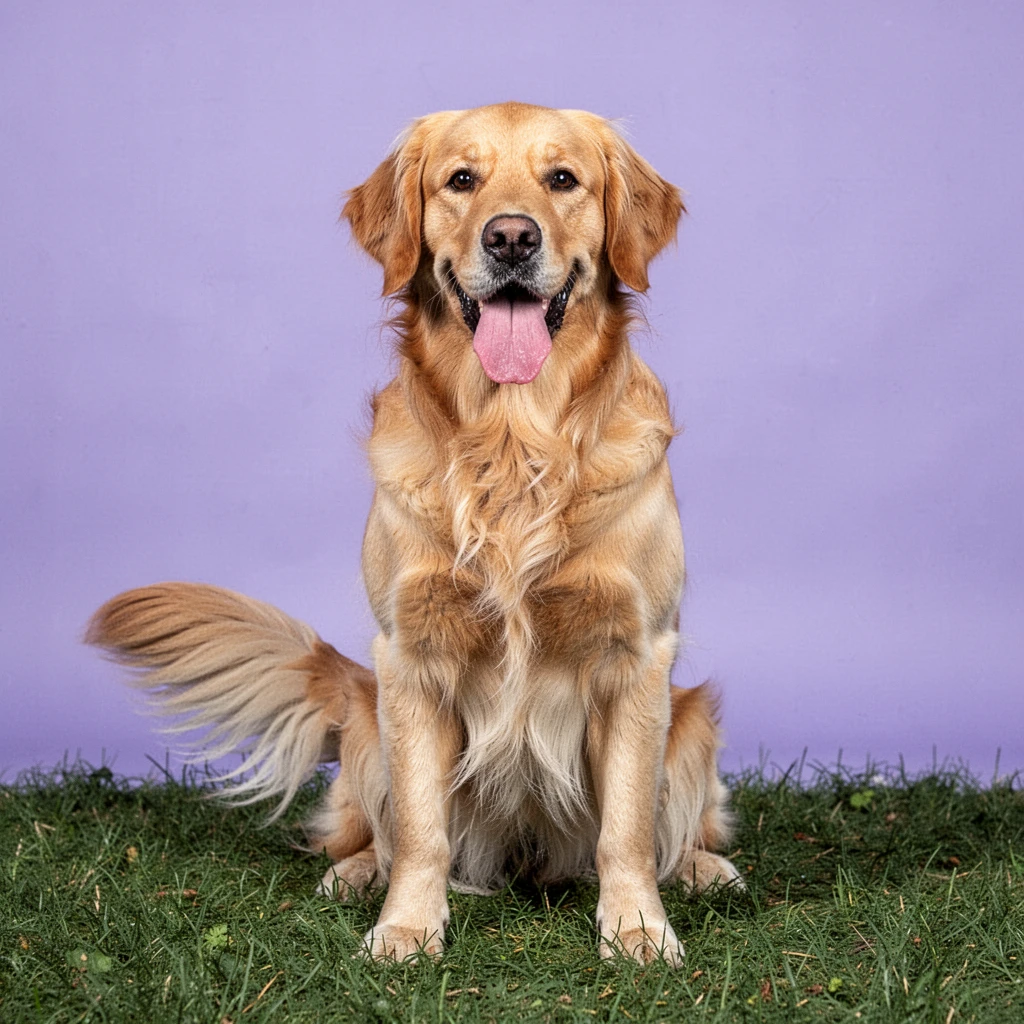
A dog is a popular animal. It lives in the house with people. It is a pet. Many people love dogs. They are friendly. A dog can be big or small. They have four legs and a tail. They like to play and go for walks. You can see many dogs in the park. They are very good friends to humans.
I have a small brown dog at my home.
A dog is a common pet that many families keep at home. Dogs are known for being very loyal and friendly to their owners. They need food, water, and daily exercise. You have to take them outside to walk and play. There are many different breeds, like Labradors or Poodles. Some dogs are very active, while others like to sleep all day.
My neighbor takes his dog for a long walk every morning before work.
Most people consider the dog to be 'man's best friend' because of its deep loyalty. Beyond being house pets, dogs often have specific roles. Some are trained as guide dogs to help people who cannot see, while others work with the police. They communicate by barking or wagging their tails. Owning a dog is a big responsibility because they require attention and training.
We decided to adopt a dog from the local shelter instead of buying a puppy from a shop.
While 'dog' primarily refers to the domesticated canine, it carries various connotations in English. We often use it to describe loyalty, but it also appears in idioms like 'a dog's life,' implying a difficult existence. In terms of behavior, dogs are social pack animals. Whether they are working breeds or lap dogs, they have become an integral part of human society across almost every culture.
The company has a relaxed policy that even allows employees to bring a well-behaved dog into the office.
The term 'dog' encompasses a vast array of breeds, each selectively bred for specific traits ranging from herding livestock to providing companionship. Culturally, the animal is ubiquitous, appearing in literature and art as a symbol of fidelity. Linguistically, the word is remarkably versatile; it can even function as a verb meaning to pester. Understanding the nuances of 'dog' requires recognizing its transition from a functional worker to a family member.
He spent years researching how the domestic dog evolved from its wild ancestors to become a specialized companion.
The domestic dog represents a pinnacle of interspecies co-evolution, having been selectively bred over millennia to fulfill diverse roles from pastoral herding to emotional support. Linguistically, the term is laden with connotations of fidelity and subservience, though it also surfaces in more cynical idioms. To discuss a 'dog' at this level involves appreciating the animal not just as a biological entity, but as a culturally constructed symbol of unconditional loyalty.
The aging guard dog remained remarkably vigilant at the warehouse entrance, its low, guttural growl enough to deter any potential intruders.
dog 30초 만에
- A dog is a four-legged animal known for being loyal to humans, often referred to as "man's best friend" in many different cultures.
- You will hear this word used most often when talking about pets, but it also appears in many common English idioms and daily expressions.
- The word is generally neutral and safe for all situations, though some slang uses can be negative or rude depending on the specific context.
- To improve your vocabulary, learn related verbs like "bark," "wag," and "pet," which describe the sounds and actions associated with these popular animals.
You probably learned the word dog in your very first English lesson. It is one of the most common words in the language because, for many English speakers, these animals are more than just pets—they are part of the family. When you use this word, you are usually talking about a friendly, four-legged animal that lives in a home. It is simple, direct, and essential for daily conversation.
§ The literal meaning
At its most basic level, a dog is a biological creature. However, in a practical sense, you will use this word to identify an animal you see in the park, at a friend's house, or on the street. It is the general term for the entire species, regardless of whether the animal is a tiny Chihuahua or a massive Great Dane.
- The Biological Definition
- An animal with four legs, a tail, and a coat of fur that often barks and is kept by humans for companionship or work.
In the English-speaking world, people are very attached to their animals. If you see someone walking with a dog, it is very common to start a conversation about it. You might ask about its name or its age. Using the word correctly helps you connect with people in a very natural, low-pressure way.
Excuse me, is that your dog? He is very friendly!
§ When to use it like a native
You should use this word whenever you are talking about the animal in a general sense. While there are specific words like "puppy" (for a baby) or "hound" (for a hunting type), dog is the safe, standard choice for almost every situation. If you aren't sure what kind of animal it is, but it's barking and wagging its tail, just call it a dog.
Think about your daily routine. Do you see a neighbor in the morning? Do you visit a park? These are the moments where the word comes up. It’s a great "icebreaker"—a way to start a conversation with a stranger.
I can't go to the cinema tonight because I have to feed my dog.
§ The social meaning
Beyond the animal itself, the word carries a feeling of loyalty and friendship. When someone says they are a "dog person," they are telling you something about their personality. They probably enjoy being outdoors and value companionship. You will hear this word in many casual settings, from talking about weekend plans to describing a cozy home environment.
- The Social Definition
- A "man's best friend"; a creature that represents loyalty and domestic life in many cultures.
Imagine you are visiting a friend's house for the first time. You hear a noise behind the door. Your friend might say, "Don't worry, that's just the dog." In this context, the word is used to make you feel safe and explain the situation. It's a very practical, everyday noun that you will use thousands of times.
There is a big dog sitting outside the shop waiting for its owner.
My neighbor has three dogs, and they are all very loud at night!
So, whether you are talking about your own pet, a worker animal on a farm, or just a stray you saw on the street, dog is your go-to word. It's simple, it's clear, and everyone knows exactly what you mean.
You know what a dog is. It’s likely one of the first ten words you learned in English. But knowing the word and using it naturally in a conversation are two different things. To sound less like a textbook and more like a local, you need to master the small details around it.
§ Getting the articles right
In English, we rarely just say the word "dog" alone. You usually need an article (a, an, the) or a possessive (my, your, his). If you are talking about dogs in general, you use the plural form without any article at all.
- A dog vs. The dog
- Use "a dog" when you are talking about any dog for the first time. Use "the dog" when you and the listener both know which specific animal you are talking about.
I saw a dog in the park today, and the dog was wearing a little sweater!
Notice how the speaker switches from "a" to "the" once the animal has been introduced? That is a classic English move. If you want to talk about your own pet, you simply say "my dog." It’s direct and clear.
§ Common verbs and actions
When you own a pet, there are specific verbs you will use every single day. We call these collocations—words that naturally fit together. You don't "give food" to a dog; you feed it. You don't "go for a walk" with a dog; you walk the dog.
- To walk the dog
- The act of taking a dog outside so it can exercise and go to the bathroom.
Can you feed the dog? I forgot to do it this morning.
I usually walk my dog three times a day.
§ Questions and Negatives
When asking about someone's pet, you will use the auxiliary verb do. It’s a very common conversation starter in English-speaking countries because people love talking about their animals.
If you don't have a pet, you use the negative form "don't have." It’s simple, but keep an eye on your singular and plural usage here. You can say "I don't have a dog" or "I don't have any dogs." Both are correct.
Do you have a dog, or are you a cat person?
I don't have a dog right now because my apartment is too small.
Remember, when you use the plural "dogs," the "s" at the end sounds more like a "z" (/dɒɡz/). Practice that soft "z" sound so you don't sound too sharp when talking about a group of puppies.
You will hear the word dog everywhere. It is one of the most common words in the English language because these animals are such a big part of life in English-speaking countries. Whether you are at a cafe, in a park, or visiting a friend's house, you need to know how people use this word in the real world.
It is not just a label for an animal. It is a topic of conversation.
§ Casual Small Talk and Socializing
When you meet someone for the first time, they might ask you about your pets. This is a very safe and friendly way to start a conversation. You will hear people use the word to describe their personality or their home life. If someone says they are a "dog person," they are telling you something about who they are, not just what they own.
"I would love to get a dog, but I work too many hours."
- Dog person
- A person who likes dogs very much and often prefers them over other animals.
In these contexts, the tone is usually warm and happy. People love talking about their animals. If you see someone with an animal on the street, it is very common to stop and talk for a moment.
§ At the Park and Outdoors
The park is the number one place you will hear this word. You will hear owners calling their pets or talking to other owners. You will also see many signs. These signs use the word dog to give you rules about where the animals can go. Sometimes the tone here is more direct or even a bit bossy if an animal is misbehaving.
"Is your dog friendly? Can my kids say hello?"
§ Safety and Service Animals
Not every animal you see is a pet. Some have very important jobs. You will see this word on signs near houses or in public buildings like airports. In these cases, the word is used to warn you or to tell you about a rule. The tone is serious and professional. You should not try to play with these animals.
- Service dog
- An animal that is specially trained to help people with disabilities, like someone who cannot see.
"The sign says 'No dogs allowed' except for service animals."
§ Daily Routines at Home
If you live with an English-speaking family or roommates, you will hear this word during chores. It is often part of a question about responsibility. Who fed the animal? Who is taking it for a walk? It is a very practical, everyday word in this setting.
"I'm exhausted—I've been walking the dog for over an hour!"
So, keep your ears open. From friendly chats to serious signs, you will encounter this word constantly. It is simple, but it is a huge part of the English-speaking world.
You already know the word dog. It is one of the first words most English learners pick up because these animals are everywhere. However, as you start talking to more people, you will notice they don't always use the word "dog." They might say "puppy," "mutt," or even "canine."
Choosing the right word helps you sound more natural. If you call a tiny baby animal a "dog," people will understand you, but you will sound a bit formal. If you use the wrong word for a police animal, you might sound a bit silly. Let’s look at how to pick the best word for the situation.
§ Dog vs. Puppy
This is the most common distinction you need to make. Use puppy when the animal is young—usually under one year old. Once the animal is fully grown, you should switch to dog. If you want to sound extra friendly, you can shorten "puppy" to "pup."
- Puppy
- A young dog that is not yet an adult.
My neighbor just got a new dog, but it is still a tiny puppy.
Use puppy when you want to emphasize how cute or young the animal is. Use dog when you are talking about the animal in general or if it is clearly an adult.
§ Dog vs. Pet
People often use these words together, but they mean different things. A pet is any animal that lives with humans for friendship. A dog is a specific type of animal. Not all pets are dogs (some are cats or birds), and not all dogs are pets (some are workers).
I love animals, but a dog is the only pet I have time for right now.
§ Dog vs. Stray
This is an important distinction for safety and context. A dog usually has a home and an owner. A stray is an animal that lives on the street and doesn't belong to anyone. In many cities, you might see a stray animal and need to tell someone about it.
- Stray
- A domestic animal that is lost or has no home.
Be careful near that park; there is a stray dog that hangs around the entrance.
Use stray when you want to explain that the animal is homeless. Use dog when you are just describing what the animal looks like.
§ Dog vs. Canine
You might see the word canine in news reports or at a vet's office. This is the scientific or formal word. In everyday life, you should almost never use it. If you tell your friend, "I am walking my canine," they will think you are a bit strange. Use dog for 99% of your conversations.
The police use a special dog to help them find things at the airport.
Use canine when you are writing a formal report or studying biology. Use dog when you are talking to your friends, family, or the person at the park. It’s the friendliest choice!
재미있는 사실
The word 'dog' is an 'etymological orphan' because it has no clear relatives in other European languages. While most languages use a variation of 'hound' or 'canine', English switched to 'dog' around the 14th century.
발음 가이드
- Pronouncing the 'g' like a 'k' (sounding like 'dock').
- Using a long 'oo' sound (sounding like 'doog').
- In US English, making the 'o' too short like the British version.
수준별 예문
I have a big brown dog.
I / have / a / big / brown / dog
Use 'a' before adjectives starting with a consonant sound.
My dog likes to run in the park.
My / dog / likes / to / run / in / the / park
Add 's' to the verb 'like' because 'my dog' is third person singular (it).
The dog is under the table.
The / dog / is / under / the / table
The preposition 'under' shows the location of the dog.
Is that your dog?
Is / that / your / dog
In questions with 'be', the verb comes before the subject.
She has two small dogs.
She / has / two / small / dogs
Add 's' to 'dog' to make it plural.
The dog sleeps on the bed.
The / dog / sleeps / on / the / bed
Use 'on' for surfaces like a bed or a floor.
My dog eats meat every day.
My / dog / eats / meat / every / day
Present simple is used for daily routines and habits.
I walk my dog in the morning.
I / walk / my / dog / in / the / morning
The phrase 'walk the dog' means to take the dog for a walk.
The dog is very happy today.
The / dog / is / very / happy / today
Use 'is' to describe the current state or feeling of the dog.
Look at that white dog!
Look / at / that / white / dog
Use 'that' for something that is not close to the speaker.
My dog was very tired after our long walk.
My / dog / was / very / tired / after / our / long / walk
Use 'was' for the past tense of 'is'.
I think my dog is smarter than my cat.
I / think / my / dog / is / smarter / than / my / cat
Use 'smarter than' to compare two animals.
We saw a stray dog near the supermarket yesterday.
We / saw / a / stray / dog / near / the / supermarket / yesterday
'Saw' is the irregular past tense of the verb 'see'.
You should feed the dog before we leave the house.
You / should / feed / the / dog / before / we / leave / the / house
'Should' is used to give advice or say what is necessary.
My neighbor's dog barks whenever someone walks past.
My / neighbor's / dog / barks / whenever / someone / walks / past
The apostrophe + s (neighbor's) shows possession.
I am looking for a dog that is good with children.
I / am / looking / for / a / dog / that / is / good / with / children
'Looking for' is a phrasal verb meaning to search.
When it rains, my dog doesn't want to go outside.
When / it / rains / my / dog / does / not / want / to / go / outside
Use 'doesn't want' for negative preferences in the third person.
The dog barked loudly because it saw a squirrel.
The / dog / barked / loudly / because / it / saw / a / squirrel
The adverb 'loudly' describes how the dog barked.
My sister is playing with her dog in the garden.
My / sister / is / playing / with / her / dog / in / the / garden
Present continuous (is playing) describes an action happening now.
I have had my dog for five years.
I / have / had / my / dog / for / five / years
Use the present perfect (have had) to talk about a duration from the past to now.
I have been thinking about getting a dog since we moved to this house with a big garden.
I have been thinking (he estado pensando) | about getting (sobre conseguir) | since we moved (desde que nos mudamos)
Uses the Present Perfect Continuous to show an action that started in the past and continues now.
If you decide to adopt a dog, you must be prepared for the responsibility of daily walks.
If you decide (si decides) | to adopt (adoptar) | must be prepared (debes estar preparado) | daily walks (paseos diarios)
A first conditional structure used to talk about a likely future result.
My neighbor's dog barks every time someone walks past the front gate.
neighbor's dog (el perro del vecino) | barks (ladra) | every time (cada vez que) | walks past (pasa caminando)
The 's' on 'barks' is the third person singular ending for the present simple.
We need to find a hotel that allows us to bring our dog on vacation with us.
need to find (necesitamos encontrar) | allows us (nos permite) | to bring (traer) | on vacation (de vacaciones)
A relative clause 'that allows us...' provides more information about the hotel.
The dog was sleeping on the rug while we were watching a movie in the living room.
was sleeping (estaba durmiendo) | on the rug (en la alfombra) | while (mientras) | were watching (estábamos viendo)
Uses the Past Continuous to describe a background action happening at the same time as another.
Training a dog requires a lot of patience and consistent rewards for good behavior.
Training (entrenar) | requires (requiere) | patience (paciencia) | consistent rewards (recompensas constantes)
The gerund 'Training' is used here as the subject of the sentence.
I saw a stray dog wandering near the supermarket, so I called the local animal shelter.
stray dog (perro callejero) | wandering (deambulando) | near (cerca de) | animal shelter (refugio de animales)
The participle 'wandering' acts as an adjective describing the dog's action.
My sister is allergic to dogs, but she still loves playing with them at the park.
allergic to (alérgica a) | still loves (todavía ama) | playing with them (jugar con ellos)
The conjunction 'but' is used to show a contrast between two ideas.
You should take your dog to the vet at least once a year for a check-up.
should take (deberías llevar) | to the vet (al veterinario) | at least (al menos) | check-up (chequeo)
The modal verb 'should' is used here to give advice.
Which breed of dog do you think is the friendliest for families with children?
Which breed (qué raza) | do you think (crees que) | friendliest (más amigable) | for families (para familias)
Uses the superlative 'friendliest' to compare more than two things.
The guide dog navigated the crowded subway station with impressive focus and discipline.
guide dog (perro guía) | navigated (navegó/atravesó) | crowded (concurrida) | impressive focus (enfoque impresionante)
Use of 'navigated' as a more sophisticated verb for moving through a space.
Despite being a large dog, he is incredibly gentle when interacting with small children.
Despite being (a pesar de ser) | incredibly gentle (increíblemente gentil) | interacting (interactuando)
'Despite' followed by a gerund (-ing) is a common way to show contrast in B2 English.
The police used a highly trained dog to search the warehouse for illegal substances.
highly trained (altamente entrenado) | search the warehouse (registrar el almacén) | illegal substances (sustancias ilegales)
Compound adjectives like 'highly trained' are common at this level.
It is widely believed that owning a dog can significantly improve a person's mental well-being.
widely believed (ampliamente creído) | owning (poseer) | significantly improve (mejorar significativamente) | well-being (bienestar)
The passive construction 'It is widely believed that...' is used for formal reporting of general opinions.
The stray dog was eventually rescued and rehomed after spending weeks on the streets.
eventually rescued (finalmente rescatado) | rehomed (reubicado en un hogar) | after spending (después de pasar)
Passive voice ('was rescued', 'was rehomed') focuses on the experience of the dog rather than who did it.
Many apartment complexes have strict regulations regarding the size and weight of any resident's dog.
apartment complexes (complejos de apartamentos) | strict regulations (regulaciones estrictas) | regarding (con respecto a)
'Regarding' is a more formal preposition used instead of 'about'.
The dog’s keen sense of smell allows it to detect scents that are completely imperceptible to humans.
keen sense of smell (sentido del olfato agudo) | detect scents (detectar aromas) | imperceptible (imperceptible)
The possessive 'dog's' and the relative pronoun 'that' create a complex, descriptive sentence.
If we had known how much work a puppy would be, we might have chosen an older dog instead.
If we had known (si hubiéramos sabido) | how much work (cuánto trabajo) | might have chosen (podríamos haber elegido)
Third conditional used to express regret or hypothetical situations in the past.
The behavior of the dog suggested that it had been mistreated by its previous owners.
suggested (sugirió/indicaba) | mistreated (maltratado) | previous owners (dueños anteriores)
Uses the Past Perfect Passive ('had been mistreated') to refer to an action before another past action.
Whether a dog is aggressive or friendly often depends more on its upbringing than its breed.
Whether (si... o no) | aggressive (agresivo) | depends more on (depende más de) | upbringing (crianza)
'Whether' is used to introduce a choice between two possibilities as the subject of the verb 'depends'.
The stray dog, having been neglected for weeks, was finally rescued by a local shelter.
The stray (homeless) dog, having been (after being) neglected, was finally rescued.
Uses a perfect participle clause ('having been neglected') to show a cause and effect that happened before the main action.
It is widely acknowledged that the bond between a guide dog and its owner is exceptionally profound.
It is widely (generally) acknowledged (accepted) that the bond... is exceptionally (very) profound (deep).
Uses the passive reporting structure 'It is widely acknowledged' to state a general belief.
Should you decide to adopt a dog, you must be prepared for a significant lifestyle adjustment.
Should you (If you) decide to adopt, you must be prepared for a significant (big) adjustment.
Uses inversion in a first conditional ('Should you decide' instead of 'If you decide') for a more formal tone.
The agility competition showcased how a well-trained dog can navigate complex obstacles with ease.
The competition showcased (showed) how a well-trained dog can navigate (go through) obstacles with ease (easily).
Uses a noun clause starting with 'how' as the object of the verb 'showcased'.
The neighbor’s dog barked incessantly throughout the night, which made it impossible to sleep.
The dog barked incessantly (without stopping), which (this fact) made it impossible to sleep.
Uses a non-defining relative clause with 'which' to refer back to the entire previous clause.
Despite being a working dog, the German Shepherd was remarkably gentle with the young children.
Despite (Even though) being a working dog, it was remarkably (surprisingly) gentle.
Uses 'despite' followed by a gerund ('being') to show contrast.
The documentary explores how the domestic dog evolved from its wild ancestors over millennia.
The documentary explores how the dog evolved (developed) from ancestors over millennia (thousands of years).
Uses 'evolved from' to describe historical development and 'millennia' as the plural of millennium.
Rarely does a dog show such intuition when sensing its owner's emotional distress.
Rarely (Seldom) does a dog show such intuition (instinct) when sensing distress (pain/sadness).
Uses negative inversion ('Rarely does a dog...') to add emphasis to the frequency.
The veterinarian suggested that the dog undergo surgery to repair its torn ligament.
The veterinarian (vet) suggested that the dog undergo (have) surgery to repair a torn ligament.
Uses the subjunctive mood ('undergo' instead of 'undergoes') after the verb 'suggested'.
Owning a dog entails a substantial financial commitment, ranging from medical bills to high-quality nutrition.
Owning a dog entails (involves) a substantial (large) commitment, ranging (varying) from bills to nutrition.
Uses the verb 'entails' to describe necessary consequences and a reduced relative clause ('ranging from...').
The sheer resilience of the rescue dog, despite its harrowing past, serves as a testament to the species' adaptability.
The sheer (complete) resilience (strength), despite its harrowing (terrifying) past, serves as a testament (proof).
Uses 'sheer' for emphasis and 'serves as a testament to' as a high-level idiomatic expression.
To describe the dog as merely a pet would be to overlook its pivotal role in the farmer’s daily operations.
To describe... as merely (only) a pet would be to overlook (ignore) its pivotal (crucial) role.
Uses an infinitive phrase ('To describe...') as the subject of the sentence for a formal, rhetorical effect.
The old dog lay by the hearth, its rhythmic breathing the only sound in the otherwise silent room.
The dog lay by the hearth (fireplace), its rhythmic breathing (the only sound) in the otherwise silent room.
Uses an absolute construction ('its rhythmic breathing the only sound') to add descriptive detail without a formal conjunction.
Lest the dog wander off into the dense underbrush, the hiker kept it on a sturdy lead at all times.
Lest (In order to prevent) the dog wander off, the hiker kept it on a sturdy lead (leash).
Uses the formal conjunction 'lest' followed by the subjunctive 'wander' to express purpose/fear.
The puppy’s boisterous behavior, while endearing at first, soon became a source of considerable exasperation for the elderly couple.
The boisterous (energetic) behavior, while endearing (cute), became a source of exasperation (annoyance).
Uses 'while' to introduce a concessive clause and 'considerable' to modify a noun of feeling.
The guard dog remained vigilant, its ears pricking at the slightest rustle of leaves in the perimeter.
The dog remained vigilant (watchful), its ears pricking (lifting) at the slightest rustle (soft sound).
Uses precise verbs like 'pricking' and the absolute phrase 'its ears pricking...' for vivid imagery.
Whether the dog’s behavior is innate or learned remains a subject of intense debate among animal behaviorists.
Whether the behavior is innate (natural) or learned remains a subject of intense (strong) debate.
Uses a 'Whether... or' noun clause as the subject of the singular verb 'remains'.
The sheer breadth of roles that a dog can fulfill, from therapy work to search and rescue, is truly remarkable.
The sheer breadth (wide range) of roles... is truly remarkable (amazing).
Uses 'sheer breadth' to emphasize variety and a complex subject-verb agreement (breadth... is).
The stray dog’s skeletal frame was a stark reminder of the neglect it had endured before being found.
The skeletal (very thin) frame was a stark (sharp/clear) reminder of the neglect it had endured (suffered).
Uses 'stark reminder' and the past perfect 'had endured' to establish a timeline of suffering.
No sooner had the dog caught the scent of the fox than it bolted across the open meadow with startling speed.
No sooner (Immediately after) had the dog caught the scent than it bolted (ran fast).
Uses the 'No sooner... than' inversion pattern to describe two events happening in quick succession.
관용어 및 표현
— Looking in the wrong place or accusing the wrong person.
If you think I stole your phone, you're barking up the wrong tree.
informal— To avoid restarting a conflict or bringing up an old problem.
I know we had an argument, but let's just let sleeping dogs lie.
neutral— To work very hard.
I've been working like a dog to finish this project by Friday.
informal— A situation where people are very competitive and ruthless.
The corporate world can be a dog-eat-dog environment.
neutral— To be in trouble with someone, usually a partner or friend.
I forgot our anniversary, so I'm in the doghouse right now.
informal— Everyone will have a moment of success or luck eventually.
Don't worry about your rival's win; every dog has its day.
neutral— The person who is in charge or the most important.
After the promotion, he is finally the top dog in the office.
informal— A person or team expected to lose a competition.
The crowd usually cheers for the underdog.
neutral— It is difficult to make someone change their long-established habits.
My grandfather won't use a smartphone; you can't teach an old dog new tricks.
informal어휘 가족
명사
동사
형용사
관련
팁
Man's Best Friend
§ Cultural Context
Dogs are often called man's best friend in English-speaking cultures.
- Loyalty
- Staying with a person.
- Bond
- A strong connection.
A dog is a loyal friend.
He loves his dog.
The dog waited for him.
Using Articles
§ Grammar Rule
Use a or the before dog in most sentences.
- Specific
- Use 'the' for a known dog.
- General
- Use 'a' for any dog.
I saw a dog.
The dog is here.
Where is the dog?
The Adjective Dogged
§ Describing Effort
The adjective dogged means showing great determination.
- Persistent
- Not giving up.
- Effort
- Hard work over time.
He showed dogged focus.
Her dogged work paid off.
A dogged pursuit.
Barking Up the Wrong Tree
§ Mistakes
This idiom means you are looking for a solution in the wrong place.
- Error
- Making a mistake in thinking.
- Direction
- Looking at the wrong person.
You are barking up the wrong dog house.
Don't blame the dog.
He is barking at the dog.
Working Dogs
§ Utility
Some dogs have jobs, like helping the police or farmers.
- Service
- Helping people with disabilities.
- Guard
- Protecting a house.
The police dog is fast.
A guide dog helps him.
The sheep dog works hard.
Underdog
§ Competition
An underdog is a person or team expected to lose.
- Weak
-
어원
From Middle English 'dogge', which comes from Old English 'docga'. Its exact origin before Old English is unknown and remains one of the great mysteries of the English language.
원래 의미: It originally referred to a specific, powerful breed of canine. Over time, it replaced the word 'hound' as the general term for the species.
Indo-European > Germanic > West Germanic
자주 묻는 질문
10 질문§ Common Meaning
The word dog refers to a common animal kept by people as a pet or worker.
- Pet
- An animal living with humans.
- Canine
- The family of animals including wolves.
I have a dog.
The dog is brown.
He walks his dog.
§ Plural Forms
To talk about more than one, simply add an 's' to make dogs.
- Singular
- One animal.
- Plural
- Two or more animals.
Many dogs live here.
Two dogs are running.
I love dogs.
§ Verb Usage
In advanced English, to dog means to follow or bother someone persistently.
- Action
- To follow closely.
- Struggle
- To be troubled by something.
Illness dogged him.
They dogged his steps.
Bad luck dogs her.
§ Idiom Corner
When you are dog-tired, you are extremely exhausted.
- Exhaustion
- Feeling very sleepy.
- Informal
- Used in casual speech.
I am dog-tired today.
He was dog-tired after work.
She arrived home dog-tired.
§ Age Differences
A puppy is simply a young dog.
- Young
- A baby canine.
- Adult
- A fully grown animal.
The puppy will be a big dog.
This dog is old.
A cute young dog.
§ Pronunciation
It has a short 'o' sound like in 'hot' or 'log'.
- Vowel
- Short 'o' sound.
- Ending
- Hard 'g' sound.
Say the word dog clearly.
It rhymes with dog.
Listen to the dog.
§ Food Names
A hot dog is a type of sausage served in a bun.
- Snack
- A quick meal.
- Sausage
- The meat part.
I want a hot dog.
Buying a hot dog.
Eating a hot dog.
§ Collective Nouns
A group of dogs is called a pack.
- Pack
- A group of hunting animals.
- Stray
- A dog with no home.
A pack of dogs ran past.
The wild dogs barked.
He saw three dogs.
§ Slang Usage
In casual English, dog can mean a friend (informal).
- Friend
- A close buddy.
- Negative
- An unpleasant person.
What's up, dog?
He is a lucky dog.
That guy is a dog.
§ Gender Terms
The technical term is bitch, but use it carefully.
- Female
- A girl dog.
- Male
- A boy dog.
The female dog had puppies.
Is your dog male?
My dog is a girl.
셀프 테스트 144 질문
I have a small ___ at home. He is very friendly.
We use 'dog' because the sentence says 'a' (singular) and 'he' (singular).
My ___ likes to run in the park.
Dogs are animals that enjoy running in parks.
The ___ is brown and white.
A dog can be brown and white. The other options do not fit the colors described.
I walk my ___ every morning.
You 'walk' a pet like a dog for exercise.
What sound does a dog usually make?
Barking is the standard sound a dog makes.
Where does a pet dog usually sleep?
Pet dogs live with people in their homes.
Which of these is an animal?
A dog is a living creature, while the others are objects.
A dog is a common ____.
Many people keep dogs as companions in their homes.
We need to buy some ___ food at the supermarket.
We use 'dog food' as a compound noun to describe food made for dogs.
She is afraid of big ___ because they are loud.
The sentence refers to big dogs in general, so the plural 'dogs' is needed.
Is that your ___? He looks very happy.
The question asks about the animal itself.
My neighbor has three ___ that play in the garden.
Since there are 'three', we must use the plural form 'dogs'.
What do you need to do every day for a dog?
Walking a dog is a basic daily requirement for its health.
Which word best describes a dog that likes people?
Friendly dogs are social and enjoy human company.
If a dog is happy, what does it usually do with its tail?
Wagging the tail is a common sign of happiness in dogs.
A 'puppy' is a name for a...
A puppy is a dog that is not yet an adult.
It's raining cats and ___ outside, so take an umbrella.
'Raining cats and dogs' is an idiom meaning it is raining very heavily.
Having a ___ is a big responsibility for any family.
'Having a dog' refers to the act of owning and caring for the animal.
The guide ___ helped the blind man cross the street safely.
A 'guide dog' is a specifically trained dog that assists people with visual impairments.
I'm more of a ___ person; I've never really liked cats.
A 'dog person' is someone who prefers dogs over other pets.
What does it mean to 'lead a dog's life'?
This idiom refers to a life full of problems or unfair treatment.
Which of these is a common job for a working dog?
Dogs are often trained for search and rescue due to their sense of smell.
What is the collective noun often used for a group of young dogs?
A 'litter' refers to a group of puppies born at the same time.
Why are dogs often called 'man's best friend'?
The phrase highlights the close, loyal relationship between humans and dogs.
In this ___-eat-dog world, you have to be very competitive.
'Dog-eat-dog' describes a situation where people will do anything to be successful, even hurting others.
The police used a sniffer ___ to find the hidden drugs.
A 'sniffer dog' is a common term for a police dog trained to detect substances.
I'm ___-tired after working a double shift at the hospital.
'Dog-tired' is an idiom meaning extremely exhausted.
He’s in the ___ house because he forgot his wife's birthday.
To be 'in the doghouse' means to be in trouble with someone, usually a partner.
What does a 'stray dog' refer to?
Stray animals are those that wander without a permanent home.
If someone is described as 'dogged,' they are...
'Dogged' comes from the noun 'dog' and implies the tenacity of a hunting dog.
Which of these is a synonym for 'dog' often used in a medical or scientific context?
'Canine' is the formal/scientific term for the dog family.
What does the idiom 'the hair of the dog' usually refer to?
It's a common (though not medically recommended) idiom for dealing with hangovers.
The pages of the old dictionary were ___-eared from years of use.
'Dog-eared' describes book pages that have been folded down at the corners.
Every ___ has its day, so don't be discouraged by your current failure.
The proverb 'Every dog has its day' means everyone will have a period of success or luck.
His ___ determination allowed him to finish the project despite the setbacks.
'Dogged' is an adjective meaning showing great persistence.
You can't teach an old ___ new tricks, as the saying goes.
This idiom suggests it is difficult to make someone change their long-established habits.
What is the meaning of the phrase 'let sleeping dogs lie'?
It means to leave a situation as it is to avoid making it worse.
What does it mean to 'dog' someone's footsteps?
In this context, 'dog' acts as a verb meaning to track or follow.
Which of these describes a 'dog-and-pony show'?
It's a derogatory term for a highly staged performance or marketing pitch.
If a situation is 'going to the dogs,' it is...
The phrase implies that something is becoming ruined or shameful.
The economy has gone to the ___ since the trade embargo began.
'Go to the dogs' is a classic idiom for a state of decline or ruin.
He is such a ___ in the manger; he won't let us use the office space even though he doesn't need it.
A 'dog in the manger' is someone who prevents others from having something they themselves have no use for.
It was a classic case of the tail wagging the ___, where the minor details dictated the entire strategy.
'The tail wagging the dog' refers to a situation where a small or unimportant part controls the whole.
The ___ days of summer often lead to a decrease in productivity.
The 'dog days of summer' are the hottest, most sultry days of the year (July/August).
What does the expression 'a dog's breakfast' describe?
Mainly British, this idiom describes something that has been done very badly.
In literature, the 'black dog' is often used as a metaphor for...
Famously used by Winston Churchill, the 'black dog' represents a period of depression.
What is the meaning of 'to put on the dog'?
This old-fashioned idiom means to show off or behave in a stylish, often pretentious, manner.
If something 'wouldn't happen to a dog,' it is...
This phrase is used to emphasize how bad a particular treatment or situation is.
A dog is a common pet in many homes.
Dogs are one of the most popular pets in the world.
Dogs have wings and can fly.
Dogs are mammals with four legs; they cannot fly.
Most dogs like to bark.
Barking is the natural way dogs communicate.
Listen for the color and the size of the animal.
Listen for the time of day the action happens.
Read this aloud:
I have a big dog.
Focus: /dɒɡ/
당신의 답변:
Speech recognition is not supported in your browser. Try Chrome or Edge.
Read this aloud:
The dog is sleeping.
Focus: /-ɪŋ/
당신의 답변:
Speech recognition is not supported in your browser. Try Chrome or Edge.
Read this aloud:
Do you like dogs?
Focus: Rising intonation
당신의 답변:
Speech recognition is not supported in your browser. Try Chrome or Edge.
Dogs need to go for walks every day.
Exercise is important for a dog's health.
All dogs are exactly the same size.
There are many different breeds, from tiny Chihuahuas to giant Great Danes.
You should feed a dog chocolate as a treat.
Chocolate is toxic and dangerous for dogs.
Listen for the name of the specific breed.
A puppy is a young dog.
Read this aloud:
My dog loves playing with a ball.
Focus: /pl/ blend
당신의 답변:
Speech recognition is not supported in your browser. Try Chrome or Edge.
Read this aloud:
He is a very good boy.
Focus: /ʊ/ sound
당신의 답변:
Speech recognition is not supported in your browser. Try Chrome or Edge.
Read this aloud:
I take my dog to the park on Saturdays.
Focus: /pɑːrk/
당신의 답변:
Speech recognition is not supported in your browser. Try Chrome or Edge.
Adopting a dog from a shelter is often cheaper than buying from a breeder.
Shelters usually charge a small adoption fee compared to high breeder prices.
Dogs are unable to understand any human emotions.
Dogs are very sensitive to human body language and tone of voice.
Training a dog requires patience and consistency.
Dogs learn best when rules are clear and repeated.
Listen for who gave the advice and why.
Listen for the word describing dogs without homes.
Read this aloud:
Owning a pet brings a lot of responsibility.
Focus: /rɪˌspɒnsəˈbɪləti/
당신의 답변:
Speech recognition is not supported in your browser. Try Chrome or Edge.
Read this aloud:
The dog barked loudly when the mailman arrived.
Focus: Past tense /t/
당신의 답변:
Speech recognition is not supported in your browser. Try Chrome or Edge.
Read this aloud:
I'm thinking of volunteering at the local animal shelter.
Focus: /vɒlənˈtɪərɪŋ/
당신의 답변:
Speech recognition is not supported in your browser. Try Chrome or Edge.
Service dogs are professionally trained to assist people with disabilities.
These dogs perform tasks like guiding the blind or alerting to seizures.
Dogs were the first animals to be domesticated by humans.
Archaeological evidence suggests dogs were domesticated thousands of years ago.
A dog's sense of smell is roughly the same as a human's.
A dog's sense of smell is estimated to be 10,000 to 100,000 times more acute than ours.
Listen for the specific job the dog is doing.
Listen for the word 'policies' and what they apply to.
Read this aloud:
The bond between a dog and its owner is incredibly strong.
Focus: /bɒnd/
당신의 답변:
Speech recognition is not supported in your browser. Try Chrome or Edge.
Read this aloud:
He’s been working like a dog to finish the project on time.
Focus: Idiom stress
당신의 답변:
Speech recognition is not supported in your browser. Try Chrome or Edge.
Read this aloud:
The puppy was remarkably easy to house-train.
Focus: /rɪˈmɑːrkəbli/
당신의 답변:
Speech recognition is not supported in your browser. Try Chrome or Edge.
The term 'dogged' refers to someone who gives up very easily.
Dogged means having or showing tenacity and grim persistence.
Canine cognitive dysfunction is similar to dementia in humans.
Older dogs can experience brain changes that mirror human Alzheimer's.
Selective breeding has had no negative impact on dog health.
It has led to various genetic disorders and physical ailments in certain breeds.
Listen for technical terms related to history and biology.
Listen for the metaphorical meaning of the idiom.
Read this aloud:
The sheer variety of breeds is a testament to human intervention.
Focus: /vəˈraɪəti/
당신의 답변:
Speech recognition is not supported in your browser. Try Chrome or Edge.
Read this aloud:
Her dogged determination eventually led to her success.
Focus: /ˈdɒɡɪd/
당신의 답변:
Speech recognition is not supported in your browser. Try Chrome or Edge.
Read this aloud:
The stray dog was wary of strangers after months on the street.
Focus: /ˈweəri/
당신의 답변:
Speech recognition is not supported in your browser. Try Chrome or Edge.
The idiom 'dog-eat-dog' describes a situation of fierce, cold-blooded competition.
It implies people will do anything to be successful, even harm others.
The domestication of dogs is thought to have begun in the Neolithic era.
Current theories suggest it began during the transition to settled farming, or even earlier.
Dogs are considered 'obligate carnivores' like cats.
Dogs are scavenger carnivores or omnivores; they can digest plant-based foods, unlike cats.
Listen for the focus on ethics and professional debate.
Listen for the mythological role assigned to dogs.
Read this aloud:
The corporate world is often described as a dog-eat-dog environment.
Focus: Connected speech
당신의 답변:
Speech recognition is not supported in your browser. Try Chrome or Edge.
Read this aloud:
The word 'cynic' is derived from the Greek word for dog.
Focus: /ˈsɪnɪk/
당신의 답변:
Speech recognition is not supported in your browser. Try Chrome or Edge.
Read this aloud:
He was in the doghouse after forgetting their anniversary.
Focus: Idiomatic stress
당신의 답변:
Speech recognition is not supported in your browser. Try Chrome or Edge.
Subject + verb + object is the standard sentence structure in English.
Adjectives like 'brown' come after the verb 'to be' to describe the subject.
Use the third-person singular 's' for the verb 'like' when the subject is 'my dog'.
Use 'have' with the subject 'I'.
Use 'is' for a singular subject (the dog).
In the present simple, add 's' to the verb for a singular subject.
Frequency adverbs or time expressions often come at the end of the sentence.
Questions in the present simple start with 'Do' for the subject 'you'.
Prepositions of place like 'on' show where the action happens.
Use the present continuous (am + verb-ing) for actions happening now.
Use an apostrophe and 's' to show possession.
Use 'are' for plural subjects.
Gerunds (Training) can act as the subject of a sentence.
Past simple is used for completed actions with a specific time.
Passive voice 'are known for' describes a general reputation.
'Its' is the possessive form; 'it's' means 'it is'.
Use the second conditional (past simple + would) for imaginary situations.
'Better' is already a comparative; do not use 'more' with it.
This sentence uses more formal vocabulary suitable for B2 level.
Participial adjectives like 'barking' can modify a noun.
The term 'underdog' is a common metaphorical use of the word.
Use present perfect simple, not continuous, when specifying the number of times an action happened.
After 'be used to', use the -ing form of the verb.
Use 'despite' without 'of', or use 'in spite of'.
'A dog's breakfast' is a British idiom meaning a mess.
'Dogged' means persistent and stubborn.
'To dog' can be used as a verb meaning to plague or follow closely.
'Lay' is the past tense of 'lie' (to recline); 'laid' is the past tense of 'lay' (to put something down).
The subject 'world' is singular, so the verb 'demand' needs an 's'.
The correct idiom is 'a dog's breakfast' (using the possessive).
Advanced academic structure discussing canine traits.
Using an infinitive phrase as a subject for complex advice.
High-level vocabulary and formal structure.
'Superior' is followed by 'to', and you must compare the sense to 'humans' senses' (humans').
Use 'it's' as a contraction for 'it is'.
The main subject 'the dog' is singular, so the verb must be 'seeks'.
/ 144 correct
Perfect score!
Summary
The word dog most commonly refers to a popular household pet, but it is also a versatile term used in many idioms to describe loyalty or failure.
- A dog is a four-legged animal known for being loyal to humans, often referred to as "man's best friend" in many different cultures.
- You will hear this word used most often when talking about pets, but it also appears in many common English idioms and daily expressions.
- The word is generally neutral and safe for all situations, though some slang uses can be negative or rude depending on the specific context.
- To improve your vocabulary, learn related verbs like "bark," "wag," and "pet," which describe the sounds and actions associated with these popular animals.
Man's Best Friend
§ Cultural Context
Dogs are often called man's best friend in English-speaking cultures.
- Loyalty
- Staying with a person.
- Bond
- A strong connection.
A dog is a loyal friend.
He loves his dog.
The dog waited for him.
Using Articles
§ Grammar Rule
Use a or the before dog in most sentences.
- Specific
- Use 'the' for a known dog.
- General
- Use 'a' for any dog.
I saw a dog.
The dog is here.
Where is the dog?
The Adjective Dogged
§ Describing Effort
The adjective dogged means showing great determination.
- Persistent
- Not giving up.
- Effort
- Hard work over time.
He showed dogged focus.
Her dogged work paid off.
A dogged pursuit.
Barking Up the Wrong Tree
§ Mistakes
This idiom means you are looking for a solution in the wrong place.
- Error
- Making a mistake in thinking.
- Direction
- Looking at the wrong person.
You are barking up the wrong dog house.
Don't blame the dog.
He is barking at the dog.
예시
The dog barked at the stranger.
관련 콘텐츠


맥락에서 배우기
이 단어를 다른 언어로
Animals 관련 단어
lice
B1이(lice)는 사람이나 동물의 피부 또는 머리카락에 사는 아주 작은 기생 곤충입니다.
mice
B1생쥐는 작은 설치류입니다. 이것은 '마우스'라는 단어의 불규칙 복수형입니다.
penguins
B1펭귄은 남반구에 서식하는 날지 못하는 해양 조류입니다.
bedbugs
B1빈대는 사람과 동물의 피를 빨아먹는 작은 기생 곤충입니다. 주로 밤에 활동하며 침대나 가구 틈새에 서식합니다.
bedbug
B1빈대는 침대에 살며 밤에 사람의 피를 빨아먹는 작고 갈색인 곤충입니다.
goose
B1거위는 목이 길고 다리가 짧은 큰 수영하는 새입니다.
dogs
A1개들은 인간에게 매우 충실한 동물입니다.
octopus
B1문어는 부드러운 몸과 8개의 팔을 가진 바다 동물입니다.
breeding
B2가축의 품종 개량은 농업 생산성을 높이는 데 기여했다.
den
B1(동물의) 굴, 또는 (집의) 서재나 편안한 작은 방.
댓글 (0)
로그인하여 댓글 달기학습 콘텐츠 둘러보기
언어
단어
표현
문법 규칙
로그인, 보안, 환경설정을 위해 필수 쿠키를 사용합니다. 선택형 분석은 동의한 경우에만 시작됩니다.

SubLearn 설치
더 빠르고 앱과 같은 경험을 위해 홈 화면에 추가하세요
로그인 계정 만들기
Fastest option

채팅 기록
아직 과거 대화가 없어요.
SubLearn 어시스턴트
AI 기반 지원
무료 메시지를 모두 사용했어요
무제한 AI 채팅을 위해 가입하세요AI 기반 — 답변이 항상 정확하지 않을 수 있어요