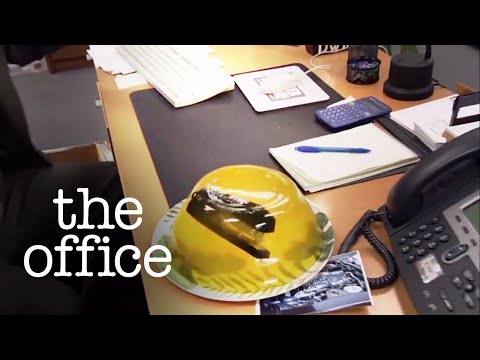
fixed 30초 만에
- Fixed means firmly attached and unable to be moved physically.
- It also describes things that are unchangeable, like prices or dates.
- In sports or politics, it can mean a result was unfairly prearranged.
- It is often used to describe stubborn mindsets or regular daily routines.
The adjective fixed is a versatile and essential term in the English language, primarily used to describe something that is securely placed, unchangeable, or predetermined. At its core, the word suggests a lack of movement or flexibility. When we speak of a physical object being fixed, we mean it is attached so firmly that it cannot be moved without significant effort or tools. This physical stability is the foundation for its more abstract meanings. For instance, in the realm of economics and daily commerce, a 'fixed price' is one that is not subject to negotiation or fluctuation; it remains constant regardless of the buyer's bargaining skills or market changes. This sense of permanence extends to time and schedules. A 'fixed date' for an event provides a sense of certainty and allows for long-term planning because the participants know the timing will not shift. Beyond the physical and temporal, the word 'fixed' often describes mental states or social arrangements. A 'fixed idea' or a 'fixed mindset' refers to a belief or way of thinking that is resistant to change, even when presented with new evidence. In a more negative social context, 'fixed' can imply something that has been dishonestly prearranged, such as a 'fixed election' or a 'fixed race,' where the outcome was decided before the event even took place. Understanding 'fixed' requires recognizing whether the speaker is referring to stability as a positive attribute (like a fixed anchor) or as a limitation (like a fixed perspective).
- Physical Attachment
- Refers to objects that are bolted, glued, or built into a structure. Example: The seats in the cinema are fixed to the floor to prevent them from being moved or tipped over during the movie.
- Temporal/Numerical Constancy
- Refers to values, prices, or times that do not change. Example: A fixed-rate mortgage ensures that the interest rate remains the same for the duration of the loan term, providing financial predictability.
- Prearranged Outcomes
- Often used in sports or politics to describe a situation where the result has been illegally manipulated. Example: The boxing match was fixed, meaning the winner was chosen before the fighters even entered the ring.
The telescope is fixed on the North Star, providing a constant point of reference for the sailors.
We offer a fixed menu for the holiday banquet, which includes three specific courses for every guest.
He has a fixed routine every morning: coffee, exercise, and then work.
The fixed costs of the business, such as rent and insurance, must be paid every month regardless of sales.
The judge discovered that the jury had been fixed by the defendant's associates.
In technical fields, 'fixed' is often contrasted with 'variable' or 'mobile.' In computer science, a 'fixed-width' font uses the same amount of horizontal space for every character. In chemistry, 'nitrogen fixation' (related to the verb but sharing the root concept) refers to making nitrogen 'fixed' or usable by plants. The adjective form is ubiquitous because humans constantly seek to categorize the world into things that change and things that stay the same. By labeling something as fixed, we are asserting its reliability or its rigidity. Whether it is a fixed star in the sky that guided ancient navigators or a fixed deposit in a modern bank, the word provides a linguistic anchor for concepts of stability and permanence in an otherwise fluid world.
Using the adjective fixed correctly involves understanding its placement in a sentence and the specific noun it modifies. It typically appears before the noun it describes (attributive position) or after a linking verb like 'is' or 'seems' (predicative position). When placed before a noun, it characterizes the nature of that noun: 'a fixed smile,' 'a fixed location,' 'a fixed amount.' When used after a linking verb, it describes the state of the subject: 'The schedule is fixed.' One of the most common grammatical patterns is 'fixed on [something],' which describes intense focus or physical attachment. For example, 'Her attention was fixed on the screen.' This indicates a total concentration that does not waver. Another common pattern is 'fixed in [something],' often used metaphorically to describe ideas or traditions that are deeply rooted: 'These customs are fixed in our culture.' It is also important to distinguish the adjective 'fixed' from the past participle of the verb 'to fix.' While they look identical, the adjective describes a state (The price is fixed), whereas the verb form describes an action that was completed (He fixed the car). To sound more natural, learners should pair 'fixed' with its common collocations, such as 'fixed assets' in business, 'fixed interval' in science, or 'fixed expression' in linguistics. In more informal settings, you might hear 'fixed up,' but this is usually a phrasal verb meaning to arrange something or to repair something, rather than the pure adjective form. When you want to emphasize that something cannot be altered, you can use intensifiers like 'firmly fixed' or 'permanently fixed.' This adds weight to the idea that the subject is unmovable or unchangeable. Conversely, if you are describing something that is unfairly decided, you might say 'the game was clearly fixed,' where 'fixed' acts as a predicative adjective describing the corrupt nature of the event.
- Before the Noun
- The fixed costs of the project were higher than we expected. (Describes the type of costs)
- After a Linking Verb
- The date for the wedding is now fixed for the tenth of June. (Describes the status of the date)
- With Prepositions
- He kept his eyes fixed on the horizon, searching for any sign of land. (Shows direction of focus)
She has a fixed idea of how a house should look, and she won't listen to any other suggestions.
The fixed pulleys in the warehouse help workers lift heavy crates with less effort.
In many countries, workers receive a fixed number of vacation days per year.
Furthermore, 'fixed' is often used in compound adjectives, such as 'fixed-term' or 'fixed-price.' These hyphenated forms help to clarify that the two words together are modifying a single noun. For example, a 'fixed-term contract' is a contract that lasts for a specific, unchanging period. In academic writing, 'fixed' is frequently used to describe variables in an experiment that are kept constant to ensure a fair test. In this context, 'fixed' is synonymous with 'controlled.' Whether you are writing a formal business report or a casual email, the word 'fixed' provides a clear way to communicate that something is not open to change, movement, or negotiation. Its simplicity is its strength, allowing it to be used across various registers and domains with minimal risk of being misunderstood, provided the context of 'stable' versus 'repaired' is clear.
The word fixed is ubiquitous in daily life, appearing in contexts ranging from the highly technical to the completely mundane. You will encounter it most frequently in financial and professional settings. If you go to a bank to discuss a mortgage, the advisor will almost certainly ask if you prefer a 'fixed-rate' or a 'variable-rate' loan. Here, 'fixed' is a crucial term that determines your financial future for years. Similarly, in the workplace, you might hear about 'fixed costs' during a budget meeting. These are the expenses that don't change regardless of how much the company produces, like rent or salaries. In the world of travel and logistics, you'll hear about 'fixed routes' or 'fixed schedules.' A bus that follows a fixed route always stops at the same places at the same times, providing a reliable service for commuters. If you are a fan of sports, you might unfortunately hear the word 'fixed' in a more scandalous context. News reports about 'match-fixing' describe illegal attempts to predetermine the winner of a game for gambling purposes. In social interactions, you might notice people using the word to describe someone's personality or habits. For example, someone might say, 'He’s very fixed in his ways,' which is a common idiom meaning the person is resistant to change and prefers their established routines. You'll also see 'fixed' on signs and in instructions. A sign in a parking lot might say 'Fixed parking for residents only,' or a set of assembly instructions for furniture might tell you to 'ensure the bracket is fixed firmly to the wall.' In the digital world, you might hear web designers talk about 'fixed headers'—those menus at the top of a website that stay in place even as you scroll down the page. In all these scenarios, the core meaning of 'not moving' or 'not changing' remains the same, but the implications vary from financial security to physical stability to social rigidity. Paying attention to these different domains will help you grasp the full spectrum of the word's utility.
- Banking & Finance
- Commonly used for 'fixed interest rates' or 'fixed deposits' where the terms remain unchanged for a set period.
- Sports Journalism
- Used to describe 'fixed matches' or 'fixed results,' indicating corruption or cheating.
- Everyday Conversation
- Used in phrases like 'fixed in his ways' to describe someone who is very traditional or stubborn.
The news reported that the championship game was fixed, leading to a massive investigation into the league.
I prefer a fixed price for the taxi ride so I don't have to worry about the traffic increasing the fare.
In literature and film, 'fixed' is often used to describe a character's intense gaze or an unshakeable obsession. A detective might have their eyes 'fixed' on a suspect, or a villain might have a 'fixed' desire for revenge. This usage highlights the psychological weight of the word, suggesting a focus so strong that nothing can break it. Even in science fiction, you might hear about 'fixed points in time,' which are moments that cannot be altered even with time travel. This wide range of applications—from the mundane 'fixed shelf' in your kitchen to the profound 'fixed laws of physics'—demonstrates how central the concept of immutability is to human thought and communication. By recognizing 'fixed' in these various contexts, you can better understand the nuances of the English language and how a single word can describe everything from a sturdy table to a corrupt election.
One of the most frequent points of confusion for English learners regarding the word fixed is its dual nature as both an adjective and the past tense/past participle of the verb 'to fix.' While the spelling is identical, the meanings can be quite different. A common mistake is using 'fixed' to mean 'repaired' in a context where the adjective meaning of 'unchangeable' is expected. For example, if you say 'The car is fixed,' it usually means the car has been repaired. However, if you say 'The price is fixed,' it means the price cannot be changed. This distinction is usually clear from the noun being modified, but it can occasionally lead to ambiguity. Another mistake involves the use of 'fixed' versus 'fastened' or 'attached.' While 'fixed' can mean attached, it often implies a more permanent or structural connection. You wouldn't usually say your seatbelt is 'fixed' (unless it's stuck); you would say it is 'fastened.' 'Fixed' implies that the object is meant to stay there permanently. Learners also sometimes try to use 'fixed' as a comparative adjective, saying 'more fixed' or 'most fixed.' As mentioned previously, 'fixed' is an absolute adjective. Something is either fixed or it isn't. Instead of 'more fixed,' you should use words like 'more secure,' 'more stable,' or 'more firmly attached.' Another subtle error occurs with the phrase 'fixed in.' People sometimes confuse 'fixed in' with 'fixed on.' 'Fixed on' usually refers to sight or attention (eyes fixed on the target), while 'fixed in' refers to being stuck or embedded in something (fixed in the mud, or fixed in one's ways). Using the wrong preposition can change the meaning or make the sentence sound unnatural. Finally, in the context of 'fixing' a game or election, learners sometimes use 'fixed' when they mean 'repaired.' If you say 'The election was fixed,' you are accusing people of fraud. If you meant to say the election system was 'repaired' or 'improved,' using 'fixed' would be a major communicative error. Always consider the potential for negative connotations when using 'fixed' to describe a process or outcome.
- Fixed vs. Repaired
- Mistake: 'I need a fixed computer.' (Sounds like you want a computer that doesn't move). Correct: 'I need my computer fixed.' (Verb use) or 'I need a repaired computer.'
- Absolute Adjective Error
- Mistake: 'This is the most fixed price in the store.' Correct: 'This is a fixed price; it cannot be changed.'
- Preposition Confusion
- Mistake: 'His eyes were fixed in the book.' Correct: 'His eyes were fixed on the book.'
Incorrect: The fixed chair was finally working again. (Confusion between 'repaired' and 'stationary')
Correct: The chair, which is fixed to the floor, was recently repaired.
Lastly, be careful with the phrase 'fixed up.' While 'fixed' is an adjective, 'fixed up' is almost always a phrasal verb meaning to renovate or to arrange a meeting between two people (like a blind date). Saying 'He is a fixed-up man' would be very confusing; you would say 'He was fixed up with a date.' Understanding these distinctions helps in avoiding the 'uncanny valley' of English usage where a sentence is grammatically possible but semantically odd or culturally incorrect. By focusing on the 'unchanging' or 'stationary' aspect of the adjective 'fixed,' you can avoid most of these common pitfalls and communicate with greater precision.
While fixed is a powerful and common word, there are many synonyms and alternatives that can provide more specific meaning depending on the context. If you are talking about something that cannot be changed, words like permanent, immutable, or unalterable are excellent choices. Permanent suggests something that will last forever, whereas fixed might only apply to a specific situation or period. Immutable is a more formal, often scientific or philosophical term, used for things like the 'immutable laws of nature.' If you are describing something that is physically attached, you might use stationary, immobile, or fastened. Stationary is particularly useful for things that are not moving at a specific moment, like a stationary car, whereas fixed implies it is built not to move. Immobile often describes a person or animal that cannot move due to injury or fear. In the context of prices or rules, set or standard are common alternatives. A 'set price' and a 'fixed price' are virtually identical, but 'standard' suggests that it is the usual price, though perhaps not strictly unchangeable. When describing a person's mindset, rigid, inflexible, or resolute can be used. Rigid and inflexible usually have negative connotations, suggesting a lack of adaptability. Resolute, on the other hand, is positive, suggesting a strong and admirable determination. If you are referring to the negative sense of 'fixed' (as in rigged), you could use manipulated, predetermined, or fraudulent. Each of these alternatives carries a slightly different weight. 'Manipulated' is a broad term, while 'fraudulent' specifically implies a crime has been committed. Choosing the right alternative depends on the 'flavor' you want to give your sentence—whether you want to sound formal, technical, positive, or critical.
- Fixed vs. Permanent
- 'Fixed' often refers to a specific arrangement (a fixed appointment), while 'permanent' implies a lasting state (a permanent job).
- Fixed vs. Stationary
- 'Fixed' means attached to something else; 'stationary' simply means not moving. A bike is stationary when you stop at a light, but it is not fixed to the road.
- Fixed vs. Rigid
- 'Fixed' is neutral; 'rigid' often implies that something is too stiff or unwilling to bend when it should.
The immutable laws of physics govern everything in the universe, from the smallest atom to the largest galaxy.
The stationary bike in the gym allows you to cycle without actually traveling anywhere.
In summary, while 'fixed' is a highly versatile 'all-purpose' word for stability and lack of change, exploring its synonyms allows for greater nuance. If you want to emphasize that a rule is impossible to break, 'unalterable' is stronger. If you want to emphasize that a person is stubborn, 'rigid' is more descriptive. By building a web of related words, you can move from basic B1 English to a more sophisticated C1 or C2 level of expression, where you choose the exact word that fits the emotional and logical requirements of your message. Always consider the context: is it physical, financial, psychological, or ethical? This will guide you to the best possible word choice.
How Formal Is It?
재미있는 사실
The word 'fix' used to mean 'to pierce' (like with a needle), which is why we still 'fix' things in place by pinning them.
발음 가이드
- Pronouncing the 'ed' as a separate syllable (fix-ed).
- Omitting the 't' sound at the end (fiks).
- Confusing the 'x' sound with 'z'.
난이도
Easy to recognize in most contexts.
Requires care to distinguish from the verb form.
Pronunciation of the 't' sound at the end is key.
Context usually makes the meaning clear.
다음에 무엇을 배울까
선수 학습
다음에 배울 것
고급
알아야 할 문법
Adjective vs. Passive Voice
The price is fixed (Adjective) vs. The car was fixed (Passive Voice).
Absolute Adjectives
You cannot say 'very fixed'; use 'firmly fixed' instead.
Compound Adjectives
Use a hyphen in 'fixed-rate mortgage' when it precedes the noun.
Prepositional Phrases
Use 'fixed on' for attention and 'fixed to' for attachment.
Stative Verbs with Adjectives
The date 'remains' fixed (linking verb + adjective).
수준별 예문
The price of the bread is fixed.
Le prix du pain est fixe.
Used as a predicative adjective after 'is'.
The bus has a fixed time.
Le bus a une heure fixe.
Used as an attributive adjective before 'time'.
This chair is fixed to the floor.
Cette chaise est fixée au sol.
Used with the preposition 'to'.
I have a fixed routine.
J'ai une routine fixe.
Describes a habit.
The shop has fixed hours.
Le magasin a des horaires fixes.
Refers to a schedule.
He has a fixed smile.
Il a un sourire figé.
Describes a physical expression.
The rules are fixed.
Les règles sont fixes.
Implies they cannot be changed.
The stars are fixed in the sky.
Les étoiles sont fixes dans le ciel.
Refers to physical position.
We have a fixed budget for the party.
Nous avons un budget fixe pour la fête.
Common business/planning term.
The restaurant offers a fixed menu.
Le restaurant propose un menu fixe.
Refers to a set selection.
She has a fixed-term contract.
Elle a un contrat à durée déterminée.
Compound adjective usage.
The date is fixed for next Monday.
La date est fixée à lundi prochain.
Refers to an appointment.
He lives on a fixed income.
Il vit avec un revenu fixe.
Common economic phrase.
The camera is in a fixed position.
La caméra est dans une position fixe.
Refers to physical stability.
There is a fixed charge for delivery.
Il y a des frais de livraison fixes.
Refers to a set cost.
The seats are fixed in rows.
Les sièges sont fixés en rangées.
Describes arrangement.
His eyes were fixed on the target.
Ses yeux étaient fixés sur la cible.
Pattern: 'fixed on [something]'.
The company has high fixed costs.
L'entreprise a des coûts fixes élevés.
Business terminology.
She is very fixed in her opinions.
Elle est très arrêtée dans ses opinions.
Describes a mental state.
The interest rate is fixed for five years.
Le taux d'intérêt est fixe pendant cinq ans.
Refers to financial stability.
The pulley is a fixed type.
La poulie est de type fixe.
Technical description.
They have a fixed idea about the project.
Ils ont une idée fixe sur le projet.
Implies lack of flexibility.
The game was fixed by the gamblers.
Le match a été truqué par les parieurs.
Negative connotation (rigged).
The boundaries are fixed by law.
Les limites sont fixées par la loi.
Refers to legal permanence.
A fixed-rate mortgage provides security.
Un prêt hypothécaire à taux fixe offre une sécurité.
Specific financial term.
The experiment requires a fixed temperature.
L'expérience nécessite une température fixe.
Scientific context (controlled variable).
He has a fixed expression of boredom.
Il a une expression d'ennui figée.
Describes a lasting facial state.
The fixed assets of the firm include land.
Les immobilisations de l'entreprise comprennent des terrains.
Accounting terminology.
The election was fixed, causing a riot.
L'élection a été truquée, provoquant une émeute.
Refers to political corruption.
She remains fixed in her resolve to win.
Elle reste ferme dans sa volonté de gagner.
Positive use of 'fixed' for determination.
The interval between the bells is fixed.
L'intervalle entre les cloches est fixe.
Refers to temporal regularity.
The software uses a fixed-width font.
Le logiciel utilise une police à chasse fixe.
Technical computing term.
The fixed stars were once used for navigation.
Les étoiles fixes étaient autrefois utilisées pour la navigation.
Historical/Astronomical term.
His gaze was fixed, as if in a trance.
Son regard était fixe, comme en transe.
Literary description.
The immutable and fixed laws of nature.
Les lois de la nature immuables et fixes.
Philosophical/Scientific context.
The contract has a fixed-term duration.
Le contrat a une durée déterminée.
Formal legal language.
She challenged the fixed gender roles of the era.
Elle a contesté les rôles de genre figés de l'époque.
Sociological context.
The fixed-point theorem is vital in topology.
Le théorème du point fixe est vital en topologie.
Advanced mathematical term.
The result was a fixed outcome of the system.
Le résultat était une issue inévitable du système.
Refers to determinism.
He is notoriously fixed in his habits.
Il est notoirement routinier dans ses habitudes.
Advanced character description.
The fixedness of his purpose was daunting.
La fixité de son but était intimidante.
Noun form derived from the adjective concept.
The stars appeared as fixed points of light.
Les étoiles apparaissaient comme des points de lumière fixes.
Precise descriptive language.
The match-fixing scandal rocked the nation.
Le scandale des matchs truqués a secoué la nation.
Gerund/Adjective compound.
A fixed-term tenancy agreement was signed.
Un contrat de location à durée déterminée a été signé.
Specific legal terminology.
The idea became a fixed obsession for him.
L'idée est devenue une obsession fixe pour lui.
Psychological depth.
The fixed-rate bond matured after ten years.
L'obligation à taux fixe est arrivée à échéance après dix ans.
Advanced financial context.
The boundaries of the state are fixed by treaty.
Les frontières de l'État sont fixées par traité.
Geopolitical context.
The fixed-width layout of the early web.
La mise en page à largeur fixe du début du web.
Technological history.
동의어
반의어
자주 쓰는 조합
자주 쓰는 구문
— To be unwilling to change one's habits or opinions.
My grandfather is very fixed in his ways.
— A smile that looks forced or unnatural because it doesn't change.
She greeted the guests with a fixed smile.
— Completely focused on achieving a specific goal.
Keep your eyes fixed on the prize.
— Business expenses that do not change with the level of production.
Rent is one of our main fixed costs.
— A type of bank account where money is kept for a set period.
I put my savings into a fixed deposit.
— A specific, unchanging location or value.
The lighthouse is a fixed point on the coast.
— Stars that appear not to move relative to each other.
Ancient mariners navigated by the fixed stars.
— A phrase whose words are always used together in a specific order.
'By and large' is a fixed expression.
— A home loan where the interest rate stays the same.
A fixed-rate mortgage protects you from rising rates.
— A job agreement that has a specific end date.
I am working on a six-month fixed-term contract.
자주 혼동되는 단어
Fastened means tied or bolted; fixed means it's part of the structure.
Repaired is the verb form; fixed as an adjective means unchanging.
Static means not moving; fixed means attached or decided.
관용어 및 표현
— Appearing as if it belongs to the past and hasn't changed.
The village seemed fixed in time.
Literary— To be obsessed with a single thought or plan.
He has a fixed idea about moving to Mars.
Neutral— To have enough money or resources to never worry again.
After winning the lottery, she was fixed for life.
Informal— A competition where the winner was decided beforehand.
Everyone knew it was a fixed fight.
Informal— Unable to move due to fear, surprise, or shock.
She stood fixed to the spot when she saw the bear.
Neutral— Something that will never be forgotten.
That sunset is fixed in my memory forever.
Literary— Completely decided and not open to negotiation.
Our decision is fixed and firm.
Formal— Extremely constant and reliable.
His loyalty was fixed as the northern star.
Literary— Committed to a specific plan of action.
The government is fixed on a course of reform.
Neutral혼동하기 쉬운
Both relate to 'fix'.
Fixated is a psychological state of obsession; fixed is a general state of being unchanging.
He is fixated on his ex-girlfriend, but his work schedule is fixed.
Both are nouns/adjectives related to 'fix'.
A fixture is a noun (an object); fixed is the adjective describing it.
The light fixture is fixed to the ceiling.
Both mean stable.
Firm describes texture or resolve; fixed describes position or status.
He has a firm grip on the fixed handle.
Both mean decided.
Set is more informal; fixed is more official or physical.
The table is set, but the legs are fixed.
Both mean unchanging.
Constant means happening all the time; fixed means staying at one value.
The constant noise came from a fixed machine.
문장 패턴
The [noun] is fixed.
The price is fixed.
I have a fixed [noun].
I have a fixed routine.
His [eyes/attention] were fixed on [noun].
His eyes were fixed on the map.
[Noun] is fixed to [noun].
The table is fixed to the wall.
A fixed-rate [noun] is [adjective].
A fixed-rate loan is safer.
The [event] was fixed by [person].
The race was fixed by the coach.
Being fixed in [noun], he [verb].
Being fixed in his ways, he refused to move.
The fixedness of [noun] [verb].
The fixedness of the stars guided them.
어휘 가족
명사
동사
형용사
관련
사용법
Common in business, finance, and daily descriptions.
-
The price is very fixed.
→
The price is fixed.
Fixed is an absolute adjective; it doesn't need 'very'.
-
He fixed in the TV.
→
His eyes were fixed on the TV.
You need the correct preposition and context for attention.
-
I have a fixed-ed routine.
→
I have a fixed routine.
Don't add extra syllables to the pronunciation.
-
The broken chair is now fixed.
→
The broken chair has been repaired.
While 'fixed' works as a verb, 'repaired' is clearer to avoid confusion with the adjective 'stationary'.
-
A fixed-rate of mortgage.
→
A fixed-rate mortgage.
Don't use 'of' in this compound adjective structure.
팁
Business Context
Always use 'fixed' when talking about interest rates or prices to sound professional.
Adjective vs Verb
Remember: 'The price is fixed' (adjective) vs 'I fixed the price' (verb).
Synonym Choice
Use 'immutable' for laws of nature to sound more academic.
Describing People
Be careful; calling someone 'fixed in their ways' can be slightly insulting.
Ending Sound
Practice the 'kst' sound at the end of 'fixed' to avoid sounding like 'fix'.
Hyphenation
Use hyphens for compound adjectives like 'fixed-rate' when they come before a noun.
Prepositions
Focus on the preposition: 'fixed to' (attached) vs 'fixed on' (watching).
Bargaining
In some cultures, 'fixed price' is just a starting point for negotiation, but in others, it's final.
Fixed in Time
Use this phrase to describe a place that hasn't changed for many years.
Fixed Income
This is a key term for understanding pensions and investments.
암기하기
기억법
Think of a 'FIXed' object as being stuck with 'GLUE' (the 'x' looks like a cross or a stitch holding things together).
시각적 연상
Imagine a chair bolted to the floor in a movie theater; it is 'fixed' and cannot move.
Word Web
챌린지
Try to use 'fixed' in three different ways today: once for a price, once for a physical object, and once for a habit.
어원
Derived from the Middle English 'fixen', which comes from the Old French 'fixe', and ultimately from the Latin 'fixus', the past participle of 'figere' meaning 'to fasten' or 'to pierce'.
원래 의미: The original meaning in Latin was 'fastened' or 'attached', which is still the primary physical sense of the word today.
Indo-European (Latinate branch via French).문화적 맥락
Be careful using 'fixed' to describe people's beliefs, as it can imply they are narrow-minded.
In the US and UK, 'fixed' is a standard term in banking and real estate that everyone should know.
실생활에서 연습하기
실제 사용 상황
Shopping
- Is the price fixed?
- Fixed price only
- No bargaining, fixed price
- Fixed discount
Work
- Fixed-term contract
- Fixed working hours
- Fixed deadline
- Fixed salary
Finance
- Fixed interest rate
- Fixed assets
- Fixed costs
- Fixed deposit
Daily Life
- Fixed routine
- Fixed meal times
- Fixed place to sit
- Fixed habit
Sports
- Fixed match
- Fixed result
- Fixed race
- The game was fixed
대화 시작하기
"Do you prefer a fixed routine or a flexible schedule?"
"Is it common to have fixed prices in your country's markets?"
"Have you ever felt 'fixed to the spot' by fear?"
"Do you think people's personalities are fixed or can they change?"
"Would you rather have a fixed-rate or a variable-rate mortgage?"
일기 주제
Describe a fixed routine that helps you stay productive.
Write about a time you realized your opinion on something was too fixed.
How would society change if all prices were fixed and no one could bargain?
Discuss the pros and cons of having a fixed-term job contract.
Reflect on a 'fixed memory' that you will never forget.
자주 묻는 질문
10 질문No, 'fixed' as an adjective means the opposite of broken (it means repaired) or it means unchanging. If you say 'the car is fixed,' it means it is now working.
A fixed mindset is the belief that your qualities, like intelligence or talent, are set and cannot change. This is the opposite of a 'growth mindset'.
Not always. It can be negative if it means someone is stubborn ('fixed in his ways') or if it means a result was dishonest ('a fixed election').
Fixed costs are expenses that stay the same every month, like rent or insurance, no matter how much you sell.
It is one syllable: /fɪkst/. The 'ed' sounds like a 't'.
Technically no, because 'fixed' is an absolute state. Use 'more firmly attached' instead.
It means looking at something very closely or thinking about something very intensely.
It is a job contract that has a specific end date, like a 6-month or 1-year contract.
These are stars that don't seem to move in relation to each other in the night sky.
Yes, it is very common in everyday English, business, and science.
셀프 테스트 180 질문
Write a sentence using 'fixed' to describe a price.
Well written! Good try! Check the sample answer below.
Write a sentence using 'fixed' to describe a routine.
Well written! Good try! Check the sample answer below.
Write a sentence using 'fixed' to describe someone's attention.
Well written! Good try! Check the sample answer below.
Write a sentence using 'fixed' to describe a physical object.
Well written! Good try! Check the sample answer below.
Write a sentence using 'fixed-rate' in a financial context.
Well written! Good try! Check the sample answer below.
Write a sentence using 'fixed' to imply corruption.
Well written! Good try! Check the sample answer below.
Write a sentence using 'fixed in his ways'.
Well written! Good try! Check the sample answer below.
Write a sentence using 'fixed-term contract'.
Well written! Good try! Check the sample answer below.
Write a sentence using 'fixed assets'.
Well written! Good try! Check the sample answer below.
Write a sentence using 'fixed expression'.
Well written! Good try! Check the sample answer below.
Describe a 'fixed mindset' in your own words.
Well written! Good try! Check the sample answer below.
Explain why 'fixed costs' are important for a business.
Well written! Good try! Check the sample answer below.
Write a sentence using 'fixed' in a scientific context.
Well written! Good try! Check the sample answer below.
Write a sentence using 'fixed' to describe a memory.
Well written! Good try! Check the sample answer below.
Write a sentence using 'fixed-width font'.
Well written! Good try! Check the sample answer below.
Write a sentence using 'fixed menu'.
Well written! Good try! Check the sample answer below.
Write a sentence using 'fixed income'.
Well written! Good try! Check the sample answer below.
Write a sentence using 'fixed-wing'.
Well written! Good try! Check the sample answer below.
Write a sentence using 'fixed stars'.
Well written! Good try! Check the sample answer below.
Write a sentence using 'fixedness'.
Well written! Good try! Check the sample answer below.
Pronounce the word 'fixed'.
Read this aloud:
당신의 답변:
Speech recognition is not supported in your browser. Try Chrome or Edge.
Describe your daily routine using the word 'fixed'.
Read this aloud:
당신의 답변:
Speech recognition is not supported in your browser. Try Chrome or Edge.
Talk about a 'fixed price' store you know.
Read this aloud:
당신의 답변:
Speech recognition is not supported in your browser. Try Chrome or Edge.
Explain what 'fixed on the prize' means to you.
Read this aloud:
당신의 답변:
Speech recognition is not supported in your browser. Try Chrome or Edge.
Discuss the pros of a 'fixed-rate mortgage'.
Read this aloud:
당신의 답변:
Speech recognition is not supported in your browser. Try Chrome or Edge.
Describe a time you were 'fixed to the spot'.
Read this aloud:
당신의 답변:
Speech recognition is not supported in your browser. Try Chrome or Edge.
What are 'fixed costs' for a student?
Read this aloud:
당신의 답변:
Speech recognition is not supported in your browser. Try Chrome or Edge.
How do you feel about 'fixed-term contracts'?
Read this aloud:
당신의 답변:
Speech recognition is not supported in your browser. Try Chrome or Edge.
Is it good or bad to be 'fixed in your ways'?
Read this aloud:
당신의 답변:
Speech recognition is not supported in your browser. Try Chrome or Edge.
Explain 'match-fixing' to a friend.
Read this aloud:
당신의 답변:
Speech recognition is not supported in your browser. Try Chrome or Edge.
Why do programmers use 'fixed-width fonts'?
Read this aloud:
당신의 답변:
Speech recognition is not supported in your browser. Try Chrome or Edge.
Describe a 'fixed menu' you once had.
Read this aloud:
당신의 답변:
Speech recognition is not supported in your browser. Try Chrome or Edge.
Talk about the 'fixed stars' and navigation.
Read this aloud:
당신의 답변:
Speech recognition is not supported in your browser. Try Chrome or Edge.
What is a 'fixed deposit'?
Read this aloud:
당신의 답변:
Speech recognition is not supported in your browser. Try Chrome or Edge.
Give an example of a 'fixed expression'.
Read this aloud:
당신의 답변:
Speech recognition is not supported in your browser. Try Chrome or Edge.
Is your personality 'fixed'?
Read this aloud:
당신의 답변:
Speech recognition is not supported in your browser. Try Chrome or Edge.
What is a 'fixed-wing' aircraft?
Read this aloud:
당신의 답변:
Speech recognition is not supported in your browser. Try Chrome or Edge.
Explain 'fixed income' to someone.
Read this aloud:
당신의 답변:
Speech recognition is not supported in your browser. Try Chrome or Edge.
Why are some seats 'fixed' in public transport?
Read this aloud:
당신의 답변:
Speech recognition is not supported in your browser. Try Chrome or Edge.
What does 'fixedness' mean?
Read this aloud:
당신의 답변:
Speech recognition is not supported in your browser. Try Chrome or Edge.
Listen and identify the adjective: 'The fixed price was ten dollars.'
Listen: 'He has a fixed routine.' What does he have?
Listen: 'The match was fixed.' Was it fair?
Listen: 'Fixed costs are high.' What are high?
Listen: 'His gaze was fixed.' How was his gaze?
Listen: 'A fixed-rate mortgage.' What kind of mortgage?
Listen: 'Fixed in his ways.' What is he?
Listen: 'Fixed assets include land.' What is an example?
Listen: 'A fixed-term contract.' How long does it last?
Listen: 'The stars are fixed.' What are fixed?
Listen: 'Fixed-width font.' What kind of font?
Listen: 'The result was fixed.' Was it honest?
Listen: 'Fixed deposit.' Where is the money?
Listen: 'Fixed ideas.' Are they easy to change?
Listen: 'Fixed to the floor.' Where is it?
/ 180 correct
Perfect score!
Summary
The word 'fixed' is a versatile adjective that signifies stability and immutability. Whether describing a 'fixed price' that cannot be negotiated or a 'fixed chair' bolted to the floor, it always points to something that stays exactly as it is.
- Fixed means firmly attached and unable to be moved physically.
- It also describes things that are unchangeable, like prices or dates.
- In sports or politics, it can mean a result was unfairly prearranged.
- It is often used to describe stubborn mindsets or regular daily routines.
Business Context
Always use 'fixed' when talking about interest rates or prices to sound professional.
Adjective vs Verb
Remember: 'The price is fixed' (adjective) vs 'I fixed the price' (verb).
Synonym Choice
Use 'immutable' for laws of nature to sound more academic.
Describing People
Be careful; calling someone 'fixed in their ways' can be slightly insulting.