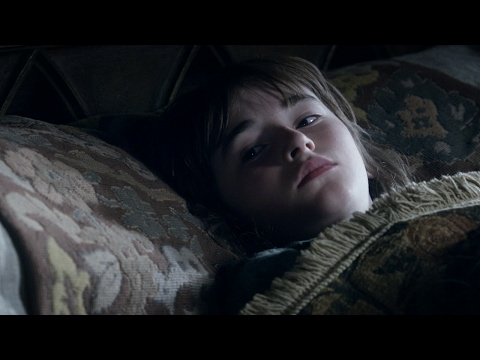
hides 30초 만에
- Hides is the 3rd person singular present tense of 'hide,' used with he, she, it, or singular nouns.
- It means to put something out of sight or to stay in a place where you cannot be seen.
- It can describe physical concealment (hiding a key) or emotional concealment (hiding feelings).
- Commonly used in games, nature descriptions, and discussions about secrets or privacy.
The word hides is a versatile verb that primarily functions as the third-person singular present tense of 'to hide.' At its core, it describes the act of placing something out of sight or preventing someone from being seen. This action can be intentional, like a child playing a game, or unintentional, like a mountain peak obscured by heavy mist. In English grammar, we use 'hides' specifically when the subject is 'he,' 'she,' 'it,' or a singular noun. For example, you would say 'The sun hides,' but 'The clouds hide.' Understanding this distinction is crucial for basic fluency. Beyond the physical realm, 'hides' is frequently employed in emotional and psychological contexts. Humans often hide their true feelings, intentions, or past mistakes to protect themselves or others. This metaphorical usage is just as common as the physical one in everyday conversation and literature.
- Physical Concealment
- The most literal use involves putting an object in a location where it cannot be found. A squirrel hides nuts for the winter; a thief hides stolen jewelry in a secret compartment. This implies a deliberate effort to create a barrier between the object and any potential observers.
The clever fox hides in the thick brush to avoid the hunters.
- Abstract Concealment
- This refers to the act of keeping information, emotions, or truths secret. When a person hides their disappointment with a smile, they are performing a social 'hiding' that is essential for maintaining decorum or personal privacy.
She hides her nervousness by talking very quickly during presentations.
- Natural Phenomena
- Nature often 'hides' things through weather or geography. Fog hides the coastline, and the moon hides behind a blanket of dark clouds during a storm. This usage personifies nature, giving it an active role in the visibility of the world.
The thick morning mist hides the valley from view until the sun rises higher.
He hides the spare key under a fake rock near the front door.
A good magician hides the coin in his palm while distracting the audience.
In summary, 'hides' is a fundamental verb used to describe concealment across physical, emotional, and natural domains. Its correct usage hinges on the singular subject-verb agreement, making it a staple of B1-level English proficiency. Whether describing a shy child, a secretive government, or a cloudy sky, 'hides' provides a clear and effective way to communicate the concept of being out of sight.
Using hides correctly requires attention to the subject of the sentence. Because it is the third-person singular form, it must follow a singular noun or a pronoun like 'he,' 'she,' or 'it.' This rule is one of the most common stumbling blocks for English learners, but once mastered, it significantly improves the grammatical accuracy of your speech and writing. Let's explore the various ways this verb can be structured in a sentence to convey different meanings and nuances.
- Transitive Use (With an Object)
- When 'hides' is used transitively, it means the subject is concealing something else. The structure is: [Subject] + hides + [Object]. For example, 'The boy hides his toys.' Here, 'his toys' is the object being concealed. This is the most common way to use the word when describing an action performed on an external item.
The government often hides sensitive information from the public for national security reasons.
- Intransitive Use (Without an Object)
- When used intransitively, the subject is concealing themselves. The structure is simply: [Subject] + hides. For example, 'The cat hides.' We often add a prepositional phrase to explain where the hiding is happening, such as 'The cat hides under the sofa.' This is essential for describing movement and positioning.
Whenever a stranger knocks on the door, the small dog hides behind the curtains.
- Metaphorical and Emotional Use
- In more advanced English, 'hides' describes internal states. 'He hides his pain' or 'She hides her true identity.' This usage is vital for storytelling and deep conversation, as it allows you to describe things that aren't physically visible but are nonetheless being kept away from others.
The actor hides his true personality behind the various characters he plays on screen.
A thick layer of dust hides the beautiful patterns on the antique table.
The software hides complex code behind a very simple and user-friendly interface.
When constructing sentences with 'hides,' always check your subject. If you are writing about a group (e.g., 'The children'), use 'hide.' If you are writing about one person (e.g., 'The child'), use 'hides.' This simple check will ensure your grammar remains polished and professional. Furthermore, consider the impact of the word: 'hides' often implies a secret or a mystery, which can add intrigue to your writing.
The word hides is incredibly common in both spoken and written English, appearing in a wide variety of contexts ranging from childhood games to serious political discourse. Understanding where you are likely to encounter it will help you recognize its different shades of meaning and use it more naturally in your own conversations. It is a word that bridges the gap between simple everyday actions and complex abstract concepts.
- In Everyday Conversation
- You will hear 'hides' frequently when people talk about their pets, children, or lost items. 'My cat always hides when the vacuum is on' or 'He hides the remote so no one can change the channel.' These are informal, relatable situations where the word is used in its most literal sense.
"Look, the baby hides her face whenever she sees a new person!"
- In News and Media
- Journalists often use 'hides' when reporting on scandals, financial crimes, or political secrets. Phrases like 'The report hides the true extent of the damage' or 'The CEO hides the company's losses' are common. In this context, 'hides' suggests a lack of transparency or a deliberate attempt to deceive the public.
The documentary explores how the industry hides its environmental impact through clever marketing.
- In Literature and Storytelling
- Authors use 'hides' to create suspense and mystery. A character might hide a letter, a secret, or their true identity. 'The old house hides many secrets' is a classic trope in gothic or mystery novels. It sets a mood of intrigue and encourages the reader to look closer.
In the novel, the protagonist hides a map inside the binding of an old book.
The mountain range hides a small, forgotten village that is not on any modern map.
Science often hides its most profound truths behind complex mathematical equations.
Whether you are watching a nature documentary about how a chameleon hides from predators, reading a thriller about a spy who hides their tracks, or simply talking to a friend about where they hide their spare change, you will find 'hides' to be an indispensable part of the English language. Its ability to describe both the seen and the unseen makes it a powerful tool for communication.
Even though hides is a relatively simple word, it is frequently misused by learners. Most errors stem from two main areas: subject-verb agreement and confusion with other forms of the verb 'to hide.' Understanding these common pitfalls will help you avoid them and speak more accurately. Let's break down the most frequent mistakes and how to correct them.
- Subject-Verb Agreement Errors
- The most common mistake is using 'hides' with a plural subject or 'hide' with a singular subject. For example, saying 'They hides' is incorrect; it should be 'They hide.' Conversely, 'He hide' is incorrect; it should be 'He hides.' Always remember: singular subject = 'hides,' plural subject = 'hide.'
Incorrect: The children hides in the garden.
Correct: The children hide in the garden.
- Confusion with Past Tense (Hid)
- Learners often confuse the present tense 'hides' with the past tense 'hid.' If the action happened in the past, you must use 'hid' regardless of the subject. 'Yesterday, he hid the keys' is correct. Using 'hides' for a past action is a common error that can confuse the timeline of your story.
Incorrect: Last night, she hides the present.
Correct: Last night, she hid the present.
- Confusing the Verb with the Noun
- In English, 'hides' can also be a plural noun meaning animal skins (e.g., 'cow hides'). While this is less common in everyday conversation, it can appear in specific contexts like fashion or history. Make sure you are using 'hides' as a verb when you mean the action of concealing.
The merchant sells animal hides at the market. (Noun usage)
Incorrect: The moon hiding behind the clouds.
Correct: The moon is hiding OR The moon hides behind the clouds.
Incorrect: He hides always his keys.
Correct: He always hides his keys.
By paying close attention to the subject of your sentence and the timing of the action, you can easily master the use of 'hides.' Remember that 'hides' is a present-tense action for one person or thing. If you keep this rule in mind, you will avoid the most common errors and communicate your ideas clearly and effectively.
While hides is a perfectly good word, expanding your vocabulary with synonyms and alternatives can make your English sound more precise and sophisticated. Depending on the context—whether you are talking about physical objects, secrets, or natural phenomena—different words might be more appropriate. Let's look at some common alternatives and how they differ from 'hides.'
- Conceals
- 'Conceals' is a more formal synonym for 'hides.' It is often used in legal, professional, or literary contexts. While 'hides' can be accidental or playful, 'conceals' often implies a more deliberate or serious effort to keep something secret. Example: 'The contract conceals several hidden fees.'
The diplomat carefully conceals his true intentions during the negotiations.
- Obscures
- 'Obscures' is used when something is made difficult to see or understand, often by something else being in the way. It is frequently used for natural phenomena or complex information. Example: 'The smoke obscures the view of the mountains.' Unlike 'hides,' 'obscures' doesn't always mean the object is completely gone; it just means it's not clear.
The jargon used in the manual obscures the simple instructions for the user.
- Masks
- 'Masks' is used when one thing is used to cover or disguise another, often to hide an unpleasant reality. For example, 'The perfume masks the smell of smoke.' It implies that the original thing is still there, but its presence is being hidden by something else on top of it.
She masks her sadness with a cheerful attitude whenever she is around her family.
The heavy curtain veils the stage before the performance begins.
The thick forest screens the house from the noise of the nearby highway.
Choosing the right word depends on the specific situation you are describing. If you want to sound formal, use 'conceals.' If something is blurry, use 'obscures.' If you are talking about a disguise, use 'masks.' By using these alternatives, you can add variety and precision to your English, making your communication more effective and engaging.
How Formal Is It?
재미있는 사실
The noun 'hide' (meaning animal skin) comes from a different Old English word 'hyd,' but they both share an ancient root meaning 'to cover.'
발음 가이드
- Pronouncing it with a short 'i' like 'hids'.
- Forgetting the 'z' sound at the end and saying 'hide'.
- Over-emphasizing the 'd' sound.
- Confusing the pronunciation with 'heights'.
- Saying 'hides' when the subject is plural.
난이도
Very easy to recognize in text, though the noun form can occasionally cause confusion.
Requires attention to subject-verb agreement (singular vs. plural).
Commonly used in everyday speech; pronunciation is straightforward.
Easily understood in context, even with different accents.
다음에 무엇을 배울까
선수 학습
다음에 배울 것
고급
알아야 할 문법
Third-Person Singular Present Tense
He hides (Correct) vs. He hide (Incorrect).
Transitive vs. Intransitive Verbs
He hides the key (Transitive) vs. He hides (Intransitive).
Prepositional Phrases for Location
He hides *under the table*.
Present Simple for Habits
She *always* hides her diary.
Subject-Verb Agreement with Collective Nouns
The team hides its strategy.
수준별 예문
The cat hides under the table.
Le chat se cache sous la table.
Third-person singular 's' added to 'hide'.
He hides behind the door.
Il se cache derrière la porte.
Subject 'He' requires 'hides'.
She hides her face.
Elle cache son visage.
Transitive use with object 'her face'.
The rabbit hides in the grass.
Le lapin se cache dans l'herbe.
Singular noun 'rabbit' takes 'hides'.
It hides in the box.
Il se cache dans la boîte.
Pronoun 'It' takes 'hides'.
The sun hides behind the cloud.
Le soleil se cache derrière le nuage.
Natural phenomenon as a singular subject.
The boy hides his ball.
Le garçon cache sa balle.
Transitive use.
My dog hides when it rains.
Mon chien se cache quand il pleut.
Habitual action in the present tense.
The squirrel hides nuts in the garden.
L'écureuil cache des noisettes dans le jardin.
Present simple for a regular animal behavior.
She hides her diary under her pillow.
Elle cache son journal sous son oreiller.
Transitive verb with a prepositional phrase.
The moon hides behind the dark mountains.
La lune se cache derrière les montagnes sombres.
Descriptive use of 'hides'.
He hides his money in a secret place.
Il cache son argent dans un endroit secret.
Focus on the object 'his money'.
The thief hides from the police.
Le voleur se cache de la police.
Intransitive use with 'from'.
A thick fog hides the road today.
Un brouillard épais cache la route aujourd'hui.
Singular subject 'fog' takes 'hides'.
The child hides behind his mother's skirt.
L'enfant se cache derrière la jupe de sa mère.
Describing a common behavior.
He hides the remote control every day.
Il cache la télécommande tous les jours.
Frequency adverb 'every day' with present simple.
She hides her disappointment with a smile.
Elle cache sa déception par un sourire.
Abstract use: hiding an emotion.
The magician hides the card in his sleeve.
Le magicien cache la carte dans sa manche.
Action-oriented use.
He hides his true feelings from everyone.
Il cache ses vrais sentiments à tout le monde.
Metaphorical use of 'hides'.
The forest hides many rare species of birds.
La forêt cache de nombreuses espèces d'oiseaux rares.
Collective noun 'forest' as a singular subject.
The company hides its profits to avoid taxes.
L'entreprise cache ses bénéfices pour éviter les impôts.
Formal/Professional context.
The old house hides a dark secret.
La vieille maison cache un sombre secret.
Literary/Mysterious use.
He hides his identity by using a fake name.
Il cache son identité en utilisant un faux nom.
Describing a method of concealment.
The software hides complex settings from the user.
Le logiciel cache les paramètres complexes à l'utilisateur.
Technical context.
The report hides the true extent of the damage.
Le rapport cache la véritable étendue des dégâts.
Describing a lack of transparency.
She hides her lack of confidence by acting bossy.
Elle cache son manque de confiance en se montrant autoritaire.
Complex psychological motivation.
The mountain range hides a beautiful valley.
La chaîne de montagnes cache une belle vallée.
Geographical description.
The code hides a vulnerability that hackers can exploit.
Le code cache une vulnérabilité que les pirates peuvent exploiter.
Technical/Cybersecurity context.
He hides his political views to avoid arguments.
Il cache ses opinions politiques pour éviter les disputes.
Social strategy.
The mask hides the actor's facial expressions.
Le masque cache les expressions faciales de l'acteur.
Physical barrier preventing visibility.
The algorithm hides certain posts from your feed.
L'algorithme cache certains messages de votre flux.
Modern digital context.
The author hides subtle clues throughout the book.
L'auteur cache des indices subtils tout au long du livre.
Literary technique.
The elegant design hides the machine's immense power.
Le design élégant cache l'immense puissance de la machine.
Contrasting appearance with reality.
His polite manner hides a very manipulative nature.
Ses manières polies cachent une nature très manipulatrice.
Deep character analysis.
The statistics can be misleading if they hides the raw data.
Les statistiques peuvent être trompeuses si elles cachent les données brutes.
Critique of information presentation.
The simplicity of the poem hides its profound meaning.
La simplicité du poème cache son sens profond.
Literary criticism.
The thick vegetation hides the entrance to the cave.
La végétation épaisse cache l'entrée de la grotte.
Detailed descriptive language.
The legal language often hides the true intent of the law.
Le langage juridique cache souvent l'intention réelle de la loi.
Societal/Legal critique.
She hides her past because she is ashamed of it.
Elle cache son passé parce qu'elle en a honte.
Exploring motivation and shame.
The interface hides the complexity of the back-end system.
L'interface cache la complexité du système d'arrière-plan.
Advanced technical description.
The universe hides its secrets within the fabric of space-time.
L'univers cache ses secrets dans le tissu de l'espace-temps.
Philosophical/Scientific personification.
The diplomat's stoic expression hides a whirlwind of anxiety.
L'expression stoïque du diplomate cache un tourbillon d'anxiété.
High-level psychological contrast.
The inherent ambiguity of the text hides multiple interpretations.
L'ambiguïté inhérente du texte cache de multiples interprétations.
Academic literary analysis.
The corporate structure hides the true owners of the wealth.
La structure de l'entreprise cache les véritables propriétaires de la richesse.
Socio-economic critique.
The artist hides a political message in every brushstroke.
L'artiste cache un message politique dans chaque coup de pinceau.
Metaphorical artistic intent.
The quiet surface of the lake hides a dangerous current.
La surface calme du lac cache un courant dangereux.
Nature as a metaphor for danger.
The legislation hides a significant shift in public policy.
La législation cache un changement important dans la politique publique.
Political analysis.
The mask of sanity often hides a deeply fractured mind.
Le masque de la raison cache souvent un esprit profondément fracturé.
Psychological/Philosophical observation.
동의어
반의어
자주 쓰는 조합
자주 쓰는 구문
— To go into a place where you can be alone and not seen. It implies a longer period of hiding.
He hides away in his study for hours every day.
— To stay in a secret place, often to avoid being caught by the police or enemies.
The fugitive hides out in a remote cabin.
— To keep your talents or good qualities secret instead of showing them to others.
She is a brilliant artist, but she hides her light under a bushel.
— Used to say that something covers up many faults or problems.
A good coat of paint hides a multitude of sins in an old house.
— To be in a place where you can be easily seen, but people don't notice you.
The letter was right there on the desk; it hides in plain sight.
— To use legal rules to avoid doing what is morally right or to protect oneself.
The company hides behind the law to avoid paying its workers.
— To deliberately withhold information or be unclear about one's intentions.
The negotiator is hiding the ball regarding the final price.
— To refuse to think about or acknowledge a problem.
He hides his head in the sand whenever we talk about the budget.
— To keep a specific piece of information secret.
He hides the fact that he lost his job.
— To be completely honest and transparent.
Her open face hides nothing of her true emotions.
자주 혼동되는 단어
Used for plural subjects (They hide) or as the base verb.
The past tense form (He hid yesterday).
Sounds similar but means high places.
관용어 및 표현
— To conceal one's talents or successes out of modesty or shyness.
Don't hide your light under a bushel; tell them about your promotion!
informal/literary— Something that conceals many flaws or mistakes.
That dark wallpaper hides a multitude of sins on the old walls.
neutral— To be unnoticeable even though one is clearly visible.
The spy realized that the best way to escape was to hide in plain sight.
neutral— To ignore a problem in the hope that it will go away.
You can't just hide your head in the sand and hope the debt disappears.
informal— To use someone else (often a woman or someone more powerful) for protection.
He's a coward who always hides behind his mother's skirts.
informal/derogatory— To be intentionally deceptive or non-transparent in a discussion.
Stop hiding the ball and tell us what the real plan is.
neutral/business— To remove or conceal proof of a crime or mistake.
He quickly hides the evidence before his parents come home.
neutral— To lie by omission or keep facts secret.
The politician hides the truth about the new tax plan.
neutral— To conceal evidence of where one has been or what one has done.
The hacker hides his tracks by using multiple servers.
neutral— To feel deep shame or to literally cover one's face.
He hides his face in his hands after the embarrassing mistake.
neutral혼동하기 쉬운
It is spelled and pronounced exactly the same way.
The noun refers to animal skins, while the verb refers to the act of concealing.
The hunter sells animal hides.
They are synonyms.
Conceals is more formal and often implies a more serious or deliberate action.
The spy conceals the microfilm.
They both involve covering something.
Masks usually means covering one thing with another to disguise it.
The smell of pine masks the trash.
They both mean something is hard to see.
Obscures means making something unclear or blurry, not necessarily completely hidden.
The rain obscures the driver's vision.
They are both used for covering.
Veils is more literary and implies a thin or mysterious covering.
The mist veils the lake.
문장 패턴
[Subject] hides.
The cat hides.
[Subject] hides [Object].
He hides the ball.
[Subject] hides [Preposition] [Place].
She hides under the bed.
[Subject] hides [Abstract Object].
He hides his fear.
[Subject] hides [Object] from [Person].
She hides the truth from her mother.
[Subject] hides [Object] by [Gerund Phrase].
He hides his identity by wearing a mask.
What [Subject] hides is [Complement].
What the report hides is the true cost.
[Subject] hides [Object] within [Complex Phrase].
The universe hides its secrets within the fabric of space.
어휘 가족
명사
동사
형용사
관련
사용법
Very common in both spoken and written English.
-
They hides the treasure.
→
They hide the treasure.
'They' is plural, so the verb should be 'hide' without the 's'.
-
He hide behind the tree.
→
He hides behind the tree.
'He' is singular, so the verb needs the 's' in the present tense.
-
Yesterday she hides the key.
→
Yesterday she hid the key.
For past actions, use the past tense 'hid' instead of the present 'hides'.
-
The moon is hides behind clouds.
→
The moon is hiding behind clouds.
After 'is,' you need the present participle 'hiding,' not the present tense 'hides'.
-
He hides always his feelings.
→
He always hides his feelings.
Adverbs of frequency like 'always' usually go before the main verb.
팁
Subject-Verb Agreement
Always match 'hides' with a singular subject. If you see 'they,' 'we,' or 'I,' drop the 's'.
Formal Alternative
In professional emails or essays, try using 'conceals' instead of 'hides' for a more sophisticated tone.
Emotional Context
Use 'hides' to describe when someone is being secretive about their feelings. It adds depth to your descriptions.
Don't Forget the 'S'
In the present tense, the 's' is mandatory for third-person singular. It's a small letter that makes a big difference.
Listen for Prepositions
Words like 'under,' 'behind,' and 'from' often follow 'hides.' They tell you where the action is happening.
Nature Personification
Use 'hides' to describe weather, like fog or clouds. It makes your writing more vivid and poetic.
Rhyme Time
Practice saying 'hides' along with 'rides' and 'sides' to master the long 'i' and 'z' sounds.
Context Clues
If you see 'hides' in a story about leather or hunting, check if it's a noun referring to animal skins.
Visualizing
Picture a 'hidden' treasure. The action of the person who put it there is that they 'hide' it.
Plain Sight
Remember the phrase 'hides in plain sight' for things that are obvious but overlooked.
암기하기
기억법
Think of 'He hides' as 'He has a secret.' The 's' in 'hides' matches the 's' in 'singular' and 'secret.'
시각적 연상
Imagine a cat with its tail sticking out from under a bed. The cat 'hides' but isn't quite invisible.
Word Web
챌린지
Try to write three sentences using 'hides' to describe a person, an animal, and a natural object (like the sun or a mountain).
어원
The word 'hides' comes from the Old English 'hydan,' which means to hide or conceal. It is of Germanic origin and is related to the Dutch 'huiden' and the German 'hüten.'
원래 의미: The original meaning was simply to cover or protect something by putting it out of sight.
Indo-European > Germanic > West Germanic > English문화적 맥락
Be careful when using 'hides' to describe someone's behavior, as it can sometimes imply they are being dishonest or cowardly.
The phrase 'hide and seek' is so common that it's often used as a metaphor for any situation where someone is difficult to find.
실생활에서 연습하기
실제 사용 상황
Games
- He hides well.
- She hides in the closet.
- The seeker finds where he hides.
- It's his turn to hide.
Nature
- The sun hides.
- Mist hides the mountain.
- The animal hides in the brush.
- Clouds hide the moon.
Emotions
- He hides his sadness.
- She hides her anger.
- He hides how he feels.
- She hides her true self.
Secrets
- The box hides a secret.
- He hides the truth.
- She hides the letter.
- The report hides the facts.
Technology
- The app hides your location.
- The menu hides advanced options.
- The code hides a bug.
- The screen hides the internal parts.
대화 시작하기
"Where do you think a cat hides when it is scared?"
"Why do you think a person hides their true feelings from others?"
"Does the sun often hide behind the clouds in your city?"
"Where is the best place someone hides a spare key?"
"Do you think a good book always hides a deeper meaning?"
일기 주제
Describe a time when you saw someone who hides their emotions. What gave them away?
Write about a secret place where a child hides their favorite treasures.
Discuss whether you think the government hides too much information from the public.
Imagine a world where nothing hides. How would life be different?
Write a story about a house that hides a mysterious past.
자주 묻는 질문
10 질문It can be both! As a verb, it's the third-person singular present tense of 'hide' (e.g., 'He hides'). As a noun, it's the plural of 'hide,' meaning animal skins (e.g., 'The merchant sells hides').
Use 'hides' with singular subjects like he, she, it, or a single person/thing (e.g., 'The boy hides'). Use 'hide' with plural subjects like they, we, you, I, or multiple people/things (e.g., 'The boys hide').
The past tense is 'hid.' For example, 'Yesterday, he hid the keys.' The past participle is 'hidden' (e.g., 'The keys are hidden').
Yes, it is very common to say someone 'hides' their feelings, disappointment, or true self. This is a metaphorical use of the word.
It is a neutral word. It can be used in casual conversation, but it is also perfectly acceptable in formal writing. 'Conceals' is a more formal alternative.
It means that something is visible but not noticed because it blends in so well or because people aren't looking for it there.
No, because 'clouds' is plural. You should say 'The clouds hide the sun.' If it's just one cloud, you say 'The cloud hides the sun.'
Common synonyms include conceals, masks, obscures, veils, and covers. The best choice depends on the context.
It is pronounced like 'haɪdz.' It rhymes with 'rides' and has a long 'i' sound and a 'z' sound at the end.
Yes, it is a key part of the game 'Hide and Seek,' where one person 'hides' and another person tries to find them.
셀프 테스트 191 질문
Write a sentence about a cat that hides.
Well written! Good try! Check the sample answer below.
Write a sentence about someone who hides their feelings.
Well written! Good try! Check the sample answer below.
Describe a place where a child hides during a game.
Well written! Good try! Check the sample answer below.
Write a short story (3 sentences) about a thief who hides.
Well written! Good try! Check the sample answer below.
Explain why the sun sometimes hides behind clouds.
Well written! Good try! Check the sample answer below.
Write a sentence using 'hides' and 'behind'.
Well written! Good try! Check the sample answer below.
Write a sentence using 'hides' and 'under'.
Well written! Good try! Check the sample answer below.
Write a sentence about a secret that a house hides.
Well written! Good try! Check the sample answer below.
Write a sentence about how a person hides their identity.
Well written! Good try! Check the sample answer below.
Write a sentence about a magician who hides something.
Well written! Good try! Check the sample answer below.
Describe how fog hides the city.
Well written! Good try! Check the sample answer below.
Write a sentence about a squirrel that hides food.
Well written! Good try! Check the sample answer below.
Write a sentence about a person who hides from the rain.
Well written! Good try! Check the sample answer below.
Write a sentence using 'hides' in a professional context.
Well written! Good try! Check the sample answer below.
Write a sentence about a child who hides their face.
Well written! Good try! Check the sample answer below.
Explain what 'hides in plain sight' means in your own words.
Well written! Good try! Check the sample answer below.
Write a sentence about a book that hides a secret message.
Well written! Good try! Check the sample answer below.
Write a sentence about an animal that hides from a predator.
Well written! Good try! Check the sample answer below.
Write a sentence about a person who hides their age.
Well written! Good try! Check the sample answer below.
Write a sentence about a software feature that hides data.
Well written! Good try! Check the sample answer below.
Tell a story about a time you saw an animal that hides.
Read this aloud:
당신의 답변:
Speech recognition is not supported in your browser. Try Chrome or Edge.
Explain the rules of 'Hide and Seek' using the word 'hides'.
Read this aloud:
당신의 답변:
Speech recognition is not supported in your browser. Try Chrome or Edge.
Discuss why some people think it's important to hide their feelings.
Read this aloud:
당신의 답변:
Speech recognition is not supported in your browser. Try Chrome or Edge.
Describe a place where you would hide if you were playing a game.
Read this aloud:
당신의 답변:
Speech recognition is not supported in your browser. Try Chrome or Edge.
Talk about how the weather 'hides' things in your country.
Read this aloud:
당신의 답변:
Speech recognition is not supported in your browser. Try Chrome or Edge.
Do you think a person should hide their past? Why or why not?
Read this aloud:
당신의 답변:
Speech recognition is not supported in your browser. Try Chrome or Edge.
Describe a movie character who hides their true identity.
Read this aloud:
당신의 답변:
Speech recognition is not supported in your browser. Try Chrome or Edge.
Where does a squirrel usually hide its food?
Read this aloud:
당신의 답변:
Speech recognition is not supported in your browser. Try Chrome or Edge.
Why does the moon sometimes hide during the day?
Read this aloud:
당신의 답변:
Speech recognition is not supported in your browser. Try Chrome or Edge.
Talk about a secret that a famous place hides.
Read this aloud:
당신의 답변:
Speech recognition is not supported in your browser. Try Chrome or Edge.
How does a magician use the fact that he 'hides' things to perform a trick?
Read this aloud:
당신의 답변:
Speech recognition is not supported in your browser. Try Chrome or Edge.
Describe a time you had to hide from the rain.
Read this aloud:
당신의 답변:
Speech recognition is not supported in your browser. Try Chrome or Edge.
Why do you think a child hides behind their parents?
Read this aloud:
당신의 답변:
Speech recognition is not supported in your browser. Try Chrome or Edge.
Talk about a piece of technology that 'hides' something for security.
Read this aloud:
당신의 답변:
Speech recognition is not supported in your browser. Try Chrome or Edge.
Do you think statistics ever 'hide' the truth? Give an example.
Read this aloud:
당신의 답변:
Speech recognition is not supported in your browser. Try Chrome or Edge.
Describe a house that looks like it 'hides' a mystery.
Read this aloud:
당신의 답변:
Speech recognition is not supported in your browser. Try Chrome or Edge.
How do you feel when someone hides something from you?
Read this aloud:
당신의 답변:
Speech recognition is not supported in your browser. Try Chrome or Edge.
What is the best place to hide a spare key?
Read this aloud:
당신의 답변:
Speech recognition is not supported in your browser. Try Chrome or Edge.
Describe an animal that 'hides' using camouflage.
Read this aloud:
당신의 답변:
Speech recognition is not supported in your browser. Try Chrome or Edge.
Talk about a person who 'hides' their talent. Why do they do it?
Read this aloud:
당신의 답변:
Speech recognition is not supported in your browser. Try Chrome or Edge.
Listen to the sentence: 'The cat hides under the table.' What is the cat doing?
Listen to the sentence: 'She hides her diary in the closet.' Where is the diary?
Listen to the sentence: 'The sun hides behind the clouds.' What is the sun doing?
Listen to the sentence: 'He hides his feelings from everyone.' Who is he hiding from?
Listen to the sentence: 'The fog hides the road.' What is hidden?
Listen to the sentence: 'The thief hides in the shadows.' Where is the thief?
Listen to the sentence: 'She hides her face in shame.' Why is she hiding her face?
Listen to the sentence: 'The magician hides the coin.' What did the magician hide?
Listen to the sentence: 'The report hides the truth.' What does the report hide?
Listen to the sentence: 'The rabbit hides in the hole.' Where is the rabbit?
Listen to the sentence: 'He hides the remote control.' What did he hide?
Listen to the sentence: 'The mountain hides the valley.' What is hidden?
Listen to the sentence: 'She hides her age.' What is she hiding?
Listen to the sentence: 'The mask hides his face.' What is covering his face?
Listen to the sentence: 'The company hides its losses.' What is the company doing?
/ 191 correct
Perfect score!
Summary
The word 'hides' is a fundamental verb for describing the act of concealment. Whether it's a physical object, a person, or an abstract emotion, 'hides' effectively communicates that something is being kept out of view. Example: 'The moon hides behind the clouds.'
- Hides is the 3rd person singular present tense of 'hide,' used with he, she, it, or singular nouns.
- It means to put something out of sight or to stay in a place where you cannot be seen.
- It can describe physical concealment (hiding a key) or emotional concealment (hiding feelings).
- Commonly used in games, nature descriptions, and discussions about secrets or privacy.
Subject-Verb Agreement
Always match 'hides' with a singular subject. If you see 'they,' 'we,' or 'I,' drop the 's'.
Formal Alternative
In professional emails or essays, try using 'conceals' instead of 'hides' for a more sophisticated tone.
Emotional Context
Use 'hides' to describe when someone is being secretive about their feelings. It adds depth to your descriptions.
Don't Forget the 'S'
In the present tense, the 's' is mandatory for third-person singular. It's a small letter that makes a big difference.