









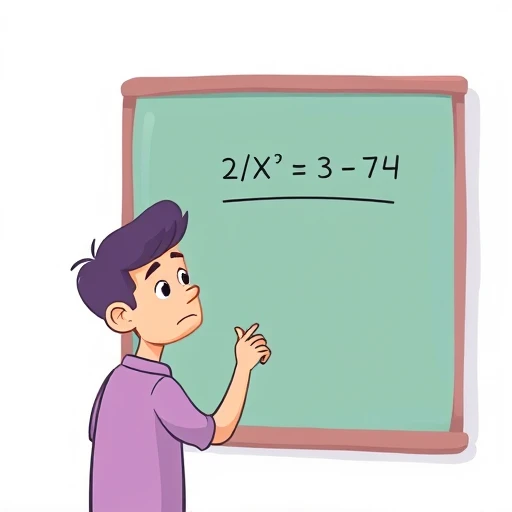
mistake 30초 만에
- A mistake is an unintentional error in action or judgment, often caused by a lack of knowledge, poor focus, or a simple misunderstanding of facts.
- The word is most commonly used with the verb 'make,' as in 'make a mistake,' and is a fundamental part of everyday English vocabulary.
- Mistakes are viewed as natural parts of the learning process, distinguished from intentional wrongdoings by their accidental and non-malicious nature.
- Common synonyms include error, blunder, and slip-up, each carrying different levels of formality and describing various types of unintentional failures.
The word mistake is a fundamental noun in the English language that describes an act, assertion, or belief that unintentionally deviates from what is correct, right, or true. At its core, a mistake is a human occurrence, often born from a lack of knowledge, a lapse in concentration, or a simple error in judgment. Unlike a deliberate choice to do something wrong, a mistake implies that the outcome was not what the person intended. It is a word that carries a sense of fallibility but also provides a pathway for learning and growth. In daily life, we encounter mistakes in various forms, from small typos in a text message to significant financial miscalculations. The beauty of the word lies in its universality; everyone, regardless of their status or intelligence, makes mistakes. Understanding this word involves recognizing the nuance between an accidental slip and a systematic failure. It is often used to soften the blow of a correction, as acknowledging something as a 'mistake' suggests that the person responsible had good intentions but simply failed in the execution. This makes it a crucial term for social cohesion, allowing for apologies and forgiveness.
- The Nature of Error
- A mistake is fundamentally unintentional. It differs from a 'crime' or a 'sin' because the person did not mean to cause the negative outcome. It is the gap between intention and result.
I realized I had made a mistake as soon as I pressed the send button on the email.
In professional settings, the word is used to identify areas for improvement. Managers might discuss a 'strategic mistake' when a business decision does not yield the expected profits. In academic contexts, a student might make a 'calculation mistake' on a math exam. The word is versatile enough to cover both the trivial and the profound. When we talk about 'learning from our mistakes,' we are acknowledging that these errors are not just failures, but valuable data points that help us refine our future actions. This perspective is essential in fields like science and engineering, where 'trial and error'—essentially a series of controlled mistakes—is the primary method of discovery. Furthermore, the word 'mistake' can function as a verb, though this JSON entry focuses on its noun form. As a noun, it often pairs with the verb 'make,' creating the common collocation 'make a mistake.' It is important to note that we never 'do' a mistake; we always 'make' one. This is a common hurdle for English learners who might translate directly from their native languages.
- Social Context
- Using the word 'mistake' in social interactions often serves as a way to take responsibility without necessarily admitting to malice. It is the language of accountability.
It was an honest mistake, and I hope you can forgive me for the confusion.
Culturally, the concept of a mistake varies. In some cultures, admitting a mistake is seen as a sign of great strength and integrity, while in others, it might be viewed as a loss of face. However, in the English-speaking world, particularly in Western business and educational environments, the 'growth mindset' encourages the open discussion of mistakes. This approach suggests that by analyzing what went wrong, we can prevent similar issues in the future. This has led to the popularity of phrases like 'fail fast,' which essentially means making small mistakes early in a process to avoid a catastrophic mistake later on. The word also appears in legal contexts, such as a 'mistake of fact' or a 'mistake of law,' which can influence the outcome of a trial. These technical uses highlight that even in the most rigid systems, the possibility of human error is recognized and accounted for. Whether it is a 'silly mistake' or a 'grave mistake,' the word remains a cornerstone of how we describe the imperfect nature of human existence.
The chef made a mistake by adding salt instead of sugar to the cake batter.
- Emotional Weight
- Mistakes can trigger feelings of guilt, embarrassment, or frustration. However, they are also the primary catalysts for personal evolution and wisdom.
Don't worry about the mistake; we can easily fix it before the presentation starts.
The historical document was full of spelling mistakes because it was written in haste.
Using the word mistake correctly involves understanding its grammatical patterns and common pairings. The most frequent way to use it is with the verb 'make.' For example, 'I made a mistake' is the standard way to admit an error. It is incorrect to say 'I did a mistake.' This distinction is vital for achieving natural-sounding English. The word can be modified by various adjectives to describe the severity or nature of the error. A 'minor mistake' is something small and easily fixed, while a 'major mistake' or 'huge mistake' suggests significant consequences. If an error was made without any bad intention, we often call it an 'honest mistake.' This phrase is particularly useful in professional or social settings to maintain rapport while acknowledging a fault. Another common structure is the prepositional phrase 'by mistake,' which functions as an adverb to describe how an action was performed. For instance, 'I took your umbrella by mistake' explains that the action was unintentional.
- Common Verb Pairings
- The primary verb is 'make.' Others include 'realize,' 'correct,' 'admit,' 'rectify,' 'forgive,' and 'repeat.' You realize a mistake when you notice it, and you rectify it when you fix it.
It is important to admit your mistakes early so they don't become bigger problems.
When discussing the cause of a mistake, we often use the preposition 'in.' For example, 'There was a mistake in the report.' If we want to specify what the mistake was about, we might say 'a mistake about the date.' In more formal writing, you might see 'mistake' used with the preposition 'as to,' such as 'a mistake as to the identity of the witness.' Furthermore, the word often appears in the plural to discuss general experience or learning. 'We all make mistakes' is a common idiom used to comfort someone who is feeling guilty about an error. It emphasizes the shared human experience of imperfection. In academic writing, you might encounter the phrase 'common mistakes,' which refers to errors that many students or researchers frequently make. This helps learners focus on specific areas of difficulty. The word can also be used in the negative to express certainty: 'Make no mistake, this will be a difficult challenge.' In this context, it means 'be certain' or 'do not be under any illusion.'
- Adjective Modifiers
- Common adjectives include: silly, careless, grave, fatal, costly, understandable, and obvious. These help specify the impact and the reason behind the error.
She made a careless mistake by forgetting to lock the front door.
In complex sentences, 'mistake' can serve as the subject or the object. As a subject: 'A small mistake in the code caused the entire system to crash.' As an object: 'The editor found several mistakes in the manuscript.' It can also be used in conditional sentences to discuss hypothetical errors: 'If I had not made that mistake, I would have won the race.' This highlights the causal relationship between an error and its outcome. In the context of relationships, people often talk about 'making a mistake with someone,' which usually refers to a romantic or social error in judgment. The word is also central to the concept of 'trial and error,' where 'error' is a synonym for mistake. This phrase describes a method of problem-solving where various attempts are made until the correct solution is found. Understanding these patterns allows you to use 'mistake' not just as a label for an error, but as a versatile tool for describing human behavior and its consequences.
The company's biggest mistake was ignoring the feedback from its customers.
- Prepositional Usage
- Use 'by mistake' for unintentional actions. Use 'mistake for' when you confuse one thing with another. Example: 'I mistook him for his brother.'
I picked up the wrong keys by mistake this morning.
Correcting a mistake immediately is usually better than trying to hide it.
The word mistake is ubiquitous, appearing in almost every facet of human communication. In the workplace, it is a constant presence. You might hear a colleague say, 'I think there's a mistake in the spreadsheet,' or a manager might address the team after a project failure by saying, 'We need to analyze our mistakes to ensure this doesn't happen again.' In these contexts, the word is often used as a starting point for problem-solving and process improvement. It is also common in customer service; a representative might apologize by saying, 'I am sorry for the mistake with your order.' This usage helps to humanize the company and de-escalate potential conflict. In the world of education, teachers use the word to guide students. You'll hear phrases like, 'Don't be afraid to make mistakes; that's how you learn,' or 'Check your work for any spelling mistakes.' Here, the word is framed as a natural and necessary part of the developmental process.
- Professional Settings
- In meetings, 'mistake' is often used to discuss risks or post-mortem analyses. It is a key term in quality control and project management.
The pilot realized there was a technical mistake in the flight plan before takeoff.
In popular culture, the word 'mistake' is a staple of song lyrics, movie dialogue, and literature. Songs often focus on 'mistakes of the heart' or romantic errors, with lyrics like 'I made a mistake letting you go.' In movies, a 'case of mistaken identity' is a classic plot device where one character is confused for another, leading to comedic or dramatic consequences. News media frequently use the word when reporting on government policy, scientific findings, or public figures. You might read a headline like, 'The Prime Minister admits a mistake in the new tax policy.' In this arena, the word carries significant political weight, as admitting a mistake can be seen as either a sign of honesty or a sign of weakness. Furthermore, in the realm of sports, commentators often talk about 'unforced mistakes' or 'mental mistakes' that cost a team the game. This highlights how mistakes are often the deciding factor in competitive environments.
- Media and Entertainment
- From 'mistaken identity' in Shakespearean comedies to 'fatal mistakes' in modern thrillers, the concept of the error is a central narrative engine.
'My mistake,' he said, after accidentally bumping into her in the hallway.
In daily conversation, the word is used to express regret or to correct oneself. If you say something incorrect and immediately realize it, you might interject with, 'Wait, that was a mistake, I meant to say...' It is also used in the context of advice. Parents often tell their children, 'I don't want you to make the same mistakes I did.' This use of the word as a synonym for 'life lesson' is very common. In digital spaces, you'll see the word in 'error messages' (which are essentially technical mistakes) or in the comments section of social media where people point out 'factual mistakes' in a post. The word is also central to the concept of 'blooper reels' in television, where viewers watch the funny mistakes actors make while filming. This wide range of usage—from the serious and legal to the lighthearted and comedic—demonstrates that 'mistake' is an essential word for navigating the complexities of human interaction and information exchange.
The referee admitted he made a mistake by not calling a foul during the final minute.
- Everyday Idioms
- Phrases like 'make no mistake' and 'by mistake' are heard daily in both formal and informal English.
Make no mistake, the weather today is going to be very dangerous.
I sent the text to my boss by mistake instead of my friend.
One of the most frequent errors English learners make with the word mistake is using the wrong verb. In many languages, the equivalent of 'do' is used with 'mistake.' However, in English, we always 'make' a mistake. Saying 'I did a mistake' is a hallmark of a non-native speaker and should be avoided. Another common confusion arises between 'mistake' and 'error.' While they are often interchangeable, 'error' is typically more formal and technical. You might have a 'computer error' or a 'systematic error,' but you 'make a mistake' in your personal life. 'Error' is also used more in scientific and mathematical contexts to describe the deviation from a true value. Another word often confused with mistake is 'fault.' A 'fault' refers to responsibility or a flaw in someone's character or a machine. For example, 'It's not my fault' means 'I am not responsible for this bad situation,' whereas 'I made a mistake' means 'I did something wrong unintentionally.'
- Mistake vs. Error
- 'Mistake' is common and informal. 'Error' is formal, technical, and often implies a failure to follow a specific rule or standard.
Correct: I made a mistake. Incorrect: I did a mistake.
Preposition usage is another area where learners often stumble. The phrase is 'by mistake,' not 'with mistake' or 'in mistake.' For example, 'I took your bag by mistake.' If you want to say you confused one thing for another, the correct structure is 'mistake [something] for [something else].' For example, 'I mistook the salt for sugar.' Using 'as' instead of 'for' in this context is a common error. Additionally, learners sometimes use 'mistake' as a verb when they should use it as a noun, or vice versa. While 'mistake' can be a verb, its noun form is much more common in everyday English. When used as a verb, it is often in the past participle form 'mistaken,' as in 'I was mistaken about the time.' Another subtle mistake is the use of 'mistake' to describe a deliberate bad action. If someone intentionally hurts another person, it is not a 'mistake'; it is a 'choice' or a 'wrongdoing.' Using 'mistake' in such cases can seem like an attempt to avoid full accountability.
- Mistake vs. Fault
- 'Mistake' is the action. 'Fault' is the responsibility. Example: 'The mistake in the bill was the waiter's fault.'
I mistook her silence for agreement, which was a big mistake.
In writing, people often misspell 'mistake' as 'mistak' or 'mistayk,' though these are less common as learners progress. A more advanced error is the redundant use of 'mistake' with other words that imply error. For example, 'a wrong mistake' is redundant because a mistake is by definition wrong. Similarly, 'an accidental mistake' is redundant because mistakes are inherently accidental. Instead, use adjectives that add new information, like 'costly mistake' or 'silly mistake.' Finally, be careful with the pluralization. While 'mistake' is countable, some learners treat it as uncountable, saying 'I made much mistake' instead of 'I made many mistakes.' Keeping these common pitfalls in mind will help you use the word with greater precision and confidence in both spoken and written English.
There were several mistakes in the final version of the book.
- Redundancy Check
- Avoid saying 'wrong mistake' or 'unintentional mistake.' The word 'mistake' already contains these meanings.
It was a costly mistake that lost the company thousands of dollars.
I realized I was mistaken about the meeting time.
While mistake is the most common word for an error, English offers a rich variety of synonyms that can provide more specific meaning depending on the context. 'Error' is the most direct synonym but is more formal and often used in technical or official contexts. For example, a 'clerical error' sounds more professional than a 'clerical mistake.' 'Blunder' is a much stronger word, implying a careless or stupid mistake that often results in embarrassment. If a politician makes a significant public error, it is often called a 'blunder.' 'Slip-up' is an informal alternative, perfect for minor, accidental errors in daily life. You might say, 'There was a bit of a slip-up with the scheduling.' This sounds less serious than 'mistake.' 'Oversight' refers to a mistake made because someone failed to notice or consider something. It is often used in business to describe a failure in supervision or planning.
- Mistake vs. Blunder
- A mistake can be small. A blunder is usually large, embarrassing, and caused by carelessness.
The general's tactical blunder led to a swift defeat.
Another interesting alternative is 'gaffe,' which specifically refers to a social mistake or a tactless remark. If you accidentally insult someone at a party, you've made a 'gaffe.' In the world of sports and games, 'error' is common (like an error in baseball), but 'misplay' or 'misstep' are also used. 'Misstep' can also be used metaphorically to describe a wrong move in a career or a political strategy. 'Inaccuracy' is a precise word used when something is not factually correct, such as 'an inaccuracy in the report.' 'Flaw' refers to a mistake that is built into something, like a 'flaw in the design.' While a mistake is an action, a flaw is a characteristic. 'Lapse' is used for a temporary failure, such as a 'lapse in concentration' or a 'lapse in judgment.' This implies that the person usually does things correctly but failed this one time.
- Mistake vs. Oversight
- An oversight is specifically a mistake of omission—forgetting to do something or failing to see something.
Leaving his name off the invite list was a complete oversight.
In more literary or old-fashioned English, you might encounter 'erratum' (plural 'errata'), which refers to a mistake in a printed book. 'Fallacy' is a specific type of mistake in reasoning or logic. 'Miscalculation' is used when the mistake involves numbers or the assessment of a situation. For example, 'The army's defeat was due to a major miscalculation of the enemy's strength.' Understanding these synonyms allows you to tailor your language to the specific type of error you are describing. Whether it is a 'minor slip-up' or a 'catastrophic blunder,' choosing the right word helps convey the exact nature and impact of the mistake. By expanding your vocabulary beyond the basic word 'mistake,' you can describe the world with much greater detail and nuance.
The politician's latest gaffe was caught on camera and went viral.
- Synonym Summary
- Use 'error' for formality, 'blunder' for big mistakes, 'slip-up' for small ones, 'gaffe' for social errors, and 'oversight' for things you forgot.
A momentary lapse in judgment can have lifelong consequences.
The scientist corrected the error in the data before publishing the paper.
How Formal Is It?
재미있는 사실
The prefix 'mis-' originally meant 'badly' or 'wrongly,' and it is still used today in words like 'misunderstand' and 'misbehave.'
발음 가이드
- Pronouncing it as 'me-stake' with a long 'e' in the first syllable.
- Stressing the first syllable: 'MIS-take'.
- Dropping the 's' sound: 'mi-take'.
- Pronouncing the 'a' in 'take' as a short 'a' like in 'cat'.
- Not pronouncing the final 'k' clearly.
난이도
The word is very common and easy to recognize in text.
Learners often struggle with the 'make' vs 'do' distinction.
The pronunciation is straightforward, and 'my mistake' is a useful phrase.
It is clearly pronounced and used frequently in many contexts.
다음에 무엇을 배울까
선수 학습
다음에 배울 것
고급
알아야 할 문법
Collocation with 'Make'
Always use 'make' with mistake. 'I made a mistake' (Correct), 'I did a mistake' (Incorrect).
Preposition 'By'
Use 'by mistake' to describe an accidental action. 'I took the wrong coat by mistake.'
Preposition 'For'
Use 'mistake for' when confusing two things. 'I mistook him for the manager.'
Countability
Mistake is countable. 'I made three mistakes on the test.'
Adjective 'Mistaken'
Use 'mistaken' as an adjective. 'I was mistaken about the date.'
수준별 예문
I made a mistake in my homework.
J'ai fait une erreur dans mes devoirs.
Uses 'make a mistake' (verb + noun).
Is this a mistake?
Est-ce une erreur ?
Simple question with 'be' verb.
Sorry, my mistake.
Désolé, c'est mon erreur.
Short, informal expression.
There is a mistake in the name.
Il y a une erreur dans le nom.
'There is' + noun phrase.
Don't make a mistake!
Ne fais pas d'erreur !
Imperative sentence.
He has one mistake on the test.
Il a une erreur au test.
Countable noun usage.
I see a mistake here.
Je vois une erreur ici.
Subject + verb + object.
It was a small mistake.
C'était une petite erreur.
Adjective + noun.
I took your keys by mistake.
J'ai pris vos clés par erreur.
Uses the phrase 'by mistake'.
We made a mistake with the time.
Nous nous sommes trompés d'heure.
'Mistake with' + noun.
She made a mistake in the kitchen.
Elle a fait une erreur dans la cuisine.
Prepositional phrase 'in the kitchen'.
It's easy to make a mistake.
C'est facile de faire une erreur.
It is + adjective + to-infinitive.
I realized my mistake too late.
J'ai réalisé mon erreur trop tard.
Verb 'realize' + object.
There are many mistakes in this letter.
Il y a beaucoup d'erreurs dans cette lettre.
Plural countable noun.
He made a mistake and said the wrong name.
Il a fait une erreur et a dit le mauvais nom.
Compound sentence with 'and'.
Please correct the mistake.
Veuillez corriger l'erreur.
Verb 'correct' + object.
I mistook him for his twin brother.
Je l'ai confondu avec son frère jumeau.
Verb 'mistake' (past: mistook) + for.
It was a mistake to buy such an old car.
C'était une erreur d'acheter une voiture aussi vieille.
It was a mistake + to-infinitive.
The company admitted making a mistake.
L'entreprise a admis avoir fait une erreur.
Verb 'admit' + -ing form.
You should learn from your mistakes.
Tu devrais apprendre de tes erreurs.
Modal verb 'should' + advice.
Make no mistake, this is a serious problem.
Ne vous y trompez pas, c'est un problème sérieux.
Idiomatic expression 'Make no mistake'.
There was a mistake in the calculation of the budget.
Il y avait une erreur dans le calcul du budget.
Noun + prepositional phrase.
She made a mistake in judgment when she quit her job.
Elle a fait une erreur de jugement en démissionnant.
Mistake in judgment.
I hope I didn't make a mistake by coming here.
J'espère que je n'ai pas fait d'erreur en venant ici.
Mistake + by + -ing.
The error was due to a clerical mistake.
L'erreur était due à une faute de bureau.
Adjective 'clerical' modifying 'mistake'.
It was a costly mistake that led to the bankruptcy.
C'était une erreur coûteuse qui a mené à la faillite.
Relative clause 'that led to...'.
He realized he had made a grave mistake.
Il a réalisé qu'il avait commis une grave erreur.
Past perfect 'had made'.
The report was full of factual mistakes.
Le rapport était plein d'erreurs factuelles.
Adjective 'factual' modifying 'mistakes'.
I am afraid there has been some mistake.
J'ai bien peur qu'il y ait eu une erreur.
Present perfect 'has been'.
The team's failure was a result of several mental mistakes.
L'échec de l'équipe était le résultat de plusieurs erreurs mentales.
Noun phrase 'mental mistakes'.
She apologized for the mistake in the invitation.
Elle s'est excusée pour l'erreur dans l'invitation.
Verb 'apologize' + for.
It would be a mistake to ignore the warning signs.
Ce serait une erreur d'ignorer les signes d'avertissement.
Conditional 'would be'.
The policy was based on a fundamental mistake about human nature.
La politique était basée sur une erreur fondamentale concernant la nature humaine.
Abstract usage of 'mistake'.
His career was marred by a series of public mistakes.
Sa carrière a été entachée par une série d'erreurs publiques.
Passive voice 'was marred by'.
The judge ruled that it was a mistake of law, not of fact.
Le juge a statué qu'il s'agissait d'une erreur de droit, et non de fait.
Legal terminology.
The architectural mistake was not discovered until the building was finished.
L'erreur architecturale n'a été découverte qu'une fois le bâtiment terminé.
Complex passive structure.
To assume otherwise would be a grave mistake in strategy.
Supposer le contraire serait une grave erreur de stratégie.
Infinitive phrase as subject.
The translation contained a subtle mistake that changed the meaning entirely.
La traduction contenait une erreur subtile qui changeait totalement le sens.
Relative clause with 'that'.
The experiment failed due to a minor mistake in the procedure.
L'expérience a échoué à cause d'une petite erreur dans la procédure.
'Due to' + noun phrase.
She was determined not to repeat the mistakes of her predecessors.
Elle était déterminée à ne pas répéter les erreurs de ses prédécesseurs.
Negative infinitive 'not to repeat'.
The author's use of anachronisms was a deliberate mistake to create a surreal effect.
L'utilisation d'anachronismes par l'auteur était une erreur délibérée pour créer un effet surréaliste.
Oxymoronic 'deliberate mistake'.
The catastrophic failure was the culmination of a thousand tiny mistakes.
L'échec catastrophique était l'aboutissement de mille petites erreurs.
Metaphorical 'culmination'.
In the grand tapestry of history, this event might be seen as a mere mistake.
Dans la grande tapisserie de l'histoire, cet événement pourrait être considéré comme une simple erreur.
Highly literary metaphor.
The diplomat's gaffe was a mistake that resonated across the globe.
La bévue du diplomate était une erreur qui a résonné à travers le monde.
Using 'gaffe' and 'mistake' together.
To mistake silence for weakness is a common error among the arrogant.
Confondre le silence avec la faiblesse est une erreur courante chez les arrogants.
Infinitive 'To mistake' as subject.
The entire theory was predicated on a fundamental mistake in logic.
Toute la théorie reposait sur une erreur fondamentale de logique.
Passive 'was predicated on'.
He lived a life defined by the mistakes he refused to acknowledge.
Il a vécu une vie définie par les erreurs qu'il refusait de reconnaître.
Relative clause with omitted 'that'.
The beauty of the performance lay in its human mistakes.
La beauté de la performance résidait dans ses erreurs humaines.
Abstract noun usage.
동의어
반의어
자주 쓰는 조합
자주 쓰는 구문
— A short way to say 'I am sorry, I was wrong.' It is used in casual situations.
Oh, my mistake! I thought you were someone else.
— Used to emphasize that what you are saying is true and there should be no doubt.
Make no mistake, this will be a very difficult exam.
— An encouraging phrase meaning that errors are opportunities to gain wisdom.
Don't be sad about the loss; just learn from your mistakes.
— An error made because someone did not think clearly or wisely about a situation.
His decision to quit was a serious mistake in judgment.
— When someone is wrongly thought to be someone else.
The police arrested him in a case of mistaken identity.
— To fix or put right an error that has been made.
We are working hard to rectify the mistake in your account.
— An error that is very obvious and easy to see.
There was a glaring mistake on the front page of the newspaper.
— A mistake that leads to total failure or even death.
The explorer made a fatal mistake by not bringing enough water.
자주 혼동되는 단어
Error is more formal and technical; mistake is more common and personal.
Fault refers to responsibility or a flaw; mistake refers to the wrong action itself.
Wrong is an adjective or a general noun; mistake is a specific countable instance of an error.
관용어 및 표현
— To learn something by making a mistake and suffering the consequences.
I learned the hard way that you should always save your work.
informal— To follow a mistaken line of thought or course of action.
If you think I stole your pen, you're barking up the wrong tree.
informal— Used when a plan has failed (a mistake was made) and you need to start over.
The prototype didn't work, so it's back to the drawing board.
neutral— A small mistake in speaking where you say something you didn't mean to.
I called him by his brother's name; it was just a slip of the tongue.
neutral— A way of finding the right answer by making mistakes and trying again.
We found the solution through a process of trial and error.
neutral— To make a mistake, especially by failing to do your duty or responsibility.
I really dropped the ball by forgetting to call the client.
informal— To make a mistake at the beginning of a relationship or project.
I'm sorry we got off on the wrong foot; let's start over.
informal— To make a mistake by failing to achieve a result or being incorrect.
His prediction about the weather really missed the mark.
neutral— A situation or plan that is likely to result in a major mistake or failure.
Hiring him without an interview is a recipe for disaster.
informal— To have made a mistake or to be responsible for an error.
He admitted he was in the wrong after the argument.
neutral혼동하기 쉬운
They have very similar meanings.
Error is used more in formal, scientific, or technical contexts. Mistake is used in everyday life.
The computer showed an error message, but I made a mistake in typing my password.
Both involve something going wrong.
Fault is about who is to blame. Mistake is about what happened.
It was my fault because I made a mistake.
Both are types of errors.
A blunder is a much bigger, more embarrassing mistake caused by carelessness.
Forgetting my passport was a huge blunder.
Both are unintentional errors.
An oversight is specifically a mistake of forgetting or not noticing something.
It was an oversight not to include you in the email.
Both are mistakes.
A gaffe is specifically a social or public mistake, like saying something rude by accident.
The diplomat's gaffe was reported in all the papers.
문장 패턴
I made a [adjective] mistake.
I made a big mistake.
I [verb] [object] by mistake.
I called the wrong number by mistake.
It was a mistake to [verb].
It was a mistake to leave the window open.
I mistook [A] for [B].
I mistook the salt for sugar.
There was a mistake in [noun phrase].
There was a mistake in the financial report.
Make no mistake, [clause].
Make no mistake, this will be a long journey.
A mistake of [noun].
It was a mistake of judgment.
[Noun] was predicated on a mistake.
The whole plan was predicated on a mistake.
어휘 가족
명사
동사
형용사
관련
사용법
Extremely high in both spoken and written English.
-
I did a mistake.
→
I made a mistake.
In English, the verb 'make' is always used with 'mistake.' 'Do' is for activities; 'make' is for results.
-
I took it with mistake.
→
I took it by mistake.
The correct prepositional phrase for an accidental action is 'by mistake.'
-
I am mistake about the time.
→
I am mistaken about the time.
When describing your state of being wrong, use the adjective 'mistaken.'
-
I mistook him as his brother.
→
I mistook him for his brother.
The verb 'mistake' uses the preposition 'for' to show what the person was confused with.
-
It was a wrong mistake.
→
It was a bad mistake / It was a mistake.
A mistake is by definition wrong, so 'wrong mistake' is redundant. Use 'bad,' 'big,' or 'silly' instead.
팁
Always use 'Make'
The most important rule for learners is to pair 'mistake' with 'make.' Never say 'do a mistake.' This is a very common error that is easy to fix.
Use 'By Mistake'
Learn the phrase 'by mistake' as a single unit. It is the most natural way to say you did something accidentally. Example: 'I sent the text by mistake.'
The Power of 'My Mistake'
In casual conversation, 'My mistake' is a perfect, short apology. It shows you take responsibility without making the situation too serious.
Be Specific
Instead of just saying 'a mistake,' use adjectives like 'minor,' 'major,' 'clerical,' or 'factual' to give your reader more information.
Use 'Oversight'
In an office, calling an error an 'oversight' can sound more professional and less like a personal failure. It implies you just missed something.
Stress the End
Remember to put the stress on the second syllable: mis-TAKE. This will help you sound much more like a native speaker.
Embrace Mistakes
In language learning, mistakes are your friends. Each mistake is a sign that you are trying to use the language. Just make sure to learn from them!
Make No Mistake
Use 'Make no mistake' at the beginning of a sentence when you want to sound very serious and certain about what you are saying.
Listen for 'Mistook'
Be careful when you hear 'mistook.' It is the past tense of the verb 'mistake' and usually means someone confused one thing for another.
Check Your Work
Always take a moment to 'check for mistakes' before finishing a task. This simple habit can prevent many common errors.
암기하기
기억법
Think of 'MIS' as 'Missing' and 'TAKE' as 'Taking'. A mistake is when you are 'Missing the right Take' on a situation.
시각적 연상
Imagine a person trying to put a square peg into a round hole. This visual clearly represents an unintentional error in judgment.
Word Web
챌린지
Try to find three mistakes in a newspaper article today, or write down one mistake you made and how you fixed it.
어원
The word 'mistake' entered English in the mid-14th century. It comes from the Old Norse word 'mistaka,' which literally means 'to take by error.'
원래 의미: To take wrongly or to take in error.
Germanic (Old Norse roots)문화적 맥락
Be careful not to call someone's deeply held belief a 'mistake' unless you are in a formal debate, as it can be offensive.
In the US and UK, admitting a mistake is often seen as a sign of maturity and leadership.
실생활에서 연습하기
실제 사용 상황
Education
- spelling mistake
- grammar mistake
- math mistake
- learn from mistakes
Workplace
- clerical mistake
- strategic mistake
- admit a mistake
- rectify the mistake
Daily Life
- by mistake
- my mistake
- honest mistake
- silly mistake
Relationships
- mistake in judgment
- make a mistake with someone
- forgive a mistake
- regret a mistake
Technology
- technical mistake
- coding mistake
- input mistake
- system mistake
대화 시작하기
"Have you ever made a funny mistake while speaking English?"
"What is the biggest mistake you have ever made at work or school?"
"Do you think it is important for leaders to admit their mistakes?"
"How do you usually feel when you realize you have made a mistake?"
"Can you tell me about a time you took something by mistake?"
일기 주제
Write about a mistake you made recently and what you learned from it.
Describe a 'case of mistaken identity' that you have seen in a movie or experienced yourself.
Do you agree that 'mistakes are the portals of discovery'? Why or why not?
Write a letter to your younger self about a mistake you are glad you made.
How does your culture view people who make public mistakes?
자주 묻는 질문
10 질문It is always 'make a mistake.' In English, 'make' is the verb used for creating or producing something, even if that thing is an error. 'Do' is used for tasks and activities. For example, you 'do your homework' but you 'make a mistake' in it.
'Mistake' is more common in everyday conversation and refers to unintentional actions. 'Error' is more formal and is often used in technical, scientific, or official contexts (e.g., 'system error').
Yes, 'mistake' can be a verb meaning to confuse one thing for another. The past tense is 'mistook' and the past participle is 'mistaken.' Example: 'I mistook her for her sister.'
'By mistake' means accidentally or unintentionally. It is used to explain that an action was not planned. Example: 'I took your umbrella by mistake.'
An 'honest mistake' is an error made without any bad intention or desire to deceive. It is often used when apologizing to show that you were trying to do the right thing.
'Mistake' is a countable noun. You can say 'one mistake,' 'two mistakes,' or 'many mistakes.' You should use 'a' or 'the' with the singular form.
This is an idiomatic phrase used to emphasize that what you are saying is absolutely true and there should be no doubt about it. It means 'be certain.'
In professional settings, you can use words like 'oversight,' 'discrepancy,' 'error,' or 'miscalculation' depending on the specific situation.
A 'glaring mistake' is an error that is very obvious and easy for everyone to see. It is usually a significant or embarrassing error.
No, that is incorrect. You should say 'I am mistaken' (using the adjective) or 'I made a mistake' (using the noun).
셀프 테스트 200 질문
Write a sentence using 'make a mistake'.
Well written! Good try! Check the sample answer below.
Write a sentence using 'by mistake'.
Well written! Good try! Check the sample answer below.
Explain a mistake you made recently.
Well written! Good try! Check the sample answer below.
Use 'mistook' in a sentence.
Well written! Good try! Check the sample answer below.
Write a formal sentence about an error.
Well written! Good try! Check the sample answer below.
How do you feel when you make a mistake?
Well written! Good try! Check the sample answer below.
Write a sentence with 'honest mistake'.
Well written! Good try! Check the sample answer below.
Use 'make no mistake' in a sentence.
Well written! Good try! Check the sample answer below.
Describe a 'blunder'.
Well written! Good try! Check the sample answer below.
Write about learning from mistakes.
Well written! Good try! Check the sample answer below.
Use 'mistaken' as an adjective.
Well written! Good try! Check the sample answer below.
Write a sentence about a 'silly mistake'.
Well written! Good try! Check the sample answer below.
Use 'rectify' and 'mistake' together.
Well written! Good try! Check the sample answer below.
Write a sentence with 'common mistake'.
Well written! Good try! Check the sample answer below.
Use 'mistake' as a verb in the present tense.
Well written! Good try! Check the sample answer below.
Write a sentence about a 'grave mistake'.
Well written! Good try! Check the sample answer below.
Use 'by mistake' at the end of a sentence.
Well written! Good try! Check the sample answer below.
Write a sentence with 'glaring mistake'.
Well written! Good try! Check the sample answer below.
Describe a 'slip-up'.
Well written! Good try! Check the sample answer below.
Write a short apology using 'mistake'.
Well written! Good try! Check the sample answer below.
Say: 'I made a mistake.'
Read this aloud:
당신의 답변:
Speech recognition is not supported in your browser. Try Chrome or Edge.
Say: 'Sorry, my mistake.'
Read this aloud:
당신의 답변:
Speech recognition is not supported in your browser. Try Chrome or Edge.
Say: 'I took it by mistake.'
Read this aloud:
당신의 답변:
Speech recognition is not supported in your browser. Try Chrome or Edge.
Say: 'Make no mistake about it.'
Read this aloud:
당신의 답변:
Speech recognition is not supported in your browser. Try Chrome or Edge.
Say: 'I mistook you for someone else.'
Read this aloud:
당신의 답변:
Speech recognition is not supported in your browser. Try Chrome or Edge.
Explain a small mistake you made today.
Read this aloud:
당신의 답변:
Speech recognition is not supported in your browser. Try Chrome or Edge.
How do you apologize for a mistake?
Read this aloud:
당신의 답변:
Speech recognition is not supported in your browser. Try Chrome or Edge.
Say: 'We should learn from our mistakes.'
Read this aloud:
당신의 답변:
Speech recognition is not supported in your browser. Try Chrome or Edge.
Say: 'It was an honest mistake.'
Read this aloud:
당신의 답변:
Speech recognition is not supported in your browser. Try Chrome or Edge.
Say: 'There is a mistake in the bill.'
Read this aloud:
당신의 답변:
Speech recognition is not supported in your browser. Try Chrome or Edge.
Say: 'I realized my mistake immediately.'
Read this aloud:
당신의 답변:
Speech recognition is not supported in your browser. Try Chrome or Edge.
Say: 'Don't make a silly mistake.'
Read this aloud:
당신의 답변:
Speech recognition is not supported in your browser. Try Chrome or Edge.
Say: 'He admitted he was mistaken.'
Read this aloud:
당신의 답변:
Speech recognition is not supported in your browser. Try Chrome or Edge.
Say: 'The error was a costly mistake.'
Read this aloud:
당신의 답변:
Speech recognition is not supported in your browser. Try Chrome or Edge.
Say: 'It was a grave mistake in judgment.'
Read this aloud:
당신의 답변:
Speech recognition is not supported in your browser. Try Chrome or Edge.
Say: 'I corrected the mistake.'
Read this aloud:
당신의 답변:
Speech recognition is not supported in your browser. Try Chrome or Edge.
Say: 'Is this your mistake?'
Read this aloud:
당신의 답변:
Speech recognition is not supported in your browser. Try Chrome or Edge.
Say: 'I promise not to repeat the mistake.'
Read this aloud:
당신의 답변:
Speech recognition is not supported in your browser. Try Chrome or Edge.
Say: 'It was a case of mistaken identity.'
Read this aloud:
당신의 답변:
Speech recognition is not supported in your browser. Try Chrome or Edge.
Say: 'Everyone makes mistakes.'
Read this aloud:
당신의 답변:
Speech recognition is not supported in your browser. Try Chrome or Edge.
Listen and identify the word: 'I made a big mistake.'
Listen and identify the phrase: 'I did it by mistake.'
Listen and identify the adjective: 'It was a silly mistake.'
Listen and identify the verb: 'He admitted his mistake.'
Listen and identify the phrase: 'Make no mistake.'
Listen and identify the noun: 'The blunder was huge.'
Listen and identify the past tense: 'I mistook him for you.'
Listen and identify the adjective: 'I was mistaken.'
Listen and identify the noun: 'It was an oversight.'
Listen and identify the phrase: 'Common mistakes.'
Listen and identify the verb: 'Correct the mistake.'
Listen and identify the adjective: 'A grave mistake.'
Listen and identify the phrase: 'My mistake.'
Listen and identify the noun: 'Spelling mistake.'
Listen and identify the phrase: 'Learn from mistakes.'
/ 200 correct
Perfect score!
Summary
A mistake is an unintentional error that serves as a universal human experience. It is crucial to remember the phrase 'make a mistake' (not 'do a mistake') and to use it as a tool for accountability and learning. Example: 'I made a mistake on the report, but I have already corrected it.'
- A mistake is an unintentional error in action or judgment, often caused by a lack of knowledge, poor focus, or a simple misunderstanding of facts.
- The word is most commonly used with the verb 'make,' as in 'make a mistake,' and is a fundamental part of everyday English vocabulary.
- Mistakes are viewed as natural parts of the learning process, distinguished from intentional wrongdoings by their accidental and non-malicious nature.
- Common synonyms include error, blunder, and slip-up, each carrying different levels of formality and describing various types of unintentional failures.
Always use 'Make'
The most important rule for learners is to pair 'mistake' with 'make.' Never say 'do a mistake.' This is a very common error that is easy to fix.
Use 'By Mistake'
Learn the phrase 'by mistake' as a single unit. It is the most natural way to say you did something accidentally. Example: 'I sent the text by mistake.'
The Power of 'My Mistake'
In casual conversation, 'My mistake' is a perfect, short apology. It shows you take responsibility without making the situation too serious.
Be Specific
Instead of just saying 'a mistake,' use adjectives like 'minor,' 'major,' 'clerical,' or 'factual' to give your reader more information.
관련 콘텐츠


general 관련 단어
to be
A1나는 학생입니다.
at
A2특정한 장소나 시간을 나타낼 때 사용됩니다. 예: '집에 있어요.'
must
A2당신은 안전벨트를 매야 합니다.
to have
A1가지다 / 있다. 나는 책이 있다 (I have a book). 나는 숙제를 다 했다 (I have finished my homework).
clearly
A2그는 문제를 명확하게 설명했습니다.
false
A2그가 경찰에 한 진술은 완전히 거짓이었다.
event
A2이벤트는 계획된 공공 또는 사교 행사입니다.
to do
A1행동이나 과제를 수행하다.
slowly
A2그는 풍경을 즐기기 위해 공원을 천천히 걸었다.
to get
A1무언가를 얻거나 받다.

