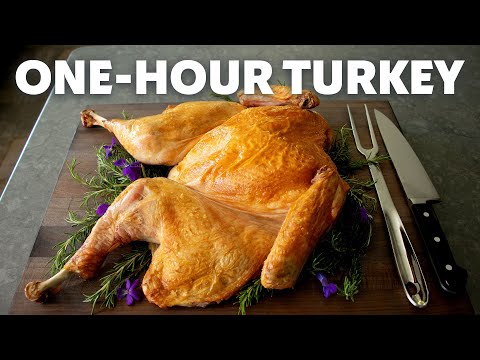
spatchcock 30초 만에
- Spatchcocking is a method of flattening poultry by removing the backbone for faster, more even cooking.
- It is primarily used for chicken and turkey to achieve crispy skin and juicy meat simultaneously.
- The term is a specialized culinary verb common in recipes, cooking shows, and professional butchery.
- Using this technique can reduce roasting time by nearly half compared to traditional whole-bird roasting.
The term spatchcock is a specialized culinary verb that describes a specific method of preparing poultry for cooking. When you spatchcock a bird, you are essentially flattening it out by removing the backbone. This technique is most commonly applied to chicken, but it is also frequently used for turkey, Cornish hens, and even game birds like pheasant or quail. The primary goal of this method is to ensure that the meat cooks more evenly and significantly faster than it would if left in its natural, three-dimensional shape. By laying the bird flat, the heat from the oven or grill can reach all parts of the meat simultaneously, preventing the common problem where the breast meat dries out before the legs and thighs are fully cooked.
- Culinary Context
- Professional chefs and home cooks use this term when discussing preparation techniques for roasting, grilling, or smoking. It is a technical term that implies a level of kitchen proficiency beyond simple roasting.
Before we put the bird on the grill, we need to spatchcock it to ensure the skin gets perfectly crispy and the meat stays juicy.
The process of spatchcocking involves using heavy-duty kitchen shears or a sharp knife to cut along both sides of the spine. Once the backbone is removed, the bird is flipped over and pressed down firmly on the breastbone until it cracks and the entire bird lies flat on the cutting board. This increased surface area allows for a more uniform application of heat. In modern culinary discourse, the word has seen a resurgence in popularity due to the rise of outdoor grilling and the desire for efficient weeknight cooking. It is often used as a synonym for 'butterflying' in the context of whole birds, though 'spatchcock' specifically refers to the removal of the spine, whereas butterflying can refer to slicing any piece of meat to open it like a book.
- Visual Identification
- A spatchcocked bird looks like it is splayed out, with the legs pointing outward and the breast in the center, resembling a large, flat piece of meat rather than a rounded carcass.
The recipe suggests that you spatchcock the Cornish hens so they can be cooked quickly under the broiler.
Beyond the physical act, the word carries a certain 'foodie' or 'gourmet' connotation. Using the word 'spatchcock' instead of 'flatten' or 'cut open' signals that the speaker is familiar with specific culinary traditions and techniques. It is a word heard frequently on television cooking competitions and read in high-end food magazines. While the term originated centuries ago, its modern usage is firmly rooted in the 'slow food' and 'craft cooking' movements where the mechanics of preparation are as celebrated as the final taste. People use it when they want to be precise about their cooking methods, especially when sharing recipes or instructing others in the kitchen. It is a functional, descriptive verb that bridges the gap between traditional butchery and modern home convenience.
- Etymological Nuance
- The word is believed to be an abbreviation of 'dispatch the cock,' referring to the quick preparation of a young rooster for a meal. This historical context emphasizes the speed and efficiency inherent in the method.
If you spatchcock the chicken, you can rub the seasoning directly onto more of the skin surface.
In summary, 'spatchcock' is a verb that transforms a whole bird into a flat, fast-cooking masterpiece. It is used by enthusiasts of grilling, roasting, and smoking who value even heat distribution and crispy skin. It is a word of action, requiring a bit of physical effort and the right tools, but the results are widely considered superior to traditional whole-roasting methods. Whether you are a professional chef or a weekend griller, understanding and using the word 'spatchcock' places you within a community of people who care deeply about the technical aspects of food preparation and the pursuit of the perfect roast.
Using the word spatchcock correctly requires understanding its role as a transitive verb, meaning it needs a direct object—usually a type of poultry. Because it describes a process, it is often found in instructional contexts, recipes, and descriptions of culinary preparation. It can also be used as an adjective in the form of 'spatchcocked' to describe the state of the bird after the procedure has been completed. In sentences, it often appears alongside tools like 'kitchen shears' or 'poultry shears' and goals like 'even cooking' or 'crispy skin'.
- Instructional Usage
- First, you must spatchcock the chicken by removing the spine with a pair of heavy-duty scissors. This is the most common way the word is used in recipes.
The chef demonstrated how to spatchcock a turkey in under five minutes using only a pair of shears.
When using the word in a more casual or descriptive sense, it often highlights the benefits of the technique. For example, one might say, 'I decided to spatchcock the bird this year to save time on Thanksgiving.' Here, the verb is used to explain a choice made for efficiency. It can also be used in the passive voice, such as 'The chicken was spatchcocked and then marinated in a lemon-herb oil.' This shifts the focus to the state of the meat rather than the person performing the action. It is important to remember that 'spatchcock' is almost exclusively a culinary term; using it in other contexts might lead to confusion, although it is occasionally used metaphorically to describe flattening or simplifying a complex structure.
- Descriptive Usage
- The spatchcocked chicken lay flat on the roasting pan, its skin already glistening with olive oil and cracked pepper.
By choosing to spatchcock the pheasant, the cook ensured that the delicate meat would not overcook on the grill.
In professional culinary writing, you might see the word used to describe the presentation of a dish. 'A spatchcocked quail served over a bed of seasonal greens' sounds more sophisticated and descriptive than 'a flat quail.' The word carries an inherent sense of craftsmanship. Furthermore, when discussing grilling techniques, 'spatchcock' is often paired with 'direct heat' or 'indirect heat' to explain how the flattened bird interacts with the fire. For instance, 'Spatchcocking the chicken allows you to cook it over direct heat without burning the outside before the inside is done.' This usage emphasizes the functional advantage of the technique in a specific cooking environment.
- Comparative Usage
- While some prefer to roast a bird whole for the traditional appearance, many modern cooks prefer to spatchcock for the superior texture and speed.
If you don't have shears, you can ask your butcher to spatchcock the bird for you at the counter.
Finally, the word can be used in the context of kitchen equipment. 'Spatchcocking shears' are a specific type of heavy-duty tool designed for this task. Using the verb in this way reinforces its status as a specialized action. Whether you are writing a recipe, describing a meal, or discussing kitchen tools, 'spatchcock' serves as a precise and evocative verb that communicates a specific set of actions and outcomes. It is a word that rewards the user with its specificity, making it a valuable addition to any culinary vocabulary.
The word spatchcock is most frequently encountered in environments where food preparation is the primary focus. If you spend time watching culinary television programs on networks like the Food Network or the Cooking Channel, you will hear this word quite often. Celebrity chefs use it to describe a 'pro tip' for making a roast chicken on a weeknight. It is a staple of the 'how-to' genre of cooking media, where experts demonstrate techniques to help home cooks improve their efficiency and results. In these settings, the word is usually spoken with an air of authority and helpfulness.
- Television and Media
- You will hear it on shows like 'Top Chef' or 'MasterChef' when a contestant is trying to cook a whole bird in a limited amount of time.
'I'm going to spatchcock this chicken to get it on the table in thirty minutes,' the chef explained to the camera.
Another common place to hear the word is at a professional butcher shop. If you are buying a whole chicken but don't want to deal with the backbone yourself, you might ask the butcher, 'Could you spatchcock this for me?' Butchers are very familiar with the term and will immediately know that you want the spine removed and the bird flattened. This interaction is a classic example of the word's use in a commercial culinary setting. Similarly, in high-end restaurants, you might hear the waitstaff use the word when describing the specials of the day, or you might see it printed directly on the menu to describe a featured poultry dish.
- Social and Casual Settings
- Among food enthusiasts and hobbyist cooks, 'spatchcock' is a common topic of conversation when discussing the best way to prepare a holiday turkey.
'Have you ever tried to spatchcock a turkey? It’s a total game-changer for Thanksgiving,' said my neighbor.
In the world of online food blogging and YouTube cooking tutorials, 'spatchcock' is a highly searchable keyword. Many creators dedicate entire videos to the technique, using the word in titles and descriptions to attract viewers looking for faster cooking methods. You will hear it in the voiceovers of these videos as they guide you through the physical steps of the process. The word has a rhythmic, almost percussive sound that makes it memorable, which contributes to its frequent use in digital media. It is also common in culinary textbooks and professional training manuals, where it is treated as a foundational skill for any aspiring chef or butcher.
- Commercial Products
- Many grocery stores now sell 'pre-spatchcocked' chickens that are already marinated and ready to be placed directly onto a roasting tray.
I picked up a spatchcock chicken from the deli section for a quick and easy Friday night dinner.
Lastly, you might hear the word in historical or etymological discussions. Because it has such a unique sound and an interesting backstory (likely coming from 'dispatch cock'), it is a favorite for people who enjoy the history of the English language. In these contexts, the word is discussed not just as a cooking technique, but as a linguistic artifact. However, in 99% of cases, if you hear the word 'spatchcock,' someone is either about to cook a bird, is currently cooking a bird, or is telling you how they cooked a bird. It is a word deeply embedded in the practical, sensory world of the kitchen.
While spatchcock is a relatively straightforward culinary term, there are several common mistakes that people make when using it, both in terms of the technique itself and the language used to describe it. One of the most frequent linguistic errors is confusing 'spatchcock' with 'butterfly.' While they are related techniques, they are not identical. To butterfly a piece of meat generally means to cut it nearly in half but leave it attached so it opens like a book. Spatchcocking specifically requires the removal of the backbone of a whole bird. Using 'butterfly' for a chicken is technically correct in a broad sense, but using 'spatchcock' for a steak or a shrimp is incorrect.
- The 'Butterfly' Confusion
- Mistake: 'I am going to spatchcock this pork loin.' Correct: 'I am going to butterfly this pork loin.' Spatchcocking is for poultry with backbones.
Many people mistakenly think they can spatchcock a piece of fish, but the term is reserved for birds.
Another common mistake is in the spelling and pronunciation. Because the word is somewhat unusual, people often add extra letters or mispronounce the vowels. It is not 'spatch-cook' or 'spatch-coke.' It is 'spatch-cock.' Spelling it as 'spatch-cock' with a hyphen is generally accepted, but the single word 'spatchcock' is the standard in modern culinary writing. Furthermore, some people mistakenly believe that spatchcocking involves removing all the bones from the bird. This is not the case; only the backbone is removed. The ribs, breastbone, and limb bones remain intact to provide structure and flavor during the cooking process.
- Over-application of the Term
- Some people use 'spatchcock' as a general term for any flattened food, but this dilutes the specific meaning of the word and can lead to confusion in professional kitchens.
You shouldn't say you are going to spatchcock a leg of lamb; the correct term there would be 'butterflying' or 'deboning'.
There is also a social mistake to be aware of. Because the second syllable of the word is 'cock,' some people may feel uncomfortable using it or might use it in a way that feels like a double entendre. In a culinary context, however, the word is entirely professional and neutral. Avoiding the word because of its components can actually make you seem less knowledgeable in a kitchen setting. Conversely, making jokes about the word's sound is often seen as immature in a professional or serious culinary environment. The best approach is to use the word confidently and correctly as the technical term it is.
- Misunderstanding the Benefit
- Some believe spatchcocking is only for speed, but it's also for quality. A common mistake is thinking a whole-roasted bird is always juicier; in fact, a spatchcocked bird often retains more moisture because it cooks more evenly.
Don't assume that you can't spatchcock a very large turkey; you just need larger, stronger shears and a bit more leverage.
In summary, the most common mistakes involve using the word for non-poultry items, confusing it with simple butterflying, misspelling it, or failing to perform the final 'flattening' step of the process. By keeping the term strictly for poultry and ensuring the backbone is removed and the breastbone is cracked, you can avoid both linguistic and culinary errors. Using the word correctly signals that you are a competent and knowledgeable cook who understands the nuances of meat preparation.
When discussing the technique of flattening meat for cooking, spatchcock is the most specific term for poultry, but there are several other words that are similar or can be used as alternatives depending on the context. Understanding the differences between these terms will help you choose the most accurate word for your situation. The most common alternative is 'butterfly,' which is a broader term used for many types of meat and seafood. While you can butterfly a chicken, spatchcocking is the more precise term for the specific method of removing the spine.
- Butterfly vs. Spatchcock
- Butterflying involves cutting meat partway through to open it up. Spatchcocking specifically involves the removal of the backbone to flatten a whole bird.
If you don't want to use the technical term, you can simply say you are going to butterfly the chicken, and most people will understand what you mean.
Another related term is 'flatten.' This is a very general verb that can apply to any food item that is made thinner or more level. You might flatten a chicken breast with a meat mallet, but you spatchcock a whole chicken. 'Flatten' describes the result, while 'spatchcock' describes the specific process. Another term you might encounter is 'splay.' To splay something means to spread it out and away from the center. While a spatchcocked bird is splayed, the word 'splay' doesn't carry the specific culinary instruction of removing the bone. It is more of a descriptive word for the final appearance.
- Technical Alternatives
- Terms like 'split' or 'halve' are also used, though they imply a more complete separation of the bird into two distinct pieces, which is not what happens in spatchcocking.
The recipe calls for a split chicken, but spatchcocking it will keep the bird whole and make for a better presentation.
In the context of butchery, you might hear the term 'debone' or 'boned out.' These are much more intensive processes where all or most of the bones are removed. Spatchcocking is a 'semi-boneless' technique by comparison. If a recipe asks for a 'deboned' chicken, spatchcocking it will not be enough, as the ribs and breastbone will still be present. Conversely, if you want the benefits of even cooking but want to keep the bird looking traditional, you might use 'trussing.' Trussing is the opposite of spatchcocking; it involves tying the bird's limbs tightly to its body to create a compact shape. This is done for aesthetic reasons and to ensure the bird fits on a rotisserie, but it often leads to uneven cooking compared to spatchcocking.
- Regional Variations
- In some regions, 'spatchcock' is used as a noun to refer to the bird itself, particularly a young chicken prepared this way. In the US, it is almost exclusively used as a verb or an adjective.
If you are in a hurry, you can flatten the bird using a heavy pan, but spatchcocking is much more effective.
Ultimately, while 'butterfly,' 'flatten,' and 'split' are all useful words, 'spatchcock' remains the gold standard for precision in poultry preparation. It conveys a specific set of instructions that the other words only hint at. When you use the word 'spatchcock,' you are communicating that you know exactly which bone to remove and why you are doing it. This level of detail is what makes it such a valuable term for anyone serious about cooking. Whether you are following a recipe or giving instructions to a butcher, knowing these similar words helps you navigate the culinary world with greater confidence and clarity.
How Formal Is It?
""
""
""
""
""
재미있는 사실
While the term sounds modern and trendy in the world of food blogging, it has been used in English cookbooks for over 200 years. It fell out of common use for a while but was revived by celebrity chefs in the late 20th century.
발음 가이드
- Pronouncing it as 'spatch-cook'.
- Adding an extra 't' sound at the end.
- Over-emphasizing the second syllable.
- Confusing the 'a' sound with an 'e' sound (spetchcock).
- Merging the two syllables into one blurred sound.
난이도
The word is rare in general literature but common in specialized food writing.
Spelling is slightly tricky due to the unusual combination of letters.
Easy to pronounce once you know the two distinct syllables.
Can be easily missed if the listener is not familiar with culinary jargon.
다음에 무엇을 배울까
선수 학습
다음에 배울 것
고급
알아야 할 문법
Transitive Verbs
You must spatchcock *the chicken* (object).
Participial Adjectives
The *spatchcocked* bird is on the table.
Gerunds as Subjects
*Spatchcocking* is a great way to save time.
Infinitive of Purpose
He used shears *to spatchcock* the hen.
Passive Voice in Recipes
The bird *is spatchcocked* and then seasoned.
수준별 예문
I want to spatchcock the chicken today.
I want to make the chicken flat.
Subject + want to + verb.
Can you spatchcock this bird?
Can you cut the bird to be flat?
Question with 'can'.
He will spatchcock the chicken for dinner.
He will prepare the chicken flat.
Future tense with 'will'.
Spatchcock the chicken to cook it fast.
Make it flat so it cooks quickly.
Imperative sentence (instruction).
Is this a spatchcock chicken?
Is this chicken flat?
Simple present question.
I like spatchcock chicken.
I like the taste of flat chicken.
Subject + verb + object.
We spatchcock the bird now.
We are making it flat now.
Simple present for current action.
Do not spatchcock the small bird.
Don't make the small bird flat.
Negative imperative.
You should spatchcock the chicken before grilling it.
It is a good idea to flatten the chicken.
Modal verb 'should' for advice.
My mother learned how to spatchcock a turkey last year.
She learned the flattening method.
Past tense 'learned' + 'how to'.
If you spatchcock the bird, it cooks more evenly.
Flattening helps the heat reach everywhere.
First conditional (If + present, present).
The butcher is spatchcocking the chicken for me.
The butcher is doing the flattening now.
Present continuous tense.
We need sharp shears to spatchcock this turkey.
We need strong scissors for this task.
Noun phrase 'sharp shears'.
Have you ever spatchcocked a chicken before?
Have you tried this method in the past?
Present perfect question.
It is easy to spatchcock a chicken if you follow the steps.
The process is not hard with instructions.
It is + adjective + to-infinitive.
The recipe says to spatchcock the bird and add lemon.
Flatten it and then use lemon.
Reporting what a text says.
I decided to spatchcock the chicken to save time on a busy Tuesday.
I chose this method for efficiency.
Infinitive of purpose 'to save time'.
By spatchcocking the bird, you can ensure the skin gets very crispy.
This method helps with the texture of the skin.
Gerund phrase 'By spatchcocking'.
She asked the butcher to spatchcock the chicken so she wouldn't have to do it herself.
She wanted the professional to handle the preparation.
Complex sentence with 'so' for result.
The main advantage of choosing to spatchcock is the even cooking of the meat.
The best part is that all the meat cooks at the same rate.
Gerund as the object of a preposition.
If you don't spatchcock the turkey, it might take twice as long to roast.
Roasting a whole turkey is much slower.
Negative conditional sentence.
Many chefs prefer to spatchcock poultry when they are using a grill.
Grilling is better when the bird is flat.
Adverbial clause of time 'when...'
After you spatchcock the chicken, you should season it thoroughly.
Flatten it first, then add spices.
Sequence of actions with 'After'.
I've never spatchcocked a pheasant, but I imagine the process is similar.
I think the method works for other birds too.
Present perfect with 'never'.
Spatchcocking is an essential technique for anyone who wants to master the art of roasting.
It is a key skill for serious cooks.
Gerund as a subject.
The bird was spatchcocked and then rubbed with a blend of smoked paprika and garlic.
The preparation involved flattening and then seasoning.
Passive voice 'was spatchcocked'.
Unless you spatchcock the chicken, the breast meat will likely dry out before the legs are done.
Without this method, the meat won't cook correctly.
Conditional with 'Unless'.
The culinary instructor demonstrated how to spatchcock a bird without damaging the skin.
The goal was to keep the skin intact while flattening.
Prepositional phrase 'without damaging'.
I prefer to spatchcock my Thanksgiving turkey because it allows for more space in the oven.
A flat turkey leaves room for other dishes.
Causal clause with 'because'.
Having spatchcocked the chicken, he was able to grill it in record time.
Because he flattened it, it cooked very fast.
Perfect participle 'Having spatchcocked'.
The recipe suggests that you spatchcock the bird to maximize the surface area for the marinade.
More surface area means more flavor from the sauce.
Subjunctive mood after 'suggests that'.
While it may seem daunting, to spatchcock a bird is actually a very straightforward task.
It looks hard but it is simple.
Infinitive phrase as a subject.
The sheer efficiency of choosing to spatchcock the poultry cannot be overstated in a high-volume kitchen.
It is incredibly helpful when you have a lot of food to cook.
Complex noun phrase 'The sheer efficiency of...'
By choosing to spatchcock, the chef effectively bypassed the traditional unevenness of a whole roast.
The chef avoided the common problems of roasting.
Adverbial use of 'effectively'.
The term 'spatchcock' is thought to be an 18th-century Irish abbreviation of 'dispatch the cock'.
The word has an interesting historical origin.
Passive reporting verb 'is thought to be'.
One must be careful when you spatchcock a bird to ensure the shears do not slip and cause injury.
Safety is important during this technical process.
Use of the formal pronoun 'one'.
The spatchcocked pheasant was presented with its legs splayed, emphasizing its rustic preparation.
The look of the dish highlighted its simple, traditional style.
Participial adjective 'spatchcocked'.
Should you choose to spatchcock the turkey, you will find that the dark meat reaches its ideal temperature much faster.
If you use this method, the legs cook better.
Inverted conditional 'Should you choose'.
The versatility of the spatchcock method makes it ideal for various cuisines, from Mediterranean to Asian.
This technique works well with many different flavors.
Abstract noun 'versatility'.
In his latest cookbook, the author advocates for spatchcocking as the definitive way to roast a chicken.
The author says this is the best possible method.
Verb 'advocates for' + gerund.
The decision to spatchcock the bird was a tactical maneuver to ensure the skin achieved a glass-like shatter.
It was a smart move to get the skin perfectly crispy.
Metaphorical use of 'tactical maneuver'.
To spatchcock is to fundamentally alter the thermodynamics of the roasting process.
It changes how heat moves through the meat.
Parallel infinitive structure.
The etymological roots of 'spatchcock' reflect a historical necessity for culinary expediency.
The word's history shows people needed to cook fast.
Sophisticated vocabulary like 'expediency'.
While some purists decry the lack of a traditional silhouette, others laud the spatchcock method for its technical superiority.
Some like the old look, but many prefer the better results.
Contrastive structure with 'decry' and 'laud'.
The chef’s dexterity was evident as he began to spatchcock the quail with surgical precision.
He was very skillful and careful with the small bird.
Simile 'with surgical precision'.
The recipe’s insistence that one spatchcock the bird underscores the importance of even heat distribution.
The recipe says you must do it to get the best heat.
Subjunctive 'that one spatchcock'.
In the realm of professional butchery, to spatchcock is a foundational skill that precedes more complex deboning.
It is a basic but important skill for butchers.
Complex sentence with a relative clause.
The resulting dish, a spatchcocked hen with a pomegranate glaze, was a masterclass in texture and flavor.
The meal was a perfect example of great cooking.
Appositive phrase 'a spatchcocked hen...'.
자주 쓰는 조합
자주 쓰는 구문
Spatchcock it!
The spatchcock technique
Spatchcocked to perfection
Easy-to-spatchcock
Spatchcock for speed
A spatchcocked roast
Learn to spatchcock
Spatchcocking for evenness
The spatchcock advantage
Spatchcocking 101
자주 혼동되는 단어
Butterflying is a general term for opening any meat; spatchcocking is specific to removing the spine of poultry.
Trussing is the opposite; it makes the bird compact and round, while spatchcocking makes it flat.
Deboning usually means removing all bones; spatchcocking only removes the backbone.
관용어 및 표현
"spatchcocked together"
To put something together in a hurried or makeshift way (rare, metaphorical).
The new law was spatchcocked together at the last minute.
informal"flat as a spatchcock"
Extremely flat (descriptive, often used in culinary contexts).
After I pressed it down, the bird was as flat as a spatchcock.
neutral"dispatch the cock"
The historical phrase from which 'spatchcock' is derived, meaning to kill and prepare quickly.
In the old days, they would dispatch the cock for unexpected guests.
archaic"spatchcock a deal"
To rush or flatten the details of a business arrangement (very rare).
They tried to spatchcock a deal before the deadline.
slang"the spatchcock way"
Doing something the efficient, albeit slightly aggressive, way.
We're doing this the spatchcock way: fast and effective.
informal"spatchcocking the truth"
Flattening or simplifying the truth to make it easier to swallow (metaphorical).
The politician was accused of spatchcocking the truth during the debate.
informal"butterfly and spatchcock"
To use every trick in the book for meat preparation.
He went all out, using butterfly and spatchcock techniques for the feast.
neutral"spatchcocked and ready"
Fully prepared and ready for the next step (usually cooking).
The chickens are spatchcocked and ready for the grill.
neutral"no spine, all spatchcock"
A joke referring to the removal of the backbone.
This chicken has no spine, it's all spatchcock now!
informal"spatchcocked into the schedule"
To force something into a tight schedule (metaphorical).
We spatchcocked a meeting into the lunch break.
informal혼동하기 쉬운
Both involve flattening meat.
Spatchcocking is a specific type of butterflying that involves removing the backbone of a whole bird. You can butterfly a shrimp, but you can't spatchcock it.
I butterflied the pork chop, but I spatchcocked the chicken.
Both involve cutting the bird open.
Splitting often results in two separate pieces (halves), whereas spatchcocking keeps the bird as one single, flat piece.
I split the chicken for two people, but I spatchcocked it for the grill.
Both describe the final shape.
Flattening can be done with a mallet on a single piece of meat. Spatchcocking is a structural change to a whole carcass.
Flatten the breasts with a hammer, but spatchcock the whole bird with shears.
Both are ways to prepare a bird for roasting.
Trussing uses string to tie the bird into a tight ball. Spatchcocking does the exact opposite by spreading it out.
Truss the bird for the rotisserie, but spatchcock it for the baking sheet.
Both involve cutting a bird.
Carving is done after cooking to serve the meat. Spatchcocking is done before cooking to prepare the bird.
I will spatchcock the bird now and carve it after it rests.
문장 패턴
I like [spatchcock chicken].
I like spatchcock chicken.
You should [spatchcock] the [bird].
You should spatchcock the turkey.
I [spatchcocked] the [bird] to [save time].
I spatchcocked the chicken to save time.
By [spatchcocking] the [bird], you [result].
By spatchcocking the bird, you get crispier skin.
The [benefit] of [spatchcocking] is [explanation].
The primary benefit of spatchcocking is the uniform heat distribution.
To [spatchcock] is to [complex result].
To spatchcock is to fundamentally improve the roasting dynamics.
The [bird] was [spatchcocked] by [person].
The chicken was spatchcocked by the butcher.
If you don't [spatchcock], then [negative result].
If you don't spatchcock, the meat will cook unevenly.
어휘 가족
명사
동사
형용사
관련
사용법
Common in culinary circles, rare in general conversation.
-
Using 'spatchcock' for beef or pork.
→
Use 'butterfly' for non-poultry meats.
Spatchcocking is a term specifically reserved for birds because it involves removing the spine. For a steak or a loin, 'butterflying' is the correct term.
-
Forgetting to crack the breastbone.
→
Press down firmly until you hear a crack.
If you remove the spine but don't crack the breastbone, the bird will still have a rounded shape and won't cook as evenly as a truly flat spatchcocked bird.
-
Spelling it as 'spatchcook'.
→
Spatchcock.
The word comes from 'dispatch cock,' not 'cook.' While it is a cooking method, the spelling reflects its historical roots.
-
Thinking it means 'deboning'.
→
It is only 'partial deboning'.
Spatchcocking only removes the backbone. All the other bones remain in the bird. If a recipe asks for a 'deboned' chicken, spatchcocking is not enough.
-
Trying to stuff a spatchcocked bird.
→
Cook the stuffing separately or underneath.
A spatchcocked bird has no cavity. Trying to pile stuffing on top will just make the skin soggy and the meat cook unevenly.
팁
Watch Your Fingers
When using shears to cut the backbone, always cut away from your body and keep your other hand clear of the blades. The bone can be slippery, and you don't want the shears to jump.
Dry the Skin
After you spatchcock the bird, pat the skin completely dry with paper towels. This, combined with the flat shape, will ensure you get the maximum possible crispiness during roasting.
Plan for Less Time
Remember that a spatchcocked bird cooks about 30-50% faster. Start checking the internal temperature much earlier than you would for a traditional whole roast to avoid overcooking.
Season Both Sides
One of the best parts of spatchcocking is that you can easily season the inside of the bird as well as the outside. Don't forget to rub spices on the underside for extra flavor.
Invest in Quality Shears
If you plan to spatchcock often, buy a pair of dedicated poultry shears with a spring-loaded handle. They make the job much easier on your hands than standard kitchen scissors.
Garnish the Tray
Since a spatchcocked bird is flat, you can surround it with colorful vegetables like carrots, potatoes, and onions. They will cook in the juices and make the final presentation look beautiful.
Stock is Gold
Collect the backbones in a bag in your freezer. Once you have three or four, you can make a large batch of high-quality chicken stock for soups and stews.
The Crack is Key
Don't be afraid to use some force when pressing down on the breastbone. If the bird isn't flat, you lose the main benefit of the technique. Listen for that satisfying crack!
Ask for Help
If you are intimidated by the process, watch your butcher do it once. Most are happy to show you the technique, and you can learn exactly where to make the cuts.
Read the Recipe
Always check if a recipe assumes a whole bird or a spatchcocked one. The cooking times and temperatures will be very different, so it's important to know which method is intended.
암기하기
기억법
Think of 'Dispatching' (finishing quickly) a 'Cock' (a bird). Spatch-cock. You are dispatching the bird's round shape to make it flat and fast.
시각적 연상
Imagine a chicken doing a 'belly flop' onto a roasting pan. It's perfectly flat and spread out, just like a spatchcocked bird.
Word Web
챌린지
Try to explain the spatchcock method to a friend using only five sentences. Make sure to mention the backbone and the benefit of speed.
어원
The word 'spatchcock' is widely believed to have originated in Ireland during the 18th century. It is thought to be a contraction of the phrase 'dispatch the cock,' which referred to the practice of quickly killing and preparing a young rooster for a meal, especially when unexpected guests arrived. The 'dispatch' part refers to the speed of the preparation, while 'cock' refers to the bird.
원래 의미: To quickly prepare a fowl for roasting by splitting it open.
English (Germanic origin roots with Irish influence).문화적 맥락
The word is entirely professional in a culinary context, but be aware that the second syllable is a slang term for male genitalia; use it confidently as a cooking term to avoid any awkwardness.
Commonly heard in the UK, US, Australia, and South Africa, particularly in grilling and barbecue communities.
실생활에서 연습하기
실제 사용 상황
Thanksgiving Preparation
- spatchcock the turkey
- save oven space
- crispy skin
- even cooking
Summer Barbecue
- grill a spatchcock chicken
- direct heat
- charred skin
- fast grilling
Butcher Shop
- can you spatchcock this?
- remove the spine
- ready for the oven
- weight after spatchcocking
Cooking Class
- demonstrate the spatchcock
- use kitchen shears
- break the breastbone
- lay it flat
Food Blogging
- the ultimate spatchcock recipe
- why you should spatchcock
- step-by-step guide
- game-changer technique
대화 시작하기
"Have you ever tried to spatchcock a chicken, or do you prefer roasting it whole?"
"Do you think spatchcocking really makes a difference in how juicy the turkey stays?"
"What are the best tools you've found for spatchcocking a large bird?"
"I'm thinking of spatchcocking our holiday roast this year; do you have any tips?"
"Is 'spatchcock' a word you use often, or do you just say 'butterfly'?"
일기 주제
Describe a time you tried a new cooking technique like spatchcocking. Was it successful?
Write a set of instructions for a beginner on how to spatchcock a chicken.
Discuss the pros and cons of spatchcocking versus traditional roasting for a large family dinner.
How does using specific culinary terms like 'spatchcock' change the way you feel about your cooking skills?
Imagine you are a chef explaining the benefits of spatchcocking to a customer who is worried about the bird looking 'flat'.
자주 묻는 질문
10 질문While you can use a very sharp chef's knife, it is much safer and easier to use heavy-duty kitchen shears or poultry shears. These are designed to cut through the bone of the spine without slipping. Using the right tools makes the process take only a few minutes and reduces the risk of injury.
Yes, you absolutely can spatchcock a turkey! It is a very popular method for Thanksgiving because it allows a large turkey to cook in about 80 to 90 minutes instead of several hours. You will just need very strong shears and a bit more physical strength to crack the larger breastbone.
Actually, it's the opposite. Because the bird cooks more evenly, you don't have to overcook the breast meat while waiting for the legs to finish. This results in a much juicier bird overall. The increased surface area also helps the skin get crispier, which locks in more flavor.
They are very similar, and in casual conversation, people often use them interchangeably. However, 'spatchcock' specifically refers to removing the backbone of poultry. 'Butterfly' is a more general term that can apply to any meat, like a leg of lamb or a shrimp, that is cut open to lie flat.
Never throw the backbone away! It is full of flavor and collagen. You can use it to make a delicious homemade chicken stock, or you can roast it alongside the bird and use the drippings to make a rich gravy. It's a great way to reduce waste in the kitchen.
You cannot stuff it in the traditional way because there is no longer a cavity to hold the stuffing. However, many people cook the stuffing in the pan underneath the flattened bird. This allows the stuffing to soak up all the delicious juices as the chicken roasts, which many people think tastes even better.
It has a different, more 'rustic' look than a traditional whole roast. While it might not have the classic 'Norman Rockwell' silhouette, many people find the golden, crispy, splayed-out bird to be very appetizing. You can also carve it much more easily at the table.
After you remove the backbone, flip the bird over so the skin side is up. Place the palms of your hands on the center of the breastbone and press down firmly and quickly. You should hear a 'crack.' This flattens the bird so it lies completely level on your cooking surface.
No, you must fully thaw the bird before attempting to spatchcock it. Trying to cut through the spine of a frozen or partially frozen bird is dangerous because your shears or knife are much more likely to slip. Always ensure the poultry is completely defrosted for safety and the best results.
It is excellent for both! In the oven, it ensures even roasting and crispy skin. On the grill, it is almost essential for a whole bird because it allows the meat to lie flat against the heat source, preventing the outside from burning before the inside is cooked through. It's a versatile technique for any heat source.
셀프 테스트 180 질문
Write a sentence using 'spatchcock' as a verb.
Well written! Good try! Check the sample answer below.
Describe the main benefit of spatchcocking in your own words.
Well written! Good try! Check the sample answer below.
Explain the difference between spatchcocking and trussing.
Well written! Good try! Check the sample answer below.
Write a short instruction for a butcher to spatchcock a bird.
Well written! Good try! Check the sample answer below.
Why is spatchcocking popular for Thanksgiving?
Well written! Good try! Check the sample answer below.
Use 'spatchcocked' as an adjective in a sentence.
Well written! Good try! Check the sample answer below.
What tools do you need to spatchcock a bird? List them.
Well written! Good try! Check the sample answer below.
Explain the historical origin of the word 'spatchcock'.
Well written! Good try! Check the sample answer below.
How do you ensure a spatchcocked bird is truly flat?
Well written! Good try! Check the sample answer below.
Write a menu description for a spatchcocked chicken dish.
Well written! Good try! Check the sample answer below.
Is spatchcocking better for the grill or the oven? Why?
Well written! Good try! Check the sample answer below.
What should you do with the backbone after you remove it?
Well written! Good try! Check the sample answer below.
Write a dialogue between two people discussing how to cook a turkey.
Well written! Good try! Check the sample answer below.
Describe the physical appearance of a spatchcocked bird.
Well written! Good try! Check the sample answer below.
Why is 'butterfly' sometimes used instead of 'spatchcock'?
Well written! Good try! Check the sample answer below.
What is the most important safety tip for spatchcocking?
Well written! Good try! Check the sample answer below.
How does spatchcocking affect the skin of the bird?
Well written! Good try! Check the sample answer below.
Can you spatchcock a pheasant? Why or why not?
Well written! Good try! Check the sample answer below.
Write a sentence using 'spatchcocking' as a gerund (subject).
Well written! Good try! Check the sample answer below.
Summarize the benefits of the spatchcock method in three words.
Well written! Good try! Check the sample answer below.
Pronounce 'spatchcock' out loud. Focus on the 'a' and 'o' sounds.
Read this aloud:
당신의 답변:
Speech recognition is not supported in your browser. Try Chrome or Edge.
Explain the spatchcock method to a partner in three sentences.
Read this aloud:
당신의 답변:
Speech recognition is not supported in your browser. Try Chrome or Edge.
Ask a butcher to spatchcock a chicken for you.
Read this aloud:
당신의 답변:
Speech recognition is not supported in your browser. Try Chrome or Edge.
Tell a friend why they should spatchcock their turkey this year.
Read this aloud:
당신의 답변:
Speech recognition is not supported in your browser. Try Chrome or Edge.
Describe the tools you need to spatchcock a bird.
Read this aloud:
당신의 답변:
Speech recognition is not supported in your browser. Try Chrome or Edge.
Use 'spatchcocked' in a sentence about a meal you had.
Read this aloud:
당신의 답변:
Speech recognition is not supported in your browser. Try Chrome or Edge.
Explain the etymology of 'spatchcock' to a group.
Read this aloud:
당신의 답변:
Speech recognition is not supported in your browser. Try Chrome or Edge.
Discuss the pros and cons of spatchcocking vs. roasting whole.
Read this aloud:
당신의 답변:
Speech recognition is not supported in your browser. Try Chrome or Edge.
Roleplay: You are a chef teaching a student how to spatchcock.
Read this aloud:
당신의 답변:
Speech recognition is not supported in your browser. Try Chrome or Edge.
What is the most difficult part of spatchcocking? Talk about it.
Read this aloud:
당신의 답변:
Speech recognition is not supported in your browser. Try Chrome or Edge.
How do you feel about the word 'spatchcock'? Is it a fun word to say?
Read this aloud:
당신의 답변:
Speech recognition is not supported in your browser. Try Chrome or Edge.
Tell a story about a time you cooked a spatchcocked bird.
Read this aloud:
당신의 답변:
Speech recognition is not supported in your browser. Try Chrome or Edge.
If you were writing a cookbook, would you include a spatchcock recipe? Why?
Read this aloud:
당신의 답변:
Speech recognition is not supported in your browser. Try Chrome or Edge.
Explain the difference between 'butterfly' and 'spatchcock' to someone.
Read this aloud:
당신의 답변:
Speech recognition is not supported in your browser. Try Chrome or Edge.
What would you say to someone who thinks spatchcocking is too hard?
Read this aloud:
당신의 답변:
Speech recognition is not supported in your browser. Try Chrome or Edge.
Describe the sound of the breastbone cracking during spatchcocking.
Read this aloud:
당신의 답변:
Speech recognition is not supported in your browser. Try Chrome or Edge.
How does spatchcocking change the presentation of a dish?
Read this aloud:
당신의 답변:
Speech recognition is not supported in your browser. Try Chrome or Edge.
Why is it important to use sharp shears? Explain.
Read this aloud:
당신의 답변:
Speech recognition is not supported in your browser. Try Chrome or Edge.
Can you use the word 'spatchcock' metaphorically? Give an example.
Read this aloud:
당신의 답변:
Speech recognition is not supported in your browser. Try Chrome or Edge.
Summarize the entire spatchcocking process in 30 seconds.
Read this aloud:
당신의 답변:
Speech recognition is not supported in your browser. Try Chrome or Edge.
Listen for the word 'spatchcock' in a cooking video. What was the chef doing when they said it?
In a podcast about food history, what origin is given for 'spatchcock'?
A chef says: 'Spatchcocking is the secret to a 45-minute roast.' How long does the roast take?
Listen to a butcher's instructions. What part of the bird do they say to remove?
If someone says 'I'm going to butterfly the chicken,' are they doing something similar to spatchcocking?
A person says: 'I forgot to crack the breastbone.' What will happen to their spatchcocked bird?
In a recipe, the narrator says: 'Now, spatchcock your bird.' What is the next physical action they take?
Listen for the stress in the word 'spatchcock'. Which syllable is louder?
A chef mentions 'spatchcocking shears'. What are they used for?
If you hear 'spatchcocked turkey' on the news in November, what holiday is being discussed?
A narrator says: 'The bird was spatchcocked spread-eagle.' What does this describe?
Listen to a debate about roasting. Why does one person prefer spatchcocking?
A chef says: 'Don't discard the spine.' What should you do with it instead?
If someone says 'spatchcock' in a restaurant, are they likely in the kitchen or the dining room?
Listen for the 'k' sound at the end of 'spatchcock'. Is it soft or sharp?
/ 180 correct
Perfect score!
Summary
The word 'spatchcock' is an essential culinary term for anyone looking to improve their roasting or grilling skills. By flattening the bird, you solve the problem of uneven cooking. For example: 'If you spatchcock the chicken, the legs and breast will finish at the same time.'
- Spatchcocking is a method of flattening poultry by removing the backbone for faster, more even cooking.
- It is primarily used for chicken and turkey to achieve crispy skin and juicy meat simultaneously.
- The term is a specialized culinary verb common in recipes, cooking shows, and professional butchery.
- Using this technique can reduce roasting time by nearly half compared to traditional whole-bird roasting.
Watch Your Fingers
When using shears to cut the backbone, always cut away from your body and keep your other hand clear of the blades. The bone can be slippery, and you don't want the shears to jump.
Dry the Skin
After you spatchcock the bird, pat the skin completely dry with paper towels. This, combined with the flat shape, will ensure you get the maximum possible crispiness during roasting.
Plan for Less Time
Remember that a spatchcocked bird cooks about 30-50% faster. Start checking the internal temperature much earlier than you would for a traditional whole roast to avoid overcooking.
Season Both Sides
One of the best parts of spatchcocking is that you can easily season the inside of the bird as well as the outside. Don't forget to rub spices on the underside for extra flavor.