









antikythera in 30 Seconds
- Antikythera is a Greek island famous for the discovery of an ancient analog computer, known as the Antikythera mechanism, which dates back to the 2nd century BCE.
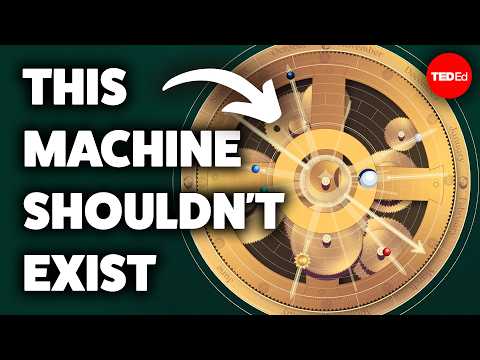
- The device is a complex system of bronze gears used by ancient Greeks to track astronomical cycles, predict eclipses, and model the movements of planets.
- Discovered in a shipwreck in 1901, it is considered the world's oldest known computer and a masterpiece of Hellenistic engineering and mathematical science.
- Today, the fragments are kept in the National Archaeological Museum in Athens, where they continue to be studied using advanced 3D imaging and X-ray technology.
The term Antikythera primarily refers to the Antikythera mechanism, a discovery that fundamentally altered our understanding of ancient history and technological progression. Found in a shipwreck off the coast of the Greek island of Antikythera in 1901, this device is widely considered the world's first analog computer. It is a complex assembly of bronze gears that was used to track the cycles of the Solar System, predict solar and lunar eclipses, and even model the irregular orbit of the Moon. When people use this word today, they are often discussing the intersection of archaeology, engineering, and the surprising sophistication of Hellenistic science. It serves as a powerful reminder that human ingenuity does not always follow a linear path of progress; sometimes, advanced knowledge is lost for centuries before being rediscovered. The mechanism dates back to the 2nd century BCE, a time when such mechanical complexity was previously thought to be impossible. Scholars and enthusiasts use the name to evoke themes of mystery, ancient wisdom, and the 'out-of-place artifact' (OOPArt) phenomenon, although the latter is often dismissed by serious historians who see it as a peak of known Greek mathematical tradition.
- Historical Context
- The device was recovered from a Roman cargo ship that sank around 60-70 BCE. It remained submerged for nearly two thousand years until sponge divers stumbled upon the wreck. The complexity of its thirty-plus bronze gears was not fully understood until the late 20th century when X-ray and CT imaging revealed its internal workings.
The discovery of the Antikythera mechanism forced historians to rewrite the timeline of mechanical engineering by over a thousand years.
In contemporary conversation, the word is frequently invoked in discussions about the 'Great Divergence' or the 'Lost Knowledge' of antiquity. It is a favorite subject for science communicators like Brian Cox or Neil deGrasse Tyson when they want to illustrate how advanced the Greeks were in their observations of the cosmos. The mechanism could track the four-year cycle of the ancient Olympic Games, showing that it was not just a scientific tool but also a cultural one. Its name is synonymous with the 'Antikythera shipwreck,' which remains one of the richest underwater archaeological sites ever discovered, yielding statues, jewelry, and pottery alongside the famous device. When you hear 'Antikythera,' you should immediately think of bronze gears, astronomical precision, and the deep blue waters of the Aegean Sea. It represents a bridge between the abstract geometry of Euclid and the practical mechanics of the Industrial Revolution.
- Scientific Significance
- The device utilized differential gearing, a concept previously thought to have been invented in the 16th century. It could calculate the positions of the five known planets (Mercury, Venus, Mars, Jupiter, and Saturn) with remarkable accuracy for its time.
Archaeologists spent decades cleaning the calcified fragments of the Antikythera device before realizing it contained moving parts.
Furthermore, the word 'Antikythera' is used in the context of heritage management and the ethics of underwater archaeology. The recovery of the fragments was a haphazard process in 1901, involving primitive diving suits and high risks. Today, the Antikythera Mechanism Research Project uses cutting-edge technology to study the device without damaging its fragile structure. This ongoing research continues to reveal new inscriptions on the back of the device, which act as a sort of 'user manual' for the ancient operator. These inscriptions confirm that the device was used for both scientific observation and astrological prediction, reflecting the worldview of the time where the two were inextricably linked. The word also appears in popular culture, most notably as a plot device in films and novels that explore the idea of ancient high-technology. However, in these contexts, the word is often romanticized or exaggerated, moving away from the grounded reality of Hellenistic craftsmanship.
- Cultural Impact
- The mechanism is currently housed in the National Archaeological Museum in Athens. It remains a symbol of Greek national pride and a testament to the intellectual legacy of the Hellenistic period, often compared to the works of Archimedes.
To see the Antikythera mechanism in person is to witness the birth of the mechanical age.
Modern watchmakers have attempted to recreate the Antikythera gears to test if they could truly function as described.
The Antikythera wreck continues to be a site of active exploration, with divers finding new artifacts every year.
Using the word Antikythera correctly requires an understanding of whether you are referring to the island, the shipwreck, or the specific mechanism. In most academic and general science contexts, it is used as an attributive noun to describe the 'Antikythera mechanism.' When writing about it, it is essential to capitalize the 'A' as it is a proper noun derived from a geographical location. You will often see it paired with words like 'fragments,' 'gears,' 'shipwreck,' and 'research.' Because the object is so unique, the word often carries a weight of awe or intellectual curiosity. It is not a word used in daily casual conversation unless the topic is specifically about history, technology, or archaeology. For instance, you wouldn't say 'I bought an Antikythera' unless you were buying a replica or a book about it. Instead, you discuss the 'discovery of the Antikythera' or the 'complexity of the Antikythera device.'
- Academic Usage
- In formal papers, the term is used precisely: 'The Antikythera mechanism (Fragment A) exhibits signs of advanced corrosion but retains the integrity of its primary gear train.' Here, the word acts as a specific identifier for a cataloged artifact.
Scholars argue that the Antikythera device represents a pinnacle of Hellenistic technology that was not surpassed for a millennium.
When describing the island, the usage is purely geographical. 'The ferry stopped at Antikythera before continuing to Crete.' However, the island's identity is now so tied to the mechanism that even geographical references often lead back to the shipwreck. In descriptive writing, you might use the word to create an atmosphere of mystery or ancient depth. For example, 'The gears turned with the precision of an Antikythera mechanism' uses the word as a metaphor for intricate, hidden complexity. This is a common trope in science fiction or historical fantasy. It is also important to note that 'Antikythera' is often used in the possessive form when referring to the research team: 'The Antikythera's latest findings suggest the device was made in Rhodes or Corinth.' This shorthand is common among specialists who live and breathe the study of this single object.
- Metaphorical Usage
- The word can be used to describe something that seems out of its time or unexpectedly advanced. 'This software architecture is the Antikythera of the early web—far more sophisticated than its contemporaries.'
The museum curator carefully placed the Antikythera fragments under the protective glass of the new exhibit.
In journalism, the word is often used in headlines to grab attention, usually paired with 'mystery' or 'solved.' 'The Mystery of the Antikythera Solved by New 3D Imaging.' This usage highlights the ongoing nature of the discovery; even though it was found over a century ago, it is still 'news' because we are still learning how it works. When using the word in a sentence, ensure that the context provides enough information for the reader to understand you are talking about the ancient computer. If you just say 'I love Antikythera,' a listener might think you love the island, whereas 'I am fascinated by the Antikythera' clearly points to the mechanism. The word is a gateway to discussing the history of science, the philosophy of technology, and the fragility of human progress.
- Journalistic Style
- Journalists often use 'Antikythera' as a shorthand for the entire story: 'The Antikythera continues to baffle scientists with its hidden inscriptions and complex gear ratios.'
During the lecture, the professor used the Antikythera as a primary example of ancient Greek mathematical application.
The Antikythera research team published their findings in Nature, sparking a global debate on ancient engineering.
If you visit the island of Antikythera, you can see the very spot where the world's first computer was found.
You are most likely to encounter the word Antikythera in educational and intellectual environments. Documentaries on the BBC, PBS (Nova), and National Geographic frequently feature the mechanism when discussing ancient civilizations or the history of technology. In these programs, the word is spoken with a sense of reverence, often accompanied by dramatic music and 3D animations of bronze gears spinning. If you are a student of history, archaeology, or mechanical engineering, you will hear it in lectures as a 'case study' of advanced ancient knowledge. It is a staple of 'History of Science' courses, where it is used to challenge the narrative that the Middle Ages were a time of total technological stagnation. The word also pops up in podcasts like 'The History of English' or 'In Our Time,' where experts delve into the etymology and the scientific impact of the find.
- In Museums
- The National Archaeological Museum in Athens is the primary place where you will hear the word in multiple languages as tourists from around the world gather to see the fragments. Audio guides and tour leaders use the term repeatedly to explain the significance of the bronze lumps.
The narrator of the documentary explained how the Antikythera mechanism predicted the movements of the stars with incredible precision.
In the world of high-end horology (the study of timekeeping), 'Antikythera' is a legendary name. Luxury watchmakers like Hublot have created tribute watches inspired by the mechanism, and you will hear the word in promotional videos and at watch fairs like Watches and Wonders in Geneva. For these craftsmen, the Antikythera is the 'ancestor' of the modern mechanical watch. Additionally, the word has entered the lexicon of pop culture through the 'Indiana Jones' franchise, specifically 'Indiana Jones and the Dial of Destiny,' where a fictionalized version of the mechanism serves as the central MacGuffin. While the movie takes creative liberties, it has made the word 'Antikythera' a household name for a new generation of viewers. You might also hear it in tech circles, where 'Antikythera' is sometimes used as a project codename for hardware or software that involves complex calculations or 'ancient' principles applied to modern problems.
- In Tech and Science News
- Websites like Ars Technica, Wired, and ScienceDaily frequently publish updates on the 'Antikythera Mechanism Research Project.' When a new fragment is found or a new gear ratio is calculated, the word trends in scientific social media circles.
I first heard about the Antikythera mechanism on a science podcast while commuting to work.
Finally, you will hear the word in the context of Greek tourism and geography. While the island itself is small and sparsely populated, it is a point of interest for sailors and history buffs. In the harbor of Piraeus, you might hear the name announced over a loudspeaker as a destination for a regional ferry. In these cases, the word is just a place name, devoid of the 'mechanism' context, though the two are forever linked in the minds of the international public. Whether it's in a dusty university hall, a high-tech laboratory, or a Hollywood blockbuster, 'Antikythera' is a word that signals a deep dive into the mysteries of the past and the enduring power of human innovation. It is a word that bridges the gap between the ancient world and the digital age, reminding us that we have been 'computing' for much longer than we often realize.
- In Literature
- Authors of historical fiction and 'techno-thrillers' often use the Antikythera mechanism as a symbol of hidden power or lost secrets, making the word a common sight on the pages of bestsellers.
The tour guide at the Athens museum spoke passionately about the Antikythera discovery.
'Did you know the Antikythera could predict eclipses?' asked the student during the astronomy club meeting.
The Antikythera wreck is often called the 'Titanic of the ancient world' due to its size and wealth of artifacts.
The most common mistake people make with the word Antikythera is its spelling and pronunciation. Because it is a Greek name transliterated into English, the 'y' and the 'th' can be confusing. Many people mistakenly write 'Antikithera' or 'Antikythira.' While these might reflect different transliteration styles, 'Antikythera' is the standard academic and journalistic spelling. In terms of pronunciation, the 'th' is a soft sound (as in 'think'), and the emphasis should be on the 'ky' syllable. Another frequent error is referring to the device as 'the Antikythera' as if it were a standalone noun like 'the computer.' While common in casual speech, it is more accurate to say 'the Antikythera mechanism' or 'the Antikythera device.' This clarifies that you are talking about the object found near the island, not the island itself.
- Spelling Pitfalls
- Common misspellings include: Antikethera, Antikythira, and Antikytherra. Remember: Anti-ky-ther-a. The 'y' comes before the 'th'.
It is a mistake to assume the Antikythera mechanism was the only one of its kind; it is simply the only one that survived.
Factual mistakes are also rampant. A common misconception is that the Antikythera mechanism is 'alien technology' or 'out of place' in a way that defies historical explanation. While it is certainly advanced, historians have found links between its design and the mathematical theories of Archimedes and Hipparchus. Calling it 'supernatural' or 'inexplicable' is a mistake that ignores the rich tradition of Greek astronomy and metalworking. Another error is misdating the device. Some popular sources claim it is thousands of years older than it actually is. It dates to roughly 150-100 BCE. Using the word to support 'pseudo-archaeology' theories is a common mistake in internet forums and sensationalist media. When using the word in a scholarly or serious context, it is important to stick to the peer-reviewed facts of its Hellenistic origins.
- Conceptual Errors
- Avoid calling it a 'digital' computer. It is an 'analog' computer because it uses physical gears and continuous movement rather than binary code and discrete states.
Many people wrongly believe the Antikythera was used for navigation; it was actually an astronomical calculator.
Grammatically, the word is sometimes used as a plural, which is incorrect. 'The Antikytheras were found...' is wrong because there is only one known mechanism (though it is in many fragments). If you are referring to the fragments, say 'the fragments of the Antikythera mechanism.' Also, be careful with the article 'a' versus 'the.' Since there is only one famous Antikythera mechanism, we almost always use 'the.' Using 'an Antikythera' implies there are many of them, which, while historically likely, is not the case in the archaeological record. Finally, ensure you don't confuse the 'Antikythera wreck' with other famous shipwrecks like the 'Uluburun' or the 'Vasa.' Each has its own distinct historical importance, and mixing them up can undermine your credibility when discussing maritime history.
- Grammar Tip
- Use 'Antikythera' as an adjective (The Antikythera shipwreck) or as a proper noun for the island. Avoid using it as a generic noun for any old machine.
Correcting the spelling of Antikythera in the manuscript was the editor's first task.
The lecturer pointed out that the Antikythera mechanism was not a clock, as it did not have a ticking escapement.
Don't let the complex name Antikythera intimidate you; it's just a Greek island name.
While Antikythera is a unique proper noun, there are several terms and phrases you can use to describe the mechanism or related concepts. The most common alternative is 'analog computer.' This term highlights the device's function rather than its location. Another frequent descriptor is 'astronomical calculator,' which specifies what the computer was calculating. In more poetic or historical contexts, you might hear it called an 'orrery,' which is a mechanical model of the solar system. However, an orrery is usually a 3D model, whereas the Antikythera mechanism was more of a flat, dial-based device. You could also use the term 'Hellenistic mechanism' to emphasize the time period and culture that produced it. If you are discussing the mystery of its discovery, 'archaeological anomaly' or 'out-of-place artifact' (though controversial) are sometimes used.
- Comparison: Antikythera vs. Astrolabe
- An astrolabe is a simpler device used for navigation and telling time. The Antikythera mechanism is far more complex, using gears to predict long-term astronomical events like eclipses, which an astrolabe cannot do.
While an astrolabe is impressive, the Antikythera mechanism is in a league of its own in terms of mechanical complexity.
In the context of the shipwreck, you might use 'the Antikythera find' or 'the Aegean shipwreck.' If you are looking for synonyms for the gears themselves, you might use 'cogwheels' or 'epicyclic gearing.' The latter is a technical term for gears that move around other gears, a key feature of the Antikythera mechanism that allowed it to model the moon's elliptical orbit. Another related term is 'parapegma,' which refers to an ancient Greek astronomical calendar that used pegs to track days and star risings. The Antikythera mechanism is essentially a mechanical parapegma. When comparing it to later technology, you might use 'clockwork,' though this is slightly anachronistic as the mechanism lacks a power source like a spring or weight. It was hand-cranked, making it more like a manual calculator than a clock.
- Comparison: Antikythera vs. Orrery
- An orrery is a 18th-century invention that shows the planets orbiting the sun. The Antikythera mechanism did this too, but from a geocentric (Earth-centered) perspective, as was the belief in ancient Greece.
The Antikythera mechanism is often compared to the much later astronomical clocks of the Renaissance.
If you are writing about the island itself, synonyms are few, as it is a specific place. You might call it 'the island of the mechanism' or 'the shipwreck site.' In Greek, it is sometimes referred to as 'Aigila,' its ancient name. Understanding these alternatives helps you avoid repeating the word 'Antikythera' too many times in a single essay or article. It also allows you to tailor your language to your audience—using 'analog computer' for tech-savvy readers and 'ancient Greek machine' for a general audience. Each alternative highlights a different facet of this incredible object, from its cultural origins to its mathematical brilliance. By using a variety of terms, you can provide a more comprehensive and engaging description of why this 2,000-year-old pile of bronze is still making headlines today.
- Comparison: Antikythera vs. Archimedes' Sphere
- Ancient texts mention a 'sphere' made by Archimedes that showed the motions of the heavens. Many believe the Antikythera mechanism is a physical realization of that legendary device.
Historians use the Antikythera mechanism as a benchmark for ancient mechanical capability.
The Antikythera find changed our perception of the 'Dark Ages' that followed the fall of Rome.
Is the Antikythera mechanism the most important archaeological find of the 20th century?
How Formal Is It?
Fun Fact
The island was known in antiquity as Aigila or Ogylos, but its modern name has become world-famous solely because of the shipwreck found there.
Pronunciation Guide
- Pronouncing it 'Anti-ky-thera' with a hard 'k' sound at the end.
- Putting the stress on the first syllable.
- Missing the 'th' sound and saying 'Antikithera' with a 't'.
- Adding an extra 'r' sound in the middle.
- Confusing the 'y' sound with a long 'i'.
Difficulty Rating
The word itself is long, and the topics it relates to are often technical.
Spelling 'Antikythera' correctly is difficult for most learners.
Pronunciation requires practice with the 'th' sound and syllable stress.
It is a very distinct-sounding word, making it easy to recognize once known.
What to Learn Next
Prerequisites
Learn Next
Advanced
Grammar to Know
Proper Nouns as Adjectives
The Antikythera mechanism (Antikythera describes the mechanism).
Passive Voice for Discoveries
The mechanism was discovered in 1901.
Definite Article with Unique Objects
The Antikythera (referring to the specific one found).
Prepositional Phrases for Location
Off the coast of Antikythera.
Compound Nouns
Antikythera research project.
Examples by Level
Antikythera is a small island in Greece.
Antikythera est une petite île en Grèce.
Proper noun used as a subject.
They found an old machine near Antikythera.
Ils ont trouvé une vieille machine près d'Antikythera.
Prepositional phrase 'near Antikythera'.
The Antikythera machine has many gears.
La machine d'Antikythera a beaucoup d'engrenages.
Attributive use of the noun.
I saw the Antikythera in a museum.
J'ai vu l'Antikythera dans un musée.
Direct object with definite article.
Is Antikythera far from Athens?
Est-ce qu'Antikythera est loin d'Athènes ?
Interrogative sentence.
The Antikythera is very old.
L'Antikythera est très vieux.
Adjective 'old' modifying the subject.
Divers found Antikythera in the sea.
Des plongeurs ont trouvé Antikythera dans la mer.
Simple past tense.
I like the story of Antikythera.
J'aime l'histoire d'Antikythera.
Noun in a prepositional phrase.
The Antikythera mechanism is a famous Greek invention.
Le mécanisme d'Antikythera est une célèbre invention grecque.
Compound subject.
Scientists use X-rays to look at the Antikythera.
Les scientifiques utilisent des rayons X pour regarder l'Antikythera.
Infinitive of purpose 'to look at'.
The ship sank near Antikythera a long time ago.
Le bateau a coulé près d'Antikythera il y a longtemps.
Past simple with time adverbial.
Antikythera helps us understand the past.
Antikythera nous aide à comprendre le passé.
Third person singular verb.
There are many fragments of the Antikythera.
Il y a beaucoup de fragments de l'Antikythera.
Plural noun 'fragments' with 'there are'.
The Antikythera predicted the moon's movement.
L'Antikythera prédisait le mouvement de la lune.
Possessive 'moon's'.
It is called the Antikythera because of the island.
On l'appelle l'Antikythera à cause de l'île.
Passive voice 'is called'.
Many people visit the Antikythera exhibit.
Beaucoup de gens visitent l'exposition Antikythera.
Noun used as a modifier for 'exhibit'.
The Antikythera mechanism was discovered by accident in 1901.
Le mécanisme d'Antikythera a été découvert par accident en 1901.
Passive voice with 'by accident'.
No one expected to find such a complex device at Antikythera.
Personne ne s'attendait à trouver un appareil aussi complexe à Antikythera.
Negative subject 'no one'.
The Antikythera mechanism could predict solar eclipses accurately.
Le mécanisme d'Antikythera pouvait prédire les éclipses solaires avec précision.
Modal verb 'could' for past ability.
Researchers are still studying the Antikythera fragments today.
Les chercheurs étudient encore les fragments d'Antikythera aujourd'hui.
Present continuous tense.
The Antikythera shipwreck contained many beautiful statues.
L'épave d'Antikythera contenait de nombreuses belles statues.
Transitive verb 'contained'.
It is incredible that the Antikythera survived for 2,000 years.
C'est incroyable que l'Antikythera ait survécu pendant 2 000 ans.
Exclamatory structure with 'that' clause.
The Antikythera shows how advanced Greek science was.
L'Antikythera montre à quel point la science grecque était avancée.
Indirect question 'how advanced...'.
I read an article about the Antikythera mechanism last week.
J'ai lu un article sur le mécanisme d'Antikythera la semaine dernière.
Past simple with time reference.
The Antikythera mechanism's complexity baffled scientists for decades.
La complexité du mécanisme d'Antikythera a dérouté les scientifiques pendant des décennies.
Possessive noun as subject.
Using tomography, they revealed the internal gears of the Antikythera.
En utilisant la tomographie, ils ont révélé les engrenages internes de l'Antikythera.
Participle phrase 'Using tomography'.
The Antikythera device was likely used as a teaching tool for astronomy.
L'appareil d'Antikythera était probablement utilisé comme outil pédagogique pour l'astronomie.
Adverb 'likely' indicating probability.
The inscriptions on the Antikythera act as a sort of user manual.
Les inscriptions sur l'Antikythera font office de sorte de manuel d'utilisation.
Metaphorical use of 'user manual'.
Despite its age, the Antikythera mechanism is remarkably precise.
Malgré son âge, le mécanisme d'Antikythera est remarquablement précis.
Concessive phrase with 'despite'.
The Antikythera find remains one of the most significant in history.
La découverte d'Antikythera reste l'une des plus importantes de l'histoire.
Superlative 'most significant'.
Scholars debate whether the Antikythera was made by Archimedes.
Les érudits débattent pour savoir si l'Antikythera a été fabriqué par Archimède.
Noun clause with 'whether'.
The Antikythera shipwreck is located in a treacherous part of the sea.
L'épave d'Antikythera est située dans une partie traîtresse de la mer.
Passive voice 'is located'.
The Antikythera mechanism exemplifies the sophisticated engineering of the Hellenistic era.
Le mécanisme d'Antikythera illustre l'ingénierie sophistiquée de l'époque hellénistique.
Formal verb 'exemplifies'.
Recent reconstructions of the Antikythera suggest it could track the movements of five planets.
Des reconstructions récentes de l'Antikythera suggèrent qu'il pouvait suivre les mouvements de cinq planètes.
Subject-verb agreement with 'reconstructions'.
The discovery of the Antikythera overturned previous assumptions about ancient technology.
La découverte de l'Antikythera a renversé les hypothèses précédentes sur la technologie ancienne.
Idiomatic verb 'overturned'.
The Antikythera's differential gears represent a level of complexity not seen again for centuries.
Les engrenages différentiels de l'Antikythera représentent un niveau de complexité qui n'a pas été revu pendant des siècles.
Relative clause 'not seen again'.
The Antikythera research project has utilized state-of-the-art imaging techniques.
Le projet de recherche Antikythera a utilisé des techniques d'imagerie de pointe.
Present perfect tense.
Ethical questions surround the initial recovery of the Antikythera artifacts.
Des questions éthiques entourent la récupération initiale des artefacts d'Antikythera.
Abstract subject 'ethical questions'.
The Antikythera mechanism serves as a poignant reminder of lost scientific knowledge.
Le mécanisme d'Antikythera sert de rappel poignant de la connaissance scientifique perdue.
Metaphorical 'poignant reminder'.
The intricate dials of the Antikythera were used to synchronize different calendars.
Les cadrans complexes de l'Antikythera étaient utilisés pour synchroniser différents calendriers.
Passive voice 'were used to synchronize'.
The Antikythera mechanism is an unparalleled artifact that bridges the gap between theory and practice in ancient science.
Le mécanisme d'Antikythera est un artefact sans précédent qui comble le fossé entre la théorie et la pratique dans la science ancienne.
Complex sentence with a relative clause.
Scholars postulate that the Antikythera mechanism may have originated from the school of Poseidonios.
Les érudits postulent que le mécanisme d'Antikythera pourrait être originaire de l'école de Poseidonios.
Subjunctive mood 'may have originated'.
The pin-and-slot mechanism within the Antikythera effectively models the moon's elliptical orbit.
Le mécanisme à goupille et fente à l'intérieur de l'Antikythera modélise efficacement l'orbite elliptique de la lune.
Technical terminology 'pin-and-slot'.
The sheer audacity of the Antikythera's design continues to inspire modern mechanical engineers.
L'audace pure de la conception de l'Antikythera continue d'inspirer les ingénieurs mécaniciens modernes.
Abstract noun 'audacity' as subject.
The Antikythera shipwreck's cargo provides a snapshot of the luxury trade in the 1st century BCE.
La cargaison de l'épave d'Antikythera offre un aperçu du commerce de luxe au 1er siècle avant notre ère.
Metaphorical 'snapshot'.
The deciphering of the Antikythera's back plate inscriptions has been a monumental task for epigraphists.
Le déchiffrement des inscriptions de la plaque arrière de l'Antikythera a été une tâche monumentale pour les épigraphistes.
Gerund phrase as subject.
The Antikythera mechanism challenges the linear narrative of technological progress.
Le mécanisme d'Antikythera remet en question le récit linéaire du progrès technologique.
Transitive verb 'challenges'.
The preservation of the Antikythera fragments is a testament to the unique conditions of the shipwreck site.
La préservation des fragments d'Antikythera est un témoignage des conditions uniques du site de l'épave.
Noun phrase 'testament to'.
Common Collocations
Common Phrases
— A common nickname for the Antikythera mechanism. It highlights its role as a calculating device.
Many historians refer to the Antikythera as the world's first computer.
— A term used to describe objects that seem too advanced for their time. The Antikythera is the most famous example.
The Antikythera is often called an out of place artifact by mystery enthusiasts.
— Refers to the technical achievements of the Greek world after Alexander the Great. The Antikythera is its peak.
The Antikythera is a prime example of Hellenistic technology.
— A technical description of the device's function. It uses physical parts to represent data.
The Antikythera is an ancient analog computer used for astronomy.
— Refers to the entire collection of items found in the shipwreck. It includes statues and the mechanism.
The Antikythera find was a major event in 20th-century archaeology.
— Describes how the device works using interlocking wheels. This was very advanced for its time.
The Antikythera is a complex gear-based mechanism.
— One of the primary functions of the device. It could tell when the sun or moon would be covered.
The Antikythera was capable of predicting eclipses years in advance.
— A 19-year period used in the Antikythera to synchronize the solar and lunar years. It is a key part of its math.
The Antikythera mechanism tracks the Metonic cycle with great accuracy.
— The specific site where the device was found. It is a famous underwater archaeological site.
The shipwreck of Antikythera is located deep in the Aegean Sea.
— The physical remains of the device. There are 82 known fragments today.
The Antikythera consists of 82 separate bronze fragments.
Often Confused With
Kythera is the larger island nearby. Antikythera is the smaller one where the wreck was found.
An astrolabe is a simpler navigation tool. The Antikythera is a much more complex computer.
A device for moving water, often confused with the mechanism because both involve Greek engineering.
Idioms & Expressions
— To influence or change the course of historical events. Often used when discussing the Antikythera's impact.
The Antikythera discovery is truly turning the gears of history.
Metaphorical— Something that is more advanced than other things from the same period. The Antikythera is the definition of this.
The Antikythera mechanism was thousands of years ahead of its time.
Common— Something very hard to find. Used to describe finding the mechanism among the shipwreck debris.
Finding the Antikythera fragments was like finding a needle in a haystack.
Informal— Something that was forgotten or buried for a long period. Refers to the mechanism being underwater for 2,000 years.
The technology of the Antikythera was lost to the sands of time until 1901.
Literary— To change what we believe about the past because of new evidence. The Antikythera did exactly this.
The Antikythera find forced us to rewrite the history books on ancient engineering.
Common— Only a small part of a much larger problem or discovery. Refers to the fragments we have found so far.
The 82 fragments of the Antikythera are likely just the tip of the iceberg.
Common— Something that allows us to see or understand what life was like long ago.
The Antikythera mechanism is a unique window into the past of Greek science.
Literary— Something so complicated it is hard to fully understand. Used to describe the gear system.
The Antikythera displays a complexity beyond measure for an ancient object.
Formal— A hidden or mysterious force within a mechanical system. Sometimes used to describe the 'genius' of the device.
There is a certain ghost in the machine when you watch the Antikythera gears turn.
Literary— To connect two different things or time periods. The Antikythera bridges ancient and modern tech.
The Antikythera helps bridge the gap between ancient math and modern computing.
CommonEasily Confused
Similar starting letters and both relate to old things.
An antiquarian is a person who studies or collects antiques. Antikythera is a specific place/object.
The antiquarian was fascinated by the Antikythera mechanism.
Both start with 'Anti-'.
Antithesis means the direct opposite of something. Antikythera is a proper noun.
His theory was the antithesis of the Antikythera research.
It is the root of the word.
Kythera is a different island. 'Anti' means 'opposite'.
The ship passed Kythera on its way to Antikythera.
Often used together.
Mechanism is a general word for a machine. Antikythera is the specific name.
The Antikythera is a very special mechanism.
Describes the device.
Analog refers to the type of technology. Antikythera is the identity of the device.
The Antikythera is an analog computer.
Sentence Patterns
This is [Noun].
This is Antikythera.
[Noun] is from [Place].
The Antikythera is from Greece.
[Noun] was found in [Year].
The Antikythera was found in 1901.
[Noun] is known for [Verb-ing].
The Antikythera is known for predicting eclipses.
The discovery of [Noun] led to [Result].
The discovery of the Antikythera led to a new understanding of history.
Had [Noun] not been found, we would [Verb].
Had the Antikythera not been found, we would still underestimate ancient tech.
It is a [Adjective] [Noun].
It is a complex Antikythera.
Researchers study [Noun] using [Tool].
Researchers study the Antikythera using X-rays.
Word Family
Nouns
Adjectives
Related
How to Use It
Low in daily life, but very high in history and science contexts.
-
Spelling it 'Antikithera'.
→
Antikythera
The 'y' is the correct transliteration from the Greek upsilon (υ).
-
Calling it a 'clock'.
→
Analog computer or astronomical calculator
A clock tells the time of day using an escapement. The Antikythera was a calculator for astronomical cycles.
-
Saying it was found in a Greek ship.
→
Roman ship
While the technology was Greek, the ship that was carrying it was a Roman cargo vessel.
-
Thinking it was used for navigation.
→
Used for astronomy and calendar tracking
There is no evidence it was used to steer ships; it was likely used on land for study or teaching.
-
Using 'Antikythera' as a plural noun.
→
Antikythera mechanism (singular)
Even though there are many fragments, they all belong to one single device.
Tips
The 'Y' Rule
Always remember that the 'y' comes before the 'th'. Think of 'Ky' as in 'Sky' to help you remember the order of letters.
The 'Theer' Stress
When you say the word, make sure the 'theer' part is the loudest and longest. This is where the natural stress of the word lies.
Always Add 'Mechanism'
Unless you are talking about the island, always add the word 'mechanism' after 'Antikythera' to be as clear as possible.
Not Just One Piece
Remember that the Antikythera is actually 82 different fragments. This helps when you are describing its current state in a museum.
2nd Century BCE
Memorize the date '2nd Century BCE'. This is the most accepted age for the device and makes you sound very knowledgeable.
Analog, Not Digital
When writing about it, use the word 'analog'. Calling it a 'digital' computer is a common mistake that experts will notice.
Between Kythera and Crete
Knowing exactly where the island is helps you visualize the shipwreck site and the trade routes of the ancient world.
AMRP
If you want to find the latest news, search for 'Antikythera Mechanism Research Project' (AMRP). They are the leading experts.
Better than an Astrolabe
Use the astrolabe as a point of comparison. The Antikythera is much more advanced, which helps explain its significance.
Ancient Key
Think of the device as an 'Ancient Key' to the stars. The word starts with 'Anti' which sounds like 'Ancient' if you say it fast.
Memorize It
Mnemonic
Think of 'Anti' (against) + 'Key' (to unlock) + 'There' (the location) + 'A' (ancient). It is the 'Anti-Key-There-A' that unlocks ancient secrets.
Visual Association
Imagine a rusted bronze gear sitting on a white sandy beach next to a Greek flag. The gear is turning and showing the phases of the moon.
Word Web
Challenge
Try to explain what the Antikythera mechanism is to a friend using only three sentences. Make sure to mention 'gears' and 'ancient Greece'.
Word Origin
The word comes from the Greek 'Antikythera' (Ἀντικύθηρα). It is a compound of 'anti' (opposite) and 'Kythera' (the name of a larger neighboring island).
Original meaning: Literally 'the island opposite Kythera'.
Indo-European (Greek branch).Cultural Context
Avoid using it to support 'ancient alien' theories in serious academic settings, as this is considered disrespectful to the actual Greek engineers who built it.
In the UK and US, it is mostly known through high-end science documentaries and museum exhibits. It is a 'nerd culture' icon.
Practice in Real Life
Real-World Contexts
History Class
- The Antikythera discovery
- Ancient Greek technology
- The Hellenistic period
- Archaeological evidence
Science Museum
- Analog computer
- Bronze gears
- Astronomical calculator
- X-ray imaging
Engineering Discussion
- Gear ratios
- Differential gearing
- Mechanical complexity
- Precision engineering
Travel in Greece
- The island of Antikythera
- National Archaeological Museum
- The shipwreck site
- Aegean Sea
Documentary Film
- The mystery of Antikythera
- Lost knowledge
- Predicting the heavens
- A 2,000-year-old computer
Conversation Starters
"Have you ever heard of the Antikythera mechanism? It's basically a 2,000-year-old computer."
"I was reading about the Antikythera shipwreck; it's amazing what they found down there."
"Do you think the Antikythera mechanism was actually designed by Archimedes?"
"If you could see the Antikythera mechanism in person, would you go to Athens just for that?"
"It's crazy how the technology of the Antikythera was lost for over a thousand years, isn't it?"
Journal Prompts
Imagine you are the diver who first saw the Antikythera mechanism in 1901. Describe your discovery.
Why do you think the advanced technology of the Antikythera mechanism was lost to history?
If you could build a modern version of the Antikythera, what astronomical events would you want it to track?
Write a short story about an ancient Greek engineer working on the gears of the Antikythera.
How does the existence of the Antikythera change your view of people who lived 2,000 years ago?
Frequently Asked Questions
10 questionsThe Antikythera mechanism is an ancient Greek analog computer used to predict astronomical positions and eclipses. It was found in a shipwreck in 1901 and dates back to the 2nd century BCE. It is famous for its incredible complexity, featuring over 30 bronze gears.
It was found off the coast of the Greek island of Antikythera, which is located between Kythera and Crete. Divers found it while searching for sponges in a Roman shipwreck.
Yes, it is widely considered the world's first analog computer because it used mechanical parts to perform complex mathematical calculations about the solar system.
Most experts believe it was made between 150 and 100 BCE, making it over 2,100 years old.
The exact builder is unknown, but many scholars believe it was designed by a scientist from the school of Archimedes or Poseidonios on the island of Rhodes.
Today, it exists as 82 green, corroded bronze fragments. It doesn't look like much to the naked eye, but X-rays reveal the amazing gears inside.
Yes, the original fragments are on display at the National Archaeological Museum in Athens, Greece.
No, it was a manual device. It had a small hand crank on the side that the user would turn to move the gears and change the date on the dials.
It is named after the island near which it was found. 'Anti' means opposite, and 'Kythera' is the name of the nearby larger island.
It predicted the positions of the sun, the moon, and the five known planets. It also tracked the phases of the moon and the timing of the ancient Olympic Games.
Test Yourself 200 questions
Describe the Antikythera mechanism in your own words.
Well written! Good try! Check the sample answer below.
Why is the Antikythera discovery important for history?
Well written! Good try! Check the sample answer below.
Imagine you are a scientist studying the fragments. What would you look for?
Well written! Good try! Check the sample answer below.
Write a short dialogue between two divers who just found the mechanism.
Well written! Good try! Check the sample answer below.
Compare the Antikythera mechanism to a modern computer.
Well written! Good try! Check the sample answer below.
How does the Antikythera change our view of ancient Greece?
Well written! Good try! Check the sample answer below.
Explain the meaning of the name 'Antikythera'.
Well written! Good try! Check the sample answer below.
What functions did the device have?
Well written! Good try! Check the sample answer below.
Write a museum label for the Antikythera exhibit.
Well written! Good try! Check the sample answer below.
Discuss the ethical issues of taking artifacts from shipwrecks.
Well written! Good try! Check the sample answer below.
Describe the material and appearance of the fragments.
Well written! Good try! Check the sample answer below.
Why was it called an 'analog computer'?
Well written! Good try! Check the sample answer below.
What role did X-rays play in the research?
Well written! Good try! Check the sample answer below.
Summarize the story of its discovery.
Well written! Good try! Check the sample answer below.
How did the device track the Olympic Games?
Well written! Good try! Check the sample answer below.
What is the significance of the bronze gears?
Well written! Good try! Check the sample answer below.
Write a letter to a friend about your visit to the Athens museum.
Well written! Good try! Check the sample answer below.
Explain the 'Metonic cycle' in the context of the device.
Well written! Good try! Check the sample answer below.
What would happen if the mechanism had never been found?
Well written! Good try! Check the sample answer below.
Describe the location of the island of Antikythera.
Well written! Good try! Check the sample answer below.
Pronounce 'Antikythera' three times.
Read this aloud:
You said:
Speech recognition is not supported in your browser. Try Chrome or Edge.
Tell a friend what the Antikythera mechanism is.
Read this aloud:
You said:
Speech recognition is not supported in your browser. Try Chrome or Edge.
Explain why the Antikythera is called a computer.
Read this aloud:
You said:
Speech recognition is not supported in your browser. Try Chrome or Edge.
Discuss the importance of the shipwreck site.
Read this aloud:
You said:
Speech recognition is not supported in your browser. Try Chrome or Edge.
Describe the gears of the Antikythera.
Read this aloud:
You said:
Speech recognition is not supported in your browser. Try Chrome or Edge.
Talk about the role of the Greeks in science.
Read this aloud:
You said:
Speech recognition is not supported in your browser. Try Chrome or Edge.
Explain the difference between analog and digital.
Read this aloud:
You said:
Speech recognition is not supported in your browser. Try Chrome or Edge.
Discuss the mystery of who built the device.
Read this aloud:
You said:
Speech recognition is not supported in your browser. Try Chrome or Edge.
Describe the appearance of the fragments.
Read this aloud:
You said:
Speech recognition is not supported in your browser. Try Chrome or Edge.
Talk about the 1901 discovery.
Read this aloud:
You said:
Speech recognition is not supported in your browser. Try Chrome or Edge.
Explain how the device predicted eclipses.
Read this aloud:
You said:
Speech recognition is not supported in your browser. Try Chrome or Edge.
Discuss the impact of the Antikythera on modern engineering.
Read this aloud:
You said:
Speech recognition is not supported in your browser. Try Chrome or Edge.
Talk about the island of Antikythera.
Read this aloud:
You said:
Speech recognition is not supported in your browser. Try Chrome or Edge.
Explain the 'Metonic cycle' to a classmate.
Read this aloud:
You said:
Speech recognition is not supported in your browser. Try Chrome or Edge.
Discuss the use of X-rays in archaeology.
Read this aloud:
You said:
Speech recognition is not supported in your browser. Try Chrome or Edge.
Talk about the Olympic Games dial.
Read this aloud:
You said:
Speech recognition is not supported in your browser. Try Chrome or Edge.
Explain why the device was on a Roman ship.
Read this aloud:
You said:
Speech recognition is not supported in your browser. Try Chrome or Edge.
Discuss the 'lost technology' theory.
Read this aloud:
You said:
Speech recognition is not supported in your browser. Try Chrome or Edge.
Describe the National Archaeological Museum in Athens.
Read this aloud:
You said:
Speech recognition is not supported in your browser. Try Chrome or Edge.
Give a short presentation on the Antikythera find.
Read this aloud:
You said:
Speech recognition is not supported in your browser. Try Chrome or Edge.
Listen to the word: Antikythera. How many syllables do you hear?
Listen for the word 'gears' in a sentence about Antikythera.
Listen to a description: 'It was found in the sea in 1901.' What is it?
Listen for the date: 'It is from the 2nd century BCE.' When is it from?
Listen for the material: 'The bronze fragments are green.' What is it made of?
Listen for the city: 'The exhibit is in Athens.' Where is it?
Listen for the function: 'It predicted eclipses.' What did it do?
Listen for the type of computer: 'It is an analog device.' What type?
Listen for the number: 'There are 82 fragments.' How many?
Listen for the name: 'The Antikythera shipwreck.' What site is mentioned?
Listen for the scientist: 'Archimedes may have built it.' Who?
Listen for the cycle: 'It tracks the Saros cycle.' Which cycle?
Listen for the tool: 'They used tomography.' What tool?
Listen for the island: 'It is near Kythera.' Which island?
Listen for the power source: 'It was hand-cranked.' How was it powered?
/ 200 correct
Perfect score!
Summary
The Antikythera mechanism is the ultimate symbol of ancient technological sophistication, proving that the Greeks possessed mechanical knowledge far ahead of what was previously believed. Example: 'The Antikythera mechanism's ability to predict eclipses shows the deep link between Greek math and engineering.'
- Antikythera is a Greek island famous for the discovery of an ancient analog computer, known as the Antikythera mechanism, which dates back to the 2nd century BCE.
- The device is a complex system of bronze gears used by ancient Greeks to track astronomical cycles, predict eclipses, and model the movements of planets.
- Discovered in a shipwreck in 1901, it is considered the world's oldest known computer and a masterpiece of Hellenistic engineering and mathematical science.
- Today, the fragments are kept in the National Archaeological Museum in Athens, where they continue to be studied using advanced 3D imaging and X-ray technology.
The 'Y' Rule
Always remember that the 'y' comes before the 'th'. Think of 'Ky' as in 'Sky' to help you remember the order of letters.
The 'Theer' Stress
When you say the word, make sure the 'theer' part is the loudest and longest. This is where the natural stress of the word lies.
Always Add 'Mechanism'
Unless you are talking about the island, always add the word 'mechanism' after 'Antikythera' to be as clear as possible.
Not Just One Piece
Remember that the Antikythera is actually 82 different fragments. This helps when you are describing its current state in a museum.
Example
Researchers used 3D X-rays to peer inside the corroded fragments of the Antikythera mechanism.
Related Content
See it in Videos
More Technology words
abautoal
C1A systematic method or process for the automatic alignment and integration of disparate data structures or linguistic units. It refers specifically to the technical framework used to ensure that various components within a complex system synchronize without manual intervention.
abautoence
C1To systematically automate or streamline a process through self-governing mechanisms or autonomous routines. It describes the act of delegating manual tasks to background technical or habitual systems to maximize efficiency and reduce cognitive load.
ablogtion
C1To systematically remove, purge, or scrub digital records and chronological log entries from a platform, typically to manage one's online reputation. It describes the intentional process of deleting old blog content or social media history to create a clean digital slate.
abmanless
C1To remove the need for manual human intervention or oversight from a system or process through automation or technological integration. It specifically refers to the transition of a task from human-led to fully autonomous operation.
activation
B2Activation refers to the process of making something start working or become functional. It is commonly used in contexts like technology, biology, and chemistry to describe the triggering of a mechanism or reaction.
actuator
B2An actuator is a mechanical component responsible for moving and controlling a mechanism or system. It acts as the 'muscle' of a machine by converting energy, such as electricity or air pressure, into physical motion.
adpaterable
C1To modify or configure a system, device, or concept so that it becomes compatible with an adapter or can be integrated into a new environment. This verb is primarily used in technical or specialized contexts to describe the proactive adjustment of components for interoperability.
adpaterward
C1A secondary adjustment or a supplementary component integrated into a technical system after initial assembly to ensure compatibility with newer standards. It refers specifically to the physical or digital 'bridge' that facilitates late-stage synchronization between legacy and modern parts.
aerospace
B2Relating to the design, manufacture, and operation of vehicles that fly within the Earth's atmosphere or in outer space. It encompasses both the aviation industry and the space exploration sector.
algorithms
B2A set of rules or precise step-by-step instructions used to calculate, process data, or perform automated reasoning tasks. While often associated with computers, an algorithm is essentially a formula for solving a problem.

