cambodia in 30 Seconds
- Cambodia is a Southeast Asian nation famous for the ancient Angkor Wat temple complex and its resilient Khmer culture.
- The country has a complex history, transitioning from the powerful Khmer Empire to a modern, developing constitutional monarchy.
- Phnom Penh is the bustling capital, and the Mekong River plays a vital role in the nation's agriculture and daily life.
- Cambodia is a member of ASEAN and is known for its young population, growing garment industry, and warm hospitality.
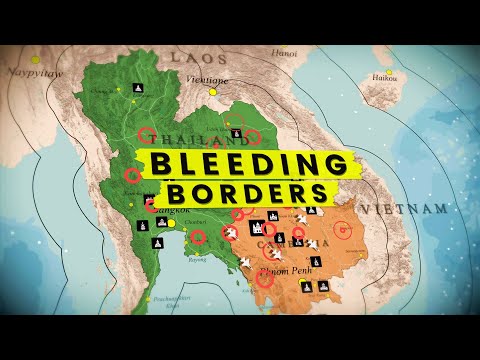
Cambodia is a sovereign state located in the southern portion of the Indochinese Peninsula in Southeast Asia. When people use the word 'Cambodia', they are referring to a nation with a complex identity defined by its glorious ancient past, a turbulent 20th-century history, and its current status as a rapidly developing country. Geographically, it is bordered by Thailand to the northwest, Laos to the north, Vietnam to the east, and the Gulf of Thailand to the southwest. The term is most frequently used in contexts involving international travel, Southeast Asian history, geopolitics, and cultural studies. For many, the word immediately evokes images of the magnificent Angkor Wat, the largest religious monument in the world, which serves as a symbol of the Khmer Empire's architectural and artistic heights. However, the word also carries the weight of the late 1970s, specifically the era of the Khmer Rouge, which is a critical point of reference in modern historical and human rights discussions.
- Geopolitical Identity
- Cambodia is a member of ASEAN and is officially known as the Kingdom of Cambodia, reflecting its status as a constitutional monarchy where the King serves as the Head of State.
In daily conversation, 'Cambodia' is used by travelers planning a 'gap year' or a cultural expedition. It is often grouped with its neighbors in the 'CLMV' (Cambodia, Laos, Myanmar, Vietnam) economic bloc. When discussing the word, one must recognize that it represents more than just a location; it represents a resilient population of over 16 million people, primarily of Khmer ethnicity, who share a rich language and a deep-rooted Buddhist tradition. The word is also used in culinary circles to describe a unique flavor profile that is distinct from Thai or Vietnamese cuisine, often characterized by the use of 'prahok' (fermented fish paste) and 'kroeung' (herb paste).
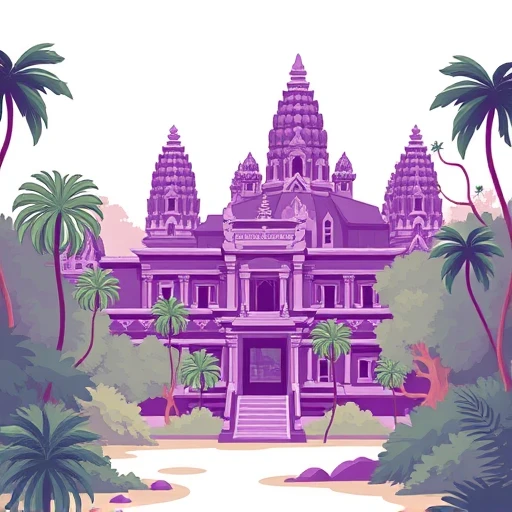
Many tourists visit Cambodia specifically to see the sunrise over the towers of Angkor Wat.
Furthermore, the word 'Cambodia' appears frequently in academic discourse regarding post-conflict reconstruction and international justice, due to the establishment of the Extraordinary Chambers in the Courts of Cambodia (ECCC). This legal context has made the country a case study for how nations heal and seek justice after mass atrocities. In environmental discussions, 'Cambodia' is synonymous with the Tonle Sap lake, the largest freshwater lake in Southeast Asia, which is a vital ecological wonder that changes its flow direction twice a year. Using the word 'Cambodia' correctly involves understanding these various layers—from the spiritual majesty of its temples to the gritty reality of its recent past and the vibrant energy of its modern urban centers like Phnom Penh.
- Historical Context
- The name is derived from the Sanskrit 'Kambuja', referring to an ancient tribe, showing the deep Indian influence on early Southeast Asian civilizations.
The textile industry is a major pillar of the economy in Cambodia, employing hundreds of thousands of workers.
Economically, 'Cambodia' is often discussed in the context of 'frontier markets'. It has transitioned from a centrally planned economy to a market-driven one, showing impressive GDP growth rates over the last two decades. This makes the word a common fixture in reports by the World Bank and IMF. Socially, the word is used when discussing the 'demographic dividend', as the country has a very young population compared to its neighbors. This youthfulness is driving a digital revolution in the country, with high rates of mobile internet penetration and a burgeoning tech scene in the capital. Whether you are talking about the silk weavers of Koh Dach or the high-rise developers in Phnom Penh, the word 'Cambodia' encapsulates a nation in the midst of a profound transformation.
The Mekong River flows through Cambodia, providing essential resources for agriculture and fishing.
- Linguistic Usage
- In English, 'Cambodia' is a proper noun and should always be capitalized. It does not typically take a definite article (the) unless used as an adjective (the Cambodian government).
Scholars from around the world come to Cambodia to study the inscriptions at the Bayon temple.
Rice production remains the backbone of rural life in Cambodia.
Using the word 'Cambodia' in a sentence is generally straightforward because it functions as a proper noun, but there are nuances depending on whether you are discussing geography, history, or modern society. When used as a subject, it represents the nation as a whole. For example, 'Cambodia has seen a significant increase in tourism over the last decade.' Here, the word acts as the entity experiencing the change. It can also be used as an object of a preposition: 'We are planning a trip to Cambodia next spring.' In this case, it indicates a destination. It is important to note that while some countries like 'the United States' or 'the Netherlands' require a definite article, 'Cambodia' does not. You would never say 'I am going to the Cambodia' unless you were using 'Cambodia' as a modifier for another noun, such as 'the Cambodia-Vietnam border'.
- Grammatical Role
- Proper Noun: Acts as the name of a specific place. It is singular and takes singular verb forms (e.g., Cambodia is, not Cambodia are).
In more formal or academic writing, 'Cambodia' often appears in compound structures. You might see phrases like 'the history of Cambodia', 'the economy of Cambodia', or 'the people of Cambodia'. These structures allow for more descriptive detail. For instance, 'The history of Cambodia is marked by the grandeur of the Angkorian era and the tragedy of the Khmer Rouge.' This sentence uses 'Cambodia' to anchor a historical discussion. In business contexts, you might see 'Cambodia's' used in the possessive form: 'Cambodia's garment sector is a vital part of its export economy.' Note the apostrophe 's' to indicate possession. This is a common way to attribute characteristics or assets to the nation.
After years of isolation, Cambodia joined the Association of Southeast Asian Nations in 1999.
When discussing the people or culture, you might transition from the noun 'Cambodia' to the adjective 'Cambodian'. However, 'Cambodia' can also function as a noun adjunct in phrases like 'Cambodia travel', 'Cambodia news', or 'Cambodia visa'. While 'Cambodian visa' is also correct, 'Cambodia visa' is frequently used in administrative and travel contexts. Another common sentence pattern involves comparing Cambodia to other nations. 'Compared to its neighbors, Cambodia has a relatively small population.' This uses the word to establish a point of reference in a regional context. It is also common to use the word in the context of international relations: 'The United Nations has played a significant role in the development of modern Cambodia.'
- Possessive Form
- Use 'Cambodia's' to refer to things belonging to or associated with the country, like 'Cambodia's natural beauty' or 'Cambodia's future'.
The currency used in Cambodia is the Riel, although US dollars are widely accepted.
In creative writing or journalism, 'Cambodia' might be used metonymically to refer to the government or the collective will of the people. For example, 'Cambodia signed the treaty yesterday.' In this sentence, 'Cambodia' stands in for the official representatives of the country. This is a very common rhetorical device in news reporting. Additionally, the word is often found in the context of environmental science: 'The biodiversity found in Cambodia is among the highest in Southeast Asia.' Here, the word defines the geographic scope of the scientific observation. Whether used in a simple travel blog or a complex political analysis, the word 'Cambodia' remains a versatile and essential term for describing this specific part of the world.
The cardamon mountains in Cambodia are home to many endangered species.
- Common Collocations
- Phrases like 'Modern Cambodia', 'Ancient Cambodia', 'Rural Cambodia', and 'Post-war Cambodia' are frequently used to specify the time or aspect being discussed.
Education is a top priority for the youth in Cambodia today.
The annual Water Festival is one of the most important celebrations in Cambodia.
You will encounter the word 'Cambodia' in a variety of real-world settings, ranging from mainstream media to specialized academic environments. One of the most common places is in travel documentaries and tourism advertisements. Channels like National Geographic or the Travel Channel frequently feature 'Cambodia' as a top destination for adventure seekers and history buffs. In these contexts, the word is usually associated with words like 'mystical', 'ancient', 'resilient', and 'breathtaking'. If you are watching a documentary about the Khmer Empire, the word 'Cambodia' will be the central focus, often paired with stunning aerial shots of temple complexes emerging from the jungle. This has made the word a staple in the vocabulary of global travelers and cultural explorers.
- News and Media
- In international news, 'Cambodia' often appears in reports regarding Southeast Asian diplomacy, human rights updates, and economic development trends.
In the world of international politics and human rights, 'Cambodia' is a name that comes up frequently in discussions about transitional justice. Organizations like the United Nations, Amnesty International, and Human Rights Watch often publish reports about the country. Here, the word is used in a more serious and analytical tone, focusing on legal frameworks, political stability, and social justice. If you are listening to a podcast about 20th-century history, 'Cambodia' will likely be mentioned in the context of the Cold War, the Vietnam War, and the tragic reign of Pol Pot. This historical weight makes the word a significant marker in the study of modern global history and the ethics of international intervention.
'Next on our journey, we explore the hidden gems of Cambodia,' said the travel host.
In the business and finance sector, 'Cambodia' is heard during investment seminars and economic forums focused on emerging markets. Analysts discuss 'Cambodia's' potential for growth in sectors like manufacturing, agriculture, and digital services. You might hear it mentioned in the same breath as other 'Tiger Cub' economies. For those in the garment industry, 'Cambodia' is a major hub for clothing production, and the word is frequently seen on clothing labels ('Made in Cambodia') and in supply chain management discussions. This economic presence ensures that the word is familiar to professionals in global trade and retail. Furthermore, in the culinary world, 'Cambodia' is increasingly recognized as foodies discover the unique flavors of Khmer cuisine, such as Fish Amok or Beef Lok Lak.
- Academic Circles
- Historians, archaeologists, and sociologists use 'Cambodia' as a primary site of study for ancient civilizations and post-conflict societal rebuilding.
The report highlights the rapid urbanization taking place across Cambodia.
In popular culture, 'Cambodia' has been the setting for several famous films and books. Movies like 'Lara Croft: Tomb Raider' (filmed at Ta Prohm) or 'First They Killed My Father' (directed by Angelina Jolie) have brought the word and the country's landscapes and history into the global consciousness. Literature such as 'The Rent Collector' or 'In the Shadow of the Banyan' also uses 'Cambodia' as a central setting, providing readers with a deep, emotional connection to the land and its people. In sports, you might hear 'Cambodia' mentioned during the Southeast Asian Games (SEA Games), which the country hosted for the first time in 2023. This event was a major point of pride and brought the word into the sports news cycle across the region and beyond.
'Cambodia's performance in the SEA Games was a historic milestone for the nation,' the commentator noted.
- Environmental Context
- Conservationists often discuss 'Cambodia' when talking about the protection of the Mekong's Irrawaddy dolphins or the preservation of the rainforests.
Researchers are studying the impact of climate change on the rice paddies of Cambodia.
The phrase 'Made in Cambodia' is common on high-quality athletic wear.
When using the word 'Cambodia', several common mistakes can occur, ranging from grammatical errors to historical inaccuracies and spelling blunders. One of the most frequent grammatical mistakes is the use of the definite article 'the' before the name. Unlike 'the Philippines' or 'the United Kingdom', 'Cambodia' is a singular proper noun that stands alone. Saying 'I am visiting the Cambodia' is incorrect; the correct form is 'I am visiting Cambodia.' This mistake often stems from a lack of familiarity with the naming conventions of different countries. Another common error is confusing the country's name with its adjective or the name of its people. While 'Cambodia' is the country, 'Cambodian' is the adjective and the noun for a person from there. For example, 'He is a Cambodia' is incorrect; it should be 'He is Cambodian' or 'He is from Cambodia.'
- The 'The' Trap
- Incorrect: I want to see the Cambodia. Correct: I want to see Cambodia. Only use 'the' if it's part of a longer title like 'The Kingdom of Cambodia'.
Spelling is another area where mistakes are frequent. Some people mistakenly spell it as 'Camboidia' or 'Cambodja' (the latter being the Dutch spelling, which can confuse English learners). In English, the only correct spelling is C-A-M-B-O-D-I-A. Additionally, there is often confusion between 'Cambodia' and 'Kampuchea'. While 'Kampuchea' is the transliteration of the Khmer name for the country and was used officially during certain historical periods (most notably under the Khmer Rouge), in modern English, 'Cambodia' is the standard and preferred term. Using 'Kampuchea' in a general conversation might sound outdated or politically charged depending on the context. It is also important to avoid the mistake of assuming 'Cambodia' is part of Thailand or Vietnam; it is a distinct and independent nation with its own unique culture and language.
Incorrect: The Cambodia is located in Asia. Correct: Cambodia is located in Asia.
Historical sensitivity is another area where mistakes are often made. When discussing 'Cambodia', some people focus exclusively on the Khmer Rouge era. While this is a significant part of the country's history, referring to 'Cambodia' only in terms of its tragedy can be seen as reductive or even offensive to modern Cambodians who are proud of their country's progress and ancient heritage. It is a mistake to treat the country as just a 'killing field' rather than a vibrant, living nation. Furthermore, in terms of pronunciation, some English speakers misplace the stress. The stress should be on the second syllable: kam-BOH-dee-uh. Mispronouncing it can lead to misunderstandings, especially in international settings. Lastly, people often confuse the capital city, Phnom Penh, with the country itself, or misspell the capital, which is a separate but related error.
- Adjective vs. Noun
- Use 'Cambodia' for the place and 'Cambodian' for the people, language, or culture. Example: 'Cambodian food' is better than 'Cambodia food'.
Incorrect: He speaks Cambodia. Correct: He speaks Khmer (or Cambodian).
In written English, another mistake is failing to capitalize the word. As a proper noun, 'Cambodia' must always start with an uppercase 'C'. This applies even when it is used as a noun adjunct. Another subtle mistake is the incorrect use of possessives. While 'Cambodia's' is correct, some people use 'Cambodias' (plural), which doesn't make sense as there is only one Cambodia. For example, 'Cambodias history' is wrong; it must be 'Cambodia's history'. Understanding these common pitfalls will help you use the word more accurately and respectfully in both spoken and written communication. By avoiding these errors, you demonstrate a better grasp of English grammar and a deeper respect for the nation itself.
Incorrect: The capital of Cambodia is Bangkok. Correct: The capital of Cambodia is Phnom Penh.
- Pronunciation Check
- Ensure the stress is on the 'BO' sound: /kæmˈboʊdiə/. Avoid saying 'CAM-bo-dia' with stress on the first syllable.
Many people mistakenly think Cambodia is a landlocked country, but it has a beautiful coastline.
The spelling 'Cambodja' is common in some European languages but is not used in English.
While 'Cambodia' is a unique proper noun, there are several related terms and alternatives used depending on the context—whether you are being formal, historical, or culturally specific. The most common alternative is the official name, 'The Kingdom of Cambodia'. This is used in formal documents, diplomatic correspondence, and on the country's currency. Using the full title adds a layer of respect and formality. Another related term is 'Kampuchea', which is the native Khmer name for the country. While 'Cambodia' is the English exonym, 'Kampuchea' is the endonym. In historical contexts, especially when referring to the 1975-1979 period, you might see 'Democratic Kampuchea', which was the official name under the Khmer Rouge. Understanding these variations is crucial for reading historical texts or official reports.
- Cambodia vs. Kampuchea
- 'Cambodia' is the standard English name. 'Kampuchea' is the Khmer name and was used officially in English during the 1970s and 80s.
In terms of cultural and ethnic descriptors, 'Khmer' is the most important related word. 'Khmer' refers to the dominant ethnic group, the language, and the culture of Cambodia. While you can say 'Cambodian culture', using 'Khmer culture' is often more precise and is preferred by many locals and scholars. For example, 'Khmer architecture' specifically refers to the style seen at Angkor Wat. In a broader regional context, 'Cambodia' is often grouped with its neighbors under terms like 'Indochina' (a historical term for the region formerly under French influence) or 'Mainland Southeast Asia'. While these aren't synonyms for 'Cambodia', they are frequently used alternatives when discussing the country's geographical or political placement.
The official name of the country is the Kingdom of Cambodia.
When discussing the ancient history of the region, the term 'The Khmer Empire' is the primary alternative. This refers to the powerful state that ruled much of Southeast Asia from the 9th to the 15th centuries, with its capital at Angkor. Using this term shifts the focus from the modern nation-state to its historical predecessor. In modern economic discussions, you might hear 'Cambodia' referred to as a 'Frontier Market' or an 'Emerging Economy'. These terms categorize the country within a global financial framework. While they don't replace the name 'Cambodia', they serve as functional synonyms in specific professional contexts. Additionally, in the context of ASEAN, Cambodia is sometimes referred to as 'the Kingdom' in regional news headlines to avoid repetition.
- Historical Names
- Democratic Kampuchea (1975-1979), People's Republic of Kampuchea (1979-1989), and State of Cambodia (1989-1993) are all historical names for the country.
Many scholars prefer to use the term 'Khmer' when discussing the traditional arts of Cambodia.
Another set of alternatives involves the country's nicknames. Cambodia is often called 'The Land of Smiles' (though this is also shared with Thailand) or 'The Kingdom of Wonder'. These are frequently used in tourism marketing to evoke a sense of mystery and hospitality. While not formal names, they are part of the country's global brand. In literary contexts, you might see Cambodia referred to as 'The Pearl of Asia' (specifically referring to Phnom Penh in the 1960s). Comparing 'Cambodia' to its neighbors like Thailand, Vietnam, and Laos is also a common way to define it by what it is not. While they share some cultural traits, Cambodia's unique Khmer identity sets it apart from its neighbors' Tai or Sinitic influences.
The Khmer Empire once stretched far beyond the borders of modern-day Cambodia.
- Regional Comparisons
- Cambodia is often compared to Thailand and Vietnam, but it maintains a distinct cultural identity rooted in the Khmer heritage.
Phnom Penh was once known as the 'Pearl of Asia' for its beautiful French-inspired architecture.
The 'Kingdom of Wonder' campaign has successfully attracted millions of visitors to Cambodia.
How Formal Is It?
Fun Fact
Cambodia has changed its official name several times in the last 50 years, including 'The Khmer Republic', 'Democratic Kampuchea', and 'The State of Cambodia', before returning to 'The Kingdom of Cambodia' in 1993.
Pronunciation Guide
- Stressing the first syllable (CAM-bo-dia).
- Pronouncing the 'o' like an 'ah' (Kam-bah-dia).
- Missing the 'i' sound (Kam-bo-da).
- Adding a 'the' before the name (The Cambodia).
- Confusing it with the pronunciation of 'Colombia'.
Difficulty Rating
The word itself is easy to recognize, but texts about its history can be complex.
Spelling can be tricky for beginners (remember the 'o' and 'i').
Pronunciation is straightforward once the stress is learned.
Easily distinguishable in spoken English.
What to Learn Next
Prerequisites
Learn Next
Advanced
Grammar to Know
Proper Nouns
Cambodia must always be capitalized.
Zero Article with Countries
We say 'in Cambodia', not 'in the Cambodia'.
Possessive Proper Nouns
Use 'Cambodia's' for possession (e.g., Cambodia's flag).
Adjective Formation
The adjective for Cambodia is 'Cambodian'.
Subject-Verb Agreement
Cambodia (singular) takes a singular verb: 'Cambodia is...'
Examples by Level
I want to visit Cambodia.
Je veux visiter le Cambodge.
Proper noun, no article 'the'.
Cambodia is in Asia.
Le Cambodge est en Asie.
Subject of the sentence.
Is Cambodia hot?
Fait-il chaud au Cambodge ?
Question form with 'is'.
My friend is from Cambodia.
Mon ami vient du Cambodge.
Prepositional phrase 'from Cambodia'.
Cambodia has many temples.
Le Cambodge a beaucoup de temples.
Third-person singular verb 'has'.
I like Cambodia.
J'aime le Cambodge.
Direct object.
Cambodia is a beautiful country.
Le Cambodge est un beau pays.
Adjective 'beautiful' modifying 'country'.
They live in Cambodia.
Ils vivent au Cambodge.
Prepositional phrase 'in Cambodia'.
Angkor Wat is a famous temple in Cambodia.
Angkor Wat est un temple célèbre au Cambodge.
Proper noun used to specify location.
Cambodia is famous for its history.
Le Cambodge est célèbre pour son histoire.
Possessive adjective 'its' referring to Cambodia.
You can see elephants in Cambodia.
On peut voir des éléphants au Cambodge.
Modal verb 'can' followed by 'see'.
The capital of Cambodia is Phnom Penh.
La capitale du Cambodge est Phnom Penh.
Genitive construction 'of Cambodia'.
Cambodia has a tropical climate.
Le Cambodge a un climat tropical.
Noun phrase 'tropical climate'.
Many people in Cambodia grow rice.
Beaucoup de gens au Cambodge cultivent du riz.
Subject 'Many people' with prepositional phrase.
I am learning about Cambodia in school.
J'apprends des choses sur le Cambodge à l'école.
Present continuous tense.
Cambodia is next to Thailand.
Le Cambodge est à côté de la Thaïlande.
Preposition 'next to'.
Cambodia has undergone significant changes since the 1990s.
Le Cambodge a connu des changements importants depuis les années 1990.
Present perfect tense.
Tourism is a vital part of the economy in Cambodia.
Le tourisme est une partie vitale de l'économie au Cambodge.
Noun phrase 'vital part of the economy'.
Cambodia is known for its resilient and friendly people.
Le Cambodge est connu pour son peuple résilient et amical.
Passive voice 'is known for'.
The Mekong River is essential for agriculture in Cambodia.
Le Mékong est essentiel pour l'agriculture au Cambodge.
Adjective 'essential' with preposition 'for'.
Many NGOs work in Cambodia to improve education.
De nombreuses ONG travaillent au Cambodge pour améliorer l'éducation.
Infinitive of purpose 'to improve'.
Cambodia's history is both inspiring and tragic.
L'histoire du Cambodge est à la fois inspirante et tragique.
Possessive form 'Cambodia's'.
I would love to explore the rural areas of Cambodia.
J'aimerais beaucoup explorer les zones rurales du Cambodge.
Conditional 'would love to'.
Cambodia joined ASEAN to strengthen its regional ties.
Le Cambodge a rejoint l'ASEAN pour renforcer ses liens régionaux.
Past simple tense.
Cambodia's rapid urbanization has led to many social challenges.
L'urbanisation rapide du Cambodge a entraîné de nombreux défis sociaux.
Present perfect with 'led to'.
The preservation of Angkor is a major priority for Cambodia.
La préservation d'Angkor est une priorité majeure pour le Cambodge.
Noun phrase as subject.
Cambodia is striving to diversify its export markets.
Le Cambodge s'efforce de diversifier ses marchés d'exportation.
Present continuous 'is striving to'.
The legal system in Cambodia is still evolving after the conflict.
Le système juridique au Cambodge est encore en évolution après le conflit.
Adverb 'still' with present continuous.
Cambodia's cultural heritage is a source of great national pride.
Le patrimoine culturel du Cambodge est une source de grande fierté nationale.
Noun phrase 'source of great national pride'.
Foreign investment has played a crucial role in Cambodia's growth.
L'investissement étranger a joué un rôle crucial dans la croissance du Cambodge.
Present perfect 'has played'.
Cambodia faces environmental threats from deforestation and climate change.
Le Cambodge est confronté à des menaces environnementales dues à la déforestation et au changement climatique.
Present simple 'faces'.
The youth of Cambodia are increasingly tech-savvy and entrepreneurial.
Les jeunes du Cambodge sont de plus en plus férus de technologie et entreprenants.
Plural verb 'are' with 'youth' (collective).
Cambodia's geopolitical strategy involves balancing relations with major powers.
La stratégie géopolitique du Cambodge consiste à équilibrer les relations avec les grandes puissances.
Gerund 'balancing' as part of the predicate.
The legacy of the Khmer Rouge continues to impact Cambodia's social fabric.
L'héritage des Khmers rouges continue d'avoir un impact sur le tissu social du Cambodge.
Infinitive 'to impact'.
Cambodia has become a significant player in the regional textile industry.
Le Cambodge est devenu un acteur important dans l'industrie textile régionale.
Present perfect 'has become'.
The management of the Tonle Sap is critical for Cambodia's food security.
La gestion du Tonle Sap est essentielle pour la sécurité alimentaire du Cambodge.
Adjective 'critical' for emphasis.
Cambodia's constitutional monarchy provides a sense of continuity and stability.
La monarchie constitutionnelle du Cambodge apporte un sentiment de continuité et de stabilité.
Present simple for a general truth.
The digital divide remains a challenge for rural communities in Cambodia.
La fracture numérique reste un défi pour les communautés rurales au Cambodge.
Noun phrase 'digital divide'.
Cambodia's accession to the WTO marked a turning point for its economy.
L'adhésion du Cambodge à l'OMC a marqué un tournant pour son économie.
Past simple 'marked'.
Scholars analyze the intricate carvings of Cambodia's temples to understand ancient life.
Les chercheurs analysent les sculptures complexes des temples du Cambodge pour comprendre la vie ancienne.
Present simple 'analyze'.
The socio-political landscape of Cambodia is characterized by a complex interplay of tradition and modernity.
Le paysage sociopolitique du Cambodge se caractérise par une interaction complexe entre tradition et modernité.
Passive voice 'is characterized by'.
Cambodia's resilience in the face of historical trauma is a testament to the strength of its people.
La résilience du Cambodge face aux traumatismes historiques témoigne de la force de son peuple.
Abstract noun 'resilience' as subject.
The nuances of Khmer diplomacy reflect Cambodia's unique position in Southeast Asia.
Les nuances de la diplomatie khmère reflètent la position unique du Cambodge en Asie du Sud-Est.
Present simple 'reflect'.
Cambodia's environmental policies must reconcile economic growth with ecological preservation.
Les politiques environnementales du Cambodge doivent concilier croissance économique et préservation écologique.
Modal 'must' with 'reconcile'.
The evolution of the Khmer language mirrors the historical shifts within Cambodia.
L'évolution de la langue khmère reflète les changements historiques au sein du Cambodge.
Metaphorical use of 'mirrors'.
Cambodia's artistic renaissance is breathing new life into traditional forms like the Apsara dance.
La renaissance artistique du Cambodge insuffle une nouvelle vie aux formes traditionnelles comme la danse Apsara.
Present continuous 'is breathing'.
The intricate web of patronage in Cambodia's social structure is a subject of intense academic study.
Le réseau complexe de clientélisme dans la structure sociale du Cambodge est un sujet d'étude académique intense.
Noun phrase 'intricate web of patronage'.
Cambodia's future hinges on its ability to foster innovation and sustainable development.
L'avenir du Cambodge dépend de sa capacité à favoriser l'innovation et le développement durable.
Phrasal verb 'hinges on'.
Synonyms
Antonyms
Common Collocations
Common Phrases
— A label indicating that a product was manufactured in Cambodia.
I noticed that my new sneakers were made in Cambodia.
— The official and formal name of the country.
Welcome to the Kingdom of Cambodia.
— Refers to the intellectuals and artists killed during the Khmer Rouge era.
The country is still recovering from the loss of Cambodia's lost generation.
— Often refers to the Tonle Sap or the spiritual center of Angkor.
Angkor Wat is truly the heart of Cambodia.
— Refers to the country's rapid development in recent years.
Witnessing Cambodia's transformation has been incredible.
— A common way to describe a vacation or journey to the country.
We are planning a trip to Cambodia for our honeymoon.
— The period from May to October when the country receives most of its rainfall.
Cambodia's rainy season brings lush green landscapes.
— Refers to the resilience and character of the Cambodian people.
The spirit of Cambodia is evident in its vibrant arts scene.
— Refers to the prospects and development of the nation.
The youth are the key to Cambodia's future.
— Used to describe countries or regions next to Cambodia.
The provinces bordering Cambodia are very scenic.
Often Confused With
Often confused due to similar spelling, but Colombia is in South America.
Both start with 'Cam', but Cameroon is in Africa.
The native name, but used less frequently in modern English.
Idioms & Expressions
— A term used to describe Cambodia's beauty and cultural wealth, especially in the mid-20th century.
Phnom Penh was once the Pearl of Asia.
Literary/Historical— A phrase emphasizing the amazing and mysterious aspects of the country.
Explore the Kingdom of Wonder.
Marketing— Refers to the friendly and welcoming nature of the people.
Cambodia is often called the Land of Smiles.
Informal— A somber idiom referring to the sites of mass killings during the Khmer Rouge era.
The Killing Fields are a reminder of a dark chapter in history.
Historical/Serious— Metaphor for the enduring influence of the ancient empire on modern life.
Modern Cambodia still lives in Angkor's shadow.
Literary— Refers to the vital importance of the Mekong River to the country.
The river is the Mekong's lifeblood for the farmers.
Poetic— Refers to the elegance and beauty associated with traditional Cambodian dance.
She moved with an Apsara's grace.
Artistic— A historical term for the region's productive agricultural lands, including Cambodia.
The region was once the rice bowl of Asia.
Economic— Often used to describe the city of Siem Reap.
Siem Reap is the gateway to Angkor.
Travel— Refers to the deep sense of national identity and pride.
Khmer pride is visible during the national holidays.
SocialEasily Confused
People use the country name when they should use the adjective.
Cambodia is the place; Cambodian is the person or thing from that place.
He is Cambodian (not He is Cambodia).
Both refer to the same country but in different ways.
Cambodia is the political entity; Khmer is the ethnic and linguistic identity.
The Khmer language is spoken in Cambodia.
Some people think the capital is the country.
Phnom Penh is a city; Cambodia is the nation.
I live in Phnom Penh, Cambodia.
Often used interchangeably with the country in travel contexts.
Angkor is an ancient site; Cambodia is the modern country.
Angkor is the most famous site in Cambodia.
A regional term that includes Cambodia.
Indochina is a region; Cambodia is one specific country within it.
Cambodia was part of French Indochina.
Sentence Patterns
I like [Country].
I like Cambodia.
[Country] is famous for [Noun].
Cambodia is famous for Angkor Wat.
[Country] is located in [Region].
Cambodia is located in Southeast Asia.
The capital of [Country] is [City].
The capital of Cambodia is Phnom Penh.
[Country]'s economy is based on [Noun].
Cambodia's economy is based on tourism and garments.
[Country] has faced many [Noun] in its history.
Cambodia has faced many challenges in its history.
The [Adjective] landscape of [Country] is [Adjective].
The geopolitical landscape of Cambodia is evolving.
[Country]'s [Noun] hinges on [Noun].
Cambodia's future hinges on sustainable development.
Word Family
Nouns
Adjectives
Related
How to Use It
Common in travel, history, and international news contexts.
-
Using 'the' before Cambodia.
→
I am going to Cambodia.
Cambodia is a proper noun that does not require a definite article.
-
Spelling it as 'Camboidia'.
→
Cambodia
The correct spelling has an 'o' after the 'b' and an 'i' before the 'a'.
-
Saying 'He is a Cambodia'.
→
He is Cambodian.
Use the adjective 'Cambodian' to describe a person's nationality.
-
Confusing Cambodia with Colombia.
→
Cambodia is in Asia; Colombia is in South America.
These are two different countries on different continents.
-
Thinking the capital is Bangkok.
→
The capital of Cambodia is Phnom Penh.
Bangkok is the capital of Thailand, Cambodia's neighbor.
Tips
Learn the Sampeah
The Sampeah is the traditional greeting in Cambodia. Placing your palms together and bowing slightly shows respect and is greatly appreciated by locals.
Stay Hydrated
Cambodia can be very hot and humid. Always carry water with you, especially when exploring large temple complexes like Angkor Wat.
Use 'Khmer'
When referring to the language or the people, using the word 'Khmer' sounds more natural and culturally informed than always saying 'Cambodian'.
Remove Shoes
Always remove your shoes before entering someone's home or a Buddhist temple. It is a sign of respect and cleanliness.
Carry Small Bills
While US dollars are accepted, having small bills (both USD and Riel) is very useful for markets, tuk-tuks, and small shops.
Travel Insurance
Always have travel insurance when visiting Cambodia to cover any unexpected medical issues or travel disruptions.
Read Before You Go
Reading a bit about Cambodia's history will make your visit much more meaningful and help you understand the context of what you see.
Reduce Plastic
Try to use a refillable water bottle. Plastic waste is a challenge in Cambodia, and every little bit helps protect the environment.
Support Local
Buying from local markets and using local guides helps ensure that your tourism dollars directly benefit the Cambodian people.
Ask Permission
Always ask for permission before taking photos of people, especially monks or children. Most people are happy to oblige if asked politely.
Memorize It
Mnemonic
CAM-B-O-D-I-A: **C**ountry **A**mong **M**any **B**eautiful **O**ld **D**esigns **I**n **A**sia.
Visual Association
Imagine the five towers of Angkor Wat (as seen on the national flag) surrounded by green rice fields and the Mekong River.
Word Web
Challenge
Try to write three sentences about Cambodia without using the word 'temple'. Focus on the economy, the geography, and the people.
Word Origin
The name 'Cambodia' is an anglicization of the French 'Cambodge', which in turn comes from the Khmer word 'Kâmpŭchéa'. This Khmer name is derived from the Sanskrit 'Kambuja', which refers to an ancient Indo-Iranian tribe. The use of the Sanskrit name reflects the deep historical influence of Indian culture and religion on the early Khmer civilizations. Over centuries, the name evolved through various languages before becoming 'Cambodia' in English.
Original meaning: The Sanskrit 'Kambuja' is believed to mean 'descendants of Kambu', a legendary figure in Hindu mythology.
Indo-European (via Sanskrit and French) into English.Cultural Context
Be sensitive when discussing the Khmer Rouge era; it is a painful part of history for many Cambodians. Avoid making jokes about the country's past.
In the English-speaking world, Cambodia is often associated with the film 'The Killing Fields' and the 'Tomb Raider' movie.
Practice in Real Life
Real-World Contexts
Travel Planning
- Best time to visit Cambodia
- Cambodia visa requirements
- Top things to do in Cambodia
- Cambodia travel itinerary
History Class
- The fall of the Khmer Empire
- Modern history of Cambodia
- The Khmer Rouge era
- Cambodia's path to peace
Economic Report
- Cambodia's GDP growth
- Investment opportunities in Cambodia
- Cambodia's manufacturing sector
- Trade relations with Cambodia
Geography
- The climate of Cambodia
- Rivers and lakes in Cambodia
- Provinces of Cambodia
- Natural resources in Cambodia
Cultural Exchange
- Traditional Cambodian music
- Cambodian customs and etiquette
- The Khmer language
- Cambodian festivals
Conversation Starters
"Have you ever thought about visiting Cambodia to see the ancient temples?"
"What do you know about the history of Cambodia and the Khmer Empire?"
"I heard that Cambodia's economy is growing very fast; what do you think is driving it?"
"Have you ever tried any traditional food from Cambodia, like Fish Amok?"
"I'm reading a book about Cambodia's transformation; it's quite a fascinating country, isn't it?"
Journal Prompts
If you could spend a month in Cambodia, which cities would you visit and why?
Reflect on how Cambodia's history has shaped its modern identity and resilience.
Compare and contrast the cultural heritage of Cambodia with another country you know.
Imagine you are a traveler in Cambodia for the first time; describe your first impressions of Phnom Penh.
Write about the importance of preserving ancient sites like Angkor Wat for future generations.
Frequently Asked Questions
10 questionsYes, Cambodia is generally considered safe for tourists. Like any destination, it is important to stay aware of your surroundings, especially in crowded areas. Most visitors have a trouble-free experience exploring the temples and cities. The people are known for their hospitality and friendliness.
The best time to visit Cambodia is during the dry season, from November to February. During these months, the weather is cooler and more comfortable for exploring temples. However, the 'green season' (rainy season) from May to October also has its charms, with lush landscapes and fewer tourists.
Most nationalities require a visa to enter Cambodia. You can often obtain an e-visa online before you travel or a visa on arrival at major airports and border crossings. It is always best to check the latest requirements from the official Cambodian embassy or consulate in your country.
The official currency is the Cambodian Riel (KHR). However, the US Dollar is widely accepted and often preferred in many urban areas and tourist spots. ATMs usually dispense both currencies. It is helpful to carry some Riel for small purchases and in rural areas.
The official language of Cambodia is Khmer. It is spoken by the vast majority of the population. In tourist areas and major cities, many people, especially the younger generation, speak English. Some older Cambodians may also speak French due to the country's colonial history.
Cambodia is most famous for the Angkor Wat temple complex, a UNESCO World Heritage site. It is also known for its rich Khmer culture, its tragic modern history under the Khmer Rouge, the beautiful Mekong River, and its resilient and friendly people.
No, Cambodia is a completely independent and sovereign nation. It shares a border with Thailand to the northwest, but it has its own distinct government, language, culture, and history. It is a member of the United Nations and ASEAN.
When visiting temples in Cambodia, it is important to dress respectfully. This means covering your shoulders and knees. Both men and women should wear modest clothing. Removing your hat and shoes before entering a temple building is also a common sign of respect.
The most common way to say hello in Khmer is 'Choum Reap Sur' (formal) or 'Susadei' (informal). When saying hello, it is traditional to perform the 'Sampeah' by placing your palms together in a prayer-like gesture and bowing slightly.
The capital and largest city of Cambodia is Phnom Penh. It is the political, economic, and cultural center of the country, located at the confluence of the Mekong and Tonle Sap rivers. It is known for its French colonial architecture and vibrant street life.
Test Yourself 180 questions
Write a short paragraph about why someone should visit Cambodia.
Well written! Good try! Check the sample answer below.
Describe the importance of Angkor Wat to Cambodia's national identity.
Well written! Good try! Check the sample answer below.
Write three sentences using the word 'Cambodia' as a proper noun.
Well written! Good try! Check the sample answer below.
Compare the geography of Cambodia with its neighbor, Thailand.
Well written! Good try! Check the sample answer below.
Discuss the impact of tourism on modern Cambodia.
Well written! Good try! Check the sample answer below.
Write a letter to a friend describing your imaginary trip to Cambodia.
Well written! Good try! Check the sample answer below.
Explain the significance of the Mekong River for Cambodia's economy.
Well written! Good try! Check the sample answer below.
Analyze the challenges facing Cambodia's education system.
Well written! Good try! Check the sample answer below.
Write a summary of Cambodia's history in the 20th century.
Well written! Good try! Check the sample answer below.
Describe a traditional Cambodian festival you would like to attend.
Well written! Good try! Check the sample answer below.
Discuss the role of the monarchy in modern Cambodia.
Well written! Good try! Check the sample answer below.
Write a short essay on the resilience of the Cambodian people.
Well written! Good try! Check the sample answer below.
Explain the term 'The Kingdom of Wonder' in the context of Cambodia.
Well written! Good try! Check the sample answer below.
Describe the culinary scene in Cambodia, focusing on one dish.
Well written! Good try! Check the sample answer below.
Discuss the environmental issues related to the Tonle Sap lake.
Well written! Good try! Check the sample answer below.
Write a dialogue between two travelers planning a trip to Cambodia.
Well written! Good try! Check the sample answer below.
Analyze the importance of ASEAN membership for Cambodia.
Well written! Good try! Check the sample answer below.
Describe the architectural style of ancient Cambodia.
Well written! Good try! Check the sample answer below.
Write a poem about the sunrise over Angkor Wat.
Well written! Good try! Check the sample answer below.
Discuss the future of Cambodia in the next 20 years.
Well written! Good try! Check the sample answer below.
Pronounce the word 'Cambodia' correctly.
Read this aloud:
You said:
Speech recognition is not supported in your browser. Try Chrome or Edge.
Tell a partner three facts about Cambodia.
Read this aloud:
You said:
Speech recognition is not supported in your browser. Try Chrome or Edge.
Describe a picture of Angkor Wat in Cambodia.
Read this aloud:
You said:
Speech recognition is not supported in your browser. Try Chrome or Edge.
Give a short presentation on the history of Cambodia.
Read this aloud:
You said:
Speech recognition is not supported in your browser. Try Chrome or Edge.
Discuss the pros and cons of visiting Cambodia during the rainy season.
Read this aloud:
You said:
Speech recognition is not supported in your browser. Try Chrome or Edge.
Explain the significance of the Khmer New Year in Cambodia.
Read this aloud:
You said:
Speech recognition is not supported in your browser. Try Chrome or Edge.
Debate the impact of rapid urbanization in Phnom Penh, Cambodia.
Read this aloud:
You said:
Speech recognition is not supported in your browser. Try Chrome or Edge.
Talk about the cultural importance of rice in Cambodia.
Read this aloud:
You said:
Speech recognition is not supported in your browser. Try Chrome or Edge.
Describe the traditional Cambodian greeting, the Sampeah.
Read this aloud:
You said:
Speech recognition is not supported in your browser. Try Chrome or Edge.
Discuss the role of the Mekong River in Cambodia's daily life.
Read this aloud:
You said:
Speech recognition is not supported in your browser. Try Chrome or Edge.
Explain the challenges of preserving ancient temples in Cambodia.
Read this aloud:
You said:
Speech recognition is not supported in your browser. Try Chrome or Edge.
Talk about a famous person from Cambodia.
Read this aloud:
You said:
Speech recognition is not supported in your browser. Try Chrome or Edge.
Describe the experience of visiting a Cambodian market.
Read this aloud:
You said:
Speech recognition is not supported in your browser. Try Chrome or Edge.
Discuss the importance of the garment industry to Cambodia.
Read this aloud:
You said:
Speech recognition is not supported in your browser. Try Chrome or Edge.
Give a speech on the resilience of Cambodia after the conflict.
Read this aloud:
You said:
Speech recognition is not supported in your browser. Try Chrome or Edge.
Talk about the biodiversity found in Cambodia's forests.
Read this aloud:
You said:
Speech recognition is not supported in your browser. Try Chrome or Edge.
Describe the traditional music of Cambodia.
Read this aloud:
You said:
Speech recognition is not supported in your browser. Try Chrome or Edge.
Discuss the future of tourism in Cambodia.
Read this aloud:
You said:
Speech recognition is not supported in your browser. Try Chrome or Edge.
Explain the concept of 'The Kingdom of Wonder'.
Read this aloud:
You said:
Speech recognition is not supported in your browser. Try Chrome or Edge.
Talk about your own interest in Cambodia.
Read this aloud:
You said:
Speech recognition is not supported in your browser. Try Chrome or Edge.
Listen to a description of Cambodia and identify the capital.
Listen to a travel guide talking about Cambodia and list three activities.
Listen to a news report about Cambodia and summarize the main event.
Listen to a historian discuss the Khmer Empire in Cambodia.
Listen to a conversation about planning a trip to Cambodia.
Listen to an interview with a Cambodian entrepreneur.
Listen to a podcast about Cambodia's environmental challenges.
Listen to a lecture on the socio-political landscape of Cambodia.
Listen to a description of the Tonle Sap lake in Cambodia.
Listen to traditional Cambodian music and describe the sounds.
Listen to a story about a family living in rural Cambodia.
Listen to a guide explaining the rules for visiting temples in Cambodia.
Listen to a report on the SEA Games held in Cambodia.
Listen to a discussion on the preservation of the Khmer language.
Listen to a documentary clip about the wildlife of Cambodia.
/ 180 correct
Perfect score!
Summary
Cambodia is more than just a travel destination; it is a nation defined by the grandeur of its ancient past and the remarkable resilience of its people in the modern era. Example: 'To truly understand Southeast Asia, one must explore the history and culture of Cambodia.'
- Cambodia is a Southeast Asian nation famous for the ancient Angkor Wat temple complex and its resilient Khmer culture.
- The country has a complex history, transitioning from the powerful Khmer Empire to a modern, developing constitutional monarchy.
- Phnom Penh is the bustling capital, and the Mekong River plays a vital role in the nation's agriculture and daily life.
- Cambodia is a member of ASEAN and is known for its young population, growing garment industry, and warm hospitality.
Learn the Sampeah
The Sampeah is the traditional greeting in Cambodia. Placing your palms together and bowing slightly shows respect and is greatly appreciated by locals.
Stay Hydrated
Cambodia can be very hot and humid. Always carry water with you, especially when exploring large temple complexes like Angkor Wat.
Use 'Khmer'
When referring to the language or the people, using the word 'Khmer' sounds more natural and culturally informed than always saying 'Cambodian'.
Remove Shoes
Always remove your shoes before entering someone's home or a Buddhist temple. It is a sign of respect and cleanliness.