









medusa in 30 Seconds
- A medusa is a free-swimming jellyfish stage with a bell-shaped body and tentacles.
- The word originates from a Greek myth about a woman with snakes for hair.
- In biology, it is the adult phase that produces eggs or sperm for reproduction.
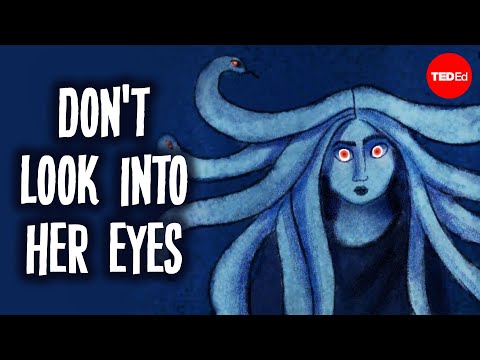
- The mythological Medusa could turn people to stone with her terrifying gaze.
The term medusa is a fascinating word that bridges the gap between ancient mythology and modern marine biology. In a scientific context, it describes a specific phase in the life cycle of cnidarians, such as jellyfish. This stage is characterized by a bell-shaped body that swims freely in the ocean, trailing tentacles that capture prey. The name is derived from the Greek mythological figure, Medusa, because the waving tentacles of the jellyfish resemble the snakes that grew from the head of the mythical Gorgon. When people use this word in a biological sense, they are usually referring to the adult, sexually reproductive stage of the animal, contrasting it with the stationary polyp stage. In literature and art, the word invokes the image of the terrifying woman whose gaze could turn onlookers into stone. This dual meaning makes the word uniquely evocative, blending the beauty of marine life with the horror of classical legend.
- Biological Classification
- In zoology, the medusa is the pelagic, or open-sea, form of the phylum Cnidaria. It is typically translucent and composed of a gelatinous substance called mesoglea. This form allows the organism to disperse through ocean currents, ensuring the survival and spread of the species across vast distances.
The marine biologist carefully observed the translucent medusa as it pulsed through the water, its long tentacles trailing behind like silken threads.
Beyond science, the word is frequently used metaphorically. To describe someone as a 'medusa' might imply they have a paralyzing or terrifying presence, or perhaps hair that is wild and uncontrollable. In feminist theory, the figure of Medusa has been reclaimed as a symbol of female power and the 'monstrous feminine,' challenging the traditional narrative of her as a mere villain. This shift in usage shows how a single word can evolve from a literal description of a sea creature to a complex cultural icon representing various facets of human psychology and societal norms.
- Mythological Origin
- Medusa was one of the three Gorgons, daughters of Phorcys and Ceto. Unlike her sisters, she was mortal. Originally a beautiful maiden, she was transformed by Athena into a monster with snakes for hair after a tryst with Poseidon in Athena's temple. Her story is one of the most enduring tragedies in Greek myth.
In the museum, the ancient marble sculpture of Medusa captured the exact moment of her petrifying gaze, frozen in time for centuries.
In modern conversation, you might encounter the word in discussions about fashion, where 'medusa hair' refers to intricate, snake-like braids, or in high-end branding, most notably the logo of the Italian fashion house Versace. The use of the Medusa head in branding signifies beauty that is so captivating it stops people in their tracks—a clever inversion of the original myth where her beauty was replaced by horror. This demonstrates the word's versatility in moving between the worlds of high art, science, and commercial design.
- Anatomical Structure
- The medusa body plan consists of an exumbrella (the top part of the bell) and a subumbrella (the underside). The mouth is located on the underside, often surrounded by oral arms that help guide food into the gastrovascular cavity.
The documentary highlighted how the medusa utilizes a primitive nervous system called a nerve net to coordinate its rhythmic swimming movements.
Poets often use the medusa as a metaphor for a dangerous allure that leads to one's downfall, much like the sailors lured by sirens.
The child was fascinated by the medusa at the aquarium, watching its rhythmic contractions against the blue glass.
Using the word medusa correctly requires an understanding of whether you are speaking scientifically or literarily. In a scientific sentence, 'medusa' acts as a common noun. You might say, 'The medusa stage is followed by the production of larvae.' Here, the word is functional and descriptive. It is important to note that 'medusa' can be used as a count noun, meaning you can have 'one medusa' or 'many medusae' (or 'medusas'). The plural form 'medusae' is more common in academic writing, while 'medusas' is often used in casual speech. Using the correct plural form can signal your level of expertise in the subject matter.
- Scientific Usage
- When describing the life cycle of a jellyfish, the medusa is the mobile phase. Example: 'During the summer months, the coastal waters are teeming with the medusa form of the moon jelly.'
The researcher identified several distinct species of medusa in the deep-sea samples collected during the expedition.
In a mythological or metaphorical context, 'Medusa' is a proper noun and should always be capitalized. For instance, 'She felt like Medusa, staring down her enemies until they were too intimidated to move.' In this case, the word is used to evoke the specific characteristics of the Gorgon—fear, paralysis, and power. You can also use 'Medusa-like' as an adjective to describe something that resembles her, such as 'Medusa-like hair' or a 'Medusa-like gaze.' This allows for creative expression in descriptive writing, helping the reader visualize a scene through a well-known cultural reference.
- Metaphorical Usage
- Using the name to describe a person or situation. Example: 'The CEO's Medusa-like stare silenced the entire boardroom, leaving the executives unable to speak.'
The protagonist of the novel was haunted by a Medusa complex, fearing that her own success would alienate those she loved.
Furthermore, the word appears in specialized fields like architecture or design. A 'Medusa mask' or 'Medusa ornament' refers to decorative elements featuring the Gorgon's head, often used in ancient times as an apotropaic symbol to ward off evil. In these contexts, the word is used to describe a specific aesthetic style. Whether you are writing a biology report, a literary analysis, or a description of ancient ruins, the key to using 'medusa' effectively is maintaining consistency in its capitalization and ensuring the surrounding vocabulary supports the intended meaning.
- Artistic Usage
- Describing motifs in art. Example: 'The ancient shield was adorned with a bronze medusa, intended to strike fear into the hearts of opponents on the battlefield.'
The architect decided to incorporate a subtle medusa motif into the ironwork of the gate for a touch of classical elegance.
By studying the medusa phase, scientists can better understand the migration patterns of various jellyfish species across the Atlantic.
The poet compared the tangled wires of the city to the hair of Medusa, a chaotic mess that seemed to pulse with electric life.
You are most likely to encounter the word medusa in educational settings, specifically in biology classrooms and history lectures. In biology, it is a standard term used when discussing the life cycles of invertebrates. Students learn about the alternation of generations, where a stationary polyp gives rise to a swimming medusa. This is a fundamental concept in marine zoology. In history or classics classes, the word is synonymous with the myth of Perseus, who was tasked with beheading the Gorgon Medusa. These two contexts—the laboratory and the lecture hall—are the primary places where the word is used with precision and frequency.
- In the Classroom
- Teachers use 'medusa' to explain the complex reproductive strategies of jellyfish. It's a key vocabulary word for exams in environmental science and marine biology.
'Please turn to page 142 of your textbook to see the diagram of the medusa body plan,' the professor instructed the class.
Another common place to hear the word is in museums and art galleries. Because Medusa has been a popular subject for artists since antiquity, her image appears on ancient Greek pottery, Renaissance paintings by masters like Caravaggio, and modern sculptures. Tour guides and art historians use the word to describe the iconography of these works. They might discuss the 'Medusa Rondanini' or the 'Medusa of the Strozzi.' In these settings, the word is linked to aesthetics, symbolism, and the history of Western art. It is also a staple in popular culture, appearing in movies like 'Clash of the Titans' or in video games based on mythology, where Medusa often serves as a formidable boss character.
- In Popular Culture
- From Rick Riordan's 'Percy Jackson' series to various fantasy RPGs, Medusa is a well-known figure. Gamers and readers use the word when discussing character designs and mythological lore.
The fashion critic noted that the new collection featured several pieces inspired by the Medusa motif, emphasizing a theme of powerful femininity.
Finally, you might hear the word in specialized scientific documentaries or nature programs. Narrators use it to describe the ethereal beauty of jellyfish drifting in the current. Phrases like 'the pulsing medusa' or 'the delicate medusa' are common in these programs, aiming to capture the viewer's imagination. In these instances, the word is used to evoke a sense of wonder and mystery about the natural world. Whether you are watching a National Geographic special or listening to a podcast about ancient legends, 'medusa' is a word that consistently signals a deep dive into either the wonders of the ocean or the depths of human imagination.
- In Nature Documentaries
- Narrators often use 'medusa' to add a touch of poetic flair to their descriptions of marine life. It sounds more sophisticated and evocative than simply saying 'jellyfish'.
'As the sun sets, thousands of tiny medusae rise to the surface to feed,' the narrator whispered over the stunning underwater footage.
The tour guide pointed out the Medusa head carved into the keystone of the ancient archway, explaining its role as a protective charm.
In the fantasy novel, the hero had to use a polished shield to see Medusa's reflection, avoiding her direct, deadly gaze.
One of the most frequent mistakes people make with the word medusa is failing to distinguish between its common and proper noun forms. As mentioned previously, when you are talking about the biological organism, it should be lowercase. When you are talking about the mythological figure, it must be capitalized. Writing 'The Medusa swam in the ocean' suggests that the mythological figure herself is out for a dip, which is likely not what you intended. Conversely, writing 'perseus killed the medusa' treats the legendary figure as just another generic creature rather than a specific individual. Paying attention to capitalization is the first step in using this word with precision.
- Capitalization Error
- Incorrect: 'The Medusa is a stage in the life of a jellyfish.' Correct: 'The medusa is a stage in the life of a jellyfish.'
Many students forget that medusa is a general term in biology, not just the name of a single mythological monster.
Another common error is confusing the 'medusa' stage with the 'polyp' stage in biology. The polyp is the sessile, or stationary, form that looks like a small sea anemone. The medusa is the mobile, bell-shaped form. Students often swap these terms during exams. A helpful way to remember the difference is that 'medusa' starts with 'm', like 'mobile' or 'moving'. The polyp is 'p', like 'planted' or 'permanent'. Confusing these two can lead to significant misunderstandings in biological descriptions. Additionally, some people use 'medusa' as a synonym for any jellyfish, but technically, it refers specifically to the body form, not the entire species, as some species may lack a medusa stage entirely.
- Biological Confusion
- Mistaking the stationary polyp for the swimming medusa. Remember: Medusa = Mobile, Polyp = Planted.
The student lost points on the test for labeling the stationary stage as a medusa instead of a polyp.
In literary contexts, a common mistake is using 'Medusa' as a synonym for 'Gorgon' without qualification. While Medusa was a Gorgon, she was only one of three. Her sisters, Stheno and Euryale, were also Gorgons but were immortal. If you are discussing the group as a whole, use 'Gorgons'. If you are discussing the specific character who was killed by Perseus, use 'Medusa'. Furthermore, avoid the redundant phrase 'the Medusa monster' unless you are writing for a very young audience; 'Medusa' or 'the Gorgon Medusa' is sufficient. Lastly, be careful with the spelling; it is often misspelled as 'Medussa' or 'Madusa'. Ensuring the correct spelling and usage will make your writing more authoritative and clear.
- Mythological Imprecision
- Using 'Medusa' when you mean 'Gorgon' (the species/group). Medusa is the individual; Gorgon is the type of creature.
The author was careful to specify that Medusa was the only mortal among the three Gorgon sisters.
Misspelling medusa in a scientific report can detract from the credibility of the research findings.
It is a mistake to assume that every medusa is dangerous; many species have stings that are harmless to humans.
When looking for synonyms or alternatives to medusa, the best choice depends entirely on the context. In biology, the most common alternative is 'jellyfish'. However, 'jellyfish' is a broader, more colloquial term that can refer to the entire animal, whereas 'medusa' specifically refers to the body form. If you want to be more technical, you might use 'cnidarian' (the phylum) or 'scyphozoan' (the class of true jellyfish). These terms are more precise but also more specialized. For a general audience, 'jelly' or 'sea jelly' is often preferred to avoid the misconception that these animals are actual fish. Each of these words carries a different level of formality and scientific accuracy.
- Biological Alternatives
- Jellyfish (common), Sea Jelly (modern/accurate), Cnidarian (scientific), Scyphozoan (technical). Use 'medusa' when focusing on the life cycle stage.
While most people call it a jellyfish, the scientist preferred the term medusa to describe its current developmental phase.
In mythology and literature, alternatives to 'Medusa' might include 'Gorgon', 'monster', or 'creature'. 'Gorgon' is the most direct alternative, as it places her within her species. If you are using the word metaphorically to describe a person, you might use 'harpy', 'fury', or 'siren', though each of these has a distinct meaning. A 'harpy' implies a nagging or predatory woman, a 'fury' implies vengeful rage, and a 'siren' implies a dangerous temptation. 'Medusa' is unique in its implication of paralysis and a terrifying appearance. Choosing the right mythological figure depends on which specific trait you wish to emphasize. For instance, if the focus is on a gaze that stops people in their tracks, 'Medusa' is the only appropriate choice.
- Mythological Comparisons
- Gorgon (species), Harpy (nagging/predatory), Siren (tempting/dangerous), Fury (vengeful). Medusa specifically implies petrification or a terrifying look.
The critic described the villainess as a modern-day Medusa, whose cold stare could halt any conversation.
In the realm of design and fashion, 'Medusa' is often used as a standalone brand identifier. Alternatives here might include 'Gorgoneion', which is the technical term for the amulet or drawing of the Medusa head used in ancient Greece. This term is much more academic and would likely only be used by historians or specialized designers. For most people, 'the Versace logo' or 'the snake-haired woman' would be the common way to refer to the image. Understanding these nuances allows you to tailor your language to your audience, whether you are speaking to a group of scientists, a class of students, or a circle of fashion enthusiasts.
- Design Alternatives
- Gorgoneion (historical/academic), Medusa Head (descriptive), Versace Logo (commercial). Each term serves a different professional niche.
The archaeologist identified the artifact as a gorgoneion, a common protective symbol found in ancient Greek households.
The poet opted for the word medusa instead of jellyfish to emphasize the alien and slightly threatening beauty of the creature.
Some people use the term 'sea nettle' for certain types of medusa, highlighting their painful stinging ability.
How Formal Is It?
Fun Fact
Linnaeus, the father of modern taxonomy, chose the name 'medusa' for jellyfish in 1752 because their tentacles reminded him of Medusa's snaky hair.
Pronunciation Guide
- Pronouncing the 'u' like 'uh' (me-DUS-sa).
- Adding an extra 's' sound (medussa).
- Stressing the first syllable (ME-du-sa).
- Confusing it with 'medulla'.
- Pronouncing the 'e' as a long 'ee' (mee-doo-sa).
Difficulty Rating
The mythological meaning is common, but the biological term is more specialized.
Requires knowledge of capitalization rules and formal pluralization.
Pronunciation is generally straightforward but has slight regional variations.
Easily recognized in context, though can be confused with 'jellyfish'.
What to Learn Next
Prerequisites
Learn Next
Advanced
Grammar to Know
Capitalization of Proper Nouns
Use 'Medusa' for the person, 'medusa' for the animal.
Latin Pluralization
The plural of medusa can be medusae, following Latin rules.
Attributive Nouns
In 'Medusa head', the word Medusa acts like an adjective.
Metaphorical Adjectives
Adding '-like' to create 'Medusa-like'.
Articles with Unique Figures
We usually say 'the Medusa' or just 'Medusa' when referring to the myth.
Examples by Level
Medusa has snakes for hair.
Medusa a des serpents pour cheveux.
Proper noun, needs a capital M.
Do not look at Medusa!
Ne regarde pas Medusa !
Imperative sentence.
The medusa is in the sea.
La méduse est dans la mer.
Common noun, lowercase m.
Is the medusa big?
Est-ce que la méduse est grande ?
Question form.
I see a blue medusa.
Je vois une méduse bleue.
Adjective 'blue' before the noun.
Medusa is a scary story.
Medusa est une histoire qui fait peur.
Subject-verb-complement.
The medusa has long legs.
La méduse a de longues jambes (tentacules).
Using 'legs' as a simple word for tentacles.
Look at the pretty medusa.
Regarde la jolie méduse.
Imperative with an adjective.
The medusa swims by pulsing its body.
La méduse nage en faisant pulser son corps.
Present simple for a general fact.
Perseus used a shield to fight Medusa.
Persée a utilisé un bouclier pour combattre Medusa.
Past simple tense.
A medusa can sting you if you touch it.
Une méduse peut vous piquer si vous la touchez.
Modal verb 'can' for possibility.
The medusa looks like an umbrella.
La méduse ressemble à un parapluie.
Comparison using 'looks like'.
Many medusas live in the ocean.
Beaucoup de méduses vivent dans l'océan.
Plural form 'medusas'.
Medusa was a monster in Greek myths.
Medusa était un monstre dans les mythes grecs.
Past tense of 'to be'.
The water was full of small medusas.
L'eau était pleine de petites méduses.
Adjective phrase 'full of'.
She wore a costume with Medusa hair.
Elle portait un costume avec des cheveux de Medusa.
Compound noun 'Medusa hair'.
The medusa stage is the reproductive phase of the jellyfish.
Le stade méduse est la phase reproductive de la méduse.
Scientific terminology.
According to the legend, Medusa's gaze turned men to stone.
Selon la légende, le regard de Medusa changeait les hommes en pierre.
Possessive 'Medusa's'.
We observed several medusae during our diving trip.
Nous avons observé plusieurs méduses lors de notre sortie de plongée.
Formal plural 'medusae'.
The jellyfish alternates between a polyp and a medusa.
La méduse alterne entre un polype et une méduse.
Verb 'alternates between'.
Her hair was a wild medusa of tangled curls.
Ses cheveux étaient une méduse sauvage de boucles emmêlées.
Metaphorical usage.
The medusa floats effortlessly with the ocean currents.
La méduse flotte sans effort avec les courants océaniques.
Adverb 'effortlessly'.
Ancient people used the Medusa head as a protective symbol.
Les anciens utilisaient la tête de Medusa comme symbole de protection.
Past simple for historical facts.
The museum has a famous painting of Medusa by Caravaggio.
Le musée possède un célèbre tableau de Medusa par Le Caravage.
Prepositional phrase 'of Medusa by Caravaggio'.
The morphological transition from polyp to medusa is a complex process.
La transition morphologique du polype à la méduse est un processus complexe.
Technical adjectives 'morphological' and 'complex'.
The Medusa myth has been reinterpreted by many feminist writers.
Le mythe de Medusa a été réinterprété par de nombreuses écrivaines féministes.
Passive voice 'has been reinterpreted'.
The medusa's nervous system is composed of a simple nerve net.
Le système nerveux de la méduse est composé d'un simple réseau nerveux.
Scientific description.
He stood frozen, as if he had encountered the gaze of Medusa herself.
Il restait figé, comme s'il avait rencontré le regard de Medusa elle-même.
Conditional 'as if' with past perfect.
The versace logo features a stylized Medusa head surrounded by a Greek key.
Le logo Versace présente une tête de Medusa stylisée entourée d'une clé grecque.
Descriptive present tense.
Environmental changes can trigger a massive bloom of medusae in the bay.
Les changements environnementaux peuvent déclencher une prolifération massive de méduses dans la baie.
Noun 'bloom' used in a biological context.
The sculpture captures the terrifying beauty of the fallen Medusa.
La sculpture capture la beauté terrifiante de la Medusa déchue.
Oxymoron 'terrifying beauty'.
The medusa uses its nematocysts to paralyze small prey.
La méduse utilise ses nématocystes pour paralyser de petites proies.
Technical term 'nematocysts'.
The medusa phenotype facilitates the dispersal of genetic material across vast oceanic distances.
Le phénotype méduse facilite la dispersion du matériel génétique sur de vastes distances océaniques.
Academic vocabulary 'phenotype' and 'facilitates'.
Cixous argues that the 'Laugh of the Medusa' represents the liberation of female expression.
Cixous soutient que le 'Rire de la Méduse' représente la libération de l'expression féminine.
Literary reference and analysis.
The apotropaic function of the Medusa image was widespread in archaic Greek architecture.
La fonction apotropaïque de l'image de Medusa était répandue dans l'architecture grecque archaïque.
Specialized term 'apotropaic'.
The rhythmic pulsations of the medusa are coordinated by marginal sense organs called rhopalia.
Les pulsations rythmiques de la méduse sont coordonnées par des organes sensoriels marginaux appelés rhopalies.
Highly technical biological description.
The politician's Medusa-like influence seemed to petrify any dissenting voices within the party.
L'influence de type Méduse du politicien semblait pétrifier toute voix dissidente au sein du parti.
Metaphorical use in a political context.
The study examines the metabolic rates of various medusae in response to rising sea temperatures.
L'étude examine les taux métaboliques de diverses méduses en réponse à l'augmentation des températures de la mer.
Scientific research terminology.
The poet explores the Medusa archetype as a manifestation of the 'monstrous feminine'.
Le poète explore l'archétype de Medusa comme une manifestation du 'féminin monstrueux'.
Psychological/Literary term 'archetype'.
In some species, the medusa stage is reduced or entirely absent from the life cycle.
Chez certaines espèces, le stade méduse est réduit ou totalement absent du cycle de vie.
Precise biological qualification.
The ontogeny of the scyphozoan medusa involves a remarkable metamorphosis from the strobila stage.
L'ontogenèse de la méduse scyphozoaire implique une métamorphose remarquable à partir du stade strobile.
Advanced terms 'ontogeny' and 'strobila'.
The Medusa head serves as a potent signifier of the intersection between beauty, horror, and divine punishment.
La tête de Medusa sert de signifiant puissant de l'intersection entre la beauté, l'horreur et le châtiment divin.
Semiotic terminology 'signifier'.
The author deconstructs the Medusa myth to reveal the underlying patriarchal anxieties of ancient Athens.
L'auteur déconstruit le mythe de Medusa pour révéler les angoisses patriarcales sous-jacentes de l'Athènes antique.
Critical theory verb 'deconstructs'.
The hydrozoan medusa exhibits a velum, a structural feature that distinguishes it from its scyphozoan counterparts.
La méduse hydrozoaire présente un vélum, une caractéristique structurelle qui la distingue de ses homologues scyphozoaires.
Comparative technical description.
The pervasive use of the Medusa motif in funerary art suggests a desire to protect the deceased from malevolent spirits.
L'utilisation omniprésente du motif de Medusa dans l'art funéraire suggère un désir de protéger le défunt des esprits malveillants.
Sophisticated vocabulary 'pervasive' and 'malevolent'.
The jellyfish's transition to a medusa form represents a shift from a benthic to a pelagic existence.
La transition de la méduse vers une forme méduse représente un passage d'une existence benthique à une existence pélagique.
Ecological terms 'benthic' and 'pelagic'.
The cinematic portrayal of Medusa often oscillates between a tragic victim and a purely antagonistic force.
La représentation cinématographique de Medusa oscille souvent entre une victime tragique et une force purement antagoniste.
Advanced verb 'oscillates'.
The intricate neurobiology of the medusa belies its seemingly primitive classification as a simple invertebrate.
La neurobiologie complexe de la méduse dément sa classification apparemment primitive d'invertébré simple.
Advanced verb 'belies'.
Synonyms
Antonyms
Common Collocations
Common Phrases
— To look at someone in a way that makes them feel frozen or unable to move.
She gave him a stare like Medusa when he interrupted her.
— A reference to the severed head used as a weapon or symbol.
The statue depicts Perseus holding the head of Medusa.
— Used to describe something tangled, wild, or snake-like.
The tangled vines looked like Medusa's hair.
— A literal way to say there is a jellyfish nearby.
Watch out, there is a medusa in the water!
— The effect of Medusa's gaze, often used metaphorically for extreme fear.
The news made him turn to stone with shock.
— A simple way to describe the mythological Medusa.
The children drew pictures of the snake-haired lady.
— A descriptive phrase for the biological form.
The bell-shaped medusa pulsed in the tank.
— A recurring design element featuring Medusa.
The Medusa motif is common in neoclassical art.
— A term sometimes used in science or art to describe a freezing or petrifying result.
The Medusa effect of the cold wind made us stop in our tracks.
— A mythological title for Medusa.
Medusa, the daughter of Phorcys, was once a mortal woman.
Often Confused With
A part of the brain or bone marrow; sounds similar but unrelated.
The category of monster; Medusa is one specific Gorgon.
The other main life stage of a jellyfish; it is stationary.
Idioms & Expressions
— To have a very intimidating or cold look that stops people from acting.
The teacher's Medusa stare silenced the noisy classroom.
informal— Extremely messy or complicated.
The cables behind the computer were tangled like Medusa's snakes.
informal— A humorous way to say someone is very unattractive (rare).
That old car has a face only Medusa could love.
humorous— To be completely unable to move due to fear or surprise.
He stood there, frozen by Medusa, when he saw the bill.
metaphorical— A variation of the Midas touch, but where everything turns to stone (bad).
Everything he manages fails; he has the Medusa touch.
informal— To face a terrifying danger directly.
He had to look Medusa in the eye to save his company.
literary— A paradoxical description of Medusa.
The painting captured the snake-haired beauty of the Gorgon.
literary— A reference to female power and subverting expectations.
Her success was the laugh of the Medusa against her critics.
academic/literary— Literal or metaphorical paralysis.
The audience was petrified by the gaze of the lead actress.
neutral— A way to deal with a 'Medusa' problem indirectly.
He used a middleman as his shield of Perseus to talk to the boss.
metaphoricalEasily Confused
They often refer to the same thing.
Jellyfish is the whole animal; medusa is specifically the swimming stage.
The jellyfish is in the medusa stage.
Both are dangerous mythological women.
Sirens lure men with songs; Medusa turns them to stone with her look.
He was lured by a siren but stopped by Medusa.
Both are female monsters.
Harpies are part-bird; Medusa is part-snake.
The harpy flew away, but Medusa stayed in her cave.
Both are cnidarians.
Anemones are always polyps; medusas are the swimming forms.
The anemone stays on the rock, but the medusa swims.
Both are Greek monsters and biological terms.
The Hydra has many heads; Medusa has one head with many snakes.
Hercules fought the Hydra, but Perseus fought Medusa.
Sentence Patterns
Medusa is [adjective].
Medusa is scary.
I saw a [color] medusa.
I saw a white medusa.
The medusa stage is [description].
The medusa stage is very beautiful.
Unlike the polyp, the medusa [verb].
Unlike the polyp, the medusa swims freely.
The [adjective] nature of the medusa [verb].
The translucent nature of the medusa makes it hard to see.
The [noun] of the medusa [verb] [adverb].
The neurobiology of the medusa functions quite efficiently.
She has a [noun] like Medusa.
She has a gaze like Medusa.
The myth of Medusa [verb] [noun].
The myth of Medusa explores human fear.
Word Family
Nouns
Verbs
Adjectives
Related
How to Use It
Common in academic and mythological contexts; rare in everyday casual speech.
-
Using 'Medusa' for the animal in a formal paper.
→
medusa
Common names for life stages are not capitalized unless they start a sentence.
-
Saying 'The medusa turned him to stone.'
→
Medusa
When referring to the specific character, it must be capitalized.
-
Confusing medusa with medulla.
→
medusa
Medulla is a biological term for the inner part of an organ; medusa is a jellyfish stage.
-
Thinking all jellyfish are medusas.
→
Some jellyfish are polyps.
Medusa is a stage, not the name of the entire group (Cnidaria).
-
Spelling it 'Medussa'.
→
Medusa
The word only contains one 's'.
Tips
Capitalization
Always capitalize Medusa when referring to the myth. It's a name, like Maria or John. Use lowercase for the sea creature.
The 'M' Rule
Medusa = Mobile. This helps you remember that the medusa stage is the one that swims around, unlike the polyp.
Scientific Plural
If you want to impress your biology teacher, use 'medusae' instead of 'medusas'. It shows you know your Latin roots.
Metaphorical Use
When describing a person as a Medusa, focus on their 'gaze' or 'stare'. This is the most common way the metaphor is used.
Versace Connection
If you see a gold head with snakes on a luxury bag, that's a Medusa! It's one of the most famous logos in the world.
Life Cycle
Remember that a medusa comes from a polyp. It's like a butterfly coming from a caterpillar, but underwater.
Stinging
Not all medusae sting humans, but it's best to avoid touching any jellyfish you see in the wild just in case.
One 'S'
Medusa only has one 's'. Many people try to put two (Medussa), but that is incorrect. Keep it simple with one 's'.
Stress
Put the emphasis on the 'DU'. me-DU-sa. If you stress the 'ME', it sounds like you're saying 'measure' incorrectly.
Apotropaic
This is a big word that means 'turning away evil'. Medusa's face was used for this purpose on ancient buildings.
Memorize It
Mnemonic
Think of a 'MEDusa' needing a 'MEDic' because she has 'snakes' on her head. Or, 'M' for Medusa and 'M' for Mobile (swimming) jellyfish.
Visual Association
Imagine a bell-shaped jellyfish in the water. Now imagine the tentacles turning into green, writhing snakes. This connects the biology to the myth.
Word Web
Challenge
Try to use the word 'medusa' in two sentences today: one about a trip to the beach and one about a scary movie.
Word Origin
The word comes from the Ancient Greek 'Médousa', which is the feminine present participle of 'médein', meaning 'to protect' or 'to rule over'.
Original meaning: Originally, it meant 'guardian' or 'protectress'.
Indo-European (Greek).Cultural Context
Be aware that using 'Medusa' to describe a woman can be seen as a negative or sexist trope, implying she is monstrous or 'un-feminine'.
Commonly referenced in literature and pop culture as a symbol of a dangerous or paralyzing woman.
Practice in Real Life
Real-World Contexts
Biology Class
- life cycle
- tentacles
- swimming stage
- radial symmetry
Art History
- iconic image
- classical motif
- sculpture
- symbolism
Mythology Study
- Perseus
- Gorgon sisters
- petrifying gaze
- Athena's curse
Fashion/Design
- Versace logo
- snake pattern
- bold design
- classical influence
Casual Beach Talk
- watch out
- stinging
- floating
- clear body
Conversation Starters
"Have you ever seen a medusa while swimming in the ocean?"
"What do you think is the most interesting part of the Medusa myth?"
"Why do you think a fashion brand like Versace would choose Medusa as their logo?"
"Do you prefer the scientific term 'medusa' or the common word 'jellyfish'?"
"If you had snakes for hair like Medusa, what would you do?"
Journal Prompts
Describe a time you felt 'petrified' by fear, like someone looking at Medusa.
Write a short story from the perspective of a medusa swimming in the deep ocean.
Compare the biological medusa to the mythological one. How are they similar and different?
Imagine Medusa lived in the modern world. What would her life be like?
Reflect on why humans are so fascinated by monsters that are part-human and part-animal.
Frequently Asked Questions
10 questionsMostly, yes. In biology, 'medusa' is the name for the swimming, bell-shaped stage of a jellyfish. However, not all jellyfish have a medusa stage, and the term is more technical than 'jellyfish'.
According to the most famous version of the myth, the goddess Athena cursed Medusa. Medusa had been a beautiful woman, but after she was caught with Poseidon in Athena's temple, the goddess turned her hair into snakes as punishment.
Yes, biological medusae (jellyfish) have tentacles with stinging cells called nematocysts. These are used to catch food and protect themselves. Some stings are mild, while others can be very dangerous to humans.
You can use 'medusas' for everyday English. In scientific writing, the Latin plural 'medusae' is preferred. Both are correct, but 'medusae' sounds more professional.
The hero Perseus killed Medusa. He used a reflective shield to see her without looking directly at her, and then he cut off her head with a special sword.
It comes from the word 'medein', which means 'to protect' or 'to rule'. It's ironic because she is usually seen as a monster that needs to be destroyed, not a protector.
No, Medusa was a Gorgon. In most stories, she was born a mortal woman, while her two sisters were immortal. This is why Perseus was able to kill her.
Gianni Versace chose Medusa because she represents 'fatal attraction'. He wanted his fashion to be so beautiful and powerful that it stopped people in their tracks, just like Medusa's gaze.
Biological medusae live in every ocean in the world, from the surface to the deep sea. Some species even live in freshwater lakes and rivers.
Not always. In ancient times, her image was used for protection. In modern times, many writers tell her story as a tragedy, showing her as a victim of the gods rather than a villain.
Test Yourself 190 questions
Describe the appearance of the mythological Medusa in three sentences.
Well written! Good try! Check the sample answer below.
Explain the difference between a polyp and a medusa.
Well written! Good try! Check the sample answer below.
Write a short paragraph about how Perseus defeated Medusa.
Well written! Good try! Check the sample answer below.
Why do you think scientists named the jellyfish after a mythological monster?
Well written! Good try! Check the sample answer below.
Discuss the symbolic meaning of Medusa in modern fashion.
Well written! Good try! Check the sample answer below.
Describe the movement of a medusa in the ocean using descriptive adjectives.
Well written! Good try! Check the sample answer below.
Summarize the 'alternation of generations' in cnidarians.
Well written! Good try! Check the sample answer below.
Write a dialogue between a hero and Medusa.
Well written! Good try! Check the sample answer below.
How does the word 'medusa' change meaning when capitalized?
Well written! Good try! Check the sample answer below.
Analyze the feminist reclamation of the Medusa myth.
Well written! Good try! Check the sample answer below.
Describe a 'Medusa-like' person you have seen in a movie.
Well written! Good try! Check the sample answer below.
Explain the biological importance of the medusa stage for jellyfish dispersal.
Well written! Good try! Check the sample answer below.
Write a poem about a glowing medusa in the deep sea.
Well written! Good try! Check the sample answer below.
What are the common mistakes people make when using the word 'medusa'?
Well written! Good try! Check the sample answer below.
Compare the 'Medusa' and 'Siren' myths.
Well written! Good try! Check the sample answer below.
Describe the anatomy of a medusa's bell.
Well written! Good try! Check the sample answer below.
How has the image of Medusa changed from ancient Greece to today?
Well written! Good try! Check the sample answer below.
Write a scientific report introduction about a medusa bloom.
Well written! Good try! Check the sample answer below.
Explain the term 'apotropaic' in relation to Medusa.
Well written! Good try! Check the sample answer below.
What would you do if you encountered a real medusa while swimming?
Well written! Good try! Check the sample answer below.
Pronounce 'medusa' and 'medusae' clearly.
Read this aloud:
You said:
Speech recognition is not supported in your browser. Try Chrome or Edge.
Tell the story of Medusa in your own words.
Read this aloud:
You said:
Speech recognition is not supported in your browser. Try Chrome or Edge.
Explain the jellyfish life cycle to a partner.
Read this aloud:
You said:
Speech recognition is not supported in your browser. Try Chrome or Edge.
Describe a 'Medusa-like' character from a movie you know.
Read this aloud:
You said:
Speech recognition is not supported in your browser. Try Chrome or Edge.
Debate: Is Medusa a villain or a victim?
Read this aloud:
You said:
Speech recognition is not supported in your browser. Try Chrome or Edge.
Give a short presentation on the phylum Cnidaria.
Read this aloud:
You said:
Speech recognition is not supported in your browser. Try Chrome or Edge.
How would you use 'medusa' as a metaphor in a speech?
Read this aloud:
You said:
Speech recognition is not supported in your browser. Try Chrome or Edge.
Describe the movement of a jellyfish using your hands and words.
Read this aloud:
You said:
Speech recognition is not supported in your browser. Try Chrome or Edge.
Discuss the importance of scientific names versus common names.
Read this aloud:
You said:
Speech recognition is not supported in your browser. Try Chrome or Edge.
Roleplay: A scientist explaining a medusa bloom to a fisherman.
Read this aloud:
You said:
Speech recognition is not supported in your browser. Try Chrome or Edge.
What are the dangers of medusae in the ocean?
Read this aloud:
You said:
Speech recognition is not supported in your browser. Try Chrome or Edge.
Explain the term 'apotropaic' to someone who doesn't know it.
Read this aloud:
You said:
Speech recognition is not supported in your browser. Try Chrome or Edge.
Talk about the use of mythology in modern branding.
Read this aloud:
You said:
Speech recognition is not supported in your browser. Try Chrome or Edge.
Describe the feeling of being 'petrified'.
Read this aloud:
You said:
Speech recognition is not supported in your browser. Try Chrome or Edge.
How does the Medusa myth relate to modern feminist ideas?
Read this aloud:
You said:
Speech recognition is not supported in your browser. Try Chrome or Edge.
What is your favorite mythological creature and why?
Read this aloud:
You said:
Speech recognition is not supported in your browser. Try Chrome or Edge.
Explain the difference between 'medusa' and 'polyp' simply.
Read this aloud:
You said:
Speech recognition is not supported in your browser. Try Chrome or Edge.
Describe the Caravaggio painting of Medusa.
Read this aloud:
You said:
Speech recognition is not supported in your browser. Try Chrome or Edge.
How do jellyfish swim without a brain?
Read this aloud:
You said:
Speech recognition is not supported in your browser. Try Chrome or Edge.
Why is Medusa such an enduring cultural icon?
Read this aloud:
You said:
Speech recognition is not supported in your browser. Try Chrome or Edge.
Listen to a description of a jellyfish and identify the 'medusa' part.
Listen to a myth and identify the moment Medusa is killed.
Listen for the difference between 'medusa' and 'medusae' in a lecture.
Identify the tone of a speaker describing a 'Medusa-like' boss.
Listen to a nature documentary clip about jellyfish blooms.
Listen for the word 'Gorgon' in a story about Perseus.
Listen to a fashion critic talk about the Versace logo.
Identify scientific terms like 'nematocyst' in a biology podcast.
Listen to a poem about the sea and identify the medusa metaphor.
Listen to a child describing a monster and see if it's Medusa.
Listen for the stress in the word 'medusa'.
Listen to a guide in an art museum.
Identify the plural form used by a scientist.
Listen for the 'z' sound in American pronunciation.
Listen to a discussion about 'apotropaic' art.
The Medusa swam in the ocean.
Lowercase for the animal.
Perseus killed the medusa.
Capitalize the proper name.
There were many medusas in the water.
Medusae is the formal plural.
Medusa has snake for hair.
Plural 'snakes'.
The medusa is a stationary polyp.
Medusa and polyp are opposites.
She gave me a medusa's look.
Better adjective form.
The jellyfish is in its medussa stage.
Only one 's'.
Medusa was a Siren.
Correct mythological category.
The medusa has bilateral symmetry.
Correct biological term.
/ 190 correct
Perfect score!
Summary
The word 'medusa' serves as both a scientific term for the mobile phase of a jellyfish and a proper noun for a legendary Greek monster. Example: 'The scientist studied the swimming medusa, while the artist painted the head of Medusa.'
- A medusa is a free-swimming jellyfish stage with a bell-shaped body and tentacles.
- The word originates from a Greek myth about a woman with snakes for hair.
- In biology, it is the adult phase that produces eggs or sperm for reproduction.
- The mythological Medusa could turn people to stone with her terrifying gaze.
Capitalization
Always capitalize Medusa when referring to the myth. It's a name, like Maria or John. Use lowercase for the sea creature.
The 'M' Rule
Medusa = Mobile. This helps you remember that the medusa stage is the one that swims around, unlike the polyp.
Scientific Plural
If you want to impress your biology teacher, use 'medusae' instead of 'medusas'. It shows you know your Latin roots.
Metaphorical Use
When describing a person as a Medusa, focus on their 'gaze' or 'stare'. This is the most common way the metaphor is used.
Example
The aquarium features a special tank for the translucent medusa stage of the moon jellyfish.
Related Content
See it in Videos
This Word in Other Languages
More Culture words
creon
C2A figure in Greek mythology, the ruler of Thebes who plays a central role in the tragic legends of Oedipus and his family, particularly in the plays of Sophocles.
ethnic
B2As a noun, an ethnic refers to a member of a specific ethnic group, typically a minority group that retains distinct cultural, religious, or linguistic traditions. In modern usage, it is often used to describe individuals who belong to a population that shares a common national or cultural heritage.
wukong’s
B1The possessive form of 'Wukong', referring to things belonging to or associated with Sun Wukong, the Monkey King from Chinese mythology. It is used to denote ownership or a specific relationship to this legendary character in literature and modern media.
germanic
B2Relating to the language family that includes English, German, and Dutch, or to the ancient peoples of northern Europe. It describes the common linguistic, historical, and cultural roots shared by these groups.
hercules
C1In Roman mythology, Hercules was a hero celebrated for his superhuman strength and for completing twelve famously difficult tasks. The name is now commonly used to refer to any person who possesses extraordinary physical power or to describe an effort that requires immense strength.
moroccan
A2Relating to the country of Morocco in North Africa, its people, or its culture. As a noun, it refers to a person who is a citizen or inhabitant of Morocco.
daedalus
B2A legendary Greek architect and inventor who designed the Labyrinth for King Minos of Crete. He is most famous for creating wings of wax and feathers to escape his imprisonment, a story that serves as a classic symbol of human ingenuity and its potential dangers.
oedipus’
C1The possessive form of Oedipus, referring to the mythical Greek king of Thebes who tragically fulfilled a prophecy by killing his father and marrying his mother. It is most commonly used in psychological and literary contexts, particularly when discussing Sigmund Freud's concept of the Oedipus complex.
turkish
A1Relating to Turkey, its people, or their language; the language spoken in Turkey.
imp
B2A small, mischievous devil or sprite in folklore; also used playfully to describe a mischievous child.

