









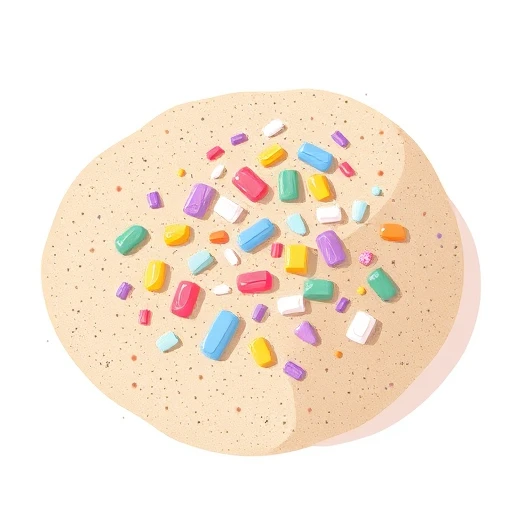
microplastics in 30 Seconds
- Microplastics are tiny plastic particles under 5mm that result from the breakdown of larger items or are manufactured for specific uses in products.
- They are a pervasive form of pollution found in oceans, soil, and air, posing significant threats to wildlife and potentially human health.
- These particles do not biodegrade, meaning they persist in the environment for centuries and can absorb and transport harmful chemical toxins.
- Global efforts are underway to reduce microplastics through bans on microbeads, improved waste management, and the development of sustainable plastic alternatives.
The term microplastics refers to a category of environmental pollutants that have gained significant attention in the 21st century. These are tiny fragments of plastic, defined by the National Oceanic and Atmospheric Administration (NOAA) as being less than five millimeters (0.2 inches) in diameter. To visualize this, think of something smaller than a grain of rice or even as microscopic as a speck of dust. The word is used primarily in scientific, environmental, and public health contexts to describe the pervasive nature of plastic waste that has broken down but never truly disappeared from our ecosystem. Understanding microplastics requires a look at their two main categories: primary and secondary. Primary microplastics are those specifically manufactured to be small, such as the microbeads once common in exfoliating soaps, toothpastes, and industrial abrasive blasters. Secondary microplastics, which are far more common, result from the fragmentation of larger plastic items like water bottles, fishing nets, and synthetic clothing fibers. When these larger items are exposed to environmental stressors—such as ultraviolet (UV) radiation from the sun, mechanical wave action in the ocean, or physical abrasion—they do not biodegrade in the biological sense. Instead, they undergo photodegradation, becoming increasingly brittle and shattering into millions of microscopic pieces. These particles are now found in every corner of the globe, from the summit of Mount Everest to the depths of the Mariana Trench. People use this word when discussing the 'plastisphere,' a term for the ecosystems that have evolved to live on these floating plastic islands, or when debating the safety of our food supply, as these particles enter the food chain through ingestion by plankton and small fish.
- Scientific Classification
- Microplastics are categorized by size (typically 1 micrometer to 5 millimeters), shape (fragments, fibers, beads, or pellets), and chemical composition (polyethylene, polypropylene, polystyrene, etc.).
The researcher spent hours under the microscope identifying various microplastics extracted from the sediment samples of the local riverbed.
The conversation around microplastics often involves the concept of 'bioaccumulation.' This is the process where these particles are eaten by small organisms and then passed up the food chain to larger predators, including humans. Because plastics often contain chemical additives like phthalates and bisphenol A (BPA), or absorb persistent organic pollutants (POPs) from the surrounding water, they act as 'toxic sponges.' When a person uses the word microplastics, they are often implying a concern for long-term ecological health and the invisible ways human industrial activity alters the natural world. In recent years, the term has also appeared in discussions about indoor air quality, as synthetic carpets and clothing shed fibers that we inhale daily. The ubiquity of the term reflects a shift in environmental consciousness from visible litter (like a plastic bag on a beach) to invisible, systemic pollution that requires complex scientific solutions and global policy changes.
- Environmental Context
- Used frequently in oceanography and marine biology to describe the accumulation of debris in oceanic gyres, such as the Great Pacific Garbage Patch.
Recent environmental legislation aims to ban the use of microplastics in rinse-off cosmetic products to protect aquatic life.
Furthermore, the term is central to the debate on the 'Circular Economy.' If we cannot effectively recycle or contain plastic waste, it inevitably breaks down into microplastics. This has led to the development of new technologies, such as laundry filters designed to catch synthetic fibers before they enter the wastewater system. When people use the word, they might be referring to the 'secondary' type, which is a byproduct of our modern lifestyle—from the wear and tear of car tires on the road to the washing of a polyester fleece jacket. The term is heavy with the weight of unintended consequences; we created plastic for its durability, and that very durability is what makes microplastics such a persistent threat. Scientists are now even finding 'nanoplastics,' which are even smaller than microplastics and can potentially cross biological membranes, including the blood-brain barrier. Thus, using the word microplastics today is often a starting point for a much deeper conversation about chemistry, biology, and the future of human health.
- Public Health Context
- Increasingly used in medical research to discuss the presence of foreign particles in human lungs, blood, and placental tissue.
The study revealed that bottled water can contain thousands of microplastics per liter, sparking a debate on food safety standards.
Washing synthetic fabrics releases millions of microplastics into the water system every year.
Birds often mistake microplastics for food, leading to malnutrition and physical internal damage.
Using the word microplastics correctly involves understanding its grammatical role as a plural noun and its semantic role as a technical descriptor. In most sentences, it functions as the subject or object of an action related to environmental contamination, scientific discovery, or policy regulation. Because the word is inherently plural, it takes plural verb forms (e.g., 'microplastics are,' not 'microplastics is'). When constructing sentences, it is helpful to specify the source or the location of these particles to provide clarity. For instance, instead of just saying 'microplastics are bad,' a more sophisticated sentence would be, 'The accumulation of microplastics in marine sediments poses a significant threat to benthic organisms.' This uses the word in a specific ecological context. You will often see it paired with verbs like 'contaminate,' 'ingest,' 'detect,' 'fragment,' and 'mitigate.' These verbs reflect the lifecycle of the particles, from their creation to their impact and the efforts to stop them. It is also common to use 'microplastics' as a modifier in compound nouns, such as 'microplastics pollution,' 'microplastics research,' or 'microplastics concentration.'
- Subject Usage
- Microplastics have been found in the most remote regions of the Arctic, demonstrating their ability to travel via atmospheric currents.
While larger debris is easy to spot, microplastics remain largely invisible to the naked eye, complicating cleanup efforts.
In academic writing, the word is often used with precise adjectives to describe the nature of the particles. You might read about 'primary microplastics' (manufactured small) or 'secondary microplastics' (broken down from larger items). Sentences might also describe the 'morphology' (shape) of the particles, using terms like 'fibers,' 'fragments,' or 'spheres.' For example: 'The majority of the microplastics recovered from the water samples were synthetic fibers originating from textile laundering.' This level of detail is crucial in scientific reporting. In more casual or journalistic contexts, the word is used to highlight the surprising reach of pollution. A headline might read, 'New Study Finds Microplastics in Human Blood for the First Time.' Here, the word serves as a shocking revelation. When using it in a sentence about solutions, you might say, 'We must improve our filtration systems to capture microplastics before they reach our oceans.' This shifts the focus from the problem to the action required. Remember that 'microplastics' is a count noun in the sense that you can have 'fewer microplastics' or 'many microplastics,' although they are often treated as a collective mass in general discussion.
- Object Usage
- The local government is implementing new regulations to reduce the amount of microplastics entering the municipal water supply.
Scientists are currently investigating how marine life ingests microplastics and the subsequent effects on their reproductive health.
To use the word effectively in a persuasive context, such as an essay or a speech, it is helpful to contrast microplastics with more visible forms of pollution. You might write, 'While we can pick up a plastic bottle from the beach, we cannot easily remove the millions of microplastics that have already integrated into the sand.' This highlights the difficulty of the problem. Additionally, you can use the word to describe a process: 'As the sun's rays weaken the plastic structure, the material begins to shed microplastics into the surrounding environment.' This explains the 'how' behind the 'what.' In summary, whether you are writing a technical report, a news article, or a school essay, 'microplastics' should be used to denote the small, persistent, and pervasive nature of modern plastic pollution. It is a word that carries scientific weight and environmental urgency, and its placement in a sentence should reflect that seriousness.
- Comparative Usage
- Compared to macroplastics, microplastics are significantly harder to track and remove from the environment once they have dispersed.
The filter was specifically designed to trap microplastics as small as ten micrometers.
By choosing natural fibers over synthetic ones, consumers can help reduce the shedding of microplastics during laundry cycles.
The sheer volume of microplastics in the ocean is estimated to be in the trillions of particles.
In the modern world, you are likely to encounter the word microplastics in a variety of settings, ranging from academic lectures to casual dinner table conversations. One of the most common places is in news media, particularly in segments focused on the environment, climate change, or health. When a new scientific study is released—perhaps finding plastic in the snow of the Pyrenees or in human lung tissue—major news outlets like the BBC, CNN, or The New York Times will use the word prominently in their headlines. This has made the term a staple of the general public's vocabulary regarding sustainability. You will also hear it frequently in nature documentaries, such as those narrated by David Attenborough, where the focus is on the impact of human waste on marine life. In these contexts, the word is often spoken with a tone of concern or urgency, highlighting the 'invisible' threat that these particles pose to creatures that mistake them for food. The word has also moved into the political sphere, appearing in legislative debates about banning single-use plastics or regulating the cosmetics industry. Politicians and activists use it to argue for stricter environmental standards, making it a key term in the language of modern advocacy.
- Media and Journalism
- Used in investigative reports and headlines to draw attention to the hidden dangers of plastic waste in the food chain and water supply.
On the evening news, the reporter explained how microplastics are now being detected in the most remote parts of the ocean.
Another significant venue for this word is the classroom and the university. Students in biology, environmental science, and chemistry courses will encounter 'microplastics' as a subject of rigorous study. Here, the word is used in a more technical sense, often accompanied by data on particle counts, chemical polymers, and toxicological effects. If you attend a sustainability workshop or a 'green' living seminar, the word will almost certainly come up when discussing how to reduce one's personal 'plastic footprint.' Speakers might offer tips on avoiding synthetic clothing or choosing personal care products that are 'microbead-free.' In the business world, particularly in the corporate social responsibility (CSR) departments of large companies, the word is used when discussing supply chain sustainability and the environmental impact of products. Companies are increasingly under pressure to prove that their manufacturing processes do not contribute to the release of microplastics into the environment. This has led to the word appearing in annual reports and marketing materials as brands strive to appear environmentally conscious.
- Educational and Academic
- A standard term in environmental science curricula, used to teach students about pollution, ecosystems, and the long-term effects of synthetic materials.
During the biology lecture, the professor discussed the mechanism by which microplastics are absorbed by coral reefs.
Social media is also a major platform for the word. Environmental influencers and organizations like Greenpeace or the World Wildlife Fund (WWF) use the term in posts, infographics, and short videos to educate their followers. These posts often use striking visuals—like a microscopic view of a colorful plastic fragment next to a plankton—to make the abstract concept of microplastics more tangible. In this space, the word is often part of a call to action, encouraging people to sign petitions or change their consumption habits. Finally, you might even hear the word in a medical setting. As research into the health effects of plastic ingestion grows, doctors and health experts are beginning to discuss the potential risks of microplastics in our diet and air. While the long-term effects on humans are still being studied, the word has entered the lexicon of 'modern health concerns,' alongside terms like 'endocrine disruptors' and 'forever chemicals.' In all these places, the word 'microplastics' serves as a bridge between scientific reality and public awareness.
- Advocacy and Social Media
- Used by activists to mobilize public support for environmental causes and to pressure corporations to reduce plastic production.
The viral video showed the shocking amount of microplastics found in a single liter of tap water.
The environmental group launched a campaign to raise awareness about the microplastics shed by car tires.
At the climate summit, world leaders discussed a global treaty to address the crisis of microplastics.
When using the word microplastics, several common mistakes can occur, ranging from grammatical errors to conceptual misunderstandings. One of the most frequent grammatical errors is treating the word as a singular noun. Because it ends in 's,' some learners might mistakenly think it is a singular concept like 'mathematics' or 'physics.' However, 'microplastics' is the plural of 'microplastic.' While you might occasionally refer to 'a microplastic particle,' in almost all environmental and scientific contexts, you are talking about a large number of them. Therefore, you should always use plural verbs: 'Microplastics are found,' not 'Microplastics is found.' Another common mistake is the spelling; it is a single word, not two words ('micro plastics') and not hyphenated ('micro-plastics'), although you might see the hyphenated version in older texts or some British English sources. In modern, standard usage, the single-word form is preferred. Conceptual confusion is also common, particularly between 'microplastics' and 'nanoplastics.' While both are small, nanoplastics are significantly smaller (less than 1 micrometer) and behave differently in the environment and the body. Using the terms interchangeably can lead to inaccuracies in scientific or technical writing.
- Subject-Verb Agreement
- Incorrect: Microplastics is a major problem in the ocean. Correct: Microplastics are a major problem in the ocean.
Many people mistakenly believe that microplastics are only found in the ocean, but they are also prevalent in the air we breathe.
Another mistake involves the source of microplastics. Some people use the term to refer only to the small beads found in soaps (microbeads). While microbeads are a type of microplastic, they represent only a small fraction of the total microplastics in the environment. The majority of microplastics come from the breakdown of larger items like bottles, bags, and synthetic clothing. Failing to make this distinction can lead to a misunderstanding of the scale and complexity of the problem. Additionally, there is sometimes confusion between 'microplastics' and 'biodegradable plastics.' Just because a plastic is designed to break down faster doesn't mean it doesn't produce microplastics. In fact, some 'oxo-degradable' plastics are criticized because they simply break down into microplastics more quickly rather than fully disappearing. When writing about this, it is important to be precise about the material's lifecycle. Another subtle mistake is using the word 'microplastics' when 'plastic pollution' or 'plastic debris' might be more appropriate. If you are talking about a large, visible piece of plastic, 'microplastics' is the wrong term. Use 'macroplastics' or simply 'plastic waste' for larger items.
- Spelling and Form
- Incorrect: micro plastics, micro-plastics. Correct: microplastics (standard modern usage).
It is a common error to use the term microplastics when referring to nanoplastics, which are even smaller and potentially more dangerous.
Finally, watch out for the 'countable vs. uncountable' trap. While we often talk about the 'amount' of microplastics (treating it like an uncountable mass), it is technically more correct to talk about the 'number' or 'concentration' of microplastics because they are individual particles. For example, 'The number of microplastics in the sample was staggering' is more precise than 'The amount of microplastics was staggering.' However, in casual conversation, 'amount' is frequently used and generally accepted. Another mistake is assuming all microplastics are the same. They vary widely in their chemical makeup, and this affects how they interact with the environment. Some might sink, while others float; some might be highly toxic, while others are relatively inert. Being aware of these nuances will help you use the word more accurately and effectively in your writing and speaking. By avoiding these common pitfalls, you can ensure that your communication about this critical environmental issue is clear, professional, and scientifically sound.
- Conceptual Precision
- Avoid using 'microplastics' as a catch-all for all plastic pollution; distinguish between large debris (macro), small particles (micro), and microscopic particles (nano).
The report was criticized for failing to distinguish between primary microplastics and those resulting from environmental degradation.
When discussing the impact on human health, it is vital to specify that microplastics can carry harmful chemical additives.
The journalist was corrected for saying 'a microplastics' instead of 'a microplastic particle' or simply 'microplastics'.
While microplastics is the most common and scientifically accepted term for small plastic particles, there are several related words and alternatives that you might encounter or use depending on the context. Understanding these can help you be more precise in your communication. One of the most closely related terms is 'nanoplastics.' As mentioned before, these are even smaller than microplastics, typically defined as being less than 1 micrometer in size. While microplastics are often visible under a standard light microscope, nanoplastics often require more advanced imaging techniques like electron microscopy. In environmental discussions, you might also hear the term 'microbeads.' This is a more specific term referring to the tiny, manufactured plastic spheres used in personal care products. While all microbeads are microplastics, not all microplastics are microbeads. Another term is 'synthetic fibers' or 'microfibers.' These are a specific type of microplastic that are thread-like in shape and often come from washing clothes made of polyester, nylon, or acrylic. Because fibers are the most common type of microplastic found in many environments, this term is frequently used in textile and oceanographic research.
- Nanoplastics vs. Microplastics
- Nanoplastics are smaller (under 1μm) and can potentially enter cells, whereas microplastics (1μm-5mm) are larger and primarily affect organisms through ingestion and physical blockage.
The researcher noted that while microplastics were abundant in the water, the presence of nanoplastics was much harder to quantify.
In a broader environmental context, you might use terms like 'plastic debris,' 'plastic pollutants,' or 'anthropogenic litter.' 'Plastic debris' is a general term that covers all sizes of plastic waste, from large abandoned fishing nets to tiny fragments. 'Anthropogenic litter' is an even broader term that includes any human-made waste found in the environment, such as glass, metal, and plastic. If you want to emphasize the source of the pollution, you might use 'secondary plastic particles,' which specifically refers to microplastics created by the breakdown of larger items. In contrast, 'primary plastic particles' refers to those manufactured to be small. In some technical reports, you might see the term 'particulate plastic' or 'plastic particulates.' These terms emphasize the physical state of the plastic as small, discrete particles suspended in water or air. When discussing the impact on the food chain, scientists sometimes use the term 'trophic transfer of plastics,' which describes how microplastics move from one organism to another as they are eaten. This is a more formal way of describing the 'bioaccumulation' of microplastics.
- Microbeads vs. Microplastics
- Microbeads are a subset of primary microplastics used as exfoliants; 'microplastics' is the umbrella term for all small plastic particles.
The ban on microbeads was a significant first step, but it only addressed a small portion of the total microplastics entering the ocean.
For those looking for more descriptive alternatives, you might use phrases like 'microscopic plastic fragments' or 'tiny synthetic particles.' These can be useful for adding variety to your writing or for explaining the concept to someone who might not be familiar with the technical term. In the context of car tires, which are a major source of pollution, you might hear the term 'tire wear particles' (TWP). These are a complex mixture of rubber, plastic, and other chemicals that are shed as tires rub against the road. While they are often categorized as microplastics, they have unique properties that distinguish them from other types of plastic waste. Finally, in the most academic circles, you might encounter the term 'plastisphere,' which refers to the entire ecological community of microbes and other organisms that live on microplastics. This term highlights how microplastics are not just pollutants, but have become a permanent, if problematic, part of the Earth's biological systems. By choosing the right word from this list, you can tailor your message to your audience and ensure your descriptions are as accurate as possible.
- Microfibers vs. Microplastics
- Microfibers are thread-like particles from textiles; they are the most prevalent form of microplastics found in many environmental samples.
By using a specialized laundry bag, you can catch synthetic microfibers and prevent them from becoming microplastics in the ocean.
The term 'anthropogenic litter' includes microplastics as well as glass shards and metal fragments.
The study focused on 'tire wear particles,' a significant but often overlooked source of microplastics in urban runoff.
How Formal Is It?
Fun Fact
The term was popularized by marine biologist Richard Thompson in a 2004 paper titled 'Lost at Sea: Where Is All the Plastic?', which first brought the issue to global scientific attention.
Pronunciation Guide
- Pronouncing 'micro' as 'me-cro'.
- Putting the stress on the first syllable.
- Forgetting the 's' at the end.
- Pronouncing 'plastics' with a long 'a' sound.
- Merging the 'o' and 'p' sounds too closely.
Difficulty Rating
The word itself is easy to recognize, but it often appears in complex scientific texts.
Requires correct pluralization and understanding of technical contexts.
Pronunciation is straightforward once the stress is learned.
Distinctive sound makes it easy to identify in speech.
What to Learn Next
Prerequisites
Learn Next
Advanced
Grammar to Know
Plural Nouns as Collective Subjects
Microplastics are (not is) a major concern.
Compound Noun Formation
Microplastics pollution (noun + noun).
Using 'Fewer' vs 'Less'
We should use fewer (not less) microplastics.
Adjective Placement
Pervasive microplastics (adjective before noun).
Passive Voice in Science
Microplastics were detected in the sample.
Examples by Level
The fish ate tiny microplastics in the water.
Ikan itu memakan mikroplastik kecil di dalam air.
Microplastics is plural here.
Microplastics are very small pieces of plastic.
Mikroplastik adalah potongan plastik yang sangat kecil.
Use 'are' with microplastics.
We find microplastics in the ocean.
Kita menemukan mikroplastik di lautan.
Present simple tense.
Some soaps have microplastics in them.
Beberapa sabun mengandung mikroplastik di dalamnya.
Preposition 'in'.
Microplastics are bad for the Earth.
Mikroplastik buruk bagi Bumi.
Adjective 'bad' describing the noun.
Birds can mistake microplastics for food.
Burung bisa salah mengira mikroplastik sebagai makanan.
Modal verb 'can'.
There are many microplastics in the sand.
Ada banyak mikroplastik di dalam pasir.
'There are' for plural.
Don't throw plastic away; it becomes microplastics.
Jangan buang plastik; itu akan menjadi mikroplastik.
Imperative 'Don't'.
Microplastics are smaller than five millimeters.
Mikroplastik lebih kecil dari lima milimeter.
Comparative 'smaller than'.
Washing clothes can release microplastics into the water.
Mencuci pakaian dapat melepaskan mikroplastik ke dalam air.
Gerund 'Washing' as subject.
Scientists study microplastics to help the environment.
Ilmuwan mempelajari mikroplastik untuk membantu lingkungan.
Infinitive of purpose 'to help'.
Microplastics are a type of pollution.
Mikroplastik adalah sejenis polusi.
Noun phrase 'a type of'.
You cannot see most microplastics without a microscope.
Anda tidak bisa melihat sebagian besar mikroplastik tanpa mikroskop.
Negative modal 'cannot'.
The ocean is full of microplastics.
Lautan penuh dengan mikroplastik.
Adjective phrase 'full of'.
Microplastics come from big plastic bottles.
Mikroplastik berasal dari botol plastik besar.
Verb 'come from'.
We need to reduce the use of microplastics.
Kita perlu mengurangi penggunaan mikroplastik.
Verb 'need' followed by infinitive.
Microplastics are a significant threat to marine ecosystems.
Mikroplastik adalah ancaman signifikan bagi ekosistem laut.
Adjective 'significant' modifying 'threat'.
Because they are so small, microplastics are hard to remove.
Karena ukurannya sangat kecil, mikroplastik sulit dihilangkan.
Conjunction 'Because' introducing a reason.
Microplastics have been found in drinking water around the world.
Mikroplastik telah ditemukan dalam air minum di seluruh dunia.
Present perfect passive voice.
The breakdown of plastic waste creates millions of microplastics.
Kerusakan limbah plastik menciptakan jutaan mikroplastik.
Subject-verb agreement (breakdown creates).
Many cosmetic companies have stopped using microplastics in their products.
Banyak perusahaan kosmetik telah berhenti menggunakan mikroplastik dalam produk mereka.
Present perfect tense.
Microplastics can absorb harmful chemicals from the ocean water.
Mikroplastik dapat menyerap bahan kimia berbahaya dari air laut.
Modal 'can' expressing ability/possibility.
If we don't act now, the amount of microplastics will double.
Jika kita tidak bertindak sekarang, jumlah mikroplastik akan berlipat ganda.
First conditional sentence.
The government is considering a ban on microplastics.
Pemerintah sedang mempertimbangkan larangan terhadap mikroplastik.
Present continuous tense.
The pervasive nature of microplastics makes them a global concern.
Sifat mikroplastik yang meresap menjadikannya kekhawatiran global.
Adjective 'pervasive' describing 'nature'.
Secondary microplastics are formed through the weathering of larger debris.
Mikroplastik sekunder terbentuk melalui pelapukan puing-puing yang lebih besar.
Passive voice 'are formed'.
Microplastics act as vectors for persistent organic pollutants.
Mikroplastik bertindak sebagai vektor bagi polutan organik yang persisten.
Metaphorical use of 'vectors'.
Ingested microplastics can lead to physical damage in the digestive tract.
Mikroplastik yang tertelan dapat menyebabkan kerusakan fisik pada saluran pencernaan.
Past participle 'Ingested' used as an adjective.
Research indicates that microplastics are present in human lung tissue.
Penelitian menunjukkan bahwa mikroplastik ada di jaringan paru-paru manusia.
Noun clause 'that microplastics are present'.
The concentration of microplastics is particularly high in urban rivers.
Konsentrasi mikroplastik sangat tinggi di sungai-sungai perkotaan.
Adverb 'particularly' modifying 'high'.
Mitigating the impact of microplastics requires systemic changes in production.
Mitigasi dampak mikroplastik memerlukan perubahan sistemik dalam produksi.
Gerund 'Mitigating' as the subject.
Microplastics have been detected even in the most remote Arctic regions.
Mikroplastik telah terdeteksi bahkan di wilayah Arktik yang paling terpencil.
Present perfect passive with 'even'.
The ecological ramifications of microplastics are still being fully elucidated.
Dampak ekologis dari mikroplastik masih terus dijelaskan sepenuhnya.
Passive continuous 'are still being elucidated'.
Microplastics facilitate the trophic transfer of hazardous additives.
Mikroplastik memfasilitasi transfer trofik aditif berbahaya.
Technical term 'trophic transfer'.
The 'plastisphere' provides a unique niche for microbial colonization.
'Plastisphere' menyediakan ceruk unik untuk kolonisasi mikroba.
Use of specialized terminology.
Anthropogenic activities have led to the ubiquitous distribution of microplastics.
Aktivitas antropogenik telah menyebabkan distribusi mikroplastik yang ada di mana-mana.
Adjective 'ubiquitous' for widespread presence.
Legislative frameworks must address the lifecycle of microplastics to be effective.
Kerangka legislatif harus menangani siklus hidup mikroplastik agar efektif.
Compound noun 'Legislative frameworks'.
Microplastics exhibit a wide range of morphologies and chemical compositions.
Mikroplastik menunjukkan berbagai morfologi dan komposisi kimia.
Verb 'exhibit' meaning 'to show'.
The bioavailability of toxins is increased when they are adsorbed onto microplastics.
Bioavailabilitas toksin meningkat ketika mereka terserap ke mikroplastik.
Passive voice with 'when' clause.
Current sampling methods may underestimate the true abundance of microplastics.
Metode pengambilan sampel saat ini mungkin meremehkan kelimpahan mikroplastik yang sebenarnya.
Modal 'may' expressing possibility.
The global dispersion of microplastics serves as a stratigraphic marker of the Anthropocene.
Dispersi global mikroplastik berfungsi sebagai penanda stratigrafi Antroposen.
Highly academic 'stratigraphic marker'.
Microplastics act as a 'Trojan horse,' delivering concentrated toxins to organisms.
Mikroplastik bertindak sebagai 'kuda Troya,' memberikan toksin terkonsentrasi ke organisme.
Metaphorical 'Trojan horse' construction.
The fragmentation kinetics of polymers in marine environments are poorly understood.
Kinetika fragmentasi polimer di lingkungan laut kurang dipahami.
Technical term 'fragmentation kinetics'.
Biofouling alters the buoyancy of microplastics, causing them to sink into deep-sea sinks.
Biofouling mengubah daya apung mikroplastik, menyebabkannya tenggelam ke dasar laut dalam.
Cause-and-effect structure with 'causing'.
The ubiquity of microplastics necessitates a paradigm shift in waste management strategies.
Keberadaan mikroplastik di mana-mana memerlukan pergeseran paradigma dalam strategi pengelolaan limbah.
Formal 'necessitates' and 'paradigm shift'.
Microplastics represent a non-point source of pollution that transcends national boundaries.
Mikroplastik mewakili sumber polusi tidak tetap yang melampaui batas-batas nasional.
Legal/Environmental term 'non-point source'.
The adsorption-desorption dynamics of POPs on microplastics are highly complex.
Dinamika adsorpsi-desorpsi POP pada mikroplastik sangat kompleks.
Technical 'adsorption-desorption dynamics'.
Microplastics can potentially cross biological barriers, posing unprecedented health risks.
Mikroplastik berpotensi melintasi hambatan biologis, menimbulkan risiko kesehatan yang belum pernah terjadi sebelumnya.
Adverb 'unprecedented' for something new.
Synonyms
Antonyms
Common Collocations
Common Phrases
— Containing a very large and problematic amount of microplastics.
The riverbed was found to be riddled with microplastics from the nearby factory.
— Referring to microplastics as a major cause of trouble or suffering for the environment.
Environmentalists are fighting against the scourge of microplastics in our oceans.
— The presence of plastic particles in the sequence of organisms eating each other.
We need to understand the long-term effects of microplastics in the food chain.
— A product or environment that does not contain any microplastics.
She only buys cosmetics that are certified as microplastics-free.
— Emphasizing that microplastics are dangerous even though they are hard to see.
Documentaries often highlight the invisible threat of microplastics to marine life.
— A place where microplastics tend to accumulate, like the deep ocean floor.
The Arctic ice has become a major sink for microplastics carried by currents.
— The total amount of microplastics an individual or company is responsible for.
You can reduce your microplastics footprint by avoiding synthetic fabrics.
— Taking action to solve the problem of microplastics.
Tackling microplastics requires a global effort to change how we use plastic.
— The increasing amount and awareness of microplastics in the environment.
The rise of microplastics is a direct result of our reliance on single-use plastics.
— The ongoing process of measuring and tracking microplastics in a specific area.
Regular microplastics monitoring is essential for protecting our water supply.
Often Confused With
Nanoplastics are much smaller (under 1 micrometer) and can enter cells, while microplastics are larger (up to 5mm).
Microbeads are a specific type of manufactured microplastic, but the term is often used as a synonym for all microplastics.
Macroplastics are large, visible pieces of plastic waste, whereas microplastics are tiny and often invisible.
Idioms & Expressions
— The visible part of the microplastics problem is only a small fraction of the total issue.
The plastic we see on the beach is just the tip of the microplastics iceberg.
informal/journalistic— Being surrounded by an overwhelming amount of microplastics.
Our oceans are literally swimming in microplastics.
informal— A very small and insignificant effort compared to the scale of the microplastics problem.
Cleaning one beach is just a drop in the microplastics ocean.
informal— The problem of microplastics has started and cannot be easily stopped or reversed.
Now that the microplastics genie is out of the bottle, we must find ways to live with it.
informal— Starting a discussion or action that reveals a very complex and difficult problem.
The new study on microplastics in blood has opened a whole new can of microplastics.
informal— Acknowledging that microplastics will persist in the environment for a very long time.
Unfortunately, it seems that microplastics are here to stay for the next few centuries.
neutral— Struggling to solve the microplastics problem when it seems impossible.
Without global bans, we are fighting a losing battle against microplastics.
informal— A situation involving microplastics that is likely to become a major disaster in the future.
Scientists warn of a microplastics time bomb in our soil.
journalistic— Describing an ecosystem or organism that is severely harmed by microplastics.
Our rivers are choking on microplastics from urban runoff.
informal— A situation or topic that is full of hidden dangers or difficulties related to microplastics.
Navigating the regulations on microplastics is a legal minefield for companies.
informalEasily Confused
They are both small plastics.
Microbeads are intentionally made small for products like soap, while microplastics is the general term for all small plastic particles.
The soap contains microbeads, which are a type of microplastic.
Both are microscopic plastic pollutants.
Nanoplastics are smaller than 1 micrometer; microplastics are between 1 micrometer and 5 millimeters.
Nanoplastics are even harder to detect than microplastics.
They are a very common type of microplastic.
Microfibers are specifically thread-like and come from textiles, while microplastics can be any shape (fragments, beads, etc.).
Most of the microplastics in the sample were actually microfibers from clothing.
They are small plastic pieces found in the ocean.
Nurdles are pre-production pellets used to make plastic products, while microplastics also include broken-down waste.
A spill of nurdles added millions of microplastics to the local beach.
People think they don't cause microplastics.
Biodegradable plastic is supposed to break down fully, but some types just break into microplastics faster.
Be careful, as some 'biodegradable' plastics still leave behind microplastics.
Sentence Patterns
Microplastics are [adjective].
Microplastics are small.
There are microplastics in [place].
There are microplastics in the ocean.
[Action] creates microplastics.
Washing clothes creates microplastics.
The accumulation of microplastics leads to [consequence].
The accumulation of microplastics leads to health problems.
Microplastics act as [role] for [something].
Microplastics act as vectors for toxins.
The ubiquity of microplastics necessitates [action].
The ubiquity of microplastics necessitates a paradigm shift.
Scientists have found microplastics in [noun].
Scientists have found microplastics in fish.
Microplastics are categorized into [type] and [type].
Microplastics are categorized into primary and secondary.
Word Family
Nouns
Verbs
Adjectives
Related
How to Use It
The word has seen a massive increase in usage since 2004 and is now a high-frequency term in environmental and news contexts.
-
Microplastics is a big problem.
→
Microplastics are a big problem.
Microplastics is a plural noun and requires a plural verb.
-
I found a microplastics on the beach.
→
I found microplastics on the beach.
You don't use 'a' with a plural noun. You could say 'a microplastic particle' or just 'microplastics'.
-
The ocean has much microplastics.
→
The ocean has many microplastics.
Use 'many' for countable nouns like microplastics, or 'a lot of' for both.
-
Micro plastics are everywhere.
→
Microplastics are everywhere.
It should be written as one single word without a space.
-
Nanoplastics and microplastics is the same thing.
→
Nanoplastics and microplastics are different things.
They refer to different sizes of particles and are both plural.
Tips
Always Plural
In 99% of cases, you should use 'microplastics' as a plural noun. It's very rare to talk about just one 'microplastic'.
Be Specific
If you're talking about clothes, use 'microfibers'. If you're talking about soap, use 'microbeads'. It makes your English sound more advanced.
Subject-Verb Agreement
Remember: 'Microplastics are...' not 'Microplastics is...'. Treat it like the word 'apples' or 'books'.
Use Strong Adjectives
Words like 'ubiquitous', 'pervasive', and 'persistent' go perfectly with microplastics to describe how they are everywhere and don't go away.
Stress the 'Plas'
The rhythm of the word is important. Make sure the 'PLAS' part is the loudest and longest syllable.
Global Issue
When using the word, remember it's a global environmental term. It's great for essays about the planet or science.
One Word
Don't put a space or a hyphen. 'Microplastics' is the standard way to write it in modern English.
Visualize for Others
If someone doesn't know the word, describe them as 'tiny plastic dust' to help them understand quickly.
Look for Polymer Names
In scientific articles, microplastics are often mentioned alongside words like 'polyethylene' or 'polystyrene'. These are the types of plastic.
News Keywords
When you hear 'environment', 'ocean', or 'pollution' in the news, listen for 'microplastics' as a key detail.
Memorize It
Mnemonic
Think of 'Micro' (tiny) and 'Plastics' (trash). Micro-plastics are tiny trash pieces that are everywhere.
Visual Association
Imagine a giant plastic bottle shattering into a million tiny, glowing stars that fall into the ocean and are eaten by fish.
Word Web
Challenge
Try to find three items in your house that might create microplastics (like a fleece jacket or a plastic sponge) and think of a natural alternative.
Word Origin
The word is a compound formed from the Greek prefix 'mikros' (meaning small) and the English noun 'plastics'. It was first coined in the early 2000s as scientists began to recognize the significance of small plastic debris in the ocean.
Original meaning: Small particles of synthetic polymers found in environmental samples.
English (Greek-derived prefix + Latin-derived root).Cultural Context
Be careful when discussing microplastics in human health; while the presence is proven, the exact health effects are still being researched and can be a sensitive or scary topic for some.
The term is very common in UK, US, Canadian, and Australian news, often linked to 'green' political movements.
Practice in Real Life
Real-World Contexts
Environmental News
- breaking down into microplastics
- marine life ingesting microplastics
- microplastics detected in
- global microplastics crisis
Scientific Research
- microplastics concentration
- morphology of microplastics
- primary vs secondary microplastics
- sampling for microplastics
Sustainable Living
- reducing microplastics footprint
- microbead-free products
- synthetic fibers and microplastics
- avoiding microplastics
Public Health
- microplastics in the human body
- inhaling microplastics
- health risks of microplastics
- microplastics in drinking water
Policy and Law
- ban on microplastics
- regulating microplastics
- international microplastics treaty
- microplastics legislation
Conversation Starters
"Did you see that recent article about microplastics being found in the clouds?"
"I've been trying to buy more natural fibers to avoid shedding microplastics in the wash."
"What do you think is the most effective way to solve the microplastics problem?"
"Are you worried about the amount of microplastics in our food and water?"
"I heard that some tea bags actually release millions of microplastics when you brew them."
Journal Prompts
Reflect on your daily plastic use. How many of your actions might contribute to the creation of microplastics?
If you were a scientist, what kind of experiment would you design to study the impact of microplastics?
Write a letter to a local politician arguing for a ban on certain types of microplastics in your city.
Imagine a world 100 years from now. How has the problem of microplastics changed or been solved?
How does the idea of 'invisible pollution' like microplastics change your perspective on environmental protection?
Frequently Asked Questions
10 questionsMicroplastics are tiny pieces of plastic, less than 5 millimeters in size. They come from the breakdown of larger plastic items like bottles or from products like exfoliating soaps. Because they are so small, they are a major source of pollution in our oceans and environment.
They come from two main sources. Primary microplastics are made small, like microbeads in cosmetics. Secondary microplastics are created when larger plastic waste, such as bags and bottles, breaks down due to sunlight and waves. Synthetic clothing also sheds microplastic fibers when washed.
While we know microplastics are in our food, water, and air, scientists are still studying the exact health effects. The concern is that they can carry harmful chemicals or cause physical irritation in the body. Research is ongoing to understand the long-term risks.
Some microplastics are large enough to see, like tiny beads or fragments. However, many are so small that you need a microscope to see them. This 'invisibility' makes them very difficult to clean up once they are in the environment.
They enter the ocean through various pathways, including river runoff, wind, and wastewater systems. For example, when you wash synthetic clothes, the fibers go down the drain and often pass through treatment plants into the sea.
Yes, almost all conventional plastics will eventually break down into microplastics. Because they don't biodegrade (disappear completely), they just keep getting smaller and smaller over hundreds of years, persisting in the environment.
Many countries have banned microbeads in cosmetics. There are also efforts to improve recycling, develop better laundry filters, and create international treaties to reduce plastic production and waste globally.
Yes, studies have found microplastics in both tap water and bottled water around the world. They are so pervasive that they have even been found in remote mountain springs and rainwater.
Yes, if a fish eats too many microplastics, it can cause physical blockages in their digestive system, leading to starvation. It can also expose them to toxic chemicals that affect their growth and ability to reproduce.
You can help by using fewer single-use plastics, choosing natural fibers like cotton or wool instead of polyester, using a laundry filter, and supporting companies that are committed to reducing plastic waste.
Test Yourself 180 questions
Write a sentence about microplastics in the ocean.
Well written! Good try! Check the sample answer below.
Write a sentence about why microplastics are bad for fish.
Well written! Good try! Check the sample answer below.
Explain where microplastics come from in two sentences.
Well written! Good try! Check the sample answer below.
Discuss the difference between primary and secondary microplastics.
Well written! Good try! Check the sample answer below.
Write a short paragraph about the ecological impact of microplastics.
Well written! Good try! Check the sample answer below.
Use the word 'microplastics' in a sentence with 'small'.
Well written! Good try! Check the sample answer below.
Write a sentence about microplastics and washing machines.
Well written! Good try! Check the sample answer below.
What can we do to reduce microplastics? Write three tips.
Well written! Good try! Check the sample answer below.
Describe how microplastics travel through the environment.
Well written! Good try! Check the sample answer below.
Analyze the concept of the 'plastisphere' and its implications.
Well written! Good try! Check the sample answer below.
Write: 'I do not like microplastics.'
Well written! Good try! Check the sample answer below.
Write a sentence using 'microscope' and 'microplastics'.
Well written! Good try! Check the sample answer below.
Write a sentence about microplastics in drinking water.
Well written! Good try! Check the sample answer below.
Use 'bioaccumulation' and 'microplastics' in one sentence.
Well written! Good try! Check the sample answer below.
Explain the 'Trojan horse' effect of microplastics.
Well written! Good try! Check the sample answer below.
Write: 'Microplastics are bad for fish.'
Well written! Good try! Check the sample answer below.
Write a sentence about a plastic bottle becoming microplastics.
Well written! Good try! Check the sample answer below.
Write a sentence about a ban on microplastics.
Well written! Good try! Check the sample answer below.
Use 'ubiquitous' to describe microplastics.
Well written! Good try! Check the sample answer below.
Discuss the challenges of regulating microplastics as a non-point source of pollution.
Well written! Good try! Check the sample answer below.
Say: 'Microplastics are small.'
Read this aloud:
You said:
Speech recognition is not supported in your browser. Try Chrome or Edge.
Say: 'Microplastics are in the ocean.'
Read this aloud:
You said:
Speech recognition is not supported in your browser. Try Chrome or Edge.
Say: 'We need to stop microplastics pollution.'
Read this aloud:
You said:
Speech recognition is not supported in your browser. Try Chrome or Edge.
Say: 'Primary microplastics are manufactured small.'
Read this aloud:
You said:
Speech recognition is not supported in your browser. Try Chrome or Edge.
Say: 'Microplastics are ubiquitous anthropogenic contaminants.'
Read this aloud:
You said:
Speech recognition is not supported in your browser. Try Chrome or Edge.
Say: 'Fish eat microplastics.'
Read this aloud:
You said:
Speech recognition is not supported in your browser. Try Chrome or Edge.
Say: 'Microplastics are smaller than 5mm.'
Read this aloud:
You said:
Speech recognition is not supported in your browser. Try Chrome or Edge.
Say: 'Microplastics are a threat to the environment.'
Read this aloud:
You said:
Speech recognition is not supported in your browser. Try Chrome or Edge.
Say: 'Microplastics can absorb toxic chemicals.'
Read this aloud:
You said:
Speech recognition is not supported in your browser. Try Chrome or Edge.
Say: 'The plastisphere alters global biogeochemical cycles.'
Read this aloud:
You said:
Speech recognition is not supported in your browser. Try Chrome or Edge.
Say: 'Plastic is bad for the sea.'
Read this aloud:
You said:
Speech recognition is not supported in your browser. Try Chrome or Edge.
Say: 'I use a glass bottle.'
Read this aloud:
You said:
Speech recognition is not supported in your browser. Try Chrome or Edge.
Say: 'Microplastics are in our drinking water.'
Read this aloud:
You said:
Speech recognition is not supported in your browser. Try Chrome or Edge.
Say: 'The fragmentation of plastic creates microplastics.'
Read this aloud:
You said:
Speech recognition is not supported in your browser. Try Chrome or Edge.
Say: 'Trophic transfer leads to bioaccumulation.'
Read this aloud:
You said:
Speech recognition is not supported in your browser. Try Chrome or Edge.
Listen and identify the word: 'microplastics'.
Listen: 'Microplastics are tiny.' What are they?
Listen: 'Microplastics come from clothes.' Where do they come from?
Listen: 'Secondary microplastics are fragments.' What are they?
Listen: 'Microplastics are pervasive.' What does pervasive mean?
Listen: 'Fish eat plastic.' What do fish eat?
Listen: 'Smaller than 5mm.' What is the size?
Listen: 'Microbeads are banned.' What happened to microbeads?
Listen: 'Detected in human blood.' Where were they found?
Listen: 'Stratigraphic marker.' What is it a marker of?
Listen: 'Plastic in the sea.' Where is the plastic?
Listen: 'Breathe microplastics.' How do they enter the body?
Listen: 'Global problem.' What kind of problem is it?
Listen: 'Absorb toxins.' what do they do?
Listen: 'Trophic transfer.' What is moving?
/ 180 correct
Perfect score!
Summary
Microplastics are an invisible but ubiquitous environmental threat; these tiny particles (under 5mm) contaminate the entire planet and enter the food chain, highlighting the urgent need for reduced plastic consumption. Example: 'The presence of microplastics in our drinking water is a stark reminder of our plastic waste problem.'
- Microplastics are tiny plastic particles under 5mm that result from the breakdown of larger items or are manufactured for specific uses in products.
- They are a pervasive form of pollution found in oceans, soil, and air, posing significant threats to wildlife and potentially human health.
- These particles do not biodegrade, meaning they persist in the environment for centuries and can absorb and transport harmful chemical toxins.
- Global efforts are underway to reduce microplastics through bans on microbeads, improved waste management, and the development of sustainable plastic alternatives.
Always Plural
In 99% of cases, you should use 'microplastics' as a plural noun. It's very rare to talk about just one 'microplastic'.
Be Specific
If you're talking about clothes, use 'microfibers'. If you're talking about soap, use 'microbeads'. It makes your English sound more advanced.
Subject-Verb Agreement
Remember: 'Microplastics are...' not 'Microplastics is...'. Treat it like the word 'apples' or 'books'.
Use Strong Adjectives
Words like 'ubiquitous', 'pervasive', and 'persistent' go perfectly with microplastics to describe how they are everywhere and don't go away.
Example
The study revealed high concentrations of microplastics in the arctic ice.
Related Content
See it in Videos
More Environment words
ozone
B2Ozone is a colorless gas found in the upper atmosphere that protects the Earth from harmful ultraviolet radiation. It is also produced at ground level as a pollutant when sunlight reacts with industrial emissions.
conservation
B2The careful preservation and protection of natural resources, the environment, or historical sites to prevent damage, waste, or loss. It involves managing how humans interact with nature to ensure that ecosystems and species remain healthy and sustainable for the future.
eco-friendly
B2This adjective describes products, services, or activities that are designed to have little or no damaging effect on the environment. It is a key term in environmental science and marketing used to denote sustainability and non-polluting characteristics.
fuels
B1As a noun, 'fuels' refers to substances such as coal, gas, or oil that are burned to produce heat or power. As a verb, it describes the act of providing energy to something or stimulating the development or intensity of a feeling or situation.
freshwater
B2Water that contains a negligible amount of dissolved salts, distinguishing it from seawater or brackish water. It is found in glaciers, lakes, reservoirs, ponds, rivers, streams, wetlands, and groundwater.
ground
A2The word 'ground' primarily refers to the solid surface of the Earth. It can also be used as a verb meaning to base a reason or argument on something, or to prohibit an aircraft or pilot from flying.
emissions
B2Substances, especially gases or radiation, that are released into the air. In modern contexts, it most frequently refers to pollutants released by cars, factories, and industrial processes.
adaptation
B2Adaptation is the process of changing something so that it is suitable for a new purpose, situation, or environment. It can also refer to a movie, television program, or stage play that is based on a written work like a book.
sinkhole
B2A natural depression or hole in the Earth's surface caused by the chemical dissolution of carbonate rocks or collapse of underground caves. It can also figuratively describe a situation or project that consumes a vast amount of resources without providing a return.
fires
B1The plural form of the noun 'fire,' referring to multiple instances of combustion or burning. As a verb, it is the third-person singular form meaning to dismiss someone from a job, discharge a weapon, or ignite passion.

