









movie in 30 Seconds
- A movie is a sequence of moving images that tells a story or provides information, typically shown in theaters or on digital screens.
- The word is a countable noun, meaning it requires articles like 'a' or 'the' and can be pluralized as 'movies.'
- Commonly used in phrases like 'watch a movie,' 'go to the movies,' and 'movie star,' it is a staple of everyday conversation.
- While 'movie' is the standard American term, 'film' is a more formal or British alternative often used for artistic works.
The term movie is one of the most ubiquitous words in the modern English lexicon, serving as the primary designation for a recorded sequence of moving images that tells a story or documents an event. Originating as a shortened form of 'moving picture,' the word has evolved from a technical description of a new technology into a cultural cornerstone. In contemporary usage, a movie represents more than just a file on a hard drive or a reel of film; it is a shared social experience, a medium for artistic expression, and a primary source of global entertainment. People use this word in almost every social context, from casual inquiries about weekend plans to academic discussions regarding the semiotics of visual storytelling. Whether you are referring to a billion-dollar superhero blockbuster or a three-minute experimental short, the word 'movie' remains the standard, accessible term for audiences worldwide.
- Etymological Root
- The word is an Americanism that emerged in the early 1910s, created by adding the suffix '-ie' to 'move,' specifically referring to the 'moving pictures' that were then a novelty.
- Cultural Significance
- Movies function as a 'universal language,' transcending linguistic barriers through visual cues, emotional resonance, and shared human themes.
"I watched a fascinating movie last night that explored the complexities of artificial intelligence and human emotion."
When we talk about movies, we often categorize them by genre, such as horror, comedy, drama, or science fiction. This categorization helps speakers set expectations for the emotional journey the movie will provide. In a professional setting, the term might be replaced by 'film' or 'feature,' which carry a slightly more formal or artistic connotation. However, in daily life, 'movie' is the undisputed king of terminology. It is used when suggesting a date ('Do you want to go to a movie?'), when discussing home entertainment ('Let's find a movie on Netflix'), and when describing the industry itself ('She wants to work in the movie business'). The versatility of the word allows it to function as both a noun for the product and a modifier for related concepts like 'movie star,' 'movie theater,' and 'movie magic.'
"The local movie theater is hosting a retrospective of classic noir films from the 1940s."
The technological evolution of movies—from silent black-and-white shorts to high-definition, CGI-heavy spectacles—has not changed the core definition. A movie remains a narrative or documentary experience delivered through a sequence of frames. In the digital age, the 'moving images' are no longer physical film strips but digital data, yet we still use the word 'movie' to describe the end result. This persistence of language highlights how deeply the concept is embedded in our psyche. We don't just 'see' a movie; we 'experience' it, 'discuss' it, and 'remember' it. It is a medium that captures the zeitgeist of an era, making the word essential for anyone wanting to engage in modern social discourse.
- The Movie Industry
- Often referred to as Hollywood (in the US) or Bollywood (in India), the movie industry is a multi-billion dollar global enterprise involving thousands of specialized roles.
"The director spent three years working on his latest movie, ensuring every frame was perfect."
"We bought popcorn and soda before the movie started to get the full cinematic experience."
In summary, 'movie' is a word that bridges the gap between technology and art. It is a noun that describes a product, but it also carries the weight of the emotions and memories associated with watching it. From the flickering lights of an old projector to the glow of a smartphone screen, the 'movie' remains the primary vehicle for human storytelling in the 21st century. Understanding its nuances—how it differs from 'film,' how it pairs with other words, and how it fits into different social registers—is vital for any English learner aiming for fluency in everyday conversation and media consumption.
"Even though it was a low-budget movie, the acting was so powerful that it won several awards."
Using the word movie correctly involves understanding its grammatical properties as a countable noun and its common syntactic patterns. Because it is countable, it almost always requires an article (a, an, the) or a possessive pronoun (my, your, his) when used in the singular. For example, you would say 'I saw a movie,' not 'I saw movie.' In the plural form, 'movies' can refer to multiple individual films or to the general concept of cinema, as in 'I love going to the movies.' This latter phrase is a common idiom meaning to visit a movie theater.
- Common Verbs
- The most frequent verbs paired with 'movie' are watch, see, make, direct, produce, and review.
- Adjective Placement
- Adjectives typically precede the noun: 'an action movie,' 'a boring movie,' 'a classic movie.'
"She is currently directing a documentary movie about climate change in the Arctic."
When discussing movies, the choice between 'watch' and 'see' can be subtle. Generally, 'see a movie' implies going to a theater or attending a screening, whereas 'watch a movie' often implies viewing it at home on a television or computer. For instance, 'We saw the new Marvel movie at the IMAX' versus 'We watched an old movie on TV last night.' However, in casual speech, these are often used interchangeably. Another important aspect is the use of 'movie' as a compound noun or modifier. It frequently joins with other nouns to create specific terms: movie star, movie script, movie trailer, movie studio, and movie buff (a person who loves movies).
"The movie critic gave the film a glowing review, praising its cinematography."
In more complex sentences, 'movie' can be the subject or the object. As a subject: 'The movie starts at 7:00 PM.' As an object: 'I haven't seen that movie yet.' It can also be part of prepositional phrases: 'The scene in the movie where they meet is very emotional.' For advanced learners, using 'movie' in the context of passive voice is also common: 'The movie was filmed in New Zealand.' or 'The movie has been translated into twenty languages.' Understanding these patterns allows for more natural and fluid communication when discussing entertainment.
- Prepositional Usage
- Use 'in' for content ('the actors in the movie') and 'at' for location ('at the movies').
"There are many hidden references to 80s pop culture throughout the movie."
"If you like suspense, you should definitely put this movie on your watchlist."
Finally, consider the use of 'movie' in questions. 'What is your favorite movie?' is a classic icebreaker. 'What kind of movies do you like?' helps identify someone's tastes. 'Have you seen any good movies lately?' is a standard way to start a conversation about current media. By mastering these sentence structures, you can confidently navigate one of the most common topics of social interaction in the English-speaking world.
"The movie's soundtrack features several hit songs that topped the charts this summer."
The word movie is heard in a vast array of environments, ranging from the highly informal to the semi-formal. In the domestic sphere, it's the word children use when asking to watch something on a tablet and the word parents use when suggesting a family night. 'Let's pick a movie' is a phrase heard in millions of households every evening. In the public sphere, you'll hear it at the 'movie theater' (or 'the cinema' in some regions), where staff ask if you've seen the latest 'movie trailers' or if you're here for the '7 o'clock movie.' The word is so ingrained that it often appears in the names of businesses and services, such as 'MoviePass' or 'MovieTickets.com.'
- In Media
- Entertainment news programs, podcasts, and YouTube channels dedicated to 'movie reviews' or 'movie news' use the word constantly.
- In Education
- Teachers might use a 'movie' to illustrate a historical event or a literary theme, though they might call it a 'film' in higher education.
"The podcast host spent the entire episode discussing the movie's controversial ending."
Social media is perhaps the most frequent place to encounter the word today. On platforms like TikTok, Instagram, and X (formerly Twitter), hashtags like #MovieNight, #MovieRecommendations, and #MovieReview are incredibly popular. Influencers and everyday users share 'movie clips' or debate 'movie theories.' In these digital spaces, the word is often used to describe the aesthetic of a video—someone might say a well-shot travel vlog 'looks like a movie.' This metaphorical use indicates how 'movie' has become a benchmark for high-quality visual production.
"I saw a viral clip from that new horror movie on my feed this morning."
In the workplace, 'movie' might come up during 'water cooler talk' or casual breaks. Co-workers often bond over shared interests in 'movie franchises' like Star Wars or the MCU. Even in non-entertainment industries, the word is used metaphorically. A project manager might say, 'We need to make this presentation as engaging as a movie,' or a salesperson might describe a successful deal as a 'movie-ending moment.' This shows that the concept of a movie—as something structured, dramatic, and satisfying—permeates our professional language as well.
- In Advertising
- Commercials often use 'movie' to sell products, such as 'the perfect snack for your next movie night.'
"The advertisement promised that the new soundbar would bring the movie theater experience into your living room."
"We decided to skip the party and just stay home for a movie marathon."
Lastly, you'll hear 'movie' in the context of awards and festivals. While the 'Academy Awards' are the formal name, people often refer to them as 'the Oscars' or 'the big movie awards.' News reports will announce 'the best movie of the year' or discuss 'movie stars' on the red carpet. Whether you're in a high-end gallery or a local pub, 'movie' is the word that brings people together to discuss the stories that move them.
"Every year, the city hosts a summer movie festival in the park, showing films on a giant inflatable screen."
Despite its simplicity, the word movie is often the subject of several common errors by English learners. One of the most frequent mistakes involves the confusion between 'movie' and 'cinema.' In many languages, the same word is used for both the film itself and the building where it is shown. In English, however, 'movie' refers to the content (the film), while 'cinema' or 'movie theater' refers to the location. Saying 'I am going to a movie' is correct if you mean you are going to watch one, but saying 'The movie is a large building' is incorrect.
- Preposition Errors
- Learners often say 'watch a movie in TV' instead of 'on TV.' Prepositions of place and medium are tricky.
- Article Omission
- Since 'movie' is countable, it must have an article. 'I like movie' is a common error; it should be 'I like movies' or 'I like the movie.'
"Incorrect: I saw a movie in the television. Correct: I watched a movie on television."
Another area of confusion is the distinction between 'movie' and 'film.' While they are largely synonymous, using 'movie' in a highly academic or formal essay about 'cinematic theory' might come across as too informal. Conversely, using 'film' in a very casual setting ('Hey, let's go see a film!') can sometimes sound slightly pretentious or overly formal, depending on the region. In the UK, 'film' is more natural for both, but in the US, 'movie' is the default. Learners should also be careful with the plural 'movies' when referring to the theater. 'I'm going to the movies' is a set phrase; you cannot say 'I'm going to the movie' to mean the theater unless you are referring to a specific screening you already discussed.
"Incorrect: I am going to movie. Correct: I am going to the movies."
Verbs also present a challenge. Some learners use 'look' instead of 'watch' or 'see.' You 'look at' a photo, but you 'watch' a movie because it involves movement over time. 'I looked at a movie' sounds like you just stared at the poster or a single frame. Additionally, when describing the experience, avoid using 'movie' as an adjective for people. You can say 'a movie star' (a famous actor), but you shouldn't say 'he is a movie person' to mean he likes movies; 'movie buff' or 'film lover' is much better. Finally, be wary of 'movie' vs. 'video.' A 'video' is often shorter or user-generated (like on YouTube), while a 'movie' implies a professional, longer production.
- Countability Confusion
- 'Movie' is not an uncountable concept like 'music.' You cannot say 'I listened to some movie.'
"Incorrect: I like to watch movie after work. Correct: I like to watch movies after work."
"Incorrect: That movie was very fun. Correct: That movie was very entertaining (or 'I had fun watching that movie')."
By paying attention to these small details—articles, prepositions, and the 'watch vs. see' distinction—learners can avoid the most common pitfalls and sound much more like a native speaker. The key is to remember that 'movie' is a specific, countable object that represents a professional narrative work, and it should be treated as such in every sentence.
"The movie was so long that we had to take a break halfway through."
While movie is the most common term, English offers a variety of synonyms and related words that carry different nuances and levels of formality. Understanding these alternatives allows you to be more precise in your descriptions and adapt your language to different social contexts. The most prominent alternative is 'film,' which is often used to imply a higher artistic quality or a more serious subject matter. While every 'movie' is technically a 'film,' we tend to use 'film' for documentaries, indie projects, or classics, and 'movie' for mainstream entertainment.
- Film vs. Movie
- 'Film' is more formal and often used in British English or academic contexts. 'Movie' is casual and primarily American.
- Motion Picture
- This is the most formal term, usually reserved for legal documents, industry awards (like the Academy of Motion Picture Arts and Sciences), or historical discussions.
"While some critics dismissed it as a mere summer movie, others hailed it as a groundbreaking piece of film."
In informal settings, you might encounter the word 'flick.' This is a slang term that implies a casual, perhaps slightly low-brow, viewing experience. 'Do you want to catch a flick?' is a very relaxed way to suggest going to the movies. Another informal term is 'picture,' which is somewhat old-fashioned but still used by older generations or in specific phrases like 'the talking pictures' (talkies). In the industry, a movie is often called a 'feature' or a 'feature film,' distinguishing it from short films, commercials, or television episodes. This term is common in festival programs and production schedules.
"We decided to skip the latest superhero movie and watch a small indie flick instead."
When discussing the genre or style, other words come into play. A 'documentary' is a non-fiction movie. A 'biopic' is a movie about a real person's life. An 'animation' or 'animated movie' uses drawings or computer graphics instead of live actors. 'Cinema' can also be a synonym for 'movies' as a whole, as in 'the history of French cinema.' By choosing the right word—whether it's the casual 'flick,' the standard 'movie,' the artistic 'film,' or the formal 'motion picture'—you convey not just the object you're talking about, but also your attitude toward it and the context of the conversation.
- Feature Film
- A full-length movie intended for theatrical release, typically over 75 minutes long.
"The director's debut movie was a short, but her second was a full-length feature."
"The 'talkies' changed the movie industry forever by introducing synchronized sound."
Finally, consider the term 'show.' In some contexts, people might ask, 'What show are you going to see?' referring to a movie at a theater. However, 'show' usually refers to a television series or a live performance (like a play or concert). To avoid confusion, it is always safer to use 'movie' when referring to a motion picture. By mastering this set of synonyms, you will be able to navigate any discussion about the world of moving images with ease and precision.
"The transition from silent movies to sound was a tumultuous time for many actors."
How Formal Is It?
Fun Fact
The suffix '-ie' was added to 'move' to make it sound more casual and friendly, similar to how 'talkie' was created for sound films.
Pronunciation Guide
- Pronouncing it like 'move' without the 'ie' sound.
- Making the 'oo' sound too short, like in 'foot.'
- Stress on the second syllable: moo-VIE (incorrect).
- Confusing the 'v' sound with a 'b' sound in some languages.
- Adding an extra 's' to the singular: 'a movies' (incorrect).
Difficulty Rating
The word is very short and easy to recognize in text.
Simple spelling, though the 'ie' ending can occasionally be confused with 'y'.
Easy to pronounce with clear syllables.
Very common word that is usually articulated clearly.
What to Learn Next
Prerequisites
Learn Next
Advanced
Grammar to Know
Countable Nouns
I saw *a* movie (singular) vs. I saw movies (plural).
Watch vs. See
I *watched* the movie on my laptop. I *saw* the movie at the cinema.
Adjective Order
A *great* (opinion) *new* (age) *American* (origin) movie.
Prepositions with Media
The actors *in* the movie. The movie *on* TV.
Compound Nouns
Movie star, movie theater, movie script (no 's' on movie).
Examples by Level
I like this movie.
J'aime ce film.
Simple subject-verb-object structure.
Do you want to watch a movie?
Veux-tu regarder un film ?
Question using 'do' and 'watch'.
The movie is very long.
Le film est très long.
Using 'the' for a specific movie.
My favorite movie is Toy Story.
Mon film préféré est Toy Story.
Possessive 'my' and 'favorite' as an adjective.
We saw a movie yesterday.
Nous avons vu un film hier.
Past tense of 'see'.
Is it a funny movie?
Est-ce un film drôle ?
Adjective 'funny' before the noun.
I have two movies on my phone.
J'ai deux films sur mon téléphone.
Plural 'movies' with a number.
Let's go to the movies.
Allons au cinéma.
Idiomatic phrase meaning the theater.
I watched a scary movie last night.
J'ai regardé un film d'horreur hier soir.
Adjective 'scary' describing the genre.
Which movie do you prefer?
Quel film préfères-tu ?
Using 'which' to choose between options.
The movie starts at eight o'clock.
Le film commence à huit heures.
Present simple for scheduled events.
I don't like horror movies.
Je n'aime pas les films d'horreur.
Negative sentence with plural 'movies'.
She is a famous movie star.
C'est une star de cinéma célèbre.
Compound noun 'movie star'.
The movie was better than the book.
Le film était meilleur que le livre.
Comparative structure 'better than'.
We are going to see a new movie.
Nous allons voir un nouveau film.
'Be going to' for future plans.
There are many movies on Netflix.
Il y a beaucoup de films sur Netflix.
'There are' with plural 'movies'.
I've already seen that movie twice.
J'ai déjà vu ce film deux fois.
Present perfect with 'already' and 'twice'.
The movie was directed by Steven Spielberg.
Le film a été réalisé par Steven Spielberg.
Passive voice 'was directed by'.
I read a movie review before buying the ticket.
J'ai lu une critique de film avant d'acheter le billet.
Compound noun 'movie review'.
If the movie is good, I will tell you.
Si le film est bon, je te le dirai.
First conditional 'if + present, will + verb'.
He is a real movie buff and knows everything about actors.
C'est un vrai mordu de cinéma et il sait tout sur les acteurs.
Informal term 'movie buff'.
The movie has a very surprising ending.
Le film a une fin très surprenante.
Adjective 'surprising' describing 'ending'.
I prefer watching movies with subtitles.
Je préfère regarder des films avec des sous-titres.
Gerund 'watching' after 'prefer'.
They are filming a movie in the city center.
Ils tournent un film dans le centre-ville.
Present continuous 'are filming'.
The movie explores the theme of social inequality.
Le film explore le thème de l'inégalité sociale.
Using 'explore' to discuss themes.
Despite the high budget, the movie was a box-office flop.
Malgré le budget élevé, le film a été un échec au box-office.
Contrastive 'despite' and idiom 'box-office flop'.
The movie's special effects were truly groundbreaking.
Les effets spéciaux du film étaient vraiment révolutionnaires.
Possessive 'movie's' and adjective 'groundbreaking'.
I was captivated by the movie's non-linear plot.
J'ai été captivé par l'intrigue non linéaire du film.
Passive 'was captivated' and technical term 'non-linear'.
The movie trailer didn't do the actual film justice.
La bande-annonce du film ne rendait pas justice au film lui-même.
Idiom 'do justice' and distinction between 'trailer' and 'film'.
She has a minor role in the upcoming action movie.
Elle a un petit rôle dans le prochain film d'action.
Adjective 'minor' describing 'role'.
The movie was praised for its authentic portrayal of history.
Le film a été loué pour sa représentation authentique de l'histoire.
Passive 'was praised' and 'portrayal'.
We discussed the movie's moral ambiguity for hours.
Nous avons discuté de l'ambiguïté morale du film pendant des heures.
Abstract noun 'ambiguity'.
The movie serves as a poignant allegory for the current political climate.
Le film sert d'allégorie poignante au climat politique actuel.
Using 'serves as' and 'allegory'.
Critics often debate the movie's contribution to the noir genre.
Les critiques débattent souvent de la contribution du film au genre noir.
Technical term 'noir genre'.
The movie meticulously deconstructs the myth of the American Dream.
Le film déconstruit méticuleusement le mythe du rêve américain.
Adverb 'meticulously' and verb 'deconstructs'.
Its status as a cult movie ensures it will be remembered for decades.
Son statut de film culte garantit qu'on s'en souviendra pendant des décennies.
Term 'cult movie'.
The movie's pacing was deliberate, allowing for deep character development.
Le rythme du film était délibéré, permettant un développement profond des personnages.
Technical term 'pacing'.
The director utilized a muted color palette to enhance the movie's somber mood.
Le réalisateur a utilisé une palette de couleurs feutrées pour renforcer l'ambiance sombre du film.
Technical term 'color palette'.
The movie challenges the audience's preconceptions about morality.
Le film remet en question les idées préconçues du public sur la moralité.
Verb 'challenges' and noun 'preconceptions'.
Despite its controversial subject matter, the movie was a critical success.
Malgré son sujet controversé, le film a été un succès critique.
Phrase 'critical success'.
The movie's aesthetic is heavily indebted to German Expressionism.
L'esthétique du film est fortement redevable à l'expressionnisme allemand.
Advanced phrase 'indebted to' and art history reference.
One could argue that the movie is a quintessential example of postmodern cinema.
On pourrait soutenir que le film est un exemple quintessentiel du cinéma postmoderne.
Adjective 'quintessential' and 'postmodern'.
The movie's visceral impact is achieved through rapid-fire editing.
L'impact viscéral du film est obtenu grâce à un montage rapide.
Technical term 'rapid-fire editing'.
The movie transcends its genre, offering a universal meditation on grief.
Le film transcende son genre, offrant une méditation universelle sur le deuil.
Verb 'transcends' and 'meditation on'.
The movie's dialogue is sparse, relying instead on visual storytelling.
Les dialogues du film sont rares, s'appuyant plutôt sur la narration visuelle.
Adjective 'sparse' and 'visual storytelling'.
The movie deftly navigates the fine line between satire and sincerity.
Le film navigue habilement sur la ligne ténue entre satire et sincérité.
Adverb 'deftly' and 'navigates the fine line'.
The movie's score is integral to its narrative arc.
La musique du film fait partie intégrante de son arc narratif.
Adjective 'integral' and 'narrative arc'.
The movie's subtext reveals a profound disillusionment with modern technology.
Le sous-texte du film révèle un profond désenchantement à l'égard de la technologie moderne.
Noun 'subtext' and 'disillusionment'.
Synonyms
Antonyms
Common Collocations
Common Phrases
— A planned time, usually at home, to watch one or more movies.
Friday is our family movie night.
— A person who is very interested in and knowledgeable about movies.
Ask Tom; he's a real movie buff.
— The special effects or techniques used to create illusions in films.
Through movie magic, they made the actor look like a giant.
— Something (like a toy or a game) that was created after a film.
This video game is based on a popular movie.
— Watching several movies in a row, often of the same series.
We had a Star Wars movie marathon all weekend.
— To watch a film, often implying a theatrical setting.
Have you seen any good movies lately?
— A large printed picture used to advertise a film.
I have a vintage movie poster in my room.
— A short segment taken from a full-length film.
The talk show showed a movie clip before the interview.
Often Confused With
Cinema is the place or the art form; movie is the specific story/recording.
A show is usually a TV series or a live performance; a movie is a single film.
A video is often short or amateur; a movie is typically a professional feature-length work.
Idioms & Expressions
— The cinema or the movie industry, as opposed to television.
Many actors dream of making it to the big screen.
Neutral— A movie that is very successful and makes a lot of money.
The new animated film is expected to be a box-office hit.
Neutral— A movie for which all tickets have been sold.
It was a sell-out movie, so we couldn't get seats.
Neutral— Used to describe a real-life event that is very dramatic or romantic.
They met in the rain, just like in the movies.
Informal— Very attractive physical appearance, similar to a famous actor.
He has movie-star looks and a great personality.
Informal— To cry very dramatically or intensely (less common, but used).
The ending made her cry like a movie.
Informal— A low-budget, often low-quality commercial movie.
It was a cheesy B-movie, but we enjoyed it anyway.
Neutral— To be the best part of a movie or performance, even if not the lead.
The young actor really stole the show in that movie.
Informal— To skip the unimportant parts and get to the main point (originally from film editing).
Let's cut to the chase and discuss the budget.
Informal— To finish filming a scene or a whole movie (now used generally).
We need to wrap it up before the sun goes down.
InformalEasily Confused
They mean the same thing.
Film is more formal and British; movie is more casual and American.
I'm a film student (formal) vs. Let's watch a movie (casual).
Both involve screens/stages.
A movie theater shows films; a theater (or playhouse) shows live plays.
We went to the movie theater for the premiere.
Both are watched on screens.
A movie is one story; a series has many episodes.
Is it a movie or a TV series?
It is a type of movie.
A documentary is factual; a 'movie' often implies fiction (though not always).
I watched a documentary movie about bees.
Both are moving images.
A clip is a very short part; a movie is the whole thing.
I saw a clip of the movie on YouTube.
Sentence Patterns
I like [movie].
I like the movie Titanic.
I watched a [adjective] movie.
I watched a funny movie.
The movie is about [topic].
The movie is about a lost dog.
The movie was directed by [name].
The movie was directed by Greta Gerwig.
The movie explores the concept of [abstract noun].
The movie explores the concept of identity.
The movie's [technical aspect] contributes to its [effect].
The movie's lighting contributes to its eerie atmosphere.
Let's watch a movie.
Let's watch a movie tonight.
Have you seen [movie] yet?
Have you seen the new Batman movie yet?
Word Family
Nouns
Verbs
Adjectives
Related
How to Use It
Extremely common in both spoken and written English.
-
I like watch movie.
→
I like watching movies.
You need the gerund 'watching' and the plural 'movies' for a general preference.
-
I saw it in the movie theater.
→
I saw it at the movie theater.
While 'in' is possible, 'at' is the standard preposition for locations like theaters.
-
The movie was very bored.
→
The movie was very boring.
The movie causes the feeling (boring); the person feels the feeling (bored).
-
He is a movie's star.
→
He is a movie star.
In compound nouns, the first noun acts as an adjective and doesn't take a possessive 's'.
-
I'm going to the movie.
→
I'm going to the movies.
To mean the theater, the plural 'movies' is the idiomatic standard.
Tips
Count Your Movies
Always remember that 'movie' is countable. Use 'a,' 'the,' or a number before it.
Genre Power
Learn genre names like 'thriller' or 'rom-com' to describe movies more accurately.
Watch vs. See
Use 'see' for the theater and 'watch' for home to sound more like a native speaker.
Movie Quotes
Learning famous movie quotes can help you understand English pop culture references.
Capitalization
Always capitalize the main words in a movie title (e.g., *The Sound of Music*).
Trailers
Watch movie trailers in English to practice listening to different accents and speeds.
The Flick
Use 'flick' with close friends for a very casual, relaxed tone.
Film Theory
If you are studying art, use 'film' or 'cinema' instead of 'movie' in your papers.
Icebreaker
'What's your favorite movie?' is one of the best ways to start a conversation.
Streaming
When using Netflix or Hulu, you are 'streaming a movie,' which is a very modern phrase.
Memorize It
Mnemonic
Think of a 'MOVE-ing' picture. If it moves, it's a MOVIE.
Visual Association
Imagine a bucket of popcorn sitting next to a large screen with a giant 'M' on it.
Word Web
Challenge
Try to name five different types of movies (genres) and one movie you like for each.
Word Origin
The word 'movie' originated in the United States around 1912. It is a shortened form of 'moving picture,' which was the original term for the technology.
Original meaning: A picture that moves.
English (Germanic root for 'move' via Latin 'movere').Cultural Context
Be aware that some movies may contain cultural stereotypes; modern discussions often focus on diversity and representation in the movie industry.
In the US, 'movie' is the standard term. In the UK, 'film' is more traditional, but 'movie' is widely understood and used.
Practice in Real Life
Real-World Contexts
At a Theater
- Two tickets for the 7:00 movie, please.
- Where is the movie theater?
- Is there popcorn?
- When does the movie end?
At Home
- Let's find a movie on Netflix.
- Do you want to watch a movie?
- Pass the remote.
- This movie is boring.
With Friends
- What's your favorite movie?
- Have you seen the new Marvel movie?
- That movie was so funny!
- I love horror movies.
In a Store
- Do you sell movie posters?
- Where are the action movies?
- Is this movie on DVD?
- How much is this movie?
At School
- We watched a movie in history class.
- The movie was based on the book.
- Did you like the movie?
- Write a review of the movie.
Conversation Starters
"What is the best movie you have ever seen?"
"If you could be a character in any movie, who would you be?"
"Do you prefer watching movies at home or in the theater?"
"What kind of movies do you usually avoid?"
"Is there a movie that always makes you cry?"
Journal Prompts
Describe a movie that changed the way you think about something.
Write about a movie you watched recently and why you liked or disliked it.
If you were a movie director, what kind of movie would you make?
Compare a movie to the book it was based on. Which was better?
Describe your perfect movie night.
Frequently Asked Questions
10 questionsIt is 'a movie' because 'movie' starts with a consonant sound (m).
They are synonyms, but 'movie' is more casual and American, while 'film' is more formal and British.
No, you must say 'I am going to *a* movie' or 'I am going to *the* movies.'
A 'movie buff' is someone who loves movies and knows a lot about them.
It is primarily a noun. To describe the action, we use 'to film' or 'to watch a movie.'
The plural is 'movies' (just add an 's').
A B-movie is a low-budget commercial movie that is not intended to be high art.
No, a movie is a single film. A TV show is a series of episodes.
A 'feature' or 'feature film' is a full-length movie, usually over 75 minutes.
It is an idiomatic way to refer to the movie theater as a destination.
Test Yourself 180 questions
Write a sentence about your favorite movie.
Well written! Good try! Check the sample answer below.
Describe a movie you saw recently.
Well written! Good try! Check the sample answer below.
What are the advantages of watching a movie at home?
Well written! Good try! Check the sample answer below.
Write a short review of a movie you liked.
Well written! Good try! Check the sample answer below.
Compare two different movie genres.
Well written! Good try! Check the sample answer below.
Explain why some people prefer the book over the movie.
Well written! Good try! Check the sample answer below.
What makes a movie 'classic'?
Well written! Good try! Check the sample answer below.
Describe the role of a movie director.
Well written! Good try! Check the sample answer below.
Write about a movie that made you cry.
Well written! Good try! Check the sample answer below.
How have movies changed in the last 20 years?
Well written! Good try! Check the sample answer below.
Describe your ideal movie night.
Well written! Good try! Check the sample answer below.
What is the importance of music in a movie?
Well written! Good try! Check the sample answer below.
Should movies be used in schools for education?
Well written! Good try! Check the sample answer below.
Write a dialogue between two friends choosing a movie.
Well written! Good try! Check the sample answer below.
Discuss the impact of streaming services on the movie industry.
Well written! Good try! Check the sample answer below.
What is your opinion on 3D movies?
Well written! Good try! Check the sample answer below.
Describe a movie character you admire.
Well written! Good try! Check the sample answer below.
How do movies influence society?
Well written! Good try! Check the sample answer below.
Write about a movie that you think is overrated.
Well written! Good try! Check the sample answer below.
What is the future of the movie theater?
Well written! Good try! Check the sample answer below.
Say: 'I love watching movies with my family.'
Read this aloud:
You said:
Speech recognition is not supported in your browser. Try Chrome or Edge.
Ask: 'What time does the movie start?'
Read this aloud:
You said:
Speech recognition is not supported in your browser. Try Chrome or Edge.
Say: 'That was the best movie I have ever seen!'
Read this aloud:
You said:
Speech recognition is not supported in your browser. Try Chrome or Edge.
Ask: 'Have you seen the new action movie yet?'
Read this aloud:
You said:
Speech recognition is not supported in your browser. Try Chrome or Edge.
Say: 'I prefer comedies over horror movies.'
Read this aloud:
You said:
Speech recognition is not supported in your browser. Try Chrome or Edge.
Describe a movie plot in three sentences.
Read this aloud:
You said:
Speech recognition is not supported in your browser. Try Chrome or Edge.
Say: 'The cinematography in that film was breathtaking.'
Read this aloud:
You said:
Speech recognition is not supported in your browser. Try Chrome or Edge.
Ask: 'Can you recommend a good movie for tonight?'
Read this aloud:
You said:
Speech recognition is not supported in your browser. Try Chrome or Edge.
Say: 'I'm a real movie buff and I love the classics.'
Read this aloud:
You said:
Speech recognition is not supported in your browser. Try Chrome or Edge.
Explain why you liked a specific movie star.
Read this aloud:
You said:
Speech recognition is not supported in your browser. Try Chrome or Edge.
Say: 'Let's go to the movies this weekend.'
Read this aloud:
You said:
Speech recognition is not supported in your browser. Try Chrome or Edge.
Ask: 'Is this movie based on a book?'
Read this aloud:
You said:
Speech recognition is not supported in your browser. Try Chrome or Edge.
Say: 'The movie's ending was completely unexpected.'
Read this aloud:
You said:
Speech recognition is not supported in your browser. Try Chrome or Edge.
Describe the difference between a movie and a TV show.
Read this aloud:
You said:
Speech recognition is not supported in your browser. Try Chrome or Edge.
Say: 'I can't stand spoilers before I see a movie.'
Read this aloud:
You said:
Speech recognition is not supported in your browser. Try Chrome or Edge.
Ask: 'Who is your favorite movie director?'
Read this aloud:
You said:
Speech recognition is not supported in your browser. Try Chrome or Edge.
Say: 'The special effects made the movie look so real.'
Read this aloud:
You said:
Speech recognition is not supported in your browser. Try Chrome or Edge.
Explain what a 'blockbuster' is.
Read this aloud:
You said:
Speech recognition is not supported in your browser. Try Chrome or Edge.
Say: 'I watched a documentary movie about space.'
Read this aloud:
You said:
Speech recognition is not supported in your browser. Try Chrome or Edge.
Ask: 'Do you want to watch a movie with subtitles?'
Read this aloud:
You said:
Speech recognition is not supported in your browser. Try Chrome or Edge.
Listen to the sentence: 'I'm going to the movies.' Where is the person going?
Listen: 'That movie was a total flop.' Did the speaker like the movie's success?
Listen: 'The movie starts in ten minutes.' How much time is left?
Listen: 'He's a famous movie star.' What is his job?
Listen: 'I love the soundtrack of this movie.' What does the speaker like?
Listen: 'The movie was based on a true story.' Is the story real?
Listen: 'We saw a movie trailer.' What did they see?
Listen: 'The movie was directed by Spielberg.' Who made the movie?
Listen: 'I prefer indie movies.' What kind of movies does the speaker like?
Listen: 'The movie has subtitles.' What is on the screen?
Listen: 'It was a silent movie.' Was there talking?
Listen: 'The movie was very moving.' How did the speaker feel?
Listen: 'Let's have a movie marathon.' What are they going to do?
Listen: 'The movie was shot in New York.' Where was it filmed?
Listen: 'The movie review was glowing.' Was it a good review?
/ 180 correct
Perfect score!
Summary
The word 'movie' is the most common and accessible way to describe a motion picture in English. It is essential for discussing entertainment, hobbies, and culture, and it functions as a versatile noun that can also modify other words to create specific industry terms like 'movie theater' or 'movie review.'
- A movie is a sequence of moving images that tells a story or provides information, typically shown in theaters or on digital screens.
- The word is a countable noun, meaning it requires articles like 'a' or 'the' and can be pluralized as 'movies.'
- Commonly used in phrases like 'watch a movie,' 'go to the movies,' and 'movie star,' it is a staple of everyday conversation.
- While 'movie' is the standard American term, 'film' is a more formal or British alternative often used for artistic works.
Count Your Movies
Always remember that 'movie' is countable. Use 'a,' 'the,' or a number before it.
Genre Power
Learn genre names like 'thriller' or 'rom-com' to describe movies more accurately.
Watch vs. See
Use 'see' for the theater and 'watch' for home to sound more like a native speaker.
Movie Quotes
Learning famous movie quotes can help you understand English pop culture references.
Example
We went to the theater to see the latest action movie.
Related Content
See it in Videos
 1:31
1:31
WHIPLASH - Fletcher’s Dinner (Deleted Scene)
"We went to the theater to see the latest action movie."
 2:40
2:40
Ready or Not 2: Here I Come Featurette - Bigger, Badder, Bloodier (2026)
"We went to the theater to see the latest action movie."
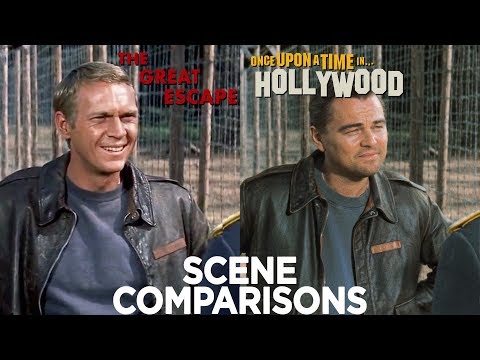 1:45
1:45
The Great Escape (1963) & Once Upon a Time... in Hollywood (2019) Side-by-Side Comparison
"We went to the theater to see the latest action movie."
This Word in Other Languages
Related Phrases
More Entertainment words
animation
C1Animation describes both the technical process of creating moving images from static drawings or models and the quality of being full of life, energy, or excitement. In a C1 context, it often refers to the vivacity and spirit shown in a person's speech or gestures.
character
B1A person in a novel, play, or movie, or the mental and moral qualities distinctive to an individual. It can also refer to a printed or written letter or symbol.
comics
B1A medium of expression that uses sequential images and text to tell a story or convey information. They are typically presented in panels and include elements like speech bubbles and captions.
entertainment
B1Entertainment refers to activities, performances, or events designed to provide amusement, enjoyment, or relaxation to an audience. It encompasses a wide range of forms, including movies, music, theater, sports, and digital games.
jigsaw
B2A picture printed on cardboard or wood and cut into various pieces of different shapes that must be fitted together. It also refers to a power tool with a fine blade used for cutting curved lines.
spotify
B1Spotify is a widely used digital music, podcast, and video streaming service, offering millions of songs and other audio content to users globally. It functions as an online platform where individuals can discover, listen to, and share music, often through free ad-supported tiers or premium subscription models. The name has become so ubiquitous that people often use "Spotify" as a verb, meaning "to stream music" or "to listen to something on Spotify."
plays
B1As a verb, 'plays' is the third-person singular present form of 'play,' meaning to engage in activity for enjoyment, perform music, or compete in a game. As a noun, it is the plural form of 'play,' referring to dramatic works written for performance on stage.
stories
B1Accounts of imaginary or real people and events told for entertainment or information. It can also refer to the different levels or floors in a building, particularly in American English usage.
contestants
B1Contestants are individuals who participate in a competition, contest, or game to win a prize, title, or recognition. They must follow specific rules and often compete against others to demonstrate their skills, knowledge, or physical abilities.
conga
B1A conga is a type of lively dance, often performed in a long, winding line with dancers holding onto the hips or shoulders of the person in front. It is also the name of the drum used to play the rhythm for this dance.

