









peninsula in 30 Seconds
- A peninsula is a landform surrounded by water on three sides but connected to a mainland on the fourth.
- It differs from an island, which is entirely surrounded by water, and an isthmus, which is a narrow land bridge.
- Common examples include Italy, Florida, and the Korean Peninsula, often serving as strategic hubs for trade and defense.
- The term is used in geography, travel, and politics to describe coastal regions with significant maritime influence.
A peninsula is a fascinating geographical feature that represents a middle ground between a mainland and an island. The word itself comes from the Latin roots 'paene,' meaning 'almost,' and 'insula,' meaning 'island.' Therefore, a peninsula is literally an 'almost-island.' In technical terms, it is a piece of land that is surrounded by water on three of its sides while remaining connected to a larger landmass, often referred to as the mainland, by a narrow or broad neck of land. This connection is vital because it distinguishes a peninsula from a true island, which is entirely detached and surrounded by water on all sides. Peninsulas can vary immensely in size, ranging from tiny points of land jutting into a local lake to massive landmasses that house entire nations or multiple countries.
- Geographical Context
- In geography, peninsulas are often the result of complex geological processes such as tectonic plate movements, rising sea levels, or glacial erosion. For example, the Scandinavian Peninsula was shaped significantly by the movement of massive ice sheets during the last Ice Age. When you look at a map, peninsulas are the 'fingers' of land that reach out into the blue of the oceans and seas.
The explorers sailed around the rugged peninsula to find a sheltered harbor on the other side.
People use the word 'peninsula' most frequently in the context of travel, geography, and international relations. Because peninsulas have long coastlines relative to their land area, they are often hubs for maritime activity, fishing, and tourism. Historically, they have also been strategically important for defense; a peninsula is easier to defend than an open plain because it can only be attacked by land from one direction. This is why many ancient cities and fortresses were built on peninsulas. When discussing world politics, you might hear about the 'Korean Peninsula' or the 'Balkan Peninsula,' where the unique geography has influenced the history and culture of the people living there for centuries.
- Maritime Influence
- Because they are surrounded by water on three sides, peninsulas often experience a maritime climate, which is typically more temperate and humid than the interior of a continent. This makes them popular destinations for vacationers seeking beaches and coastal scenery.
Italy is a famous peninsula shaped like a boot, extending deep into the Mediterranean Sea.
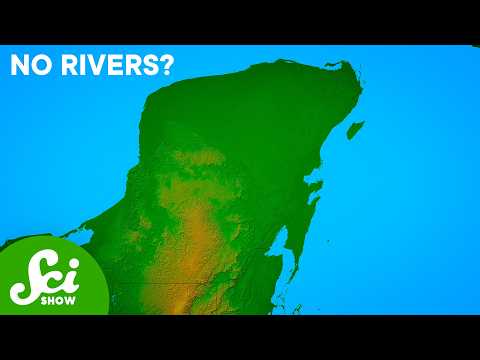
In modern conversation, you might use the term when describing a vacation spot, such as the Olympic Peninsula in Washington State or the Yucatan Peninsula in Mexico. It provides a specific mental image of a place where the sea is never far away. The term is also used metaphorically in some specialized fields, though its primary use remains strictly geographical. Understanding the concept of a peninsula helps in visualizing the world's map and understanding why certain regions have such distinct maritime cultures and histories.
The resort is located at the very tip of the peninsula, offering 270-degree views of the ocean.
- Economic Importance
- Many of the world's most productive ports are located on peninsulas because they provide natural protection for ships and easy access to deep-water channels. The economy of a peninsula is often tied to the sea, through shipping, naval bases, and seafood industries.
The Arabian peninsula is the largest in the world, spanning over 1.2 million square miles.
Florida is a well-known peninsula in the United States, famous for its tropical climate and extensive coastline.
Using the word 'peninsula' correctly involves understanding its role as a noun that describes a specific physical location. It is almost always preceded by an article like 'the' or 'a,' or a possessive adjective like 'our' or 'their.' Because it is a count noun, it can be pluralized to 'peninsulas' (or occasionally 'peninsulae' in very formal or scientific contexts, though this is rare). When you are talking about a specific, named peninsula, the word is often capitalized as part of the proper noun, such as 'the Iberian Peninsula' or 'the Upper Peninsula of Michigan.'
- Common Verbs
- Peninsulas are often described using verbs of extension or position. You might say a peninsula 'juts out' into the sea, 'extends' from the mainland, or 'stretches' along the coast. For example: 'The rocky peninsula juts out into the Atlantic Ocean.'
The road winds along the edge of the peninsula, offering stunning views of the cliffs.
Adjectives play a crucial role in giving the reader a better sense of what the peninsula looks like. Common descriptors include 'rugged,' 'sandy,' 'narrow,' 'vast,' 'remote,' or 'densely populated.' If you are writing about a travel destination, you might describe it as a 'sun-drenched peninsula.' If you are writing a historical account, you might refer to it as a 'strategically located peninsula.' These adjectives help specify the character of the landmass beyond its basic geographical definition.
- Prepositional Usage
- The most common preposition used with peninsula is 'on.' You live 'on a peninsula,' you build a house 'on the peninsula,' or you go for a hike 'on the peninsula.' You can also use 'across' if you are traveling from one side to the other, or 'around' if you are sailing or driving the perimeter.
We spent our entire summer vacation on the peninsula, exploring every hidden cove.
In academic or scientific writing, the word is used with precision to describe landforms. You might encounter sentences like, 'The peninsula's unique microclimate allows for the growth of rare plant species.' Here, the possessive 'peninsula's' is used to attribute characteristics to the land. In geopolitical discussions, the word often serves as a shorthand for the entire region and its political situation, such as 'Tensions on the peninsula have increased in recent months,' referring to the Korean Peninsula.
Many migratory birds use the peninsula as a resting point during their long journey south.
- Comparative Usage
- You can compare peninsulas to other landforms to clarify their size or shape. 'The small peninsula was more like a spit of sand compared to the massive landmass of the mainland.'
The city is situated on a narrow peninsula between two large bays.
The lighthouse stands at the northernmost point of the peninsula.
The word 'peninsula' is a staple of geographical and travel-related discourse. You will hear it frequently in educational settings, from elementary school geography lessons to university-level geology lectures. Teachers use it to help students categorize the shapes of continents and countries. For instance, when studying Europe, the term is indispensable because the continent itself is often described as a 'peninsula of peninsulas,' given its many protruding landmasses like the Iberian, Italian, and Balkan peninsulas.
- In the News
- News broadcasts and newspapers are major sources for this word, particularly when reporting on international politics. The 'Korean Peninsula' is a term heard almost daily in reports about the diplomatic and military relationship between North and South Korea. Similarly, the 'Crimean Peninsula' has been a central term in news regarding the conflict between Russia and Ukraine. In these contexts, 'the peninsula' often becomes a metonym for the political situation in that specific region.
The news anchor reported on the latest joint military exercises taking place on the peninsula.
Travel documentaries and nature programs are another common place to hear the word. Narrators often use it to set the scene, describing the unique wildlife or breathtaking landscapes of a specific peninsula. You might hear about the 'Baja California Peninsula' in a show about marine life or the 'Kamchatka Peninsula' in a documentary about volcanoes. The word evokes a sense of adventure and isolation, as peninsulas are often seen as 'the end of the road' where the land meets the vastness of the sea.
- Weather and Meteorology
- Meteorologists use the word when explaining weather patterns. Because peninsulas are surrounded by water, they often have different weather than the mainland. You might hear a weather reporter say, 'A sea breeze will keep temperatures cooler on the peninsula today,' or 'The storm is expected to make landfall on the southern tip of the peninsula.'
According to the forecast, the heavy rain will mostly affect the coastal areas of the peninsula.
In literature and film, peninsulas are often used as settings for stories that require a sense of seclusion or a dramatic backdrop. A character might retreat to a house on a remote peninsula to write a novel, or a thriller might involve a chase along the narrow roads of a coastal peninsula. The word carries a certain romantic and atmospheric weight, suggesting a place where the elements are powerful and the connection to the rest of the world is tenuous.
The novel is set in a small fishing village on a fog-shrouded peninsula in Maine.
- Real Estate and Development
- In real estate, the word 'peninsula' is often used as a selling point. Properties on a peninsula are highly desirable because they often offer water views from multiple sides and a sense of privacy. You might see advertisements for 'luxury living on the peninsula' or 'exclusive peninsula estates.'
The new housing development on the peninsula has already sold out all its waterfront lots.
We decided to install a kitchen peninsula instead of an island to save space and provide more seating.
One of the most frequent mistakes people make with the word 'peninsula' is confusing it with an 'island.' While both are surrounded by water, the defining characteristic of a peninsula is its connection to a mainland. If you call Italy an island, you are technically incorrect because it is connected to the rest of Europe by the Alps. Similarly, calling Hawaii a peninsula is wrong because it is a group of islands with no land connection to a continent. This distinction is crucial in geography and when giving directions.
- Spelling Errors
- Spelling 'peninsula' can be tricky for many learners. Common misspellings include 'peninsulla' (adding an extra 'l'), 'peninsual' (swapping the 'a' and 'u'), or 'paninsula' (using an 'a' instead of an 'e'). Remembering the Latin root 'insula' (island) can help you remember that it ends in '-insula.'
Incorrect: We visited the Italian island last summer. (Unless you only visited Sicily or Sardinia, Italy is a peninsula).
Another common error is the confusion between 'peninsula' and 'isthmus.' An isthmus is a narrow strip of land that connects two larger landmasses, like the Isthmus of Panama connecting North and South America. A peninsula, on the other hand, is a landmass that is surrounded by water on three sides and connected to one larger landmass. Think of an isthmus as a bridge and a peninsula as a pier. Using these terms interchangeably can lead to confusion in technical or geographical writing.
- Grammatical Missteps
- Learners often struggle with the correct preposition to use with 'peninsula.' While you might say you are 'in' a country or 'at' a city, you are almost always 'on' a peninsula. Saying 'I live in the peninsula' sounds slightly unnatural to native speakers; 'I live on the peninsula' is the standard phrasing.
Incorrect: The hotel is located at the peninsula. Correct: The hotel is located on the peninsula.
Finally, some people mistakenly think a peninsula must be small. In reality, peninsulas can be enormous. The Arabian Peninsula is the largest in the world, covering over 3 million square kilometers. It includes several countries like Saudi Arabia, Yemen, and Oman. Don't limit your use of the word to small spits of land; it applies to any landmass that meets the 'three sides of water' criteria, regardless of its scale.
Many people forget that the entire state of Florida is actually a large peninsula.
- Misunderstanding 'Three Sides'
- The 'three sides' rule is a general guideline, not a strict geometric requirement. A peninsula might have a very irregular shape with many more than three 'sides' of water, but the key is that it is mostly surrounded by water while maintaining a single land connection.
Incorrect: That peninsula is completely surrounded by water. (If it were completely surrounded, it would be an island).
It is a common mistake to think that a peninsula must be narrow; some are very wide at the base.
While 'peninsula' is the most common and general term for this landform, several other words describe similar or related geographical features. Understanding the nuances between these terms can help you be more precise in your descriptions. A 'cape,' for example, is usually a smaller, pointed piece of land that extends into a body of water. While all capes are technically peninsulas, not all peninsulas are capes. Capes are often associated with a change in the direction of the coastline, like Cape Cod or the Cape of Good Hope.
- Promontory vs. Peninsula
- A 'promontory' is a high ridge of land or rock that juts out into a body of water. The key difference here is elevation; a promontory is typically a cliff or a high point, whereas a peninsula can be flat, sandy, or mountainous. You might stand on a promontory to look out over the sea from a great height.
The castle was built on a high promontory overlooking the bay, making it nearly impregnable.
Another related term is 'headland.' A headland is a narrow piece of land that projects from a coastline into the sea. Like a cape, it is a specific type of peninsula, often characterized by steep cliffs and significant wave action. Headlands are frequently the sites of lighthouses because they mark the outermost points of the land. In British English, you might also hear the term 'bill' (like Portland Bill) or 'ness' (like Dungeness) to describe specific types of peninsulas or headlands.
- Isthmus: The Opposite Connection
- As mentioned before, an 'isthmus' is the narrow strip of land that connects two larger landmasses. While a peninsula is defined by the water surrounding it, an isthmus is defined by the land it connects. However, the land that an isthmus connects to can often be a peninsula. For example, the Peloponnese in Greece is a peninsula connected to the rest of Greece by the Isthmus of Corinth.
The isthmus was so narrow that they could see the ocean on both sides of the road.
In a more general sense, you can use words like 'projection,' 'extension,' or 'outcropping' to describe a peninsula, though these are less specific. 'Projection' emphasizes the way the land sticks out, while 'extension' emphasizes that it is a continuation of the mainland. In creative writing, you might use more evocative language, such as a 'finger of land' or a 'jagged arm reaching into the surf.' These metaphors can help paint a more vivid picture for the reader than the technical term 'peninsula' alone.
A long spit of sand protected the lagoon from the rough waves of the open sea.
- Point vs. Peninsula
- A 'point' is another common term for a small peninsula. It is often used in place names, such as 'Point Reyes' or 'Point Roberts.' It usually implies a sharper, more defined end than a broad peninsula.
The hikers reached the furthest point of the peninsula before turning back.
The headland was battered by the constant force of the Atlantic gales.
How Formal Is It?
Fun Fact
The Latin root 'paene' (almost) is also found in the word 'penultimate,' which means 'almost last' (the second to last).
Pronunciation Guide
- Pronouncing it as 'pen-in-SULA' (stressing the last syllable).
- Adding an extra 'l' sound (peninsulla).
- Confusing the 'u' and 'a' sounds at the end.
- Pronouncing the first 'e' too strongly (PEN-insula).
- Missing the 'n' sound in the middle.
Difficulty Rating
The word is common in geography and news, making it easy to recognize.
Spelling can be a bit tricky due to the 'u' and 'a' at the end.
Pronunciation is straightforward once the stress is learned.
Easily distinguishable in speech due to its unique sound.
What to Learn Next
Prerequisites
Learn Next
Advanced
Grammar to Know
Prepositions of Place
We use 'on' for peninsulas: 'I am on the peninsula.'
Proper Nouns
Capitalize 'Peninsula' when it is part of a specific name: 'The Arabian Peninsula.'
Articles with Geographical Features
Use 'the' with named peninsulas: 'The Balkan Peninsula.'
Adjective Formation
The adjective form is 'peninsular': 'The peninsular region is very humid.'
Pluralization
Standard plural is 'peninsulas': 'There are many peninsulas in Europe.'
Examples by Level
Florida is a big peninsula.
Florida is a large piece of land with water on three sides.
Use 'a' before peninsula because it starts with a consonant.
The park is on a small peninsula in the lake.
The park is on a little piece of land in the water.
The preposition 'on' is used for locations on a peninsula.
Is Italy a peninsula?
Is Italy land with water on three sides?
This is a simple question using the verb 'to be'.
We can walk to the end of the peninsula.
We can walk to the tip of the land in the water.
'End of the' is a common phrase used with peninsula.
A peninsula has water on three sides.
Land with water on 3 sides is a peninsula.
This is a definition sentence using the present simple.
The beach is on the peninsula.
The beach is on that piece of land.
Use 'the' when referring to a specific peninsula.
Look at the peninsula on the map.
Find the land in the water on the map.
Imperative sentence starting with a verb.
My house is on a peninsula.
I live on land surrounded by water on three sides.
Possessive 'my' shows ownership.
The hotel is located on a beautiful peninsula.
The hotel is on a lovely piece of land in the sea.
'Located on' is a common way to describe position.
You can see the ocean from three sides of the peninsula.
The water is all around the land except for one side.
The phrase 'three sides of' emphasizes the definition.
We drove across the peninsula to reach the other coast.
We drove from one side of the land to the other.
'Across' implies moving from one side to the opposite side.
The peninsula is connected to the mainland by a road.
The land in the water is joined to the big land.
'Connected to' explains the link to the mainland.
Many birds live on this rocky peninsula.
Lots of birds stay on this piece of land with rocks.
Adjectives like 'rocky' add detail to the noun.
It is very windy on the peninsula today.
There is a lot of wind on the land near the water.
Weather expressions often use 'it is' + adjective.
The city was built on a narrow peninsula for safety.
They put the city on thin land to keep it safe.
Passive voice 'was built' is used here.
Do you know the name of this peninsula?
What is this piece of land called?
A direct question about the name of the landform.
The Iberian Peninsula includes the countries of Spain and Portugal.
Spain and Portugal are on a large piece of land in Europe.
Proper names of peninsulas are capitalized.
A peninsula is different from an island because it is attached to the mainland.
One is connected to land, the other is not.
'Different from' is the standard comparative phrase.
The peninsula juts out into the Mediterranean Sea.
The land extends into the water.
'Juts out' is a phrasal verb often used with peninsulas.
They decided to go camping on the remote peninsula.
They went to a far-away piece of land to camp.
'Remote' is a common adjective for isolated peninsulas.
The peninsula's coastline is famous for its white sand beaches.
The edge of the land has very nice beaches.
The possessive 'peninsula's' refers to the coastline.
Geographically, Korea is a peninsula located in East Asia.
Korea is land with water on three sides in Asia.
The adverb 'geographically' sets the context.
The lighthouse at the tip of the peninsula guides ships into the harbor.
The light on the end of the land helps the boats.
'Tip of the' refers to the furthest point.
Because it is a peninsula, the area has a very mild climate.
The water around the land makes the weather nice.
'Because it is' introduces a reason based on geography.
The strategic importance of the peninsula cannot be overstated.
The land is very important for military or trade reasons.
'Strategic importance' is a common collocation.
The peninsula is home to several endemic species that are found nowhere else.
Unique animals live on this piece of land.
'Home to' is a phrase used for habitats.
During the war, the peninsula was a key battleground for the opposing forces.
The land was a place where many fights happened.
'Key battleground' describes its historical role.
The peninsula extends for hundreds of miles into the icy waters of the Arctic.
The land goes a long way into the cold sea.
'Extends for' describes the length of the landform.
Tourism is the primary driver of the economy on the peninsula.
Most money comes from visitors to the area.
'Primary driver' is a sophisticated way to say main cause.
The peninsula's unique topography creates a variety of microclimates.
The shape of the land makes different types of weather.
'Topography' refers to the physical features of the land.
Historically, the peninsula served as a bridge between two different cultures.
The land helped different people meet and trade.
'Served as a bridge' is a metaphorical use.
The peninsula is characterized by its rugged cliffs and deep-water bays.
The land is known for its high rocks and deep water.
'Characterized by' is used to list defining features.
The peninsula's peninsularity has profoundly influenced its historical development.
Being almost an island changed its history a lot.
'Peninsularity' is the noun form of the state of being a peninsula.
Ecological isolation on the peninsula has led to the evolution of distinct subspecies.
Being cut off from the mainland changed the animals.
'Ecological isolation' is a scientific term.
The peninsula acts as a natural breakwater, protecting the inner bay from ocean swells.
The land stops the big waves from hitting the bay.
'Breakwater' is a term for something that stops waves.
Geopolitical tensions on the peninsula have reached a critical impasse.
Political problems in the region are stuck and dangerous.
'Critical impasse' is a high-level political term.
The peninsula's maritime heritage is evident in its local architecture and traditions.
You can see the sea's influence in the buildings and customs.
'Maritime heritage' refers to history related to the sea.
The peninsula's formation is attributed to the gradual recession of the shoreline.
The land was made when the water moved back.
'Attributed to' is used to explain the cause.
The peninsula's proximity to the shipping lanes makes it a vital commercial hub.
Being near the boats makes it good for business.
'Proximity' is a formal word for nearness.
The peninsula's rugged terrain poses significant challenges for infrastructure development.
The rough land makes it hard to build roads and buildings.
'Terrain' is a formal word for the land's surface.
The peninsula's liminal status between land and sea creates a unique ontological space.
Being between land and water makes it a special kind of place.
'Liminal' and 'ontological' are highly academic terms.
The peninsula's strategic depth is limited by its narrow connection to the mainland.
It is hard to hide or move back because the land is thin.
'Strategic depth' is a military/geopolitical concept.
The peninsula's endemicity is a testament to its long-standing geological isolation.
The unique plants show it has been alone for a long time.
'Endemicity' refers to the state of being unique to a place.
The peninsula's littoral zones are among the most biodiverse ecosystems on the planet.
The areas where the land meets the sea have many types of life.
'Littoral zones' are the areas along the shore.
The peninsula's history is a palimpsest of successive maritime empires.
Many different empires left their mark on the land's history.
'Palimpsest' is a metaphor for something with many layers of history.
The peninsula's vulnerability to sea-level rise is a pressing concern for urban planners.
People are worried the water will cover the land soon.
'Pressing concern' is a formal way to say urgent problem.
The peninsula's aesthetic appeal lies in its dramatic juxtaposition of craggy peaks and azure waters.
It looks beautiful because of the sharp mountains and blue sea.
'Juxtaposition' is the act of placing things side by side for contrast.
The peninsula's cultural identity is inextricably linked to its peninsular geography.
The way people live is tied to the land's shape.
'Inextricably linked' means they cannot be separated.
Common Collocations
Common Phrases
— Refers to the region containing North and South Korea. It is a very common term in international news.
Tensions on the Korean Peninsula have been high for decades.
— The region in southwestern Europe consisting of Spain and Portugal.
The Iberian Peninsula has a rich history of diverse cultures.
— A geographical and cultural region in Southeast Europe.
Many different ethnic groups live on the Balkan Peninsula.
— Specifically refers to the northern part of the state of Michigan in the USA.
The Upper Peninsula is known for its beautiful forests and lakes.
— A triangular peninsula in Egypt connecting Africa and Asia.
The Sinai Peninsula is a significant religious and historical site.
— To extend sharply from the mainland into the water. This is the most common verb phrase used with peninsula.
The land juts out into the sea, forming a natural peninsula.
— The essential characteristic that makes a landform a peninsula rather than an island.
The peninsula is connected to the mainland by a narrow strip of land.
— The standard definition used to describe a peninsula.
By definition, a peninsula is surrounded by water on three sides.
— Refers to the furthest point of the peninsula.
We stood at the tip of the land and watched the waves.
— A peninsula that is part of a coastline, emphasizing its maritime location.
The coastal peninsula is a popular spot for birdwatching.
Often Confused With
An island is completely surrounded by water; a peninsula is connected to land on one side.
An isthmus is a narrow strip of land connecting two larger landmasses; a peninsula is the landmass itself.
A cape is usually a smaller, more pointed type of peninsula.
Idioms & Expressions
— A kitchen counter that is attached to a wall or other cabinets on one side but open on the other three. It is not a true idiom but a metaphorical use of the word.
We added a kitchen peninsula to provide more counter space.
neutral— In certain regions, like the San Francisco Bay Area, this specifically refers to a local geographical area.
He works in the city but lives on the Peninsula.
informal/local— A common nickname for the Italian Peninsula due to its shape.
We traveled all the way down the boot of Italy.
informal— Often used to describe the furthest point of a peninsula, implying the end of the continent.
They reached land's end after a long journey across the peninsula.
literary— A descriptive phrase that captures the essence of a peninsula.
The resort felt like it was on an island, but it was actually just almost an island.
neutral— Used to describe someone's physical feature or an object, similar to a peninsula.
He had a prominent chin jutting out like a peninsula.
descriptive— A common metaphor for a long, thin peninsula.
The lighthouse was situated on a narrow finger of land.
literary— A poetic way to describe a peninsula extending into the sea.
The maritime arm of the continent reached out to the ocean.
poetic— A formal way to describe a peninsula in technical writing.
The coastal projection influenced the local current patterns.
formal— While not directly related to peninsula, 'neck' is often used to describe the narrow part of a peninsula.
The town is located right on the neck of the peninsula.
informalEasily Confused
Both are landforms involving water and connections.
An isthmus is a bridge between two lands. A peninsula is land sticking out into water. One is a connector, the other is a projection.
The Isthmus of Panama connects two continents, but Florida is a peninsula.
Both are surrounded by water.
An island has water on 360 degrees. A peninsula has water on about 270 degrees and land on the rest.
You can drive to a peninsula from the mainland, but you usually need a boat or plane for an island.
Both relate to land and sea shapes.
An archipelago is a group of islands. A peninsula is a single piece of land connected to a mainland.
Indonesia is an archipelago, but Italy is a peninsula.
They are opposite shapes.
A bay is water surrounded by land. A peninsula is land surrounded by water.
The peninsula protects the bay from the open ocean.
Both describe land jutting into water.
A promontory is specifically high and rocky. A peninsula can be any elevation.
The castle sits on a promontory at the end of the peninsula.
Sentence Patterns
It is a [adjective] peninsula.
It is a big peninsula.
The [noun] is on the peninsula.
The hotel is on the peninsula.
A peninsula is land surrounded by water on [number] sides.
A peninsula is land surrounded by water on three sides.
The peninsula juts out into the [body of water].
The peninsula juts out into the Atlantic Ocean.
The strategic importance of the [Name] Peninsula is [adjective].
The strategic importance of the Crimean Peninsula is significant.
The region's [noun] is inextricably linked to its peninsular geography.
The region's cultural identity is inextricably linked to its peninsular geography.
Compared to an island, a peninsula is [adjective].
Compared to an island, a peninsula is connected to the mainland.
Because of its [adjective] nature, the peninsula has [noun].
Because of its coastal nature, the peninsula has a mild climate.
Word Family
Nouns
Adjectives
Related
How to Use It
Common in geography, travel, and news.
-
Calling an island a peninsula.
→
Calling it an island.
An island has no land connection to the mainland. A peninsula must be connected on one side. Don't call Hawaii or Great Britain a peninsula.
-
Spelling it 'peninsulla'.
→
peninsula
There is only one 'l' at the end of peninsula. The confusion often comes from words like 'umbrella' or 'villa'.
-
Using 'in' instead of 'on'.
→
on the peninsula
We use 'on' for surfaces and specific landforms like peninsulas, islands, and capes. 'In' is used for enclosed spaces or political boundaries like countries.
-
Confusing peninsula with isthmus.
→
isthmus (for the connection), peninsula (for the landmass).
An isthmus is the narrow 'bridge' of land. The peninsula is the larger area that sticks out. They are related but not the same thing.
-
Thinking a peninsula must be small.
→
Recognizing large peninsulas.
Peninsulas can be as large as the Arabian Peninsula or as small as a backyard garden feature. Size is not part of the definition.
Tips
Use 'on' not 'in'
Always remember to use the preposition 'on' when referring to a location on a peninsula. For example, 'I live on the peninsula' sounds much more natural than 'I live in the peninsula.'
The Three-Side Rule
If you're unsure if a landform is a peninsula, check if it has water on three sides. This is the simplest way to distinguish it from an island (four sides water) or a standard coastline.
Remember 'Insula'
To spell 'peninsula' correctly, remember that it ends with 'insula,' the Latin word for island. This will help you avoid common mistakes like 'peninsulla' or 'peninsual.'
Learn Related Terms
Expand your vocabulary by learning related terms like 'cape,' 'headland,' and 'promontory.' These words allow you to be more specific when describing different types of peninsulas.
News Context
When you hear 'the peninsula' in the news, it almost always refers to the Korean Peninsula. Keeping this in mind will help you follow international political discussions more easily.
Almost an Island
Think of the Latin roots: 'paene' (almost) + 'insula' (island). A peninsula is literally an 'almost-island.' This simple translation is the best way to remember its definition.
The Boot of Italy
Use the image of Italy's boot shape as your mental anchor for the word 'peninsula.' It's the most recognizable peninsula in the world and perfectly illustrates the concept.
Active Verbs
When writing about a peninsula, use active verbs like 'jut,' 'protrude,' or 'extend' to make your descriptions more dynamic and engaging for the reader.
Kitchen Peninsula
Don't be surprised to hear this word in a home renovation show. A kitchen peninsula is a great space-saving alternative to a kitchen island, and the logic of the name is exactly the same.
Strategic Defense
Understand that peninsulas were historically chosen for cities because they were easier to defend. This historical context adds depth to your understanding of why so many famous cities are located on them.
Memorize It
Mnemonic
Think of a 'PEN' drawing an 'INSULA' (island) that doesn't quite close. It's a PEN-INSULA because it's almost an island but still connected to the mainland.
Visual Association
Visualize the state of Florida or the country of Italy. Both are iconic shapes that clearly show land surrounded by water on three sides.
Word Web
Challenge
Try to name five famous peninsulas in the world without looking at a map. Then, describe the shape of one of them using the word 'peninsula' in a sentence.
Word Origin
The word entered the English language in the mid-16th century. It is derived directly from the Latin word 'paeninsula.'
Original meaning: Literally 'almost an island.'
Italic (Latin)Cultural Context
When referring to specific peninsulas like Crimea or Korea, be aware of the sensitive political and historical contexts associated with those regions.
In the US, 'The Peninsula' often refers to the San Francisco Peninsula. In the UK, areas like Cornwall are essentially large peninsulas with distinct local identities.
Practice in Real Life
Real-World Contexts
Geography Class
- identify the peninsula
- surrounded by water
- connected to the mainland
- geographical landform
Travel Planning
- stay on the peninsula
- scenic coastal drive
- explore the tip
- beach resort location
International News
- tensions on the peninsula
- strategic location
- regional stability
- border disputes
Weather Reports
- coastal winds
- maritime influence
- cooler on the peninsula
- storm making landfall
Kitchen Design
- kitchen peninsula
- extra counter space
- seating area
- attached to the wall
Conversation Starters
"Have you ever visited a famous peninsula, like Italy or Florida?"
"Do you prefer staying on a peninsula or a completely detached island?"
"Why do you think peninsulas are often so important for a country's military?"
"If you could live anywhere on a peninsula, would you choose the tip or the base?"
"What is the most beautiful peninsula you have ever seen on a map or in person?"
Journal Prompts
Describe a fictional peninsula where you would like to build a secret hideout. What does the coastline look like?
Write about the differences between living in the middle of a continent versus living on a narrow peninsula.
Imagine you are an explorer who has just discovered a new peninsula. Describe your first impressions as you sail around it.
How does the geography of a peninsula influence the culture of the people who live there? Give examples.
Reflect on a time you were near the ocean. Were you on a peninsula? How did the surrounding water make you feel?
Frequently Asked Questions
10 questionsYes, Florida is one of the most famous examples of a peninsula. It is surrounded by the Gulf of Mexico, the Atlantic Ocean, and the Straits of Florida on three sides, while its northern border is connected to the rest of the United States mainland.
The main difference is the connection to land. An island is completely surrounded by water and has no land connection to a mainland. A peninsula is surrounded by water on three sides but remains connected to a larger landmass on one side.
The Arabian Peninsula is the largest in the world. It covers about 1.25 million square miles (3.2 million square kilometers) and includes countries like Saudi Arabia, Yemen, Oman, and the United Arab Emirates.
Yes, peninsulas are not limited to oceans and seas. Any piece of land that juts out into a body of water, including lakes and large rivers, and is surrounded by that water on three sides is considered a peninsula.
In interior design, a kitchen peninsula is a counter that is attached to a wall or a line of cabinets on one end, but is open on the other three sides. It provides extra workspace and seating without being a completely separate 'island' in the middle of the room.
Yes, Italy is a major peninsula in Southern Europe. Its distinctive boot shape extends into the Mediterranean Sea, with the Adriatic Sea to the east, the Ionian Sea to the south, and the Tyrrhenian Sea to the west.
If a peninsula is connected to the mainland by a very narrow strip of land, that strip is called an isthmus. However, if the connection is broad, it is simply called the 'base' or 'neck' of the peninsula.
Peninsulas are important because they offer long coastlines for ports and naval bases. Historically, they were easier to defend because an enemy could only attack by land from one direction (the base), while the other three sides were protected by the sea.
The most common plural form is 'peninsulas.' In very formal or scientific writing, you might occasionally see the Latin plural 'peninsulae,' but 'peninsulas' is the standard and preferred form in modern English.
The adjective form is 'peninsular.' For example, you might talk about 'peninsular geography,' 'peninsular weather,' or the 'Peninsular War' which took place on the Iberian Peninsula.
Test Yourself 200 questions
Describe the shape of Italy using the word peninsula.
Well written! Good try! Check the sample answer below.
Explain the difference between an island and a peninsula.
Well written! Good try! Check the sample answer below.
Write a short paragraph about a vacation on a peninsula.
Well written! Good try! Check the sample answer below.
Discuss the strategic importance of peninsulas in history.
Well written! Good try! Check the sample answer below.
Describe a kitchen peninsula and its benefits.
Well written! Good try! Check the sample answer below.
Compare the Iberian Peninsula with the Korean Peninsula.
Well written! Good try! Check the sample answer below.
How does peninsular geography affect a region's climate?
Well written! Good try! Check the sample answer below.
Write a story set on a remote, fog-shrouded peninsula.
Well written! Good try! Check the sample answer below.
Explain why 'almost an island' is a good definition for a peninsula.
Well written! Good try! Check the sample answer below.
What are the challenges of building infrastructure on a rugged peninsula?
Well written! Good try! Check the sample answer below.
Describe the view from the tip of a peninsula.
Well written! Good try! Check the sample answer below.
Why are many lighthouses located on peninsulas?
Well written! Good try! Check the sample answer below.
Discuss the ecological importance of peninsular isolation.
Well written! Good try! Check the sample answer below.
Write a news report about tensions on a specific peninsula.
Well written! Good try! Check the sample answer below.
How would you explain the word 'peninsula' to a child?
Well written! Good try! Check the sample answer below.
Describe the largest peninsula in the world.
Well written! Good try! Check the sample answer below.
What is the difference between a cape and a peninsula?
Well written! Good try! Check the sample answer below.
Write about a fictional city built on a narrow peninsula.
Well written! Good try! Check the sample answer below.
How does the sea influence the culture of a peninsula?
Well written! Good try! Check the sample answer below.
Reflect on the meaning of 'liminality' in relation to a peninsula.
Well written! Good try! Check the sample answer below.
Explain the word 'peninsula' to a partner.
Read this aloud:
You said:
Speech recognition is not supported in your browser. Try Chrome or Edge.
Describe a famous peninsula you know.
Read this aloud:
You said:
Speech recognition is not supported in your browser. Try Chrome or Edge.
Talk about the advantages of living on a peninsula.
Read this aloud:
You said:
Speech recognition is not supported in your browser. Try Chrome or Edge.
Discuss the differences between an island and a peninsula out loud.
Read this aloud:
You said:
Speech recognition is not supported in your browser. Try Chrome or Edge.
Describe the shape of Florida or Italy.
Read this aloud:
You said:
Speech recognition is not supported in your browser. Try Chrome or Edge.
How does a peninsula's geography affect its weather?
Read this aloud:
You said:
Speech recognition is not supported in your browser. Try Chrome or Edge.
Why are peninsulas important for military strategy?
Read this aloud:
You said:
Speech recognition is not supported in your browser. Try Chrome or Edge.
Talk about a kitchen peninsula and how it is used.
Read this aloud:
You said:
Speech recognition is not supported in your browser. Try Chrome or Edge.
Describe a fictional peninsula you would like to visit.
Read this aloud:
You said:
Speech recognition is not supported in your browser. Try Chrome or Edge.
Explain the etymology of the word peninsula.
Read this aloud:
You said:
Speech recognition is not supported in your browser. Try Chrome or Edge.
Discuss the environmental challenges facing coastal peninsulas.
Read this aloud:
You said:
Speech recognition is not supported in your browser. Try Chrome or Edge.
What is the largest peninsula in the world and what do you know about it?
Read this aloud:
You said:
Speech recognition is not supported in your browser. Try Chrome or Edge.
Compare a peninsula to a cape.
Read this aloud:
You said:
Speech recognition is not supported in your browser. Try Chrome or Edge.
Describe the view from a high promontory.
Read this aloud:
You said:
Speech recognition is not supported in your browser. Try Chrome or Edge.
How does the sea influence the food on a peninsula?
Read this aloud:
You said:
Speech recognition is not supported in your browser. Try Chrome or Edge.
Talk about the history of the Korean Peninsula.
Read this aloud:
You said:
Speech recognition is not supported in your browser. Try Chrome or Edge.
Explain the difference between a peninsula and an isthmus.
Read this aloud:
You said:
Speech recognition is not supported in your browser. Try Chrome or Edge.
What kind of wildlife might you find on a remote peninsula?
Read this aloud:
You said:
Speech recognition is not supported in your browser. Try Chrome or Edge.
Describe the feeling of being at 'land's end' on a peninsula.
Read this aloud:
You said:
Speech recognition is not supported in your browser. Try Chrome or Edge.
Why is Europe called a 'peninsula of peninsulas'?
Read this aloud:
You said:
Speech recognition is not supported in your browser. Try Chrome or Edge.
Listen and write down the definition of a peninsula.
Listen to the description of Italy and identify the word used for its shape.
Listen to a weather report and identify if the peninsula will be cooler or warmer.
Listen to a news clip about Korea and note the use of 'the peninsula'.
Listen to a travel guide describing Florida's geography.
Listen to a lecture on the Peninsular War and identify the region involved.
Listen to an interior designer talk about kitchen layouts.
Listen to the pronunciation of 'peninsula' in UK and US English.
Listen to a story about a lighthouse keeper on a remote peninsula.
Listen to a description of the Arabian Peninsula's size.
Listen for the word 'isthmus' and how it relates to a peninsula.
Listen to a poem about the sea meeting the land on a peninsula.
Listen to a list of peninsulas and write them down.
Listen to a scientific explanation of how peninsulas are formed.
Listen to a conversation about a weekend trip to the peninsula.
/ 200 correct
Perfect score!
Summary
A peninsula is an 'almost-island'—a piece of land that juts out into the water while staying attached to the mainland. Remember: three sides water, one side land. Examples like Florida and Italy help visualize this common geographical feature.
- A peninsula is a landform surrounded by water on three sides but connected to a mainland on the fourth.
- It differs from an island, which is entirely surrounded by water, and an isthmus, which is a narrow land bridge.
- Common examples include Italy, Florida, and the Korean Peninsula, often serving as strategic hubs for trade and defense.
- The term is used in geography, travel, and politics to describe coastal regions with significant maritime influence.
Use 'on' not 'in'
Always remember to use the preposition 'on' when referring to a location on a peninsula. For example, 'I live on the peninsula' sounds much more natural than 'I live in the peninsula.'
The Three-Side Rule
If you're unsure if a landform is a peninsula, check if it has water on three sides. This is the simplest way to distinguish it from an island (four sides water) or a standard coastline.
Remember 'Insula'
To spell 'peninsula' correctly, remember that it ends with 'insula,' the Latin word for island. This will help you avoid common mistakes like 'peninsulla' or 'peninsual.'
Learn Related Terms
Expand your vocabulary by learning related terms like 'cape,' 'headland,' and 'promontory.' These words allow you to be more specific when describing different types of peninsulas.
Example
The state of Florida is a large peninsula in the southeastern United States.
Related Content
See it in Videos
Learn it in Context
This Word in Other Languages
More Geography words
abgeoency
C1To systematically analyze, map, or categorize a concept or data point based on its specific geographical origin or relationship to the Earth's surface. It is used primarily in technical and academic contexts to describe the process of orienting information according to terrestrial coordinates.
adjacency
B2Adjacency is the state of being next to, nearby, or sharing a common border with something else. It describes the physical or logical proximity of two objects or concepts.
africa
A1Africa is the world's second-largest and second-most populous continent, located south of Europe and bordered by the Atlantic and Indian Oceans. It is a diverse landmass home to 54 recognized countries and a vast array of cultures, languages, and ecosystems.
agrarian
B2Relating to cultivated land, its ownership, or a social system based on farming. It describes societies or economies where agriculture is the primary source of wealth and social organization.
agricultural
B2Relating to the science, art, or practice of farming and cultivating the soil for the production of crops and the rearing of animals. It is primarily used to describe industries, land use, or policies connected to food production.
alpine
B2A plant that grows in high mountain regions, typically above the tree line, adapted to harsh conditions such as cold temperatures and rocky soil. In a broader sense, it refers to the high-altitude zone itself or organisms inhabiting it.
altitude
B2Altitude refers to the vertical distance or height of an object or location above a specific reference point, most commonly sea level. It is a technical term frequently used in aviation, geography, and sports science to describe how high something is in the atmosphere.
america
B1America most commonly refers to the United States of America, a country in North America. Less frequently, it can refer to the continents of North and South America collectively, often specified as 'the Americas'.
antarctic
B2Relating to the South Pole or the regions surrounding it. It is primarily used to describe the climate, geography, or wildlife found in the Earth's southernmost areas.
antarctica
A2Antarctica is the Earth's southernmost continent, situated almost entirely south of the Antarctic Circle and containing the geographic South Pole. It is the fifth-largest continent and is famously covered by a vast sheet of ice.

