pistols in 30 Seconds
- Pistols are small, one-handed firearms used for defense, military, and sport.
- They differ from revolvers because their chamber is integrated into the barrel.
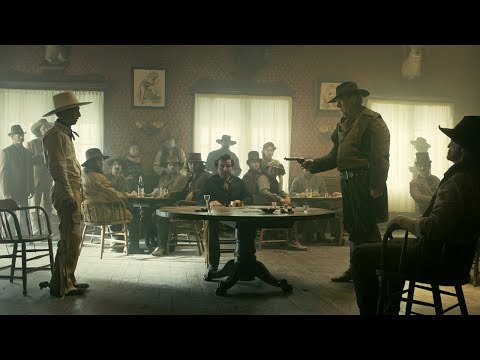
- Commonly seen in law enforcement, action movies, and historical dueling contexts.
- The term is plural, referring to multiple units or the general category of handguns.
The term pistols refers to a specific category of handguns designed to be held and operated with a single hand. While the word is often used interchangeably with 'handguns' in casual conversation, in technical and historical contexts, it has a more precise meaning. Historically, a pistol was any handgun, but in modern ballistics, it specifically refers to a handgun where the chamber is integral with the barrel, distinguishing it from a revolver, where the ammunition is held in a rotating cylinder. People use this word in a variety of contexts, ranging from historical accounts of 18th-century duels to modern law enforcement reports and Olympic sporting events. The versatility of the word allows it to bridge the gap between antiquity and high-tech modern weaponry.
- Historical Context
- In the 17th and 18th centuries, pistols were often sold in pairs, known as dueling pistols. These were finely crafted, single-shot weapons used to settle matters of honor among gentlemen. The plural form 'pistols' was common because of this paired nature.
- Modern Usage
- Today, the word frequently appears in the context of law enforcement, military sidearms, and self-defense. It is also a standard term in competitive shooting sports, such as the 10-meter air pistol event in the Olympics.
The museum displayed a collection of antique flintlock pistols used during the Napoleonic Wars.
Understanding the word 'pistols' requires recognizing its shift from a general term for any small firearm to a specific technical classification. In common parlance, if you see a police officer carrying a weapon on their hip, you are likely looking at a semi-automatic pistol. The pluralization is used when referring to multiple units, different models, or the general category of these weapons. For instance, a gun shop might advertise that they carry 'various types of pistols,' implying a selection of brands, calibers, and mechanisms.
Officers are trained to maintain their pistols with extreme care to ensure reliability.
- Sporting Definition
- In sports like the Modern Pentathlon, athletes use laser pistols, which fire a beam of light instead of a physical projectile, showing how the word adapts to new technology.
The duelists stood back to back, their pistols aimed at the sky before the signal.
Modern semi-automatic pistols can hold significantly more ammunition than older revolvers.
- Legal Context
- Laws regarding the possession of pistols vary wildly by country, often requiring specific permits, background checks, and safety training due to their concealable nature.
The sound of several pistols firing in the distance echoed through the valley.
Using the word pistols correctly involves understanding its role as a plural count noun. It typically follows verbs of action such as 'draw,' 'fire,' 'holster,' 'aim,' or 'load.' Because pistols are objects, they are often the direct object of a sentence. However, they can also serve as the subject when describing their features or actions. For example, 'Pistols are generally lighter than rifles.' When writing about them, it is important to match the plural noun with plural verbs and pronouns ('they,' 'them,' 'their').
- Action Verbs
- Common verbs associated with pistols include: brandish (to wave around), discharge (to fire), conceal (to hide), and standardize (to make uniform across a group).
The guards were ordered to keep their pistols holstered unless an immediate threat was identified.
In descriptive writing, adjectives can help specify the type of pistols being discussed. Words like 'semi-automatic,' 'flintlock,' 'dual,' 'concealed,' 'high-caliber,' and 'antique' provide necessary detail. When comparing pistols to other weapons, use comparative structures: 'Pistols are more portable than shotguns, but they lack the same range.' In a narrative, the presence of pistols often heightens tension, so the surrounding verbs should reflect that intensity.
He collected rare pistols from the American Civil War era, housing them in a velvet-lined case.
- Prepositional Phrases
- We often see phrases like 'with pistols,' 'at the pistols,' or 'using pistols.' For example: 'They settled the dispute with pistols at dawn.'
The sound of pistols cracking in the cold morning air signaled the start of the competition.
The inventory listed twelve pistols, three rifles, and a crate of ammunition.
- Compound Words
- 'Pistol-grip' is a common adjective used to describe the handle of various tools or other firearms that resemble the grip of a pistol.
The athletes checked their laser pistols one last time before the race began.
You will encounter the word pistols in several distinct environments. In the world of entertainment, specifically action and crime genres, characters frequently discuss their 'service pistols' or 'concealed pistols.' In news reporting, journalists use the term when describing criminal investigations or changes in firearm legislation. Furthermore, historical documentaries and textbooks are filled with references to pistols, as they played a crucial role in military history and personal defense for centuries. Finally, in the niche world of competitive shooting, 'pistols' is the standard terminology for the equipment used in various disciplines.
- News & Media
- 'Police recovered two loaded pistols from the suspect's vehicle following a high-speed chase.' This is a typical headline where the word is used for factual accuracy.
- Cinema & TV
- In Westerns, you might hear about 'six-shooters,' but in modern spy thrillers like James Bond, the dialogue often revolves around 'Walther PPK pistols' or similar specific models.
The commentator noted that the shooter's pistols were custom-built for maximum precision.
In academic or legal settings, the word is used with precision. Lawyers might argue about the classification of certain 'pistols' under specific statutes. Historians might write about how the introduction of 'wheellock pistols' changed cavalry tactics in the 16th century. Even in literature, the word carries weight; a character 'cleaning their pistols' is a classic trope indicating they are preparing for a confrontation. The word is rarely used in lighthearted contexts unless referring to water pistols or toy versions.
The detective examined the pistols found at the scene for any identifying serial numbers.
- Military Jargon
- Soldiers might refer to their 'sidearms' as pistols, emphasizing their role as secondary weapons to be used if their primary rifle fails or in close-quarters combat.
During the reenactment, the actors carried replica pistols that produced smoke but no bullets.
The instructor demonstrated how to safely clear the chambers of various semi-automatic pistols.
- Literature
- Classic novels often use 'pistols' to set a historical scene, such as in Dickens or Dumas, where the weapons are part of a gentleman's attire.
In the shadows of the alley, the glint of steel pistols was the only warning they received.
One of the most frequent mistakes when using the word pistols is confusing it with other types of firearms. For example, many people use 'pistol' to describe a revolver. While a revolver is a handgun, technically, it is not a pistol in the modern sense because its chamber is not integrated with the barrel. Another common error is using 'pistols' when 'rifles' or 'shotguns' would be appropriate; remember that pistols are specifically small, one-handed weapons. Misspelling is also common, with people sometimes writing 'pistels' or 'pistals.'
- Technical Accuracy
- Avoid calling a long gun a pistol. A pistol must be short-barreled and designed for one-handed use. If it has a stock to rest against your shoulder, it's likely a rifle or shotgun.
- Pluralization Errors
- Don't use 'pistols' as an uncountable noun. You cannot say 'I have much pistols.' You must say 'I have many pistols' or 'a lot of pistols.'
Incorrect: He fired his pistols from the shoulder. (Pistols are held in the hand, not the shoulder.)
Another mistake involves the figurative use of the word. While 'he's a pistol' means someone is energetic or feisty, 'he's a gun' does not have the same meaning. Using 'pistols' in the wrong register can also be an issue. In a formal report, calling them 'heaters' or 'gats' (slang terms) would be highly inappropriate. Furthermore, be careful with the word 'piston,' which sounds similar but refers to a part of an engine. Confusing 'pistols' with 'pistons' can lead to very confusing sentences in mechanical or technical discussions.
Correct: The collection included several pistols and one revolver.
- Spelling & Pronunciation
- The 'o' in pistols is often reduced in speech, making it sound like 'pis-tuls.' Don't let the pronunciation lead you to spell it with a 'u'.
Incorrect: The engine's pistols were misfiring. (Should be 'pistons'.)
The cowboy carried two pistols in his holsters, though they were technically revolvers.
- Grammar Check
- Always ensure subject-verb agreement. 'The pistols are loaded,' not 'The pistols is loaded.'
The olympic athletes focused on their pistols as they prepared for the final round.
While pistols is a specific term, there are many synonyms and related words that can be used depending on the context and desired level of formality. 'Handguns' is the most common alternative, serving as a broad category that includes both pistols and revolvers. 'Firearms' is a more formal and encompassing term that includes pistols, rifles, and shotguns. In a military or law enforcement context, 'sidearms' is frequently used to emphasize that the weapon is carried at the side as a secondary option. Slang terms like 'piece' or 'iron' are common in urban fiction or old detective movies but should be avoided in formal writing.
- Handguns vs. Pistols
- 'Handguns' is the umbrella term. All pistols are handguns, but not all handguns (like revolvers) are technically pistols in modern terminology. Use 'handguns' for general discussion.
- Sidearms
- This term is specific to the role of the weapon. It implies a pistol carried by a soldier or officer as part of their standard gear.
The soldiers checked their sidearms, ensuring their pistols were clean and functional.
For historical contexts, you might use terms like 'flintlocks,' 'matchlocks,' or 'dueling pieces.' In a technical manual, you might see 'semi-automatic handguns.' If you are writing for a younger audience or in a non-violent context, 'water pistols' or 'toy guns' are appropriate. Choosing the right word depends on your audience: use 'firearms' for legal documents, 'pistols' for technical or historical accuracy, and 'handguns' for everyday conversation. Avoid slang unless you are writing dialogue for a specific character type.
The collector specialized in 19th-century pistols, specifically those with ornate engravings.
- Weaponry
- This is a collective noun for all types of weapons. 'The armory was filled with advanced weaponry, including various pistols and rifles.'
While some prefer revolvers for their simplicity, others choose semi-automatic pistols for their higher capacity.
The detective's choice of pistols reflected his preference for reliability over modern features.
- Armaments
- A very formal word often used in the context of nations or large military forces. 'The treaty limited the number of armaments, including pistols, that could be exported.'
They practiced their aim using air pistols at the local shooting range.
How Formal Is It?
Fun Fact
In the 16th century, 'pistolet' also referred to a small gold coin, possibly because the coin was small like the gun.
Pronunciation Guide
- Pronouncing the 'o' clearly like 'pis-TOLS'. It should be a weak sound.
- Confusing the pronunciation with 'pistons' (PIS-tunz).
- Making the 's' at the end a sharp 's' instead of a 'z' sound.
- Adding an extra syllable like 'pis-to-les'.
- Failing to stress the first syllable.
Difficulty Rating
The word is common in literature and news, making it easy to recognize.
Requires correct pluralization and context-appropriate usage.
Pronunciation is straightforward but requires the 'z' sound at the end.
Easily distinguishable, though can be confused with 'pistons' in noisy environments.
What to Learn Next
Prerequisites
Learn Next
Advanced
Grammar to Know
Plural Nouns
One pistol, two pistols.
Countable Nouns
Many pistols (not 'much pistols').
Compound Nouns
Water pistols, air pistols.
Subject-Verb Agreement
The pistols are on the table.
Possessive Plurals
The pistols' cases were made of wood.
Examples by Level
The police officer has two pistols.
L'officier de police a deux pistolets.
Plural noun 'pistols' follows the number 'two'.
I saw old pistols in the museum.
J'ai vu de vieux pistolets au musée.
Adjective 'old' describes the plural noun 'pistols'.
Do not touch real pistols.
Ne touchez pas aux vrais pistolets.
Imperative sentence using 'pistols' as the object.
The water pistols are blue and red.
Les pistolets à eau sont bleus et rouges.
Compound noun 'water pistols' used as the subject.
He has many toy pistols.
Il a beaucoup de pistolets-jouets.
Quantifier 'many' used with plural count noun.
Pistols are small guns.
Les pistolets sont de petites armes.
Simple subject-verb-complement structure.
The cowboy had two pistols.
Le cow-boy avait deux pistolets.
Past tense verb 'had' with plural object.
Are those pistols real?
Ces pistolets sont-ils réels ?
Interrogative sentence with plural demonstrative 'those'.
The soldiers carry pistols for protection.
Les soldats portent des pistolets pour se protéger.
Present simple for a general truth.
He bought two new pistols for the competition.
Il a acheté deux nouveaux pistolets pour la compétition.
Plural adjectives 'two new' modifying 'pistols'.
Pistols are easier to carry than rifles.
Les pistolets sont plus faciles à porter que les fusils.
Comparative structure 'easier than'.
The movie showed many pistols and swords.
Le film montrait beaucoup de pistolets et d'épées.
List of plural nouns.
She learned how to clean her pistols.
Elle a appris à nettoyer ses pistolets.
Possessive pronoun 'her' with plural noun.
Antique pistols can be very expensive.
Les pistolets anciens peuvent être très chers.
Modal verb 'can' expressing possibility.
The guards drew their pistols quickly.
Les gardes ont dégainé leurs pistolets rapidement.
Adverb 'quickly' modifying the verb 'drew'.
Are there any pistols in the house?
Y a-t-il des pistolets dans la maison ?
Question using 'any' with plural count noun.
The Olympic athletes use specialized air pistols.
Les athlètes olympiques utilisent des pistolets à air comprimé spécialisés.
Specific adjective 'specialized air' modifying 'pistols'.
Pistols were used in duels to settle arguments.
Les pistolets étaient utilisés dans les duels pour régler les disputes.
Passive voice 'were used'.
The detective found several pistols hidden in the wall.
Le détective a trouvé plusieurs pistolets cachés dans le mur.
Participle phrase 'hidden in the wall' modifying 'pistols'.
Most modern pistols are semi-automatic.
La plupart des pistolets modernes sont semi-automatiques.
Subject-verb agreement with 'most'.
You need a license to own these pistols.
Vous avez besoin d'un permis pour posséder ces pistolets.
Infinitive phrase 'to own these pistols'.
The sound of pistols echoed through the woods.
Le son des pistolets a résonné dans les bois.
Prepositional phrase 'of pistols' acting as an adjective.
He practiced shooting his pistols every weekend.
Il s'entraînait à tirer avec ses pistolets chaque week-end.
Gerund 'shooting' followed by its object.
The museum's collection of pistols is quite impressive.
La collection de pistolets du musée est assez impressionnante.
Collective noun 'collection' takes a singular verb 'is'.
The treaty aimed to reduce the number of illegal pistols in circulation.
Le traité visait à réduire le nombre de pistolets illégaux en circulation.
Complex noun phrase 'number of illegal pistols in circulation'.
Ballistic experts can identify which pistols fired the bullets.
Les experts en balistique peuvent identifier quels pistolets ont tiré les balles.
Relative clause 'which pistols fired the bullets'.
The suspect was charged with possessing unregistered pistols.
Le suspect a été accusé de possession de pistolets non enregistrés.
Preposition 'with' followed by a gerund phrase.
Historically, pistols were less accurate than long-barreled muskets.
Historiquement, les pistolets étaient moins précis que les mousquets à canon long.
Adverb 'historically' modifying the whole sentence.
The safety mechanisms on modern pistols are very advanced.
Les mécanismes de sécurité des pistolets modernes sont très perfectionnés.
Plural subject 'mechanisms' matches plural verb 'are'.
They were issued standard-duty pistols upon joining the force.
On leur a remis des pistolets de service standard lors de leur entrée dans la police.
Passive construction with an indirect object.
The ornate engravings on the pistols indicated they belonged to royalty.
Les gravures ornées sur les pistolets indiquaient qu'ils appartenaient à la royauté.
Noun phrase with multiple modifiers.
Pistols are often preferred for self-defense due to their compact size.
Les pistolets sont souvent préférés pour l'autodéfense en raison de leur taille compacte.
Adverbial phrase 'due to their compact size'.
The proliferation of high-capacity pistols has sparked intense legislative debate.
La prolifération des pistolets à grande capacité a déclenché un débat législatif intense.
Abstract noun 'proliferation' as the subject.
Forensic analysis revealed that the pistols had been modified to fire fully automatically.
L'analyse médico-légale a révélé que les pistolets avaient été modifiés pour tirer de manière entièrement automatique.
Past perfect passive 'had been modified'.
The transition from revolvers to semi-automatic pistols revolutionized law enforcement tactics.
La transition des revolvers aux pistolets semi-automatiques a révolutionné les tactiques de maintien de l'ordre.
Noun phrase 'transition from... to...'.
Collectors often seek out pistols with documented historical provenance.
Les collectionneurs recherchent souvent des pistolets ayant une provenance historique documentée.
Technical term 'provenance' used in context.
The weight and balance of these pistols are meticulously engineered for competitive shooting.
Le poids et l'équilibre de ces pistolets sont méticuleusement conçus pour le tir de compétition.
Compound subject 'weight and balance' with plural verb.
Despite their lethal potential, these pistols are considered works of art by many enthusiasts.
Malgré leur potentiel mortel, ces pistolets sont considérés comme des œuvres d'art par de nombreux passionnés.
Concessive clause starting with 'Despite'.
The manufacture of these pistols requires adherence to stringent quality control standards.
La fabrication de ces pistolets nécessite le respect de normes de contrôle de qualité strictes.
Formal vocabulary like 'adherence' and 'stringent'.
The silent pistols used by covert operatives are designed to minimize acoustic signatures.
Les pistolets silencieux utilisés par les agents secrets sont conçus pour minimiser les signatures acoustiques.
Reduced relative clause 'used by covert operatives'.
The ubiquity of pistols in modern cinema often desensitizes audiences to the gravity of firearm violence.
L'ubiquité des pistolets dans le cinéma moderne désensibilise souvent le public à la gravité de la violence par arme à feu.
Subject-verb agreement with 'ubiquity'.
The intricate firing mechanisms of 17th-century wheel-lock pistols were marvels of pre-industrial engineering.
Les mécanismes de mise à feu complexes des pistolets à rouet du XVIIe siècle étaient des merveilles de l'ingénierie préindustrielle.
Complex possessive structure.
Legislative efforts to curb the flow of illicit pistols must contend with deeply entrenched cultural attitudes.
Les efforts législatifs visant à freiner le flux de pistolets illicites doivent faire face à des attitudes culturelles profondément ancrées.
Infinitive phrase as a modifier for 'efforts'.
The juxtaposition of ornate aesthetics and lethal functionality in dueling pistols is a recurring theme in the study of material culture.
La juxtaposition de l'esthétique ornée et de la fonctionnalité mortelle dans les pistolets de duel est un thème récurrent dans l'étude de la culture matérielle.
Sophisticated academic vocabulary.
Ballistic fingerprinting allows investigators to link specific pistols to multiple crime scenes with high degrees of certainty.
L'empreinte balistique permet aux enquêteurs de relier des pistolets spécifiques à plusieurs scènes de crime avec un degré élevé de certitude.
Gerund phrase 'Ballistic fingerprinting' as subject.
The sheer variety of pistols available on the global market complicates international efforts at armament regulation.
La grande variété de pistolets disponibles sur le marché mondial complique les efforts internationaux de régulation des armements.
Adjective 'sheer' used for emphasis.
Historical narratives often romanticize the use of pistols in the 'Wild West,' obscuring the grim reality of frontier life.
Les récits historiques romancent souvent l'utilisation des pistolets dans le « Far West », occultant la sinistre réalité de la vie à la frontière.
Present participle clause 'obscuring...'.
The ergonomic evolution of pistols reflects a shift toward user-centric design in the defense industry.
L'évolution ergonomique des pistolets reflète un changement vers une conception centrée sur l'utilisateur dans l'industrie de la défense.
Abstract noun 'evolution' as subject.
Common Collocations
Common Phrases
— Under threat of being shot. Used to describe a forced situation.
They were forced to sign the document at the point of pistols.
— A phrase referring to a duel to settle a dispute. Now used figuratively for any confrontation.
It looks like it's going to be pistols at dawn for the two CEOs.
— Toy guns that shoot water. Used for play.
The children were playing with water pistols in the garden.
— Guns used to signal the start of a race. They fire blanks.
The sound of the starting pistols signaled the beginning of the marathon.
— Maintaining firearms. Often used in stories to show a character preparing for trouble.
He spent the evening cleaning his pistols, expecting a fight.
— A pair of pistols. An old-fashioned term.
The pirate carried a brace of pistols in his belt.
— Very small pistols designed to fit in a pocket.
In the 19th century, pocket pistols were common for self-defense.
— Two pistols that are identical, usually sold as a set.
The set of matched pistols was worth a fortune to collectors.
— Old-fashioned pistols that use a piece of flint to create a spark.
The exhibit featured several beautifully preserved flintlock pistols.
— Pistols specifically designed for high-accuracy target shooting.
He invested in high-quality target pistols for the national championship.
Often Confused With
Pistons are parts of an engine; pistols are guns.
Revolvers have a rotating cylinder; modern pistols do not.
Rifles are long guns used with two hands; pistols are small and one-handed.
Idioms & Expressions
— Indisputable evidence of a crime or a mistake. Similar to 'smoking gun.'
The leaked email was the smoking pistol the investigators needed.
informal— To start something very suddenly or with great energy.
When the news broke, the stock market went off like a pistol.
informal— To force someone to do something by using extreme pressure or threats.
They held a pistol to his head to get him to sign the contract.
figurative— A person who is very energetic, funny, or unpredictable.
My grandfather is 90, but he's still a real pistol!
informal/US— To beat someone using the handle or butt of a pistol.
The guard was pistol-whipped during the robbery.
neutral— Under intense pressure or threat.
The manager was under the pistol to meet the deadline.
informal— Be prepared for any trouble or opportunity.
In this business, you have to keep your powder dry and your pistols ready.
figurative— To start something before the official signal (variation of 'jump the gun').
He jumped the pistol and announced the product before it was ready.
informal— A hidden surprise or a secret advantage.
He's got a pistol in his pocket for the final negotiation.
slang— To prepare for a fight or a serious argument.
The politicians drew their pistols as soon as the debate began.
figurativeEasily Confused
Similar spelling and sound.
Pistons move up and down in an engine to create power. Pistols are weapons that fire bullets. One is mechanical/automotive, the other is a firearm.
The car's pistons were damaged, but the detective's pistols were ready.
Both are handguns.
A revolver has a revolving cylinder that holds bullets. A pistol (in modern terms) has a chamber integrated with the barrel and usually uses a magazine.
He preferred the reliability of revolvers over the high capacity of semi-automatic pistols.
Both are firearms.
Rifles have long barrels and are designed to be fired from the shoulder with two hands. Pistols are short and designed for one hand.
The soldiers carried rifles for long-range combat and pistols for close encounters.
Both are historical firearms.
Muskets are long, muzzle-loading guns. Pistols are the short, handheld versions of similar technology.
The infantry used muskets, while the officers carried pistols.
Closely related in context.
A holster is the case or holder for a gun. A pistol is the gun itself.
He placed his pistols back into their leather holsters.
Sentence Patterns
I have [number] pistols.
I have two pistols.
The [noun] has pistols.
The police have pistols.
Pistols are used for [activity].
Pistols are used for target shooting.
He [verb] his pistols [adverb].
He cleaned his pistols carefully.
The [noun] of pistols is [adjective].
The collection of pistols is valuable.
Despite [noun], the pistols were [verb].
Despite the age, the pistols were functional.
It is [adjective] to carry pistols.
It is illegal to carry pistols without a permit.
The pistols, which were [description], were found.
The pistols, which were loaded, were found in the car.
Word Family
Nouns
Verbs
Adjectives
Related
How to Use It
Common in news, fiction, and history.
-
Calling a rifle a pistol.
→
Rifle (long), Pistol (short).
Pistols are small and handheld; rifles are long and shoulder-fired.
-
Spelling it 'pistels'.
→
Pistols.
The second syllable uses an 'o'.
-
Using 'pistols' for engine parts.
→
Pistons.
Pistons are in engines; pistols are in holsters.
-
Saying 'The pistols is loaded'.
→
The pistols are loaded.
Plural nouns require plural verbs.
-
Confusing pistols with revolvers in technical writing.
→
Pistol (integrated chamber).
In modern terms, a pistol is not a revolver.
Tips
Be Specific
Use 'pistols' when you want to sound more professional or technical than just saying 'guns'.
Check the 'O'
Remember it's spelled with an 'o', not a 'u' (pistols, not pistuls).
Countable
Since you can count them, always use 'many' or 'few', never 'much' or 'little'.
Synonyms
Learn 'sidearms' for military contexts and 'handguns' for general conversation.
Sports Context
In the Olympics, 'pistols' always refers to target shooting, not combat.
Dueling
When reading history, 'pistols' often implies a pair of matched weapons for a duel.
Real vs Toy
Always specify 'water pistols' or 'toy pistols' if you aren't talking about real weapons.
The 'Z' Sound
The 's' at the end of 'pistols' is voiced, meaning it sounds like a 'z'.
Action Verbs
Pair 'pistols' with strong verbs like 'brandished', 'holstered', or 'discharged'.
Figurative Use
Use 'he's a pistol' to describe someone with a lively, sparky personality.
Memorize It
Mnemonic
Think of a 'Pistol' as a 'Pipe' that 'Stole' the show. The 'P' for Pipe (barrel shape) and 'Stol' sounds like 'Stole'.
Visual Association
Imagine a person holding a small, L-shaped object in one hand. That L-shape is the classic profile of modern pistols.
Word Web
Challenge
Try to use the word 'pistols' in three different sentences: one about history, one about sport, and one about a movie.
Word Origin
The word 'pistol' entered English in the mid-16th century from Middle French 'pistolet'. Its ultimate origin is debated, but it is often linked to the Czech word 'píšťala', meaning 'whistle' or 'pipe', referring to the shape of the barrel. Another theory suggests it comes from the Italian city of Pistoia, famous for gun-making.
Original meaning: A small firearm designed for one hand.
Indo-European (via French and possibly Czech or Italian).Cultural Context
Be aware that discussing firearms can be a sensitive or polarizing topic in many cultures. Use the term neutrally in educational settings.
In the US, 'pistols' is a common term in legal and political discourse. In the UK, it's more likely to be heard in historical or sporting contexts.
Practice in Real Life
Real-World Contexts
Law Enforcement
- service pistols
- draw a pistol
- holstered weapon
- firearm safety
History
- dueling pistols
- flintlock mechanism
- antique collection
- matched pair
Sports
- air pistols
- target shooting
- shooting range
- Olympic event
Fiction/Movies
- concealed pistol
- brandish a pistol
- smoking pistol
- detective's pistol
Legal/News
- illegal pistols
- firearm legislation
- unregistered pistols
- possession of pistols
Conversation Starters
"Have you ever seen a collection of antique pistols in a museum?"
"What do you think about the use of laser pistols in modern sports?"
"Why do you think pistols are so common in action movies?"
"Do you know the difference between pistols and revolvers?"
"In your country, what are the laws regarding owning pistols?"
Journal Prompts
Describe a scene in a historical novel where a character uses dueling pistols.
Write about the impact of pistols on modern police work.
Discuss the symbolism of pistols in a movie you have recently watched.
Compare the use of pistols in sports versus their use in the military.
Imagine a world where pistols were never invented. How would history be different?
Frequently Asked Questions
10 questionsIn casual speech, yes. However, technically, handguns are divided into pistols and revolvers. A pistol has a chamber integrated with the barrel.
The word likely comes from the Middle French 'pistolet', which might relate to the Czech word for 'whistle' or the Italian city of Pistoia.
In movies, this is called 'dual wielding.' In reality, it is very difficult to aim accurately with two pistols at the same time.
Air pistols use compressed air or gas to fire small pellets. they are commonly used in competitive target shooting.
No, it is a standard English word. However, it can be used as slang to describe a high-energy person ('He's a real pistol').
It is a gun that fires blanks (no bullets) to signal the start of a race in sports like track and field.
Legality depends entirely on the country and local laws. Many places require a license, training, and background checks.
The plural is 'pistols'. You simply add an 's' to the end.
It is a pistol that automatically loads a new bullet into the chamber after each shot is fired.
It means to hit someone with the heavy handle or body of a pistol instead of shooting them.
Test Yourself 180 questions
Write a sentence using the word 'pistols' in a historical context.
Well written! Good try! Check the sample answer below.
Explain the difference between a pistol and a rifle in two sentences.
Well written! Good try! Check the sample answer below.
Describe a scene in a detective movie where a pistol is used.
Well written! Good try! Check the sample answer below.
Write a short paragraph about the use of pistols in sports.
Well written! Good try! Check the sample answer below.
What does it mean if someone is called 'a real pistol'?
Well written! Good try! Check the sample answer below.
Write a dialogue between two people discussing a collection of antique pistols.
Well written! Good try! Check the sample answer below.
Describe the importance of safety when handling pistols.
Well written! Good try! Check the sample answer below.
Write a news headline involving the recovery of illegal pistols.
Well written! Good try! Check the sample answer below.
Compare a water pistol to a real pistol.
Well written! Good try! Check the sample answer below.
Discuss why 'pistols at dawn' is a famous phrase.
Well written! Good try! Check the sample answer below.
Write a sentence using 'pistols' and 'holster'.
Well written! Good try! Check the sample answer below.
Explain the term 'semi-automatic pistols'.
Well written! Good try! Check the sample answer below.
Describe the sound of a pistol firing.
Well written! Good try! Check the sample answer below.
Write a sentence about a pirate and his pistols.
Well written! Good try! Check the sample answer below.
What are the common materials used to make modern pistols?
Well written! Good try! Check the sample answer below.
Write a sentence using the idiom 'a smoking pistol'.
Well written! Good try! Check the sample answer below.
Describe an Olympic shooter's focus.
Well written! Good try! Check the sample answer below.
Write a sentence about cleaning pistols.
Well written! Good try! Check the sample answer below.
Explain why pistols are called 'sidearms'.
Well written! Good try! Check the sample answer below.
Write a sentence about a 'starting pistol'.
Well written! Good try! Check the sample answer below.
Pronounce the word 'pistols' correctly.
Read this aloud:
You said:
Speech recognition is not supported in your browser. Try Chrome or Edge.
Describe a pistol in your own words.
Read this aloud:
You said:
Speech recognition is not supported in your browser. Try Chrome or Edge.
Talk about a movie where you saw someone using pistols.
Read this aloud:
You said:
Speech recognition is not supported in your browser. Try Chrome or Edge.
Discuss the difference between a toy pistol and a real one.
Read this aloud:
You said:
Speech recognition is not supported in your browser. Try Chrome or Edge.
Explain why people collect antique pistols.
Read this aloud:
You said:
Speech recognition is not supported in your browser. Try Chrome or Edge.
How do you think pistols have changed history?
Read this aloud:
You said:
Speech recognition is not supported in your browser. Try Chrome or Edge.
Describe an Olympic shooting event.
Read this aloud:
You said:
Speech recognition is not supported in your browser. Try Chrome or Edge.
What are the dangers of pistols?
Read this aloud:
You said:
Speech recognition is not supported in your browser. Try Chrome or Edge.
Use the idiom 'a smoking pistol' in a sentence.
Read this aloud:
You said:
Speech recognition is not supported in your browser. Try Chrome or Edge.
Tell a short story about a detective and his pistols.
Read this aloud:
You said:
Speech recognition is not supported in your browser. Try Chrome or Edge.
Why are pistols called 'sidearms' in the military?
Read this aloud:
You said:
Speech recognition is not supported in your browser. Try Chrome or Edge.
Discuss the importance of gun laws regarding pistols.
Read this aloud:
You said:
Speech recognition is not supported in your browser. Try Chrome or Edge.
Describe the appearance of a modern semi-automatic pistol.
Read this aloud:
You said:
Speech recognition is not supported in your browser. Try Chrome or Edge.
What does 'pistols at dawn' mean figuratively today?
Read this aloud:
You said:
Speech recognition is not supported in your browser. Try Chrome or Edge.
How would you safely store pistols in a home?
Read this aloud:
You said:
Speech recognition is not supported in your browser. Try Chrome or Edge.
Talk about the history of dueling pistols.
Read this aloud:
You said:
Speech recognition is not supported in your browser. Try Chrome or Edge.
What is a 'water pistol' and when do people use them?
Read this aloud:
You said:
Speech recognition is not supported in your browser. Try Chrome or Edge.
Describe the sound of a pistol using an onomatopoeia.
Read this aloud:
You said:
Speech recognition is not supported in your browser. Try Chrome or Edge.
Why do some people prefer revolvers over pistols?
Read this aloud:
You said:
Speech recognition is not supported in your browser. Try Chrome or Edge.
Explain the phrase 'he's a real pistol'.
Read this aloud:
You said:
Speech recognition is not supported in your browser. Try Chrome or Edge.
Listen to the sentence: 'The police recovered two pistols.' How many guns were found?
Listen to the sentence: 'He was cleaning his pistols in the garage.' Where was he?
Listen to the sentence: 'The starting pistol's sound was loud.' What was loud?
Listen to the sentence: 'Antique pistols are very rare.' What is rare?
Listen to the sentence: 'She practiced with her air pistols every day.' How often did she practice?
Listen to the sentence: 'The pistols were kept in a locked case.' Where were the pistols?
Listen to the sentence: 'He drew his pistols quickly.' How did he draw them?
Listen to the sentence: 'The museum has a brace of dueling pistols.' What does 'brace' mean here?
Listen to the sentence: 'The pistols' safety was engaged.' Was the gun ready to fire?
Listen to the sentence: 'The glint of steel pistols was terrifying.' What was terrifying?
Listen to the sentence: 'They used laser pistols for the competition.' What kind of pistols did they use?
Listen to the sentence: 'The detective found the pistols under the bed.' Where were the guns?
Listen to the sentence: 'The pistols were loaded with blanks.' What was in the guns?
Listen to the sentence: 'He was known for his collection of rare pistols.' What was he known for?
Listen to the sentence: 'The sound of pistols echoed through the woods.' Where did the sound echo?
/ 180 correct
Perfect score!
Summary
Pistols are versatile, handheld firearms that have evolved from historical single-shot weapons to modern semi-automatics. They are defined by their portability and one-handed operation, making them a staple in security and sporting contexts. Example: 'The officer drew one of his pistols.'
- Pistols are small, one-handed firearms used for defense, military, and sport.
- They differ from revolvers because their chamber is integrated into the barrel.
- Commonly seen in law enforcement, action movies, and historical dueling contexts.
- The term is plural, referring to multiple units or the general category of handguns.
Be Specific
Use 'pistols' when you want to sound more professional or technical than just saying 'guns'.
Check the 'O'
Remember it's spelled with an 'o', not a 'u' (pistols, not pistuls).
Countable
Since you can count them, always use 'many' or 'few', never 'much' or 'little'.
Synonyms
Learn 'sidearms' for military contexts and 'handguns' for general conversation.