









position in 30 Seconds
- Position refers to the physical location of an object or person in space.
- It commonly denotes a job, role, or rank within a professional organization.
- The word describes body posture, such as a sitting or standing arrangement.
- It represents a person's opinion, stance, or viewpoint on a specific topic.
The word position is a versatile noun that primarily describes where something is located or how it is arranged. At its most basic level, it refers to a physical spot in space. For example, if you are looking for a specific star in the sky, you are looking for its position. However, the word expands far beyond simple geography. In the professional world, a position is a job or a role within a company. When you apply for a 'managerial position,' you are seeking a specific rank and set of responsibilities. Furthermore, the word describes the way your body is held—whether you are in a sitting, standing, or lying position. Beyond the physical and professional, it also represents an intellectual stance. If you have a 'position' on a political issue, it means you have a specific opinion or viewpoint that you are prepared to defend. This multi-layered meaning makes it essential for B1 learners to master, as it bridges the gap between everyday physical descriptions and more complex professional and abstract discussions.
- Physical Location
- The exact place where someone or something is located. This is often used in navigation, sports, and science. For instance, a GPS provides your exact position on a map using coordinates.
- Employment and Rank
- A specific job or role within an organization. It implies a certain level of authority or a set of duties. 'She was promoted to a high-level position' indicates a move up the corporate ladder.
- Body Posture
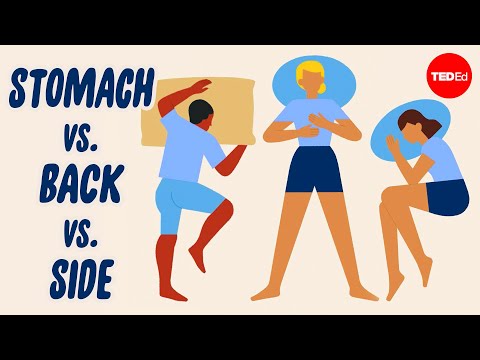
- The way in which someone's body is arranged. In yoga, each 'asana' is a different position. In sleep studies, researchers might track whether a subject stays in a side-sleeping position.
The goalkeeper moved into position just before the striker kicked the ball.
In social contexts, position can also refer to one's status or standing in society. A person of 'high position' is someone who has wealth, power, or influence. This usage is slightly more formal but common in literature and historical discussions. In competitive environments, like a race or a league table, your position is your rank relative to others. If you are in 'first position,' you are winning. This concept of relativity is key to the word: a position is rarely isolated; it is usually defined by its relationship to other things, whether those are other people in a company, other cars on a track, or other ideas in a debate.
Please state your position on the new environmental policy.
- Mental Stance
- An opinion or judgment on a particular subject. It is often used in formal debates or business strategy sessions where one must 'take a position' on a proposal.
The company is in a strong financial position to expand next year.
Using 'position' correctly requires understanding which of its many meanings you intend to convey, as the surrounding verbs and prepositions change accordingly. When referring to a physical location, we often use the preposition 'in'. For example, 'The chair is in a comfortable position.' When referring to a job, we 'apply for', 'hold', or 'accept' a position. The grammar of 'position' is quite stable, but the collocations (words that naturally go together) are what make a learner sound like a native speaker.
- Verb Pairings
- Common verbs used with position include: Take (to adopt an opinion), Hold (to have a job or a physical spot), Change (to move or alter an opinion), and Maintain (to keep a spot or an opinion).
He decided to change his position after hearing the new evidence.
When discussing a person's ability to do something, we use the phrase 'in a position to'. This indicates having the power, money, or opportunity required. For example, 'I am not in a position to lend you money right now.' This is a very common idiomatic use in both business and personal life. It functions as a polite way to state a capability or a limitation. In contrast, 'out of position' is frequently used in sports like soccer or basketball to describe a player who is not where they should be to defend or attack effectively.
The defender was caught out of position, allowing the opponent to score.
- Adjective Modifiers
- You can describe a position using adjectives like Current (now), Former (past), Key (important), Vulnerable (weak), or Strategic (planned for advantage).
The troops took up their defensive positions along the ridge.
In academic writing, 'position' is often used to describe the thesis or main argument of a paper. You might write, 'This paper takes the position that urban green spaces are essential for mental health.' This sounds much more professional than saying 'This paper thinks...'. It implies a researched and firm viewpoint. Similarly, in scientific contexts, 'position' refers to the spatial coordinates of an object, often measured against a reference point. 'The position of the particle was recorded every millisecond.'
What is your current position in the company?
You will encounter 'position' in a wide variety of real-world scenarios, ranging from the mundane to the highly specialized. In everyday life, you might hear it at the doctor's office: 'Please get into a sitting position so I can check your reflexes.' Or perhaps while using a navigation app in your car, which constantly updates your 'current position' to provide accurate directions. It is a staple of the modern technological vocabulary, especially concerning GPS and mapping software.
- In the Workplace
- This is perhaps the most common place for B1 learners to use the word. HR departments post 'job positions.' During an interview, you might be asked, 'Why are you interested in this position?' In meetings, a boss might say, 'We need to strengthen our market position,' meaning the company needs to become more competitive against rivals.
I've been in this position for five years and I'm ready for a new challenge.
In the world of sports, 'position' is fundamental. Commentators will talk about a player's 'natural position' (e.g., a striker in soccer or a point guard in basketball). They might criticize a team for their 'poor positioning' on the field. In racing, like Formula 1 or cycling, 'pole position' is the most coveted starting spot at the front of the grid. Hearing the word in these contexts helps you understand that it's about both where you are and what your specific role is within a team effort.
The satellite is now in its orbital position.
- In Finance and Trading
- Investors talk about 'opening a position' or 'closing a position' in a stock. This means they have bought or sold an asset. It describes their financial involvement in a particular market at that moment.
The yoga instructor told us to hold the position for five breaths.
One of the most frequent errors learners make is confusing 'position' with 'location' or 'place'. While they are related, they are not always interchangeable. 'Location' is usually a general geographic area (e.g., 'The location of the office is downtown'), whereas 'position' is more specific and often relative to other things (e.g., 'The position of the desk is next to the window'). If you say 'What is your job location?' people will understand you mean where the office is. If you say 'What is your job position?' they will understand you are asking for your title.
- Position vs. Job
- Avoid saying 'I have a new position' in a very casual setting like a bar with friends; it can sound a bit stiff. 'I got a new job' is better. Conversely, don't use 'job' on a formal CV where 'position' or 'role' is expected.
Incorrect: I am in a position of the park.
Correct: I am at the location of the park.
Another mistake involves the phrase 'take a position'. Some learners use this to mean 'moving to a place,' but in English, 'taking a position' almost always refers to forming an opinion or a military/strategic maneuver. If you want to say you moved to a spot, say 'I took my place' or 'I moved to my spot.' Additionally, watch out for the plural. 'Positions' can refer to multiple jobs or multiple physical stances, but it is rarely used to mean 'opinions' unless you are talking about several different topics.
Incorrect: The position of the sun is very hot today.
Correct: The sun is very hot today (The position is a location, not a temperature).
- Preposition Errors
- Learners often say 'at a position' when 'in a position' is required. Example: 'He is in a position of power,' not 'at a position of power.'
She is in a difficult position because she has two job offers.
To truly master 'position', you should know the words that live in the same neighborhood. Depending on the context, you might choose a more specific word to be clearer. If you are talking about a job, 'role' or 'post' are excellent alternatives. 'Role' emphasizes the duties you perform, while 'post' is often used for government or military jobs. If you are talking about a physical spot, 'location', 'site', or 'spot' might be better. 'Spot' is very informal and specific, while 'site' often refers to a place where something is being built.
- Stance vs. Position
- When talking about opinions, 'stance' is a great synonym. It suggests a more active or aggressive defense of an idea. 'What is your stance on the new law?' sounds very professional and focused.
- Posture vs. Position
- For the body, 'posture' refers to the overall alignment of your spine and limbs (e.g., 'good posture'), whereas 'position' refers to a specific arrangement (e.g., 'the fetal position').
The company's standing in the community has improved.
In a competitive sense, 'rank' or 'status' are strong alternatives. 'Rank' is used in hierarchies like the military or sports leagues. 'Status' is more about social or legal standing. For example, 'What is your legal status in this country?' is more common than 'What is your legal position?' although both are technically correct. Choosing the right alternative shows that you understand the subtle nuances of English vocabulary and can adapt your language to the situation.
He took a firm stance against the proposed changes.
- Placement
- This noun refers to the act of putting something in a position. 'The placement of the furniture was perfect.'
The location of the hidden treasure remains a mystery.
How Formal Is It?
Fun Fact
The root 'ponere' is also the ancestor of words like 'post', 'pose', 'positive', and 'component'. All these words share the underlying idea of 'placing' something.
Pronunciation Guide
- Pronouncing the 'o' in the first syllable as a strong 'oh' (it should be a schwa).
- Putting the stress on the first syllable.
- Pronouncing the 'tion' as 'tee-on' instead of 'shun'.
- Confusing the pronunciation with 'possession' (which has a 'z' sound in the middle).
- Making the 's' sound like a sharp 's' instead of a 'z' sound.
Difficulty Rating
Easy to recognize but has many meanings.
Requires knowledge of specific collocations.
Common in professional and sports contexts.
Clear pronunciation, but context is key.
What to Learn Next
Prerequisites
Learn Next
Advanced
Grammar to Know
Prepositions with Position
Use 'in' for status/jobs ('in a position') and 'at' for specific points ('at that position').
Position as a Verb
You can 'position' (place) an object: 'Position the speakers in the corners.'
Adjective placement
Adjectives usually come before 'position': 'A strategic position.'
Infinitives after Position
Often followed by 'to' + verb: 'In a position to help.'
Compound Nouns
'Market position' acts as a single concept.
Examples by Level
The cat is in a sleeping position.
Le chat est dans une position de sommeil.
Use 'in a... position' to describe how something is sitting or lying.
What is your position in the line?
Quelle est ta place dans la file ?
'Position' here means your place in a sequence.
Please stay in your position.
S'il vous plaît, restez à votre place.
Used as a command to stay in a specific spot.
The position of the box is on the table.
La position de la boîte est sur la table.
A formal way to say 'where the box is'.
I like this sitting position.
J'aime cette position assise.
'Sitting' acts as an adjective modifying 'position'.
Show me your position on the map.
Montre-moi ta position sur la carte.
Commonly used with maps and GPS.
The sun's position is high.
La position du soleil est haute.
Describes the location of a celestial body.
He is in the first position.
Il est en première position.
Refers to rank in a race.
The goalkeeper is in the right position.
Le gardien de but est à la bonne place.
Refers to a strategic spot in a game.
I am looking for a new position at work.
Je cherche un nouveau poste au travail.
Here, 'position' is a synonym for 'job'.
The bed is in a bad position in this room.
Le lit est mal placé dans cette chambre.
Refers to the arrangement of furniture.
Change your position if you are tired.
Change de position si tu es fatigué.
Refers to body posture.
He finished the race in third position.
Il a terminé la course en troisième position.
Refers to rank or standing.
The position of the stars changes every night.
La position des étoiles change chaque nuit.
Refers to astronomical location.
Is this the correct position for the mirror?
Est-ce la bonne position pour le miroir ?
Refers to the exact spot for an object.
She has a high position in the company.
Elle a un poste important dans l'entreprise.
Refers to rank or status in a hierarchy.
I applied for the position of marketing manager.
J'ai postulé pour le poste de responsable marketing.
Standard phrase for job applications.
What is the government's position on this issue?
Quelle est la position du gouvernement sur ce sujet ?
'Position' means 'official opinion' or 'policy'.
I am not in a position to help you right now.
Je ne suis pas en mesure de vous aider pour le moment.
Idiomatic expression meaning 'I don't have the ability/resources'.
The company is in a strong market position.
L'entreprise est dans une position de marché solide.
Refers to competitiveness and status.
Please adjust your seat to a comfortable position.
Veuillez ajuster votre siège dans une position confortable.
Refers to physical arrangement.
He held the position for over ten years.
Il a occupé ce poste pendant plus de dix ans.
'Hold a position' means to have a job.
The troops moved into a defensive position.
Les troupes se sont mises en position défensive.
Military usage for strategic location.
It is difficult to maintain this position for long.
Il est difficile de maintenir cette position longtemps.
Can refer to physical posture or a mental stance.
The CFO's position on the merger is quite clear.
La position du directeur financier sur la fusion est assez claire.
Refers to a professional stance or opinion.
They are jockeying for position in the upcoming election.
Ils se battent pour se placer en vue des prochaines élections.
Idiom meaning 'trying to get an advantage over others'.
The satellite must maintain its geostationary position.
Le satellite doit maintenir sa position géostationnaire.
Technical scientific usage.
She found herself in a compromising position.
Elle s'est retrouvée dans une position compromettante.
Idiom meaning 'a situation that makes you look bad'.
The player was penalized for being out of position.
Le joueur a été sanctionné pour avoir été hors de sa position.
Sports term for being in the wrong spot.
We need to reposition our brand to attract younger customers.
Nous devons repositionner notre marque pour attirer des clients plus jeunes.
Verb usage: 'to change the market position'.
The evidence forced him to rethink his position.
Les preuves l'ont forcé à repenser sa position.
Refers to changing an intellectual stance.
His social position allowed him access to the elite.
Sa position sociale lui a permis d'accéder à l'élite.
Refers to rank or status in society.
The country's geopolitical position is increasingly precarious.
La position géopolitique du pays est de plus en plus précaire.
Complex abstract usage involving international relations.
The author takes a radical position on economic reform.
L'auteur adopte une position radicale sur la réforme économique.
Refers to a theoretical or ideological stance.
He liquidated his position in the tech sector before the crash.
Il a liquidé sa position dans le secteur technologique avant le krach.
Financial term for selling all shares in a specific area.
The researcher must acknowledge their own positionality.
Le chercheur doit reconnaître sa propre positionnalité.
Academic term for how one's background affects their view.
The union and management have yet to find a common position.
Le syndicat et la direction n'ont pas encore trouvé de position commune.
Refers to a point of agreement in a negotiation.
The sculpture's position creates a sense of tension in the room.
La position de la sculpture crée un sentiment de tension dans la pièce.
Artistic usage regarding spatial arrangement.
She has attained a position of considerable influence.
Elle a atteint une position d'influence considérable.
Refers to achieving high status.
The legal position of the company is under review.
La position juridique de l'entreprise est en cours d'examen.
Refers to the status of a person or entity under the law.
The ontological position of the narrator remains ambiguous throughout the novel.
La position ontologique du narrateur reste ambiguë tout au long du roman.
Highly academic usage regarding the nature of being.
The party's shift in position was seen as a cynical move to capture the center-ground.
Le changement de position du parti a été perçu comme une manœuvre cynique pour s'emparer du centre.
Refers to strategic ideological maneuvering.
Quantum particles can exist in a superposition of states.
Les particules quantiques peuvent exister dans une superposition d'états.
Scientific term for existing in multiple positions at once.
The diplomat skillfully avoided stating a definitive position on the conflict.
Le diplomate a habilement évité d'énoncer une position définitive sur le conflit.
Refers to strategic ambiguity in international relations.
The company's dominant market position is being challenged by disruptive startups.
La position dominante de l'entreprise sur le marché est contestée par des start-ups perturbatrices.
Refers to economic hegemony.
He argued from a position of moral superiority that many found grating.
Il a argumenté à partir d'une position de supériorité morale que beaucoup ont trouvée agaçante.
Refers to a psychological or ethical stance.
The subtle positioning of the characters in the painting reveals their underlying relationships.
Le positionnement subtil des personnages dans le tableau révèle leurs relations sous-jacentes.
Refers to the intentional arrangement in art.
The treaty solidified the nation's position as a regional hegemon.
Le traité a consolidé la position de la nation en tant qu'hégémon régional.
Refers to supreme political power and status.
Synonyms
Antonyms
Common Collocations
Common Phrases
— Having the ability, power, or resources to do something.
I am finally in a position to buy my own house.
— To form or express an opinion on a particular topic.
The newspaper refused to take a position on the election.
— Not in the correct or expected place, especially in sports.
The defender was caught out of position, leading to a goal.
— To have a specific job or to stay in a specific physical spot.
She has held the position of CEO for five years.
— To move to a different spot or to change one's opinion.
He had to change position several times to get comfortable.
— A situation that makes someone look bad or guilty.
The politician was found in a compromising position.
— To make one's situation or argument more powerful.
The new evidence helped strengthen his position in court.
— To compete with others to get into a better situation.
The companies are jockeying for position in the new market.
— To slightly change your opinion or physical stance.
The senator shifted his position on the tax bill.
— To stay in the same place or keep the same opinion.
The army managed to maintain its position despite the attack.
Often Confused With
'Location' is a place on a map; 'position' is often how something is placed or its rank.
These sound similar but 'possession' means owning something.
'Place' is more general; 'position' is more specific or formal.
Idioms & Expressions
— To be in an advantageous or powerful position.
With the new contract, he is in the catbird seat.
Informal— To be in a very good or comfortable position, especially financially.
After selling his company, he is sitting pretty.
Informal— To not have taken a position or made a decision yet.
I'm still on the fence about which car to buy.
Informal— To be in a position of control or advantage.
The negotiators finally gained the upper hand.
Neutral— To be in a very difficult or desperate position.
With the deadline approaching, they have their backs to the wall.
Neutral— To be in the position of control or leadership.
In this project, Sarah is the one driving the bus.
Informal— To be in the position of authority to make decisions.
The manager is the one who calls the shots around here.
Informal— To be in a difficult or awkward position.
Losing my keys put me in a tight spot.
Informal— To maintain a position or responsibility while others are away.
Can you hold the fort while I go to lunch?
Neutral— To be in a subordinate or less important position.
He was tired of playing second fiddle to his brother.
InformalEasily Confused
Both refer to where something is.
Location is the 'where'; position is the 'where' plus 'how' it is oriented or its rank.
The location is Paris, but my position in the company is in the London office.
Both refer to the body.
Posture is the general way you hold your body; position is a specific arrangement.
He has bad posture, but he is in a comfortable sitting position.
Both refer to opinions.
Stance is more active and defensive; position is more of a formal statement.
His position is that taxes should be low, but his stance against the bill was very aggressive.
Both refer to jobs.
Role focuses on the actions you do; position focuses on the title and rank.
My position is Manager, but my role is to mentor the team.
Both refer to rank.
Status is often social or legal; position is often professional or physical.
His social status is high, but his position in the firm is junior.
Sentence Patterns
The [noun] is in a [adjective] position.
The baby is in a safe position.
I am looking for a [adjective] position.
I am looking for a part-time position.
I am (not) in a position to [verb].
I am not in a position to give advice.
What is your position on [noun]?
What is your position on the new tax?
The company holds a [adjective] market position.
The company holds a leading market position.
To take a [adjective] position on [issue].
To take a controversial position on immigration.
From a [adjective] position, [clause].
From a legal position, the contract is void.
The [adjective] positioning of [noun] suggests [clause].
The strategic positioning of the troops suggests an imminent attack.
Word Family
Nouns
Verbs
Adjectives
Related
How to Use It
Common in business, sports, and technical writing.
-
I have a new position of waiter.
→
I have a new position as a waiter.
When describing a job title, use 'as' or 'of' correctly. 'Position of manager' or 'Position as a manager' are both okay, but 'as' is more common for the title itself.
-
The position of the house is near the park.
→
The location of the house is near the park.
For large, fixed objects like buildings, 'location' is more natural than 'position'.
-
I am at a position to help.
→
I am in a position to help.
The correct preposition for being in a state of ability or status is 'in'.
-
He took a position to the chair.
→
He took his place in the chair / He sat in the chair.
'Take a position' usually means forming an opinion, not the physical act of sitting down.
-
What is your position on the map?
→
Where are you on the map? / What is your location?
While 'position' is technically correct for GPS, in casual conversation, 'location' or 'where' is more common.
Tips
Use in Resumes
Always use the word 'position' when listing your previous jobs on a CV. It sounds more professional than 'job' and is the standard industry term.
Preposition Choice
Remember to use 'in' when talking about being in a situation or a job. 'I am in a difficult position' or 'She is in a senior position.'
Polite Refusals
If you need to say no to a request at work, say 'I'm not in a position to do that right now.' It sounds less personal and more like a professional limitation.
Sports Talk
When watching sports, listen for how commentators use 'position'. It will help you understand the strategic side of the game.
Formal Stance
In essays, use 'This essay takes the position that...' to introduce your thesis statement. It makes your argument sound more authoritative.
Root Memory
Connect 'position' to 'pose'. When you pose for a photo, you are putting yourself in a specific position. This helps you remember the physical meaning.
Position vs. Location
Use 'position' when the way something is facing or its rank matters. Use 'location' for just the spot on the map.
Jockeying
The phrase 'jockeying for position' is great for describing competition in business or politics. It comes from horse racing.
Social Standing
Understand that 'social position' refers to someone's class or status. It is a key concept in sociology and history.
GPS Usage
In apps, 'position' is often used interchangeably with 'coordinates'. It is the technical term for where you are on the globe.
Memorize It
Mnemonic
Think of 'POS' as 'Point On Space'. A position is a specific point on space, whether it's a map, a job chart, or your body's arrangement.
Visual Association
Imagine a red pin on a digital map. That pin represents a 'position'. Now imagine that pin is also a name tag on an office door.
Word Web
Challenge
Try to use the word 'position' in three different ways today: once for a place, once for a job, and once for an opinion.
Word Origin
The word 'position' comes from the Old French word 'posicion', which in turn comes from the Latin 'positio'. The Latin root is 'ponere', which means 'to place' or 'to put'.
Original meaning: The original meaning in Latin referred to the act of placing or the state of being placed.
It belongs to the Indo-European language family, specifically the Italic branch via Latin.Cultural Context
Be careful when discussing someone's 'social position' as it can sound elitist or outdated in some modern contexts.
In the UK and US, 'position' is the standard formal word for a job. In casual talk, 'job' is more common.
Practice in Real Life
Real-World Contexts
Job Hunting
- Apply for a position
- Vacant position
- Entry-level position
- Managerial position
Sports
- Playing position
- Out of position
- Defensive position
- Fielding position
Navigation
- Current position
- GPS position
- Relative position
- Fixed position
Debating
- Take a position
- Official position
- Shift your position
- Defend your position
Health/Yoga
- Sitting position
- Sleeping position
- Comfortable position
- Yoga position
Conversation Starters
"What is your current position at your company?"
"Do you have a favorite sleeping position?"
"What is your position on working from home?"
"Have you ever been in a really difficult position at work?"
"Which position do you usually play in sports?"
Journal Prompts
Describe a time when you had to take a difficult position on a controversial topic.
What is your dream job position and why do you want to achieve it?
Reflect on your current social position and how it has changed over the last five years.
Describe the physical position of your favorite place to relax in your home.
How do you strengthen your position when you are negotiating for something you want?
Frequently Asked Questions
10 questionsYes, 'to position' means to put something in a specific place or to arrange it. For example, 'You should position the camera at eye level.' It is often used in marketing to describe how a brand is presented to customers.
'Job' is the everyday word for the work you do for money. 'Position' is more formal and is used in business contexts, resumes, and official titles. You have a job, but you hold a position.
They are very similar, but 'in a position to' often implies that you have the authority, money, or specific circumstances that allow you to do something. 'Able to' is more general about physical or mental ability.
It comes from horse racing and motor racing. It is the best starting place, usually at the very front. In a general sense, it means being in the best possible situation to succeed.
Yes, it is very common in formal English. 'My position on the matter is...' sounds more professional than 'I think...'. It suggests you have thought about it and have a firm view.
It refers to a strategy where players stay in specific areas of the field to control the game and create space. It is very common in soccer (football) and chess.
It means someone is not where they are supposed to be. In sports, it usually means a defender left a gap that the opponent can use. In life, it can mean being in a situation you aren't prepared for.
Yes, it is a countable noun. You can have one position, two positions, or many positions. For example, 'The company has three open positions for engineers.'
It is a formal document that explains the opinion or policy of a group or organization on a specific issue. Governments and NGOs often write position papers.
It is the physical position where a person curls up with their knees tucked toward their chest, similar to how a baby (fetus) is positioned in the womb.
Test Yourself 200 questions
Write a sentence using 'position' to mean a job.
Well written! Good try! Check the sample answer below.
Write a sentence using 'position' to mean an opinion.
Well written! Good try! Check the sample answer below.
Describe your favorite sleeping position.
Well written! Good try! Check the sample answer below.
Write a formal email sentence applying for a position.
Well written! Good try! Check the sample answer below.
Explain what 'out of position' means in your favorite sport.
Well written! Good try! Check the sample answer below.
Write a sentence using the phrase 'in a position to'.
Well written! Good try! Check the sample answer below.
Describe the position of your house relative to the nearest park.
Well written! Good try! Check the sample answer below.
Write a sentence about a company's market position.
Well written! Good try! Check the sample answer below.
Use 'position' as a verb in a sentence about photography.
Well written! Good try! Check the sample answer below.
Write a sentence about a 'key position' in a government.
Well written! Good try! Check the sample answer below.
Describe a 'compromising position' without being inappropriate.
Well written! Good try! Check the sample answer below.
Write a sentence about the position of the moon.
Well written! Good try! Check the sample answer below.
Use the word 'reposition' in a sentence about furniture.
Well written! Good try! Check the sample answer below.
Write a sentence about 'social position' in the 19th century.
Well written! Good try! Check the sample answer below.
Explain your position on the use of AI in schools.
Well written! Good try! Check the sample answer below.
Write a sentence using 'pole position' metaphorically.
Well written! Good try! Check the sample answer below.
Describe a yoga position you find difficult.
Well written! Good try! Check the sample answer below.
Write a sentence about a 'defensive position' in a game.
Well written! Good try! Check the sample answer below.
Use 'position' to describe a rank in a race.
Well written! Good try! Check the sample answer below.
Write a sentence using 'official position'.
Well written! Good try! Check the sample answer below.
Tell me about your current job position.
Read this aloud:
You said:
Speech recognition is not supported in your browser. Try Chrome or Edge.
Describe the position of your favorite piece of furniture.
Read this aloud:
You said:
Speech recognition is not supported in your browser. Try Chrome or Edge.
What is your position on social media usage for children?
Read this aloud:
You said:
Speech recognition is not supported in your browser. Try Chrome or Edge.
How do you feel when you are in a difficult position?
Read this aloud:
You said:
Speech recognition is not supported in your browser. Try Chrome or Edge.
Explain the importance of positioning in a sport you like.
Read this aloud:
You said:
Speech recognition is not supported in your browser. Try Chrome or Edge.
Describe a comfortable position for reading a book.
Read this aloud:
You said:
Speech recognition is not supported in your browser. Try Chrome or Edge.
Have you ever applied for a position you didn't get? Tell me about it.
Read this aloud:
You said:
Speech recognition is not supported in your browser. Try Chrome or Edge.
What is the best position to be in during a race?
Read this aloud:
You said:
Speech recognition is not supported in your browser. Try Chrome or Edge.
How would you position a new product in the market?
Read this aloud:
You said:
Speech recognition is not supported in your browser. Try Chrome or Edge.
Talk about a time you had to change your position on a topic.
Read this aloud:
You said:
Speech recognition is not supported in your browser. Try Chrome or Edge.
What are the duties of your current position?
Read this aloud:
You said:
Speech recognition is not supported in your browser. Try Chrome or Edge.
Describe the position of the sun at sunset.
Read this aloud:
You said:
Speech recognition is not supported in your browser. Try Chrome or Edge.
How do you maintain a good posture/position while working?
Read this aloud:
You said:
Speech recognition is not supported in your browser. Try Chrome or Edge.
What is the most important position in a soccer team?
Read this aloud:
You said:
Speech recognition is not supported in your browser. Try Chrome or Edge.
If you were in a position of power, what would you change?
Read this aloud:
You said:
Speech recognition is not supported in your browser. Try Chrome or Edge.
Explain the phrase 'jockeying for position' in your own words.
Read this aloud:
You said:
Speech recognition is not supported in your browser. Try Chrome or Edge.
Describe the position of your city on a map.
Read this aloud:
You said:
Speech recognition is not supported in your browser. Try Chrome or Edge.
What is a 'compromising position' in a movie you've seen?
Read this aloud:
You said:
Speech recognition is not supported in your browser. Try Chrome or Edge.
Why is 'pole position' so important in F1?
Read this aloud:
You said:
Speech recognition is not supported in your browser. Try Chrome or Edge.
How do you find a comfortable sleeping position?
Read this aloud:
You said:
Speech recognition is not supported in your browser. Try Chrome or Edge.
Listen for the word 'position' in a job interview recording. What role is being discussed?
Listen to a sports commentary. Who is 'out of position'?
Listen to a news report. What is the government's position on taxes?
Listen to a yoga instructor. What position are they describing?
Listen to a GPS voice. What is the 'current position'?
Listen to a business meeting. What is the company's market position?
Listen to a debate. Did the speaker shift their position?
Listen to a science lecture. How is the particle's position measured?
Listen to a historical documentary. What was the king's social position?
Listen to a friend talking about their new job. Is it a high position?
Listen to a weather report. What is the position of the storm?
Listen to a conversation about a race. Who has pole position?
Listen to a doctor. What position should the patient be in?
Listen to a financial podcast. What does 'closing a position' mean?
Listen to an architect. Where is the position of the main entrance?
/ 200 correct
Perfect score!
Summary
The word 'position' is essential because it covers physical space, professional roles, and intellectual opinions. For example, 'She accepted a high-level position (job) and took a firm position (opinion) on the company's future.'
- Position refers to the physical location of an object or person in space.
- It commonly denotes a job, role, or rank within a professional organization.
- The word describes body posture, such as a sitting or standing arrangement.
- It represents a person's opinion, stance, or viewpoint on a specific topic.
Use in Resumes
Always use the word 'position' when listing your previous jobs on a CV. It sounds more professional than 'job' and is the standard industry term.
Preposition Choice
Remember to use 'in' when talking about being in a situation or a job. 'I am in a difficult position' or 'She is in a senior position.'
Polite Refusals
If you need to say no to a request at work, say 'I'm not in a position to do that right now.' It sounds less personal and more like a professional limitation.
Sports Talk
When watching sports, listen for how commentators use 'position'. It will help you understand the strategic side of the game.
Example
The company is looking to fill a vacant position in the sales department.
Related Content
See it in Videos
 5:11
5:11
What’s the best position to sleep in? - Rachel Marie E. Salas
 2:03
2:03
I Swear Trailer #1 (2026)
"The company is looking to fill a vacant position in the sales department."
 10:31
10:31
AVATAR Clip - Final Battle (2009) James Cameron
"The company is looking to fill a vacant position in the sales department."
Learn it in Context
This Word in Other Languages
Related Phrases
More Other words
case
A2A case can refer to a physical container like a suitcase or box used for carrying and protecting items. It can also mean a specific example, situation, or instance of something happening, especially in legal or medical contexts.
ultimate
B2To reach a final result, conclusion, or peak state. It describes the process of something coming to its finished or most developed form.
demon’s
B1The singular possessive form of the noun 'demon', used to indicate that something belongs to or is associated with an evil spirit or a very wicked person. It is also frequently used metaphorically to describe intense, relentless, or supernatural qualities in a person or object.
range
A2A range refers to the limits between which something varies, or a set of different things of the same general type. It is commonly used to describe a variety of choices, a scale of numbers, or a physical distance.
lot
B1A large number or amount of people or things. It can also refer to a specific group of people or things, or a piece of land used for a particular purpose, like a parking lot.
kink
B2A sharp twist or bend in a flexible object like a rope, wire, or hose that prevents it from functioning properly. It is also used figuratively to describe a minor problem, flaw, or complication in a plan, system, or process.
beauty
B1The quality or aggregate of qualities in a person or thing that gives pleasure to the senses or pleasurably exalts the mind or spirit. It often refers to a combination of qualities, such as shape, color, or form, that pleases the aesthetic senses, especially the sight.
round
B1Shaped like a circle or a sphere. It can also refer to a complete series of events or a stage in a competition.
height
B1Height refers to the measurement of someone or something from head to foot or from base to top. It also describes the distance of an object above a certain level, such as sea level, or the most intense part of a period or activity.
loaded
B2The word 'loaded' describes something that is full, carrying a heavy weight, or charged with ammunition (like a gun). In informal contexts, it can also describe someone who is very wealthy or under the influence of alcohol.

