









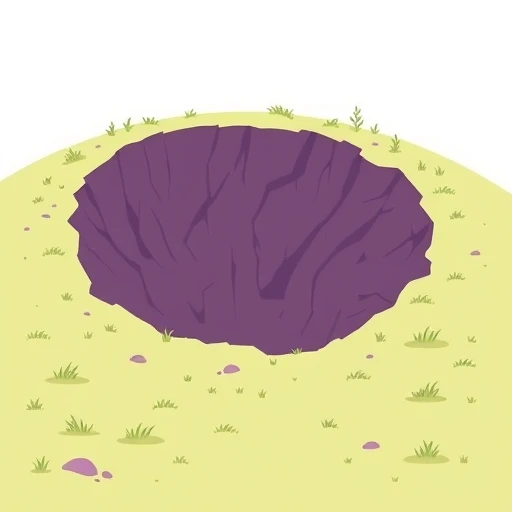
sinkholes in 30 Seconds
- A sinkhole is a geological collapse where the ground surface falls into an underground cavity, often caused by water dissolving soluble rocks like limestone.
- They range from small pits to massive chasms and can occur naturally or be triggered by human activities like mining or leaking pipes.
- The term is also used metaphorically to describe a project or situation that consumes vast amounts of money, time, or resources without success.
- Common in 'karst' regions, they are a major concern for urban safety, insurance, and environmental management due to their sudden and destructive nature.
The term sinkholes refers to a specific geological phenomenon where the ground surface collapses into an underground cavity. This isn't just a simple hole; it is a complex event usually caused by the chemical dissolution of carbonate rocks like limestone or salt beds. When we talk about sinkholes, we are often discussing the intersection of natural processes and human infrastructure. They are most commonly mentioned in the context of natural disasters, urban planning, and environmental science. However, the word has also migrated into the metaphorical realm, describing situations that consume resources—like time or money—without providing any return.
- Geological Origin
- Sinkholes occur primarily in 'karst terrain,' where the bedrock is easily dissolved by slightly acidic groundwater. Over centuries, this water carves out massive caverns. When the ceiling of such a cavern can no longer support the weight of the soil above, it collapses suddenly.
The sudden appearance of sinkholes in the residential district led to an immediate evacuation of three city blocks.
In a literal sense, sinkholes are terrifying because they are often invisible until the moment of collapse. Engineers use ground-penetrating radar to detect these hidden voids. In a figurative sense, you might hear a project manager describe a failing department as a 'financial sinkhole,' implying that no matter how much money is poured into it, the problem remains unsolved. This dual usage makes the word essential for both scientific and professional English. Understanding sinkholes requires an appreciation for the hidden forces beneath our feet, whether they are physical rocks or systemic inefficiencies.
- Urban Impact
- In cities, sinkholes are often triggered by leaking pipes. The constant flow of water washes away the supporting soil (a process called 'piping'), leading to a collapse that can swallow cars or even entire buildings.
Insurance companies often have specific clauses regarding sinkholes, as the damage to property foundations can be irreparable.
Culturally, sinkholes have become a symbol of the unpredictable nature of the environment. From the famous 'cenotes' of the Yucatan Peninsula—which are water-filled sinkholes considered sacred by the Mayans—to the devastating urban collapses in Florida, the word carries a weight of mystery and danger. In literature and film, they often serve as metaphors for a character's life falling apart or secrets being revealed from beneath the surface. When you use this word, you are tapping into a deep-seated human fear of the ground—the one thing we expect to be solid—failing us.
- Metaphorical Usage
- A 'sinkhole of time' refers to an activity that is deceptively consuming. For example, scrolling through social media can be a sinkhole for productivity.
The outdated software system became a massive sinkhole for the company's IT budget.
Geologists are mapping the region to identify potential sinkholes before new construction begins.
After the heavy rains, several small sinkholes appeared in the farmer's field, making it dangerous for the tractor.
Using the word sinkholes correctly requires an understanding of its role as a countable noun. In most cases, it functions as the subject or object of a sentence describing physical collapse or geological surveys. Because sinkholes are often the result of a process, they are frequently paired with verbs like 'form,' 'appear,' 'open up,' or 'develop.' For example, 'A sinkhole opened up in the middle of the highway.' This emphasizes the sudden and active nature of the event. When discussing the cause, we use phrases like 'caused by,' 'triggered by,' or 'resulting from.'
- Active Verbs
- Commonly used with: open, swallow, collapse, threaten, expand, form. Example: 'The sinkhole swallowed the entire backyard.'
Engineers are working to fill the sinkholes with a mixture of concrete and gravel to stabilize the road.
In academic or technical writing, 'sinkholes' are often referred to as 'dolines.' However, 'sinkholes' remains the standard term for general communication. You will often see it modified by adjectives that describe its scale or danger, such as 'massive,' 'catastrophic,' 'incipient' (just beginning), or 'dormant.' When used figuratively, the word is almost always singular: 'This project is a sinkhole.' It is rarely used in the plural in a metaphorical sense unless referring to multiple distinct resource-draining issues. The preposition 'for' usually follows the metaphorical 'sinkhole,' as in 'a sinkhole for investment.'
- Descriptive Adjectives
- Massive, gaping, sudden, hidden, treacherous, urban, natural. Example: 'A gaping sinkhole halted all traffic on the M1.'
The report highlighted that the region is prone to sinkholes due to its limestone-rich soil.
When writing about sinkholes, it is helpful to provide context regarding the environment. Are they in a 'residential area,' a 'remote forest,' or a 'construction site'? This helps the reader visualize the impact. In news reporting, the focus is often on the 'swallowing' action: 'The earth literally opened up, and the sinkhole swallowed the parked cars.' This personification of the geological event adds drama and emphasizes the lack of control humans have over the situation. In contrast, scientific writing focuses on 'subsidence' and 'dissolution rates,' using 'sinkholes' as the observable result of these processes.
- Prepositional Phrases
- Prone to sinkholes, at risk of sinkholes, caused by sinkholes, the aftermath of sinkholes.
Local authorities warned residents that more sinkholes could form if the heavy rainfall continues.
The ancient sinkholes in the Yucatan, known as cenotes, are now popular tourist attractions.
Without proper drainage, the construction site will likely develop dangerous sinkholes.
The word sinkholes is a staple of local news broadcasts, especially in regions like Florida, Texas, and parts of China or Russia where the geology is susceptible. When a sinkhole appears in a populated area, it is 'breaking news' because of the dramatic visual of a hole in a road or a house partially submerged. You will also hear it frequently in documentaries about Earth science or geology, where narrators explain the 'karst' processes that shape our planet. In these contexts, the word is used with a sense of awe and scientific curiosity.
- News Media
- Often used in headlines: 'Massive Sinkhole Swallows Commuter Bus,' or 'Residents Evacuated as Sinkhole Threatens Neighborhood.'
The documentary explored how underwater sinkholes provide unique habitats for rare marine species.
In the insurance and real estate industries, 'sinkholes' is a very serious term. In Florida, for instance, homeowners often have to purchase specific 'sinkhole coverage.' You might hear a real estate agent say, 'The property has been inspected for sinkhole activity,' which is a crucial selling point in high-risk areas. Here, the word is associated with financial risk and structural integrity. Similarly, in civil engineering meetings, the word is used when discussing the stability of a new bridge or highway. Engineers might say, 'We need to mitigate the risk of sinkholes before we lay the foundation.'
- Real Estate & Insurance
- Used in 'disclosure forms' and 'geotechnical reports.' Phrases like 'sinkhole loss' or 'sinkhole remediation' are common.
Before buying the house, we insisted on a survey to ensure there were no history of sinkholes on the land.
Finally, you will hear 'sinkhole' in casual conversation as a metaphor for a bad investment. If a friend buys a car that constantly needs repairs, they might complain, 'This car is just a sinkhole for my savings.' This usage is very common in business English as well, where a failing project is described as a 'sinkhole for resources.' It conveys a sense of hopelessness—that no matter how much effort or money you put in, it just disappears without a trace. This metaphorical use is perhaps even more common than the literal one in non-geological regions.
- Conversational Metaphor
- 'That new startup turned out to be a total sinkhole for venture capital.' Here, it means a waste of money.
I'm worried that this renovation is going to become a sinkhole for our time this summer.
The city council met to discuss the rising frequency of sinkholes following the recent floods.
Environmentalists are concerned that fracking might increase the risk of sinkholes in the valley.
One of the most frequent mistakes learners make is confusing sinkholes with 'potholes.' While both are holes in the ground, they have very different causes and scales. A pothole is a small, shallow hole in a road surface caused by wear and tear or freezing and thawing of asphalt. A sinkhole is a deep, geological collapse that involves the earth beneath the road. Calling a massive crater in a neighborhood a 'pothole' would be a significant understatement and would sound quite strange to a native speaker.
- Sinkhole vs. Pothole
- Pothole: Small, surface-level, road-only. Sinkhole: Large, deep, geological, can happen anywhere.
Incorrect: 'The car hit a sinkhole and got a flat tire.' (Unless the car fell into a deep pit, use 'pothole'.)
Another mistake is using 'sinkhole' as a verb. While you might want to say 'The ground sinkholed,' this is not standard English. Instead, use 'A sinkhole formed' or 'The ground collapsed into a sinkhole.' The word is strictly a noun. Additionally, some people use 'sinkhole' to describe any hole in the ground, such as a hole dug by an animal or a hole for a fence post. This is incorrect. A sinkhole must involve a collapse of the surface layer into a void below. If there is no collapse and no underground cavity, it is just a 'hole' or a 'pit.'
- Incorrect Verb Usage
- Avoid: 'The rain sinkholed the lawn.' Use: 'The rain caused a sinkhole to form in the lawn.'
Correct: 'The sinkhole was so deep that the bottom was not visible from the surface.'
In metaphorical usage, a common error is using 'sinkhole' for something that is simply expensive but has value. For example, 'My house is a sinkhole' is only correct if the house is losing value or requiring endless, useless repairs. If the house is a good investment but just costs a lot to maintain, 'sinkhole' might be too negative. The metaphor implies that whatever you put in is *lost* forever, like water disappearing into the earth. Finally, be careful with the plural. While 'sinkholes' is correct for multiple events, don't use it to describe a single large hole; that's just one 'massive sinkhole.'
- Misusing the Metaphor
- Don't use 'sinkhole' for a 'savings account' or a 'piggy bank.' Those are for keeping money, not losing it!
The geologist explained that sinkholes are a natural part of the landscape in this part of the country.
The city spent millions repairing sinkholes that were caused by the aging sewer system.
Many people don't realize that sinkholes can actually be beneficial for local ecosystems by providing drainage.
When discussing sinkholes, it is helpful to know related terms that describe similar geological features. This allows for more precise communication, especially in scientific or technical contexts. One common alternative is 'doline,' which is the technical term used by geologists. Another is 'cenote,' which specifically refers to a water-filled sinkhole, particularly those found in the Yucatan Peninsula of Mexico. While 'sinkhole' is the general term, 'cenote' adds a specific cultural and geographical flavor.
- Technical & Regional Terms
- Doline: The scientific name. Cenote: A water-filled sinkhole in Mexico. Swallet: A place where a stream disappears underground into a sinkhole.
The researchers used the term 'doline' to describe the various sinkholes they mapped in the limestone plateau.
In a more general sense, words like 'chasm,' 'abyss,' or 'crevasse' might be used to describe large openings in the earth. However, these words have different nuances. A 'chasm' is a deep fissure or opening, but it doesn't necessarily imply a collapse. An 'abyss' is a hole so deep it seems bottomless, often used poetically. A 'crevasse' is specifically a deep crack in a glacier or ice sheet. If you use 'sinkhole,' you are specifically implying that the ground has *sunk* or collapsed inward. This distinction is vital for accuracy in description.
- Descriptive Alternatives
- Depression: A low area in the ground (less dramatic). Cavity: A hollow space (often underground). Void: An empty space.
While some sinkholes are dry, others become beautiful ponds or lakes over time.
In metaphorical contexts, 'money pit' is a very common synonym for a 'financial sinkhole.' If you say, 'This old boat is a money pit,' it means the same thing as 'This boat is a sinkhole for my money.' Other alternatives include 'drain' (as in 'a drain on resources') or 'black hole.' 'Black hole' is even more extreme than 'sinkhole,' suggesting that nothing—not even light or hope—can escape. Choosing between these depends on how much drama you want to convey. 'Sinkhole' is a great middle-ground term: it's serious and descriptive without being overly hyperbolic.
- Metaphorical Synonyms
- Money pit: A house or car that costs too much. Drain: Something that slowly takes away energy or money. Black hole: Something that consumes everything.
The project was a sinkhole for the team's morale, as no progress was ever made.
In the desert, sinkholes can be hidden by shifting sands, making them extremely dangerous for travelers.
The formation of sinkholes is often accelerated by human activities like excessive groundwater pumping.
How Formal Is It?
Fun Fact
The term 'sinkhole' was used as early as the 1500s, but it didn't become a common geological term until the study of karst landscapes in the 19th century.
Pronunciation Guide
- Pronouncing 'sink' as 'sing' (with a soft 'g').
- Putting the stress on the second syllable: sink-HOLE.
- Confusing the 'h' in 'hole' with a 'w' sound.
- Making the 'i' in 'sink' too long, like 'seenk'.
- Dropping the 'k' sound in the middle.
Difficulty Rating
The word itself is simple, but the geological context can be complex.
Easy to spell and use in a sentence.
Pronunciation is straightforward.
Might be confused with 'pothole' in fast speech.
What to Learn Next
Prerequisites
Learn Next
Advanced
Grammar to Know
Compound Nouns
Sinkhole is a closed compound noun formed by 'sink' and 'hole'.
Pluralization
Add 's' to make 'sinkholes'.
Countable Nouns
You can say 'one sinkhole' or 'many sinkholes'.
Passive Voice
The car was swallowed by the sinkhole.
Adjective Placement
The 'massive' sinkhole (adjective before noun).
Examples by Level
Look at that big sinkhole in the park!
Regarde ce grand trou dans le parc !
Noun as the subject of the sentence.
The sinkhole is very deep.
Le trou est très profond.
Using 'is' to describe the noun.
A car fell into a sinkhole.
Une voiture est tombée dans un trou.
Past tense verb 'fell' with the noun.
Water can make sinkholes.
L'eau peut faire des trous.
Plural noun 'sinkholes'.
Stay away from the sinkhole.
Reste loin du trou.
Imperative sentence.
Is that a sinkhole?
Est-ce un trou ?
Question form.
There are many sinkholes here.
Il y a beaucoup de trous ici.
Using 'there are' with plural.
The sinkhole is scary.
Le trou est effrayant.
Adjective 'scary' modifying the noun.
The road is closed because of a massive sinkhole.
La route est fermée à cause d'un énorme trou.
Using 'because of' to show cause.
Heavy rain often causes sinkholes to form.
La forte pluie cause souvent la formation de trous.
Present simple for a general fact.
Scientists study sinkholes to keep people safe.
Les scientifiques étudient les trous pour garder les gens en sécurité.
Infinitive of purpose 'to keep'.
A sinkhole can swallow a whole tree.
Un trou peut avaler un arbre entier.
Modal verb 'can' for possibility.
We saw several sinkholes during our hike.
Nous avons vu plusieurs trous pendant notre randonnée.
Past simple tense.
Don't build a house near sinkholes.
Ne construis pas de maison près des trous.
Negative imperative.
The sinkhole appeared suddenly last night.
Le trou est apparu soudainement hier soir.
Adverb 'suddenly' modifying the verb.
This old car is a sinkhole for my money.
Cette vieille voiture est un gouffre financier.
Metaphorical usage.
The city council is investigating the cause of the recent sinkholes.
Le conseil municipal enquête sur la cause des récents trous.
Present continuous tense.
Sinkholes are common in areas with limestone bedrock.
Les trous sont courants dans les zones avec un socle calcaire.
Adjective phrase 'common in'.
The insurance policy does not cover damage caused by sinkholes.
La police d'assurance ne couvre pas les dommages causés par les trous.
Passive participle 'caused by'.
If the water pipe leaks, it might create a sinkhole.
Si le tuyau d'eau fuit, cela pourrait créer un trou.
First conditional structure.
The farmer was surprised to find a sinkhole in his cornfield.
Le fermier a été surpris de trouver un trou dans son champ de maïs.
Adjective + infinitive 'surprised to find'.
Engineers are filling the sinkhole with concrete to stabilize the area.
Les ingénieurs remplissent le trou avec du béton pour stabiliser la zone.
Present continuous with 'to stabilize'.
The project became a sinkhole for resources, so it was canceled.
Le projet est devenu un gouffre à ressources, il a donc été annulé.
Metaphorical usage in a result clause.
Residents were warned about the potential for more sinkholes after the flood.
Les résidents ont été avertis du potentiel de nouveaux trous après l'inondation.
Passive voice 'were warned'.
The formation of sinkholes is a natural process in karst landscapes.
La formation de trous est un processus naturel dans les paysages karstiques.
Gerund 'formation' as the subject.
Urban development can inadvertently trigger the collapse of sinkholes.
Le développement urbain peut déclencher par inadvertance l'effondrement de trous.
Adverb 'inadvertently' modifying 'trigger'.
Geologists use ground-penetrating radar to detect incipient sinkholes.
Les géologues utilisent un radar à pénétration de sol pour détecter les trous naissants.
Technical adjective 'incipient'.
The sudden appearance of the sinkhole caused widespread panic in the neighborhood.
L'apparition soudaine du trou a causé une panique généralisée dans le quartier.
Noun phrase 'sudden appearance'.
Many cenotes in Mexico are actually water-filled sinkholes.
De nombreux cénotes au Mexique sont en fait des trous remplis d'eau.
Compound adjective 'water-filled'.
The company's new venture turned out to be a financial sinkhole.
La nouvelle entreprise de la société s'est avérée être un gouffre financier.
Phrasal verb 'turned out to be'.
Proper drainage is essential to prevent the development of sinkholes.
Un drainage adéquat est essentiel pour prévenir le développement de trous.
Infinitive 'to prevent' after an adjective.
The report highlighted the risks of building on land prone to sinkholes.
Le rapport a souligné les risques de construire sur des terrains sujets aux trous.
Adjective phrase 'prone to'.
The catastrophic collapse of the sinkhole swallowed several historic buildings.
L'effondrement catastrophique du trou a englouti plusieurs bâtiments historiques.
Attributive adjective 'catastrophic'.
Over-extraction of groundwater has been linked to the proliferation of sinkholes in the valley.
La surextraction des eaux souterraines a été liée à la prolifération des trous dans la vallée.
Present perfect passive voice.
The geological survey identified several dormant sinkholes that could reactivate.
L'étude géologique a identifié plusieurs trous dormants qui pourraient se réactiver.
Relative clause 'that could reactivate'.
The project was criticized for being a bureaucratic sinkhole that achieved nothing.
Le projet a été critiqué pour être un gouffre bureaucratique qui n'a rien accompli.
Metaphorical usage with 'bureaucratic'.
Environmentalists argue that fracking significantly increases the likelihood of sinkholes.
Les écologistes soutiennent que la fracturation hydraulique augmente considérablement la probabilité de trous.
That-clause as a direct object.
The remediation of the sinkhole required thousands of tons of specialized grout.
La remédiation du trou a nécessité des milliers de tonnes de coulis spécialisé.
Noun 'remediation' (technical).
The ancient Mayans considered certain sinkholes to be sacred portals to the underworld.
Les anciens Mayas considéraient certains trous comme des portails sacrés vers l'inframonde.
Object + infinitive 'to be'.
The sheer scale of the sinkhole made it visible from satellite imagery.
L'ampleur même du trou le rendait visible depuis l'imagerie satellite.
Noun phrase 'sheer scale'.
The interplay between acidic precipitation and soluble bedrock precipitates the formation of sinkholes.
L'interaction entre les précipitations acides et le socle rocheux soluble précipite la formation de trous.
Formal verb 'precipitates' (to cause).
The region's karst topography is punctuated by numerous sinkholes of varying depths.
La topographie karstique de la région est ponctuée de nombreux trous de profondeurs variables.
Passive voice with 'punctuated by'.
Mitigating the risk of sinkholes in urban environments requires sophisticated geotechnical engineering.
Atténuer le risque de trous dans les environnements urbains nécessite une ingénierie géotechnique sophistiquée.
Gerund phrase as the subject.
The company's investment in the failing tech firm proved to be a bottomless sinkhole.
L'investissement de l'entreprise dans la firme technologique défaillante s'est avéré être un gouffre sans fond.
Metaphorical usage with 'bottomless'.
Hydrostatic pressure changes within the aquifer can trigger catastrophic cover-collapse sinkholes.
Les changements de pression hydrostatique au sein de l'aquifère peuvent déclencher des trous d'effondrement catastrophiques.
Technical compound noun 'cover-collapse sinkholes'.
The philosophical essay explored the sinkhole of nihilism in modern society.
L'essai philosophique a exploré le gouffre du nihilisme dans la société moderne.
Abstract metaphorical usage.
Legal disputes often arise regarding liability when sinkholes damage public infrastructure.
Des litiges juridiques surviennent souvent concernant la responsabilité lorsque des trous endommagent les infrastructures publiques.
Adverbial clause of time 'when...'.
The sudden subsidence was a precursor to the massive sinkhole that eventually emerged.
L'affaissement soudain était un précurseur du trou massif qui a fini par émerger.
Noun 'precursor' and 'subsidence'.
Common Collocations
Common Phrases
— To completely consume something in an instant.
The earth seemed to swallow the house whole.
— Likely to experience something negative.
This region is prone to sinkholes due to its geology.
— Something that consumes resources endlessly (related metaphor).
The renovation felt like a bottomless pit for our savings.
— Very close to a collapse or disaster.
The house was on the brink of falling into the sinkhole.
— Wasted or lost (related metaphor).
All that investment went down the drain when the sinkhole appeared.
— Hidden from view but active.
The danger of sinkholes often lies hidden under the surface.
— Something that is dangerous to people.
The sinkhole was declared a major safety hazard.
— The strength and firmness of the earth.
The sinkhole compromised the ground stability of the entire block.
Often Confused With
A pothole is a small hole in the road surface; a sinkhole is a deep geological collapse.
A crater is usually caused by an external impact or explosion; a sinkhole is caused by internal collapse.
A ditch is a long, narrow trench dug by humans; a sinkhole is a natural, often circular collapse.
Idioms & Expressions
— Something that costs a lot of money but gives no return.
That old yacht is just a sinkhole for money.
informal— To get into a difficult situation (related).
He fell into a hole of debt after the business failed.
informal— A place where things disappear and are never found (related).
The missing files went into a black hole in the system.
informal— To make a bad situation worse for oneself.
By lying, he just dug himself into a deeper hole.
informal— Used to describe a sudden, shocking event or extreme embarrassment.
I was so embarrassed I wished the ground would open up and swallow me.
neutral— Wasting money on something that will never be fixed.
Repairing that car is like pouring money down a hole.
informal— To disappear completely and suddenly (like into a sinkhole).
The evidence seemed to vanish into thin air.
neutral— Someone or something that always requires more help or resources.
The charity felt like a bottomless pit of needs.
neutral— Being in a risky situation (related to unstable ground).
With those comments, you are treading on thin ice.
informal— To disappear completely, often used for things lost in sinkholes.
The ancient city was eventually swallowed by the earth.
literaryEasily Confused
Both are holes in the ground/road.
Potholes are surface-level and caused by traffic/weather. Sinkholes are deep and caused by geology.
I hit a pothole and popped my tire, but the sinkhole swallowed the whole car.
Both are large depressions in the earth.
Craters are formed by things hitting the earth (meteors) or blowing up (volcanoes). Sinkholes are formed by the earth falling in.
The moon is covered in craters, but Florida is full of sinkholes.
Both describe deep holes.
An abyss is a poetic term for something immeasurably deep. A sinkhole is a specific geological event.
The sinkhole looked like a dark abyss.
Both are openings in the ground.
A fissure is a long crack. A sinkhole is a circular collapse.
The earthquake caused a fissure, but the leaking pipe caused a sinkhole.
A sinkhole is a collapse into a void.
A void is the empty space itself. A sinkhole is the hole that forms when the surface falls into that space.
The ground collapsed into the underground void, creating a sinkhole.
Sentence Patterns
There is a [adjective] sinkhole.
There is a big sinkhole.
A sinkhole appeared in [place].
A sinkhole appeared in the street.
The [noun] was caused by a sinkhole.
The accident was caused by a sinkhole.
Due to [reason], a sinkhole formed.
Due to heavy rain, a sinkhole formed.
The region is prone to [adjective] sinkholes.
The region is prone to catastrophic sinkholes.
The [metaphorical noun] proved to be a sinkhole for [resource].
The acquisition proved to be a sinkhole for capital.
It is dangerous to [verb] near sinkholes.
It is dangerous to walk near sinkholes.
I saw a sinkhole on [media].
I saw a sinkhole on the news.
Word Family
Nouns
Verbs
Adjectives
Related
How to Use It
Common in news and geology; moderately common as a metaphor.
-
Calling a pothole a sinkhole.
→
I hit a pothole on the way to work.
Potholes are small road damages. Sinkholes are large geological collapses.
-
Using 'sinkhole' as a verb.
→
A sinkhole formed in the yard.
Sinkhole is a noun, not a verb. You cannot 'sinkhole' something.
-
Spelling it as two words.
→
The sinkhole was massive.
In modern usage, it is a single compound word.
-
Using it for a man-made trench.
→
They dug a ditch for the pipes.
A sinkhole is a collapse, not a hole dug by people.
-
Confusing it with a crater.
→
The meteor left a crater.
Craters are from impacts; sinkholes are from collapses.
Tips
Use the right scale
Don't use 'sinkhole' for a small hole in your garden. Use it for something that looks like a collapse or a deep pit.
Noun only
Remember that 'sinkhole' is a noun. If you want to describe the action, use 'the ground collapsed' or 'a sinkhole formed'.
Negative connotation
When using 'sinkhole' as a metaphor, it's always negative. It implies loss and waste.
One word
In modern English, 'sinkhole' is written as one word, not 'sink hole' or 'sink-hole'.
Karst terrain
If you are writing about geology, using the term 'karst' alongside 'sinkhole' will make you sound much more professional.
Warning signs
If you see the word 'sinkhole' on a sign, it means the area is unstable. Do not enter!
Distinguish from pothole
In news reports, listen for the impact. If a house fell in, it's a sinkhole. If a tire popped, it's a pothole.
Compound stress
Stress the first part: SINK-hole. This is typical for English compound nouns.
Technical terms
For academic papers, use 'doline' or 'subsidence feature' to vary your vocabulary.
Cenotes
If you are in Mexico, use 'cenote' instead of 'sinkhole' to sound more like a local.
Memorize It
Mnemonic
Think of a kitchen SINK. If you cut a HOLE in the bottom, everything falls through. That's a SINKHOLE.
Visual Association
Imagine a giant chocolate donut where the middle part suddenly gets bigger and bigger until the whole donut falls in.
Word Web
Challenge
Try to use 'sinkhole' in three different ways today: once about nature, once about a road, and once as a metaphor for a waste of time.
Word Origin
The word is a compound of 'sink' and 'hole'. 'Sink' comes from the Old English 'sincan', meaning to become submerged or go down. 'Hole' comes from the Old English 'hol', meaning a hollow place or cave.
Original meaning: Originally, it referred to a hole in the ground where waste or water would drain away.
Germanic (English)Cultural Context
Be careful when using the word around people who have lost property to sinkholes, as it can be a traumatic topic.
In the US, it's a common news trope. In the UK, they are often associated with old mining areas in the North.
Practice in Real Life
Real-World Contexts
Geology
- karst topography
- limestone dissolution
- underground cavern
- groundwater levels
Urban Planning
- structural integrity
- geotechnical survey
- utility failure
- remediation efforts
Insurance
- sinkhole coverage
- property damage
- liability claim
- geological risk
Business
- financial sinkhole
- resource drain
- unprofitable venture
- bottomless pit
News/Media
- massive collapse
- emergency evacuation
- swallowed whole
- breaking news
Conversation Starters
"Have you ever seen a real sinkhole in person or just on the news?"
"Do you think your city is at risk for sinkholes?"
"What would you do if a sinkhole opened up in your backyard?"
"Why do you think sinkholes are so fascinating to people?"
"Have you ever had a project that felt like a financial sinkhole?"
Journal Prompts
Describe a time when you felt like the ground was falling out from under you, figuratively.
Write a short story about a town that discovers a massive sinkhole in the center of their park.
Research a famous sinkhole and write about its impact on the local community.
How can cities better prepare for natural disasters like sinkholes?
Is it ethical to build houses in areas known to be prone to sinkholes? Why or why not?
Frequently Asked Questions
10 questionsSinkholes are primarily caused by water dissolving soluble rocks like limestone. This creates underground caves. When the cave roof gets too thin, it collapses, creating the hole. Human activities like pumping groundwater or broken pipes can also trigger them.
Yes, they can be extremely dangerous because they often form suddenly and without warning. They can swallow cars, houses, and roads, leading to significant property damage and even loss of life.
They are most common in areas with 'karst topography,' where the bedrock is limestone, salt, or gypsum. Famous areas include Florida (USA), parts of China, Mexico, and Turkey.
It is difficult to predict exactly when one will collapse, but geologists use ground-penetrating radar and soil testing to identify areas at high risk. Warning signs include sagging ground or cracks in foundations.
Small sinkholes can be filled with soil and gravel. Large ones often require 'grouting,' where a concrete-like mixture is pumped into the underground void to stabilize the ground.
In many places, standard homeowners insurance does not cover sinkholes. In high-risk areas like Florida, people often have to buy a special 'sinkhole rider' or separate policy.
A cenote is a specific type of sinkhole found in Mexico that is filled with fresh water. They were sacred to the Mayans and are now popular for swimming and diving.
Yes, urban sinkholes are quite common. They are often caused by leaking water or sewer pipes that wash away the soil under the pavement until it collapses.
This is a metaphor for a project, business, or investment that consumes a lot of money but never becomes successful. It's like throwing money into a hole in the ground.
No. Potholes are small, shallow holes in the road surface. Sinkholes are deep collapses of the earth itself. You can fix a pothole in an hour, but a sinkhole might take weeks to repair.
Test Yourself 180 questions
Write a sentence using 'sinkhole' to describe a natural disaster.
Well written! Good try! Check the sample answer below.
Use 'sinkhole' as a metaphor for a bad investment.
Well written! Good try! Check the sample answer below.
Explain the difference between a sinkhole and a pothole.
Well written! Good try! Check the sample answer below.
Describe a sinkhole using three adjectives.
Well written! Good try! Check the sample answer below.
Write a news headline about a sinkhole.
Well written! Good try! Check the sample answer below.
How would you tell a friend to be careful of a sinkhole?
Well written! Good try! Check the sample answer below.
Write a formal sentence about sinkhole mitigation.
Well written! Good try! Check the sample answer below.
Describe the formation of a sinkhole in simple terms.
Well written! Good try! Check the sample answer below.
Use the word 'karst' and 'sinkhole' in the same sentence.
Well written! Good try! Check the sample answer below.
Write a short story opening about a sinkhole.
Well written! Good try! Check the sample answer below.
What are the warning signs of a sinkhole?
Well written! Good try! Check the sample answer below.
Why are sinkholes common in Florida?
Well written! Good try! Check the sample answer below.
Use 'sinkhole' in a sentence about a project at work.
Well written! Good try! Check the sample answer below.
Describe a cenote.
Well written! Good try! Check the sample answer below.
What is the role of groundwater in sinkhole formation?
Well written! Good try! Check the sample answer below.
Write a sentence using 'sinkhole' and 'insurance'.
Well written! Good try! Check the sample answer below.
Describe a sinkhole from the perspective of a geologist.
Well written! Good try! Check the sample answer below.
Use 'sinkhole' in a sentence about a road closure.
Well written! Good try! Check the sample answer below.
What is a 'man-made' sinkhole?
Well written! Good try! Check the sample answer below.
Write a sentence about a sinkhole in a forest.
Well written! Good try! Check the sample answer below.
Describe a sinkhole to someone who has never heard of one.
Read this aloud:
You said:
Speech recognition is not supported in your browser. Try Chrome or Edge.
Talk about the risks of living in a sinkhole-prone area.
Read this aloud:
You said:
Speech recognition is not supported in your browser. Try Chrome or Edge.
Give an example of a metaphorical sinkhole in your life.
Read this aloud:
You said:
Speech recognition is not supported in your browser. Try Chrome or Edge.
Explain how a sinkhole forms using geological terms.
Read this aloud:
You said:
Speech recognition is not supported in your browser. Try Chrome or Edge.
Discuss the impact of human activity on sinkhole frequency.
Read this aloud:
You said:
Speech recognition is not supported in your browser. Try Chrome or Edge.
Roleplay a news reporter covering a sudden sinkhole.
Read this aloud:
You said:
Speech recognition is not supported in your browser. Try Chrome or Edge.
How would you warn a neighbor about a potential sinkhole?
Read this aloud:
You said:
Speech recognition is not supported in your browser. Try Chrome or Edge.
Discuss the cultural significance of cenotes in Mexico.
Read this aloud:
You said:
Speech recognition is not supported in your browser. Try Chrome or Edge.
What are the pros and cons of sinkhole insurance?
Read this aloud:
You said:
Speech recognition is not supported in your browser. Try Chrome or Edge.
Describe the most famous sinkhole you know.
Read this aloud:
You said:
Speech recognition is not supported in your browser. Try Chrome or Edge.
How can technology help prevent sinkhole disasters?
Read this aloud:
You said:
Speech recognition is not supported in your browser. Try Chrome or Edge.
Explain why 'pothole' and 'sinkhole' are different.
Read this aloud:
You said:
Speech recognition is not supported in your browser. Try Chrome or Edge.
What would you do if you saw a sinkhole opening up?
Read this aloud:
You said:
Speech recognition is not supported in your browser. Try Chrome or Edge.
Is a sinkhole a 'natural' disaster if humans caused it?
Read this aloud:
You said:
Speech recognition is not supported in your browser. Try Chrome or Edge.
Describe the feeling of seeing a massive sinkhole.
Read this aloud:
You said:
Speech recognition is not supported in your browser. Try Chrome or Edge.
How do sinkholes affect urban infrastructure?
Read this aloud:
You said:
Speech recognition is not supported in your browser. Try Chrome or Edge.
Talk about the biodiversity found in deep sinkholes.
Read this aloud:
You said:
Speech recognition is not supported in your browser. Try Chrome or Edge.
What are the legal challenges of sinkhole damage?
Read this aloud:
You said:
Speech recognition is not supported in your browser. Try Chrome or Edge.
Why do people find sinkholes so scary?
Read this aloud:
You said:
Speech recognition is not supported in your browser. Try Chrome or Edge.
Summarize the main points of sinkhole formation.
Read this aloud:
You said:
Speech recognition is not supported in your browser. Try Chrome or Edge.
Listen to the report: 'A 20-foot hole opened on Elm Street.' How big was the hole?
The speaker mentioned 'karst'. What kind of rock is likely there?
Did the speaker say the sinkhole was 'sudden' or 'gradual'?
What was swallowed according to the audio?
The expert suggested 'grouting'. What is he suggesting they do?
Was the sinkhole caused by rain or a pipe?
What is the tone of the speaker?
How many houses were evacuated?
The speaker used a metaphor. What was it?
Is the area now safe according to the report?
What state was mentioned in the news clip?
What did the geologist say about the 'aquifer'?
What sound did the witness hear?
How long will the road be closed?
What is the main concern for the residents?
/ 180 correct
Perfect score!
Summary
Sinkholes are sudden, often dangerous collapses of the earth's surface into subterranean voids. While geologically fascinating as part of karst landscapes, they pose significant risks to infrastructure and are a common metaphor for financial waste. Example: 'The massive sinkhole swallowed the street overnight.'
- A sinkhole is a geological collapse where the ground surface falls into an underground cavity, often caused by water dissolving soluble rocks like limestone.
- They range from small pits to massive chasms and can occur naturally or be triggered by human activities like mining or leaking pipes.
- The term is also used metaphorically to describe a project or situation that consumes vast amounts of money, time, or resources without success.
- Common in 'karst' regions, they are a major concern for urban safety, insurance, and environmental management due to their sudden and destructive nature.
Use the right scale
Don't use 'sinkhole' for a small hole in your garden. Use it for something that looks like a collapse or a deep pit.
Noun only
Remember that 'sinkhole' is a noun. If you want to describe the action, use 'the ground collapsed' or 'a sinkhole formed'.
Negative connotation
When using 'sinkhole' as a metaphor, it's always negative. It implies loss and waste.
One word
In modern English, 'sinkhole' is written as one word, not 'sink hole' or 'sink-hole'.
Example
The massive sinkhole appeared overnight, forcing the evacuation of three homes.
Related Content
More Environment words
abyss
B2An abyss is an extremely deep or seemingly bottomless hole, chasm, or void. Metaphorically, it refers to a catastrophic situation, a profound difference between two things, or an overwhelming state of negative emotion like despair.
acclimate
C1To adapt or become accustomed to a new climate, environment, or situation. It involves physiological or psychological adjustment to different conditions, such as temperature, altitude, or social atmosphere.
adaptation
B2Adaptation is the process of changing something so that it is suitable for a new purpose, situation, or environment. It can also refer to a movie, television program, or stage play that is based on a written work like a book.
afforestation
B2Afforestation is the process of establishing a forest on land that has not recently been covered by trees. It involves planting seeds or saplings to create new wooded areas, often to improve the environment or for commercial timber.
air
A1The invisible mixture of gases that surrounds the Earth and which humans and animals breathe. It also refers to the open space above the ground or the general atmosphere of a place.
ambient
B2Refers to the surrounding environment or the background conditions of a particular area, such as temperature or light. As a noun, it specifically identifies a genre of electronic music characterized by atmospheric sounds and a lack of a persistent beat.
antimanment
C1The systematic opposition to or reversal of human management and intervention within a specific system or environment. It typically refers to the policy of allowing natural or organic processes to occur without external control or supervision.
aquifer
B2An aquifer is an underground layer of water-bearing rock, gravel, sand, or silt from which groundwater can be extracted using a water well. It serves as a natural storage system that sustains many of the world's freshwater needs.
arid
C1Describes land or a climate that is extremely dry because it receives very little rain, making it difficult for plants to grow. Figuratively, it can also describe something that is dull, lifeless, or lacking in interest and new ideas.
aridity
C2The state of being deficiency in moisture, especially regarding a climate or land that is extremely dry and unable to support much vegetation. Figuratively, it refers to a lack of interest, excitement, or creative spirit in a piece of work or a person's life.

