









taco in 30 Seconds
- A taco is a classic Mexican dish featuring a tortilla folded around diverse fillings like meat, beans, or cheese.
- Tacos are highly customizable, often topped with fresh salsa, onions, cilantro, and a squeeze of lime juice.
- They are a global symbol of casual, portable dining, found in street stalls and high-end restaurants alike.
- The word is a countable noun, used for both the traditional soft version and the Americanized hard-shell version.
The word taco refers to a foundational element of Mexican gastronomy that has transcended its geographic origins to become a global culinary phenomenon. At its most basic level, a taco consists of a hand-sized corn or wheat tortilla topped with a filling. The tortilla is then folded around the filling and eaten by hand. However, this simple definition belies the immense cultural depth and variety associated with the term. In its native Mexico, the taco is more than just a meal; it is a versatile delivery system for an endless array of ingredients, reflecting regional identities and historical influences. People use the word in almost any social context involving food, from casual street-side snacks at a 'taquería' to sophisticated interpretations in high-end restaurants. The term is ubiquitous when discussing lunch options, late-night cravings, or festive gatherings. Understanding the taco requires recognizing the importance of 'nixtamalization,' the ancient process of preparing maize with lime, which gives the corn tortilla its distinct flavor and nutritional value. When people speak of a taco, they are often evoking a sense of community and informal dining, where the focus is on fresh ingredients and the balance of flavors—salty, spicy, acidic, and savory.
- Culinary Anatomy
- The base is the tortilla, followed by the 'guiso' (filling), and topped with 'jardín' (onions and cilantro) and salsa.
The usage of the word has evolved in English-speaking countries to include various adaptations. In the United States, for instance, the term often brings to mind the 'hard-shell taco,' a U-shaped fried tortilla popularized by fast-food chains. While this differs significantly from the soft, pliable tortillas used in traditional Mexican preparations, the word 'taco' serves as the umbrella term for both. Socially, the word has gained even more traction through modern traditions like 'Taco Tuesday,' a marketing concept that has turned into a weekly social ritual for millions. Whether one is ordering 'tacos al pastor' (marinated pork with pineapple) in Mexico City or a 'breakfast taco' (eggs and bacon) in Austin, Texas, the word signifies a portable, customizable, and deeply satisfying eating experience. It is a noun that carries the weight of centuries of tradition while remaining one of the most adaptable and modern food terms in the English lexicon.
The street vendor prepared a perfect taco with freshly grilled carne asada and a squeeze of lime.
Beyond the physical object, the word 'taco' appears in various idiomatic and metaphorical contexts. It represents accessibility and speed. In culinary discussions, it is often used to debate authenticity versus fusion. For example, a 'Korean BBQ taco' represents the blending of cultures, yet it still adheres to the fundamental 'taco' structure of a tortilla-based wrap. This flexibility is why the word remains so popular; it can describe a $1 street snack or a $50 gourmet creation. The linguistic reach of 'taco' is so broad that it is one of the few Spanish words that requires no translation in almost any language, standing as a universal symbol for Mexican culture and delicious, accessible food.
- Regional Variations
- From the seafood-heavy 'tacos de pescado' of Baja California to the slow-roasted 'cochinita pibil' of the Yucatán, the word covers a vast geographic flavor profile.
I ordered a vegetarian taco filled with roasted hibiscus flowers and avocado.
Using the word taco in a sentence is straightforward because it functions as a standard countable noun. However, to sound natural and precise, one must understand the typical verbs and adjectives that accompany it. In a culinary context, you don't just 'eat' a taco; you might 'crave,' 'order,' 'assemble,' or 'devour' one. Adjectives play a crucial role in describing the specific type of taco, often focusing on the shell's texture (soft, crunchy, crispy, grilled) or the filling's preparation (spicy, savory, marinated, shredded). For example, 'I prefer a soft corn taco over a crunchy flour one' demonstrates a clear preference using descriptive modifiers. When ordering, the structure usually follows 'I would like [number] [type] tacos,' such as 'I would like three chicken tacos with extra salsa.'
- Grammar Tip
- 'Taco' is a countable noun. Use 'a taco' for singular and 'tacos' for plural. Never say 'much taco' unless referring to the concept of taco meat in a very informal way; use 'many tacos' instead.
The word is also frequently used in the possessive form or as a compound noun. You might talk about a 'taco's filling' or a 'taco stand.' In the United States, 'Taco Tuesday' has become a proper noun phrase used to describe a specific weekly event. Sentences like 'Are we going out for Taco Tuesday?' are common in office and social environments. Additionally, the word can be used to describe the action of making the food: 'We are having a taco night at my house,' where 'taco' acts as an attributive noun modifying 'night.' This versatility allows the word to fit into various sentence structures, from simple subject-verb-object patterns to more complex descriptive narratives about dining experiences.
She carefully folded the taco so the spicy salsa wouldn't drip onto her shirt.
When discussing the components of the dish, 'taco' often appears with prepositions like 'with,' 'of,' or 'for.' For instance, 'a taco of carnitas' (more common in direct translation from Spanish 'taco de carnitas') or 'a taco with everything' (meaning all available toppings). In more advanced usage, 'taco' can be part of a metaphorical sentence, though this is rarer. One might say, 'That car was folded like a taco after the accident,' using the physical action of folding a tortilla as a vivid simile for structural damage. However, 99% of the time, the word will be used in its literal sense regarding food. It is also important to note the pluralization; in English, we simply add an 's' to get 'tacos,' which is identical to the Spanish plural.
- Common Verb Pairings
- To garnish a taco, to wrap a taco, to spice up a taco, to serve a taco.
The restaurant's signature taco features a fusion of Japanese sashimi and Mexican chipotle.
You will encounter the word taco in a staggering variety of environments, ranging from the most casual street corners to digital media and high-stakes business marketing. The most common place is, naturally, in restaurants. Whether it is a 'taquería' in a Spanish-speaking neighborhood, a 'Tex-Mex' joint in a suburban mall, or a 'fusion' bistro in a trendy urban center, the word is a staple of the menu. You will hear customers asking, 'What kind of tacos do you have?' or servers recommending the 'taco of the day.' In these settings, the word is often followed by specific Spanish terms like 'al pastor,' 'barbacoa,' or 'lengua,' which describe the meat fillings. Hearing these terms together is a hallmark of an authentic dining experience.
- In Pop Culture
- The 'Taco Emoji' 🌮 is one of the most used food icons in text messaging and social media, symbolizing a desire for Mexican food or a fun, casual vibe.
In the United States and increasingly in Europe and Asia, 'Taco Tuesday' is a phrase you will hear in offices, schools, and advertisements. It has become a cultural shorthand for a mid-week social gathering. You might hear a colleague say, 'Let's hit the taco truck for Taco Tuesday,' or see a sign outside a bar offering 'Taco and Tequila' specials. This specific usage has elevated the word from a simple food item to a scheduled social event. Furthermore, in the world of social media and food blogging, 'taco' is a high-traffic keyword. On platforms like Instagram or TikTok, you will hear influencers describing 'the best taco in the city' or showing 'taco hacks' for making them at home. The word is often associated with vibrant visuals—bright green guacamole, red salsas, and colorful garnishes.
The podcast host mentioned that the local taco festival attracts over ten thousand visitors every year.
In addition to culinary and social settings, the word 'taco' appears in sports and entertainment. In some American cities, if a local sports team scores a certain number of points, a fast-food sponsor might offer a 'free taco' to fans, leading to chants of 'We want tacos!' in stadiums. This demonstrates how the word has been integrated into the fabric of local community rewards and marketing. You will also hear it in travel documentaries and cooking shows, where chefs like Rick Bayless or David Chang explore the 'taco's' origins and its role in global migration patterns. In these contexts, the word is treated with a level of academic and professional respect, highlighting its importance in the study of food history and sociology.
- At the Grocery Store
- You will see 'taco kits,' 'taco seasoning,' and 'taco shells' in the international aisle of almost any modern supermarket.
I heard the chef on TV say that the secret to a great taco is the quality of the corn masa.
While the word taco is globally recognized, there are several common mistakes that learners and even native speakers make regarding its definition, pronunciation, and usage. The most frequent conceptual mistake is confusing a taco with a burrito. A taco is typically smaller, uses a single or double layer of tortillas (usually corn), and is folded. A burrito, conversely, uses a large flour tortilla that is fully wrapped and tucked at the ends to enclose the filling. Calling a wrapped burrito a 'taco' can lead to confusion in a restaurant setting. Another common error is the assumption that all tacos must be 'crunchy.' In traditional Mexican cuisine, the vast majority of tacos are served on soft, steamed, or lightly grilled tortillas. The hard-shell taco is a specific Americanized variant, and using the word 'taco' to refer exclusively to the crunchy version overlooks the diversity of the dish.
- Pronunciation Pitfall
- Many English speakers pronounce the 'a' in taco like the 'a' in 'apple' (/ˈtækoʊ/). The correct pronunciation uses a soft 'ah' sound, like in 'father' (/ˈtɑːkoʊ/).
Grammatically, a common mistake involves the pluralization and the use of articles. Some learners might treat 'taco' as an uncountable noun, saying things like 'I want some taco' when they mean 'I want a taco' or 'I want some tacos.' Because each taco is a distinct unit, it must be treated as a countable noun. Additionally, when describing the contents, people often forget the 's' in 'tacos' when it's part of a general category. For example, 'I like chicken taco' sounds unnatural; it should be 'I like chicken tacos.' Another subtle mistake is the misapplication of the word 'taco' to other similar Mexican dishes like 'tostadas' (which are flat and fried) or 'quesadillas' (which must contain cheese and are usually folded and grilled until the cheese melts).
Incorrect: I ordered a taco but it was actually a giant wrapped burrito.
In terms of cultural etiquette, a 'mistake' often cited by enthusiasts is the way the taco is held. While not a linguistic error, the term 'taco lean' refers to the correct way to eat one—tilting your head rather than the taco to prevent the contents from falling out. Using the word 'taco' to describe a sandwich or a wrap from another culture (like a gyro or a shawarma) is also technically incorrect, although it is sometimes used as a loose analogy. Finally, be careful with the term 'Taco Bell'—while it contains the word, it represents a very specific style of fast food that many people distinguish from 'authentic' tacos. Using the word 'taco' to describe only fast-food items can be seen as a lack of culinary awareness in many social circles.
- Spelling Note
- In English, the word is always spelled 'taco.' Some learners mistakenly try to add an 'h' (tacho) or change the 'c' to a 'k' (tako), but the standard Spanish spelling is preserved.
Correct: I would like two tacos with corn tortillas, not flour.
To truly master the vocabulary surrounding the taco, it is essential to understand the words that are often used as alternatives or are closely related in the culinary world. The most immediate relative is the burrito. While both involve a tortilla and a filling, the burrito is defined by its large size and its fully enclosed, cylindrical wrap. Another similar word is quesadilla. The key difference here is the presence of melted cheese, which acts as the 'glue' for the folded tortilla. If you are looking for something crunchy, you might consider a tostada, which is essentially an open-faced taco served on a flat, fried tortilla. Understanding these distinctions helps in navigating a menu and expressing specific cravings.
- Taco vs. Burrito
- Tacos are small, open-ended, and usually corn-based. Burritos are large, closed-ended, and always flour-based.
For those interested in the textures of the tortilla, the word enchilada is a vital alternative. An enchilada is a rolled taco that has been covered in a savory sauce (often chili-based) and baked. If the taco is rolled tightly and deep-fried until it is very crispy, it is called a taquito or a flauta. These terms are often used interchangeably in the US, but 'flautas' (flutes) are typically made with larger flour tortillas, while 'taquitos' (little tacos) use corn. In a broader sense, if you are looking for a word that describes the general category of Mexican street food, you might hear the term antojitos, which literally translates to 'little cravings' and includes tacos, tamales, and gorditas.
Instead of a standard taco, I decided to try the shrimp tostada for a crunchier experience.
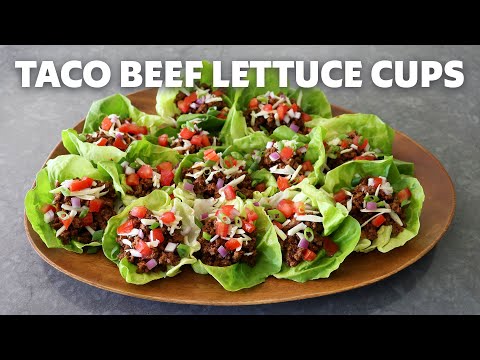
In non-Mexican contexts, you might find 'taco' used as a descriptor for similar items from other cultures. For example, a 'lettuce wrap' is sometimes called a 'low-carb taco' in health-conscious circles. A 'bao bun' from Chinese cuisine is occasionally described as a 'Chinese taco' because of its folded shape and savory filling. While these are not 'tacos' in the traditional sense, the word serves as a useful linguistic bridge to explain the form and function of the dish. Other related terms include fajitas, which refer to the grilled meat itself, usually served alongside tortillas so the diner can 'build their own' tacos at the table. Knowing these synonyms and alternatives allows for a much richer and more accurate conversation about food.
- Taco vs. Fajita
- A taco is served pre-assembled or ready to fold. Fajitas are served as a deconstructed platter of sizzling meats and vegetables.
The menu offered a 'Mediterranean taco' which used pita bread instead of a tortilla.
How Formal Is It?
""
""
""
""
""
Fun Fact
The first 'taco' mentioned in a dictionary appeared in the late 19th century, long after the dish was already a staple in Mexican culture.
Pronunciation Guide
- Pronouncing the 'a' as a long 'ay' sound (TAY-co).
- Making the 'o' sound too short or like an 'u'.
- Adding an 'h' sound after the 't'.
- Pronouncing it like 'tack-oh' in American English (should be 'tah-koh').
- Over-emphasizing the second syllable.
Difficulty Rating
The word is short and globally recognized, making it very easy to read.
Simple four-letter spelling that follows standard phonetic rules.
Pronunciation varies slightly between UK and US English, which can be tricky.
Distinct sound that is rarely confused with other words in context.
What to Learn Next
Prerequisites
Learn Next
Advanced
Grammar to Know
Countable Nouns
I ate three tacos (not 'I ate three taco').
Adjective Placement
A spicy taco (adjective before the noun).
Compound Nouns
Taco stand (two nouns acting as one unit).
Articles with Food
I like tacos (no article for general preference).
Prepositional Phrases
A taco with salsa (using 'with' for ingredients).
Examples by Level
I want a taco.
Je veux un taco.
Use 'a' before 'taco' because it starts with a consonant.
This taco is good.
Ce taco est bon.
Subject 'This taco' + verb 'is' + adjective 'good'.
Do you like tacos?
Aimes-tu les tacos ?
Plural 'tacos' is used for general likes.
I eat one taco for lunch.
Je mange un taco pour le déjeuner.
Present simple tense for a habit.
The taco has cheese.
Le taco contient du fromage.
Use 'has' for the third person singular.
Where is my taco?
Où est mon taco ?
Question word 'Where' + 'is' + 'my taco'.
Tacos are from Mexico.
Les tacos viennent du Mexique.
Plural subject 'Tacos' takes the verb 'are'.
I see three tacos.
Je vois trois tacos.
Number + plural noun.
I would like a chicken taco, please.
Je voudrais un taco au poulet, s'il vous plaît.
Polite request using 'would like'.
Is the taco very spicy?
Le taco est-il très épicé ?
Using 'very' to modify the adjective 'spicy'.
She makes tacos every Tuesday.
Elle fait des tacos tous les mardis.
Frequency expression 'every Tuesday'.
I prefer soft tacos over hard ones.
Je préfère les tacos mous aux tacos durs.
Using 'prefer... over...' for comparison.
Can we go to the taco stand?
Pouvons-nous aller au stand de tacos ?
Compound noun 'taco stand'.
Put some salsa on your taco.
Mets de la salsa sur ton taco.
Imperative verb 'Put'.
My brother doesn't like spicy tacos.
Mon frère n'aime pas les tacos épicés.
Negative 'doesn't like' for third person singular.
We are having a taco party tonight.
Nous organisons une soirée tacos ce soir.
Present continuous for future plans.
If you go to Mexico, you must try a street taco.
Si vous allez au Mexique, vous devez essayer un taco de rue.
First conditional sentence structure.
The taco was filled with delicious grilled meat.
Le taco était rempli de délicieuse viande grillée.
Passive voice 'was filled with'.
I've never tasted a taco as good as this one.
Je n'ai jamais goûté un taco aussi bon que celui-ci.
Present perfect with 'never' and comparison 'as... as'.
While I was waiting for my taco, I watched the chef.
Pendant que j'attendais mon taco, j'ai regardé le chef.
Past continuous for a background action.
You should add lime to your taco to make it taste better.
Tu devrais ajouter du citron vert à ton taco pour qu'il ait meilleur goût.
Modal verb 'should' for giving advice.
The restaurant is famous for its fish tacos.
Le restaurant est célèbre pour ses tacos au poisson.
Adjective + preposition 'famous for'.
I don't know which taco to choose because they all look great.
Je ne sais pas quel taco choisir car ils ont tous l'air super.
Indirect question 'which taco to choose'.
Tacos are usually served with onions and cilantro.
Les tacos sont généralement servis avec des oignons et de la coriandre.
Adverb of frequency 'usually'.
The authenticity of a taco often depends on the quality of the tortilla.
L'authenticité d'un taco dépend souvent de la qualité de la tortilla.
Abstract noun 'authenticity' as the subject.
Despite being a simple dish, the taco has a complex history.
Bien qu'il s'agisse d'un plat simple, le taco a une histoire complexe.
Contrast using 'Despite' + gerund.
Many people argue that a hard-shell taco isn't a traditional Mexican dish.
Beaucoup de gens soutiennent qu'un taco à coquille dure n'est pas un plat mexicain traditionnel.
Reporting verb 'argue' followed by a 'that' clause.
The chef experimented with a fusion taco featuring Korean flavors.
Le chef a expérimenté un taco fusion aux saveurs coréennes.
Compound noun 'fusion taco'.
Having finished his third taco, he realized he was finally full.
Ayant fini son troisième taco, il s'est rendu compte qu'il était enfin rassasié.
Perfect participle clause 'Having finished'.
The popularity of the taco has led to a global explosion of Mexican cuisine.
La popularité du taco a conduit à une explosion mondiale de la cuisine mexicaine.
Present perfect 'has led to' indicating a result.
I'm looking for a taco recipe that doesn't require too many ingredients.
Je cherche une recette de taco qui ne nécessite pas trop d'ingrédients.
Relative clause 'that doesn't require'.
Unless you like spice, you should be careful with that taco sauce.
À moins que vous n'aimiez les épices, vous devriez faire attention à cette sauce à taco.
Conditional 'Unless' for a negative condition.
The taco serves as a culinary canvas for regional Mexican identities.
Le taco sert de toile culinaire aux identités régionales mexicaines.
Metaphorical use of 'culinary canvas'.
One cannot underestimate the cultural significance of the taco in North America.
On ne peut sous-estimer l'importance culturelle du taco en Amérique du Nord.
Formal 'One' as an indefinite pronoun.
The evolution of the taco mirrors the broader history of migration and trade.
L'évolution du taco reflète l'histoire plus large des migrations et du commerce.
Verb 'mirrors' used to show a parallel.
The street taco, in its most unadulterated form, is a masterclass in flavor balance.
Le taco de rue, dans sa forme la plus pure, est une leçon magistrale d'équilibre des saveurs.
Parenthetical phrase 'in its most unadulterated form'.
Critics often scrutinize the commercialization of the taco by global fast-food chains.
Les critiques examinent souvent la commercialisation du taco par les chaînes mondiales de restauration rapide.
Advanced vocabulary like 'scrutinize' and 'commercialization'.
The aroma of sizzling meat at the taco stand was absolutely intoxicating.
L'arôme de la viande grésillante au stand de tacos était absolument enivrant.
Strong adjective 'intoxicating' for sensory description.
Whether soft or crunchy, the taco remains an enduring symbol of casual dining.
Qu'il soit mou ou croquant, le taco reste un symbole durable de la restauration décontractée.
Conjunction 'Whether... or' for alternatives.
The chef's interpretation of the taco challenged traditional culinary boundaries.
L'interprétation du taco par le chef a remis en question les frontières culinaires traditionnelles.
Abstract concept 'challenged traditional culinary boundaries'.
The taco's metamorphosis from a humble indigenous staple to a global icon is a testament to its versatility.
La métamorphose du taco, d'un humble aliment de base indigène à une icône mondiale, témoigne de sa polyvalence.
Complex noun phrase as the subject.
To appreciate the taco is to understand the profound legacy of nixtamalization.
Apprécier le taco, c'est comprendre l'héritage profond de la nixtamalisation.
Infinitive phrases used for a philosophical definition.
The ubiquity of the taco in modern urban landscapes speaks volumes about cultural integration.
L'ubiquité du taco dans les paysages urbains modernes en dit long sur l'intégration culturelle.
Idiomatic expression 'speaks volumes'.
The taco's structural simplicity belies a sophisticated interplay of textures and temperatures.
La simplicité structurelle du taco cache un jeu sophistiqué de textures et de températures.
Advanced verb 'belies' meaning to contradict.
Gourmands often traverse the globe in search of the quintessential street taco.
Les gourmands parcourent souvent le monde à la recherche du taco de rue par excellence.
High-level vocabulary like 'gourmands' and 'quintessential'.
The taco has become a lightning rod for discussions regarding culinary authenticity and appropriation.
Le taco est devenu un paratonnerre pour les discussions concernant l'authenticité et l'appropriation culinaires.
Metaphor 'lightning rod' for a controversial topic.
The artisanal revival of heirloom corn has elevated the humble taco to new heights of gastronomic excellence.
Le renouveau artisanal du maïs patrimonial a élevé le humble taco vers de nouveaux sommets d'excellence gastronomique.
Present perfect 'has elevated' to show a recent trend.
In the hands of a master taquero, the assembly of a taco is a rhythmic, almost ritualistic performance.
Entre les mains d'un maître taquero, l'assemblage d'un taco est une performance rythmique, presque ritualiste.
Appositive phrase 'almost ritualistic performance'.
Common Collocations
Common Phrases
— A custom of eating tacos or going out for Mexican food on Tuesday nights.
Don't forget, it's Taco Tuesday, so the local restaurant has a 2-for-1 deal.
— A designated evening, usually at home, where tacos are served for dinner.
Friday is usually taco night at our house.
— A style of serving where ingredients are separate and diners assemble their own.
The party features a build-your-own taco station with ten different toppings.
— A small taco served simply with onions, cilantro, and salsa on a corn tortilla.
I love the authentic flavor of a street-style taco.
— An informal, often small or cheap restaurant that specializes in tacos.
There's a great little taco joint just around the corner from the station.
— A taco that has a very large amount of fillings and toppings.
That loaded taco has everything from guacamole to sour cream.
— A meal consisting of several tacos, often served with rice and beans.
The taco platter is enough food for two people.
— A taco made with high-quality, unusual, or expensive ingredients.
The gourmet taco featured duck confit and a cherry salsa.
Often Confused With
A burrito is much larger and completely wrapped in a flour tortilla.
An enchilada is a rolled taco covered in sauce and baked.
A quesadilla must contain melted cheese and is usually grilled flat.
Idioms & Expressions
— To collapse or give in easily under pressure; also used literally for physical objects.
The boxer started strong but folded like a taco in the fourth round.
informal— The entire thing; everything involved in a situation (similar to 'the whole enchilada').
He didn't just want the promotion; he wanted the whole taco, including the corner office.
slang— The specific posture of leaning one's head to the side to eat a taco without spilling it.
You can tell he's a pro by his perfect taco lean.
informal/cultural— Eating a taco in a way that is perceived as too fancy or refined for the food's casual nature.
Don't be so formal; you don't need to eat that with your pinky up like it's a tea taco.
humorous— A pun on 'talk about it,' often used in marketing or casual jokes.
Let's taco 'bout your plans for the weekend!
informal/pun— A play on 'in a nutshell,' meaning to summarize something briefly.
In a taco shell, the project was a complete success.
humorous— Something that is fantastic, specifically related to tacos or Mexican culture.
That party was absolutely taco-tastic!
slang— A variation of 'not my cup of tea,' meaning something one does not like.
I know everyone loves that movie, but it's just not my taco.
slang— Extremely hot, usually referring to the weather or a spicy situation.
It's hotter than a taco out here in the desert sun.
informal— Someone who is obsessed with eating or making tacos.
He's a total taco-head; he knows every truck in the city.
slangEasily Confused
Both use tortillas and similar toppings.
A taco is folded and soft or U-shaped; a tostada is flat and always fried/crispy.
I thought it was a taco, but it was a flat tostada.
Often served together in restaurants.
Fajitas refer to the grilled meat itself; you use the meat to make your own tacos.
We ordered fajitas and made several small tacos with the steak.
It sounds like a small taco.
A taquito is specifically a small, tightly rolled, and deep-fried taco.
These taquitos are much crunchier than regular tacos.
Another Mexican tortilla-based dish.
A gordita uses a much thicker tortilla that is slit open like a pocket.
The gordita is thicker and heavier than a standard taco.
Similar shape and ingredients.
A chalupa has a thicker, fried dough shell that is slightly curved like a boat.
The chalupa shell is breadier than a thin taco tortilla.
Sentence Patterns
I like [noun].
I like tacos.
Can I have a [adjective] taco?
Can I have a spicy taco?
I usually eat tacos with [ingredient].
I usually eat tacos with extra lime.
The taco was [past participle] with [noun].
The taco was topped with fresh cilantro.
Despite the [noun], the taco was [adjective].
Despite the simple ingredients, the taco was incredibly flavorful.
The [noun] of the taco is [adjective].
The structural integrity of the taco is paramount.
There is a [noun] in the taco.
There is a lot of cheese in the taco.
I prefer [noun] to [noun].
I prefer corn tacos to flour tacos.
Word Family
Nouns
Verbs
Adjectives
Related
How to Use It
Very high in everyday English, especially in North America.
-
I want much tacos.
→
I want many tacos.
Tacos are countable, so you must use 'many' instead of 'much'.
-
He is eating a taco's.
→
He is eating a taco.
Do not use an apostrophe for a simple plural or singular noun.
-
This is a burrito taco.
→
This is a burrito.
A burrito and a taco are different things; don't combine the names unless it's a very specific fusion dish.
-
I like the taco spicy.
→
I like spicy tacos.
In English, the adjective usually comes before the noun in general statements.
-
I ordered three taco.
→
I ordered three tacos.
Always add the 's' when there is more than one.
Tips
Countable Noun
Always remember that 'taco' is countable. Use 'a' for one and 's' for more than one. Avoid saying 'I want taco' unless you are speaking very informally.
The 'A' Sound
In American English, aim for the 'ah' sound as in 'father.' This sounds more natural and closer to the original Spanish than a short 'a' sound.
Tortilla Choice
If you want to sound like a taco expert, know the difference between corn and flour tortillas. Corn is more traditional for most Mexican tacos.
Ordering
When ordering at a taco truck, it's common to order 2 or 3 small tacos at a time rather than just one large one.
Toppings
Learn the words for common toppings like 'cilantro,' 'onions,' 'guacamole,' and 'salsa' to improve your food-related vocabulary.
Hand Food
Don't be afraid to get your hands a little messy! Tacos are meant to be a casual, hands-on eating experience.
Simple Spelling
T-A-C-O. It's one of the easiest food words to spell in English. No hidden letters or complex rules.
Warm the Tortilla
A 'cold' taco is a common mistake. Always warm the tortilla first to make it pliable and bring out the flavor.
Taco Night
Use the phrase 'taco night' when planning a casual dinner with friends or family. It's a very common idiomatic expression.
Taco vs. Wrap
While they are similar, a 'wrap' usually implies a larger, fully enclosed flour tortilla, whereas a 'taco' is smaller and folded.
Memorize It
Mnemonic
Think of a 'T' shaped 'A'ccordion 'C'losed 'O'ver food. T-A-C-O.
Visual Association
Imagine a bright yellow sun (the tortilla) being folded in half to hold a mountain of meat.
Word Web
Challenge
Try to name five different types of taco fillings without using the word 'meat'.
Word Origin
The word 'taco' comes from Mexican Spanish. Its origin is somewhat debated, but a popular theory is that it comes from the 18th-century silver mines in Mexico. Miners used 'tacos'—small charges of gunpowder wrapped in paper—to blast rocks. The food, which resembled these small wraps, eventually took the name.
Original meaning: A plug, wad, or small charge used in mining.
Indo-European (via Spanish)Cultural Context
Be aware of the distinction between 'authentic' Mexican tacos and 'Tex-Mex' or fast food. Some people feel strongly about cultural appropriation in the culinary world.
In the US, 'Taco Tuesday' is a major cultural phenomenon. In the UK, tacos are becoming a popular alternative to traditional sandwiches in urban food markets.
Practice in Real Life
Real-World Contexts
At a restaurant
- Can I see the taco menu?
- Are the tacos corn or flour?
- I'll have the taco platter.
- No onions on my tacos, please.
Cooking at home
- We need taco shells.
- Brown the meat for the tacos.
- Pass the taco seasoning.
- Who wants to help assemble the tacos?
Social gathering
- Happy Taco Tuesday!
- This is a great taco bar.
- I'm having a taco craving.
- Let's go to the taco truck.
Ordering fast food
- One taco box, please.
- Soft or crunchy taco?
- Extra sauce for my tacos.
- Make it a taco meal.
Travel
- Where can I find the best street tacos?
- Is this a traditional taco?
- How much for one taco?
- I love Mexican tacos.
Conversation Starters
"What is your favorite type of taco filling?"
"Do you prefer soft tacos or crunchy tacos?"
"Have you ever tried making tacos from scratch at home?"
"Where is the best place to get a taco in this city?"
"What are the essential toppings for a perfect taco?"
Journal Prompts
Describe the best taco you have ever eaten. Where were you and what was in it?
If you had to invent a new type of fusion taco, what ingredients would you use?
Write about why you think tacos have become so popular all around the world.
Compare a taco to a sandwich. Which one do you prefer and why?
Imagine you are opening a taco truck. What would you name it and what would be your signature taco?
Frequently Asked Questions
10 questionsTechnically, some culinary definitions classify it as a sandwich because it involves bread (the tortilla) and a filling. However, culturally and linguistically, it is almost always treated as its own distinct category of food. Most people would not call a taco a sandwich in casual conversation.
A soft taco uses a flexible, un-fried tortilla (usually corn or flour). A hard taco uses a tortilla that has been fried into a stiff, U-shaped shell. Soft tacos are more traditional in Mexico, while hard tacos are very popular in American Tex-Mex cuisine.
No, tacos themselves are not inherently spicy. The heat usually comes from the salsa or peppers added as toppings. You can easily find or make mild tacos by choosing non-spicy fillings and avoiding hot sauces.
While you can, it is traditionally eaten with the hands. Using a fork and knife is often seen as unusual unless the taco is an 'enchilada style' (covered in sauce) or so large and messy that it's impossible to pick up.
It is a popular custom in the United States where people go out to eat tacos on Tuesday nights, often because restaurants offer special discounts or deals on that day.
A street taco is a small, simple, and authentic taco typically sold by street vendors. It usually consists of a corn tortilla, meat, onions, cilantro, and salsa, without the 'extra' toppings like lettuce or sour cream found in American versions.
It is originally a Spanish word from Mexico. However, it has been fully adopted into the English language and is used globally without translation.
This varies by region, but 'al pastor' (marinated pork), 'carne asada' (grilled steak), and 'pollo' (chicken) are among the most popular worldwide.
In both English and Spanish, the plural of taco is 'tacos.' You simply add an 's' to the end of the word.
A breakfast taco is a taco filled with breakfast ingredients like scrambled eggs, bacon, sausage, potatoes, or cheese. They are especially popular in the Southwestern United States.
Test Yourself 180 questions
Write a sentence using the word 'taco'.
Well written! Good try! Check the sample answer below.
What is in your favorite taco?
Well written! Good try! Check the sample answer below.
Describe a taco stand.
Well written! Good try! Check the sample answer below.
How do you order a taco?
Well written! Good try! Check the sample answer below.
Explain how to make a simple taco.
Well written! Good try! Check the sample answer below.
Why are tacos popular?
Well written! Good try! Check the sample answer below.
Compare a soft taco and a hard taco.
Well written! Good try! Check the sample answer below.
Write a review of a taco restaurant.
Well written! Good try! Check the sample answer below.
Discuss the cultural importance of the taco.
Well written! Good try! Check the sample answer below.
Describe the experience of eating at a traditional taquería.
Well written! Good try! Check the sample answer below.
Is a taco big or small?
Well written! Good try! Check the sample answer below.
What color is a corn tortilla?
Well written! Good try! Check the sample answer below.
Do you like spicy tacos? Why?
Well written! Good try! Check the sample answer below.
What is 'Taco Tuesday'?
Well written! Good try! Check the sample answer below.
What are three common taco toppings?
Well written! Good try! Check the sample answer below.
Where can you buy a taco?
Well written! Good try! Check the sample answer below.
What is the role of lime in a taco?
Well written! Good try! Check the sample answer below.
Describe a 'breakfast taco'.
Well written! Good try! Check the sample answer below.
How has the taco changed in the USA?
Well written! Good try! Check the sample answer below.
What makes a taco 'authentic'?
Well written! Good try! Check the sample answer below.
Say: 'I love tacos.'
Read this aloud:
You said:
Speech recognition is not supported in your browser. Try Chrome or Edge.
Say: 'One beef taco, please.'
Read this aloud:
You said:
Speech recognition is not supported in your browser. Try Chrome or Edge.
Say: 'Where is the nearest taco stand?'
Read this aloud:
You said:
Speech recognition is not supported in your browser. Try Chrome or Edge.
Say: 'I prefer soft tacos over crunchy ones.'
Read this aloud:
You said:
Speech recognition is not supported in your browser. Try Chrome or Edge.
Say: 'Can you tell me what is inside this taco?'
Read this aloud:
You said:
Speech recognition is not supported in your browser. Try Chrome or Edge.
Say: 'I'd like my taco with extra salsa and lime.'
Read this aloud:
You said:
Speech recognition is not supported in your browser. Try Chrome or Edge.
Say: 'The authenticity of the taco is very important to me.'
Read this aloud:
You said:
Speech recognition is not supported in your browser. Try Chrome or Edge.
Say: 'Let's check out that new taco truck downtown.'
Read this aloud:
You said:
Speech recognition is not supported in your browser. Try Chrome or Edge.
Say: 'The taco is a fascinating example of culinary evolution.'
Read this aloud:
You said:
Speech recognition is not supported in your browser. Try Chrome or Edge.
Say: 'I appreciate the subtle balance of flavors in this street taco.'
Read this aloud:
You said:
Speech recognition is not supported in your browser. Try Chrome or Edge.
Say: 'Taco.'
Read this aloud:
You said:
Speech recognition is not supported in your browser. Try Chrome or Edge.
Say: 'Tacos.'
Read this aloud:
You said:
Speech recognition is not supported in your browser. Try Chrome or Edge.
Say: 'Is it spicy?'
Read this aloud:
You said:
Speech recognition is not supported in your browser. Try Chrome or Edge.
Say: 'Taco Tuesday.'
Read this aloud:
You said:
Speech recognition is not supported in your browser. Try Chrome or Edge.
Say: 'I want a chicken taco.'
Read this aloud:
You said:
Speech recognition is not supported in your browser. Try Chrome or Edge.
Say: 'No onions, please.'
Read this aloud:
You said:
Speech recognition is not supported in your browser. Try Chrome or Edge.
Say: 'This taco is delicious.'
Read this aloud:
You said:
Speech recognition is not supported in your browser. Try Chrome or Edge.
Say: 'I am full after three tacos.'
Read this aloud:
You said:
Speech recognition is not supported in your browser. Try Chrome or Edge.
Say: 'The tortilla is handmade.'
Read this aloud:
You said:
Speech recognition is not supported in your browser. Try Chrome or Edge.
Say: 'I love the smell of tacos.'
Read this aloud:
You said:
Speech recognition is not supported in your browser. Try Chrome or Edge.
Listen and identify: 'Taco'.
Listen and identify: 'Tacos'.
Listen and identify: 'Taco stand'.
Listen and identify: 'Spicy taco'.
Listen and identify: 'Fish taco'.
Listen and identify: 'Taco truck'.
Listen and identify: 'Taco seasoning'.
Listen and identify: 'Authentic taco'.
Listen and identify: 'Culinary staple'.
Listen and identify: 'Nixtamalization'.
Listen: 'I want a taco.' What do I want?
Listen: 'Two tacos, please.' How many?
Listen: 'The taco is hot.' How is it?
Listen: 'I love taco night.' What night is it?
Listen: 'The taco was amazing.' How was it?
/ 180 correct
Perfect score!
Summary
The taco is more than just a meal; it is a portable, versatile, and culturally rich delivery system for flavors that define Mexican cuisine. Whether you prefer a simple street taco with carne asada or a complex gourmet version, the key is the balance between the tortilla, the filling, and the fresh garnishes.
- A taco is a classic Mexican dish featuring a tortilla folded around diverse fillings like meat, beans, or cheese.
- Tacos are highly customizable, often topped with fresh salsa, onions, cilantro, and a squeeze of lime juice.
- They are a global symbol of casual, portable dining, found in street stalls and high-end restaurants alike.
- The word is a countable noun, used for both the traditional soft version and the Americanized hard-shell version.
Countable Noun
Always remember that 'taco' is countable. Use 'a' for one and 's' for more than one. Avoid saying 'I want taco' unless you are speaking very informally.
The 'A' Sound
In American English, aim for the 'ah' sound as in 'father.' This sounds more natural and closer to the original Spanish than a short 'a' sound.
Tortilla Choice
If you want to sound like a taco expert, know the difference between corn and flour tortillas. Corn is more traditional for most Mexican tacos.
Ordering
When ordering at a taco truck, it's common to order 2 or 3 small tacos at a time rather than just one large one.
Related Content


This Word in Other Languages
More Food words
additive
B2A substance added to something in small quantities to improve, strengthen, or preserve it. It is most commonly used in the context of food processing, fuel production, and industrial manufacturing to enhance specific qualities like flavor, shelf life, or performance.
additives
B2A substance added to something in small quantities to improve or preserve it. Additives are often used in food production to enhance flavor, appearance, or shelf life, but they can also be used in fuels, plastics, and other industrial products.
almond
B2Describes a light, creamy-tan color or an oval shape that tapers at the ends, resembling the seed of the almond tree. It is frequently used in the context of fashion, beauty, and interior design to categorize shades and physical features.
annatto
B1Annatto is a natural food coloring derived from the seeds of the achiote tree. It is primarily used to impart a yellow to reddish-orange hue to foods like cheese, butter, rice, and baked goods.
appetite
C1Appetite refers to a natural desire to satisfy a bodily need, most commonly for food. In a broader sense, it describes a strong desire or liking for a specific activity, experience, or object, such as power or knowledge.
appetizer
C1An appetizer is a small portion of food or a drink served before a meal to stimulate the appetite. It is usually savory and intended to prepare the palate for the main courses to follow.
appetizing
B2Describing food or smells that look or smell attractive and make you feel hungry. It is often used to describe the visual presentation or aroma of a meal rather than its actual flavor.
apple
C1Describes an action performed with a wholesome simplicity, clarity, and a refreshing, crisp quality. It is a highly figurative and literary adverbial usage signifying a naturally perfect or aesthetically pleasing execution.
apples
A1Apples are round, edible fruits produced by an apple tree (Malus domestica). They are known for their crisp texture and come in various colors such as red, green, and yellow.
apricot
C1Describes a soft, yellowish-orange color characteristic of the fruit's skin, often used in aesthetic contexts such as fashion and interior design. At an advanced level, it implies a specific warmth and subtlety in color theory and descriptive writing.

